×

Equatorial Guinea🇬🇶 | national parksPico Basile National Park
highest peak, panoramic views, montane forest, volcanic rock formations | things to do and best time to go

Explore Parque Nacional de Monte AlénExplore Reserva Natural de Moka

Backpacking in Pico Basile
🏆 Top picknational park ranked #2
By Johan Kruseman 🇳🇱 | last update: 1 April, 2026

The first real fork in the road at Pico Basile National Park is whether to attempt the summit hike or stick to the lower trails. This isn’t just about ambition—summiting Pico Basile, the country’s highest peak, means navigating permits, unpredictable weather, and a tangle of logistics that can drain your patience and wallet if you’re not prepared. Pico Basile National Park sits just outside Malabo, on Bioko Island, Equatorial Guinea’s volcanic heart. For backpackers, the park is a paradox: the cloud forests and volcanic slopes are wild and cinematic, but access is tightly controlled, and independent travel is often discouraged. The scenery is dramatic, with misty ridges and the occasional monkey or rare bird, but don’t expect solitude—local tour groups and government restrictions keep things busy and bureaucratic. Camping is technically possible but rarely straightforward; most travelers end up in basic guesthouses in Malabo. Compared to Monte Alen National Park, which is wilder and less regulated but much harder to reach, Pico Basile is more accessible but less freewheeling. The vibe? Rewarding if you’re patient, but not for the impulsive or the unprepared.

Discover everything you want to know in the 📖 Equatorial Guinea Travel Guide.
Loading the map 🌍
CLICK TO FILTER
city
town
village
unique site
national park
hike
beach
attraction
festival
region
SHOW COUNTRY‘S BESTSHOW ALL

✨ Why go?
Ranked #2 national park in Equatorial Guinea
Reasons people choose to explore here

Pico Basile National Park draws backpackers for several compelling reasons. First, independent exploration is a major draw. The park’s trails are well-marked, allowing you to navigate without a guide. This freedom lets you set your own pace and discover hidden spots that tours often overlook.

Budget-conscious travelers appreciate the camping options and nearby hostels. You can pitch a tent under the stars or find a cozy bed without breaking the bank. This affordability means you can allocate more of your budget to experiences, like sampling local cuisine or hiring a guide for a day hike.

The trail variety is another highlight. From lush rainforests to volcanic landscapes, the park offers routes that cater to different skill levels. Whether you’re a novice or a seasoned hiker, there’s something … read more 👉
Pico Basile National Park draws backpackers for several compelling reasons. First, independent exploration is a major draw. The park’s trails are well-marked, allowing you to navigate without a guide. This freedom lets you set your own pace and discover hidden spots that tours often overlook.

Budget-conscious travelers appreciate the camping options and nearby hostels. You can pitch a tent under the stars or find a cozy bed without breaking the bank. This affordability means you can allocate more of your budget to experiences, like sampling local cuisine or hiring a guide for a day hike.

The trail variety is another highlight. From lush rainforests to volcanic landscapes, the park offers routes that cater to different skill levels. Whether you’re a novice or a seasoned hiker, there’s something for everyone.

Lastly, Pico Basile is particularly suited for self-guided travelers. While tours exist, they can be limiting. The park’s layout encourages you to explore at your own rhythm, making it easier to connect with the environment. This combination of independence, affordability, and diverse trails makes Pico Basile a top choice for backpackers seeking genuine adventure.
Get the complete Travel Guide for Equatorial Guinea
Everything organized for offline planning — routes, highlights, costs & tips

See what’s inside 👉

Get the Travel Guide -

💡 HighlightsMust-see experiences and standout moments

  • Pico Basilé summit — The island’s highest point and the park’s centerpiece. The hike to the summit climbs through changing vegetation zones and, on a clear day, you can look out over Bioko, the Gulf of Guinea and faint outlines of the mainland; sunrise up here is properly dramatic if you’re willing to start early.
  • Montane cloud forest — Thick, moss-draped forest that feels like another planet: dense epiphytes, dripping branches and a chill that stays with you. It’s where most of the park’s special plants live, and walking through it is a classic rainforest experience without the lowland heat.
  • Endemic wildlife hotspots — Pico Basilé is one of the few places to see truly island-endemic animals, most famously the Bioko drill (a highly localized primate). Expect shy mammals, loud primate calls,
  • read more 👉
  • Pico Basilé summit — The island’s highest point and the park’s centerpiece. The hike to the summit climbs through changing vegetation zones and, on a clear day, you can look out over Bioko, the Gulf of Guinea and faint outlines of the mainland; sunrise up here is properly dramatic if you’re willing to start early.
  • Montane cloud forest — Thick, moss-draped forest that feels like another planet: dense epiphytes, dripping branches and a chill that stays with you. It’s where most of the park’s special plants live, and walking through it is a classic rainforest experience without the lowland heat.
  • Endemic wildlife hotspots — Pico Basilé is one of the few places to see truly island-endemic animals, most famously the Bioko drill (a highly localized primate). Expect shy mammals, loud primate calls, and the possibility of spotting rare forest specialists if you move quietly or go with a local guide.
  • Birdwatching and range-restricted species — The park hosts a clutch of island and montane birds found nowhere else or only in a few places. If you enjoy patient optics time, early mornings in the understory and forest edges can be very rewarding.
  • Ridge and crater hikes — Trails follow old volcanic ridgelines and sometimes skirt crater rims. The routes aren’t flashy trails with signposts — they’re rugged, steep and excellent for anyone who likes hands-on, sweaty hillwalking and wide views from exposed sections.
  • Streams, waterfalls and cool gullies — Numerous small streams cut the slopes and form shaded gullies and seasonal cascades. These areas are vegetative hotspots — lots of ferns, orchids and insect life — and good places to rest on a hot day or look for amphibians.
  • Volcanic geology and panoramic viewpoints — The park’s volcanic origin shows in basaltic outcrops, weathered crags and sudden ups and downs in the landscape. Many short viewpoints off the trails give sweeping panoramas that reward the climb and make for great photo stops.
Spotted a mistake or missing something? Contact us.
🌤️ When to go?Weather, crowds, and seasonal trade-offs


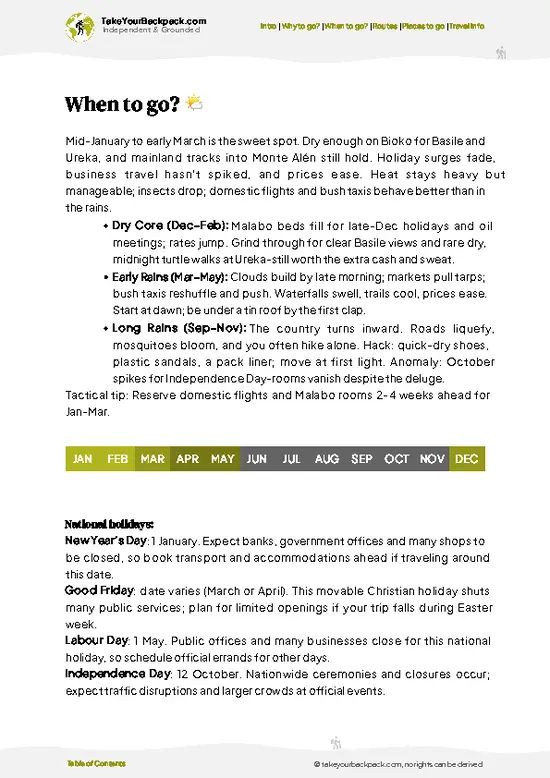
  • Weather: The dry season from June to September is your best bet. Rainfall drops significantly, making trails less slippery and campsites more accessible. Avoid the heavy rains of October to May, which can turn paths into mudslides and limit visibility.

  • Temperature: Daytime temps hover around 22-26°C (72-79°F) during the dry season, comfortable for hiking without overheating. Nights can dip to 12-15°C (54-59°F), so pack layers. The wet season brings warmer, more humid conditions that sap your energy faster.

  • Daylight Hours: Near the equator, daylight is fairly consistent year-round, roughly 12 hours daily. This steadiness means you won’t lose precious hiking time to early sunsets, but always start early to avoid afternoon heat and potential storms.

  • Crowds: The park sees a noticeable
  • read more 👉

  • Weather: The dry season from June to September is your best bet. Rainfall drops significantly, making trails less slippery and campsites more accessible. Avoid the heavy rains of October to May, which can turn paths into mudslides and limit visibility.

  • Temperature: Daytime temps hover around 22-26°C (72-79°F) during the dry season, comfortable for hiking without overheating. Nights can dip to 12-15°C (54-59°F), so pack layers. The wet season brings warmer, more humid conditions that sap your energy faster.

  • Daylight Hours: Near the equator, daylight is fairly consistent year-round, roughly 12 hours daily. This steadiness means you won’t lose precious hiking time to early sunsets, but always start early to avoid afternoon heat and potential storms.

  • Crowds: The park sees a noticeable drop in visitors during the wet season, but that comes with the trade-off of tougher conditions. The dry season attracts more backpackers, but it’s never overwhelmingly busy, so you’ll still find solitude if you plan your routes wisely.

  • Seasonal Activities: Birdwatching peaks in the dry months when species are more visible and active. Some trails open only in the dry season due to flooding risks, so timing your visit here is crucial to access the full range of experiences.

  • Price Fluctuations: Expect slightly higher prices for local guides and accommodations during the dry season, the park’s peak time. The wet season offers lower rates but comes with the cost of limited services and tougher logistics.


Pro-tip: Aim for early dry season visits—June or July—when the park is accessible, prices are just starting to rise, and the weather is stable enough to keep your energy focused on the adventure, not the elements.


source: climatestotravel.comJANJanuary: below average for travelingFEBFebruary: below average for travelingMARMarch: below average for travelingAPRApril: below average for travelingMAYMay: fair for travelingJUNJune: excellent for travelingJULJuly: excellent for travelingAUGAugust: excellent for travelingSEPSeptember: highly recommended for travelingOCTOctober: below average for travelingNOVNovember: below average for travelingDECDecember: below average for traveling
when-to-go

✈️ The ultimate backpacker shortcutEquatorial Guinea Travel Guide

Skip weeks of stressful planning and hit the road with confidence. Our backpacking travel guides are designed specifically for independent travelers who want practical information, realistic itineraries, and honest advice they can actually use on the ground.
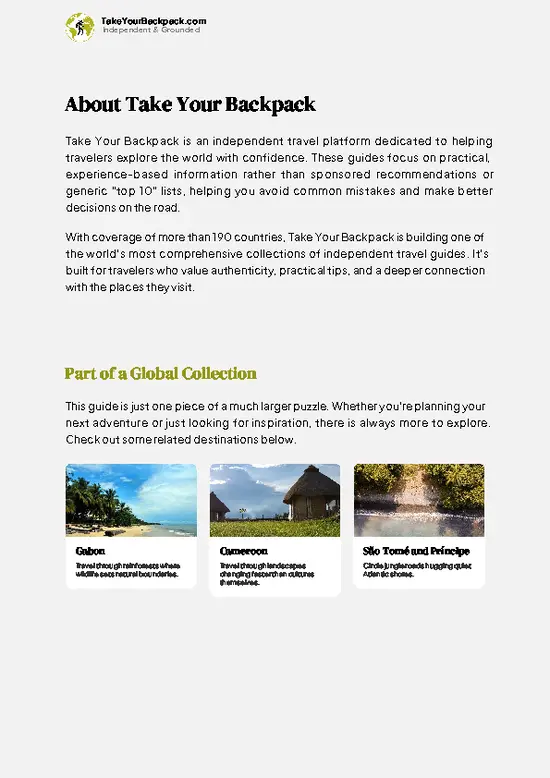
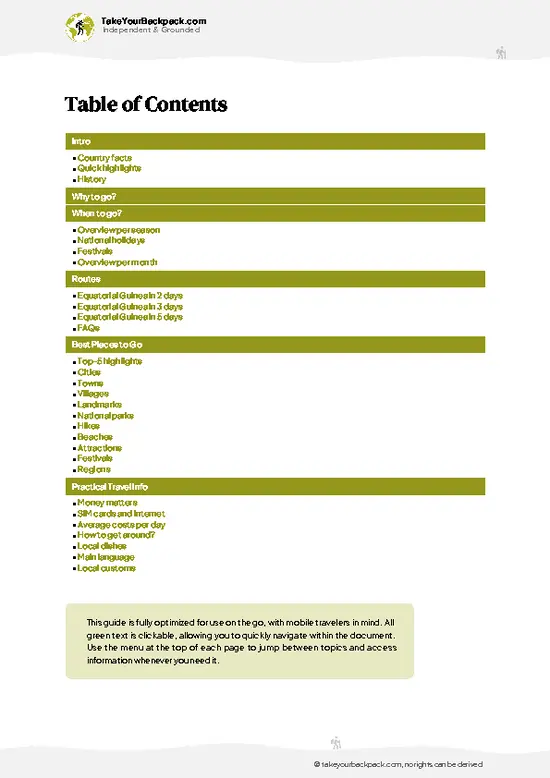
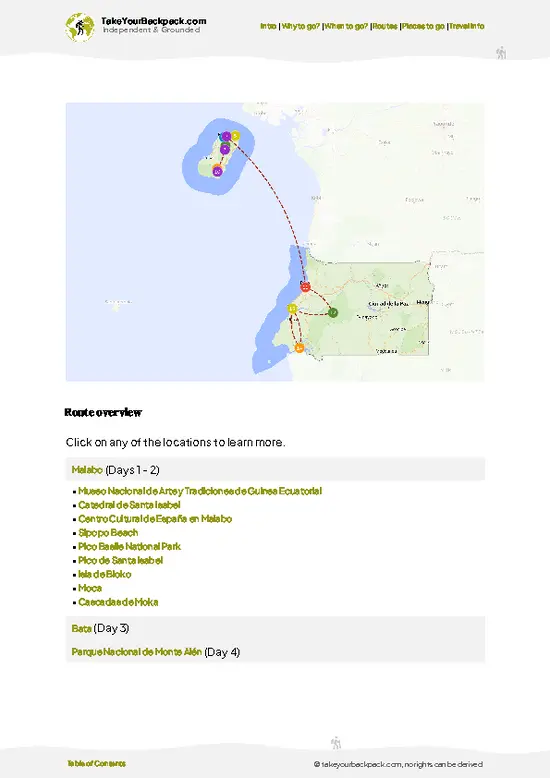
example page 0 from our offline Travel Guide for Equatorial Guineaexample page 1 from our offline Travel Guide for Equatorial Guineaexample page 2 from our offline Travel Guide for Equatorial Guineaexample page 3 from our offline Travel Guide for Equatorial Guineaexample page 4 from our offline Travel Guide for Equatorial Guinea
The guide (179 pages) contains:
2, 3 & 5-day routes paced for real travel
52 ranked highlights with honest advice
Logistics solved: Best areas to stay & transport
Safety: Common local scams to avoid
No Wi-Fi? No problem: Phone-optimized offline PDF
👉 See all 30+ guide features

📅 Plan smarter in minutes, not weeks
Realistic travel times & pacing
Best months per region
Festivals & national holidays
Budget expectations

🗺️ Go to the right places, skip the overrated ones
52 ranked highlights across the country
Hidden gems beyond the tourist trail
Honest pros & cons of destinations
Top hikes, parks & viewpoints
Lesser-known places most travelers miss
Clear “worth it vs skip it” guidance

🛏️ Travel smoothly without rookie mistakes
Best areas to stay
Transport systems explained simply
Local transport tradeoffs
Common scams & safety advice
SIM cards, money & practical tips
What to expect before arrival

🌍 Understand the country, not just visit it
Culture & traditions
52 Essential phrases & customs
Festivals worth planning around
Traveler-friendly historical context
Insights that make places more meaningful

📱 Built for real travel conditions
Fully downloadable PDF
Works completely offline
Optimized for phone use
Useful in remote areas & buses
Everything in one place
Save weeks of stressful planning
Get instant access to the full guide directly. 30-day money-back guarantee.


Sent to your inbox immediately after payment • 100% Secure Checkout
Best Backpacking Travel Advisor 2025 tourism awardBest Backpacking
Travel Advisor
2025
What others say about Take Your Backpack Guides:
⭐⭐⭐⭐⭐
Fantastic, amazing amount of information!
⭐⭐⭐⭐⭐
My goodness this is amazing, it's what I've been looking for hats off too you!
⭐⭐⭐⭐⭐
I think this is absolutely BRILLIANT
⭐⭐⭐⭐
Very complete and informative. It's still missing places, but I gotta to commend you
⭐⭐⭐⭐⭐
This is truly amazing, thank you, can't wait to explore it with my kids!
⭐⭐⭐⭐⭐
Awesome resource, thank you!
⭐⭐⭐⭐⭐
This is amazing! Can't wait to explore the ones I haven't seen
⭐⭐⭐⭐
I love this! Well done, great idea.
⭐⭐⭐⭐⭐
Thanks for taking the time to make this gem!
⭐⭐⭐⭐⭐
This might be the best website I've ever seen.
⭐⭐⭐⭐⭐
Congratulations, and thank you so much for your work; it's incredibly valuable.
⭐⭐⭐⭐
In all seriousness I think you did a great job pointing out the important spots
⭐⭐⭐⭐⭐
10/10 very good
⭐⭐⭐⭐⭐
As someone who's only just starting to visit regularly this is awesome, thank you.
⭐⭐⭐⭐
Thank you very much! I'm going to visit my dad, it's going to be very useful!
⭐⭐⭐⭐⭐
This is really cool! We'll be travelling for the first time and this definitely come in handy.
⭐⭐⭐⭐⭐
You are now our minister of culture, congratulations 👨‍💼
⭐⭐⭐⭐⭐
Just wanted to tell you that this is a pearl! Going to follow your recommendations.
⭐⭐⭐⭐⭐
This is so cool. I'll definitely be using the resource for my travels soon.
⭐⭐⭐⭐⭐
This is very impressive! Good work.
⭐⭐⭐⭐⭐
This is an amazing and informative site. Very well done!

🛏️ Where to stay?Where staying makes the most sense

Pico Basile National Park is a treasure, but finding the right place to stay can be tricky. Inside the park, options are limited. There are no established lodges or hotels, so your best bet is to camp. Bring your own gear and be prepared for a true wilderness experience. This is where you’ll connect with nature, but it requires planning.

Nearby, the town of Malabo offers a few accommodations. Look for budget-friendly guesthouses or hostels that cater to backpackers. They provide a decent base for exploring the park. Some popular spots include the Hotel Ibis Styles and the more local Hotel Laico. … read more 👉
Pico Basile National Park is a treasure, but finding the right place to stay can be tricky. Inside the park, options are limited. There are no established lodges or hotels, so your best bet is to camp. Bring your own gear and be prepared for a true wilderness experience. This is where you’ll connect with nature, but it requires planning.

Nearby, the town of Malabo offers a few accommodations. Look for budget-friendly guesthouses or hostels that cater to backpackers. They provide a decent base for exploring the park. Some popular spots include the Hotel Ibis Styles and the more local Hotel Laico. Both offer basic amenities and are relatively affordable, but don’t expect luxury.

Be aware of transportation costs. Getting to the park from Malabo can add up, especially if you opt for private taxis. Public transport is cheaper but less reliable. Factor in these costs when budgeting your trip.

Lastly, stock up on supplies in Malabo before heading to the park. Food options are limited once you’re in the wilderness. Planning ahead will save you time and energy for the adventures that await in the lush landscapes of Pico Basile.

👛 Costs (as of 7 July 2025)Typical daily expenses

Visiting Pico Basile National Park in Equatorial Guinea requires some careful budgeting. Entry fees are typically around €5 to €10 per person. This nominal fee grants you access to the park’s stunning biodiversity and hiking trails.

Guided tours are highly recommended. Expect to pay between €30 and €100, depending on the length and complexity of the tour. A full-day guided trek can push towards the higher end, especially if it includes transportation from Malabo.

Accommodation options near the park vary. Basic lodges start at about €20 per night, while more comfortable options can range from €50 to €100. Always confirm what amenities are included, as some places may charge extra for meals or guided services.

Transportation can be a hidden cost. If you’re relying on taxis or private transfers, … read more 👉
Visiting Pico Basile National Park in Equatorial Guinea requires some careful budgeting. Entry fees are typically around €5 to €10 per person. This nominal fee grants you access to the park’s stunning biodiversity and hiking trails.

Guided tours are highly recommended. Expect to pay between €30 and €100, depending on the length and complexity of the tour. A full-day guided trek can push towards the higher end, especially if it includes transportation from Malabo.

Accommodation options near the park vary. Basic lodges start at about €20 per night, while more comfortable options can range from €50 to €100. Always confirm what amenities are included, as some places may charge extra for meals or guided services.

Transportation can be a hidden cost. If you’re relying on taxis or private transfers, budget around €30 to €50 for a round trip from Malabo to the park. Public transport is cheaper but less reliable.

Plan for additional costs like food and water. Meals can range from €5 at local eateries to €15 at more upscale places. Always carry extra cash, as ATMs can be scarce in remote areas.

By keeping these costs in mind, you can allocate your budget wisely and focus on enjoying the park’s natural beauty without unexpected financial stress.
⚠️ Prices can change and everyone travels differently, so take this as a rough guide. Hope it helps you plan your adventure!

🥾 TrailsTrail guide for Pico Basile national park

Pico Basile National Park is a hidden gem in Equatorial Guinea, offering some stunning hiking opportunities amidst lush rainforests and volcanic landscapes. The park’s terrain is mostly rugged, with steep slopes and dense vegetation, making it a bit of a workout, but the views are well worth it. You might spot some unique wildlife, like the elusive drill monkey or vibrant bird species flitting through the trees.

One of the standout trails is Los Cangrejos Trail. Here’s what you need to know:
  • Length: 8 km
  • Estimated Duration: 4-5 hours
  • Difficulty Level: Moderate
  • Key Features: Scenic viewpoints, diverse
  • read more 👉
Pico Basile National Park is a hidden gem in Equatorial Guinea, offering some stunning hiking opportunities amidst lush rainforests and volcanic landscapes. The park’s terrain is mostly rugged, with steep slopes and dense vegetation, making it a bit of a workout, but the views are well worth it. You might spot some unique wildlife, like the elusive drill monkey or vibrant bird species flitting through the trees.

One of the standout trails is Los Cangrejos Trail. Here’s what you need to know:
  • Length: 8 km
  • Estimated Duration: 4-5 hours
  • Difficulty Level: Moderate
  • Key Features: Scenic viewpoints, diverse flora and fauna
  • Terrain: Mixed, with steep sections and some muddy spots

Getting to the park can be a bit of an adventure in itself. Public transport options are limited, but you can catch a taxi or a shared minibus from Malabo. Just be prepared for a bumpy ride. The park isn’t usually packed with tourists, so you can enjoy the tranquility of nature, but weekends can see a few more locals out for a hike. As for entrance fees, it’s pretty reasonable, but always good to check ahead as prices can change. Just pack some snacks and plenty of water, and you’ll be set for a memorable day in the wild!
⚠️ Hiking info can sometimes be outdated or inaccurate. Before you hit the trail, check the latest conditions with locals. If you do spot anything that's off, I'd love to hear from you, so I can update it for fellow travelers.

🛡️ SafetyTraveler Safety Guide

Pico Basile National Park offers a rewarding experience, but it’s essential to be prepared. The weather can shift quickly, so pack for both sun and rain. A lightweight, waterproof jacket is a must.

The terrain varies; some trails are steep and can be slippery, especially after rain. Good hiking boots with solid grip will help you navigate the challenges. Pay attention to trail markers, as navigation can be tricky in dense areas.

Wildlife encounters are part of the charm here. While you might spot monkeys or various bird species, keep your distance and avoid feeding them. This preserves their natural behavior and keeps you safe.

First-timers often underestimate the park’s humidity, which can sap your energy. Stay hydrated and pace yourself. Start early in the day to avoid the heat and … read more 👉
Pico Basile National Park offers a rewarding experience, but it’s essential to be prepared. The weather can shift quickly, so pack for both sun and rain. A lightweight, waterproof jacket is a must.

The terrain varies; some trails are steep and can be slippery, especially after rain. Good hiking boots with solid grip will help you navigate the challenges. Pay attention to trail markers, as navigation can be tricky in dense areas.

Wildlife encounters are part of the charm here. While you might spot monkeys or various bird species, keep your distance and avoid feeding them. This preserves their natural behavior and keeps you safe.

First-timers often underestimate the park’s humidity, which can sap your energy. Stay hydrated and pace yourself. Start early in the day to avoid the heat and make the most of your hike. With the right preparation, you’ll focus on the beauty around you rather than potential pitfalls.

Other Equatoguinean national parks near Pico Basile

Explore more nearby:


👉 Discover all national parks

Or checkout all Equatorial Guinea has to offer (think cities, towns, villages, national parks, hikes, beaches, festivals)
Country photo of Equatorial Guinea

We 💚 feedbackIs it worth it?

Pico Basile National Park is a breath of fresh air, literally and figuratively. The cool mountain air is a welcome escape from the tropical heat. Expect lush landscapes and the occasional monkey sighting, but don’t underestimate the trails; they can be challenging. Bring sturdy shoes and plenty of water. The best surprise? The local guides—they’re not just knowledgeable; they’re passionate about their home. Just remember, this isn’t a tourist hotspot, so plan ahead for accommodations and transport to avoid last-minute stress.

✍️ Help improve this page!
The information on this page is based on in-depth research, insights shared by experienced travelers, and feedback from the local travel community in Equatorial Guinea. While every effort is made to keep the information accurate and current, conditions can change — so if you spot anything incorrect or outdated, please get in touch.


🙋‍♂️ Give feedback

👋 Meet the founderWho’s Behind Take Your Backpack?

Johan, backpacker and founder of TakeYourBackpackHi, I’m Johan (Netherlands 🇳🇱), the creator of TakeYourBackpack. Over the past decade, I’ve backpacked through 80+ countries across six continents, gaining extensive experience with independent travel, long-term trips, and overland routes.

This site is built on a combination of firsthand travel experience and carefully curated insights from other backpackers. Many guides are based on places I’ve personally visited, while others bring together tips, observations, and practical advice shared by trusted travelers I’ve met along the way.

The goal is to provide realistic, experience-driven guidance — not generic itineraries — so you can explore destinations with better context, clearer expectations, and more confidence.

Get Full Country Guide |
Instant download • 52 highlights • Full Offline guide