×
Kyrgyzstan 🇰🇬

backpacking Asia Kyrgyzstan 🇰🇬Hike ancient horse trails linking alpine camps.

Explore KuwaitExplore Laos

Backpacking Kyrgyzstan in 2026

A complete guide including when and where to go, costs, transport, itineraries, and practical travel advice.
What a trip here is really like

Backpacking Kyrgyzstan
By Johan Kruseman 🇳🇱 | Updated June 2, 2026

Mountains set the rules, marshrutkas set the tempo, and cash plus a few words of Russian or Kyrgyz beat any app. Roads climb and crumble; distances stretch. Signal fades, but a greeting and a tea bowl carry you farther.

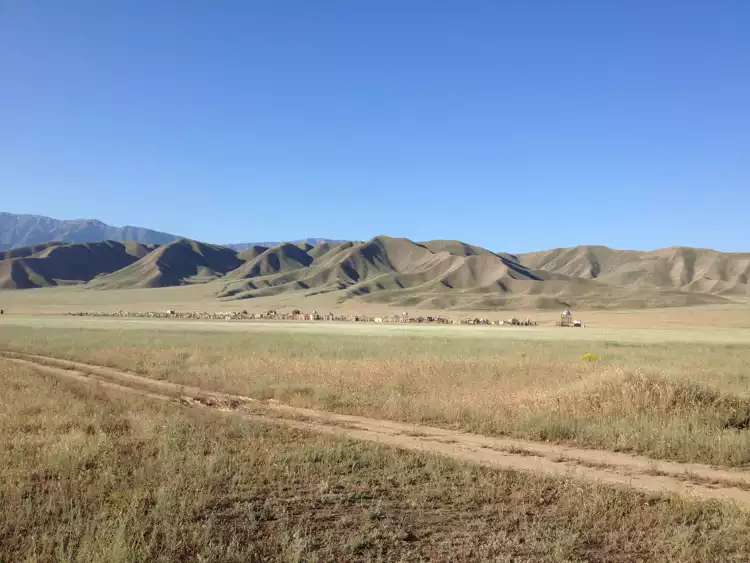
Kyrgyzstan rewards motion: hooves drumming across high pasture at Song-Kul, switchbacks burning your calves on the way to Altyn Arashan’s hot springs, dawn light firing across Issyk-Kul while a golden eagle blinks on a handler’s arm. Karakol feeds you lagman after the hike; Arslanbob cools you under walnut giants; a yurt night cracks open a sky so dense with stars you forget your phone exists. The grit is real—altitude nips, marshrutkas idle for hours, border zones demand permits, dogs bark at your tent—but the payoff keeps compounding. I still remember the first cold beer in Karakol after a 20-kilometer day: dust on my boots, steam off my shoulders, the Tien Shan stacked like a fortress behind town.

Compared to neighbors, Kazakhstan feels broader and smoother but less trail-forward, Tajikistan is harsher and higher with tougher logistics, and Uzbekistan trades peaks for silk-road magnificence. Kyrgyzstan is for hikers, riders, and independent travelers who like earning their views and being welcomed in for tea when the road runs out.

👉 Get the 📖 Travel Guide of Kyrgyzstan

Bishkek & Ala-Archa Corridor

Land, dump your pack, and get your systems dialed. Bishkek runs on marshrutkas, kebabs, and cash. Gear shops and ATMs cluster near the center; bazaars teach you to bargain fast. Ala-Archa sits up-canyon—taxis to the gate, then a leg-burning road or hitch to the trailheads. Steep trails, cold rivers, scree underfoot. Shoulder season needs microspikes; summer wants sun protection. Rewards planners and first-timers: fast logistics, strong day hikes, hot showers. The payoff is a skyline ridge, then an Arpa beer at a kiosk before dusk.

Issyk-Kul East & Karakol

Ride the ring road until the air turns sharp and the mountains close in. Karakol is a working town with trekkers mixed into market life—ashlyan-fu for lunch, animal market on Sunday. Trails punch hard: Ala-Kul’s pass is a lung test; Altyn-Arashan gives hot springs and creaky bridges. Marshrutkas run all day from Bishkek; guides, gear, and beds are easy to source. Rewards hikers who like back-to-back days and a real bed between pushes.

South Shore Issyk-Kul (Bokonbayevo–Barskoon–Jety-Oguz)

Long horizons, wind, and dust. Distances feel bigger here; you flag rides, walk the shoulder, and dive into canyons—Skazka’s crumbly ridges, Barskoon’s short, punchy waterfall climbs, Jety-Oguz’s red cliffs. Yurt stays are common; nights drop cold even in July. Minimal transit, maximal space. Suits road-trippers and DIY walkers who don’t mind waiting. Reward: a bracing lake swim, then hot samsa from a roadside oven.

Naryn, Song-Kul & Tash Rabat

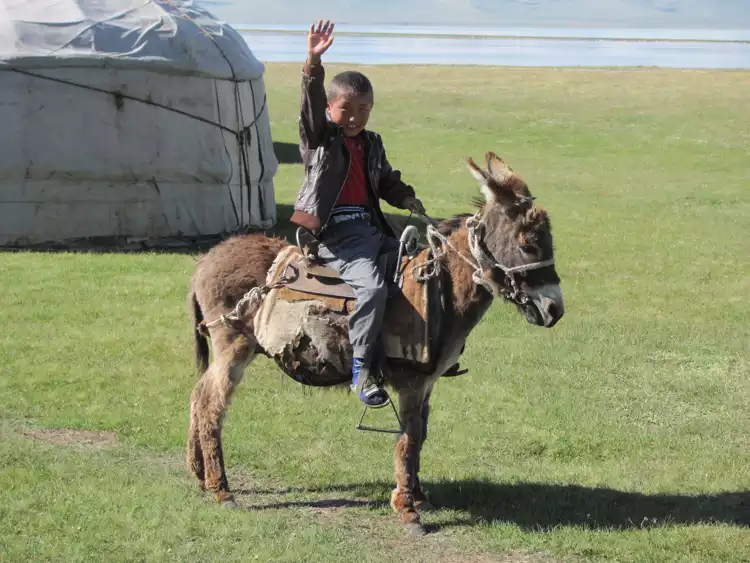
High, quiet, and honest. Roads rattle, storms move fast, and horses do the heavy lifting. Hire mounts in Kochkor or Naryn; expect cold huts, salt tea, and early starts. Border checkpoints toward Torugart mean passport discipline; some valleys need permits. For patient riders and trekkers who like altitude and silence. Dawn at Song-Kul—ice on the bucket, kymyz bite, herders already moving.

Osh & Alay Valley (Sary-Mogol–Peak Lenin)

South flips the script: heat in Osh’s bazaars, then a hard drive into big country. Shared cars bounce to Sary-Tash and Sary-Mogol; weather swings from dust to hail in an hour. Altitude hits early; carry layers and humility. Yurts at base camp serve plov and tea while Lenin glows above. Rewards grit: strong walkers, photographers chasing alpenglow, cyclists tracing the Pamir spine.
A visual overview of the country
Loading the map 🌍
CLICK TO FILTER
city
town
village
unique site
national park
hike
beach
attraction
festival
region
SHOW COUNTRY’S BESTSHOW ALL
film
0
0
0a
Issyk-Kul Beach
film
1
1
1a
Osh
film
2
2
2a
Ala-Kul Lake
film
3
3
3a
Arslanbob Walnut Forest
film
4
4
4a
Belagorka Waterfall
film
5
5
5a
Ala Archa
film
6
6
6a
Karakol
film
7
7
7a
Besh-Tash
film
8
8
8a
Salkyn-Tor
film
9
9
9a
Jyrgalan Valley
film
10
10
10a
Bishkek’s Ala-Too Square
film
11
11
11a
Tuz Ashu Pass
film
12
12
12a
Jyrgalan

Why go?What sets this destination apart

Mountains

Kyrgyzstan rewards effort. Trails climb from apricot orchards to scree and snow, passing yurts and wolf-scarred … read more 👉
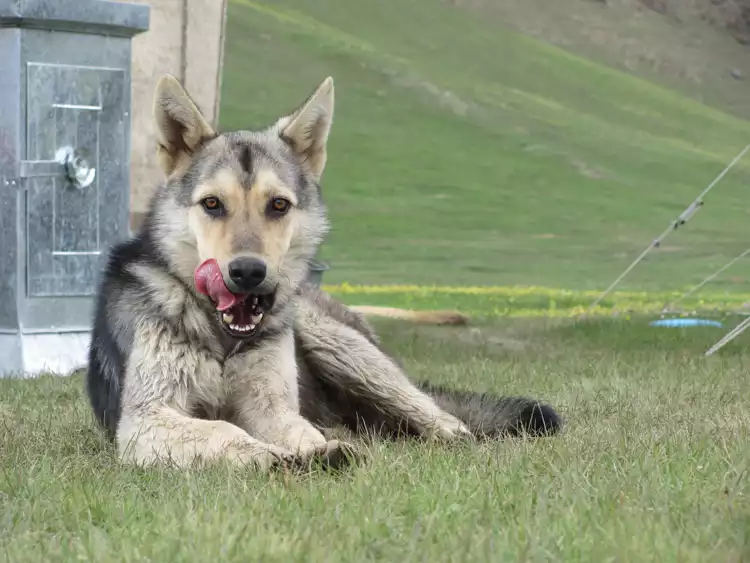
Kyrgyzstan rewards effort. Trails climb from apricot orchards to scree and snow, passing yurts and wolf-scarred dogs. Your lungs protest, then the ridge opens and Issyk-Kul flashes like polished steel. I earned Ala-Kul at sunrise, fingers numb, and the first sip of hot chai in Karakol felt like a medal. Pro tip: start early; storms build fast and passes hold hail even in July. Jyrgalan gives quiet valley-to-ridge circuits, while the Alay delivers big alpine with cheap horse support. Carry a filter, learn “salaamatsyzby,” and take the steep line. It pays.

People

Kyrgyz greet you in motion. On a marshrutka, someone wedges your pack overhead, presses sunflower seeds … read more 👉
Kyrgyz greet you in motion. On a marshrutka, someone wedges your pack overhead, presses sunflower seeds into your palm, cracks a joke in Russian and pantomime until everyone’s grinning. In the bazaar, a vendor plants a slice of melon in your hand, then argues, playfully, that his is the sweetest. Up on the jailoo, a herder rides over, pours salty tea, and won’t let your piala sit empty. Pro tip: learn “salamatsyzby” and “rahmat,” remove shoes, sip kumis—don’t chug. My best night? Karakol: shashlik smoke, komuz tunes, strangers pulling out chairs.

Low cost

Kyrgyzstan lets you travel hard on a soft budget. Marshrutkas stitch valleys and high passes; grab a … read more 👉
Kyrgyzstan lets you travel hard on a soft budget. Marshrutkas stitch valleys and high passes; grab a seat, bounce for hours, step off with change to spare. Street noodles, samsa, and bottomless tea fuel big days without bruising your wallet. Most backpackers cruise on a daily average in the low double digits—enough for a bed, two hot meals, and a long ride. Pro tip: drop into CBT in Kochkor or Karakol; homestays come with real breakfasts and reliable trail intel. I stock up at Osh Bazaar, then hammer a trek and reward it with an icy Arpa from a village shop.

Scenery

Kyrgyzstan rewards effort. You grind through larch and scree above Karakol, calves screaming, then Ala‑Kul … read more 👉
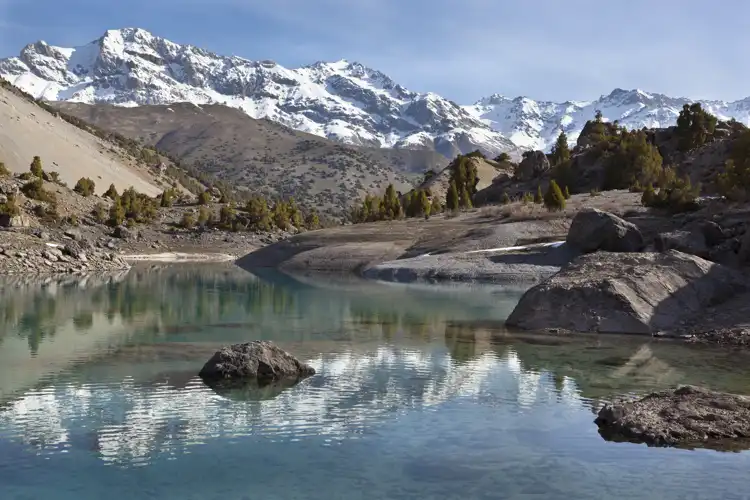
Kyrgyzstan rewards effort. You grind through larch and scree above Karakol, calves screaming, then Ala‑Kul drops open—turquoise ice in a black-rock bowl—and the world goes silent. Ride a wiry horse onto Song‑Kul’s rim; wind slaps, gullies echo, and sunrise turns yurts into lanterns. Push into Arslanbob’s walnut forest; hooves tick on dust, sap hangs sweet, and the valley breathes. Finish days in Altyn‑Arashan, soaking in creaky hot‑spring tubs while peaks lean in. Pro tip: start high passes before dawn and carry a real shell—the afternoon hail here doesn’t negotiate. Reward: a lukewarm Arpa in Karakol tastes perfect.

Backpackers

Kyrgyzstan pulls backpackers because mountains hit straight from the bus stop and logistics stay simple. … read more 👉
Kyrgyzstan pulls backpackers because mountains hit straight from the bus stop and logistics stay simple. Visa-free, cheap marshrutkas, hostels in Bishkek and Karakol, and the CBT network mean you can pivot fast: bazaar breakfast, yurt night, ridge-line tomorrow. Trails kick hard—Ala-Kul’s scree burns calves—but the payoff is cold Arpa on a Karakol hostel roof and a sky full of Tien Shan. Hitching is normal, tea arrives before your boots cool. Pro-tip: carry small bills and a Russian phrasebook. Personal: I learned to love kumis only after a wind-whipped ride to Song-Kul.

Uniqueness

Kyrgyzstan rewards effort. Marshrutkas rattle over high passes, then you ride a shaggy horse onto open … read more 👉
Kyrgyzstan rewards effort. Marshrutkas rattle over high passes, then you ride a shaggy horse onto open jailoo. Wind bites, hooves drum, and the steppe unrolls to Song-Kul like a cold green ocean. I sweated up the Ala-Kul pass—loose scree, burning lungs—then the lake exploded below, milky turquoise, and a yurt’s stove tea tasted like a medal. Bazaars in Osh and Karakol trade fat samsa, salty cheese, and gossip; hitching is normal, patience is currency. Pro tip: carry small bills, accept chai, and plan for slowness; the reward is space, silence, and a cold Arpa beer at dusk.
Want the complete picture of Kyrgyzstan?
The offline Travel Guide brings everything together — routes, highlights & planning.

See what's included in the guide 👉

Get the Travel Guide -

⭐ HighlightsThe places that define a trip here

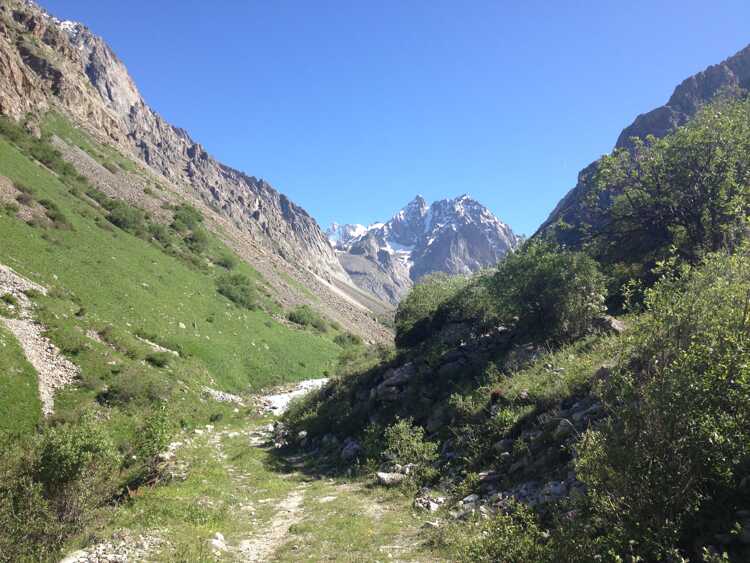
  • Ala-Archa National Park, Ak-Sai Gorge: You grind up the moraine, boots scraping granite, breath icing in the shade of a wall that eats sound. The trail slithers over scree to the glacier’s lip, where meltwater runs like a razor. Proof of presence: numb fingers on the cold chain railing, pine pitch stuck to your palms.
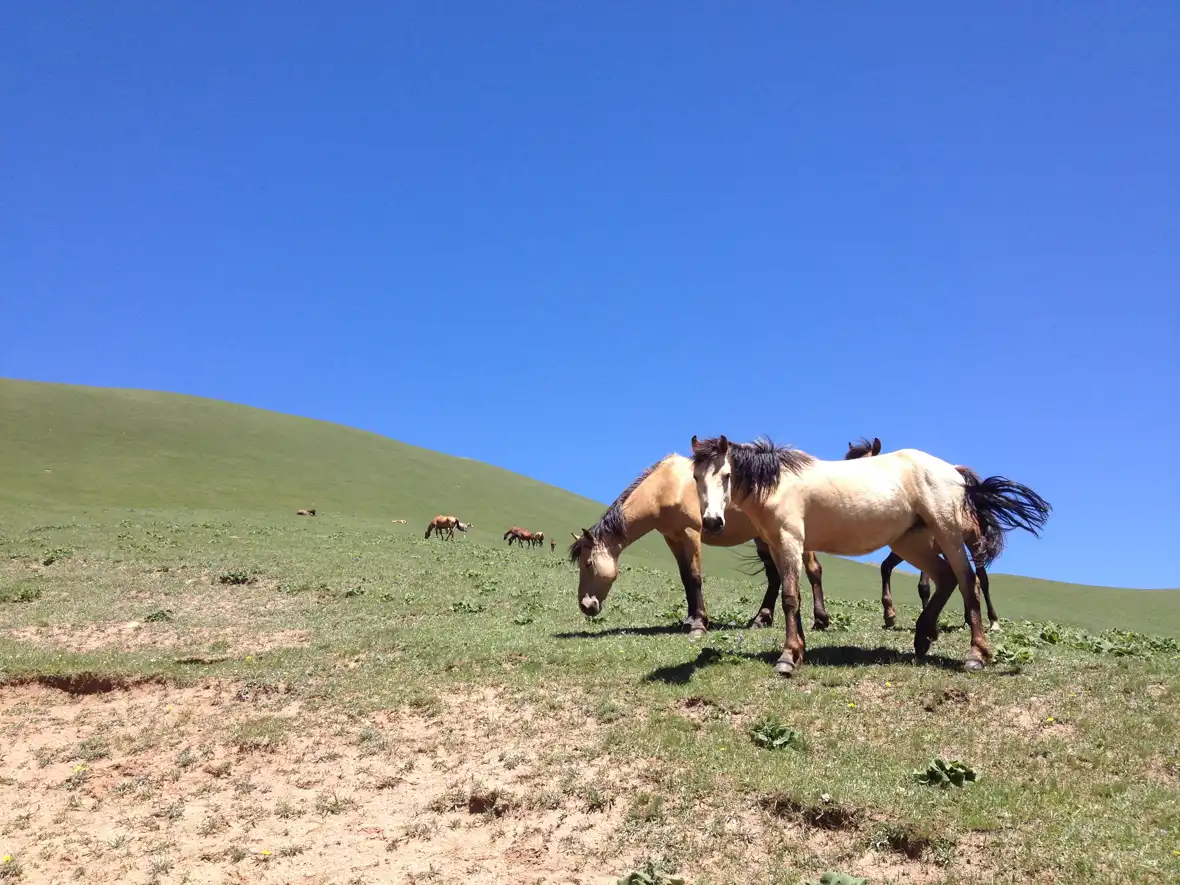
  • Song-Kul High Steppe: The road quits and the land opens—sky, grass, horse lines, and wind that never rests. You walk or ride across the ribcage of the plateau until the lake finally shows, a flat coin hammered by weather. Proof of presence: the tang of warm kumis on your tongue and felt-smoke baked into your jacket.
  • Ala-Kul Pass to Altyn Arashan: Switchbacks bite; slate slides underfoot; that turquoise bowl appears and dares you to stop. You crest the 3,800-meter ridge, legs jelly, then drop into larch and river noise. Proof of presence: sulfur steam fogging your glasses in a wooden hot-spring hut, pine resin sweet on wet skin.
  • Osh: Bazaar to Sulaiman-Too: You shoulder through
read more 👉
  • Ala-Archa National Park, Ak-Sai Gorge: You grind up the moraine, boots scraping granite, breath icing in the shade of a wall that eats sound. The trail slithers over scree to the glacier’s lip, where meltwater runs like a razor. Proof of presence: numb fingers on the cold chain railing, pine pitch stuck to your palms.
  • Song-Kul High Steppe: The road quits and the land opens—sky, grass, horse lines, and wind that never rests. You walk or ride across the ribcage of the plateau until the lake finally shows, a flat coin hammered by weather. Proof of presence: the tang of warm kumis on your tongue and felt-smoke baked into your jacket.
  • Ala-Kul Pass to Altyn Arashan: Switchbacks bite; slate slides underfoot; that turquoise bowl appears and dares you to stop. You crest the 3,800-meter ridge, legs jelly, then drop into larch and river noise. Proof of presence: sulfur steam fogging your glasses in a wooden hot-spring hut, pine resin sweet on wet skin.
  • Osh: Bazaar to Sulaiman-Too: You shoulder through tarps and tar-scented aisles where halva, bolts of cloth, and wrenches share a table. Grease from a hot samsa slicks your fingers as you climb the stone steps above the city. Proof of presence: palms polished by the shrine rock and diesel dust gritting your teeth.
  • Alay Valley, Achik-Tash & Lenin Peak Base Camp: The track rattles past yurts and yak herds until the glacier’s white wall fills the end of the world; then you walk higher, lungs bargaining, to Traveler’s Pass. The big face stands there, indifferent. Proof of presence: wind-burned cheeks and ice clinking inside your bottle at noon. Off the map: side ridges in Jyrgalan, quiet trails in Sary-Chelek, and the walnut shade of Arslanbob; my pick when I want to feel small in the best way—Ala-Kul at first light.
Spotted a mistake or missing a highlight? Contact us.

But Kyrgyzstan offers more...

Discover and compare all of its highlights per category

🧭 RoutesHow to structure a trip

The 5-Day Issyk-Kul & Karakol Trek Sampler

The Vibe: A mountain-focused hit of Kyrgyzstan built around Karakol and the eastern Issyk-Kul region, with one big trek, hot springs recovery, and a soft cultural landing at the lake. Expect shared taxis, marshrutkas, and plenty of time on your feet rather than in museums.
The Highlights:
  • Base days in Karakol with access to Karakol National Park’s classic valley trails.
  • A high-altitude push to Ala-Kul Lake and a night in Altyn Arashan’s hot-spring valley.
  • Chill time in Cholpon-Ata with beach access and open-air petroglyphs.

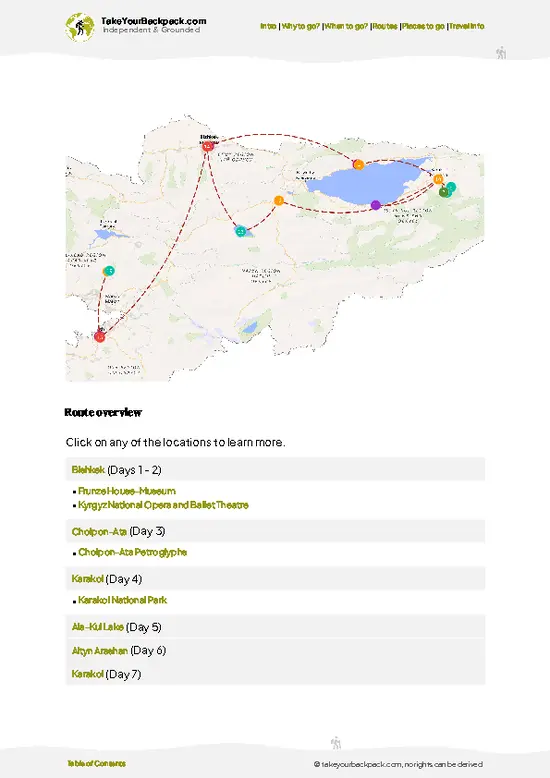
The 10-Day Bishkek-Issyk-Kul Explorer Loop

The Vibe: A balanced first-timer loop that stitches together Bishkek’s urban core, easy-access national parks, and both shores of Issyk-Kul at a steady but not rushed pace. You’ll ride marshrutkas between hubs, with short hops to trailheads and lakeside villages.
The Highlights:
  • City time in Bishkek anchored around Ala-Too Square and a day trip to Ala Archa National Park.
  • Silk Road history at
read more 👉

The 5-Day Issyk-Kul & Karakol Trek Sampler

The Vibe: A mountain-focused hit of Kyrgyzstan built around Karakol and the eastern Issyk-Kul region, with one big trek, hot springs recovery, and a soft cultural landing at the lake. Expect shared taxis, marshrutkas, and plenty of time on your feet rather than in museums.
The Highlights:
  • Base days in Karakol with access to Karakol National Park’s classic valley trails.
  • A high-altitude push to Ala-Kul Lake and a night in Altyn Arashan’s hot-spring valley.
  • Chill time in Cholpon-Ata with beach access and open-air petroglyphs.

The 10-Day Bishkek-Issyk-Kul Explorer Loop

The Vibe: A balanced first-timer loop that stitches together Bishkek’s urban core, easy-access national parks, and both shores of Issyk-Kul at a steady but not rushed pace. You’ll ride marshrutkas between hubs, with short hops to trailheads and lakeside villages.
The Highlights:
  • City time in Bishkek anchored around Ala-Too Square and a day trip to Ala Archa National Park.
  • Silk Road history at Burana Tower and lazy afternoons on Cholpon-Ata Beach.
  • Hiking days out of Karakol and Jyrgalan in the eastern Tien Shan.
  • South-shore color at Skazka canyon and quiet nights in Tamga Village.

The 15-Day Kyrgyzstan Grand Mountain & Culture Circuit

The Vibe: A deep-dive journey linking the capital, Issyk-Kul, central highlands, remote border lakes, and the southern city of Osh, with yurt stays and big landscapes as the backbone. Travel is mostly overland with a possible internal flight, trading a few long days on the road for serious variety.
The Highlights:
  • Urban bookends in Bishkek and Osh, including Ala-Too Square and Sulaiman-Too Sacred Mountain.
  • Issyk-Kul’s north and south shores, from Burana Tower to Karakol, Jyrgalan, and Skazka canyon.
  • Highland life around Song Kol Lake, Kochkor, and Naryn.
  • Remote adventure to Köl-Suu and time under the trees in Arslanbob Walnut Forest.
🌍 Want a ready-to-use travel plan for Kyrgyzstan?
The overview above compares different route options based on your travel time and style. The complete Travel Guide breaks each itinerary down in detail, including maps, stops, highlights, and transport information.

Explore all route details 👉

Get the Travel Guide -

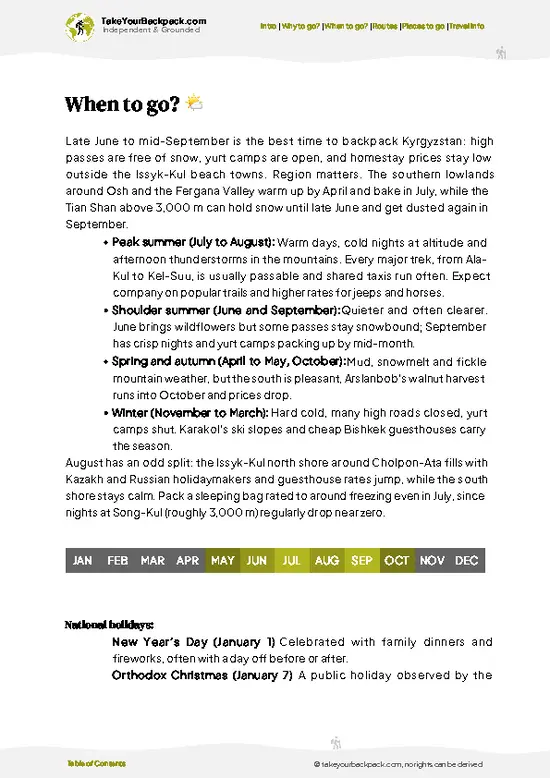
🌤️ When to go?Choosing the right months to travel

Late June to mid-July and again in early-late September is the sweet spot. The high passes have shed most snow, rivers drop from violent to fordable, and marshrutkas still run often enough to stitch valleys together. Prices haven’t hit peak-yurt-gouge or have already slid back, and you’ll find beds in Karakol without begging. Days run warm at altitude, nights bite just enough to keep mosquitoes down. September adds larch turning gold and clearer skies; June gives you longer light and fewer tour groups. Both windows keep effort high and nonsense low.
  • Peak Heat/Crowd (July-August): You pay more, jostle for marshrutka seats, and queue for a photo at Ala-Kul. Then the payoff: dry trails, big daylight, Issyk-Kul swims, and a beer cold enough to make the pass you just crushed feel worth every ten som.
  • Autumn Shoulder (September): Camps fold, prices ease, dust settles. Trails empty but services still tick. You move fast—harvest markets pop, skies sharpen, and yurts still smoke on the jailoo. Oddity: early October goes quiet fast; weather holds, but transport thins.
  • Spring Shoulder (late May-late June): Snowlines retreat, shops reopen, guides answer phones again. Rivers roar by midday, so start pre-dawn, hit crossings early, and ride the country waking up under your boots.
  • Winter/Deep Off-Peak (late Oct-April): Silence sits heavy. Blue shade, iron-cold bus stops, empty trailheads. Hack it by carrying microspikes and aiming for south-facing routes and low valleys; end days in a banya, not a bivy.

Pack a three-season bag that’s honest to freezing, and in July-August pre-book yurts and horses 3-5 days out; outside that window, book nothing and let the marshrutka map your route.

source: climatestotravel.comJANJanuary: below average for travelingFEBFebruary: below average for travelingMARMarch: below average for travelingAPRApril: fair for travelingMAYMay: good for travelingJUNJune: highly recommended for travelingJULJuly: excellent for travelingAUGAugust: highly recommended for travelingSEPSeptember: excellent for travelingOCTOctober: good for travelingNOVNovember: fair for travelingDECDecember: below average for traveling
📅 Traveling in a specific month?
Get a full month-by-month breakdown of weather, crowds, costs, festivals, and seasonal highlights in the complete travel guide.

Get full details when to go 👉

Get the Travel Guide -
!2015-06-18 13.00.39

💰 Costs (as of 2025)Typical budget expectations

$30-40/day if you sleep in dorms, eat what locals eat, and ride marshrutkas; $45-60/day once you add horses, jeeps, or a beer habit.
  • dorm accommodation: $6-12 in Bishkek/Osh hostels; $8-15 in Karakol and trail towns in summer; village guesthouses or yurts often $10-18 with breakfast, sometimes dinner. System tip: CBT offices use fixed per-person rate sheets—walk-in prices usually match; booking through the office adds a small cut but secures meals/blankets. Show up early and ask for “half-board” if you don’t want the full meal package; they’ll adjust.
  • meals: Supermarket Survival: bread, cheese, tomatoes, instant noodles, kefir, and chocolate keep you moving for $4-6/day if you cook or cold-camp. Street food reality: samsa 40-80 KGS, lagman or plov 180-300 KGS, manty 15-30 KGS each, shorpo bowls 120-200 KGS; tea usually included; 0.5L beer $1-2. Cheaper than Kazakhstan’s cafes, roughly level with Uzbekistan if you skip tourist menus. I eat at bazaar kitchens—greasy, fast, honest portions—then grab fruit for the trail.
  • local transport: Marshrutkas unlock the country for pocket change: city rides 15-30 KGS; Bishkek-Karakol ~$5-7; Kochkor, Naryn, and Karakol spokes priced similarly per kilometer.
read more 👉
$30-40/day if you sleep in dorms, eat what locals eat, and ride marshrutkas; $45-60/day once you add horses, jeeps, or a beer habit.
  • dorm accommodation: $6-12 in Bishkek/Osh hostels; $8-15 in Karakol and trail towns in summer; village guesthouses or yurts often $10-18 with breakfast, sometimes dinner. System tip: CBT offices use fixed per-person rate sheets—walk-in prices usually match; booking through the office adds a small cut but secures meals/blankets. Show up early and ask for “half-board” if you don’t want the full meal package; they’ll adjust.
  • meals: Supermarket Survival: bread, cheese, tomatoes, instant noodles, kefir, and chocolate keep you moving for $4-6/day if you cook or cold-camp. Street food reality: samsa 40-80 KGS, lagman or plov 180-300 KGS, manty 15-30 KGS each, shorpo bowls 120-200 KGS; tea usually included; 0.5L beer $1-2. Cheaper than Kazakhstan’s cafes, roughly level with Uzbekistan if you skip tourist menus. I eat at bazaar kitchens—greasy, fast, honest portions—then grab fruit for the trail.
  • local transport: Marshrutkas unlock the country for pocket change: city rides 15-30 KGS; Bishkek-Karakol ~$5-7; Kochkor, Naryn, and Karakol spokes priced similarly per kilometer. For remote valleys, wait at the shared-taxi stand and split seats; ignore “private car” quotes three times higher. Hitching works on secondary roads if you’re patient and polite. Flights save time but blow budget; the road teaches the landscape for far less.
  • activities: Trekking is free if you carry your own kit. National park/valley gates run 50-300 KGS. Horse rental $15-25/day; a local guide runs similar; cheaper than Kazakhstan’s Almaty region, pricier than a simple day hike in Uzbekistan’s foothills, but the payoff is high. Yurt stays with two meals $12-20. Hot springs 100-300 KGS. Border-zone permits near Torugart/Chatyr-Kul or Lenin Peak area cost ~$15-20 via an office; give it a few days. Big costs come from 4x4 transfers to trailheads—split the ride or start walking.
  • miscellaneous: Budget leaks: ATM fees bite (foreign cards often 1-3% plus bank fee), bottled water adds up (carry a filter; mountain taps are cold but not always clean), cafes in touristy Karakol/Osh charge Almaty prices for espresso, sunscreen and gas canisters cost more than you think, and laundry runs 200-300 KGS. SIM with data is cheap ($2-5) and beats overpaying for “Wi-Fi cafes.” Compared to Tajikistan, you save by not hiring a $100/day jeep; compared to Kazakhstan, you pay less for beds and beer. I once overpaid a taxi to Jyrgalan by jumping too fast; next morning I waited at the bazaar and paid half—patience is currency here.
⚠️ Prices can change and everyone travels differently, so take this as a rough guide. Hope it helps you plan your adventure!

✈️ The backpacker research shortcutKyrgyzstan Travel Guide

An offline-friendly backpacking guide with optimized travel routes, ranked highlights, transport advice, and the best areas to stay.
example page 0 from our offline Travel Guide for Kyrgyzstanexample page 1 from our offline Travel Guide for Kyrgyzstanexample page 2 from our offline Travel Guide for Kyrgyzstanexample page 3 from our offline Travel Guide for Kyrgyzstanexample page 4 from our offline Travel Guide for Kyrgyzstanexample page 5 from our offline Travel Guide for Kyrgyzstanexample page 6 from our offline Travel Guide for Kyrgyzstanexample page 7 from our offline Travel Guide for Kyrgyzstan
The digital guide (323 pages) contains:
83 highlights, ranked by travel appeal
Optimized 5, 10 & 15-day travel routes
Cities, national parks, beaches, historical sites, ...
How to get around
Offline-friendly for travel without Wi-Fi
👉 Click to see all 30+ guide features

📅 Plan smarter in minutes, not weeks
Month by month travel advice
Festivals & national holidays
Budget expectations

🗺️ Go to the right places, skip the overrated ones
Honest pros & cons of destinations
Top hikes, parks & viewpoints
Lesser-known places most travelers miss
Clear “worth it vs skip it” guidance

🛏️ Travel smoothly without rookie mistakes
Best areas to stay
Transport systems explained simply
Common scams & safety advice
SIM cards, money & practical tips

🌍 Understand the country, not just visit it
Culture & traditions
52 Essential phrases & customs
Festivals worth planning around
Traveler-friendly historical context
Insights that make places more meaningful

📱 Built for real travel conditions
Fully downloadable PDF
Works completely offline
Optimized for phone use
Useful in remote areas & buses
Everything in one place
Save weeks of stressful planning
Get instant access to the full guide directly. 30-day money-back guarantee.


Sent to your inbox immediately after payment • 100% Secure Checkout
Best Backpacking Travel Advisor 2025 tourism awardBest Backpacking
Travel Advisor
2025
What others say about Take Your Backpack Guides:
⭐⭐⭐⭐⭐
Fantastic, amazing amount of information!
⭐⭐⭐⭐⭐
My goodness this is amazing, it's what I've been looking for hats off too you!
⭐⭐⭐⭐⭐
I think this is absolutely BRILLIANT
⭐⭐⭐⭐
Very complete and informative. It's still missing places, but I gotta to commend you
⭐⭐⭐⭐⭐
This is truly amazing, thank you, can't wait to explore it with my kids!
⭐⭐⭐⭐⭐
Awesome resource, thank you!
⭐⭐⭐⭐⭐
This is amazing! Can't wait to explore the ones I haven't seen
⭐⭐⭐⭐
I love this! Well done, great idea.
⭐⭐⭐⭐⭐
Thanks for taking the time to make this gem!
⭐⭐⭐⭐⭐
This might be the best website I've ever seen.
⭐⭐⭐⭐⭐
Congratulations, and thank you so much for your work; it's incredibly valuable.
⭐⭐⭐⭐
In all seriousness I think you did a great job pointing out the important spots
⭐⭐⭐⭐⭐
10/10 very good
⭐⭐⭐⭐⭐
As someone who's only just starting to visit regularly this is awesome, thank you.
⭐⭐⭐⭐
Thank you very much! I'm going to visit my dad, it's going to be very useful!
⭐⭐⭐⭐⭐
This is really cool! We'll be travelling for the first time and this definitely come in handy.
⭐⭐⭐⭐⭐
You are now our minister of culture, congratulations 👨‍💼
⭐⭐⭐⭐⭐
Just wanted to tell you that this is a pearl! Going to follow your recommendations.
⭐⭐⭐⭐⭐
This is so cool. I'll definitely be using the resource for my travels soon.
⭐⭐⭐⭐⭐
This is very impressive! Good work.
⭐⭐⭐⭐⭐
This is an amazing and informative site. Very well done!

🛏️ Where to stay?Accommodation types and options

Yes — Kyrgyzstan has hostels and budget guesthouses across major cities and lakeside towns, especially in Bishkek, Osh, Karakol and Issyk‑Kul resort areas.
Bishkek downtown (central/Ala‑Too) concentrates the most hostels and easy access to nightlife, taxis and museums but is busier and slightly pricier; Osh city centre near Jayma Bazaar puts you close to markets and long‑distance buses but can be noisy and crowded; Karakol and Cholpon‑Ata on Issyk‑Kul give cheap guesthouses with direct access to trekking and beaches, quieter nights and more seasonal closures or limited services.
For first … read more 👉
Yes — Kyrgyzstan has hostels and budget guesthouses across major cities and lakeside towns, especially in Bishkek, Osh, Karakol and Issyk‑Kul resort areas.
Bishkek downtown (central/Ala‑Too) concentrates the most hostels and easy access to nightlife, taxis and museums but is busier and slightly pricier; Osh city centre near Jayma Bazaar puts you close to markets and long‑distance buses but can be noisy and crowded; Karakol and Cholpon‑Ata on Issyk‑Kul give cheap guesthouses with direct access to trekking and beaches, quieter nights and more seasonal closures or limited services.
For first nights pick a central hostel to sort logistics, carry cash, expect simpler facilities outside big towns and book ahead on Issyk‑Kul in summer to avoid being turned away.

If you enjoy meeting fellow travelers, consider choosing hostels with high ratings for atmosphere. On the other hand, if you prefer having your own space, a hotel might be a better option.

🚌 Getting aroundWhat moving around is really like

Kyrgyzstan moves on mountain time and market logic. Clocks matter until the road climbs; then the clouds, the pass, and the driver’s mood set the pace. Vans leave when they’re full, not when the sign says. Shared taxis hunt like wolves—fast when a pack forms, idle when it doesn’t. You read queues like weather, stake out the door, and pounce when wheels actually roll. The country rewards momentum: keep moving, switch modes without drama, and the peaks open.
  • Shared taxis (taksi) The speed play between
read more 👉
Kyrgyzstan moves on mountain time and market logic. Clocks matter until the road climbs; then the clouds, the pass, and the driver’s mood set the pace. Vans leave when they’re full, not when the sign says. Shared taxis hunt like wolves—fast when a pack forms, idle when it doesn’t. You read queues like weather, stake out the door, and pounce when wheels actually roll. The country rewards momentum: keep moving, switch modes without drama, and the peaks open.
  • Shared taxis (taksi) The speed play between cities. Four bodies and the car bolts; three and you wait, bargaining filling the gap. It costs 2-3x a marshrutka, but you save an hour or two on long hauls and stop less. Pay a little more for the front seat if you get carsick; buy a second seat if you want elbow room. Drivers try to squeeze five—hold your line. Cash up front locks your spot, but agree the price before the door shuts.
  • Marshrutka minibuses This is the neighborhood bloodstream. You pile in, backpack on your lap, exact change in hand, and pass fares forward like a trust exercise. Offer your seat to elders without being asked. Call your stop loudly, because the music and rattles drown shyness. They leave when full, smoke at short breaks, and weave through traffic with a confidence you borrow by gripping the rail. It’s cheap, honest, and you’ll learn more Kyrgyz and Russian numbers here than anywhere.
  • Bike (beater MTB) The geometric cheat code. Strap it to a van roof for the highway, then pedal the last dusty 10-30 km where engines taper off—Song-Kul from Kyzart, side tracks along Issyk-Kul’s south, gravel spurs into jailoo country. A bike jumps irrigation ditches, skirts washed-out culverts, and turns a missed ride into progress. Carry a spare tube, pump, and chain lube; afternoon headwinds punch hard, and sheepdogs test your nerve. Wave, smile, keep rolling.
  • Hitchhiking and informal ride-shares The budget swerve. Palm-down wave at the roadside, target gas stations and road checkpoints where cars slow. Many drivers expect a token payment—agree it before you toss your pack in the trunk. Families beat lone dudes for vibe and safety. On remote valleys it’s faster than waiting for the one van that never comes. Skip sensitive border zones unless your permits are squared away.

Master tip: Move hub to hub at dawn—hit the bus station early, take the first marshrutka to a big town, immediately switch to a shared taxi, and hitch or bike the final miles without lingering.
Distance: Manas International Airport (FRU) is about 27 km (17 miles) northwest of central Bishkek (Ala-Too Square/Chuy Ave area).

Public transport
  • Marshrutka 380 (minibus) — The only direct public transport. It departs from just outside Arrivals and runs to the city via Chuy Avenue, with a terminus near the railway station (“Vokzal”). You can hop off at major stops along the way.

    Time: 35-50 minutes, depending on traffic.

    Frequency: about every 15-30 minutes in the day; thinner late at night (you may wait 30-60 minutes).

    Cost: around 60-70 KGS, cash to the driver (small bills help). Drivers may ask you to pay an extra seat if your luggage takes significant space.

Taxi options (including ride-hailing)
  • Ride-hailing (Yandex Go, Namba Taxi): Typically 500-900 KGS to the center; 30-45 minutes. Order in the app after exiting the terminal and meet at the designated pickup area.
  • Airport taxis/stands: Usually 800-1,200 KGS to the center; 30-45 minutes. Agree the fare before you get in. Late-night arrivals or heavy traffic can push prices higher.

Tips: Have some cash (KGS) for the minibus and in case card isn’t accepted by your driver. If you arrive very late, minibuses can be sporadic—plan on a taxi. As of 2025, the details above are current, but fares can shift a bit with fuel prices and demand.
⚠️ Prices and routes can change, so take this as a rough guide and ask for local advice when you arrive.

🔒 Safety (risk Level: medium)Staying safe while traveling

Safety for solo travelers, including women and LGBTQ+ individuals
Kyrgyzstan is generally safe for solo travelers, including women and LGBTQ+ individuals, but exercising common sense is essential. Women should dress modestly, especially in rural areas, to avoid unwanted attention. LGBTQ+ travelers might face challenges, as societal acceptance is low, so discretion is advised. Always stay aware of your surroundings and connect with local or expat communities for up-to-date advice.


Full official government travel advisory (live updates)
View details 👉

✈️ VisaVisa requirements for Kyrgyzstan

Visa requirements for Kyrgyzstan vary by nationality. Citizens from many countries, including the U.S. and most EU nations, can enter visa-free for up to 60 days. If you need a visa, apply online through the Kyrgyzstan e-Visa portal for a quick and straightforward process.

source: mfa.gov.kg
⚠️ Visa requirements can change over time, so always check the latest visa requirements with the official embassy or government website before you travel.

🎒 What to pack?What to wear and bring

Traveling to Kyrgyzstan is like stepping into a postcard with its stunning mountains and vast landscapes. When packing, remember it can get chilly, especially in the higher altitudes, so layers are key. The summers are warm but not scorching, while winters can be brutally cold, especially in the mountains. If you’re planning to visit rural areas, keep it modest out of respect for the local culture. The terrain is mostly rugged, so sturdy footwear is non-negotiable.

Apart from this country specific advice, I have also crafted a general packing list that should help on any trip. authorOver the years, I've learned the importance of packing minimally. It's so much easier to jump on the back of a truck or squeeze yourself into the last spot of a minibus without that supersized backpack. If you're headed to a warm destination, leave your winter jacket at home; for colder regions, opt for thin thermal underlayers. Instead of packing your entire wardrobe, bring just three sets of clothes, as laundry facilities are available everywhere.
View the full list 👉
🎒 Planning the practical side of your trip?
Get detailed information on transport, daily budgets, internet access, local customs, food, language, and other essentials in the complete Travel Guide.

Get detailed practical information 👉

Get the Travel Guide -

🙋 FAQTravel questions about Kyrgyzstan

Trip Planning


Personal tip: I normally search on good rating for atmosphere (for meeting people) and location (for easy exploring). Cleanliness as a bonus.


Travel Essentials

Routine vaccinations are recommended: measles-mumps-rubella (MMR), diphtheria-tetanus-pertussis, varicella (chickenpox), polio, and the yearly flu shot.

Consider getting vaccinated for hepatitis A and B, as these can be spread through contaminated food or water. Typhoid vaccination is also advisable if you’re staying with locals or visiting smaller towns.

Depending on your travel plans, rabies vaccination might be worth considering, especially if you plan on hiking or spending time in rural areas where you might encounter animals.

Always consult a healthcare provider for personalized advice.


vaccination requirements
When I first started traveling, I often spent part of my first day in a new country hunting for a local SIM card. While this can still be slightly cheaper, it also takes time and planning.

These days, it's much simpler to install an eSIM before leaving home. Once you arrive in Kyrgyzstan, you can activate it immediately and have mobile data from the moment you land — which is especially useful for ordering transport or navigating away from busy airports.

There are many providers nowadays, and price differences are usually small. I personally go with Airalo, as it offers excellent network coverage throughout the country and strong global coverage, so you can manage multiple countries from a single app.


Get your e-sim for Kyrgyzstan

Culture & Customs

Remove your shoes when entering a home. Accept food and drink when offered; refusing might seem rude. Dress modestly, especially in rural areas; women might consider wearing a headscarf when visiting religious sites. Public displays of affection are frowned upon, so keep it low-key. For gay travelers, discretion is advised due to conservative attitudes. When giving or receiving items, use your right hand or both hands. Avoid discussing politics or criticizing local customs openly.
Trying traditional food is always a great way to experience the culture. Here are some must-try dishes for Kyrgyzstan.
  • Beshbarmak: This is the national dish of Kyrgyzstan, traditionally made with boiled meat (usually lamb or beef) and served over flat noodles. It’s a communal dish that’s all about sharing, reflecting the nomadic heritage of the Kyrgyz people.
  • Plov: Similar to pilaf, this dish is a hearty mix of rice, vegetables, and meat, often lamb. It’s a staple at any social gathering and showcases the Central Asian flair for flavorful, aromatic meals.
  • Lagman: A noodle dish influenced by Uyghur cuisine, featuring hand-pulled noodles with a spicy meat and vegetable sauce. It’s a comfort food that’s perfect for chilly mountain evenings.
  • Shashlik: These skewered and grilled meat kebabs are a favorite street food, often enjoyed with a side of fresh bread and pickles. It’s a delicious reminder of the region’s Silk Road history.
  • Boorsok: Small pieces of fried dough, often served with tea. These are commonly found at celebrations and symbolize hospitality and the warm, inviting nature of Kyrgyz culture.
Locals in Kyrgyzstan often drink tap water, but it’s not recommended for tourists due to potential stomach issues. Opt for bottled or filtered water to be safe. Keep a portable filter or purification tablets handy if you’re heading into rural areas.
The main language in Kyrgyzstan is Kyrgyz. Backpacking is way more rewarding if you know a bit of the local language, so I'd suggest brushing up on the basics just in case your Kyrgyz skills have become a bit rusty.

Want to understand locals better?
The complete Travel Guide for Kyrgyzstan includes 52 essential words and phrases — greetings, thank-yous, ordering food, transport, numbers, and common local expressions you'll actually hear.

Get your local basic phrases 👉

Get the Travel Guide -


In Kyrgyzstan, English proficiency varies significantly depending on the region and the demographic. In urban areas like Bishkek, you will find a higher number of English speakers, particularly among the younger population and those in the tourism and hospitality sectors. Many hotels, restaurants, and tour operators offer services in English, making it easier for travelers to navigate their stay.

However, in rural areas and smaller towns, English is less commonly spoken. Locals may have limited English skills, and communication can be challenging. In these regions, knowing a few basic phrases in Russian or Kyrgyz can be very helpful.

Overall, while English is not universally spoken, travelers can generally find enough English speakers in major cities and tourist hotspots to facilitate their journey. It’s advisable to learn a few key phrases in the local languages to enhance interactions and show respect for the culture.

Money & Payments

The local currency of Kyrgyzstan is KGS (сум).

If you’re backpacking in Kyrgyzstan, it’s handy to know that ATMs are pretty common in cities like Bishkek and Osh. However, in rural areas, they can be as rare as a snow leopard. Always carry some cash for those off-the-beaten-path adventures. The local currency is the Kyrgyzstani Som (KGS), and you’ll want to keep some on hand for markets or small eateries.

Both US dollars and euros are widely accepted for exchange, but dollars tend to be favored. Make sure your bills are in good condition; any tears or marks and they might be rejected. Exchange offices are common and generally offer better rates than banks. Keep an eye out for ones that don’t charge a commission.

Credit cards aren’t as widely accepted as you might hope, especially outside the main urban areas. It’s a good idea to pay for large expenses like hotels or tours with a card when you can, but for everyday purchases, cash is king. As a backup, bring a bit more than you think you’ll need in both local currency and dollars or euros, just in case.

Tipping in Kyrgyzstan isn’t a big deal, but it’s appreciated. If you’re in a restaurant, leaving about 5-10% of the bill is a nice gesture. For taxis or small services, rounding up the fare is common, but not expected.

🧩 Nearby countriesOther countries to combine with Kyrgyzstan

📸 PhotosMoments captured along the way

Take your backpack - Kyrgyzstan - 0
Take your backpack - Kyrgyzstan - 1
Take your backpack - Kyrgyzstan - 2
Take your backpack - Kyrgyzstan - 3
Take your backpack - Kyrgyzstan - 4
Take your backpack - Kyrgyzstan - 5
Take your backpack - Kyrgyzstan - 6
Take your backpack - Kyrgyzstan - 7
Take your backpack - Kyrgyzstan - 8
Take your backpack - Kyrgyzstan - 9
Take your backpack - Kyrgyzstan - 10
Take your backpack - Kyrgyzstan - 11
Take your backpack - Kyrgyzstan - 12
Take your backpack - Kyrgyzstan - 13
Take your backpack - Kyrgyzstan - 14
Take your backpack - Kyrgyzstan - 15
Take your backpack - Kyrgyzstan - 16
Take your backpack - Kyrgyzstan - 17
Take your backpack - Kyrgyzstan - 18
Take your backpack - Kyrgyzstan - 19
Take your backpack - Kyrgyzstan - 20
Take your backpack - Kyrgyzstan - 21
Take your backpack - Kyrgyzstan - 22
Take your backpack - Kyrgyzstan - 23
Take your backpack - Kyrgyzstan - 24
Take your backpack - Kyrgyzstan - 25
Take your backpack - Kyrgyzstan - 26
Take your backpack - Kyrgyzstan - 27
Take your backpack - Kyrgyzstan - 28
Take your backpack - Kyrgyzstan - 29
Take your backpack - Kyrgyzstan - 30
Take your backpack - Kyrgyzstan - 31
Take your backpack - Kyrgyzstan - 32
Photographed by: Johan Kruseman

Observations and takeaways

Start of my 1.5 year travel around the world

Start of my 1.5 year travel around the world

Kyrgyzstan | Still at Amsterdam Lelylaan station, I faced my biggest challenge, almost jeopardizing my trip. I didn’t feel like carrying my public transport card around the world for a year, so I left it at home, thinking I could make the short journey to Schiphol Airport without checking in for this unique occasion. However, it turns out that my home station i...
Read more
Using compass and counting steps to find my hostel

Using compass and counting steps to find my hostel

Kyrgyzstan | The next day, I arrived in Bishkek, where the second challenge awaited me: “find your hostel!” My biological clock was still in the Netherlands, my iPhone was still on Turkish time, and in Bishkek, everyone thought it was three hours later than it actually was. Soaked in confusion, sleep, and jet lag, I was dropped off by the taxi at the hostel. We...
Read more
A glacier-cold river blocking my way back home

A glacier-cold river blocking my way back home

Kyrgyzstan | The next day, I hitchhiked to a national park nearby. After a beautiful hike to the end of the main canyon (in 35-degree heat in the morning and now at the snow line), I returned to find that the river I had crossed on the way had doubled in size due to the glaciers higher up unable to withstand the sun. So, I took off my shoes and waded through, e...
Read more
A restaurant without food and a hotel without WC

A restaurant without food and a hotel without WC

Kyrgyzstan | Down in the valley, the restaurant didn’t make much effort to earn its first Michelin star, serving only soup and tea. And the hotel next door didn’t quite live up to the Lonely Planet’s “top choice” mark either: no toilet in the hotel. So, I left with an empty stomach but full intestines, guided by my lingering jet lag, at 5:00 am to make my way ...
Read more
Suddenly at the bottom of the backpacker ladder

Suddenly at the bottom of the backpacker ladder

Kyrgyzstan | In the Netherlands, I could get away with countries like Kyrgyzstan and Mongolia, but here I’m at the bottom of the ladder as a ‘regular backpacker’: an Englishman with a Vietnamese wife who cycled from Hanoi to Paris; a Dutch family who had been on the road for 5 years in a Land Rover; two Poles on a tandem bike, and a German guy who bought a hors...
Read more
Integrating in Kyrgyz culture

Integrating in Kyrgyz culture

Kyrgyzstan | That evening, we went out. After pre-drinking in the hostel with vodka in Danone cups (which is quite intense for a shot) for 30 cents, Le Garage was the first on our list. In the basement of a completely deserted hotel, with six staff members and no visitors, we hoped to liven things up a bit, but it wasn’t enough for a fun night. We found that in...
Read more
How to pretend that you like Kymys when it resembles the taste of puke?

How to pretend that you like Kymys when it resembles the taste of puke?

Kyrgyzstan | After four days in Bishkek, I headed to Kochkor with the German guy who had stabled his horse there to buy a new saddle blanket in Bishkek. In Kochkor, he hopped on his horse, and I went to my homestay: a super nice family with two funny sons who spoke brilliant English. Later, I would go with one of them to the World Cup qualifying football match ...
Read more
World Cup qualification | Kyrgyzstan vs Australia

World Cup qualification | Kyrgyzstan vs Australia

Kyrgyzstan | The next day was finally the moment to resolve all the cliffhangers: watching the World Cup qualifying match between Kyrgyzstan and Australia at the Bishkek stadium was an absolutely amazing experience. When Kyrgyzstan scored their first goal in the last minutes (1-2), the crowd went wild (even though there was no roof on the stadium). The team did...
Read more
Spending the night in the gers of a family in the mountains

Spending the night in the gers of a family in the mountains

Kyrgyzstan | Next on the agenda was Lake Song-Kol. Don’t be alarmed by the word ‘agenda’; it’s more like a list of places you want to visit that need to be done in a certain order because they are too far apart to visit at the same time. Armed with offline Google Maps, I embarked on a three-day ger trek into the mountains. Even though I initially took the wrong...
Read more
A sudden frisbee ban in the mountains

A sudden frisbee ban in the mountains

Kyrgyzstan | After a night and a kind of porridge with horse milk for breakfast, I headed to the next ger where we spent the evening playing frisbee brought by two Israelis. The children quickly caught on to the game, but at one point, their father came out to show us how a real man does it. Clearly dissatisfied with our lackluster frisbee throwing, he used all...
Read more
How to (not) learn a new card game without any English

How to (not) learn a new card game without any English

Kyrgyzstan | By chance, I met the German guy on horseback, and together we tried to learn a new card game from a boy who understandably didn’t say anything since we only responded with words that had nothing to do with Kyrgyz. So, based on how he played and whether he approved or disapproved of our actions, we tried to decipher the underlying rules. But since h...
Read more

An amazing day with just 1 HP (horse power)

Kyrgyzstan | After climbing a small mountain with the German guy on horseback, his horse, and a lost Frenchman, I arranged for a car ride to return to civilization the next morning. Then, that evening, I suddenly heard a familiar voice—it was Azamat, one of the two sons from the homestay in Kochkor, looking for me. He had just brought two Australians on horseba...
Read more
No breakfast, but sunrise at bed

No breakfast, but sunrise at bed

Kyrgyzstan | I had already spent a week and a half in Kyrgyzstan, and after Bishkek-Kochkor-Bishkek-Kochkor-Song Köl-Kochkor, it was finally time to explore the rest of the country. That evening, I slept in a ger camp by a lake after taking buses, hitchhiking, and walking. Rookie mistake: I forgot to roll down my ger door carpet, so I was treated to a sunrise i...
Read more
Suddenly in the middle of a private Eagle Hunter show

Suddenly in the middle of a private Eagle Hunter show

Kyrgyzstan | After hitchhiking to a nearby red canyon and the usual “where’re you from? -aah Holland, Robben, Gullit, van Persie”, my second ride back stopped halfway, and suddenly I was face to face with an Eagle Hunter sign: 400m straight ahead, 10 meters to the left, 200 meters straight ahead, and 100 meters to the left. So, with my pedometer on, I arrived a...
Read more
A hike to a hot spring, crossing an overflooded river

A hike to a hot spring, crossing an overflooded river

Kyrgyzstan | In Karakol, which was supposed to be a charming mountain village but ended up being a perfectly structured grid of 8-lane asphalt roads with Soviet apartment buildings in between, I had my first, albeit unsuccessful, hope that my weather app was still asleep when it predicted three days of rain. This was so unusual that it made the news, and the mo...
Read more
What is faster, a horse or a bus?

What is faster, a horse or a bus?

Kyrgyzstan | Before taking the bus back to Bishkek on Sunday, a few of us quickly visited the animal market. The most expensive horse (US$4,000) was showcased for sale by galloping at top speed through the crowd, with the sales pitch that this horse could gallop non-stop to Bishkek in three hours (425 km...). By the way, there are police checkpoints every 10 k...
Read more
Even more extreme backpackers

Even more extreme backpackers

Kyrgyzstan | I thought that in Bishkek, I had already encountered the most extreme forms of travel, but now my backpack coolness was completely frozen. One Japanese guy cycled from Canada through South America, Africa, Europe, and Asia back to Japan. The other Japanese guy walked (WALKED!) from Japan to Paris. To thaw my self-confidence a bit, I cooked a meal w...
Read more
Unexpected clubbing in a mountain village

Unexpected clubbing in a mountain village

Kyrgyzstan | And there I was in Arslanbob, a village where the only two tourist attractions, the waterfall and the big waterfall, were clearly marked with signs. But what made the village truly unique, apart from the breathtaking view, was stumbling upon a disco in the middle of the mountains at one o’clock in the afternoon. “I’m sexy and I know it” echoed loud...
Read more
One of those days…

One of those days…

Kyrgyzstan | Some days just don’t go as planned. This was one of those days. Waiting too long for every seat in the car to be filled on the way to Osh (given that there were as many cars as passengers, it also meant that you had to choose the right car to make it on the same day), someone approached me asking to see my passport. He showed his ID, but with my ne...
Read more
Getting to a valley completely closed off in the winter

Getting to a valley completely closed off in the winter

Kyrgyzstan | The next two days were dedicated to crossing a mountain range to a village that was cut off from the outside world all winter and where only about one car per hour went in the summer. While I didn’t have much luck on the road to Osh, this day went beyond the point of bad luck. The car I chose as my victim broke down six times, each time with a diff...
Read more
More stories

We 💚 feedbackFinal notes for travelers

Kyrgyzstan pays you back only after you sweat. Climb to Ala-Kul or Song-Kol, lungs barking, and the first bowl of lagman and a big cold beer in Karakol hits like a medal. Marshrutkas are cheap, cramped, and get there eventually; bring patience. Nights bite above 3,000 m and yurt stoves smoke—small price. Best for hikers and DIY riders who like maps offline, sheepdogs, and problem-solving in Cyrillic. Not ideal for nightlife hunters, rigid itineraries, or anyone needing soft edges and guarantees.

✈️ When did I visit Kyrgyzstan?
I started my 1.5 year travel around the world trip in June 2015 in Kyrgyzstan. Originally written after my visit, this guide has been kept up to date with input from locals and recent travelers (last update: 2 June 2025)

✍️ Help improve this page!
The information on this page is based on my own backpacking experience in Kyrgyzstan, supplemented with up-to-date research and feedback from other travelers. Travel details can change, so if you notice anything outdated or incomplete, feel free to let me know.


🙋‍♂️ Give feedback

👋 Meet the founderWho’s Behind Take Your Backpack?

Johan, backpacker and founder of TakeYourBackpackHi, I’m Johan (Netherlands 🇳🇱), the creator of TakeYourBackpack. Over the past decade, I’ve backpacked through 80+ countries across six continents, gaining extensive experience with independent travel, long-term trips, and overland routes.

This site is built on a combination of firsthand travel experience and carefully curated insights from other backpackers. Many guides are based on places I’ve personally visited, while others bring together tips, observations, and practical advice shared by trusted travelers I’ve met along the way.

The goal is to provide realistic, experience-driven guidance — not generic itineraries — so you can explore destinations with better context, clearer expectations, and more confidence.

Get full Kyrgyzstan guide •
Instant download • 83 highlights • Full Offline guide