Trip Planning
The TakeYourBackpack guidebooks are your all-in-one travel companion, featuring the best cities, national parks, hikes, beaches, and unique sites, along with essential tips on when to go, how to get around, exchanging money, and even local phrases to get you started — everything you need for a smooth, unforgettable backpacking adventure.
Stop researching. Start exploring.Discover all 18 highlights,ranked
and organized into practical routes.
Get instant access
Planning a backpacking route through San Marino can be tricky — you need to balance must-see places, travel times, budget, and how long to stay in each destination. Our free personalized San Marino itinerary planner creates a route based on your travel style, trip duration, and interests, so you can spend less time researching and more time exploring.
Personal tip: I normally search on good rating for atmosphere (for meeting people) and location (for easy exploring). Cleanliness as a bonus.
Travel Essentials
No vaccinations are required to visit San Marino. Make sure your routine vaccines (measles-mumps-rubella, tetanus-diphtheria, polio and seasonal flu) are up to date, the same recommendations as for Italy and the rest of Western Europe. Hepatitis A and B are sometimes advised for longer stays, and tick-borne encephalitis is only worth considering if you plan long hikes in forested areas elsewhere in Europe.
vaccination requirementsWhen I first started traveling, I often spent part of my first day in a new country hunting for a local SIM card. While this can still be slightly cheaper, it also takes time and planning.
These days, it's much simpler to install an eSIM before leaving home. Once you arrive in San Marino, you can activate it immediately and have mobile data from the moment you land — which is especially useful for ordering transport or navigating away from busy airports.
There are many providers nowadays, and price differences are usually small. I personally go with
Holafly, as it offers excellent network coverage throughout the country and strong global coverage, so you can manage multiple countries from a single app.
HolaFly eSimCulture & Customs
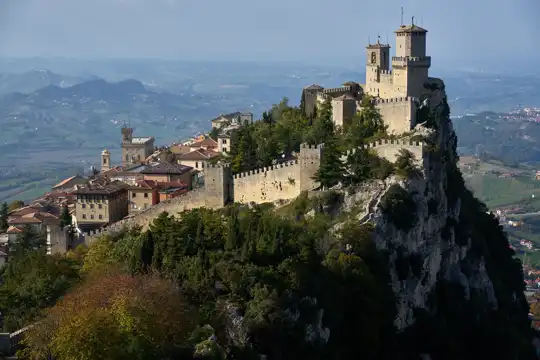
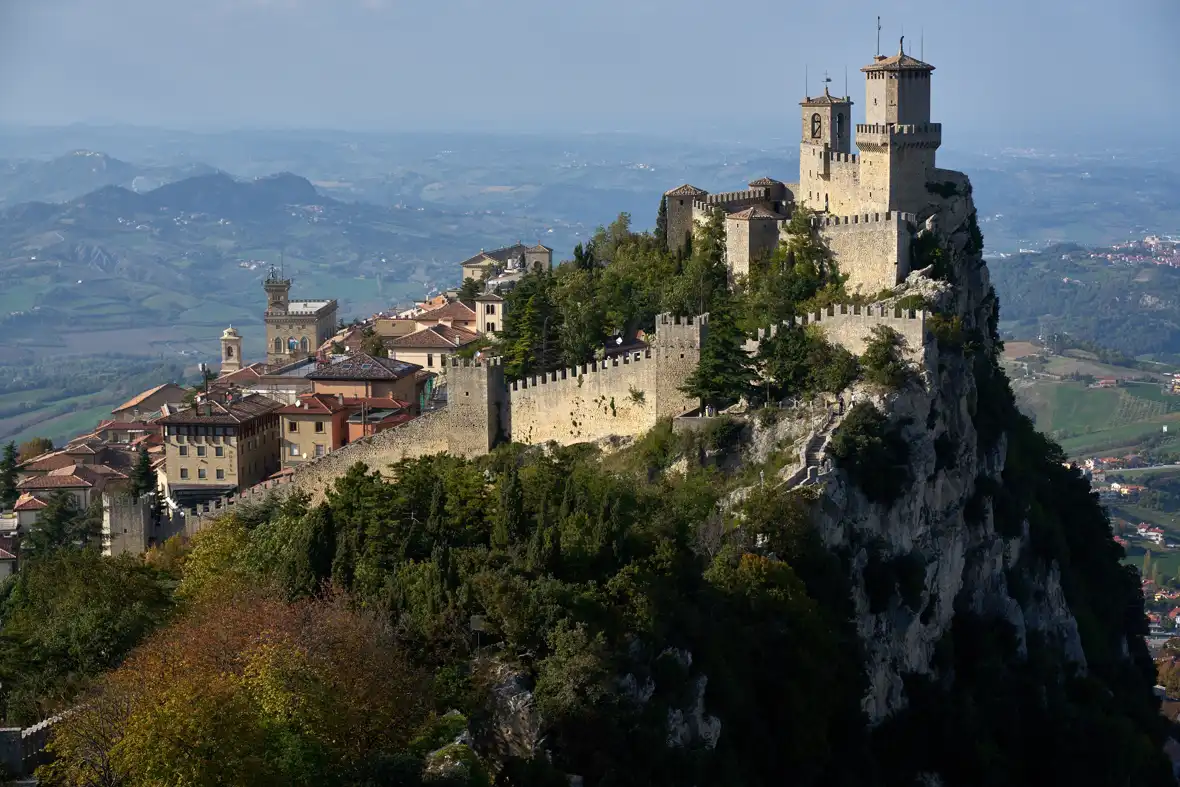
Sammarinese are proud of their centuries-old independence, so don’t describe San Marino as part of Italy or call locals Italian. Dress modestly in the Basilica and churches, covering shoulders and knees, and keep voices low during services. Don’t climb on the fortress walls or ledges, both for safety and out of respect for monuments that are UNESCO-listed. Do greet shopkeepers when you enter, eat lunch around 12:30 to 2 p.m. and dinner after 7:30 p.m. like the locals, and expect fixed prices rather than bargaining. Bar coffee is drunk quickly standing at the counter, and ordering a cappuccino after lunch marks you as a tourist. There are no specific concerns for women or gay travelers beyond the general conservative, church-going character of the country.
Trying traditional food is always a great way to experience the culture. Here are some must-try dishes for San Marino.
- Piadina: A thin flatbread cooked on a griddle and folded around prosciutto, squacquerone cheese and arugula. Shared with neighboring Romagna, it is the everyday snack of the region and the cheapest filling lunch on the mountain.
- Torta Tre Monti: Layers of crisp wafer filled with hazelnut or chocolate cream and coated in chocolate, named after the three towers on Monte Titano. It is the country’s signature sweet and the classic edible souvenir.
- Nidi di rondine: “Swallow’s nests,” rolled sheets of fresh pasta filled with ham, cheese and béchamel, then baked in tomato sauce. A Sunday and festive dish typical of Sammarinese home cooking.
- Cappelletti in brodo: Small stuffed pasta shaped like little hats, served in rich meat broth. A winter and Christmas staple across San Marino and Romagna.
- Bustrengo: A dense rustic cake made from stale bread, cornmeal, dried fruit, apples and honey. Born from frugal peasant cooking, it remains a traditional Christmas treat.
- Fagioli con le cotiche: Beans stewed with pork rind and tomato, a hearty farmhouse dish traditionally eaten in the cold months.
Tap water in San Marino is safe to drink and meets strict European quality standards, and locals drink it at home without a second thought. Tourists can drink it too, and refilling a reusable bottle at the public fountains in the historic center saves you around €1.50 to 3 per bottle bought on the mountain. Bottled water is only a matter of taste, as some find the tap water slightly hard.
The main language in San Marino is
Italian. Backpacking is way more rewarding if you know a bit of the local language, so I'd suggest brushing up on the basics just in case your Italian skills have become a bit rusty.
Want to understand locals better?The complete Travel Guide for San Marino includes 52 essential words and phrases — greetings, thank-yous, ordering food, transport, numbers, and common local expressions you'll actually hear.
Get your local basic phrases 👉
Get the Travel Guide - In San Marino,
English is spoken reasonably well in the historic center, where shops, restaurants and hotel desks deal with international visitors every day. Younger Sammarinese and hospitality staff usually manage a comfortable conversation, while older residents in the outlying castelli speak mainly Italian and sometimes the Romagnol dialect. Italian is the language that helps most, and a few basics like buongiorno, grazie and il conto, per favore go a long way. Download Italian for offline use in Google Translate for menus and bus timetables.
Money & Payments
The local currency of San Marino is EUR (€).
San Marino uses the euro, and ATMs are easy to find in the historic center, Borgo Maggiore, Serravalle and Dogana. Local machines usually don’t charge withdrawal fees, but your home bank may add 1 to 3% or a flat fee, so always decline the dynamic currency conversion offered on screen. Cards, including contactless Visa and Mastercard, are accepted in nearly all hotels, restaurants and souvenir shops, though small bars, kiosks and the bus from Rimini may prefer cash. Bring euros or withdraw them on arrival, because US dollars are not accepted anywhere in the country. If you need to exchange cash, use a bank rather than a tourist exchange counter for better rates. Keep any San Marino-minted euro coins you get as change, since they are valid everywhere in the eurozone and collectors value them.
Tipping in San Marino is appreciated but not expected, and many restaurants already add a cover charge (coperto) of around €1.50 to 3 per person to the bill. Locals usually round up or leave €1 to 2 for good service, and 5 to 10% is generous for an excellent meal. Taxi drivers and hotel staff don’t expect tips, though rounding up the fare is a nice gesture.
v2.webp)
 Best Backpacking
.jpg) Over the years, I've learned the importance of packing minimally. It's so much easier to jump on the back of a truck or squeeze yourself into the last spot of a minibus without that supersized backpack. If you're headed to a warm destination, leave your winter jacket at home; for colder regions, opt for thin thermal underlayers. Instead of packing your entire wardrobe, bring just three sets of clothes, as laundry facilities are available everywhere.
Over the years, I've learned the importance of packing minimally. It's so much easier to jump on the back of a truck or squeeze yourself into the last spot of a minibus without that supersized backpack. If you're headed to a warm destination, leave your winter jacket at home; for colder regions, opt for thin thermal underlayers. Instead of packing your entire wardrobe, bring just three sets of clothes, as laundry facilities are available everywhere.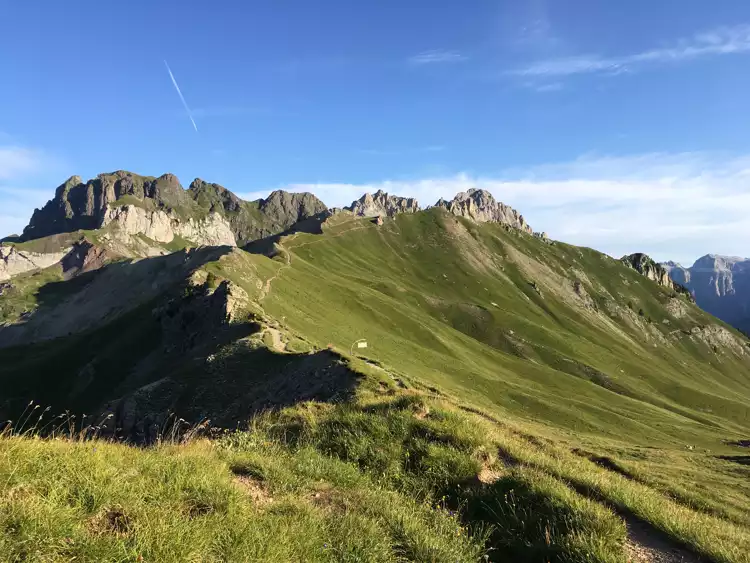

.jpg) Hi, I’m Johan (Netherlands 🇳🇱), the creator of TakeYourBackpack. Over the past 3 decades, I’ve backpacked through 90+ countries across six continents, gaining extensive experience with independent travel, long-term trips, and overland routes.
Hi, I’m Johan (Netherlands 🇳🇱), the creator of TakeYourBackpack. Over the past 3 decades, I’ve backpacked through 90+ countries across six continents, gaining extensive experience with independent travel, long-term trips, and overland routes.