×
United Arab Emirates 🇦🇪

backpacking Asia United Arab Emirates 🇦🇪Move megacities to desert silence within hours.

Explore TurkmenistanExplore Uzbekistan

Backpacking UAE in 2026

A complete guide including when and where to go, costs, transport, itineraries, and practical travel advice.
What a trip here is really like

Backpacking UAE
By Johan Kruseman 🇳🇱 | Updated May 23, 2026

The key call is whether you rent a car and run a two-base loop (Dubai + Abu Dhabi) or go car-free and keep it city-centric. Distances are short, but cross-emirate transit eats hours and spontaneity; a car buys dawn dunes, mountain roads, and cheap detours, while the metro keeps you cool and efficient in the cores. That split mirrors the United Arab Emirates (UAE) itself—precision infrastructure wrapped around desert memory and seafaring grit.

This is a place where sunrise on the Lahbab red dunes, a weekday sprint up Jebel Jais, and a quiet glide through Abu Dhabi’s Jubail Mangroves slot into the same 48 hours as a gold-souk haggle and a long stare at the Grand Mosque’s marble just before sunset. Ride the coin-cheap abra across Dubai Creek, then eat your way from karak chai counters to Emirati machboos and Iranian grills. Museums and mosques are immaculate; desert camps and dhow harbors hold the heartbeat. Heat is real (May–Sep), prices spike for big-ticket attractions, and tolls plus speed cameras punish sloppy planning—but early starts, metro-for-downtown, and midweek bookings flip those into wins. I set alarms for 4:45 and got flamingos at Ras Al Khor, empty roads, and a day that felt three times longer.

Compared with Oman’s raw mountains, Qatar’s compact polish, Bahrain’s easy history, or Saudi’s vast heritage circuit, the UAE is the soft-landing that still delivers edge. Come if you’re a first-timer who wants range without friction, a city lover who craves desert side quests, or a stopover sprinter aiming to squeeze a week’s worth of texture into two days.

👉 Get the 📖 Travel Guide of UAE
Dubai Urban Spine (DXB–Deira–Marina): This is the easy-mode on arrival. Grab a Nol card at the airport and ride the Red Line straight to where you sleep; it beats 90‑min traffic roulette at rush hour. Work the day in arcs: creek abras at dawn, souqs before 10, long AC lunch, beach or sunset creek walk after 5. It’s expat‑heavy, fast, and forgiving if you like options. Taxis are cheaper than most European capitals and pricier than Southeast Asia. Rewards planners who can stitch metro, taxis, and short walks without wasting cash.

Abu Dhabi City & Mangroves: Slower pulse, more culture. Mosque dress code is strict; cover shoulders and knees, carry a light layer and you breeze past rental lines. Kayak the mangroves at first light, then museum/Corniche in the heat window. Taxis cost less than most European capitals, more than Southeast Asia; distances are big, so rides add up. Suits travelers who like space and a clear day plan.

Al Ain Oasis & Jebel Hafeet: The UAE’s inland reset. Intercity buses from Dubai or Abu Dhabi take about two hours to Al Ain bus station; a short taxi hop drops you into shaded oasis paths. Walk the falaj lanes in the morning, siesta hard, then drive up Jebel Hafeet for dusk when it’s 5–10°C cooler. Conservative city; dress modestly and keep evenings quiet.

Ras Al Khaimah & Jebel Jais: Mountain time. You need a car and an early alarm. Gas up in town, carry 3–4 liters of water per person, and aim to be on the Jais road before 7 a.m. Weekends pack out; weekdays feel private. Trails are rocky and exposed; shoes with grip, hat, and layers for gusty summits. Rewards hikers and DIY campers who prefer altitude to malls.

Fujairah & Khor Fakkan (East Coast): Different coast, different crowd. The drive from Dubai takes 90–120 minutes over the mountains; traffic stacks on Friday afternoons. Hit beaches and snorkel sites early before the wind and day‑trippers. Respect local norms on public sands; save swimwear sprawl for resort zones. Cheap grill joints and fish shacks keep budgets sane. Good for divers, road‑trippers, and anyone who needs the sea without the Dubai scene.
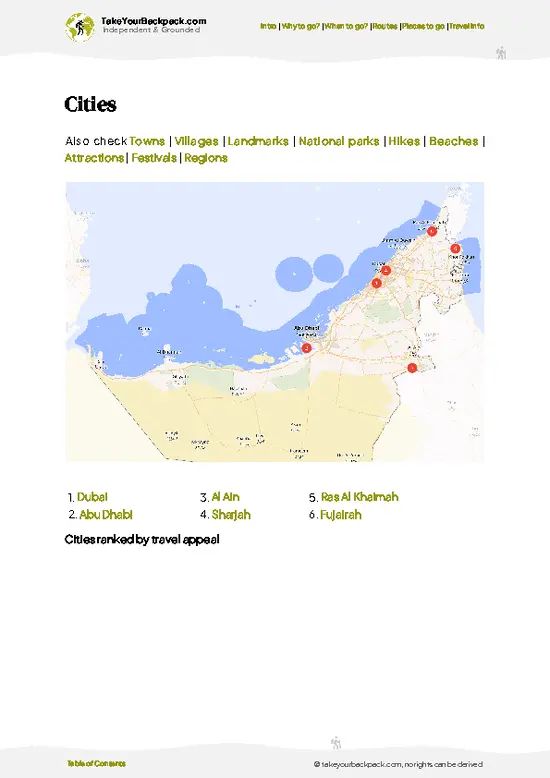
Geography and where places are located
Loading the map 🌍
CLICK TO FILTER
city
town
village
unique site
national park
hike
beach
attraction
festival
region
SHOW COUNTRY’S BESTSHOW ALL
film
0
0
0a
Louvre Abu Dhabi
Pixabay
film
1
1
1a
Dubai Aquarium & Underwater Zoo
Pixabay
film
2
2
2a
Ferrari World Abu Dhabi
Pixabay
film
3
3
3a
Jumeirah Beach
film
4
4
4a
Saadiyat Beach
film
5
5
5a
Kite Beach
film
6
6
6a
Corniche Beach
film
7
7
7a
Al Mamzar Beach
film
8
8
8a
Snoopy Island
film
9
9
9a
Dubai
Pixabay
film
10
10
10a
Wadi Shawka
film
11
11
11a
Jebel Hafeet
film
12
12
12a
Shawka Dam Loop
film
13
13
13a
Wadi Abadilah
film
14
14
14a
Masafi Mountains Trail
film
15
15
15a
Al Ain Oasis Trail
film
16
16
16a
Sir Bani Yas Island
film
17
17
17a
Wadi Wurayah
film
18
18
18a
Ras Al Khor Wildlife Sanctuary
film
19
19
19a
Jebel Hafeet
film
20
20
20a
Al Marmoom Desert Conservation Reserve
film
21
21
21a
Hatta Mountain Conservation Area
film
22
22
22a
Al Wathba Wetland Reserve
film
23
23
23a
Liwa Oasis
film
24
24
24a
Hatta Dam
film
25
25
25a
Sheikh Zayed Grand Mosque

Why go?Why UAE is worth visiting

Beach life

The UAE delivers easy beach days and legit water time. Dubai/Abu Dhabi give you long, groomed sands for sun and beach clubs; Fujairah and Dibba give you coral and fish. For real snorkeling, skip Dubai’s murky Gulf—aim for Snoopy Island or Martini Rock. Best season is Oct–Apr; midsummer water is soup. Weekdays at sunrise = glassy, empty, free parking. No drinks on public beaches; clubs only. I hit Kite Beach at 6:30 am—Burj Al Arab on your left, flat … read more 👉
The UAE delivers easy beach days and legit water time. Dubai/Abu Dhabi give you long, groomed sands for sun and beach clubs; Fujairah and Dibba give you coral and fish. For real snorkeling, skip Dubai’s murky Gulf—aim for Snoopy Island or Martini Rock. Best season is Oct–Apr; midsummer water is soup. Weekdays at sunrise = glassy, empty, free parking. No drinks on public beaches; clubs only. I hit Kite Beach at 6:30 am—Burj Al Arab on your left, flat water. After dark, Dubai’s Umm Suqeim Night Swimming Beach stays patrolled.
Want the complete picture of UAE?
The offline Travel Guide brings everything together — routes, highlights & planning.

See what's included in the guide 👉

Get the Travel Guide -

⭐ HighlightsStandout locations across the country

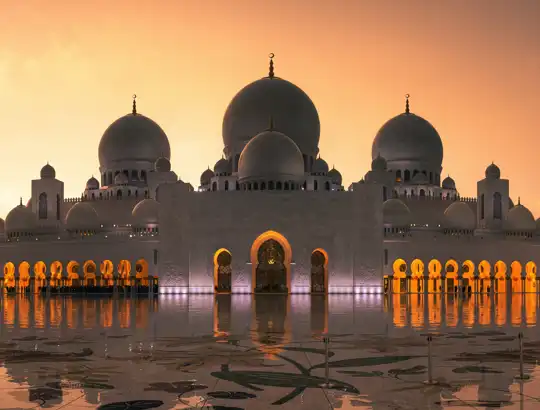
  • Sheikh Zayed Grand Mosque, Abu Dhabi: The marble bites at your bare soles, and the chandeliers pour warm light onto an ocean of carpet. Move slow. Backpacker Hack: Book the free timed ticket online, arrive 15 minutes before sunset for mirror-pool blues, cover shoulders/ankles (hair for women), and skip big bags to clear security fast.
  • Dubai Creek Abra + Old Souqs: Diesel on the breeze, gulls squabbling, the hull slapping the water as the muezzin drifts across. That’s the UAE at street level. Backpacker Hack: Carry AED 1 coins, ride Bur Dubai ⇄ Deira Old Souk at sunset, then loop back—cheapest “harbor cruise” in town; best photo perch is right behind the driver.
  • Jebel Jais Road, Ras Al Khaimah: Guardrails ping as they cool, and the wind tastes like rock dust at the viewpoints. The light pays you back. Backpacker Hack: Go midweek at dawn, pack layers (it’s windy even in spring), bring water and breakfast; food trucks open late. No real bus—rent a cheap sedan or share a ride; camping is tolerated,
read more 👉
  • Sheikh Zayed Grand Mosque, Abu Dhabi: The marble bites at your bare soles, and the chandeliers pour warm light onto an ocean of carpet. Move slow. Backpacker Hack: Book the free timed ticket online, arrive 15 minutes before sunset for mirror-pool blues, cover shoulders/ankles (hair for women), and skip big bags to clear security fast.
  • Dubai Creek Abra + Old Souqs: Diesel on the breeze, gulls squabbling, the hull slapping the water as the muezzin drifts across. That’s the UAE at street level. Backpacker Hack: Carry AED 1 coins, ride Bur Dubai ⇄ Deira Old Souk at sunset, then loop back—cheapest “harbor cruise” in town; best photo perch is right behind the driver.
  • Jebel Jais Road, Ras Al Khaimah: Guardrails ping as they cool, and the wind tastes like rock dust at the viewpoints. The light pays you back. Backpacker Hack: Go midweek at dawn, pack layers (it’s windy even in spring), bring water and breakfast; food trucks open late. No real bus—rent a cheap sedan or share a ride; camping is tolerated, leave no trace.
  • Al Ain Oasis + Jebel Hafeet: Cool falaj water tickles your ankles and the date-palm shade smells sweet and earthy. Then you climb. Backpacker Hack: The oasis is free—walk early—then take the E201 bus from Dubai (~2 hours) and a short taxi to Green Mubazzarah to ride Jebel Hafeet for sunset; it’s usually 5-8°C cooler on top.
  • Hatta Dam + Wadi Hub: Teal water, cicadas thrumming, and the dusty whirr of rental bikes on gravel. Good, clean fatigue. Backpacker Hack: Take the E16 bus to Hatta, then a short taxi or shared pickup to the Dam/Wadi Hub; weekday rentals are cheaper, and bring passport/ID for checkpoints; camp on nearby gravel plateaus if you’re tidy. Off-the-map: Jazirat Al Hamra’s abandoned coral houses at dawn, Mleiha’s desert archaeology under big stars, and Wadi Shawka’s pools after winter rain; personal favorite: the quiet drift across Dubai Creek on a one-dirham abra.
Spotted a mistake or missing a highlight? Contact us.

But UAE offers more...

Discover and compare all of its highlights per category

🧭 RoutesSuggested travel routes through UAE

The 5-Day Dubai City & Desert Hit

The Vibe: A focused, easy-to-manage city break built around Dubai’s biggest icons, one golden beach day, and a curated dip into the desert. Expect full but not frantic days, minimal long-distance travel, and plenty of time to actually enjoy each stop instead of racing between them.
The Highlights:
  • Soaring above the skyline at Burj Khalifa At The Top Observation Deck in Dubai.
  • Unwinding on the sand and in the warm Gulf water at Jumeirah Beach.
  • Exploring Dubai Museum and Al Fahidi Fort for a grounded sense of the city’s past.
  • Experiencing the dunes and wildlife of Dubai Desert Conservation Reserve on a guided outing.

The 10-Day Dubai-Abu Dhabi Culture & Coast Route

The Vibe: A balanced loop through Dubai and Abu Dhabi that mixes headline architecture, serious museums, beach downtime, and a taste of theme-park adrenaline. You’ll change bases just once, keeping logistics simple while still feeling like you’ve seen two very different faces of the UAE.
The Highlights:
  • Iconic
read more 👉

The 5-Day Dubai City & Desert Hit

The Vibe: A focused, easy-to-manage city break built around Dubai’s biggest icons, one golden beach day, and a curated dip into the desert. Expect full but not frantic days, minimal long-distance travel, and plenty of time to actually enjoy each stop instead of racing between them.
The Highlights:
  • Soaring above the skyline at Burj Khalifa At The Top Observation Deck in Dubai.
  • Unwinding on the sand and in the warm Gulf water at Jumeirah Beach.
  • Exploring Dubai Museum and Al Fahidi Fort for a grounded sense of the city’s past.
  • Experiencing the dunes and wildlife of Dubai Desert Conservation Reserve on a guided outing.

The 10-Day Dubai-Abu Dhabi Culture & Coast Route

The Vibe: A balanced loop through Dubai and Abu Dhabi that mixes headline architecture, serious museums, beach downtime, and a taste of theme-park adrenaline. You’ll change bases just once, keeping logistics simple while still feeling like you’ve seen two very different faces of the UAE.
The Highlights:
  • Iconic city views from Burj Khalifa and Dubai Frame in Dubai.
  • Evenings wandering Global Village Dubai and the historic alleys around Dubai Museum and Al Fahidi Fort.
  • Marble courtyards and quiet reflection at Sheikh Zayed Grand Mosque in Abu Dhabi.
  • Art and sea air at Louvre Abu Dhabi and Saadiyat Beach, with a high-speed finale at Ferrari World Abu Dhabi.

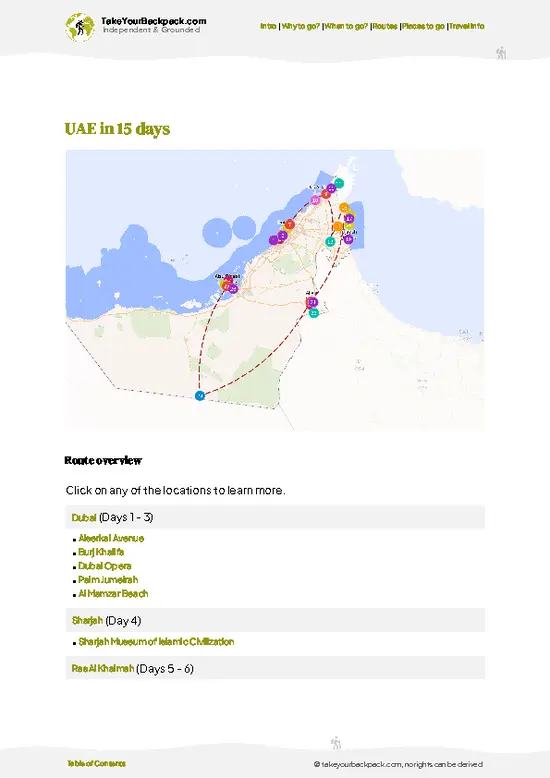
The 15-Day UAE Deep-Dive: Cities, Mountains, Desert & Islands

The Vibe: A slow-burn journey that starts in the big cities, then peels back layers of mountains, oases, and remote desert before ending on a wildlife-rich island. It’s designed for travelers who want variety and depth, with enough time in each region to feel the shift in landscape and pace.
The Highlights:
  • Urban immersion in Dubai and Abu Dhabi, from Burj Khalifa and Dubai Aquarium & Underwater Zoo to Louvre Abu Dhabi and Sheikh Zayed Grand Mosque.
  • Mountain air and heritage in the Hatta region, including Hatta Mountain Trail and Hatta Heritage Village.
  • High-altitude views and rugged terrain around Jebel Jais and Ras Al Khaimah.
  • Endless dunes at Liwa Oasis and a wild finale among the wildlife and coastline of Sir Bani Yas Island.
🌍 Want a ready-to-use travel plan for UAE?
The overview above compares different route options based on your travel time and style. The complete Travel Guide breaks each itinerary down in detail, including maps, stops, highlights, and transport information.

Explore all route details 👉

Get the Travel Guide -

🌤️ When to go?A month-by-month overview

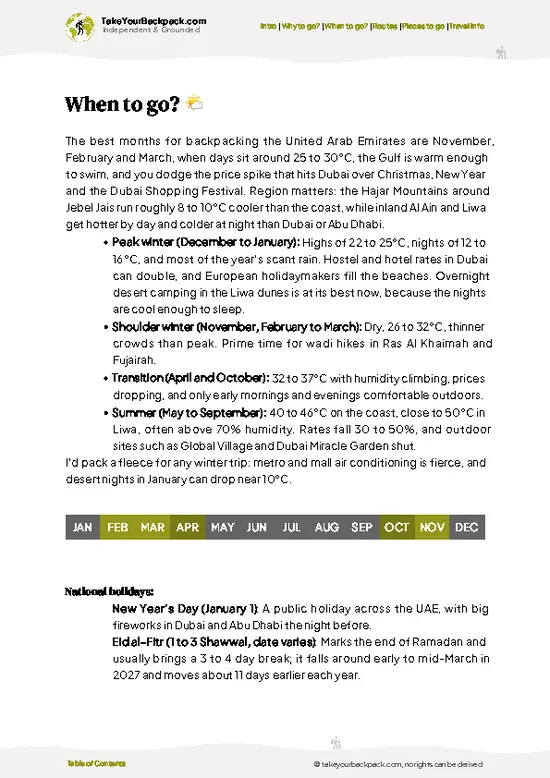
Aim for mid-November to early December, or late February to late March. Cool enough to hike wadis and camp in the dunes, warm enough to swim, and hotel rates sag between headline weekends (after the Abu Dhabi Grand Prix and before New Year; after the Dubai Shopping Festival and before spring breaks). Air stays clear, winds gentle, and you dodge both peak family holidays and the furnace that follows. If Ramadan drifts into this window, daytime food access tightens but crowds ease.
  • Crowd Peak (Dec-Jan): Prices jump, reservations evaporate, and beach clubs pack out. The trade: crisp desert nights, Orion over Liwa, and city fireworks that earn the elbowing. December’s Al Dhafra camel festival runs only now—salt-of-the-earth spectacle worth the detour.
  • Shoulder (Mid-Nov & Late Feb-Mar): The UAE exhales. Crowds thin, outdoor tables return, and the Hajar trails fill with early-start hikers. Wind’s steady for kites, sea’s calm for cheap abra hops, and rates slide just enough to stretch nights.
  • Off-Peak Heat (May-Sep): Streets shimmer, dunes empty, and the skyline feels lunar at noon. Survive by starting pre-dawn, treating the metro as an AC corridor, and freezing electrolyte bottles; move again after sunset.

I lock fully refundable rooms 3-4 weeks ahead for Nov/Mar, then recheck 72 hours out to poach price drops.

source: climatestotravel.comJANJanuary: fair for travelingFEBFebruary: highly recommended for travelingMARMarch: highly recommended for travelingAPRApril: good for travelingMAYMay: below average for travelingJUNJune: below average for travelingJULJuly: below average for travelingAUGAugust: below average for travelingSEPSeptember: fair for travelingOCTOctober: good for travelingNOVNovember: highly recommended for travelingDECDecember: fair for traveling
📅 Traveling in a specific month?
Get a full month-by-month breakdown of weather, crowds, costs, festivals, and seasonal highlights in the complete travel guide.

Get full details when to go 👉

Get the Travel Guide -
!united arab emirates - daniel-olah-2lMK4dgqwFM-unsplash

💰 Costs (as of 2026)Prices, expenses, and money tips

50-75 USD (185-275 AED) per day in the UAE if you sleep in dorms, eat what workers eat, and stick to metro/buses.
  • dorm accommodation: Dubai/Abu Dhabi dorms land at 60-130 AED; Sharjah/Ajman 45-90 AED. That’s pricier than Oman/Saudi, cheaper than Qatar. System tip: base in Deira or Bur Dubai to live on the Green/Red Metro lines and avoid taxis; look for weekly rates (often 10-25% less than nightly). Ask about the Tourism Dirham (per-room nightly tax) so it doesn’t “appear” at check-out. Avoid glossy “Marina party” listings with add-on cleaning fees—older apartment-style hostels with clear tax notes are the honest value.
  • meals: Supermarket Survival: 5-15 AED buys manakeesh, samosas, fruit, laban, and a 1.5L water (1-2 AED) from Carrefour/Union Coop; a rotisserie chicken is 20-25 AED and feeds two. Street food reality: the UAE is a bargain if you eat where the crews eat—shawarma 6-10 AED, Pakistani thali/biryani 12-20 AED, Kerala mess lunch 10-18 AED. Mall food courts jump to 25-40 AED. Cheaper than Qatar for everyday eats; pricier than Egypt/Jordan. I carry a 5L jug from the supermarket (6-8 AED) and refill a small bottle—saved me 30-40 AED on a scorching Marina day.
  • local transport: Cheapest
read more 👉
50-75 USD (185-275 AED) per day in the UAE if you sleep in dorms, eat what workers eat, and stick to metro/buses.
  • dorm accommodation: Dubai/Abu Dhabi dorms land at 60-130 AED; Sharjah/Ajman 45-90 AED. That’s pricier than Oman/Saudi, cheaper than Qatar. System tip: base in Deira or Bur Dubai to live on the Green/Red Metro lines and avoid taxis; look for weekly rates (often 10-25% less than nightly). Ask about the Tourism Dirham (per-room nightly tax) so it doesn’t “appear” at check-out. Avoid glossy “Marina party” listings with add-on cleaning fees—older apartment-style hostels with clear tax notes are the honest value.
  • meals: Supermarket Survival: 5-15 AED buys manakeesh, samosas, fruit, laban, and a 1.5L water (1-2 AED) from Carrefour/Union Coop; a rotisserie chicken is 20-25 AED and feeds two. Street food reality: the UAE is a bargain if you eat where the crews eat—shawarma 6-10 AED, Pakistani thali/biryani 12-20 AED, Kerala mess lunch 10-18 AED. Mall food courts jump to 25-40 AED. Cheaper than Qatar for everyday eats; pricier than Egypt/Jordan. I carry a 5L jug from the supermarket (6-8 AED) and refill a small bottle—saved me 30-40 AED on a scorching Marina day.
  • local transport: Cheapest unlock: metro/bus + intercity coaches. In Dubai, buy a Nol card (small deposit) and ride 3-8 AED per trip; day passes are good value if you’ll hop around. Intercity buses are shockingly cheap: Dubai-Abu Dhabi ~25 AED, Dubai-Sharjah 8-12 AED, Dubai-Ajman ~15 AED—clean, frequent, and air-conned. Solo, buses beat everything; with 3-4 people, a rental car (70-120 AED/day) can win, but budget for Salik tolls (4 AED per gate), parking (2-10 AED/hr), and fuel. Taxis start cheap but bleed you over distance; ride-hail surge multiplies fares—travel off-peak and hop the metro for long sections.
  • activities: Cost drivers are the big-brand tickets: Burj Khalifa observation decks 150-370+ AED (cheaper off-peak), Yas Island theme parks 295-400+ AED, desert safari 100-180 AED (shared, dinner included), dhow “dinner cruises” 60-150 AED. High-value/low spend: abra across Dubai Creek 1-2 AED, public beaches free or a small facility fee, Al Fahidi historic quarter free, mosques free (dress code enforced), Louvre Abu Dhabi ~60-70 AED. Compared to Oman, safaris and museums are better value; theme parks are premium everywhere.
  • miscellaneous: Budget leaks: coffee (basic 10-18 AED; chain latte 18-28 AED), bottled water markups at attractions (5-10 AED), SIM/eSIM tourist packs 50-125 AED, ATM foreign fees, Salik tolls unnoticed on ride-hail, and “service/municipality” add-ons on restaurant bills (assume +10-15% on top of menu prices). Alcohol crushes budgets—pints 35-60 AED; buy at arrival duty-free if you must. Relative value: UAE is pricier than Oman for beds, cheaper than Qatar for food if you use worker cafeterias. Tiny edge: order “karak, half sugar” (1-3 AED) instead of a coffee and you’ll fit in—and save a few bucks a day.
⚠️ Prices can change and everyone travels differently, so take this as a rough guide. Hope it helps you plan your adventure!

✈️ The backpacker research shortcutUAE Travel Guide

An offline-friendly backpacking guide with optimized travel routes, ranked highlights, transport advice, and the best areas to stay.
example page 0 from our offline Travel Guide for United Arab Emiratesexample page 1 from our offline Travel Guide for United Arab Emiratesexample page 2 from our offline Travel Guide for United Arab Emiratesexample page 3 from our offline Travel Guide for United Arab Emiratesexample page 4 from our offline Travel Guide for United Arab Emiratesexample page 5 from our offline Travel Guide for United Arab Emiratesexample page 6 from our offline Travel Guide for United Arab Emiratesexample page 7 from our offline Travel Guide for United Arab Emirates
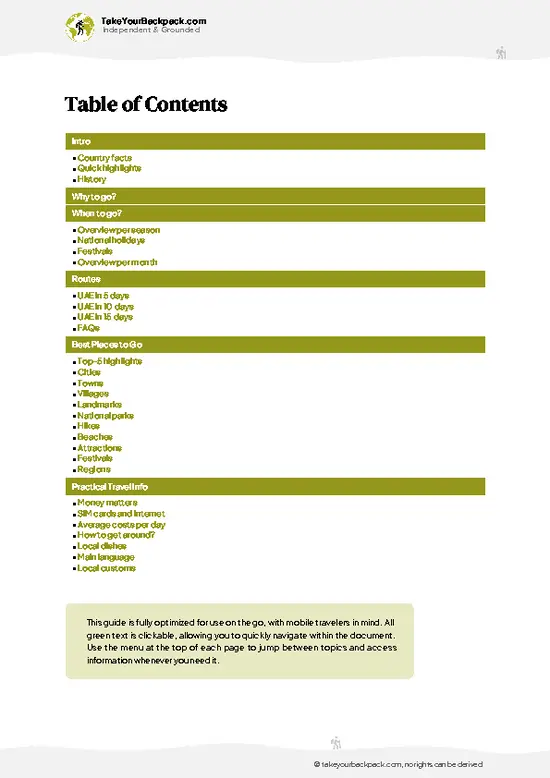
The digital guide (290 pages) contains:
79 highlights, ranked by travel appeal
Optimized 5, 10 & 15-day travel routes
Cities, national parks, beaches, historical sites, ...
How to get around
Offline-friendly for travel without Wi-Fi
👉 Click to see all 30+ guide features

📅 Plan smarter in minutes, not weeks
Month by month travel advice
Festivals & national holidays
Budget expectations

🗺️ Go to the right places, skip the overrated ones
Honest pros & cons of destinations
Top hikes, parks & viewpoints
Lesser-known places most travelers miss
Clear “worth it vs skip it” guidance

🛏️ Travel smoothly without rookie mistakes
Best areas to stay
Transport systems explained simply
Common scams & safety advice
SIM cards, money & practical tips

🌍 Understand the country, not just visit it
Culture & traditions
52 Essential phrases & customs
Festivals worth planning around
Traveler-friendly historical context
Insights that make places more meaningful

📱 Built for real travel conditions
Fully downloadable PDF
Works completely offline
Optimized for phone use
Useful in remote areas & buses
Everything in one place
Save weeks of stressful planning
Get instant access to the full guide directly. 30-day money-back guarantee.


Sent to your inbox immediately after payment • 100% Secure Checkout
Best Backpacking Travel Advisor 2025 tourism awardBest Backpacking
Travel Advisor
2025
What others say about Take Your Backpack Guides:
⭐⭐⭐⭐⭐
Fantastic, amazing amount of information!
⭐⭐⭐⭐⭐
My goodness this is amazing, it's what I've been looking for hats off too you!
⭐⭐⭐⭐⭐
I think this is absolutely BRILLIANT
⭐⭐⭐⭐
Very complete and informative. It's still missing places, but I gotta to commend you
⭐⭐⭐⭐⭐
This is truly amazing, thank you, can't wait to explore it with my kids!
⭐⭐⭐⭐⭐
Awesome resource, thank you!
⭐⭐⭐⭐⭐
This is amazing! Can't wait to explore the ones I haven't seen
⭐⭐⭐⭐
I love this! Well done, great idea.
⭐⭐⭐⭐⭐
Thanks for taking the time to make this gem!
⭐⭐⭐⭐⭐
This might be the best website I've ever seen.
⭐⭐⭐⭐⭐
Congratulations, and thank you so much for your work; it's incredibly valuable.
⭐⭐⭐⭐
In all seriousness I think you did a great job pointing out the important spots
⭐⭐⭐⭐⭐
10/10 very good
⭐⭐⭐⭐⭐
As someone who's only just starting to visit regularly this is awesome, thank you.
⭐⭐⭐⭐
Thank you very much! I'm going to visit my dad, it's going to be very useful!
⭐⭐⭐⭐⭐
This is really cool! We'll be travelling for the first time and this definitely come in handy.
⭐⭐⭐⭐⭐
You are now our minister of culture, congratulations 👨‍💼
⭐⭐⭐⭐⭐
Just wanted to tell you that this is a pearl! Going to follow your recommendations.
⭐⭐⭐⭐⭐
This is so cool. I'll definitely be using the resource for my travels soon.
⭐⭐⭐⭐⭐
This is very impressive! Good work.
⭐⭐⭐⭐⭐
This is an amazing and informative site. Very well done!

🛏️ Where to stay?Accommodation types and options

Yes — the UAE has budget accommodation and dorm-style hostels mostly in big cities, but classic backpacker hostels are limited so expect to use budget hotels, guesthouses or shared rooms.
Dubai hotspots for budget stays are Deira, Bur Dubai and Al Barsha (cheap eateries, metro access and close to old souks and malls but generally quieter at night); Dubai Marina and JBR give nightlife and beach access at a higher price.
In Abu Dhabi pick Corniche and Khalidiya for landmark proximity and a safe, quieter stay, while Sharjah and Dubai outskirts offer the lowest prices but require longer commutes … read more 👉
Yes — the UAE has budget accommodation and dorm-style hostels mostly in big cities, but classic backpacker hostels are limited so expect to use budget hotels, guesthouses or shared rooms.
Dubai hotspots for budget stays are Deira, Bur Dubai and Al Barsha (cheap eateries, metro access and close to old souks and malls but generally quieter at night); Dubai Marina and JBR give nightlife and beach access at a higher price.
In Abu Dhabi pick Corniche and Khalidiya for landmark proximity and a safe, quieter stay, while Sharjah and Dubai outskirts offer the lowest prices but require longer commutes and have fewer late-night options.

If you enjoy meeting fellow travelers, consider choosing hostels with high ratings for atmosphere. On the other hand, if you prefer having your own space, a hotel might be a better option.

🚌 Getting aroundWhat moving around is really like

The UAE runs on engineered predictability layered over car-first sprawl. Trains and buses hit their marks, but your clock lives or dies on how fast you reach the right hub. Think nodes, not addresses: swap a long taxi meter for a short hop to a bus station or metro, then let the system carry you. It rewards people who know when to jump lines and when to wait ten minutes in the shade.
  • Intercity Buses (RTA and emirate links) The Efficiency Trade-off: Cheapest way between cities by a wide margin—often
read more 👉
The UAE runs on engineered predictability layered over car-first sprawl. Trains and buses hit their marks, but your clock lives or dies on how fast you reach the right hub. Think nodes, not addresses: swap a long taxi meter for a short hop to a bus station or metro, then let the system carry you. It rewards people who know when to jump lines and when to wait ten minutes in the shade.
  • Intercity Buses (RTA and emirate links) The Efficiency Trade-off: Cheapest way between cities by a wide margin—often 5-10x less than a taxi—if you play the hub game. From Dubai, Al Ghubaiba (Old Dubai) and Ibn Battuta (Marina/JLT side) are your launch pads; choose the closest to kill dead time. Buses to Abu Dhabi, Sharjah, Ajman, RAK, and Fujairah run roughly every 20-60 minutes; off-peak, they cruise highways fast, but you’ll bleed minutes queuing and at city entrances. Tap in/out with Nol on Dubai-run routes; don’t count on card interoperability once you’re inside other emirates. Seats fill at rush; get in line early or you’ll watch your bus leave without you. AC is arctic—pack a layer.
  • Dubai Metro/Tram The Social Fabric: Clean, quiet, and rule-heavy. Women-and-children cars are marked pink; fines if you wander in. Gold Class is off-limits unless you’ve paid for it. No eating or drinking—yes, even water. People queue on floor arrows, let riders off first, keep backpacks low in crowds, and talk soft on calls. Trains run early to past midnight with weekend extensions, and the Red Line shadows Sheikh Zayed Road like a conveyor belt. Use it to punch through traffic, then spend on a short taxi for the last mile.
  • Abras on Dubai Creek The Geometric Unlock: The one-dirham wooden boat nukes the bridge detour and drops you directly between Deira’s Gold Souk and Bur Dubai’s textile lanes in minutes. Boats depart every couple of minutes, cash to the driver, no ceremony. Some modern abras take Nol at higher fares; skip “heritage tours” unless you actually want a loop. This is the fastest way to thread Old Dubai.
  • Inter-emirate Shared Taxis The Budget Disruptor: At big stations (Al Jubail in Sharjah, Union/Al Ghubaiba in Dubai, RAK/Fujairah stands), you buy a seat, not the car. They leave when full, move faster than buses, and run late when buses thin out. Per-seat fares are fixed and reasonable; verify the destination board, buckle up, and avoid “special price” offers outside the rank.

Master move: aim for the first morning bus from the hub closest to you (Ibn Battuta for Abu Dhabi, Al Ghubaiba for Old Dubai connections), use a short taxi to the correct station instead of crossing the city on rails, carry a loaded Nol plus 50 AED cash for abras/shared seats, and travel outside 7-9am and 5-8pm to keep the highway green.
Abu Dhabi International Airport (AUH) is about 30 km (19 miles) east of the city center (Corniche/Al Markaziyah).

Main public transport
  • City bus (24/7): Frequent ITC buses run from Terminal A to central Abu Dhabi stops (including areas around Al Wahda/Abu Dhabi Bus Station and Al Zahiyah). Follow the “Public Buses/City” signs from Arrivals; the stands are just outside the terminal. Expect about 35-60 minutes depending on traffic and where you get off. Fare is about AED 4 per adult. Pay with a Hafilat card (sold/reloadable at airport machines/kiosks) or tap a contactless bank card/phone on board. Buses typically run every 25-40 minutes. There’s no metro in Abu Dhabi yet, so the bus is the main public option.

Taxis and ride-hailing
Metered Abu Dhabi taxis queue outside Arrivals around the clock. To most central areas, budget roughly AED 80-120, depending on traffic; ride-hailing apps like Careem and Uber are available and usually fall in a similar range (sometimes higher during surge, roughly AED 90-150). Journey time is usually 25-40 minutes. Airport rides have a higher starting fare than city trips; you can pay cash or card in official taxis.

Quick tips
- Peak times (weekday mornings/evenings) can add 10-20 minutes to both bus and taxi times.
- If you land late and want the simplest option, take a taxi; the bus still runs 24/7 if you’re budget-focused.
⚠️ Prices and routes can change, so take this as a rough guide and ask for local advice when you arrive.

🔒 Safety (risk Level: medium)What first-time visitors should know

Safety for solo travelers, including women and LGBTQ+ individuals
The United Arab Emirates is generally safe for solo travelers, including women and LGBTQ+ individuals. Women will find it relatively comfortable, though dressing modestly can help avoid unwanted attention. LGBTQ+ travelers should be cautious, as public displays of affection or discussing LGBTQ+ topics can lead to legal issues. Staying informed about local laws and customs will ensure a smoother experience.


Full official government travel advisory (live updates)
View details 👉
safety image

source: www.gov.uk

✈️ VisaVisa requirements for UAE

Visa requirements for the United Arab Emirates depend on your nationality. Citizens from many countries, including the US, UK, and EU, can get a visa on arrival for stays up to 30 or 90 days, depending on the agreement. If you need a visa in advance, apply through the UAE’s official e-visa portal or contact a UAE embassy for assistance.

source: u.ae
⚠️ Visa requirements can change over time, so always check the latest visa requirements with the official embassy or government website before you travel.

🎒 What to pack?What you'll need while traveling

The United Arab Emirates is a mix of luxurious cities and vast deserts, so pack with both in mind. Temperatures can soar, but malls and hotels blast the AC, so layers are smart. Respect the local culture by opting for modest clothing—cover shoulders and knees, especially in traditional areas. Desert excursions are popular, so think about breathable fabrics for the day and a light jacket for cooler nights. Planning beach time? Remember, swimwear is for the beach, not for strolling around town.

Apart from this country specific advice, I have also crafted a general packing list that should help on any trip. authorOver the years, I've learned the importance of packing minimally. It's so much easier to jump on the back of a truck or squeeze yourself into the last spot of a minibus without that supersized backpack. If you're headed to a warm destination, leave your winter jacket at home; for colder regions, opt for thin thermal underlayers. Instead of packing your entire wardrobe, bring just three sets of clothes, as laundry facilities are available everywhere.

View the full list 👉
🎒 Planning the practical side of your trip?
Get detailed information on transport, daily budgets, internet access, local customs, food, language, and other essentials in the complete Travel Guide.

Get detailed practical information 👉

Get the Travel Guide -

🙋 FAQCommon questions before visiting

Trip Planning


Personal tip: I normally search on good rating for atmosphere (for meeting people) and location (for easy exploring). Cleanliness as a bonus.


Travel Essentials

Routine vaccinations are usually recommended for traveling to the United Arab Emirates. These include measles-mumps-rubella (MMR), diphtheria-tetanus-pertussis, varicella (chickenpox), polio, and your yearly flu shot.

Consider getting hepatitis A and B vaccines, especially if you plan to eat street food or stay for an extended period. Typhoid is also recommended if you’re an adventurous eater in rural areas.

No specific vaccines are required for entry, but staying up-to-date with these can keep you safe. Always check the latest travel health advice before you go.


vaccination requirements
When I first started traveling, I often spent part of my first day in a new country hunting for a local SIM card. While this can still be slightly cheaper, it also takes time and planning.

These days, it's much simpler to install an eSIM before leaving home. Once you arrive in UAE, you can activate it immediately and have mobile data from the moment you land — which is especially useful for ordering transport or navigating away from busy airports.

There are many providers nowadays, and price differences are usually small. I personally go with Airalo, as it offers excellent network coverage throughout the country and strong global coverage, so you can manage multiple countries from a single app.


Get your e-sim for UAE

Culture & Customs

Dress modestly, especially in public areas—this applies to both men and women. Women should cover shoulders and knees, and a headscarf may be required in religious sites. Public displays of affection are frowned upon, so keep it minimal.

For LGBTQ+ travelers, public openness about sexual orientation is risky due to strict laws. Exercise discretion with partners and avoid public displays of affection.

During Ramadan, avoid eating, drinking, or smoking in public during daylight hours. Show respect by standing up when the national anthem is played.

When meeting locals, a friendly handshake is common but only if initiated by the other person. Men should wait for a woman to extend her hand first. Always use your right hand for eating and giving gifts, as the left is considered unclean. Remove shoes when entering someone’s home.
Trying traditional food is always a great way to experience the culture. Here are some must-try dishes for UAE.
  • Al Harees: A slow-cooked dish made of wheat and meat, often served during Ramadan and special occasions. It symbolizes patience and tradition in Emirati culture.
  • Shawarma: Although not originally Emirati, this street food staple has been fully embraced. It’s marinated meat (usually chicken or lamb) wrapped in flatbread, perfect for a quick and flavorful bite.
  • Machboos: A spiced rice dish similar to biryani, typically made with chicken, lamb, or fish. It’s a staple in Emirati homes and reflects the blend of spices that are central to the cuisine.
  • Luqaimat: Sweet, deep-fried dumplings drizzled with date syrup. These are often enjoyed during festive seasons and are a testament to the Emirati love for sweet treats.
  • Balaleet: A breakfast dish of sweetened vermicelli topped with an omelet, mixing sweet and savory flavors, showcasing the unique Emirati palate.
Tap water in the UAE is technically safe to drink as it’s desalinated and treated, but locals often prefer bottled water due to taste and pipe concerns. For travelers, it’s advised to stick to bottled or filtered water to avoid any possible tummy troubles. If you’re staying long-term, consider a good water filter system.
The main language in United Arab Emirates is Arabic. Backpacking is way more rewarding if you know a bit of the local language, so I'd suggest brushing up on the basics just in case your Arabic skills have become a bit rusty.

Want to understand locals better?
The complete Travel Guide for UAE includes 52 essential words and phrases — greetings, thank-yous, ordering food, transport, numbers, and common local expressions you'll actually hear.

Get your local basic phrases 👉

Get the Travel Guide -


In the United Arab Emirates (UAE), English is widely spoken and serves as a common language among the diverse expatriate population. It is the primary language used in business, education, and tourism, making communication relatively easy for English-speaking travelers. Most locals, especially in urban areas like Dubai and Abu Dhabi, have a good command of English, and signs in public places, such as airports and malls, are often bilingual.

In hotels, restaurants, and shops, staff typically speak English fluently, catering to the needs of international visitors. While Arabic is the official language, the multicultural environment means that English is prevalent in everyday interactions. However, in more rural or less touristy areas, English proficiency may vary, and knowing a few basic Arabic phrases can enhance the experience.

Overall, travelers can expect minimal language barriers in the UAE, making it a convenient destination for English-speaking tourists.

Money & Payments

The local currency of UAE is AED (د.إ).

ATMs: You’ll find ATMs pretty much everywhere in the UAE, especially in cities. They’re reliable for withdrawing dirhams, which is the local currency. Just double-check if your bank charges any withdrawal fees.

Cash: It’s handy to carry some cash for small purchases, like street food or local transport. But don’t overdo it; cards are widely accepted in most places.

Dollars/Euros: You can bring dollars or euros, but it’s usually better to exchange them for dirhams once you arrive. Airport exchange rates are okay if you need some quick cash, but hit up a city exchange for better rates.

Card Acceptance: Credit and debit cards are accepted almost everywhere. However, keep an eye out for foreign transaction fees from your bank.

Where to Exchange: Skip the airport kiosks if you can help it. Check out currency exchange shops in malls or in the city center for better rates. Al Ansari Exchange and UAE Exchange are pretty reliable.

In the United Arab Emirates, tipping is appreciated but not mandatory. At restaurants, leaving 10-15% of the bill as a tip is common, although some places already include a service charge. For taxi drivers and hotel staff, rounding up the fare or offering a small tip is a nice gesture.

🧩 Nearby countriesNearby backpacking alternatives

📸 PhotosWhat it looks like on the ground

Take your backpack - United Arab Emirates - 0
Take your backpack - United Arab Emirates - 1
Take your backpack - United Arab Emirates - 2
Take your backpack - United Arab Emirates - 3
Take your backpack - United Arab Emirates - 4
Take your backpack - United Arab Emirates - 5
Take your backpack - United Arab Emirates - 6
Take your backpack - United Arab Emirates - 7
Take your backpack - United Arab Emirates - 8
Take your backpack - United Arab Emirates - 9
Take your backpack - United Arab Emirates - 10
Take your backpack - United Arab Emirates - 11
Take your backpack - United Arab Emirates - 12
Take your backpack - United Arab Emirates - 13
Take your backpack - United Arab Emirates - 14
Take your backpack - United Arab Emirates - 15
Photographed by: Johan Kruseman

Memorable moments from the road

United Arab Emirates: a country of shopping malls

United Arab Emirates | A country that definitely wasn’t at the top of my travel list — yet during a layover on my way to Sri Lanka, I couldn’t resist stepping outside to see just how bizarre this place really is. The whole concept of the United Arab Emirates, kick-started by oil but grown fat on finance, trade, and its strategic location as an airport hub between Asia, A...
Read more

Eid Al Etihad, UAE national day

United Arab Emirates | Just arrived in Abu Dhabi, I figured I’d take a casual little stroll along the beach. You know, stretch the legs, breathe some air, mind my own business. Turns out… I was not alone. Hundreds of thousands of people apparently had the exact same brilliant idea. When folks around me suddenly started spraying each other with coloured string and sham...
Read more
More stories

We 💚 feedbackFinal notes for travelers

In the UAE, go for the contrast: pre-dawn ridgelines on Jebel Jais, then metro back to cheap Indian curry in Karama by night. That’s the reason: easy, safe access to desert, mountains, and multicultural eats in one jump. The catch: heat crushes anything after 10 a.m. for most of the year; you’ll live by sunrise and malls. Looking ahead, Etihad Rail is set to link Abu Dhabi–Dubai–RAK, shrinking bus drags and cutting costs; Hatta’s trail network keeps expanding too.

✈️ When did I visit UAE?
I visited UAE (Dubai & Abu Dhabi) before my trip to Sri Lanka in December 2025. Since then, this guide is regularly updated based on feedback from locals and recent backpackers (last update: 15 April 2026)

✍️ Help improve this page!
The information on this page is based on my own backpacking experience in UAE, supplemented with up-to-date research and feedback from other travelers. Travel details can change, so if you notice anything outdated or incomplete, feel free to let me know.


🙋‍♂️ Give feedback

👋 Meet the founderWho’s Behind Take Your Backpack?

Johan, backpacker and founder of TakeYourBackpackHi, I’m Johan (Netherlands 🇳🇱), the creator of TakeYourBackpack. Over the past decade, I’ve backpacked through 80+ countries across six continents, gaining extensive experience with independent travel, long-term trips, and overland routes.

This site is built on a combination of firsthand travel experience and carefully curated insights from other backpackers. Many guides are based on places I’ve personally visited, while others bring together tips, observations, and practical advice shared by trusted travelers I’ve met along the way.

The goal is to provide realistic, experience-driven guidance — not generic itineraries — so you can explore destinations with better context, clearer expectations, and more confidence.

Get full UAE guide •
Instant download • 79 highlights • Full Offline guide