×
Equatorial Guinea 🇬🇶

backpacking Africa Equatorial Guinea 🇬🇶
Explore quiet islands far removed from usual travel routes.

Explore EgyptExplore Eritrea

Backpacking Equatorial Guinea in 2026

A complete guide including when and where to go, costs, transport, itineraries, and practical travel advice.
Traveling in Equatorial Guinea: what to expect

Backpacking Equatorial Guinea
By Johan Kruseman 🇳🇱 | Updated May 26, 2026

In Equatorial Guinea, you choose between paying more to reach the good stuff or staying comfortable and seeing less. Oil-economy prices, scarce public transport, and permits push you toward flights and guides, but this small, Spanish-speaking slice of West Africa rewards the effort with depth, not crowds.

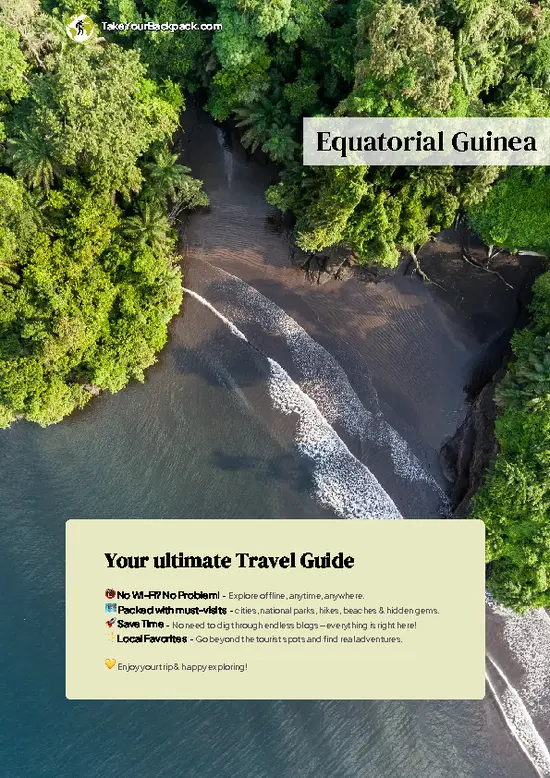
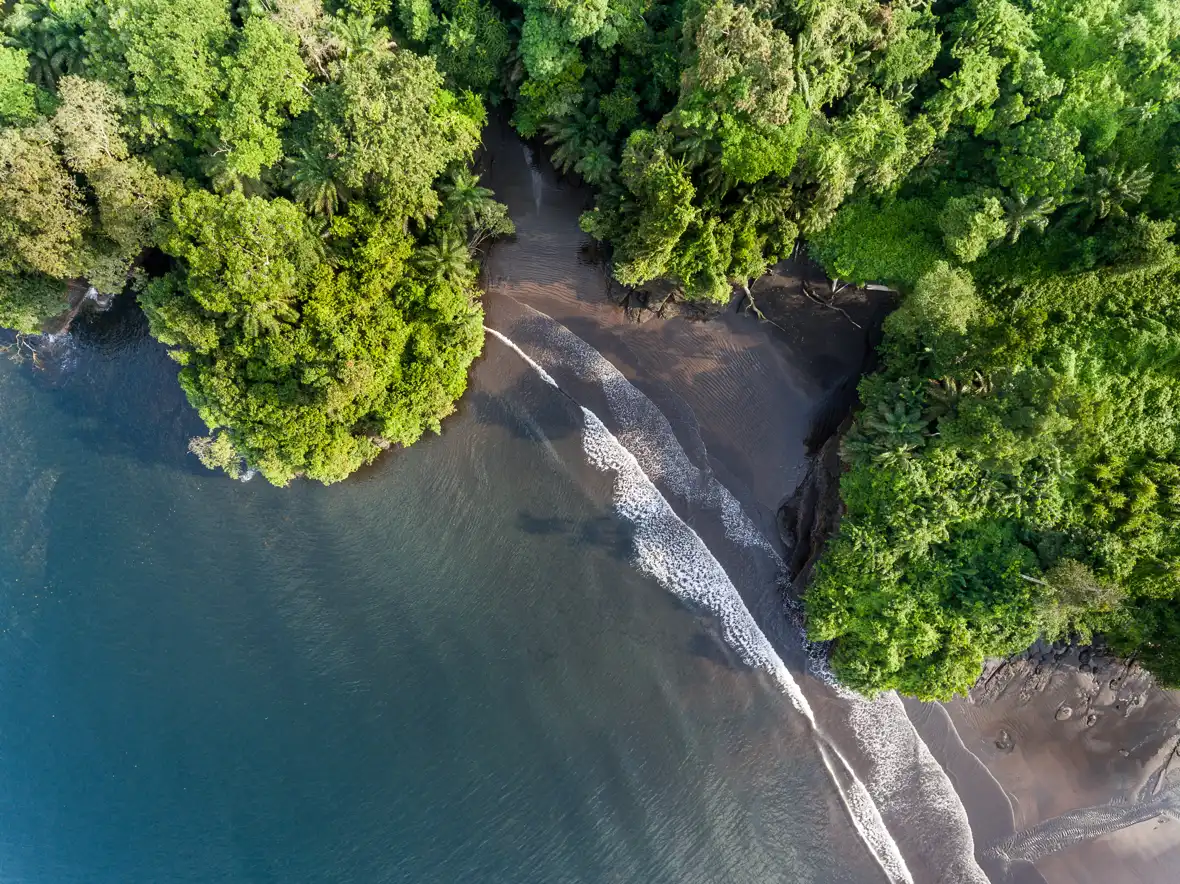
Bioko Island’s volcanic spine, black-sand rivers that tumble to the sea at Ureka, and seasonal turtle nesting feel close yet protected; Pico Basile rises above Malabo’s cafe-and-market rhythm, while the mainland’s Monte Alén holds dense rainforest, primates, and serious birding if you work for it. Annobón is a time capsule of fishing boats and crater-lake hikes, far-flung and worth the journey when seas and schedules cooperate. Visas, checkpoints, photography limits, and costs are real, but they fade the moment you watch a turtle drag tracks across wet sand or trade Spanish with a Bubi or Fang host—you earn your access, and it sticks.

Compared with Cameroon’s cheaper, bus-linked loop and Gabon’s polished safari circuits, Equatorial Guinea is tighter, pricier, and quieter. Go if you value wildlife over nightlife, Spanish over English, and the satisfaction of opening gates that stay closed to most travelers.

Malabo & Bioko North

Malabo is the entry point. Business-first city, pricier than the mainland. Frequent taxis and most international flights. Base yourself here to sort cash and contacts. Rewards planners who like a reliable hub.

Pico Basile & Moka Highlands (Bioko Interior)

Cooler air, cloud forest, steep gradients. Paved roads reach high; trailheads sit near Moka and Pico Basile. Expect checkpoints. Trails are slick; start early and hire a local guide. Rewards hikers and birders.

South Bioko Coast: Luba–Ureka

South coast feels raw. Luba is reachable on good pavement; the road to Ureka turns rough, with river crossings that swell in rains. Bring a 4x4 and cash. Turtle season adds rules and fees. Rewards patient naturalists.

Río Muni Spine: Bata–Niefang–Monte Alén–Evinayong

Mainland runs on one spine. Fly to Bata, then take the paved highway through Niefang toward Monte Alén and Evinayong. Expect checkpoints and minibuses. Forest treks need guides and stamina. Cheaper than Malabo; Spanish everywhere. Rewards logistics-tolerant travelers.

Annobón Island

Remote even by local standards. Annobón flights cancel often; plan buffer days. Cash economy, power rationed, patchy signal. Fishing and crater-lake walks fill time. Rewards patient, off-grid travelers who don’t mind waiting out weather.
Map of Equatorial Guinea
Loading the map 🌍
CLICK TO FILTER
city
town
village
unique site
national park
hike
beach
attraction
festival
region
SHOW COUNTRY’S BESTSHOW ALL
film
0
0
0a
Malabo National Theatre
film
1
1
1a
Estadio de Malabo
film
2
2
2a
Gran Caldera Scientific Reserve
film
3
3
3a
Iladyi
film
4
4
4a
Annobón
film
5
5
5a
Isla de Corisco
film
6
6
6a
Pueblo de Luba
film
7
7
7a
Moca
film
8
8
8a
Pico de Santa Isabel
film
9
9
9a
Cascadas de Moka
film
10
10
10a
Catedral de Santa Isabel
film
11
11
11a
Laguna de Rincón
film
12
12
12a
Cueva de las Maravillas

Why go?What sets this destination apart

Wildlife

Equatorial Guinea packs rare biodiversity into a compact, under-visited corner. Bioko Island holds endemic primates—Pennant’s red colobus, Preuss’s monkey, … read more 👉
Equatorial Guinea packs rare biodiversity into a compact, under-visited corner. Bioko Island holds endemic primates—Pennant’s red colobus, Preuss’s monkey, drills—and beaches at Ureca where leatherback and green turtles nest at night. On the mainland, Monte Alén’s lowland rainforest hides chimpanzees, forest elephants, and hornbills. You get big wildlife payoffs without crowds, if you put in the sweat.

Uniqueness

Spanish-speaking Africa, oil money, and deep rainforest collide. Bioko’s black-sand beaches and primates feel wild; turtle nesting near Ureca is the payoff … read more 👉
Spanish-speaking Africa, oil money, and deep rainforest collide. Bioko’s black-sand beaches and primates feel wild; turtle nesting near Ureca is the payoff if you plan permits. Annobón feels far; flights are infrequent and weather-prone. Visas and checkpoints are real. Ferries unreliable; fly Malabo–Bata. Prices skew high, budget beds scarce. Strict on photography. Carry copies, dress neat, Spanish helps.

Low cost

Equatorial Guinea can be kind to a backpacker’s wallet if you dodge the oil-worker bubble. Eat market plates—fish, rice, plantains—and you’re full for … read more 👉
Equatorial Guinea can be kind to a backpacker’s wallet if you dodge the oil-worker bubble. Eat market plates—fish, rice, plantains—and you’re full for pocket change. Ride shared taxis and bush minibuses; skip domestic flights. Sleep in pensiones or village hospedajes, not business hotels. Self-cater with market produce. Expect roughly $50–70 per day when you keep it lean.
Want the complete picture of Equatorial Guinea?
The offline Travel Guide brings everything together — routes, highlights & planning.

See what's included in the guide 👉

Get the Travel Guide -

⭐ HighlightsKey places and experiences

  • Malabo’s Old Quarter & Cathedral: Salt air and diesel hang over arcaded streets while the neo-Gothic twin spires of the Catedral de Santa Isabel anchor the harbor skyline. Walk the waterfront to the fish market at dusk, then catch the last stained-glass glow inside the cathedral. Insider tip: carry passport photocopies and ask before photographing any official buildings; checkpoints are polite but particular, and smaller eateries expect CFA cash.
  • Pico Basile National Park: Cloud forest swallows the road as you climb to 3,011 m, then Bioko and the Bight of Biafra open beneath you. Aim for sunrise at the mirador below the military post. Bring a permit, warm layers, and your passport; no photos near installations, and afternoon cloud wipes the view fast.
  • Ureka Waterfalls & Turtle Coast: Heavy surf hammers black sand while rivers drop from the jungle in silver curtains. Hike the coastal path to the falls, and November-February join community patrols to watch turtles by red light. Go with a 4x4
read more 👉
  • Malabo’s Old Quarter & Cathedral: Salt air and diesel hang over arcaded streets while the neo-Gothic twin spires of the Catedral de Santa Isabel anchor the harbor skyline. Walk the waterfront to the fish market at dusk, then catch the last stained-glass glow inside the cathedral. Insider tip: carry passport photocopies and ask before photographing any official buildings; checkpoints are polite but particular, and smaller eateries expect CFA cash.
  • Pico Basile National Park: Cloud forest swallows the road as you climb to 3,011 m, then Bioko and the Bight of Biafra open beneath you. Aim for sunrise at the mirador below the military post. Bring a permit, warm layers, and your passport; no photos near installations, and afternoon cloud wipes the view fast.
  • Ureka Waterfalls & Turtle Coast: Heavy surf hammers black sand while rivers drop from the jungle in silver curtains. Hike the coastal path to the falls, and November-February join community patrols to watch turtles by red light. Go with a 4x4 from Luba, time river crossings for low tide, and wear shoes you can wade in.
  • Monte Alén National Park: Mainland rainforest that still feels wild—misty ridges, quiet valleys, and bird calls that don’t quit. Take a dawn trek to a forest cascade and listen for chimps and drills. Hire a local guide in Evinayong, start early, expect slick laterite after rain, and pack leech protection.
  • Annobón Island: A far-off crescent of green where wooden houses face a glassy bay and a volcanic crater holds Lago A Pot. Climb the rim for sea-and-sky views, then eat whatever came off the boats. Flights are infrequent, power runs on a schedule, and everything is cash; July-September you might spot humpbacks from the cliffs. Off-the-map: Corisco’s sandbars, the Moka Valley’s Iladyi falls, and Riaba’s empty coast.
Spotted a mistake or missing a highlight? Contact us.

But Equatorial Guinea offers more...

Discover and compare all of its highlights per category

🧭 RoutesHow travelers typically move through the country

The 2-Day Bioko Island Snapshot

The vibe: A quick-hit island escape that balances Malabo’s cultural core with a taste of Bioko’s highland scenery, all at a relaxed pace with minimal transit. You’ll use taxis and short private transfers so your limited time goes into experiences, not bus seats.
  • Historic and cultural deep-dive around Malabo’s cathedral and national museum.
  • Contemporary art and local life at the Centro Cultural de España en Malabo.
  • Cooler highland air and waterfalls around Moca and Cascadas de Moka.
  • Panoramic glimpses of Pico Basile National Park’s volcanic slopes.

The 3-Day Bioko Peaks & Beaches Route

The vibe: A three-day arc for travelers who want to hike, swim, and still have time for a coffee in a cultural center, using taxis and arranged 4x4s to link Malabo, the highlands, and the coast. Expect active days with comfortable evenings rather than a hardcore expedition.
  • Malabo’s cultural triangle: Museo Nacional, Catedral de Santa Isabel, and Centro Cultural de España en Malabo.
read more 👉

The 2-Day Bioko Island Snapshot

The vibe: A quick-hit island escape that balances Malabo’s cultural core with a taste of Bioko’s highland scenery, all at a relaxed pace with minimal transit. You’ll use taxis and short private transfers so your limited time goes into experiences, not bus seats.
  • Historic and cultural deep-dive around Malabo’s cathedral and national museum.
  • Contemporary art and local life at the Centro Cultural de España en Malabo.
  • Cooler highland air and waterfalls around Moca and Cascadas de Moka.
  • Panoramic glimpses of Pico Basile National Park’s volcanic slopes.

The 3-Day Bioko Peaks & Beaches Route

The vibe: A three-day arc for travelers who want to hike, swim, and still have time for a coffee in a cultural center, using taxis and arranged 4x4s to link Malabo, the highlands, and the coast. Expect active days with comfortable evenings rather than a hardcore expedition.
  • Malabo’s cultural triangle: Museo Nacional, Catedral de Santa Isabel, and Centro Cultural de España en Malabo.
  • Volcanic landscapes and cooler forests in Pico Basile National Park.
  • Highland village atmosphere and waterfalls around Moca and Cascadas de Moka.
  • Black-sand shoreline time at Arena Blanca Beach and the Luba coast.

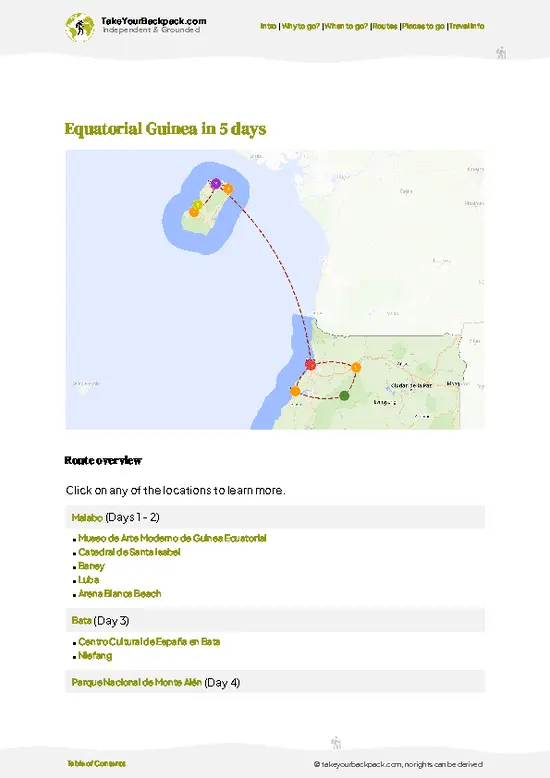
The 5-Day Island-to-Mainland Explorer

The vibe: A fuller journey that links Bioko’s volcanic peaks with the mainland’s big-city buzz and rainforest interior, using a domestic flight plus road transfers to keep things efficient but not rushed. It’s for travelers who want a real sense of the country’s contrasts in under a week.
  • Capital-city culture in Malabo, from the national museum to the cathedral and cultural center.
  • Highland hikes around Pico Basile National Park, Pico de Santa Isabel, and Cascadas de Moka.
  • Mainland city energy in Bata, including time around Estadio de Bata.
  • Rainforest immersion in Parque Nacional de Monte Alén plus riverfront town life in Mbini and Cogo.
🌍 Want a ready-to-use travel plan for Equatorial Guinea?
The overview above compares different route options based on your travel time and style. The complete Travel Guide breaks each itinerary down in detail, including maps, stops, highlights, and transport information.

Explore all route details 👉

Get the Travel Guide -

🌤️ When to go?Choosing the right months to travel

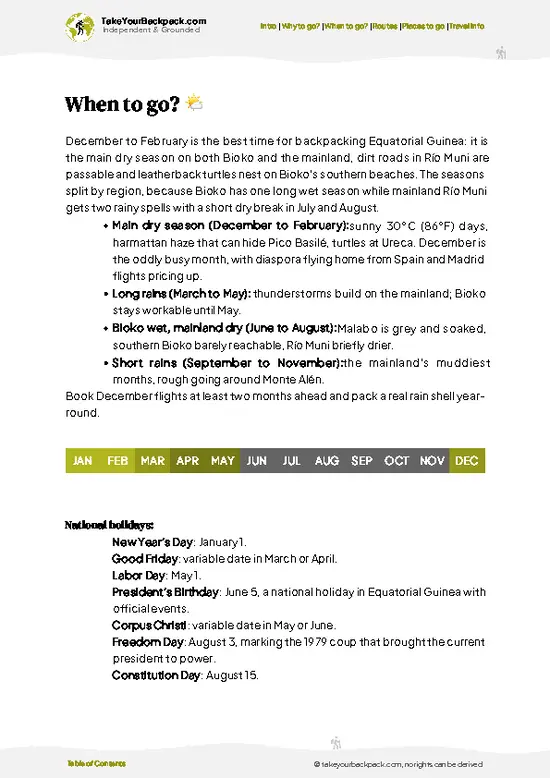
Mid-January to early March is the sweet spot. Dry enough on Bioko for Basile and Ureka, and mainland tracks into Monte Alén still hold. Holiday surges fade, business travel hasn’t spiked, and prices ease. Heat stays heavy but manageable; insects drop; domestic flights and bush taxis behave better than in the rains.
  • Dry Core (Dec-Feb): Malabo beds fill for late-Dec holidays and oil meetings; rates jump. Grind through for clear Basile views and rare dry, midnight turtle walks at Ureka—still worth the extra cash and sweat.
  • Early Rains (Mar-May): Clouds build by late morning; markets pull tarps; bush taxis reshuffle and push. Waterfalls swell, trails cool, prices ease. Start at dawn; be under a tin roof by the first clap.
  • Long Rains (Sep-Nov): The country turns inward. Roads liquefy, mosquitoes bloom, and you often hike alone. Hack: quick-dry shoes, plastic sandals, a pack liner; move at first light. Anomaly: October spikes for Independence Day—rooms vanish despite the deluge.

Tactical tip: Reserve domestic flights and Malabo rooms 2-4 weeks ahead for Jan-Mar.

source: climatestotravel.comJANJanuary: excellent for travelingFEBFebruary: excellent for travelingMARMarch: highly recommended for travelingAPRApril: good for travelingMAYMay: good for travelingJUNJune: fair for travelingJULJuly: fair for travelingAUGAugust: fair for travelingSEPSeptember: fair for travelingOCTOctober: fair for travelingNOVNovember: fair for travelingDECDecember: highly recommended for traveling
📅 Traveling in a specific month?
Get a full month-by-month breakdown of weather, crowds, costs, festivals, and seasonal highlights in the complete travel guide.

Get full details when to go 👉

Get the Travel Guide -
Equatorial Guinea - istockphoto

💰 Costs (as of 2025)Travel costs in Equatorial Guinea

Plan on 60-90 USD/day if you work the local system; 150-250 USD/day if you get trapped in expat hotels and taxis.
  • dorm accommodation: Dorms are rare; expect worker bunkrooms or mission-style housing at 15,000-25,000 XAF (25-40 USD) when you find them, otherwise a bare fan room runs 25,000-40,000 XAF (40-65 USD). System tip: ask for “residencia”/“pensión,” request a fan room (no A/C), pay cash in XAF, and negotiate weekly; arrive late afternoon when turnover happens. Compared to Cameroon, beds run 30-80% higher; still cheaper than Gabon’s city hotels.
  • meals: Supermarket Survival: imported goods are pricey; think 30-70% above Cameroon. Cheap basket: baguette 200-300 XAF, bananas 100-150 XAF each, tins of fish 1,000-1,500 XAF, water 500-700 XAF. Street food reality: grilled fish with yuca 1,500-3,000 XAF, rice-and-sauce 1,500-2,500, brochettes 500-1,000 each; basic local restaurants 3,000-6,000 XAF. Expat eateries jump to 7,000-15,000 XAF per plate.
  • local transport: Cheapest unlock: shared taxis in Malabo/Bata at 500-1,000 XAF per hop; say destination first, pay exact change. Interurban bush cars/minibuses: Bioko routes like Malabo-Luba/Moka 2,000-4,000 XAF; mainland long hauls 8,000-15,
read more 👉
Plan on 60-90 USD/day if you work the local system; 150-250 USD/day if you get trapped in expat hotels and taxis.
  • dorm accommodation: Dorms are rare; expect worker bunkrooms or mission-style housing at 15,000-25,000 XAF (25-40 USD) when you find them, otherwise a bare fan room runs 25,000-40,000 XAF (40-65 USD). System tip: ask for “residencia”/“pensión,” request a fan room (no A/C), pay cash in XAF, and negotiate weekly; arrive late afternoon when turnover happens. Compared to Cameroon, beds run 30-80% higher; still cheaper than Gabon’s city hotels.
  • meals: Supermarket Survival: imported goods are pricey; think 30-70% above Cameroon. Cheap basket: baguette 200-300 XAF, bananas 100-150 XAF each, tins of fish 1,000-1,500 XAF, water 500-700 XAF. Street food reality: grilled fish with yuca 1,500-3,000 XAF, rice-and-sauce 1,500-2,500, brochettes 500-1,000 each; basic local restaurants 3,000-6,000 XAF. Expat eateries jump to 7,000-15,000 XAF per plate.
  • local transport: Cheapest unlock: shared taxis in Malabo/Bata at 500-1,000 XAF per hop; say destination first, pay exact change. Interurban bush cars/minibuses: Bioko routes like Malabo-Luba/Moka 2,000-4,000 XAF; mainland long hauls 8,000-15,000 XAF per seat. Malabo-Bata ferry economy 10,000-20,000 XAF; flights are quicker but costly. Walking and chaining shared taxis beat any rental.
  • activities: Major cost drivers are permits, guides, and vehicles for Pico Basile, Monte Alén, and remote beaches. Park/area fees 5,000-15,000 XAF; guide 10,000-25,000 XAF/day; 4x4 with driver 25,000-40,000 XAF plus fuel. Diving/boats price off fuel: expect 40-70 USD a tank or 60-120 USD for a short charter. Museums small change; beaches free—getting there isn’t. Cheaper than Gabon’s safaris, pricier than Cameroon’s DIY hikes.
  • miscellaneous: Budget leaks: visa/permits dwarf daily spend, ATMs charge and sometimes fail (carry cash), hotel FX is lousy, checkpoints punish missing passport photocopies, laundry 2,000-4,000 XAF, beer 1,000-2,000 XAF in local bars (double in expat spots), SIM/data cost more than in Cameroon. Avoid international-style bars, over-air-conditioned rooms, and paying in EUR/USD at hotel rates.
⚠️ Prices can change and everyone travels differently, so take this as a rough guide. Hope it helps you plan your adventure!

✈️ The backpacker research shortcutEquatorial Guinea Travel Guide

An offline-friendly backpacking guide with optimized travel routes, ranked highlights, transport advice, and the best areas to stay.
example page 0 from our offline Travel Guide for Equatorial Guineaexample page 1 from our offline Travel Guide for Equatorial Guineaexample page 2 from our offline Travel Guide for Equatorial Guineaexample page 3 from our offline Travel Guide for Equatorial Guineaexample page 4 from our offline Travel Guide for Equatorial Guineaexample page 5 from our offline Travel Guide for Equatorial Guineaexample page 6 from our offline Travel Guide for Equatorial Guineaexample page 7 from our offline Travel Guide for Equatorial Guinea
The digital guide (218 pages) contains:
52 highlights, ranked by travel appeal
Optimized 2, 3 & 5-day travel routes
Cities, national parks, beaches, historical sites, ...
How to get around
Offline-friendly for travel without Wi-Fi
👉 Click to see all 30+ guide features

📅 Plan smarter in minutes, not weeks
Month by month travel advice
Festivals & national holidays
Budget expectations

🗺️ Go to the right places, skip the overrated ones
Honest pros & cons of destinations
Top hikes, parks & viewpoints
Lesser-known places most travelers miss
Clear “worth it vs skip it” guidance

🛏️ Travel smoothly without rookie mistakes
Best areas to stay
Transport systems explained simply
Common scams & safety advice
SIM cards, money & practical tips

🌍 Understand the country, not just visit it
Culture & traditions
52 Essential phrases & customs
Festivals worth planning around
Traveler-friendly historical context
Insights that make places more meaningful

📱 Built for real travel conditions
Fully downloadable PDF
Works completely offline
Optimized for phone use
Useful in remote areas & buses
Everything in one place
Save weeks of stressful planning
Get instant access to the full guide directly. 30-day money-back guarantee.


Sent to your inbox immediately after payment • 100% Secure Checkout
Best Backpacking Travel Advisor 2025 tourism awardBest Backpacking
Travel Advisor
2025
What others say about Take Your Backpack Guides:
⭐⭐⭐⭐⭐
Fantastic, amazing amount of information!
⭐⭐⭐⭐⭐
My goodness this is amazing, it's what I've been looking for hats off too you!
⭐⭐⭐⭐⭐
I think this is absolutely BRILLIANT
⭐⭐⭐⭐
Very complete and informative. It's still missing places, but I gotta to commend you
⭐⭐⭐⭐⭐
This is truly amazing, thank you, can't wait to explore it with my kids!
⭐⭐⭐⭐⭐
Awesome resource, thank you!
⭐⭐⭐⭐⭐
This is amazing! Can't wait to explore the ones I haven't seen
⭐⭐⭐⭐
I love this! Well done, great idea.
⭐⭐⭐⭐⭐
Thanks for taking the time to make this gem!
⭐⭐⭐⭐⭐
This might be the best website I've ever seen.
⭐⭐⭐⭐⭐
Congratulations, and thank you so much for your work; it's incredibly valuable.
⭐⭐⭐⭐
In all seriousness I think you did a great job pointing out the important spots
⭐⭐⭐⭐⭐
10/10 very good
⭐⭐⭐⭐⭐
As someone who's only just starting to visit regularly this is awesome, thank you.
⭐⭐⭐⭐
Thank you very much! I'm going to visit my dad, it's going to be very useful!
⭐⭐⭐⭐⭐
This is really cool! We'll be travelling for the first time and this definitely come in handy.
⭐⭐⭐⭐⭐
You are now our minister of culture, congratulations 👨‍💼
⭐⭐⭐⭐⭐
Just wanted to tell you that this is a pearl! Going to follow your recommendations.
⭐⭐⭐⭐⭐
This is so cool. I'll definitely be using the resource for my travels soon.
⭐⭐⭐⭐⭐
This is very impressive! Good work.
⭐⭐⭐⭐⭐
This is an amazing and informative site. Very well done!

🛏️ Where to stay?Areas travelers tend to prefer

There are very few true hostels in Equatorial Guinea; budget travelers should expect basic guesthouses and low‑cost hotels concentrated in the main cities rather than a broad hostel scene.
Most budget accommodation is in Malabo (city centre and waterfront) and Bata (city centre and port), with a smaller cluster in Luba on Bioko Island.
Malabo city centre puts you closest to markets, ferries and government offices with modest nightlife and generally safer daytime streets but occasional petty crime and frequent power/water outages; Bata offers more transport links and livelier evenings but can … read more 👉
There are very few true hostels in Equatorial Guinea; budget travelers should expect basic guesthouses and low‑cost hotels concentrated in the main cities rather than a broad hostel scene.
Most budget accommodation is in Malabo (city centre and waterfront) and Bata (city centre and port), with a smaller cluster in Luba on Bioko Island.
Malabo city centre puts you closest to markets, ferries and government offices with modest nightlife and generally safer daytime streets but occasional petty crime and frequent power/water outages; Bata offers more transport links and livelier evenings but can be noisy and less secure after dark; Luba is quiet and nearest beaches/hiking yet has far fewer services, higher transport costs and limited accommodation standards.

If you enjoy meeting fellow travelers, consider choosing hostels with high ratings for atmosphere. On the other hand, if you prefer having your own space, a hotel might be a better option.

🚌 Getting aroundGetting around Equatorial Guinea

Equatorial Guinea runs on two rhythms: paperwork and patience. Official schedules exist—airports, ferries—but most wheels turn when seats fill and the roadblocks wave you through. Early risers win; late starters stew in queues and tropical downpours. Expect police checks to chew time; keep your passport visible and your camera buried. When it moves, it moves fast. When it stops, you wait, and nobody argues with the sea or the rain.
  • Mainland minibuses and shared cars Cheapest runs between Bata, Evinayong,
read more 👉
Equatorial Guinea runs on two rhythms: paperwork and patience. Official schedules exist—airports, ferries—but most wheels turn when seats fill and the roadblocks wave you through. Early risers win; late starters stew in queues and tropical downpours. Expect police checks to chew time; keep your passport visible and your camera buried. When it moves, it moves fast. When it stops, you wait, and nobody argues with the sea or the rain.
  • Mainland minibuses and shared cars Cheapest runs between Bata, Evinayong, Mongomo, and Ebebiyin. Vans leave when full; expect 7-12k XAF Bata-Mongomo, 4-6 hours if dry. You pay with time: checkpoints, speed bumps, tyre fixes. Private 4x4 halves time, triples cost.
  • Shared city taxis (Malabo & Bata) Point down to flag, say your neighborhood; a nod means it’s on his line. You’ll squeeze with strangers, no door slams, pay at the end. Fares hover around 500 XAF per hop by day, often 1,000 after dark. Carry small bills; seatbelts are aspirational.
  • Ferries and pirogues Water stitches the country where roads don’t. Fast boats Malabo-Bata can take 2.5-4 hours when seas are calm; slower cargo boats drift on their own logic. Small pirogues reach coastal/river villages. Ports want ID and patience; mornings are safer, weather cancels without debate.
  • Moto-taxis The cheap counterpunch when taxis overquote or traffic stalls. Short hops run ~300-700 XAF; agree first. Insist on a helmet or walk away. Avoid official zones and rainy nights; when allowed, they thread bottlenecks and buy back time.

Master tip: Catch the first departure at first light—minibuses fill fastest, seas are calmer, checkpoints are sleepy—and keep passport copies plus small XAF notes in your front pocket to glide through stops.
Distance
Malabo International Airport (SSG) is about 9 km (5.5 miles) from the city center.

Main ways to get into town
  • Taxi (private hire) — Easiest option at all hours. Taxis wait outside the terminal. Agree the fare before you get in.

    Time: 15-25 minutes, depending on traffic and checkpoints

    Cost: typically 3,000-6,000 XAF by day; 5,000-8,000 XAF late at night or with heavy luggage (roughly US$5-13). Many taxis are shared by default; say “privado” if you want it to yourself.
  • Shared taxi (colectivo) — Budget option used by locals. You may need to walk out to the main road just outside the airport area to flag one heading toward the center.

    Time: 20-40 minutes including waiting and stops

    Cost: 1,000-2,000 XAF per seat (about US$2-3). Service is most frequent in daylight hours and thins out late evening.
  • Hotel shuttle — Several mid-range and upscale hotels run shuttles if you book ahead.

    Time: 15-25 minutes

    Cost: often free for guests, otherwise commonly 2,000-5,000 XAF.
  • Car rental — Desks operate at the airport, but it’s pricier and not necessary for the short hop into town.

    Time: 15-25 minutes to the center

    Cost: from about 30,000-50,000 XAF per day, plus deposit and fuel.

Is there an airport bus?
No. As of 2025 there’s no official airport bus or city bus line serving the terminal, and there’s no Uber/Bolt.

Quick tips
- Carry small bills; taxis are cash-only in XAF.
- Keep your passport handy for routine checkpoints on the way into town.
- Fares above are typical as of 2025; drivers may quote higher at night or in bad weather—negotiate politely.
⚠️ Prices and routes can change, so take this as a rough guide and ask for local advice when you arrive.

🔒 Safety (risk Level: medium)Common concerns and things to watch out for

Safety for solo travelers, including women and LGBTQ+ individuals
Equatorial Guinea presents some safety challenges for solo travelers, including women and LGBTQ+ individuals. It has a reputation for corruption and occasional police harassment, so always keep your documents handy and stay alert. While violent crime isn’t rampant, it’s wise to avoid isolated areas, especially after dark. LGBTQ+ travelers should exercise caution due to conservative societal attitudes and lack of legal protections.

✈️ VisaVisa requirements for Equatorial Guinea

Most travelers need a visa to visit Equatorial Guinea. Apply through the nearest Equatorial Guinea embassy or consulate by submitting a completed application form, passport photos, and an invitation letter or proof of accommodation. Processing times and requirements can vary, so check ahead.
⚠️ Visa requirements can change over time, so always check the latest visa requirements with the official embassy or government website before you travel.

🎒 What to pack?What to pack for Equatorial Guinea

Equatorial Guinea is a wild mix of lush rainforests, coastal getaways, and volcanoes, so pack for variety. Expect hot and humid weather with a side of tropical rain—waterproof your gear and embrace quick-dry fabrics. When visiting local villages or religious sites, opt for modest clothing; think lightweight long sleeves and pants. Footwear that can handle muddy trails and slippery streets will be your best friend. And don’t forget a little Spanish; it’s the lingua franca here, and a few words will go a long way.

Apart from this country specific advice, I have also crafted a general packing list that should help on any trip. authorOver the years, I've learned the importance of packing minimally. It's so much easier to jump on the back of a truck or squeeze yourself into the last spot of a minibus without that supersized backpack. If you're headed to a warm destination, leave your winter jacket at home; for colder regions, opt for thin thermal underlayers. Instead of packing your entire wardrobe, bring just three sets of clothes, as laundry facilities are available everywhere.
View the full list 👉
🎒 Planning the practical side of your trip?
Get detailed information on transport, daily budgets, internet access, local customs, food, language, and other essentials in the complete Travel Guide.

Get detailed practical information 👉

Get the Travel Guide -

🙋 FAQQuick answers to practical concerns

Trip Planning


Personal tip: I normally search on good rating for atmosphere (for meeting people) and location (for easy exploring). Cleanliness as a bonus.


Travel Essentials

Yellow fever vaccination is mandatory for entry into Equatorial Guinea. You should also consider vaccines for hepatitis A and B, typhoid, and rabies, depending on your planned activities. Malaria prophylaxis is highly recommended. Always consult a healthcare provider for personalized advice.


vaccination requirements
When I first started traveling, I often spent part of my first day in a new country hunting for a local SIM card. While this can still be slightly cheaper, it also takes time and planning.

These days, it's much simpler to install an eSIM before leaving home. Once you arrive in Equatorial Guinea, you can activate it immediately and have mobile data from the moment you land — which is especially useful for ordering transport or navigating away from busy airports.

There are many providers nowadays, and price differences are usually small. I personally go with Airalo, as it offers excellent network coverage throughout the country and strong global coverage, so you can manage multiple countries from a single app.


Get your e-sim for Equatorial Guinea

Culture & Customs

Avoid discussing politics openly, as it can be a sensitive subject. Dress modestly to show respect, especially in rural areas. Always greet people formally and shake hands when meeting someone. Tipping isn’t customary but appreciated.

For LGBTQ+ travelers, discretion is advised due to conservative views on homosexuality. Women should travel in groups and avoid being out alone at night—safety can be a concern. Always ask permission before taking photos of people or their property.
Trying traditional food is always a great way to experience the culture. Here are some must-try dishes for Equatorial Guinea.
  • Succotash: A hearty stew made with corn, beans, and often a mix of meats like fish or chicken. It’s a staple in many households and showcases the blend of local ingredients and influences from neighboring regions.
  • Peanut Soup: This rich and creamy soup is made with ground peanuts, tomatoes, and a variety of meats. It’s popular for its comforting warmth and nutty flavor, making it a go-to dish for gatherings.
  • Smoked Fish with Plantains: Often featuring locally caught fish, this dish is smoked to perfection and served with fried plantains. It’s a favorite for its savory taste and combination of textures.
  • Yuca with Ndolé: A traditional dish where yuca (cassava) is paired with ndolé, a bitter leaf stew often cooked with peanuts and fish or meat. It’s a dish that reflects the cultural ties with Central African cuisine.
Tap water in Equatorial Guinea is generally not safe for tourists to drink, as it might contain contaminants that could upset your stomach. Locals might drink it after boiling, but it’s best for travelers to stick to bottled or filtered water to avoid any health issues. Keep a reusable water bottle with a filter handy if you’re on a budget.
The main language in Equatorial Guinea is Spanish. Backpacking is way more rewarding if you know a bit of the local language, so I'd suggest brushing up on the basics just in case your Spanish skills have become a bit rusty.

Want to understand locals better?
The complete Travel Guide for Equatorial Guinea includes 52 essential words and phrases — greetings, thank-yous, ordering food, transport, numbers, and common local expressions you'll actually hear.

Get your local basic phrases 👉

Get the Travel Guide -


In Equatorial Guinea, English is not widely spoken. The official languages are Spanish and French, with Spanish being the most prevalent due to the country’s colonial history. English is taught in schools, but proficiency varies significantly among the population. In urban areas, particularly in Malabo, you may encounter some English speakers, especially in hotels, restaurants, and among younger generations. However, outside major cities, English speakers are rare, and Spanish is typically the primary means of communication.

If you’re planning to travel there, it’s advisable to learn some basic Spanish phrases to facilitate interactions. Additionally, having a translation app or a phrasebook can be helpful. While English may not be common, the local people are generally friendly and willing to assist travelers, often using gestures or basic Spanish to communicate.

Money & Payments

The local currency of Equatorial Guinea is XAF (FCFA).

If you’re heading to Equatorial Guinea on a budget, keep a few money tips in mind. ATMs can be scarce outside of Malabo and Bata, so it’s wise to withdraw enough cash when you’re in these cities. Carry a mix of cash in both euros and Central African CFA francs (XAF), but avoid carrying large sums for safety reasons.

Euros are usually easier to exchange than dollars, and you’ll find better rates at banks rather than at hotels or airports. Note that credit cards aren’t widely accepted except at some high-end hotels and restaurants, so don’t rely on them. When you need to exchange money, head to a bank or a legitimate currency exchange office—avoid street vendors to dodge scams.

Tipping in Equatorial Guinea isn’t customary, but it’s appreciated for good service. In restaurants, rounding up the bill or leaving a small amount is common. Taxis and hotel staff might expect a little extra if they go out of their way to help.

🧩 Nearby countriesNearby backpacking alternatives

We 💚 feedbackThe bottom line on traveling here

Equatorial Guinea rewards stubborn planners. Visas, permits, and police checkpoints eat time; keep copies of passport, stay polite, move on. Costs run higher than Cameroon or Gabon, with midrange rooms priced like business hotels; carry CFA cash—ATMs thin beyond Malabo/Bata. Malaria is common on Bioko; take prophylaxis. Spanish opens doors fast, a rare advantage in the region. Best for experienced travelers who value low-traffic rainforests and island hikes. Not ideal for first-time backpackers chasing easy transit, cheap beds, or nightlife.

✍️ Help improve this page!
The information on this page is based on in-depth research, insights shared by experienced travelers, and feedback from the local travel community in Equatorial Guinea. While every effort is made to keep the information accurate and current, conditions can change — so if you spot anything incorrect or outdated, please get in touch.


🙋‍♂️ Give feedback

👋 Meet the founderWho’s Behind Take Your Backpack?

Johan, backpacker and founder of TakeYourBackpackHi, I’m Johan (Netherlands 🇳🇱), the creator of TakeYourBackpack. Over the past decade, I’ve backpacked through 80+ countries across six continents, gaining extensive experience with independent travel, long-term trips, and overland routes.

This site is built on a combination of firsthand travel experience and carefully curated insights from other backpackers. Many guides are based on places I’ve personally visited, while others bring together tips, observations, and practical advice shared by trusted travelers I’ve met along the way.

The goal is to provide realistic, experience-driven guidance — not generic itineraries — so you can explore destinations with better context, clearer expectations, and more confidence.

Get full country guide •
Instant download • 52 highlights • Full Offline guide