×
Spain 🇪🇸

backpacking Europe Spain 🇪🇸Drift effortlessly between fiestas and long afternoons.

Explore SloveniaExplore Svalbard

Backpacking Spain in 2026

A complete guide including when and where to go, costs, transport, itineraries, and practical travel advice.
What a trip here is really like

Backpacking Spain
By Johan Kruseman 🇳🇱 | Updated June 14, 2026

I once paid for a museum ticket I never used because a tapas crawl became dinner, dessert, and friends. In Spain, the detour often beats the headline act. Plans bend; pleasure wins.

What pulls you here is a daily rhythm that runs on late light and long conversations, poured over Rioja and anchovies that taste like they’ve got a PhD in salt. You get Moorish palaces that feel lived-in—Alhambra at dawn, the Mezquita’s forest of arches, Gaudí’s holy fever dream stretching skyward—balanced by the grit and grin of Madrid bars, the surf-stung Basque coast, white villages tossed along Andalusian hills, and wild ranges like the Picos and the Pyrenees where a long climb still buys you real quiet. Pilgrim miles on the Camino reset your head; pintxos in San Sebastián ruin you (in a good way) for bar snacks elsewhere; Semana Santa drums in Seville hit you in the ribs. Yes, you’ll face late dinners, heat that bullies August, pickpockets that love distracted crowds in Barcelona, and museum hours that treat time like a suggestion—but you adapt, nap on purpose, book early slots, carry your bag cross-body, and suddenly the country opens like a well-guarded door.

Compared to Portugal’s smaller, softer hug, Spain is louder and larger; versus France’s polish, it’s more democratic in joy; next to Italy’s theater, it’s less staged and just as art-soaked. It’s for eaters, walkers, night owls, history nerds, and anyone who wants travel to feel earned then savored.

👉 Get the 📖 Travel Guide of Spain

Madrid + Castile (Madrid–Toledo–Segovia AVE spine)

Verdict: Essential. Big-city energy with easy medieval fixes. Base in Madrid for late nights and art marathons, then fire off fast day trips: 30–40 minutes to Segovia’s arches, roughly the same to Toledo’s hilltop lanes. Metro swallows distance; commuter trains are cheap and frequent. Rewards the traveler who likes momentum—museum mornings, bar-crawl nights, surgical day trips in between. If you hate logistics, this is the rare place where the network forgives you.

Andalusia (Seville–Córdoba–Granada via rail/bus corridor)

Verdict: Essential. You come for tiled courtyards and Moorish stonework, but the real trick is pacing. Seville–Córdoba is fast by train; Granada often slots in via Antequera or bus. Heat is a bully from late morning, so move early, nap hard, and walk again at dusk. Rewards planners who can snag Alhambra slots and embrace tapas standing up. Social, late, and rhythmic—if you eat dinner at 6, Andalusia will break you, in a good way.

Basque Country (Bilbao–San Sebastián bus spine)

Verdict: Essential. Green, hilly, and built for walkers who like to earn their meals. Hourly buses link Bilbao and San Sebastián in about 75–90 minutes, perfect for a two-city shuffle. Pintxo bars are small and intense; order off the board, don’t hoard the counter. Weather flips fast, so pack a shell and keep moving. Rewards food-first travelers, coastal hikers, and surfers. If you need guaranteed sun, go south; if you chase flavor, come here.

Costa Brava (Girona–Cadaqués/Tossa corridor)

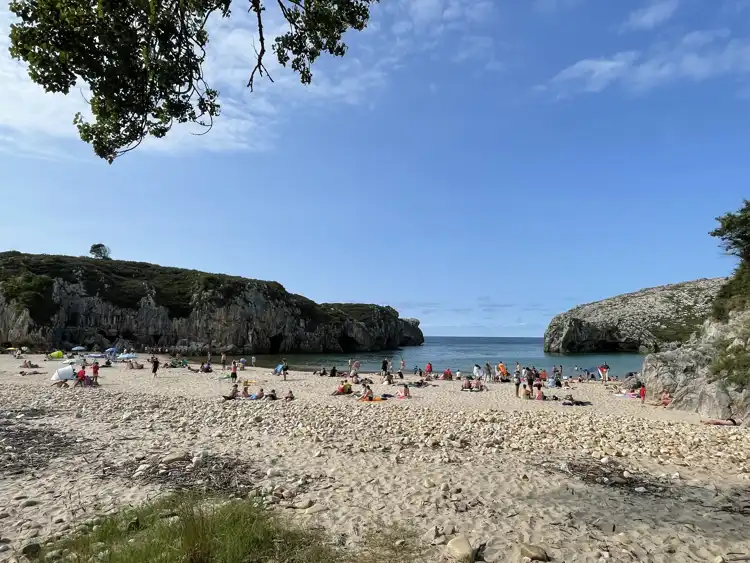
Verdict: Essential for DIY types. Girona is your rail latch (fast trains from Barcelona), but the coast pays out only if you’re willing to connect buses or rent wheels. Small coves demand stairs, goat paths, and a tolerance for pebbles. Towns sleep early outside August. Rewards swimmers, photographers, and anyone who prefers cliff trails to loungers. If your ideal beach has a waiter and a wristband, wrong coast.

Costa del Sol (Málaga–Torremolinos–Marbella)

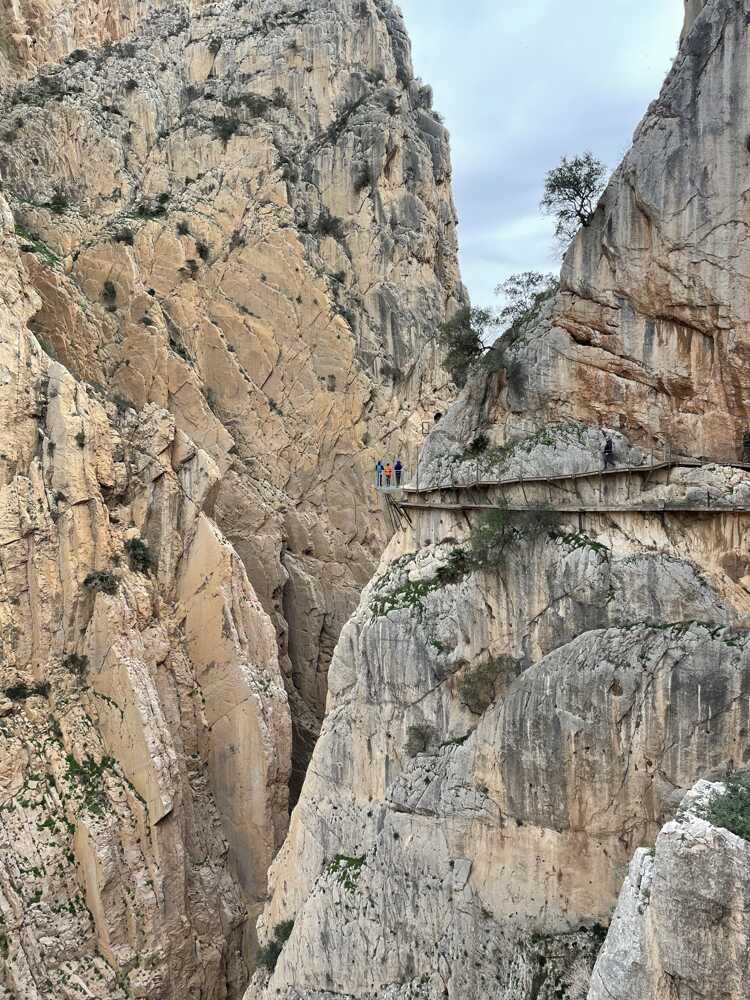
Verdict: Overrated. Logistics are almost too easy: suburban trains from the airport, beachfront promenades, English menus everywhere. You’ll get sun, a tan on deadline, and not much soul unless you head inland to Ronda or the Caminito del Rey. Rewards golfers, stroller pushers, and winter escapees. If you want culture per kilometer and bars where locals outnumber visitors, your time is better spent elsewhere.
Seeing the layout at a glance
Loading the map 🌍
CLICK TO FILTER
cities
towns
villages
landmarks
national parks
hikes
beaches
attractions
festivals
regions
SHOW COUNTRY’S BESTSHOW ALL

Why go?Reasons people choose to visit

Architecture

Spain is the best crash course in architecture you can walk. Roman muscle in Segovia’s aqueduct, Islamic … read more 👉
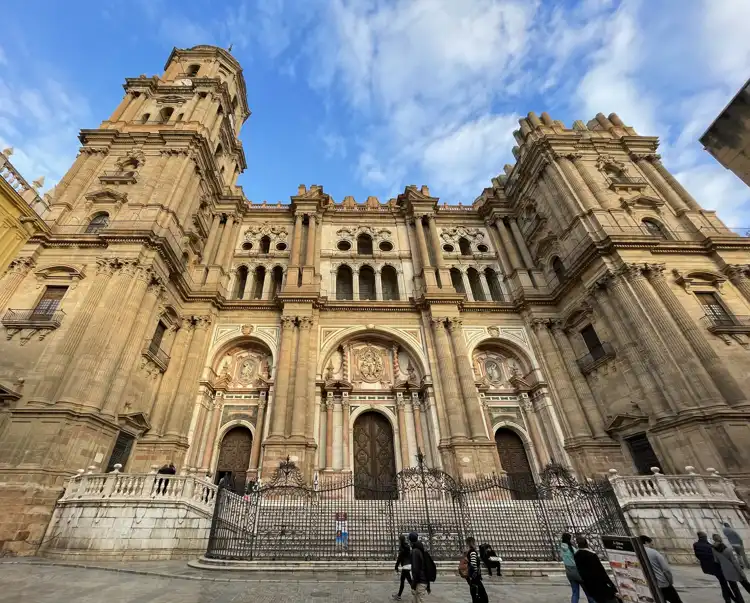
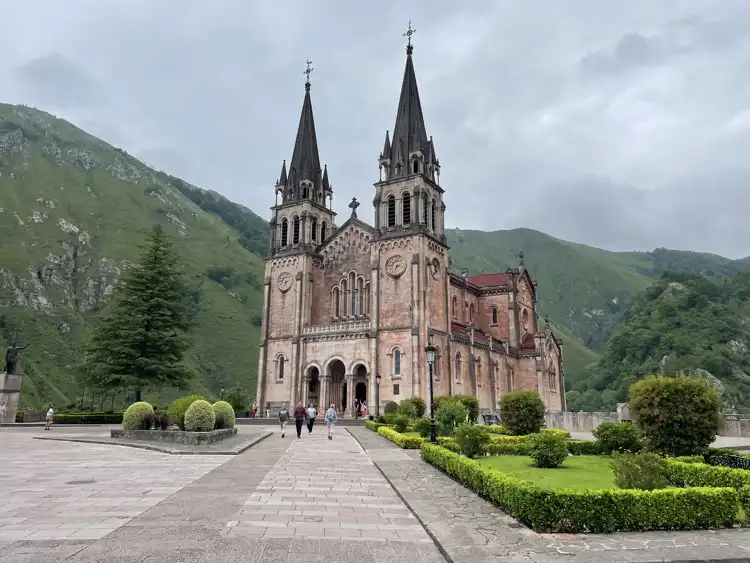
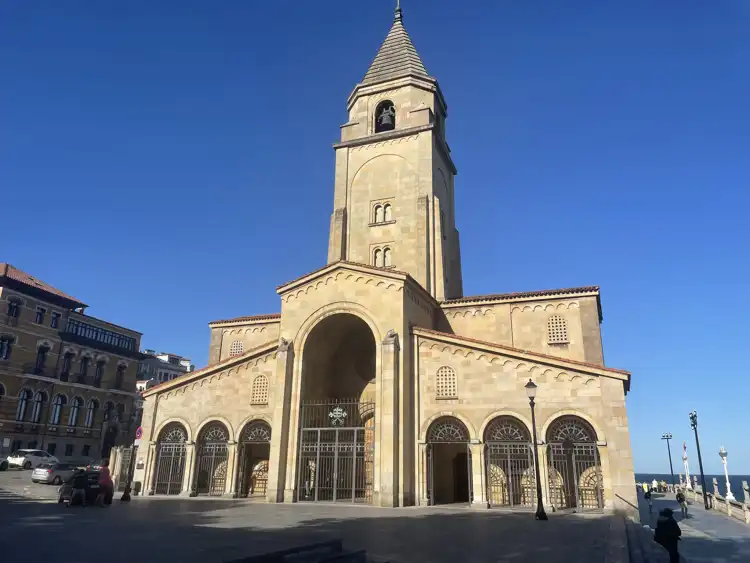
Spain is the best crash course in architecture you can walk. Roman muscle in Segovia’s aqueduct, Islamic lacework at the Alhambra, Gothic spines in Burgos and León, and Gaudí’s ongoing experiment in Barcelona — all within train range, so you can stack centuries like tapas. The payoff is how close you can get: climb cathedral towers, brush tile in Seville’s Alcázar, feel Roman paving bite through your soles in Mérida.

Pro-tips that save your day: book the Nasrid Palaces first entry; it’s the difference between hushed geometry and a conga line. Hit Segovia at sunrise—empty arcades and a warm croissant reward the early alarm. Mondays are closure traps; check schedules. Siesta thins crowds in churches and courtyards. And don’t drive into old towns unless you enjoy three-point turns on medieval alleys.

Beach life

Spain is built for beach life the way tapas bars are built for midnight: effortlessly, with a little … read more 👉
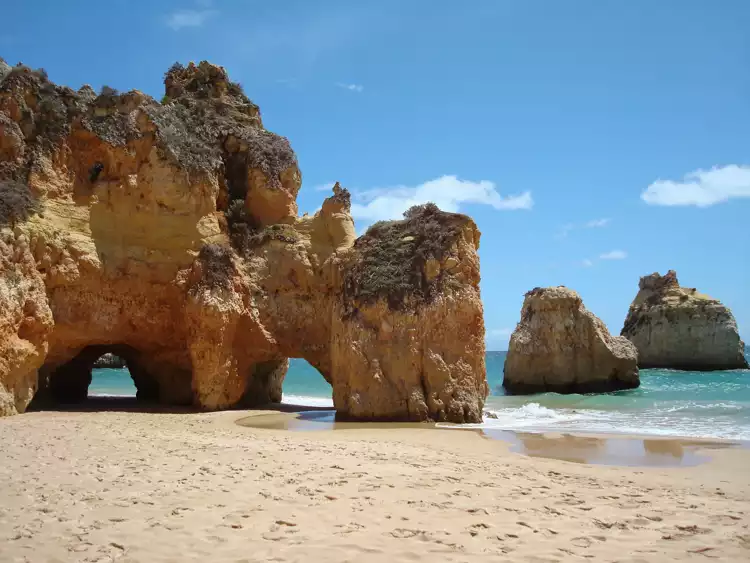
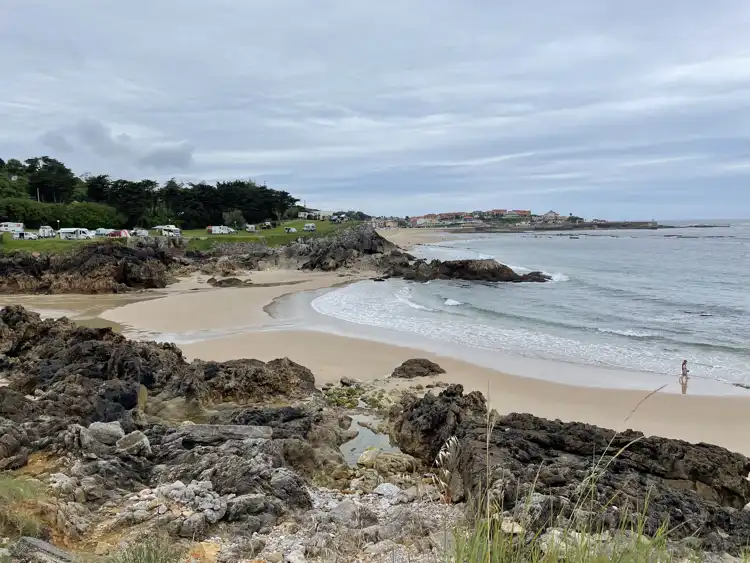
Spain is built for beach life the way tapas bars are built for midnight: effortlessly, with a little chaos. You can surf Galicia, snorkel Costa Brava coves, dive winter-clear lava reefs in the Canaries, then go dance away the sunscreen at Ibiza and still catch a chiringuito grilling sardines by sunset. The range is the point—silky Med coves for lazy swims, Atlantic bite for waves, and honest-to-goodness marine reserves like Cabo de Palos for big-fish dives.

Pro tip: arrive before 9 a.m. or you’re parking in Portugal. Rock shoes help on Costa Brava; a rash guard saves you from late-summer jellyfish. Personal favorite: skip Barceloneta’s chaos—take the train 30 minutes to Ocata’s wide sands. Or hike into Cabo de Gata; the walk filters out the speaker-towers and rewards you with silence and real blue.

Mountains

Spain’s mountains pay out because variety: knife-edge granite in Picos de Europa, high desert moonscape … read more 👉
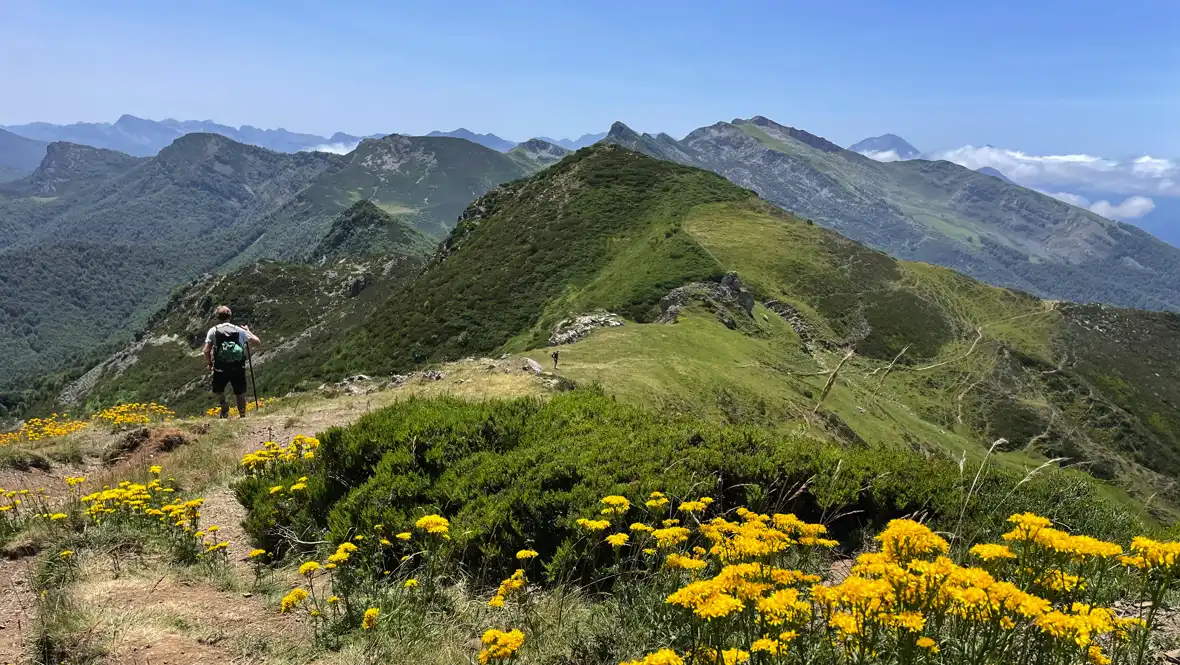
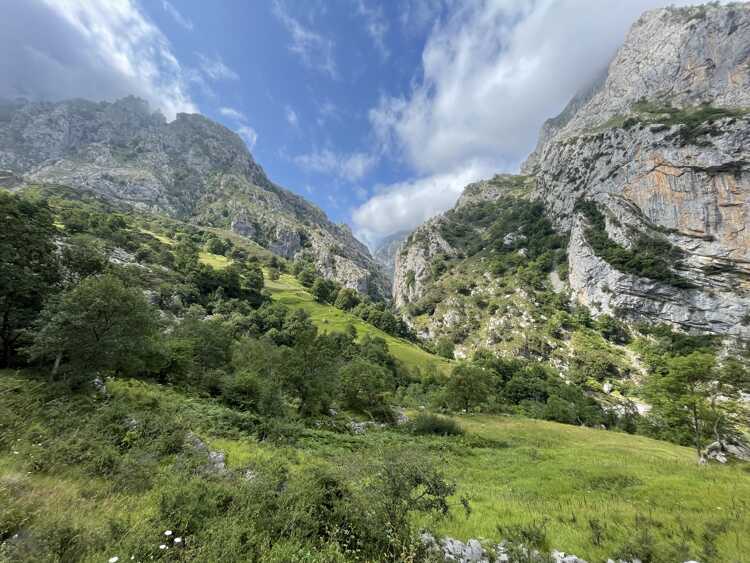
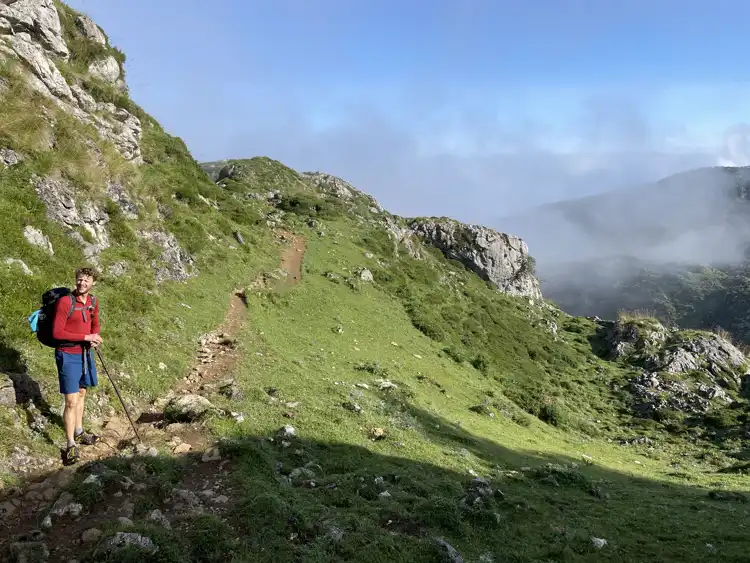
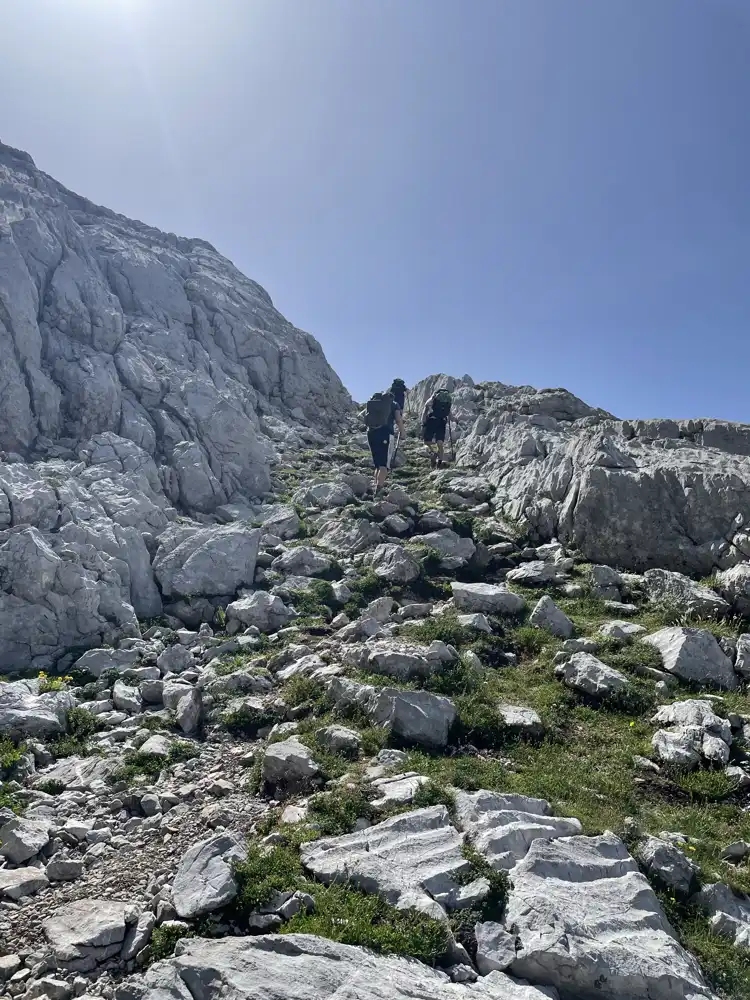
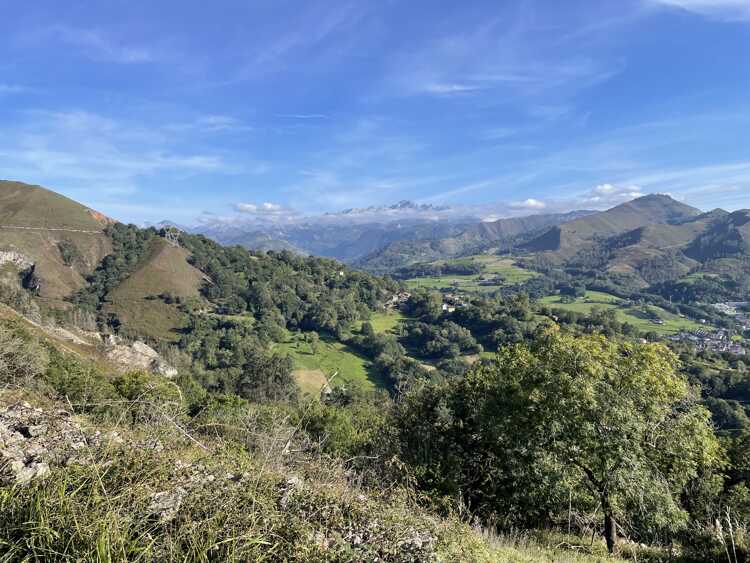
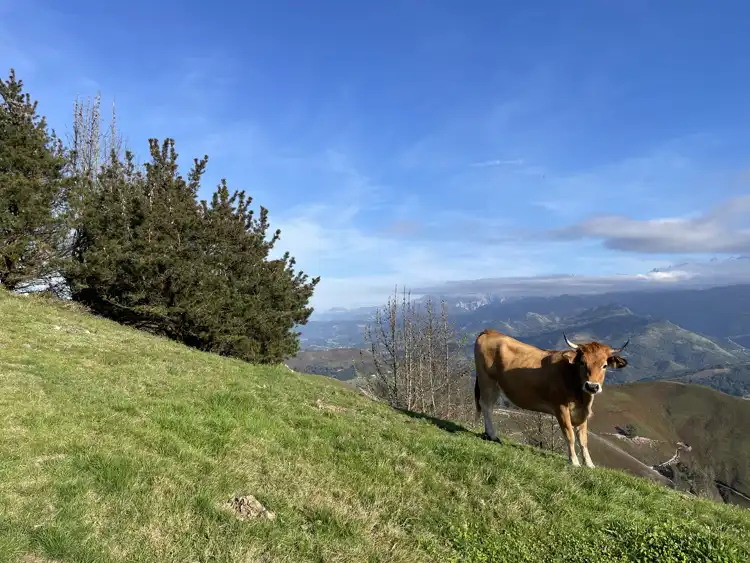
Spain’s mountains pay out because variety: knife-edge granite in Picos de Europa, high desert moonscape on Teide, alpine passes in the Pyrenees, and dry limestone ribs in Sierra de Gredos—often reachable by cheap buses if you’re patient. Trails are usually well waymarked, refugios feed you like a hungry cousin, and the weather rewards early starts. Pro tip: shoulder seasons (May–June, Sept–Oct) save you from heat and snow slop; the Pyrenees hold snow into June, and storms bully afternoons. I still think sunrise at Collado Jermoso in the Picos is the best “why”—gold light, cowbells, and your legs earning every bite of tortilla. Bring cash for huts, book weekends, and carry real sun protection; Andalusian sun does not negotiate. Teide’s summit needs a permit; the volcanic grit will eat soft shoes.

Backpackers

Spain rewards the backpacker who likes long days, late nights, and easy wins between the grind. Buses … read more 👉
Spain rewards the backpacker who likes long days, late nights, and easy wins between the grind. Buses stitch the map tighter than trains; ALSA gets you from surf in San Sebastián to flamenco sweat in Seville with a €1 bocadillo in your bag. Hostels actually talk to each other; pub crawl calendars feel like municipal services. The real win: cheap daily menus at lunch, grocery store wine that does its job, and city plazas that serve as living rooms. I once paid for a beer in Granada and got dinner by accident. Pro tip: walk the Camino for a week even if you are not spiritual; albergues cost less than your coffee habit and strangers become logistics teammates. Start late, nap hard, eat everything, keep your hand on your pocket in Barcelona.

Food

Spain rewards anyone willing to eat on Spain’s clock: late, long, and often standing up. The payoff … read more 👉
Spain rewards anyone willing to eat on Spain’s clock: late, long, and often standing up. The payoff is regional obsession made edible—Basque pintxos built like tiny engineering projects, Valencia’s rice with honest socarrat, Galicia’s octopus that ruins the boiled stuff back home. Lunch is the move. Menú del día gets you three courses and wine for the price of a sad airport sandwich elsewhere. Pro tip: order medias raciones instead of full plates so you can graze without needing a nap and a cardiologist. I learned the hard way that paella is a lunch thing in Valencia; at night, you’re the tourist. In Granada, your drink drags a free tapa along, like a loyal dog. Vermut de grifo on a Sunday, standing at the bar, is church. Tipping is minimal; punctuality is not.

Scenery

Spain pays back anyone willing to chase horizons instead of tapas photos. In a single week you can step … read more 👉
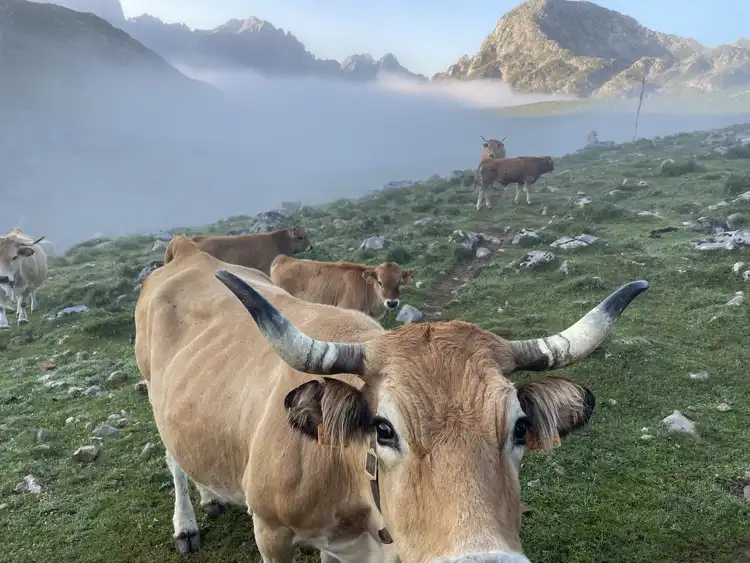
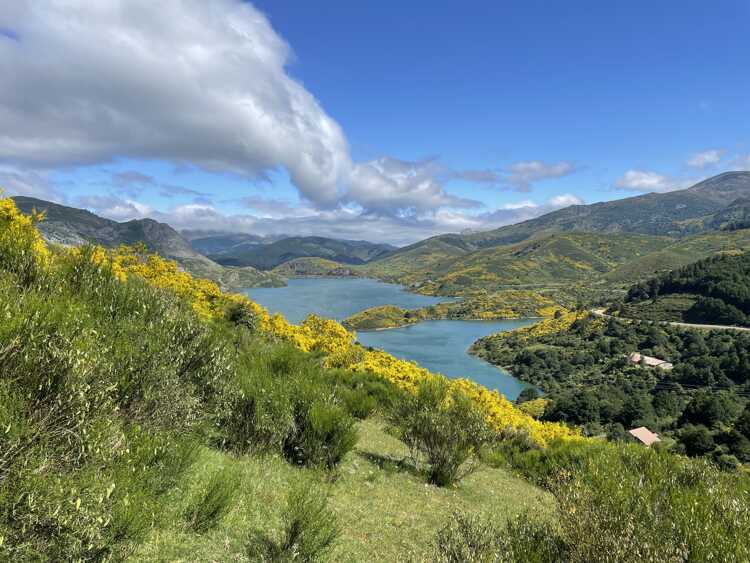
Spain pays back anyone willing to chase horizons instead of tapas photos. In a single week you can step through Atlantic mist in the Picos, tiptoe across Lanzarote’s lava, and cross dehesa where cork oaks throw thin shade and vultures loaf on thermals. Lakes? The Covadonga tarns at sunrise, cowbells and all. Caves? Nerja’s chambers are hangar-sized and mercifully cool. Volcanoes? Teide above the cloud sea feels like cheating at geography. Forests? Irati’s beech glow in autumn like a low-watt bulb you can walk through.

Pro tip: book Teide’s summit permit well ahead; if you miss it, hike Guajara for a cleaner skyline and fewer elbows. Personal favorite: first cable car at Fuente Dé, then peel off the signed track—ten minutes of scree buys you silence and a wall of limestone that makes lunch taste better.

People

Essential: Spain’s people. They size you up fast, then fold you in like a long-lost cousin who can’t … read more 👉
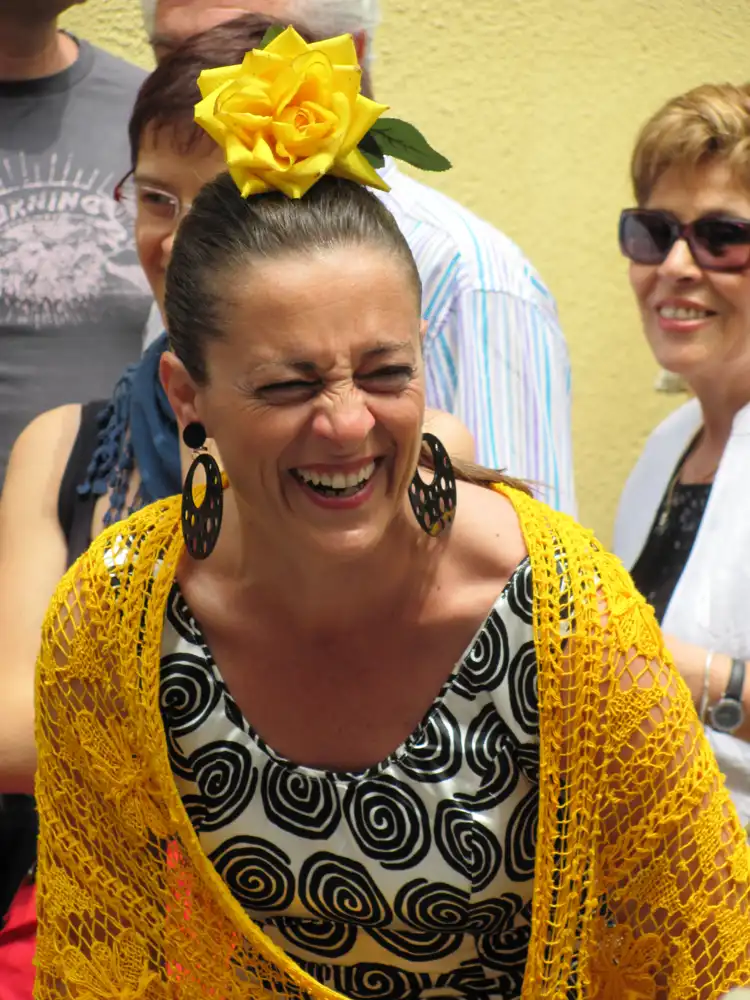
Essential: Spain’s people. They size you up fast, then fold you in like a long-lost cousin who can’t pour a beer yet. Expect direct talk, fast jokes, and a lot of eye contact. You’ll be teased if you deserve it, and defended if you need it. Meals run on conversation more than clocks; if you’re in a hurry, you’re the weird one.

Pro-tip: stand at the bar, don’t hover. Make eye contact, say “cuando puedas,” and your order will appear without drama. Say “buenas” when you walk in and “buen provecho” to the table next to you; doors open.

My best crash course: a Sunday 1 p.m. bar in a small town. I ordered one caña, got three opinions on fútbol, and a plate of ham I didn’t pay for. Worth the late lunch.
Want the complete picture of Spain?
The offline Travel Guide brings everything together — routes, highlights & planning.

See what's included in the guide 👉

Get the Travel Guide -

⭐ HighlightsWhat not to miss along the way

  • Alhambra, Granada: Essential. Enter with the first timed slot and you get a hushed palace where water tics through acequias and cool marble chills your palms; by mid-morning it’s elbows and selfie sticks. The Nasrid rooms are intimate, not grand—lace-carved plaster inches from your nose, wood ceilings like inverted ships. Book Palacio Nazaríes specifically or you’ll miss the point. You’ll leave with the cedar smell of the Generalife in your clothes and fine dust on your shoes from the red hill.
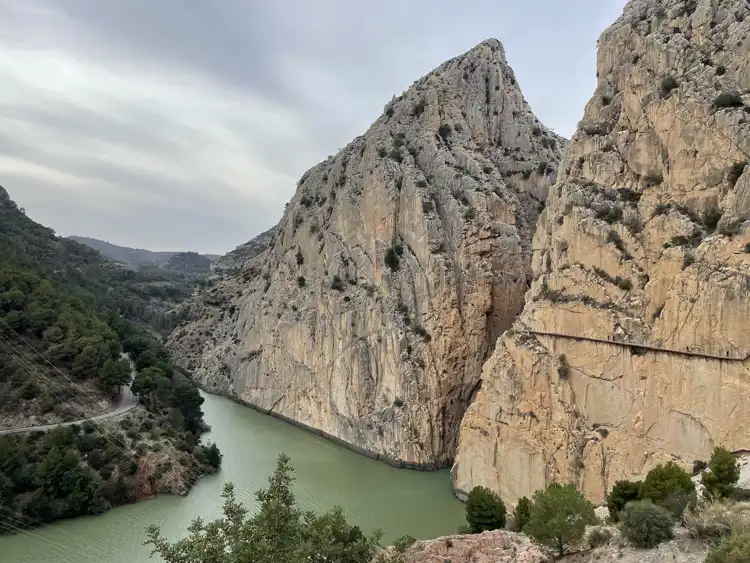
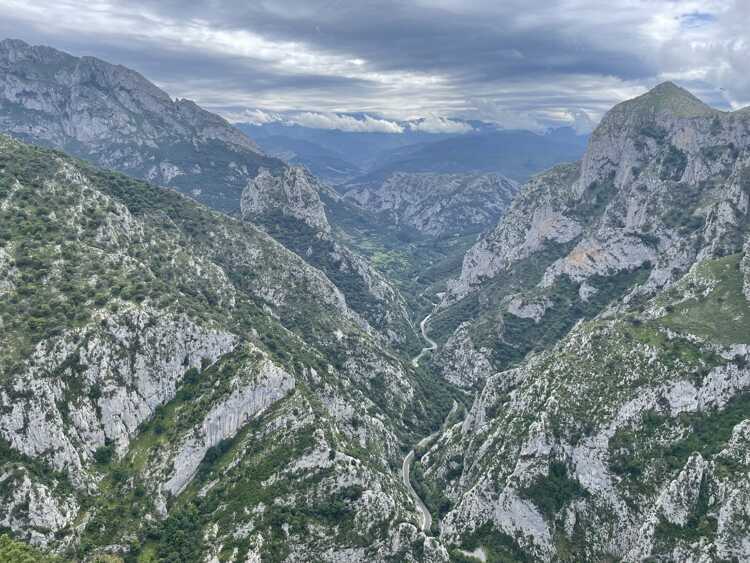
  • Ruta del Cares, Picos de Europa: Essential. A cliff-hugging footpath blast-cut into limestone, no handrails, and a turquoise thread of river 200 meters below—this is Spain’s high-return day hike. Start Poncebos to Caín and turn when your legs say stop; afternoons bake and rockfall isn’t poetic metaphor. Goat bells echo like tin wind chimes, and you’ll taste grit when the wind kicks. Headlamp useful for short tunnels, and trail runners beat boots unless you’re carrying your kitchen.
  • Sagrada Família,
read more 👉
  • Alhambra, Granada: Essential. Enter with the first timed slot and you get a hushed palace where water tics through acequias and cool marble chills your palms; by mid-morning it’s elbows and selfie sticks. The Nasrid rooms are intimate, not grand—lace-carved plaster inches from your nose, wood ceilings like inverted ships. Book Palacio Nazaríes specifically or you’ll miss the point. You’ll leave with the cedar smell of the Generalife in your clothes and fine dust on your shoes from the red hill.
  • Ruta del Cares, Picos de Europa: Essential. A cliff-hugging footpath blast-cut into limestone, no handrails, and a turquoise thread of river 200 meters below—this is Spain’s high-return day hike. Start Poncebos to Caín and turn when your legs say stop; afternoons bake and rockfall isn’t poetic metaphor. Goat bells echo like tin wind chimes, and you’ll taste grit when the wind kicks. Headlamp useful for short tunnels, and trail runners beat boots unless you’re carrying your kitchen.
  • Sagrada Família, Barcelona: Essential. Book late afternoon and the nave becomes a forest of light; stained-glass bands crawl up the columns and stripe your forearms like war paint. It’s construction noise and cranes outside, cathedral hush inside, and it works. Timed entry is not optional unless you enjoy lines long enough to learn Catalan. Tower add-ons are narrow, windy, and honest about heights. Resin and stone dust hang in the air—you’ll wipe rainbow speckles off your camera later.
  • Park Güell, Barcelona: Overrated. The Monumental Zone is paywalled, timed, and policed by whistles; the famous lizard lives in a scrum of tripods. Views are decent, but you can earn better on the Turó de les Tres Creus without paying to sit on hot ceramic. If you insist, go at opening or dusk and treat it like a museum, not a park. Expect prices for coffee roughly double what you’d pay two metro stops away, plus a soundtrack of bus brakes.
  • Plaza Mayor, Madrid: Overrated. Beautiful square, yes, but you pay a symmetry tax—menu boards with pictures, paella pans made hours ago, and beers that cost twice what they do in La Latina. It’s fine for a quick look; don’t eat here if you respect your wallet. The stone radiates heat, pigeons patrol like unionized workers, and chair legs screech on the tiles. For off-the-map payoff, try Cabo de Gata’s volcanic coves, Albarracín’s red ramparts at dusk, and Las Médulas after rain; personal favorite: a sidra crawl in Oviedo post-hike.
Spotted a mistake or missing a highlight? Contact us.

But Spain offers more...

Discover and compare all of its highlights per category

🧭 RoutesSuggested travel routes through Spain

The 7-Day Andalusia Deep Dive

The Vibe: A slow, sensory week in southern Spain built around Moorish palaces, old quarters, and long tapas nights, with minimal travel and maximum atmosphere. You’ll settle into a few cities instead of racing across the map, using trains and short bus rides.
The Highlights:
  • Wandering Seville’s historic center and exploring the Alcazar of Seville
  • Soaking up Córdoba’s old town and caliphate history
  • Experiencing Granada’s Alhambra and its night visit in a compact stay

The 14-Day Art, History & Coast Circuit

The Vibe: A balanced two-week loop through central and eastern Spain that blends heavyweight museums, royal palaces, medieval towns, and Mediterranean evenings. High-speed trains keep the pace comfortable while you bounce between culture and coast.
The Highlights:
  • Gallery-hopping between the Prado, Reina Sofía, and Thyssen-Bornemisza in Madrid
  • Day-tripping to storybook hill towns like Toledo, Segovia, and Cuenca
  • Exploring Valencia’s Ciudad de las Artes y las Ciencias
read more 👉

The 7-Day Andalusia Deep Dive

The Vibe: A slow, sensory week in southern Spain built around Moorish palaces, old quarters, and long tapas nights, with minimal travel and maximum atmosphere. You’ll settle into a few cities instead of racing across the map, using trains and short bus rides.
The Highlights:
  • Wandering Seville’s historic center and exploring the Alcazar of Seville
  • Soaking up Córdoba’s old town and caliphate history
  • Experiencing Granada’s Alhambra and its night visit in a compact stay

The 14-Day Art, History & Coast Circuit

The Vibe: A balanced two-week loop through central and eastern Spain that blends heavyweight museums, royal palaces, medieval towns, and Mediterranean evenings. High-speed trains keep the pace comfortable while you bounce between culture and coast.
The Highlights:
  • Gallery-hopping between the Prado, Reina Sofía, and Thyssen-Bornemisza in Madrid
  • Day-tripping to storybook hill towns like Toledo, Segovia, and Cuenca
  • Exploring Valencia’s Ciudad de las Artes y las Ciencias and lively market scene
  • Closing out in Barcelona with Gaudí icons like Sagrada Familia and Park Güell

The 21-Day Grand Spain Traverse

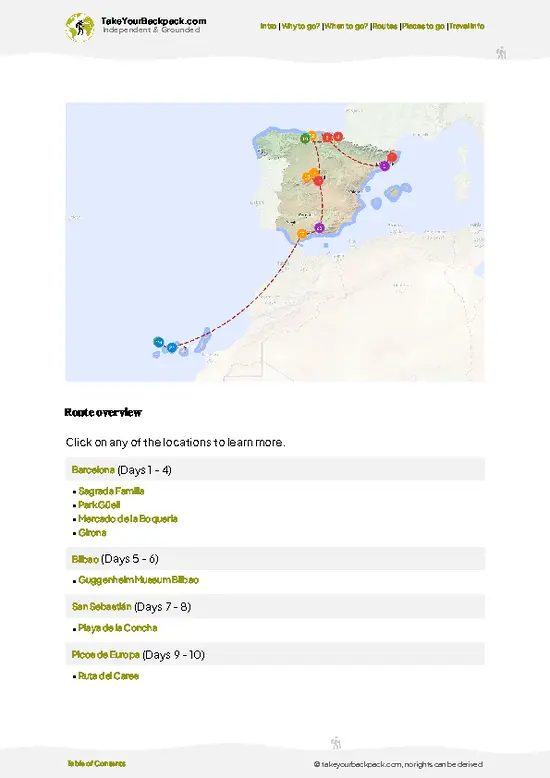
The Vibe: A three-week, cross-country adventure that stitches together big cities, Basque bays, mountain hikes, medieval walls, and volcanic islands at a steady, exploratory pace. You’ll ride high-speed trains, regional links, and one domestic flight to see how many different “Spains” fit inside one trip.
The Highlights:
  • Starting in Catalonia with Barcelona’s Gaudí landmarks and coastal Girona
  • Sampling Basque culture in Bilbao and San Sebastián, from the Guggenheim to Playa de la Concha
  • Hiking in Picos de Europa and walking historic towns like Segovia and Ávila
  • Combining Granada’s Alhambra and Ronda’s gorge with the volcanic landscapes of Teide National Park
🌍 Want a ready-to-use travel plan for Spain?
The overview above compares different route options based on your travel time and style. The complete Travel Guide breaks each itinerary down in detail, including maps, stops, highlights, and transport information.

Explore all route details 👉

Get the Travel Guide -

🌤️ When to go?When to go for the best experience

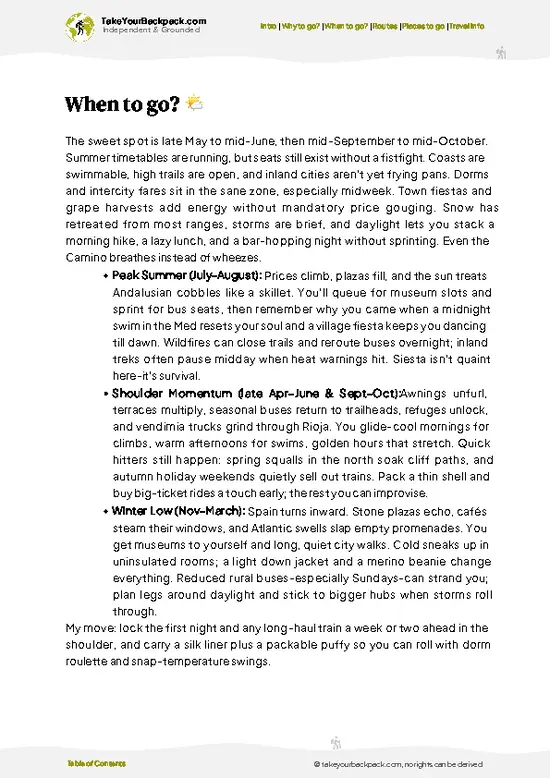
The sweet spot is late May to mid-June, then mid-September to mid-October. Summer timetables are running, but seats still exist without a fistfight. Coasts are swimmable, high trails are open, and inland cities aren’t yet frying pans. Dorms and intercity fares sit in the sane zone, especially midweek. Town fiestas and grape harvests add energy without mandatory price gouging. Snow has retreated from most ranges, storms are brief, and daylight lets you stack a morning hike, a lazy lunch, and a bar-hopping night without sprinting. Even the Camino breathes instead of wheezes.
  • Peak Summer (July-August): Prices climb, plazas fill, and the sun treats Andalusian cobbles like a skillet. You’ll queue for museum slots and sprint for bus seats, then remember why you came when a midnight swim in the Med resets your soul and a village fiesta keeps you dancing till dawn. Wildfires can close trails and reroute buses overnight; inland treks often pause midday when heat warnings hit. Siesta isn’t quaint here—it’s survival.
  • Shoulder Momentum (late Apr-June & Sept-Oct): Awnings unfurl, terraces multiply, seasonal buses return to trailheads, refuges unlock, and vendimia trucks grind through Rioja. You glide—cool mornings for climbs, warm afternoons for swims, golden hours that stretch. Quick hitters still happen: spring squalls in the north soak cliff paths, and autumn holiday weekends quietly sell out trains. Pack a thin shell and buy big-ticket rides a touch early; the rest you can improvise.
  • Winter Low (Nov-March): Spain turns inward. Stone plazas echo, cafés steam their windows, and Atlantic swells slap empty promenades. You get museums to yourself and long, quiet city walks. Cold sneaks up in uninsulated rooms; a light down jacket and a merino beanie change everything. Reduced rural buses—especially Sundays—can strand you; plan legs around daylight and stick to bigger hubs when storms roll through.

My move: lock the first night and any long-haul train a week or two ahead in the shoulder, and carry a silk liner plus a packable puffy so you can roll with dorm roulette and snap-temperature swings.

source: climatestotravel.comJANJanuary: fair for travelingFEBFebruary: fair for travelingMARMarch: fair for travelingAPRApril: good for travelingMAYMay: excellent for travelingJUNJune: excellent for travelingJULJuly: good for travelingAUGAugust: good for travelingSEPSeptember: excellent for travelingOCTOctober: excellent for travelingNOVNovember: fair for travelingDECDecember: fair for traveling
📅 Traveling in a specific month?
Get a full month-by-month breakdown of weather, crowds, costs, festivals, and seasonal highlights in the complete travel guide.

Get full details when to go 👉

Get the Travel Guide -
!2023-07-18 14.58.26 2

💰 Costs (as of 2026)Typical budget expectations

Plan on €50-65 per day if you cook and walk a lot; €70-90 if tapas creep and fast trains get you.
  • dorm accommodation: €18-30 in secondary cities (Granada, Valencia) off-season, €28-45 in Madrid/Barcelona/Seville most of the year, and €40-55 on the coast in summer. System tip: target Sunday-Wednesday nights and the bigger dorms (12-18 beds) for the cheapest rates, filter for a kitchen and laundry to save €10+ a day, and sleep slightly outside the center near a metro stop—same bed, €8-12 less. Camino-style municipal albergues on pilgrimage routes can be €8-15 if you’re on or near the trail. Compared to Portugal, add ~€3-7; still under France/Italy by a good margin.
  • meals: Supermarket Survival: €8-12/day buys bread, tomatoes, tinned tuna, fruit, yogurt, and coffee you make yourself. Street food reality: Spain runs on bars, not carts—bocadillos €3-5, empanadas €2-3, coffee €1.30-1.80, a caña €2-3 (Granada still pairs a free tapa with drinks, which can make a €8-10 “dinner” accidentally happen). Menú del día is the value engine: €12-15 outside the big two; €14-18 in Madrid/Barcelona. Tapas “tours” are a surcharge on walking; build your own by hopping two streets off the plazas. Pricier than
read more 👉
Plan on €50-65 per day if you cook and walk a lot; €70-90 if tapas creep and fast trains get you.
  • dorm accommodation: €18-30 in secondary cities (Granada, Valencia) off-season, €28-45 in Madrid/Barcelona/Seville most of the year, and €40-55 on the coast in summer. System tip: target Sunday-Wednesday nights and the bigger dorms (12-18 beds) for the cheapest rates, filter for a kitchen and laundry to save €10+ a day, and sleep slightly outside the center near a metro stop—same bed, €8-12 less. Camino-style municipal albergues on pilgrimage routes can be €8-15 if you’re on or near the trail. Compared to Portugal, add ~€3-7; still under France/Italy by a good margin.
  • meals: Supermarket Survival: €8-12/day buys bread, tomatoes, tinned tuna, fruit, yogurt, and coffee you make yourself. Street food reality: Spain runs on bars, not carts—bocadillos €3-5, empanadas €2-3, coffee €1.30-1.80, a caña €2-3 (Granada still pairs a free tapa with drinks, which can make a €8-10 “dinner” accidentally happen). Menú del día is the value engine: €12-15 outside the big two; €14-18 in Madrid/Barcelona. Tapas “tours” are a surcharge on walking; build your own by hopping two streets off the plazas. Pricier than Portugal by a small notch; miles cheaper than France or Italy when you menu-hop smartly. I carry a plastic container—half a menú del día becomes tomorrow’s lunch.
  • local transport: Walk old centers, use metro/bus for long hops (€1.50-2.50 a ride; 10-trip cards shave it down), and unlock the country with intercity buses (ALSA-style) and regional trains—reliable and usually cheaper than high-speed. Book early for the low-cost AVE variants (Avlo/OUIGO) that undercut buses on main corridors. BlaBlaCar is the budget wild card between smaller cities. Rail passes rarely beat point-to-point in Spain. Relative value: cheaper and more frequent than France for buses, a bit pricier than Portugal’s.
  • activities: The wallet hits: blockbuster sights (€15-35 for Sagrada Familia, Alhambra, big museums), stadium tours (€25-35), and flamenco shows (€20-45 with a drink). Free museum windows exist (Prado’s last hours, many city museums on certain days). Rooftops with obligatory drinks are scenic taxes; skip them for neighborhood miradores that are free. I’ve seen more Gaudí from sidewalks than from inside, and my bank account thanked me. Overall, cultural fees are saner than Italy/France; Barcelona charges like Western Europe.
  • miscellaneous: Budget Leaks: terrace surcharges on drinks, “pan/servicio” charges that add €1-3 per person, bottled water when tap is fine (ask for jarra de agua), ATM fees, laundry (€4-6 wash plus €3-4 dry), airport transit premiums, beach loungers (€6-12), and nightclub cover with “free” drink. Tourist taxes in Barcelona/Balearics add a few euros per night. Spain’s nickel-and-diming is lighter than Italy’s coperto and friendlier than France’s terraces, but it compounds fast when you’re tired and thirsty. Bring a padlock; don’t buy one at the hostel desk for €6 like I did.
⚠️ Prices can change and everyone travels differently, so take this as a rough guide. Hope it helps you plan your adventure!

✈️ The backpacker research shortcutSpain Travel Guide

An offline-friendly backpacking guide with optimized travel routes, ranked highlights, transport advice, and the best areas to stay.
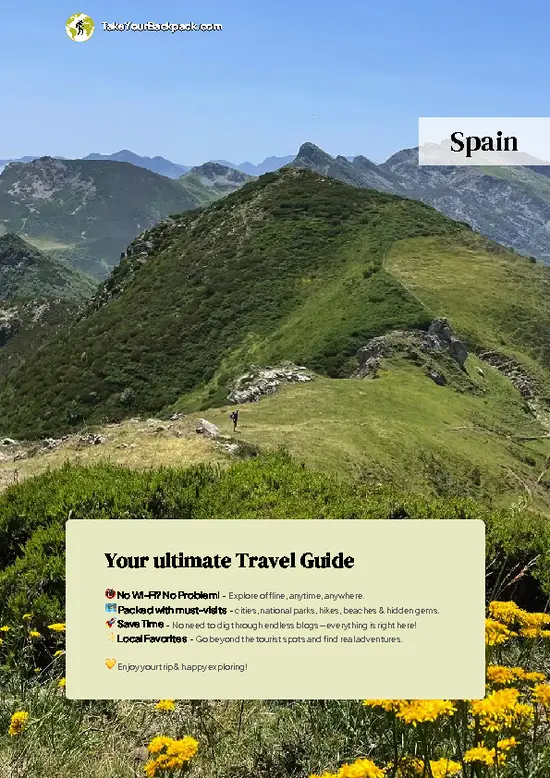
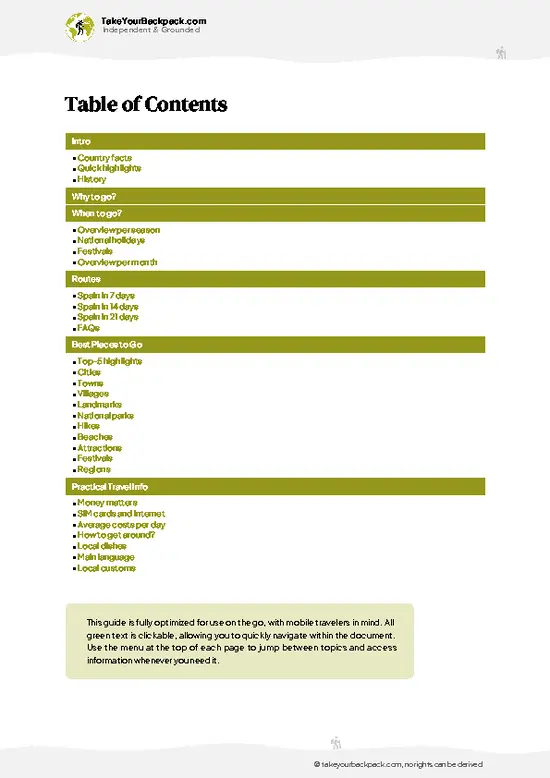
example page 0 from our offline Travel Guide for Spainexample page 1 from our offline Travel Guide for Spainexample page 2 from our offline Travel Guide for Spainexample page 3 from our offline Travel Guide for Spainexample page 4 from our offline Travel Guide for Spainexample page 5 from our offline Travel Guide for Spainexample page 6 from our offline Travel Guide for Spainexample page 7 from our offline Travel Guide for Spain
The digital guide (553 pages) contains:
151 highlights, ranked by travel appeal
Optimized 7, 14 & 21-day travel routes
Cities, national parks, beaches, historical sites, ...
How to get around
Offline-friendly for travel without Wi-Fi
👉 Click to see all 30+ guide features

📅 Plan smarter in minutes, not weeks
Month by month travel advice
Festivals & national holidays
Budget expectations

🗺️ Go to the right places, skip the overrated ones
Honest pros & cons of destinations
Top hikes, parks & viewpoints
Lesser-known places most travelers miss
Clear “worth it vs skip it” guidance

🛏️ Travel smoothly without rookie mistakes
Best areas to stay
Transport systems explained simply
Common scams & safety advice
SIM cards, money & practical tips

🌍 Understand the country, not just visit it
Culture & traditions
52 Essential phrases & customs
Festivals worth planning around
Traveler-friendly historical context
Insights that make places more meaningful

📱 Built for real travel conditions
Fully downloadable PDF
Works completely offline
Optimized for phone use
Useful in remote areas & buses
Everything in one place
Save weeks of stressful planning
Get instant access to the full guide directly. 30-day money-back guarantee.


Sent to your inbox immediately after payment • 100% Secure Checkout
Best Backpacking Travel Advisor 2025 tourism awardBest Backpacking
Travel Advisor
2025
What others say about Take Your Backpack Guides:
⭐⭐⭐⭐⭐
Fantastic, amazing amount of information!
⭐⭐⭐⭐⭐
My goodness this is amazing, it's what I've been looking for hats off too you!
⭐⭐⭐⭐⭐
I think this is absolutely BRILLIANT
⭐⭐⭐⭐
Very complete and informative. It's still missing places, but I gotta to commend you
⭐⭐⭐⭐⭐
This is truly amazing, thank you, can't wait to explore it with my kids!
⭐⭐⭐⭐⭐
Awesome resource, thank you!
⭐⭐⭐⭐⭐
This is amazing! Can't wait to explore the ones I haven't seen
⭐⭐⭐⭐
I love this! Well done, great idea.
⭐⭐⭐⭐⭐
Thanks for taking the time to make this gem!
⭐⭐⭐⭐⭐
This might be the best website I've ever seen.
⭐⭐⭐⭐⭐
Congratulations, and thank you so much for your work; it's incredibly valuable.
⭐⭐⭐⭐
In all seriousness I think you did a great job pointing out the important spots
⭐⭐⭐⭐⭐
10/10 very good
⭐⭐⭐⭐⭐
As someone who's only just starting to visit regularly this is awesome, thank you.
⭐⭐⭐⭐
Thank you very much! I'm going to visit my dad, it's going to be very useful!
⭐⭐⭐⭐⭐
This is really cool! We'll be travelling for the first time and this definitely come in handy.
⭐⭐⭐⭐⭐
You are now our minister of culture, congratulations 👨‍💼
⭐⭐⭐⭐⭐
Just wanted to tell you that this is a pearl! Going to follow your recommendations.
⭐⭐⭐⭐⭐
This is so cool. I'll definitely be using the resource for my travels soon.
⭐⭐⭐⭐⭐
This is very impressive! Good work.
⭐⭐⭐⭐⭐
This is an amazing and informative site. Very well done!

🛏️ Where to stay?Areas travelers tend to prefer

Yes, hostels and budget accommodation are abundant across Spain, clustered in city centres and beach resort zones so you can find options in almost every major destination.

In Barcelona the Gothic Quarter, El Raval and Eixample have the most options — Gothic is unbeatable for landmarks and transit but very touristy and noisy at night; El Raval is cheaper with edgy nightlife and a higher petty‑theft risk; Eixample is calmer and safer but generally pricier.

Madrid’s Gran Vía, Malasaña and Lavapiés concentrate budget stays — Gran Vía is central and busy, Malasaña is lively with nightlife and good … read more 👉
Yes, hostels and budget accommodation are abundant across Spain, clustered in city centres and beach resort zones so you can find options in almost every major destination.

In Barcelona the Gothic Quarter, El Raval and Eixample have the most options — Gothic is unbeatable for landmarks and transit but very touristy and noisy at night; El Raval is cheaper with edgy nightlife and a higher petty‑theft risk; Eixample is calmer and safer but generally pricier.

Madrid’s Gran Vía, Malasaña and Lavapiés concentrate budget stays — Gran Vía is central and busy, Malasaña is lively with nightlife and good low‑cost choices, Lavapiés is multicultural and cheaper though less polished; in Andalusia favour Seville’s Santa Cruz or Triana for walkable sights and quieter evenings, and Granada’s Albaicín for views but expect steep streets and limited late‑night transport.

If you enjoy meeting fellow travelers, consider choosing hostels with high ratings for atmosphere. On the other hand, if you prefer having your own space, a hotel might be a better option.

🚌 Getting aroundGetting around Spain

Spain moves like a well-fed cat: it can sprint when it wants (trains that hum at 300 km/h) but mostly it saves energy and shows up right on time—Spanish time. Big-city metros run like clockwork; provincial buses circle school days and saints’ days with equal respect; Sundays are skeletal. Lunch is sacred and can swallow a timetable whole. If you chase efficiency, Spain will deliver—just not where you expect. The trick is to ride the country’s rhythm instead of wrestling it.
  • High-Speed Trains (AVE/Avlo/Ouigo/Alvia)
read more 👉
Spain moves like a well-fed cat: it can sprint when it wants (trains that hum at 300 km/h) but mostly it saves energy and shows up right on time—Spanish time. Big-city metros run like clockwork; provincial buses circle school days and saints’ days with equal respect; Sundays are skeletal. Lunch is sacred and can swallow a timetable whole. If you chase efficiency, Spain will deliver—just not where you expect. The trick is to ride the country’s rhythm instead of wrestling it.
  • High-Speed Trains (AVE/Avlo/Ouigo/Alvia) The Efficiency Trade-off: You’re paying for time—center-to-center speed, no luggage theater, and trains that actually depart when they say. Book early and the price plummets; show up late and you’ll fund someone’s new tiling. They shine on long axes like Madrid-Barcelona, Madrid-Seville, or Valencia-Barcelona. Under three hours, the premium gets hard to justify when a Media Distancia halves the fare for an extra hour. Essential for big jumps; overrated for short hops.
  • Metros, Trams, and City Buses (Madrid, Barcelona, Valencia, Sevilla) The Social Fabric: Stand right, walk left; let people off before you shoulder in; a muttered “permiso” greases everything. Keep your pack in front in crowds and don’t perform your phone’s life story at full volume. Validate or tap every ride—inspectors exist, and they’re not charmed by backpacker innocence. Night “búhos” replace metros after hours, and drivers expect you to press the stop button like a functional adult. Clean, cheap, predictable. Essential.
  • Intercity Buses (ALSA, Monbus, Damas & friends) The Geometric Unlock: Buses stitch together where rails don’t—white villages, Pyrenean valleys, empty beaches ten minutes off the highway. They cost less than trains, run more routes, and drop you close enough to smell the bakery. Buy online or at the kiosk; stash big bags in the hold and grab your luggage tag. Sunday service thins, holidays evaporate departures, and café stops are part of the deal. If you want Spain beyond the postcards, this is essential.
  • BlaBlaCar (Long-Distance Rideshare) The Budget Disruptor: Last-minute train too rich? Ride with a commuter headed your way for half the price. Meet at stations or mall parking lots, keep your bag small, chip in for tolls with a smile, and don’t be the person who snacks sardines at kilometer 200. Drivers cancel sometimes and detours happen, so never pair this with a hard deadline. When flexible, it’s a money printer. Essential as a backup; overrated as a linchpin.

One master move: lock cheap high-speed seats 2-4 weeks out for the long legs, then plug the gaps with buses—front-load the fast stuff, let wheels do the rest, and you’ll cross Spain fast without burning your food budget.
It’s about 15-17 km (9-11 miles) from Adolfo Suárez Madrid-Barajas Airport (MAD) to the city center (think Puerta del Sol), depending on which terminal you start from.

Main public transport options
  • Metro (Line 8): From T1-T2-T3 and T4 to Nuevos Ministerios, then transfer for Sol/Gran Vía.

    Time: 30-45 minutes to central stops, depending on transfers and wait times.

    Cost: about €1.50-€2.00 (standard Zone A single; no airport surcharge).
  • Cercanías commuter train (Renfe): From Terminal 4 only (Aeropuerto T4) to Chamartín, Nuevos Ministerios, Recoletos, Atocha.

    Time: ~20 minutes to Nuevos Ministerios, ~25-30 minutes to Atocha; ~35-40 minutes to Sol with one easy change.

    Cost: typically €2.60-€3.40, depending on destination.
  • Exprés Aeropuerto bus (203): 24/7 yellow bus between the airport and Atocha (daytime) or Cibeles (overnight), stopping at all terminals.

    Time: 30-40 minutes, traffic permitting.

    Cost: €5.00, pay on board or at machines.
  • EMT city bus 200: From T1-T2-T4 to Avenida de América (metro hub).

    Time: ~25-35 minutes to Av. de América, then 10-15 minutes by metro to the center.

    Cost: €1.50 for the bus + €1.50-€2.00 for the metro transfer.

Taxi and ride-hailing

Official Madrid taxis have a fixed airport fare of €30 to anywhere inside the M-30 ring (most of the city center), luggage included and at any time of day. For destinations outside the M-30, the meter applies; expect roughly €30-€45+ depending on distance and traffic. Uber/Cabify/Bolt operate too, usually in a similar range; sometimes a bit less off-peak.

Tips: Metro and Cercanías run roughly 6:00-1:30 (varies by line), while the Exprés Aeropuerto is 24/7. If you land very late or with bulky luggage, the express bus or a taxi is the least hassle.
⚠️ Prices and routes can change, so take this as a rough guide and ask for local advice when you arrive.

🔒 Safety (risk Level: low)What first-time visitors should know

Safety for solo travelers, including women and LGBTQ+ individuals
Spain is generally safe for solo travelers, including women and LGBTQ+ individuals. Urban areas like Barcelona and Madrid are tourist-friendly but stay alert in crowded spots to avoid pickpockets. The country has progressive LGBTQ+ rights, making it welcoming, though smaller, rural areas might be less accustomed to diversity. Always trust your instincts and use common sense, especially at night.


Full official government travel advisory (live updates)
View details 👉

✈️ VisaUnderstanding entry rules

Most travelers from the US, Canada, Australia, and EU countries do not need a visa for visits to Spain under 90 days. For those who do need a visa, such as certain non-EU countries, apply through the Spanish consulate or embassy in your home country. Check the specific requirements on the official consulate website for accurate guidance.
⚠️ Visa requirements can change over time, so always check the latest visa requirements with the official embassy or government website before you travel.

🎒 What to pack?What you'll need while traveling

Spain’s got a bit of everything! Summer can be a scorcher, especially in the south, while winters can be surprisingly cold up north. Pack layers to handle the temperature swings. If your plan includes hitting the beaches in places like Costa del Sol, go for lightweight and breathable clothes. Heading to the mountains? The Pyrenees can be chilly, so throw in some warmer gear. Remember, Spaniards tend to dress up a bit more, so if you’re city-hopping, something a tad nicer might help you blend in better. Don’t forget a rain jacket if you’re heading to the Basque Country—it’s wetter than you’d think!

Apart from this country specific advice, I have also crafted a general packing list that should help on any trip. authorOver the years, I've learned the importance of packing minimally. It's so much easier to jump on the back of a truck or squeeze yourself into the last spot of a minibus without that supersized backpack. If you're headed to a warm destination, leave your winter jacket at home; for colder regions, opt for thin thermal underlayers. Instead of packing your entire wardrobe, bring just three sets of clothes, as laundry facilities are available everywhere.

View the full list 👉
🎒 Planning the practical side of your trip?
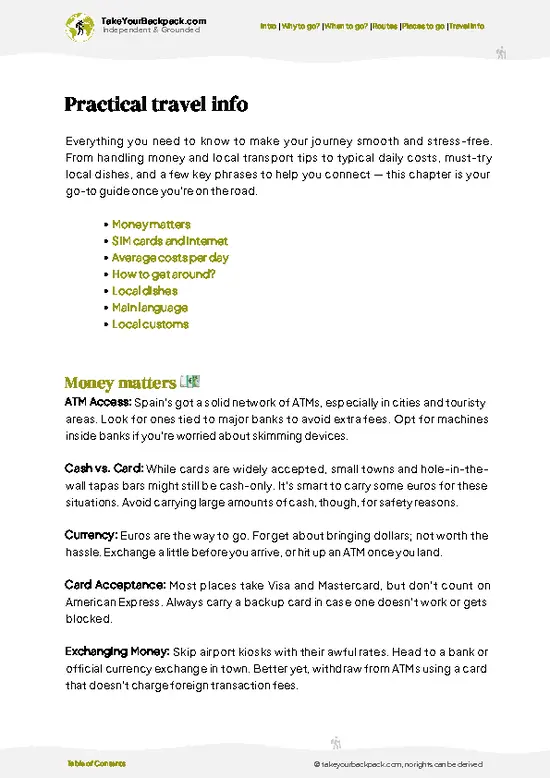
Get detailed information on transport, daily budgets, internet access, local customs, food, language, and other essentials in the complete Travel Guide.

Get detailed practical information 👉

Get the Travel Guide -

🙋 FAQFrequently asked questions

Trip Planning


Personal tip: I normally search on good rating for atmosphere (for meeting people) and location (for easy exploring). Cleanliness as a bonus.


Travel Essentials

Routine vaccinations for Spain include MMR (measles, mumps, rubella), DTP (diphtheria, tetanus, pertussis), chickenpox, polio, and the annual flu shot. Hepatitis A is recommended, especially if you plan to eat street food or at local markets. Hepatitis B is suggested if you anticipate close contact with locals or longer stays. Rabies isn’t usually necessary unless you’re planning on extensive outdoor activities or staying in rural areas.


vaccination requirements
When I first started traveling, I often spent part of my first day in a new country hunting for a local SIM card. While this can still be slightly cheaper, it also takes time and planning.

These days, it's much simpler to install an eSIM before leaving home. Once you arrive in Spain, you can activate it immediately and have mobile data from the moment you land — which is especially useful for ordering transport or navigating away from busy airports.

There are many providers nowadays, and price differences are usually small. I personally go with Airalo, as it offers excellent network coverage throughout the country and strong global coverage, so you can manage multiple countries from a single app.


Get your e-sim for Spain

Culture & Customs

Do greet with a light kiss on each cheek, starting with the left, especially in informal settings. Respect siesta time; many shops close in the afternoon. Dress smartly for dinner or church visits; casual is less common. Do not tip excessively; it’s not usually expected but appreciated. For LGBTQ+ travelers, Spain is generally open-minded, but discretion is advised in rural areas. Women should feel comfortable traveling solo but stay aware in crowded places to avoid pickpockets. Avoid discussing politics, especially Catalonia or Basque independence, with strangers.
Trying traditional food is always a great way to experience the culture. Here are some must-try dishes for Spain.
  • Paella: Originating from Valencia, this saffron-infused rice dish is often loaded with seafood, chicken, or rabbit. It’s a communal dish that captures the essence of Spanish gatherings and celebrations.
  • Tortilla Española: A simple yet hearty potato and onion omelet that’s a staple in Spanish homes. It’s perfect for any meal and highlights Spain’s love for humble, flavorful ingredients.
  • Gazpacho: A refreshing cold tomato soup from Andalusia, ideal for hot summer days. This dish showcases the region’s reliance on fresh produce and is a testament to their culinary resourcefulness.
  • Pintxos: These Basque-style tapas are small, flavorful bites typically skewered with a toothpick. They represent the social aspect of eating in Spain, where sharing and tasting a variety of flavors is key.
  • Churros con Chocolate: A popular breakfast or snack, these fried dough pastries are served with thick hot chocolate for dipping. It’s a must-try to understand Spain’s love for sweet indulgences.
Yes, the tap water in Spain is generally safe to drink and locals do consume it. In major cities like Madrid and Barcelona, the quality is quite high. However, some travelers might prefer bottled or filtered water in rural areas due to taste preferences or older plumbing systems.
The main language in Spain is Spanish. Backpacking is way more rewarding if you know a bit of the local language, so I'd suggest brushing up on the basics just in case your Spanish skills have become a bit rusty.

Want to understand locals better?
The complete Travel Guide for Spain includes 52 essential words and phrases — greetings, thank-yous, ordering food, transport, numbers, and common local expressions you'll actually hear.

Get your local basic phrases 👉

Get the Travel Guide -


In Spain, English proficiency varies significantly by region and demographic. Major cities like Madrid, Barcelona, and Valencia tend to have a higher percentage of English speakers, particularly among younger people and those working in the tourism industry. Many hotel staff, restaurant workers, and tour guides are often fluent or conversational in English.

However, in rural areas and smaller towns, English is less commonly spoken, and you may encounter individuals who speak little to no English. In these regions, knowing some basic Spanish phrases can enhance your experience and facilitate communication.

Overall, while English is increasingly taught in schools and is widely understood in urban areas, it’s advisable to be prepared for varying levels of proficiency throughout the country. Engaging with locals in Spanish, even at a basic level, is often appreciated and can lead to a more enriching travel experience.

Money & Payments

The local currency of Spain is EUR (€).

ATM Access: Spain’s got a solid network of ATMs, especially in cities and touristy areas. Look for ones tied to major banks to avoid extra fees. Opt for machines inside banks if you’re worried about skimming devices.

Cash vs. Card: While cards are widely accepted, small towns and hole-in-the-wall tapas bars might still be cash-only. It’s smart to carry some euros for these situations. Avoid carrying large amounts of cash, though, for safety reasons.

Currency: Euros are the way to go. Forget about bringing dollars; not worth the hassle. Exchange a little before you arrive, or hit up an ATM once you land.

Card Acceptance: Most places take Visa and Mastercard, but don’t count on American Express. Always carry a backup card in case one doesn’t work or gets blocked.

Exchanging Money: Skip airport kiosks with their awful rates. Head to a bank or official currency exchange in town. Better yet, withdraw from ATMs using a card that doesn’t charge foreign transaction fees.

Tipping in Spain isn’t obligatory, but it’s appreciated. In restaurants, leaving a small amount like rounding up the bill or 5-10% for exceptional service is common. Taxi drivers and hotel staff might receive a euro or two, but it’s not expected.

🧩 Nearby countriesNearby backpacking alternatives

📸 PhotosTravel photos from Spain

Take your backpack - Spain - 0
Take your backpack - Spain - 1
Take your backpack - Spain - 2
Take your backpack - Spain - 3
Take your backpack - Spain - 4
Take your backpack - Spain - 5
Take your backpack - Spain - 6
Take your backpack - Spain - 7
Take your backpack - Spain - 8
Take your backpack - Spain - 9
Take your backpack - Spain - 10
Take your backpack - Spain - 11
Take your backpack - Spain - 12
Take your backpack - Spain - 13
Take your backpack - Spain - 14
Take your backpack - Spain - 15
Take your backpack - Spain - 16
Take your backpack - Spain - 17
Take your backpack - Spain - 18
Take your backpack - Spain - 19
Take your backpack - Spain - 20
Take your backpack - Spain - 21
Take your backpack - Spain - 22
Take your backpack - Spain - 23
Take your backpack - Spain - 24
Take your backpack - Spain - 25
Take your backpack - Spain - 26
Take your backpack - Spain - 27
Take your backpack - Spain - 28
Take your backpack - Spain - 29
Take your backpack - Spain - 30
Take your backpack - Spain - 31
Take your backpack - Spain - 32
Photographed by: Johan Kruseman

We 💚 feedbackIs Spain worth visiting?

Spain is worth the miles for one payoff: high-return variety packed tight. In a single week you can hike the Picos at dawn, puzzle through Moorish courtyards by lunch in Córdoba, then sit in Granada where the drink still drags a free tapa behind it. Real drawback: heat and hours. Inland summer cooks you, and the country eats late while small-town shutters drop just when your hunger peaks. Adapt or starve until 8:30. Misconception to drop: that Spain is a pickpocket gauntlet or a party blur. Watch your zips on Barcelona’s metro, sure, but most places feel calm, walkable, and geared to ordinary life. Do the work, ride the bus, reap the days.

✈️ When did I visit Spain?
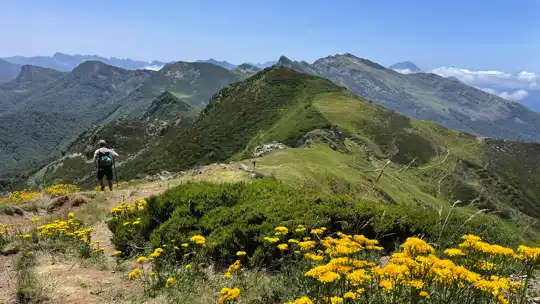
With Spain having so much to offer, I have visited it many times. Best trip was a hiking tour in the Picos de Europa in the North of Spain in July 2023. Since then, this guide is regularly updated based on feedback from locals and recent backpackers (last update: 10 March 2026)

✍️ Help improve this page!
The information on this page is based on my own backpacking experience in Spain, supplemented with up-to-date research and feedback from other travelers. Travel details can change, so if you notice anything outdated or incomplete, feel free to let me know.


🙋‍♂️ Give feedback

👋 Meet the founderWho’s Behind Take Your Backpack?

Johan, backpacker and founder of TakeYourBackpackHi, I’m Johan (Netherlands 🇳🇱), the creator of TakeYourBackpack. Over the past decade, I’ve backpacked through 80+ countries across six continents, gaining extensive experience with independent travel, long-term trips, and overland routes.

This site is built on a combination of firsthand travel experience and carefully curated insights from other backpackers. Many guides are based on places I’ve personally visited, while others bring together tips, observations, and practical advice shared by trusted travelers I’ve met along the way.

The goal is to provide realistic, experience-driven guidance — not generic itineraries — so you can explore destinations with better context, clearer expectations, and more confidence.

Get full Spain guide •
Instant download • 151 highlights • Full Offline guide