Trip Planning
The TakeYourBackpack guidebooks are your all-in-one travel companion, featuring the best cities, national parks, hikes, beaches, and unique sites, along with essential tips on when to go, how to get around, exchanging money, and even local phrases to get you started — everything you need for a smooth, unforgettable backpacking adventure.
Stop researching. Start exploring.Discover all 125 highlights,ranked
and organized into practical routes.
Get instant access
Planning a backpacking route through South Africa can be tricky — you need to balance must-see places, travel times, budget, and how long to stay in each destination. Our free personalized South Africa itinerary planner creates a route based on your travel style, trip duration, and interests, so you can spend less time researching and more time exploring.
Personal tip: I normally search on good rating for atmosphere (for meeting people) and location (for easy exploring). Cleanliness as a bonus.
Travel Essentials
No vaccinations are mandatory for most visitors to South Africa, but make sure routine shots (MMR, tetanus-diphtheria, polio) are up to date, and hepatitis A and typhoid are commonly recommended, with hepatitis B and rabies worth considering for long stays or work with animals. A yellow fever certificate is required only if you arrive from, or transited for more than 12 hours through, a country with yellow fever risk. Malaria is present in the Kruger National Park area, parts of Limpopo and Mpumalanga, and far northern KwaZulu-Natal, so ask a travel clinic 4 to 6 weeks before departure about antimalarials if you plan a safari there.
vaccination requirementsWhen I first started traveling, I often spent part of my first day in a new country hunting for a local SIM card. While this can still be slightly cheaper, it also takes time and planning.
These days, it's much simpler to install an eSIM before leaving home. Once you arrive in South Africa, you can activate it immediately and have mobile data from the moment you land — which is especially useful for ordering transport or navigating away from busy airports.
There are many providers nowadays, and price differences are usually small. I personally go with
Holafly, as it offers excellent network coverage throughout the country and strong global coverage, so you can manage multiple countries from a single app.
HolaFly eSimCulture & Customs
South Africans are warm and informal, and showing interest in people’s lives goes a long way in the country, but some customs matter. Do accept a braai invitation and bring meat or drinks to share, and don’t interfere with the fire or the grill unless the host asks, because the person running the braai owns it. Do give and receive things with your right hand (or both hands as a sign of respect), and always ask before photographing people, especially in townships and rural villages, where visits are best done with a local guide who lives there. Don’t make casual jokes about race, apartheid or politics; these remain raw topics, so listen more than you comment. Expect flexible timing, as “now now” can mean anything from minutes to an hour. Women may get persistent attention in bars and on the street, and a firm, polite no is the norm, while LGBTQ+ travelers will find cities relaxed but should keep public affection low-key in conservative rural communities.
Trying traditional food is always a great way to experience the culture. Here are some must-try dishes for South Africa.
- Braai: the South African barbecue, cooked over wood or charcoal and built around lamb chops, steak, chicken and boerewors. It is the default way to socialize across every community, with Heritage Day nicknamed “National Braai Day”.
- Bobotie: spiced minced meat baked under a savory egg custard, usually served with yellow rice and chutney. It comes from the Cape Malay kitchen and mixes curry spices with dried fruit, a reminder of the slaves and settlers brought from Southeast Asia.
- Bunny chow: a hollowed-out quarter, half or full loaf of white bread filled with curry. Durban’s Indian community created it, and locals eat it with their hands, using the bread plug to scoop.
- Pap and chakalaka: stiff maize porridge with a spicy relish of beans, tomatoes, peppers and onion. Pap is the everyday staple for millions of South Africans and turns up at nearly every braai.
- Biltong: air-dried, spiced strips of beef or game such as kudu, thicker and more tender than jerky. Sold everywhere from butchers to petrol stations, it is the national road-trip snack.
- Potjiekos: a slow stew of meat and vegetables layered in a three-legged cast-iron pot over coals and left untouched for hours. The dish traces back to the Voortrekkers and is still cooked at weekend gatherings.
- Malva pudding: a soft, spongy apricot-jam dessert soaked in a warm cream sauce and served with custard. It appears on almost every traditional restaurant menu.
Tap water in South Africa’s major cities, including Cape Town, Johannesburg, Pretoria and Durban, is treated to a high standard, and most locals drink it straight from the tap. In some smaller towns and rural areas, aging infrastructure has led to contamination problems, so ask your host there or use a filter bottle. Bottled water is widely available, but in the cities you can safely skip it and save money and plastic.
The main language in South Africa is
Zulu. Backpacking is way more rewarding if you know a bit of the local language, so I'd suggest brushing up on the basics just in case your Zulu skills have become a bit rusty.
Want to understand locals better?The complete Travel Guide for South Africa includes 52 essential words and phrases — greetings, thank-yous, ordering food, transport, numbers, and common local expressions you'll actually hear.
Get your local basic phrases 👉
Get the Travel Guide - is the main language of business, tourism and signage across South Africa, so in Pretoria, Johannesburg, Cape Town and Durban you will rarely hit a communication problem. Younger people and hostel staff speak it fluently, often with a lot of local slang mixed in. In rural areas many people speak Zulu, Xhosa, Sotho or Afrikaans at home, and English becomes more basic, especially among older residents. Afrikaans helps most in small towns of the Western and Northern Cape, while a simple Zulu “sawubona” (hello) or Xhosa “molo” earns instant warmth, and the Google Translate app covers Afrikaans, Zulu and Xhosa.
Money & Payments
The local currency of South Africa is ZAR (R).
Cash and cards are both easy in South Africa, with ATMs from Standard Bank, FNB, Absa, Nedbank and Capitec found in every town, mall and airport. Local machines charge foreign cards anywhere from nothing to about R70 (US$4) per withdrawal on top of your home bank’s fees, so take out larger amounts less often, and always decline the machine’s offer to convert into your home currency. Use ATMs inside banks or shopping malls during the day, shield your PIN, and never accept help from strangers at the machine, as card skimming and distraction scams are common. Visa and Mastercard, including contactless payment, work almost everywhere in supermarkets, restaurants, hostels and fuel stations, but you will need cash for street food, craft markets, minibus taxis, car guards and small rural shops. There is no need to bring US dollars or euros beyond a small emergency reserve, since rand from ATMs gets better rates, and if you do exchange, use a bank or an airport bureau, never anyone on the street.
Tipping is expected in South Africa, and 10 to 15 percent is standard in restaurants and bars, often more for great service, since many waiters earn little beyond tips (check whether a service charge was added for groups). Leave R5 to 10 (US$0.30 to 0.60) for petrol attendants who fill up your car and for the informal car guards who watch parked vehicles, and around R10 to 20 per bag for hotel porters. On safaris and guided hikes, budget roughly R100 to 200 (US$6 to 11) per person per day for the guide and a similar amount shared among the tracker or lodge staff.
v2.webp)

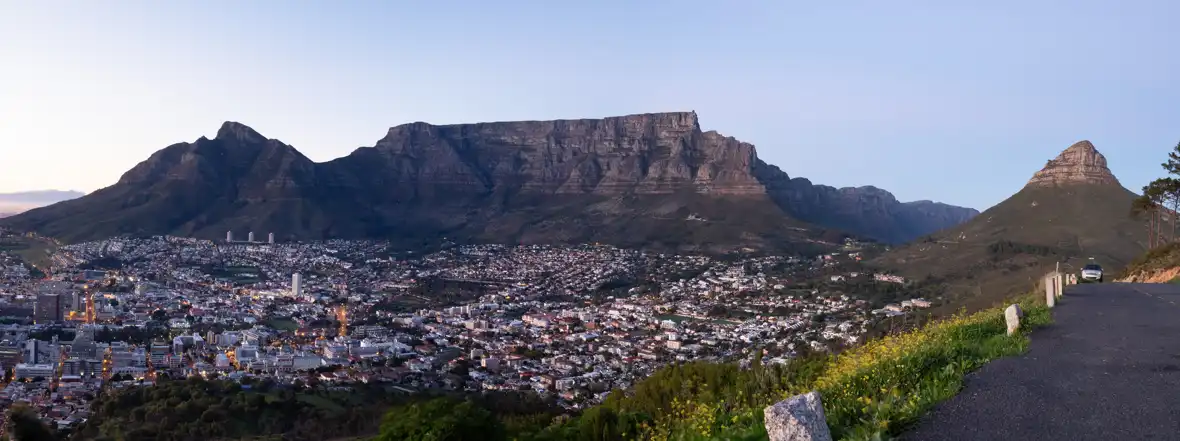
 Best Backpacking
.jpg) Over the years, I've learned the importance of packing minimally. It's so much easier to jump on the back of a truck or squeeze yourself into the last spot of a minibus without that supersized backpack. If you're headed to a warm destination, leave your winter jacket at home; for colder regions, opt for thin thermal underlayers. Instead of packing your entire wardrobe, bring just three sets of clothes, as laundry facilities are available everywhere.
Over the years, I've learned the importance of packing minimally. It's so much easier to jump on the back of a truck or squeeze yourself into the last spot of a minibus without that supersized backpack. If you're headed to a warm destination, leave your winter jacket at home; for colder regions, opt for thin thermal underlayers. Instead of packing your entire wardrobe, bring just three sets of clothes, as laundry facilities are available everywhere.




.jpg) Hi, I’m Johan (Netherlands 🇳🇱), the creator of TakeYourBackpack. Over the past 3 decades, I’ve backpacked through 90+ countries across six continents, gaining extensive experience with independent travel, long-term trips, and overland routes.
Hi, I’m Johan (Netherlands 🇳🇱), the creator of TakeYourBackpack. Over the past 3 decades, I’ve backpacked through 90+ countries across six continents, gaining extensive experience with independent travel, long-term trips, and overland routes.