×
Niger 🇳🇪

backpacking Africa Niger 🇳🇪Traverse open land where silence dominates movement.

Explore NamibiaExplore Nigeria

Backpacking Niger in 2026

A complete guide including when and where to go, costs, transport, itineraries, and practical travel advice.
An overview of visiting Niger

Backpacking Niger
By Johan Kruseman 🇳🇱 | Updated June 7, 2026

You climb into a bush taxi at dawn, wedged between a sack of millet and a grandmother, and accept that the day will move at Sahara speed. That patience is your currency here. Niger rewards the unhurried who learn its tempo.

This country’s soul is carved in sand and silver. The Aïr Mountains lift out of the Ténéré like dark islands, with Agadez’s mud-brick minaret anchoring the horizon and Tuareg smiths hammering bracelets that carry stories. The Niger River slows Niamey at dusk, pirogues sliding by as grills smoke with brochettes and tea glasses ping. East of the capital, West African giraffes browse acacias; down in W National Park the grass whispers with antelope and birdlife. Meanwhile, midday heat is real, roads can rattle, and northern routes may ask for permits, escorts, and patience. Budget time, carry cash, move early, rest at noon. Do that and the payoff is elemental: stars like cold fire, salt caravans crossing the void, and conversations that need no shared language.

If you want easy safaris, Benin’s side of W and Pendjari runs smoother. For grand Sahara road trips, Algeria is more paved. Mali leans harder into music and river lore; Chad brings outland drama at expedition prices. Niger is for travelers who trade convenience for character—those who pack grit, plan smart, and come hungry for big skies and honest hospitality.

👉 Get the 📖 Travel Guide of Niger

Niamey & Kouré/Dosso Corridor

Start here or you’ll bleed time. Niamey is where SIMs get registered, cash comes out of ATMs, and you find a fixer who actually answers the phone. Work days, early. Taxis are cheap; meters aren’t. For the giraffes near Kouré, go on an escorted day trip only, with photocopies of passport/visa for checkpoints. Night driving is a bad deal.

Agadez & the Aïr

High reward, high friction. The earthen old town and Tuareg-run desert runs are why you came, but don’t play cowboy. Bus via Tahoua is long; fly only if a real seat exists, not a rumor. You need a permitted 4x4, a real guide, sat-phone, water/fuel caches, and “fiches” for every post. Cool months are kind; summer cooks you.

Zinder–Maradi (RN1 spine)

Hausa heartland, trade-first, conservative. Markets deliver fabric, leather, metalwork at prices that make Niamey look soft. Day buses on RN1 are slow but predictable; sit near the front for airflow and fewer “random fees.” Guesthouses are basic—ask about a working generator before paying. Camera out only after a clear yes.

Tahoua–Abalak–Ingall

Sahel, pastoral, patient. You come for Wodaabe camps and the Ingall Cure Salée if your timing matches. Expect rough pistes, shared pickups, and meals that are tea-heavy and meat-light. Book a local contact in advance; don’t try to “find it on arrival.” Sleep is mats and wind—bring a proper sheet and earplugs.

Tillabéri & Ayorou (river west)

River villages and pirogues used to make easy weekends. Now it’s checkpoint country with a tense border nearby. If you go, daylight only, trusted driver, early out/early back. Keep kit minimal and visible cash to a trickle. If that level of risk nags you, skip it and spend more days in Agadez.
Safety warning

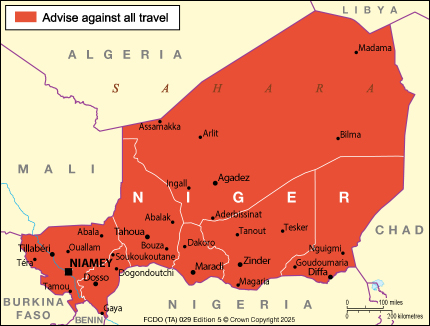
The current risk level for Niger is high. Check the advice before going.
Get your Niger guide
69 ranked highlights, routes & tips, works offline (292 pages)
Seeing the layout at a glance
Loading the map 🌍
CLICK TO FILTER
city
town
village
unique site
national park
hike
attraction
festival
region
SHOW COUNTRY’S BESTSHOW ALL

Why go?What draws travelers here

Low cost

Niger rewards the patient budget. Eat like locals—rice, sauce, brochettes—and ride shared taxis or bush buses; sleep in basic courtyard guesthouses. Do that and you’re looking at a backpacker average in the mid‑20s to low‑30s USD per day. The gotchas are predictable: desert trips blow the budget (4x4s, guides, permits, fuel), and distances punish with time, not money. ATMs thin out fast outside big towns, and airport exchange rates bite—change in … read more 👉
Niger rewards the patient budget. Eat like locals—rice, sauce, brochettes—and ride shared taxis or bush buses; sleep in basic courtyard guesthouses. Do that and you’re looking at a backpacker average in the mid‑20s to low‑30s USD per day. The gotchas are predictable: desert trips blow the budget (4x4s, guides, permits, fuel), and distances punish with time, not money. ATMs thin out fast outside big towns, and airport exchange rates bite—change in town and carry small bills. Bring a water filter; buying bottles all day bleeds cash. Start early, avoid heat-surge taxis.
Want the complete picture of Niger?
The offline Travel Guide brings everything together — routes, highlights & planning.

See what's included in the guide 👉

Get the Travel Guide -

⭐ HighlightsStandout locations across the country

  • Agadez Old Town & Minaret: Agadez’s old town breathes dust and history; mud walls lean like elbows, and the call to prayer crawls up the minaret. Climb that mud-brick spire with the mosque guardian for a skyline of roofs and desert haze. Dress modestly, carry small notes for tips, and keep passport copies for checkpoints; don’t point a camera at security forces.
  • Aïr Mountains & Timia Oasis: The Aïr Mountains break the Sahara with basalt ridges and cool wadis; Timia oasis tastes like dates and iron-rich water. Hike to the seasonal waterfall, then camp under skies that swallow noise. Go only with a Tuareg guide in a reliable 4x4, leave at dawn, and stash extra water and fuel; harmattan dust murders cameras—seal your gear.
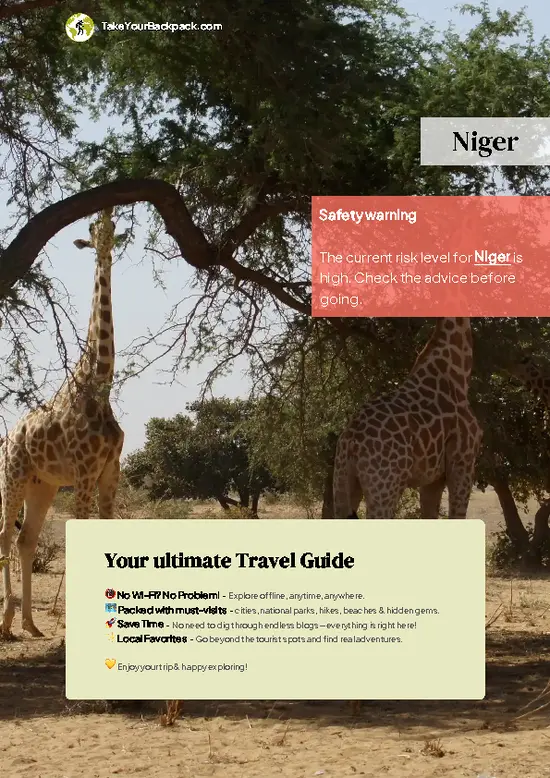
  • Kouré West African Giraffes: South of Niamey, Kouré’s pale savanna hides the last wild West African giraffes. Walk in quietly with an official guide and watch them chew acacia in orange light. Arrive at sunrise or late afternoon, stay 25 meters back, and skip drones; roads
read more 👉
  • Agadez Old Town & Minaret: Agadez’s old town breathes dust and history; mud walls lean like elbows, and the call to prayer crawls up the minaret. Climb that mud-brick spire with the mosque guardian for a skyline of roofs and desert haze. Dress modestly, carry small notes for tips, and keep passport copies for checkpoints; don’t point a camera at security forces.
  • Aïr Mountains & Timia Oasis: The Aïr Mountains break the Sahara with basalt ridges and cool wadis; Timia oasis tastes like dates and iron-rich water. Hike to the seasonal waterfall, then camp under skies that swallow noise. Go only with a Tuareg guide in a reliable 4x4, leave at dawn, and stash extra water and fuel; harmattan dust murders cameras—seal your gear.
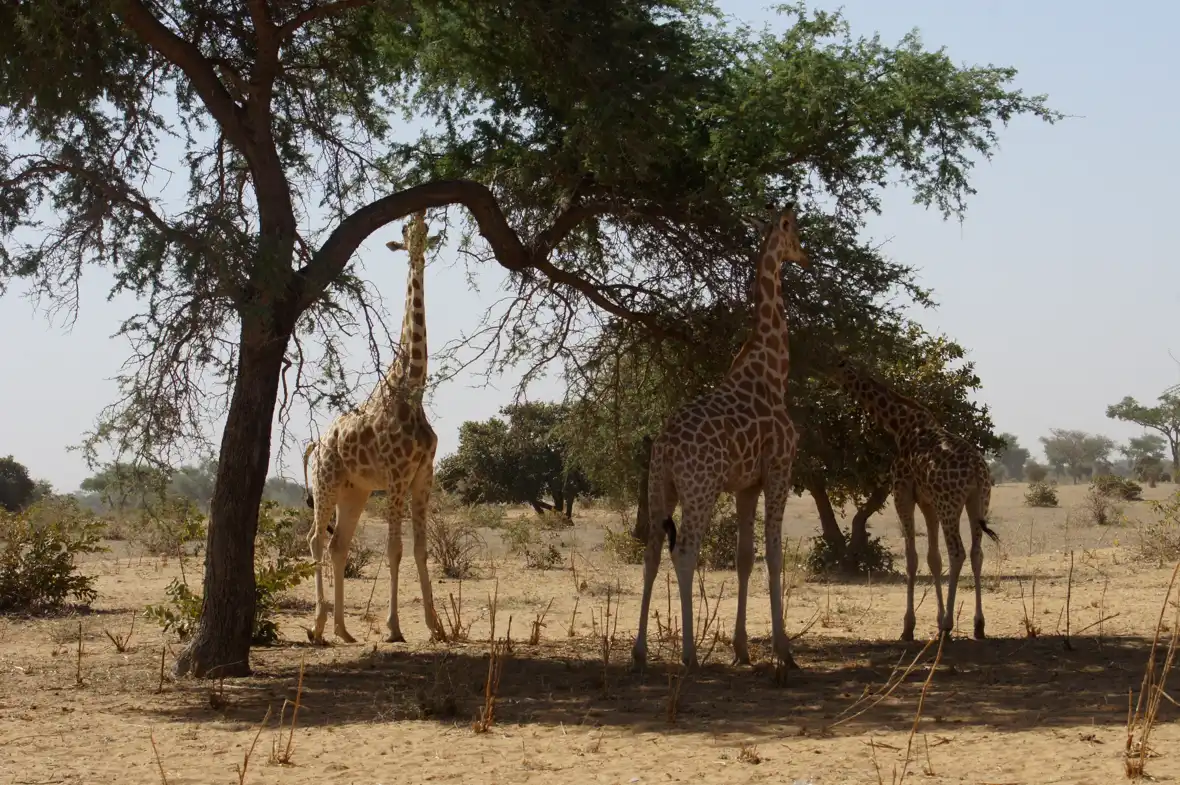
  • Kouré West African Giraffes: South of Niamey, Kouré’s pale savanna hides the last wild West African giraffes. Walk in quietly with an official guide and watch them chew acacia in orange light. Arrive at sunrise or late afternoon, stay 25 meters back, and skip drones; roads turn tricky after rains, and you should travel in daylight and stick to the main piste.
  • W National Park (Niger side): On Niger’s edge of Parc W, the bush is sparse, hot, and honest: tracks, dust, and the chance of elephants, roan, and hippos. Do a dawn drive with rangers, then glass the river bends until shadows start moving. Bring passports for checkpoints, long sleeves for biting flies, cash for fees, and never leave the tracks—dry season rewards patience.
  • Zinder’s Old Quarter & Sultan’s Palace: Zinder’s old quarter is a maze of ochre alleys that funnel you toward the Sultan’s Palace, where a guide unpacks court stories with dry humor. Tour the palace rooms, then work the Birni ateliers for leather and silver. Agree moto fares before hopping on, keep valuables deep, and go early to dodge heat. For deeper cuts: Ayorou’s island market, the Tiguidit cliffs’ dinosaur prints, and Abalak’s camel market.
Spotted a mistake or missing a highlight? Contact us.

But Niger offers more...

Discover and compare all of its highlights per category

🧭 RoutesHow travelers typically move through the country

The 5-Day Niamey & W Park Snapshot

The Vibe: A relaxed, capital-based trip that mixes museums, markets, and one big nature detour, perfect if you want depth over distance and minimal long-haul travel. You’ll sleep in Niamey the whole time except for a short escape into the bush, using taxis and a single organized park trip.
The Highlights:
  • Soaking up history and culture at the Musée National Boubou Hama.
  • Getting lost (in a good way) in the Grand Marché de Niamey and the Village Artisanal de Niamey.
  • Spotting wildlife and big skies in W National Park.
  • Evenings along the Niger River, watching the city wind down.

The 10-Day Niamey-Agadez Desert Arc

The Vibe: A classic Niger line that starts with capital culture, swings through a southern park and fossil valley, then heads north to the desert city of Agadez and the Aïr Mountains. The pace is moderate, with a couple of long transfers balanced by multi-night stays and time to wander on foot.
The Highlights:
  • Context-rich days in Niamey at the Musée National
read more 👉

The 5-Day Niamey & W Park Snapshot

The Vibe: A relaxed, capital-based trip that mixes museums, markets, and one big nature detour, perfect if you want depth over distance and minimal long-haul travel. You’ll sleep in Niamey the whole time except for a short escape into the bush, using taxis and a single organized park trip.
The Highlights:
  • Soaking up history and culture at the Musée National Boubou Hama.
  • Getting lost (in a good way) in the Grand Marché de Niamey and the Village Artisanal de Niamey.
  • Spotting wildlife and big skies in W National Park.
  • Evenings along the Niger River, watching the city wind down.

The 10-Day Niamey-Agadez Desert Arc

The Vibe: A classic Niger line that starts with capital culture, swings through a southern park and fossil valley, then heads north to the desert city of Agadez and the Aïr Mountains. The pace is moderate, with a couple of long transfers balanced by multi-night stays and time to wander on foot.
The Highlights:
  • Context-rich days in Niamey at the Musée National Boubou Hama and main markets.
  • Wildlife and savanna landscapes in W National Park plus the strange geology of Dallol Bosso.
  • Exploring the mud-brick lanes of Agadez, from the Grande Mosquée d’Agadez to the Palais du Sultan d’Agadez.
  • Desert oases and rocky horizons in the Air Mountains and Timia.

The 15-Day Niger Grand Traverse

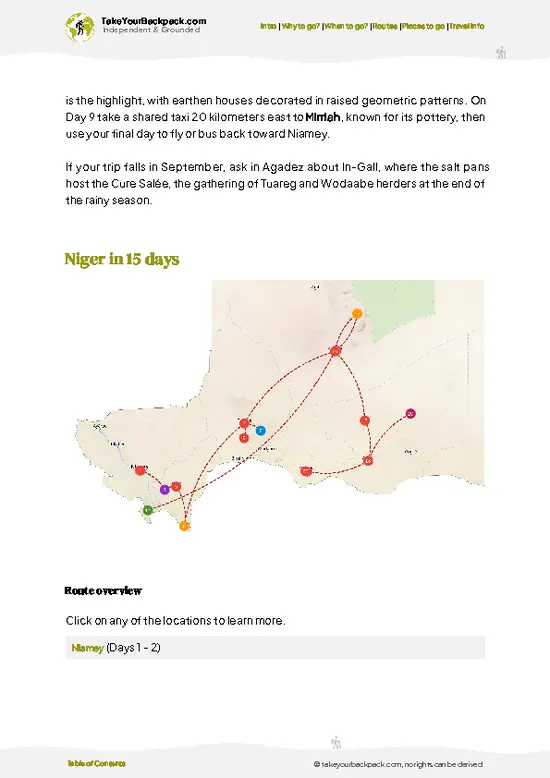
The Vibe: A full-country journey for travelers who want the lot: capital, river parks, historic Sahel cities, and a serious Aïr and Ténéré desert leg, with a steady pace that still leaves room for tea, conversations, and slow walks. Expect a mix of long overland days and 4x4 expeditions, rewarded by deep time in each region.
The Highlights:
  • Three grounded days in Niamey exploring museums, markets, and cultural centers.
  • Southern wilderness in W National Park and the fossil valley landscapes of Dallol Bosso.
  • Historic urban cores in Zinder and Maradi, from sultan palaces to busy Sahel markets.
  • Desert immersion around Agadez, the Air and Ténéré Natural Reserves, Timia, Fachi, and possibly Bilma.
🌍 Want a ready-to-use travel plan for Niger?
The overview above compares different route options based on your travel time and style. The complete Travel Guide breaks each itinerary down in detail, including maps, stops, highlights, and transport information.

Explore all route details 👉

Get the Travel Guide -

🌤️ When to go?A month-by-month overview

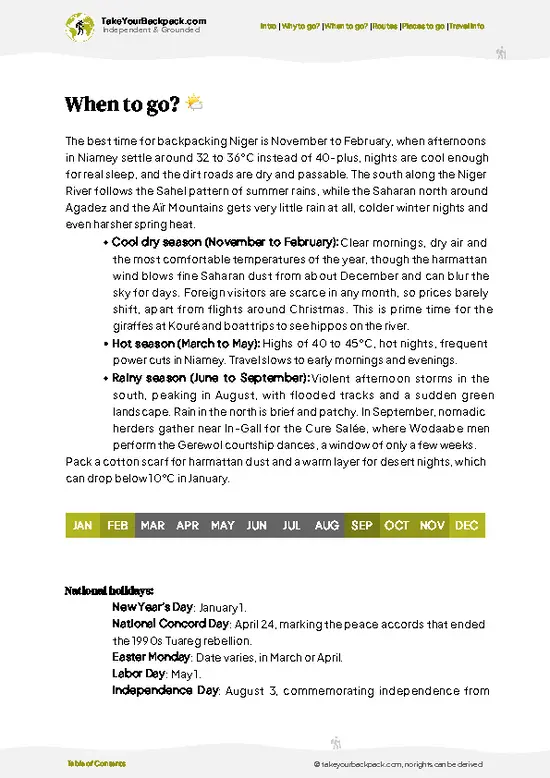
Late October to early February is the sweet spot. The rains are gone, the pistes have firmed, and drivers stop tacking on “mud risk” fees. Daytime heat is workable in the Aïr and Ténéré, nights are cold enough to actually sleep, and the harmattan hasn’t turned the sky into sandpaper yet (December dust spikes, but it’s tolerable). The Niger River is still high into November for quick pirogue runs near Niamey, while W National Park clears out by December and wildlife tightens around the water—good viewing without frying your brain. Tour numbers stay thin outside Christmas week, so you can still find a bus seat or a 4x4 share without paying for panic.
  • Heat Peak (Mar-May): The grind is real—metal bus seats scorch, water prices climb with the thermometer, and drivers avoid midday. The payoff: W National Park concentrates life at last waterholes and night skies over the Ténéré are razor-sharp. Move at dawn, siesta hard, hunt shade like currency.
  • Transition/Shoulder (Late Sep-Nov): The country exhales. Rains ease, tracks reopen, markets restock, and drivers drop their “wet season” surcharges. The Gerewol and Cure Salée around late September are a tight window—iconic, but roads can still be gummy; give yourself buffer days.
  • Rainy Off-Peak (Jun-Sep): Green Sahel, big skies, near-empty buses—and axle-deep mud. Mood turns inward: villages hum, the air smells of wet earth. Survival hack: line your pack with trash bags, strap sandals outside, and move early before storms shut ferries and pistes.
  • Cool Dry Prime (Dec-Jan): Trek the Aïr without heatstroke, campfires bite, mornings are crisp. Harmattan dust means a cheche saves your lungs and camera. River trips taper, but park tracks are at their best.

Tactical tip: For the Nov-Jan window, reach Agadez midweek and spend an hour at the transport yards to join an existing 4x4—splitting fuel beats prepaying a private run.

source: climatestotravel.comJANJanuary: excellent for travelingFEBFebruary: highly recommended for travelingMARMarch: fair for travelingAPRApril: fair for travelingMAYMay: fair for travelingJUNJune: below average for travelingJULJuly: below average for travelingAUGAugust: below average for travelingSEPSeptember: good for travelingOCTOctober: highly recommended for travelingNOVNovember: highly recommended for travelingDECDecember: excellent for traveling
📅 Traveling in a specific month?
Get a full month-by-month breakdown of weather, crowds, costs, festivals, and seasonal highlights in the complete travel guide.

Get full details when to go 👉

Get the Travel Guide -
pixabay - niger - giraffes-1279140

💰 Costs (as of 2025)Travel costs in Niger

Expect to spend $35-55 per day if you move slow, eat local, and sleep basic; costs spike fast the moment you chase 4x4 deserts or private rides.
  • dorm accommodation: Actual dorms are rare outside Niamey; you’ll mostly get “chambres simples.” Count 8,000-15,000 XOF ($13-25) for a fan room; true dorms, when they exist, run 5,000-8,000 XOF ($8-13). Air-con usually adds 2,000-5,000 XOF and isn’t necessary if you pick a breezy room. Relative value: weaker than Benin/Togo where hostels are common. System tip: target Catholic/mission guesthouses or NGO-run “centres d’accueil,” arrive before dusk, ask for “sans clim” and a multi-night rate, and pay in CFA cash to skip card surcharges.
  • meals: Supermarket Survival: imported goods bleed you; expect $8-12/day for bread, tins, and snacks—noticeably pricier than Benin because landlocked. Street food reality: breakfast beignets or omelette baguette 300-1,000 XOF; lunch rice-sauce, beans, or pâte with meat 1,000-2,000 XOF; night brochettes with salad 1,500-2,500 XOF; tea or bissap 100-300 XOF. Two liters of water 500-700 XOF. Eat where the pots are big and turnover is fast; it’s cheaper and safer than lonely expat cafés.
  • local transport: Inside cities,
read more 👉
Expect to spend $35-55 per day if you move slow, eat local, and sleep basic; costs spike fast the moment you chase 4x4 deserts or private rides.
  • dorm accommodation: Actual dorms are rare outside Niamey; you’ll mostly get “chambres simples.” Count 8,000-15,000 XOF ($13-25) for a fan room; true dorms, when they exist, run 5,000-8,000 XOF ($8-13). Air-con usually adds 2,000-5,000 XOF and isn’t necessary if you pick a breezy room. Relative value: weaker than Benin/Togo where hostels are common. System tip: target Catholic/mission guesthouses or NGO-run “centres d’accueil,” arrive before dusk, ask for “sans clim” and a multi-night rate, and pay in CFA cash to skip card surcharges.
  • meals: Supermarket Survival: imported goods bleed you; expect $8-12/day for bread, tins, and snacks—noticeably pricier than Benin because landlocked. Street food reality: breakfast beignets or omelette baguette 300-1,000 XOF; lunch rice-sauce, beans, or pâte with meat 1,000-2,000 XOF; night brochettes with salad 1,500-2,500 XOF; tea or bissap 100-300 XOF. Two liters of water 500-700 XOF. Eat where the pots are big and turnover is fast; it’s cheaper and safer than lonely expat cafés.
  • local transport: Inside cities, shared taxis or moto-taxis cost 300-600 XOF per hop; confirm price before you sit. Intercity, the cheapest unlock is early-morning buses or “bush” shared cars: think 8,000-12,000 XOF for medium hops, 15,000-25,000 XOF for long hauls like Niamey-Zinder. It’s slower than Ghana or Togo but cheaper than flying, which is brutal for budgets. Pay for a second seat if you’re tall; a small luxury that saves your back and time at checkpoints.
  • activities: Major cost drivers are vehicles, fuel, and permits. W National Park or desert routes require a guide and a 4x4; expect $150-250/day all-in for a full car split 3-5 ways, plus park fees. That’s pricier than Benin’s parks mostly because distances and fuel chew your wallet. Budget wins: Niamey museum (cheap), river pirogue rides (5,000-15,000 XOF/hour if you share), markets, and local festivals when they happen.
  • miscellaneous: Budget leaks: ATM fees (2,000-4,000 XOF per pull) and low withdrawal caps; bottled water in the heat (plan 3-5 L/day); AC surcharges; “luggage fees” at some stations; photocopies for checkpoints; SIM/data (1-2 GB for 1,000-2,000 XOF—fine, but pricier than Nigeria); and exchange spreads at airports. Carry small bills, keep photocopies of your passport, and negotiate calmly—paying “because tourist” is how a $35 day becomes $60.
⚠️ Prices can change and everyone travels differently, so take this as a rough guide. Hope it helps you plan your adventure!

✈️ The backpacker research shortcutNiger Travel Guide

An offline-friendly backpacking guide with optimized travel routes, ranked highlights, transport advice, and the best areas to stay.
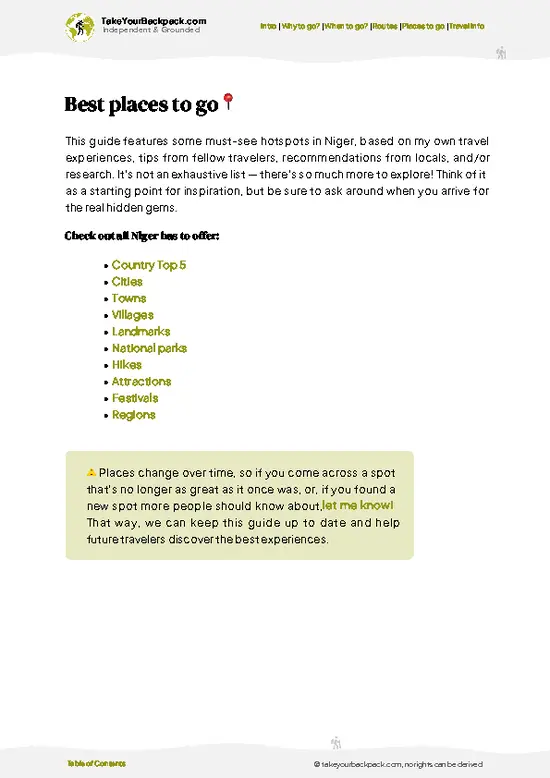
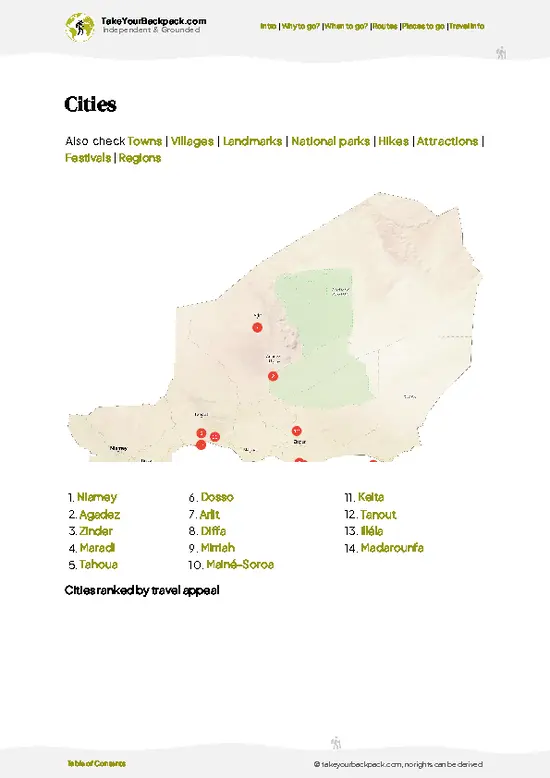
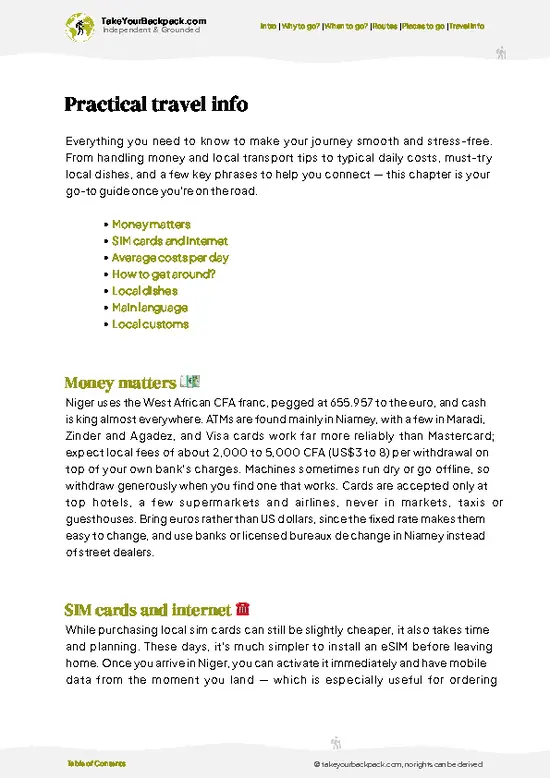
example page 0 from our offline Travel Guide for Nigerexample page 1 from our offline Travel Guide for Nigerexample page 2 from our offline Travel Guide for Nigerexample page 3 from our offline Travel Guide for Nigerexample page 4 from our offline Travel Guide for Nigerexample page 5 from our offline Travel Guide for Nigerexample page 6 from our offline Travel Guide for Nigerexample page 7 from our offline Travel Guide for Niger
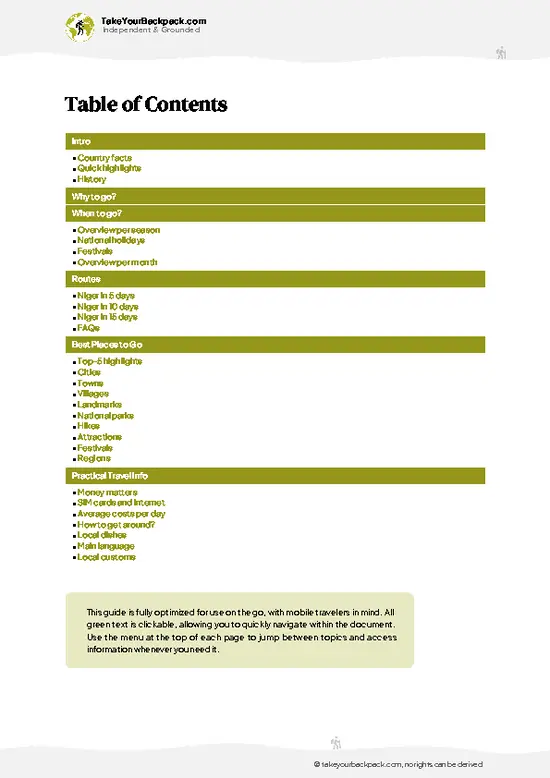
The digital guide (292 pages) contains:
69 highlights, ranked by travel appeal
Optimized 5, 10 & 15-day travel routes
Cities, national parks, beaches, historical sites, ...
How to get around
Offline-friendly for travel without Wi-Fi
👉 Click to see all 30+ guide features

📅 Plan smarter in minutes, not weeks
Month by month travel advice
Festivals & national holidays
Budget expectations

🗺️ Go to the right places, skip the overrated ones
Honest pros & cons of destinations
Top hikes, parks & viewpoints
Lesser-known places most travelers miss
Clear “worth it vs skip it” guidance

🛏️ Travel smoothly without rookie mistakes
Best areas to stay
Transport systems explained simply
Common scams & safety advice
SIM cards, money & practical tips

🌍 Understand the country, not just visit it
Culture & traditions
52 Essential phrases & customs
Festivals worth planning around
Traveler-friendly historical context
Insights that make places more meaningful

📱 Built for real travel conditions
Fully downloadable PDF
Works completely offline
Optimized for phone use
Useful in remote areas & buses
Everything in one place
Save weeks of stressful planning
Get instant access to the full guide directly. 30-day money-back guarantee.


Sent to your inbox immediately after payment • 100% Secure Checkout
Best Backpacking Travel Advisor 2025 tourism awardBest Backpacking
Travel Advisor
2025
What others say about Take Your Backpack Guides:
⭐⭐⭐⭐⭐
Fantastic, amazing amount of information!
⭐⭐⭐⭐⭐
My goodness this is amazing, it's what I've been looking for hats off too you!
⭐⭐⭐⭐⭐
I think this is absolutely BRILLIANT
⭐⭐⭐⭐
Very complete and informative. It's still missing places, but I gotta to commend you
⭐⭐⭐⭐⭐
This is truly amazing, thank you, can't wait to explore it with my kids!
⭐⭐⭐⭐⭐
Awesome resource, thank you!
⭐⭐⭐⭐⭐
This is amazing! Can't wait to explore the ones I haven't seen
⭐⭐⭐⭐
I love this! Well done, great idea.
⭐⭐⭐⭐⭐
Thanks for taking the time to make this gem!
⭐⭐⭐⭐⭐
This might be the best website I've ever seen.
⭐⭐⭐⭐⭐
Congratulations, and thank you so much for your work; it's incredibly valuable.
⭐⭐⭐⭐
In all seriousness I think you did a great job pointing out the important spots
⭐⭐⭐⭐⭐
10/10 very good
⭐⭐⭐⭐⭐
As someone who's only just starting to visit regularly this is awesome, thank you.
⭐⭐⭐⭐
Thank you very much! I'm going to visit my dad, it's going to be very useful!
⭐⭐⭐⭐⭐
This is really cool! We'll be travelling for the first time and this definitely come in handy.
⭐⭐⭐⭐⭐
You are now our minister of culture, congratulations 👨‍💼
⭐⭐⭐⭐⭐
Just wanted to tell you that this is a pearl! Going to follow your recommendations.
⭐⭐⭐⭐⭐
This is so cool. I'll definitely be using the resource for my travels soon.
⭐⭐⭐⭐⭐
This is very impressive! Good work.
⭐⭐⭐⭐⭐
This is an amazing and informative site. Very well done!

🛏️ Where to stay?Where to stay in Niger

Yes — low-cost guesthouses, basic budget hotels and a few hostel-style places exist mainly in Niamey, Agadez and Zinder, but options are sparse outside those cities and standards are basic compared with Western hostels.
In Niamey the best budget choices cluster around Centre-ville (close to markets, riverfront and nightlife but noisy and busier) and the embassy/residential districts (quieter and safer but a little pricier and farther from evening activity); in Agadez the old town/medina puts you next to historic sites and desert-tour departures but offers very rustic, sometimes chilly accommodations … read more 👉
Yes — low-cost guesthouses, basic budget hotels and a few hostel-style places exist mainly in Niamey, Agadez and Zinder, but options are sparse outside those cities and standards are basic compared with Western hostels.
In Niamey the best budget choices cluster around Centre-ville (close to markets, riverfront and nightlife but noisy and busier) and the embassy/residential districts (quieter and safer but a little pricier and farther from evening activity); in Agadez the old town/medina puts you next to historic sites and desert-tour departures but offers very rustic, sometimes chilly accommodations and little nightlife; in Zinder the central market/old quarter is practical for transport and local culture but has basic facilities and limited late-night options.

If you enjoy meeting fellow travelers, consider choosing hostels with high ratings for atmosphere. On the other hand, if you prefer having your own space, a hotel might be a better option.

🚌 Getting aroundHow to travel within the country

Niger moves by heat and habit, not timetables. Vehicles leave when full, not when the signboard says. The sun sets the rhythm, checkpoints set the pauses, and your progress is a negotiation with dust, patience, and whoever is sitting on your other shoulder blade. Once you accept that, the flow is logical: start early, claim your space, and keep your paperwork and water where you can reach them without drama.
  • Intercity buses The Efficiency Trade-off: the big coaches are the country’s metronome—rarely
read more 👉
Niger moves by heat and habit, not timetables. Vehicles leave when full, not when the signboard says. The sun sets the rhythm, checkpoints set the pauses, and your progress is a negotiation with dust, patience, and whoever is sitting on your other shoulder blade. Once you accept that, the flow is logical: start early, claim your space, and keep your paperwork and water where you can reach them without drama.
  • Intercity buses The Efficiency Trade-off: the big coaches are the country’s metronome—rarely fast, sometimes late, but generally cheaper per kilometer than a bush taxi and kinder on your spine. You pay a small baggage fee, accept the long loading ritual, and gain a safer ride with fewer breakdowns; in exchange, expect extra stops for police checks, prayer, and roadside passengers that can stretch a six-hour route into eight. Buy your ticket the day before, be at the gare routière at dawn for a decent seat, and sit window-side to control airflow without eating the entire road in your teeth.
  • Bush taxis (bâchés) The Social Fabric: this is how Niger actually breathes. You greet the car, not just the driver. Money moves hand-to-hand to the front; change returns the same way. Space is elastic unless you pay for two seats; don’t argue elbows if you only bought one. Loaders hustle for your fare—tip a little if they saved you time. Morning departures fill fast; midday can stall for hours, so buy the extra seat if you need momentum. Keep your ID handy for checkpoints, your daypack on your lap, and your roof bag tarped and tagged with something you can spot in a dust storm.
  • River pirogues on the Niger The Geometric Unlock: when rains swell the river, long wooden boats stitch together villages that the road forgets—Ayorou runs, islands near Tillabéri, down toward Gaya. It’s cheap, slow, and honest. Pay by bench or boat section, expect wet ankles, and bring your own life jacket and a dry bag. Depart early to beat afternoon wind; never gamble on a twilight crossing.
  • Freight trucks (camions bâchés) The Budget Disruptor: for remote corridors north of Agadez, you can ride with cargo for a fraction of a 4x4 charter. It’s punishing—heat, dust, glacial pace, and days lost waiting at yards—but it reaches Arlit and beyond when nothing else does. Negotiate a spot in the cab if possible, carry 5 liters of water, a scarf, headlamp, and keep every valuable on your body at all times.

Master tactical tip: Move at first light, buy onward tickets the moment you arrive, and if you need to force a departure, pay for the spare seat in a bush taxi—just never push your luck after dark.
Niamey Diori Hamani International Airport (NIM) sits about 10 km (6 miles) from the city center (Plateau/Grand Marché area). Expect 15-30 minutes to reach downtown, depending on traffic and checkpoints.

Main ways to get into the city (2025)
  • Airport taxi (official): Easiest door-to-door. 15-25 minutes. Typical daytime fare is 5,000-7,000 XOF; late evening/night or heavy traffic 7,000-10,000 XOF. Confirm the price before you get in; cash only.
  • Hotel shuttle: Many mid-range and upscale hotels run pre-booked shuttles. 15-25 minutes. Often included in the room rate or about 5,000-10,000 XOF each way. Arrange ahead; drivers usually meet you in arrivals with a sign.
  • Shared taxi (“kabu-kabu”): Budget option. Walk out to the main road by the airport gate and flag a shared taxi heading toward “Plateau” or “Grand Marché” (you may need one change). 25-40 minutes total. Expect roughly 500-1,000 XOF per seat, depending on route and changes. Runs mainly in daytime/evening; sparse late at night.
  • Minibus (city bus/”bus urbain”): Cheapest, but slowest and crowded. You’ll pick it up on the main road outside the airport area. 30-45 minutes. Around 200-300 XOF per ride; you may need to change once to reach central stops.

There is no dedicated public airport bus, and ride-hailing apps like Uber/Bolt don’t operate in Niamey. Have small bills/coins for fares, and expect prices to tick up after dark or for extra luggage.
⚠️ Prices and routes can change, so take this as a rough guide and ask for local advice when you arrive.

🔒 Safety (risk Level: high)Safety considerations for travelers

Safety for solo travelers, including women and LGBTQ+ individuals
Niger poses significant safety challenges for solo travelers, including women and LGBTQ+ individuals. High crime rates, political instability, and militant activities make certain regions particularly risky. Women may face cultural barriers, and LGBTQ+ travelers might not find local attitudes welcoming. If you must travel, stay informed about current conditions and consider joining a guided tour or group for added security.


Full official government travel advisory (live updates)
View details 👉
safety image

source: www.gov.uk

✈️ VisaWhat travelers should know about visas

Yes, most travelers need a visa to visit Niger. You can apply for a visa at the Nigerien embassy or consulate in your country. It’s recommended to check the specific requirements on their official website, as they can vary based on nationality.
⚠️ Visa requirements can change over time, so always check the latest visa requirements with the official embassy or government website before you travel.

🎒 What to pack?What you'll need while traveling

Niger’s climate is mostly hot and dry, so lightweight, breathable clothing is essential. The desert terrain means you’ll want durable footwear for sand and rocky paths. Culturally, it’s important to dress modestly—think long sleeves and pants for both men and women, especially in rural areas where traditional norms are strong. While temperatures soar during the day, desert nights can get chilly, so pack a layer or two to stay warm. If you’re planning to visit any mosques, bring a scarf or shawl for covering up, which can also double as sun protection during the day.

Apart from this country specific advice, I have also crafted a general packing list that should help on any trip. authorOver the years, I've learned the importance of packing minimally. It's so much easier to jump on the back of a truck or squeeze yourself into the last spot of a minibus without that supersized backpack. If you're headed to a warm destination, leave your winter jacket at home; for colder regions, opt for thin thermal underlayers. Instead of packing your entire wardrobe, bring just three sets of clothes, as laundry facilities are available everywhere.

View the full list 👉
🎒 Planning the practical side of your trip?
Get detailed information on transport, daily budgets, internet access, local customs, food, language, and other essentials in the complete Travel Guide.

Get detailed practical information 👉

Get the Travel Guide -

🙋 FAQThings travelers often ask

Trip Planning


Personal tip: I normally search on good rating for atmosphere (for meeting people) and location (for easy exploring). Cleanliness as a bonus.


Travel Essentials

Yellow fever vaccination is mandatory for entry into Niger. Recommended vaccines include Hepatitis A, Hepatitis B, Typhoid, and Meningitis. Consider vaccinations for Cholera, Rabies, Malaria prophylaxis, and booster doses for Tetanus and Diphtheria. Consult your healthcare provider for personalized advice based on your itinerary.


vaccination requirements
When I first started traveling, I often spent part of my first day in a new country hunting for a local SIM card. While this can still be slightly cheaper, it also takes time and planning.

These days, it's much simpler to install an eSIM before leaving home. Once you arrive in Niger, you can activate it immediately and have mobile data from the moment you land — which is especially useful for ordering transport or navigating away from busy airports.

There are many providers nowadays, and price differences are usually small. I personally go with Airalo, as it offers excellent network coverage throughout the country and strong global coverage, so you can manage multiple countries from a single app.


Get your e-sim for Niger

Culture & Customs

Respect traditional dress codes. Women should consider wearing long skirts and covering shoulders. Men should avoid shorts in rural areas.

Handshakes are common, but use the right hand only. Avoid showing the soles of your feet, considered disrespectful.

Homosexuality is illegal and socially taboo. LGBTQ+ travelers should exercise discretion.

For women, solo travel may draw attention. It’s safer to travel with a group or male companion.

Always ask permission before taking photos, especially of people and in markets.

During Ramadan, avoid eating or drinking in public during daylight hours.
Trying traditional food is always a great way to experience the culture. Here are some must-try dishes for Niger.
  • Djerma: This is a staple grain dish similar to couscous, typically made from millet. It’s often served with a variety of stews. Djerma is a cornerstone of Nigerien meals, reflecting the agricultural lifestyle that dominates much of the country.
  • Jollof Rice: Popular across West Africa, Niger’s version of this spiced, tomato-based rice dish is often paired with meat or fish. It’s a must-try to get a taste of regional flavors and is a common dish at celebrations and gatherings.
  • Fufu: Made from yams or cassava, this starchy side is a staple in many Nigerien households. It’s usually served with soup or stew and is a communal dish, emphasizing the social aspect of dining.
  • Egusi Soup: A rich, hearty soup made with ground melon seeds, often combined with leafy greens, meat, and spices. It’s a popular dish that showcases the use of local ingredients and traditional cooking methods.
  • Kuli-Kuli: These crunchy peanut snacks are a go-to street food and are also used as a topping for salads. They highlight the importance of peanuts in the local diet and economy.
Tap water in Niger is generally not safe for tourists to drink, even though some locals might consume it. It’s highly recommended for travelers to stick to bottled or properly filtered water to avoid potential waterborne illnesses. Always ensure the seal on bottled water is intact before purchasing.
The main language in Niger is Hausa. Backpacking is way more rewarding if you know a bit of the local language, so I'd suggest brushing up on the basics just in case your Hausa skills have become a bit rusty.

Want to understand locals better?
The complete Travel Guide for Niger includes 52 essential words and phrases — greetings, thank-yous, ordering food, transport, numbers, and common local expressions you'll actually hear.

Get your local basic phrases 👉

Get the Travel Guide -


In Niger, English is not widely spoken. The official language is French, a remnant of its colonial past, and it is used in government, education, and media. While some urban areas, particularly in Niamey, may have individuals who speak English, especially in tourist sectors, proficiency is generally limited.

Most of the population communicates in local languages, such as Hausa and Djerma, which are predominant in daily life. Travelers may find that English speakers are more common in hotels, restaurants, and certain businesses catering to tourists, but outside these settings, communication can be challenging.

For a smoother experience, it is advisable for travelers to learn basic French phrases or use translation apps. Engaging with locals in their native languages can also enhance the travel experience. Overall, while English is not prevalent, with some preparation, travelers can navigate Niger effectively.

Money & Payments

The local currency of Niger is XOF (CFA Franc BCEAO).

When backpacking in Niger, it’s smart to carry some cash as ATM access is pretty limited outside major cities like Niamey. If you’re venturing into smaller towns or rural areas, cash is your best bet. You’ll need either West African CFA francs or euros, as they’re widely accepted. Dollars can be exchanged but not as commonly. ATMs mainly accept Visa cards, and Mastercard can be hit or miss, so plan accordingly.

Credit card acceptance is rare, mostly limited to high-end hotels or some larger businesses in Niamey. For currency exchange, stick to official exchange bureaus or banks to avoid getting shortchanged. If you must exchange on the street, which is common, make sure you’re getting a fair rate and always count your money.

In Niger, tipping isn’t a widespread custom, but it’s appreciated if you receive good service. For restaurants, rounding up the bill or leaving small change is sufficient, while hotel staff and guides may appreciate a small gratuity of around 500 to 1,000 CFA francs. Always tip directly to the person who assisted you to ensure they receive it.

🧩 Nearby countriesOther countries to combine with Niger

We 💚 feedbackIs Niger worth visiting?

Niger pays you back in the Sahara, where Agadez’s clay minaret, Tuareg caravans, and cold desert nights blow the carbon out of your soul. The tax you pay is logistics: permits, checkpoints, and heat stretch every mile and push costs above “cheap” Sahel standards unless you plan hard, carry cash, and move early. The good news: roads and phone coverage are creeping forward, and Agadez guide cooperatives are formalizing routes and prices—less guesswork, fewer gotchas, more energy banked for the big moments.

✍️ Help improve this page!
The information on this page is based on in-depth research, insights shared by experienced travelers, and feedback from the local travel community in Niger. While every effort is made to keep the information accurate and current, conditions can change — so if you spot anything incorrect or outdated, please get in touch.


🙋‍♂️ Give feedback

👋 Meet the founderWho’s Behind Take Your Backpack?

Johan, backpacker and founder of TakeYourBackpackHi, I’m Johan (Netherlands 🇳🇱), the creator of TakeYourBackpack. Over the past decade, I’ve backpacked through 80+ countries across six continents, gaining extensive experience with independent travel, long-term trips, and overland routes.

This site is built on a combination of firsthand travel experience and carefully curated insights from other backpackers. Many guides are based on places I’ve personally visited, while others bring together tips, observations, and practical advice shared by trusted travelers I’ve met along the way.

The goal is to provide realistic, experience-driven guidance — not generic itineraries — so you can explore destinations with better context, clearer expectations, and more confidence.

Get full Niger guide •
Instant download • 69 highlights • Full Offline guide