Trip Planning
The TakeYourBackpack guidebooks are your all-in-one travel companion, featuring the best cities, national parks, hikes, beaches, and unique sites, along with essential tips on when to go, how to get around, exchanging money, and even local phrases to get you started — everything you need for a smooth, unforgettable backpacking adventure.
Stop researching. Start exploring.Discover all 135 highlights,ranked
and organized into practical routes.
Get instant access
Planning a backpacking route through France can be tricky — you need to balance must-see places, travel times, budget, and how long to stay in each destination. Our free personalized France itinerary planner creates a route based on your travel style, trip duration, and interests, so you can spend less time researching and more time exploring.
Personal tip: I normally search on good rating for atmosphere (for meeting people) and location (for easy exploring). Cleanliness as a bonus.
Travel Essentials
France has no required vaccinations for entry. Make sure your routine vaccines are up to date, especially measles (MMR), tetanus-diphtheria and COVID-19. Hepatitis A and B are sometimes recommended for longer stays. If you plan to hike or camp in forests in eastern France, such as Alsace or the Alps, consider the tick-borne encephalitis vaccine. Pharmacies across France (look for the green cross) can handle minor health issues.
vaccination requirementsWhen I first started traveling, I often spent part of my first day in a new country hunting for a local SIM card. While this can still be slightly cheaper, it also takes time and planning.
These days, it's much simpler to install an eSIM before leaving home. Once you arrive in France, you can activate it immediately and have mobile data from the moment you land — which is especially useful for ordering transport or navigating away from busy airports.
There are many providers nowadays, and price differences are usually small. I personally go with
Holafly, as it offers excellent network coverage throughout the country and strong global coverage, so you can manage multiple countries from a single app.
HolaFly eSimCulture & Customs
In France, wait to be seated in restaurants, keep your voice low in public and on trains, and ask for the bill when you are ready. Waiters will not bring it unprompted, because hurrying diners is considered rude. Put your bread directly on the table next to your plate. Avoid asking for heavy changes to dishes or for ketchup in traditional restaurants. Dress neatly, and cover your shoulders and knees in churches. Don’t touch produce at market stalls without asking, and don’t talk about money or ask people what they earn. Topless sunbathing is common on many beaches but not in towns or at public pools, and full face coverings are banned in public spaces by law. Women may meet persistent flirting or comments in cities, and a firm, cold refusal without further engagement is the locally accepted response. Same-sex couples can be openly affectionate in central Paris and most cities, but should be more discreet in rural areas.
Trying traditional food is always a great way to experience the culture. Here are some must-try dishes for France.
- Bœuf bourguignon: Beef braised for hours in Burgundy red wine with onions, mushrooms and lardons. It is the classic French Sunday stew and a showcase for the Burgundy wine region.
- Coq au vin: Chicken slowly cooked in red wine with mushrooms and bacon. It started as a farmhouse way to tenderize an old rooster and is now a bistro staple across France.
- Cassoulet: A rich bean casserole from the southwest with duck confit, Toulouse sausage and pork, baked until a crust forms. Castelnaudary, Carcassonne and Toulouse all claim to make the true version.
- Bouillabaisse: Marseille’s saffron-tinted fish stew, served with rouille sauce and toasted bread. Fishermen first made it from the unsold catch, and a proper one costs €50 to 70 per person, so it is a splurge to plan for.
- Galettes and crêpes: Brittany’s buckwheat galettes are savory, often filled with ham, egg and cheese, and sweet wheat crêpes follow for dessert. They are a cheap and filling meal across France for €8 to 15.
- Steak frites: A pan-fried steak with fries and often a pat of herb butter. It is the default bistro lunch and the most reliable budget meal on a set menu.
- Tartiflette: An Alpine bake of potatoes, lardons, onions and melted Reblochon cheese. It is the classic ski-season comfort food of Savoie.
Tap water in France is safe to drink, and most locals drink it every day. It is recommended for tourists too, and restaurants will bring a free carafe of tap water (“une carafe d’eau”) if you ask. Bottled or filtered water isn’t necessary, but don’t drink from taps or fountains marked “eau non potable”.
The main language in France is
French. Backpacking is way more rewarding if you know a bit of the local language, so I'd suggest brushing up on the basics just in case your French skills have become a bit rusty.
Want to understand locals better?The complete Travel Guide for France includes 52 essential words and phrases — greetings, thank-yous, ordering food, transport, numbers, and common local expressions you'll actually hear.
Get your local basic phrases 👉
Get the Travel Guide - In Paris and the big tourist hubs like Nice, Lyon and the Loire châteaux, you can get by in
English at hotels, museums and most restaurants. Under-35s and hostel staff across France usually speak it well. In rural villages and small-town shops, expect little beyond the basics. No second language helps as much as a few French phrases. A downloaded offline French pack in Google Translate, with its camera mode for menus and signs, will get you through most situations.
Money & Payments
The local currency of France is EUR (€).
ATMs (called “distributeurs” or “DAB”) are everywhere in France, even in small towns. Bank-run machines usually charge no local fee, though your home bank may add its own. Avoid stand-alone Euronet machines in tourist areas, which charge several euros per withdrawal. Always decline the “conversion” offer and choose to be charged in euros. Visa and Mastercard, including contactless and phone payments, are accepted almost everywhere, from metro machines to bakeries. Some small cafés set a €10 card minimum, while outdoor markets, rural guesthouses and flea markets often want cash, and American Express is less widely accepted. Don’t bring US dollars: withdraw euros on arrival or bring a small amount from home. If you do need to exchange cash, a bank gives far better rates than the airport exchange counters.
Tipping in France is optional, because French law requires restaurant and café prices to include a service charge (“service compris”). Locals usually round up or leave €1 to 2 at a café or for an average meal, and 5 to 10% only for excellent service at a sit-down restaurant. For taxis, rounding up the fare is enough, and hotel porters or tour guides appreciate €1 to 5.
v2.webp)
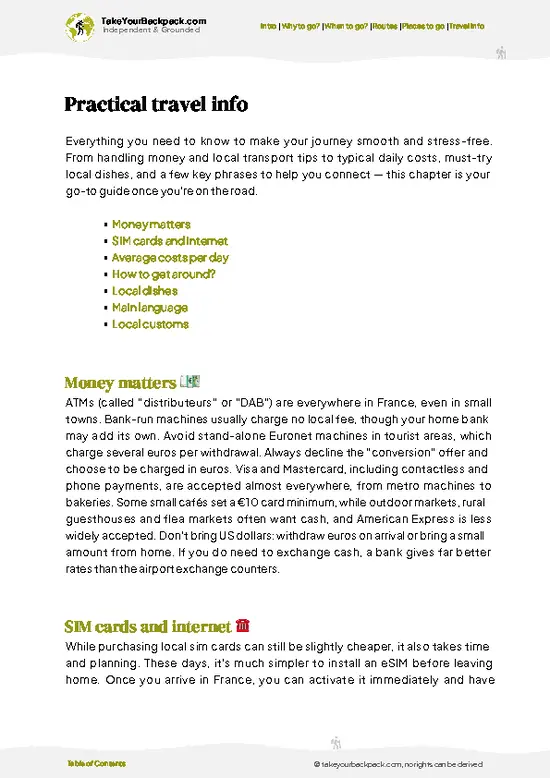
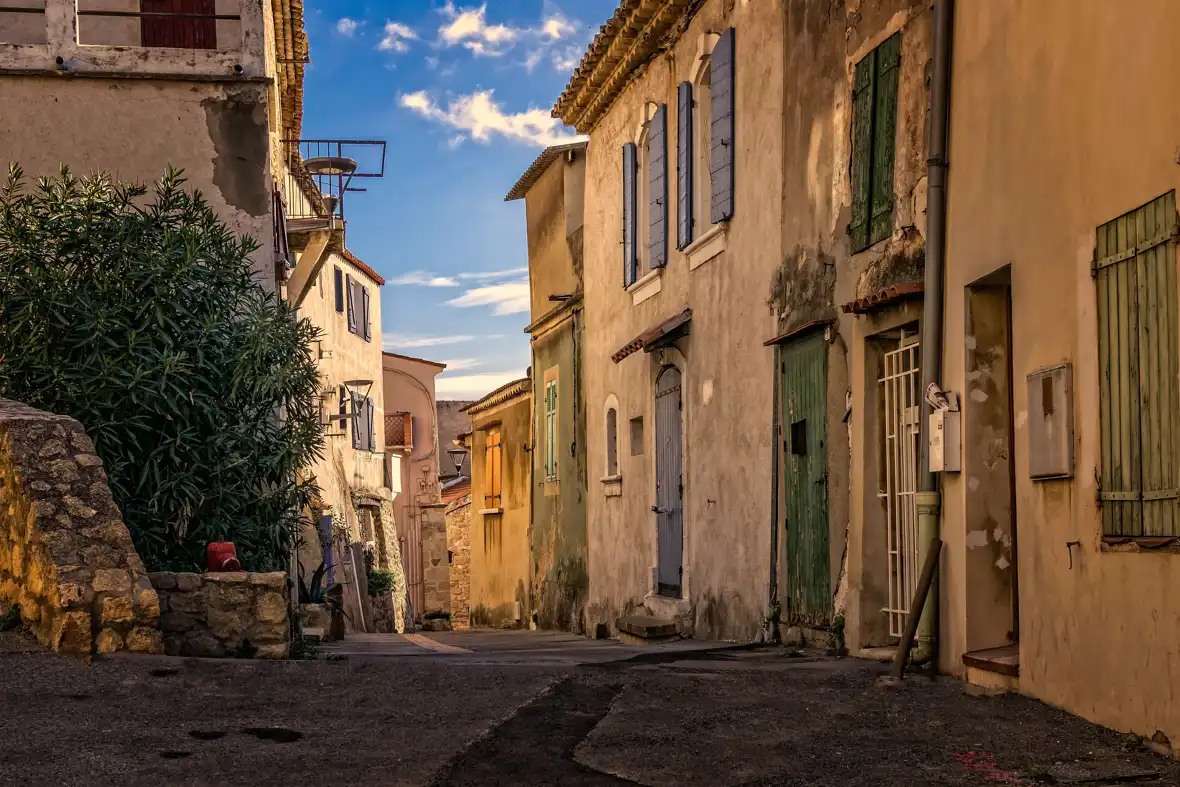
 Best Backpacking
.jpg) Over the years, I've learned the importance of packing minimally. It's so much easier to jump on the back of a truck or squeeze yourself into the last spot of a minibus without that supersized backpack. If you're headed to a warm destination, leave your winter jacket at home; for colder regions, opt for thin thermal underlayers. Instead of packing your entire wardrobe, bring just three sets of clothes, as laundry facilities are available everywhere.
Over the years, I've learned the importance of packing minimally. It's so much easier to jump on the back of a truck or squeeze yourself into the last spot of a minibus without that supersized backpack. If you're headed to a warm destination, leave your winter jacket at home; for colder regions, opt for thin thermal underlayers. Instead of packing your entire wardrobe, bring just three sets of clothes, as laundry facilities are available everywhere.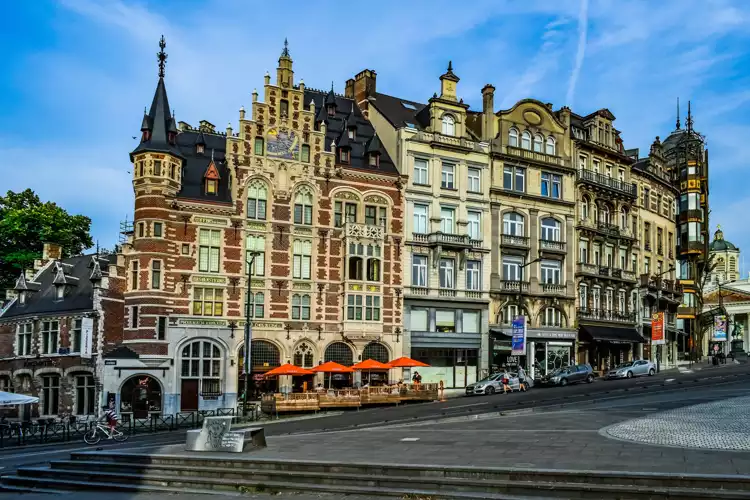





.jpg) Hi, I’m Johan (Netherlands 🇳🇱), the creator of TakeYourBackpack. Over the past 3 decades, I’ve backpacked through 90+ countries across six continents, gaining extensive experience with independent travel, long-term trips, and overland routes.
Hi, I’m Johan (Netherlands 🇳🇱), the creator of TakeYourBackpack. Over the past 3 decades, I’ve backpacked through 90+ countries across six continents, gaining extensive experience with independent travel, long-term trips, and overland routes.