×
Armenia 🇦🇲

backpacking Asia Armenia 🇦🇲Climb hills linking ancient monasteries, memory, and mountain air.

Explore AfghanistanExplore Azerbaijan

Backpacking Armenia in 2026

A complete guide including when and where to go, costs, transport, itineraries, and practical travel advice.
Traveling in Armenia: what to expect

Backpacking Armenia
By Johan Kruseman 🇳🇱 | Updated June 5, 2026

Most travelers bleed time and energy on Armenia’s long drives and fussy rural transport. Roads coil through mountains, and the best sights cling to cliffs and gorges. Marshrutkas leave when full, taxis linger, and every detour tempts you with bread ovens and backyard wine.

This is a country of basalt pipes at Garni, echoing stone at Geghard, red rock at Noravank, and cold-blue Sevan under big skies. In Yerevan, pink tuff glows at dusk from the Cascade while the duduk drifts; apricots stain your fingers, lavash steams from the tonir, khorovats snaps on skewers. Yes, hairpin roads, sudden mountain weather, early-closing monasteries, and cash-first villages slow you down, but they sharpen the payoff: Ararat at sunrise, cool air in a cave-cut chapel, and a cold Kilikia that tastes earned.

Georgia is breezier, with a plug-and-play backpacker circuit and wine-fueled nights; Azerbaijan feels slick and coastal; eastern Turkey sprawls. Armenia is for travelers who trade speed for substance, stone, and mountain horizons.

👉 Get the 📖 Travel Guide of Armenia

Yerevan & the Ararat Plain

Heat off the pavement, diesel from Marshrutkas, apricots soft in your palm. Yerevan is the hub: easy SIMs, cash everywhere, late buses and cheaper shared taxis. Climb the Cascade at sunrise; legs burn, but Ararat floats over the haze like a promise. Base here, learn the rhythm, then push out—Khor Virap day trip if you want the full Ararat face.

Lake Sevan & Gegharkunik

High-altitude glare and a wind that chews through damp clothes. Buses roll often enough to Sevan town; a quick taxi gets you to the peninsula or quieter east-shore coves. The water stays cold even in July—ten strokes and your skin sings. Warm back up with trout, flatbread, and a tall beer on a rattling pier.

Dilijan & the Debed Canyon (Tavush–Lori)

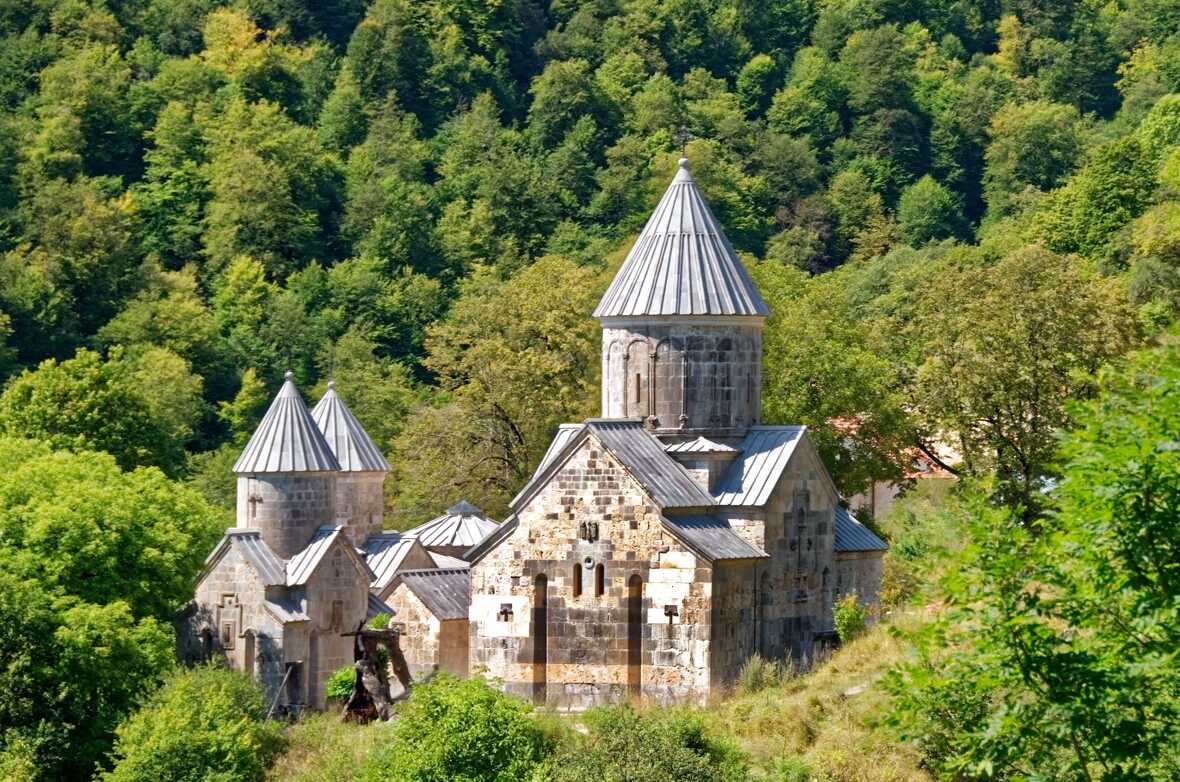
Wet pine, mossy switchbacks, bell towers in the fog. Dilijan works for hikers and slow mornings; hostel kitchens, tea, rain jackets drying over chairs. Push north to Alaverdi and the Debed: Soviet ruins, cliff-edge monasteries at Sanahin and Haghpat. Marshrutkas thin out; hitching is normal. Border ridges feel tense—stick to marked trails and villages.

M2 South: Areni–Noravank to Goris–Tatev

One spine, many moods. Wine stalls at Areni, bats and dust in the cave, red walls squeezing Noravank’s side canyon. Keep rolling to Yeghegnadzor and Goris: pale stone, quiet courtyards. Tatev sits over a canyon you feel in your knees—ride the ropeway or grind the switchbacks. Summer heat is punishing; start at dawn, carry three liters, don’t wander near posts. Payoff is cellar-cool wine and canyon silence at dusk.

Shirak & Mount Aragats

Gyumri’s cobbles and black tuff facades carry scars and jokes. Trains are slow but scenic; shared taxis are faster. For Aragats, drive to Kari Lake, then steep scree and thin air—storms build by noon. Layers, gloves, and a headlamp aren’t overkill. From the top, the plateau spreads forever; back in town, khash and a Gyumri beer put you right.
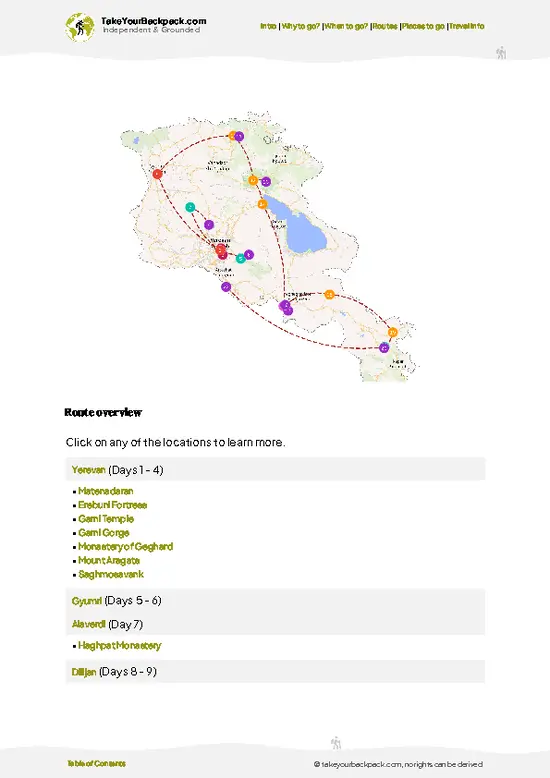
Map of Armenia
Loading the map 🌍
CLICK TO FILTER
city
town
village
unique site
national park
hike
beach
attraction
festival
region
SHOW COUNTRY’S BESTSHOW ALL
film
0
0
0a
Gold Beach
film
1
1
1a
Yerevan
film
2
2
2a
Gyumri
film
3
3
3a
Mount Aragats
film
4
4
4a
Dilijan ’s Parz Lake Trail
film
5
5
5a
Tatev to Devil’s Bridge Trail
film
6
6
6a
Garni Gorge
film
7
7
7a
Lastiver Cave Trail
film
8
8
8a
Dilijan
film
9
9
9a
Khosrov Forest State Reserve
film
10
10
10a
Arevik
film
11
11
11a
Shikahogh State Reserve
film
12
12
12a
Lori Region
film
13
13
13a
Tavush
film
14
14
14a
Aragatsotn
film
15
15
15a
Goris
film
16
16
16a
Sevan
film
17
17
17a
Tsaghkadzor
film
18
18
18a
Vanadzor
film
19
19
19a
Sisian
film
20
20
20a
Stepanavan
film
21
21
21a
Tatev Monastery
film
22
22
22a
Monastery of Geghard
film
23
23
23a
Noravank
film
24
24
24a
Areni Cave
film
25
25
25a
Cathedral of Echmiatsin
film
26
26
26a
Haghpat Monastery
film
27
27
27a
Goshavank
film
28
28
28a
Saghmosavank
film
29
29
29a
Areni
film
30
30
30a
Byurakan

Why go?Reasons people choose to visit

Low cost

Armenia is kind to a ragged wallet. Marshrutkas growl across the country for pocket change, and pulpulaks … read more 👉
Armenia is kind to a ragged wallet. Marshrutkas growl across the country for pocket change, and pulpulaks spit cold spring water on every corner, so you carry less and buy less. Markets hand you tomatoes, herbs, and warm lavash for picnic meals; homestays feed half your day. Many monasteries cost nothing but the climb. Data is cheap, hitching is normal, and camping is easy. My shoes were dusty by dusk; my reward was a Kilikia on the Cascade, Ararat glowing. Expect a true shoestring day around $25–35, without trying hard.

Mountains

Armenia rewards hikers who like their mountains rough-cut. Trails climb on sheep tracks through thyme … read more 👉
Armenia rewards hikers who like their mountains rough-cut. Trails climb on sheep tracks through thyme and dust, past khachkars and half-ruined caravanserais. On Aragats you crunch over black lava and hit wind that tastes like snow; in the Geghama you cross ash plains to a red crater lake and petroglyphs. Khustup wakes in cloud, Dilijan hides cool beech. The hard bits are real: loose scree, sun that cooks, the occasional shepherd dog. Then the payoff: monasteries clinging to cliffs, Ararat filling the horizon, spring water cold as glass, a cheap beer under a walnut tree.

Architecture

Armenia rewards architecture hunters the hard way: basalt steps, diesel-scented marshrutkas, and sun … read more 👉
Armenia rewards architecture hunters the hard way: basalt steps, diesel-scented marshrutkas, and sun baking pink tufa. You climb into Geghard’s cold, hewn chambers and hear drip water echo around medieval carvings. Garni’s pagan colonnade sits above a canyon like a stubborn survivor. Noravank burns red against its cliffs; Zvartnots lies in elegant ruin. In Yerevan, Soviet modernism muscles in—the Cascade, the Sports Palace, rough concrete softened by apricot light. It’s history you can touch, ashlar to panel joint, and the payoff is simple: views, silence, and a beer that tastes earned.

Uniqueness

Armenia makes you earn it. You rattle in marshrutkas that smell of diesel and sun-baked vinyl, tumble … read more 👉
Armenia makes you earn it. You rattle in marshrutkas that smell of diesel and sun-baked vinyl, tumble out into towns where signs run in curls of script and Russian paint. Trails climb through pumice dust to cliff monasteries; inside it’s wax, cool stone, and a low thrum of chants. The wind at Sevan cuts, then someone presses warm bread and herbs into your hands. Water comes from roadside springs, metal cups chained to pipes. By sunset, Ararat floats like a mirage, and that first Kilikia from a kiosk tastes like victory and apricot skins.
Want the complete picture of Armenia?
The offline Travel Guide brings everything together — routes, highlights & planning.

See what's included in the guide 👉

Get the Travel Guide -

⭐ HighlightsKey places and experiences

  • Yerevan Cascade: Climb the pale steps as the late sun turns the city’s tufa pink and the stone breathes back the day’s heat. Espresso and cigarette smoke drift from the terraces; buskers test the acoustics. Dust grits under your palm on the railing. When Ararat clears, crack a cold draft from a kiosk and watch the lights spark on, tier by tier.
  • Khor Virap: Dry fields, a low monastery, and the flat slap of wind off the Ararat plain. Incense hangs in the chapel while, outside, cow dung dries in neat pats and the border fence glints to the south. Clay dust sticks to your ankles. Then the mountain fills your frame—white, massive, indifferent—and the climb feels small in the best way.
  • Geghard Monastery & Garni Gorge: Vendors slap out hot lavash and slice churchkhela; pomegranate juice sugars your fingers. Inside Geghard, the rock-hewn chambers cool your skin and a cold drip lands on your wrist, candle soot blackening your thumb. Step into Garni Gorge and the basalt “organ pipes” rise in perfect
read more 👉
  • Yerevan Cascade: Climb the pale steps as the late sun turns the city’s tufa pink and the stone breathes back the day’s heat. Espresso and cigarette smoke drift from the terraces; buskers test the acoustics. Dust grits under your palm on the railing. When Ararat clears, crack a cold draft from a kiosk and watch the lights spark on, tier by tier.
  • Khor Virap: Dry fields, a low monastery, and the flat slap of wind off the Ararat plain. Incense hangs in the chapel while, outside, cow dung dries in neat pats and the border fence glints to the south. Clay dust sticks to your ankles. Then the mountain fills your frame—white, massive, indifferent—and the climb feels small in the best way.
  • Geghard Monastery & Garni Gorge: Vendors slap out hot lavash and slice churchkhela; pomegranate juice sugars your fingers. Inside Geghard, the rock-hewn chambers cool your skin and a cold drip lands on your wrist, candle soot blackening your thumb. Step into Garni Gorge and the basalt “organ pipes” rise in perfect ribs; the river carries a wet-stone chill on its breath.
  • Tatev Monastery & Vorotan Canyon: The cable car hums and sways over a gorge that keeps opening and opening, swallows stitching the air below. Hairpins glint on the road far beneath, where drivers lean on horns and brakes. In Tatev, the stone is cool, the wind tastes like thyme. Sip tart tan, tear off warm gata, and watch hawks ride thermals.
  • Lake Sevan & Sevanavank: The UV bites even when the wind cuts; the water needles your shins numb in seconds. Grill smoke and dill drift from shore shacks, and the black tuff churches sit like anchors above the blue. Fingers oily from trout, bottle of Kilikia sweating in hand, you finally warm back up. Detour-worthy: Khndzoresk’s cave village and swinging bridge, Azhdahak’s crater lake on the Geghama range, and the frescoed church at Akhtala.
Spotted a mistake or missing a highlight? Contact us.

But Armenia offers more...

Discover and compare all of its highlights per category

🧭 RoutesHow travelers typically move through the country

The 5-Day Northern Forests Route

The Vibe: A relaxed, nature-forward loop that trades big mileage for deep time in Armenia’s green north, with just enough Yerevan culture to frame the story. You’ll hike, wander monasteries in the woods, and feel like you actually lived in the mountains for a few days instead of just passing through.

The Highlights:
  • City warm-up in Yerevan with time for manuscripts and café culture.
  • Forest hikes and lake time inside Dilijan National Park.
  • Monastery-hopping between Goshavank and Haghartsin.
  • A day in Lori Region’s gorges capped by Haghpat Monastery.

The 10-Day Classic Armenia Circuit

The Vibe: A balanced first-timer route that hits Armenia’s greatest hits—capital, temples, monasteries, and lake—without turning into a bus marathon. You’ll move at a steady but comfortable pace, mixing cultural deep dives with easy hikes and long lakefront meals.

The Highlights:
  • Three nights in Yerevan to soak up museums, Cascade views, and brandy tastings.
  • Day trips to Garni Temple, Garni
read more 👉

The 5-Day Northern Forests Route

The Vibe: A relaxed, nature-forward loop that trades big mileage for deep time in Armenia’s green north, with just enough Yerevan culture to frame the story. You’ll hike, wander monasteries in the woods, and feel like you actually lived in the mountains for a few days instead of just passing through.

The Highlights:
  • City warm-up in Yerevan with time for manuscripts and café culture.
  • Forest hikes and lake time inside Dilijan National Park.
  • Monastery-hopping between Goshavank and Haghartsin.
  • A day in Lori Region’s gorges capped by Haghpat Monastery.

The 10-Day Classic Armenia Circuit

The Vibe: A balanced first-timer route that hits Armenia’s greatest hits—capital, temples, monasteries, and lake—without turning into a bus marathon. You’ll move at a steady but comfortable pace, mixing cultural deep dives with easy hikes and long lakefront meals.

The Highlights:
  • Three nights in Yerevan to soak up museums, Cascade views, and brandy tastings.
  • Day trips to Garni Temple, Garni Gorge, and Geghard Monastery.
  • High-altitude downtime around Lake Sevan and Gold Beach.
  • Forest trails and monastery visits around Dilijan and the Tavush region.

The 15-Day Grand Armenia Traverse

The Vibe: A full-country adventure for travelers who want to connect the dots between mountains, wine valleys, deep canyons, and forested national parks. You’ll string together big-name sights with quieter villages and trails, using a mix of public transport and local drivers to keep the pace immersive rather than rushed.

The Highlights:
  • Multi-day deep dive into Yerevan’s museums, brandy houses, and creative scene.
  • Temple-and-gorge combo around Garni, Geghard, and Khosrov Forest.
  • Highland adventures on Mount Aragats and through Aragatsotn villages.
  • Southern swing through Areni wine country, Noravank, Jermuk, Tatev, and Khndzoresk.
  • Cool-down finale around Lake Sevan, Dilijan National Park, and Lori’s Haghpat Monastery.
🌍 Want a ready-to-use travel plan for Armenia?
The overview above compares different route options based on your travel time and style. The complete Travel Guide breaks each itinerary down in detail, including maps, stops, highlights, and transport information.

Explore all route details 👉

Get the Travel Guide -

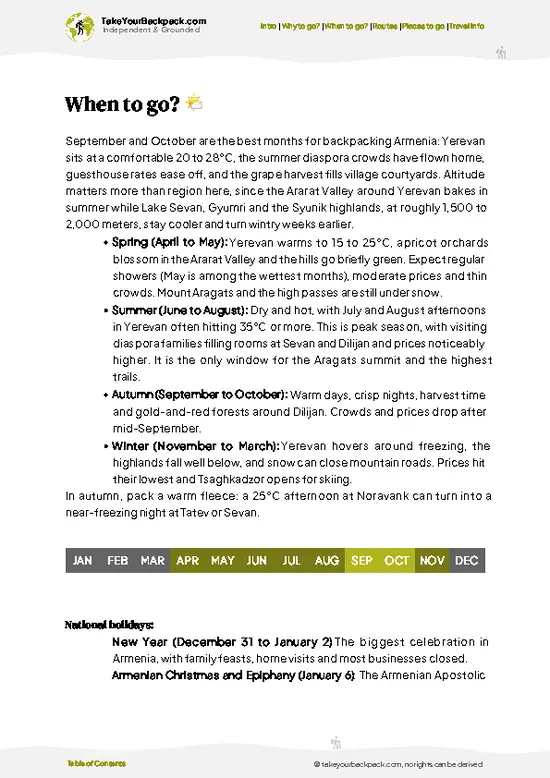
🌤️ When to go?A month-by-month overview

Mid-September to mid-October is the sweet spot. The heat loosens its grip on Yerevan, trails harden after summer dust, and the high country hasn’t yet folded under snow. Marshrutkas still run on full schedules, but the diaspora wave has ebbed, so you find a seat and a fair fare. Hostel prices ease from their July peaks, wineries open their doors, and the air smells like grape must and wood smoke. Days stay long enough to reach a ridge and back; nights cool enough that sleep finally lands heavy. The payoff is tactile: golden light on Noravank’s cliffs, pears sold from car trunks, and a cold Kilikia sweating on a courtyard table after a long descent.
  • The Crowd/Heat Peak (Jul-Aug): Yerevan blows hot like a hair dryer and Garni’s stones radiate at noon. Beds and taxi quotes jump. But Sevan’s bite-cold swim erases the asphalt, evenings at 2,000 meters turn crisp, and fruit stands brim with peaches and apricots.
  • The Transition/Shoulder (Mid-Sep-Mid-Oct): Markets swap melons for grapes, tour buses thin, drivers negotiate again. Trails empty, air sharpens, harvest tables materialize roadside. You move faster, farther, with daylight to spare.
  • The Off-Peak/Extreme (Dec-Mar): Monasteries sit in a hush of snow; the country turns inward. Carry microspikes for icy steps and ride midday buses when engines (and bones) are warm. Rooms are cheap; silence is not.

Tactical tip: For the shoulder, lock Yerevan weekends a week ahead; everywhere else, show up by midday and bargain in person.

source: climatestotravel.comJANJanuary: fair for travelingFEBFebruary: fair for travelingMARMarch: fair for travelingAPRApril: good for travelingMAYMay: good for travelingJUNJune: good for travelingJULJuly: good for travelingAUGAugust: good for travelingSEPSeptember: excellent for travelingOCTOctober: excellent for travelingNOVNovember: good for travelingDECDecember: fair for traveling
📅 Traveling in a specific month?
Get a full month-by-month breakdown of weather, crowds, costs, festivals, and seasonal highlights in the complete travel guide.

Get full details when to go 👉

Get the Travel Guide -
pixabay-armenia-3718283

💰 Costs (as of 2025)Prices, expenses, and money tips

$30-45 per day if you sleep in dorms, ride marshrutkas, and eat what locals eat; cut it to $25 if you self-cater hard, or blow past $55 with cable cars and craft beer.
  • dorm accommodation: Yerevan dorm beds run $12-18; outside the capital expect $8-12, and in small towns dorms barely exist so you’ll default to basic guesthouses ($18-30 for a double, often with eggs-and-tomato breakfast). Winter drops a few bucks; summer weekends spike, especially near Dilijan and Sevan. System tip: book the first night online, then extend in cash—10-15% off is normal—and two people should skip dorms entirely and take a simple private for the same money. Heat is often timed in the evenings; a thin base layer beats arguing with radiators.
  • meals: Supermarket Survival: warm lavash, salty cheese, tomatoes, cucumbers, a tin of fish, apricots when they’re in—$4-6/day and you eat on a sunny stoop. Street food reality: shawarma/“doner” for 900-1,500 AMD ($2-4), khorovats plates $6-10, bakery snacks under $1, espresso $1-2, draft beer $2-3. Cheaper than western Turkey and Azerbaijan, a hair pricier than Georgia on meat. Tourist trap tells: menus with dollar signs on Abovyan Avenue; walk two blocks and the smoke
read more 👉
$30-45 per day if you sleep in dorms, ride marshrutkas, and eat what locals eat; cut it to $25 if you self-cater hard, or blow past $55 with cable cars and craft beer.
  • dorm accommodation: Yerevan dorm beds run $12-18; outside the capital expect $8-12, and in small towns dorms barely exist so you’ll default to basic guesthouses ($18-30 for a double, often with eggs-and-tomato breakfast). Winter drops a few bucks; summer weekends spike, especially near Dilijan and Sevan. System tip: book the first night online, then extend in cash—10-15% off is normal—and two people should skip dorms entirely and take a simple private for the same money. Heat is often timed in the evenings; a thin base layer beats arguing with radiators.
  • meals: Supermarket Survival: warm lavash, salty cheese, tomatoes, cucumbers, a tin of fish, apricots when they’re in—$4-6/day and you eat on a sunny stoop. Street food reality: shawarma/“doner” for 900-1,500 AMD ($2-4), khorovats plates $6-10, bakery snacks under $1, espresso $1-2, draft beer $2-3. Cheaper than western Turkey and Azerbaijan, a hair pricier than Georgia on meat. Tourist trap tells: menus with dollar signs on Abovyan Avenue; walk two blocks and the smoke from a real mangal will lead you to fair prices.
  • local transport: The country unlocks with marshrutkas: diesel-breathed vans that leave when full, not on your schedule. Yerevan-Dilijan ~1,500-2,000 AMD; Sevan ~800-1,200; Goris ~3,000-4,000. In the city, metro/bus is 100-200 AMD a ride; tap your card or drop coins, no drama. Use GG or Yandex apps and avoid hailing at Republic Square unless you like “special prices.” Trains are cheap and slow, scenic if you have time. Compared to Georgia, costs are similar; versus Turkey, long-distance buses there cost more but run to the minute.
  • activities: Monasteries are mostly free; Garni Temple charges a few dollars. Real wallet hits: Wings of Tatev cable car ($18-25 round trip), guided day trips from Yerevan ($25-50), wine tastings in Areni ($7-15). Hiking is free; paying to reach the trailhead isn’t. Armenia is cheaper than Azerbaijan for museums and tours, pricier than Iran, broadly on par with Georgia—until you string two cable cars and a winery in one day.
  • miscellaneous: Budget Leaks: airport taxi (4,000-6,000 AMD) when the airport bus is pocket change; ATM fees (flat 1,500-3,000 AMD per pull, withdraw larger amounts); bottled water when pulpulaks (street fountains) run cold and clean; laundry $3-6 a load; “craft” anything in Yerevan bars; brandy tastings that sneak in a “premium flight.” SIMs are cheap ($2-5 with data) and save you from meter games. Cash is king; card works in the capital, less so under monastery walls.
⚠️ Prices can change and everyone travels differently, so take this as a rough guide. Hope it helps you plan your adventure!

✈️ The backpacker research shortcutArmenia Travel Guide

An offline-friendly backpacking guide with optimized travel routes, ranked highlights, transport advice, and the best areas to stay.
example page 0 from our offline Travel Guide for Armeniaexample page 1 from our offline Travel Guide for Armeniaexample page 2 from our offline Travel Guide for Armeniaexample page 3 from our offline Travel Guide for Armeniaexample page 4 from our offline Travel Guide for Armeniaexample page 5 from our offline Travel Guide for Armeniaexample page 6 from our offline Travel Guide for Armeniaexample page 7 from our offline Travel Guide for Armenia
The digital guide (271 pages) contains:
69 highlights, ranked by travel appeal
Optimized 5, 10 & 15-day travel routes
Cities, national parks, beaches, historical sites, ...
How to get around
Offline-friendly for travel without Wi-Fi
👉 Click to see all 30+ guide features

📅 Plan smarter in minutes, not weeks
Month by month travel advice
Festivals & national holidays
Budget expectations

🗺️ Go to the right places, skip the overrated ones
Honest pros & cons of destinations
Top hikes, parks & viewpoints
Lesser-known places most travelers miss
Clear “worth it vs skip it” guidance

🛏️ Travel smoothly without rookie mistakes
Best areas to stay
Transport systems explained simply
Common scams & safety advice
SIM cards, money & practical tips

🌍 Understand the country, not just visit it
Culture & traditions
52 Essential phrases & customs
Festivals worth planning around
Traveler-friendly historical context
Insights that make places more meaningful

📱 Built for real travel conditions
Fully downloadable PDF
Works completely offline
Optimized for phone use
Useful in remote areas & buses
Everything in one place
Save weeks of stressful planning
Get instant access to the full guide directly. 30-day money-back guarantee.


Sent to your inbox immediately after payment • 100% Secure Checkout
Best Backpacking Travel Advisor 2025 tourism awardBest Backpacking
Travel Advisor
2025
What others say about Take Your Backpack Guides:
⭐⭐⭐⭐⭐
Fantastic, amazing amount of information!
⭐⭐⭐⭐⭐
My goodness this is amazing, it's what I've been looking for hats off too you!
⭐⭐⭐⭐⭐
I think this is absolutely BRILLIANT
⭐⭐⭐⭐
Very complete and informative. It's still missing places, but I gotta to commend you
⭐⭐⭐⭐⭐
This is truly amazing, thank you, can't wait to explore it with my kids!
⭐⭐⭐⭐⭐
Awesome resource, thank you!
⭐⭐⭐⭐⭐
This is amazing! Can't wait to explore the ones I haven't seen
⭐⭐⭐⭐
I love this! Well done, great idea.
⭐⭐⭐⭐⭐
Thanks for taking the time to make this gem!
⭐⭐⭐⭐⭐
This might be the best website I've ever seen.
⭐⭐⭐⭐⭐
Congratulations, and thank you so much for your work; it's incredibly valuable.
⭐⭐⭐⭐
In all seriousness I think you did a great job pointing out the important spots
⭐⭐⭐⭐⭐
10/10 very good
⭐⭐⭐⭐⭐
As someone who's only just starting to visit regularly this is awesome, thank you.
⭐⭐⭐⭐
Thank you very much! I'm going to visit my dad, it's going to be very useful!
⭐⭐⭐⭐⭐
This is really cool! We'll be travelling for the first time and this definitely come in handy.
⭐⭐⭐⭐⭐
You are now our minister of culture, congratulations 👨‍💼
⭐⭐⭐⭐⭐
Just wanted to tell you that this is a pearl! Going to follow your recommendations.
⭐⭐⭐⭐⭐
This is so cool. I'll definitely be using the resource for my travels soon.
⭐⭐⭐⭐⭐
This is very impressive! Good work.
⭐⭐⭐⭐⭐
This is an amazing and informative site. Very well done!

🛏️ Where to stay?Best areas to base yourself

Yes — hostels, guesthouses and budget hotels are common in Armenia, concentrated in Yerevan; the largest selection is in central Yerevan (Kentron) around Republic Square/Northern Avenue, with solid options near the Cascade/Opera and along the Mashtots/university corridor.
Kentron and Northern Avenue give best walking access to museums, restaurants, transport hubs and nightlife but are busier, noisier at night and slightly pricier; the Cascade/Opera area is lively and convenient for sights but can feel crowded.
Kond and residential districts are cheaper and quieter with more authentic guesthouses … read more 👉
Yes — hostels, guesthouses and budget hotels are common in Armenia, concentrated in Yerevan; the largest selection is in central Yerevan (Kentron) around Republic Square/Northern Avenue, with solid options near the Cascade/Opera and along the Mashtots/university corridor.
Kentron and Northern Avenue give best walking access to museums, restaurants, transport hubs and nightlife but are busier, noisier at night and slightly pricier; the Cascade/Opera area is lively and convenient for sights but can feel crowded.
Kond and residential districts are cheaper and quieter with more authentic guesthouses but involve steeper climbs and longer walks to main attractions, and regional towns (Gyumri, Dilijan) offer pleasant guesthouse stays for culture and nature yet have far fewer hostels and less frequent public transport.

If you enjoy meeting fellow travelers, consider choosing hostels with high ratings for atmosphere. On the other hand, if you prefer having your own space, a hotel might be a better option.

🚌 Getting aroundWhat moving around is really like

Armenia moves on eye contact and engine noise. Timetables exist, but the real clock is a driver tapping ash against a door and waiting for one more body. Marshrutkas idle in a haze of diesel at Yerevan’s stations; a melon slides under your seat; fares get passed hand to hand like communion. On rails or underground, time tightens—steady, not fast. Out in the switchbacks, you travel by intuition and sunlight. July heat shimmers off the M4; in winter, Lori’s cliffs blow icy grit across the road. Start … read more 👉
Armenia moves on eye contact and engine noise. Timetables exist, but the real clock is a driver tapping ash against a door and waiting for one more body. Marshrutkas idle in a haze of diesel at Yerevan’s stations; a melon slides under your seat; fares get passed hand to hand like communion. On rails or underground, time tightens—steady, not fast. Out in the switchbacks, you travel by intuition and sunlight. July heat shimmers off the M4; in winter, Lori’s cliffs blow icy grit across the road. Start early, carry small bills, and pick a seat that doesn’t face the wheel well.
  • Marshrutka minibuses The Social Fabric. You join, not just ride. Nod hello, give up your seat for elders, keep your pack on your lap unless the trunk opens. Pay by handing coins forward; someone will relay them without looking. Stops are elastic—say your village name and the driver will angle over. Music is the driver’s choice, windows crack for air, and conversations bloom fast if you show your map.
  • Intercity trains The Efficiency Trade-off. Cheaper than a private car, slower than a minibus. You trade an hour or two for legroom, a bathroom that exists, and a stomach that isn’t sloshed by mountain curves. Routes are limited, departures few, but the schedule is the schedule. In summer the cars ride cool, in winter the heaters thrum. Bring snacks, buy a paper ticket, and let the valleys slide by.
  • Regional buses from Northern & Kilikia The Geometric Unlock. These buses stitch the hard edges: valley towns, road-junction stops, last villages before the dirt tracks begin. They drop you near Haghpat/Sanahin (walk or hitch the last climb), at Areni for Noravank’s turnoff, at Goris for the Tatev approach. Trains don’t reach these angles; taxis get pricey. Here, a bus plus a short hoof opens monasteries and trailheads the guidebooks treat as “day tour only.”
  • Hitchhiking The Budget Disruptor. Common, quick on main roads, and disarmingly generous. Stand by a gas station or at the town’s edge with a clear sign; point, smile. Most rides are short hops that leapfrog you faster than waiting for the next minibus. Offer fuel money; many refuse but appreciate the try. You’ll get sweets, stories, and dropped exactly where buses won’t.

Master tactical tip: Catch first-light departures and, if a marshrutka stalls for passengers, quietly pay for an extra seat—leaving early beats any timetable.
Distance
Zvartnots International Airport (EVN) is about 12 km (7.5 miles) west of central Yerevan (Republic Square).

Main public transport
  • Airport Express Bus (Route 201) — Runs 24/7 between the airport and the city center (stops include Republic Square and the Yeritasardakan area). Look for buses signed “Airport Express 201” at the Arrivals curb.

    Time: 25-45 minutes depending on traffic

    Cost: about 300 AMD

    Frequency: roughly every 30 minutes in the daytime; about hourly late at night
  • Regular city buses — Cheaper but less direct, and you may need to transfer to reach your exact destination. Not ideal with bulky luggage.

    Time: 35-60+ minutes

    Cost: about 100 AMD per ride

Taxi and ride-hailing
  • App taxis (GG, Yandex Go, Bolt): typically 2,500-5,000 AMD to/from Republic Square; more late at night or in heavy traffic. Time: 20-35 minutes.
  • Official airport taxi desk/curb taxis: usually 6,000-8,000 AMD to the center. Time: 20-35 minutes.

Good to know
- There’s no train or metro to the airport.
- Pay the bus fare in cash (AMD) to the driver; some newer buses also have validators, but carry small change just in case.
- Airport Wi-Fi works for ordering an app taxi if you don’t have a local SIM.
⚠️ Prices and routes can change, so take this as a rough guide and ask for local advice when you arrive.

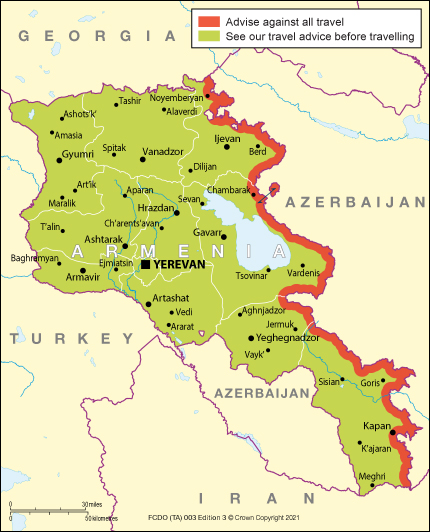
🔒 Safety (risk Level: low)Staying safe while traveling

Safety for solo travelers, including women and LGBTQ+ individuals
Armenia is generally safe for solo travelers, including women and LGBTQ+ individuals, though it’s essential to remain aware of local customs and attitudes. Women usually find it safe to travel alone, but modest dress is recommended in rural areas. LGBTQ+ travelers might face conservative views, so discretion is advised, especially outside Yerevan. It’s wise to stay informed about local laws and cultural practices to ensure a smooth trip.


Full official government travel advisory (live updates)
View details 👉
safety image

source: www.gov.uk

✈️ VisaEntry requirements and paperwork

Visa requirements for Armenia depend on your nationality. Citizens from many countries, including the EU, USA, and Canada, can enter visa-free for up to 180 days in a year. For those needing a visa, you can apply online for an e-Visa through the official Armenian e-Visa portal.
⚠️ Visa requirements can change over time, so always check the latest visa requirements with the official embassy or government website before you travel.

🎒 What to pack?A practical packing list

When packing for Armenia, remember it’s a land of diverse climates and landscapes. Summers can be scorching, especially in the lowlands, while winters in the mountains are no joke—think plenty of snow. Layering is key since the weather can flip from warm to chilly in a single day. While exploring ancient monasteries or rural villages, dress modestly to respect local customs—covering shoulders and knees is a safe bet. Also, Armenia’s terrain is pretty rugged, so sturdy footwear is a must for all those epic hikes and adventures.

Apart from this country specific advice, I have also crafted a general packing list that should help on any trip. authorOver the years, I've learned the importance of packing minimally. It's so much easier to jump on the back of a truck or squeeze yourself into the last spot of a minibus without that supersized backpack. If you're headed to a warm destination, leave your winter jacket at home; for colder regions, opt for thin thermal underlayers. Instead of packing your entire wardrobe, bring just three sets of clothes, as laundry facilities are available everywhere.
View the full list 👉
🎒 Planning the practical side of your trip?
Get detailed information on transport, daily budgets, internet access, local customs, food, language, and other essentials in the complete Travel Guide.

Get detailed practical information 👉

Get the Travel Guide -

🙋 FAQCommon questions before visiting

Trip Planning


Personal tip: I normally search on good rating for atmosphere (for meeting people) and location (for easy exploring). Cleanliness as a bonus.


Travel Essentials

Hepatitis A and B vaccines are recommended for travelers to Armenia. Consider a typhoid vaccine if you plan to eat street food or visit rural areas. Routine vaccines like MMR, DTP, and varicella should be up-to-date. Rabies is optional unless you plan on lots of outdoor activities. Always consult your doctor for personalized advice.


vaccination requirements
When I first started traveling, I often spent part of my first day in a new country hunting for a local SIM card. While this can still be slightly cheaper, it also takes time and planning.

These days, it's much simpler to install an eSIM before leaving home. Once you arrive in Armenia, you can activate it immediately and have mobile data from the moment you land — which is especially useful for ordering transport or navigating away from busy airports.

There are many providers nowadays, and price differences are usually small. I personally go with Airalo, as it offers excellent network coverage throughout the country and strong global coverage, so you can manage multiple countries from a single app.


Get your e-sim for Armenia

Culture & Customs

Show respect by dressing modestly, especially when visiting churches. Make it a point to greet with a smile, as Armenians are friendly and appreciate politeness. Remove your shoes when entering someone’s home.

Don’t discuss sensitive topics like politics or the Armenian Genocide unless you know your audience well. Public displays of affection are generally frowned upon; LGBTQ+ travelers should exercise discretion. Women travelers can feel relatively safe but should remain cautious in rural areas. Avoid pointing with your index finger, as it’s considered rude.

Learn a few basic phrases in Armenian to show respect and appreciation for the culture.
Trying traditional food is always a great way to experience the culture. Here are some must-try dishes for Armenia.
  • Khorovats: This is Armenia’s take on barbecue, usually made with marinated pork or lamb. It’s a staple at celebrations and family gatherings, encapsulating the country’s love for communal dining.
  • Dolma: Grape leaves stuffed with a mix of rice, meat, and spices. Dolma reflects Armenia’s rich history and is a dish often shared during festive occasions.
  • Lavash: A thin, soft flatbread that’s a UNESCO Intangible Cultural Heritage. It’s a basic, yet essential part of any Armenian meal, often used to scoop up food or wrap around kebabs.
  • Harissa: A hearty porridge made from wheat and chicken, slow-cooked to perfection. It’s more than just a dish; it’s a symbol of resilience, deeply tied to Armenian heritage and history.
  • Ghapama: A festive dish made by stuffing a pumpkin with rice, dried fruits, and nuts. Ghapama is traditionally prepared for holidays and special occasions, embodying the warmth of Armenian hospitality.
Yes, the tap water in Armenia is generally safe to drink, and locals do drink it. However, if you’re a cautious traveler or have a sensitive stomach, you might want to stick to bottled or filtered water just to be safe. It’s always handy to carry a reusable bottle with a filter for peace of mind.
The main language in Armenia is Armenian. Backpacking is way more rewarding if you know a bit of the local language, so I'd suggest brushing up on the basics just in case your Armenian skills have become a bit rusty.

Want to understand locals better?
The complete Travel Guide for Armenia includes 52 essential words and phrases — greetings, thank-yous, ordering food, transport, numbers, and common local expressions you'll actually hear.

Get your local basic phrases 👉

Get the Travel Guide -


In Armenia, English proficiency varies widely depending on the location and demographic. In major cities like Yerevan, you’ll find a growing number of younger people, professionals, and those in the tourism sector who speak English reasonably well. Many restaurants, hotels, and tourist attractions offer services in English, making it easier for travelers to navigate.

However, in rural areas and among older generations, English may be less commonly spoken. In these regions, Armenian or Russian is more prevalent, so having a translation app or phrasebook can be helpful. Overall, while English is not universally spoken, the increasing number of English speakers, especially among the youth, makes communication manageable for travelers. Learning a few basic Armenian phrases can also enhance your experience and show respect for the local culture.

Money & Payments

The local currency of Armenia is AMD (֏).

Armenia is pretty chill when it comes to handling money as a backpacker. ATMs are widely available in cities like Yerevan and Gyumri, but if you’re heading to smaller towns or rural areas, make sure you have enough cash on you. The local currency is the Armenian dram (AMD), and that’s what you’ll be using most of the time.

While some places accept credit cards, especially in the capital, it’s not universal. Keep some cash handy for small eateries, markets, and in the countryside. When it comes to bringing foreign currency, USD and euros are both easily exchangeable at banks and exchange offices. Rates are usually fair, so no need to hunt down elusive ’best exchange rates’. Just avoid airport exchanges unless you like donating to their profit margins.

Cash is king here, so I wouldn’t rely solely on cards. Keep a mix of small and large bills, as smaller vendors and drivers might not have change for larger notes. Lastly, always keep a backup stash of cash in a safe spot—just in case an ATM decides to play hide and seek.

In Armenia, tipping isn’t obligatory but it’s appreciated, with a standard tip being around 10% of the bill. Many restaurants include a service charge, so check your bill before adding extra. For taxi drivers and other services, rounding up or leaving a small amount is common.

🧩 Nearby countriesNearby backpacking alternatives

We 💚 feedbackWhat to know before planning your trip

Armenia pays off in the collision of ancient stone and big sky: cliff-top monasteries go ember-red at dusk, khachkars rough under your palm, khorovats smoke in the cold air, and the first Kilikia beer after a dusty trail tastes like a small victory. The drag is movement—marshrutkas thin out beyond Yerevan, leave when full, and the waits can chew a day. Fix it by teaming up to rent a car for 2–3 days; hit Tatev, Noravank, and Sevan at sunrise and sunset, on your clock.

✍️ Help improve this page!
The information on this page is based on in-depth research, insights shared by experienced travelers, and feedback from the local travel community in Armenia. While every effort is made to keep the information accurate and current, conditions can change — so if you spot anything incorrect or outdated, please get in touch.


🙋‍♂️ Give feedback

👋 Meet the founderWho’s Behind Take Your Backpack?

Johan, backpacker and founder of TakeYourBackpackHi, I’m Johan (Netherlands 🇳🇱), the creator of TakeYourBackpack. Over the past decade, I’ve backpacked through 80+ countries across six continents, gaining extensive experience with independent travel, long-term trips, and overland routes.

This site is built on a combination of firsthand travel experience and carefully curated insights from other backpackers. Many guides are based on places I’ve personally visited, while others bring together tips, observations, and practical advice shared by trusted travelers I’ve met along the way.

The goal is to provide realistic, experience-driven guidance — not generic itineraries — so you can explore destinations with better context, clearer expectations, and more confidence.

Get full Armenia guide •
Instant download • 69 highlights • Full Offline guide