×
Zambia 🇿🇲

backpacking Africa Zambia 🇿🇲Move river paths toward thunderous Victoria Falls.

Explore Western SaharaExplore Zimbabwe

Backpacking Zambia in 2026

A complete guide including when and where to go, costs, transport, itineraries, and practical travel advice.
A first look at the country

Backpacking Zambia
By Johan Kruseman 🇳🇱 | Updated June 6, 2026

In Zambia, your first big call: bush flights or backroads. Distance is real and rains close tracks, so money spent on the air saves days for dawn walks with top guides. Either way, you’re moving with a country that runs on river rhythms and campfire clocks.

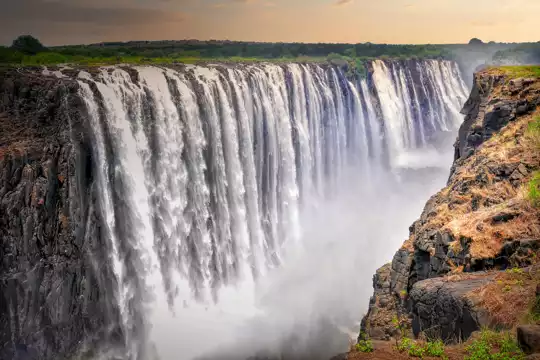
Victoria Falls roars the overture, but the country’s voice carries farther in the bush: South Luangwa’s origin-story walking safaris and leopard-rich nights; canoes on the Lower Zambezi as elephants wade; Kafue’s Busanga dawn when lions rise out of the mist; Bangweulu’s shoebill stakeouts. Markets thrum, Kuomboka drums roll across the floodplain, and a guide’s story by the fire binds people to place. Yes, roads can punish, rains shut tracks, and fly-ins bite the budget, but that scarcity thins crowds and turns each sighting—each conversation—into something you feel in your legs as much as your memory.

Next to Botswana’s polished ease, Namibia’s highway independence, or Zimbabwe’s sharper bustle, Zambia stays raw, personal, and guided by rivers. Go if you want immersion over convenience, walking and paddling over windshields, and a safari you earn by how you move.

👉 Get the 📖 Travel Guide of Zambia

Livingstone & Victoria Falls

Base yourself here when you want action without burning days in transit. Fly or bus in, drop your bag on Mosi-oa-Tunya Road, and work the riverfront by foot and shared taxi. High water (Mar–Jun) punishes with spray; wear sandals and stash electronics in a dry bag. Low water (Aug–Nov) reveals rock pools; book Livingstone Island/Devil’s Pool early and go first boat to beat crowds. Cross to Zimbabwe at dawn if you need that viewpoint—carry small USD, keep paperwork tidy, and don’t linger with touts. Social travelers and gear heads thrive: rafting, gorge swings, microlights. You move fast, sleep cheap, and squeeze three activities into one long day.

South Luangwa (Mfuwe)

Come for walking and night drives the law allows here, not everywhere else. The why is leopard density; the how is time on foot and patient loops after dark. Get to Mfuwe via Chipata on an all-weather road; buy groceries and fuel in Chipata, then base just outside the bridge to stretch your budget and pay park fees daily. Dry season (May–Oct) tightens game to the river; green season opens dramatic skies but closes some tracks—accept detours. Photographers and wildlife purists win: two activities a day, same area for multiple days, same guide to build a read on the predators.

Lower Zambezi

This is a river trip masquerading as safari. Canoe channels, drift past elephant feet, and cast for tigerfish between hippo grunts. From Lusaka, drive to Chirundu, then 4x4 low-range into the Chiawa GMA, or hop a small plane to Jeki/Royal and boat in. Pack soft bags and a spare dry bag; expect boat transfers that soak everything once the wind kicks. June–July is crisp; Sep–Oct bakes but concentrates game on the banks. Active travelers who like paddling and don’t mind sand in their teeth get paid off.

Kafue & Busanga Plains

Huge, quiet, and earned the slow way. Use the M9 spine via Mumbwa, refuel there, then set your pace at 35–40 km/h and stop chasing distances. Southern Kafue works most of the year; Busanga opens roughly Jul–Oct when the water drops. Carry extra fuel, a compressor, and a realistic plan: three nights per zone or you’ll just drive past the good stuff. You come for cheetah, wild dog, and the feeling of having a whole dambo to yourself. Suits self-drivers and patient watchers who prefer long sits over checklists.

Great North Road: Kasanka & Bangweulu

One spine, two rare events. Run the T2 to Serenje for Kasanka’s bat migration (late Oct–Dec); climb the Fibwe hide at dusk and let the sky go black with wings. Push on to Bangweulu for shoebills (May–July); hire local boatmen and accept wet feet in the papyrus. Black-cotton soils glue vehicles after rain—high clearance, recovery boards, and flexible timing save the day. Community camps and scouts make it possible; book them, respect their system, and you’ll see what most never do. Built for birders and natural-history obsessives who don’t mind mud under the nails.
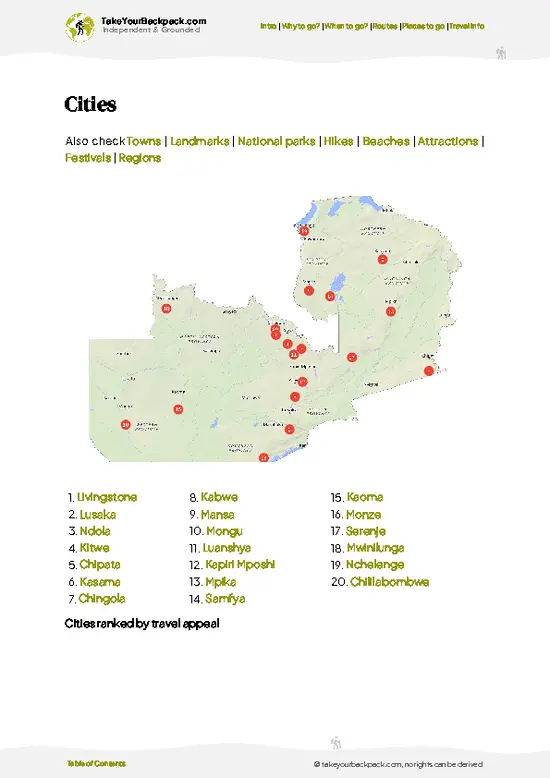
Geography and where places are located
Loading the map 🌍
CLICK TO FILTER
city
town
unique site
national park
hike
beach
attraction
festival
SHOW COUNTRY’S BESTSHOW ALL
film
0
0
0a
Victoria Falls
film
1
1
1a
Kundalila Falls Trail
film
2
2
2a
Ngonye Falls Trail
film
3
3
3a
South Luangwa
film
4
4
4a
Mosi-oa-Tunya
film
5
5
5a
Nsumbu
film
6
6
6a
Blue Lagoon
film
7
7
7a
Mfuwe
film
8
8
8a
Mbala
film
9
9
9a
Victoria Falls
Pixabay
film
10
10
10a
Kalambo Falls
film
11
11
11a
Mumbuluma Falls

Why go?What draws travelers here

Wildlife

Zambia rewards effort. Wildlife spreads out in real wilderness, but the country hands you tools. Walk … read more 👉
Zambia rewards effort. Wildlife spreads out in real wilderness, but the country hands you tools. Walk South Luangwa with armed guides and read the ground; this is where the walking safari was refined, and you earn close, calm sightings. Take legal night drives and work a spotlight for leopard. Canoe the Lower Zambezi, hugging outside bends to give hippos space. Hit Kafue’s Busanga Plains Aug–Oct when water drops and cats hunt. Fewer vehicles than East Africa, so patience wins—and you move, not just ride.

Scenery

Zambia pays you back for movement. Rivers carve gorges, plains run to the horizon, granite domes punch … read more 👉
Zambia pays you back for movement. Rivers carve gorges, plains run to the horizon, granite domes punch out of miombo, and caves hold old art and cool shade. You earn the big views by how you go: walk South Luangwa at first light for close, clean lines; paddle Lower Zambezi’s side channels to read the river; hit Victoria Falls at the tail of rains for thunder and spray; climb Mutinondo’s whalebacks after storms scrub the air; aim dry season in Kafue and Bangweulu for long sightlines. Effort converts scenery into memory.

Low cost

Zambia rewards hustle. Skip fly-in lodges; ride dawn coaches between hubs and you slash transfer costs. … read more 👉
Zambia rewards hustle. Skip fly-in lodges; ride dawn coaches between hubs and you slash transfer costs. Eat what locals eat—nshima plates and market produce—then cook; pick guesthouses or community camps with shared kitchens. Book park activities in-country, not online, and split a vehicle on arrival; bundle drives into a single day to make fees work harder. Walk cities; minibuses cover the gaps. Travel shoulder season and bargain face-to-face. Do this and you live well on roughly $35–50 per day, while neighbors at the same latitude torch budgets for the same sunsets and rivers.

Backpackers

Zambia rewards backpackers who move with purpose. English flows, minibuses run everywhere, and hostels … read more 👉
Zambia rewards backpackers who move with purpose. English flows, minibuses run everywhere, and hostels in Livingstone and Lusaka anchor routes, with Mfuwe tying you straight to South Luangwa. Because parks can drain a budget, you hack it: ride to Mfuwe, sleep at a riverside camp, join a shared dawn game drive instead of a private vehicle. Because distances stretch, you leave at first light, ride shared taxis to junctions, hitch the last leg. Carry kwacha, a local SIM, and a cheap tent. The Zambezi and Victoria Falls deliver the spectacle; your hustle unlocks the access.
Want the complete picture of Zambia?
The offline Travel Guide brings everything together — routes, highlights & planning.

See what's included in the guide 👉

Get the Travel Guide -

⭐ HighlightsThe places that define a trip here

  • South Luangwa National Park: Walk where the bush writes the rules. Dawn air runs cool, then the heat climbs and the mopane leaves crackle under your boots. Go late dry season when lagoons shrink and animals stack along the river; book a guided walk, keep the wind in your face, and move steady. Night drives are legal here—use a red filter, and you’ll hear puku snort before your eyes find leopard.
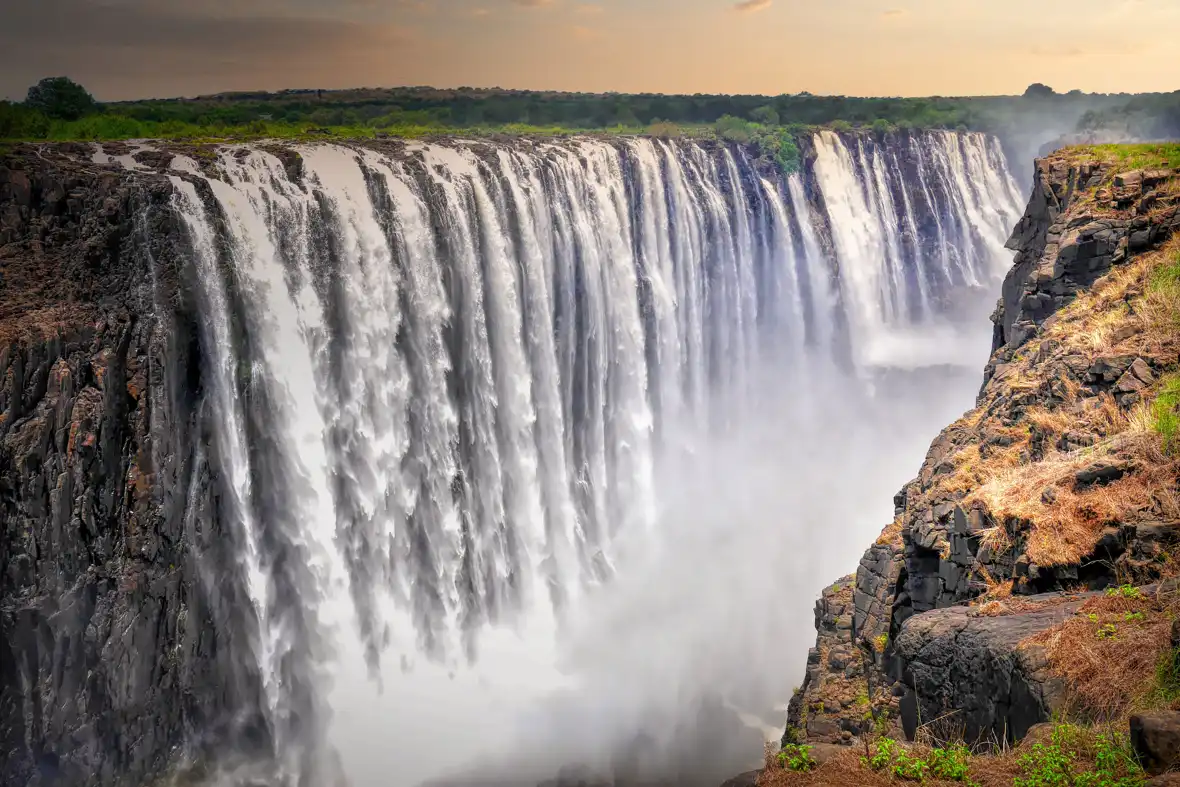
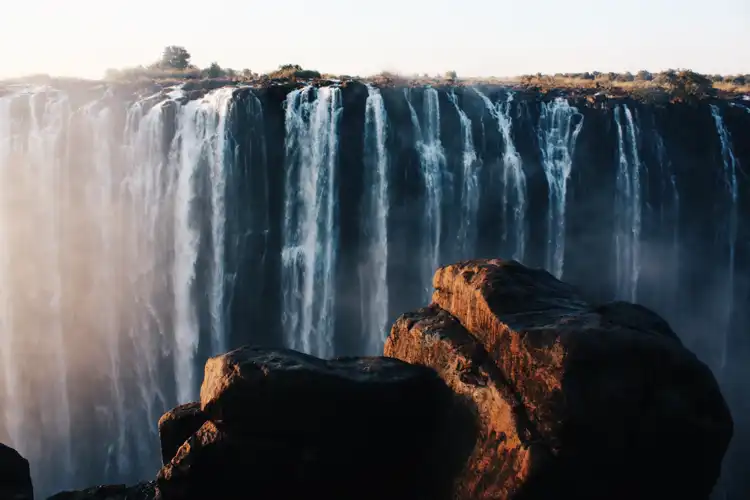
  • Victoria Falls (Mosi-oa-Tunya) - Zambian Side: Enter at first light and hit Knife-Edge Bridge before the tour buses; the spray slams your cheeks, your shirt clings, and your shoes squeak on wet basalt. In low water, scramble down to the Boiling Pot for roaring gorge views; in very low water, a licensed Devil’s Pool trip trades distance for the raw thrum of standing on the lip.
  • Lower Zambezi National Park: Paddle, don’t just drive. Hug inside bends to dodge hippo channels, read the slick surface for shallow bars, and camp on high sand islands that elephants sniff at dusk. Keep a dry bag ready, sun
read more 👉
  • South Luangwa National Park: Walk where the bush writes the rules. Dawn air runs cool, then the heat climbs and the mopane leaves crackle under your boots. Go late dry season when lagoons shrink and animals stack along the river; book a guided walk, keep the wind in your face, and move steady. Night drives are legal here—use a red filter, and you’ll hear puku snort before your eyes find leopard.
  • Victoria Falls (Mosi-oa-Tunya) - Zambian Side: Enter at first light and hit Knife-Edge Bridge before the tour buses; the spray slams your cheeks, your shirt clings, and your shoes squeak on wet basalt. In low water, scramble down to the Boiling Pot for roaring gorge views; in very low water, a licensed Devil’s Pool trip trades distance for the raw thrum of standing on the lip.
  • Lower Zambezi National Park: Paddle, don’t just drive. Hug inside bends to dodge hippo channels, read the slick surface for shallow bars, and camp on high sand islands that elephants sniff at dusk. Keep a dry bag ready, sun gloves on, and your strokes quiet. The river breathes—cicadas buzz, paddle drips tap, and a bull grumbles somewhere behind the reeds.
  • Kafue National Park - Busanga Plains: Chase the mist. At first light the floodplain smokes, lechwe splash, and crowned cranes bugle across grass that seems to run forever. Hit Aug-Oct when the water pulls back; idle along dambos, watch for cheetah on termite mounds, and bring extra fuel because Kafue punishes sloppy planning. The reward is space—sky and silence that press on your ribs.
  • Liuwa Plain National Park: Earn it with sand tracks and a ferry at Kalabo; drop tire pressures and keep momentum honest. Late storms flip the switch and the wildebeest start moving, hyenas patrol like landlords, and lightning walks the horizon. Stake storm pegs, respect community rules, and drive in convoy. For deeper wilderness, tag Bangweulu Wetlands (shoebill, black lechwe), Mutinondo Wilderness (granite whalebacks, cold streams), and Nsumbu on Tanganyika’s inland sea.
Spotted a mistake or missing a highlight? Contact us.

But Zambia offers more...

Discover and compare all of its highlights per category

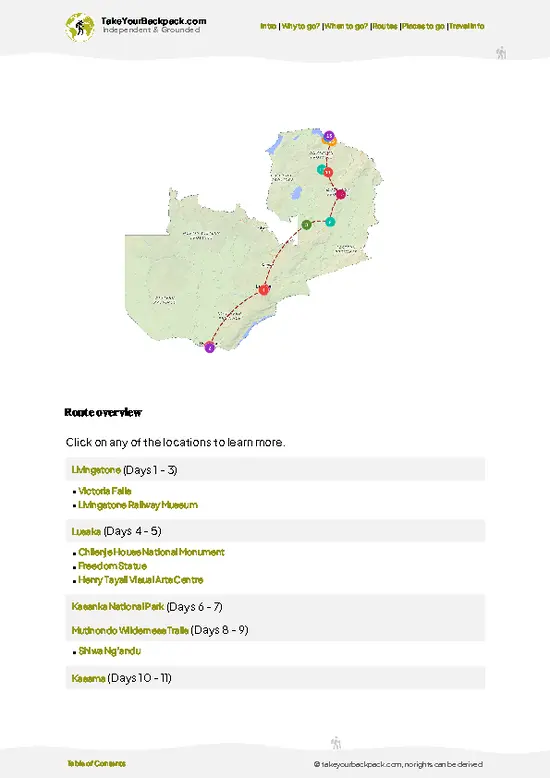
🧭 RoutesPlanning a route that makes sense

The 5-Day Zambezi & Falls Sprint

The Vibe: A tight, waterfall-centric escape built around Livingstone, with big views, easy logistics, and just enough culture and wildlife to feel like a full trip. You’re mostly on foot and in local taxis, trading long bus rides for more time in the spray and on the river.
The Highlights:
  • Livingstone’s museum, markets, and relaxed small-city energy.
  • Walking the Zambian side of Victoria Falls and the historic Victoria Falls Bridge.
  • A compact safari hit in Mosi-oa-Tunya National Park.
  • Hands-on cultural encounters at Mukuni Big Five & Cultural Experience.

The 10-Day Capital-to-Safari Circuit

The Vibe: A balanced loop that blends Lusaka’s museums and neighborhoods with one of Africa’s best wildlife parks and a taste of life along the Great East Road. You’ll ride intercity buses or shuttles between hubs, then slow down with multi-night stays in each key stop.
The Highlights:
  • Lusaka’s National Museum, Freedom Statue, and craft-focused Kabwata Cultural Village.
  • Multi-day
read more 👉

The 5-Day Zambezi & Falls Sprint

The Vibe: A tight, waterfall-centric escape built around Livingstone, with big views, easy logistics, and just enough culture and wildlife to feel like a full trip. You’re mostly on foot and in local taxis, trading long bus rides for more time in the spray and on the river.
The Highlights:
  • Livingstone’s museum, markets, and relaxed small-city energy.
  • Walking the Zambian side of Victoria Falls and the historic Victoria Falls Bridge.
  • A compact safari hit in Mosi-oa-Tunya National Park.
  • Hands-on cultural encounters at Mukuni Big Five & Cultural Experience.

The 10-Day Capital-to-Safari Circuit

The Vibe: A balanced loop that blends Lusaka’s museums and neighborhoods with one of Africa’s best wildlife parks and a taste of life along the Great East Road. You’ll ride intercity buses or shuttles between hubs, then slow down with multi-night stays in each key stop.
The Highlights:
  • Lusaka’s National Museum, Freedom Statue, and craft-focused Kabwata Cultural Village.
  • Multi-day safari time in South Luangwa via Mfuwe, with classic game drives and river sunsets.
  • A decompression stop in Chipata to see everyday eastern Zambia beyond the parks.
  • One last night in Lusaka to wrap up the story and stock up on local art.

The 15-Day Grand Zambia Traverse

The Vibe: A deep-dive journey linking capital culture, two major safari regions, the Copperbelt’s city life, and the far north’s waterfall-and-lake country. Expect a mix of long-distance buses and occasional flights, with enough downtime baked in to actually feel each region instead of just passing through.
The Highlights:
  • Lusaka’s museums, art centers, and independence landmarks as your narrative anchor.
  • River-based wildlife in Lower Zambezi and wide-open game viewing in Kafue.
  • Copperbelt city time in Ndola and Kitwe, including the Ndola Slave Tree & Historical Site.
  • Northern adventures around Mbala, Kalambo Falls, Mpulungu, and the shores of Lake Tanganyika.
🌍 Want a ready-to-use travel plan for Zambia?
The overview above compares different route options based on your travel time and style. The complete Travel Guide breaks each itinerary down in detail, including maps, stops, highlights, and transport information.

Explore all route details 👉

Get the Travel Guide -

🌤️ When to go?Best time to visit Zambia

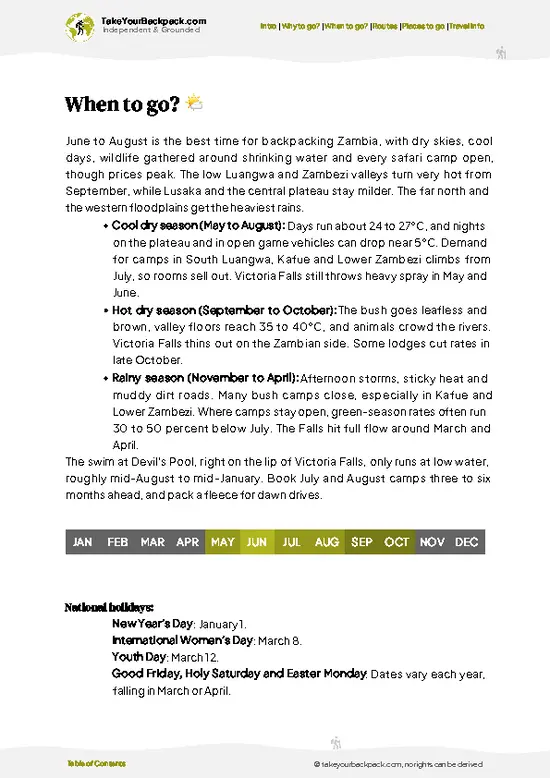
May to late June is the backpacker’s sweet spot in Zambia. The long rains shut off, the dirt hardens, and buses start hitting their marks again. Park tracks reopen, guides roll out walking safaris, and rates still sit in shoulder mode—weeks before the July price spike. Cool mornings mean you can move, not melt; nights bite just enough for a fleece. Wildlife begins tightening toward rivers without the full-on September furnace, while Victoria Falls still roars on the Zambian side. You trade peak kill-shot sightings for broader access: Luangwa workable, Kafue reachable, Bangweulu floatable. It’s the window where logistics unlock without the high-season tax.
  • The Crowd/Heat Peak: July-October. Prices climb, dust hangs, and midday cooks you. You pay in sweat and kwacha, then watch lions work a shrinking lagoon at last light and forget the ledger. Luangwa goes cinematic, Busanga Plains finally opens, and every waterhole fills with life because there’s nowhere else to drink.
  • The Transition/Shoulder: May-June. Roads firm, operators fire up, shelves restock, and you cover twice the ground for half the hassle. Victoria Falls thunders without gate-crush crowds, and walking safaris restart. Narrow window bonus: track shoebill in Bangweulu when the water is perfect for reed-canoes and sightings.
  • The Off-Peak/Extreme: November-March. The country goes quiet and green; storms drum the roof and birds flood the air. Many camps close, black cotton soil eats tires, and patience becomes currency. Survival hack: line every bag with cheap contractor sacks and move at dawn between cells.

Tactical tip: For the shoulder window, lock Luangwa or Kafue beds 6-8 weeks out; wing the rest on arrival.

source: climatestotravel.comJANJanuary: below average for travelingFEBFebruary: below average for travelingMARMarch: fair for travelingAPRApril: fair for travelingMAYMay: highly recommended for travelingJUNJune: excellent for travelingJULJuly: highly recommended for travelingAUGAugust: highly recommended for travelingSEPSeptember: good for travelingOCTOctober: good for travelingNOVNovember: below average for travelingDECDecember: below average for traveling
📅 Traveling in a specific month?
Get a full month-by-month breakdown of weather, crowds, costs, festivals, and seasonal highlights in the complete travel guide.

Get full details when to go 👉

Get the Travel Guide -
zambia - pixabay - victoria-falls-5903496

💰 Costs (as of 2025)Prices, expenses, and money tips

Expect $40-55 per day if you’re disciplined and skip safaris, with activity days jumping to $120-200.
  • dorm accommodation: $8-12 in small towns; $12-20 in Lusaka and Livingstone. Camping at backpacker lodges often undercuts dorms by a few dollars and is almost everywhere—carry a light tent and ask for the camping rate on arrival. The system: show up early, pay in cash, and ask for long-stay discounts; pick places with a kitchen, mosquito nets, and a backup for load-shedding. Compared with Malawi, beds run a touch higher; still far cheaper than Namibia or Botswana.
  • meals: Supermarket Survival: cook in the hostel—eggs, tomatoes, cabbage, beans, rice, peanut butter—$4-6/day if you don’t waste. Street food reality: nshima with chicken, kapenta, or veg relishes at busy stalls for $1-3; add fritters or chips when buses delay you. Stick to high-turnover stands and wash your hands; you’ll eat well and cheap. Zambia is pricier than Malawi/Tanzania by a notch, but restaurant markups are still saner than Namibia/Botswana.
  • local transport: Minibuses rule cities; they’re cramped but absurdly cheap if you know the route name and pay exact change. Intercity, go early and take reputable coaches; buy at
read more 👉
Expect $40-55 per day if you’re disciplined and skip safaris, with activity days jumping to $120-200.
  • dorm accommodation: $8-12 in small towns; $12-20 in Lusaka and Livingstone. Camping at backpacker lodges often undercuts dorms by a few dollars and is almost everywhere—carry a light tent and ask for the camping rate on arrival. The system: show up early, pay in cash, and ask for long-stay discounts; pick places with a kitchen, mosquito nets, and a backup for load-shedding. Compared with Malawi, beds run a touch higher; still far cheaper than Namibia or Botswana.
  • meals: Supermarket Survival: cook in the hostel—eggs, tomatoes, cabbage, beans, rice, peanut butter—$4-6/day if you don’t waste. Street food reality: nshima with chicken, kapenta, or veg relishes at busy stalls for $1-3; add fritters or chips when buses delay you. Stick to high-turnover stands and wash your hands; you’ll eat well and cheap. Zambia is pricier than Malawi/Tanzania by a notch, but restaurant markups are still saner than Namibia/Botswana.
  • local transport: Minibuses rule cities; they’re cramped but absurdly cheap if you know the route name and pay exact change. Intercity, go early and take reputable coaches; buy at the station window, not from “helpers,” and insist on a printed ticket. For long hauls north, the TAZARA train is the budget unlock—slow, social, and cheap into Tanzania. Shared taxis fill the gaps; hitching with trucks works on main corridors but costs time. Fares are slightly higher than Malawi, far lower than Botswana/Namibia.
  • activities: This is where the budget pops. Park entry fees stack daily; game drives and especially walking safaris cost real money; Victoria Falls access, rafting, and bungee punch above $100 fast. The play: collect a full car at the hostel to split vehicle/guide costs in South Luangwa or Kafue, target shoulder season, and skip packaged “sunset cruises with buffet” unless that’s your thing. Zambia undercuts Botswana for wildlife, rivals Zimbabwe on Falls activities, and beats Malawi on quality (but not on price).
  • miscellaneous: Budget leaks: stacked ATM fees and card surcharges; withdraw big, pay cash. Buy a local SIM (Airtel/MTN), use weekly bundles, and kill data auto-updates. Load-shedding is real—carry a power bank. Water is cheap in 5L jugs; stop drip-buying half-liters. Laundry adds up; hand-wash or combine loads with other travelers. Visa costs and the KAZA Univisa can save money if you’re bouncing to Zimbabwe; border taxis from Livingstone are marked up—walk out of the tourist zone before negotiating. Overall leaks are milder than Namibia/Botswana, heavier than Malawi.
⚠️ Prices can change and everyone travels differently, so take this as a rough guide. Hope it helps you plan your adventure!

✈️ The backpacker research shortcutZambia Travel Guide

An offline-friendly backpacking guide with optimized travel routes, ranked highlights, transport advice, and the best areas to stay.
example page 0 from our offline Travel Guide for Zambiaexample page 1 from our offline Travel Guide for Zambiaexample page 2 from our offline Travel Guide for Zambiaexample page 3 from our offline Travel Guide for Zambiaexample page 4 from our offline Travel Guide for Zambiaexample page 5 from our offline Travel Guide for Zambiaexample page 6 from our offline Travel Guide for Zambiaexample page 7 from our offline Travel Guide for Zambia
The digital guide (375 pages) contains:
97 highlights, ranked by travel appeal
Optimized 5, 10 & 15-day travel routes
Cities, national parks, beaches, historical sites, ...
How to get around
Offline-friendly for travel without Wi-Fi
👉 Click to see all 30+ guide features

📅 Plan smarter in minutes, not weeks
Month by month travel advice
Festivals & national holidays
Budget expectations

🗺️ Go to the right places, skip the overrated ones
Honest pros & cons of destinations
Top hikes, parks & viewpoints
Lesser-known places most travelers miss
Clear “worth it vs skip it” guidance

🛏️ Travel smoothly without rookie mistakes
Best areas to stay
Transport systems explained simply
Common scams & safety advice
SIM cards, money & practical tips

🌍 Understand the country, not just visit it
Culture & traditions
52 Essential phrases & customs
Festivals worth planning around
Traveler-friendly historical context
Insights that make places more meaningful

📱 Built for real travel conditions
Fully downloadable PDF
Works completely offline
Optimized for phone use
Useful in remote areas & buses
Everything in one place
Save weeks of stressful planning
Get instant access to the full guide directly. 30-day money-back guarantee.


Sent to your inbox immediately after payment • 100% Secure Checkout
Best Backpacking Travel Advisor 2025 tourism awardBest Backpacking
Travel Advisor
2025
What others say about Take Your Backpack Guides:
⭐⭐⭐⭐⭐
Fantastic, amazing amount of information!
⭐⭐⭐⭐⭐
My goodness this is amazing, it's what I've been looking for hats off too you!
⭐⭐⭐⭐⭐
I think this is absolutely BRILLIANT
⭐⭐⭐⭐
Very complete and informative. It's still missing places, but I gotta to commend you
⭐⭐⭐⭐⭐
This is truly amazing, thank you, can't wait to explore it with my kids!
⭐⭐⭐⭐⭐
Awesome resource, thank you!
⭐⭐⭐⭐⭐
This is amazing! Can't wait to explore the ones I haven't seen
⭐⭐⭐⭐
I love this! Well done, great idea.
⭐⭐⭐⭐⭐
Thanks for taking the time to make this gem!
⭐⭐⭐⭐⭐
This might be the best website I've ever seen.
⭐⭐⭐⭐⭐
Congratulations, and thank you so much for your work; it's incredibly valuable.
⭐⭐⭐⭐
In all seriousness I think you did a great job pointing out the important spots
⭐⭐⭐⭐⭐
10/10 very good
⭐⭐⭐⭐⭐
As someone who's only just starting to visit regularly this is awesome, thank you.
⭐⭐⭐⭐
Thank you very much! I'm going to visit my dad, it's going to be very useful!
⭐⭐⭐⭐⭐
This is really cool! We'll be travelling for the first time and this definitely come in handy.
⭐⭐⭐⭐⭐
You are now our minister of culture, congratulations 👨‍💼
⭐⭐⭐⭐⭐
Just wanted to tell you that this is a pearl! Going to follow your recommendations.
⭐⭐⭐⭐⭐
This is so cool. I'll definitely be using the resource for my travels soon.
⭐⭐⭐⭐⭐
This is very impressive! Good work.
⭐⭐⭐⭐⭐
This is an amazing and informative site. Very well done!

🛏️ Where to stay?Choosing the right base for your trip

Yes—hostels and budget accommodation in Zambia exist, mainly as guesthouses, campsites and community chalets rather than many dorm‑style hostels, so expect hostels concentrated in cities and tourist hubs and fewer low‑cost options in remote park areas.
In Lusaka look around City Centre and Rhodes Park/Longacres for the most choices—pros: close to transport, cheap food and some nightlife; cons: busy streets, inconsistent sidewalks and higher petty‑theft risk after dark so use taxis and secure valuables.
In tourist towns like Livingstone (town centre/Mukuni Road), South Luangwa (Mfuwe village) … read more 👉
Yes—hostels and budget accommodation in Zambia exist, mainly as guesthouses, campsites and community chalets rather than many dorm‑style hostels, so expect hostels concentrated in cities and tourist hubs and fewer low‑cost options in remote park areas.
In Lusaka look around City Centre and Rhodes Park/Longacres for the most choices—pros: close to transport, cheap food and some nightlife; cons: busy streets, inconsistent sidewalks and higher petty‑theft risk after dark so use taxis and secure valuables.
In tourist towns like Livingstone (town centre/Mukuni Road), South Luangwa (Mfuwe village) and the Lower Zambezi/Siavonga areas you’ll find campsites and budget chalets near waterfalls, parks and river activities—pros: proximity to highlights and quiet evenings; cons: higher park/transfer costs, limited public transport and fewer services away from main hubs so carry cash and confirm transfers in advance.

If you enjoy meeting fellow travelers, consider choosing hostels with high ratings for atmosphere. On the other hand, if you prefer having your own space, a hotel might be a better option.

🚌 Getting aroundHow to travel within the country

Zambia moves on daylight and nerve. Dawn coaches stamp tickets like clockwork, then surrender to potholes, police checks, and goats. Minibuses read the street’s pulse and leave when full; the train keeps its own slow gravity. If you chase speed, you’ll bleed cash. If you lean into the rhythm—early starts, hard pivots at hubs—you ride the country’s flow instead of fighting it.
  • Intercity coaches The Efficiency Trade-off: You pay a fraction of a domestic flight and give up pure speed for predictability.
read more 👉
Zambia moves on daylight and nerve. Dawn coaches stamp tickets like clockwork, then surrender to potholes, police checks, and goats. Minibuses read the street’s pulse and leave when full; the train keeps its own slow gravity. If you chase speed, you’ll bleed cash. If you lean into the rhythm—early starts, hard pivots at hubs—you ride the country’s flow instead of fighting it.
  • Intercity coaches The Efficiency Trade-off: You pay a fraction of a domestic flight and give up pure speed for predictability. Big buses own the main arteries—Lusaka to Livingstone, Chipata, Copperbelt. Book the day before, take the first departure, and you’ll roll steady at a real-world 60-80 km/h, with tight turnaround pee stops and no onboard toilet. Luggage gets tagged; keep the stub or kiss that bag goodbye. Air-con swings from sauna to meat locker, so layer. Avoid night runs; checkpoints, cattle, and fatigue stack the odds. Choose reputable fleets at the Intercity Terminus and ignore anyone tugging your sleeve to a “faster” option.
  • Minibuses The Social Fabric: This is how towns breathe. You slide in, greet the row, pass your fare forward, and the conductor—the loud heartbeat hanging out the door—makes change when he can, not when you want. Routes are semi-fixed; confirm the endpoint out loud before the door slams. To get off, tap the roof or call “apo.” Front seat buys knee room; back row is cheaper because it’s a squeeze. Keep your daypack on your lap, not the aisle. Polite firmness gets you space; sarcasm gets you stranded. At stations like Lusaka’s Kulima Tower, walk with purpose, say your destination once, and step into the right bus—hesitation marks you as prey.
  • TAZARA train The Geometric Unlock: From Kapiri Mposhi it threads the country’s spine to the Tanzanian border, slipping through escarpments and far-off towns buses skip at awkward hours. A second-class sleeper turns distance into rest; delays happen, but you’re moving while you’re horizontal, not burning daylight on a roadside. Bring food, water, and patience. When roads flood or checkpoints snarl traffic, steel rails ignore the drama. It’s the clean jump to Mpika, Kasama, and Nakonde without backtracking through Lusaka.
  • Shared taxis and truck rides The Budget Disruptor: Off the main lines, four-seat sedans run fixed corridors to district centers. You pay per seat, leave when full, and reach trailheads buses blitz past. On highways, truckers will sell a cab spot for a fuel contribution; it’s noisy, honest, and brutally effective for long gaps. Pay upfront, ride in the cab only, daylight hours, and never gamble on a flatbed. If you’re tall or carrying bulk, buy two seats—still cheaper than chartering.

Master tip: Move at first light and chain your legs—buy the next ticket the moment you land at a hub, even before you find lunch; Zambia rewards the traveler who turns arrivals into departures without hesitation.
Distance: Kenneth Kaunda International Airport (LUN) is about 26 km (16 miles) from central Lusaka (around Cairo Road).

How to get there (times and costs as of 2025):
  • Airport taxi (official rank): Walk out of arrivals to the signed taxi rank. Expect 30-45 minutes off-peak, 45-75 minutes in rush hour. Typical fare is about 350-700 ZMW depending on time of day, traffic, and negotiation. Pay cash in kwacha.
  • Pre-booked private transfer: Similar travel time to a taxi. Prearranged through your hotel or a local operator. Around 350-900 ZMW per car (sedan/SUV), usually fixed in advance.
  • Hotel shuttle: Many mid-range and upscale hotels run scheduled shuttles. 30-60 minutes depending on stops. Prices vary from free (guests only) to roughly 80-250 ZMW per person; confirm with your hotel before you fly.
  • Public minibus (cheapest, not direct): There’s no public bus inside the airport. The usual budget method is a short taxi from the terminal to the Great East Road junction, then a minibus into town. Allow 60-90+ minutes door to door. Costs: 80-150 ZMW for the short taxi leg plus about 15-30 ZMW for the minibus, so roughly 100-180 ZMW total. Not ideal late at night or with big luggage.

Taxi quick facts: Official airport taxis are easy and run all day; expect 350-700 ZMW to the city center. Agree the fare before setting off. Card acceptance is rare, so carry cash; ATMs are in arrivals.
⚠️ Prices and routes can change, so take this as a rough guide and ask for local advice when you arrive.

🔒 Safety (risk Level: low)Staying safe while traveling

Safety for solo travelers, including women and LGBTQ+ individuals
Zambia is generally safe for solo travelers, though it’s essential to stay vigilant, especially in urban areas like Lusaka and Livingstone. Women should exercise usual precautions such as avoiding isolated areas at night and dressing conservatively in rural settings. LGBTQ+ travelers may face legal challenges, as same-sex relationships are illegal; discretion is advised. Always keep an eye on travel advisories and connect with local communities for the latest safety tips.


Full official government travel advisory (live updates)
View details 👉

✈️ VisaUnderstanding entry rules

Visa requirements for Zambia depend on your nationality. Many travelers can obtain a visa upon arrival, but it’s best to check the Zambia Immigration website for the latest information. If needed, you can also apply online via the e-Visa system before your trip.
⚠️ Visa requirements can change over time, so always check the latest visa requirements with the official embassy or government website before you travel.

🎒 What to pack?What to pack for Zambia

Zambia’s climate swings from hot and dry to wet and humid, especially if you’re traveling between November and April. Lightweight, breathable fabrics are your best friends, but pack layers for cooler nights if you’re venturing into higher altitudes or camping out. The terrain is a mix of savannah and rugged landscapes, so sturdy footwear is a must for any hiking plans. While Zambia is generally relaxed, modest clothing is appreciated, especially in rural areas, so steer clear of anything too revealing. And don’t forget, if you’re planning to visit Victoria Falls, you might get drenched, so quick-dry gear will save you from soggy adventures.

Apart from this country specific advice, I have also crafted a general packing list that should help on any trip. authorOver the years, I've learned the importance of packing minimally. It's so much easier to jump on the back of a truck or squeeze yourself into the last spot of a minibus without that supersized backpack. If you're headed to a warm destination, leave your winter jacket at home; for colder regions, opt for thin thermal underlayers. Instead of packing your entire wardrobe, bring just three sets of clothes, as laundry facilities are available everywhere.
View the full list 👉
🎒 Planning the practical side of your trip?
Get detailed information on transport, daily budgets, internet access, local customs, food, language, and other essentials in the complete Travel Guide.

Get detailed practical information 👉

Get the Travel Guide -

🙋 FAQCommon questions before visiting

Trip Planning


Personal tip: I normally search on good rating for atmosphere (for meeting people) and location (for easy exploring). Cleanliness as a bonus.


Travel Essentials

Hepatitis A and B, typhoid, and yellow fever are recommended vaccinations for Zambia. Malaria prophylaxis is also advised. If you’re traveling from a yellow fever risk country, proof of vaccination is required. Consult your doctor for personalized advice. Always check the latest travel health updates before your trip.


vaccination requirements
When I first started traveling, I often spent part of my first day in a new country hunting for a local SIM card. While this can still be slightly cheaper, it also takes time and planning.

These days, it's much simpler to install an eSIM before leaving home. Once you arrive in Zambia, you can activate it immediately and have mobile data from the moment you land — which is especially useful for ordering transport or navigating away from busy airports.

There are many providers nowadays, and price differences are usually small. I personally go with Airalo, as it offers excellent network coverage throughout the country and strong global coverage, so you can manage multiple countries from a single app.


Get your e-sim for Zambia

Culture & Customs

Zambia is warm and welcoming, but respect local customs. Do greet with a handshake and use your right hand for eating and giving. Don’t point with your finger; use your open hand instead. Dress modestly, especially in rural areas. For LGBTQ+ travelers, note that same-sex relationships are illegal and public displays of affection can attract unwanted attention. Women travelers should be cautious and avoid traveling alone at night. Be polite when taking photos; always ask for permission. Remember, patience and a smile go a long way.
Trying traditional food is always a great way to experience the culture. Here are some must-try dishes for Zambia.
  • Nshima: This is the staple food of Zambia, a thick porridge made from maize meal. It’s usually served with relishes like vegetables, beans, or meats. Nshima is a cornerstone of Zambian meals, symbolizing hospitality and community.
  • Chibwabwa: These are pumpkin leaves, often cooked with tomatoes and groundnuts. It’s a common side dish and showcases the use of local vegetables in Zambian cooking.
  • Kapenta: Dried small fish, often from Lake Tanganyika, which are fried or boiled. Kapenta is a protein-rich dish and is usually served with Nshima, providing a taste of the country’s freshwater resources.
  • Ifisashi: A dish made with greens like spinach or sweet potato leaves, cooked in peanut sauce. It’s a delicious vegetarian option and highlights the use of peanuts in Zambian cuisine.
  • Munkoyo: A traditional fermented drink made from maize meal and munkoyo roots. It’s not a dish, but a refreshing beverage often enjoyed during meals or gatherings.
Tap water in Zambia is generally consumed by locals, but it’s not recommended for tourists due to potential stomach issues. Stick to bottled or filtered water to be safe. Always check that the seal on bottled water is intact before purchasing.
The main language in Zambia is Bemba. Backpacking is way more rewarding if you know a bit of the local language, so I'd suggest brushing up on the basics just in case your Bemba skills have become a bit rusty.

Want to understand locals better?
The complete Travel Guide for Zambia includes 52 essential words and phrases — greetings, thank-yous, ordering food, transport, numbers, and common local expressions you'll actually hear.

Get your local basic phrases 👉

Get the Travel Guide -


English is widely spoken in Zambia, serving as the official language and the medium of instruction in schools. Approximately 70% of the population can communicate in English, particularly in urban areas like Lusaka and Livingstone. In these cities, you will find that most professionals, including those in the tourism and hospitality sectors, are fluent in English, making it easy for travelers to navigate and interact.

However, in rural areas, English proficiency may decrease, with many locals speaking one of the numerous indigenous languages, such as Bemba, Nyanja, or Tonga. While basic English communication is often possible, understanding may be limited, so patience and simple language can be helpful.

Overall, travelers can expect a generally high level of English comprehension, especially in tourist hotspots, ensuring a relatively seamless experience when exploring Zambia.

Money & Payments

The local currency of Zambia is ZMW (K).

ATMs: You’ll find ATMs in major cities like Lusaka and Livingstone. They’re pretty reliable but carry some cash as a backup if you’re heading into rural areas.

Cash: Having Zambian Kwacha on hand is essential, especially for markets and smaller towns. Avoid depending solely on cards.

Dollars or Euros: US dollars are widely accepted and often preferred for larger transactions like tours or accommodation. Euros are less popular, so if you bring them, exchange them at a bank or a bureau de change.

Card Acceptance: Credit and debit cards are accepted in larger hotels and restaurants, but not so much in smaller, local places. Visa is more commonly accepted than MasterCard.

Currency Exchange: Exchange money at banks or licensed bureaus in cities. Avoid exchanging at the airport unless you enjoy bad rates. Carrying new, unmarked USD bills will get you better rates.

In Zambia, tipping is generally appreciated but not mandatory. At restaurants, a tip of around 10% is common if service isn’t included, while a small tip to porters or hotel staff is always welcomed. Taxis don’t expect tips, but rounding up the fare is a nice gesture.

🧩 Nearby countriesOther countries to combine with Zambia

We 💚 feedbackWhat to know before planning your trip

Zambia rewards effort. Distances sprawl and buses dawdle; beat them by moving at dawn and buying the seat you want. Cash rules outside cities—carry small kwacha; ATMs thin out after Friday. Parks bite the wallet, so go long on walks in South Luangwa and camp; you’ll see more per kwacha than in a bouncing game-drive marathon. Small downside: power cuts—charge whenever you find an outlet. The curve is up: visa rules are easing, and the new Kazungula bridge and road works shave time.

✍️ Help improve this page!
The information on this page is based on in-depth research, insights shared by experienced travelers, and feedback from the local travel community in Zambia. While every effort is made to keep the information accurate and current, conditions can change — so if you spot anything incorrect or outdated, please get in touch.


🙋‍♂️ Give feedback

👋 Meet the founderWho’s Behind Take Your Backpack?

Johan, backpacker and founder of TakeYourBackpackHi, I’m Johan (Netherlands 🇳🇱), the creator of TakeYourBackpack. Over the past decade, I’ve backpacked through 80+ countries across six continents, gaining extensive experience with independent travel, long-term trips, and overland routes.

This site is built on a combination of firsthand travel experience and carefully curated insights from other backpackers. Many guides are based on places I’ve personally visited, while others bring together tips, observations, and practical advice shared by trusted travelers I’ve met along the way.

The goal is to provide realistic, experience-driven guidance — not generic itineraries — so you can explore destinations with better context, clearer expectations, and more confidence.

Get full Zambia guide •
Instant download • 97 highlights • Full Offline guide