×
Belize 🇧🇿

backpacking North America Belize 🇧🇿Swap jungle paths for reef days without ever rushing plans.

Explore BarbadosExplore British Virgin Islands

Backpacking Belize in 2026

A complete guide including when and where to go, costs, transport, itineraries, and practical travel advice.
A first look at the country

Backpacking Belize
By Johan Kruseman 🇳🇱 | Updated June 6, 2026

Catch the first orange school bus to the hand-cranked ferry at Xunantunich and have a Maya city to yourself. It costs pocket change and runs on Belize time—slow, friendly, English spoken. That’s the rhythm here: short hops, big character, and doors that open if you show up early.

Reef to rainforest in an afternoon: salt wind on Caye Caulker, nurse sharks ghosting past your knees at Shark Ray Alley, then inland to the hush of Cockscomb where howler monkeys thunder at dawn. Belikin sweating on a sun-silvered dock, coconut smoke from a Garifuna kitchen. ATM Cave is cold river on your ribs and a headlamp catching ancient bone; Mountain Pine Ridge smells like resin before you drop into a waterfall bowl. Heat, sandflies, rutted roads and sudden rain test you, plus cash-only moments and slow boats, but they sharpen the payoff—the swim hits colder, the drumbeat lands deeper, the night air feels earned.

Guatemala has bigger ruins and cheaper eats but more hustle and Spanish; Mexico’s Caribbean is glossier and louder; the Bay Islands beat it on dive prices but sit farther. Belize is for travelers who want reef and jungle in one bus ride, easy conversation, and a small-country pace that rewards unhurried curiosity.

👉 Get the 📖 Travel Guide of Belize

Caye Caulker & Ambergris Caye (water taxi spine)

You ride the spray-salted bench from Belize City, step off to two different beats. Caye Caulker is sand lanes, flip‑flops, bicycle bells, rum punch sweat, and snorkel boats filling before noon; budget‑friendly and social. Ambergris hums with golf carts, bigger dive shops, and late‑night bars; pricier but convenient. Both reward early boats to Hol Chan and Shark Ray Alley—salt in your beard, nurse sharks ghosting by—then grilled lobster in season and a cold Belikin as the light goes honey‑soft.

Cayo District (San Ignacio, ATM, Caracol, Pine Ridge)

Base in San Ignacio—market bustle, bus horns, corn smoke—and push out. ATM Cave is a cold swim and a crawl over limestone; guided only, no cameras, worth the bruised knees. Caracol needs patience and a high‑clearance ride; potholes and army checkpoint, then quiet temples and jungle heat. Wash off at Rio On Pools; eat fry jacks back in town. Good for travelers who don’t mind mud on boots to earn ruins without crowds.

Southern Coast via Hummingbird Highway (Hopkins & Placencia)

One spine: buses grind past citrus trucks and roadside pineapples, then branch. Hopkins is a Garifuna village vibe—drums after dark, sandy lanes, easy reef trips, and bioluminescence tours on the right moon. Placencia is longer beach, more dining, and slicker outfitters; reach it via Independence and a short water taxi. Ideal if you want casual sea days without the island logistics.

Northern Wetlands & Lamanai (Orange Walk)

Sugar country. Cheap street tacos, diesel scent, and a dawn river run to Lamanai. Crocs slide off banks, herons lift, mosquitoes drill ankles, and the guide cuts the engine so you hear howlers. Temples rise above the canopy; climb for wind and river glare. Best for birders and temple‑chasers who value the boat ride as much as the stones.

Outer Atolls: Lighthouse & Turneffe

Long, choppy runs or a liveaboard. Divers get walls, reef sharks, Half Moon Caye’s booby colony, and the Blue Hole ticked with a deep, cold drop; currents can be honest, so be comfortable. Snorkelers still win clear water and lazy patch reefs. You come back sun‑salted, eating rice and beans under casuarina shade, happily spent.
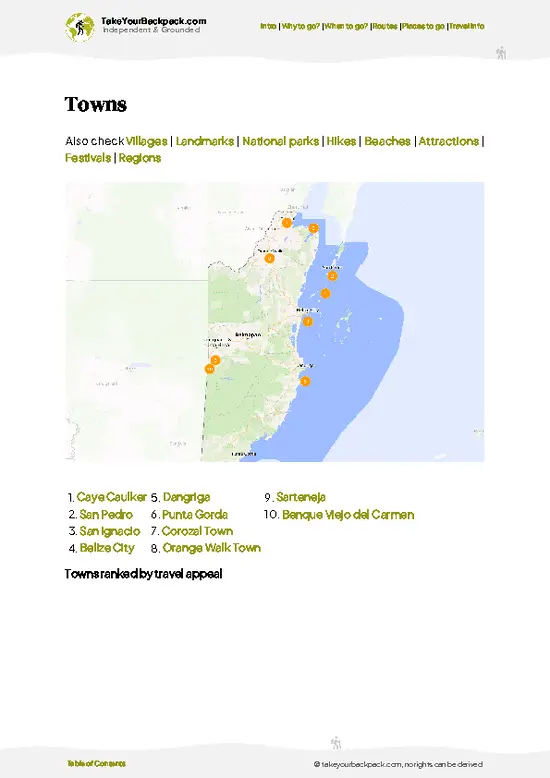
Seeing the layout at a glance
Loading the map 🌍
CLICK TO FILTER
town
village
unique site
national park
hike
beach
attraction
festival
region
SHOW COUNTRY’S BESTSHOW ALL
film
0
0
0a
Caracol Archaeological Site
film
1
1
1a
Xunantunich Archaeological Site
film
2
2
2a
Lamanai Archaeological Reserve
film
3
3
3a
Museum of Belize
film
4
4
4a
Ambergris Caye
David Phipps
film
5
5
5a
Placencia Beach
film
6
6
6a
Caye Caulker
מנדי קריאף
film
7
7
7a
Tobacco Caye
film
8
8
8a
Victoria Peak
film
9
9
9a
Tiger Fern Trail
film
10
10
10a
Antelope Falls Trail
film
11
11
11a
Caracol
Lesio
film
12
12
12a
Belize Barrier Reef Reserve System
Ishmael Nicholson
film
13
13
13a
Blue Hole
Joe Bankester
film
14
14
14a
Half Moon Caye
Charlie C.
film
15
15
15a
Chiquibul
Verde Speranza
film
16
16
16a
St. Herman’s Blue Hole
film
17
17
17a
Mountain Pine Ridge Forest Reserve
film
18
18
18a
Bacalar Chico  and Marine Reserve
Viince J
film
19
19
19a
Guanacaste
Fran's Kitchen
film
20
20
20a
Shipstern Nature Reserve
film
21
21
21a
Caye Caulker
מנדי קריאף
film
22
22
22a
Sarteneja
film
23
23
23a
Belize City
Mama Africa
film
24
24
24a
Punta Gorda
film
25
25
25a
Actun Tunichil Muknal
Paul Watson
film
26
26
26a
Glover’s Reef Atoll
Evtim Ivanov
film
27
27
27a
Xunantunich
Arielle
film
28
28
28a
Lamanai
Bartosz Wisniewski
film
29
29
29a
Blue Creek Cave
film
30
30
30a
Lubaantun

Why go?Why Belize is worth visiting

Beach life

Belize’s beach life isn’t polished; it’s salty and alive. You step off the water taxi with wet bags, … read more 👉
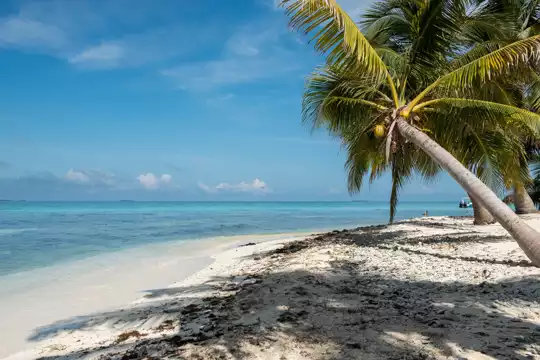
Belize’s beach life isn’t polished; it’s salty and alive. You step off the water taxi with wet bags, diesel in the air, and the reef sitting like a blue wall just offshore. Seven minutes in a skiff and you’re finning over coral fans with nurse sharks cruising past. Back on land, the sand burns your feet, the trade wind cools your neck, and the sun is merciless—bring zinc. Expect sand flies at dusk and the occasional sargassum line. Then the payoff: rinse in warm shallows, grilled lobster smoke drifting, a cold Belikin sweating in your palm as the sky goes pink.

Scenery

Belize rewards effort. The air hangs thick, and the trails make you earn your views. You slog through … read more 👉
Belize rewards effort. The air hangs thick, and the trails make you earn your views. You slog through cohune and razor grass in Cockscomb, boots slick with red clay, calves humming; then a ridge opens and the Maya Mountains pile up to the horizon, with gold savannah flashing beyond. In the ATM cave, your headlamp finds wet limestone, pottery, and the breath of bats; cold river water climbs to your chest before spilling into glassy pools. Paddle quiet lagoons at Crooked Tree, watch jabiru lift off, then sink a cold Belikin as the mangroves turn purple.

Wildlife

Belize rewards patience and early mornings. The heat sticks, sandflies find your ankles, and the track … read more 👉
Belize rewards patience and early mornings. The heat sticks, sandflies find your ankles, and the track into Cockscomb rattles your spine. But then the forest breathes—howler monkeys blow the canopy open, fresh cat prints crease the mud, toucans flick past like thrown fruit. On the New River a croc’s eyes glow and a jabiru walks the shallows; off Hol Chan nurse sharks and rays drift past your mask. In season, scarlet macaws pour into Red Bank and whale sharks rise at Gladden Spit. You towel off grit and salt, and that first cold Belikin is earned.

Backpackers

Belize rewards the scrappy traveler. You bounce on hot, rattling chicken buses past cane fields, then … read more 👉
Belize rewards the scrappy traveler. You bounce on hot, rattling chicken buses past cane fields, then step off to salt air and a dock where the reef is a mile from shore. English makes the hustle easy; the adventure stays real. Caye Caulker’s “Go Slow” isn’t a slogan—it’s the pace as you sip a cold Belikin, salt drying on your skin after Hol Chan. Inland, limestone caves swallow your headlamp and spit you out into jungle humming with cicadas. Cheaper than Costa Rica, pricier than Guatemala, but the payoff is immediate and shared at the hostel table.

Low cost

Belize rewards the scruffy traveler. Humid bus stations, diesel in the air, you squeeze onto a painted … read more 👉
Belize rewards the scruffy traveler. Humid bus stations, diesel in the air, you squeeze onto a painted school bus and roll for hours for coins. Simple guesthouses, fan humming, salt-damp sheets, do the job. Street stalls shove plates of stewed chicken, rice and beans, fry jacks—fuel that doesn’t bruise your budget. Stick inland or Caye Caulker, skip big-ticket tours, share water taxis, and you can float around on roughly $40–60 a day. The payoff: a cold Belikin on a rickety pier, trade winds in your shirt, reef glowing just offshore.
Want the complete picture of Belize?
The offline Travel Guide brings everything together — routes, highlights & planning.

See what's included in the guide 👉

Get the Travel Guide -

⭐ HighlightsUnmissable destinations

  • Actun Tunichil Muknal (ATM) Cave: You hike 45 breathy minutes, fording the river three times, then swim into a black mouth where the water bites like melted ice; no cameras, helmet on, you move by headlamp as calcite and pottery glow back at you and the “Crystal Maiden” flickers like sugar. Knuckles scrape limestone, fingers prune, and your socks come out dusted white with cave grit. For quieter cave time, climb Che Chem Ha’s ladders to jar rooms, paddle Barton Creek Cave by canoe, or walk the easy arroyo into Rio Frio Cave in Pine Ridge.
  • Caracol: The approach is long and rutted through pine and then jungle; you sign in, then climb heat-soaked stairs to Caana while cicadas buzz like live wires. From the top the Maya Mountains roll out and Guatemala sits beyond the green line, howlers barking like distant dogs. Red dust cakes your laces and warm sap sticks to your forearms. Cool your bones at Rio On Pools, shower under Big Rock Falls, or watch swifts scissor the air at the Thousand Foot
read more 👉
  • Actun Tunichil Muknal (ATM) Cave: You hike 45 breathy minutes, fording the river three times, then swim into a black mouth where the water bites like melted ice; no cameras, helmet on, you move by headlamp as calcite and pottery glow back at you and the “Crystal Maiden” flickers like sugar. Knuckles scrape limestone, fingers prune, and your socks come out dusted white with cave grit. For quieter cave time, climb Che Chem Ha’s ladders to jar rooms, paddle Barton Creek Cave by canoe, or walk the easy arroyo into Rio Frio Cave in Pine Ridge.
  • Caracol: The approach is long and rutted through pine and then jungle; you sign in, then climb heat-soaked stairs to Caana while cicadas buzz like live wires. From the top the Maya Mountains roll out and Guatemala sits beyond the green line, howlers barking like distant dogs. Red dust cakes your laces and warm sap sticks to your forearms. Cool your bones at Rio On Pools, shower under Big Rock Falls, or watch swifts scissor the air at the Thousand Foot Falls overlook.
  • Hol Chan Marine Reserve & Shark Ray Alley: The skiff idles at the cut and you drop in; the current eases you over living reef, parrotfish crunching loud as popcorn as a turtle sails past. At Shark Ray Alley, nurse sharks shoulder in and rays lift off the sand, soft and heavy as wet leather. Salt dries on your eyebrows and the boat smells like diesel and sliced limes. Drift Mexico Rocks’ coral heads, skim the Coral Gardens off Caye Caulker, or idle at Swallow Caye for manatees on a still morning.
  • Cockscomb Basin Wildlife Sanctuary: Trails steam and red clay tattoos your calves; leafcutter ant highways cross like little freight lines until Tiger Fern pays out with twin falls cold enough to reset your spine. River tubing is slow, scratchy, and exactly right between boulders. At dusk, no-see-ums find your ankles and the jungle hum gets thick. Shortcut to Ben’s Bluff, rappel waterfalls at Mayflower Bocawina, or paddle the Sittee River at first light.
  • Lamanai via the New River: The boat runs a green corridor of lilies and crocs, herons lifting off like thrown cloth, and then the Mask Temple rises from the trees as the smell of copal hangs sweet and resinous. You palm hot limestone, sweat slicks your grip, and a howler’s roar rolls across the lagoon. Bird at Crooked Tree, meet black howlers at Bermudian Landing, or push deep to La Milpa’s quiet plazas.
Spotted a mistake or missing a highlight? Contact us.

But Belize offers more...

Discover and compare all of its highlights per category

🧭 RoutesHow to structure a trip

The 5-Day Cayo Jungle Sprint

The Vibe: A tight, inland-only loop built for travelers who want caves, ruins, and jungle days without bouncing all over the country. You’ll base in one town, day-trip hard, and still have time for street food and riverfront sunsets.
The Highlights:
  • Using San Ignacio as a single, easy base in the Cayo District.
  • Cave exploration at Actun Tunichil Muknal.
  • Classic Maya temples at Xunantunich Archaeological Site.
  • Forest pools and viewpoints in Mountain Pine Ridge Forest Reserve.

The 10-Day Jungle-to-Coast Explorer

The Vibe: A balanced route that starts in the hills, dives deep into ruins and rainforest, then eases you out to the coast for a soft landing. Expect active days, a couple of big hikes, and just enough beach time to feel like a holiday, not a marathon.
The Highlights:
  • Three-night inland base in San Ignacio for caves and ruins.
  • Remote Maya history at Caracol Archaeological Site and Chiquibul National Park.
  • Waterfall hiking in Cockscomb Basin Wildlife Sanctuary via
read more 👉

The 5-Day Cayo Jungle Sprint

The Vibe: A tight, inland-only loop built for travelers who want caves, ruins, and jungle days without bouncing all over the country. You’ll base in one town, day-trip hard, and still have time for street food and riverfront sunsets.
The Highlights:
  • Using San Ignacio as a single, easy base in the Cayo District.
  • Cave exploration at Actun Tunichil Muknal.
  • Classic Maya temples at Xunantunich Archaeological Site.
  • Forest pools and viewpoints in Mountain Pine Ridge Forest Reserve.

The 10-Day Jungle-to-Coast Explorer

The Vibe: A balanced route that starts in the hills, dives deep into ruins and rainforest, then eases you out to the coast for a soft landing. Expect active days, a couple of big hikes, and just enough beach time to feel like a holiday, not a marathon.
The Highlights:
  • Three-night inland base in San Ignacio for caves and ruins.
  • Remote Maya history at Caracol Archaeological Site and Chiquibul National Park.
  • Waterfall hiking in Cockscomb Basin Wildlife Sanctuary via the Tiger Fern Trail.
  • Slow, sandy evenings in Placencia on Placencia Beach.

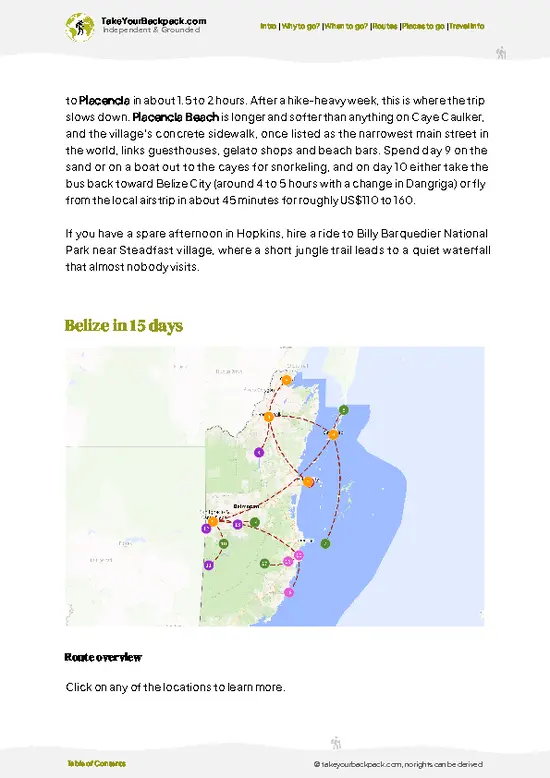
The 15-Day Reef, Ruins & Villages Grand Tour

The Vibe: A full-country arc that strings together islands, reef, coastal villages, and inland jungle at a comfortable, immersive pace. You’ll hop from water taxis to buses to jungle trails, trading nightlife for quiet beaches and back again.
The Highlights:
  • Island time on Caye Caulker and Ambergris Caye with access to the Belize Barrier Reef Reserve System.
  • Coastal culture in Dangriga and Hopkins plus hiking in Cockscomb Basin Wildlife Sanctuary.
  • Peninsula chill in Placencia and a day out to Tobacco Caye.
  • Inland finale in San Ignacio with Actun Tunichil Muknal and Xunantunich Archaeological Site.
🌍 Want a ready-to-use travel plan for Belize?
The overview above compares different route options based on your travel time and style. The complete Travel Guide breaks each itinerary down in detail, including maps, stops, highlights, and transport information.

Explore all route details 👉

Get the Travel Guide -

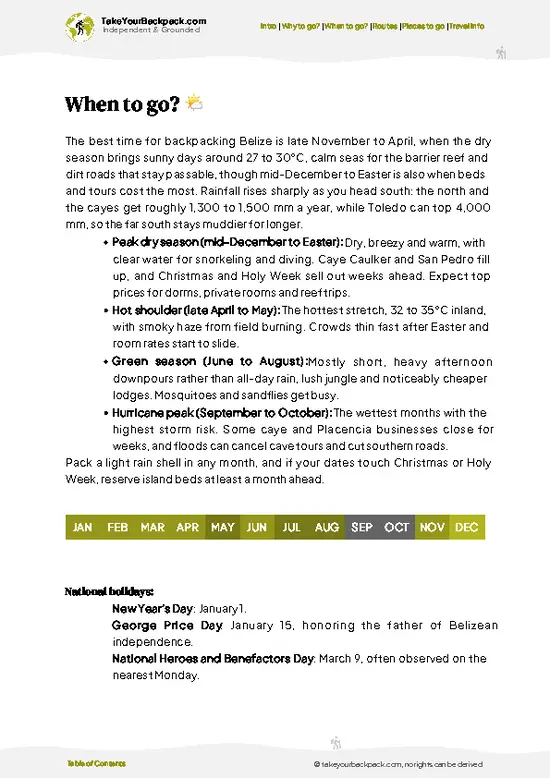
🌤️ When to go?Best time to visit Belize

Belize’s sweet spot for backpackers lands in late November-mid December and again from late April into early June. By then the first dries have firmed jungle trails, nights cool enough inland to sleep under a fan, and trade winds steady on the cayes. Reef visibility lifts, rivers still run for caves and waterfalls, and buses and water taxis have seats. Rooms slide to shoulder rates, minimums vanish, and guides aren’t rushing. You buy the cold beer with sweat, not with surge pricing.
  • Crowd/Heat Peak: December through Easter hums; May bakes inland. Beds vanish, tours sell out by breakfast, and prices bite, but you get razor-clear reef days, easier logistics to Lighthouse Reef, and bone-dry approaches. Hit Xunantunich at opening, then crush a Belikin on the river ferry.
  • Transition/Shoulder: Late Nov-mid Dec and late Apr-early Jun, the country shifts. Shutters lift on Caye Caulker, skiffs return from maintenance, mango crates stack, crowds thin. Guides deal, buses breathe, and you can choose reef days by wind. Start inland hikes at dawn; nap through the white noon.
  • Off-Peak/Extreme: September-October is the green hush: hard rain on tin roofs, empty Maya plazas, mosquitoes after dusk. Some coastal shops close and clay turns slick, but the solitude is deep. Run trail runners with wool socks, permethrin clothes, a tiny umbrella, and a trash-bag pack liner.

Tactical tip: For the sweet spot, book beds and any big-ticket dives two weeks out, but keep one buffer day to pivot around wind and afternoon squalls.

source: climatestotravel.comJANJanuary: highly recommended for travelingFEBFebruary: highly recommended for travelingMARMarch: highly recommended for travelingAPRApril: highly recommended for travelingMAYMay: good for travelingJUNJune: highly recommended for travelingJULJuly: good for travelingAUGAugust: good for travelingSEPSeptember: fair for travelingOCTOctober: fair for travelingNOVNovember: highly recommended for travelingDECDecember: excellent for traveling
📅 Traveling in a specific month?
Get a full month-by-month breakdown of weather, crowds, costs, festivals, and seasonal highlights in the complete travel guide.

Get full details when to go 👉

Get the Travel Guide -
pixabay-belize-laughing-bird-3817951

💰 Costs (as of 2026)Prices, expenses, and money tips

Plan on US$45-65 per day if you sleep in dorms, eat street plates, ride buses, and pick only one paid activity.
  • dorm accommodation: Inland dorms run US$12-18; on the cayes and Placencia, expect US$20-35 for a fan bunk (A/C adds US$3-6). Mainland beds are cheaper and quieter; on Caye Caulker anything near The Split hears bass until late. System tip: the Belize dollar is pegged 2:1 to US—pay in BZ$ cash and ask for the cash rate to dodge 5-12% card surcharges; walk-ins midweek often beat online prices. Compared with Guatemala, you’re paying roughly 30-50% more for the same bunk.
  • meals: Supermarket Survival: bread, peanut butter, eggs, bananas, tins of tuna—US$8-12/day if your hostel has a kitchen and you refill water from the big jug. Street food reality: stewed chicken with rice and beans BZ$6-10 (US$3-5), fry jacks or tacos BZ$2-4, weekend BBQ plates BZ$8-12; on the cayes, seafood grills jump to US$10-18 and tourist restaurants double that. Belikin from a shop is BZ$4-5 if you return the bottle; at a bar you’ll pay BZ$6-8. Relative value: you’ll spend a couple dollars more per plate than in Mexico or Guatemala, especially on the islands.
  • local transport: The cheapest way to unlock the
read more 👉
Plan on US$45-65 per day if you sleep in dorms, eat street plates, ride buses, and pick only one paid activity.
  • dorm accommodation: Inland dorms run US$12-18; on the cayes and Placencia, expect US$20-35 for a fan bunk (A/C adds US$3-6). Mainland beds are cheaper and quieter; on Caye Caulker anything near The Split hears bass until late. System tip: the Belize dollar is pegged 2:1 to US—pay in BZ$ cash and ask for the cash rate to dodge 5-12% card surcharges; walk-ins midweek often beat online prices. Compared with Guatemala, you’re paying roughly 30-50% more for the same bunk.
  • meals: Supermarket Survival: bread, peanut butter, eggs, bananas, tins of tuna—US$8-12/day if your hostel has a kitchen and you refill water from the big jug. Street food reality: stewed chicken with rice and beans BZ$6-10 (US$3-5), fry jacks or tacos BZ$2-4, weekend BBQ plates BZ$8-12; on the cayes, seafood grills jump to US$10-18 and tourist restaurants double that. Belikin from a shop is BZ$4-5 if you return the bottle; at a bar you’ll pay BZ$6-8. Relative value: you’ll spend a couple dollars more per plate than in Mexico or Guatemala, especially on the islands.
  • local transport: The cheapest way to unlock the country is the “chicken bus” network—retired US school buses that smell of diesel and hot vinyl—BZ$2-12 per ride (Belize City-San Ignacio about BZ$10-12). Express buses shave time for BZ$1-2 more. Water taxis are the wallet squeeze: Belize City-Caye Caulker runs roughly US$15-20 one-way, plus a small baggage fee; round-trip discounts help. On the cayes, rent a bike (BZ$15-25/day) and skip golf carts. Compared to Guatemala, buses here cost more and run less frequently; Mexico’s ADO is pricier but far faster and comfier.
  • activities: Major cost drivers are reef and caves. Hol Chan/Shark Ray Alley snorkel tours land at US$50-80; Blue Hole dive days are US$250-350, with marine park fees added. The ATM cave from San Ignacio is US$90-120 all-in; cave tubing/zipline combos US$60-90. Maya sites are cheap if you DIY (Xunantunich BZ$10 entry, local bus + ferry) but packaged Lamanai trips are US$50-70. Relative value: Belize’s water-based tours run steeper than Mexico’s cenotes or Honduras’ diving, but you’re paying for short distances to world-class sites.
  • miscellaneous: Budget leaks hide in the fine print—12.5% GST and a 9% hotel tax aren’t always included; small operators tack 5-12% onto card payments. ATMs bite US$4-6 per withdrawal. Sunscreen and repellent cost more on the islands; bring them from the mainland. Laundry is BZ$10-15 per load, hydration in the heat adds BZ$5-10/day if you don’t refill, and water taxis may charge for big bags. US dollars are accepted at 2:1, but carry small bills to avoid “creative” change. Compared with neighbors, nickel-and-dime fees are higher here—plan for them and you’ll still earn that cold beer at sunset without flinching.
⚠️ Prices can change and everyone travels differently, so take this as a rough guide. Hope it helps you plan your adventure!

✈️ The backpacker research shortcutBelize Travel Guide

An offline-friendly backpacking guide with optimized travel routes, ranked highlights, transport advice, and the best areas to stay.
example page 0 from our offline Travel Guide for Belizeexample page 1 from our offline Travel Guide for Belizeexample page 2 from our offline Travel Guide for Belizeexample page 3 from our offline Travel Guide for Belizeexample page 4 from our offline Travel Guide for Belizeexample page 5 from our offline Travel Guide for Belizeexample page 6 from our offline Travel Guide for Belizeexample page 7 from our offline Travel Guide for Belize
The digital guide (219 pages) contains:
52 highlights, ranked by travel appeal
Optimized 5, 10 & 15-day travel routes
Cities, national parks, beaches, historical sites, ...
How to get around
Offline-friendly for travel without Wi-Fi
👉 Click to see all 30+ guide features

📅 Plan smarter in minutes, not weeks
Month by month travel advice
Festivals & national holidays
Budget expectations

🗺️ Go to the right places, skip the overrated ones
Honest pros & cons of destinations
Top hikes, parks & viewpoints
Lesser-known places most travelers miss
Clear “worth it vs skip it” guidance

🛏️ Travel smoothly without rookie mistakes
Best areas to stay
Transport systems explained simply
Common scams & safety advice
SIM cards, money & practical tips

🌍 Understand the country, not just visit it
Culture & traditions
Local customs
Festivals worth planning around
Traveler-friendly historical context
Insights that make places more meaningful

📱 Built for real travel conditions
Fully downloadable PDF
Works completely offline
Optimized for phone use
Useful in remote areas & buses
Everything in one place
Save weeks of stressful planning
Get instant access to the full guide directly. 30-day money-back guarantee.


Sent to your inbox immediately after payment • 100% Secure Checkout
Best Backpacking Travel Advisor 2025 tourism awardBest Backpacking
Travel Advisor
2025
What others say about Take Your Backpack Guides:
⭐⭐⭐⭐⭐
Fantastic, amazing amount of information!
⭐⭐⭐⭐⭐
My goodness this is amazing, it's what I've been looking for hats off too you!
⭐⭐⭐⭐⭐
I think this is absolutely BRILLIANT
⭐⭐⭐⭐
Very complete and informative. It's still missing places, but I gotta to commend you
⭐⭐⭐⭐⭐
This is truly amazing, thank you, can't wait to explore it with my kids!
⭐⭐⭐⭐⭐
Awesome resource, thank you!
⭐⭐⭐⭐⭐
This is amazing! Can't wait to explore the ones I haven't seen
⭐⭐⭐⭐
I love this! Well done, great idea.
⭐⭐⭐⭐⭐
Thanks for taking the time to make this gem!
⭐⭐⭐⭐⭐
This might be the best website I've ever seen.
⭐⭐⭐⭐⭐
Congratulations, and thank you so much for your work; it's incredibly valuable.
⭐⭐⭐⭐
In all seriousness I think you did a great job pointing out the important spots
⭐⭐⭐⭐⭐
10/10 very good
⭐⭐⭐⭐⭐
As someone who's only just starting to visit regularly this is awesome, thank you.
⭐⭐⭐⭐
Thank you very much! I'm going to visit my dad, it's going to be very useful!
⭐⭐⭐⭐⭐
This is really cool! We'll be travelling for the first time and this definitely come in handy.
⭐⭐⭐⭐⭐
You are now our minister of culture, congratulations 👨‍💼
⭐⭐⭐⭐⭐
Just wanted to tell you that this is a pearl! Going to follow your recommendations.
⭐⭐⭐⭐⭐
This is so cool. I'll definitely be using the resource for my travels soon.
⭐⭐⭐⭐⭐
This is very impressive! Good work.
⭐⭐⭐⭐⭐
This is an amazing and informative site. Very well done!

🛏️ Where to stay?Where to stay in Belize

Yes. Hostels and budget accommodation are available across Belize, concentrated in Caye Caulker, San Pedro (Ambergris Caye), San Ignacio (Cayo), Placencia, Hopkins and Belize City.
Caye Caulker is the cheapest, most relaxed base for snorkeling/diving with a walkable, low‑key nightlife; San Pedro has the widest range and more nightlife but is pricier and more touristy; San Ignacio hosts inland hostels close to Maya ruins, cave tubing and jungle treks with generally quieter nights; Placencia offers long beaches and easy cayes access but fewer hostels and slower transport; Hopkins provides a budget … read more 👉
Yes. Hostels and budget accommodation are available across Belize, concentrated in Caye Caulker, San Pedro (Ambergris Caye), San Ignacio (Cayo), Placencia, Hopkins and Belize City.
Caye Caulker is the cheapest, most relaxed base for snorkeling/diving with a walkable, low‑key nightlife; San Pedro has the widest range and more nightlife but is pricier and more touristy; San Ignacio hosts inland hostels close to Maya ruins, cave tubing and jungle treks with generally quieter nights; Placencia offers long beaches and easy cayes access but fewer hostels and slower transport; Hopkins provides a budget Garifuna cultural vibe and calm beaches; Belize City mainly functions as a transport hub with some cheap rooms but lower safety and few attractions, so use it for connections rather than extended stays.
Book ahead in high season, expect basic dorms and guesthouses on smaller cayes, and factor ferry schedules and limited transport into your route planning.

If you enjoy meeting fellow travelers, consider choosing hostels with high ratings for atmosphere. On the other hand, if you prefer having your own space, a hotel might be a better option.

🚌 Getting aroundTransportation options and logistics

Belize moves on jungle time. Schedules exist, but diesel and sea wind call the tempo. Buses arrive when they claw free of another village’s speed bumps; boats leave once the last sack of limes is roped down. You learn to read the road: the heat shimmer, the line of people under a roadside ceiba, the conductor’s whistle. Chaos at first, but there’s a quiet order in it—an intuition you earn by 10 a.m., a cold juice in your hand and dust on your shins.
  • Intercity Buses (Regular and “Express”) The Efficiency
read more 👉
Belize moves on jungle time. Schedules exist, but diesel and sea wind call the tempo. Buses arrive when they claw free of another village’s speed bumps; boats leave once the last sack of limes is roped down. You learn to read the road: the heat shimmer, the line of people under a roadside ceiba, the conductor’s whistle. Chaos at first, but there’s a quiet order in it—an intuition you earn by 10 a.m., a cold juice in your hand and dust on your shins.
  • Intercity Buses (Regular and “Express”) The Efficiency Trade-off: This is the spine of the country—cheap, universal, and a touch slow. Regular school-bus rigs stop for every waved hand and every bag of oranges; you pay a few Belize dollars, stand if you must, and lurch over a thousand village speed bumps. Express runs cost a sliver more and skip most stops, shaving real minutes on long hauls like Belize City-San Ignacio or Belmopan-Dangriga. Get to the terminal early to sit, keep small bills ready, and brace: the front gets breeze and bugs, the back gets bass from the speakers and the worst of the bumps.
  • Water Taxis to the Cayes The Geometric Unlock: The sea is the road. When the outboard kicks and the hull starts slapping, you feel the mainland peel away. Boats punch straight lines that no highway can—Belize City to Caye Caulker, onward to San Pedro, and skiffs from Dangriga out to the reef cays. Front benches ride like a rodeo in chop; aft is louder but easier on your spine. Tag your big bag for the hold, rain-cover your daypack for spray, tip the dockhands a coin if they babysit your gear, and time crossings earlier in the day when winds are kinder.
  • Shared Town Taxis The Social Fabric: Look for green plates and a light on the roof. In places like Belize City, San Ignacio, and Dangriga, taxis run like informal shuttles—hop in with strangers, greet everyone, say your landmark, pay the local rate in exact change. Doors don’t get slammed, front-seat riders play navigator, and night fares creep up. It’s not about meters; it’s about knowing the going price and moving on with no fuss.
  • Bicycles on the Cayes The Budget Disruptor: Skip the golf cart. A clunky beach cruiser costs little for the day and turns Caye Caulker or central San Pedro into a five-minute grid. You outpace foot traffic, bypass taxi fares, and can stop for johnnycakes without hunting parking. Lights for dusk, basket for snorkel gear, and a small padlock—done.

Master tactical tip: Anchor your day to the first express out of a hub (Belize City, Belmopan, Dangriga), then pay for one short taxi hop to stitch transfers—bus to boat, or bus to bus—fast and clean; the ten Belize dollars you spend there buys hours back everywhere else.
Belmopan Airport (Hector Silva Airstrip, code BCV) is about 3 km (2 miles) from Belmopan’s city center, so getting into town is quick and inexpensive.
  • Taxi — 5-10 minutes. Expect BZ$10-20 (US$5-10) for the short hop into central Belmopan. Taxis don’t use meters; confirm the fare before you get in. You may need to call ahead or arrange pick-up with your hotel, as there isn’t always a dedicated taxi rank at the airstrip.
  • Local bus — 15-30 minutes door to door. There’s no bus inside the airstrip. Walk out to the nearest main road and flag a bus heading to the Belmopan Bus Terminal; the ride is only a few minutes. Fare is usually BZ$1-2 (US$0.50-1). Buses run frequently in daylight but not late at night.
  • Walk — 25-40 minutes, free. It’s a short, flat walk into town if you’re traveling light. Sidewalks can be patchy; go in daylight and carry water (the sun bites).
  • Pre-arranged transfer — 5-10 minutes. Hotels or local drivers can arrange a private pick-up for roughly US$15-30 per vehicle, useful if you’re arriving after bus hours or with lots of luggage.

Taxi note: Taxis are the easiest option for most travelers. Typical fares airstrip ↔ city center land in the BZ$10-20 (US$5-10) range. Belize dollars are pegged at BZ$2 = US$1, and drivers will usually accept either. No Uber/Lyft in Belize as of 2025.
⚠️ Prices and routes can change, so take this as a rough guide and ask for local advice when you arrive.

🔒 Safety (risk Level: medium)Safety considerations for travelers

Safety for solo travelers, including women and LGBTQ+ individuals
Belize is generally safe for solo travelers, including women and LGBTQ+ individuals, but it’s wise to exercise caution. Stick to well-trafficked areas, especially at night, and use reputable transportation services. The Belizean culture is relatively welcoming, but LGBTQ+ individuals should be aware that some rural areas might hold more conservative views. Always trust your instincts and stay informed about local customs and news.


Full official government travel advisory (live updates)
View details 👉

✈️ VisaDo you need a visa to visit?

Most travelers, including those from the U.S., Canada, and EU countries, do not need a visa for visits to Belize up to 30 days. If you do need a visa, apply through the nearest Belizean embassy or consulate, and ensure your passport is valid for at least six months beyond your planned stay. Always double-check current requirements before you travel, as these can change.
⚠️ Visa requirements can change over time, so always check the latest visa requirements with the official embassy or government website before you travel.

🎒 What to pack?What to pack for Belize

Belize is all about that hot and humid vibe, so pack light fabrics that keep you cool. You’ll be bouncing between beaches, jungles, and maybe even a Maya ruin or two, so versatile clothing is key. While swimsuits are great for the coastline, remember to have something modest for exploring temples or local villages. A rain shower can pop up, especially from June to November, so a lightweight rain jacket is a smart move. Lastly, a pair of sturdy shoes will be your best friend for jungle hikes and uneven terrain.

Apart from this country specific advice, I have also crafted a general packing list that should help on any trip. authorOver the years, I've learned the importance of packing minimally. It's so much easier to jump on the back of a truck or squeeze yourself into the last spot of a minibus without that supersized backpack. If you're headed to a warm destination, leave your winter jacket at home; for colder regions, opt for thin thermal underlayers. Instead of packing your entire wardrobe, bring just three sets of clothes, as laundry facilities are available everywhere.
View the full list 👉
🎒 Planning the practical side of your trip?
Get detailed information on transport, daily budgets, internet access, local customs, food, language, and other essentials in the complete Travel Guide.

Get detailed practical information 👉

Get the Travel Guide -

🙋 FAQTravel questions about Belize

Trip Planning


Personal tip: I normally search on good rating for atmosphere (for meeting people) and location (for easy exploring). Cleanliness as a bonus.


Travel Essentials

Consult a healthcare professional for personalized advice, but generally, the following vaccinations are recommended for Belize:

Routine Vaccines: MMR, DTP, Varicella, Polio
Hepatitis A: Recommended for most travelers
Hepatitis B: Consider for long-term stays or frequent visits
Typhoid: Especially if you’re adventurous with street food
Rabies: If you plan on exploring caves or interacting with wildlife

Malaria is not a major concern, but consider mosquito repellent for dengue prevention. Always check for the latest updates before your trip.


vaccination requirements
When I first started traveling, I often spent part of my first day in a new country hunting for a local SIM card. While this can still be slightly cheaper, it also takes time and planning.

These days, it's much simpler to install an eSIM before leaving home. Once you arrive in Belize, you can activate it immediately and have mobile data from the moment you land — which is especially useful for ordering transport or navigating away from busy airports.

There are many providers nowadays, and price differences are usually small. I personally go with Airalo, as it offers excellent network coverage throughout the country and strong global coverage, so you can manage multiple countries from a single app.


Get your e-sim for Belize

Culture & Customs

Respect personal space in Belize; a friendly handshake is common for greetings. Dress modestly, especially in rural areas and during religious visits. Show politeness by using ”please” and ”thank you” often.

Avoid discussing politics or religion with strangers. LGBTQ+ travelers should exercise discretion in rural areas, as attitudes can be conservative. Women may receive unwanted attention; a firm ”no” usually works, but it’s best to stay in groups after dark.

Tipping is generally expected, around 10-15% in restaurants, unless service charge is included. Always ask before photographing locals or private property.
Trying traditional food is always a great way to experience the culture. Here are some must-try dishes for Belize.
  • Rice and Beans: A staple in Belize, this dish is a comforting mix of rice cooked with coconut milk and kidney beans. Often served with stewed chicken or fish, it’s a Sunday favorite and a symbol of the country’s Creole influence.
  • Stew Chicken: This dish is all about tender chicken pieces simmered in a rich, brown sauce made with local spices. It’s a key player in traditional Belizean meals, usually paired with rice and beans.
  • Fry Jacks: These are deep-fried dough pieces, typically served at breakfast with refried beans, eggs, or cheese. Loved for their fluffy texture, they represent the simplicity and heartiness of Belizean breakfast cuisine.
  • Hudut: A Garifuna specialty, this dish consists of mashed plantains served with a coconut milk-based fish stew. It’s a tribute to the Garifuna community’s cultural heritage and coastal lifestyle.
  • Boil Up: Often dubbed the national dish of Belize, it includes boiled eggs, fish, and ground provisions like cassava and sweet potatoes, all cooked in a tomato and coconut milk sauce. It’s a wholesome, hearty meal reflecting the diverse cultural influences in Belize.
  • Chimole: Also known as ”black dinner,” this is a flavorful soup made with chicken and vegetables, colored with black recado paste. It’s a Creole dish often served at family gatherings and special occasions.
Tap water in Belize is generally safe for locals, but tourists might want to stick to bottled or filtered water to avoid any potential stomach issues. Bottled water is widely available and cheap, so it’s a hassle-free option. If you have a portable filter, that’s a good backup too.
In Belize, English is the official language and is widely spoken throughout the country. This makes it particularly accessible for English-speaking travelers. Most Belizeans are bilingual, often fluent in both English and Spanish, along with various indigenous languages such as Kriol and Garifuna.

In urban areas and tourist destinations like Belize City, San Pedro, and Caye Caulker, English is the primary means of communication, and you will find that locals, service workers, and business owners are comfortable conversing in English. Even in more rural areas, English is commonly understood, although you may encounter some variations in dialect and local expressions.

While English is prevalent, it’s also beneficial to learn a few basic phrases in Kriol or Spanish, as this can enhance your interactions with locals and enrich your travel experience. Overall, English-speaking travelers will find it easy to navigate Belize, making it a welcoming destination for those who primarily speak English.

Money & Payments

The local currency of Belize is BZD$.

ATM Access: You’ll find ATMs in Belize, but mostly in larger towns and tourist spots. Remember, fees can be steep, so try to withdraw as much as you can at once to minimize costs.

Cash or Card: Cash is still king in many areas, especially off the beaten path. While cards are accepted in more touristy regions, smaller shops and local eateries might not take them.

Currency: Stick to Belizean dollars (BZD) or US dollars. The exchange rate is easy to remember—2 BZD to 1 USD, and most places accept both. Avoid euros, as they’re a hassle to exchange.

Exchanging Money: If you need to exchange cash, do it at banks or official exchange offices in cities. Avoid street exchanges to steer clear of scams.

In Belize, tipping is generally expected in the service industry. A standard tip is about 10-15% of the bill in restaurants and for taxi services. Hotel staff, like porters or housekeeping, usually appreciate a couple of Belizean dollars per service.

🧩 Nearby countriesOther countries to combine with Belize

We 💚 feedbackThe bottom line on traveling here

Belize runs on salt, rum, and patience. Belize City is blunt—diesel fumes, hard stares; get your taxi and move on. On Caye Caulker the wind slows you; on the mainland, school buses rattle; sandflies bite at dusk. Payoffs: drift Hol Chan with turtles, feel the ATM cave water numb your shins, hear Garifuna drums in Hopkins, wrap a cold Belikin on a pier. Best surprise: English everywhere, yet the mix feels singular. Tip: live by dawn—boats, caves, buses—better before the sun bites.

✍️ Help improve this page!
The information on this page is based on in-depth research, insights shared by experienced travelers, and feedback from the local travel community in Belize. While every effort is made to keep the information accurate and current, conditions can change — so if you spot anything incorrect or outdated, please get in touch.


🙋‍♂️ Give feedback

👋 Meet the founderWho’s Behind Take Your Backpack?

Johan, backpacker and founder of TakeYourBackpackHi, I’m Johan (Netherlands 🇳🇱), the creator of TakeYourBackpack. Over the past decade, I’ve backpacked through 80+ countries across six continents, gaining extensive experience with independent travel, long-term trips, and overland routes.

This site is built on a combination of firsthand travel experience and carefully curated insights from other backpackers. Many guides are based on places I’ve personally visited, while others bring together tips, observations, and practical advice shared by trusted travelers I’ve met along the way.

The goal is to provide realistic, experience-driven guidance — not generic itineraries — so you can explore destinations with better context, clearer expectations, and more confidence.

Get full Belize guide •
Instant download • 52 highlights • Full Offline guide