Trip Planning
The TakeYourBackpack guidebooks are your all-in-one travel companion, featuring the best cities, national parks, hikes, beaches, and unique sites, along with essential tips on when to go, how to get around, exchanging money, and even local phrases to get you started — everything you need for a smooth, unforgettable backpacking adventure.
Stop researching. Start exploring.Discover all 57 highlights,ranked
and organized into practical routes.
Get instant access
Planning a backpacking route through South Sudan can be tricky — you need to balance must-see places, travel times, budget, and how long to stay in each destination. Our free personalized South Sudan itinerary planner creates a route based on your travel style, trip duration, and interests, so you can spend less time researching and more time exploring.
Personal tip: I normally search on good rating for atmosphere (for meeting people) and location (for easy exploring). Cleanliness as a bonus.
Travel Essentials
A yellow fever vaccination certificate is required to enter South Sudan, and officials check it at the airport. Health authorities also recommend hepatitis A, typhoid, hepatitis B, polio, meningococcal meningitis (the country lies in the African meningitis belt), cholera and rabies, plus routine shots such as tetanus and measles. Malaria is present year-round nationwide, so malaria tablets are strongly advised. See a travel clinic 6 to 8 weeks before departure.
vaccination requirementsWhen I first started traveling, I often spent part of my first day in a new country hunting for a local SIM card. While this can still be slightly cheaper, it also takes time and planning.
These days, it's much simpler to install an eSIM before leaving home. Once you arrive in South Sudan, you can activate it immediately and have mobile data from the moment you land — which is especially useful for ordering transport or navigating away from busy airports.
There are many providers nowadays, and price differences are usually small. I personally go with
Holafly, as it offers excellent network coverage throughout the country and strong global coverage, so you can manage multiple countries from a single app.
HolaFly eSimCulture & Customs
In South Sudan, respect for elders and community hierarchy runs deep, so let older people speak first, accept offered tea or food when you can and use your right hand for eating and passing things. Dress modestly, covering shoulders and knees, especially in rural areas and churches. Do carry your photography permit, and still ask before photographing anyone; don’t photograph soldiers, police, government buildings, bridges or the airport, as this can lead to detention. Cattle carry enormous social and economic value for groups like the Dinka and Nuer, so treat herds and cattle camps with respect and never wander in without permission. Avoid discussing ethnicity, the civil war or politics unless your host raises it. Public displays of affection are frowned upon for everyone, and same-sex relationships are illegal, so LGBTQ+ couples should stay strictly discreet; women traveling alone will find that a firm, polite manner and conservative clothing reduce unwanted attention.
Trying traditional food is always a great way to experience the culture. Here are some must-try dishes for South Sudan.
- Kisra: A thin, slightly sour flatbread made from fermented sorghum batter cooked on a hot griddle. It is the everyday staple of South Sudanese meals, torn by hand and used to scoop up stews.
- Asida (Aseeda): A thick, smooth porridge of sorghum or maize flour, shaped into a mound and served with a sauce or stew. It is filling, cheap and eaten across the country, often shared from one bowl.
- Mulah: A stew of meat, okra, dried fish or greens, often thickened with peanut paste. It is the usual partner for kisra or asida and varies from household to household.
- Kudra: A dish of leafy greens similar to spinach, cooked with onions and sometimes peanut butter. It is a common, affordable home-cooked side found in markets and family kitchens.
- Wal-wal: Small balls of sorghum flour cooked and served with milk or sour milk. It reflects the central role of cattle and dairy in Dinka and Nuer food culture.
- Ful medames: Slow-cooked fava beans mashed with oil, onion and spices, eaten with bread. It is a popular cheap breakfast at small eateries in Juba.
- Grilled Nile fish: Fresh or dried tilapia and Nile perch, grilled or cooked in stews. Fish from the White Nile and its swamps is a key protein source, especially in riverside communities.
Tap water in South Sudan is not safe to drink, and many locals rely on boreholes, rivers or treated sources rather than piped supplies. Tourists should avoid tap water entirely, including for brushing teeth, and skip ice of unknown origin. Bottled water is easy to buy in Juba, and a quality filter or purification tablets are wise for travel outside the capital.
The main language in South Sudan is
Dinka. Backpacking is way more rewarding if you know a bit of the local language, so I'd suggest brushing up on the basics just in case your Dinka skills have become a bit rusty.
Want to understand locals better?The complete Travel Guide for South Sudan includes 52 essential words and phrases — greetings, thank-yous, ordering food, transport, numbers, and common local expressions you'll actually hear.
Get your local basic phrases 👉
Get the Travel Guide - is South Sudan’s official language, so in Juba you can handle hotels, government offices, NGOs and most shops in it without much trouble. Younger, school-educated people and staff at guesthouses usually speak it well, while in rural areas it thins out fast and local languages such as Dinka, Nuer and Bari take over. Juba Arabic, a simplified Arabic used as a common language between communities, is the one that helps most, especially in markets and with boda-boda drivers. Learning a handful of Juba Arabic phrases like salaam (hello), shukran (thank you) and kam? (how much?) wins smiles and smoother bargaining.
Money & Payments
The local currency of South Sudan is SSP (£).
South Sudan runs largely on cash, and ATMs are scarce: a handful of bank machines in Juba occasionally accept foreign Visa cards, but they often run dry or reject cards, and outside the capital you should assume there are none. Cards are taken only at a few upscale hotels and some expat-oriented businesses in Juba, sometimes with surcharges of 3 to 5 percent, so don’t count on them. Bring all the money you need in US dollars, which are widely used for hotels, flights, permits and taxis; euros are far harder to exchange. Notes should be clean, undamaged and printed from 2013 onward, and $50 and $100 bills get better rates than small ones. Change dollars into South Sudanese pounds for markets and small purchases at banks or licensed forex bureaus in Juba rather than with street changers, and keep a stash of small dollar notes for everyday payments.
Tipping is not a deep-rooted custom in South Sudan, but it is appreciated, especially in Juba’s hotels and restaurants that cater to expats. Leaving about 5 to 10 percent at sit-down restaurants or rounding up the bill is generous, while drivers, guides and porters are usually happy with a few dollars for good service. Taxi and boda-boda fares are agreed in advance and don’t require a tip.
v2.webp)

 Best Backpacking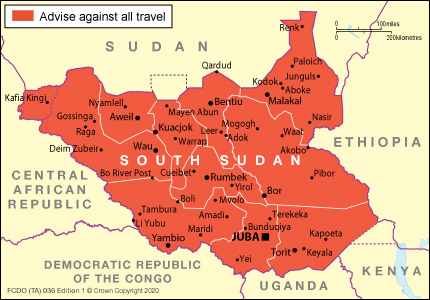
.jpg) Over the years, I've learned the importance of packing minimally. It's so much easier to jump on the back of a truck or squeeze yourself into the last spot of a minibus without that supersized backpack. If you're headed to a warm destination, leave your winter jacket at home; for colder regions, opt for thin thermal underlayers. Instead of packing your entire wardrobe, bring just three sets of clothes, as laundry facilities are available everywhere.
Over the years, I've learned the importance of packing minimally. It's so much easier to jump on the back of a truck or squeeze yourself into the last spot of a minibus without that supersized backpack. If you're headed to a warm destination, leave your winter jacket at home; for colder regions, opt for thin thermal underlayers. Instead of packing your entire wardrobe, bring just three sets of clothes, as laundry facilities are available everywhere.

.jpg) Hi, I’m Johan (Netherlands 🇳🇱), the creator of TakeYourBackpack. Over the past 3 decades, I’ve backpacked through 90+ countries across six continents, gaining extensive experience with independent travel, long-term trips, and overland routes.
Hi, I’m Johan (Netherlands 🇳🇱), the creator of TakeYourBackpack. Over the past 3 decades, I’ve backpacked through 90+ countries across six continents, gaining extensive experience with independent travel, long-term trips, and overland routes.