Trip Planning
The TakeYourBackpack guidebooks are your all-in-one travel companion, featuring the best cities, national parks, hikes, beaches, and unique sites, along with essential tips on when to go, how to get around, exchanging money, and even local phrases to get you started — everything you need for a smooth, unforgettable backpacking adventure.
Stop researching. Start exploring.Discover all 102 highlights,ranked
and organized into practical routes.
Get instant access
Planning a backpacking route through Bangladesh can be tricky — you need to balance must-see places, travel times, budget, and how long to stay in each destination. Our free personalized Bangladesh itinerary planner creates a route based on your travel style, trip duration, and interests, so you can spend less time researching and more time exploring.
Personal tip: I normally search on good rating for atmosphere (for meeting people) and location (for easy exploring). Cleanliness as a bonus.
Travel Essentials
For Bangladesh, make sure routine vaccinations (measles-mumps-rubella, tetanus-diphtheria, polio) are up to date, and get hepatitis A and typhoid, as both spread through food and water. Hepatitis B and rabies are recommended for longer stays or if you will be around animals, and Japanese encephalitis is worth considering for extended rural travel during the monsoon. A yellow fever certificate is required only if you arrive from a country with yellow fever risk. Malaria is present mainly in the Chattogram Hill Tracts and border areas, and dengue is common in Dhaka with no vaccine for travelers, so mosquito protection matters. See a travel clinic 4 to 8 weeks before departure.
vaccination requirementsWhen I first started traveling, I often spent part of my first day in a new country hunting for a local SIM card. While this can still be slightly cheaper, it also takes time and planning.
These days, it's much simpler to install an eSIM before leaving home. Once you arrive in Bangladesh, you can activate it immediately and have mobile data from the moment you land — which is especially useful for ordering transport or navigating away from busy airports.
There are many providers nowadays, and price differences are usually small. I personally go with
Holafly, as it offers excellent network coverage throughout the country and strong global coverage, so you can manage multiple countries from a single app.
HolaFly eSimCulture & Customs
Bangladesh is a conservative, mostly Muslim society, and modest dress covering shoulders and knees is the baseline for everyone, with women advised to wear loose clothing and carry a scarf. Do eat, pass money and hand over gifts with your right hand, take your shoes off before entering mosques, temples and homes, and accept tea when offered, since refusing hospitality can seem cold. Don’t show public affection, don’t photograph women without asking first, and during Ramadan avoid eating, drinking or smoking in public during daylight hours. Alcohol is restricted and only served at licensed hotels and clubs, so never drink openly in the street. Women may be seated separately or served after men in rural homes, and solo female travelers often find it easier to chat with local women and families. LGBTQ+ travelers should keep their relationships private, as same-sex relations are illegal and discussion of the topic is widely taboo.
Trying traditional food is always a great way to experience the culture. Here are some must-try dishes for Bangladesh.
- Shorshe Ilish: Hilsa, the national fish of Bangladesh, cooked in a sharp mustard seed paste with green chilies and mustard oil. Hilsa is bony but rich and oily, and it carries real emotional weight here, and it is most plentiful in the monsoon season, when the catch peaks.
- Kacchi Biryani: Dhaka’s signature biryani, layering raw marinated mutton with fragrant rice and potatoes, then slow-cooked sealed so everything steams together. It is the centerpiece of weddings and celebrations, and Old Dhaka is where you eat the best of it.
- Bhorta: Mashed preparations of anything from potato and eggplant to dried fish, lentils or shrimp, mixed with mustard oil, raw onion and chili. A spread of five or six bhortas with rice is everyday home food and the cheapest way to taste the range of Bengali flavors.
- Bhuna Khichuri: Rice and lentils cooked together with spices and ghee, often served with beef or egg curry. Bangladeshis crave it on rainy days, so expect it on menus everywhere once the monsoon starts.
- Mezbani Beef: A fiery, slow-cooked beef curry from Chattogram, traditionally served at huge community feasts called mezban. The spice blend is unique to the region, and you won’t find the real version far from the southeast.
- Panta Bhat: Leftover rice soaked overnight in water, eaten with salt, green chili, onion and fried fish. A rural staple, it becomes a national ritual on Pohela Boishakh, the Bengali New Year, when it is paired with fried hilsa.
- Fuchka: Crisp hollow shells filled with spiced chickpeas and potato, topped with tangy tamarind water. It is the country’s favorite street snack, sold from carts in every city in the evening.
- Mishti Doi: Sweetened yogurt set in clay pots, caramel-colored and thick. The town of Bogura is famous for it, and no Bengali meal or celebration feels complete without a sweet ending like this one.
Tap water in Bangladesh is not safe to drink, as it can carry bacteria and, in many groundwater sources, arsenic. Most locals boil or filter their water at home, and tourists should drink only bottled or properly filtered water, which costs around Tk 20 to 30 per liter. Use bottled water for brushing your teeth too, and skip ice from street stalls.
The main language in Bangladesh is
Bengali. Backpacking is way more rewarding if you know a bit of the local language, so I'd suggest brushing up on the basics just in case your Bengali skills have become a bit rusty.
Want to understand locals better?The complete Travel Guide for Bangladesh includes 52 essential words and phrases — greetings, thank-yous, ordering food, transport, numbers, and common local expressions you'll actually hear.
Get your local basic phrases 👉
Get the Travel Guide - in Bangladesh is spoken by educated professionals, hotel staff, university students and younger people in Dhaka and Chattogram, and you will manage fine in upscale cafés and hostels. Outside the cities, among rickshaw drivers and in rural markets, English drops off quickly, so expect plenty of pointing and smiling. Bengali (Bangla) is the language that helps most; learn “dhonnobad” (thank you), “koto?” (how much?) and the numbers one to ten. Download Bengali in Google Translate for offline use, and keep your hotel’s address written in Bangla script to show drivers.
Money & Payments
The local currency of Bangladesh is BDT (৳).
ATMs are easy to find in Dhaka, Chattogram, Sylhet and Cox’s Bazar, and banks such as Dutch-Bangla Bank, BRAC Bank, City Bank and Eastern Bank usually accept foreign Visa and Mastercard cards, though rural towns may have no working machine at all. Expect a local fee of roughly Tk 300 to 500 (US$2.50 to 4) per withdrawal on top of your home bank’s charges, with per-transaction limits often around Tk 20,000 to 40,000, so withdraw larger amounts less often. Cards work in upscale hotels, malls, supermarkets and some restaurants in Dhaka, but buses, guesthouses, street food and markets across Bangladesh run on cash, so always carry taka in small notes. US dollars are the easiest foreign currency to exchange, followed by euros and British pounds, and clean, undamaged recent notes get the best rates. Change money at banks, licensed money changers in Gulshan and Motijheel, or the airport booths, and avoid street touts offering better rates.
Tipping in Bangladesh is not expected in everyday situations, but small amounts are appreciated and increasingly common in cities. In mid-range and upscale restaurants, leave 5 to 10 percent if no service charge is included, round up rickshaw and CNG fares by Tk 10 to 20, and give porters or hotel staff Tk 50 to 100. Guides and drivers on day trips typically receive Tk 500 to 1,000 (US$4 to 8) per day if the service was good.
v2.webp)

 Best Backpacking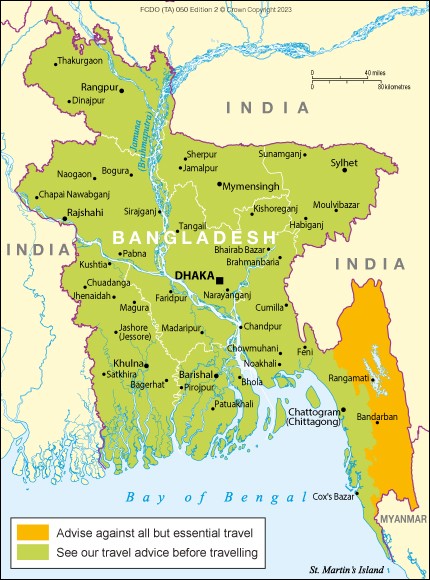
.jpg) Over the years, I've learned the importance of packing minimally. It's so much easier to jump on the back of a truck or squeeze yourself into the last spot of a minibus without that supersized backpack. If you're headed to a warm destination, leave your winter jacket at home; for colder regions, opt for thin thermal underlayers. Instead of packing your entire wardrobe, bring just three sets of clothes, as laundry facilities are available everywhere.
Over the years, I've learned the importance of packing minimally. It's so much easier to jump on the back of a truck or squeeze yourself into the last spot of a minibus without that supersized backpack. If you're headed to a warm destination, leave your winter jacket at home; for colder regions, opt for thin thermal underlayers. Instead of packing your entire wardrobe, bring just three sets of clothes, as laundry facilities are available everywhere.


.jpg) Hi, I’m Johan (Netherlands 🇳🇱), the creator of TakeYourBackpack. Over the past 3 decades, I’ve backpacked through 90+ countries across six continents, gaining extensive experience with independent travel, long-term trips, and overland routes.
Hi, I’m Johan (Netherlands 🇳🇱), the creator of TakeYourBackpack. Over the past 3 decades, I’ve backpacked through 90+ countries across six continents, gaining extensive experience with independent travel, long-term trips, and overland routes.