×
Greenland 🇬🇱

backpacking North America Greenland 🇬🇱Let ice, distance, and weather dictate all movement.

Explore El SalvadorExplore Grenada

Backpacking Greenland in 2026

A complete guide including when and where to go, costs, transport, itineraries, and practical travel advice.
The big picture before you go

Backpacking Greenland
By Johan Kruseman 🇳🇱 | Updated June 3, 2026

Greenland eats time and money when you underestimate logistics and weather. There are no roads between towns, and boats and small planes keep their own counsel. Fog can lock Ilulissat or Kulusuk without warning, and a missed connection erases a day in a blink.

That edge is the point. You hike past reindeer prints and cotton grass on the Arctic Circle Trail, then hear icebergs crack like distant gunshots in Disko Bay while the sun refuses to set. In Nuuk, the national museum’s carvings hum with old stories, then the harbor smells of salt, tar, and fried halibut as a cold beer sweats in your hand and the fjord turns copper. East Greenland throws up black shark-fin peaks and blue glaciers, with sled-dog howls carrying across gravel streets; a neighbor’s kaffemik delivers coffee, cake, and the kind of warmth that shrugs off the wind. Whales breathe white into the stillness. In winter the aurora stirs like green smoke; in summer the midnight light flattens your sense of time, and you forget you’re tired until the sky reminds you. Yes, the wind bites, mosquitoes mob inland in July, boats cost what they cost, and on the east coast you hire a guide for bear country. But patience trims the noise, and when the weather finally opens, the view hits harder because you earned it.

Compared to Iceland’s easy ring road, Greenland is bigger, rawer, slower, and more rooted in living Inuit culture. It’s less regulated than Svalbard and more vertical than much of Arctic Canada. Go if you value scale over convenience, people over polish, and the kind of travel that trades certainty for stories you feel in your bones.

👉 Get the 📖 Travel Guide of Greenland

Disko Bay (Ilulissat and the Icefjord)

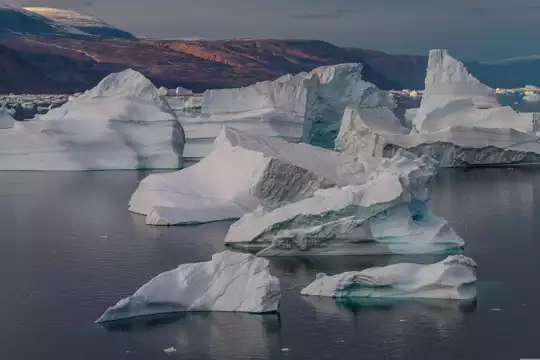
Ilulissat smells like salt, diesel, and dog yards. The boardwalk to Sermermiut is wood underfoot, slick after fog, and then the ice wall groans like thunder. Boats weave through bergs with an engine note you feel in your ribs; tours cost more here than in Nuuk, but this is Greenland’s iceberg factory. Dash-8s connect reliably via Nuuk or Kangerlussuaq; fog still toys with schedules, so pad your departure. Photographers and first-timers get easy wins. Payoff: a midnight shoreline, ice popping, and a supermarket beer gone cold in your gloves.

Nuuk and its Fjord

Nuuk is real life: hi-vis workwear, schoolkids on buses, a harbor that never shuts up. You can buy screws, then board a small boat into a fjord bigger than countries. Day trips are frequent and usually cheaper than Disko Bay—whales in season, simple ridge hikes, granite polished by old ice. Weather flips fast; pack a wind layer even on blue mornings. Culture hunters and short-trip travelers win here. Payoff: cod pulled from green water and cooked at a dockside restaurant, followed by a local microbrew that tastes like a day well used.

South Greenland (Qaqortoq–Narsaq–Narsarsuaq spine)

This is sheep country and softer light. Ferries and small boats knit the towns; flights reach Narsarsuaq when they run. Trails follow farm tracks with gates you actually close, cairns guiding you past Hvalsey church stones and low Norse fields. Boat taxis are common and usually cheaper than Disko Bay cruises; rooms run lower, too. Hikers who like human landscapes and history thrive. Payoff: a RIB run to a face of blue ice, then soup in a warm kitchen where your boots steam by the door.

Kangerlussuaq and the Ice Cap Edge

A gravel road rattles out to Point 660, dust in your teeth and musk ox hulks on the hills. This is the simplest way to stand on the ice sheet without an expedition—day tours by 4x4, plus Russell Glacier’s dirty, cracking front. Logistics are easy by Greenland standards; flights funnel here, and costs are lower than boat-based ice trips. Time-crunched travelers win. Payoff: cold, dry air blasting up from the ice, then a cafeteria coffee that feels earned in a way espresso never does.

East Greenland (Kulusuk–Tasiilaq)

Mountains drop straight into black water, and fog can lock the place down for days. You helicopter from Kulusuk to Tasiilaq—weight limits, no drama—and resupply is basic, so bring what you need. Trails are suggestions; the Flower Valley is a good start, Sermilik is the big league. Weather delays are common; build buffers. This is for expedition-minded hikers and paddlers who like quiet more than convenience. Payoff: evening light turning serrated peaks orange while ice groans across the fjord, then a slow beer in a warm bar while the forecast gets read like scripture.
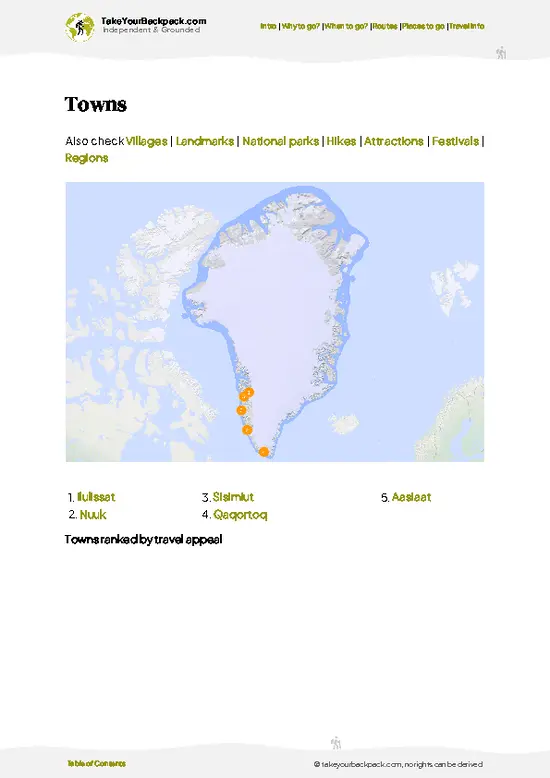
A visual overview of the country
Loading the map 🌍
CLICK TO FILTER
town
village
unique site
national park
hike
attraction
festival
region
SHOW COUNTRY’S BESTSHOW ALL
film
0
0
0a
Greenland National Museum & Archives
film
1
1
1a
Katuaq Cultural Centre
film
2
2
2a
Arctic Circle Trail
Martin Walter
film
3
3
3a
Sermermiut Valley
Werner Schmitt
film
4
4
4a
Eqi Glacier
Dan Kan
film
5
5
5a
Northeast Greenland
Daniel Moreno
film
6
6
6a
Disko Island
Olav Sejeroe
film
7
7
7a
Sermersooq
Randolfo Santos
film
8
8
8a
Søndre Strømfjord
film
9
9
9a
Ilulissat
Ilse Wiespointner
film
10
10
10a
Nuuk
Иван Йорданов
film
11
11
11a
Sisimiut
Clémence Aubert
film
12
12
12a
Qaqortoq
Paul Wiest
film
13
13
13a
Aasiaat
Raj Raj
film
14
14
14a
Ilulissat Icefjord
Richard Heidemann
film
15
15
15a
Uunartoq Hot Springs
Wade Galloway
film
16
16
16a
Cape Farewell
Lothar Hildebrandt
film
17
17
17a
Kangerlussuaq
Steven Carritt
film
18
18
18a
Tasiilaq
Randolfo Santos
film
19
19
19a
Kulusuk
film
20
20
20a
Narsaq
Peter Nørris Christensen
film
21
21
21a
Qasigiannguit
Agnieszka Antosiewicz
film
22
22
22a
Qeqertarsuaq
Olav Sejeroe
film
23
23
23a
Tiniteqilaaq
Diva 2110
film
24
24
24a
Upernavik
Karl Zinglersen
film
25
25
25a
Ittoqqortoormiit
Ger Ver
film
26
26
26a
Saqqaq
Dominique Bugmann (bluumi)

Why go?Reasons people choose to visit

Uniqueness

Greenland makes you slow down. The first thing you smell in Ilulissat is diesel, kelp, and cold metal; the light sits low all day like a headlamp you can’t switch off. There are no roads between towns, so you move by boat or … read more 👉
Greenland makes you slow down. The first thing you smell in Ilulissat is diesel, kelp, and cold metal; the light sits low all day like a headlamp you can’t switch off. There are no roads between towns, so you move by boat or plane and you walk a lot—in boggy tundra that grabs your ankles, on wind-scoured rock that eats boot soles. Summer brings mosquitoes in peppery clouds; winter sandblasts your cheeks with blown snow. Then the payoff: icebergs cracking in the fjord like distant gunfire, a glacier face calving with a bass note you feel in your ribs, midnight sun on pink granite. You eat supermarket bread and cheese, then one night splurge on reindeer stew. The first cold beer after a long, lonely hike in Ilulissat tastes earned, not bought.

Scenery

Greenland pays you back in views you earn. The wind will peel the heat from your back on the climb above Nuuk; your legs buzz from tundra hummocks and slick snow patches in July. Boats slam you awake on cold fjords, diesel and … read more 👉
Greenland pays you back in views you earn. The wind will peel the heat from your back on the climb above Nuuk; your legs buzz from tundra hummocks and slick snow patches in July. Boats slam you awake on cold fjords, diesel and salt in the nose, eiders lifting off like dropped stones. Mosquitoes find any exposed skin. Then the payoff: standing over Ilulissat, icebergs the size of city blocks grind and crack in blue light you feel in your teeth. Granite walls rise straight from Tasermiut Fjord, a clean, dry line against late sun. You slide into Uunartoq’s hot spring while bergs drift by. A whale blows once, like a match in still air. Later, a cold beer on a Nuuk quay at midnight daylight tastes earned.
Want the complete picture of Greenland?
The offline Travel Guide brings everything together — routes, highlights & planning.

See what's included in the guide 👉

Get the Travel Guide -

⭐ HighlightsUnmissable destinations

  • Ilulissat Icefjord (Sermeq Kujalleq): Walk the boardwalk out past Sermermiut as the midnight sun refuses to drop, the wind off the ice biting your teeth like menthol. Icebergs groan and crack like distant artillery, and you feel the thud in your ribs a beat later. Ravens arc over dog yards that smell of fish oil and wet rope. The payoff hits on the cliff edge: cathedral-high bergs drifting in slow motion; back in town, a cold Tuborg on the quay tastes like glacier melt and salt spray.
  • Nuuk Old Harbor and National Museum: The waterfront breathes diesel and cod, gulls strafing blue fish crates while a crane squeals. Inside, the Qilakitsoq mummies stare through smoked glass and drag you straight into real time. Wind funnels off Sermitsiaq and cuts the cheeks raw; a simple latte can cost more than a pub beer in Copenhagen, so make it count. I eat fish and chips on a splintered bench while snow freckles the fjord in June, learning the city’s rhythm one greasy napkin at a time.
  • Kangerlussuaq Ice
read more 👉
  • Ilulissat Icefjord (Sermeq Kujalleq): Walk the boardwalk out past Sermermiut as the midnight sun refuses to drop, the wind off the ice biting your teeth like menthol. Icebergs groan and crack like distant artillery, and you feel the thud in your ribs a beat later. Ravens arc over dog yards that smell of fish oil and wet rope. The payoff hits on the cliff edge: cathedral-high bergs drifting in slow motion; back in town, a cold Tuborg on the quay tastes like glacier melt and salt spray.
  • Nuuk Old Harbor and National Museum: The waterfront breathes diesel and cod, gulls strafing blue fish crates while a crane squeals. Inside, the Qilakitsoq mummies stare through smoked glass and drag you straight into real time. Wind funnels off Sermitsiaq and cuts the cheeks raw; a simple latte can cost more than a pub beer in Copenhagen, so make it count. I eat fish and chips on a splintered bench while snow freckles the fjord in June, learning the city’s rhythm one greasy napkin at a time.
  • Kangerlussuaq Ice Sheet (Point 660): It starts in a dust-blown former Air Force town where reindeer browse between fuel tanks. The overland truck rattles up a gravel road while musk oxen turn their prehistoric heads; in July, mosquitoes come in squads and you earn every step. On the ice the snow squeaks under your crampons and the silence is surgical, so quiet you hear your own jacket ticking. I drink thermos coffee that tastes faintly of camp stove and stare at white that swallows the horizon clean.
  • Tasiilaq and the Flower Valley: The helicopter from Kulusuk thumps like a drum in your chest, dropping you into paintbox houses, fog, and the metallic tang of the Denmark Strait. The trail runs on spongy tundra past cotton grass and meltwater riffles; sled dogs rattle their chains and throw breath into the wind. From the ridge you look across Ammassalik’s ice-choked fjords while a skua heckles your pack. I wrap cold fingers around hot chocolate at the harbor kiosk and watch ice grind past like slow traffic.
  • Tasermiut Fjord, South Greenland: You claw upwind in an open boat from Nanortalik, spray needling your face, and then the granite walls of Ketil and Ulamertorsuaq rear up like gates. Camps sit on damp moss, and at 3 a.m. a katabatic tantrum tries to fold your tent. My fingertips turn tar-black from lichens after scrambling for a view, and char hisses in a pan slick with too much butter. For off-the-map days, aim for Kangaamiut, Ukkusissat deep in Uummannaq Fjord, and tiny Tiniteqilaaq opposite the ice.
Spotted a mistake or missing a highlight? Contact us.

But Greenland offers more...

Discover and compare all of its highlights per category

🧭 RoutesHow to structure a trip

The 7-Day Disko Bay Ice & Trails Route

The vibe: A one-region deep dive around Ilulissat for travelers who want maximum ice and hiking with minimal logistics, staying mostly in one base and moving at a relaxed, immersive pace. Expect easy access to the Icefjord, coastal walks, and time to actually sit and watch the ice move instead of racing between airports.
The highlights:
  • Base time in Ilulissat with harbor walks and local life.
  • Boat and shoreline encounters with the Ilulissat Icefjord.
  • Hiking the Sermermiut Valley to classic Icefjord viewpoints.
  • A day out in the wider Disko Island coastal region.

The 14-Day West & East Greenland Explorer

The vibe: A balanced two-week route for curious travelers who want both big landscapes and real towns, splitting time between the inland ice, Disko Bay, and a bold hop to East Greenland. The pace is steady, with enough nights in each stop to unpack your bag and feel how different each region lives with ice and weather.
The highlights:
  • Inland hiking days from
read more 👉

The 7-Day Disko Bay Ice & Trails Route

The vibe: A one-region deep dive around Ilulissat for travelers who want maximum ice and hiking with minimal logistics, staying mostly in one base and moving at a relaxed, immersive pace. Expect easy access to the Icefjord, coastal walks, and time to actually sit and watch the ice move instead of racing between airports.
The highlights:
  • Base time in Ilulissat with harbor walks and local life.
  • Boat and shoreline encounters with the Ilulissat Icefjord.
  • Hiking the Sermermiut Valley to classic Icefjord viewpoints.
  • A day out in the wider Disko Island coastal region.

The 14-Day West & East Greenland Explorer

The vibe: A balanced two-week route for curious travelers who want both big landscapes and real towns, splitting time between the inland ice, Disko Bay, and a bold hop to East Greenland. The pace is steady, with enough nights in each stop to unpack your bag and feel how different each region lives with ice and weather.
The highlights:
  • Inland hiking days from Kangerlussuaq on the Arctic Circle Trail.
  • Multi-day immersion in Ilulissat and the Icefjord.
  • Slow time on Disko Island around Qeqertarsuaq.
  • A dramatic finale in East Greenland around Tasiilaq and Kulusuk.

The 21-Day Greenland Grand Traverse

The vibe: A three-week, multi-region journey for travelers who want the full arc—capital culture, Norse history, farm country, inland ice, classic Disko Bay, and the raw edges of East Greenland—without turning it into a nonstop sprint. You’ll string together flights and boat hops in a logical loop, trading a few travel days for deep time in each base.
The highlights:
  • Urban-meets-Arctic days in Nuuk with the Greenland National Museum & Archives and Katuaq Cultural Centre.
  • South Greenland’s Kujataa farm landscapes, Narsaq and Qaqortoq, plus Uunartoq Hot Springs.
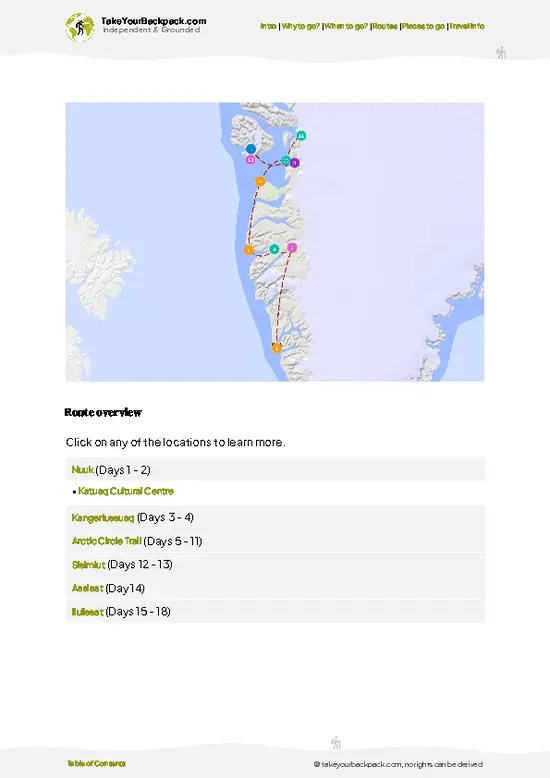
  • Inland ice and tundra hiking from Kangerlussuaq on the Arctic Circle Trail.
  • Extended Disko Bay time around Ilulissat, Sermermiut, Qasigiannguit, and the Disko Island region.
  • A rugged East Greenland finale in Tasiilaq, Kulusuk, and the wider Sermersooq region.
🌍 Want a ready-to-use travel plan for Greenland?
The overview above compares different route options based on your travel time and style. The complete Travel Guide breaks each itinerary down in detail, including maps, stops, highlights, and transport information.

Explore all route details 👉

Get the Travel Guide -

🌤️ When to go?A month-by-month overview

Late August to early September is the sweet spot for backpacking Greenland. The sea ice has pulled back enough that boats run and supply ships keep shelves stocked; trails are mostly dry and snow-free; the mosquitoes that made June rage have thinned; and prices ease off the July spike when cruise ships and school holidays jack demand. Daylight is still generous, but night returns—dark enough for a first aurora flicker over a glassy fjord. You can carry a normal alpine kit instead of full expedition armor. In town the air smells of diesel and kelp, not bug repellent, and in the hills the tundra turns copper. It feels earned: wind-chapped cheeks, salt on your lips, then the soft click of a can from the shop as you watch an iceberg roll in the blue hour.
  • Peak Summer (mid-July-early August): Prices and beds run hotter than the weather—boats to Eqi and Disko fill well ahead, and Ilulissat’s boardwalk can feel like an airport concourse. Fog can pin flights for a day. The payoff? Midnight sun turning the Icefjord peach at 2 a.m., humpbacks breathing in flat water, and that first cold beer on the harbor rocks with your socks steaming after a long ridge walk.
  • Late-Summer Shoulder (late August-early September): Greenland shifts gears. Tour groups taper, shop hours stay long, and ferries still run. Bugs fade, winds pick up, and you move faster: firm tundra, crisp evenings, aurora hinting above roofs in Nuuk. Same iceberg silence, fewer elbows, slightly softer rates, and you can actually hear the brash ice tinking against the shore.
  • Dark Season (November-March): The interior mood takes over—blue noon, sled dogs yowling, dry snow squeaking like styrofoam. Solitude is complete and the sky can explode with light, but the cold is an authority. Survival hack: wear a vapor-barrier liner inside your socks to keep boot insulation dry; it’s the difference between happy miles and dead toes.

Tactical tip: For late-August plans, lock flights and Ilulissat beds a couple of months out, keep boat day-trips cancellable, and buffer one weather day.

source: climatestotravel.comJANJanuary: fair for travelingFEBFebruary: fair for travelingMARMarch: fair for travelingAPRApril: good for travelingMAYMay: good for travelingJUNJune: fair for travelingJULJuly: highly recommended for travelingAUGAugust: highly recommended for travelingSEPSeptember: excellent for travelingOCTOctober: good for travelingNOVNovember: fair for travelingDECDecember: fair for traveling
📅 Traveling in a specific month?
Get a full month-by-month breakdown of weather, crowds, costs, festivals, and seasonal highlights in the complete travel guide.

Get full details when to go 👉

Get the Travel Guide -
greenland - pixabay - expedition-5559244

💰 Costs (as of 2026)Prices, expenses, and money tips

Expect 1,000-1,400 DKK per day if you self-cater, sleep in dorms, and keep tours rare—double it on days that involve boats or flights.
  • dorm accommodation: 300-600 DKK per night in larger towns (Nuuk, Ilulissat, Sisimiut), sometimes 250 DKK in winter or in school dorms converted for summer. Rooms are clean but plain: linoleum floors, seal-skin posters, radiator heat that dries your socks by morning. System tip: bring a sleep sheet and cook; linen rental often adds 50-100 DKK and shared kitchens are the one lever you fully control. Compared to Iceland, beds run a notch higher for thinner supply.
  • meals: Supermarket Survival wins. Pilersuisoq/Brugseni bread, butter, cheese, instant noodles, and discounted musk-ox or reindeer mince keep you at 80-150 DKK/day; produce is limited and bruised but edible. Street food reality: barely exists outside Nuuk. Expect 60-90 DKK for a pizza slice or hot dog, 100-150 DKK for kebab, and 180-300 DKK for a basic sit-down main. Beer is 15-25 DKK in the shop, 60-90 DKK in a bar. Relative to the Faroes, choice is thinner and prices slightly higher.
  • local transport: Inside towns, you walk. Buses cost roughly 15-30 DKK a ride; taxis bite. Between towns, there are
read more 👉
Expect 1,000-1,400 DKK per day if you self-cater, sleep in dorms, and keep tours rare—double it on days that involve boats or flights.
  • dorm accommodation: 300-600 DKK per night in larger towns (Nuuk, Ilulissat, Sisimiut), sometimes 250 DKK in winter or in school dorms converted for summer. Rooms are clean but plain: linoleum floors, seal-skin posters, radiator heat that dries your socks by morning. System tip: bring a sleep sheet and cook; linen rental often adds 50-100 DKK and shared kitchens are the one lever you fully control. Compared to Iceland, beds run a notch higher for thinner supply.
  • meals: Supermarket Survival wins. Pilersuisoq/Brugseni bread, butter, cheese, instant noodles, and discounted musk-ox or reindeer mince keep you at 80-150 DKK/day; produce is limited and bruised but edible. Street food reality: barely exists outside Nuuk. Expect 60-90 DKK for a pizza slice or hot dog, 100-150 DKK for kebab, and 180-300 DKK for a basic sit-down main. Beer is 15-25 DKK in the shop, 60-90 DKK in a bar. Relative to the Faroes, choice is thinner and prices slightly higher.
  • local transport: Inside towns, you walk. Buses cost roughly 15-30 DKK a ride; taxis bite. Between towns, there are no roads: the coastal ferry (Sarfaq Ittuk) is the cheapest unlock, with short legs often 400-900 DKK in the simplest berth and big hops into the low thousands. Small boats and water taxis feel adventurous but burn cash fast. Flights are the budget killer per kilometer. Practical play: pick one region and dig in—unlike Iceland, you can’t cheaply bounce around.
  • activities: The ice is the bill. Boat trips to the Ilulissat Icefjord, whale watching, or fjord cruises typically 700-1,500 DKK; kayaking and guided hikes land in the same band. Dog sledding (in season) 800-1,500 DKK for short runs. Helicopters and long glacier missions climb into multiple thousands. Free or close to it: long coastal hikes, museum entries (often 40-120 DKK), the boardwalk views, and the kind of Arctic light that makes cold fingers worth it. Compared to Iceland, tours are as pricey, with fewer last-minute deals.
  • miscellaneous: Budget leaks: overweight baggage on tiny planes, paid Wi-Fi in some guesthouses, laundry coins, and “quick” coffees that aren’t quick or cheap. SIM/data is costly; download offline maps on Wi-Fi. Alcohol taxes sting—pre-game from the shop if you drink. ATMs are scarce; cards work almost everywhere but your bank may add a foreign fee. Tap water is glacier-clean and free—skip bottled. Relative value: neighbors have cheaper buses and snacks; Greenland punishes movement and impulse buys.
⚠️ Prices can change and everyone travels differently, so take this as a rough guide. Hope it helps you plan your adventure!

✈️ The backpacker research shortcutGreenland Travel Guide

An offline-friendly backpacking guide with optimized travel routes, ranked highlights, transport advice, and the best areas to stay.
example page 0 from our offline Travel Guide for Greenlandexample page 1 from our offline Travel Guide for Greenlandexample page 2 from our offline Travel Guide for Greenlandexample page 3 from our offline Travel Guide for Greenlandexample page 4 from our offline Travel Guide for Greenlandexample page 5 from our offline Travel Guide for Greenlandexample page 6 from our offline Travel Guide for Greenlandexample page 7 from our offline Travel Guide for Greenland
The digital guide (170 pages) contains:
35 highlights, ranked by travel appeal
Optimized 7, 14 & 21-day travel routes
Cities, national parks, beaches, historical sites, ...
How to get around
Offline-friendly for travel without Wi-Fi
👉 Click to see all 30+ guide features

📅 Plan smarter in minutes, not weeks
Month by month travel advice
Festivals & national holidays
Budget expectations

🗺️ Go to the right places, skip the overrated ones
Honest pros & cons of destinations
Top hikes, parks & viewpoints
Lesser-known places most travelers miss
Clear “worth it vs skip it” guidance

🛏️ Travel smoothly without rookie mistakes
Best areas to stay
Transport systems explained simply
Common scams & safety advice
SIM cards, money & practical tips

🌍 Understand the country, not just visit it
Culture & traditions
52 Essential phrases & customs
Festivals worth planning around
Traveler-friendly historical context
Insights that make places more meaningful

📱 Built for real travel conditions
Fully downloadable PDF
Works completely offline
Optimized for phone use
Useful in remote areas & buses
Everything in one place
Save weeks of stressful planning
Get instant access to the full guide directly. 30-day money-back guarantee.


Sent to your inbox immediately after payment • 100% Secure Checkout
Best Backpacking Travel Advisor 2025 tourism awardBest Backpacking
Travel Advisor
2025
What others say about Take Your Backpack Guides:
⭐⭐⭐⭐⭐
Fantastic, amazing amount of information!
⭐⭐⭐⭐⭐
My goodness this is amazing, it's what I've been looking for hats off too you!
⭐⭐⭐⭐⭐
I think this is absolutely BRILLIANT
⭐⭐⭐⭐
Very complete and informative. It's still missing places, but I gotta to commend you
⭐⭐⭐⭐⭐
This is truly amazing, thank you, can't wait to explore it with my kids!
⭐⭐⭐⭐⭐
Awesome resource, thank you!
⭐⭐⭐⭐⭐
This is amazing! Can't wait to explore the ones I haven't seen
⭐⭐⭐⭐
I love this! Well done, great idea.
⭐⭐⭐⭐⭐
Thanks for taking the time to make this gem!
⭐⭐⭐⭐⭐
This might be the best website I've ever seen.
⭐⭐⭐⭐⭐
Congratulations, and thank you so much for your work; it's incredibly valuable.
⭐⭐⭐⭐
In all seriousness I think you did a great job pointing out the important spots
⭐⭐⭐⭐⭐
10/10 very good
⭐⭐⭐⭐⭐
As someone who's only just starting to visit regularly this is awesome, thank you.
⭐⭐⭐⭐
Thank you very much! I'm going to visit my dad, it's going to be very useful!
⭐⭐⭐⭐⭐
This is really cool! We'll be travelling for the first time and this definitely come in handy.
⭐⭐⭐⭐⭐
You are now our minister of culture, congratulations 👨‍💼
⭐⭐⭐⭐⭐
Just wanted to tell you that this is a pearl! Going to follow your recommendations.
⭐⭐⭐⭐⭐
This is so cool. I'll definitely be using the resource for my travels soon.
⭐⭐⭐⭐⭐
This is very impressive! Good work.
⭐⭐⭐⭐⭐
This is an amazing and informative site. Very well done!

🛏️ Where to stay?Areas travelers tend to prefer

Yes — Greenland has hostels and budget guesthouses, but they are concentrated in a handful of towns rather than spread across the island, facilities are basic, prices are higher than typical hostels elsewhere, and you should book early for summer.
The best selection is in Nuuk (most options, best transport links and nightlife but pricier and few dorm beds), Ilulissat (closest to the Icefjord and glacier tours with solid tourist services but busy and limited night scene), Sisimiut (more affordable, excellent trails and outdoor access but quieter and fewer amenities) and smaller hubs like Qaqortoqread more 👉
Yes — Greenland has hostels and budget guesthouses, but they are concentrated in a handful of towns rather than spread across the island, facilities are basic, prices are higher than typical hostels elsewhere, and you should book early for summer.
The best selection is in Nuuk (most options, best transport links and nightlife but pricier and few dorm beds), Ilulissat (closest to the Icefjord and glacier tours with solid tourist services but busy and limited night scene), Sisimiut (more affordable, excellent trails and outdoor access but quieter and fewer amenities) and smaller hubs like Qaqortoq which offer very limited, peaceful budget stays but require careful planning for logistics.
All areas are generally safe but remote — expect basic facilities, limited payment options, seasonal closures, and sparse public transport, so carry backup funds, confirm travel links when booking, and pack for self-sufficiency.

If you enjoy meeting fellow travelers, consider choosing hostels with high ratings for atmosphere. On the other hand, if you prefer having your own space, a hotel might be a better option.

🚌 Getting aroundTransportation options and logistics

Greenland moves on weather and patience. Timetables are printed, but the real clock is wind on the fjord and fog on the runway. You learn the smell of jet fuel and instant coffee in small terminals, the quiet shuffle of boots on rubber matting, the way a pilot sizes up a cloud bank and shrugs. Boats leave when the tide says they can. Helicopters pause for a squall, then slice through blue air like nothing happened. When it clicks, it’s clean and fast—wings skimming above black rock and white ice, … read more 👉
Greenland moves on weather and patience. Timetables are printed, but the real clock is wind on the fjord and fog on the runway. You learn the smell of jet fuel and instant coffee in small terminals, the quiet shuffle of boots on rubber matting, the way a pilot sizes up a cloud bank and shrugs. Boats leave when the tide says they can. Helicopters pause for a squall, then slice through blue air like nothing happened. When it clicks, it’s clean and fast—wings skimming above black rock and white ice, ferry decks humming under your boots, axe-cut cold on your face. The payoff is literal: you step onto a pier with a dry throat and a chilled can from the kiosk, watching icebergs turn in pewter light like slow animals.
  • Domestic flights and settlement helicopters The Efficiency Trade-off: fastest by a mile, priced like it. Short hops stitch the coast in minutes, but the bill stings and weather can turn a 40-minute segment into an all-day sit. Pack light—overweight fees snowball—and be ready for reroutes through a hub you didn’t plan on. Helicopters make milk-runs between tiny villages; they’re beautiful and loud, and you board by ducking under rotors like you mean it.
  • Nuuk and big-town buses The Social Fabric: warm, steamed windows, quiet riders with grocery bags and fish tubs. You keep your pack off the aisle, shake the snow off before stepping on, and say a simple thanks when you exit. No one performs; people make space without fuss. Pay on board, small bills make friends, and expect the driver to wait five seconds for a sprinting elder—but not for you twice.
  • Coastal ferry The Geometric Unlock: a single steel spine threading most of the west coast, touching towns no road will ever link. It slides through rock corridors at midnight, diesel and soup drifting from the mess, ice murmuring against the hull. You can ride cheap in a bunk room, hop off for two days, and catch the next northbound. When fog grounds planes, the ferry keeps shouldering along the fjords.
  • Harbor hop on local boats The Budget Disruptor: show up at the pier at first light or late afternoon and ask skippers running between nearby settlements if they’ve got a spare seat for fuel money. Cash talks, a dry bag proves you’ve done this before, and you wear the lifejacket without debate. It’s bumpy, wet, sometimes canceled by a wind shift—and half the price of a scheduled water taxi on short runs.

Master tip: Anchor your itinerary on the coastal ferry for the long north-south move, then plug short hops by boat or heli around it—leave a 48-hour buffer before any flight out.
Nuuk Airport (GOH) sits about 4 km (2.5 miles) from the city center, in the Nuussuaq district. It’s a short hop into town.
  • City bus (Nuup Bussii): The yellow city buses stop by the terminal area (look for “Mittarfik/Airport”). Daytime departures are typically every 10-20 minutes, with 15-30 minute gaps in evenings/weekends. Travel time about 10-15 minutes to central stops. Cost around 22-25 DKK for an adult single (as of 2025). Buy from the driver (cash in DKK); locals also use passes—check the timetable and options on Nuup Bussii’s site or the municipal information pages.
  • Taxi: Ranks are right outside the terminal. Travel time 8-12 minutes, depending on traffic and weather. Cost usually 110-180 DKK in the daytime; expect roughly 150-220 DKK late evenings, nights, and Sundays/holidays. Most cars take cards. There’s no Uber/Lyft in Greenland.
  • Walking: It’s doable in summer if you pack light—about 45-60 minutes on foot. In winter, expect ice and wind; the bus or a taxi is the safer bet.

Tip: If you’re aiming for a specific ferry or tour departure, give yourself a buffer—weather can slow things down even on this short transfer.
⚠️ Prices and routes can change, so take this as a rough guide and ask for local advice when you arrive.

🔒 Safety (risk Level: low)Staying safe while traveling

Safety for solo travelers, including women and LGBTQ+ individuals
Greenland is generally safe for solo travelers, including women and LGBTQ+ individuals. Crime rates are low, but always practice standard precautions like avoiding isolated areas at night. Locals are typically welcoming, but cultural sensitivity is key, especially in smaller communities. Weather and terrain can be challenging, so ensure you’re prepared for harsh conditions and always keep someone informed of your plans.


Full official government travel advisory (live updates)
View details 👉

✈️ VisaVisa requirements for Greenland

If you’re a citizen of a Schengen Area country, you don’t need a visa to visit Greenland. Non-Schengen nationals typically need a Danish visa, which covers Greenland. Apply through a Danish embassy or consulate in your country.
⚠️ Visa requirements can change over time, so always check the latest visa requirements with the official embassy or government website before you travel.

🎒 What to pack?What to wear and bring

When packing for Greenland, think layers and waterproof everything. The climate can be pretty unpredictable, with chilly winds and sudden rain showers, even in summer. Hiking is almost a guarantee, so sturdy boots are a must for the rugged terrain. Respect the local culture by avoiding overly flashy or revealing outfits, especially in smaller towns. Remember, it’s all about staying warm, dry, and respectful.

Apart from this country specific advice, I have also crafted a general packing list that should help on any trip. authorOver the years, I've learned the importance of packing minimally. It's so much easier to jump on the back of a truck or squeeze yourself into the last spot of a minibus without that supersized backpack. If you're headed to a warm destination, leave your winter jacket at home; for colder regions, opt for thin thermal underlayers. Instead of packing your entire wardrobe, bring just three sets of clothes, as laundry facilities are available everywhere.
View the full list 👉
🎒 Planning the practical side of your trip?
Get detailed information on transport, daily budgets, internet access, local customs, food, language, and other essentials in the complete Travel Guide.

Get detailed practical information 👉

Get the Travel Guide -

🙋 FAQFrequently asked questions

Trip Planning


Personal tip: I normally search on good rating for atmosphere (for meeting people) and location (for easy exploring). Cleanliness as a bonus.


Travel Essentials

Routine vaccinations like MMR (measles, mumps, rubella), DTP (diphtheria, tetanus, pertussis), and an annual flu shot are recommended for Greenland. Consider the hepatitis A vaccine if you plan on eating or drinking in places where sanitation is questionable. If you’re venturing into remote areas, a rabies vaccine might be wise. Always double-check with your healthcare provider for personalized advice.


vaccination requirements
When I first started traveling, I often spent part of my first day in a new country hunting for a local SIM card. While this can still be slightly cheaper, it also takes time and planning.

These days, it's much simpler to install an eSIM before leaving home. Once you arrive in Greenland, you can activate it immediately and have mobile data from the moment you land — which is especially useful for ordering transport or navigating away from busy airports.

There are many providers nowadays, and price differences are usually small. I personally go with Airalo, as it offers excellent network coverage throughout the country and strong global coverage, so you can manage multiple countries from a single app.


Get your e-sim for Greenland

Culture & Customs

Respect personal space as Greenlanders value it; avoid being overly loud or intrusive. Dress modestly, especially in small towns, as locals tend to be conservative. **Do** accept coffee or tea if offered; it’s a sign of hospitality. **Don’t** refuse food offerings bluntly, as it can be considered rude. **Do** ask permission before photographing people, especially in smaller communities. **Don’t** expect fast service; things move at a slower pace here. **LGBTQ travelers** generally face minimal issues, but discretion is advised in rural areas. **Women** should feel safe, but it’s wise to stay aware in isolated spots.
Trying traditional food is always a great way to experience the culture. Here are some must-try dishes for Greenland.
  • Kiviak: This traditional dish involves fermenting auks (a type of bird) inside a seal skin for several months. It’s definitely not for the faint-hearted, but it’s a cultural staple during celebrations and offers a unique taste of Greenlandic heritage.
  • Mattak: Whale skin with a bit of blubber, usually eaten raw. It’s chewy and rich in omega-3s, making it a vital part of the diet in harsh Arctic conditions. It’s a must-try to understand the local reliance on marine resources.
  • Suaasat: A hearty soup made from seal, whale, or reindeer meat, often with onions and potatoes. It’s a comforting dish, especially during the long winters, and reflects the traditional Greenlandic way of making do with available ingredients.
  • Ammassat: These small fish, similar to capelin, are often dried or smoked. Commonly eaten as a snack or side, they highlight the importance of fishing in Greenland’s economy and daily life.
  • Grønlandsk Kaffe: Not a dish, but rather a drink, this is Greenland’s take on Irish coffee with a local twist—using coffee, whiskey, Kahlúa, and whipped cream. It’s served in a ceremonial way, often during gatherings, and is a warm treat in the cold climate.
Yes, the tap water in Greenland is safe to drink, and locals usually drink it without any issues. It’s clean and fresh, often sourced from the ice cap or local springs. Bottled water is available, but not necessary unless you prefer it for convenience.
The main language in Greenland is Greenlandic. Backpacking is way more rewarding if you know a bit of the local language, so I'd suggest brushing up on the basics just in case your Greenlandic skills have become a bit rusty.

Want to understand locals better?
The complete Travel Guide for Greenland includes 52 essential words and phrases — greetings, thank-yous, ordering food, transport, numbers, and common local expressions you'll actually hear.

Get your local basic phrases 👉

Get the Travel Guide -


In Greenland, English is widely spoken, especially in urban areas and among younger generations. The majority of Greenlanders are bilingual, with Danish being the official language and Greenlandic (Kalaallisut) as the native language. English is taught in schools and is commonly used in tourism, business, and academia.

In towns like Nuuk, the capital, and other popular tourist destinations, visitors will find that many locals, particularly those in the hospitality and service industries, are proficient in English. However, in more remote areas, English proficiency may vary, and communication could be more challenging.

Overall, travelers to Greenland can generally expect to communicate effectively in English, but learning a few basic phrases in Greenlandic can enhance the experience and show respect for the local culture.

Money & Payments

The local currency of Greenland is DKK (kr).

When backpacking across Greenland, keep in mind that ATM access outside of major towns like Nuuk and Ilulissat can be spotty. Always carry some cash, but don’t go overboard—around 2,000-3,000 DKK should suffice for emergencies. While euros and dollars aren’t accepted, you can easily exchange them at banks or major hotels in larger towns. Cards are widely accepted for most transactions, especially in tourist areas, but it’s not a bad idea to confirm card acceptance before ordering in smaller cafes or shops. If you need to exchange currency, your best bet is to do so upon arrival in Nuuk or at other larger towns. Avoid exchanging at airports if you can; the rates tend to be worse.

Tipping in Greenland isn’t a common practice, as service charges are usually included in the bill. However, if you experience exceptional service, rounding up the bill or leaving a small tip is appreciated but not expected. Remember, locals don’t typically tip, so don’t feel pressured.

🧩 Nearby countriesSimilar backpacking destinations

We 💚 feedbackThe bottom line on traveling here

Greenland makes you earn every view. The wind off the fjord tastes like salt and diesel; dogs keep up a midnight chorus. “Definite” boats at breakfast vanish into noon fog. Then the payoff: icebergs blush at 2 a.m., ice pops and sighs like a campfire, and a cold can from Pilersuisoq on a sun-warmed rock. Food is Iceland-level; beer feels like Norway. Best surprise: ten minutes from town you hit real tundra and silence. Small warning: July mosquitoes inland are savage; carry a head net, and beyond settlements treat it as bear country. Strategic tip: pick one region, add 48-hour buffers, and let the weather set the plan.

✍️ Help improve this page!
The information on this page is based on in-depth research, insights shared by experienced travelers, and feedback from the local travel community in Greenland. While every effort is made to keep the information accurate and current, conditions can change — so if you spot anything incorrect or outdated, please get in touch.


🙋‍♂️ Give feedback

👋 Meet the founderWho’s Behind Take Your Backpack?

Johan, backpacker and founder of TakeYourBackpackHi, I’m Johan (Netherlands 🇳🇱), the creator of TakeYourBackpack. Over the past decade, I’ve backpacked through 80+ countries across six continents, gaining extensive experience with independent travel, long-term trips, and overland routes.

This site is built on a combination of firsthand travel experience and carefully curated insights from other backpackers. Many guides are based on places I’ve personally visited, while others bring together tips, observations, and practical advice shared by trusted travelers I’ve met along the way.

The goal is to provide realistic, experience-driven guidance — not generic itineraries — so you can explore destinations with better context, clearer expectations, and more confidence.

Get full Greenland guide •
Instant download • 35 highlights • Full Offline guide