×
Laos 🇱🇦

backpacking Asia Laos 🇱🇦Drift river routes where time stretches peacefully.

Explore KyrgyzstanExplore Lebanon

Backpacking Laos in 2026

A complete guide including when and where to go, costs, transport, itineraries, and practical travel advice.
Traveling in Laos: what to expect

Backpacking Laos
By Johan Kruseman 🇳🇱 | Updated June 8, 2026

Laos isn’t a sleepy stopover between Thailand and Vietnam. It moves at a slower tempo, yes, but there’s muscle under the calm: mountain spines, the Mekong’s pull, and people who take their time on purpose. Give it time and it gives back—quietly, then all at once.

At dawn in Luang Prabang, incense and wood smoke hang as saffron robes slip along empty streets; by noon you’re icing your shins in Kuang Si’s blue pools after a steep, sweaty climb. In Vang Vieng the limestone muscles the skyline; kayaks whisper downstream while caves breathe cold air. On the Bolaven Plateau, coffee dries on tarps and waterfalls soak your shirt; after dark a charcoal grill pops, sticky rice steams, and a cold Beerlao fogs the bottle. Buses grind over switchbacks, dust clings to your teeth, and power cuts happen, but the payoff is the quiet click when the country’s pace matches your pulse.

Compared with Thailand’s polish, Vietnam’s rush, and Cambodia’s headline temples, Laos trades spectacle for time. Go if you savor slow miles and earned views.

👉 Get the 📖 Travel Guide of Laos

Luang Prabang

Pre-dawn is monks padding through incense haze while you hold your breath in the cool air. Days run on river light and sticky rice. The high-speed rail drops you nearby, so it’s the easiest entry to Laos. Walkers and food hunters win here; late-night chasers don’t. Climb Phou Si at first light, then wash the sweat off in a bowl of khao soi and a river breeze.

Vang Vieng (rail spine: Vientiane–Vang Vieng–Luang Prabang)

An hour by train and you’re in karst country with dust in your teeth. Tubing is tame now; the real payoff is scrambling Pha Ngern at sunset, legs trembling, Mekong haze burning orange. It’s built for short-hit adventure: day hikes, kayaks, cave crawls. Expect tour buses at the Blue Lagoons; go early, pedal past them, earn your swim.

Nam Ou: Nong Khiaw & Muang Ngoi

Minivans grind north from Luang Prabang and drop you where limestone walls squeeze the river. Power flickers, roosters start before dawn, and trails leave town straight into jungle. Hike to fog-top viewpoints, push on to Khmu villages, leeches in wet season, dry lips in hot season. Boats to Muang Ngoi run with the river; when it’s low, you hoof it. Slow travelers and trekkers score big here.

Thakhek Loop

Helmet hair, red dust, and a fuel stop that’s just a funnel and a Coke bottle. Three to four days on a motorbike through karst, cave mouths yawning cool air. Less traffic than Vietnam’s big loops, but signage goes missing and potholes don’t. Homestays are basic, smiles are not. End a long day with a cold Beerlao and your boots pointing at a limestone wall.

Si Phan Don (4,000 Islands)

South heat sits heavy; the Mekong moves like a giant animal. From Pakse it’s bus then boat, and you roll your bag down sandy paths. Don Det is for hammocks and reggae bars; Don Khon is quieter. Cycle to Li Phi falls, chase shade, then drift out at sunset to look for dolphins. Cash only, time slows, shoulders drop.
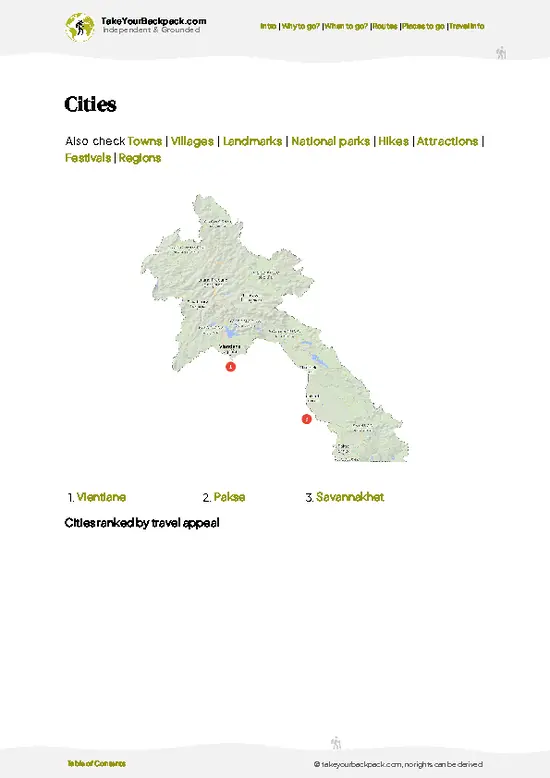
A visual overview of the country
Loading the map 🌍
CLICK TO FILTER
city
town
village
unique site
national park
hike
beach
attraction
festival
region
SHOW COUNTRY’S BESTSHOW ALL
film
0
0
0a
Savannakhet
film
1
1
1a
Gibbon Experience
film
2
2
2a
Bolaven Plateau Loop
film
3
3
3a
Tad Fane Waterfall Trek
film
4
4
4a
Luang Prabang Waterfall
film
5
5
5a
Bokeo Nature Reserve
film
6
6
6a
Dong Hua Sao National Bio-Diversity Conservation Area
film
7
7
7a
Phou Phanang National Protected Area
film
8
8
8a
Bolaven Plateau
film
9
9
9a
Vang Vieng
film
10
10
10a
Thakhek
film
11
11
11a
Sam Neua
film
12
12
12a
Kuang Si Waterfall
film
13
13
13a
Kong Lor Cave
film
14
14
14a
Pha That Luang
film
15
15
15a
Tad Lo Waterfall
film
16
16
16a
Ban Xieng Mene
film
17
17
17a
Ban Xieng Vang

Why go?What makes this country worth the trip

Backpackers

Laos rewards patience. Buses crawl over mountain spines, minivans make you queasy, and the red dust sticks to your ankles. Then you roll into a town where … read more 👉
Laos rewards patience. Buses crawl over mountain spines, minivans make you queasy, and the red dust sticks to your ankles. Then you roll into a town where a $8 room comes with a fan, a hammock, and a view of the Mekong. The slow boat becomes your social life, Beerlao sweats in your hand at sunset, and strangers turn into riding partners for the Thakhek or Bolaven loops. Days are waterfalls, cave rivers, and night markets; nights are cheap noodles and shared stories. It’s easy-going, genuine, and built for long, low-budget wandering.

Low cost

Laos is where your budget breathes. Dusty local buses crawl up Highway 13, windows open, diesel and river air mixing, and you still come out ahead. Night … read more 👉
Laos is where your budget breathes. Dusty local buses crawl up Highway 13, windows open, diesel and river air mixing, and you still come out ahead. Night markets hand you skewers, herbs, and sticky rice for pocket change; simple fan rooms do the job without drama. Scooters sip fuel; slow boats drift for the price of patience. Save the splurge for one river bungalow or a kayak day and you still land light. Expect a daily average in the low to mid twenties USD. Payoff: a cold Beerlao at sunset, the Mekong turning copper.

Food

Come hungry to Laos; the air itself tastes like charcoal and lemongrass. Dawn markets slap you awake—fish still flipping in basins, piles of herbs that … read more 👉
Come hungry to Laos; the air itself tastes like charcoal and lemongrass. Dawn markets slap you awake—fish still flipping in basins, piles of herbs that smell like rain, baskets of sticky rice exhaling steam. You eat with your fingers: tear off a warm clump, swipe it through jeow fire-roasted chili dip, bite laap bright with mint and the good funk of padek. Lunch is khao piak sen that clings to the spoon; dinner is mok pa unwrapped from banana leaf. Then Beerlao, icy and cheap, washing down river smoke and dill.
Want the complete picture of Laos?
The offline Travel Guide brings everything together — routes, highlights & planning.

See what's included in the guide 👉

Get the Travel Guide -

⭐ HighlightsHighlights of Laos

  • Luang Prabang Old Town & Morning Alms: Pre-dawn, the streets breathe incense and woodsmoke while monks move like a quiet river of saffron, bare feet whispering on stone. Steam lifts from bamboo baskets of sticky rice as you kneel. Later, the sun hits chipped stucco and frangipani leaves, and a thick Lao coffee by the Nam Khan tastes like a reward you earned by getting up in the dark.
  • Nong Khiaw & Muang Ngoi on the Nam Ou: The longtail thumps upstream, diesel on your hands and spray in your face, cliffs sliding past like black fins. Trails climb through bamboo that squeaks in the wind; sweat bees bother your ankles at the Pha Daeng ridge. Then you stand over a maze of green teeth and slow water, and a cold Beerlao on a wobbling bamboo deck leaves rings on the plank.
  • Vang Vieng Karst Ridges & Caves: Dust sticks to your calves as you ride out early, skipping the noon tube parade. The rebar steps up Pha Ngeun bite into your shoes; caves breathe bat and limestone, cool and mineral. From the ridge,
read more 👉
  • Luang Prabang Old Town & Morning Alms: Pre-dawn, the streets breathe incense and woodsmoke while monks move like a quiet river of saffron, bare feet whispering on stone. Steam lifts from bamboo baskets of sticky rice as you kneel. Later, the sun hits chipped stucco and frangipani leaves, and a thick Lao coffee by the Nam Khan tastes like a reward you earned by getting up in the dark.
  • Nong Khiaw & Muang Ngoi on the Nam Ou: The longtail thumps upstream, diesel on your hands and spray in your face, cliffs sliding past like black fins. Trails climb through bamboo that squeaks in the wind; sweat bees bother your ankles at the Pha Daeng ridge. Then you stand over a maze of green teeth and slow water, and a cold Beerlao on a wobbling bamboo deck leaves rings on the plank.
  • Vang Vieng Karst Ridges & Caves: Dust sticks to your calves as you ride out early, skipping the noon tube parade. The rebar steps up Pha Ngeun bite into your shoes; caves breathe bat and limestone, cool and mineral. From the ridge, engines fade, rice fields shine, and when you drop into the Blue Lagoon the shock snaps the heat right out of your skull.
  • Plain of Jars, Phonsavan: Wind scrapes over grass and old stone; bomb craters hold tadpoles and rust. Jars sit pitted and unbothered, and the MAG markers keep you honest about where you place your feet. Sunset turns the fields bronze, and a metal spoon clinks a thin bowl of khao soi at the market while red dust dries on your laces.
  • Si Phan Don (Four Thousand Islands): Motorbikes roll onto plank ferries with a hollow thud, river silt drying on your shins by the time you reach Don Khon. Khone Phapheng roars like a freight train, mist beading on your arms; later the hammock sags, geckos click, and the Mekong turns pewter as your beer warms slower than the air. Also consider Vieng Xai’s war-era cave city, the Bolaven Plateau’s red-dirt coffee-and-waterfall loop, and Kong Lor’s underground river by longtail.
Spotted a mistake or missing a highlight? Contact us.

But Laos offers more...

Discover and compare all of its highlights per category

🧭 RoutesHow to structure a trip

The 5-Day Luang Prabang Slow-Travel Sampler

The Vibe: Five days based entirely in Luang Prabang, trading bus time for temple courtyards, waterfall swims, and long, lazy evenings in town. It’s ideal if you want depth over distance, with zero long-haul travel and everything reachable by tuk-tuk or short day trips.
The Highlights:
  • UNESCO-era streets and golden roofs around Wat Xieng Thong and the Royal Palace Museum
  • Swimming and hiking at Kuang Si Waterfall plus a visit to the Bear Rescue Centre
  • Hands-on weaving and textile culture at Ock Pop Tok Living Crafts Centre
  • Street food and souvenirs at the Luang Prabang Night Market

The 10-Day North-Central Laos Classic Loop

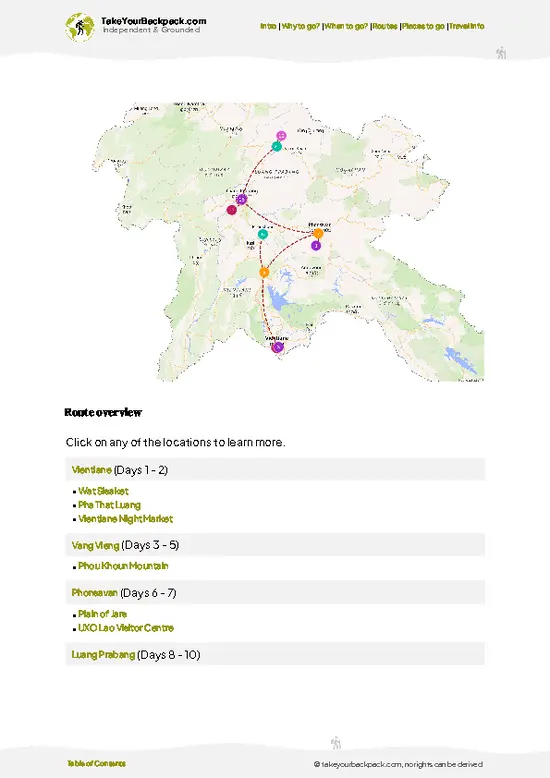
The Vibe: A balanced loop linking Luang Prabang, the river valleys of Nong Khiaw and Muang Ngoi, the karst playground of Vang Vieng, and the capital Vientiane. Expect a mix of scenic bus rides, light trekking, and big cultural hits without feeling rushed.
The Highlights:
  • Temple and heritage time in Luang Prabang before heading into the
read more 👉

The 5-Day Luang Prabang Slow-Travel Sampler

The Vibe: Five days based entirely in Luang Prabang, trading bus time for temple courtyards, waterfall swims, and long, lazy evenings in town. It’s ideal if you want depth over distance, with zero long-haul travel and everything reachable by tuk-tuk or short day trips.
The Highlights:
  • UNESCO-era streets and golden roofs around Wat Xieng Thong and the Royal Palace Museum
  • Swimming and hiking at Kuang Si Waterfall plus a visit to the Bear Rescue Centre
  • Hands-on weaving and textile culture at Ock Pop Tok Living Crafts Centre
  • Street food and souvenirs at the Luang Prabang Night Market

The 10-Day North-Central Laos Classic Loop

The Vibe: A balanced loop linking Luang Prabang, the river valleys of Nong Khiaw and Muang Ngoi, the karst playground of Vang Vieng, and the capital Vientiane. Expect a mix of scenic bus rides, light trekking, and big cultural hits without feeling rushed.
The Highlights:
  • Temple and heritage time in Luang Prabang before heading into the hills
  • River trekking between Nong Khiaw and Muang Ngoi Neua
  • Karst scenery and outdoor fun around Vang Vieng
  • National monuments and UXO history in Vientiane

The 15-Day Deep Laos Caves, Forests & Culture Route

The Vibe: A two-week-plus journey that layers Luang Prabang’s culture with remote river villages, conservation areas, epic caves, and the capital’s historical core. It’s for travelers who want to see both the headline sights and the quieter corners, with steady but not frantic overland travel.
The Highlights:
  • Extended time in Luang Prabang plus side trips to Kuang Si and craft centers
  • Village stays and trekking around Nong Khiaw, Muang Ngoi, and Nam Et-Phou Louey
  • Cave exploration and rural life along the Thakhek-Kong Lor corridor
  • Vientiane’s national icons and in-depth UXO and war history museums
🌍 Want a ready-to-use travel plan for Laos?
The overview above compares different route options based on your travel time and style. The complete Travel Guide breaks each itinerary down in detail, including maps, stops, highlights, and transport information.

Explore all route details 👉

Get the Travel Guide -

🌤️ When to go?Choosing the right months to travel

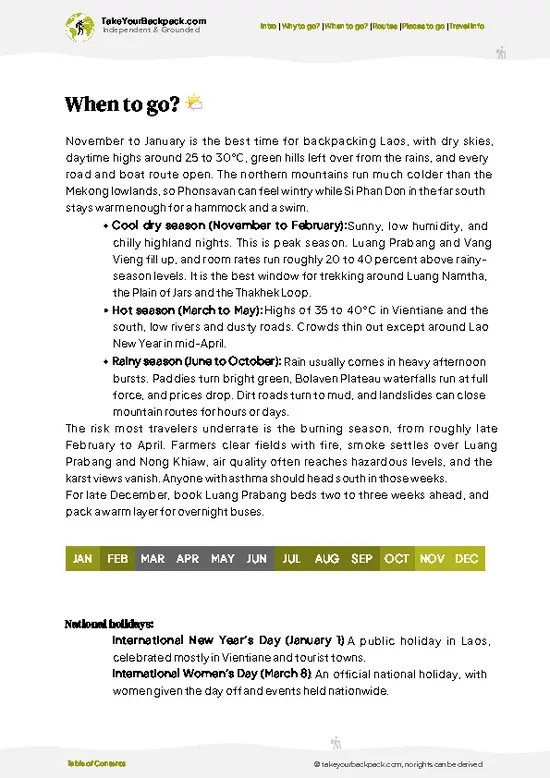
The sweet spot in Laos is mid-November to mid-December. The rain has rinsed the dust from the air and left the rivers fat; Kuang Si and Tad Fane are still thundering instead of trickling. Roads have dried, so buses make time instead of digging out of red clay. Mornings bite a little in the north—hoodie weather on the Mekong—and afternoons stay warm without the furnace slap of March. Guesthouse rates haven’t hit holiday highs, and crowds are present but not elbow-to-rib yet; you can still bargain for a bungalow on Don Khon and actually sleep. Most crucial: the annual burn haze hasn’t started, so hills around Nong Khiaw show their ridges instead of a gray smear.
  • Peak (Cool-Dry & Heat): December-January brings lines at Kuang Si and pricier tuk-tuks, but you earn clear, crisp mornings, glassy boat rides, and temple bells in air you can taste. Late February-April flips to blast-furnace afternoons; reward is night markets and warm river swims. Ignore at your peril: smoke from slash-and-burn chokes the north by March.
  • Early-Dry Shoulder: Late October-November hums as rain retreats. Trails firm up, mechanics reopen, ferries run on time. Dust settles, shops repaint, fields glow. You move, the country moves with you.
  • Monsoon Core: July-September hushes the trails; jungle breathes, waterfalls roar, and guesthouses drop rates. Wear sandals you can hike in, stash a dry bag inside your daypack, and ride morning buses before landslides shut the road.
  • Early Rains: May-June trade steady sun for short, loud storms. Heat breaks, rice paddies flash green, and boats regain depth. Carry salt and rehydrate; the humidity punishes the unprepared.

Tactical tip: For mid-Nov to mid-Dec, reserve anchor stays (Luang Prabang or 4000 Islands) about a week ahead and leave the middle nights open to chase weather and river levels.

source: climatestotravel.comJANJanuary: highly recommended for travelingFEBFebruary: good for travelingMARMarch: fair for travelingAPRApril: fair for travelingMAYMay: fair for travelingJUNJune: fair for travelingJULJuly: good for travelingAUGAugust: good for travelingSEPSeptember: good for travelingOCTOctober: highly recommended for travelingNOVNovember: excellent for travelingDECDecember: excellent for traveling
📅 Traveling in a specific month?
Get a full month-by-month breakdown of weather, crowds, costs, festivals, and seasonal highlights in the complete travel guide.

Get full details when to go 👉

Get the Travel Guide -
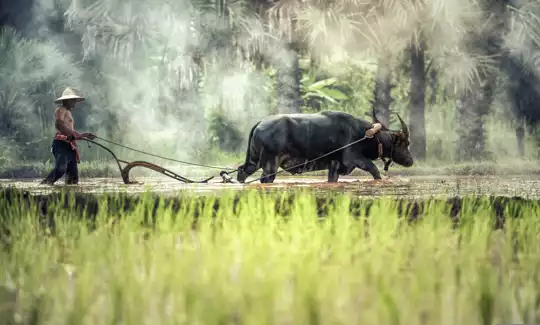
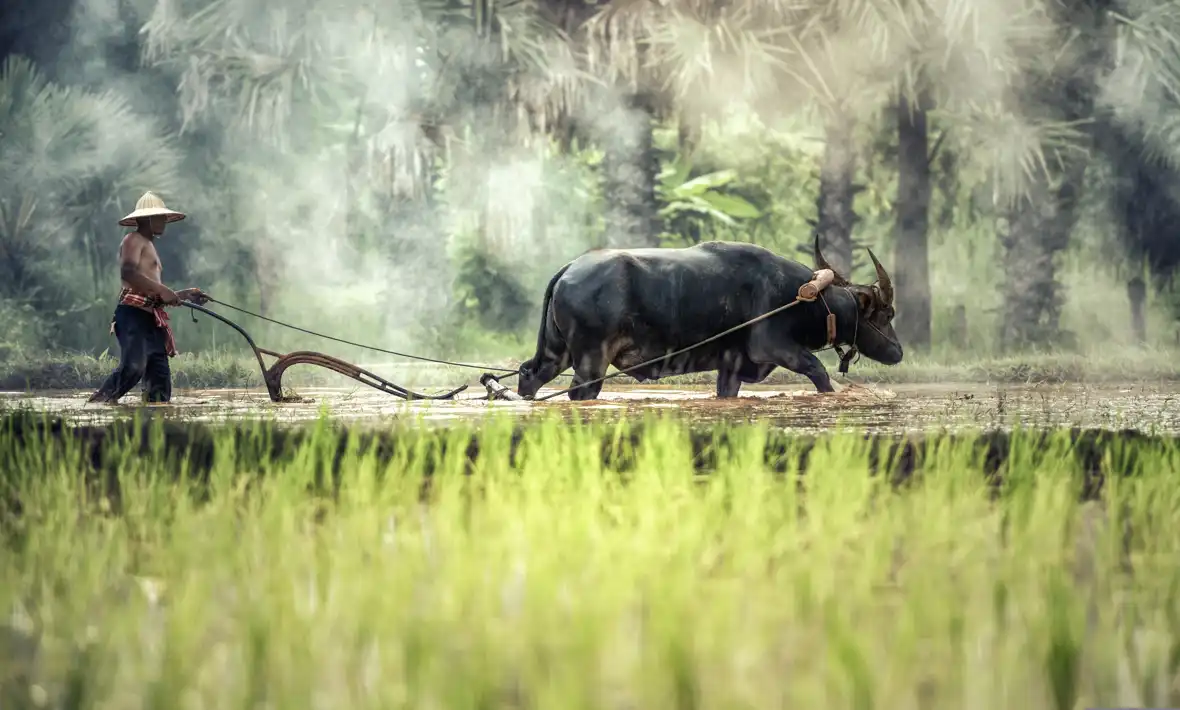
laos - pixabay - buffalo-1822574

💰 Costs (as of 2026)Typical budget expectations

Count on $25-35 USD per day if you sleep in dorms, eat street food, and don’t change towns every sunrise.
  • dorm accommodation: $4-12 per night depending on town and season; Luang Prabang and Vientiane sit at the top end, small Mekong towns at the bottom. Expect thin mattresses, fans that wheeze, and a plug war at night. Relative value: cheaper than Thailand’s tourist hubs and on par with rural Vietnam. System tip: arrive mid-afternoon, walk to three hostels within a few blocks, ask to see the bed, then ask for a cash price—offline walk-ins often shave 10-25% off.
  • meals: Supermarket Survival sounds cheap, but imported cereal, cheese, and peanut butter are priced like guilt; you’ll leave with instant noodles and a banana. Street food is the reality: khao jee baguettes, laap with sticky rice, noodle soups, grilled pork—$1-3 a hit, coffee $1-2. Vietnam feeds you for slightly less, Thailand for about the same but with more variety. Sit on a plastic stool, let the smoke sink into your shirt, and you’ll eat well without bleeding kip.
  • local transport: The cheapest way to unlock the country is a semi-automatic motorbike: $6-10/day rental, fuel around 12,000-15,000 kip per liter, and you can reach
read more 👉
Count on $25-35 USD per day if you sleep in dorms, eat street food, and don’t change towns every sunrise.
  • dorm accommodation: $4-12 per night depending on town and season; Luang Prabang and Vientiane sit at the top end, small Mekong towns at the bottom. Expect thin mattresses, fans that wheeze, and a plug war at night. Relative value: cheaper than Thailand’s tourist hubs and on par with rural Vietnam. System tip: arrive mid-afternoon, walk to three hostels within a few blocks, ask to see the bed, then ask for a cash price—offline walk-ins often shave 10-25% off.
  • meals: Supermarket Survival sounds cheap, but imported cereal, cheese, and peanut butter are priced like guilt; you’ll leave with instant noodles and a banana. Street food is the reality: khao jee baguettes, laap with sticky rice, noodle soups, grilled pork—$1-3 a hit, coffee $1-2. Vietnam feeds you for slightly less, Thailand for about the same but with more variety. Sit on a plastic stool, let the smoke sink into your shirt, and you’ll eat well without bleeding kip.
  • local transport: The cheapest way to unlock the country is a semi-automatic motorbike: $6-10/day rental, fuel around 12,000-15,000 kip per liter, and you can reach waterfalls and village roads the vans ignore. For long hops, local buses and minibuses run $8-20 depending on distance; they’re slow, dusty, and honest. Tuk-tuks in towns are negotiable—agree the fare first or walk 50 meters away from the station to halve the quote. Compared to Vietnam, per-kilometer costs are higher and timetables looser; compared to Thailand, you save on the bike, not the vans.
  • activities: Entrance fees are small—waterfalls and caves $1-3—but boats through Kong Lor, kayak days, or tubing stack up ($10-30). The big spikes: multi-day treks ($25-40/day all-in), slow boat runs ($30-40 over two days), and the Gibbon Experience or zipline fantasies (well into $100s, pricier than similar thrills in Thailand). Laos rewards DIY: rent a bike, ride the Thakhek or Bolaven loops, pay modest site fees, and you’ll see more for less.
  • miscellaneous: Budget leaks hide in plain sight: ATM fees ($2-6 per pull) plus low limits force multiple withdrawals; cash is king. Visa on arrival runs roughly $30-45 depending on passport. Laundry by the kilo is cheap (10-15k kip), but sunscreen, repellent, and Western snacks bite. Beerlao is a good deal—$1-1.50 in shops, $1.50-2.50 in bars—cheaper than Thailand. Little tolls—bamboo bridge, viewpoint stairs—nibble a dollar here, a dollar there; it adds up if you chase every sunset.
⚠️ Prices can change and everyone travels differently, so take this as a rough guide. Hope it helps you plan your adventure!

✈️ The backpacker research shortcutLaos Travel Guide

An offline-friendly backpacking guide with optimized travel routes, ranked highlights, transport advice, and the best areas to stay.
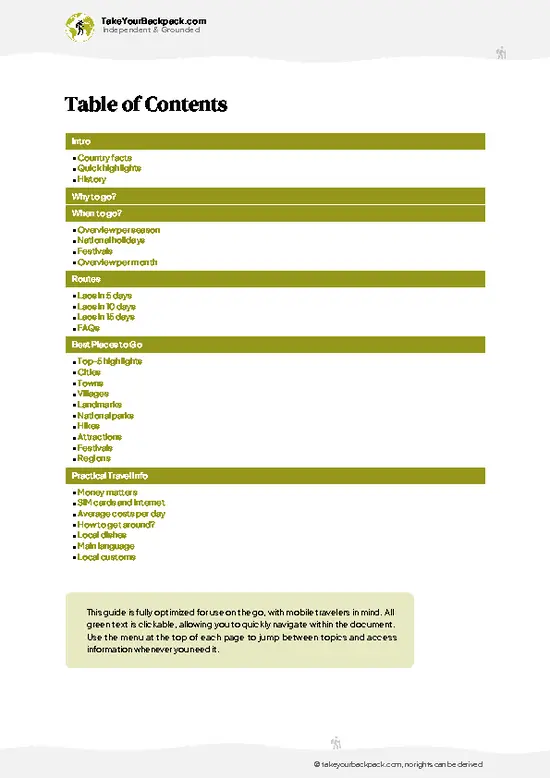
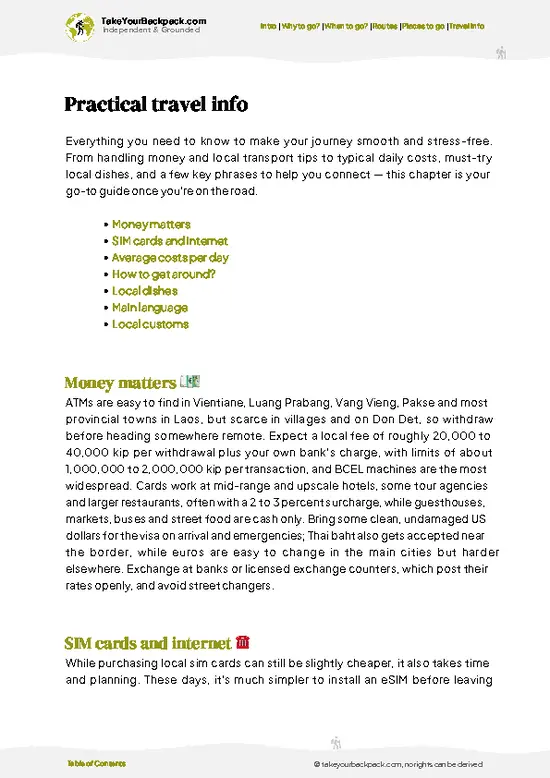
example page 0 from our offline Travel Guide for Laosexample page 1 from our offline Travel Guide for Laosexample page 2 from our offline Travel Guide for Laosexample page 3 from our offline Travel Guide for Laosexample page 4 from our offline Travel Guide for Laosexample page 5 from our offline Travel Guide for Laosexample page 6 from our offline Travel Guide for Laosexample page 7 from our offline Travel Guide for Laos
The digital guide (313 pages) contains:
80 highlights, ranked by travel appeal
Optimized 5, 10 & 15-day travel routes
Cities, national parks, beaches, historical sites, ...
How to get around
Offline-friendly for travel without Wi-Fi
👉 Click to see all 30+ guide features

📅 Plan smarter in minutes, not weeks
Month by month travel advice
Festivals & national holidays
Budget expectations

🗺️ Go to the right places, skip the overrated ones
Honest pros & cons of destinations
Top hikes, parks & viewpoints
Lesser-known places most travelers miss
Clear “worth it vs skip it” guidance

🛏️ Travel smoothly without rookie mistakes
Best areas to stay
Transport systems explained simply
Common scams & safety advice
SIM cards, money & practical tips

🌍 Understand the country, not just visit it
Culture & traditions
52 Essential phrases & customs
Festivals worth planning around
Traveler-friendly historical context
Insights that make places more meaningful

📱 Built for real travel conditions
Fully downloadable PDF
Works completely offline
Optimized for phone use
Useful in remote areas & buses
Everything in one place
Save weeks of stressful planning
Get instant access to the full guide directly. 30-day money-back guarantee.


Sent to your inbox immediately after payment • 100% Secure Checkout
Best Backpacking Travel Advisor 2025 tourism awardBest Backpacking
Travel Advisor
2025
What others say about Take Your Backpack Guides:
⭐⭐⭐⭐⭐
Fantastic, amazing amount of information!
⭐⭐⭐⭐⭐
My goodness this is amazing, it's what I've been looking for hats off too you!
⭐⭐⭐⭐⭐
I think this is absolutely BRILLIANT
⭐⭐⭐⭐
Very complete and informative. It's still missing places, but I gotta to commend you
⭐⭐⭐⭐⭐
This is truly amazing, thank you, can't wait to explore it with my kids!
⭐⭐⭐⭐⭐
Awesome resource, thank you!
⭐⭐⭐⭐⭐
This is amazing! Can't wait to explore the ones I haven't seen
⭐⭐⭐⭐
I love this! Well done, great idea.
⭐⭐⭐⭐⭐
Thanks for taking the time to make this gem!
⭐⭐⭐⭐⭐
This might be the best website I've ever seen.
⭐⭐⭐⭐⭐
Congratulations, and thank you so much for your work; it's incredibly valuable.
⭐⭐⭐⭐
In all seriousness I think you did a great job pointing out the important spots
⭐⭐⭐⭐⭐
10/10 very good
⭐⭐⭐⭐⭐
As someone who's only just starting to visit regularly this is awesome, thank you.
⭐⭐⭐⭐
Thank you very much! I'm going to visit my dad, it's going to be very useful!
⭐⭐⭐⭐⭐
This is really cool! We'll be travelling for the first time and this definitely come in handy.
⭐⭐⭐⭐⭐
You are now our minister of culture, congratulations 👨‍💼
⭐⭐⭐⭐⭐
Just wanted to tell you that this is a pearl! Going to follow your recommendations.
⭐⭐⭐⭐⭐
This is so cool. I'll definitely be using the resource for my travels soon.
⭐⭐⭐⭐⭐
This is very impressive! Good work.
⭐⭐⭐⭐⭐
This is an amazing and informative site. Very well done!

🛏️ Where to stay?Where to stay in Laos

Yes — Laos has plenty of hostels and budget accommodation concentrated in Luang Prabang (Old Quarter/riverside), Vang Vieng (riverfront/main strip), Vientiane (city centre/riverside), Pakse (central/market area) and the 4000 Islands (Don Det/Don Khone).
Choose Luang Prabang for the best selection of guesthouses, direct access to temples and a safe, quiet night scene though prices can be higher; pick Vang Vieng for outdoor activities and a lively riverside strip but expect noisy, party-oriented hostels; use Vientiane as a calm transport hub with basic-budget options near the Mekong; opt for Pakseread more 👉
Yes — Laos has plenty of hostels and budget accommodation concentrated in Luang Prabang (Old Quarter/riverside), Vang Vieng (riverfront/main strip), Vientiane (city centre/riverside), Pakse (central/market area) and the 4000 Islands (Don Det/Don Khone).
Choose Luang Prabang for the best selection of guesthouses, direct access to temples and a safe, quiet night scene though prices can be higher; pick Vang Vieng for outdoor activities and a lively riverside strip but expect noisy, party-oriented hostels; use Vientiane as a calm transport hub with basic-budget options near the Mekong; opt for Pakse when you need a base for the Bolaven Plateau and onward buses despite fewer choices; and head to Don Det/Don Khone for the cheapest bungalows, very slow island life and limited facilities or transport.
Book ahead for Luang Prabang in high season and plan extra time for transfers to and from the islands or Pakse because schedules and amenities are often basic.

If you enjoy meeting fellow travelers, consider choosing hostels with high ratings for atmosphere. On the other hand, if you prefer having your own space, a hotel might be a better option.

🚌 Getting aroundPublic transport and other ways to get around

Laos moves like a river with a train line hammered through it. Off the rails, time stretches: minivans leave “after one more passenger,” buses pause for sacks of rice and petrol fumes, and drivers trade gossip at noodle stalls while you count geckos on the wall. On the new railway, it snaps tight—ticket names must match your passport, gates close when they say they do, and you sit where your seat number tells you. Learn both rhythms and you’ll ride the country’s flow instead of fighting it.
  • Laos-China
read more 👉
Laos moves like a river with a train line hammered through it. Off the rails, time stretches: minivans leave “after one more passenger,” buses pause for sacks of rice and petrol fumes, and drivers trade gossip at noodle stalls while you count geckos on the wall. On the new railway, it snaps tight—ticket names must match your passport, gates close when they say they do, and you sit where your seat number tells you. Learn both rhythms and you’ll ride the country’s flow instead of fighting it.
  • Laos-China Railway The Efficiency Trade-off: It’s the knife through the hills—Vientiane to Vang Vieng to Luang Prabang in hours, not a day of hairpins. You pay for speed with rules and side costs. Stations sit outside town, so add a tuk-tuk both ends. Buy a day ahead, bring your passport, expect airport-style checks, and no leaky fuel bottles in your pack. When it works, you step off with daylight to spare and cold Beerlao sweat beading on the glass.
  • Songthaew & Tuk-tuk The Social Fabric: Shared pickups and three-wheeled buzzers run on eye contact and small bills. In a songthaew, prices are usually fixed; pass your fare forward, sit bench-to-bench, and tap the roof to stop. Elders and monks get seats without debate. Tuk-tuks are a haggle—agree before you climb in, keep it friendly, and don’t flash big notes. Dust on your shins, the smell of jasmine and petrol, and everyone pretending not to notice the chicken basket under your knees.
  • Local Bus The Budget Disruptor: Ignore the “VIP minivan” touts and walk to the local stand. The old buses are cheaper, take luggage without drama, and stop for food you can actually eat. They creep but they cost less than half on some routes, and overnight sleepers Vientiane-Pakse save a room night. Bring a jacket for meat-locker AC, earplugs for karaoke, and patience for the parcel runs that make this system affordable.
  • Riverboats The Geometric Unlock: Water cuts where roads fail. Longtails up the Nam Ou carry you to Muang Ngoi and villages that shrug at landslides. The Mekong slow boat from Huay Xai drifts between limestone and bamboo cookfires, leaving when seats and sacks balance. Dry season means sandbars and longer days; wet season runs faster but wetter. Buy a cushion, wrap your bag in a dry sack, and watch the sun burn gold on the cliffs as the engine thumps steady.

Master tactical tip: Front-load distance on the train (tickets bought a day early), then finish legs with local buses and songthaews from the same station, always aiming for the first departure of the day when breakdowns and weather haven’t had time to ruin the schedule.
Distance
Wattay International Airport (VTE) sits about 5 km (3 miles) west of central Vientiane (around the Nam Phou/Mekong riverside area).

Main public transport options
  • Airport shuttle bus (Vientiane Capital State Bus Enterprise).
    Time: about 15-25 minutes, longer in rush hour.
    Cost: typically 15,000-25,000 LAK (roughly US$0.70-$1.20) in 2025.
    Notes: Runs throughout the day with stops at Talat Sao (Morning Market) and along the riverfront; buy a ticket at the booth or on board, and keep small notes.
  • City bus (public route to Talat Sao Bus Station).
    Time: about 25-40 minutes.
    Cost: usually 5,000-10,000 LAK (about US$0.25-$0.50).
    Notes: Less frequent than the shuttle; look for blue-and-white city buses showing “Airport”/“Talat Sao.” You may need to walk a short distance to the stop just outside the terminal area.

Taxis and ride-hailing
Airport taxis use a fixed-price system from the counter in arrivals. Expect around 90,000-120,000 LAK to most central hotels (about US$4-$6); the ride takes 15-25 minutes depending on traffic. Ride-hailing via the local app Loca is common and often slightly cheaper off-peak (roughly 70,000-110,000 LAK). Tuk-tuks are available outside; agree the fare first—figure on 60,000-100,000 LAK for the center.

Good to know
Fares in Laos can shift with fuel prices and the kip’s exchange rate, so treat the figures above as typical 2025 prices. Traffic is heaviest around 17:00-19:00; outside peak times the trip can be very quick. Cash (LAK) is preferred for buses and tuk-tuks; ATMs are in arrivals.
⚠️ Prices and routes can change, so take this as a rough guide and ask for local advice when you arrive.

🔒 Safety (risk Level: low)Common concerns and things to watch out for

Safety for solo travelers, including women and LGBTQ+ individuals
Laos is generally safe for solo travelers, including women and LGBTQ+ individuals, but like anywhere, staying aware of your surroundings is key. Stick to well-lit areas at night and keep an eye on your belongings, as petty theft can occur. The LGBTQ+ scene is low-key but present; however, public displays of affection might attract unwanted attention, so discretion is advisable. For women, dressing modestly and respecting local customs will help create a comfortable and respectful travel experience.


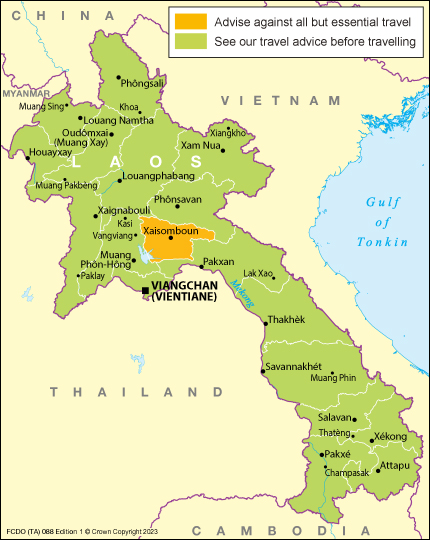
Full official government travel advisory (live updates)
View details 👉
safety image

source: www.gov.uk

✈️ VisaVisa requirements for Laos

Most travelers need a visa to enter Laos, but you can easily get a visa on arrival at most international airports and border crossings. Bring a passport-sized photo and around $30–$40 USD in cash. Alternatively, you can apply for an e-Visa online through the official Lao e-Visa website.
⚠️ Visa requirements can change over time, so always check the latest visa requirements with the official embassy or government website before you travel.

🎒 What to pack?What you'll need while traveling

Laos is a mix of steamy jungles, misty mountains, and laid-back river towns, so pack for a wild ride in varied weather. It’s generally hot and humid, with a pronounced rainy season from May to October, so quick-dry clothing is your best friend. For mountain adventures, a light jacket is wise since it can get cooler at higher altitudes. Culturally, Laos is pretty chill, but modesty reigns supreme at temples. Think long pants or skirts and tops that cover your shoulders. You’ll thank yourself for packing lightweight, breathable fabric that respects both the climate and the local customs.

Apart from this country specific advice, I have also crafted a general packing list that should help on any trip. authorOver the years, I've learned the importance of packing minimally. It's so much easier to jump on the back of a truck or squeeze yourself into the last spot of a minibus without that supersized backpack. If you're headed to a warm destination, leave your winter jacket at home; for colder regions, opt for thin thermal underlayers. Instead of packing your entire wardrobe, bring just three sets of clothes, as laundry facilities are available everywhere.

View the full list 👉
🎒 Planning the practical side of your trip?
Get detailed information on transport, daily budgets, internet access, local customs, food, language, and other essentials in the complete Travel Guide.

Get detailed practical information 👉

Get the Travel Guide -

🙋 FAQQuick answers to practical concerns

Trip Planning


Personal tip: I normally search on good rating for atmosphere (for meeting people) and location (for easy exploring). Cleanliness as a bonus.


Travel Essentials

Hepatitis A and B vaccines are recommended for all travelers to Laos. Typhoid vaccination is also advised, especially if you’re planning to eat street food or stay in rural areas. Consider a rabies vaccine if you’ll be in contact with animals or in remote regions. Ensure your routine vaccinations, like MMR and Tetanus, are up-to-date. Japanese Encephalitis is recommended if you’ll spend a lot of time outdoors in rural areas or if you’re visiting during the rainy season. Always consult your healthcare provider for personalized advice.


vaccination requirements
When I first started traveling, I often spent part of my first day in a new country hunting for a local SIM card. While this can still be slightly cheaper, it also takes time and planning.

These days, it's much simpler to install an eSIM before leaving home. Once you arrive in Laos, you can activate it immediately and have mobile data from the moment you land — which is especially useful for ordering transport or navigating away from busy airports.

There are many providers nowadays, and price differences are usually small. I personally go with Airalo, as it offers excellent network coverage throughout the country and strong global coverage, so you can manage multiple countries from a single app.


Get your e-sim for Laos

Culture & Customs

Dress conservatively, especially at religious sites. Women should cover shoulders and knees. Remove shoes before entering homes or temples. Use your right hand or both hands when giving or receiving things. Avoid touching anyone’s head, as it’s considered impolite. Public displays of affection are frowned upon. For LGBTQ+ travelers, discretion is advised in public as Laos is a conservative country, though private tolerance is generally high. If invited to a local home, bring a small gift like fruit or sweets. Remember, a smile goes a long way in Laos.
Trying traditional food is always a great way to experience the culture. Here are some must-try dishes for Laos.
  • Larb: Often considered the unofficial national dish, this spicy meat salad is a mix of minced meat (usually chicken, beef, or pork), lime juice, fish sauce, herbs, and roasted ground rice. It’s a staple at celebrations and gatherings, representing the balance of flavors Laos is known for.
  • Sticky Rice (Khao Niew): More than just a side, sticky rice is the backbone of Lao meals. It’s a cultural icon, symbolizing Lao identity and often eaten with fingers, pairing perfectly with almost every dish.
  • Tam Mak Hoong (Papaya Salad): This spicy salad made from shredded green papaya, tomatoes, lime, chili, and fish sauce is a classic Lao street food. It highlights the bold flavors and love for fresh ingredients in Lao cooking.
  • Or Lam: A hearty stew from Luang Prabang, Or Lam is made with buffalo meat or chicken, lemongrass, eggplant, and wood ear mushrooms, often spiced with chili and pepperwood. It’s a comfort food that reflects the local produce and flavors.
  • Khao Piak Sen: This noodle soup, made with hand-rolled rice noodles in a thick, savory broth, is often enjoyed for breakfast. It’s a simple yet deeply satisfying dish that showcases the warmth and comfort of Lao cuisine.
Locals in Laos typically don’t drink tap water without boiling it first, and it’s not recommended for tourists to drink it straight from the tap either. Stick to bottled or filtered water to be safe—it’s cheap and widely available. If you’re eco-conscious, bring a portable water filter or purification tablets.
The main language in Laos is Lao. Backpacking is way more rewarding if you know a bit of the local language, so I'd suggest brushing up on the basics just in case your Lao skills have become a bit rusty.

Want to understand locals better?
The complete Travel Guide for Laos includes 52 essential words and phrases — greetings, thank-yous, ordering food, transport, numbers, and common local expressions you'll actually hear.

Get your local basic phrases 👉

Get the Travel Guide -


In Laos, English is not as widely spoken as in some neighboring countries, but it is increasingly common, especially in urban areas and tourist destinations. In cities like Vientiane and Luang Prabang, you’ll find many people in the hospitality industry—such as hotel staff, tour guides, and restaurant workers—who can communicate in English. However, in rural areas, English proficiency may be limited, and local languages like Lao are predominantly spoken.

While younger generations, particularly students and professionals, are more likely to speak English due to education and exposure to media, fluency levels can vary significantly. Basic English phrases may be understood, but for more complex conversations, patience and gestures may be necessary.

Travelers are encouraged to learn a few basic Lao phrases, as this can enhance interactions and show respect for the local culture. Overall, while English is not universally spoken, it is sufficient for navigating most tourist experiences in Laos, particularly in areas frequented by foreigners.

Money & Payments

The local currency of Laos is LAK (₭).

If you’re backpacking in Laos, here’s the lowdown on handling money:

ATMs: They’re available in cities and larger towns, but don’t count on them in rural areas. Stick to Vientiane, Luang Prabang, and Pakse for reliable access. Most ATMs dispense Lao Kip, but a few might offer dollars.

Cash: Always have some kip on hand for small purchases and in places where cards aren’t accepted. U.S. dollars are widely accepted, especially in tourist areas, but it’s not as common to use euros for everyday transactions.

Card Acceptance: Credit and debit cards are becoming more widely accepted in hotels and larger restaurants, but cash is still king. Always ask first if you’re in a smaller establishment.

Exchanging Money: It’s better to exchange money at banks or authorized exchange offices rather than at the airport for better rates. Keep an eye out for exchange fees, too. Avoid exchanging on the street—it’s risky and often illegal.

As always, keep some emergency cash hidden away, just in case you can’t access an ATM or card payments fail. Safe travels!

Laos generally doesn’t have a strong tipping culture, but small tips are appreciated in tourist areas. In restaurants, consider leaving around 10% if service is good. For services like taxis or local guides, rounding up the fare or giving a small amount is a nice gesture.

🧩 Nearby countriesSimilar backpacking destinations

We 💚 feedbackThe bottom line on traveling here

Laos moves at river speed: diesel on the road, lemongrass smoke at dusk, temple drums before sunrise. The grind is real—long buses curling through mountains, red dust in your teeth—but then the payoff: a cold Beerlao by the Mekong, waterfall spray on burnt skin, karst turning cobalt at last light. Best surprise: the coffee, chocolatey, sipped above terraced fields. Small warning: carry cash and start early; things shut down sooner than you expect. And no, it isn’t wild or unsafe—stay on paths and it’s calmly doable.

✍️ Help improve this page!
The information on this page is based on in-depth research, insights shared by experienced travelers, and feedback from the local travel community in Laos. While every effort is made to keep the information accurate and current, conditions can change — so if you spot anything incorrect or outdated, please get in touch.


🙋‍♂️ Give feedback

👋 Meet the founderWho’s Behind Take Your Backpack?

Johan, backpacker and founder of TakeYourBackpackHi, I’m Johan (Netherlands 🇳🇱), the creator of TakeYourBackpack. Over the past decade, I’ve backpacked through 80+ countries across six continents, gaining extensive experience with independent travel, long-term trips, and overland routes.

This site is built on a combination of firsthand travel experience and carefully curated insights from other backpackers. Many guides are based on places I’ve personally visited, while others bring together tips, observations, and practical advice shared by trusted travelers I’ve met along the way.

The goal is to provide realistic, experience-driven guidance — not generic itineraries — so you can explore destinations with better context, clearer expectations, and more confidence.

Get full Laos guide •
Instant download • 80 highlights • Full Offline guide