×
Venezuela 🇻🇪

backpacking South America Venezuela 🇻🇪Travel extremes from jungle rivers to coastlines.

Explore UruguayExplore Algeria

Backpacking Venezuela in 2026

A complete guide including when and where to go, costs, transport, itineraries, and practical travel advice.
What a trip here is really like

Backpacking Venezuela
By Johan Kruseman 🇳🇱 | Updated June 3, 2026

You expect only crisis; on the ground, travel-smarts unlock the good stuff. The headlines are real, but so are generous locals, fixer-guides, and routes that keep you in the sweet spots. This is a big-nature, big-heart country that rewards patience with outsized scenery, rhythm, and wild silence.

Start with the Guiana Shield rising as tepuis, where Angel Falls drops off a cloud-brushed table and Roraima walks you onto a Martian plateau. Trade island time in Los Roques’ electric-blue flats for the Llanos, with anacondas, capybaras, and dusk joropo, then climb into Mérida’s Andean light or slide by canoe through the Orinoco Delta; finish with drums, cacao, and a hot arepa in Choroní. Yes, cash rules, domestic flights reshuffle, fuel and power hiccup, and you skip night moves, but those frictions thin the crowds and make every boat ride, summit, and street-corner conversation feel earned.

Where Colombia feels polished and Brazil spreads wide, Venezuela compresses Caribbean coast, high Andes, tepui backcountry, and safari plains into one punchy hit at prices that reward the prepared. Go if you’re curious, patient, and happy to travel with local help; hikers, wildlife lovers, and photographers will eat it up.

👉 Get the 📖 Travel Guide of Venezuela
Gran Sabana & Canaima (Roraima, Angel Falls) — Rugged and remote. You move by small plane or long, fuel-scarce roads. Fly to Canaima from Ciudad Bolívar/Puerto Ordaz for Angel Falls, or bus/ride to Santa Elena for the Roraima trek. Wet season (roughly Jun–Nov) feeds the falls; dry season favors hiking. Bring USD in small bills; tours, boats, and park fees rarely take cards. Rewards trekkers who don’t mind muddy boots and simple camps.

Mérida Andes & Páramo — Cool air, mountain food, and hikers everywhere. Base in Mérida city, then ride the teleférico or hop colectivos to páramo trailheads. Fly to El Vigía, then taxi/bus up to town; night buses exist but cost you sleep and patience. Cheap compared to beach zones. Altitude bites, weather flips fast. Best for walkers, paragliders, and budget travelers who like early starts.

Central Caribbean Coast spine (Caracas–La Guaira–Choroní/Morrocoy–Los Roques) — One transport line, very different budgets. From Maiquetía you can bus/taxi to Choroní or Morrocoy for boat hops to sandy cays; pay per boat, fuel drives price, and seas get rough after lunch, so leave early. Same airport feeds flights to Los Roques, which is spectacular but pricier than anywhere else in the country (park fees + mandatory boat hires + lodgings). Travel this coast in daylight; don’t flash gear on docks. Rewards strong swimmers and anyone who values water time over nightlife.

Los Llanos — Flat horizons, wildlife density that embarrasses most countries. Go via Barinas or San Fernando de Apure to simple haciendas running jeep/boat safaris. Dry season concentrates animals; wet season means birds and mud. Comfort is basic but day-for-day cheaper than island time. Mosquitoes are relentless. Ideal for photographers and naturalists who can sleep light and ride long.

Orinoco Delta — Swampy, slow, and immersive. Access via Tucupita or Maturín, then all logistics run through a lodge: boats, fuel, permits. Electricity is limited, humidity is not. Pack a dry bag, head net, and strong repellent. Visits rise or fall on your guide’s ethics; pick operators who treat Warao communities fairly. Rewards patient travelers chasing silence and wildlife, not bar scenes.
Safety warning

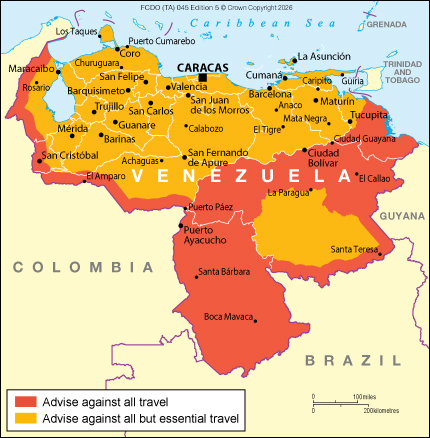
The current risk level for Venezuela is high. Check the advice before going.
Get your Venezuela guide
102 ranked highlights, routes & tips, works offline (386 pages)
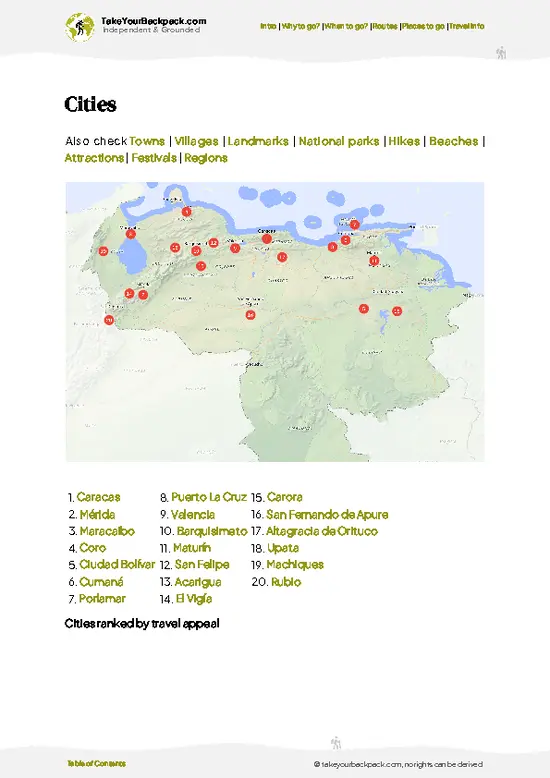
A visual overview of the country
Loading the map 🌍
CLICK TO FILTER
city
town
village
unique site
national park
hike
beach
attraction
festival
region
SHOW COUNTRY’S BESTSHOW ALL
film
0
0
0a
Teleférico de Mérida
film
1
1
1a
Museo de Bellas Artes de Caracas
film
2
2
2a
Museo de Arte Contemporáneo de Caracas
film
3
3
3a
Museo Marino de Margarita
film
4
4
4a
Parque El Agua Isla de Margarita
film
5
5
5a
Museo de Arte Colonial Quinta de Anauco
film
6
6
6a
Museo de Ciencias de Caracas
film
7
7
7a
Parque Zoológico y Botánico Bararida
film
8
8
8a
Cayo de Agua
Jorge Humberto
film
9
9
9a
Playa El Agua
Vlad Malaymen
film
10
10
10a
Playa Medina
Jesus Alvarado
film
11
11
11a
Playa Parguito
film
12
12
12a
Cayo Sal
Leandro Castro
film
13
13
13a
Cayo Muerto
Carlos Liborio Curreri
film
14
14
14a
Caracas
Elio Guzman
film
15
15
15a
Roraima
Sayeh Co
film
16
16
16a
Angel Falls
Salto Ángel
film
17
17
17a
Gran Sabana
Julio Fernandez Casanova
film
18
18
18a
Pico Naiguatá
film
19
19
19a
Laguna de Mucubají Trail
film
20
20
20a
Los Nevados Trail
film
21
21
21a
La Culata Trail
film
22
22
22a
Cueva del Guácharo Trail
film
23
23
23a
Canaima
iStockphoto
film
24
24
24a
Los Roques
film
25
25
25a
El Parque Nacional Morrocoy
Toibis Gutierrez
film
26
26
26a
Mochima
film
27
27
27a
Médanos de Coro
film
28
28
28a
Sierra Nevada
film
29
29
29a
Cueva del Guácharo
film
30
30
30a
Sierra de La Culata
Giovanny G.
film
31
31
31a
Aguaro-Guariquito
film
32
32
32a
Los Andes
Ernesto Malpa
film
33
33
33a
Angel Falls
iStockphoto
film
34
34
34a
Cerro Autana
Andres Rss
film
35
35
35a
Canaima
Yoha Ar

Why go?What sets this destination apart

Scenery

Venezuela rewards effort. Landscapes swing from the Caribbean atolls of Los Roques to the Andean páramo … read more 👉
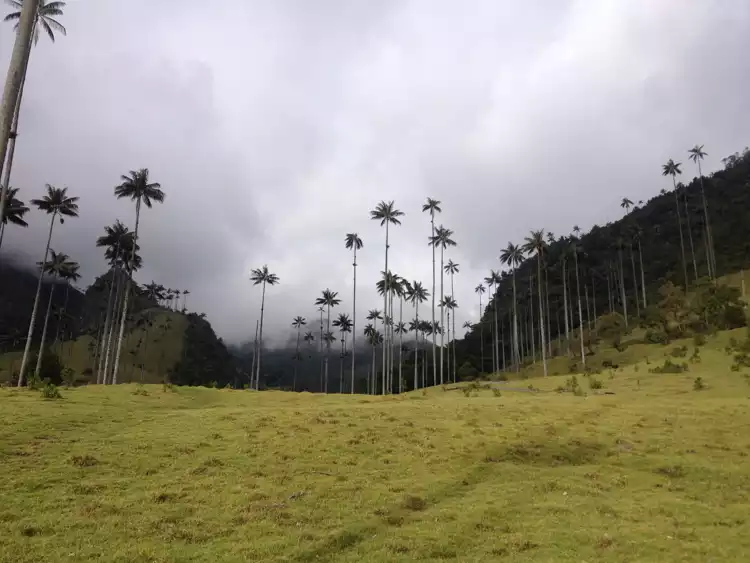
Venezuela rewards effort. Landscapes swing from the Caribbean atolls of Los Roques to the Andean páramo above Mérida, then plunge to the tepuis of the Gran Sabana where Angel Falls drops out of a cloud. Lake Maracaibo throws nightly Catatumbo lightning shows. The Llanos stretch flat and wild; the Orinoco and Amazon fringe you with real jungle. There are caves — Cueva del Guácharo — and even mud “volcanoes.” You’ll work for access, but the payoff is scale, variety, and that rare feeling of being small in the best way.

Uniqueness

Venezuela rewards effort. Tepui country isn’t a viewpoint; it’s a long river push to Angel Falls and … read more 👉
Venezuela rewards effort. Tepui country isn’t a viewpoint; it’s a long river push to Angel Falls and a brutal, beautiful haul up Roraima’s stone maze. Los Llanos serves capybara and caiman at arm’s length, and Los Roques trades pavement for glassy cays and skiffs. The gotchas are solvable: move at dawn, build buffer days, expect fuel lines and blackouts, carry crisp USD in small bills, and book local guides who actually have a boat and gas. Do this, and you spend less on headaches and more on the kind of wild you can’t fake.

Low cost

Venezuela stretches your money like few places. I eat arepas and set lunches, drink fresh juice, and … read more 👉
Venezuela stretches your money like few places. I eat arepas and set lunches, drink fresh juice, and still come out ahead. Local buses and shared taxis are cheap, and family-run posadas undercut hostels elsewhere. A realistic daily average lands in the low-to-mid double digits if you skip flights and drink what locals drink. The gotchas: never pay with a foreign card at the official rate, carry small USD/euros for change, agree on prices before rides, and expect park fees and boat runs to be cash-only.

Mountains

Venezuela rewards hikers who earn it: alpine nights in the Sierra Nevada de Mérida, real altitude on … read more 👉
Venezuela rewards hikers who earn it: alpine nights in the Sierra Nevada de Mérida, real altitude on Pico Bolívar, and other‑planet days on tepuis like Roraima. You move from jungle to páramo in a single week, with few crowds and big sense of space. It can be cheap compared to Peru or Chile—if you plan. The catch: logistics bite. Bring the gear you trust, hire proven local crews, travel by daylight, carry small bills, and respect weather and altitude. Do that, and your energy goes to the climbs and cloud‑edge horizons, not fixing avoidable problems.

Beach life

Venezuela pays out for beach hunters. I come for Los Roques’ chalk-white cays and glass-flat water, … read more 👉
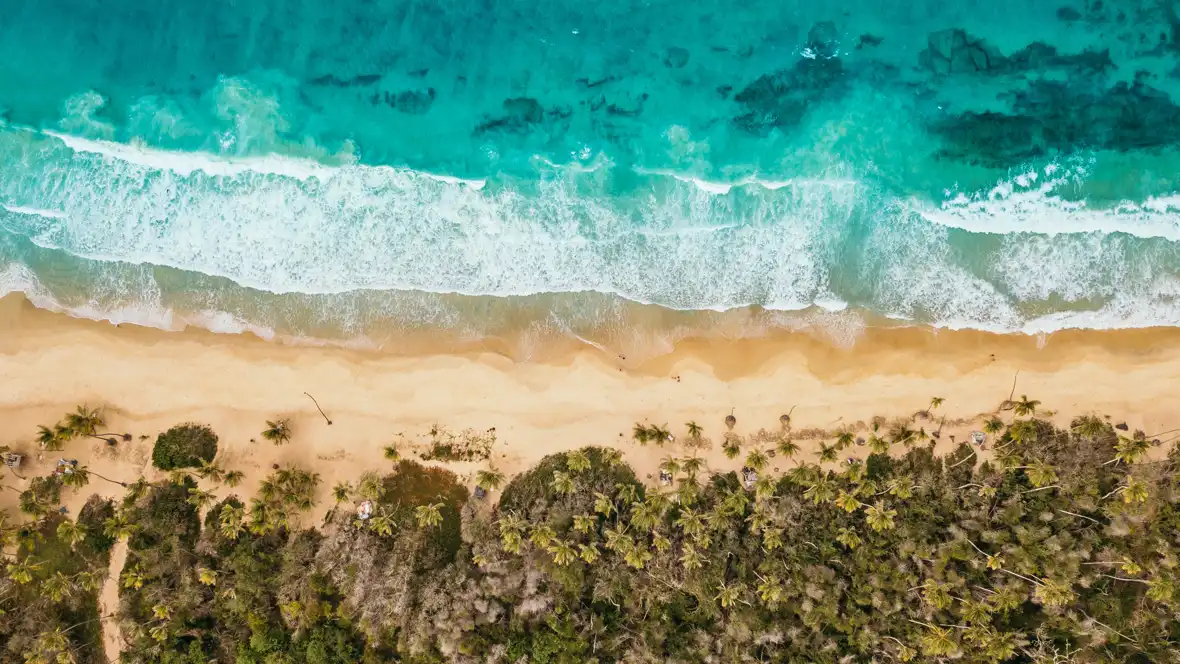
Venezuela pays out for beach hunters. I come for Los Roques’ chalk-white cays and glass-flat water, then slide east to Mochima’s coral coves and Morrocoy’s mangroves for lazy snorkels. Playa Medina throws shade from real coconut trees; Margarita Island turns up the music after dark. The water’s warm year‑round, winds feed kites, and fish hits your plate an hour after it left the sea. Outside holiday weeks, you get elbow room. With smart logistics, it delivers Caribbean-grade beaches at a lower spend and more soul.
Want the complete picture of Venezuela?
The offline Travel Guide brings everything together — routes, highlights & planning.

See what's included in the guide 👉

Get the Travel Guide -

⭐ HighlightsThe places that define a trip here

  • Angel Falls (Salto Ángel), Canaima: The tepuis rise like rusted ship hulls and the fall drops out of the clouds so long your brain needs a second to catch up. In a dugout, river spray tastes faintly of iron and leaf tannin. Go in wet season or you’ll pay for a flyover and never touch the river; bring cash for fees, plastic-bag your gear, and sleep hammock-ready.
  • Mount Roraima Trek: The tabletop world feels alien—quartz gardens, pitcher plants, wind that rattles the tent poles at 2 a.m. Cold fog beads on your eyelashes while your boots sink into black sponges. Hire a local porter and pack liners; the climb is steep, the descent wrecks knees, and permits and community fees are cash-only at Paraitepui.
  • Los Roques Archipelago: Water so clear your shadow looks printed on the sand, and that sand squeaks underfoot like dry snow. Pelicans hammer the shallows while the sun brands the back of your neck. Budget for park fees and boat taxis; bring snacks and cash or get punished by island markups, and
read more 👉
  • Angel Falls (Salto Ángel), Canaima: The tepuis rise like rusted ship hulls and the fall drops out of the clouds so long your brain needs a second to catch up. In a dugout, river spray tastes faintly of iron and leaf tannin. Go in wet season or you’ll pay for a flyover and never touch the river; bring cash for fees, plastic-bag your gear, and sleep hammock-ready.
  • Mount Roraima Trek: The tabletop world feels alien—quartz gardens, pitcher plants, wind that rattles the tent poles at 2 a.m. Cold fog beads on your eyelashes while your boots sink into black sponges. Hire a local porter and pack liners; the climb is steep, the descent wrecks knees, and permits and community fees are cash-only at Paraitepui.
  • Los Roques Archipelago: Water so clear your shadow looks printed on the sand, and that sand squeaks underfoot like dry snow. Pelicans hammer the shallows while the sun brands the back of your neck. Budget for park fees and boat taxis; bring snacks and cash or get punished by island markups, and rent shade or you’ll waste a day recovering.
  • Mérida Andes & Teleférico: Thin air bites at Pico Espejo, then you drop to páramo trails where frailejones stand like sentries and the wind smells of wet earth and eucalyptus. Street arepas sizzle, hands thaw around sweet coffee. Buy cable-car tickets ahead, carry layers and rain shell, and time descents early—afternoon storms shut mountains and taxis down fast.
  • Orinoco Delta: A maze of tea-brown channels, diesel and mangrove on the nose, and a mosquito whine that means sleeves now, not later. Howlers crack the dawn; at night, plank floors hum with river current. Choose Warao-run lodges, bring headnets, meds, and all your cash—no ATMs, tides set the schedule, and transfers don’t wait. Off the map: Quebrada de Jaspe’s crimson rock slide pools, Paria’s cacao coast (Playa Medina and Pui), and the farm trails above Galipán on El Ávila.
Spotted a mistake or missing a highlight? Contact us.

But Venezuela offers more...

Discover and compare all of its highlights per category

🧭 RoutesSuggested travel routes through Venezuela

The 5-Day Island Escape

The Vibe: A relaxed, beach-first sampler built around Isla Margarita, perfect if you want warm water, easy logistics, and just enough local flavor to feel like you actually visited Venezuela, not just a resort. Expect slow mornings, simple transfers, and plenty of time with your feet in the sand.
The Highlights:
  • Long, palm-fringed days based around Playa El Agua and Playa Parguito on Isla Margarita.
  • Playful downtime at Parque El Agua Isla de Margarita to mix up the beach routine.
  • A visit to Museo Marino de Margarita to connect your beach time with the marine life offshore.
  • Strolling the quieter streets of La Asunción for a glimpse of everyday island life.

The 10-Day Andes, City & Coast Circuit

The Vibe: A balanced first-timer route that stitches together Caracas culture, Andean mountains, and a classic Caribbean town without rushing, ideal if you want variety but still like to linger. You’ll use a mix of domestic flights and overland hops to keep the focus on experiences, … read more 👉

The 5-Day Island Escape

The Vibe: A relaxed, beach-first sampler built around Isla Margarita, perfect if you want warm water, easy logistics, and just enough local flavor to feel like you actually visited Venezuela, not just a resort. Expect slow mornings, simple transfers, and plenty of time with your feet in the sand.
The Highlights:
  • Long, palm-fringed days based around Playa El Agua and Playa Parguito on Isla Margarita.
  • Playful downtime at Parque El Agua Isla de Margarita to mix up the beach routine.
  • A visit to Museo Marino de Margarita to connect your beach time with the marine life offshore.
  • Strolling the quieter streets of La Asunción for a glimpse of everyday island life.

The 10-Day Andes, City & Coast Circuit

The Vibe: A balanced first-timer route that stitches together Caracas culture, Andean mountains, and a classic Caribbean town without rushing, ideal if you want variety but still like to linger. You’ll use a mix of domestic flights and overland hops to keep the focus on experiences, not bus seats.
The Highlights:
  • Art and museums in Caracas, including Museo de Bellas Artes and Museo de Arte Contemporáneo.
  • Hiking and viewpoints in El Ávila National Park right above the capital.
  • High-Andes scenery around Mérida and the Teleférico de Mérida cable car.
  • Colonial streets and nearby beaches around Choroni and Henri Pittier National Park.

The 15-Day Venezuela Grand Traverse

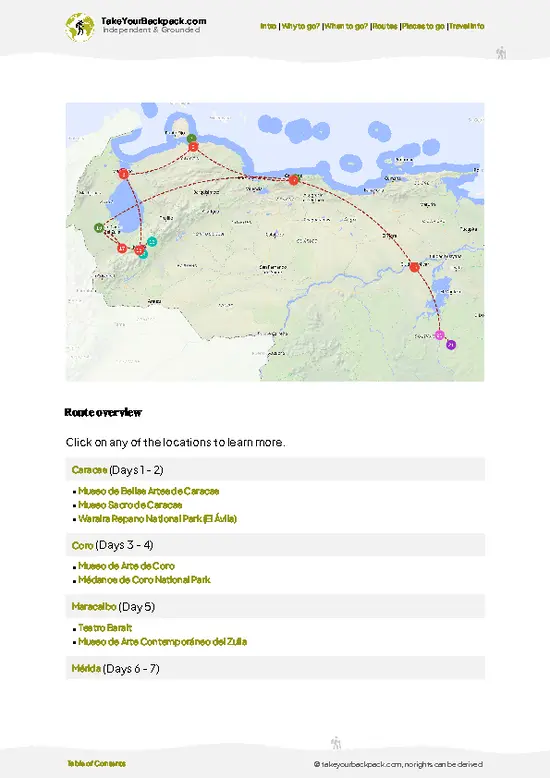
The Vibe: A deep-dive adventure that links tepuis, jungle rivers, Andean peaks, dunes, and Caribbean islands, built for travelers who want the country’s big icons plus a few quieter corners. The pace is full but not frantic, with flights, buses, and boats used strategically to unlock very different landscapes.
The Highlights:
  • Canaima National Park and Angel Falls, with river journeys and tepui views in the Gran Sabana.
  • Cool mountain days around Mérida, Sierra Nevada National Park, and the Teleférico de Mérida.
  • Colonial Coro paired with the desert dunes of Médanos de Coro National Park.
  • Island time in Los Roques National Park and on Isla Margarita, including cays like Cayo de Agua and beaches like Playa El Agua.
🌍 Want a ready-to-use travel plan for Venezuela?
The overview above compares different route options based on your travel time and style. The complete Travel Guide breaks each itinerary down in detail, including maps, stops, highlights, and transport information.

Explore all route details 👉

Get the Travel Guide -

🌤️ When to go?When to go for the best experience

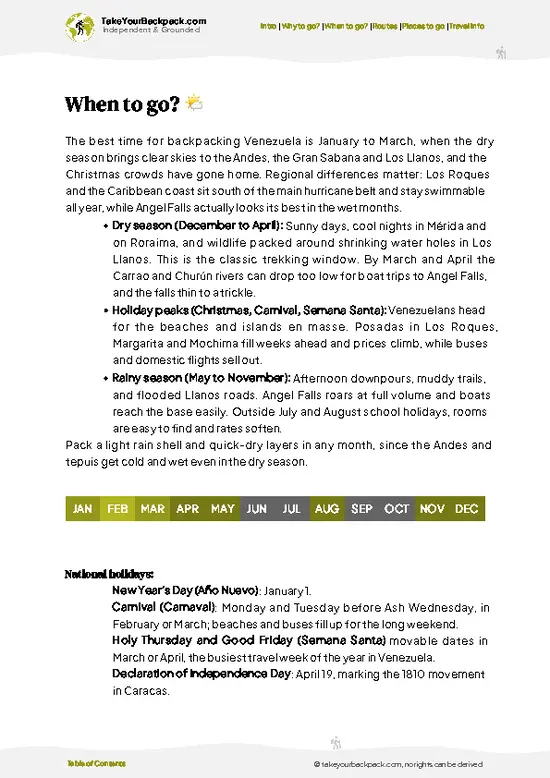
Late January to mid-March is the sweet spot for backpacking Venezuela. The Christmas rush is gone, Carnival hasn’t detonated yet, and the sky stays dry enough to hold your plans together. Trails on Roraima grip instead of sliding; the Llanos shrink into pools that stack wildlife in plain sight; the Caribbean flattens into clear, swimmable days without the August families or holiday markups. Posadas stop playing roulette with rates, guides answer messages again, and domestic seats appear without extracting a kidney. The trade: rivers run low, so boat runs to Angel Falls can stall, but flight views are crisp and you keep your gear dry. If Salto Ángel at full roar is non-negotiable, aim for the wet shoulder later; otherwise this window preserves your budget and your patience.
  • Peak Dry (Holidays/Carnival): Rooms sell out, prices jump, and buses feel like mosh pits. You endure the heat because the Caribbean turns aquarium-clear and party energy spikes. Worth it if you crave noise and guaranteed sun; costly if you don’t.
  • Shoulder Dry (Late Jan-Mar, minus Carnival week): The country exhales. Crowds thin, guides negotiate, and trails stay firm. You stack Mérida hikes with coast days without re-planning every night. Fewer surcharges, more yeses, better sleep.
  • Wet Bold (Sep-Nov): Tepuis brood, rivers surge, and solitude actually lands. Angel Falls booms, but mud and delays do too. Survival hack: ditch heavy boots—wear drainable trail-runners with wool socks so feet stay functional when everything else is wet.

Tactical tip: Lock domestic flights first, then bargain on the ground for rooms and tours; only prebook everything during holiday weeks.

source: climatestotravel.comJANJanuary: highly recommended for travelingFEBFebruary: excellent for travelingMARMarch: highly recommended for travelingAPRApril: good for travelingMAYMay: good for travelingJUNJune: fair for travelingJULJuly: fair for travelingAUGAugust: good for travelingSEPSeptember: fair for travelingOCTOctober: fair for travelingNOVNovember: good for travelingDECDecember: good for traveling
📅 Traveling in a specific month?
Get a full month-by-month breakdown of weather, crowds, costs, festivals, and seasonal highlights in the complete travel guide.

Get full details when to go 👉

Get the Travel Guide -
venezuela - lalo-hernandez-LSaWlsj1IaQ-unsplash

💰 Costs (as of 2026)Prices, expenses, and money tips

Plan on $30-45 per day if you play it tight with dorms and local food; big-ticket excursions will blow that wide open.
  • dorm accommodation: $8-18 per night in cities and $12-22 in tourist zones; a bed with reliable water and a fan is worth a few extra dollars in the heat. System tip: skip booking sites, message places directly on WhatsApp, ask for “precio en efectivo” at the blue rate, and pay in small USD or Zelle—cards often charge at the official rate and can cost you 30-60% more. Relative value: a hair cheaper than Colombia, far cheaper than Brazil, but inventory is thinner so book a day ahead in Caracas and Mérida.
  • meals: Supermarket Survival: $5-8/day if you build arepas, eggs, fruit, sardines, and local cheese; imported cereal and “gringo snacks” torch money fast. Street food reality: arepas/empanadas $1-2, menú del día $3-5, coffee $0.50-1; dollarized cafés push burgers or sushi at $8-15—fun once, not daily. Relative value: everyday Venezuelan food edges cheaper than Colombia; Western-style restaurants jump to Brazil prices if you don’t watch it.
  • local transport: City buses and metro are cents on the dollar; shared taxis (por puestos) are the sweet spot for speed-to-cost. Intercity
read more 👉
Plan on $30-45 per day if you play it tight with dorms and local food; big-ticket excursions will blow that wide open.
  • dorm accommodation: $8-18 per night in cities and $12-22 in tourist zones; a bed with reliable water and a fan is worth a few extra dollars in the heat. System tip: skip booking sites, message places directly on WhatsApp, ask for “precio en efectivo” at the blue rate, and pay in small USD or Zelle—cards often charge at the official rate and can cost you 30-60% more. Relative value: a hair cheaper than Colombia, far cheaper than Brazil, but inventory is thinner so book a day ahead in Caracas and Mérida.
  • meals: Supermarket Survival: $5-8/day if you build arepas, eggs, fruit, sardines, and local cheese; imported cereal and “gringo snacks” torch money fast. Street food reality: arepas/empanadas $1-2, menú del día $3-5, coffee $0.50-1; dollarized cafés push burgers or sushi at $8-15—fun once, not daily. Relative value: everyday Venezuelan food edges cheaper than Colombia; Western-style restaurants jump to Brazil prices if you don’t watch it.
  • local transport: City buses and metro are cents on the dollar; shared taxis (por puestos) are the sweet spot for speed-to-cost. Intercity buses run $5-15 for long hauls, but schedules drift—start early and keep a buffer. Mototaxis are cheap for short hops; agree the fare first. Domestic flights are the budget killer: $80-200+ one way and often unavoidable for Canaima or Los Roques. Relative value: cheaper than Colombia per kilometer, but less predictable; time is the hidden cost.
  • activities: The money goes into planes and boats. Canaima/Angel Falls packages run $250-500+ all-in because you’re paying for flights, fuel, and park logistics. Los Roques day trips from the mainland can be $200+; staying on the islands multiplies that. Cheaper wins: cable car in Mérida, hiking in the Andes, beaches in Choroní or Margarita, baseball games—single-digit dollars. Relative value: headline tours cost more than Colombia/Peru because access is controlled; DIY hiking is a bargain.
  • miscellaneous: Budget leaks: paying with a foreign card at the official rate; lack of small change for $20-50 bills; tourist eSIMs at $3-6/day because local SIMs can be paperwork-heavy; bottled water in hot zones; laundry charged “per piece” at hotels; generator cafés when power drops. Carry a wad of $1s and $5s to avoid “no change” upsells. Beer and local rum are cheap; sunscreen, toiletries, and imported snacks are not. Relative value: daily drips are lower than Brazil but spike harder than Colombia if you don’t play the currency game.
⚠️ Prices can change and everyone travels differently, so take this as a rough guide. Hope it helps you plan your adventure!

✈️ The backpacker research shortcutVenezuela Travel Guide

An offline-friendly backpacking guide with optimized travel routes, ranked highlights, transport advice, and the best areas to stay.
example page 0 from our offline Travel Guide for Venezuelaexample page 1 from our offline Travel Guide for Venezuelaexample page 2 from our offline Travel Guide for Venezuelaexample page 3 from our offline Travel Guide for Venezuelaexample page 4 from our offline Travel Guide for Venezuelaexample page 5 from our offline Travel Guide for Venezuelaexample page 6 from our offline Travel Guide for Venezuelaexample page 7 from our offline Travel Guide for Venezuela
The digital guide (386 pages) contains:
102 highlights, ranked by travel appeal
Optimized 5, 10 & 15-day travel routes
Cities, national parks, beaches, historical sites, ...
How to get around
Offline-friendly for travel without Wi-Fi
👉 Click to see all 30+ guide features

📅 Plan smarter in minutes, not weeks
Month by month travel advice
Festivals & national holidays
Budget expectations

🗺️ Go to the right places, skip the overrated ones
Honest pros & cons of destinations
Top hikes, parks & viewpoints
Lesser-known places most travelers miss
Clear “worth it vs skip it” guidance

🛏️ Travel smoothly without rookie mistakes
Best areas to stay
Transport systems explained simply
Common scams & safety advice
SIM cards, money & practical tips

🌍 Understand the country, not just visit it
Culture & traditions
52 Essential phrases & customs
Festivals worth planning around
Traveler-friendly historical context
Insights that make places more meaningful

📱 Built for real travel conditions
Fully downloadable PDF
Works completely offline
Optimized for phone use
Useful in remote areas & buses
Everything in one place
Save weeks of stressful planning
Get instant access to the full guide directly. 30-day money-back guarantee.


Sent to your inbox immediately after payment • 100% Secure Checkout
Best Backpacking Travel Advisor 2025 tourism awardBest Backpacking
Travel Advisor
2025
What others say about Take Your Backpack Guides:
⭐⭐⭐⭐⭐
Fantastic, amazing amount of information!
⭐⭐⭐⭐⭐
My goodness this is amazing, it's what I've been looking for hats off too you!
⭐⭐⭐⭐⭐
I think this is absolutely BRILLIANT
⭐⭐⭐⭐
Very complete and informative. It's still missing places, but I gotta to commend you
⭐⭐⭐⭐⭐
This is truly amazing, thank you, can't wait to explore it with my kids!
⭐⭐⭐⭐⭐
Awesome resource, thank you!
⭐⭐⭐⭐⭐
This is amazing! Can't wait to explore the ones I haven't seen
⭐⭐⭐⭐
I love this! Well done, great idea.
⭐⭐⭐⭐⭐
Thanks for taking the time to make this gem!
⭐⭐⭐⭐⭐
This might be the best website I've ever seen.
⭐⭐⭐⭐⭐
Congratulations, and thank you so much for your work; it's incredibly valuable.
⭐⭐⭐⭐
In all seriousness I think you did a great job pointing out the important spots
⭐⭐⭐⭐⭐
10/10 very good
⭐⭐⭐⭐⭐
As someone who's only just starting to visit regularly this is awesome, thank you.
⭐⭐⭐⭐
Thank you very much! I'm going to visit my dad, it's going to be very useful!
⭐⭐⭐⭐⭐
This is really cool! We'll be travelling for the first time and this definitely come in handy.
⭐⭐⭐⭐⭐
You are now our minister of culture, congratulations 👨‍💼
⭐⭐⭐⭐⭐
Just wanted to tell you that this is a pearl! Going to follow your recommendations.
⭐⭐⭐⭐⭐
This is so cool. I'll definitely be using the resource for my travels soon.
⭐⭐⭐⭐⭐
This is very impressive! Good work.
⭐⭐⭐⭐⭐
This is an amazing and informative site. Very well done!

🛏️ Where to stay?Accommodation types and options

Yes — there are hostels and budget guesthouses across Venezuela, concentrated in major cities and popular tourist towns.

Best options cluster in Mérida (city center near the cable car) and in Caracas (Altamira/Chacao/Sabana Grande), with beach hubs like Isla Margarita (Porlamar/Pampatar) and Puerto La Cruz/Lecherías for Mochima access; Mérida offers the strongest backpacker scene and affordable mountain lodging, Caracas neighborhoods give nightlife and transport links but carry higher petty‑crime risk, Isla Margarita and Puerto La Cruz give beach access with seasonal price swings and variable … read more 👉
Yes — there are hostels and budget guesthouses across Venezuela, concentrated in major cities and popular tourist towns.

Best options cluster in Mérida (city center near the cable car) and in Caracas (Altamira/Chacao/Sabana Grande), with beach hubs like Isla Margarita (Porlamar/Pampatar) and Puerto La Cruz/Lecherías for Mochima access; Mérida offers the strongest backpacker scene and affordable mountain lodging, Caracas neighborhoods give nightlife and transport links but carry higher petty‑crime risk, Isla Margarita and Puerto La Cruz give beach access with seasonal price swings and variable standards, while Los Roques and Canaima are spectacular yet often pricier and logistically constrained.

Choose central neighborhoods for safety, expect fluctuating utilities and variable accommodation standards, carry cash, avoid walking alone at night in non‑tourist areas, and book or confirm transport ahead during high season.

If you enjoy meeting fellow travelers, consider choosing hostels with high ratings for atmosphere. On the other hand, if you prefer having your own space, a hotel might be a better option.

🚌 Getting aroundWhat moving around is really like

Venezuela moves on rumor and momentum. Schedules are suggestions; departures happen when the crowd and the driver decide. Fuel lines stall a whole terminal, then a shout and everything sprints. You win here by traveling early, staying light, and reading the room faster than you read a timetable.
  • Intercity “Expreso” buses The speed-versus-cost equation is blunt: you’ll pay a fraction of a domestic flight, and you’ll spend twice the hours. Expect military checkpoints, fuel stops, and air-con set to
read more 👉
Venezuela moves on rumor and momentum. Schedules are suggestions; departures happen when the crowd and the driver decide. Fuel lines stall a whole terminal, then a shout and everything sprints. You win here by traveling early, staying light, and reading the room faster than you read a timetable.
  • Intercity “Expreso” buses The speed-versus-cost equation is blunt: you’ll pay a fraction of a domestic flight, and you’ll spend twice the hours. Expect military checkpoints, fuel stops, and air-con set to meat-locker. Day runs are safer and easier on nerves; overnight saves a bed but invites hassles you don’t need. Buy at the window in cash, keep your passport ready for the manifest, tag big bags only if you must, and keep your real valuables on your lap under a jacket. Seats up front see fewer sticky fingers.
  • Busetas and the Caracas Metro This is the social spine. Queue forms loosely; when you want off, say “¡bajan!” and move decisively. Pay exact change, hand-to-hand; drivers hate big bills, and ticket machines sometimes sleep through power cuts. Backpack on your chest, not your back. Offer your seat to elders without being asked. In the Metro, ride outside rush hour, keep your phone buried, let people exit before you shove in, and don’t film. If the car feels too charged, step back and catch the next one; they come quick when they come at all.
  • Lanchas (river/coastal boats) Water rewrites the map. Boats get you where roads won’t: Orinoco Delta villages, Morrocoy keys, beach-to-beach hops near Choroní, and sometimes the only sane link after landslides. Agree the price and the pickup time before boarding; pay half now, half on return so the captain has a reason to come back for you. Demand a lifejacket, bag your phone, and don’t argue with weather—if locals won’t sail, you shouldn’t either.
  • Por puesto shared cars The budget disruptor that beats bus drift. They’re faster than buses and not much pricier, leave when full, and run key corridors like Caracas-La Guaira, El Vigía-Mérida, and most state capitals. Look for the informal line and plates, not lone “pirate” offers. Front seat often costs a little more. If time matters, buy the empty seat and the car rolls now. Pay in small USD or local cash; drivers rarely make change.

Master tip: Move at first light in stacked hops—por puesto to the main highway, then a daytime expreso—buy out a spare seat to force departures, carry small bills, and you’ll cross the country on your terms instead of the timetable’s.
Distance: Simón Bolívar International Airport (CCS, Maiquetía) is about 26 km (16 mi) from central Caracas (around Plaza Venezuela) via the Caracas-La Guaira highway.

Main ways to reach the city
  • Authorized airport taxi (Taxi Oficial) — Easiest and most reliable. Look for the official counter right after customs or the marked ranks outside Arrivals.

    Time: 45-70 minutes, longer in rush hour or heavy rain.

    Cost: typically USD $25-45 to central areas; expect a 10-20% night surcharge. Pay in USD cash (small bills); some drivers accept local transfers or Zelle, but don’t count on it.
  • Ride-hailing apps (Ridery, Yummy Rides) — Usually a bit cheaper than official taxis if demand isn’t spiking. You’ll need data or airport Wi-Fi to request.

    Time: 45-70 minutes.

    Cost: about USD $18-35 depending on destination, time of day, and surge.
  • Express bus (when operating) — The state operator SITSSA has run airport buses to Gato Negro (Line 1 of the Metro) or La Bandera terminal, but service can be intermittent. Check the SITSSA desk in Arrivals.

    Time: 60-90 minutes.

    Cost: roughly USD $3-5.
  • Public minibuses/“por puesto” vans — Budget option used by locals. From just outside the terminals you can ride to La Guaira/Catia La Mar and connect to a Caracas-bound bus (Catia/Capitolio/La Bandera). Not ideal with big luggage.

    Time: 70-110 minutes with the transfer.

    Cost: about USD $1-3 total (pay small bills).

Metro? There’s no metro station at the airport. If you take the SITSSA bus (when running) or a local bus to Gato Negro/Propatria, you can continue by Metro from there.

Quick tips (2025): Traffic on the Caracas-La Guaira highway can be heavy at peak hours and occasionally disrupted by weather. Daytime travel is smoother. Use only authorized taxis or pre-booked rides, agree on the fare before you get in, and keep cash handy for tolls or tips (drivers usually have limited change).
⚠️ Prices and routes can change, so take this as a rough guide and ask for local advice when you arrive.

🔒 Safety (risk Level: high)Common concerns and things to watch out for

Safety for solo travelers, including women and LGBTQ+ individuals
Venezuela can be challenging for solo travelers due to ongoing political and economic instability, which impacts safety. Women and LGBTQ+ individuals should exercise extra caution, as cultural attitudes may vary, and incidents of harassment or discrimination are reported. Stick to well-populated areas, avoid flaunting valuables, and consider traveling with a guide or group when exploring less touristy regions. Always stay updated on travel advisories and connect with locals or fellow travelers for the latest safety tips.


Full official government travel advisory (live updates)
View details 👉
safety image

source: www.gov.uk

✈️ VisaDo you need a visa to visit?

Visitors to Venezuela typically need a visa, depending on their nationality. For many, a tourist visa can be obtained through a Venezuelan consulate or embassy. Check the specific requirements for your country and apply well in advance, ensuring all documents like your passport, photos, and application forms are ready.

source: ve.usembassy.gov
⚠️ Visa requirements can change over time, so always check the latest visa requirements with the official embassy or government website before you travel.

🎒 What to pack?What to wear and bring

When packing for Venezuela, be ready for diverse climates and terrains. You’ll face everything from steamy jungles to chilly Andean peaks, so pack layers to handle both heat and cold. The country is pretty casual, but modesty is appreciated in smaller towns and rural areas, so keep those short shorts for the beach. Rain can sneak up on you, especially during the wet season (May to November), so a light raincoat or poncho is smart. If you’re planning to visit places like Angel Falls, sturdy footwear is a must for the rugged hikes.

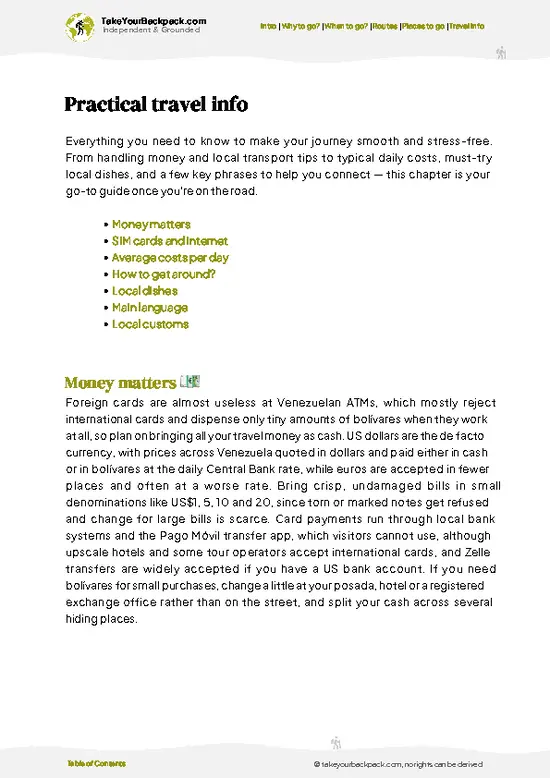
Apart from this country specific advice, I have also crafted a general packing list that should help on any trip. authorOver the years, I've learned the importance of packing minimally. It's so much easier to jump on the back of a truck or squeeze yourself into the last spot of a minibus without that supersized backpack. If you're headed to a warm destination, leave your winter jacket at home; for colder regions, opt for thin thermal underlayers. Instead of packing your entire wardrobe, bring just three sets of clothes, as laundry facilities are available everywhere.
View the full list 👉
🎒 Planning the practical side of your trip?
Get detailed information on transport, daily budgets, internet access, local customs, food, language, and other essentials in the complete Travel Guide.

Get detailed practical information 👉

Get the Travel Guide -

🙋 FAQThings travelers often ask

Trip Planning


Personal tip: I normally search on good rating for atmosphere (for meeting people) and location (for easy exploring). Cleanliness as a bonus.


Travel Essentials

Make sure your routine vaccines are up to date. For Venezuela, consider these vaccinations:

Hepatitis A - recommended for most travelers due to potential contaminated food or water.
Hepatitis B - recommended if you might have sexual contact, get a tattoo, or need medical treatment.
Typhoid - advisable, especially if visiting smaller cities or rural areas.
Yellow Fever - definitely needed if you’re visiting certain parts of the country, like jungle areas.
Rabies - consider if you plan on exploring caves or spending a lot of time outdoors.
Malaria - not a vaccine, but bring antimalarial medication, especially for certain regions.

Always consult a healthcare provider for personalized advice.


vaccination requirements
When I first started traveling, I often spent part of my first day in a new country hunting for a local SIM card. While this can still be slightly cheaper, it also takes time and planning.

These days, it's much simpler to install an eSIM before leaving home. Once you arrive in Venezuela, you can activate it immediately and have mobile data from the moment you land — which is especially useful for ordering transport or navigating away from busy airports.

There are many providers nowadays, and price differences are usually small. I personally go with Airalo, as it offers excellent network coverage throughout the country and strong global coverage, so you can manage multiple countries from a single app.


Get your e-sim for Venezuela

Culture & Customs

Avoid topics like politics in conversation; it’s a sensitive issue. Always greet with a handshake, and say ”buenos días/tardes/noches” based on the time. Dress modestly; avoid flashy jewelry to minimize attention. Tipping is appreciated but not mandatory. For women, avoid walking alone at night. LGBTQ+ travelers may face challenges; public displays of affection can draw unwanted attention. Always carry a copy of your passport. Use ”usted” for formal address unless invited to be more informal.
Trying traditional food is always a great way to experience the culture. Here are some must-try dishes for Venezuela.
  • Arepas: These thick cornmeal patties are a staple in Venezuela, often split open and stuffed with various fillings like cheese, meats, or beans. They’re a go-to breakfast or snack and a symbol of the country’s culinary culture.
  • Pabellón Criollo: Often considered the national dish, this hearty plate features shredded beef, black beans, rice, and fried plantains. It represents a blend of the country’s diverse influences, with each component contributing to a rich tapestry of flavors.
  • Hallacas: A festive season favorite, hallacas are similar to tamales, made with corn dough and filled with a mix of meats, olives, and raisins, all wrapped in plantain leaves. They’re a holiday staple and a labor of love, often prepared by families together.
  • Tequeños: These cheese-filled breadsticks are a beloved snack, perfect for parties or as an accompaniment to drinks. Their crispy exterior and gooey cheese interior make them irresistible and a true crowd-pleaser.
  • Cachapas: Made from fresh corn batter, these sweet pancakes are usually topped with cheese or cream. They’re a breakfast treat but can be enjoyed any time of the day, and they highlight the country’s love for corn-based foods.
Tap water in Venezuela is generally not safe for tourists to drink, and even locals often avoid it due to inconsistent water quality. Tourists are advised to stick to bottled or filtered water to avoid any health issues. Make sure to check the seal on bottled water to ensure it’s legit.
The main language in Venezuela is Spanish. Backpacking is way more rewarding if you know a bit of the local language, so I'd suggest brushing up on the basics just in case your Spanish skills have become a bit rusty.

Want to understand locals better?
The complete Travel Guide for Venezuela includes 52 essential words and phrases — greetings, thank-yous, ordering food, transport, numbers, and common local expressions you'll actually hear.

Get your local basic phrases 👉

Get the Travel Guide -


In Venezuela, English is not widely spoken among the general population. The majority of Venezuelans speak Spanish, which is the official language. In urban areas and tourist destinations, such as Caracas, Mérida, and Los Roques, you may find some English speakers, particularly in hotels, restaurants, and among younger generations who have studied the language. However, proficiency levels can vary significantly.

In rural areas or smaller towns, English speakers are much rarer. Therefore, if you’re traveling in Venezuela, it’s beneficial to know some basic Spanish phrases or use translation apps to facilitate communication. Engaging with locals in Spanish can enhance your experience and help bridge any language gaps.

Overall, while you may encounter English speakers in certain contexts, it’s advisable to prepare for a predominantly Spanish-speaking environment during your travels in Venezuela.

Money & Payments

The local currency of Venezuela is VES (Bs.S).

When backpacking in Venezuela, forget relying heavily on ATMs. They’re often empty or non-functional. Bring enough cash, primarily in US dollars, as euros are less common and harder to exchange. Exchange dollars at the unofficial ”parallel” market rate, which is much better than the official one. You can do this through reputable local contacts or trusted intermediaries—ask around at your hostel or among other travelers. Keep your cash divided and stashed safely in different spots.

Credit cards aren’t widely accepted, and when they are, the rate is usually awful. Stick to cash transactions as much as possible, but have a card for emergencies. And remember, don’t flash your cash around; keep it discreet and low-key.

In Venezuela, tipping is appreciated but not mandatory. In restaurants, a 10% service charge is often included in the bill, but you can leave an extra 5-10% in cash if the service was exceptional. For taxis, rounding up the fare is a common practice rather than a set percentage tip.

🧩 Nearby countriesSimilar backpacking destinations

We 💚 feedbackIs Venezuela worth visiting?

Go for the Guayana Shield—tepui treks and the long canoe into Angel Falls—where sweat buys silence and scale. The drawback: brittle logistics and security friction; fuel shortages stall buses, ATMs mean nothing, and checkpoints demand patience and tidy papers. Strategic tip: hire a vetted local fixer per region and pay in small USD; they’ll lock in drivers, exchanges, and permits so you move in daylight and save energy for the good stuff.

✍️ Help improve this page!
The information on this page is based on in-depth research, insights shared by experienced travelers, and feedback from the local travel community in Venezuela. While every effort is made to keep the information accurate and current, conditions can change — so if you spot anything incorrect or outdated, please get in touch.


🙋‍♂️ Give feedback

👋 Meet the founderWho’s Behind Take Your Backpack?

Johan, backpacker and founder of TakeYourBackpackHi, I’m Johan (Netherlands 🇳🇱), the creator of TakeYourBackpack. Over the past decade, I’ve backpacked through 80+ countries across six continents, gaining extensive experience with independent travel, long-term trips, and overland routes.

This site is built on a combination of firsthand travel experience and carefully curated insights from other backpackers. Many guides are based on places I’ve personally visited, while others bring together tips, observations, and practical advice shared by trusted travelers I’ve met along the way.

The goal is to provide realistic, experience-driven guidance — not generic itineraries — so you can explore destinations with better context, clearer expectations, and more confidence.

Get full Venezuela guide •
Instant download • 102 highlights • Full Offline guide