×
China 🇨🇳

backpacking Asia China 🇨🇳
Navigate immense distances while shifting through entirely different worlds.

Explore CambodiaExplore Georgia

Backpacking China in 2026

A complete guide including when and where to go, costs, transport, itineraries, and practical travel advice.
A first look at the country

Backpacking China
By Johan Kruseman 🇳🇱 | Updated June 7, 2026

China isn’t a monolith of megacities and red tape. It’s a continent-sized set of micro-worlds where dialects, noodles, and landscapes flip every few hours by rail. Sync with its operating system—trains over flights, QR codes over cash, early starts over crowds—and the logic clicks into place.

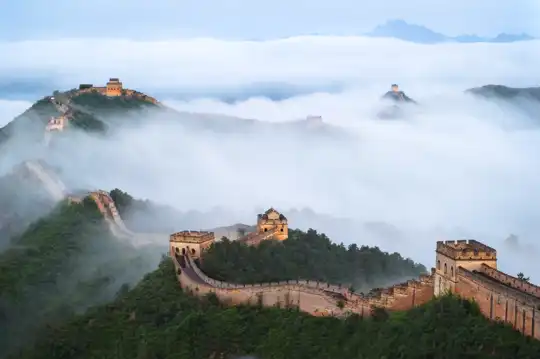
You come for scale and stay for texture. The Great Wall is real muscle on a ridge at Jinshanling before sunrise, terraced hills at Longji curl like a fingerprint, karst peaks in Guangxi taper into glassy rivers you can paddle at dusk. Huangshan’s granite spires stage a cloud show if you sleep on the mountain and beat the cable car queues. Western Sichuan rolls into yak-dotted plateau, while Gansu slides from wind-carved dunes to the painted earth of Zhangye, with Buddhist cave art at Mogao that compresses a thousand years into a dim, cool chamber. In the cities, you read the culture through your chopsticks and your feet: cumin smoke off skewers in Xi’an, numbing heat in a Chengdu alley, the snap of mahjong tiles ricocheting through a courtyard. The system hums underneath it all—bullet trains that nail departures, sleeper berths that turn distance into a nap, clean subway grids that let you change neighborhoods like channels. Yes, English thins outside hubs, your usual apps may nap behind the firewall, holidays move people like a tide, and haze can blunt horizons. But the workaround is part of the win: a few characters learned, offline tools in your pocket, tickets bought ahead, shoulder-season timing, and suddenly you’re sharing sunflower seeds on a hard seat with a grandpa who insists you try his tea.

Compared with neighbors, Japan offers polish and predictability, Vietnam brings street-level zing, and Mongolia hands you horizon for days; China threads those qualities through one trip, anchored by an infrastructure that rewards planners and improvisers alike. It’s a country for travelers who like reading patterns, riding the rails, eating their way across provinces, and earning … read more 👉
China isn’t a monolith of megacities and red tape. It’s a continent-sized set of micro-worlds where dialects, noodles, and landscapes flip every few hours by rail. Sync with its operating system—trains over flights, QR codes over cash, early starts over crowds—and the logic clicks into place.

You come for scale and stay for texture. The Great Wall is real muscle on a ridge at Jinshanling before sunrise, terraced hills at Longji curl like a fingerprint, karst peaks in Guangxi taper into glassy rivers you can paddle at dusk. Huangshan’s granite spires stage a cloud show if you sleep on the mountain and beat the cable car queues. Western Sichuan rolls into yak-dotted plateau, while Gansu slides from wind-carved dunes to the painted earth of Zhangye, with Buddhist cave art at Mogao that compresses a thousand years into a dim, cool chamber. In the cities, you read the culture through your chopsticks and your feet: cumin smoke off skewers in Xi’an, numbing heat in a Chengdu alley, the snap of mahjong tiles ricocheting through a courtyard. The system hums underneath it all—bullet trains that nail departures, sleeper berths that turn distance into a nap, clean subway grids that let you change neighborhoods like channels. Yes, English thins outside hubs, your usual apps may nap behind the firewall, holidays move people like a tide, and haze can blunt horizons. But the workaround is part of the win: a few characters learned, offline tools in your pocket, tickets bought ahead, shoulder-season timing, and suddenly you’re sharing sunflower seeds on a hard seat with a grandpa who insists you try his tea.

Compared with neighbors, Japan offers polish and predictability, Vietnam brings street-level zing, and Mongolia hands you horizon for days; China threads those qualities through one trip, anchored by an infrastructure that rewards planners and improvisers alike. It’s a country for travelers who like reading patterns, riding the rails, eating their way across provinces, and earning the kind of moments that only show up when you crack how the system works.

👉 Get the 📖 Travel Guide of China

Beijing & the Great Wall Belt

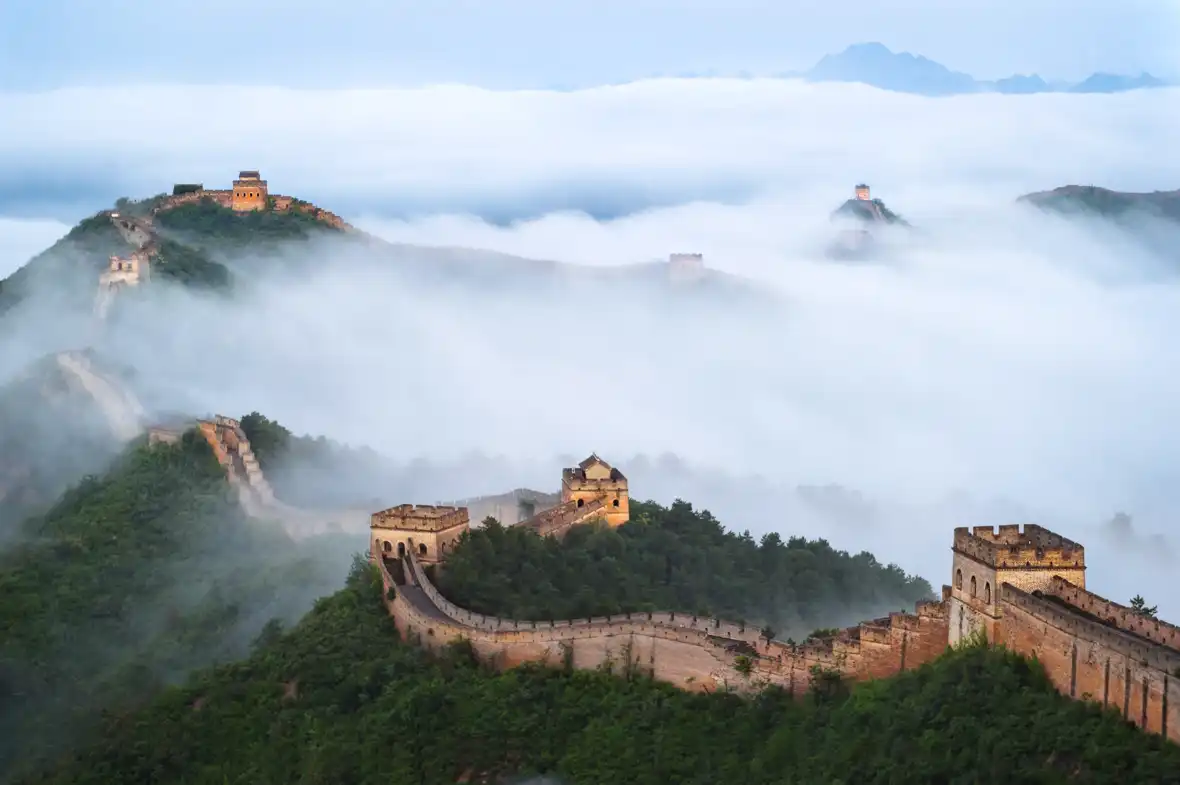
The capital rewards early risers and planners who like systems. Timed entries for the Palace Museum, airport-style security on the subway, and long crosstown rides are the price of getting the best of it. The payoff is dawn drumbeats in park plazas, courtyard alleyways where retirees school you at chess, and Great Wall days that feel earned. Pick sections like Jinshanling or Gubeikou for ridge walking and sparse crowds; Badaling is a people mover. Metro and Didi get you most places; a hired car saves hours on Wall logistics. Winter is cold but clear and crowd-light. History nerds, walkers, and photographers win here.

Lower Yangtze Spine: Shanghai–Suzhou–Hangzhou–Nanjing

This is the frictionless circuit where you stack wins with high-speed rail. Base in Shanghai or Hangzhou, then ping out on G-trains: 25–60 minutes to Suzhou’s gardens, tea hills above West Lake, student-heavy Nanjing for Republic-era sites and street snacks. Everything runs by QR and timetable; metros are deep, clean, and frequent. English signage is common, but the culture moves fast, so keep your ticket pickups and station entries tight. Water towns near Suzhou are doable by metro-plus-bus, best on weekday mornings. It suits first-timers, urban walkers, and food grazers who like day packs, early departures, and back-to-base nights.

Sichuan–Chongqing

Chengdu runs on tea thermoses and card games in courtyard teahouses; Chongqing runs on stairs, fog, and late-night hotpot endurance. The rail link between them is fast, and spurs reach Leshan and Emei for a temple-and-trail combo. Push west from Chengdu to Kangding or Tagong and the costs turn to time and altitude, not money. Buses are slow but scenic; weather flips fast at elevation. Panda bases, chili oil, and long chats in parks are the gravity here. Go if you like eating your way through days, building in recovery afternoons, and taking one calculated push into the mountains without dealing with permits.

Yunnan Northbound Trail: Kunming–Dali–Lijiang–Shangri-La

Think altitude ladder, market to mountain. D-trains stitch Kunming to Dali and Lijiang; beyond that, minivans and buses get you to Tiger Leaping Gorge and up to Shangri-La. Sleep low, hike high, and stash your big bag in Lijiang or Qiaotou before the gorge so you float the switchbacks. Old towns are atmospheric but commercial; your fix is in side alleys and morning markets. Days are dry and sunny, nights bite at 2,400–3,200 m. It rewards hikers, slow readers with balconies, and anyone patient with last-mile logistics. Start trails early to stay ahead of tour groups, and ride midweek for quieter buses.

Hexi Corridor & Qinghai: Lanzhou–Zhangye–Dunhuang–Xining

This is the railfan’s Silk Road, long legs punctuated by caves, desert, and big sky. G and D trains handle the spine; classic overnight K trains still make sense for the Dunhuang stretch. Mogao Grottoes use timed tickets with limited slots; lock those first, then build the rest. Expect last-mile taxis, wind that sands your teeth, and cold nights even in July. Xining pairs well for monasteries and the Qinghai Lake loop, best with a charter car unless you love infrequent buses. It suits history buffs and timetable tacticians who pack snacks, buffer days, and a willingness to trade comfort for reach.
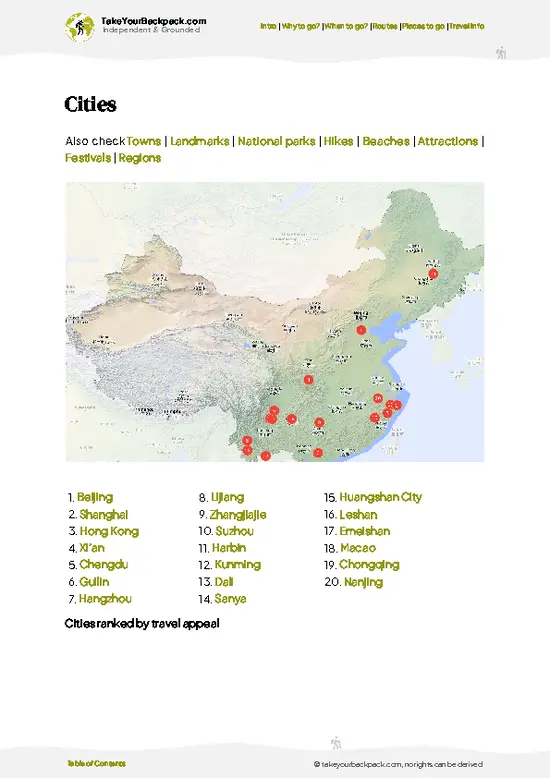
Geography and where places are located
Loading the map 🌍
CLICK TO FILTER
city
town
unique site
national park
hike
beach
attraction
festival
region
SHOW COUNTRY’S BESTSHOW ALL
film
0
0
0a
Shanghai Museum
Pixabay
film
1
1
1a
Shanghai Disneyland
Pixabay
film
2
2
2a
National Museum of China
film
3
3
3a
National Centre for the Performing Arts
film
4
4
4a
Xiamen Beach
film
5
5
5a
Beijing
Pixabay
film
6
6
6a
Lijiang Ancient Town
film
7
7
7a
Shanghai
Pixabay
film
8
8
8a
Hong Kong
Pixabay
film
9
9
9a
Xi’an
film
10
10
10a
Suzhou
film
11
11
11a
Tiger Leaping Gorge
iStockphoto
film
12
12
12a
Longji Rice Terraces
film
13
13
13a
Yubeng Village Trek
film
14
14
14a
Huangshan
film
15
15
15a
Jiuzhaigou Valley
film
16
16
16a
Zhangjiajie National Forest Park
Pixabay
film
17
17
17a
Mount Emei
film
18
18
18a
Danxia Mountain
film
19
19
19a
Shangri-La region
film
20
20
20a
Zhangye Danxia Landform Geological Park
film
21
21
21a
Moganshan
film
22
22
22a
Wuzhen
film
23
23
23a
Shaxi Ancient Town
film
24
24
24a
Great Wall of China
film
25
25
25a
Forbidden City
Pixabay
film
26
26
26a
Terracotta Warriors
Pixabay
film
27
27
27a
Mount Emei Scenic Area (Leshan Giant Buddha)
film
28
28
28a
Ancient City of Ping Yao
film
29
29
29a
Dali ancient town
film
30
30
30a
Honghe Hani Rice Terraces
film
31
31
31a
Yungang Grottoes

Why go?Why China is worth visiting

Scenery

China is a scenery machine: karst towers in the south, glacier-fed lakes in the west, volcano rims in … read more 👉
China is a scenery machine: karst towers in the south, glacier-fed lakes in the west, volcano rims in the northeast, deserts and grasslands in the north. The trick is using the system. High-speed rail snaps biomes together, park shuttles funnel crowds onto boardwalks, and timed tickets meter entry. If you plan to the pulse, you get space.

Anchor trips to hubs with multiple payoffs: Guilin/Yangshuo for karst (raft Yulong at first light), Wulingyuan for Zhangjiajie’s sandstone pillars, Huangshan Town for Yellow Mountain, Dunhuang for dunes and grotto art. Sleep inside parks when possible; dawn beats every tripod on earth. Be at gates 30 minutes before opening and you’ll float past tour-group waves for two clean hours.

Season smart. North China: late Oct–Nov brings dry air and crisp horizons. South: April–May before the heavy monsoon. After rain, karst views pop; in the northeast, bring two mornings for Changbai’s fickle crater lake. I once stayed on Huangshan and watched a north wind carve the granite into sharp layers; by 9 a.m., the boardwalks were packed and I was already heading down. Avoid Golden Weeks. Use a night train to leap regions while you sleep. Choose ridge trails to shake the megaphone crowds.

Mountains

China is engineered for mountain walking. Granite steps, cable cars, and mandatory park shuttles turn … read more 👉
China is engineered for mountain walking. Granite steps, cable cars, and mandatory park shuttles turn huge relief into a solvable puzzle, so you trade suffering for strategy. The payoff spans styles: knife-edge granite on Huangshan, forested stair-climbs on Taishan, laddered cliffs at Huashan, glaciated massifs in Sichuan and Yunnan, karst towers around Zhangjiajie. Culture rides along: temples, tea stalls, hot water urns at altitude.

The system rewards timing and ticket math. Most parks sell combo tickets (entry + bus + cable car). Buy once, ride early. Take the first shuttle; you’ll beat tour groups by an hour and own the ridgelines. Save a cable car for descent—knees last longer than pride. Pro tip: sleep on Huangshan; the “sea of clouds” tends to form after rain and wind clears, and dawn crowds are smaller.

Carry your passport; gates scan IDs. Cashless dominates, but every kiosk can scan your code for noodles and ponchos. I’ve padded climbs by adding the cheap accident insurance at the turnstile and using the back gates—Huashan’s west entry at first light gave me 20 quiet minutes on East Peak. Altitude? In Sichuan/Yunnan, step up days (2,500 m, then 3,000–3,600 m) and you’ll move faster than anyone sprinting from sea level. Avoid Golden Week and May Day; any other Tuesday is your friend.

Architecture

China is a blueprint you can walk. Once you know the rules—axis, hierarchy, courtyard rhythm—the buildings … read more 👉
China is a blueprint you can walk. Once you know the rules—axis, hierarchy, courtyard rhythm—the buildings start talking. Palaces align north–south; important halls sit on the central spine; side courtyards step status outward. That’s why the Forbidden City clicks once you enter: aim for the spine, then peel off to the craftsmen’s alleys when crowds bunch. Pro tip: climb Jingshan Park at sunset; the rooflines read like sheet music from above.

Cities obey walls and grids. Xi’an’s wall is a measuring stick; bike one loop and you’ve mapped the old core. Walled towns like Pingyao keep Ming street widths; stay inside the wall and walk after 10 pm when the tour groups evaporate.

China’s rural defenses solved different problems: Fujian tulou are communal fortresses; Kaiping diaolou are watchtowers with Western flair. Visit early with a hired minivan to string clusters while buses chase one site.

Modern China flaunts engineering. Shanghai’s Lujiazui is the control group; ride the 2 RMB Huangpu ferry at dusk and watch the skyline rotate. For the Great Wall, pick Jinshanling; hike toward Simatai West, and let the restorations taper to raw stone. Effort turns into silence.

Food

China is engineered for eating. Geography splits the menu into provinces, and specialization compresses … read more 👉
China is engineered for eating. Geography splits the menu into provinces, and specialization compresses skill into single dishes. That’s why a shack with a hand-written sign can serve knife-cut noodles with better bite than a white-tablecloth place. The playbook: follow specialists. If a shop only sells liangpi, roujiamo, or wontons, odds are the technique is dialed. Pro tip: delivery riders are human algorithms—if five helmets are waiting, get in line.

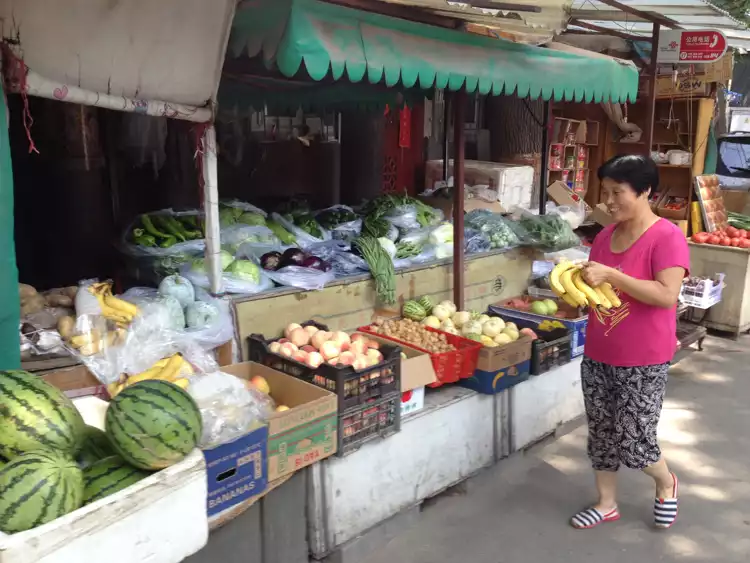
Heat, speed, and smoke drive flavor here. Wok hei isn’t magic; it’s high BTUs and short queues. Eat early, when the oil is clean and the cook still sharp. I hit breakfast streets at 7:30 for soy milk and jianbing, lunch at 11:00 before the rush, and night markets right at open when skewers haven’t dried out. Cash in small bills still works at mom‑and‑pop spots; a bowl of Lanzhou lamian runs roughly ¥12–20.

Ordering is a system too. Scan the QR when you can; set spice and noodle thickness on the app. No app? Point, hold up fingers, say “bù là” for no spice. Carry tissues. Sit where the bowls come out, not where it’s quiet. That’s where the good decisions happen.

Uniqueness

China feels off the beaten track not because it’s empty, but because the whole machine runs for locals … read more 👉
China feels off the beaten track not because it’s empty, but because the whole machine runs for locals first. You’re threading their system, not a tourist funnel. That’s the reward.

Why distances are huge: provinces are countries in size. Better how: stitch leaps with hard-sleeper trains and use high-speed rail only for trunk lines. I take the top bunk for privacy, stash noodles, and raid the carriage’s boiling-water urn like everyone else. It buys you a day’s travel and a night’s bed.

Why red tape and checkpoints exist: some regions require permits or tours. Better how: if Tibet is a wall, go Qinghai or western Sichuan—Tibetan culture, big sky, no paperwork choke.

Why the language gap matters: outside big cities, English evaporates. Better how: carry place names in Chinese characters, show your phone to the ticket seller, and photograph bus timetables; last departures often leave before 3 pm. Pro tip: drivers will drop you at unsigned trailheads if you point at the characters. I’ve been let off at gravel turnouts with a thumbs-up.

Why the internet feels throttled: many Western apps won’t load. Better how: offline maps, offline translation, cash backup, and train station arrival 45 minutes early for security scans. The system rewards the prepared.

Low cost

China is kind to a backpacker’s wallet because the country runs on scale and standardization. When a … read more 👉
China is kind to a backpacker’s wallet because the country runs on scale and standardization. When a city moves millions daily, a seat, a bed, and a bowl all get priced to move. Expect a daily average in the mid-30s USD without contortions; lean into the system and it dips lower.

Transport is the backbone. Use metros and buses that blanket cities, and swap pricey flights for overnight hard-sleeper trains to cover distance while skipping a night’s room. Pro tip: top bunk on night trains is cheaper and quieter; bring earplugs and ride the savings.

Food wins by repetition. Look for Lanzhou noodle shops, canteen-style rice joints, and mall food courts; they’re everywhere and consistent. I carry a small thermos and top it up at the free hot-water dispensers in stations and hostels—breakfast solved with tea and instant oats.

Beds are easy: hostels in tourist zones, business hotels elsewhere. Chains handle foreigners smoothly and often discount at walk-in. For sights, pick city parks, markets, and free museums (passport needed for reservations) and skip cable cars. Pay with Alipay/WeChat linked to a foreign card to dodge ATM fees, and avoid the holiday weeks when prices spike.

People

People size you up fast: curiosity, then generosity, then playful testing. Ride that curve. Why it works: … read more 👉
People size you up fast: curiosity, then generosity, then playful testing. Ride that curve. Why it works: pride in place and “face” (mianzi). Better how: accept help, praise the noodles or the park, and avoid blunt refusals. Say “I’m full” instead of “no.” Smile, nod, redirect.

Meals are the social engine. Hosts try to pay; bill-wrestling is a love language. Let them win once, then repay with fruit or breakfast the next morning. Toasts matter. If someone says ganbei, sip if you must, but keep your glass moving; don’t leave it parked and empty.

Conversation blooms with snacks. On trains and in parks, share sunflower seeds or cookies and show a photo of your family or hometown. That signals trust, and the chat opens. Pro tip: carry a tiny “gift pocket”—stickers for kids, tea bags, or a postcard from home.

Language gaps don’t block kindness. Learn ni hao, xiexie, bu yao. Keep key addresses written in Chinese. When mobile pay eludes you, small bills plus patience beat frustration.

Humor is gentle, self-deprecating, and contagious. Join the square dance at dusk. I got dragged in once, lost the rhythm, and gained three dinner invitations.

Wildlife

China rewards wildlife travel because the system stacks the deck: latitude from tropics to taiga, altitude … read more 👉
China rewards wildlife travel because the system stacks the deck: latitude from tropics to taiga, altitude from sea level to 5,000 m, and a flyway that funnels millions of birds along the Yellow Sea. That spread means you can target endemics and big migrations in one trip if you play the calendar and elevation bands, not just a map.

Work the seasons. Winter: cranes at Poyang and red‑crowned cranes in the northeast. Spring and fall: shorebirds tanking up on Bohai Bay mudflats. Summer: Tibetan Plateau mammals—kiang, fox, antelope—with clear roads and long glassing light. Year‑round but best in cool months: pandas and golden snub‑nosed monkeys in Sichuan–Qinling forests.

Pro tip: hit reserves on the first shuttle of the day; many parks ban private cars, and the first bus buys you an hour of quiet. I once froze on Poyang’s levee at dawn and the cranes landed so close I heard the wingwash. Another week above Yushu, a local spotter’s scope found a snow leopard in 14 minutes; money better spent than a third day of taxis. Bring 8x32 binoculars, a puffy, and patience.

Backpackers

China is a backpacker’s proving ground: massive scale, prices that reward street-level eating, and a … read more 👉
China is a backpacker’s proving ground: massive scale, prices that reward street-level eating, and a rail network that lets you move like a chess player, not a pinball. The system is the draw. Master it and the country opens fast.

Why it’s great: sleeper trains double as lodging, high‑speed lines stitch cities to mountains, and hostels cluster near old towns and transit hubs. Better how: use the 12306 app to grab hard‑sleeper berths early; ride nights to save cash, then day‑trip on “G/D” trains with a daypack. Stations run like airports with security and real‑name tickets, so arrive early and keep your passport handy. Pro‑tip: the upper hard‑sleeper is quieter and cheaper; I’ve written half a trip plan from that perch, rolling into Kunming at dawn and walking straight to Yunnan coffee.

Cash works but QR rules; set up WeChat Pay or Alipay before you land for food stalls and buses. Eat where the chopsticks turnover is high; university canteens are gold at noon. Hostels in Chengdu, Dali, and Yangshuo still anchor the scene—social, useful notice boards, and staff who know which bus actually runs after 5 p.m.
Want the complete picture of China?
The offline Travel Guide brings everything together — routes, highlights & planning.

See what's included in the guide 👉

Get the Travel Guide -

⭐ HighlightsKey places and experiences

  • Great Wall (Gubeikou-Jinshanling Traverse): You want the sinew of the Wall—broken steps, watchtowers you can breathe in—not the theme-park crush. Start at Gubeikou after the first bus from Beijing when the guards’ thermoses still steam, then walk east toward Jinshanling so the sun sits at your back and the tour groups are coming toward you, not blocking your line. The logic pays off: fewer touts, more original brick under your palms, and a clean exit at Jinshanling’s gate before the late buses. Autumn bites; the wind scours your ears and the stone leeches cold through thin soles, leaving dust stripes on your socks that don’t lie.
  • Terracotta Army (Xi’an): Everyone charges Pit 1 first because it’s the postcard; that’s why you don’t. Go Pit 2, then 3, then double back to 1 near lunchtime when the flag-led herds peel off to eat elsewhere. Use the official shuttle from the main ticket plaza, ignore the golf-cart hawkers, and buy noodles outside the complex after to avoid museum prices that are
read more 👉
  • Great Wall (Gubeikou-Jinshanling Traverse): You want the sinew of the Wall—broken steps, watchtowers you can breathe in—not the theme-park crush. Start at Gubeikou after the first bus from Beijing when the guards’ thermoses still steam, then walk east toward Jinshanling so the sun sits at your back and the tour groups are coming toward you, not blocking your line. The logic pays off: fewer touts, more original brick under your palms, and a clean exit at Jinshanling’s gate before the late buses. Autumn bites; the wind scours your ears and the stone leeches cold through thin soles, leaving dust stripes on your socks that don’t lie.
  • Terracotta Army (Xi’an): Everyone charges Pit 1 first because it’s the postcard; that’s why you don’t. Go Pit 2, then 3, then double back to 1 near lunchtime when the flag-led herds peel off to eat elsewhere. Use the official shuttle from the main ticket plaza, ignore the golf-cart hawkers, and buy noodles outside the complex after to avoid museum prices that are Shanghai-level for Gansu-quality portions. The soldiers are not tidy; they smell faintly of damp earth and old clay, the pits cool your forearms, and when you lean in you’ll see tool marks on the kneecaps like somebody quit five minutes ago.
  • Tiger Leaping Gorge (High Trail): The bus from Lijiang drops you at Qiaotou; stash big bags at the ticket office and start up the 28 Bends after 11 a.m., when the mule trains thin and the slope is shaded. The high trail beats the road slog because you earn the river’s roar as an underscore, not a soundtrack that drowns you. Sleep at Tea Horse or Halfway, push early to Tina’s, and only descend to the Middle Gorge ladders if it’s dry—wet slate here is a one-mistake problem. Your calves twitch at dinner and your rice tastes smoky from the kitchen stove, while grit from the trail crunches between your molars.
  • Zhangjiajie National Forest Park: The park is a bus-fed loop disguised as wilderness; make the loop work for you. Enter at Wulingyuan, ride straight up Tianzi Mountain by cable car at opening, walk the empty cliff paths first, then drift toward Yuanjiajie when the queues at the Bailong Elevator are peaking, not forming. Late light swings through the pillars so the “movie mountain” crowd thins into silhouettes and you get room at the railings. Expect wet moss—your hand comes away green—and the air smells like damp pine and fried tofu from a stall that somehow found a power outlet in the clouds.
  • The Bund and Huangpu Cross-River Ferry (Shanghai): The skyline is a circus unless you time the trick. Arrive for blue hour, walk the Bund south-to-north so each bend reveals more glass, then take the 2 RMB ferry to Lujiazui for the midstream angle money can’t buy; the boat loads fast, no bag checks, no pretension. Skip the tower observatories unless you like laminated queues. The ferry deck slicks your shoes with spray, diesel hangs sweet at the back of your throat, and a hot scallion pancake from a curb griddle warms your fingers enough to keep shooting. If you want off-map edges: Bingling Si grottoes on the Yellow River, the watchtower villages of Kaiping, and the Dulongjiang road when it’s open; my heart pick is dawn kora at Labrang Monastery.
Spotted a mistake or missing a highlight? Contact us.

But China offers more...

Discover and compare all of its highlights per category

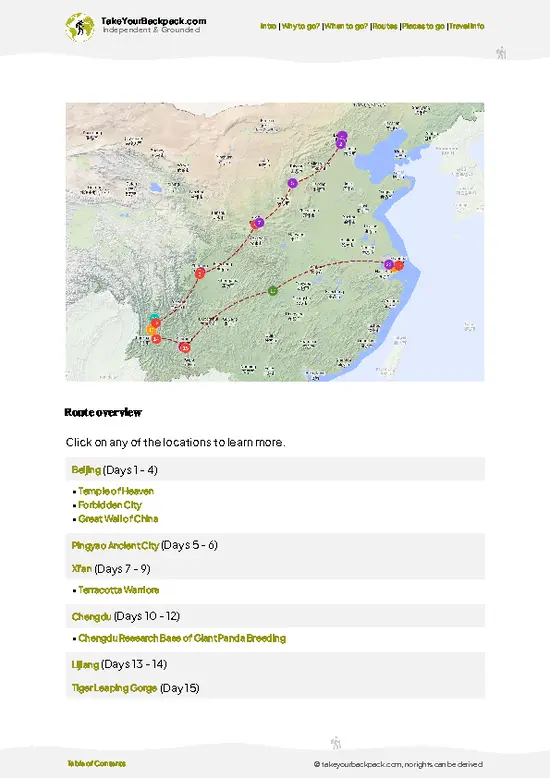
🧭 RoutesLogical itineraries covering the highlights

The 14-Day East China Classics Route

The vibe: Two easy weeks built around imperial capitals, canals, and gardens, using high-speed trains to keep things smooth while you focus on palaces, museums, and old streets. It’s ideal if you want depth over distance, with time to linger in courtyards and water towns instead of sprinting across the whole country.
The highlights:
  • Beijing’s core trio of the Forbidden City, The Palace Museum, and the Great Wall of China
  • Xi’an’s Terracotta Warriors and Horses Museum and historic city atmosphere
  • Shanghai’s skyline energy anchored by the Shanghai Museum
  • Suzhou’s classical gardens and an overnight in Wuzhen water town
  • The 21-Day Cities, Pandas & Karst Route

    The vibe: Three weeks that balance big-name cities with panda country and southern landscapes, using a mix of high-speed trains and a couple of flights to keep transitions clean. It’s for travelers who want the icons plus some mountain air and river time without turning the trip into an endurance test.
    The highlights:
  • Beijing
read more 👉

The 14-Day East China Classics Route

The vibe: Two easy weeks built around imperial capitals, canals, and gardens, using high-speed trains to keep things smooth while you focus on palaces, museums, and old streets. It’s ideal if you want depth over distance, with time to linger in courtyards and water towns instead of sprinting across the whole country.
The highlights:
  • Beijing’s core trio of the Forbidden City, The Palace Museum, and the Great Wall of China
  • Xi’an’s Terracotta Warriors and Horses Museum and historic city atmosphere
  • Shanghai’s skyline energy anchored by the Shanghai Museum
  • Suzhou’s classical gardens and an overnight in Wuzhen water town
  • The 21-Day Cities, Pandas & Karst Route

    The vibe: Three weeks that balance big-name cities with panda country and southern landscapes, using a mix of high-speed trains and a couple of flights to keep transitions clean. It’s for travelers who want the icons plus some mountain air and river time without turning the trip into an endurance test.
    The highlights:
  • Beijing and Xi’an for dynasties, museums, and the Terracotta Warriors
  • Chengdu and the Chengdu Research Base of Giant Panda Breeding
  • Mount Emei National Park and the Leshan Giant Buddha
  • Guilin, Yangshuo, and the Longji Rice Terraces in the South China Karst
  • The 30-Day Grand China Overland & Peaks Route

    The vibe: A full-month arc that stitches together imperial capitals, Silk Road deserts, panda forests, high valleys, and Yunnan’s mountain towns, with high-speed trains, scenic bus rides, and a few key flights. It’s built for travelers who want to see how many different worlds fit inside one country, from Mogao cave art to Tiger Leaping Gorge and Shanghai’s skyline.
    The highlights:
  • Beijing, Xi’an, and Dunhuang’s Mogao Caves for the deep historical spine
  • Chengdu, Sichuan Giant Panda Sanctuaries, Mount Emei, and Leshan
  • Jiuzhaigou Valley National Park, Huanglong, and the Shangri-La region
  • Lijiang, Tiger Leaping Gorge, Dali, Shaxi, Guilin, Yangshuo, and the Longji Rice Terraces before a modern finale in Shanghai
🌍 Want a ready-to-use travel plan for China?
The overview above compares different route options based on your travel time and style. The complete Travel Guide breaks each itinerary down in detail, including maps, stops, highlights, and transport information.

Explore all route details 👉

Get the Travel Guide -

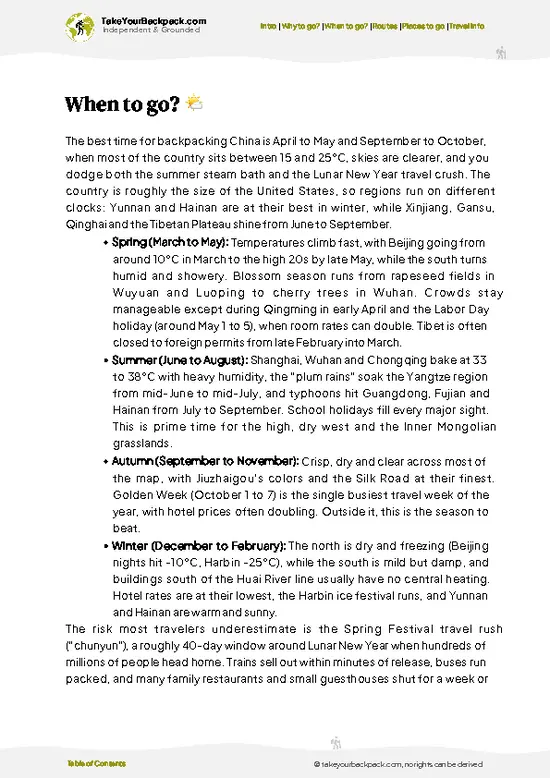
🌤️ When to go?Best time to visit China

Late September to late October is the cleanest win for China: summer crowds have emptied, prices slide back to shoulder levels, monsoon rain retreats from the south, typhoons calm along the coast, and high plateaus from Yunnan to Qinghai stay open before the first real snow; skip Oct 1-7 (National Day week) when the country surges onto the road and trains vanish. The runner-up is late April to early June: warmth lifts north to south, blossom and highland turf turn on, river levels are photogenic but most trails remain firm, and student tour groups haven’t started their summer swarms; dodge the May 1 holiday and watch early-spring dust in the north. Both windows let you chain long rail legs without fighting for tickets, mix humid south with crisp north in one pack, and still step high into western ranges without survival-mode layers.
  • Crowd/Heat Peak: July-August and holiday weeks are sweat-soaked, sold-out, and loud—rooms jump a tier, hard-sleeper berths vaporize days ahead, and buses run at standing-room-only. You grind because the payoff’s real: long daylight on the Great Wall’s wilder stretches, thunderhead light over karst rivers, alpine meadows in western Sichuan exploding with wildflowers. Quiet risk most miss: timed-entry quotas at flagship parks cap you out; if you roll in late, you simply don’t get in.
  • Shoulder Momentum: April-June and late Sept-Nov (skipping the two big holiday weeks) feel like the country shifting gears—farm fields cut, market stalls restock, city parks breathe, trailheads wake up. You move faster with fewer lines, buy train tickets on your schedule, and stitch north-south climates cleanly. Under-the-radar risk: some high passes and grasslands can still be snow-blocked in early spring; bus routes publish, then quietly don’t run for another week.
  • Winter Off-Peak/Interior: December-February strips noise from the map. Dunefields hiss, temple courtyards echo, and desert skies go razor-clear; Beijing freezes but rewards you with blue. Survival hack: wool base layer plus a thin down and a thermos—warm up with station hot water and keep moving. Overlooked risk: mountain park shuttles and minor museums shut or keep “weekend-only” hours; don’t assume weekday access in the north or on the plateau.
  • Rain Belt/Monsoon: May-September in the south and east means convective afternoons, swollen rivers, and slick stone stairs. You win it by starting at dawn, bagging the ridge before lunch, then napping through the daily blast. Pack a real rain shell and seal electronics. Quiet risk: landslide closures cut links in Yunnan and Sichuan; a single washout can strand you a valley away from your plan.

I lock any cross-province rail leg 10-14 days out if it touches a holiday week and ride night trains to buy back a hostel night and a morning start.

source: climatestotravel.comJANJanuary: fair for travelingFEBFebruary: fair for travelingMARMarch: good for travelingAPRApril: highly recommended for travelingMAYMay: good for travelingJUNJune: highly recommended for travelingJULJuly: fair for travelingAUGAugust: fair for travelingSEPSeptember: highly recommended for travelingOCTOctober: excellent for travelingNOVNovember: highly recommended for travelingDECDecember: fair for traveling
📅 Traveling in a specific month?
Get a full month-by-month breakdown of weather, crowds, costs, festivals, and seasonal highlights in the complete travel guide.

Get full details when to go 👉

Get the Travel Guide -
!!china-iStock-1165262128

💰 Costs (as of 2025)Typical budget expectations

Expect 180-300 RMB ($25-42) per day if you sleep in dorms, eat local, and use trains and metros with intent.
  • dorm accommodation: 40-70 RMB in smaller cities, 60-120 RMB in Beijing/Shanghai/Shenzhen, 80-150 RMB in over-touristed old towns. System tip: use overnight hard sleeper trains (150-260 RMB) as your “bed + transport” to erase a hostel night; in cities, stay within 500 m of a metro line to save 20-40 RMB/day on taxis. Relative value: dorms run ~30-60% higher than Vietnam, still half of Japan/Korea. I’ve skipped Friday surges by arriving Sunday-Tuesday and letting prices reset.
  • meals: Supermarket Survival: 15-25 RMB for bread, yogurt, fruit, instant noodles; reliable on long train days, dull after two. Street food reality: steamed buns, jianbing, noodles, canteen plates are 8-25 RMB per item; two items plus tea lands you at 20-35 RMB per meal, better flavor, same price. Sit-down local spots hit 25-45 RMB. Coffee is the ambush at 25-40 RMB; drink tea or free hot water. Relative value: food costs similar to Thailand off the beach, a touch higher than Vietnam, far lower than Japan. I’ve done three bao + noodle soup breakfasts for 12 RMB and didn’t feel cheated.
  • local transport: City
read more 👉
Expect 180-300 RMB ($25-42) per day if you sleep in dorms, eat local, and use trains and metros with intent.
  • dorm accommodation: 40-70 RMB in smaller cities, 60-120 RMB in Beijing/Shanghai/Shenzhen, 80-150 RMB in over-touristed old towns. System tip: use overnight hard sleeper trains (150-260 RMB) as your “bed + transport” to erase a hostel night; in cities, stay within 500 m of a metro line to save 20-40 RMB/day on taxis. Relative value: dorms run ~30-60% higher than Vietnam, still half of Japan/Korea. I’ve skipped Friday surges by arriving Sunday-Tuesday and letting prices reset.
  • meals: Supermarket Survival: 15-25 RMB for bread, yogurt, fruit, instant noodles; reliable on long train days, dull after two. Street food reality: steamed buns, jianbing, noodles, canteen plates are 8-25 RMB per item; two items plus tea lands you at 20-35 RMB per meal, better flavor, same price. Sit-down local spots hit 25-45 RMB. Coffee is the ambush at 25-40 RMB; drink tea or free hot water. Relative value: food costs similar to Thailand off the beach, a touch higher than Vietnam, far lower than Japan. I’ve done three bao + noodle soup breakfasts for 12 RMB and didn’t feel cheated.
  • local transport: City unlock: metro 2-7 RMB per ride, buses 1-2 RMB with a transit card, dockless bikes 1-2 RMB per half hour; learn the city card once, then daily costs collapse. Country unlock: trains. Hard seat is cheapest for short hops (e.g., 200 km ≈ 40-60 RMB), hard sleeper is the budget sweet spot overnight (400-800 km ≈ 150-260 RMB), high-speed second class is time-rich but budget-tight (500 km ≈ 260-350 RMB). Flights look cheap until airport transfers eat 50-100 RMB each way. Relative value: per kilometer, China rail beats Thailand/Vietnam buses and undercuts Korea/Japan by a mile. I routinely bike-share the last kilometer to dodge 15 RMB taxi minimums.
  • activities: Cost drivers are “scenic area” tickets and their add-ons: mandatory park buses (20-60 RMB) and cable cars (70-200 RMB each way). Big mountains (Huangshan, Zhangjiajie) stack these fees. Museums and city temples are kind: many are free to 30-60 RMB. Great Wall DIY at Mutianyu/Badaling is cheap if you skip the cable car. Shows (acrobats, “impression” productions) run 180-400 RMB. Relative value: attractions cost more than Southeast Asia but less than Japan; stack one pricey day with two free-city-walking days to average out.
  • miscellaneous: Budget leaks: barista coffee (25-40 RMB), craft beer (40-60), Western food (60-120), laundry at hostels (10-20 per load), locker/storage (10-20), bottled water at sights (8-10 vs 2-3 at supermarkets), ATM fees (20-35), late-night taxis after metro closes. Holiday weeks spike everything. Pay with transit cards/QR to access bus discounts; cash riders often pay more. Personal tip: carry a small thermos—free hot water is everywhere; it replaced my coffee habit and kept 30-40 RMB/day in my pocket.
⚠️ Prices can change and everyone travels differently, so take this as a rough guide. Hope it helps you plan your adventure!

✈️ The backpacker research shortcutChina Travel Guide

An offline-friendly backpacking guide with optimized travel routes, ranked highlights, transport advice, and the best areas to stay.
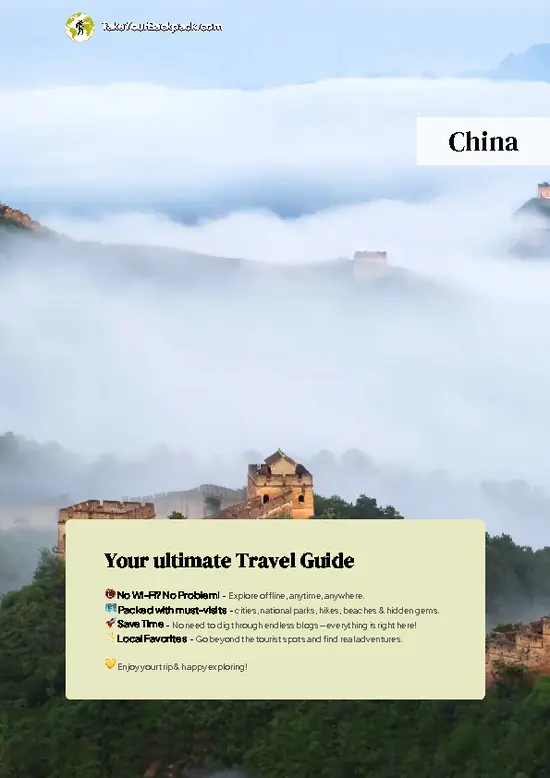
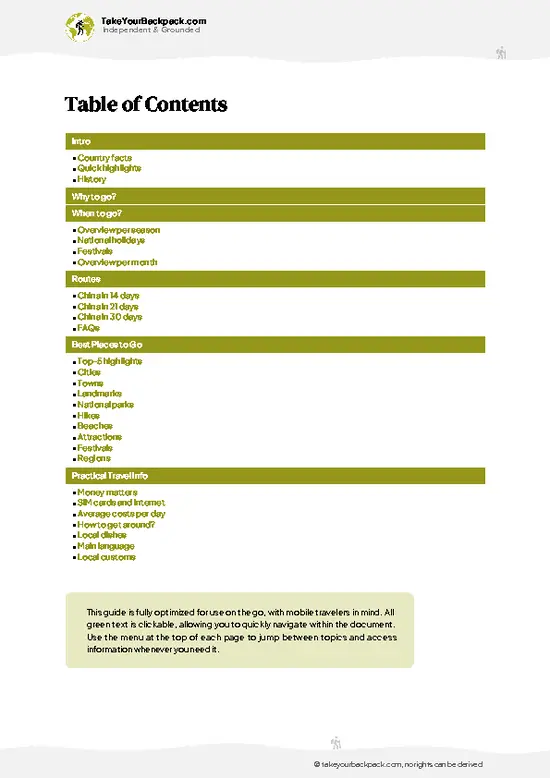
example page 0 from our offline Travel Guide for Chinaexample page 1 from our offline Travel Guide for Chinaexample page 2 from our offline Travel Guide for Chinaexample page 3 from our offline Travel Guide for Chinaexample page 4 from our offline Travel Guide for Chinaexample page 5 from our offline Travel Guide for Chinaexample page 6 from our offline Travel Guide for Chinaexample page 7 from our offline Travel Guide for China
The digital guide (496 pages) contains:
139 highlights, ranked by travel appeal
Optimized 14, 21 & 30-day travel routes
Cities, national parks, beaches, historical sites, ...
How to get around
Offline-friendly for travel without Wi-Fi
👉 Click to see all 30+ guide features

📅 Plan smarter in minutes, not weeks
Month by month travel advice
Festivals & national holidays
Budget expectations

🗺️ Go to the right places, skip the overrated ones
Honest pros & cons of destinations
Top hikes, parks & viewpoints
Lesser-known places most travelers miss
Clear “worth it vs skip it” guidance

🛏️ Travel smoothly without rookie mistakes
Best areas to stay
Transport systems explained simply
Common scams & safety advice
SIM cards, money & practical tips

🌍 Understand the country, not just visit it
Culture & traditions
52 Essential phrases & customs
Festivals worth planning around
Traveler-friendly historical context
Insights that make places more meaningful

📱 Built for real travel conditions
Fully downloadable PDF
Works completely offline
Optimized for phone use
Useful in remote areas & buses
Everything in one place
Save weeks of stressful planning
Get instant access to the full guide directly. 30-day money-back guarantee.


Sent to your inbox immediately after payment • 100% Secure Checkout
Best Backpacking Travel Advisor 2025 tourism awardBest Backpacking
Travel Advisor
2025
What others say about Take Your Backpack Guides:
⭐⭐⭐⭐⭐
Fantastic, amazing amount of information!
⭐⭐⭐⭐⭐
My goodness this is amazing, it's what I've been looking for hats off too you!
⭐⭐⭐⭐⭐
I think this is absolutely BRILLIANT
⭐⭐⭐⭐
Very complete and informative. It's still missing places, but I gotta to commend you
⭐⭐⭐⭐⭐
This is truly amazing, thank you, can't wait to explore it with my kids!
⭐⭐⭐⭐⭐
Awesome resource, thank you!
⭐⭐⭐⭐⭐
This is amazing! Can't wait to explore the ones I haven't seen
⭐⭐⭐⭐
I love this! Well done, great idea.
⭐⭐⭐⭐⭐
Thanks for taking the time to make this gem!
⭐⭐⭐⭐⭐
This might be the best website I've ever seen.
⭐⭐⭐⭐⭐
Congratulations, and thank you so much for your work; it's incredibly valuable.
⭐⭐⭐⭐
In all seriousness I think you did a great job pointing out the important spots
⭐⭐⭐⭐⭐
10/10 very good
⭐⭐⭐⭐⭐
As someone who's only just starting to visit regularly this is awesome, thank you.
⭐⭐⭐⭐
Thank you very much! I'm going to visit my dad, it's going to be very useful!
⭐⭐⭐⭐⭐
This is really cool! We'll be travelling for the first time and this definitely come in handy.
⭐⭐⭐⭐⭐
You are now our minister of culture, congratulations 👨‍💼
⭐⭐⭐⭐⭐
Just wanted to tell you that this is a pearl! Going to follow your recommendations.
⭐⭐⭐⭐⭐
This is so cool. I'll definitely be using the resource for my travels soon.
⭐⭐⭐⭐⭐
This is very impressive! Good work.
⭐⭐⭐⭐⭐
This is an amazing and informative site. Very well done!

🛏️ Where to stay?Where to stay in China

Yes — hostels and budget accommodation are common across China, with backpacker-friendly clusters of cheap dorms, guesthouses and family-run hostels in major cities and tourist towns, so book ahead in peak season.
Top neighborhoods with the most/best budget options: Beijing — Dongcheng/Chaoyang (central sights and nightlife; can be noisy and pricier) and Xicheng (quieter, close to historic sites); Shanghai — Huangpu/Jing’an (walkable highlights, excellent transit; busy and costlier) and Pudong (modern but fewer backpacker options); Chengdu — Jinjiang/Wuhou (food streets and transport; lively … read more 👉
Yes — hostels and budget accommodation are common across China, with backpacker-friendly clusters of cheap dorms, guesthouses and family-run hostels in major cities and tourist towns, so book ahead in peak season.
Top neighborhoods with the most/best budget options: Beijing — Dongcheng/Chaoyang (central sights and nightlife; can be noisy and pricier) and Xicheng (quieter, close to historic sites); Shanghai — Huangpu/Jing’an (walkable highlights, excellent transit; busy and costlier) and Pudong (modern but fewer backpacker options); Chengdu — Jinjiang/Wuhou (food streets and transport; lively evenings); Xi’an — Beilin/Muslim Quarter (by the city wall, touristy); Lijiang/Dali/Guilin/Yangshuo old towns (clustered guesthouses and social scene; crowded in high season).
Tradeoffs to plan for: central areas cut transit time and connect to nightlife but bring noise, higher rates and crowded weekends; outlying districts are cheaper and quieter but add transit time and may limit late-night options, and all places require passport registration at check-in with common small deposits.

If you enjoy meeting fellow travelers, consider choosing hostels with high ratings for atmosphere. On the other hand, if you prefer having your own space, a hotel might be a better option.

🚌 Getting aroundPublic transport and other ways to get around

China moves like a conveyor belt with guardrails: rigid timetables, airport-style security, QR codes for everything, and a human tide that flows if you line up correctly and stalls if you miss the funnel. Trains leave to the minute; metros pulse every few minutes; buses mostly honor the clock but shrink their ambitions after dusk. Your job is sequencing—choose the right hub, clear the scanners early, and ride the wave. Treat it like a puzzle with gates, seat classes, and release windows, and the … read more 👉
China moves like a conveyor belt with guardrails: rigid timetables, airport-style security, QR codes for everything, and a human tide that flows if you line up correctly and stalls if you miss the funnel. Trains leave to the minute; metros pulse every few minutes; buses mostly honor the clock but shrink their ambitions after dusk. Your job is sequencing—choose the right hub, clear the scanners early, and ride the wave. Treat it like a puzzle with gates, seat classes, and release windows, and the system starts opening for you.
  • High-Speed Rail (Gaotie/CRH) The Efficiency Trade-off: city-center to city-center at 250-350 km/h. Second class is the value lane—usually pricier than a bus, often cheaper than a same-day flight once you count transfers and delays, and reliably faster under roughly 1,200 km. Tickets typically release about two weeks out; Friday night and Sunday afternoon evaporate first. Arrive 30-45 minutes early for ID checks and X-ray; gates close minutes before departure and trains don’t wait. Overheads swallow a carry-on and a daypack; big bags park behind the last row. Bring your own food—the trolley is markup and the dining car’s time sink.
  • City Metros The Social Fabric: you queue on floor markings, let riders off first, keep your voice down, and keep the backpack off your back at crush hour. Every entrance has security; liquids are fine, knives are not. No eating on most systems. Payment is tap-and-go with a city IC card or QR via Alipay/WeChat; exact change works only on some legacy buses, so don’t rely on cash. Trains thin after 10:30 pm and stop around 11-ish; miss that and you’re walking or ride-hailing. Stand near car ends for more space; center doors are a scrum.
  • Intercity and Regional Buses The Geometric Unlock: these reach county seats, park gates, and trailheads the rails skip—Longji, Wuyishan, Zhangjiajie outskirts, the odd monastery on a ridge road. Buy at stations; some routes are clocked, short rural ones leave “when full.” Stash big packs in the belly and grab the claim tag. Midday runs can vanish; last departures in the hills are often 15:00-17:00. Stations are frequently on the edge of town, so budget a local bus hop at both ends. Keep a translation app offline for destination boards that use only Chinese.
  • Conventional Trains (K/T/Z) The Budget Disruptor: hard sleeper turns distance into rent—six bunks to a bay, clean sheets, hot water taps for noodles, and you wake up across a province for half the price of high-speed. Z trains are faster, K the plodders. Upper bunk buys privacy; lower has headroom and foot traffic. Hard seat is survivable by day, punishing overnight. Toilets are basic; bring tissue and sanitizer. Real-name tickets tie to your passport; foreigners often need a window pickup the first time—build that line into your plan.

My master move: lock the longest leg as an overnight hard sleeper first, then pivot midday on high-speed through a secondary hub (Wuhan, Zhengzhou, or Changsha) to dodge sell-outs, and finish with a regional bus—always arriving 45 minutes early for the security funnel and keeping QR pay or one transit card ready so you never queue twice for the same kilometer.
Beijing Capital (PEK) — about 27 km from Tiananmen. Best budget: Airport Express to Dongzhimen, then Metro Line 2/1 into the center. Roughly 45-60 min total; ≈CNY 28-31 all-in (Airport Express is CNY 25 + a few yuan for the metro).

Beijing Daxing (PKX) — about 46 km south of the center. Best budget: Daxing Airport Express to Caoqiao, switch to Line 10/2 toward central stops. About 40-55 min; ≈CNY 38-41 total.

Shanghai Pudong (PVG) — around 45 km to People’s Square. Best budget: Metro Line 2 all the way (quick train swap at Guanglan Rd). 60-70 min; about CNY 7-8.

Shanghai Hongqiao (SHA) — roughly 13 km to People’s Square. Best budget: Metro Line 2 or 10 downtown. 30-40 min; around CNY 5.

Hong Kong (HKG) — about 35 km to Central. Cheapest sensible route: S1 bus to Tung Chung, then MTR Tung Chung Line to Hong Kong Station/Central. 45-60 min; roughly HK$30-33 (way cheaper than the Airport Express).

Guangzhou Baiyun (CAN) — about 28 km north of Tianhe. Best budget: Metro Line 3 from Airport North to Tiyu Xilu/Zhujiang New Town. 45-60 min; about CNY 7-8.

Shenzhen Bao’an (SZX) — roughly 32 km to Futian CBD. Best budget: Metro Line 11 to Futian (transfer if needed). 35-45 min; around CNY 7.
⚠️ Prices and routes can change, so take this as a rough guide and ask for local advice when you arrive.

🔒 Safety (risk Level: medium)Common concerns and things to watch out for

Safety for solo travelers, including women and LGBTQ+ individuals
China is generally safe for solo travelers, including women and LGBTQ+ individuals. Major cities like Beijing and Shanghai have extensive public transportation and a strong police presence, which enhances safety. While LGBTQ+ rights aren’t as advanced as in some Western countries, urban areas tend to be more accepting. Always exercise standard travel precautions, such as staying aware of your surroundings and avoiding late-night solo walks in unfamiliar areas.


Full official government travel advisory (live updates)
View details 👉

✈️ VisaEntry requirements and paperwork

Most travelers need a visa to visit China. Apply for a tourist visa (L visa) at a Chinese embassy or consulate by submitting your passport, application form, photo, and itinerary. Check specific requirements as they vary by nationality.

source: visaforchina.org
⚠️ Visa requirements can change over time, so always check the latest visa requirements with the official embassy or government website before you travel.

🎒 What to pack?What to wear and bring

China’s a big place with diverse climates, so check the weather for each region you plan to visit. Northern areas like Beijing can get icy in winter, while the south is subtropical and sticky, especially during summer. For temple visits, pack something to cover your shoulders and knees—modesty is key. If you’re hitting the Great Wall or exploring rural areas, sturdy shoes are your best friend. Keep in mind, China’s got everything from beaches to mountains, so plan your gear accordingly.

Apart from this country specific advice, I have also crafted a general packing list that should help on any trip. authorOver the years, I've learned the importance of packing minimally. It's so much easier to jump on the back of a truck or squeeze yourself into the last spot of a minibus without that supersized backpack. If you're headed to a warm destination, leave your winter jacket at home; for colder regions, opt for thin thermal underlayers. Instead of packing your entire wardrobe, bring just three sets of clothes, as laundry facilities are available everywhere.
View the full list 👉
🎒 Planning the practical side of your trip?
Get detailed information on transport, daily budgets, internet access, local customs, food, language, and other essentials in the complete Travel Guide.

Get detailed practical information 👉

Get the Travel Guide -

🙋 FAQQuick answers to practical concerns

Trip Planning


Personal tip: I normally search on good rating for atmosphere (for meeting people) and location (for easy exploring). Cleanliness as a bonus.


Travel Essentials

Hepatitis A and Hepatitis B are recommended for most travelers. Typhoid is advised if you’re going to rural areas or eating street food. Consider Japanese Encephalitis if you’re visiting rural parts during the summer. Rabies is suggested if you’ll be in contact with animals or in remote areas. Routine vaccines like measles, mumps, rubella (MMR), diphtheria, tetanus, and polio should be up to date. Always consult a healthcare provider before traveling.


vaccination requirements
When I first started traveling, I often spent part of my first day in a new country hunting for a local SIM card. While this can still be slightly cheaper, it also takes time and planning.

These days, it's much simpler to install an eSIM before leaving home. Once you arrive in China, you can activate it immediately and have mobile data from the moment you land — which is especially useful for ordering transport or navigating away from busy airports.

There are many providers nowadays, and price differences are usually small. I personally go with Airalo, as it offers excellent network coverage throughout the country and strong global coverage, so you can manage multiple countries from a single app.


Get your e-sim for China

Culture & Customs

Use both hands when giving or receiving anything, especially business cards, to show respect. Avoid pointing with your finger. Instead, use your whole hand to gesture. Tipping is not customary, though it’s becoming more common in tourist-heavy areas. Avoid discussing politics, especially topics like Taiwan or Tibet. Public displays of affection are uncommon and can attract attention. Women should be cautious in crowded areas to avoid pickpocketing. LGBTQ+ travelers should be discreet, as public attitudes can vary. Always remove your shoes when entering someone’s home.
Trying traditional food is always a great way to experience the culture. Here are some must-try dishes for China.
  • Peking Duck: A crispy, succulent roasted duck known for its thin, crispy skin. Originating from Beijing, it’s a dish often associated with celebration and luxury. Eating it involves delicate slices wrapped in pancakes with hoisin sauce, spring onions, and cucumber.
  • Kung Pao Chicken: A spicy, stir-fried dish made with chicken, peanuts, and vegetables. Originating from Sichuan province, it’s famous for its bold flavors combining sweet, sour, and spicy elements.
  • Mapo Tofu: Another Sichuan classic, this dish features tofu set in a spicy, tangy sauce made with fermented black beans and ground pork. Known for its ”mala” flavor, the numbing spice from Sichuan peppercorns is a standout feature.
  • Dim Sum: Not exactly a single dish but a collection of small bite-sized portions often served in steamer baskets. Originating from Cantonese cuisine, it’s a social dining experience that includes everything from dumplings to buns, best enjoyed with tea.
  • Xiaolongbao: These are steamed soup dumplings filled with pork and a rich, savory broth. Hailing from Shanghai, they’re a masterclass in texture and flavor balance—be careful not to lose the soup when you bite in!
  • Hot Pot: A communal eating experience involving a simmering pot of broth at the center of the table, into which diners add thinly sliced meats, vegetables, and noodles. Popular across the country, but particularly in Chongqing and Sichuan, it’s all about the social aspect and customizing your own meal.
  • Jiaozi: Chinese dumplings that can be boiled, steamed, or fried. They’re a staple during Lunar New Year celebrations and symbolize wealth due to their shape resembling ancient Chinese gold ingots.
Tap water in China is generally not considered safe for drinking, even by locals, who typically boil it first. Tourists are advised to stick to bottled or filtered water to avoid any potential health issues. Pro tip: Bring a portable water filter if you’re planning to travel extensively or visit remote areas.
The main language in China is Mandarin. Backpacking is way more rewarding if you know a bit of the local language, so I'd suggest brushing up on the basics just in case your Mandarin skills have become a bit rusty.

Want to understand locals better?
The complete Travel Guide for China includes 52 essential words and phrases — greetings, thank-yous, ordering food, transport, numbers, and common local expressions you'll actually hear.

Get your local basic phrases 👉

Get the Travel Guide -


In China, English proficiency varies significantly by region and demographic. Major cities like Beijing, Shanghai, and Guangzhou generally have a higher number of English speakers, especially among younger people, students, and professionals in the tourism and hospitality industries. Signs in urban areas often include English translations, making navigation easier for travelers.

However, in rural areas and smaller cities, English is less commonly spoken, and communication can be challenging. Many locals may understand basic phrases, but fluency is rare. In these regions, having a translation app or phrasebook can be invaluable.

In educational institutions, English is a mandatory subject, so many young people have some level of understanding. However, actual conversational skills may be limited due to a focus on reading and writing over speaking.

Overall, while you can find English speakers in China, especially in urban areas, it’s advisable to learn a few basic Mandarin phrases or use translation tools to enhance your travel experience.

Money & Payments

The local currency of China is CNY (¥).

When backpacking in China, having a mix of payment options is key. ATMs are common in cities, but rural areas might be a different story, so plan ahead if you’re heading off the beaten path. Most ATMs accept foreign cards, but go for those at major banks like ICBC or Bank of China to avoid issues.

Cash is king in smaller towns and markets, so keep some on hand. Yuan is the only currency accepted, so forget about using dollars or euros directly. As for card payments, major cities are getting better with credit card acceptance, but don’t rely on it, especially in street food stalls or smaller shops.

For currency exchange, airports and hotels offer convenience but with a hefty fee. Instead, hit up a bank branch for a better rate. Lastly, apps like WeChat Pay and Alipay are popular, but you’ll need a local bank account to use them effectively. If you can, set one up for smoother transactions on the go.

Tipping in China isn’t customary and can even be seen as unusual, especially in smaller cities and rural areas. In upscale restaurants or hotels in major cities like Beijing and Shanghai, a service charge is often included in the bill, making additional tipping unnecessary. Taxi drivers, street vendors, and local eateries typically don’t expect tips.

🧩 Nearby countriesOther countries to combine with China

📸 PhotosScenes from around the country

Take your backpack - China - 0
Take your backpack - China - 1
Take your backpack - China - 2
Take your backpack - China - 3
Take your backpack - China - 4
Take your backpack - China - 5
Take your backpack - China - 6
Take your backpack - China - 7
Take your backpack - China - 8
Take your backpack - China - 9
Take your backpack - China - 10
Photographed by: Johan Kruseman

Memorable moments from the road

Taking the last leg of the Trans-Mongolian Express

Taking the last leg of the Trans-Mongolian Express

China | What is it that makes train travel so special for many people? I’ve never really felt that, but that’s probably because the sprinter from Heemstede-Aerdenhout to Leiden is a completely different experience than the Trans-Mongolian Express from Ulaanbaatar to Beijing. Just the sign on the outside “МОСКВА -- УЛААН-БААТАР -- БЗЗЖИН” makes the whole jo...
Read more
Oops…. the train track changes width at the border

Oops…. the train track changes width at the border

China | Arriving at the border with China, an unexpected problem arose: the rails in China turned out to be 10 cm closer together than in Mongolia. The easiest solution seemed to be to switch to a Chinese train. It was decided to change all the wheelsets under the train!!! With all the passengers on board, the entire Trans-Mongolian Express was lifted 1.5 ...
Read more
Google Maps in China makes you get lost so often

Google Maps in China makes you get lost so often

China | And it‘s true: Facebook is blocked. But frustratingly enough, they still let the notifications come through, so you‘re constantly reminded of how many messages you‘re missing. Google Maps is even more annoying: they let the map data come through but with a deliberate offset of a few hundred meters in a random direction. This made it a bit challengi...
Read more
Checking off Beijing top-10 in 8 hours

Checking off Beijing top-10 in 8 hours

China | The following days, I checked off the tourist top 10 in no time. There‘s just too much to see within walking distance of each other. While I would spend 12 hours on a bus just to see one individual temple, here they are thrown at you in dozens, side by side. Since this update is not intended to compete with Beijing travel guides, I will skip the f...
Read more
Finding freedom in a country where being retweeted can get you to jail

Finding freedom in a country where being retweeted can get you to jail

China | And after this series of top attractions, I listened on my last day to the do’s and especially don’ts of my next destination: North Korea... But before I introduce you to the secrets of North Korea, I will first give a small bonus on Beijing because this time I let keeping countries together prevail over chronology. A little flash-forward, if you w...
Read more
Being more famous than the Great Wall for a day and closing all factories to create a blue sky

Being more famous than the Great Wall for a day and closing all factories to create a blue sky

China | I had one full day left in Beijing: that meant the Great Wall of China. And now I thought the Great Wall of China was a pretty respectable attraction, but by the end of the day, I had been photographed more times than I had taken photos of the wall in between. The air was finally clean. It turned out that the government had ordered all factories in...
Read more
More stories

We 💚 feedbackKey takeaways from the trip

China clicks once you read its patterns. Everything is real‑name, scanned, and funneled through turnstiles; that’s why you keep your passport and ticket QR on the first screen of your phone and breeze through while others dig in bags. Distances are huge; that’s why you stack daylight for sights and move cities on night trains, booking hard-sleeper early and picking lower berths so you control the under‑bunk storage. Security lines pop up at metros and stations; that’s why you pack a small daypack, keep metal in one pouch, and aim for the outermost lanes where staff wave people through faster.

Vibe: high‑functioning and blunt, then soft at 6 a.m. when parks fill with tai chi, birds, and opera practice. Best surprise: public toilets are everywhere and usually cleaned on a schedule.

Small warning: Golden Week isn’t “busy,” it’s gridlock—go rural or sit tight.

Misconception to dump: you don’t need fluent Mandarin. Characters for exit, entrance, ticket, and numbers plus offline translate covers 90% if you prep names in Chinese ahead of time.

✈️ When did I visit China?
As part of my 1.5 year travel around the world trip, I visited China in August 2015, coming from Mongolia by the TransMongolia Express. While my visit dates back, this guide is continuously refined using feedback from locals and current backpackers (last update: 12 February 2025)

✍️ Help improve this page!
The information on this page is based on my own backpacking experience in China, supplemented with up-to-date research and feedback from other travelers. Travel details can change, so if you notice anything outdated or incomplete, feel free to let me know.


🙋‍♂️ Give feedback

👋 Meet the founderWho’s Behind Take Your Backpack?

Johan, backpacker and founder of TakeYourBackpackHi, I’m Johan (Netherlands 🇳🇱), the creator of TakeYourBackpack. Over the past decade, I’ve backpacked through 80+ countries across six continents, gaining extensive experience with independent travel, long-term trips, and overland routes.

This site is built on a combination of firsthand travel experience and carefully curated insights from other backpackers. Many guides are based on places I’ve personally visited, while others bring together tips, observations, and practical advice shared by trusted travelers I’ve met along the way.

The goal is to provide realistic, experience-driven guidance — not generic itineraries — so you can explore destinations with better context, clearer expectations, and more confidence.

Get full China guide •
Instant download • 139 highlights • Full Offline guide