×
Greece 🇬🇷

backpacking Europe Greece 🇬🇷Island-hop slowly between history-soaked shores and villages.

Explore GibraltarExplore Guernsey

Backpacking Greece in 2026

A complete guide including when and where to go, costs, transport, itineraries, and practical travel advice.
A first look at the country

Backpacking Greece
By Johan Kruseman 🇳🇱 | Updated June 6, 2026

Greece isn’t a chaotic, cash‑only bargain anymore. Cards work almost everywhere, ferries and KTEL buses run predictably in season, and marquee islands charge Western Europe prices. Choose your tempo—slow and local or swift and sleek—and the country pays you back in honeyed light and sea‑salt air.

Come for the Aegean glow that makes white walls feel warm to the touch, for tomatoes that taste like sun, for ruins that hum with cicadas, and for mountains that tumble straight into coves. Athens crackles with graffiti and gallery talk; on Naxos a farmer once pressed warm figs into my hand at a bus stop. Here’s the trade: you spend time to save money on slow ferries and regional buses; you spend money to buy comfort by flying or renting an automatic; you spend comfort to gain access when you climb monastery steps or drop into a gorge. Meltemi winds can halt boats, heat presses after noon, and Santorini’s sunset comes with elbows. Push through, and the swim that follows, or the sardines at a paper‑tablecloth taverna, taste even better.

Albania runs cheaper and rougher, Turkey broader and denser, Croatia sleeker on the coast, Italy smoother but busier. Greece is for travelers who pick character over polish, who’ll trade time or cash for freedom—and want the reward to taste like olive oil and salt.

👉 Get the 📖 Travel Guide of Greece
Athens & Attica
Cheap to reach, expensive in energy. The payoff starts at dawn: marble steps slick with dew, city waking in the pink light, espresso and diesel in the air. Metro moves you fast; sidewalks don’t. If you like dense, lived-in streets, late dinners, and big museums, it rewards short attention spans and tight budgets.

Cyclades via Piraeus (Naxos/Paros/Santorini)
One ferry spine, two speeds: slow, cheap decks with salt spray and bakery spanakopita, or fast catamarans that burn money to save hours. Expect wind, stairs, and dust from scooters. Mykonos drains your wallet on drinks; Naxos and Paros trade nightlife for space and better value. Best for island-hopping realists who pack light.

Peloponnese Road Circuit
Buses reach the hubs; the cliffs and coves demand a car and patience for hairpins. Nafplio’s seaside evenings, Mycenae’s baked stones, Mani’s tower villages under cicada buzz. Fuel costs more than a ferry ticket but buys freedom. For travelers who prefer olive-wood smoke and quiet coves over bar streets.

Crete
Too big for a quick hit. Give it a week, rent a car, and accept long days: thyme on the wind, goat bells in dry valleys, sun like a blade at noon. Samaria Gorge taxes your knees and rewards with cold river water. Good-value food, proud hospitality, scattered sights. Suits planners.

Epirus & Zagori (Vikos Gorge)
Remote, green, and honest about the effort. Ioannina is your supply stop; then stone bridges, cold rivers, and trails that switch from sun to mist without warning. Buses are sparse; a car buys time. Best for hikers who trade beach time for silence, alpine light, and aching calves.
A visual overview of the country
Loading the map 🌍
CLICK TO FILTER
city
town
village
unique site
national park
hike
beach
attraction
festival
region
SHOW COUNTRY’S BESTSHOW ALL
film
0
0
0a
Acropolis Museum
film
1
1
1a
Delphi Archaeological Site and Museum
film
2
2
2a
Ancient Agora of Athens
film
3
3
3a
National Archaeological Museum
film
4
4
4a
Ancient Theatre of Epidaurus
film
5
5
5a
Odeon of Herodes Atticus
film
6
6
6a
White Tower of Thessaloniki
film
7
7
7a
Benaki Museum
film
8
8
8a
Navagio Beach
János Vavrik
film
9
9
9a
Balos Lagoon
Jason
film
10
10
10a
Myrtos Beach
film
11
11
11a
Sarakiniko Beach
film
12
12
12a
Koukounaries Beach
film
13
13
13a
Red Beach
Massimo Garau
film
14
14
14a
Agios Prokopios Beach
Rosario Barrella
film
15
15
15a
Elia Beach
Anthemus Sea Beach Hotel & Spa
film
16
16
16a
Lefkada
film
17
17
17a
Parga
А Г
film
18
18
18a
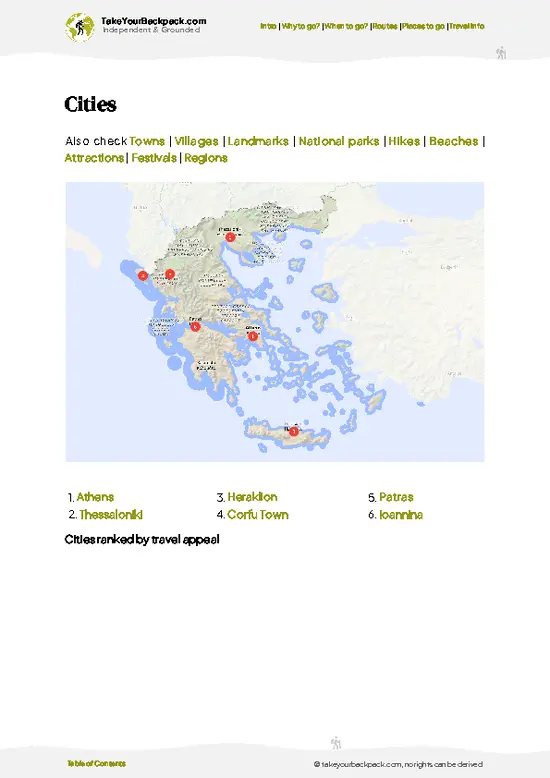
Athens
film
19
19
19a
Thessaloniki
Bojan Marelja
film
20
20
20a
Heraklion
Konstantinos G. Kounalis
film
21
21
21a
Corfu
Gencörme Tekstil San. Ve Dış Tic. Ltd. Şti.
film
22
22
22a
Ioannina
film
23
23
23a
Samaria Gorge
Julien L.09
film
24
24
24a
Mount Olympus
Vladimir Vladimirns
film
25
25
25a
Vikos Gorge
Irina B
film
26
26
26a
Santorini Caldera Trail
Randy G
film
27
27
27a
Corfu Trail
film
28
28
28a
Menalon Trail
film
29
29
29a
Lousios Gorge
Yuval Cohen
film
30
30
30a
Andros Route
film
31
31
31a
Naxos’ Mount Zas Trail
film
32
32
32a
Delphi to Kirra Trail
film
33
33
33a
Vikos-Aoos
film
34
34
34a
Alonissos Marine Park
film
35
35
35a
Tzoumerka
film
36
36
36a
Lefka Ori
film
37
37
37a
Sounion
film
38
38
38a
Dadia-Lefkimi-Soufli Forest
film
39
39
39a
Northern Pindos
film
40
40
40a
Schinias
film
41
41
41a
Axios-Loudias-Aliakmonas
film
42
42
42a
Pindus
Russ Guajardo
film
43
43
43a
Crete
Wiktoria
film
44
44
44a
Chalkidiki
Oksana Bozhko
film
45
45
45a
Thassos
Dennis Duda
film
46
46
46a
Kythira
film
47
47
47a
Sikinos
Yiannis Samios
film
48
48
48a
Nafplio
Manos Alevridis
film
49
49
49a
Chania
film
50
50
50a
Syros
film
51
51
51a
Pylos
film
52
52
52a
Gythio
film
53
53
53a
Acropolis of Athens
film
54
54
54a
Parthenon
Pixabay
film
55
55
55a
Meteora
Marjan Petrovski
film
56
56
56a
Archaeological Site of Delphi
Jeremy Hylton
film
57
57
57a
Archaeological Site of Olympia
Fabio Orfeo
film
58
58
58a
Sanctuary of Asklepios at Epidaurus
film
59
59
59a
Monemvasia
Sakis Mafredas
film
60
60
60a
Archaeological Site of Mystras
Roberto Garagnani
film
61
61
61a
Archaeological Site of Philippi
Anargk
film
62
62
62a
Oia
Zenon Kita
film
63
63
63a
Fira
Sharlicohen
film
64
64
64a
Kardamyli
Νικος Παλληκαρακης
film
65
65
65a
Arachova
film
66
66
66a
Zagori Villages
Evangelos P

Why go?What sets this destination apart

Architecture

Greece is an open-air syllabus of stone: Doric bones on the Acropolis, blue-shadowed Cycladic cubes, … read more 👉
Greece is an open-air syllabus of stone: Doric bones on the Acropolis, blue-shadowed Cycladic cubes, Venetian bastions, and glassy modern lines at the Stavros Niarchos. The light does the heavy lifting—marble goes honey at dusk, sea salt rides the wind. The trade-off map is simple: rise cruelly early, sweat on stairs, save the crowd-free minutes for real seeing. I took the slow ferry to Rhodes and a dusty bus to Mystras—comfort traded for layered history. Skip a meal out, hire a licensed guide once. Pro tip: Athens’ combo ticket buys time, not just entries.

Beach life

Greece pays you back in salt and light. Clear water you can read pebbles through, cicadas sawing in … read more 👉
Greece pays you back in salt and light. Clear water you can read pebbles through, cicadas sawing in the pines, tavern smoke and oregano drifting onto the sand. You earn it with early ferries, hot bus rides. I learned the hard way: the Meltemi kicks sand into your teeth—but then a cove on Milos goes still and the whole sea turns electric blue. Night falls and Paros hums; dawn on Naxos is all silver. Pro tip: carry reef-safe sunscreen and thin water shoes; many beaches are pebbled, and the best snorkeling starts on rock, not sand.

Food

Greece rewards appetite and patience. Tomatoes taste like sun, oregano rides the charcoal smoke, and … read more 👉
Greece rewards appetite and patience. Tomatoes taste like sun, oregano rides the charcoal smoke, and a man insists you mop the plate with bread. Time vs money vs comfort is plain: wait for the slow taverna where the octopus drips from the line, and you’ll pay less than the waterfront but sit on plastic chairs with cats on your ankles. Pro tip: say ’ti exei simera’ and order from the oven trays and meze; house wine by the kilo. My best meals came at 3 p.m., off the harbor, under grape vines heavy with dust and light.

Scenery

Greece rewards effort: stone spires of Meteora warming at first light, sulfur biting your nose on Nisyros, … read more 👉
Greece rewards effort: stone spires of Meteora warming at first light, sulfur biting your nose on Nisyros, Vikos Gorge wind carrying goat bells, pine and sea salt mixing on Taygetos. Time buys solitude—start before the meltemi and the tour buses. Money buys reach—rent a battered car for Zagori; the KTEL will get you there, but it costs a day. Comfort buys the view—sleep on the ferry deck and wake to Cyclades in pink light. Pro tip: pack a headlamp for cave churches and Diros; your own beam reveals the paint the floodlights miss.

Backpackers

Greece works for backpackers because the country rewards patience. Slow ferries cost less and smell … read more 👉
Greece works for backpackers because the country rewards patience. Slow ferries cost less and smell of diesel and salt; you nap on your pack, wake to pink water and gulls. Cheap bakeries fill you with spanakopita before long bus rides. Hostels spill into courtyards where cicadas and clinking glasses set the pace. You trade speed and polish for range: more islands, more ruins, more swims off rough concrete piers. Pro tip: bring a foam pad and eye mask for overnight ferries—I’ve slept the deck Athens–Naxos, sticky from spray, grinning at dawn.

Mountains

Greece rewards sweat. Limestone spines rise from olive valleys and the sea throws hard light on every … read more 👉
Greece rewards sweat. Limestone spines rise from olive valleys and the sea throws hard light on every ridge; you climb through thyme and goat-bell wind to views that feel earned. Time vs money is simple here: buses are slow but cheap to Zagori; a small car halves the hours to trailheads. Comfort is the tax—scree, sun, and sudden wind—but the payoff is dusk over the Aegean and cold springs under plane trees. I still think Olympus is the starter. Pro tip: book a refuge bunk, start pre-dawn, carry cash, and beat the afternoon storms.

People

They size you up in a heartbeat—then wave you in. A nod at the kafeneio becomes a chair, a thimble of … read more 👉
They size you up in a heartbeat—then wave you in. A nod at the kafeneio becomes a chair, a thimble of coffee, and three names you won’t forget. Expect loud warmth: laughter over tavli clacks, cigarette haze and plates of sardines pushed your way. Time cost: conversations stretch; catch a later ferry, gain a story. Money cost: a cheap espresso breeds rounds you can’t refuse. Comfort cost: smoke, hugs, and opinions. Pro tip: buy pastries, offer them around, and you’re family. I still remember a noon ouzo in Naxos that slid into sunset because they wouldn’t let me leave hungry.

Uniqueness

Greece rewards patience. Away from the postcard loop, ferries run on wind and island time; mountain … read more 👉
Greece rewards patience. Away from the postcard loop, ferries run on wind and island time; mountain buses crawl switchbacks. Trade Time: slow crossings buy empty coves, goat bells, thyme in the heat. Trade Money: rent a car to reach stone villages in Epirus or Mani; fuel runs Western Europe-level but saves a day. Trade Comfort: blinding sun, salt-sticky skin, hard beds—paid back by dawn light on cliff chapels and tarama on a plastic table with your feet in sand. Pro tip: I take the 5 a.m. deck seat; a jacket and a bakery koulouri make the Aegean feel yours.

Low cost

Greece is kind to a backpacker’s wallet. Time buys value: take slow ferries in deck class—diesel, salt … read more 👉
Greece is kind to a backpacker’s wallet. Time buys value: take slow ferries in deck class—diesel, salt wind, cats on coils of rope; I’ve napped under the stars—bring a hoodie—and you save both fare and a night’s bed. Buses stitch the mainland cheaply if you accept early starts and no legroom. Eat bakeries at dawn (warm koulouri, coffee), gyros for lunch, and back-street meze with house wine. Free beaches, hilltop sunsets, monastery hikes do the rest. Expect a mid–double‑digit daily average if you share dorms. Pro tip: order paketo and skip waterfront tables.
Want the complete picture of Greece?
The offline Travel Guide brings everything together — routes, highlights & planning.

See what's included in the guide 👉

Get the Travel Guide -

⭐ HighlightsStandout locations across the country

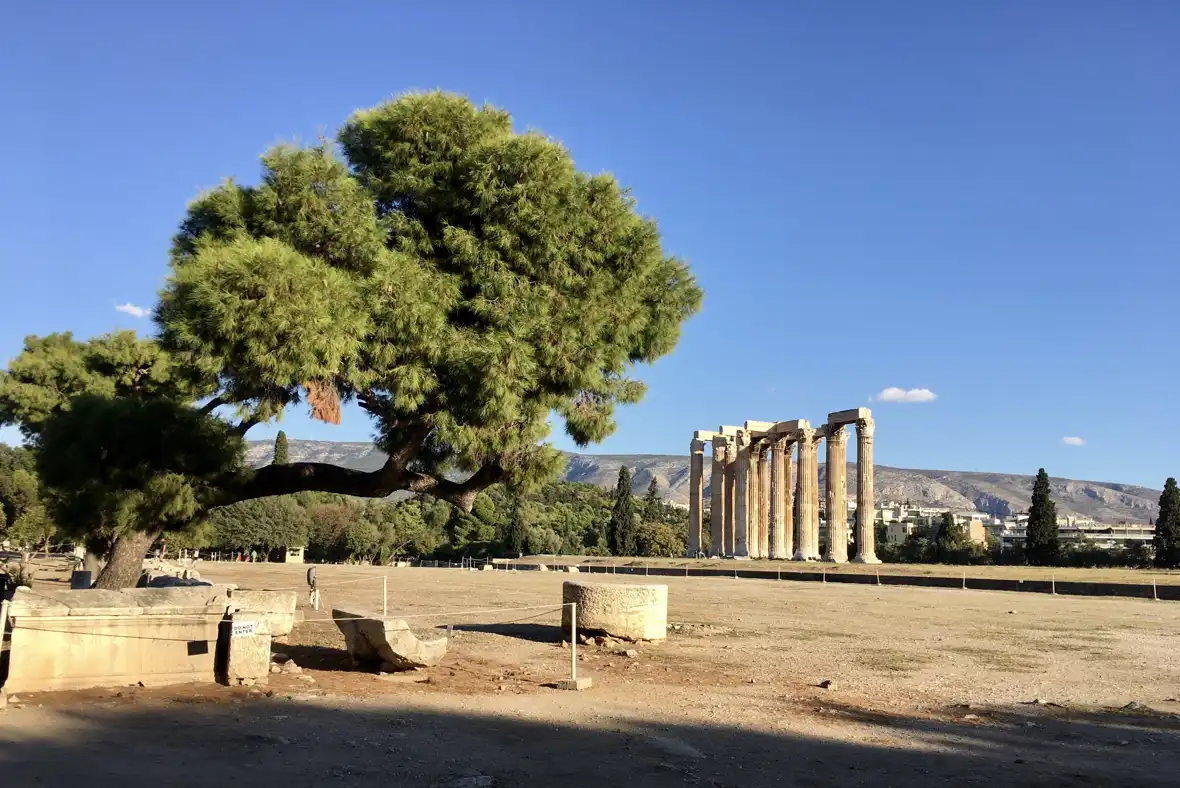
  • Acropolis at first light: Marble goes pink, then gold, and the city below exhales last night’s heat. You trade sleep for space here—no tour groups, just pigeon wing-claps and the smell of coffee drifting up from Plaka. Money buys speed (a taxi over the first metro). Comfort is the climb and the sun later; go early and touch the cool stone before it bites.
  • Meteora cliff monasteries at sunrise: The valleys hold a white fog, and the rock spires look born from it. Wind tugs your jacket; a bell rings once, metal-cold in the air. Time is the sacrifice—pre-dawn start from Kalambaka and slow bus links. Money: small cash-only monastery fees. Comfort: roadside shoulders and steep stairs, paid back by quiet chapels smelling of wax.
  • Samaria Gorge traverse, Crete: A full day disappears into switchbacks, riverbed stones, and the echo of goat bells. The payoff is the cold sting of a spring on your tongue and iron-dark walls pressing close at the Gates. Time is locked to bus-trail-ferry-bus. Money goes
read more 👉
  • Acropolis at first light: Marble goes pink, then gold, and the city below exhales last night’s heat. You trade sleep for space here—no tour groups, just pigeon wing-claps and the smell of coffee drifting up from Plaka. Money buys speed (a taxi over the first metro). Comfort is the climb and the sun later; go early and touch the cool stone before it bites.
  • Meteora cliff monasteries at sunrise: The valleys hold a white fog, and the rock spires look born from it. Wind tugs your jacket; a bell rings once, metal-cold in the air. Time is the sacrifice—pre-dawn start from Kalambaka and slow bus links. Money: small cash-only monastery fees. Comfort: roadside shoulders and steep stairs, paid back by quiet chapels smelling of wax.
  • Samaria Gorge traverse, Crete: A full day disappears into switchbacks, riverbed stones, and the echo of goat bells. The payoff is the cold sting of a spring on your tongue and iron-dark walls pressing close at the Gates. Time is locked to bus-trail-ferry-bus. Money goes to park entry and the ferry. Comfort is ankles in gravel and knees that complain all evening.
  • Fira-Oia caldera trail, Santorini: Pumice crunches underfoot; crushed thyme rises from the path, and the sea throws salt on your lips when the wind shifts. Time buys you empty viewpoints—start before the heat. Money spikes if you sleep here; day-trip and ride the bus back. Comfort is the sun hammer; two liters of water saves the day more than any cafe.
  • Mount Olympus to Refuge A and Mytikas: Pines give resin on the climb, then the refuge smells of soup and damp socks, and at dawn the cloud sea sits below like another country. Time wants two days; race it in one and you’ll miss the mountain’s mood. Money is a bunk and simple meals. Comfort is exposure and scree, rewarded by limestone dust on your palms and a summit cross in the wind. If you want off the map: Amorgos’s Panagia Hozoviotissa, Prespa’s island chapels, and Ikaria’s hot-spring coves; my favorite is Amorgos—white steps, incense in your nose, the Aegean thundering far below.
Spotted a mistake or missing a highlight? Contact us.

But Greece offers more...

Discover and compare all of its highlights per category

🧭 RoutesHow travelers typically move through the country

The 5-Day Athens & Hydra Snapshot

The Vibe: A relaxed, city-plus-island intro to Greece built around ancient history, good food, and one easy ferry ride instead of constant packing and unpacking. You get the big-name ruins, a coastal sunset, and a car-free island town without ever feeling rushed.
The Highlights:
  • Exploring the Acropolis of Athens, Parthenon, and Ancient Agora of Athens from a single city base
  • Diving into the Acropolis Museum and National Archaeological Museum for context and cool air
  • Catching sea views and temple ruins at Sounion National Park
  • Slowing down in Hydra Town’s harbor and stone backstreets

The 10-Day Athens, Delphi & Naxos Circuit

The Vibe: A balanced loop that mixes Athens’ big-city energy, the mountain drama of Delphi, and a Cycladic island base with hikes and beaches. It’s ideal if you want variety—ruins, trails, and sea—without bouncing to a new bed every night.
The Highlights:
  • Three full days to work through Athens’ Acropolis, Ancient Agora of Athens, and world-class
read more 👉

The 5-Day Athens & Hydra Snapshot

The Vibe: A relaxed, city-plus-island intro to Greece built around ancient history, good food, and one easy ferry ride instead of constant packing and unpacking. You get the big-name ruins, a coastal sunset, and a car-free island town without ever feeling rushed.
The Highlights:
  • Exploring the Acropolis of Athens, Parthenon, and Ancient Agora of Athens from a single city base
  • Diving into the Acropolis Museum and National Archaeological Museum for context and cool air
  • Catching sea views and temple ruins at Sounion National Park
  • Slowing down in Hydra Town’s harbor and stone backstreets

The 10-Day Athens, Delphi & Naxos Circuit

The Vibe: A balanced loop that mixes Athens’ big-city energy, the mountain drama of Delphi, and a Cycladic island base with hikes and beaches. It’s ideal if you want variety—ruins, trails, and sea—without bouncing to a new bed every night.
The Highlights:
  • Three full days to work through Athens’ Acropolis, Ancient Agora of Athens, and world-class museums
  • Time in Delphi and the Delphi Archaeological Site and Museum high above the Gulf of Corinth
  • Island life based in Naxos Town with access to the Naxos’ Mount Zas Trail and Agios Prokopios Beach
  • A taste of Santorini’s Fira and Oia as a focused side trip instead of a full relocation

The 15-Day Greece Grand Traverse

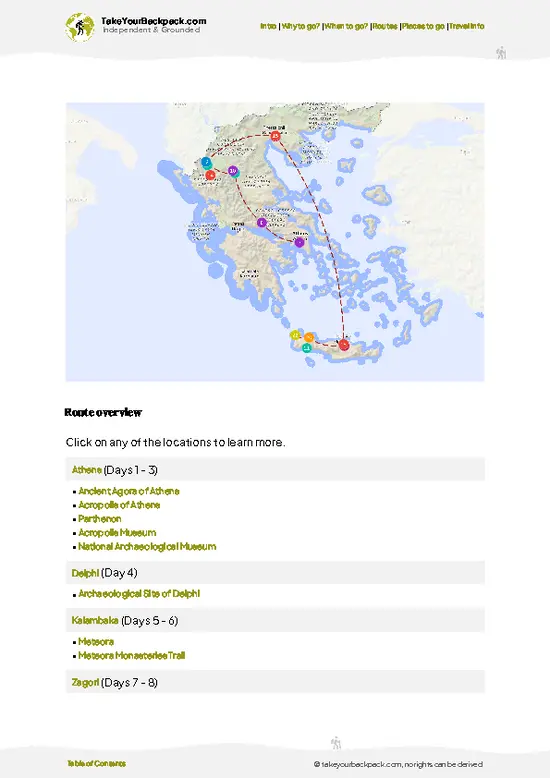
The Vibe: A full-bodied journey that strings together Athens, the monasteries of Meteora, northern cities, mythic mountains, and Crete’s gorges and beaches. It’s for travelers who want to see how many different versions of Greece fit into one trip, from Byzantine museums to canyon hikes.
The Highlights:
  • Deep time in Athens with the Acropolis of Athens, Parthenon, Ancient Agora of Athens, and major museums
  • Rock-top monasteries and trails around Meteora and the Meteora Monasteries Trail
  • Northern flavor in Thessaloniki with the White Tower of Thessaloniki and Museum of Byzantine Culture
  • Mountain days around Mount Olympus and Northern Pindos National Park
  • A finale on Crete with Chania, Samaria Gorge in Lefka Ori National Park, Elafonissi Beach, and the Palace of Knossos near Heraklion
🌍 Want a ready-to-use travel plan for Greece?
The overview above compares different route options based on your travel time and style. The complete Travel Guide breaks each itinerary down in detail, including maps, stops, highlights, and transport information.

Explore all route details 👉

Get the Travel Guide -

🌤️ When to go?When to go for the best experience

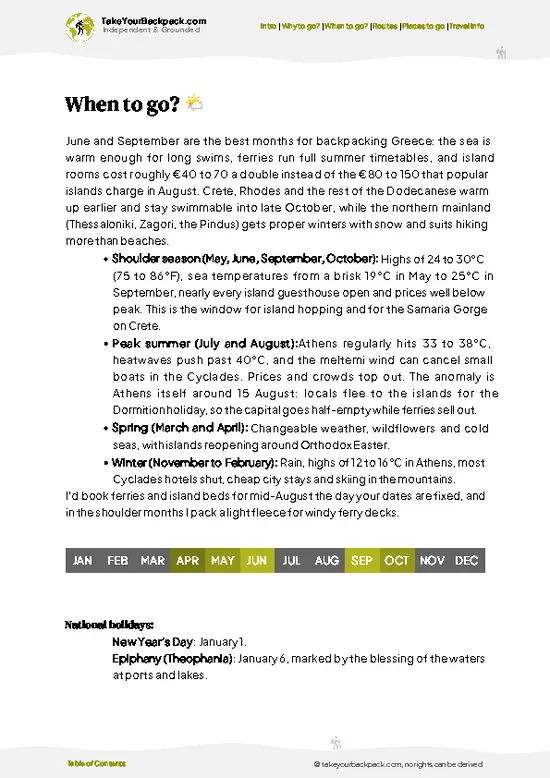
Late May to mid-June and mid-September to early October are the sweet-spot months for backpacking Greece. Warm days without the frying-pan glare; evenings that smell of thyme and diesel from the last bus rolling out. Ferries frequent but not frantic, prices lower than high summer, and islanders less rushed. In early June the sea shifts from bracing to comfortable; by mid-September it still holds summer’s heat while the meltemi eases and the light turns honeyed. You cover ground faster, spend less than July-August, and still swim daily without elbowing through selfie lines.
  • The Crowd/Heat Peak: July-August. The sun pounds marble steps; buses run standing-room; rooms jump in price and evaporate by sunset. The trade: bath-warm water at dusk, village festivals in full voice, every trailhead kiosk open, and the wind scrubbing the haze so islands float sharp on the horizon.
  • The Transition/Shoulder: May-June, September-early October. Greece wakes and exhales in cycles—shutters lift, timetables expand, then crowds thin. Trails dry, vines sag with fruit, and swims stretch longer each day. Note the anomaly: September stays busier than you think on Santorini and Mykonos, so book those while leaving lesser islands spontaneous.
  • The Off-Peak/Extreme: November-March. Slate skies, empty lanes, wood-smoke in mountain towns; the Acropolis feels private in a cold crosswind. Ferry schedules skeletonize and rain is a frequent guest. Survival hack: when seas look mean, pivot inland—ride KTEL buses, base in a walkable town, hike at midday, carry a windproof shell.

Personal tip: For June and September, secure ferries and island rooms roughly three weeks out, and keep the rest of your nights open to chase clear skies.

source: climatestotravel.comJANJanuary: below average for travelingFEBFebruary: below average for travelingMARMarch: fair for travelingAPRApril: good for travelingMAYMay: highly recommended for travelingJUNJune: excellent for travelingJULJuly: fair for travelingAUGAugust: fair for travelingSEPSeptember: excellent for travelingOCTOctober: highly recommended for travelingNOVNovember: fair for travelingDECDecember: below average for traveling
📅 Traveling in a specific month?
Get a full month-by-month breakdown of weather, crowds, costs, festivals, and seasonal highlights in the complete travel guide.

Get full details when to go 👉

Get the Travel Guide -
!2020-10-09 17.27.29-1

💰 Costs (as of 2025)Prices, expenses, and money tips

45-65€ per day if you sleep in dorms, eat simply, and move every few days; July-August islands shove you toward the top end.
  • dorm accommodation: Mainland and big towns run 12-20€ in shoulder season; islands jump to 22-35€ (and 30-45€ on Mykonos/Santorini in peak). Air-con is worth the extra 2-3€ when the meltemi dies and the room smells like warm backpacks. System: sleep “one island back” (Paros/Naxos instead of Santorini/Mykonos) and day-trip; or stay a 10-15 minute walk inland from the cute harbor—same salt air, half the price. Compared with Italy’s coasts or Croatia’s hotspots, beds in Greece are usually 10-20% cheaper outside peak.
  • meals: Supermarket Survival: a loaf, feta, tomatoes, olives, peaches—6-9€ feeds breakfast and a picnic; the ferry deck smells like diesel and thyme while you eat. Street food reality: gyro/souvlaki 2.8-4.5€, bakery pies 1.8-3€, a taverna plate 8-12€; add salad and house wine and you’re at 15-20€. Watch for “bread service” you didn’t ask for (0.50-2€) and fish priced by the kilo. Relative value: cheaper than Italy for simple plates, pricier than Turkey, roughly on par with coastal Croatia. I carry a tiny bottle of oregano—turns a tomato on a bus bench into
read more 👉
45-65€ per day if you sleep in dorms, eat simply, and move every few days; July-August islands shove you toward the top end.
  • dorm accommodation: Mainland and big towns run 12-20€ in shoulder season; islands jump to 22-35€ (and 30-45€ on Mykonos/Santorini in peak). Air-con is worth the extra 2-3€ when the meltemi dies and the room smells like warm backpacks. System: sleep “one island back” (Paros/Naxos instead of Santorini/Mykonos) and day-trip; or stay a 10-15 minute walk inland from the cute harbor—same salt air, half the price. Compared with Italy’s coasts or Croatia’s hotspots, beds in Greece are usually 10-20% cheaper outside peak.
  • meals: Supermarket Survival: a loaf, feta, tomatoes, olives, peaches—6-9€ feeds breakfast and a picnic; the ferry deck smells like diesel and thyme while you eat. Street food reality: gyro/souvlaki 2.8-4.5€, bakery pies 1.8-3€, a taverna plate 8-12€; add salad and house wine and you’re at 15-20€. Watch for “bread service” you didn’t ask for (0.50-2€) and fish priced by the kilo. Relative value: cheaper than Italy for simple plates, pricier than Turkey, roughly on par with coastal Croatia. I carry a tiny bottle of oregano—turns a tomato on a bus bench into lunch.
  • local transport: Cheapest way to unlock the country is slow ferries (Blue Star-style) with a deck seat: 15-40€ per hop, sea spray in your hair and a nap under the lifeboats. KTEL buses stitch the mainland for 5-25€ a leg and beat the train on coverage. Athens metro day-pass is low-cost and reliable; island buses are 1.8-3€ a ride but sparse after dark. Scooters are 20-35€/day (cost-effective for two); cars 30-60€ plus fuel. Night ferries save a hostel night; board early, claim a quiet corner, hoodie for the A/C gale. Turkish intercity buses are cheaper; Croatian catamarans similar or a bit higher.
  • activities: Your big spenders: ancient sites (Acropolis 20€; multi-site combos around 30€), museum clusters (8-12€ each), island boat days 25-60€ (caldera cruises 60-90€), dives 70-100€, guided hikes 25-50€. Sunbeds eat budgets: 10-25€ for two with an umbrella, sometimes a “minimum spend.” Pick one paid headliner per day and fill the rest with beaches, churches, and free sunsets. Versus Italy, ruins cost similar; versus Turkey, pricier.
  • miscellaneous: Budget leaks: freddo espresso 2.5-4€, cocktails 10-14€, club entries 10-20€, sunscreen 12-18€ on islands, laundry 8-12€ a load, port taxis that double at midnight. ATMs often add 2-3€ plus bad exchange—use bank machines and decline conversion. Tap water is fine on the mainland but not on many islands; bottled 0.5L is regulated at 0.50€ at kiosks, so don’t pay more on the beach. Local SIMs are good value (10-15€ for data) vs roaming. I skip sunbeds and sit where the cicadas scream in the pines—free shade, better soundtrack.
⚠️ Prices can change and everyone travels differently, so take this as a rough guide. Hope it helps you plan your adventure!

✈️ The backpacker research shortcutGreece Travel Guide

An offline-friendly backpacking guide with optimized travel routes, ranked highlights, transport advice, and the best areas to stay.
example page 0 from our offline Travel Guide for Greeceexample page 1 from our offline Travel Guide for Greeceexample page 2 from our offline Travel Guide for Greeceexample page 3 from our offline Travel Guide for Greeceexample page 4 from our offline Travel Guide for Greeceexample page 5 from our offline Travel Guide for Greeceexample page 6 from our offline Travel Guide for Greeceexample page 7 from our offline Travel Guide for Greece
The digital guide (404 pages) contains:
120 highlights, ranked by travel appeal
Optimized 5, 10 & 15-day travel routes
Cities, national parks, beaches, historical sites, ...
How to get around
Offline-friendly for travel without Wi-Fi
👉 Click to see all 30+ guide features

📅 Plan smarter in minutes, not weeks
Month by month travel advice
Festivals & national holidays
Budget expectations

🗺️ Go to the right places, skip the overrated ones
Honest pros & cons of destinations
Top hikes, parks & viewpoints
Lesser-known places most travelers miss
Clear “worth it vs skip it” guidance

🛏️ Travel smoothly without rookie mistakes
Best areas to stay
Transport systems explained simply
Common scams & safety advice
SIM cards, money & practical tips

🌍 Understand the country, not just visit it
Culture & traditions
52 Essential phrases & customs
Festivals worth planning around
Traveler-friendly historical context
Insights that make places more meaningful

📱 Built for real travel conditions
Fully downloadable PDF
Works completely offline
Optimized for phone use
Useful in remote areas & buses
Everything in one place
Save weeks of stressful planning
Get instant access to the full guide directly. 30-day money-back guarantee.


Sent to your inbox immediately after payment • 100% Secure Checkout
Best Backpacking Travel Advisor 2025 tourism awardBest Backpacking
Travel Advisor
2025
What others say about Take Your Backpack Guides:
⭐⭐⭐⭐⭐
Fantastic, amazing amount of information!
⭐⭐⭐⭐⭐
My goodness this is amazing, it's what I've been looking for hats off too you!
⭐⭐⭐⭐⭐
I think this is absolutely BRILLIANT
⭐⭐⭐⭐
Very complete and informative. It's still missing places, but I gotta to commend you
⭐⭐⭐⭐⭐
This is truly amazing, thank you, can't wait to explore it with my kids!
⭐⭐⭐⭐⭐
Awesome resource, thank you!
⭐⭐⭐⭐⭐
This is amazing! Can't wait to explore the ones I haven't seen
⭐⭐⭐⭐
I love this! Well done, great idea.
⭐⭐⭐⭐⭐
Thanks for taking the time to make this gem!
⭐⭐⭐⭐⭐
This might be the best website I've ever seen.
⭐⭐⭐⭐⭐
Congratulations, and thank you so much for your work; it's incredibly valuable.
⭐⭐⭐⭐
In all seriousness I think you did a great job pointing out the important spots
⭐⭐⭐⭐⭐
10/10 very good
⭐⭐⭐⭐⭐
As someone who's only just starting to visit regularly this is awesome, thank you.
⭐⭐⭐⭐
Thank you very much! I'm going to visit my dad, it's going to be very useful!
⭐⭐⭐⭐⭐
This is really cool! We'll be travelling for the first time and this definitely come in handy.
⭐⭐⭐⭐⭐
You are now our minister of culture, congratulations 👨‍💼
⭐⭐⭐⭐⭐
Just wanted to tell you that this is a pearl! Going to follow your recommendations.
⭐⭐⭐⭐⭐
This is so cool. I'll definitely be using the resource for my travels soon.
⭐⭐⭐⭐⭐
This is very impressive! Good work.
⭐⭐⭐⭐⭐
This is an amazing and informative site. Very well done!

🛏️ Where to stay?Areas travelers tend to prefer

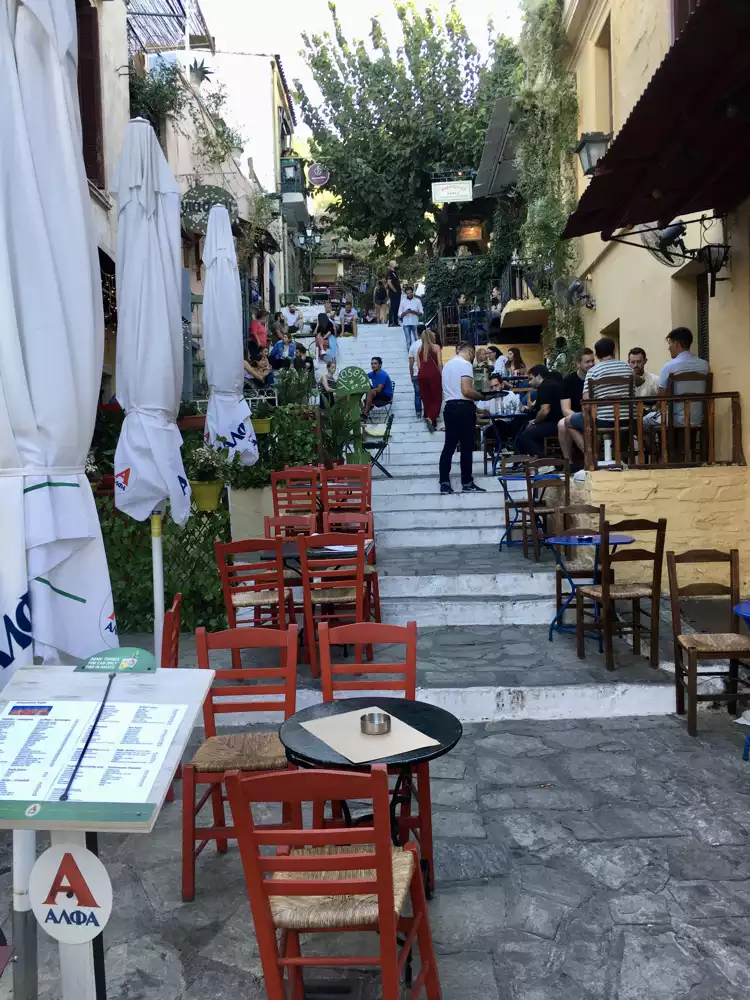
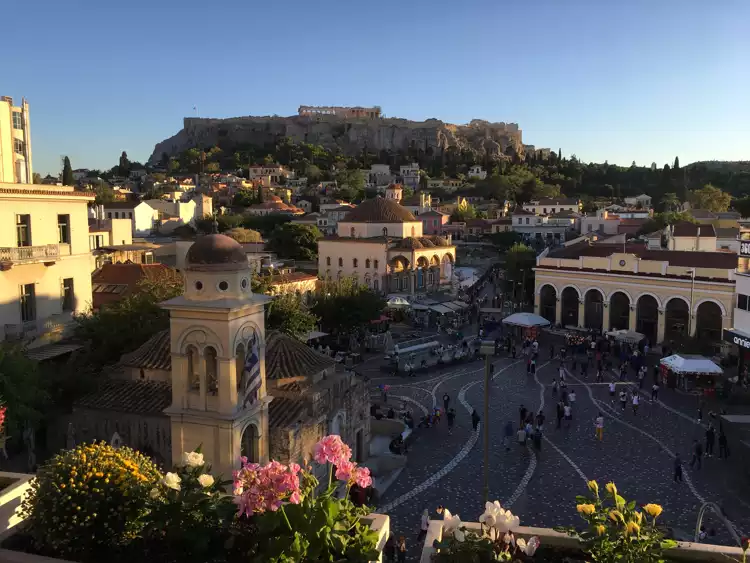
Yes — Greece has abundant hostels and budget accommodation across cities and islands; best concentrations sit in Athens (Plaka/Monastiraki, Psiri, Exarchia), Thessaloniki (Ladadika, Ano Poli), major island hubs like Santorini (Fira), Mykonos Town, Naxos main town, and Crete’s Chania and Heraklion.
Plaka/Monastiraki and Fira put you next to highlights and transport but are touristy and noisy; Psiri and Ladadika offer lively nightlife and easy walking access while Exarchia and Ano Poli give cheaper, quieter stays though Exarchia can feel gritty and Ano Poli sits on a hill with stairs; island hubs … read more 👉
Yes — Greece has abundant hostels and budget accommodation across cities and islands; best concentrations sit in Athens (Plaka/Monastiraki, Psiri, Exarchia), Thessaloniki (Ladadika, Ano Poli), major island hubs like Santorini (Fira), Mykonos Town, Naxos main town, and Crete’s Chania and Heraklion.
Plaka/Monastiraki and Fira put you next to highlights and transport but are touristy and noisy; Psiri and Ladadika offer lively nightlife and easy walking access while Exarchia and Ano Poli give cheaper, quieter stays though Exarchia can feel gritty and Ano Poli sits on a hill with stairs; island hubs and Crete have best ferry links and seasonal crowds so expect higher prices and limited winter options, and apply basic crowd-safety precautions because pickpockets target busy areas.

If you enjoy meeting fellow travelers, consider choosing hostels with high ratings for atmosphere. On the other hand, if you prefer having your own space, a hotel might be a better option.

🚌 Getting aroundTransportation options and logistics

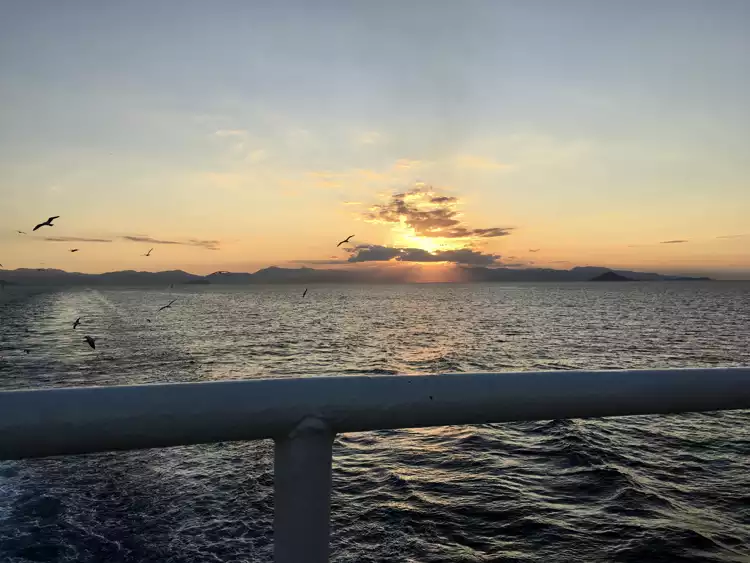
Greece moves on two tempos: the click-precise metro under Athens and the salt-warmed drift of ferries threading blue water. In the mountains, buses grind up switchbacks where thyme hangs in the air and goats treat the road like theirs. On islands, the wind edits every plan. You earn the best moments by being early, carrying patience, and letting the country’s rhythm pull you forward—diesel on your hands, sun on your face, and a paper ticket softening in your pocket.
  • KTEL Intercity Buses The Efficiency
read more 👉
Greece moves on two tempos: the click-precise metro under Athens and the salt-warmed drift of ferries threading blue water. In the mountains, buses grind up switchbacks where thyme hangs in the air and goats treat the road like theirs. On islands, the wind edits every plan. You earn the best moments by being early, carrying patience, and letting the country’s rhythm pull you forward—diesel on your hands, sun on your face, and a paper ticket softening in your pocket.
  • KTEL Intercity Buses The Efficiency Trade-off: this is the backbone. Cheap by Western Europe standards and wide-reaching, but you pay in minutes on winding roads and random village stops. Athens to Nafplio, Delphi, Meteora—solid. On the Athens-Thessaloniki axis, the train can beat it on time, but the bus wins when you’re aiming for small towns. Buy at stations, board early, toss your pack underneath (grab the luggage chit), and keep a layer—air-con runs polar. Sunday evening fills fast; the last seat is always over the wheel arch.
  • Athens Metro, Tram, and City Buses The Social Fabric: scan in, headphones down. Let people off before you step in; give the priority seat without theatrics. Stand right on escalators, drift left if you walk. Backpacks off in crowded cars. On buses, press the stop button sooner than you think and move to the rear doors. Trains are clean, bright, and quick, but the last ones come earlier than your night would like—don’t strand yourself on a shiny, empty platform smelling faintly of wet marble and ozone.
  • Ferries (Slow Boats and Fast Cats) The Geometric Unlock: steel decks, truck horns, coffee steam, and every island within reach. Slow ferries cost less, run steadier in wind, and stop at places the fast cats skip. Deck class is freedom: sprawl on a bench, watch the Aegean turn silver at dawn, claim a corner near a socket if you’re lucky. Boarding is a sprint—be at the ramp five minutes early and follow the crew’s barked choreography. Bring your own water and bread; the cafeteria markup tastes like it.
  • Domestic Flights The Budget Disruptor: high season flips the math—Athens to Rhodes, Crete, or Thessaloniki can undercut a high-speed ferry and save you a day. The catch is baggage fees and airport friction. Travel light, check in on your phone, and use the airport bus instead of a taxi. You trade diesel and deck space for air-con and arrival before the heat bites.

Tactical tip: stack momentum—first metro out, first bus out, slow ferry overnight—so you move while others sleep; buy tomorrow’s ticket today, carry a buffer hour at every port, and you’ll slide across Greece on the country’s own current instead of fighting it.
Athens International Airport (ATH) sits about 33 km (20.5 miles) east of the city center (Syntagma/Monastiraki area).

Main public transport options
  • Metro (Line 3 - Blue): Direct from the airport to Syntagma/Monastiraki. Trains run roughly every 30-36 minutes from about 06:10 to ~23:30. Travel time to Syntagma is about 40 minutes. Tickets cost €9 (one-way); a 48-hour round-trip is €16; the 3-day tourist ticket is €20 and includes unlimited city travel plus one airport round trip. Buy an Ath.ena ticket at the station machines and tap in at the gates. The metro/proastiakos station is connected to the terminal via a pedestrian walkway—just follow signs for “Trains.”
  • Airport Express Buses (24/7): X95 goes to Syntagma (central), X96 to Piraeus, X93 to Kifissos Bus Station, X97 to Elliniko. Frequency about every 15-20 minutes by day and every 30+ minutes late at night. Travel time to Syntagma on X95 is typically 45-70 minutes depending on traffic (quicker late at night). A flat ticket is €5.50. Buy at the kiosk/booth outside Arrivals (near Exits 4-5) or from ticket machines, then validate when you board.
  • Suburban Railway (Proastiakos): Useful if you’re heading to the main railway station (Athens/Stathmos Larissis) or Piraeus. There are direct trains about hourly (with additional services requiring a change), and the ride to Athens railway station is around 40-45 minutes. Fare is €9 (same price category as the metro). Board from the same airport station; look for “Proastiakos.”

Taxi and ride apps
Official yellow taxis queue outside Arrivals (look for the signs near Exit 3). There’s a regulated flat fare to/from the city center inner ring: about €40 daytime (05:00-00:00) and €55 overnight (00:00-05:00), including tolls and luggage. Expect 30-60 minutes, traffic depending. Ride-hailing works via licensed taxis (e.g., Uber Taxi, Beat); prices are similar to the meter/flat fare. Always confirm the flat fare before departing and ask for a receipt.

Quick tips
- If you land after the metro stops running, the X95 bus is the best budget option into the center—it runs all night.
- Tickets and prices above are current for 2025; allow a little extra time in rush hour, especially for buses and taxis.
⚠️ Prices and routes can change, so take this as a rough guide and ask for local advice when you arrive.

🔒 Safety (risk Level: low)What first-time visitors should know

Safety for solo travelers, including women and LGBTQ+ individuals
Yes, Greece is generally safe for solo travelers, including women and LGBTQ+ individuals. While the country is welcoming and known for its hospitality, it’s wise to exercise the usual precautions like being aware of your surroundings and avoiding isolated areas at night. In urban areas, LGBTQ+ travelers will find a more accepting environment, especially in Athens and Mykonos. However, in rural or conservative regions, discretion is advised as attitudes can vary.


Full official government travel advisory (live updates)
View details 👉

✈️ VisaDo you need a visa to visit?

Travelers from the EU, US, Canada, Australia, and several other countries can visit Greece visa-free for up to 90 days in a 180-day period. If you need a visa, apply for a Schengen visa through the Greek consulate or embassy in your country. Check the latest entry requirements as they can change frequently.
⚠️ Visa requirements can change over time, so always check the latest visa requirements with the official embassy or government website before you travel.

🎒 What to pack?A practical packing list

When packing for Greece, think layers and versatility. Summers can be scorching, especially on the islands, so pack light, breathable clothes. Winters, particularly in the north, can be chillier than you’d expect. Don’t forget a modest outfit for visiting monasteries and churches—long pants or skirts and covered shoulders are a must. If you’re planning to hit the trails in Meteora or Zagori, sturdy hiking shoes are a wise call.

Apart from this country specific advice, I have also crafted a general packing list that should help on any trip. authorOver the years, I've learned the importance of packing minimally. It's so much easier to jump on the back of a truck or squeeze yourself into the last spot of a minibus without that supersized backpack. If you're headed to a warm destination, leave your winter jacket at home; for colder regions, opt for thin thermal underlayers. Instead of packing your entire wardrobe, bring just three sets of clothes, as laundry facilities are available everywhere.
View the full list 👉
🎒 Planning the practical side of your trip?
Get detailed information on transport, daily budgets, internet access, local customs, food, language, and other essentials in the complete Travel Guide.

Get detailed practical information 👉

Get the Travel Guide -

🙋 FAQQuick answers to practical concerns

Trip Planning


Personal tip: I normally search on good rating for atmosphere (for meeting people) and location (for easy exploring). Cleanliness as a bonus.


Travel Essentials

Hepatitis A and B vaccines are recommended for Greece, especially if you plan on exploring rural areas or staying for an extended period. Consider a tetanus booster if you’re due. Rabies vaccination is only necessary if you plan to have significant interaction with animals. No special vaccines are required. Always check current health advisories before traveling.


vaccination requirements
When I first started traveling, I often spent part of my first day in a new country hunting for a local SIM card. While this can still be slightly cheaper, it also takes time and planning.

These days, it's much simpler to install an eSIM before leaving home. Once you arrive in Greece, you can activate it immediately and have mobile data from the moment you land — which is especially useful for ordering transport or navigating away from busy airports.

There are many providers nowadays, and price differences are usually small. I personally go with Airalo, as it offers excellent network coverage throughout the country and strong global coverage, so you can manage multiple countries from a single app.


Get your e-sim for Greece

Culture & Customs

Respect local customs like greeting with a handshake and maintaining eye contact. Dress modestly, especially in churches. Always offer your seat to the elderly on public transport. Greeks appreciate straightforwardness; avoid being overly indirect.

If invited to someone’s home, bring a small gift, like sweets or wine. Tipping is common but not mandatory; round up the bill or leave small change.

For LGBTQ+ travelers, Athens and Mykonos are generally welcoming, but discretion is advised in rural areas. Women travelers should feel safe, but it’s wise to remain aware of your surroundings, especially late at night.
Trying traditional food is always a great way to experience the culture. Here are some must-try dishes for Greece.
  • Moussaka: A hearty casserole layered with eggplant, minced meat, and topped with a creamy béchamel sauce. It’s comfort food with deep roots in Greek family dining.
  • Souvlaki: Skewered and grilled meat, often served with pita, tomatoes, and onions. It’s a street food staple, perfect for a quick and satisfying bite.
  • Tzatziki: A refreshing yogurt dip mixed with cucumber, garlic, and dill. It’s a must-have side for cooling down those rich, meaty flavors.
  • Spanakopita: Spinach and feta cheese wrapped in crispy phyllo pastry. A popular snack or appetizer that showcases Greece’s love for savory pies.
  • Dolmades: Grape leaves stuffed with rice, herbs, and sometimes meat. These are common at family gatherings and are a nod to Greece’s Ottoman past.
  • Baklava: Sweet layers of phyllo dough, nuts, and honey. This dessert ties into Greece’s vibrant dessert culture and is a favorite across the region.
Tap water in Greece is generally safe to drink, especially in major cities like Athens and Thessaloniki, and locals do drink it. However, on some islands and rural areas, the taste might be off due to mineral content, so many tourists opt for bottled or filtered water. When in doubt, grab bottled water, which is cheap and widely available.
The main language in Greece is Greek. Backpacking is way more rewarding if you know a bit of the local language, so I'd suggest brushing up on the basics just in case your Greek skills have become a bit rusty.

Want to understand locals better?
The complete Travel Guide for Greece includes 52 essential words and phrases — greetings, thank-yous, ordering food, transport, numbers, and common local expressions you'll actually hear.

Get your local basic phrases 👉

Get the Travel Guide -


In Greece, English is widely spoken, especially in tourist areas, major cities, and islands frequented by travelers. Many Greeks, particularly those in the hospitality sector—such as hotel staff, restaurant workers, and tour guides—have a good command of English, making it easier for visitors to communicate. Additionally, younger generations and students often learn English as a second language, enhancing overall proficiency.

In less touristy regions or rural areas, English may not be as commonly spoken, and communication could be more challenging. However, gestures and basic phrases can often bridge the gap. It’s advisable for travelers to learn a few basic Greek phrases, as locals appreciate the effort and it can enhance the travel experience.

Overall, while English is not the official language, its prevalence in Greece makes it relatively easy for English-speaking tourists to navigate and enjoy their visit.

Money & Payments

The local currency of Greece is EUR (€).

In Greece, euros are your go-to currency. While ATMs are widely available in cities and larger towns, smaller islands and rural areas might be a bit trickier. Always have some cash on you, especially when heading off the beaten path.

Forget about dollars; they’re not widely accepted, and exchanging them can be a hassle. Stick to euros, and you’ll be golden. When using ATMs, opt for those at banks to avoid extra fees. Watch out for ATMs that offer to convert your withdrawal to your home currency—it’s usually a pricier option.

Cards are generally accepted in cities and tourist areas, but some small businesses and family-run tavernas prefer cash. Keep a stash of small bills and coins for these situations.

Need to exchange currency? Banks and official exchange offices are your best bet. Avoid airport exchange counters unless it’s an emergency; their rates tend to be less favorable.

In Greece, tipping isn’t mandatory but appreciated; leaving around 5-10% at restaurants is common if service was good. Taxi drivers and hotel staff might also expect small tips, like rounding up the fare or leaving a couple of euros. For cafés and bars, just leaving some change is perfectly fine.

🧩 Nearby countriesNearby backpacking alternatives

📸 PhotosTravel photos from Greece

Take your backpack - Greece - 0
Take your backpack - Greece - 1
Take your backpack - Greece - 2
Take your backpack - Greece - 3
Take your backpack - Greece - 4
Take your backpack - Greece - 5
Take your backpack - Greece - 6
Take your backpack - Greece - 7
Take your backpack - Greece - 8
Take your backpack - Greece - 9
Take your backpack - Greece - 10
Take your backpack - Greece - 11
Take your backpack - Greece - 12
Take your backpack - Greece - 13
Take your backpack - Greece - 14
Photographed by: Johan Kruseman

We 💚 feedbackKey takeaways from the trip

Greece runs on salt, sun, and delays. Morning light turns whitewash to glare; oregano smoke drifts from a grill; ferry diesel clings to your shirt. The surprise is how often someone slides over a plate of watermelon or mastiha on the house after you linger. August winds strand boats; steps are constant; cash still matters outside cities. Best for patient walkers, sea-soakers, and history lovers who can trade speed for presence. Not ideal for tight-schedule tickers or anyone needing slick, seamless comfort.

✈️ When did I visit Greece?
Europe has so many beautiful countries in a relative close distance. This allowed me to squeeze in Greece in October 2020. While my visit dates back, this guide is continuously refined using feedback from locals and current backpackers (last update: 7 March 2025)

✍️ Help improve this page!
The information on this page is based on my own backpacking experience in Greece, supplemented with up-to-date research and feedback from other travelers. Travel details can change, so if you notice anything outdated or incomplete, feel free to let me know.


🙋‍♂️ Give feedback

👋 Meet the founderWho’s Behind Take Your Backpack?

Johan, backpacker and founder of TakeYourBackpackHi, I’m Johan (Netherlands 🇳🇱), the creator of TakeYourBackpack. Over the past decade, I’ve backpacked through 80+ countries across six continents, gaining extensive experience with independent travel, long-term trips, and overland routes.

This site is built on a combination of firsthand travel experience and carefully curated insights from other backpackers. Many guides are based on places I’ve personally visited, while others bring together tips, observations, and practical advice shared by trusted travelers I’ve met along the way.

The goal is to provide realistic, experience-driven guidance — not generic itineraries — so you can explore destinations with better context, clearer expectations, and more confidence.

Get full Greece guide •
Instant download • 120 highlights • Full Offline guide