×
Svalbard 🇸🇯

backpacking Europe Svalbard 🇸🇯Move cautiously where Arctic forces dominate daily life.

Explore SpainExplore Sweden

Backpacking Svalbard in 2026

A complete guide including when and where to go, costs, transport, itineraries, and practical travel advice.
A first look at the country

Backpacking Svalbard
By Johan Kruseman 🇳🇱 | Updated June 4, 2026

You can book a cheap flight to Svalbard, but you can’t legally hike out of town without polar-bear protection. Outside the settlements you must carry a rifle or join an armed guide; routes follow weather and ice, not trail apps.

You come for blue ice in grey fjords, compact reindeer, walrus haul-outs, and a silence that edits your thoughts. Longyearbyen is a pragmatic hub—coffee, a small museum, gear shops; Barentsburg and Pyramiden add a Soviet echo. The light sets the rhythm—midnight sun, then aurora—and you move by boat in summer, by snowmobile, dogsled, or skis when snow locks the land. Trips cost real money, weather cancels plans, alcohol is rationed, and strict rules protect wildlife and heritage, but that framework saves your energy and budget for a few guided days that deliver.

Compared with Norway it’s harsher and less DIY; with Iceland, emptier; with Greenland, simpler from one hub. Go if you value raw nature and will trade some freedom for safety and depth.

👉 Get the 📖 Travel Guide of Svalbard

Longyearbyen & Adventdalen

Basecamp. Real town, real prices: think remote Norway plus freight. Stay here if you value easy logistics, gear shops, and same-day tours. Self-cater at Coop to keep costs sane. Without a rifle, stay within town limits; beyond that, go guided. Flights and boats slip in bad weather—build a buffer day so missed connections don’t drain your wallet.

Isfjorden Spine: Barentsburg & Pyramiden

Russian company towns reached by one transport artery: summer boats, spring snowmobiles. Good for social travelers who don’t mind group pacing and short, controlled shore time. Cheaper than expedition ships, but sea ice and swell cancel trips fast. Book flexible dates, bring layers, and don’t expect to wander off—polar bear rules are strict for a reason.

Nordenskiöld Land Backcountry

Colesdalen, Bjørndalen, Foxfonna: close enough to taxi trailheads, wild enough to feel remote. Rewards hikers who carry their own kit and discipline. Rifle, flare, comms, and a left trip plan aren’t optional. Rivers run cold, fog drops fast, and nesting closures shift routes. Low cost if you’re competent; expensive if you cut corners.

East Coast & Sea Ice (Tempelfjorden/Mohnbukta)

Long snowmobile days to glacier fronts and pack ice, mainly March–May. High wind, whiteouts, and flat light test your stamina more than your camera. Fuel surcharges and contingency days add up; worth it if you want one big, quiet day where distance is the point.

Northwest: Kongsfjorden & Ny-Ålesund

Ship access only. Tight rules around the research town, and landings are never guaranteed. You trade money for reach and accept plan changes without sulking. Best for patient wildlife watchers who value time in zodiacs over fixed itineraries; don’t buy it for a single must-see landing.
Geography and where places are located
Loading the map 🌍
CLICK TO FILTER
village
unique site
national park
hike
attraction
festival
region
SHOW COUNTRY’S BESTSHOW ALL
film
0
0
0a
Hiorthfjellet
film
1
1
1a
Sarkofagen
Bitta
film
2
2
2a
Trollsteinen
film
3
3
3a
Sør-Spitsbergen
film
4
4
4a
Sassen-Bünsow Land
Md Saiful Islam Bhuiyan
film
5
5
5a
Nordenskiöld Land
Fionn Ferreira
film
6
6
6a
Isfjorden
film
7
7
7a
Kongsfjorden
film
8
8
8a
Hornsund
Chris Mcneil
film
9
9
9a
Bellsund
film
10
10
10a
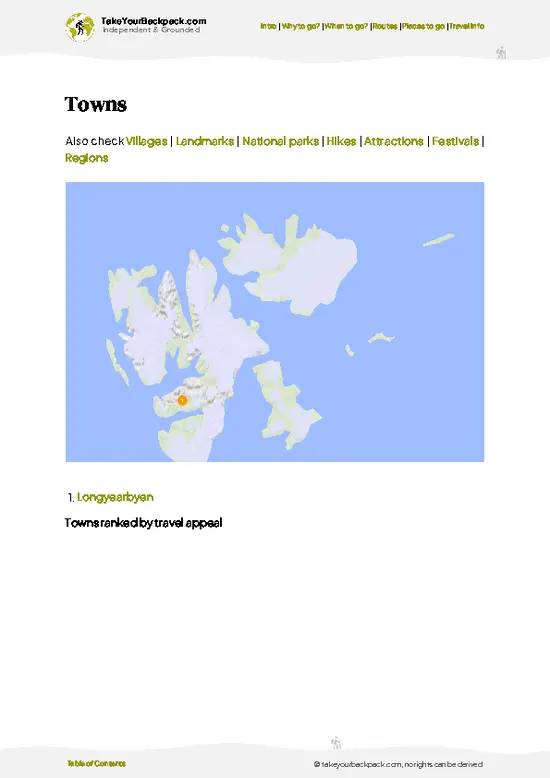
Longyearbyen
Hari Das

Why go?What sets this destination apart

Uniqueness

Svalbard feels like the edge of the map. No roads between settlements, just boats, snowmobiles, and weather that cancels plans without apology. Polar bear rules mean you rarely go far unguided, and that adds cost—guides, rifle … read more 👉
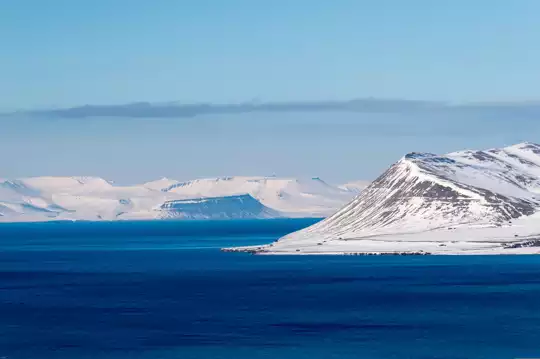
Svalbard feels like the edge of the map. No roads between settlements, just boats, snowmobiles, and weather that cancels plans without apology. Polar bear rules mean you rarely go far unguided, and that adds cost—guides, rifle carry, cold‑weather gear rental, rescue coverage. The payoff is raw: blue ice, fox tracks in wind‑scoured snow, a hush so complete you hear your parka creak.

Scenery

Svalbard’s scenery is the polar kind: glaciers dropping into steel fjords, blue ice caves in winter, and mountain ridges that look chiseled by a blunt knife. No forests, no savannah—just clean lines, big skies, and violent light. … read more 👉
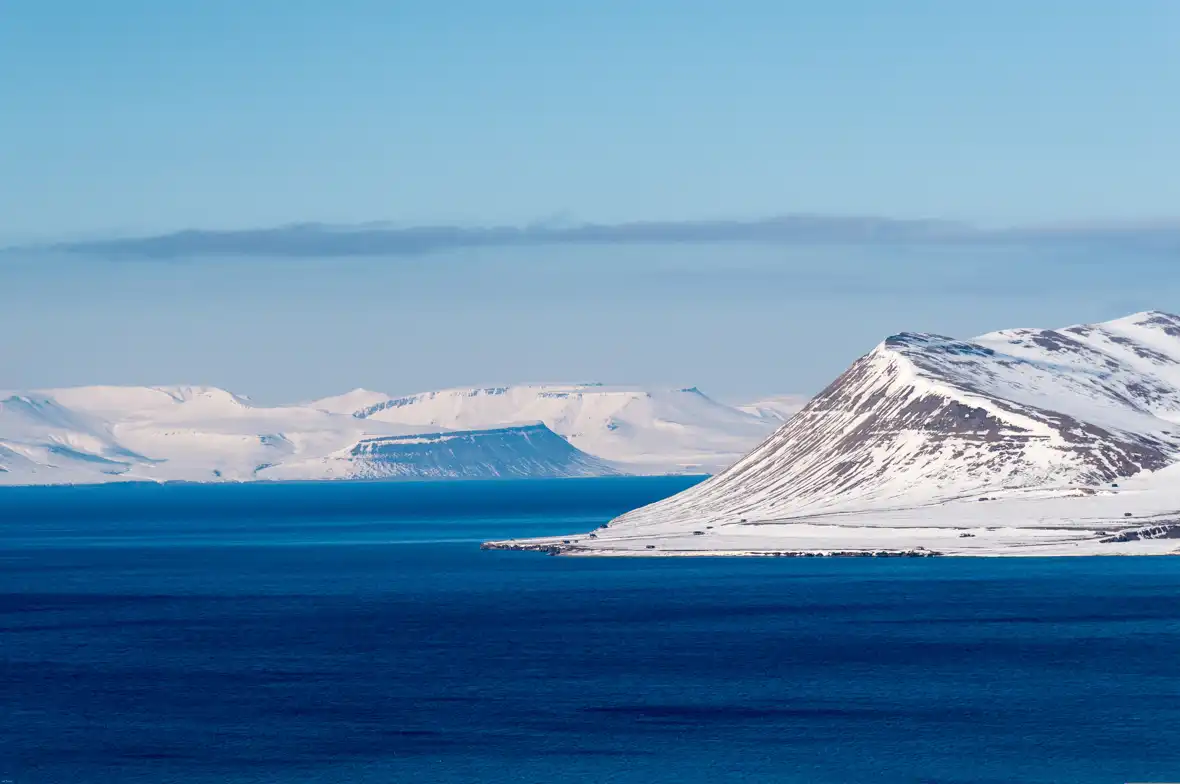
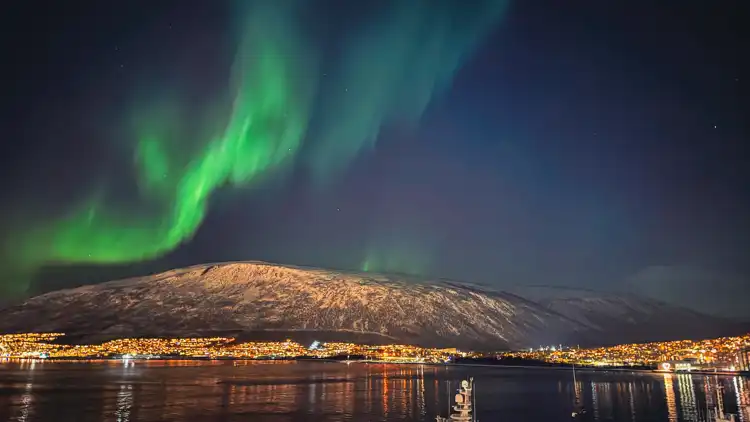
Svalbard’s scenery is the polar kind: glaciers dropping into steel fjords, blue ice caves in winter, and mountain ridges that look chiseled by a blunt knife. No forests, no savannah—just clean lines, big skies, and violent light. The reward is scale and silence: sea ice to the horizon, reindeer on the slope, aurora overhead when darkness returns.
Want the complete picture of Svalbard?
The offline Travel Guide brings everything together — routes, highlights & planning.

See what's included in the guide 👉

Get the Travel Guide -

⭐ HighlightsUnmissable destinations

  • Pyramiden: An abandoned Soviet mining town where Lenin still watches the fjord and the wind thumps loose sheet metal; with a guide you step into the sports hall and hear your boot echo travel the length of the pool while your gloves pick up fine coal grit. Access is only by boat or snowmobile and trips cancel often—don’t bank your whole itinerary on a single day.
  • Barentsburg: A living Russian company town—murals, Cyrillic shopfronts, the smell of diesel heat—and the brewery’s malty air drifts across the square while the coal conveyor hums. It’s a steep walk up from the pier, card terminals can hiccup, and many areas are off-limits; follow signs and time your return.
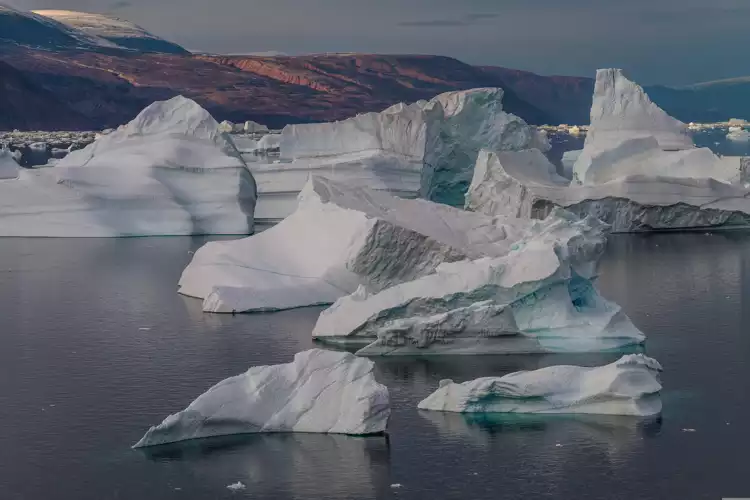
  • Nordenskiöldbreen by boat: Blue ice walls filling Billefjorden, kittiwakes skimming the face, and brash ice snaps like bubble wrap against the hull as the air needles your cheeks. Large boats are cheaper but keep their distance; smaller RIBs cost more yet buy you minutes close to the ice.
  • Gruve 3 Mine: Helmet on, lamp lit, you
read more 👉
  • Pyramiden: An abandoned Soviet mining town where Lenin still watches the fjord and the wind thumps loose sheet metal; with a guide you step into the sports hall and hear your boot echo travel the length of the pool while your gloves pick up fine coal grit. Access is only by boat or snowmobile and trips cancel often—don’t bank your whole itinerary on a single day.
  • Barentsburg: A living Russian company town—murals, Cyrillic shopfronts, the smell of diesel heat—and the brewery’s malty air drifts across the square while the coal conveyor hums. It’s a steep walk up from the pier, card terminals can hiccup, and many areas are off-limits; follow signs and time your return.
  • Nordenskiöldbreen by boat: Blue ice walls filling Billefjorden, kittiwakes skimming the face, and brash ice snaps like bubble wrap against the hull as the air needles your cheeks. Large boats are cheaper but keep their distance; smaller RIBs cost more yet buy you minutes close to the ice.
  • Gruve 3 Mine: Helmet on, lamp lit, you shuffle a low coal seam while old timber creaks and the dust leaves a sweet, mineral taste on your tongue. Tours sell out, it’s tight and cold, and the bus schedule is thin—budget for a taxi up and back.
  • Alkhornet bird cliffs: Reindeer graze below the limestone prow, arctic foxes bark, and the guano tang hangs in the onshore breeze as thousands of birds turn the air to static. Landings can be pulled if a bear is around; bring rubber boots and expect mud. For off-the-map hours, aim for Platåfjellet’s midnight-sun ridge, Sarkofagen’s glacier spine, or the coal ruins at Colesdalen—with a guide outside town.
Spotted a mistake or missing a highlight? Contact us.

But Svalbard offers more...

Discover and compare all of its highlights per category

🧭 RoutesSuggested travel routes through Svalbard

The 2-Day Longyearbyen & History Sprint

The vibe: A compact, low-stress introduction to Svalbard built around Longyearbyen’s streets, museums, and Arctic atmosphere, perfect if you’re short on time but big on curiosity. You’ll walk more than you ride, soaking up daily life at the edge of the world without leaving the main settlement.
The highlights:
  • Exploring colorful, compact Longyearbyen with its Arctic-town quirks.
  • Deep-diving into polar nature and history at the Svalbard Museum.
  • Tracing early polar adventures at the North Pole Expedition Museum.
  • Quiet reflection and big views from the Svalbard Church hill.

The 3-Day Fjord, Ghost Town & Summit Route

The vibe: A balanced three-day hit of Svalbard that mixes town life, a Soviet ghost town, and one big mountain day for travelers who want both stories and sweat. Expect one major boat day and one guided hike, with Longyearbyen as your comfortable base camp.
The highlights:
  • Using Longyearbyen as your launchpad into the wider archipelago.
  • Boat travel
read more 👉

The 2-Day Longyearbyen & History Sprint

The vibe: A compact, low-stress introduction to Svalbard built around Longyearbyen’s streets, museums, and Arctic atmosphere, perfect if you’re short on time but big on curiosity. You’ll walk more than you ride, soaking up daily life at the edge of the world without leaving the main settlement.
The highlights:
  • Exploring colorful, compact Longyearbyen with its Arctic-town quirks.
  • Deep-diving into polar nature and history at the Svalbard Museum.
  • Tracing early polar adventures at the North Pole Expedition Museum.
  • Quiet reflection and big views from the Svalbard Church hill.

The 3-Day Fjord, Ghost Town & Summit Route

The vibe: A balanced three-day hit of Svalbard that mixes town life, a Soviet ghost town, and one big mountain day for travelers who want both stories and sweat. Expect one major boat day and one guided hike, with Longyearbyen as your comfortable base camp.
The highlights:
  • Using Longyearbyen as your launchpad into the wider archipelago.
  • Boat travel through Isfjorden to the eerie Soviet-era ruins of Pyramiden.
  • Summit views over fjords and glaciers from Hiorthfjellet.
  • Context-rich museum time to make the landscapes feel alive with history.

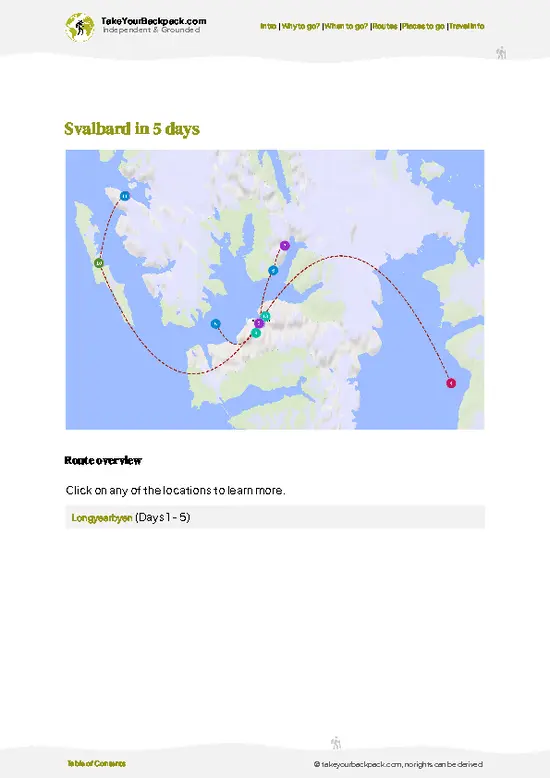
The 5-Day Svalbard Villages & Fjords Explorer

The vibe: A deeper, slower journey that strings together Norwegian and Russian settlements, research outposts, and wild fjords for travelers who want to feel Svalbard as a living archipelago. You’ll ride boats, roam small towns, and tackle one serious hike, trading a bit of comfort for a much richer story.
The highlights:
  • Multiple days based in Longyearbyen to understand real Arctic town life.
  • Boat journeys across Isfjorden to the working Russian enclave of Barentsburg.
  • Venturing into Kongsfjorden to visit the research hub of Ny-Ålesund.
  • Capping it all with a panoramic climb of Hiorthfjellet above the fjord system.
🌍 Want a ready-to-use travel plan for Svalbard?
The overview above compares different route options based on your travel time and style. The complete Travel Guide breaks each itinerary down in detail, including maps, stops, highlights, and transport information.

Explore all route details 👉

Get the Travel Guide -

🌤️ When to go?Best time to visit Svalbard

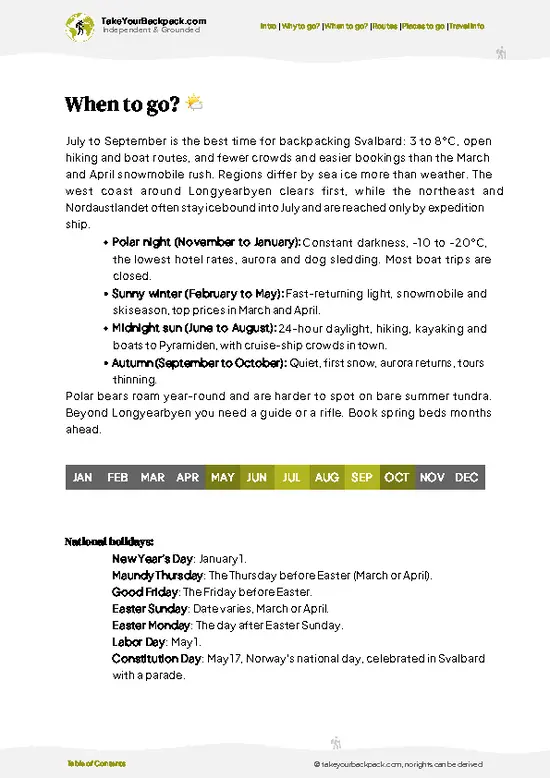
Late August to mid-September is the sweet spot: sea ice is lowest, ground mostly dry, morning rivers calmer, and the cruise surge fades so beds and tours stop gouging. Daylight stays long but finally dims, bugs ease, boats still run, and aurora can flicker—bear precautions still apply.
  • Peak Summer: Jul-early Aug brings packed boats, sold-out tours, and steep beds. You’re buying endless light and open fjords—midnight hikes, calving ice, roaring bird cliffs.
  • Late-Summer Shoulder: Late Aug-mid Sep, cruise ships peel off, prices ease, guides still run. Rivers drop, tundra reddens, boats start trimming schedules—move early and bank miles.
  • Polar Night: Nov-Feb trades trails for polar night: cobalt calm, savage wind, flight scrubs happen. Survival hack: two headlamps with lithium cells, worn inside your parka.

Tactical tip: Pack knee-high neoprene socks for river fords; they buy you miles.

source: climatestotravel.comJANJanuary: below average for travelingFEBFebruary: below average for travelingMARMarch: fair for travelingAPRApril: fair for travelingMAYMay: good for travelingJUNJune: highly recommended for travelingJULJuly: excellent for travelingAUGAugust: highly recommended for travelingSEPSeptember: excellent for travelingOCTOctober: good for travelingNOVNovember: below average for travelingDECDecember: below average for traveling
📅 Traveling in a specific month?
Get a full month-by-month breakdown of weather, crowds, costs, festivals, and seasonal highlights in the complete travel guide.

Get full details when to go 👉

Get the Travel Guide -
pixabay - svalbard-2347322

💰 Costs (as of 2026)Prices, expenses, and money tips

Plan on 900-1,400 NOK on no-tour days, jumping to 2,500-4,000 NOK when you add a guided excursion—the activity bill drives your budget here.
  • dorm accommodation: 450-800 NOK per night in Longyearbyen (think Gjestehuset 102 / Coal Miners’ Cabins level). System tip: book early and expect bedding/towel fees if you don’t bring a liner; kitchens save money, and shoe-free rules mean your socks see a lot of floors.
  • meals: Supermarket Survival: Svalbardbutikken (Coop) lets you eat for 70-120 NOK breakfast/lunch and 100-180 NOK for a cooked dinner—no VAT keeps groceries slightly cheaper than mainland Norway. Street food reality: there basically isn’t any. Restaurant mains run 200-350 NOK; a basic dinner with a soft drink lands 300-500 NOK. Buy duty-free in Oslo/Tromsø; a draft beer in town is usually 110-140 NOK.
  • local transport: Walking covers Longyearbyen. Airport shuttle ~100 NOK each way; taxis start around 180-200 NOK and climb fast. Bike/fat-bike rental 300-500 NOK/day in season. Cheapest way to “unlock” the country is the slow boat day-trip in summer (Pyramiden/Barentsburg) at 1,200-1,800 NOK; winter mobility without a tour is basically a non-starter due to polar bear rules.
  • activities: This
read more 👉
Plan on 900-1,400 NOK on no-tour days, jumping to 2,500-4,000 NOK when you add a guided excursion—the activity bill drives your budget here.
  • dorm accommodation: 450-800 NOK per night in Longyearbyen (think Gjestehuset 102 / Coal Miners’ Cabins level). System tip: book early and expect bedding/towel fees if you don’t bring a liner; kitchens save money, and shoe-free rules mean your socks see a lot of floors.
  • meals: Supermarket Survival: Svalbardbutikken (Coop) lets you eat for 70-120 NOK breakfast/lunch and 100-180 NOK for a cooked dinner—no VAT keeps groceries slightly cheaper than mainland Norway. Street food reality: there basically isn’t any. Restaurant mains run 200-350 NOK; a basic dinner with a soft drink lands 300-500 NOK. Buy duty-free in Oslo/Tromsø; a draft beer in town is usually 110-140 NOK.
  • local transport: Walking covers Longyearbyen. Airport shuttle ~100 NOK each way; taxis start around 180-200 NOK and climb fast. Bike/fat-bike rental 300-500 NOK/day in season. Cheapest way to “unlock” the country is the slow boat day-trip in summer (Pyramiden/Barentsburg) at 1,200-1,800 NOK; winter mobility without a tour is basically a non-starter due to polar bear rules.
  • activities: This is where budgets get wrecked. Snowmobile day tours 1,800-3,500 NOK; dog-sledding 1,500-2,200 NOK; glacier caves/short hikes 900-1,500 NOK; RIB boats 1,800-2,800 NOK, slower boats cheaper. Add-ons: clothing rental, safety gear, and small-group premiums. Compared with mainland Norway and Iceland, tours are often 20-40% higher thanks to logistics.
  • miscellaneous: Budget leaks: winter clothing/boot/goggle rental (150-400 NOK per item), environmental/safety fees quietly tacked onto tours, laundry 50-80 NOK, late-cancel penalties (48-72h is common), Sunday opening gaps that push you into restaurants, and card foreign-transaction fees. Roaming can bite—Svalbard uses Norwegian networks but non-EEA plans pay. Relative value: groceries kinder than mainland; everything guided costs more.
⚠️ Prices can change and everyone travels differently, so take this as a rough guide. Hope it helps you plan your adventure!

✈️ The backpacker research shortcutSvalbard Travel Guide

An offline-friendly backpacking guide with optimized travel routes, ranked highlights, transport advice, and the best areas to stay.
example page 0 from our offline Travel Guide for Svalbardexample page 1 from our offline Travel Guide for Svalbardexample page 2 from our offline Travel Guide for Svalbardexample page 3 from our offline Travel Guide for Svalbardexample page 4 from our offline Travel Guide for Svalbardexample page 5 from our offline Travel Guide for Svalbardexample page 6 from our offline Travel Guide for Svalbardexample page 7 from our offline Travel Guide for Svalbard
The digital guide (124 pages) contains:
29 highlights, ranked by travel appeal
Optimized 2, 3 & 5-day travel routes
Cities, national parks, beaches, historical sites, ...
How to get around
Offline-friendly for travel without Wi-Fi
👉 Click to see all 30+ guide features

📅 Plan smarter in minutes, not weeks
Month by month travel advice
Festivals & national holidays
Budget expectations

🗺️ Go to the right places, skip the overrated ones
Honest pros & cons of destinations
Top hikes, parks & viewpoints
Lesser-known places most travelers miss
Clear “worth it vs skip it” guidance

🛏️ Travel smoothly without rookie mistakes
Best areas to stay
Transport systems explained simply
Common scams & safety advice
SIM cards, money & practical tips

🌍 Understand the country, not just visit it
Culture & traditions
52 Essential phrases & customs
Festivals worth planning around
Traveler-friendly historical context
Insights that make places more meaningful

📱 Built for real travel conditions
Fully downloadable PDF
Works completely offline
Optimized for phone use
Useful in remote areas & buses
Everything in one place
Save weeks of stressful planning
Get instant access to the full guide directly. 30-day money-back guarantee.


Sent to your inbox immediately after payment • 100% Secure Checkout
Best Backpacking Travel Advisor 2025 tourism awardBest Backpacking
Travel Advisor
2025
What others say about Take Your Backpack Guides:
⭐⭐⭐⭐⭐
Fantastic, amazing amount of information!
⭐⭐⭐⭐⭐
My goodness this is amazing, it's what I've been looking for hats off too you!
⭐⭐⭐⭐⭐
I think this is absolutely BRILLIANT
⭐⭐⭐⭐
Very complete and informative. It's still missing places, but I gotta to commend you
⭐⭐⭐⭐⭐
This is truly amazing, thank you, can't wait to explore it with my kids!
⭐⭐⭐⭐⭐
Awesome resource, thank you!
⭐⭐⭐⭐⭐
This is amazing! Can't wait to explore the ones I haven't seen
⭐⭐⭐⭐
I love this! Well done, great idea.
⭐⭐⭐⭐⭐
Thanks for taking the time to make this gem!
⭐⭐⭐⭐⭐
This might be the best website I've ever seen.
⭐⭐⭐⭐⭐
Congratulations, and thank you so much for your work; it's incredibly valuable.
⭐⭐⭐⭐
In all seriousness I think you did a great job pointing out the important spots
⭐⭐⭐⭐⭐
10/10 very good
⭐⭐⭐⭐⭐
As someone who's only just starting to visit regularly this is awesome, thank you.
⭐⭐⭐⭐
Thank you very much! I'm going to visit my dad, it's going to be very useful!
⭐⭐⭐⭐⭐
This is really cool! We'll be travelling for the first time and this definitely come in handy.
⭐⭐⭐⭐⭐
You are now our minister of culture, congratulations 👨‍💼
⭐⭐⭐⭐⭐
Just wanted to tell you that this is a pearl! Going to follow your recommendations.
⭐⭐⭐⭐⭐
This is so cool. I'll definitely be using the resource for my travels soon.
⭐⭐⭐⭐⭐
This is very impressive! Good work.
⭐⭐⭐⭐⭐
This is an amazing and informative site. Very well done!

🛏️ Where to stay?Areas travelers tend to prefer

Yes — Svalbard has hostels and budget guesthouses, almost all concentrated in Longyearbyen with a few seasonal or more basic options in Barentsburg and Pyramiden; choices are limited so pre-book well before travel, especially in summer and peak cruise/winter seasons.
In Longyearbyen you’ll find the most budget beds and the best mix of convenience, proximity to the airport, shops, museums and nightlife, making it the safest and most practical base but also the priciest and occasionally noisy.
Barentsburg offers cheaper, more authentic and quieter stays but very basic services and harder transport … read more 👉
Yes — Svalbard has hostels and budget guesthouses, almost all concentrated in Longyearbyen with a few seasonal or more basic options in Barentsburg and Pyramiden; choices are limited so pre-book well before travel, especially in summer and peak cruise/winter seasons.
In Longyearbyen you’ll find the most budget beds and the best mix of convenience, proximity to the airport, shops, museums and nightlife, making it the safest and most practical base but also the priciest and occasionally noisy.
Barentsburg offers cheaper, more authentic and quieter stays but very basic services and harder transport logistics, while Pyramiden is seasonal and Ny‑Ålesund is restricted to research personnel, so both are generally unsuitable for independent backpacking.

If you enjoy meeting fellow travelers, consider choosing hostels with high ratings for atmosphere. On the other hand, if you prefer having your own space, a hotel might be a better option.

🚌 Getting aroundGetting around Svalbard

Svalbard moves on weather, not your spreadsheet. Flights hit Longyearbyen like clockwork; everything after listens to wind, ice, and daylight. The airport shuttle loops when planes do. Boats stall for swell or fog. Snowmobiles wait for visibility. If you ride those windows, it’s effortless; fight them and you pay twice—once in cash, again in momentum.
  • Airport Shuttle The Social Fabric: this is the shared bloodstream. Bags on the rack, card ready, say your hotel clearly, move fast so the loop keeps
read more 👉
Svalbard moves on weather, not your spreadsheet. Flights hit Longyearbyen like clockwork; everything after listens to wind, ice, and daylight. The airport shuttle loops when planes do. Boats stall for swell or fog. Snowmobiles wait for visibility. If you ride those windows, it’s effortless; fight them and you pay twice—once in cash, again in momentum.
  • Airport Shuttle The Social Fabric: this is the shared bloodstream. Bags on the rack, card ready, say your hotel clearly, move fast so the loop keeps moving. It costs a fraction of a solo taxi. Keep your boots on here, but take them off once you step into any lobby.
  • Summer Boats to Barentsburg/Pyramiden The Efficiency Trade-off: day cruises double as “intercity.” They’re slower than anything with wings, but far cheaper than trying to piece together private transport. Expect a full day, cancellations when ice crowds the fjords, and value if you treat the boat as both transit and sightseeing in one hit.
  • Winter Snowmobile Convoys The Geometric Unlock: no roads between settlements, so this is how you reach valleys, glacier fronts, or even Pyramiden when it’s white and hard. Outside town you need polar bear protection and comms—guided convoys bundle that, set the pace, and keep you inside the safe corridor.
  • Fatbike + Foot The Budget Disruptor: rent a fatbike and mine the road network—Adventdalen, Bjørndalen, the coast—without guide fees. Midnight sun gives free overtime; headwinds and gravel tax your legs. Stay within the signed settlement area, carry layers, and put the savings toward one big boat day.

Master tip: anchor your plan to the flights, then buy boats, bikes, and tours at the last responsible minute when the weather is known—fewer cancellations, more movement per krone.
Distance: Longyearbyen Airport (LYR) is about 6 km (3.7 miles) from the city center.

Main public transport
  • Airport Shuttle Bus (Flybussen)

    Runs for every scheduled flight, year-round, and stops at the city center and all major hotels/guesthouses. No booking needed; it departs shortly after luggage is delivered. For departures, it circulates through town before each flight.

    Time: 10-15 minutes to the center (up to ~20 minutes if you’re one of the last stops).

    Price (2025): typically around NOK 120 per adult one way; children about NOK 60. Family tickets are usually available. Pay on board by card (cash often accepted).

    More info: Check the latest details via Visit Svalbard: Airport Shuttle Bus.

Taxi
  • Readily available at the airport during flight times; you can also call a local firm if none are waiting. Cards accepted.

    Time: 8-10 minutes to the center.

    Price (2025): typically NOK 220-300 per car one way to central Longyearbyen (evenings/holidays can be a bit higher).

Anything else?
  • There’s no regular city bus and no rideshare apps (Uber/Bolt) in Longyearbyen.
  • Walking is possible in summer (about 1-1.5 hours for 6 km), but conditions can be harsh; in winter/darkness it’s not recommended.
⚠️ Prices and routes can change, so take this as a rough guide and ask for local advice when you arrive.

🔒 Safety (risk Level: low)Staying safe while traveling

Safety for solo travelers, including women and LGBTQ+ individuals
Svalbard is generally safe for solo travelers, including women and LGBTQ+ individuals. The local community is small and welcoming, but always exercise basic safety precautions due to the remote environment. Be aware of wildlife, especially polar bears, and consider joining guided tours for safer exploration. Respect local laws and customs, and you’ll likely have a rewarding experience.


Full official government travel advisory (live updates)
View details 👉

✈️ VisaVisa requirements for Svalbard

Svalbard doesn’t require a visa for entry, but getting there usually involves passing through mainland Norway, which is part of the Schengen Area. Depending on your nationality, you might need a Schengen visa to transit through Norway. Check the Norwegian Directorate of Immigration’s website for specific details on visa requirements and application processes.

source: norway.no
⚠️ Visa requirements can change over time, so always check the latest visa requirements with the official embassy or government website before you travel.

🎒 What to pack?A practical packing list

Packing for Svalbard is all about layers and staying warm. Expect cold, snowy conditions even in summer, with temperatures rarely rising above 7°C (45°F). The terrain is rugged, with glaciers, mountains, and a lot of ice, so think about durability and waterproofing for your gear. The midnight sun can throw off your sleep schedule, so consider packing a sleep mask. And remember, polar bears are a real threat here, so guided tours are recommended if you’re heading out of town.

Apart from this country specific advice, I have also crafted a general packing list that should help on any trip. authorOver the years, I've learned the importance of packing minimally. It's so much easier to jump on the back of a truck or squeeze yourself into the last spot of a minibus without that supersized backpack. If you're headed to a warm destination, leave your winter jacket at home; for colder regions, opt for thin thermal underlayers. Instead of packing your entire wardrobe, bring just three sets of clothes, as laundry facilities are available everywhere.
View the full list 👉
🎒 Planning the practical side of your trip?
Get detailed information on transport, daily budgets, internet access, local customs, food, language, and other essentials in the complete Travel Guide.

Get detailed practical information 👉

Get the Travel Guide -

🙋 FAQThings travelers often ask

Trip Planning


Personal tip: I normally search on good rating for atmosphere (for meeting people) and location (for easy exploring). Cleanliness as a bonus.


Travel Essentials

Svalbard doesn’t require specific vaccinations for entry, but it’s wise to ensure routine vaccines like MMR, DTP, and flu are up to date. If you’re planning to explore other parts of Norway before or after, check Norwegian health recommendations. Always consult a healthcare provider for personalized advice.


vaccination requirements
When I first started traveling, I often spent part of my first day in a new country hunting for a local SIM card. While this can still be slightly cheaper, it also takes time and planning.

These days, it's much simpler to install an eSIM before leaving home. Once you arrive in Svalbard, you can activate it immediately and have mobile data from the moment you land — which is especially useful for ordering transport or navigating away from busy airports.

There are many providers nowadays, and price differences are usually small. I personally go with Airalo, as it offers excellent network coverage throughout the country and strong global coverage, so you can manage multiple countries from a single app.


Get your e-sim for Svalbard

Culture & Customs

Dress warmly and respect the environment—Svalbard’s climate is harsh, and nature is protected. Always remove shoes when entering homes or accommodations. Avoid disturbing wildlife; polar bears are dangerous, and it’s illegal to approach them. For LGBTQ+ travelers, the community is small and open-minded, but displaying affection publicly is generally avoided due to the conservative nature of some visitors. Women should feel safe, but cautiousness is always wise in remote areas. Always have a plan for waste disposal as littering is heavily frowned upon.
Trying traditional food is always a great way to experience the culture. Here are some must-try dishes for Svalbard.
  • Svalbard Reindeer: This dish features locally sourced reindeer meat, which is lean and flavorful. It’s often served as steaks or stews. Reindeer is a staple in Arctic cuisine due to its abundance and significance in local culture.
  • Seal Meat: Seal is a traditional source of protein for Arctic communities. It’s typically served in stews or dried and is valued for its rich taste and high nutrient content. Eating seal meat is a way to experience traditional Arctic survival cuisine.
  • Arctic Char: A cold-water fish related to salmon, Arctic char is a delicacy in Svalbard. It’s often grilled or smoked, offering a taste that’s both rich and mildly sweet—perfect for seafood lovers exploring the region.
  • Multer: Not a dish per se, but these cloudberries are a rare treat in the Arctic. You’ll often find them in desserts or preserves. Their unique sweet-tart flavor makes them a favorite among locals and visitors alike.
Yes, the tap water in Svalbard is safe to drink and locals do consume it regularly. It’s clean and comes straight from the melted glaciers, so tourists can skip the bottled water and enjoy it straight from the tap. If you’re super cautious, a portable water filter is always a handy travel companion, but not really necessary here.
The main language in Svalbard is Norwegian. Backpacking is way more rewarding if you know a bit of the local language, so I'd suggest brushing up on the basics just in case your Norwegian skills have become a bit rusty.

Want to understand locals better?
The complete Travel Guide for Svalbard includes 52 essential words and phrases — greetings, thank-yous, ordering food, transport, numbers, and common local expressions you'll actually hear.

Get your local basic phrases 👉

Get the Travel Guide -


In Svalbard, English is widely spoken, particularly in Longyearbyen, the archipelago’s largest settlement. Due to its status as a remote, international destination, many residents, including those in the tourism and service industries, are fluent in English. This is especially true for younger generations and those involved in hospitality, where English is often the primary language of communication with visitors.

Norwegian is the official language, but the multicultural population, which includes many expatriates, ensures that English is commonly used in everyday interactions. You’ll find that signs, menus, and informational materials are often available in English, making it easier for travelers to navigate the area.

While some older residents may have varying levels of proficiency, overall, English speakers will have little trouble communicating during their visit. Whether you’re exploring the stunning landscapes or engaging with locals, you can expect a welcoming atmosphere where English serves as a bridge for conversation.

Money & Payments

The local currency of Svalbard is NOK (kr).

Svalbard isn’t the place to rely on ATMs, as there are only a couple in Longyearbyen, and they might be out of service. Carry some Norwegian kroner in cash, but don’t overdo it. Euros or dollars won’t get you far, as they’re not widely accepted.

Credit and debit cards are your best friends here, accepted almost everywhere. Just check your card issuer’s foreign transaction fees before you go. If you need to exchange money, your best bet is the bank in Longyearbyen, but don’t expect great rates.

Tipping in Svalbard is not expected but appreciated for exceptional service. Locals and tourists typically round up the bill or leave a small amount at restaurants and cafes. If you’re on a tour or excursion, a modest tip for guides and drivers is a nice gesture.

🧩 Nearby countriesOther countries to combine with Svalbard

We 💚 feedbackIs Svalbard worth visiting?

Go for the light and the scale: midnight sun on blue ice and a silence that resets your brain. The drawback: Svalbard dictates terms. Outside Longyearbyen you either join a guide or carry rifle and flares; that costs, limits spontaneity, and weather will scrap plans without apology. Don’t let bear stories keep you home. They’re real, not everywhere: you can day-hike safely in the local safe zone, and beyond it the risk is handled with guides, tripwires, flares, and boring camp discipline that works.

✍️ Help improve this page!
The information on this page is based on in-depth research, insights shared by experienced travelers, and feedback from the local travel community in Svalbard. While every effort is made to keep the information accurate and current, conditions can change — so if you spot anything incorrect or outdated, please get in touch.


🙋‍♂️ Give feedback

👋 Meet the founderWho’s Behind Take Your Backpack?

Johan, backpacker and founder of TakeYourBackpackHi, I’m Johan (Netherlands 🇳🇱), the creator of TakeYourBackpack. Over the past decade, I’ve backpacked through 80+ countries across six continents, gaining extensive experience with independent travel, long-term trips, and overland routes.

This site is built on a combination of firsthand travel experience and carefully curated insights from other backpackers. Many guides are based on places I’ve personally visited, while others bring together tips, observations, and practical advice shared by trusted travelers I’ve met along the way.

The goal is to provide realistic, experience-driven guidance — not generic itineraries — so you can explore destinations with better context, clearer expectations, and more confidence.

Get full Svalbard guide •
Instant download • 29 highlights • Full Offline guide