Trip Planning
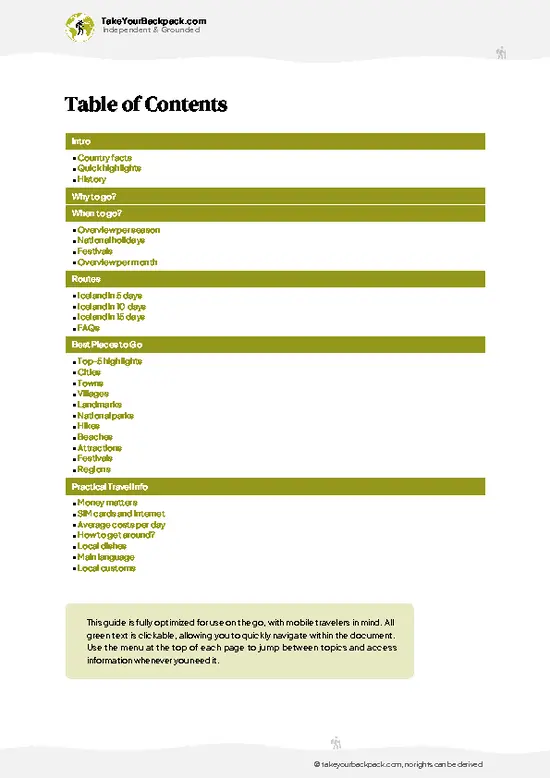
The TakeYourBackpack guidebooks are your all-in-one travel companion, featuring the best cities, national parks, hikes, beaches, and unique sites, along with essential tips on when to go, how to get around, exchanging money, and even local phrases to get you started — everything you need for a smooth, unforgettable backpacking adventure.
Stop researching. Start exploring.Discover all 61 highlights,ranked
and organized into practical routes.
Get instant access
Planning a backpacking route through Iceland can be tricky — you need to balance must-see places, travel times, budget, and how long to stay in each destination. Our free personalized Iceland itinerary planner creates a route based on your travel style, trip duration, and interests, so you can spend less time researching and more time exploring.
Personal tip: I normally search on good rating for atmosphere (for meeting people) and location (for easy exploring). Cleanliness as a bonus.
Travel Essentials
No vaccinations are required to enter Iceland, and there are no special health risks such as malaria, yellow fever or rabies in local wildlife. Make sure your routine vaccinations are up to date, including measles-mumps-rubella, tetanus-diphtheria and a seasonal flu shot if you travel in winter. Comprehensive travel insurance matters more here than any shot, since hiking injuries and mountain rescues can be costly.
vaccination requirementsWhen I first started traveling, I often spent part of my first day in a new country hunting for a local SIM card. While this can still be slightly cheaper, it also takes time and planning.
These days, it's much simpler to install an eSIM before leaving home. Once you arrive in Iceland, you can activate it immediately and have mobile data from the moment you land — which is especially useful for ordering transport or navigating away from busy airports.
There are many providers nowadays, and price differences are usually small. I personally go with
Holafly, as it offers excellent network coverage throughout the country and strong global coverage, so you can manage multiple countries from a single app.
HolaFly eSimCulture & Customs
The most important custom in Iceland is pool etiquette: shower thoroughly without a swimsuit in the changing room before entering any geothermal pool or lagoon, and follow posted signs about which areas to wash. Do take your shoes off when entering homes and many guesthouses, keep your voice down in hot pots and respect queues. Don’t drive off-road, walk on fragile moss, build stone cairns or step over ropes at viewpoints, since damaged moss takes decades to recover and fines are steep. Icelanders are informal and egalitarian, address almost everyone by first name and value punctuality and personal space. Wild camping in a campervan outside designated campsites is not allowed. Gender equality is deeply rooted, and same-sex couples can show affection openly without concern.
Trying traditional food is always a great way to experience the culture. Here are some must-try dishes for Iceland.
- Kjötsúpa (lamb soup): A slow-simmered broth of free-range lamb, root vegetables and herbs. Icelandic sheep graze wild all summer, and this hearty soup has warmed farmhouses through dark winters for generations.
- Plokkfiskur (fish stew): Flaked cod or haddock mashed with potatoes, onions and béchamel, usually served with buttered rye bread. It is cheap, filling home cooking and a fixture on lunch menus around the country.
- Skyr: A thick, high-protein cultured dairy product, technically a soft cheese, eaten like yogurt. It has been made in Iceland since the Viking Age and works as breakfast, dessert or a cheap trail snack.
- Pylsur (Icelandic hot dog): A lamb, pork and beef sausage in a bun with raw and fried onions, ketchup, sweet mustard and remoulade. Ordered “eina með öllu” (one with everything), it is the most affordable hot meal in a pricey country.
- Hangikjöt (smoked lamb): Lamb smoked over birch or dried sheep dung, served thinly sliced on flatbread or with potatoes in white sauce. It is the centerpiece of many Christmas tables.
- Harðfiskur (dried fish): Wind-dried cod or haddock eaten in strips with salted butter. A traditional preservation method that remains a popular protein-rich snack.
- Hákarl (fermented shark): Greenland shark cured for months and hung to dry, with a powerful ammonia smell. It is eaten mainly during the midwinter Þorri festival, usually chased with a shot of Brennivín.
- Rúgbrauð (rye bread): Dense, sweet dark rye, sometimes baked slowly in geothermal ground near hot springs. Try it with butter and smoked trout or herring.
Tap water in Iceland is among the cleanest in the world, sourced mostly from protected springs and groundwater, and locals drink it straight from the cold tap. It is fully recommended for tourists, so skip bottled water and refill a reusable bottle wherever you go. The hot tap is geothermal and smells of sulfur, so drink only from the cold tap and let it run a few seconds for the coldest water.
The main language in Iceland is
Icelandic. Backpacking is way more rewarding if you know a bit of the local language, so I'd suggest brushing up on the basics just in case your Icelandic skills have become a bit rusty.
Want to understand locals better?The complete Travel Guide for Iceland includes 52 essential words and phrases — greetings, thank-yous, ordering food, transport, numbers, and common local expressions you'll actually hear.
Get your local basic phrases 👉
Get the Travel Guide - is spoken almost everywhere in Iceland, and in Reykjavik, the airport, tour offices and tourist hubs you can do everything in it without friction. Younger Icelanders and hostel staff are often close to fluent, partly because English-language TV and films are subtitled instead of dubbed. Even on rural farms and in small fishing towns most people get by comfortably, with older residents occasionally a little rustier. Danish is taught in schools and helps a bit, but learning “takk” (thanks) and “góðan daginn” (good day) wins more smiles than any second language.
Money & Payments
The local currency of Iceland is ISK (kr).
Iceland is close to cashless, and you can pay by card or phone for nearly everything, from hot dog stands and campsite fees to public toilets and Strætó buses. ATMs are easy to find in Reykjavik, Akureyri and most Ring Road towns, usually at Landsbankinn, Arion or Íslandsbanki branches, which typically charge no local fee, while your home bank may add US$3 to 5 per withdrawal and some standalone machines charge more. Visa and Mastercard are accepted almost universally, American Express less so, and unmanned gas pumps require a chip card with a PIN or a prepaid fuel card bought inside the station. There is no need to bring US dollars or euros, since few places accept them and the rates are poor. If you want some Icelandic krónur for small rural honesty boxes, withdraw from a bank ATM or exchange at a bank branch or the official airport exchange desk, and always choose to be charged in ISK instead of your home currency.
Tipping is not expected in Iceland, because service charges and fair wages are already built into restaurant, bar and taxi prices. Nobody will chase you for a tip, but rounding up or leaving a little for outstanding service or a great tour guide is appreciated. Some card machines now prompt for a tip, and choosing “no tip” is completely normal.
v2.webp)
 Best Backpacking
.jpg) Over the years, I've learned the importance of packing minimally. It's so much easier to jump on the back of a truck or squeeze yourself into the last spot of a minibus without that supersized backpack. If you're headed to a warm destination, leave your winter jacket at home; for colder regions, opt for thin thermal underlayers. Instead of packing your entire wardrobe, bring just three sets of clothes, as laundry facilities are available everywhere.
Over the years, I've learned the importance of packing minimally. It's so much easier to jump on the back of a truck or squeeze yourself into the last spot of a minibus without that supersized backpack. If you're headed to a warm destination, leave your winter jacket at home; for colder regions, opt for thin thermal underlayers. Instead of packing your entire wardrobe, bring just three sets of clothes, as laundry facilities are available everywhere.


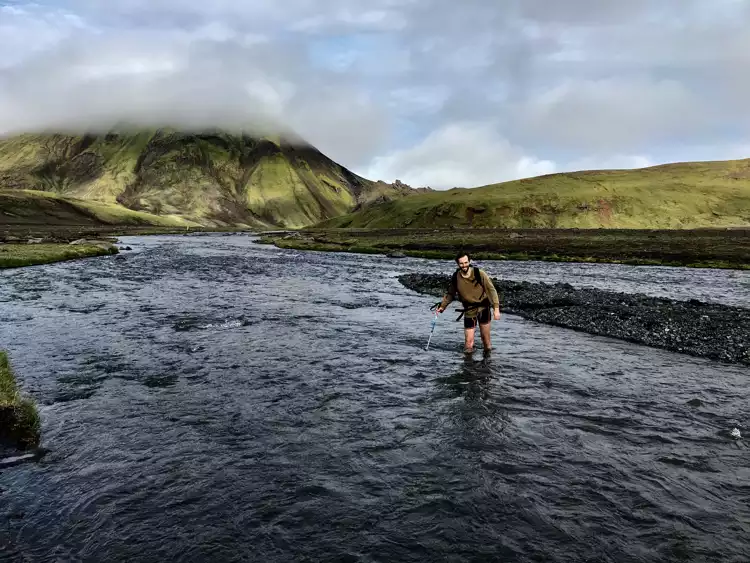







.jpg) Hi, I’m Johan (Netherlands 🇳🇱), the creator of TakeYourBackpack. Over the past 3 decades, I’ve backpacked through 90+ countries across six continents, gaining extensive experience with independent travel, long-term trips, and overland routes.
Hi, I’m Johan (Netherlands 🇳🇱), the creator of TakeYourBackpack. Over the past 3 decades, I’ve backpacked through 90+ countries across six continents, gaining extensive experience with independent travel, long-term trips, and overland routes.