×
Eswatini 🇸🇿

backpacking Africa Eswatini 🇸🇿Move gently through culture-led rural landscapes and traditions.

Explore EritreaExplore Ethiopia

Backpacking Eswatini in 2026

A complete guide including when and where to go, costs, transport, itineraries, and practical travel advice.
The big picture before you go

Backpacking Eswatini
By Johan Kruseman 🇳🇱 | Updated June 4, 2026

The biggest myth: Eswatini (previously Swaziland) is just a drive-through between Kruger and Mozambique. It’s small, yes, but it packs wild reserves, highland trails, and a living monarchy into distances you can actually cover. What seems like a pit stop is a country with its own rhythm, ceremony, and craft.

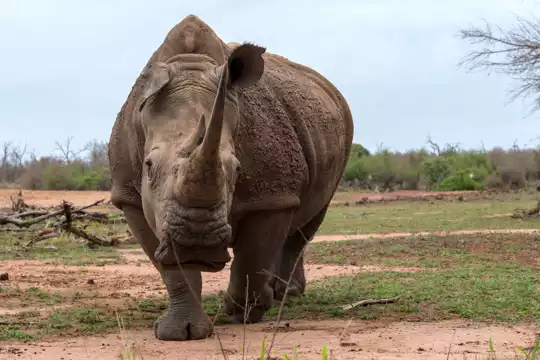
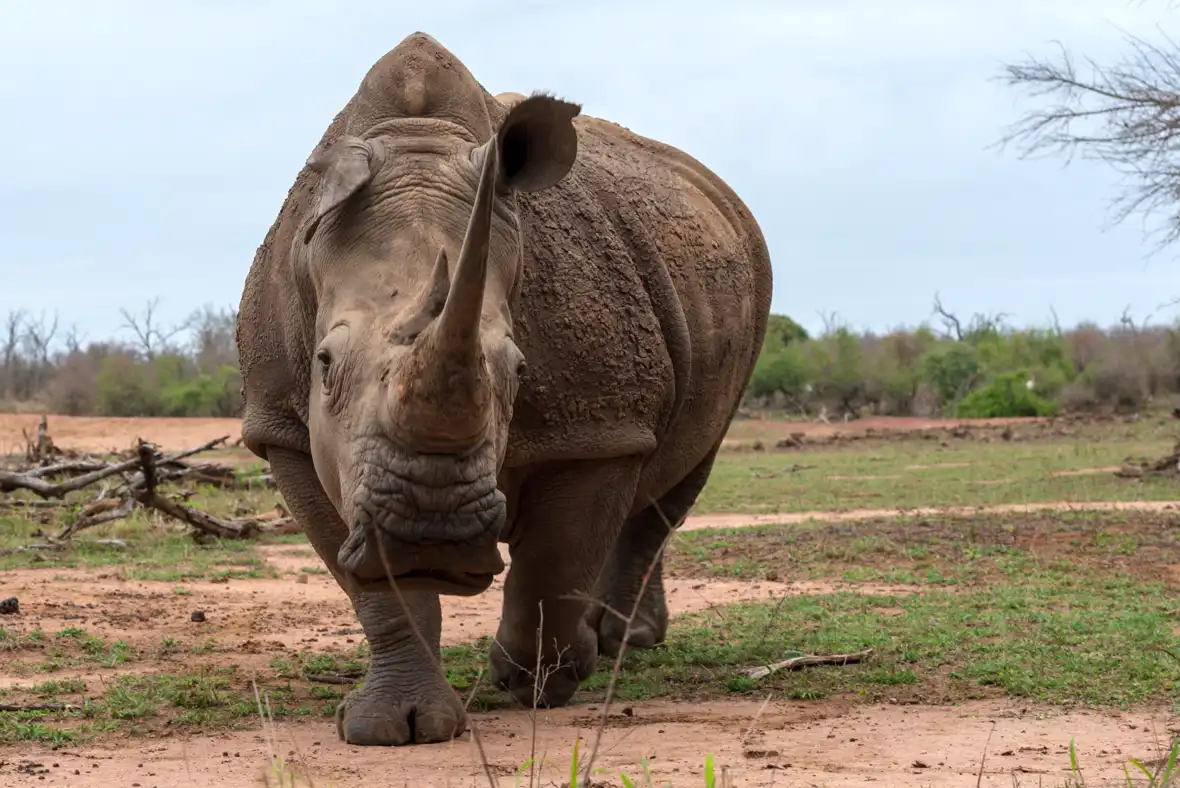
Here you track white rhino on foot in Hlane, hike Malolotja’s ridgelines, and drift through the Ezulwini Valley where markets, homesteads, and drumbeat meet. Ceremonies like Umhlanga and Incwala anchor daily life, and House on Fire turns a roadside venue into a cultural magnet. The hills keep changing—grassland, forest, sugar estates—and the drives feel like a moving terrace of viewpoints. Buses run when they’re full, card machines can fail, and protests or road checks may slow a day, but locals are helpful and distances are short. Lean into the pace: the wait becomes a conversation, and a ranger-led walk becomes the reason you came.

South Africa brings scale and polished infrastructure; Mozambique brings coast and reefs. Eswatini trades breadth for closeness—wildlife at eye level, culture within arm’s reach, and hikes that start an hour after breakfast. It suits travelers who value intimacy over spectacle, a gentle first step into the region or a rewarding detour for veterans who want substance without the sprawl.

👉 Get the 📖 Travel Guide of Eswatini

Ezulwini–Mbabane–Lobamba Corridor (MR3)

Base camp for first-timers. You get fast kombis between Mbabane, Ezulwini, and Manzini, cheap SIMs, ATMs, and easy day hikes (Mantenga/Execution Rock). Soft landing, not wild. Works for short trips, car-free movement, craft shopping, and museum stops.

Malolotja & Ngwenya Highlands

Rugged and quiet. Best payoff for hikers: long ridgelines, cold nights, zero crowds. You need your own wheels; 2WD in dry, 4x4 after rain. Stock food in Mbabane; reserve stores are basic. Zipline and self-catering huts reward early risers.

Hlane Royal NP & Lubombo Lowveld (MR3 east)

Wildlife with minimal faff. Reliable rhino/lion/elephant from hides and short game drives; simple rondavels and early nights. Sedan friendly; internal roads corrugated. Gate hours strict, carry cash for fees, insect repellent, and don’t plan night driving.

Mkhaya & Big Bend Sugar Belt

High-certainty big game in little time. Guided-only, fixed arrival windows, no self-drive; prebook or skip it. Expect close rhino on foot, small groups, and quiet camps. Access via sugarcane roads; 2WD fine, timing is not flexible.

Shiselweni Highlands (Nhlangano–Mahamba)

Slow, rural, and cheap. Community hikes at Mahamba Gorge, homestays, and birding over bar scenes. Patchy public transport; self-drive wins. Fuel up earlier, shops close early, and rain turns dirt to grease. Rewards patient, low-gear travelers.
Seeing the layout at a glance
Loading the map 🌍
CLICK TO FILTER
city
town
unique site
national park
hike
attraction
festival
region
SHOW COUNTRY’S BESTSHOW ALL
film
0
0
0a
Malolotja Canopy Tour
film
1
1
1a
Nsangwini Rock Art Site
film
2
2
2a
House on Fire
film
3
3
3a
Swazi Candles Centre
film
4
4
4a
Gone Rural
film
5
5
5a
Yebo! Art Gallery
film
6
6
6a
Phophonyane Falls Nature Reserve
film
7
7
7a
Malkerns
film
8
8
8a
Maguga Dam

Why go?What makes this country worth the trip

Low cost

Eswatini stretches your budget because distances are short, kombis are cheap, and community-run parks … read more 👉
Eswatini stretches your budget because distances are short, kombis are cheap, and community-run parks and camps don’t gouge. Simple lodges and backpacker hostels have shared kitchens, so shopping at markets keeps meals low. Safaris cost less than across the border, and entry fees are sane. Expect roughly $30–45/day covering a dorm bed, transport, market food, and a park visit.

Scenery

Eswatini packs big landscapes into short drives. Highveld ridges in Malolotja drop to lowveld savanna … read more 👉
Eswatini packs big landscapes into short drives. Highveld ridges in Malolotja drop to lowveld savanna at Hlane, with real, wide-open horizon. Granite dominates—Sibebe Rock’s slab, Gobholo’s fissure caves, and the Komati gorge above Maguga Dam. Waterfalls score the valleys—Phophonyane, Malolotja, Mantenga—while the Shewula plateau watches sunrise spill over the Lebombo and into Mozambique.

Mountains

Eswatini packs real mountain walking into a small map: Highveld ridges, granite domes, and deep river … read more 👉
Eswatini packs real mountain walking into a small map: Highveld ridges, granite domes, and deep river cuts. You can summit Emlembe, scramble Sibebe Rock, and roam Malolotja in the same week without long transfers. Trails are quiet and honest—hoof paths, rock, grass—wildlife in view, homesteads below, and big horizons that arrive by sweat, not gondolas.

Wildlife

Eswatini packs serious wildlife into a compact map. Hlane, Mkhaya, and Mlilwane sit within two hours … read more 👉
Eswatini packs serious wildlife into a compact map. Hlane, Mkhaya, and Mlilwane sit within two hours of each other, so you spend time in the bush, not in transit. Expect close rhino encounters (especially at Mkhaya), lion and elephant at Hlane, and relaxed walking in Mlilwane. Fewer vehicles at sightings than Kruger, lower park fees, and birdlife that rewards patience.
Want the complete picture of Eswatini?
The offline Travel Guide brings everything together — routes, highlights & planning.

See what's included in the guide 👉

Get the Travel Guide -

⭐ HighlightsWhat not to miss along the way

  • Hlane Royal National Park: In Hlane’s thornveld, the air smells of dust and wild sage; sit quietly at Ndlovu waterhole as elephants and white rhino shuffle in. Do the guided sunset drive into the lion sector. Insider tip: carry cash for park fees, reserve Ndlovu campsite, and remember self-drives aren’t allowed where lions roam.
  • Mlilwane Wildlife Sanctuary: Mlilwane feels easygoing, with warthog trimming the lawns and zebras nosing around the braais; hike the ridge to Execution Rock for a clean, wide view down Ezulwini Valley. Rent a bike if you want more ground. Start at first light, carry water, and don’t feed the habituated animals.
  • Malolotja Nature Reserve: Malolotja is high, windy, and honest—grasslands, protea, and long silences; the day hike to Malolotja Falls earns its view when the gorge opens. Nights bite even in summer, trails fade in places, and a 4x4 helps on wet approaches; download a map before you go.
  • Sibebe Rock: Sibebe is raw granite on a ridiculous scale; the ascent from
read more 👉
  • Hlane Royal National Park: In Hlane’s thornveld, the air smells of dust and wild sage; sit quietly at Ndlovu waterhole as elephants and white rhino shuffle in. Do the guided sunset drive into the lion sector. Insider tip: carry cash for park fees, reserve Ndlovu campsite, and remember self-drives aren’t allowed where lions roam.
  • Mlilwane Wildlife Sanctuary: Mlilwane feels easygoing, with warthog trimming the lawns and zebras nosing around the braais; hike the ridge to Execution Rock for a clean, wide view down Ezulwini Valley. Rent a bike if you want more ground. Start at first light, carry water, and don’t feed the habituated animals.
  • Malolotja Nature Reserve: Malolotja is high, windy, and honest—grasslands, protea, and long silences; the day hike to Malolotja Falls earns its view when the gorge opens. Nights bite even in summer, trails fade in places, and a 4x4 helps on wet approaches; download a map before you go.
  • Sibebe Rock: Sibebe is raw granite on a ridiculous scale; the ascent from the community gate is a sweat but the summit slabs drop an ocean of rock and valley. Go early to dodge heat and storms, wear sticky shoes, and pay the local guide fee.
  • Mantenga Cultural Village & Falls: Mantenga’s thatched homesteads sit under forested slopes; time your visit for the drumming and dance performance, then follow the path to the river to cool off below the falls. Arrive 20-30 minutes before showtime, carry small notes for crafts, and skip drones. For quieter corners, aim for Shewula Mountain Camp above the Lubombo escarpment, the Nsangwini rock art site near Maguga Dam, and the forest paths of Phophonyane Reserve outside Piggs Peak.
Spotted a mistake or missing a highlight? Contact us.

But Eswatini offers more...

Discover and compare all of its highlights per category

🧭 RoutesHow travelers typically move through the country

The 2-Day Ezulwini Valley Hit

The Vibe: A quick, culture-forward escape that keeps you in one lush valley, trading long drives for museums, markets, and easy wildlife. Perfect if you want Eswatini to feel rich and varied without needing more than a weekend.
The Highlights:
  • Cultural deep-dive in Ezulwini and Lobamba
  • History and heritage at the National Museum and King Sobhuza II Memorial Park
  • Craft and design stops at Swazi Candles Centre and Gone Rural
  • Close-up wildlife time in Mlilwane Wildlife Sanctuary

The 3-Day Highlands & Canopy Circuit

The Vibe: A medium-paced loop that blends valley culture with mountain hikes and a zip-line adventure, ideal if you like your trips active but not exhausting. You’ll feel the shift from warm lowlands to cool highlands in just a few days.
The Highlights:
  • Cultural and craft stops in Ezulwini, Lobamba, and Malkerns
  • Highland base time in Mbabane
  • Granite hiking on Sibebe Rock
  • Rock art and zip-lining around Piggs Peak, Nsangwini, and Malolotja Canopy Tour

The 5-Day Eswatini

read more 👉

The 2-Day Ezulwini Valley Hit

The Vibe: A quick, culture-forward escape that keeps you in one lush valley, trading long drives for museums, markets, and easy wildlife. Perfect if you want Eswatini to feel rich and varied without needing more than a weekend.
The Highlights:
  • Cultural deep-dive in Ezulwini and Lobamba
  • History and heritage at the National Museum and King Sobhuza II Memorial Park
  • Craft and design stops at Swazi Candles Centre and Gone Rural
  • Close-up wildlife time in Mlilwane Wildlife Sanctuary

The 3-Day Highlands & Canopy Circuit

The Vibe: A medium-paced loop that blends valley culture with mountain hikes and a zip-line adventure, ideal if you like your trips active but not exhausting. You’ll feel the shift from warm lowlands to cool highlands in just a few days.
The Highlights:
  • Cultural and craft stops in Ezulwini, Lobamba, and Malkerns
  • Highland base time in Mbabane
  • Granite hiking on Sibebe Rock
  • Rock art and zip-lining around Piggs Peak, Nsangwini, and Malolotja Canopy Tour

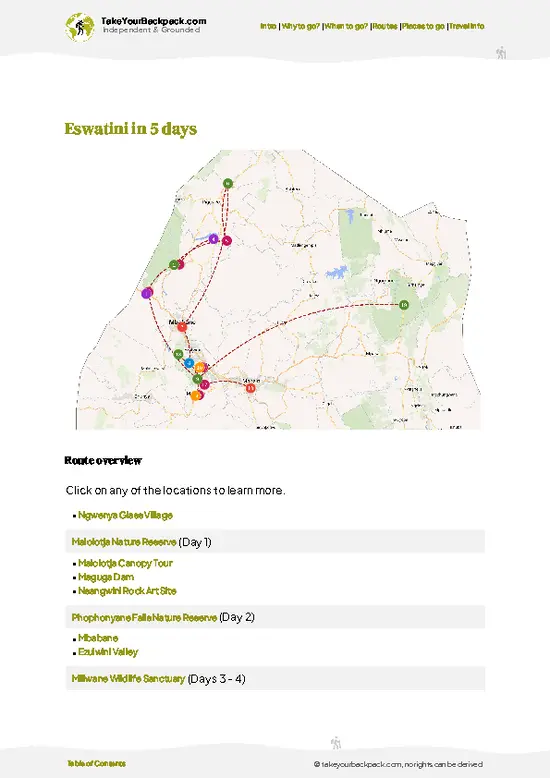
The 5-Day Eswatini Grand Loop

The Vibe: A full-country sampler that stitches together lowveld wildlife, royal history, valley culture, and northern mountains at a steady, immersive pace. Best if you want to leave feeling like you’ve seen Eswatini’s big landscapes and its everyday life.
The Highlights:
  • Big-game drives in Hlane Royal National Park
  • Quieter wildlife and river scenery in Mbuluzi Game Reserve
  • Cultural core time in Ezulwini Valley and Lobamba
  • Highland overnights in Mbabane with side trips to Ngwenya Glass Village, Piggs Peak, and Nsangwini Rock Art Site
🌍 Want a ready-to-use travel plan for Eswatini?
The overview above compares different route options based on your travel time and style. The complete Travel Guide breaks each itinerary down in detail, including maps, stops, highlights, and transport information.

Explore all route details 👉

Get the Travel Guide -

🌤️ When to go?Choosing the right months to travel

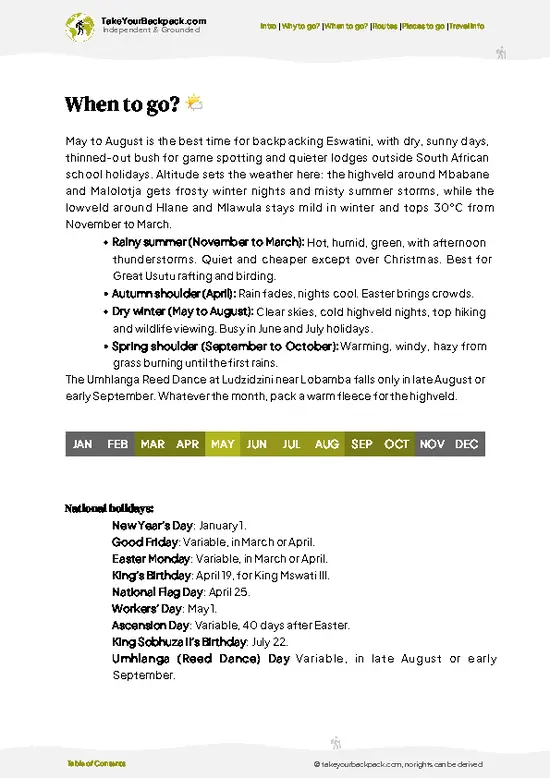
Target May-early June. Rains switch off, trails firm, rivers still move, and days stay mild. Shoulder rates

source: climatestotravel.comJANJanuary: fair for travelingFEBFebruary: fair for travelingMARMarch: good for travelingAPRApril: good for travelingMAYMay: excellent for travelingJUNJune: highly recommended for travelingJULJuly: highly recommended for travelingAUGAugust: highly recommended for travelingSEPSeptember: good for travelingOCTOctober: good for travelingNOVNovember: fair for travelingDECDecember: fair for traveling
📅 Traveling in a specific month?
Get a full month-by-month breakdown of weather, crowds, costs, festivals, and seasonal highlights in the complete travel guide.

Get full details when to go 👉

Get the Travel Guide -
pixabay - swaziland - animal-3891305

💰 Costs (as of 2026)What things cost day to day

Plan on 450-700 SZL ($25-38) per day if you self-cater and ride kombis; a day with a guided safari jumps to 1,200-1,800 SZL.
  • dorm accommodation: 220-350 SZL in Mbabane/Manzini; 280-450 SZL in Ezulwini or inside reserves. Cheaper than South Africa’s tourist hubs, slightly higher than Mozambique’s coast. System tip: pay cash in SZL/ZAR (1:1) to dodge 3-5% card surcharges, and WhatsApp properties for a “backpacker rate” or tent space (150-220 SZL) not listed on booking sites.
  • meals: Supermarket Survival: 70-120 SZL/day buys bread, eggs, tomatoes, beans/tuna, and fruit; imports and dairy cost more than in South Africa. Street food reality: “chicken dust” braai plate with pap/salad runs 45-80 SZL; vetkoek 2-5; kota/bunny chow 35-60; coffee is pricier than you expect. Cheaper than SA sit-downs, on par with Moz roadside eats.
  • local transport: Kombis (shared minibuses) are the unlock—Mbabane-Manzini 20-25 SZL; Mbabane-Ezulwini 10-15; Pigg’s Peak 30-40; border runs 35-70. Ranks shut by early evening; Sundays are thin. Pack light to avoid luggage add-ons (10-20). Similar per-km cost to SA but shorter hops; far cheaper than private taxis.
  • activities: Cost drivers are park fees and guided wildlife.
read more 👉
Plan on 450-700 SZL ($25-38) per day if you self-cater and ride kombis; a day with a guided safari jumps to 1,200-1,800 SZL.
  • dorm accommodation: 220-350 SZL in Mbabane/Manzini; 280-450 SZL in Ezulwini or inside reserves. Cheaper than South Africa’s tourist hubs, slightly higher than Mozambique’s coast. System tip: pay cash in SZL/ZAR (1:1) to dodge 3-5% card surcharges, and WhatsApp properties for a “backpacker rate” or tent space (150-220 SZL) not listed on booking sites.
  • meals: Supermarket Survival: 70-120 SZL/day buys bread, eggs, tomatoes, beans/tuna, and fruit; imports and dairy cost more than in South Africa. Street food reality: “chicken dust” braai plate with pap/salad runs 45-80 SZL; vetkoek 2-5; kota/bunny chow 35-60; coffee is pricier than you expect. Cheaper than SA sit-downs, on par with Moz roadside eats.
  • local transport: Kombis (shared minibuses) are the unlock—Mbabane-Manzini 20-25 SZL; Mbabane-Ezulwini 10-15; Pigg’s Peak 30-40; border runs 35-70. Ranks shut by early evening; Sundays are thin. Pack light to avoid luggage add-ons (10-20). Similar per-km cost to SA but shorter hops; far cheaper than private taxis.
  • activities: Cost drivers are park fees and guided wildlife. Reserve entry 70-120 SZL pp; self-drive is the value move. Guided game drives 450-700 SZL pp; rhino tracking 700-1,000; canopy/zip or horse rides 350-700; cultural villages 100-150. Park entries are lower than Kruger; guided prices approach South Africa levels.
  • miscellaneous: Budget leaks: ATM fees on foreign cards (60-120 SZL per withdrawal), card machine surcharges (3-5%), data (SIM + 3-5 GB bundle ~50-100 SZL), laundry (60-120 per load), and border taxi markups—negotiate hard. ZAR and SZL are interchangeable, but you’ll get change in Emalangeni and ZAR coins aren’t accepted. Craft markets quote high; counter with 40-60% and walk.
⚠️ Prices can change and everyone travels differently, so take this as a rough guide. Hope it helps you plan your adventure!

✈️ The backpacker research shortcutEswatini Travel Guide

An offline-friendly backpacking guide with optimized travel routes, ranked highlights, transport advice, and the best areas to stay.
example page 0 from our offline Travel Guide for Eswatiniexample page 1 from our offline Travel Guide for Eswatiniexample page 2 from our offline Travel Guide for Eswatiniexample page 3 from our offline Travel Guide for Eswatiniexample page 4 from our offline Travel Guide for Eswatiniexample page 5 from our offline Travel Guide for Eswatiniexample page 6 from our offline Travel Guide for Eswatiniexample page 7 from our offline Travel Guide for Eswatini
The digital guide (202 pages) contains:
46 highlights, ranked by travel appeal
Optimized 2, 3 & 5-day travel routes
Cities, national parks, beaches, historical sites, ...
How to get around
Offline-friendly for travel without Wi-Fi
👉 Click to see all 30+ guide features

📅 Plan smarter in minutes, not weeks
Month by month travel advice
Festivals & national holidays
Budget expectations

🗺️ Go to the right places, skip the overrated ones
Honest pros & cons of destinations
Top hikes, parks & viewpoints
Lesser-known places most travelers miss
Clear “worth it vs skip it” guidance

🛏️ Travel smoothly without rookie mistakes
Best areas to stay
Transport systems explained simply
Common scams & safety advice
SIM cards, money & practical tips

🌍 Understand the country, not just visit it
Culture & traditions
52 Essential phrases & customs
Festivals worth planning around
Traveler-friendly historical context
Insights that make places more meaningful

📱 Built for real travel conditions
Fully downloadable PDF
Works completely offline
Optimized for phone use
Useful in remote areas & buses
Everything in one place
Save weeks of stressful planning
Get instant access to the full guide directly. 30-day money-back guarantee.


Sent to your inbox immediately after payment • 100% Secure Checkout
Best Backpacking Travel Advisor 2025 tourism awardBest Backpacking
Travel Advisor
2025
What others say about Take Your Backpack Guides:
⭐⭐⭐⭐⭐
Fantastic, amazing amount of information!
⭐⭐⭐⭐⭐
My goodness this is amazing, it's what I've been looking for hats off too you!
⭐⭐⭐⭐⭐
I think this is absolutely BRILLIANT
⭐⭐⭐⭐
Very complete and informative. It's still missing places, but I gotta to commend you
⭐⭐⭐⭐⭐
This is truly amazing, thank you, can't wait to explore it with my kids!
⭐⭐⭐⭐⭐
Awesome resource, thank you!
⭐⭐⭐⭐⭐
This is amazing! Can't wait to explore the ones I haven't seen
⭐⭐⭐⭐
I love this! Well done, great idea.
⭐⭐⭐⭐⭐
Thanks for taking the time to make this gem!
⭐⭐⭐⭐⭐
This might be the best website I've ever seen.
⭐⭐⭐⭐⭐
Congratulations, and thank you so much for your work; it's incredibly valuable.
⭐⭐⭐⭐
In all seriousness I think you did a great job pointing out the important spots
⭐⭐⭐⭐⭐
10/10 very good
⭐⭐⭐⭐⭐
As someone who's only just starting to visit regularly this is awesome, thank you.
⭐⭐⭐⭐
Thank you very much! I'm going to visit my dad, it's going to be very useful!
⭐⭐⭐⭐⭐
This is really cool! We'll be travelling for the first time and this definitely come in handy.
⭐⭐⭐⭐⭐
You are now our minister of culture, congratulations 👨‍💼
⭐⭐⭐⭐⭐
Just wanted to tell you that this is a pearl! Going to follow your recommendations.
⭐⭐⭐⭐⭐
This is so cool. I'll definitely be using the resource for my travels soon.
⭐⭐⭐⭐⭐
This is very impressive! Good work.
⭐⭐⭐⭐⭐
This is an amazing and informative site. Very well done!

🛏️ Where to stay?Best areas to base yourself

Yes — Eswatini has hostels and budget accommodation concentrated in Manzini, Mbabane and the Ezulwini Valley, with a handful of options in smaller towns; prices are cheaper than mid-range lodges but availability thins outside the main centers.
Manzini gives the most budget choice, best transport links and some nightlife but is busier and less quiet at night; Mbabane is cooler and closer to hiking trails yet has fewer cheap beds and can be pricier; Ezulwini is closest to cultural sites and tourist services so it’s convenient for attractions but more touristy and often more expensive — book ahead … read more 👉
Yes — Eswatini has hostels and budget accommodation concentrated in Manzini, Mbabane and the Ezulwini Valley, with a handful of options in smaller towns; prices are cheaper than mid-range lodges but availability thins outside the main centers.
Manzini gives the most budget choice, best transport links and some nightlife but is busier and less quiet at night; Mbabane is cooler and closer to hiking trails yet has fewer cheap beds and can be pricier; Ezulwini is closest to cultural sites and tourist services so it’s convenient for attractions but more touristy and often more expensive — book ahead for weekends and festival periods and choose centrally located, well-lit places after dark.

If you enjoy meeting fellow travelers, consider choosing hostels with high ratings for atmosphere. On the other hand, if you prefer having your own space, a hotel might be a better option.

🚌 Getting aroundGetting around Eswatini

Eswatini moves on patience and early starts. Ranks hum at dawn, routes run hot until lunch, then thin to almost nothing by sunset. Vehicles leave when full, not when a clock says so, though the MR3 keeps long hops brisk once you’re rolling. Treat the day like a series of sprints between bus ranks, not a single guaranteed ride.
  • Intercity Minibus Taxis (kombis) Cheapest way to cover distance and, once full, often quicker than big buses. Expect wait time up front, then fast highway bursts punctuated
read more 👉
Eswatini moves on patience and early starts. Ranks hum at dawn, routes run hot until lunch, then thin to almost nothing by sunset. Vehicles leave when full, not when a clock says so, though the MR3 keeps long hops brisk once you’re rolling. Treat the day like a series of sprints between bus ranks, not a single guaranteed ride.
  • Intercity Minibus Taxis (kombis) Cheapest way to cover distance and, once full, often quicker than big buses. Expect wait time up front, then fast highway bursts punctuated by frequent drops. Fares are roughly 5-10x less than a private taxi; small luggage may draw a modest fee. Sit front row for legroom, belt up at police checks, and target Manzini Rank for most connections.
  • In-Town Kombis This is the social fabric: greet when you board, pass notes forward, and don’t slam the sliding door—let the conductor do it. Keep small change, say where you’re dropping well before the turn, and squeeze efficiently without knee wars. Music can be loud, food odors are frowned on, and elders or mothers get the easiest seats by default.
  • Rural Spur Kombis and Bakkies The geometric unlock for park gates and hilltop chiefdoms. From Manzini or Mbabane, change onto spurs for Ezulwini, Big Bend, Simunye, or the turn-offs to Mlilwane, Hlane, Malolotja, and Shewula. Last miles may be in a pickup bed; it’s cheap but dusty and strictly daylight. Rain makes clay roads slick—budget extra time or you’ll be sleeping rural.
  • Cross-Border Minibuses + SA Long-Distance The budget disruptor for Joburg/Maputo links: ride a kombi to a border (Ngwenya/Oshoek, Golela, Lomahasha), walk immigration, then grab domestic transport on the other side. You’ll undercut lodge shuttles by a wide margin. Start early, carry small notes, ignore touts at the fence, and find the official rank just beyond the gate. Rand works 1:1 inside Eswatini.

Master tactical tip: Be at Manzini Rank at first light and front-load your longest hop before noon; routes fade fast after lunch and almost vanish after dark.
Short answer: Mbabane doesn’t have its own airport. You’ll land at King Mswati III International Airport (SHO) at Sikhuphe, about 90 km (56 mi) east of Mbabane via the MR3. Driving time is roughly 1 hr 15 min to 1 hr 30 min in normal traffic.

Main public transport option
  • Minibus taxis (kombi) via Manzini: There’s no dedicated airport bus. From the airport, take a kombi toward Manzini, then change to a Mbabane-bound kombi at the Manzini bus rank.

    Time: 2-3 hours end to end (depends on waiting times and how quickly your kombi fills).

    Cost: Airport-Manzini E40-E60, then Manzini-Mbabane E30-E40. Expect E70-E100 total per person (about US$4-$6).

    Notes: Services run mainly in daylight (roughly 06:00-18:00). Kombis may not queue at the terminal—ask airport staff where the next one stops or if there’s a current pickup. Carry small bills.

Taxi options

Metered taxis are uncommon; most are fixed-fare. From SHO to central Mbabane, expect E800-E1,200 one way (about US$45-$65), 1 hr 15 min-1 hr 45 min depending on traffic and daylight. Agree the fare before you go. Cash in lilangeni (SZL) or South African rand is widely accepted; card acceptance is hit-or-miss. No Uber/Bolt in Eswatini as of 2025.

Optional: car hire

Available at the airport. The drive takes about 1 hr 15 min-1 hr 30 min. Daily rates typically start around E500-E900 plus fuel—useful if you’re exploring beyond Mbabane.

Small caveat

If you arrive by charter at Matsapha (MTS) near Manzini instead, Mbabane is closer: about 40 km (25 mi). Taxi E400-E600, 30-50 minutes; kombi Manzini-Mbabane E30-E40.
⚠️ Prices and routes can change, so take this as a rough guide and ask for local advice when you arrive.

🔒 Safety (risk Level: medium)What first-time visitors should know

Safety for solo travelers, including women and LGBTQ+ individuals
Eswatini is generally considered safe for solo travelers, including women and LGBTQ+ individuals, but it’s essential to stay cautious and informed. Petty crime like pickpocketing can occur, so keep valuables secure and be mindful in crowded areas. While Eswatini is more conservative, exercise discretion if you’re LGBTQ+ and research local customs. Trust your instincts, stay in well-reviewed accommodations, and connect with fellow travelers when possible.


Full official government travel advisory (live updates)
View details 👉

✈️ VisaEntry requirements and paperwork

Many nationalities, including those from the U.S., EU, and most Commonwealth countries, can visit Eswatini visa-free for up to 30 days. If you do need a visa, apply through the nearest Eswatini embassy or consulate. Always double-check current requirements before your trip as policies can change.

source: gov.sz
⚠️ Visa requirements can change over time, so always check the latest visa requirements with the official embassy or government website before you travel.

🎒 What to pack?Packing essentials for the trip

Eswatini’s climate can be a bit of a mixed bag, so pack smart. It’s generally warm, but if you’re heading into the mountains, expect cooler evenings. The rainy season runs from October to March, so a lightweight rain jacket is a must. The culture leans conservative, so aim for modest clothing, especially if visiting rural areas or cultural sites. Toss in some sturdy shoes for hiking and exploring the diverse landscape, from savannas to forests.

Apart from this country specific advice, I have also crafted a general packing list that should help on any trip. authorOver the years, I've learned the importance of packing minimally. It's so much easier to jump on the back of a truck or squeeze yourself into the last spot of a minibus without that supersized backpack. If you're headed to a warm destination, leave your winter jacket at home; for colder regions, opt for thin thermal underlayers. Instead of packing your entire wardrobe, bring just three sets of clothes, as laundry facilities are available everywhere.
View the full list 👉
🎒 Planning the practical side of your trip?
Get detailed information on transport, daily budgets, internet access, local customs, food, language, and other essentials in the complete Travel Guide.

Get detailed practical information 👉

Get the Travel Guide -

🙋 FAQQuick answers to practical concerns

Trip Planning


Personal tip: I normally search on good rating for atmosphere (for meeting people) and location (for easy exploring). Cleanliness as a bonus.


Travel Essentials

Hepatitis A and B vaccines are recommended. Typhoid vaccine is advised if you’re planning to stay with locals or in smaller towns. Make sure you’re up-to-date with routine vaccines like measles-mumps-rubella (MMR) and diphtheria-tetanus-pertussis (DTP). Consider rabies vaccine if you’ll be outdoors a lot. Malaria prophylaxis is essential for certain areas. Consult a travel clinic for personalized advice.


vaccination requirements
When I first started traveling, I often spent part of my first day in a new country hunting for a local SIM card. While this can still be slightly cheaper, it also takes time and planning.

These days, it's much simpler to install an eSIM before leaving home. Once you arrive in Eswatini, you can activate it immediately and have mobile data from the moment you land — which is especially useful for ordering transport or navigating away from busy airports.

There are many providers nowadays, and price differences are usually small. I personally go with Airalo, as it offers excellent network coverage throughout the country and strong global coverage, so you can manage multiple countries from a single app.


Get your e-sim for Eswatini

Culture & Customs

Respect is key in Eswatini. When greeting, a firm handshake with the right hand is common, often accompanied by a slight bow. Avoid pointing with your index finger; use your whole hand instead. Dress modestly, especially when visiting rural areas or cultural sites. Women travelers should cover their shoulders and knees when attending traditional ceremonies.

LGBTQ+ travelers should be aware that homosexuality is not widely accepted and discretion is advised. Public displays of affection can be frowned upon regardless of sexual orientation.

Always seek permission before taking photos of individuals or cultural ceremonies. Tipping is not obligatory but appreciated; rounding up the bill or giving about 10% is standard.
Trying traditional food is always a great way to experience the culture. Here are some must-try dishes for Eswatini.
  • Sishwala: This is a thick porridge made from cornmeal, often served with meat or vegetables. It’s a staple in eSwatini, providing sustenance and comfort, especially in rural areas.
  • Emasi: Fermented milk that’s similar to yogurt, emasi is a common side or snack. It’s culturally significant as a symbol of hospitality and is often offered to guests.
  • Sidvudvu: A rich pumpkin and peanut butter porridge. This dish is popular for its sweet and savory flavor and is typically enjoyed during celebrations and gatherings.
  • Umgqushu: A mix of samp (crushed corn kernels) and beans, sometimes with added meat. It’s filling and nutritious, often cooked slow to let flavors meld, making it a key part of local meals.
  • Inhloko: A cow’s head, slow-cooked and seasoned. While it might sound adventurous, it’s a delicacy and commonly featured at traditional ceremonies and events.
Tap water in Eswatini is generally not recommended for tourists, even though some locals drink it. To be safe, stick to bottled or filtered water. Always check the seal on bottled water to ensure it’s unopened.
The main language in Eswatini is Siswati. Backpacking is way more rewarding if you know a bit of the local language, so I'd suggest brushing up on the basics just in case your Siswati skills have become a bit rusty.

Want to understand locals better?
The complete Travel Guide for Eswatini includes 52 essential words and phrases — greetings, thank-yous, ordering food, transport, numbers, and common local expressions you'll actually hear.

Get your local basic phrases 👉

Get the Travel Guide -


In Eswatini (formerly Swaziland), English is widely spoken and understood, especially in urban areas and among the younger population. As one of the official languages alongside siSwati, English is used in government, education, and business. Most signs, official documents, and public communications are available in English, making it accessible for travelers.

In cities like Mbabane and Manzini, you will find that many people, particularly in hotels, restaurants, and tourist attractions, can communicate effectively in English. However, in more rural areas, proficiency may vary, and some locals might primarily speak siSwati. While basic English is commonly understood, it’s always appreciated when visitors make an effort to learn a few words in siSwati, as it fosters goodwill and connection with the local culture.

Overall, English serves as a practical means of communication for travelers, allowing for smooth interactions throughout Eswatini.

Money & Payments

The local currency of Eswatini is SZL (E).

In eSwatini, it’s handy to have some cash on hand for smaller vendors and rural areas. The local currency is the Lilangeni (SZL), pegged to the South African Rand (ZAR), which is also widely accepted. ATMs are common in urban areas like Mbabane and Manzini, and most will accept international cards. Just avoid those super isolated ones for safety reasons.

While some places accept credit cards, especially in cities and tourist spots, it’s not universal. Carrying a Visa or Mastercard is your best bet, but always check for additional fees.

Exchanging cash? Euros and US dollars are your best options. You can exchange currencies at banks or authorized exchange bureaus, mostly found in major towns. Avoid exchanging at airports or hotels unless you like terrible rates. Also, try to avoid carrying too many large bills as they can be hard to break in smaller shops.

Tipping in Eswatini isn’t mandatory but appreciated, especially in restaurants and for services like tour guides or drivers. Leaving a 10% tip is a good practice if you’re satisfied with the service. In more casual settings, rounding up the bill is also a common gesture.

🧩 Nearby countriesNearby backpacking alternatives

We 💚 feedbackFinal notes for travelers

Eswatini feels compact and calm, a breather between South Africa and Mozambique. I came for an easy transit and stayed for close, ethical wildlife time—rhino on foot at Hlane/Mkhaya—and camps where staff still remember your name. Best surprise: crafts aren’t tourist junk; Ngwenya Glass and local markets are worth luggage space. Small warning: speed traps and cattle at dusk; don’t drive at night. The country’s quietly upgrading roads, rolling out better 4G, and linking parks with community projects—more access without losing the soul.

✍️ Help improve this page!
The information on this page is based on in-depth research, insights shared by experienced travelers, and feedback from the local travel community in Eswatini. While every effort is made to keep the information accurate and current, conditions can change — so if you spot anything incorrect or outdated, please get in touch.


🙋‍♂️ Give feedback

👋 Meet the founderWho’s Behind Take Your Backpack?

Johan, backpacker and founder of TakeYourBackpackHi, I’m Johan (Netherlands 🇳🇱), the creator of TakeYourBackpack. Over the past decade, I’ve backpacked through 80+ countries across six continents, gaining extensive experience with independent travel, long-term trips, and overland routes.

This site is built on a combination of firsthand travel experience and carefully curated insights from other backpackers. Many guides are based on places I’ve personally visited, while others bring together tips, observations, and practical advice shared by trusted travelers I’ve met along the way.

The goal is to provide realistic, experience-driven guidance — not generic itineraries — so you can explore destinations with better context, clearer expectations, and more confidence.

Get full Eswatini guide •
Instant download • 46 highlights • Full Offline guide