×
Benin 🇧🇯

backpacking Africa Benin 🇧🇯Move through markets and rituals guiding the rhythm of daily life.

Explore AngolaExplore Botswana

Backpacking Benin in 2026

A complete guide including when and where to go, costs, transport, itineraries, and practical travel advice.
Traveling in Benin: what to expect

Backpacking Benin
By Johan Kruseman 🇳🇱 | Updated June 7, 2026

Most first‑timers burn hours and cash on slow, improvised transport under hard sun. Distances look short on the map, but bush taxis leave when full and moto fares swing with the mood. That rhythm is Benin’s pulse—improvised, human, close to the ground.

Start in Cotonou, at Dantokpa’s smoked fish and ripened fruit; then ride the salt air to Ouidah, where Vodun altars bloom and drums find you after dark. Glide a pirogue through Ganvié. In Abomey, bas‑reliefs tell royal wars in a few lines; in the Atakora, tata Somba walls hold late‑day heat. Dawn in Pendjari is lion breath on cool harmattan, elephants moving through tawny grass. Yes, the heat bites, French helps, and delays happen—but that first La Béninoise at sunset makes the dust taste like a story you earned.

Next door, Togo runs quieter and smaller, Ghana smoother and more packaged, Nigeria louder and relentless; Benin threads the middle—manageable, character‑rich, and rooted in Vodun with real wilderness up north. Go if you want culture you can touch and wildlife that rewards patience.

👉 Get the 📖 Travel Guide of Benin

Cotonou & Lake Nokoué

Cotonou hits first: petrol haze, moto horns, smoked-fish tang off Dantokpa. You move by zémidjan, knees tight, eyes stinging, and it’s worth it for the market chaos and late-night maquis plates. The lagoon is a quick escape; a pirogue to Ganvié creaks through reed channels. Accessible from the airport in minutes. Rewards city-hardened travelers who like street food and noise; the payoff is a cold La Béninoise at Fidjrossè as the sea breeze finally cuts the heat.

Ouidah–Grand-Popo Coastal Strip

One road west from Cotonou strings it together: Vodun altars, the Python Temple, murals, and the Route des Esclaves ending at a beach with heavy surf you don’t swim in. Shared taxis are constant; the vibe relaxes but touts still test your patience. Suits history-driven travelers who can handle ritual, ceremony, and repetition. Payoff: grilled langoustine under palms in Grand-Popo, salt on your lips, hammocks swaying.

Abomey

Red earth sticks to your shoes; workshops hum with appliqué banners and bronze casting. The Royal Palaces are blunt about power—bas-reliefs, thrones, war stories. It’s 3–4 hours via Bohicon; motos fill the last mile. Good for travelers who like context and craft, not just photo stops. Payoff: evening drums in a dusty courtyard and a fan rattling above your bed.

Atakora Highlands: Natitingou–Taneka–Boukoumbé

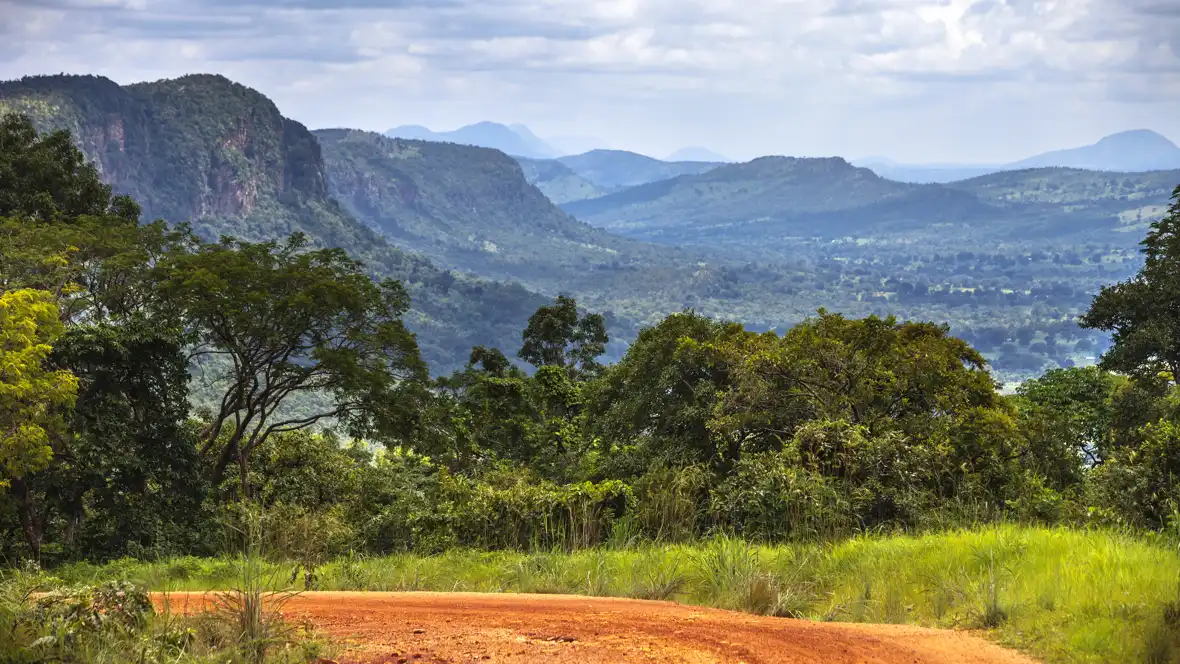
The north climbs into laterite ridges and wind-scuffed savanna. Long haul up RNIE2 via Parakou, then bush taxis and footpaths to Taneka villages and Tata Somba compounds. Nights are cool; days dry your throat fast. For hikers and patient culture nerds who hire local guides and walk. Payoff: sunset over Boukoumbé, millet beer and wagashi cheese, stars hard and bright.

Pendjari National Park

From Tanguiéta the piste turns to ruts and river crossings; in rains it often shuts. You need a 4x4, fuel cash, and time. Lodge prices run high for Benin; the silence is richer than the beds. Built for wildlife diehards. Payoff: first light over the Pendjari, elephant shadows, fresh lion tracks in pink dust.
Geography and where places are located
Loading the map 🌍
CLICK TO FILTER
city
town
unique site
national park
hike
beach
attraction
festival
region
SHOW COUNTRY’S BESTSHOW ALL
film
0
0
0a
Temple des Pythons de Ouidah
film
1
1
1a
Fondation Zinsou
film
2
2
2a
Musée Honmè
film
3
3
3a
Centre Artisanal de Cotonou
film
4
4
4a
Centre Culturel Français / Institut Français
film
5
5
5a
Centre Culturel Ouadada
film
6
6
6a
Fidjrosse Beach
film
7
7
7a
Avlékété Beach
film
8
8
8a
Kandi
film
9
9
9a
Kétou
film
10
10
10a
Djidja
film
11
11
11a
Pobè
film
12
12
12a
Boukoumbé Hiking Trail
film
13
13
13a
Koutammakou
film
14
14
14a
Tanguieta
film
15
15
15a
Tanongou
film
16
16
16a
Royal Palaces of Abomey
film
17
17
17a
Temple of Pythons
film
18
18
18a
Sacred Forest of Kpassè

Why go?Reasons people choose to visit

Uniqueness

Benin starts with heat and red dust. You wrap your knees around a zemidjan’s seat, yellow helmets darting … read more 👉
Benin starts with heat and red dust. You wrap your knees around a zemidjan’s seat, yellow helmets darting through Cotonou’s fumes toward Dantokpa’s thrum of fish brine and diesel. Ouidah smells of salt and palm oil, Vodun altars chalked white, pythons cool against your forearm, the surf hammering the Door of No Return. Dawn at Ganvié is paddles tapping water like drums. Up in the Atakora, Tata Somba houses smoke and the sky goes black-clean. It’s sweat, slow buses, and then payoff: a sweating Beninoise, grilled fish with piment, and elephants dusting themselves in Pendjari.

Wildlife

Benin’s wildlife asks for effort. Red laterite dust kicks up under the truck, the Harmattan dries your … read more 👉
Benin’s wildlife asks for effort. Red laterite dust kicks up under the truck, the Harmattan dries your throat, and the corrugations into Pendjari and W National Park rattle everything you own. But dawn breaks gold over baobabs and gallery forest, and the bush comes alive: kob and roan stacking the plains, elephants ghosting through shea trees, hippos snorting on the Pendjari River. You might cut a fresh lion track and wait out the heat by a waterhole as bee-eaters flick past. Then Tanguiéta, a cold beer, and that quiet, earned grin.

Low cost

Benin is kind to a backpacker’s wallet. Zémidjan drivers thread you through Cotonou’s fumes for pocket … read more 👉
Benin is kind to a backpacker’s wallet. Zémidjan drivers thread you through Cotonou’s fumes for pocket change, and market bowls of amiwo, beans, and smoked fish keep you full without denting your cash. Fan rooms in austere auberges are basic—tile floor, clean sheet, bucket shower—but cheap and everywhere, from Abomey to Grand-Popo. Shared cars make long hops affordable if you don’t mind the squeeze. Plan on roughly $25–35 per day and you’re fine. The payoff: a cold Beninoise at dusk, sea breeze or Harmattan dust on your skin, money still in your pouch.

Scenery

Benin rewards the ones willing to take the dusty road. The coast is low and brackish, but at first light … read more 👉
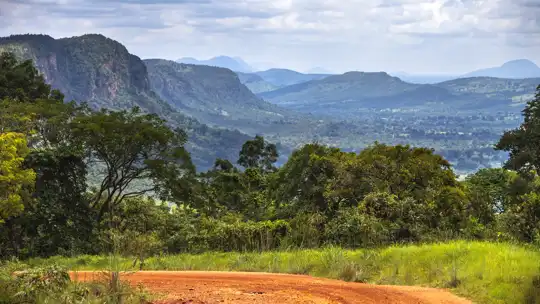
Benin rewards the ones willing to take the dusty road. The coast is low and brackish, but at first light the lagoons breathe; pirogues slip across Lake Nokoué and Ganvié rises on stilts above water hyacinth. Head north and the air dries. Red tracks climb the Atakora, past Tata Somba compounds to the lip of the Pendjari escarpment. Dawn there is clean—elephant grass silvered, buffalo tracks fresh, lions sometimes. When the heat wins, Tanougou Falls gives you a cold shower. In Dassa, cave shrines cool the 41 hills; Ouidah’s sacred forest hums at dusk.
Want the complete picture of Benin?
The offline Travel Guide brings everything together — routes, highlights & planning.

See what's included in the guide 👉

Get the Travel Guide -

⭐ HighlightsStandout locations across the country

  • Ganvié, Lake Nokoué: The lagoon smells of wet wood and diesel, and pirogues whisper past stilts stacked with laundry and fish traps. Drift out at first light for a canoe ride through the canals to the floating market, when egrets lift off like confetti. Hire a licensed boat at Abomey-Calavi, carry small notes for fees, and ask before pointing a camera at homes.
  • Ouidah’s Route of Slaves and Vodun spirit: Heat presses down on the sand road while the Atlantic throws salt into the wind and drumbeats drift from courtyards. Walk the route from the old auction square to the Door of No Return, then step into the Temple of Pythons or the sacred forest to feel today’s faith, not a museum piece; go late afternoon for shade, dress modestly, and skip the beach after dark.
  • Abomey Royal Palaces: Red laterite dust coats your calves as a guide unlocks cool rooms where bas-reliefs of sharks, drums, and kings glow in the dark. Take the full circuit to understand the kingdoms’ wars and craft, then watch smiths
read more 👉
  • Ganvié, Lake Nokoué: The lagoon smells of wet wood and diesel, and pirogues whisper past stilts stacked with laundry and fish traps. Drift out at first light for a canoe ride through the canals to the floating market, when egrets lift off like confetti. Hire a licensed boat at Abomey-Calavi, carry small notes for fees, and ask before pointing a camera at homes.
  • Ouidah’s Route of Slaves and Vodun spirit: Heat presses down on the sand road while the Atlantic throws salt into the wind and drumbeats drift from courtyards. Walk the route from the old auction square to the Door of No Return, then step into the Temple of Pythons or the sacred forest to feel today’s faith, not a museum piece; go late afternoon for shade, dress modestly, and skip the beach after dark.
  • Abomey Royal Palaces: Red laterite dust coats your calves as a guide unlocks cool rooms where bas-reliefs of sharks, drums, and kings glow in the dark. Take the full circuit to understand the kingdoms’ wars and craft, then watch smiths and weavers in the courtyards; some chambers ban photos, so ask every time, and bring water because the sun on those courtyards does not forgive.
  • Pendjari National Park: Dawn smells of grass and elephant, and the bush comes alive in the copper light as buffalos fan dust off their backs. Aim for a sunrise drive to Mare Bali and wait; patience beats speed here. Dry season sightings are best, the tracks are rough, tsetse find bright colors, and you’ll want a high-clearance 4x4 and cash for park and guide fees.
  • Atakora’s Tata Somba country: Clay towers squat against granite hills, their roofs warm like bread ovens and with goats peering over the parapets. With a village guide, climb a tata, see granaries tucked into corners, and—if invited—sleep on a roof under harmattan stars; bring a small gift like salt or soap instead of sweets, and never enter a compound unannounced. For detours that stay quiet, look for Tanougou Falls, the lagoon village of Avlo near Grand-Popo, and the Taneka Hills above Natitingou.
Spotted a mistake or missing a highlight? Contact us.

But Benin offers more...

Discover and compare all of its highlights per category

🧭 RoutesPlanning a route that makes sense

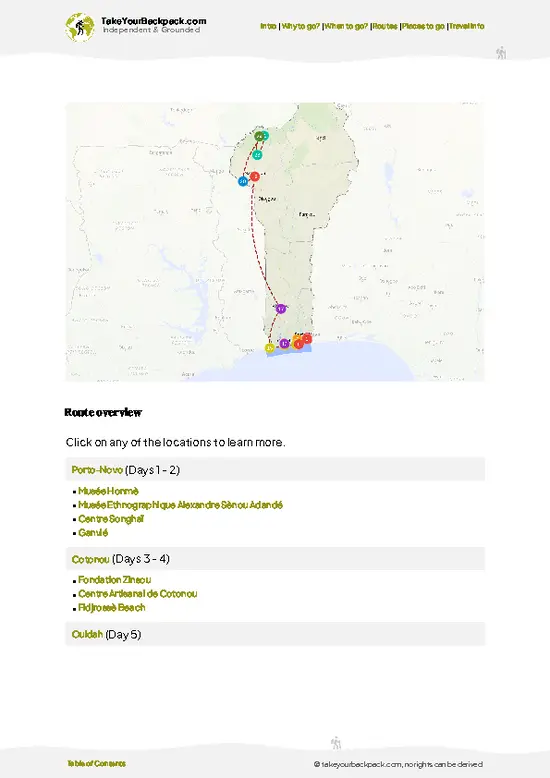
The 5-Day Coast & Voodoo Circuit

The vibe: A compact, low-stress loop for first-timers who want powerful history, voodoo culture, and beach time without long bus rides or constant packing. You’ll stick to the south, using short hops between Cotonou and Ouidah and plenty of time on foot and by boat.
The highlights:
  • Cotonou’s creative and artisanal scene, from galleries to craft centers.
  • A boat journey through the lagoon to Ganvie Stilt Village.
  • Ouidah’s voodoo sites and slave-trade history, including its museum and python temple.
  • Easy-going afternoons on Fidjrosse and Ouidah’s Atlantic beaches.

The 10-Day Kingdoms & Hills Journey

The vibe: A balanced north-south sampler for curious travelers who want more than the coast but still value downtime, mixing royal history, spiritual centers, and a taste of inland landscapes. Expect a steady rhythm of bush-taxi rides, walkable towns, and a couple of deeper cultural days.
The highlights:
  • Cotonou and Porto-Novo as twin urban anchors with art, markets, and
read more 👉

The 5-Day Coast & Voodoo Circuit

The vibe: A compact, low-stress loop for first-timers who want powerful history, voodoo culture, and beach time without long bus rides or constant packing. You’ll stick to the south, using short hops between Cotonou and Ouidah and plenty of time on foot and by boat.
The highlights:
  • Cotonou’s creative and artisanal scene, from galleries to craft centers.
  • A boat journey through the lagoon to Ganvie Stilt Village.
  • Ouidah’s voodoo sites and slave-trade history, including its museum and python temple.
  • Easy-going afternoons on Fidjrosse and Ouidah’s Atlantic beaches.

The 10-Day Kingdoms & Hills Journey

The vibe: A balanced north-south sampler for curious travelers who want more than the coast but still value downtime, mixing royal history, spiritual centers, and a taste of inland landscapes. Expect a steady rhythm of bush-taxi rides, walkable towns, and a couple of deeper cultural days.
The highlights:
  • Cotonou and Porto-Novo as twin urban anchors with art, markets, and museums.
  • Abomey’s royal palaces and historical museum, the core of the old Dahomey kingdom.
  • Central Benin’s hill country around Dassa-Zoumé and Savalou, with shrines and pilgrimage sites.
  • A soft landing back on the coast with beach time near Cotonou.

The 15-Day Coast-to-Savanna Expedition

The vibe: A full-country arc for travelers who want to see Benin in depth, from voodoo shrines and royal courts to waterfalls and big-game safaris, at a deliberate, exploratory pace. You’ll ride the length of the country by road, using local transport and guided vehicles to reach remote northern parks.
The highlights:
  • Cotonou, Ganvie, and Porto-Novo as your cultural and historical launchpad.
  • Ouidah and Grand Popo for voodoo heritage, slave-trade memory, and laid-back Atlantic beaches.
  • Abomey and the central highlands around Dassa-Zoumé and Savalou for royal history and hill-country spirituality.
  • Natitingou, Tanougou, and Pendjari National Park for northern landscapes, waterfalls, and classic West African wildlife.
🌍 Want a ready-to-use travel plan for Benin?
The overview above compares different route options based on your travel time and style. The complete Travel Guide breaks each itinerary down in detail, including maps, stops, highlights, and transport information.

Explore all route details 👉

Get the Travel Guide -

🌤️ When to go?Weather, seasons, and timing

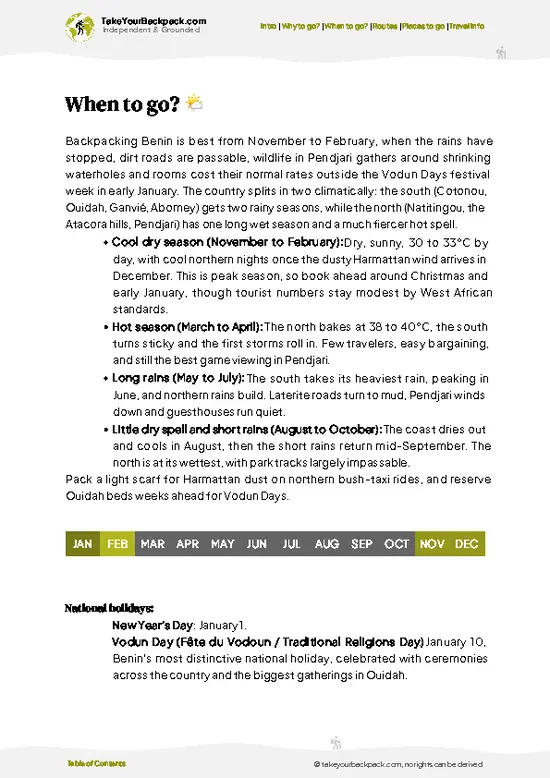
Late November to mid-December, then late January through February is the sweet spot. By November the rains have stepped off, laterite roads firm up, and parks reopen; the harmattan starts to cool nights without smothering visibility yet. Skip New Year and the Vodoun festival spike in early January and you dodge jacked rates from Cotonou to Ouidah. Come late January, the crowds thin, guesthouse owners bargain again, and you still get dry tracks into Atakora and Pendjari without the furnace-blast heat that arrives in March. It smells like dust and grilled fish, buses run on time enough to matter, and that first cold beer actually stays cold.
  • Dry Peak (Dec-early Jan): Prices climb and beds in Ouidah vanish; you queue for zemi rides and elbow through markets. But you earn the high: drums thumping under chalky harmattan skies, masked dancers in the sand, cooler nights, and easy wildlife spotting at dawn when the bush holds still.
  • Shoulder Shift (late Jan-Feb): Crowds drain out. Shop shutters lift earlier, road crews smooth washboards, and guides answer their phones again. You move—north to Natitingou, west to Grand-Popo—on dry, reliable tracks with bargaining power and time to linger where the light gets good.
  • Rains/Off-Peak (Apr-Jul; Sep-Nov south, May-Sep north): Tin roofs drum, the Atakora turns green, and you get long, quiet hours with the land. Mud will swallow shoes and taxis reroute; survival hack: line your pack with a contractor bag and switch to cheap sandals for the slop, boots only on the rock.

Book Ouidah rooms a few weeks ahead if aiming near Jan 10; otherwise, carry a mosquito-proof inner and accept walk-in bargaining.

source: climatestotravel.comJANJanuary: good for travelingFEBFebruary: excellent for travelingMARMarch: fair for travelingAPRApril: fair for travelingMAYMay: fair for travelingJUNJune: fair for travelingJULJuly: fair for travelingAUGAugust: fair for travelingSEPSeptember: fair for travelingOCTOctober: fair for travelingNOVNovember: highly recommended for travelingDECDecember: highly recommended for traveling
📅 Traveling in a specific month?
Get a full month-by-month breakdown of weather, crowds, costs, festivals, and seasonal highlights in the complete travel guide.

Get full details when to go 👉

Get the Travel Guide -
Benin-iStock-518866874

💰 Costs (as of 2025)Typical budget expectations

A tight-but-sane budget in Benin runs 15,000-25,000 XOF per day ($25-40), cheaper upcountry than in Cotonou, and usually a notch lower than Ghana or Senegal, a hair above Togo.
  • dorm accommodation: In Cotonou or Ouidah, expect 5,000-10,000 XOF for a dorm or barebones fan room; inland towns drop to 3,000-6,000 XOF. AC rooms jump fast (add 2,000-5,000 XOF), and power cuts mean you might pay for AC you can’t use. System tip: walk in mid-afternoon, ask specifically for “chambre ventilée,” and negotiate a cash, multi-night rate; you’ll beat online prices and avoid the “foreigner rate.” A photocopy of your passport usually satisfies registration so your actual passport stays with you.
  • meals: Supermarket Survival looks tidy but bleeds cash—imports and cheese are priced like Paris, not Porto-Novo. Street food is the engine: morning beignets or omelets in baguette (200-500 XOF), rice-and-sauce or pâte with fish (400-1,500 XOF), grilled chicken at dusk (2,000-3,500 XOF), fruit stands everywhere. Ask for “bien glacé” and you’ll get a bottle pulled from real ice, not the sun-warmed crate. Compared to Ghana, portions are similar but you’ll save a couple of dollars a day if you lean local; compared
read more 👉
A tight-but-sane budget in Benin runs 15,000-25,000 XOF per day ($25-40), cheaper upcountry than in Cotonou, and usually a notch lower than Ghana or Senegal, a hair above Togo.
  • dorm accommodation: In Cotonou or Ouidah, expect 5,000-10,000 XOF for a dorm or barebones fan room; inland towns drop to 3,000-6,000 XOF. AC rooms jump fast (add 2,000-5,000 XOF), and power cuts mean you might pay for AC you can’t use. System tip: walk in mid-afternoon, ask specifically for “chambre ventilée,” and negotiate a cash, multi-night rate; you’ll beat online prices and avoid the “foreigner rate.” A photocopy of your passport usually satisfies registration so your actual passport stays with you.
  • meals: Supermarket Survival looks tidy but bleeds cash—imports and cheese are priced like Paris, not Porto-Novo. Street food is the engine: morning beignets or omelets in baguette (200-500 XOF), rice-and-sauce or pâte with fish (400-1,500 XOF), grilled chicken at dusk (2,000-3,500 XOF), fruit stands everywhere. Ask for “bien glacé” and you’ll get a bottle pulled from real ice, not the sun-warmed crate. Compared to Ghana, portions are similar but you’ll save a couple of dollars a day if you lean local; compared to Togo, prices are almost identical.
  • local transport: Zémidjan moto-taxis are the key; short hops in cities run 200-500 XOF, longer cross-town rides 700-1,000. Agree the fare before you swing on, and carry small bills. Between towns, shared cars and minibuses are the cheapest unlock—think 1,500-4,000 XOF for typical coastal legs, more heading north. Leave early to avoid sitting in a parked oven while they fill seats. It’s cheaper than Ghana’s intercity coaches and less chaotic than Nigeria’s bush-taxi scrum.
  • activities: The big costs are guided or motorized: Pendjari/W safaris require a 4x4 and a guide—count on “not budget” territory unless you split a vehicle. Ganvié pirogue rides spike if you accept the first quote; ask for the collective boat from the canal rather than the “private tour.” Museum and palace entries (Abomey, Porto-Novo) run small change with mandatory guide fees, manageable if you join others. Voodoo ceremonies are donation-based; ask quietly what’s respectful to give.
  • miscellaneous: Budget leaks: ATMs clip 2,000-5,000 XOF per withdrawal, so pull larger, hide it deep. Bottled water adds up—buy 5L jugs (cheap), decant daily. Laundry by hand saves you 2,000-3,000 XOF a bag. SIM + data is good value (MTN/Moov promos beat café Wi-Fi); top up in kiosks, not hotels. Western cafés drain you faster than the harmattan—one latte equals three street meals. Cotonou beach chairs have “mattress” fees; the sand is free two meters away.
⚠️ Prices can change and everyone travels differently, so take this as a rough guide. Hope it helps you plan your adventure!

✈️ The backpacker research shortcutBenin Travel Guide

An offline-friendly backpacking guide with optimized travel routes, ranked highlights, transport advice, and the best areas to stay.
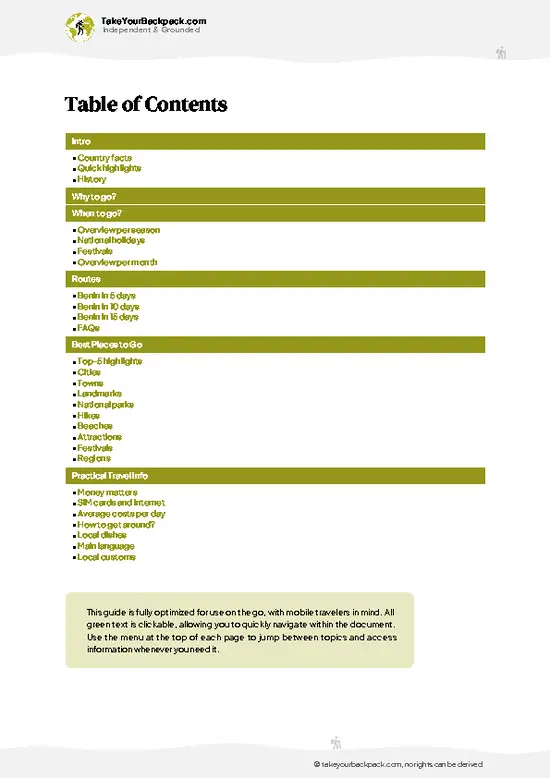
example page 0 from our offline Travel Guide for Beninexample page 1 from our offline Travel Guide for Beninexample page 2 from our offline Travel Guide for Beninexample page 3 from our offline Travel Guide for Beninexample page 4 from our offline Travel Guide for Beninexample page 5 from our offline Travel Guide for Beninexample page 6 from our offline Travel Guide for Beninexample page 7 from our offline Travel Guide for Benin
The digital guide (269 pages) contains:
64 highlights, ranked by travel appeal
Optimized 5, 10 & 15-day travel routes
Cities, national parks, beaches, historical sites, ...
How to get around
Offline-friendly for travel without Wi-Fi
👉 Click to see all 30+ guide features

📅 Plan smarter in minutes, not weeks
Month by month travel advice
Festivals & national holidays
Budget expectations

🗺️ Go to the right places, skip the overrated ones
Honest pros & cons of destinations
Top hikes, parks & viewpoints
Lesser-known places most travelers miss
Clear “worth it vs skip it” guidance

🛏️ Travel smoothly without rookie mistakes
Best areas to stay
Transport systems explained simply
Common scams & safety advice
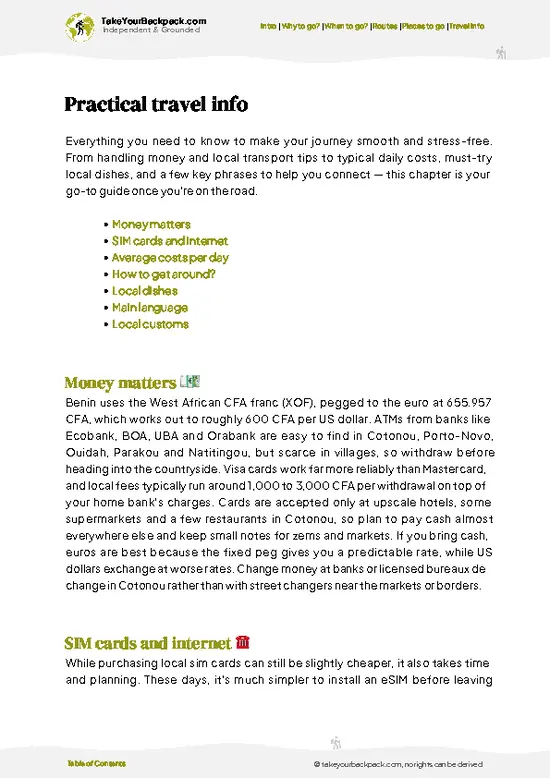
SIM cards, money & practical tips

🌍 Understand the country, not just visit it
Culture & traditions
52 Essential phrases & customs
Festivals worth planning around
Traveler-friendly historical context
Insights that make places more meaningful

📱 Built for real travel conditions
Fully downloadable PDF
Works completely offline
Optimized for phone use
Useful in remote areas & buses
Everything in one place
Save weeks of stressful planning
Get instant access to the full guide directly. 30-day money-back guarantee.


Sent to your inbox immediately after payment • 100% Secure Checkout
Best Backpacking Travel Advisor 2025 tourism awardBest Backpacking
Travel Advisor
2025
What others say about Take Your Backpack Guides:
⭐⭐⭐⭐⭐
Fantastic, amazing amount of information!
⭐⭐⭐⭐⭐
My goodness this is amazing, it's what I've been looking for hats off too you!
⭐⭐⭐⭐⭐
I think this is absolutely BRILLIANT
⭐⭐⭐⭐
Very complete and informative. It's still missing places, but I gotta to commend you
⭐⭐⭐⭐⭐
This is truly amazing, thank you, can't wait to explore it with my kids!
⭐⭐⭐⭐⭐
Awesome resource, thank you!
⭐⭐⭐⭐⭐
This is amazing! Can't wait to explore the ones I haven't seen
⭐⭐⭐⭐
I love this! Well done, great idea.
⭐⭐⭐⭐⭐
Thanks for taking the time to make this gem!
⭐⭐⭐⭐⭐
This might be the best website I've ever seen.
⭐⭐⭐⭐⭐
Congratulations, and thank you so much for your work; it's incredibly valuable.
⭐⭐⭐⭐
In all seriousness I think you did a great job pointing out the important spots
⭐⭐⭐⭐⭐
10/10 very good
⭐⭐⭐⭐⭐
As someone who's only just starting to visit regularly this is awesome, thank you.
⭐⭐⭐⭐
Thank you very much! I'm going to visit my dad, it's going to be very useful!
⭐⭐⭐⭐⭐
This is really cool! We'll be travelling for the first time and this definitely come in handy.
⭐⭐⭐⭐⭐
You are now our minister of culture, congratulations 👨‍💼
⭐⭐⭐⭐⭐
Just wanted to tell you that this is a pearl! Going to follow your recommendations.
⭐⭐⭐⭐⭐
This is so cool. I'll definitely be using the resource for my travels soon.
⭐⭐⭐⭐⭐
This is very impressive! Good work.
⭐⭐⭐⭐⭐
This is an amazing and informative site. Very well done!

🛏️ Where to stay?Areas travelers tend to prefer

Yes, hostels and budget accommodation are available in Benin, concentrated in Cotonou with smaller choices in Porto-Novo and Ouidah, offering dorms, basic private rooms and low-cost guesthouses.
Cotonou (Centre-ville, Haie Vive/Akpakpa) is the best bet for the widest range, cheap transport links, markets and nightlife but it’s noisy and has mixed safety—use secure locks, stick to main roads and expect basic facilities.
Porto-Novo (old town/centre) is quieter and closer to museums with fewer budget beds and limited nightlife, while Ouidah (beach/historic centre) suits heritage or beach stays … read more 👉
Yes, hostels and budget accommodation are available in Benin, concentrated in Cotonou with smaller choices in Porto-Novo and Ouidah, offering dorms, basic private rooms and low-cost guesthouses.
Cotonou (Centre-ville, Haie Vive/Akpakpa) is the best bet for the widest range, cheap transport links, markets and nightlife but it’s noisy and has mixed safety—use secure locks, stick to main roads and expect basic facilities.
Porto-Novo (old town/centre) is quieter and closer to museums with fewer budget beds and limited nightlife, while Ouidah (beach/historic centre) suits heritage or beach stays but has sparse amenities after dark so stock up on essentials.

If you enjoy meeting fellow travelers, consider choosing hostels with high ratings for atmosphere. On the other hand, if you prefer having your own space, a hotel might be a better option.

🚌 Getting aroundHow to travel within the country

Benin moves by consensus. Drivers read the day like fishermen read the tide. The bus timetable is chalk, not stone; vehicles leave when the seats are warm and the roof is tied, not when the clock says so. Morning air smells of petrol, fried dough, and damp red earth. Horns negotiate space under jacaranda shade, police checkpoints and speed bumps set the rhythm. The harmattan powders your gear; the coast sweats salt. You earn your distance here—waiting, bargaining, squeezing—then the reward: the … read more 👉
Benin moves by consensus. Drivers read the day like fishermen read the tide. The bus timetable is chalk, not stone; vehicles leave when the seats are warm and the roof is tied, not when the clock says so. Morning air smells of petrol, fried dough, and damp red earth. Horns negotiate space under jacaranda shade, police checkpoints and speed bumps set the rhythm. The harmattan powders your gear; the coast sweats salt. You earn your distance here—waiting, bargaining, squeezing—then the reward: the first bottle of La Béninoise from a roadside kiosk, beads of cold on your palm, and a long exhale while the sun slides off the teak trees.
  • Intercity buses Ticketed seats and depots feel orderly, and the ride is smoother than a stuffed Peugeot, but speed bleeds away with boarding drills, cargo weigh-ins, and every checkpoint. It’s cheaper per kilometer than private cars and safer in the rain. Expect 6-12 hours north-south, no onboard toilet, a lunch stop, and a small fee for big packs. Grab row two; the back whips over speed bumps.
  • Zemidjan (motorbike taxi) In Cotonou the drivers wear yellow with numbers. You greet, state your junction, agree the price before your leg swings over. Short hops run about 300-600 CFA; longer cross-town runs 700-1,500. Pay with your right hand. Keep your knees in, backpack on the front, and say “doucement” if the throttle gets brave. Helmets are rare; bring your own and you’ll be respected.
  • Pirogue on Lake Nokoué and the Ouémé Wooden boats stitch together stilt villages, mangroves, and markets that roads miss. Dawn is glassy water and egrets; by noon the glare bites. From Abomey-Calavi you reach Ganvié without touching asphalt, or slip canals toward Porto-Novo. Shared boats are cheapest, charters get you to far creeks. Bring a dry bag; life jackets are scarce unless you supply them.
  • Shared taxis and minibuses (taxi-brousse) This is the hack for distance on a backpacker’s budget. Go at first light to motor parks near Dantokpa, Etoile Rouge, or Bohicon. Pay for the front seat if you can, or buy the last empty seat to trigger departure. Break long hauls into hops—Cotonou-Bohicon-Dassa-Parakou—so you ride what’s leaving now, not what’s promised. Tie your bag yourself; tip the loader to keep it inside.

Master tactic: move at dawn along the RNIE 2 spine, chaining short shared-taxi hops through Bohicon and Dassa with small bills ready and your bag on your lap—you’ll beat the “direct” buses by hours.
Short version: Porto-Novo doesn’t have a commercial airport. Most travelers land at Cotonou Cadjehoun International Airport (COO) and continue by road to Porto-Novo’s center.

Distance: about 40 km (25 miles) from Cotonou Airport to central Porto-Novo via RNIE1.

Main public transport options:
  • Official airport taxi or pre-booked car (direct): 60-90 minutes depending on traffic. Typical fare 15,000-25,000 XOF (about US$25-$40). Agree the price before you go; payment is usually cash.
  • Shared taxi/minibus (“bush taxi”) via a Cotonou taxi park: From the airport, take a short ride to a taxi park near Dantokpa/Akpakpa (15-30 minutes). Then a shared car or minibus to Porto-Novo (60-90 minutes) and a short local ride to your final stop.

    • Airport → taxi park: 1,000-3,000 XOF by city taxi or 500-1,500 XOF by motorcycle taxi (“zem”).

    • Taxi park → Porto-Novo: 1,000-2,500 XOF per seat.

    Total time: 1.5-2.5 hours including waiting; total cost typically 1,500-4,500 XOF (about US$2.50-$7.50).
  • Motorcycle taxi the whole way: Possible but not ideal with luggage or in bad weather. 60-90 minutes. Roughly 4,000-7,000 XOF (about US$6.50-$12). Negotiate and wear a helmet.

Taxis, in short: You’ll find official airport taxis at Cotonou Airport; expect 15,000-25,000 XOF to Porto-Novo by day, a bit more late at night or in heavy traffic. Always confirm the fare upfront; most drivers take cash only.

Note: If you’re arriving by private/charter flight to the small Porto-Novo airstrip (no scheduled service as of 2025), it’s a quick local taxi or zem into town and costs are low (usually well under 2,000 XOF within the city).
⚠️ Prices and routes can change, so take this as a rough guide and ask for local advice when you arrive.

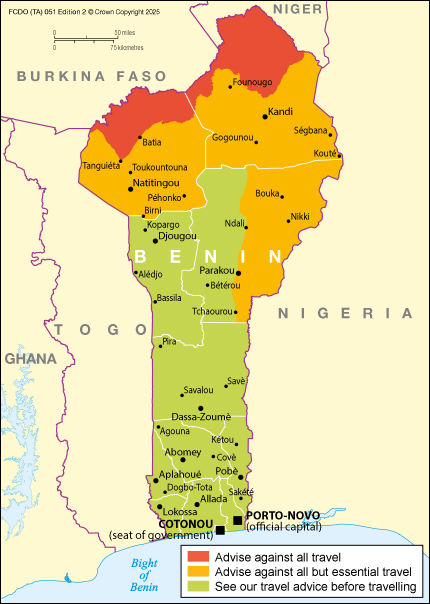
🔒 Safety (risk Level: medium)Safety considerations for travelers

Safety for solo travelers, including women and LGBTQ+ individuals
Benin is generally safe for solo travelers, including women and LGBTQ+ individuals, but exercise common travel caution. Petty crime, like pickpocketing, can occur, especially in crowded markets or public transport. Women might face occasional harassment, so dressing modestly and being aware of your surroundings is wise. LGBTQ+ travelers should be cautious, as public displays of affection may attract unwanted attention due to conservative attitudes.


Full official government travel advisory (live updates)
View details 👉
safety image

source: www.gov.uk

✈️ VisaVisa requirements for Benin

Most travelers need a visa to visit Benin. You can apply for an eVisa online through the official Benin eVisa website, which is straightforward and typically processed within a few days. Always check the latest requirements before you travel, as policies can change.

source: beninembassy.us
⚠️ Visa requirements can change over time, so always check the latest visa requirements with the official embassy or government website before you travel.

🎒 What to pack?What you'll need while traveling

Benin’s climate is a mix of tropical and humid, so pack lightweight clothes to battle the heat, but don’t forget a rain jacket for those surprise downpours during the rainy season. The terrain can vary from coastal beaches to savannas and even some hilly areas, so sturdy footwear will be your best friend. When it comes to cultural norms, dressing modestly is key, especially in rural areas or if you’re visiting any voodoo sites or temples. Women might want to opt for longer skirts or dresses to fit in more comfortably. A hat and some sunscreen will go a long way in keeping you cool and sunburn-free.

Apart from this country specific advice, I have also crafted a general packing list that should help on any trip. authorOver the years, I've learned the importance of packing minimally. It's so much easier to jump on the back of a truck or squeeze yourself into the last spot of a minibus without that supersized backpack. If you're headed to a warm destination, leave your winter jacket at home; for colder regions, opt for thin thermal underlayers. Instead of packing your entire wardrobe, bring just three sets of clothes, as laundry facilities are available everywhere.

View the full list 👉
🎒 Planning the practical side of your trip?
Get detailed information on transport, daily budgets, internet access, local customs, food, language, and other essentials in the complete Travel Guide.

Get detailed practical information 👉

Get the Travel Guide -

🙋 FAQCommon questions before visiting

Trip Planning


Personal tip: I normally search on good rating for atmosphere (for meeting people) and location (for easy exploring). Cleanliness as a bonus.


Travel Essentials

Yellow fever vaccination is mandatory for entry into Benin. Hepatitis A and B, typhoid, and cholera vaccines are recommended. Consider rabies and meningococcal meningitis vaccines, especially if traveling to rural areas or during the dry season. Ensure routine vaccines (MMR, DPT, polio, flu) are up-to-date. Always check current health advisories.


vaccination requirements
When I first started traveling, I often spent part of my first day in a new country hunting for a local SIM card. While this can still be slightly cheaper, it also takes time and planning.

These days, it's much simpler to install an eSIM before leaving home. Once you arrive in Benin, you can activate it immediately and have mobile data from the moment you land — which is especially useful for ordering transport or navigating away from busy airports.

There are many providers nowadays, and price differences are usually small. I personally go with Airalo, as it offers excellent network coverage throughout the country and strong global coverage, so you can manage multiple countries from a single app.


Get your e-sim for Benin

Culture & Customs

Respect elders by greeting them first with a handshake. Use your right hand for giving or receiving items. Dress modestly, especially in rural areas; women should avoid short skirts and revealing tops. Photography in villages requires permission; some places consider it disrespectful. Public displays of affection are frowned upon, and for LGBTQ+ travelers, discretion is advised as same-sex relationships are taboo. Avoid discussing politics or criticizing local customs.
Trying traditional food is always a great way to experience the culture. Here are some must-try dishes for Benin.
  • Pâte: This is a staple in Benin, made from corn or manioc flour. It’s essentially a dense dough that accompanies many meals and is a key part of the local diet due to its versatility and ability to fill you up.
  • Amiwo: A tasty corn-based dish, amiwo is often spiced with tomato and other flavors. It’s often served with chicken or fish and is a favorite for its rich taste and satisfying texture.
  • Akassa: Similar to pâte but slightly fermented, akassa is another corn-based dish. It’s a must-try for experiencing the slightly sour twist that fermentation brings, often paired with a spicy sauce or stew.
  • Aklui: These are small, fried bean cakes made from black-eyed peas. They’re a popular street food, loved for their crunchy exterior and soft, flavorful inside.
  • Yovo Doko: These are Beninese donuts, slightly sweet and often enjoyed as a snack. They offer a delightful taste of local street food culture and are perfect for a quick bite.
Locals in Benin often drink tap water, but it’s not recommended for tourists due to potential contamination. Stick to bottled or filtered water to stay on the safe side. Make sure the bottle seals are intact when buying bottled water.
The main language in Benin is Fon. Backpacking is way more rewarding if you know a bit of the local language, so I'd suggest brushing up on the basics just in case your Fon skills have become a bit rusty.

Want to understand locals better?
The complete Travel Guide for Benin includes 52 essential words and phrases — greetings, thank-yous, ordering food, transport, numbers, and common local expressions you'll actually hear.

Get your local basic phrases 👉

Get the Travel Guide -


In Benin, English is not widely spoken, as the official language is French. The country has a rich linguistic diversity, with numerous local languages such as Fon and Yoruba being commonly used. In urban areas and among younger generations, especially in tourist centers like Cotonou and Porto-Novo, you may find some people who speak English, particularly in hotels, restaurants, and shops catering to tourists. However, outside these areas, English proficiency diminishes significantly.

Travelers should not rely solely on English for communication. Learning a few basic phrases in French or local languages can enhance interactions and experiences. While some professionals, such as those in the tourism industry, may have a good command of English, it’s advisable to have a translation app or phrasebook handy. Overall, while you can find English speakers in Benin, especially in tourist areas, being prepared to communicate in French will greatly facilitate your travels.

Money & Payments

The local currency of Benin is XOF (CFA).

ATMs are relatively accessible in the larger cities like Cotonou and Porto-Novo, but don’t count on them in smaller towns or rural areas. Make sure your card is compatible with international ATMs and check for transaction fees beforehand. It’s wise to carry some cash, especially in CFA francs, as many places won’t accept cards. Euros and dollars are also handy to have for exchanges, but you’ll usually get a better rate swapping euros.

Card acceptance is pretty limited outside major hotels and restaurants in bigger cities, so don’t rely solely on plastic. For exchanging money, your best bet is to use banks or official exchange offices. Avoid street exchangers unless you’re really in a pinch, as rates can be unpredictable and you might risk getting scammed. Always count your cash on the spot to avoid any surprises later.

In Benin, tipping isn’t obligatory but is appreciated for good service. In restaurants, leaving a tip of around 5-10% is common, but always check if a service charge is included. For taxis, rounding up the fare or adding a small amount is a friendly gesture.

🧩 Nearby countriesOther countries to combine with Benin

We 💚 feedbackFinal notes for travelers

Benin makes you earn your days: hot tarmac, red dust in your teeth, zémidjans buzzing your knees, and the smell of diesel braided with grilling poulet bicyclette. Stick it out and you get dusk at Ouidah, palms hissing, surf in your ears, a cold Béninoise sweating in your fist. Small downside: power flickers and helmets are scarce; bring your own if you ride. Strategic tip: learn polite, basic French and use it constantly—bonjour, s’il vous plaît, prix combien—and watch doors, prices, and smiles open.

✍️ Help improve this page!
The information on this page is based on in-depth research, insights shared by experienced travelers, and feedback from the local travel community in Benin. While every effort is made to keep the information accurate and current, conditions can change — so if you spot anything incorrect or outdated, please get in touch.


🙋‍♂️ Give feedback

👋 Meet the founderWho’s Behind Take Your Backpack?

Johan, backpacker and founder of TakeYourBackpackHi, I’m Johan (Netherlands 🇳🇱), the creator of TakeYourBackpack. Over the past decade, I’ve backpacked through 80+ countries across six continents, gaining extensive experience with independent travel, long-term trips, and overland routes.

This site is built on a combination of firsthand travel experience and carefully curated insights from other backpackers. Many guides are based on places I’ve personally visited, while others bring together tips, observations, and practical advice shared by trusted travelers I’ve met along the way.

The goal is to provide realistic, experience-driven guidance — not generic itineraries — so you can explore destinations with better context, clearer expectations, and more confidence.

Get full Benin guide •
Instant download • 64 highlights • Full Offline guide