×
Romania 🇷🇴

backpacking Europe Romania 🇷🇴
Wind through villages beneath forested mountain castles.

Explore PortugalExplore Russia

Backpacking Romania in 2026

A complete guide including when and where to go, costs, transport, itineraries, and practical travel advice.
The big picture before you go

Backpacking Romania
By Johan Kruseman 🇳🇱 | Updated June 5, 2026

Pick two regions and give them days; Romania pays you back for going slow. Distances look short on a map, but trains linger and mountain roads coil. That tempo matches the place: hayfields drying in the sun, church bells, long tables and longer toasts.

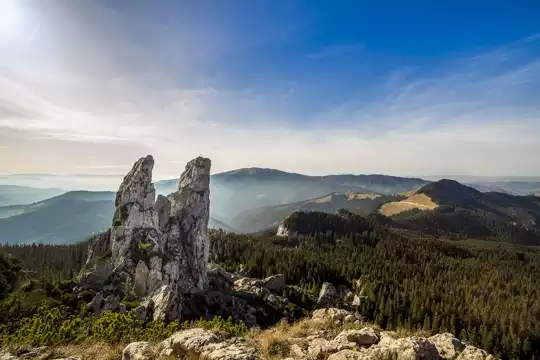
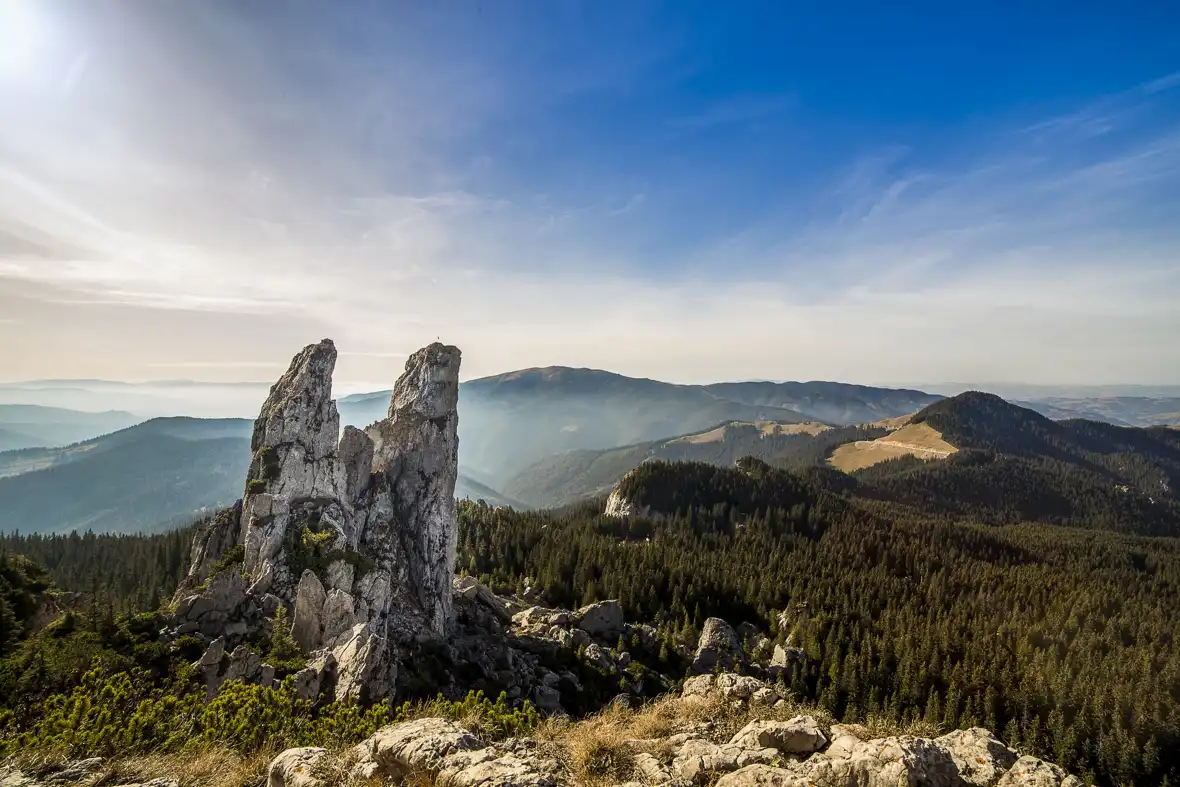
In the Carpathians, a dawn climb onto the knife-edge of Piatra Craiului or the wind-scoured Bucegi plateau smells of pine and wet stone, with shepherd dogs trotting the ridgelines and cauldrons of polenta and sheep’s cheese waiting below. Down in Saxon towns, Sibiu’s honey-colored facades, Brașov’s mountain backdrop, and Sighișoara’s cobbled citadel feel lived-in rather than staged. Far north, Bucovina’s painted monasteries glow with blues that seem mixed from sky; in Maramureș, wooden churches creak, gates wear spirals, and hayracks stitch the hills. Follow the Danube into its delta and you hear wings before you see them—pelicans lifting off reed beds, the air grassy-brackish and warm with fish stew; swing east for a Black Sea dawn at Vama Veche, or trace the Transfăgărășan as it snakes through rock and cloud. Yes, timetables are thin, trail marks vanish in fog, cash rules in villages, and bear signs show up at the forest edge, but that friction strips away hurry and makes the first cold Timișoreana in a Brașov square, the sour steam of ciorbă, and the hush of a frescoed nave feel earned.

Compared with Hungary’s polish and straight-shot rails, Romania is scruffier and wilder; against Bulgaria’s breezy coast run, its mountains and folkways cut deeper. If you like trails more than turnstiles, bird calls over crowds, and the kind of value found in home kitchens and guesthouse courtyards, this is your country.

👉 Get the 📖 Travel Guide of Romania

Bucharest

Big-city Romania with cracked sidewalks, trolley wires humming, and grill smoke curling from market stalls. It’s the transport hub: trains and buses radiate everywhere, and the metro is cheap by European-capital standards. Days are concrete and museums; nights are courtyards and cheap draft beer. It rewards street-level curiosity—ride trams, eat mici at Obor, and let the noise teach the rhythm before you head out.

Transylvanian Rail Spine: Brașov – Sighișoara – Sibiu

One easy line, three different moods. Trains link these Saxon towns in manageable hops, so you can carry a small bag and keep moving. Brașov is your mountain gate, with quick hits like Tâmpa’s stair-climb before a plaza beer. Sighișoara’s hilltop citadel rewards pre-dawn climbs when the streets are yours. Sibiu’s squares handle slow afternoons and late trains. Low stress, high density of walkable history.

Southern Carpathians: Făgăraș & Piatra Craiului

This is leg-burn country. The Făgăraș Ridge means long, exposed days, snow patches into June, and scarce water; start early, carry a filter, and respect storms. Piatra Craiului is sharper—a limestone backbone that demands hands and confidence. Access is straightforward via Brașov and Zărnești. Cabane serve hot soup and polenta, cash only. The payoff is ridge wind, sheep bells far below, and the first beer at Bâlea Lake when the legs stop shaking.

Maramureș

North-country patience. You move by slow trains via Cluj or Baia Mare, then minibuses that keep their own time. Villages smell of hay and wood smoke; church spires are shingled, not gilded. Walk lanes, not trails. Eat heavy, drink horincă carefully, and smile at horse carts. Reward: dawn mist in meadows and the steam whistle of the Mocănița echoing off forested slopes.

Danube Delta

Roads end at Tulcea; from there it’s boats, reeds, and big sky. Scheduled ferries crawl; fast launches cost more but save daylight. Cash matters, mosquitoes own dusk, and mornings belong to pelicans and mirror-flat channels. Sleep in a simple guesthouse, eat fish soup with vinegar, and book a sunrise run—quiet water, bird calls, and a pace that forces you to breathe.
Geography and where places are located
Loading the map 🌍
CLICK TO FILTER
city
town
village
unique site
national park
hike
beach
attraction
festival
SHOW COUNTRY’S BESTSHOW ALL
film
0
0
0a
Peleș Castle
film
1
1
1a
Sighișoara Citadel
film
2
2
2a
ASTRA National Museum Complex
film
3
3
3a
Brukenthal National Museum
film
4
4
4a
National Museum of Art of Romania
film
5
5
5a
Mamaia
Mihai B
film
6
6
6a
Vama Veche
Trecător România
film
7
7
7a
Navodari
film
8
8
8a
Costinesti
Lucian Gheorghiu
film
9
9
9a
Eforie Nord
Szasz Julia
film
10
10
10a
Sibiu
film
11
11
11a
Cluj-Napoca
Jonathan Taviv
film
12
12
12a
Bucharest
Top Boy
film
13
13
13a
Oradea
film
14
14
14a
Iași
film
15
15
15a
Fagaras Mountains
G.a.b. Relu B.
film
16
16
16a
Piatra Craiului Ridge
film
17
17
17a
Bucegi Mountains
film
18
18
18a
Retezat Mountains
film
19
19
19a
Rodnei Mountains
film
20
20
20a
Apuseni Mountains
Gabi B
film
21
21
21a
Ceahlau Massif
film
22
22
22a
Ciucas Mountains
film
23
23
23a
Buila-Vanturarita Mountains
film
24
24
24a
Calimani Mountains
film
25
25
25a
Retezat
Parcul Național Retezat
film
26
26
26a
Piatra Craiului
Josejilian Quirosmartorll
film
27
27
27a
Apuseni
film
28
28
28a
Rodnei Mountains
film
29
29
29a
Cheile Nerei-Beușnița
Memete Florin
film
30
30
30a
Domogled - Valea Cernei
Bogdan Doandeș
film
31
31
31a
Maramureș Mountains Natural Park
film
32
32
32a
Cozia
Gabriel Dumitrescu
film
33
33
33a
Călimani
film
34
34
34a
Defileul Jiului
film
35
35
35a
Sighişoara
film
36
36
36a
Alba Iulia
film
37
37
37a
Curtea de Argeș
film
38
38
38a
Sâncraiu
film
39
39
39a
Deva
film
40
40
40a
Sighetu Marmației
film
41
41
41a
Transfăgărășan Highway
film
42
42
42a
Painted Monasteries of Bucovina
film
43
43
43a
Corvin Castle
Lavinia Tettamanzi
film
44
44
44a
Salina Turda
film
45
45
45a
Cascada Bigăr
film
46
46
46a
Lacul Roșu
film
47
47
47a
Muzeul Astra
film
48
48
48a
Viscri
film
49
49
49a
Biertan
Ion Taranu
film
50
50
50a
Sibiel
film
51
51
51a
Măgura

Why go?What draws travelers here

Backpackers

Romania rewards the ones who carry their life on their back. Night trains clank through sunflower plains; … read more 👉
Romania rewards the ones who carry their life on their back. Night trains clank through sunflower plains; slow, cheap, and full of stories. Dorm beds don’t gut your budget, and a seat on a mountain bus (microbuz) costs less than a beer in Berlin. Trails in the Carpathians are painted stripes on bark, steep with blueberry-stained hands and cowbells in the fog; the ridge wind tastes like pine. You come down to ciorbă sour and hot, bread still warm, and a cold Ursus. That’s the bargain here: effort in, soul out.

Architecture

Romania rewards you if you show up with stiff soles and patience. I’ve watched dawn in Sibiu’s Piața … read more 👉
Romania rewards you if you show up with stiff soles and patience. I’ve watched dawn in Sibiu’s Piața Mare wash pastel facades clean, and the cobbles bite your feet until the first coffee hits. By noon you’re climbing Corvin Castle’s iron-cold stairs, smelling damp stone and old timber. Later, Bucharest throws Belle Époque balconies against blunt communist blocks and sharp interwar modernism; it shouldn’t work, but it does. Push farther: blue-painted monasteries in Bucovina, wooden spires in Maramureș, Dacian ruins in the beech woods. End with a cold beer in Brașov’s square as the towers glow.

Low cost

Romania is kind to the broke but restless. Second-class trains trundle between medieval squares and … read more 👉
Romania is kind to the broke but restless. Second-class trains trundle between medieval squares and bleak concrete suburbs for pocket change, and the conductor still punches paper. Street covrigi and hot ciorbă fill you for the long uphill in Piatra Craiului; a dorm bed in a creaky cabană keeps the weather off without bruising the budget. I spend around $35–45 a day without trying, and that includes a cold half-liter after the ridge burns your legs. Museums, buses, and hearty plates of sarmale all sit a bracket cheaper than Central Europe. Your wallet exhales; your feet still earn it.

Mountains

Romania rewards hikers who like their views earned. The Carpathians rise in grassy spines and sawtoothed … read more 👉
Romania rewards hikers who like their views earned. The Carpathians rise in grassy spines and sawtoothed limestone, marked by red-and-white blazes that vanish, then reappear like a dare. I’ve watched fog swallow a ridge and had to trust the paint. Mornings smell of resin and sheep; your calves sting on Bucegi steps, your palms brush Piatra Craiului’s chains. Afternoons bring pop-up storms; evenings settle into wood-smoke at a cabană, boots drying near a radiator. Then the payoffs: Făgăraș unrolling, marmots in Retezat, a cold Ciuc and hot ciorbă that taste earned.

Wildlife

Romania pays off if you like animals the way they actually live. The Carpathians are deep and damp; … read more 👉
Romania pays off if you like animals the way they actually live. The Carpathians are deep and damp; pine and beech, bear scat on the track, claw marks on beech, hoof prints of red deer in clay. Trails climb forever, switchbacks loose with shale; you earn the ridge where a wolf prints the snow and ravens ride the wind. In the Danube Delta, mosquitoes test your patience, but then a sheet of pelicans lifts off a reed bed. Muddy boots, cold beer in a village bar, and the knowledge you were in their house.

Uniqueness

Romania rewards stubborn travelers. Trains wheeze through sunflower flats, timetables bend, and village … read more 👉
Romania rewards stubborn travelers. Trains wheeze through sunflower flats, timetables bend, and village roads still echo with hooves and old Dacias. Carpathian paths claw your shins with nettles; sheepdogs size you up; bear scat keeps you honest. Then it breaks open: dawn on the Făgăraș ridge, firs breathing cold resin, a blue haze flattening the valleys. Brașov’s steep lanes smell of coffee and damp stone; Maramureș wooden churches creak in the wind. Someone presses țuică into your palm, smoke from mici catches your jacket, and a cold Ursus seals the day you earned.
Want the complete picture of Romania?
The offline Travel Guide brings everything together — routes, highlights & planning.

See what's included in the guide 👉

Get the Travel Guide -

⭐ HighlightsHighlights of Romania

  • Transfăgărășan & Bâlea Lake: You earn each hairpin here—the asphalt scabbed by winters, tunnels beading cold water, brake pads hot enough to smell. Fully open only in summer; the rest of the year snow wins and barriers drop. Above treeline the wind slaps your jacket and sheep crowd the verge like spectators. Step out at Bâlea: cheeks sting, pine in the air, kurtos smoke from a shack. The payoff is raw—the lake steel-blue under shattered ridges, a can of Ursus sweating in your hand.
  • Piatra Craiului Ridge, from Zărnești: The gorge starts cool and damp, all echo and fern, then the trail rears up and the limestone takes skin—palms dusted white, calves humming. On the crest the world falls away to Bucegi and Făgăraș, clouds snagging like fleece. Back at Cabana Curmătura the bean soup is hot and salty, the Ciuc bottle beads cold, and you finally stop sweating.
  • Danube Delta, Sfântu Gheorghe: The boat rattles through reed corridors, herons lifting slow, diesel on the breeze. By noon the sun is a
read more 👉
  • Transfăgărășan & Bâlea Lake: You earn each hairpin here—the asphalt scabbed by winters, tunnels beading cold water, brake pads hot enough to smell. Fully open only in summer; the rest of the year snow wins and barriers drop. Above treeline the wind slaps your jacket and sheep crowd the verge like spectators. Step out at Bâlea: cheeks sting, pine in the air, kurtos smoke from a shack. The payoff is raw—the lake steel-blue under shattered ridges, a can of Ursus sweating in your hand.
  • Piatra Craiului Ridge, from Zărnești: The gorge starts cool and damp, all echo and fern, then the trail rears up and the limestone takes skin—palms dusted white, calves humming. On the crest the world falls away to Bucegi and Făgăraș, clouds snagging like fleece. Back at Cabana Curmătura the bean soup is hot and salty, the Ciuc bottle beads cold, and you finally stop sweating.
  • Danube Delta, Sfântu Gheorghe: The boat rattles through reed corridors, herons lifting slow, diesel on the breeze. By noon the sun is a hammer; by dusk the mosquitoes announce themselves in a cloud—long sleeves are not optional. Then the river meets the Black Sea and the beach goes on forever. Fish soup comes smoky and sour, garlic sauce stings your lips, and the night hums.
  • Maramureș Wooden Churches: Morning smells like hay and woodsmoke in Ieud and Bârsana, and wheels still creak on horse carts. The churches rise in weathered spires, cedar sweet in the air, icons dull from centuries of palms. A neighbor presses horincă into your hand—plum fire in the throat—and a heel of bread with salty brânză brings you back down.
  • Sighișoara Citadel: Cobbles snag your soles and the Clock Tower’s stairs complain, each landing smelling faintly of wax and dust. Late light puts a warm edge on the facades, and swallows scissor the sky over tiled roofs. You lean on a bastion with a cold draft beer and the town exhales. For detours: Letea Forest’s wind-bent oaks in the Delta, Retezat’s Bucura glacial bowl, and Apuseni’s Cetățile Ponorului repay the grind.
Spotted a mistake or missing a highlight? Contact us.

But Romania offers more...

Discover and compare all of its highlights per category

🧭 RoutesHow to structure a trip

The 5-Day Transylvania Taster

The Vibe: A compact, castle-and-cobbles escape focused on Brasov, Sibiu, and the Saxon heartland, with just enough mountain air to feel like an adventure without needing hardcore hiking legs. Expect relaxed travel days, atmospheric evenings, and zero time wasted on long cross-country transfers.
The Highlights:
  • Medieval streets and viewpoints in Brasov and Sibiu
  • Story-rich fortifications at Sighișoara Citadel and Râșnov
  • Iconic Bran Castle and the surrounding Carpathian foothills
  • UNESCO-listed Saxon village life in Viscri

The 10-Day Castles & Carpathians Circuit

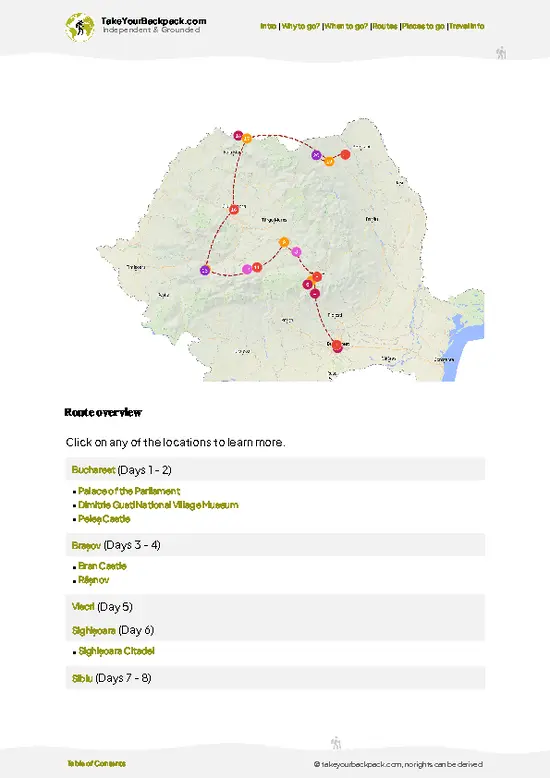
The Vibe: A balanced loop that links Bucharest’s big-city energy with Transylvania’s citadels and serious but accessible mountain time. You’ll move often enough to feel the variety, but with multi-night stays that keep the pace comfortable.
The Highlights:
  • Capital-city contrasts around the Palace of the Parliament and Romanian Athenaeum
  • Royal splendor at Peleș Castle and high trails in the Bucegi Mountains
  • Old-town
read more 👉

The 5-Day Transylvania Taster

The Vibe: A compact, castle-and-cobbles escape focused on Brasov, Sibiu, and the Saxon heartland, with just enough mountain air to feel like an adventure without needing hardcore hiking legs. Expect relaxed travel days, atmospheric evenings, and zero time wasted on long cross-country transfers.
The Highlights:
  • Medieval streets and viewpoints in Brasov and Sibiu
  • Story-rich fortifications at Sighișoara Citadel and Râșnov
  • Iconic Bran Castle and the surrounding Carpathian foothills
  • UNESCO-listed Saxon village life in Viscri

The 10-Day Castles & Carpathians Circuit

The Vibe: A balanced loop that links Bucharest’s big-city energy with Transylvania’s citadels and serious but accessible mountain time. You’ll move often enough to feel the variety, but with multi-night stays that keep the pace comfortable.
The Highlights:
  • Capital-city contrasts around the Palace of the Parliament and Romanian Athenaeum
  • Royal splendor at Peleș Castle and high trails in the Bucegi Mountains
  • Old-town charm in Brasov and Sibiu with easy side trips to Bran and Piatra Craiului
  • Open-air deep dives into folk culture at Dimitrie Gusti Village Museum and ASTRA

The 15-Day Grand Romania Journey

The Vibe: A slow-burn, cross-country adventure that stitches together Bucharest, Transylvania, the high Carpathians, and the Black Sea into one coherent story. It’s designed for travelers who want both headline sights and quieter corners, with time to actually breathe in each place.
The Highlights:
  • Three full days in Bucharest to unpack history, art, and everyday city life
  • Carpathian panoramas from the Bucegi and Fagaras Mountains, plus Retezat National Park options
  • Medieval and Gothic drama at Sighișoara Citadel, Corvin Castle, and Saxon villages like Viscri
  • Underground wonder at Salina Turda and a laid-back finale on the Black Sea between Constanța and Mamaia
🌍 Want a ready-to-use travel plan for Romania?
The overview above compares different route options based on your travel time and style. The complete Travel Guide breaks each itinerary down in detail, including maps, stops, highlights, and transport information.

Explore all route details 👉

Get the Travel Guide -

🌤️ When to go?A month-by-month overview

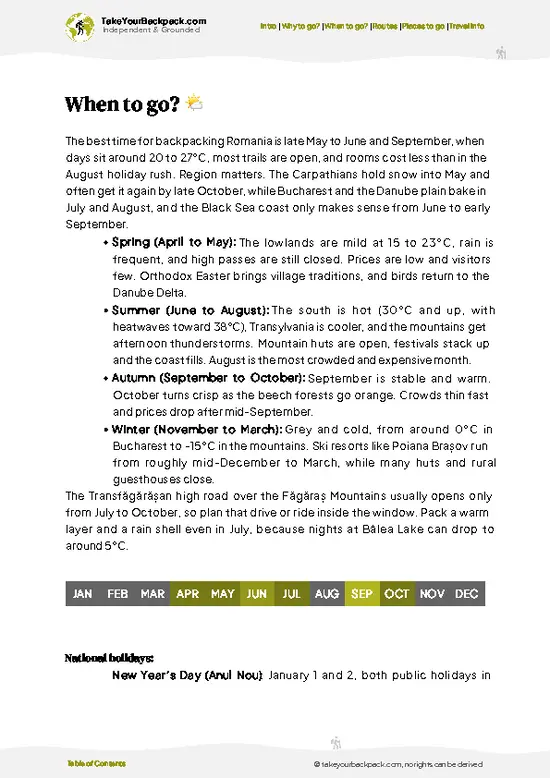
Late June into early July, and again through September, is the clean hit for Romania on a backpacker’s budget. In late June the high snow finally pulls back from the Făgăraș and Retezat, trails firm up instead of sucking at your boots, and the Transfăgărășan opens just as prices lag behind beach season. You get long light and cool nights without trains packed to the doors. September trims the heat and the noise; families go home, room rates loosen, and the air smells like cut hay and woodsmoke. Daylength still works, storms calm down, and that first cold beer in a village bar lands like a medal after a ridge day.
  • Peak Summer: The grind is real—crowded CFR cars to Brașov, sweaty switchbacks in Piatra Craiului, selfie traffic on the Transfăgărășan, and price bumps near castles. The high is bigger—huge daylight, berry-stained fingers, thunderheads that rinse the haze clean, and an ice-cold Ursus under a Saxon tower.
  • Late-June Shoulder: Romania shifts—shutters lift, kiosks roll open, shepherds drive flocks uphill, trail paint reappears from melt. Buses breathe again. Ride or hitch the Transfăgărășan in its first quiet weeks after it opens; those dawn hairpins feel like your road.
  • Winter Off-Peak: The interior turns inward—woodsmoke, church bells, and forests holding their breath. You earn every mile. Hack it with merino layers, microspikes for icy steps, and short, blue-sky pushes right after a storm.

Tactical tip: For late June and September, reserve popular cabanas for Friday/Saturday a week out; keep the rest walk-in so you can pivot around weather.

source: climatestotravel.comJANJanuary: below average for travelingFEBFebruary: below average for travelingMARMarch: fair for travelingAPRApril: good for travelingMAYMay: good for travelingJUNJune: highly recommended for travelingJULJuly: good for travelingAUGAugust: fair for travelingSEPSeptember: excellent for travelingOCTOctober: good for travelingNOVNovember: fair for travelingDECDecember: below average for traveling
📅 Traveling in a specific month?
Get a full month-by-month breakdown of weather, crowds, costs, festivals, and seasonal highlights in the complete travel guide.

Get full details when to go 👉

Get the Travel Guide -
romania - pixabay - pietrele-doamnei-202192

💰 Costs (as of 2025)How expensive it really is

Expect €35-45 per day if you sleep in dorms, eat like a local, and ride slow trains, with days that include a long intercity hop creeping toward €50.
  • dorm accommodation: €10-18 most cities; €12-22 in Bucharest/Cluj at peak; small towns often have no hostels, but a basic pensiune room (shared bath) runs €20-30 and can beat a dorm if you split. Beds are clean but spartan; curtains and good lockers aren’t guaranteed. System tip: book one night online, then extend in cash midweek for a quiet discount; if there’s no hostel, ask for “pensiune” or “cazare” signs near the station and you’ll land a cheap, simple room. Cheaper than Hungary/Croatia; similar to Serbia/Bulgaria.
  • meals: Supermarket Survival: fresh bread or covrigi for €0.50-1, tomatoes that smell like tomatoes, telemea cheese, cured meats, kefir, and a 2L water for €0.50—€6 feeds you all day if you cook in the hostel. Street food reality: shaorma or langoș €3-5, mici with mustard and bread €2-4, bakery pies €1-2; “meniul zilei” sit-down lunch €5-7; draught beer €1.50-3; espresso €1-2. Cheaper than Budapest or Zagreb by 20-40%. That first cold Timișoreana after a sweaty bus ride tastes like victory and doesn’t dent the budget.
  • local
read more 👉
Expect €35-45 per day if you sleep in dorms, eat like a local, and ride slow trains, with days that include a long intercity hop creeping toward €50.
  • dorm accommodation: €10-18 most cities; €12-22 in Bucharest/Cluj at peak; small towns often have no hostels, but a basic pensiune room (shared bath) runs €20-30 and can beat a dorm if you split. Beds are clean but spartan; curtains and good lockers aren’t guaranteed. System tip: book one night online, then extend in cash midweek for a quiet discount; if there’s no hostel, ask for “pensiune” or “cazare” signs near the station and you’ll land a cheap, simple room. Cheaper than Hungary/Croatia; similar to Serbia/Bulgaria.
  • meals: Supermarket Survival: fresh bread or covrigi for €0.50-1, tomatoes that smell like tomatoes, telemea cheese, cured meats, kefir, and a 2L water for €0.50—€6 feeds you all day if you cook in the hostel. Street food reality: shaorma or langoș €3-5, mici with mustard and bread €2-4, bakery pies €1-2; “meniul zilei” sit-down lunch €5-7; draught beer €1.50-3; espresso €1-2. Cheaper than Budapest or Zagreb by 20-40%. That first cold Timișoreana after a sweaty bus ride tastes like victory and doesn’t dent the budget.
  • local transport: City: Bucharest metro/trams €0.60-0.80 per ride; other cities similar. Country: CFR Regio trains are the unlock—slow, cheap, and everywhere. Examples: Brașov-Sinaia €3-5; Bucharest-Brașov €6-12 (Regio vs InterRegio; add €1-2 seat reservation on faster trains). Expect occasional delays; start early and bring a pastry. Regional buses fill gaps for €2-6. BlaBlaCar sometimes undercuts trains on long hops. Overall cheaper than Hungary/Croatia; on par with Bulgaria/Serbia.
  • activities: Major costs: castles and palaces (Peleș, Bran) €8-15; salt mines (Turda, Slănic) €8-12; cable cars into the Bucegi/Făgăraș €20-35 round trip; bear-hide viewing €40-60; thermal baths €6-12. Museums are usually €2-6; churches free or donation; hiking is free and the ridgeline views over Piatra Craiului repay every sweaty switchback. Tours marketed to “Dracula” fans add little and drain €25-60 fast.
  • miscellaneous: Budget leaks: airport taxis and “helpful” drivers—use the OTP train or Bolt; ATMs that offer dynamic currency conversion—always refuse; city bed tax €0.20-0.60/night; luggage storage at stations €2-4; hostel laundry €5-10 because self-service is rare; constant café stops and pastries that stack up; cash-only bars in villages. Local SIMs are a bargain (€5-7 for big data). Romania uses RON; card works in cities, but carry small bills for buses and markets. Relative value: consistently cheaper than Hungary and way below coastal Croatia; similar to Serbia/Bulgaria; Moldova can be lower but with thinner options.
⚠️ Prices can change and everyone travels differently, so take this as a rough guide. Hope it helps you plan your adventure!

✈️ The backpacker research shortcutRomania Travel Guide

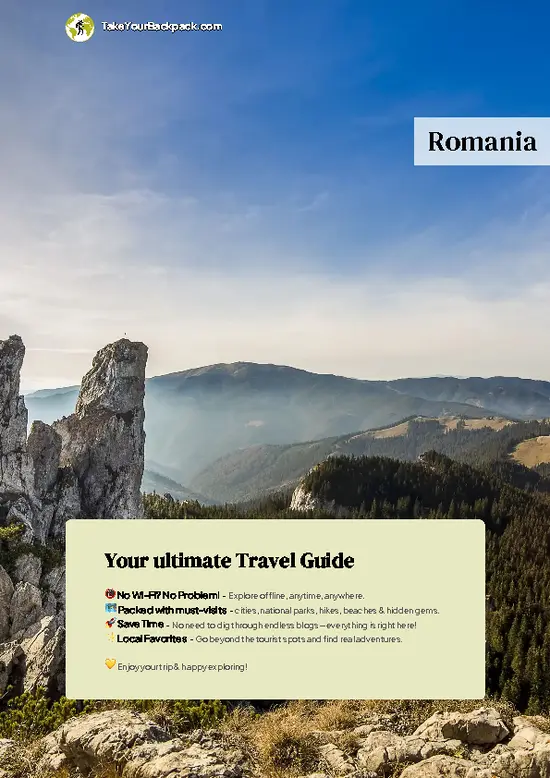
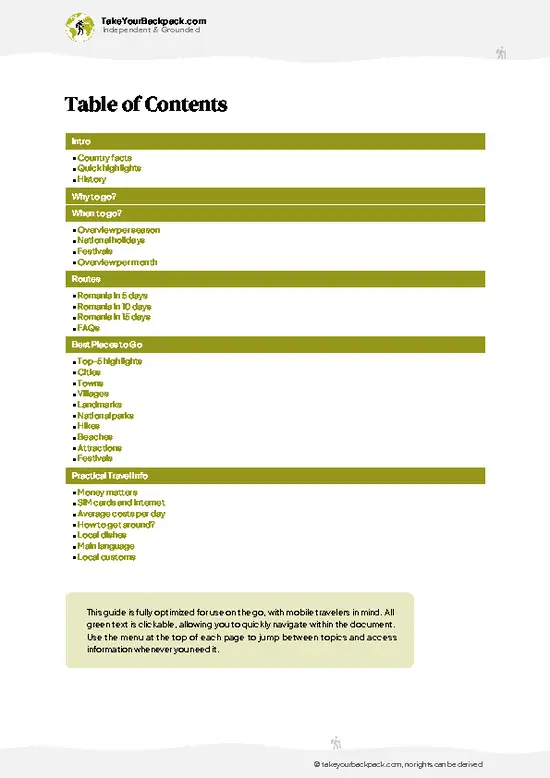
An offline-friendly backpacking guide with optimized travel routes, ranked highlights, transport advice, and the best areas to stay.
example page 0 from our offline Travel Guide for Romaniaexample page 1 from our offline Travel Guide for Romaniaexample page 2 from our offline Travel Guide for Romaniaexample page 3 from our offline Travel Guide for Romaniaexample page 4 from our offline Travel Guide for Romaniaexample page 5 from our offline Travel Guide for Romaniaexample page 6 from our offline Travel Guide for Romaniaexample page 7 from our offline Travel Guide for Romania
The digital guide (378 pages) contains:
100 highlights, ranked by travel appeal
Optimized 5, 10 & 15-day travel routes
Cities, national parks, beaches, historical sites, ...
How to get around
Offline-friendly for travel without Wi-Fi
👉 Click to see all 30+ guide features

📅 Plan smarter in minutes, not weeks
Month by month travel advice
Festivals & national holidays
Budget expectations

🗺️ Go to the right places, skip the overrated ones
Honest pros & cons of destinations
Top hikes, parks & viewpoints
Lesser-known places most travelers miss
Clear “worth it vs skip it” guidance

🛏️ Travel smoothly without rookie mistakes
Best areas to stay
Transport systems explained simply
Common scams & safety advice
SIM cards, money & practical tips

🌍 Understand the country, not just visit it
Culture & traditions
52 Essential phrases & customs
Festivals worth planning around
Traveler-friendly historical context
Insights that make places more meaningful

📱 Built for real travel conditions
Fully downloadable PDF
Works completely offline
Optimized for phone use
Useful in remote areas & buses
Everything in one place
Save weeks of stressful planning
Get instant access to the full guide directly. 30-day money-back guarantee.


Sent to your inbox immediately after payment • 100% Secure Checkout
Best Backpacking Travel Advisor 2025 tourism awardBest Backpacking
Travel Advisor
2025
What others say about Take Your Backpack Guides:
⭐⭐⭐⭐⭐
Fantastic, amazing amount of information!
⭐⭐⭐⭐⭐
My goodness this is amazing, it's what I've been looking for hats off too you!
⭐⭐⭐⭐⭐
I think this is absolutely BRILLIANT
⭐⭐⭐⭐
Very complete and informative. It's still missing places, but I gotta to commend you
⭐⭐⭐⭐⭐
This is truly amazing, thank you, can't wait to explore it with my kids!
⭐⭐⭐⭐⭐
Awesome resource, thank you!
⭐⭐⭐⭐⭐
This is amazing! Can't wait to explore the ones I haven't seen
⭐⭐⭐⭐
I love this! Well done, great idea.
⭐⭐⭐⭐⭐
Thanks for taking the time to make this gem!
⭐⭐⭐⭐⭐
This might be the best website I've ever seen.
⭐⭐⭐⭐⭐
Congratulations, and thank you so much for your work; it's incredibly valuable.
⭐⭐⭐⭐
In all seriousness I think you did a great job pointing out the important spots
⭐⭐⭐⭐⭐
10/10 very good
⭐⭐⭐⭐⭐
As someone who's only just starting to visit regularly this is awesome, thank you.
⭐⭐⭐⭐
Thank you very much! I'm going to visit my dad, it's going to be very useful!
⭐⭐⭐⭐⭐
This is really cool! We'll be travelling for the first time and this definitely come in handy.
⭐⭐⭐⭐⭐
You are now our minister of culture, congratulations 👨‍💼
⭐⭐⭐⭐⭐
Just wanted to tell you that this is a pearl! Going to follow your recommendations.
⭐⭐⭐⭐⭐
This is so cool. I'll definitely be using the resource for my travels soon.
⭐⭐⭐⭐⭐
This is very impressive! Good work.
⭐⭐⭐⭐⭐
This is an amazing and informative site. Very well done!

🛏️ Where to stay?Choosing the right base for your trip

Yes — Romania has plentiful hostels and budget accommodation across major cities, mountain towns and seaside resorts, with the densest options in Bucharest, Cluj‑Napoca, Brasov, Sibiu, Timisoara and Constanta.
In Bucharest the Old Town (Lipscani) clusters the most hostels and nightlife but is noisy and touristy, while Piata Unirii/Universitate areas are cheaper and better connected by transport but busier; the Old Towns of Brasov, Sibiu and Cluj‑Napoca put you within walking distance of sights and trains offering safety and walkability at slightly higher weekend rates; Timisoara’s central squares … read more 👉
Yes — Romania has plentiful hostels and budget accommodation across major cities, mountain towns and seaside resorts, with the densest options in Bucharest, Cluj‑Napoca, Brasov, Sibiu, Timisoara and Constanta.
In Bucharest the Old Town (Lipscani) clusters the most hostels and nightlife but is noisy and touristy, while Piata Unirii/Universitate areas are cheaper and better connected by transport but busier; the Old Towns of Brasov, Sibiu and Cluj‑Napoca put you within walking distance of sights and trains offering safety and walkability at slightly higher weekend rates; Timisoara’s central squares and Iosefin are quieter and safe with good cafe scenes; Constanta and Mamaia provide seasonal budget beds near the beach but get overcrowded and pricier in summer.
Expect lowest rates off‑season, book ahead for summer and festival dates, and pick neighborhoods based on whether you prioritise nightlife, transport access or quiet.

If you enjoy meeting fellow travelers, consider choosing hostels with high ratings for atmosphere. On the other hand, if you prefer having your own space, a hotel might be a better option.

🚌 Getting aroundTransportation options and logistics

Romania moves on two clocks: the railway’s stubborn timetable and the village’s shrug. At dawn, station loudspeakers crackle like old radios, pigeons hop between concrete benches, and the first train exhales diesel breath that clings to your jacket. By noon, bus depots simmer with cigarette haze and drivers promising “acum, acum,” which means “now” and also “eventually.” The country isn’t chaos; it’s momentum with soft edges. Things leave when they fill, or when the crew decides the coffee break … read more 👉
Romania moves on two clocks: the railway’s stubborn timetable and the village’s shrug. At dawn, station loudspeakers crackle like old radios, pigeons hop between concrete benches, and the first train exhales diesel breath that clings to your jacket. By noon, bus depots simmer with cigarette haze and drivers promising “acum, acum,” which means “now” and also “eventually.” The country isn’t chaos; it’s momentum with soft edges. Things leave when they fill, or when the crew decides the coffee break is over. You learn to lean into it. Because on the other side of the waiting is a window seat through hayfields, the orange peel of a cheap Fanta, and the kind of long-view landscape that makes slow feel like a feature, not a flaw.
  • CFR trains (Regional & InterRegio) The efficiency trade-off in plain sight: a 200 km stretch can eat your afternoon, but it costs less than lunch in Paris and buys you a seat, a view, and a predictable arc. Regional trains stop everywhere and dawdle through valleys; InterRegio trims the fat and usually lands close to schedule. Heat builds in older carriages; winter radiators overachieve. Take the earliest departure to dodge compounding delays. Night sleepers turn distance into rent-free lodging if you can tune out the rhythm of loose couplings.
  • Maxi-taxi minibuses The social fabric on wheels. Routes are taped to windshields, fares are cash, and small bills get you a smile. People greet the driver, squeeze in, and make space for elders without a word. Tell the driver “cobor aici” near your stop and watch the whole bus nod like a chorus. Expect sunflower seed shells underfoot, a pop playlist from 2011, and sudden roadside halts for anyone flagging from a lane. It’s intimate, fast between towns, and unforgiving to big backpacks—pack slim.
  • Danube Delta boats from Tulcea The geometric unlock. There’s no road to Sulina or Sfântu Gheorghe that matters to you—only slow boats and quick skiffs. The slow boat is cheap and timed to the river’s patience; the fast water taxis cost more but stitch reed channels you’d never see from land. You trade timetables for pelicans at eye level and a bowl of fish soup hours later, eaten with river wind in your hair.
  • Carpooling (rideshare) The budget disruptor when trains sprawl and buses scatter. Drivers post seats between big cities and smaller pivots; meeting points are mall parking lots, gas stations, and roundabouts everyone knows. It’s faster than Regional trains, cheaper than last-minute bus tickets, and human—chatty, music on, a stop for coffee if the car agrees. Pack light, show up five minutes early, and carry exact cash.

Master tip: Stitch the country by taking the earliest train or an overnight sleeper for the long leg, then pivot to a first-wave maxi-taxi or rideshare at the arrival hub; early starts beat delays, seats are available, and the whole day opens in front of you.
Short answer: Bucharest Henri Coandă International Airport (OTP) sits about 17 km (10.5 mi) north of the city center. You can get in by train, bus, or taxi/ride-hailing. Here’s what to expect in 2025.

Train (RE-Aeroport to Gara de Nord)
- Travel time: 20-25 minutes to Gara de Nord (add 10-20 minutes if you continue by metro or rideshare to the Old Town/Universitate/Unirii).
- Frequency: roughly every 20 minutes in the day; less frequent late at night.
- Cost: about 5 RON (≈ €1) one way.
- How it works: the airport has its own station connected by a covered walkway. Buy tickets from CFR vending machines in the terminal/station or online; conductors also sell tickets if needed. From Gara de Nord you can connect by metro or bus to most central areas.

Bus (STB line 783 to the city center)
- Route: runs to central stops including Piața Victoriei, Piața Romană, Universitate, and Piața Unirii (Old Town area).
- Travel time: 45-60 minutes to Piața Unirii in daytime traffic; 35-45 minutes late evening/overnight.
- Frequency: about every 15-30 minutes, day and night (intervals are longer overnight).
- Cost: 6 RON for a 90-minute Zone 1+2 ticket (the airport is in Zone 2; the center is Zone 1). Valid for transfers within the time window.
- How to pay: tap a contactless bank card on the onboard validator (each passenger taps once), or use STB’s app or the ticket machine at the airport stop.

Taxi and ride-hailing
- Travel time: 25-45 minutes to the center depending on traffic.
- Typical cost: roughly 60-100 RON to most central areas; can be higher in heavy traffic or late-night surges.
- How to do it right: use the official touch-screen kiosks in Arrivals to order a licensed taxi at a posted per-km rate (common city rates are around 2.7-3.5 RON/km), or use apps like Uber/Bolt. Avoid anyone soliciting rides inside the terminal.

Which option should I pick?
- Fastest in rush hour: train to Gara de Nord, then metro/rideshare.
- Most direct to Old Town: bus 783 to Universitate/Unirii if you don’t mind traffic.
- Easiest with luggage or late at night: taxi or ride-hailing from Arrivals.

Prices and frequencies can change, but the figures above reflect current 2025 norms.
⚠️ Prices and routes can change, so take this as a rough guide and ask for local advice when you arrive.

🔒 Safety (risk Level: low)What first-time visitors should know

Safety for solo travelers, including women and LGBTQ+ individuals
Romania is generally safe for solo travelers, including women and LGBTQ+ individuals. Exercise standard precautions like avoiding poorly lit areas at night and keeping an eye on your belongings. The LGBTQ+ scene is more discreet, particularly outside major cities like Bucharest and Cluj-Napoca. Use public transport and ride-sharing apps; they’re reliable and affordable.


Full official government travel advisory (live updates)
View details 👉

✈️ VisaWhat travelers should know about visas

Most travelers from the EU, US, Canada, Australia, and New Zealand can enter Romania visa-free for up to 90 days within a 180-day period. If you’re from a country that requires a visa, apply through the Romanian consulate or embassy in your area well ahead of your trip. Check the official Romanian Ministry of Foreign Affairs website for the most up-to-date visa requirements and application details.
⚠️ Visa requirements can change over time, so always check the latest visa requirements with the official embassy or government website before you travel.

🎒 What to pack?What to pack for Romania

Romania can be a bit of a weather rollercoaster, so packing smart is key. Winters are pretty chilly, especially in the mountains, so pack layers if you’re heading to Transylvania or the Carpathians. Summers can get quite hot and humid, especially in the south, but it’s nothing a light shirt can’t handle. If you’re planning to visit monasteries or rural areas, throw in some modest clothing—locals appreciate it when you keep it respectful. Oh, and don’t forget a rain jacket; unexpected showers are a thing here.

Apart from this country specific advice, I have also crafted a general packing list that should help on any trip. authorOver the years, I've learned the importance of packing minimally. It's so much easier to jump on the back of a truck or squeeze yourself into the last spot of a minibus without that supersized backpack. If you're headed to a warm destination, leave your winter jacket at home; for colder regions, opt for thin thermal underlayers. Instead of packing your entire wardrobe, bring just three sets of clothes, as laundry facilities are available everywhere.
View the full list 👉
🎒 Planning the practical side of your trip?
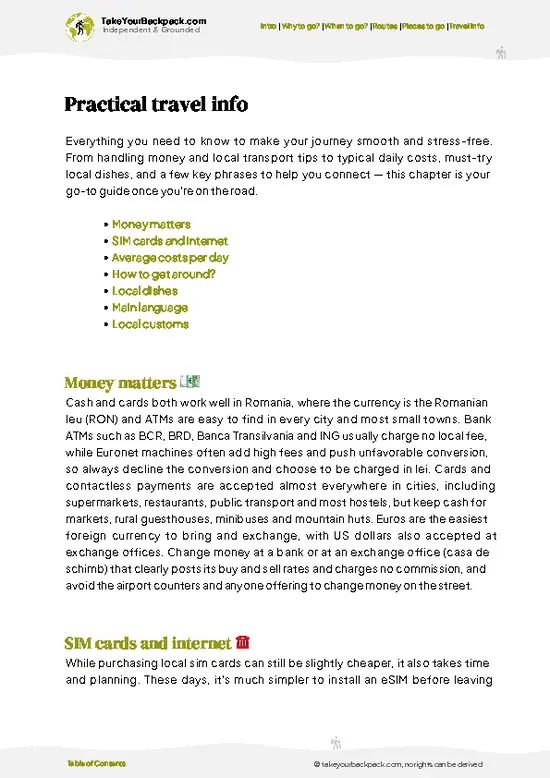
Get detailed information on transport, daily budgets, internet access, local customs, food, language, and other essentials in the complete Travel Guide.

Get detailed practical information 👉

Get the Travel Guide -

🙋 FAQThings travelers often ask

Trip Planning


Personal tip: I normally search on good rating for atmosphere (for meeting people) and location (for easy exploring). Cleanliness as a bonus.


Travel Essentials

Ensure routine vaccinations are up-to-date: measles-mumps-rubella (MMR), diphtheria-tetanus-pertussis, varicella (chickenpox), polio, and your yearly flu shot. Consider hepatitis A and B vaccines, especially if you plan on exploring rural areas or staying longer. For rabies, consider it if you’ll be engaging in outdoor activities or in contact with animals.

Check with a travel clinic for personalized advice.


vaccination requirements
When I first started traveling, I often spent part of my first day in a new country hunting for a local SIM card. While this can still be slightly cheaper, it also takes time and planning.

These days, it's much simpler to install an eSIM before leaving home. Once you arrive in Romania, you can activate it immediately and have mobile data from the moment you land — which is especially useful for ordering transport or navigating away from busy airports.

There are many providers nowadays, and price differences are usually small. I personally go with Airalo, as it offers excellent network coverage throughout the country and strong global coverage, so you can manage multiple countries from a single app.


Get your e-sim for Romania

Culture & Customs

Do: Greet with a firm handshake and maintain eye contact. Bring flowers or a bottle of wine if invited to someone’s home. Dress modestly when visiting religious sites.

Don’t: Avoid making the ”OK” hand gesture; it’s considered rude. Don’t refuse food or drink when offered, as it might be seen as impolite.

LGBTQ travelers might find urban areas more welcoming, but rural regions can be conservative, so discretion is advised. Women should be ready for occasional unwanted attention, but it’s generally harmless.
Trying traditional food is always a great way to experience the culture. Here are some must-try dishes for Romania.
  • Sarmale: These are cabbage rolls stuffed with a mix of pork and rice, sometimes spiced up with dill or thyme. You’ll find them at any Romanian festive table, especially during the winter holidays, embodying warmth and family gatherings.
  • Mămăligă: A staple dish made from cornmeal, similar to polenta. Often served with sour cream and cheese, or as a side to meat dishes, this is comfort food at its best, reflecting the rural roots of Romanian cuisine.
  • Ciorbă de Burtă: A tangy tripe soup that’s a favorite hangover cure in Romania. It’s seasoned with vinegar and garlic, and topped with sour cream, offering a unique taste that adventurous eaters appreciate.
  • Mititei: Grilled minced meat rolls, usually a mix of beef, lamb, and pork, seasoned with garlic and spices. These are a must-try at any Romanian barbecue and are often served with mustard and bread.
  • Papanași: A beloved Romanian dessert, these are fried or boiled doughnuts filled with sweet cheese and topped with sour cream and jam. They’re a sweet reminder of traditional Romanian hospitality.
Tap water in Romania is generally safe where locals drink it, especially in cities. However, some areas might have older plumbing, so tourists often prefer bottled or filtered water to avoid any risk. If you’re in rural regions, stick to bottled or filtered water just to be cautious.
The main language in Romania is Romanian. Backpacking is way more rewarding if you know a bit of the local language, so I'd suggest brushing up on the basics just in case your Romanian skills have become a bit rusty.

Want to understand locals better?
The complete Travel Guide for Romania includes 52 essential words and phrases — greetings, thank-yous, ordering food, transport, numbers, and common local expressions you'll actually hear.

Get your local basic phrases 👉

Get the Travel Guide -


In Romania, English proficiency varies by region and demographic. In urban areas, particularly in cities like Bucharest, Cluj-Napoca, and Timișoara, English is widely spoken, especially among younger people and professionals in the hospitality and tourism sectors. Many Romanians, particularly those in education or with higher education, can communicate effectively in English.

However, in rural areas and smaller towns, English proficiency may be limited, with older generations often speaking little to no English. In these regions, communication may rely more on basic phrases or gestures.

Overall, while you can generally expect to find English speakers in tourist areas, it’s advisable to learn a few basic Romanian phrases to enhance your experience and interactions. This effort is often appreciated by locals and can lead to more meaningful exchanges.

Money & Payments

The local currency of Romania is RON (lei).

ATMs: They’re pretty widespread in cities and larger towns. Stick to ATMs connected to banks for better security and exchange rates. Avoid standalone machines in tourist hotspots if you can.

Cash: Definitely carry some cash for smaller towns and rural areas. Not everywhere will take cards, especially in local markets and old-school eateries. Romanian Leu (RON) is the way to go; most places won’t accept dollars or euros.

Card Acceptance: Cards are widely accepted in cities, but always check before you order that fancy dessert. It’s a bit hit-or-miss outside urban areas.

Currency Exchange: Best rates are at banks or official exchange offices. Steer clear of airport kiosks and shady street exchangers—they’ll eat into your budget faster than a vampire at a blood bank.

Tipping in Romania is generally appreciated but not mandatory. In restaurants, leaving a tip of around 10% is common if the service was good. For taxis, rounding up the fare or adding a small amount is usually sufficient.

🧩 Nearby countriesSimilar backpacking destinations

We 💚 feedbackIs Romania worth visiting?

Boots pick up black mud in the Carpathians—hay-sweet air, woodsmoke, the distant bark of a shepherd dog. Then the ridge opens—Piatra Craiului sharp as a saw—and the first cold beer in a village bar lands like permission to linger. Go for this: real, roomy wilderness at backpacker prices. Pay with time: trains crawl, buses vanish at lunch, and trail signs go missing when fog rolls in. The arc ahead is good—EU cash fixing rails and roads, the Via Transilvanica getting clearer, and contactless payment reaching small towns.

✍️ Help improve this page!
The information on this page is based on in-depth research, insights shared by experienced travelers, and feedback from the local travel community in Romania. While every effort is made to keep the information accurate and current, conditions can change — so if you spot anything incorrect or outdated, please get in touch.


🙋‍♂️ Give feedback

👋 Meet the founderWho’s Behind Take Your Backpack?

Johan, backpacker and founder of TakeYourBackpackHi, I’m Johan (Netherlands 🇳🇱), the creator of TakeYourBackpack. Over the past decade, I’ve backpacked through 80+ countries across six continents, gaining extensive experience with independent travel, long-term trips, and overland routes.

This site is built on a combination of firsthand travel experience and carefully curated insights from other backpackers. Many guides are based on places I’ve personally visited, while others bring together tips, observations, and practical advice shared by trusted travelers I’ve met along the way.

The goal is to provide realistic, experience-driven guidance — not generic itineraries — so you can explore destinations with better context, clearer expectations, and more confidence.

Get full Romania guide •
Instant download • 100 highlights • Full Offline guide