×
Panama 🇵🇦

backpacking North America Panama 🇵🇦Cross continents naturally within a single day.

Explore NicaraguaExplore Puerto Rico

Backpacking Panama in 2026

A complete guide including when and where to go, costs, transport, itineraries, and practical travel advice.
The big picture before you go

Backpacking Panama
By Johan Kruseman 🇳🇱 | Updated June 6, 2026

A morning downpour turns the sidewalk into a mirror while a café ladles sancocho and a bus conductor whistles you aboard. It’s Panama in a line: motion, rain, and purpose. The country runs like a shortcut between worlds, and when you sync with its rhythm, travel clicks into place.

Two oceans within a coffee break, a canal carrying continents on its back, and rainforest brushing a skyline—that’s the engine. Watch ships climb the locks, then follow toucans along Pipeline Road before dinner in Casco Viejo’s stone-and-salsa evenings. Surf Santa Catalina, drift across the Guna Yala’s reef maze, wake in cool Boquete to coffee cherries and cloud forest, or climb Barú for a two-ocean dawn—I’ve timed it and watched both horizons blush. Bocas hands you lazy days and phosphorescent nights; Coiba and the humpbacks remind you the Pacific has teeth. Yes, rain dumps hard, sandflies chew, traffic snarls, and Spanish leads, but small bills, quick-dry layers, and early starts turn friction into flow—and the reward feels earned.

Compared with Costa Rica, Panama pairs wilder edges with cleaner logistics and fewer crowds; compared with Colombia, it’s punchy but compact, with islands and indigenous comarcas that steer the story. It’s for ocean lovers, birders, city-meets-jungle fans, and anyone who enjoys turning a map into momentum.

👉 Get the 📖 Travel Guide of Panama

Panama City + Canal

The country’s control room. You base here because Tocumen flights are cheap for the distance, Uber slashes friction, and buses fan out from Albrook like arteries. Casco Viejo gives you walkable nights; the Canal gives you industrial awe if you time lockages (late morning often hits). This rewards the optimizer: hit Biomuseo at opening, Canal by midday, rooftop at dusk, then night buses booked from Albrook without crossing town traffic. Stay in El Cangrejo/Obarrio for quiet sleep and quick Metro, Casco for atmosphere if you’re fine with late-night noise.

Azuero Peninsula + Santa Catalina (single Interamericana spine)

If you like self-drive rhythm and surf math, this is your loop. The Pan-American Highway is your backbone: Panama City → Chitré/Las Tablas for cheap rooms and dry-season festivals; then west to Sona and the spur to Santa Catalina. Pedasí works for mellow waves and turtles; Santa Catalina is the launch for Coiba—pricy boats, but world-class dive sites if you plan a partner or join a shop to split fuel. Buses connect, but add hours and transfers; a rental car pays for itself if two people share.

Chiriquí Highlands + Gulf Islands (same spine)

Cool air and big legs. You ride the Interamericana to David, then up to Boquete for cloud-forest trails and coffee. Ambitious hikers start Volcán Barú at 11 p.m. for a sunrise two-ocean shot; casual walkers take Pipeline or Lost Waterfalls. When legs are smoked, drop to Boca Chica for calm-morning boat hops in the Gulf; afternoons often wind up, so book early launches. This circuit rewards early risers and layered clothing.

Bocas del Toro

Social, salt-wet, and easy to combine with Costa Rica. Fly from Panama City or bus to Almirante and boat in. Water taxis are the system: cheap, frequent, and chaos after dark—daylight rides are safer. Isla Colón is noisy and convenient; Carenero/Bluff for quieter nights; Bastimentos for mangroves and red frogs. Cash stretches farther; ATMs fail often. Great for improvised plans and meeting people who’ll fill a snorkel boat by lunch.

Guna Yala (San Blas)

High reward, low comfort. You pre-book a simple hut, bring cash, and ride a 4x4 over a rollercoaster road to Cartí, then a lancha to your island. Expect bucket showers, sand between everything, and reef clarity that makes the trade worth it. Guna authorities run checkpoints and collect fees; respect the system and you move fast. Best for travelers who can pack light, unplug, and treat logistics like part of the trip.
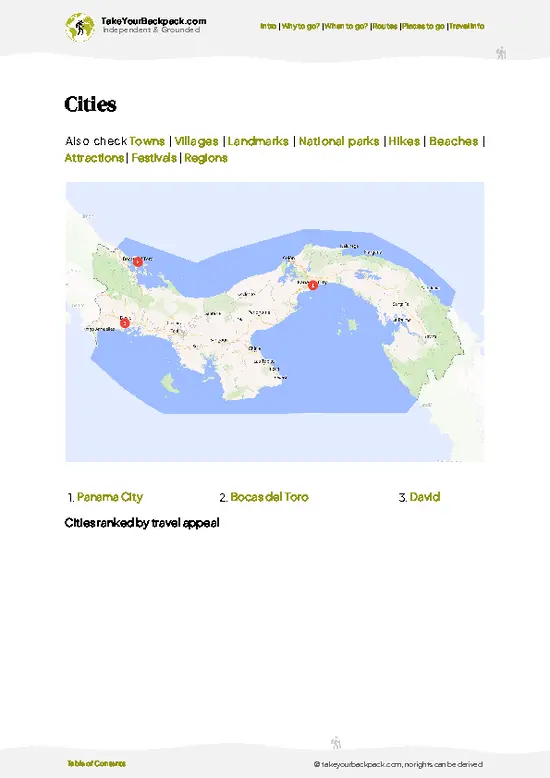
Seeing the layout at a glance
Loading the map 🌍
CLICK TO FILTER
city
town
village
unique site
national park
hike
beach
attraction
festival
region
SHOW COUNTRY’S BESTSHOW ALL
film
0
0
0a
Panama Canal Miraflores Visitor Center
film
1
1
1a
Casco Viejo Historic District
film
2
2
2a
Panama Viejo Archaeological Site and Museum
film
3
3
3a
Biomuseo
film
4
4
4a
Cinta Costera
film
5
5
5a
Bayano Caves
film
6
6
6a
Museo del Canal Interoceánico de Panamá
film
7
7
7a
Metropolitan Cathedral of Panama
film
8
8
8a
Teatro Nacional de Panamá
film
9
9
9a
San Blas Islands
Yadiel Tours San Blas
film
10
10
10a
Las Perlas Archipelago
Monia Deca
film
11
11
11a
Playa Venao
film
12
12
12a
Las Lajas beach
film
13
13
13a
Taboga Island
film
14
14
14a
Starfish Beach
Laura Alexandra
film
15
15
15a
Playa Guanico
film
16
16
16a
Panama City
Juan Carlos Figueroa
film
17
17
17a
Baru Volcano
Miguel Gonzalez
film
18
18
18a
Sendero Los Quetzales
Felix Herzog
film
19
19
19a
Sendero El Pianista
film
20
20
20a
La India Dormida Trail
film
21
21
21a
Pipeline Road
film
22
22
22a
Cerro Ancón Trail
film
23
23
23a
Cerro Chame
film
24
24
24a
Manglarito Waterfall
film
25
25
25a
Nativa Waterfall
film
26
26
26a
Cerro Turega Trail
film
27
27
27a
Coiba
Gabi M
film
28
28
28a
Darién
film
29
29
29a
Isla Bastimentos National Marine Park
film
30
30
30a
Volcán Barú
film
31
31
31a
Soberanía
Brett Horting
film
32
32
32a
La Amistad International Park
Israel Coba
film
33
33
33a
Chagres
Vlad Barjovanu
film
34
34
34a
Portobelo
film
35
35
35a
Altos de Campana
film
36
36
36a
Santa Fe
film
37
37
37a
Omar Torrijos
film
38
38
38a
Camino de Cruces
film
39
39
39a
Cerro Azul
film
40
40
40a
El Valle de Antón
film
41
41
41a
Portobelo
film
42
42
42a
Santa Fé
film
43
43
43a
Chitré
film
44
44
44a
Volcán
film
45
45
45a
Aguadulce
film
46
46
46a
Almirante
film
47
47
47a
Parita
film
48
48
48a
Panama Canal
iStockphoto
film
49
49
49a
Fort San Lorenzo
Benito Vicente Goyas
film
50
50
50a
Cascadas de La Chorrera
Joaquin Perez
film
51
51
51a
Santa Catalina
film
52
52
52a
Cerro Punta

Why go?Reasons people choose to visit

Scenery

Panama rewards scenery hunters because two oceans squeeze weather into microclimates and a single spine … read more 👉
Panama rewards scenery hunters because two oceans squeeze weather into microclimates and a single spine stacks habitats side by side. Sequence it: dawn for clear volcano ridgelines, midday for savannah, late light for canal lakes. I caught both coasts from Volcán Barú—ride a 4x4 at 2 a.m. or start hiking by midnight. Use the dry season (Dec–Apr) for Pacific trails; the Caribbean rains year‑round, so pivot to caves when rivers are low—Bayano is worth a headlamp and drybag. Check tides for the Pacific; low water opens the best angles.

Backpackers

Panama works for backpackers because the system favors movement: dollarized prices, short hops between … read more 👉
Panama works for backpackers because the system favors movement: dollarized prices, short hops between zones, and buses that stitch jungle, beaches, and highlands in a day. You can ride the night bus from Panama City to David, switch to a Boquete minibus, and be on the Sendero Los Quetzales by noon. Buy a MetroBus card at Albrook to dodge taxi bleed and move for cents. If you chase community, time Bocas for Friday; the island-hopping party packs the week’s crowd. Personal win: booking a Guna Yala 4x4 via my hostel, cash ready, saved a day of dithering.

Architecture

Panama is catnip for architecture nerds because eras collide within an hour’s reach. Work it like a … read more 👉
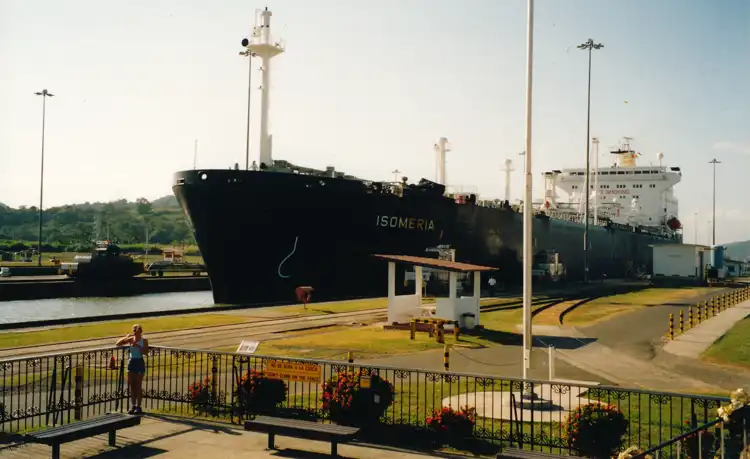
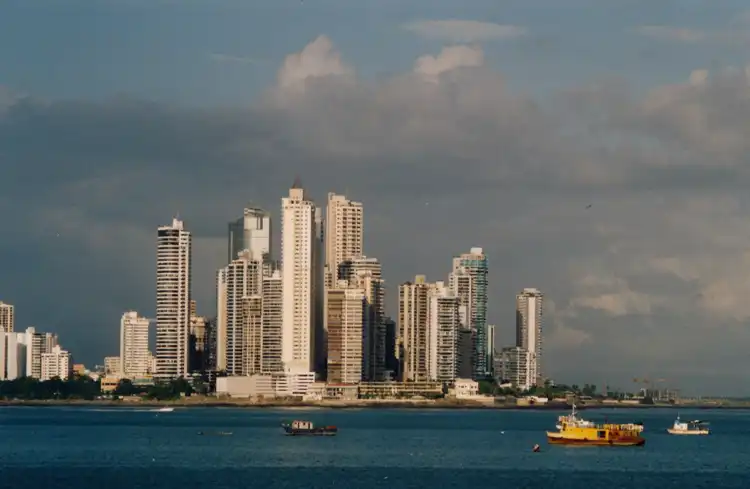
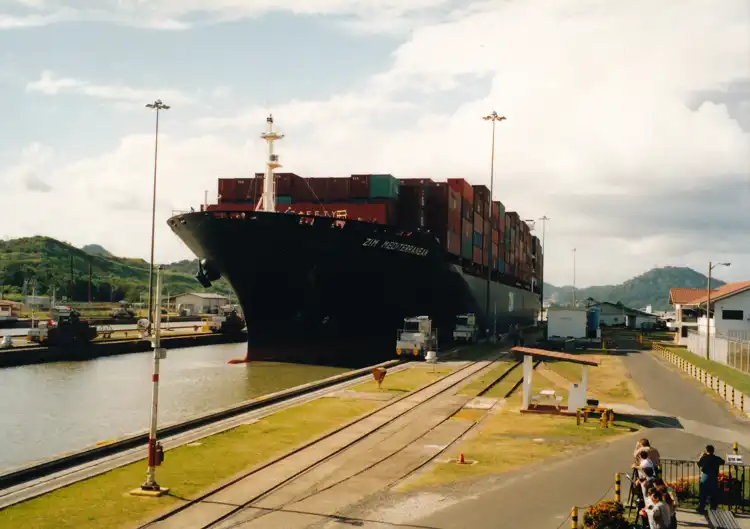
Panama is catnip for architecture nerds because eras collide within an hour’s reach. Work it like a relay: dawn in Casco Viejo for long shadows on Spanish-French balconies; late morning at Panama Viejo’s cathedral ruins before the bus packs arrive; mid‑day concrete choreography at the Canal locks; sunset skyline framed from Cinta Costera; forts at Portobelo the next day. Pro tip: Metro to 5 de Mayo for Casco, then Uber to Panama Viejo; hit Miraflores mid‑morning or mid‑afternoon when convoys usually move. I once watched a container ship climb a concrete staircase there—pure engineered theater.

Beach life

Panama wins at beach life because two oceans sit 80 km apart. On the Caribbean you get glassy snorkel … read more 👉
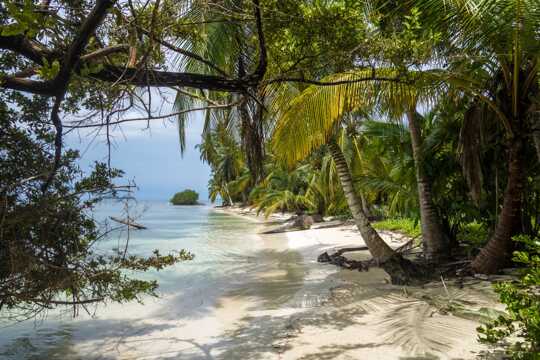
Panama wins at beach life because two oceans sit 80 km apart. On the Caribbean you get glassy snorkel days; on the Pacific you get swell and huge tides. Here’s the trick: chase Caribbean clarity when trade winds ease (Apr–Nov). For the Pacific, plan dry months; best swell May–Nov. I fly to Bocas early, snag a 7 a.m. panga before chop, then laze on Carenero reefs. Bocas and Venao go late. Pro tip: time Pacific days around tide charts—Playa Venao fills in mid-tide; Santa Catalina boats to Coiba run calmer at dawn. Pack cash for Guna Yala permits.

Low cost

Panama is dollarized, so no exchange bleed. Intercity buses and the metro make distance cheap, and fondas … read more 👉
Panama is dollarized, so no exchange bleed. Intercity buses and the metro make distance cheap, and fondas (worker canteens) serve set lunches that carry you to dinner. Free beaches and jungle trails do the rest. Move slow, cook once a day, and most backpackers hover around roughly $35–45 per day. Pro tip: base near Albrook for bus links; day-trip out, come back for market dinners. I grab ceviche at the fish market and eat on the seawall. Refill bottles in Panama City; on islands stick to filtered; use colectivos for the last miles.

Wildlife

Panama works because geography compresses habitats into a narrow isthmus: a land bridge between continents, … read more 👉
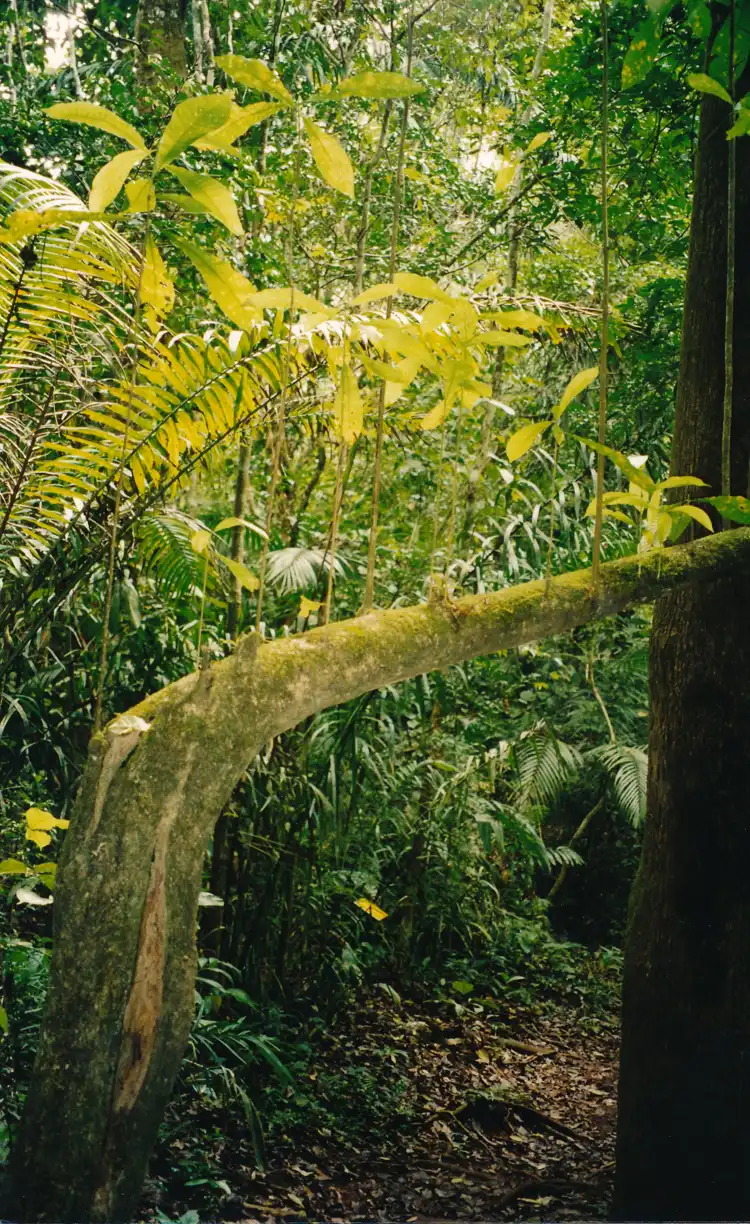
Panama works because geography compresses habitats into a narrow isthmus: a land bridge between continents, two oceans 80 km apart, and mountains in between. That squeeze funnels migrants, mixes species, and lets you jump from mangrove to cloud forest in a day. The why becomes a how: treat altitude and season like dials. Pacific dry season means leaf drop—easier spotting; the Caribbean stays fruit-rich and noisy. At dawn after overnight rain, Pipeline Road has lit up for me with trogons, antbirds, and monkeys. Humpbacks pass twice (Jul–Oct and Jan–Mar). Pro-tip: base in Gamboa for Canal forests with minimal transfers.
Want the complete picture of Panama?
The offline Travel Guide brings everything together — routes, highlights & planning.

See what's included in the guide 👉

Get the Travel Guide -

⭐ HighlightsKey places and experiences

  • Panama Canal Locks (Miraflores or Agua Clara): Watch 150,000 tons of steel rise on fresh-water muscle; it’s industrial theater with sea breeze and horn blasts vibrating your ribs. Go early on weekdays when upbound traffic stacks, and pick Agua Clara for fewer crowds and Neo-Panamax scale. Stand leeward—spray carries the tang of hot grease and diesel.
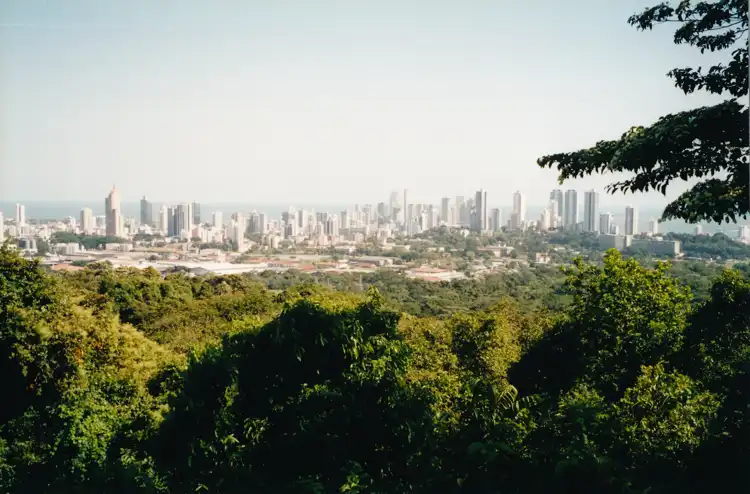
  • Casco Viejo, Panama City: Colonial bones, tiled balconies, and church bells bouncing between coral-stone walls; the old quarter is a maze that rewards timing. Walk at sunrise for empty cobbles and soft light, then Uber at night door-to-door to skip dark gaps. Addresses are chaotic—navigate by corners and plazas, and you’ll move like a local.
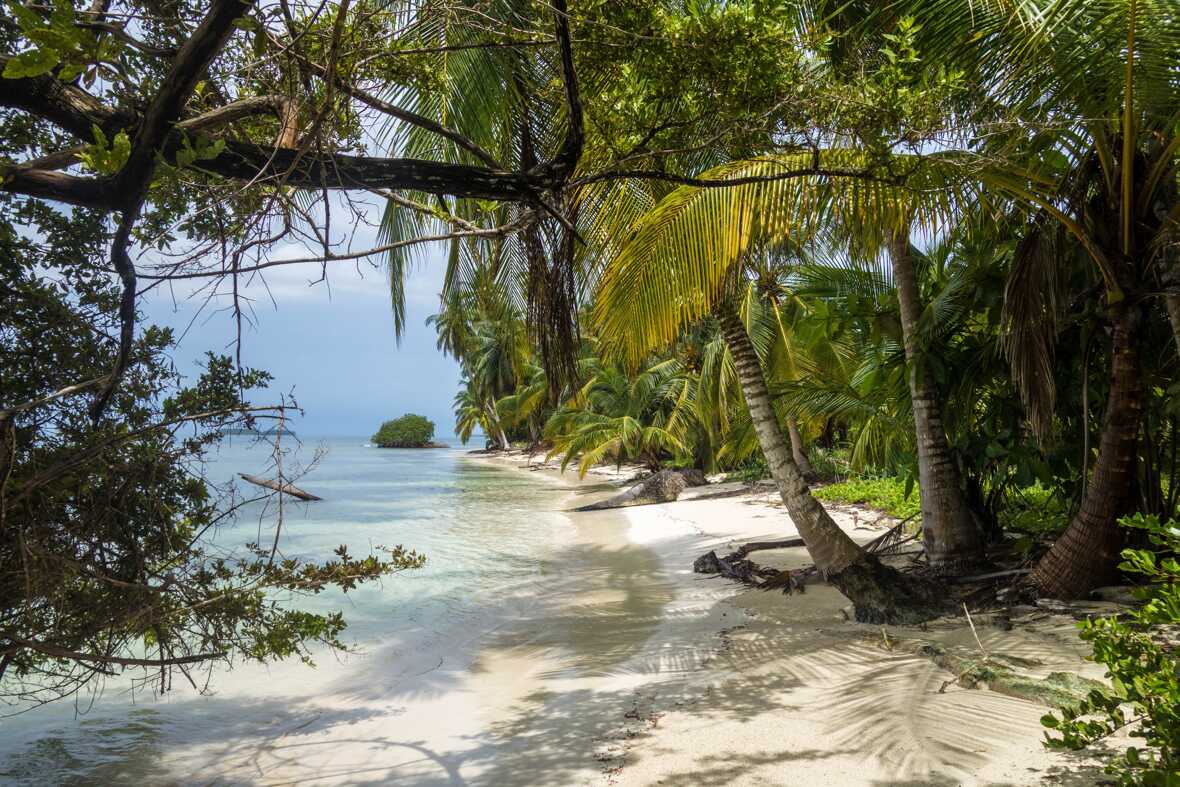
  • Guna Yala (San Blas Islands): Water so clear it erases depth, palm fronds clicking like dominoes, and the sand squeaks under your heel. Leave Panama City by 4x4 before dawn to make the mountain road and beat rough afternoon seas; bring cash and your passport for the checkpoint. Pack a dry bag—salt and coconut-smoke
read more 👉
  • Panama Canal Locks (Miraflores or Agua Clara): Watch 150,000 tons of steel rise on fresh-water muscle; it’s industrial theater with sea breeze and horn blasts vibrating your ribs. Go early on weekdays when upbound traffic stacks, and pick Agua Clara for fewer crowds and Neo-Panamax scale. Stand leeward—spray carries the tang of hot grease and diesel.
  • Casco Viejo, Panama City: Colonial bones, tiled balconies, and church bells bouncing between coral-stone walls; the old quarter is a maze that rewards timing. Walk at sunrise for empty cobbles and soft light, then Uber at night door-to-door to skip dark gaps. Addresses are chaotic—navigate by corners and plazas, and you’ll move like a local.
  • Guna Yala (San Blas Islands): Water so clear it erases depth, palm fronds clicking like dominoes, and the sand squeaks under your heel. Leave Panama City by 4x4 before dawn to make the mountain road and beat rough afternoon seas; bring cash and your passport for the checkpoint. Pack a dry bag—salt and coconut-smoke cling to everything.
  • Boquete & Volcán Barú: Cloud forest breathes in your face—cold, mossy, and clean—while coffee roasters add a caramel fog to town. Start the Barú summit push at 2 a.m. for the two-ocean sunrise; hire a 4x4 up and hike down if your knees prefer strategy to ego. Headlamp, shell, and permit check sorted at the trailhead.
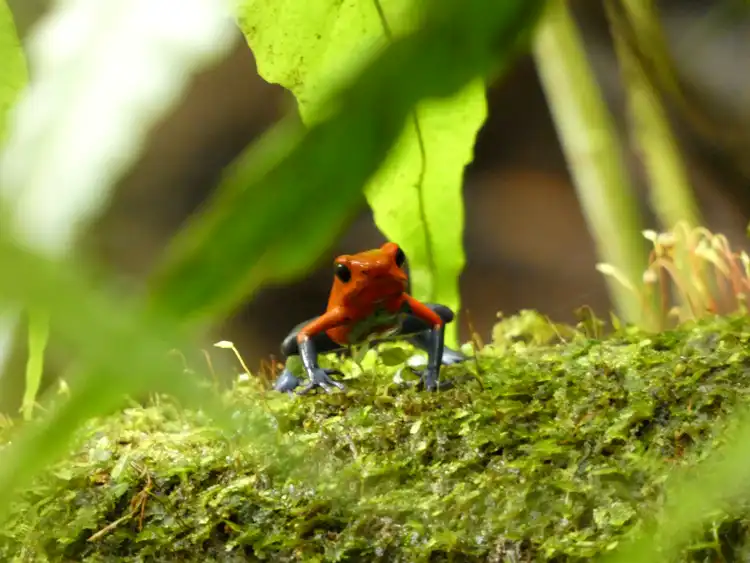
  • Bocas del Toro Archipelago: Wooden docks thump under bare feet, two-strokes rattle the ribs, and the air tastes like pineapple and salt. Base on Isla Colón for speed, sleep on Bastimentos or Bluff for quiet, and always ask water-taxi prices before stepping in. Go early—afternoon chop punishes hulls; Red Frog has a posted fee and darting poison namesake. If you’re chasing quieter corners, ride a local bus to Portobelo’s mossy forts, aim for Cambutal’s end-of-the-road surf, or hike Altos de Campana for canal views; personal favorite: drifting over Coiba’s Granito de Oro while parrotfish crunch coral like popcorn.
Spotted a mistake or missing a highlight? Contact us.

But Panama offers more...

Discover and compare all of its highlights per category

🧭 RoutesSuggested travel routes through Panama

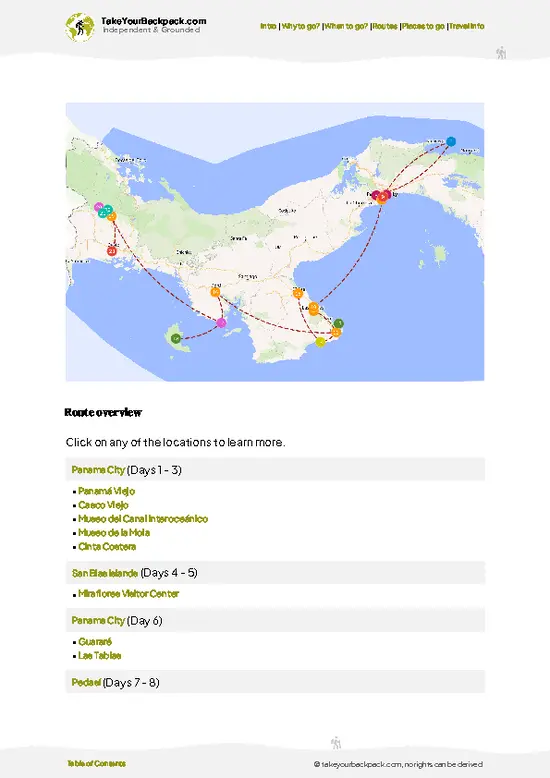
The 5-Day Panama City & Canal Hit

The vibe: A relaxed, city-based escape that trades constant packing for deep dives into the canal story, historic streets, and easy-access coastal walks. You stay put in Panama City and use short taxi hops to stack history, architecture, and skyline views without burning out.
  • Watch ships climb and descend the Panama Canal Miraflores Visitor Center.
  • Wander the plazas and alleys of Casco Viejo Historic District.
  • Walk or bike the Cinta Costera with full-frontal views of the modern skyline.
  • Trace the city’s origins at Panama Viejo Archaeological Site and Museum.

The 10-Day Highlands & Caribbean Circuit

The vibe: A balanced loop that links canal history, cool mountain hikes, and warm Caribbean water, with enough time in each place to actually exhale. Expect buses, a short flight or two, and boat rides, but never so many back-to-back that you feel like you’re on a transport marathon.
  • Kick off with canal views and colonial streets in Panama City and Casco Viejo Historic
read more 👉

The 5-Day Panama City & Canal Hit

The vibe: A relaxed, city-based escape that trades constant packing for deep dives into the canal story, historic streets, and easy-access coastal walks. You stay put in Panama City and use short taxi hops to stack history, architecture, and skyline views without burning out.
  • Watch ships climb and descend the Panama Canal Miraflores Visitor Center.
  • Wander the plazas and alleys of Casco Viejo Historic District.
  • Walk or bike the Cinta Costera with full-frontal views of the modern skyline.
  • Trace the city’s origins at Panama Viejo Archaeological Site and Museum.

The 10-Day Highlands & Caribbean Circuit

The vibe: A balanced loop that links canal history, cool mountain hikes, and warm Caribbean water, with enough time in each place to actually exhale. Expect buses, a short flight or two, and boat rides, but never so many back-to-back that you feel like you’re on a transport marathon.
  • Kick off with canal views and colonial streets in Panama City and Casco Viejo Historic District.
  • Hike cloud forests around Boquete and Volcán Barú National Park.
  • Island-hop from Bocas del Toro into Isla Bastimentos National Marine Park.
  • Float and snorkel in calm Caribbean coves like Starfish Beach.

The 15-Day Coast-to-Clouds Panama Loop

The vibe: A full-country sampler that strings together capital culture, Pacific surf towns, remote marine parks, and highland trails at a deliberate, exploratory pace. You’ll ride long-distance buses, hop boats, and maybe add a short flight, but each move opens up a distinctly different slice of Panama.
  • Connect canal engineering, ruins, and modern life in Panama City, Casco Viejo Historic District, and Panama Viejo Archaeological Site and Museum.
  • Surf and unwind around Pedasí and Playa Venao on the Pacific coast.
  • Boat from Santa Catalina into the wild waters of Coiba National Park.
  • Cool off in the Chiriquí Highlands around Boquete before finishing with island time in Bocas del Toro and Isla Bastimentos National Marine Park.
🌍 Want a ready-to-use travel plan for Panama?
The overview above compares different route options based on your travel time and style. The complete Travel Guide breaks each itinerary down in detail, including maps, stops, highlights, and transport information.

Explore all route details 👉

Get the Travel Guide -

🌤️ When to go?Weather, seasons, and timing

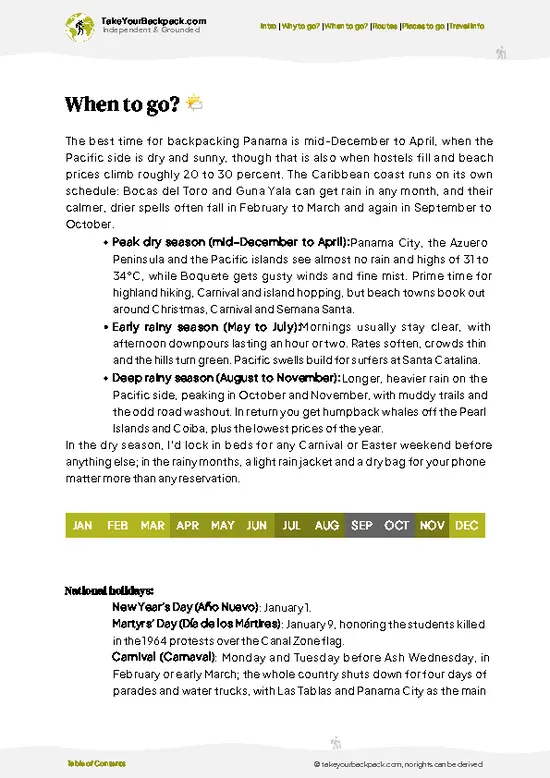
Late April to mid-June is the Panama backpacker sweet spot. Here’s the system: after Easter, international demand drops, local school terms resume, and hostel prices slide back to shoulder levels. The Pacific side shifts from bone-dry to “clockwork” showers—mornings clear for hiking and buses, late-day downpours that rinse dust without closing trails. Trade winds on the Caribbean ease compared to Jan-March, so boat crossings get calmer and snorkeling isn’t constantly wind-chopped. Rivers recharge for rafting, waterfalls fatten, cloud forests go from brittle to grippy. You dodge the holiday spikes and still avoid the mud-trap chaos of September-October. It’s the workable middle—predictable weather windows, lower costs, and fewer elbows at the big-ticket islands.
  • Peak Dry: Mid-December to Easter. The grind is real: hotter buses, booked beds, prices a tier above shoulder, lines at locks and islands. The high is just as real: dry, blue mornings that run on rails, razor-clear Pacific horizons, Coiba visibility, firm trails in Santa Fe and Baru, and daily boats that actually go.
  • Early Rains Shoulder: Late April-June. The country exhales. Crowds thin, rates ease, surf steadies, guides re-open slots. Mornings hum—shops roll up doors, buses move on time, trails hold traction—then the sky flips its switch and dumps, resetting dust and cooling the air.
  • Deep Rain: September-October. The interior goes quiet and lush, thunder pacing the afternoons, waterfalls roaring. Roads slough, plans slip. Survival hack: pre-dawn starts, dry bags inside your pack, choose ridge trails and bedrock routes; meanwhile, the Caribbean often flips to glass—use it for Bocas or Guna Yala while the Pacific drowns.

Tactical tip: In the shoulder, I lock ferries/long buses 48-72 hours ahead and keep everything else walk-in, which preserves flexibility without getting stranded.

source: climatestotravel.comJANJanuary: excellent for travelingFEBFebruary: excellent for travelingMARMarch: excellent for travelingAPRApril: highly recommended for travelingMAYMay: highly recommended for travelingJUNJune: highly recommended for travelingJULJuly: good for travelingAUGAugust: good for travelingSEPSeptember: fair for travelingOCTOctober: fair for travelingNOVNovember: good for travelingDECDecember: excellent for traveling
📅 Traveling in a specific month?
Get a full month-by-month breakdown of weather, crowds, costs, festivals, and seasonal highlights in the complete travel guide.

Get full details when to go 👉

Get the Travel Guide -
!pixabay - panama-beach-4388225

💰 Costs (as of 2026)Typical budget expectations

$50-60 per day is realistic in Panama if you sleep in dorms, eat where workers eat, ride public transport, and pick your paid experiences carefully.
  • dorm accommodation: $12-18 outside hubs; $15-25 in Panama City and Bocas; $20-30 in peak season or beachfront. System tip: book beds with kitchens and breakfast; you’re effectively buying two meals’ infrastructure with one bed. Relative value: pricier than Colombia/Nicaragua by ~20-40%, slightly cheaper than Costa Rica’s tourist towns. I once shaved $5/night by picking a place two blocks off the water in Bocas—same breeze, fewer party taxes.
  • meals: Supermarket Survival: $6-10/day if you cook rice, eggs, tuna, plantains, and local veg; imported cheese, cereal, and “health” snacks blow up the bill. Street Food Reality: fondas (worker canteens) serve $3-5 lunch plates (protein, rice, salad), empanadas are $0.50-1, fresh juice $1. Tap water is fine in cities/highlands; buy water on islands. Relative value: meals run ~15-25% cheaper than Costa Rica, but 20-30% more than Colombia. Master move: eat your main meal at lunch when portions are bigger and prices lower, then snack at night.
  • local transport: The unlock is buses. In Panama City, get a Metro/Metrobus
read more 👉
$50-60 per day is realistic in Panama if you sleep in dorms, eat where workers eat, ride public transport, and pick your paid experiences carefully.
  • dorm accommodation: $12-18 outside hubs; $15-25 in Panama City and Bocas; $20-30 in peak season or beachfront. System tip: book beds with kitchens and breakfast; you’re effectively buying two meals’ infrastructure with one bed. Relative value: pricier than Colombia/Nicaragua by ~20-40%, slightly cheaper than Costa Rica’s tourist towns. I once shaved $5/night by picking a place two blocks off the water in Bocas—same breeze, fewer party taxes.
  • meals: Supermarket Survival: $6-10/day if you cook rice, eggs, tuna, plantains, and local veg; imported cheese, cereal, and “health” snacks blow up the bill. Street Food Reality: fondas (worker canteens) serve $3-5 lunch plates (protein, rice, salad), empanadas are $0.50-1, fresh juice $1. Tap water is fine in cities/highlands; buy water on islands. Relative value: meals run ~15-25% cheaper than Costa Rica, but 20-30% more than Colombia. Master move: eat your main meal at lunch when portions are bigger and prices lower, then snack at night.
  • local transport: The unlock is buses. In Panama City, get a Metro/Metrobus card (~$2) and rides cost $0.35-0.75; the metro is fast and reliable. Intercity coaches from Albrook are the backbone: figure roughly $1-2 per hour of travel; early morning departures beat traffic and arrive before taxis ambush the terminal. For Bocas, bus to Almirante + shared boat ($6) halves the price of tourist shuttles. San Blas/Guna Yala is the outlier: 4x4 + boat is expensive by design; no true budget workaround. Relative value: transport is cheaper than Costa Rica and similar to Colombia. I paid double once on a “direct shuttle” to Boquete; the public bus got my friend there 30 minutes later for half.
  • activities: Major drivers: canal tours, island boat days, diving, and guided cloud-forest hikes. Expect $25-40 for Bocas boat/snorkel circuits, $80-120 for two-tank dives, $5-15 national park entries, $30-40 coffee tours, and canal partial transits that punch the wallet. Beat the system by joining boats at the dock early to fill seats, hiking signed trails DIY (Ancon Hill, Pipeline Road with a cheap day pass), and watching ships from public viewpoints instead of pricey visitor centers. Activities cost similar to Costa Rica, more than Colombia.
  • miscellaneous: Budget leaks: ATM fees (~$5 per withdrawal), island water/bottles, laundry ($5-8 a load), craft beer ($5-7 vs $1-2 local lager), and card surcharges in beach towns. SIMs are cheap; $10 of data covers a week of maps. Borders sometimes add small exit/entry fees; carry small bills. Relative value: leaks add up quicker than in Nicaragua but slower than in Costa Rica. My rule: one ATM hit per week, cash-heavy days stacked after withdrawals to amortize the fee.
⚠️ Prices can change and everyone travels differently, so take this as a rough guide. Hope it helps you plan your adventure!

✈️ The backpacker research shortcutPanama Travel Guide

An offline-friendly backpacking guide with optimized travel routes, ranked highlights, transport advice, and the best areas to stay.
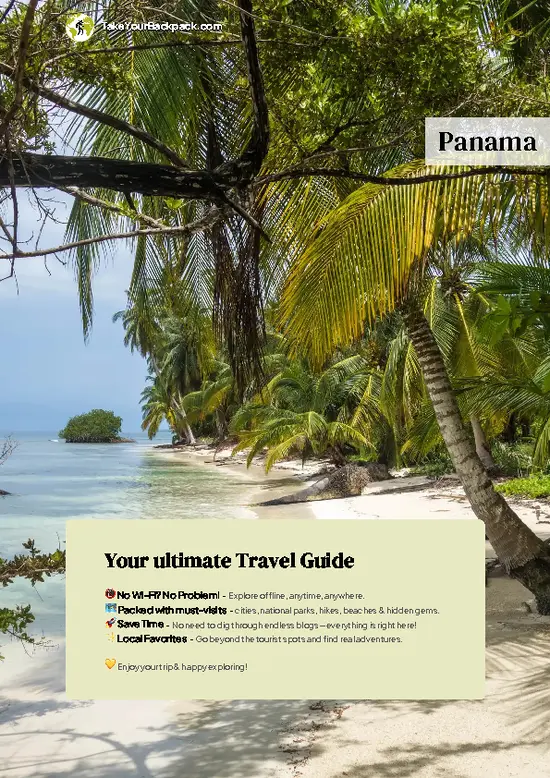
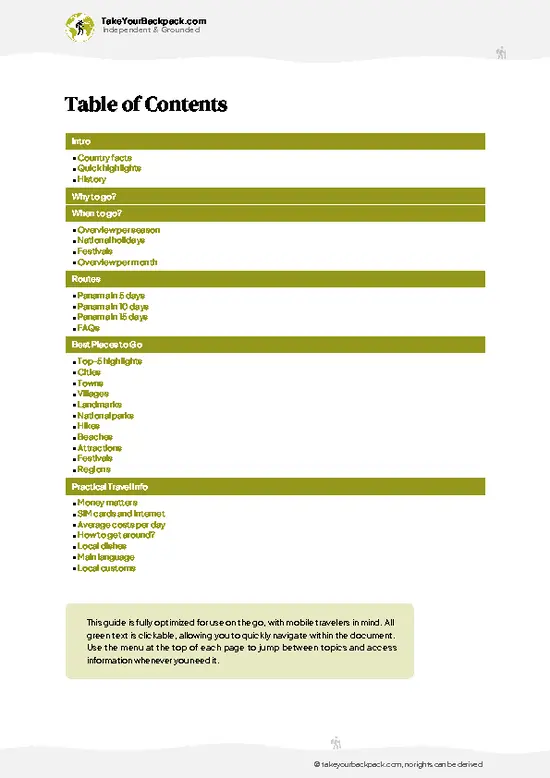
example page 0 from our offline Travel Guide for Panamaexample page 1 from our offline Travel Guide for Panamaexample page 2 from our offline Travel Guide for Panamaexample page 3 from our offline Travel Guide for Panamaexample page 4 from our offline Travel Guide for Panamaexample page 5 from our offline Travel Guide for Panamaexample page 6 from our offline Travel Guide for Panamaexample page 7 from our offline Travel Guide for Panama
The digital guide (363 pages) contains:
96 highlights, ranked by travel appeal
Optimized 5, 10 & 15-day travel routes
Cities, national parks, beaches, historical sites, ...
How to get around
Offline-friendly for travel without Wi-Fi
👉 Click to see all 30+ guide features

📅 Plan smarter in minutes, not weeks
Month by month travel advice
Festivals & national holidays
Budget expectations

🗺️ Go to the right places, skip the overrated ones
Honest pros & cons of destinations
Top hikes, parks & viewpoints
Lesser-known places most travelers miss
Clear “worth it vs skip it” guidance

🛏️ Travel smoothly without rookie mistakes
Best areas to stay
Transport systems explained simply
Common scams & safety advice
SIM cards, money & practical tips

🌍 Understand the country, not just visit it
Culture & traditions
52 Essential phrases & customs
Festivals worth planning around
Traveler-friendly historical context
Insights that make places more meaningful

📱 Built for real travel conditions
Fully downloadable PDF
Works completely offline
Optimized for phone use
Useful in remote areas & buses
Everything in one place
Save weeks of stressful planning
Get instant access to the full guide directly. 30-day money-back guarantee.


Sent to your inbox immediately after payment • 100% Secure Checkout
Best Backpacking Travel Advisor 2025 tourism awardBest Backpacking
Travel Advisor
2025
What others say about Take Your Backpack Guides:
⭐⭐⭐⭐⭐
Fantastic, amazing amount of information!
⭐⭐⭐⭐⭐
My goodness this is amazing, it's what I've been looking for hats off too you!
⭐⭐⭐⭐⭐
I think this is absolutely BRILLIANT
⭐⭐⭐⭐
Very complete and informative. It's still missing places, but I gotta to commend you
⭐⭐⭐⭐⭐
This is truly amazing, thank you, can't wait to explore it with my kids!
⭐⭐⭐⭐⭐
Awesome resource, thank you!
⭐⭐⭐⭐⭐
This is amazing! Can't wait to explore the ones I haven't seen
⭐⭐⭐⭐
I love this! Well done, great idea.
⭐⭐⭐⭐⭐
Thanks for taking the time to make this gem!
⭐⭐⭐⭐⭐
This might be the best website I've ever seen.
⭐⭐⭐⭐⭐
Congratulations, and thank you so much for your work; it's incredibly valuable.
⭐⭐⭐⭐
In all seriousness I think you did a great job pointing out the important spots
⭐⭐⭐⭐⭐
10/10 very good
⭐⭐⭐⭐⭐
As someone who's only just starting to visit regularly this is awesome, thank you.
⭐⭐⭐⭐
Thank you very much! I'm going to visit my dad, it's going to be very useful!
⭐⭐⭐⭐⭐
This is really cool! We'll be travelling for the first time and this definitely come in handy.
⭐⭐⭐⭐⭐
You are now our minister of culture, congratulations 👨‍💼
⭐⭐⭐⭐⭐
Just wanted to tell you that this is a pearl! Going to follow your recommendations.
⭐⭐⭐⭐⭐
This is so cool. I'll definitely be using the resource for my travels soon.
⭐⭐⭐⭐⭐
This is very impressive! Good work.
⭐⭐⭐⭐⭐
This is an amazing and informative site. Very well done!

🛏️ Where to stay?Areas travelers tend to prefer

Yes — there are many hostels and budget accommodations across Panama, concentrated in Panama City and tourist towns; typical dorm beds run about $8–20 USD and private budget rooms commonly $20–50 USD, so expect lower costs outside the main city center.
In Panama City, the best neighborhoods for budget stays are Casco Viejo (most hostels, historic sights and nightlife but busier and higher petty‑theft risk at night), El Cangrejo (central, good local food, calmer evenings and solid public transport), and Obarrio/Marbella (safer business district with more budget hotels, quieter nights and farther … read more 👉
Yes — there are many hostels and budget accommodations across Panama, concentrated in Panama City and tourist towns; typical dorm beds run about $8–20 USD and private budget rooms commonly $20–50 USD, so expect lower costs outside the main city center.
In Panama City, the best neighborhoods for budget stays are Casco Viejo (most hostels, historic sights and nightlife but busier and higher petty‑theft risk at night), El Cangrejo (central, good local food, calmer evenings and solid public transport), and Obarrio/Marbella (safer business district with more budget hotels, quieter nights and farther from the old town).
Outside the capital, Bocas Town (Bocas del Toro) has many backpacker hostels, bars and island access but is crowded and humid, while Boquete offers quieter, cooler stays ideal for hiking and long stays with limited nightlife; the Amador Causeway is scenic and peaceful with fewer hostel options and is convenient for short stays near museums and airport transfers.

If you enjoy meeting fellow travelers, consider choosing hostels with high ratings for atmosphere. On the other hand, if you prefer having your own space, a hotel might be a better option.

🚌 Getting aroundPublic transport and other ways to get around

Panama runs on two clocks: the Canal clock and the cantina clock. In Panama City, the metro beeps, gates open, and buses leave terminals in predictable waves. Outside, time is social: drivers roll when seats fill, boats go before the wind rises, and a downward hand flick will stop a minibus. Think in hubs and tides and you’ll move fast; demand exact departures and the country will make you wait.
  • Intercity coaches (Albrook and provincial terminals) The Efficiency Trade-off: This is your speed-for-cost
read more 👉
Panama runs on two clocks: the Canal clock and the cantina clock. In Panama City, the metro beeps, gates open, and buses leave terminals in predictable waves. Outside, time is social: drivers roll when seats fill, boats go before the wind rises, and a downward hand flick will stop a minibus. Think in hubs and tides and you’ll move fast; demand exact departures and the country will make you wait.
  • Intercity coaches (Albrook and provincial terminals) The Efficiency Trade-off: This is your speed-for-cost balance. Coaches are cheap by continental standards and comfortable enough to skip flights, but they obey the Panamericana’s mood. Leave before dawn or after 9 pm and you glide; hit the city rush and you crawl. “Expreso/directo” burns fewer stops; “corriente” scoops everyone. Buy at the ventanilla, tag your big bag, hoard a sweater for arctic A/C, and expect 15-20 minute food stops that are punctual even when nothing else is.
  • City buses and interior colectivos The Social Fabric: You move on courtesy and rhythm. In the capital, tap the card, enter front, exit rear; offer your seat to elders and pregnant riders; press the buzzer early. In the interior, flag with a low palm, climb in, greet the driver, pass cash forward, and say your stop out loud. Music can be loud, A/C colder than necessary, and exact change wins smiles. Backpack on lap at peak times. Don’t eat aboard unless everyone else is.
  • Water taxis (lanchas) to islands and roadless coasts The Geometric Unlock: Boats beat geometry the buses can’t. Bocas, Gulf of Chiriquí, Guna Yala—water is the only straight line. First departures are smooth; midday chop punishes luggage and stomachs. Pack electronics in a dry bag, wear sandals, expect a small baggage surcharge, and watch the last-boat-of-the-day cutoff (often mid-afternoon). Sync the overnight bus to Almirante with the dawn lancha and you gain a full day for free.
  • Night buses Panama City-David/Almirante corridor The Budget Disruptor: This is the hack that breaks the tourist shuttle monopoly. You swap one hostel night for 8 hours in cold air on a reclining seat and arrive before breakfast. Buy tickets midday before they sell out, avoid Friday exodus crowds, sit mid-coach away from the screen and bathroom, keep valuables on you, and step straight to first colectivos or boats while the day is still empty.
Master tip: Treat the country like a two-move game—ride the metro to Albrook off-peak, then take the overnight expreso to your regional hub and catch the first lancha/colectivo at dawn; you’ll cross Panama in a single sleep while everyone else is stuck in traffic or paying for flights.
Tocumen International Airport (PTY) sits about 20-24 km (12-15 miles) east of Panama City’s main downtown areas (El Cangrejo/Obarrio). Casco Viejo is a touch farther.

Main ways to get into the city (2025):
  • Panama Metro (Line 2 → Line 1) - From the Aeropuerto station (connected to Terminal 2 by a covered walkway), ride Line 2 to San Miguelito, transfer to Line 1 toward Albrook for downtown stops like Via Argentina, Iglesia del Carmen, Santo Tomás, 5 de Mayo, or Albrook.

    Time: 35-50 minutes, depending on transfer/wait times.

    Cost: $0.35 per ride. You’ll need a reloadable transit card (about $2) bought and topped up at the station; cash isn’t accepted at gates.
  • Metrobus - City buses serve the airport area and connect along Avenida Domingo Díaz or via the Corredor Sur to central Panama City/Albrook. Services thin out late at night, and you’ll use the same transit card as the Metro (no cash on board).

    Time: 45-75 minutes, traffic-dependent.

    Cost: $0.25 on regular routes; $1.25 on Corredor Sur express routes.
  • Taxi and ride-hailing - Official airport taxis use zone-based fares. Ride-hailing apps (Uber, DiDi, inDrive) also operate curbside pickup.

    Time: 25-60 minutes in normal traffic; 60-90 minutes at rush hour.

    Cost (taxi): typically $30-40 to downtown, $35-45 to Casco Viejo; confirm whether highway tolls are included.

    Cost (ride-hailing): usually $12-25 to central areas, plus Corredor Sur tolls ($2-5) if the driver uses the expressway.

Notes
  • If you land at Terminal 1, follow signs to Terminal 2 to reach the Aeropuerto Metro station via the walkway.
  • Arriving very late? Trains and frequent buses may not be running—plan on a taxi or ride-hail.
⚠️ Prices and routes can change, so take this as a rough guide and ask for local advice when you arrive.

🔒 Safety (risk Level: low)Staying safe while traveling

Safety for solo travelers, including women and LGBTQ+ individuals
Panama is generally safe for solo travelers, including women and LGBTQ+ individuals. Like anywhere, exercise caution in crowded areas and avoid sketchy neighborhoods at night. The LGBTQ+ community is fairly accepted in urban areas, though discretion is advised in rural regions. Always trust your instincts and stay informed about local customs and laws.


Full official government travel advisory (live updates)
View details 👉

✈️ VisaUnderstanding entry rules

Most nationalities, including U.S., Canadian, and EU citizens, can enter Panama visa-free for up to 90 days. Ensure your passport is valid for at least six months beyond your stay. If a visa is needed, you can apply through a Panamanian consulate or embassy; check their specific requirements as they vary by country.

source: migracion.gob.pa
⚠️ Visa requirements can change over time, so always check the latest visa requirements with the official embassy or government website before you travel.

🎒 What to pack?What to pack for Panama

Panama’s a bit of a mixed bag, climate-wise. Expect it to be hot and humid pretty much everywhere, especially in the lowlands and on the coast. If you’re heading into the jungles or up to Boquete, be ready for sudden rain; a lightweight rain jacket will save your day. Beaches are relaxed, but if you’re visiting small towns or churches, go for modest outfits—locals appreciate it. In the highlands, temps can drop at night, so a light sweater will be your best friend. Keep it simple, and you’ll be set.

Apart from this country specific advice, I have also crafted a general packing list that should help on any trip. authorOver the years, I've learned the importance of packing minimally. It's so much easier to jump on the back of a truck or squeeze yourself into the last spot of a minibus without that supersized backpack. If you're headed to a warm destination, leave your winter jacket at home; for colder regions, opt for thin thermal underlayers. Instead of packing your entire wardrobe, bring just three sets of clothes, as laundry facilities are available everywhere.
View the full list 👉
🎒 Planning the practical side of your trip?
Get detailed information on transport, daily budgets, internet access, local customs, food, language, and other essentials in the complete Travel Guide.

Get detailed practical information 👉

Get the Travel Guide -

🙋 FAQFrequently asked questions

Trip Planning


Personal tip: I normally search on good rating for atmosphere (for meeting people) and location (for easy exploring). Cleanliness as a bonus.


Travel Essentials

Routine vaccinations are a must: MMR, DTaP (diphtheria, tetanus, and pertussis), and varicella. For Panama specifically, consider hepatitis A and hepatitis B shots. If exploring rural areas, get the typhoid vaccine. Yellow fever is recommended if traveling to certain regions like the Darien Gap. Rabies is optional unless you’re planning lots of wildlife interaction. Always check the latest health advisories and consult with a healthcare provider before your trip.


vaccination requirements
When I first started traveling, I often spent part of my first day in a new country hunting for a local SIM card. While this can still be slightly cheaper, it also takes time and planning.

These days, it's much simpler to install an eSIM before leaving home. Once you arrive in Panama, you can activate it immediately and have mobile data from the moment you land — which is especially useful for ordering transport or navigating away from busy airports.

There are many providers nowadays, and price differences are usually small. I personally go with Airalo, as it offers excellent network coverage throughout the country and strong global coverage, so you can manage multiple countries from a single app.


Get your e-sim for Panama

Culture & Customs

Do dress modestly in rural areas; locals appreciate respect for tradition. Do greet people with a handshake and a smile; it’s a warm culture. Don’t point with your fingers; use your whole hand instead. Do tip around 10% in restaurants when service isn’t included. For LGBTQ+ travelers, discretion is advisable outside major cities, as attitudes can be conservative. Women should be aware that catcalling isn’t uncommon, but it’s often harmless and best ignored. Avoid discussing politics, especially related to the Canal or local government, to sidestep heated debates.
Trying traditional food is always a great way to experience the culture. Here are some must-try dishes for Panama.
  • Sancocho: A hearty chicken soup with corn, yucca, and plantains. It’s the ultimate comfort food and often considered Panama’s national dish. Perfect for a hangover or just a cozy meal.
  • Ropa Vieja: Shredded beef simmered with tomatoes, onions, and peppers. This dish nods to the country’s Spanish heritage and is a staple on many Panamanian tables.
  • Arroz con Pollo: Yellow rice cooked with chicken, peas, and a mix of spices. It’s a favorite for gatherings and celebrations, showcasing the country’s love for flavorful one-pot meals.
  • Carimañolas: Fried yucca rolls stuffed with seasoned meat or cheese. These are popular street snacks and a must-try for anyone wanting to taste local flavors on the go.
  • Patacones: Twice-fried green plantains. These crispy delights are often served as a side dish or snack and are the Panamanian answer to fries.
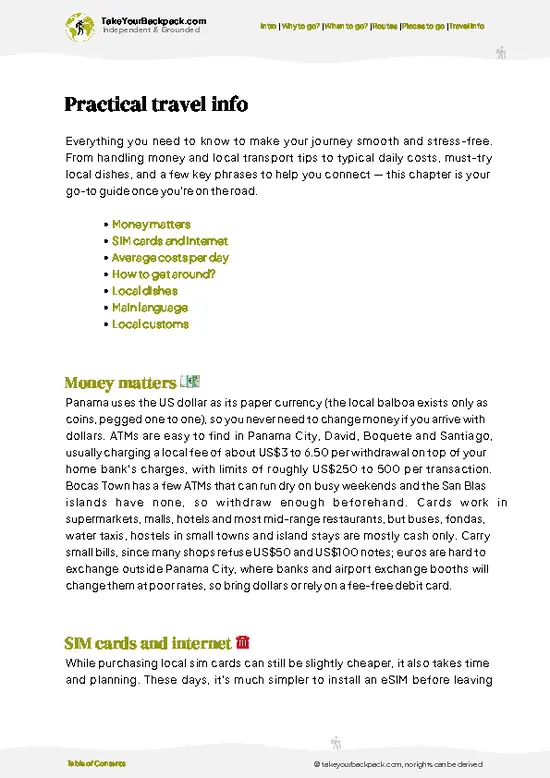
Tap water in Panama City and most urban areas is generally safe for locals and tourists to drink, but it can be hit or miss in rural regions. While locals drink it without issues in the cities, tourists might prefer bottled or filtered water if they’re venturing into the countryside. When in doubt, stick to bottled water to avoid any unwanted surprises.
The main language in Panama is Spanish. Backpacking is way more rewarding if you know a bit of the local language, so I'd suggest brushing up on the basics just in case your Spanish skills have become a bit rusty.

Want to understand locals better?
The complete Travel Guide for Panama includes 52 essential words and phrases — greetings, thank-yous, ordering food, transport, numbers, and common local expressions you'll actually hear.

Get your local basic phrases 👉

Get the Travel Guide -


In Panama, English is widely spoken, particularly in urban areas and tourist destinations. The country has a significant expatriate community and a strong historical connection to the United States, which contributes to English proficiency among locals. In Panama City, many professionals, especially in the hospitality, retail, and service industries, can communicate effectively in English.

However, outside major cities and tourist spots, English may not be as commonly spoken. In rural areas, Spanish is predominantly used, and knowledge of English can be limited. Travelers are encouraged to learn a few basic Spanish phrases to enhance their experience and facilitate communication.

Overall, while English is prevalent in many contexts, especially in business and tourism, having some Spanish language skills can be beneficial for a more immersive experience in Panama.

Money & Payments

The local currency of Panama is PAB (B/.).

ATMs: Panama is pretty well covered with ATMs, especially in cities and larger towns. Look for ones in banks to avoid extra charges. Banco Nacional and Banco General are reliable.

Cash: Always have some cash on hand. While Panama City is card-friendly, rural areas are not. Smaller establishments might only take cash.

Dollars or Euros: US dollars are used alongside the Panamanian balboa (though you won’t see balboa bills). Euros are not widely accepted, so don’t bother bringing them.

Card Acceptance: Credit and debit cards work well in urban areas, but always carry cash for smaller vendors, public transport, and off-the-beaten-path spots.

Exchanging Money: Exchange your currency for dollars before leaving home if possible. In Panama, banks and exchange houses (casas de cambio) are your best bet for decent rates. Avoid exchanging at airports—they’ll bleed you dry with poor rates.

Most restaurants in Panama include a 10% service charge in the bill, but it’s common to add a bit extra if the service was particularly good. In taxis, rounding up the fare is appreciated but not expected. Hotel staff, like bellhops and housekeeping, usually receive a dollar or two for their services.

🧩 Nearby countriesSimilar backpacking destinations

📸 PhotosScenes from around the country

Take your backpack - Panama - 0
Take your backpack - Panama - 1
Take your backpack - Panama - 2
Take your backpack - Panama - 3
Take your backpack - Panama - 4
Take your backpack - Panama - 5
Take your backpack - Panama - 6
Take your backpack - Panama - 7
Photographed by: Johan Kruseman

Observations and takeaways

Six month backpacking trip through Bolivia, Peru and central America: update 9/14

Panama | Alright, as promised, I’ll pick up the chronology now. After 1 day in Lima, 4 hours in Bogota (yes, yes, got the Colombia stamp now), I arrived in Panama City. What a culture shock! A supermarket where you don’t have to stand behind a little gate to point out your products but can walk right in, and they sell EVERYTHING, including Gouda and yogurt!...
Read more
More stories

We 💚 feedbackFinal notes for travelers

Panama works best when you play to its rhythms. Start at dawn, travel midweek, and withdraw cash before islands; ATMs vanish once you hit Guna Yala or Coiba. Use the dollar economy to keep numbers simple, but expect prices closer to Costa Rica than Colombia. Strategic unlock: flip coasts with the wind—dry season favors the Pacific (clearer water, calmer crossings), and when trades drop, head Caribbean for snorkel days. Small downside: chitras on the Caribbean bite hard; baby oil under DEET keeps them off.

✈️ When did I visit Panama?
Panama I visited during my half year trip through South and Central America back in 2003 Originally written after my visit, this guide has been kept up to date with input from locals and recent travelers (last update: 2 March 2026)

✍️ Help improve this page!
The information on this page is based on my own backpacking experience in Panama, supplemented with up-to-date research and feedback from other travelers. Travel details can change, so if you notice anything outdated or incomplete, feel free to let me know.


🙋‍♂️ Give feedback

👋 Meet the founderWho’s Behind Take Your Backpack?

Johan, backpacker and founder of TakeYourBackpackHi, I’m Johan (Netherlands 🇳🇱), the creator of TakeYourBackpack. Over the past decade, I’ve backpacked through 80+ countries across six continents, gaining extensive experience with independent travel, long-term trips, and overland routes.

This site is built on a combination of firsthand travel experience and carefully curated insights from other backpackers. Many guides are based on places I’ve personally visited, while others bring together tips, observations, and practical advice shared by trusted travelers I’ve met along the way.

The goal is to provide realistic, experience-driven guidance — not generic itineraries — so you can explore destinations with better context, clearer expectations, and more confidence.

Get full Panama guide •
Instant download • 96 highlights • Full Offline guide