×
Peru 🇵🇪

backpacking South America Peru 🇵🇪
Climb ancient paths into misty cloud forests.

Explore ParaguayExplore Suriname

Backpacking Peru in 2026

A complete guide including when and where to go, costs, transport, itineraries, and practical travel advice.
Traveling in Peru: what to expect

Backpacking Peru
By Johan Kruseman 🇳🇱 | Updated June 8, 2026

You expect Machu Picchu on a platter; Peru makes you climb for it. Distances sprawl, tickets sell out, and altitude taxes sloppy plans. That friction is the point—this is a country carved by stone, patience, and stubborn joy.

From Lima’s acid-bright ceviche and boundary-pushing kitchens to the Andes’ switchback kingdoms, Peru rewards deliberate movement. I chase condors over Colca at dawn, grind up Salkantay or the Santa Cruz, then drop into cloud forest where macaws erupt off clay licks and the air tastes like rain. Cusco hums with Quechua pride, market salt, and coca-leaf whispers; Inca walls lock together tighter than any itinerary. Secure your Machu Picchu entry and transport early, acclimate in the Sacred Valley instead of sprinting Day One, and budget time over money—colectivos beat flimsy “all-in” tours, and small soles keep you fed without fees. Expect Lima traffic to steal hours, sun and cold to tag-team you at altitude, and a surprise festival to reroute a plaza; handle those with calm layers and flexible days, and the country gives back—stories from guides worth every sol, roadside oranges handed to you mid-hike, a brass band exploding as you turn a corner.

Bolivia hits harder with altitude and grit; Ecuador compresses Andes–Amazon–coast into short hops; Chile spreads long and slick; Peru sits in the sweet spot—deeper ruins, bigger menu, trails that test your lungs and fill your notebook. Come if you like earning your views, eating seriously well, and letting a place set your pace. It’s for hikers, history lovers, street-food hunters, and first-timers ready to level up without torching their budget.

👉 Get the 📖 Travel Guide of Peru

Lima + Central Coast (Barranco, Miraflores, Paracas, Huacachina)

Start here to harden your street legs. You move fast on cliffside paths, eat well without torching your budget, and learn the taxi and ATM game before the mountains punish mistakes. Use the Metropolitano for cross-city hops; avoid rush-hour crush. Book rides by app, not curbside. For Paracas/Huacachina, ride the Panamericana spine south; morning buses beat sandstorm delays. Wind bites on Ballestas—bring a shell. Skip dune-buggy upsells unless you want the bruises. Sleep coastal, save altitude tolerance for later.

Cusco + Sacred Valley + Machu Picchu

Base your acclimatization like a pro: sleep first nights lower in the Valley (Ollantaytambo/Pisac), then tackle Cusco’s stairs. Machu Picchu drains time and cash if you wing it. You need dated entry, train or trek, and the uphill shuttle; pack buffer days for strikes and slides. Trains throttle baggage—stash big kits in Cusco. Boleto Turístico covers scattered sites; plan clusters to extract value. Dry season means dust and sunburn; wet season means mud and landslides. Pick your pain, not a random one.

Arequipa + Colca Canyon

Arequipa rewards the steady mover. Lower altitude than Cusco, better food for cheaper, easy gear rentals. Use it as a tune-up, then hit Colca. Sleep in Cabanaconde if you actually want the trailheads. The canyon punishes knees: 1,200+ meters down, then back up under a hard sun. Trek poles and early starts save you. Tours stop for condors; independent buses give you time on trail instead of souvenir stops. Thermal baths at day’s end are not a luxury; they reset legs for the climb.

Huaraz + Cordillera Blanca

This is the high-output zone. Night bus from Lima, then slow acclimatization hikes (Laguna Wilcacocha, then 69). Weather windows are real; May–Sept favors big objectives, rains chew trails the rest of the year. Go self-supported on Santa Cruz to save money; hire donkeys only for heavy groups. Glacial trips demand a guide and real insulation. Collectivos to trailheads leave early and full—stand your ground or wait an hour. ATMs run dry on weekends; pull cash midweek and carry purification tablets.

Iquitos + The Amazon

Fly in light, move with respect. The heat is a tax; pay it by slowing down midday and protecting salt and skin. Lodges quote low then add transfers, boots, and night excursions; get the all-in price before you board the boat. Speedboats save days; slow cargo boats save cash but require your own hammock, bug net, and patience. Water levels change the whole playbook—trails in low water become canoe routes in high. Dry bags keep your electronics alive; headlamp keeps you alive on docks.
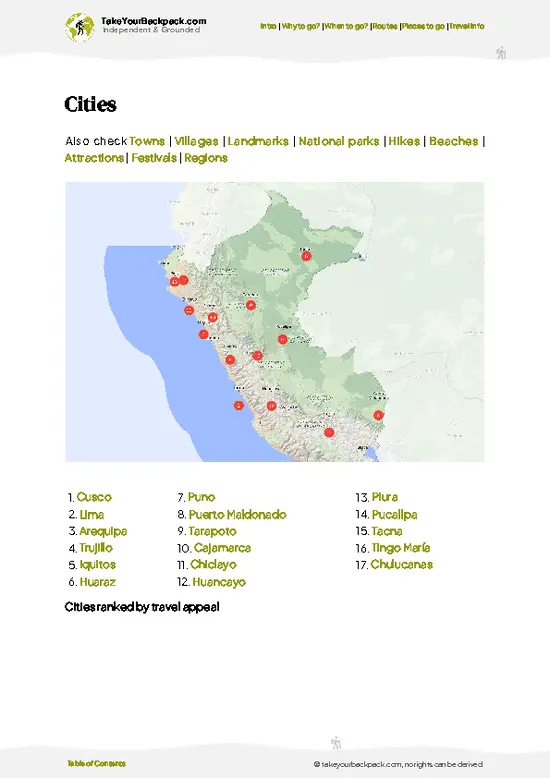
Geography and where places are located
Loading the map 🌍
CLICK TO FILTER
city
town
village
unique site
national park
hike
beach
attraction
festival
region
SHOW COUNTRY’S BESTSHOW ALL
film
0
0
0a
Machu Picchu Sanctuary archaeological complex
film
1
1
1a
Nazca Lines Viewing Towers and Mirador
film
2
2
2a
Sacsayhuamán Archaeological Park
film
3
3
3a
Chan Chan Archaeological Zone
film
4
4
4a
Qorikancha
film
5
5
5a
Monasterio de Santa Catalina de Siena
film
6
6
6a
Museo Tumbas Reales de Sipán
film
7
7
7a
Larco Museum
film
8
8
8a
Museo de Sitio Pachacamac
film
9
9
9a
Huaca Pucllana
film
10
10
10a
Vichayito
film
11
11
11a
Playa Las Pocitas
film
12
12
12a
Zorritos
film
13
13
13a
Islas Ballestas
film
14
14
14a
Cusco
Pixabay
film
15
15
15a
Lima
Pixabay
film
16
16
16a
Arequipa
Javier Rischmoller
film
17
17
17a
Trujillo
Hector Eduis Miranda Machuca
film
18
18
18a
Ilo
film
19
19
19a
Cajamarca
Jhon Raimond Lenin Lion Saavedra
film
20
20
20a
Tarapoto
film
21
21
21a
Chiclayo
film
22
22
22a
Huancayo
film
23
23
23a
Inca Trail
Unsplash
film
24
24
24a
Salkantay Trek
Unsplash
film
25
25
25a
Choquequirao Trek
Tilman Giese
film
26
26
26a
Huayna Picchu
Unsplash
film
27
27
27a
Santa Cruz Trek
film
28
28
28a
Ausangate Trek
film
29
29
29a
Lares Trek
Unsplash
film
30
30
30a
Colca Canyon
The Travel Hacking Life
film
31
31
31a
Huchuy Qosqo Trek
film
32
32
32a
Manu
Pixabay
film
33
33
33a
Huascarán
Pixabay
film
34
34
34a
Amazon Rainforest
iStockphoto
film
35
35
35a
Tambopata National Reserve
film
36
36
36a
Pacaya-Samiria National Reserve
Vittorino Rodriguez
film
37
37
37a
Paracas National Reserve
film
38
38
38a
Sierra del Divisor
film
39
39
39a
Yanachaga-Chemillén
film
40
40
40a
Bahuaja-Sonene
film
41
41
41a
Tingo Maria
Daniel Arias
film
42
42
42a
Yauyos-Cochas Landscape Reserve
film
43
43
43a
Cuzco Sacred Valley
film
44
44
44a
Huaraz and the Cordillera Blanca
Franpisco Adventure Expediciónes En Sudamérica
film
45
45
45a
Lake Titicaca
Spca663 Little B
film
46
46
46a
Huacachina Desert Oasis
Laguna De Huacachina Ica
film
47
47
47a
Paracas and the Ballestas Islands
Simon Lord
film
48
48
48a
Puno and the Uros Floating Islands
film
49
49
49a
Nazca
film
50
50
50a
Chachapoyas
film
51
51
51a
Moyobamba
film
52
52
52a
Machu Picchu
Pixabay
film
53
53
53a
Nazca Lines
Aurelio Gianoglio
film
54
54
54a
Kuelap
Calet Cáceres Vergara
film
55
55
55a
Cerro Blanco
Bruno Locatelli
film
56
56
56a
Sillustani
Янко Г.
film
57
57
57a
Huacachina
Alexa

Why go?What draws travelers here

Mountains

Peru rewards legs that earn it. The Andes cut straight through the country, stacking blue lakes under … read more 👉
Peru rewards legs that earn it. The Andes cut straight through the country, stacking blue lakes under ice-capped walls and long passes where you can hear your own pulse. Hike here and you move—up, over, down—through real elevation and big payoffs. Protect your engine. Altitude is the tax; pay it smart. Sleep low first (Ollantaytambo beats Cusco for night one), then climb gradual. Dry season (May–Sept) means solid trails but cold nights; start before dawn because storms and crowds build after lunch. Pro tip: skip the permit circus—Salkantay, Ausangate, and Santa Cruz deliver giant views with fewer rules and smaller bills. I save money by taking colectivos, carrying a filter, and packing a real puffy; afternoons can swing from T‑shirt to frost fast. Cash-only park fees, exact change, no drama.

Backpackers

Peru rewards the dirtbag playbook: long buses, high trails, cheap plates of stew. The backpacker circuit … read more 👉
Peru rewards the dirtbag playbook: long buses, high trails, cheap plates of stew. The backpacker circuit hums—Lima, Huacachina, Arequipa, Cusco, Huaraz, Máncora—and you can ride it hard without bleeding cash if you dodge the traps. Night buses (cama) replace a hostel night; stash valuables at your feet, not overhead. Altitude taxes bravado: sleep first in the Sacred Valley or Arequipa before tackling Cusco or Rainbow Mountain. For Machu Picchu, book early or pivot to Salkantay; skip the bar crawl and you’ll actually make the 4 a.m. colectivo. Pro tip: eat menú del día for 12–20 soles; it’s where you meet other dirtbags plotting treks. ATMs bite with fees—withdraw big, infrequently, and split the roll. My best conversations happened in San Blas courtyards and Huaraz gear shops; show up at 6 a.m. and you’ll find a rope team by noon.

Architecture

Peru hits you with stone. In Cusco and the Sacred Valley, trapezoidal doors lock so tight you can’t … read more 👉
Peru hits you with stone. In Cusco and the Sacred Valley, trapezoidal doors lock so tight you can’t slide a blade between them. Arequipa’s Santa Catalina sprawls like a self-contained city in volcanic white. Chan Chan heaves in adobe swells shaped by desert wind. Kuelap rises like a hilltop fortress above cloud forest. Lima layers ornate balconies over raw concrete modernism.

Save your lungs and your budget: start low in Ollantaytambo, not Cusco—buy the Boleto Turístico once instead of paying piecemeal fees. Machu Picchu is timed; first slot beats crowds and heat—carry your passport, small coins for the only bathroom (outside), and don’t book tight same-day train-flights. Desert sites cook by noon; I hit Chan Chan at opening with a hat, water, and cash for the official guide. Dawn light flatters stone; noon punishes you.

Food

Peru rewards a hungry traveler who moves. Chase the coast for sharp, lime-cut ceviche; climb into the … read more 👉
Peru rewards a hungry traveler who moves. Chase the coast for sharp, lime-cut ceviche; climb into the Andes for meat-and-chili stews that stick to your ribs; drop into jungle towns for fruit that tastes feral and alive. Pace matters. Ceviche is a lunch sport—eat it near the sea and stop by mid‑afternoon; skip it in Cusco where fish rides a long truck. Pro tip: ask for the menú del día. You’ll get soup, a hearty segundo, and a drink for S/10–15 in small towns (S/20–30 in Lima), and you won’t burn your budget on tourist plates. Watch the bill: some places add 10% “servicio,” and many tack on a card fee—cash wins. I hit markets early (Surquillo in Lima, San Camilo in Arequipa) and eat where the line of locals moves fast.

Scenery

Peru pays you back in views that feel earned. Blue glacial lakes above Huaraz, ash-gray volcanoes over … read more 👉
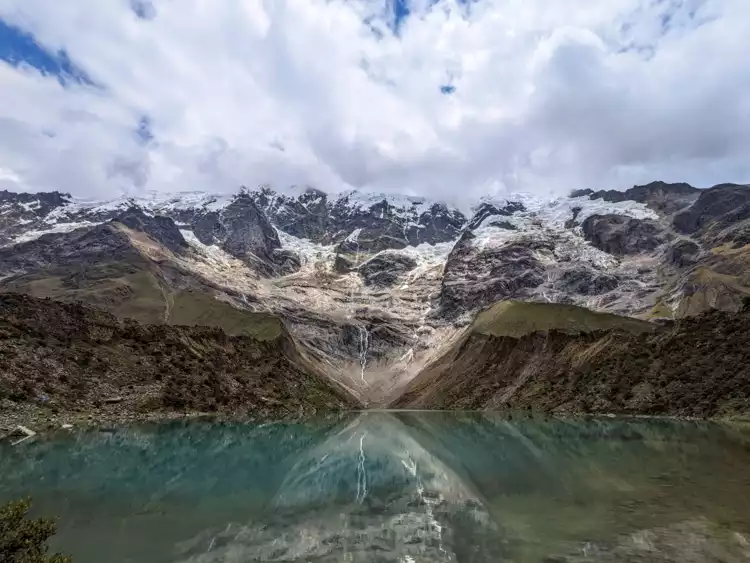
Peru pays you back in views that feel earned. Blue glacial lakes above Huaraz, ash-gray volcanoes over Arequipa, oilbird caves in Tingo María, rainforest canopies that swallow the horizon. The trick is pacing. Altitude ambushes egos; sleep two nights in Huaraz or Arequipa before chasing Laguna 69 or Misti. I tried to race it once and bought a two-day headache—cheap and educational. Carry small bills for park gates (Huascarán, Colca) and skip bundled “lunch stops”; a pocket of nuts keeps you mobile. First light wins at Rainbow Mountain or, better, Palccoyo; fewer crowds, same color punch. Caves are wet; pack a headlamp, not just your phone. In the Amazon, dry bags and rubber boots save cameras and ankles. Move early, move light, and Peru opens fast.

Low cost

Peru rewards motion. Ride colectivos, eat the menú del día, sleep in dorm bunks, and your daily average … read more 👉
Peru rewards motion. Ride colectivos, eat the menú del día, sleep in dorm bunks, and your daily average lands in the low double digits without feeling deprived. The trick is dodging leaks: airport ATMs and exchange kiosks nibble fees—withdraw in town and check bills against the light. Big‑ticket days (Machu Picchu, long tours) will spike the graph; balance them with DIY hikes and night buses that double as lodging—choose semi‑cama and keep valuables tight. Pro tip: hit the menú before mid‑afternoon; it’s soup, a hearty main, and a drink for less than a bar snack. I learned fast in Cusco: ask for the menú del día without the English card and you pay what locals pay. Another: colectivos beat taxis—confirm the fare before you sit. Carry small coins for bathrooms and markets to dodge “no change” markups.

People

People in Peru meet you with a joke and a handshake, then test your manners. Lead with buenos días, … read more 👉
People in Peru meet you with a joke and a handshake, then test your manners. Lead with buenos días, look them in the eye, and you’ll watch doors open. Pro tip: in markets, greet the casera, ask for the menú del día and the price before you sit; that one sentence saves soles and sidesteps awkwardness. Carry coins; big bills stall transactions and drain goodwill. Ask before photos—especially in the highlands—and agree on a small tip first; clean, cheap, no drama. Bargain once, smile, and walk if it’s not right; respect earns better prices than haggling to the bone. Share snacks on buses, accept a sip of emoliente, offer one back. Learn two phrases of Quechua—Allin punchaw and gracias—and watch faces brighten. I once hauled crates in Chiclayo’s market and got fed ceviche for it.

Wildlife

Peru rewards wildlife chasers because you can hit ocean, Andes, and Amazon in one push, each with marquee … read more 👉
Peru rewards wildlife chasers because you can hit ocean, Andes, and Amazon in one push, each with marquee species that actually show. Condors ride the morning thermals at Colca—arrive before 8 a.m. and skip the buffet-lunch tours that pull you away during peak flights. Tambopata beats Manu for first-time jungle: easier access from Puerto Maldonado, reliable macaw clay-licks, and more sightings per day per dollar. Bring your own binoculars; rentals are scarce or useless. Ballestas boats cancel in swell—book the first departure and carry a windbreaker or you’ll freeze and miss the penguins. I’ve burned memory cards at a canopy tower by 6 a.m.; pack a dry bag and spare batteries because humidity kills gear. Dry season (Jun–Sep) means easier trails, wet season means better canoe access—pick your fight.
Want the complete picture of Peru?
The offline Travel Guide brings everything together — routes, highlights & planning.

See what's included in the guide 👉

Get the Travel Guide -

⭐ HighlightsHighlights of Peru

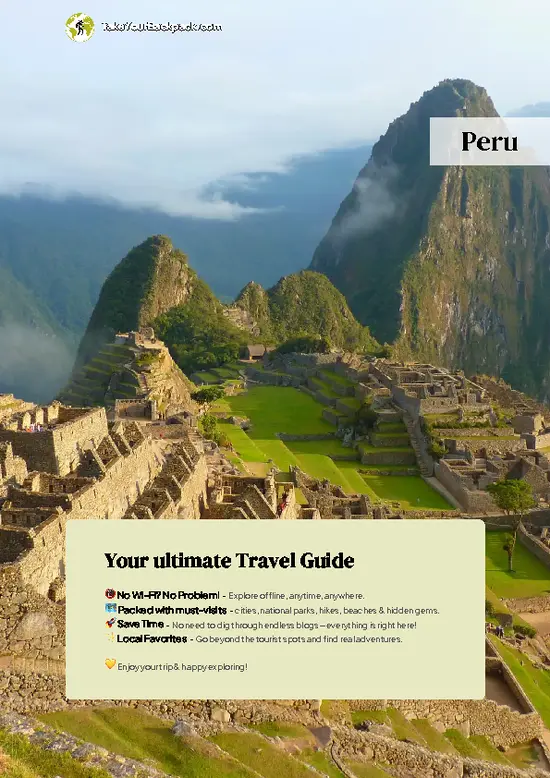
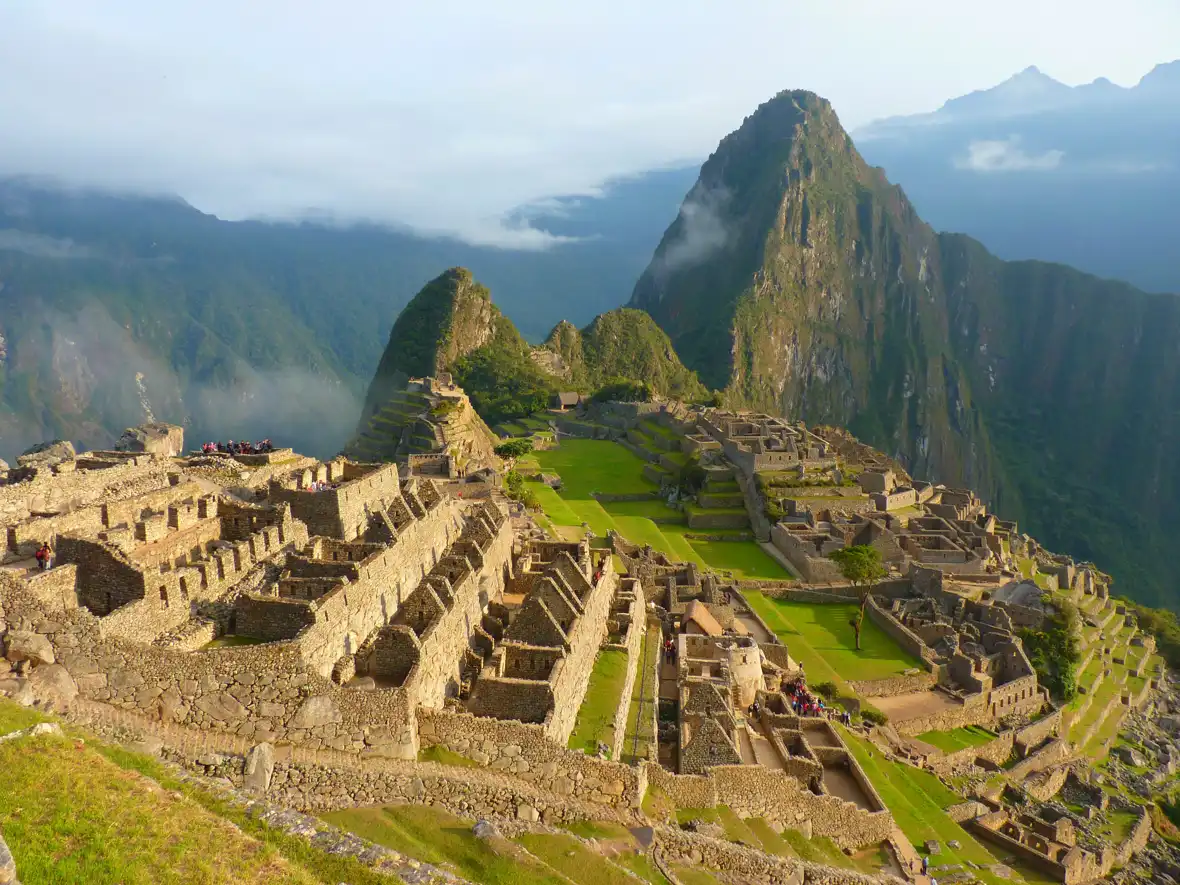
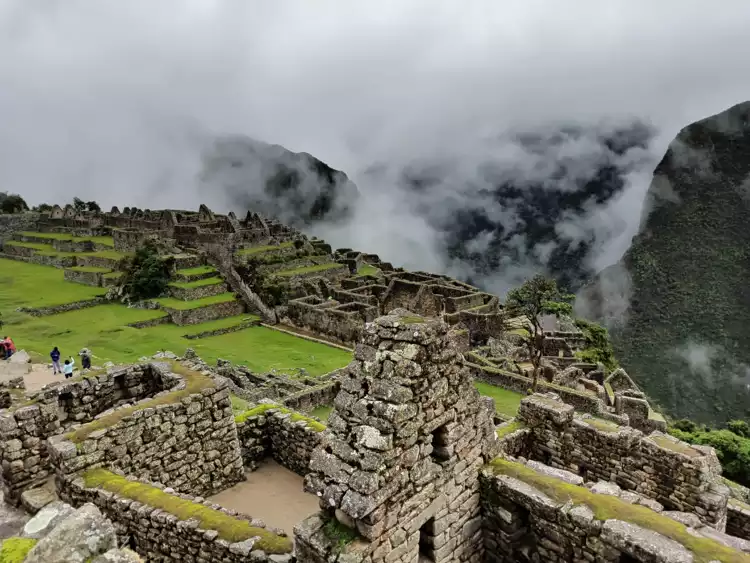
  • Machu Picchu: Fog peels off knife-edge ridges and the citadel snaps into view—terraces, stairways, llamas chewing like they own the place. The air smells of wet moss and warm stone; grab the guardrail and your palm comes away dusty with lichen. Tickets are timed and the one-way circuits block backtracking, so pick Circuit 2 if you want the classic high terrace shot. Use a dawn train to Aguas Calientes and walk the stairs to save the bus fare, but hit the bathrooms first—there are none inside and bags over 20-25 liters get stalled at paid storage.
  • Colca Canyon: Heat climbs off the canyon walls by 10 a.m., then the trail starts to kick. Donkeys bray from the river and fine grit cakes your calves. Skip the Arequipa “condor dash” tour; overnight in Cabanaconde, buy the Colca boleto at the checkpoint, and drop early to Sangalle before the sun torches the switchbacks. Climb out pre-dawn with a headlamp and water already treated. Carry small bills—village toll huts and cold sodas don’t make change,
read more 👉
  • Machu Picchu: Fog peels off knife-edge ridges and the citadel snaps into view—terraces, stairways, llamas chewing like they own the place. The air smells of wet moss and warm stone; grab the guardrail and your palm comes away dusty with lichen. Tickets are timed and the one-way circuits block backtracking, so pick Circuit 2 if you want the classic high terrace shot. Use a dawn train to Aguas Calientes and walk the stairs to save the bus fare, but hit the bathrooms first—there are none inside and bags over 20-25 liters get stalled at paid storage.
  • Colca Canyon: Heat climbs off the canyon walls by 10 a.m., then the trail starts to kick. Donkeys bray from the river and fine grit cakes your calves. Skip the Arequipa “condor dash” tour; overnight in Cabanaconde, buy the Colca boleto at the checkpoint, and drop early to Sangalle before the sun torches the switchbacks. Climb out pre-dawn with a headlamp and water already treated. Carry small bills—village toll huts and cold sodas don’t make change, and ATMs are a rumor out here.
  • Cordillera Huayhuash Circuit: Passes bite at 4,800-5,000 meters, and the wind knifes straight through sweat-soaked layers. At dawn, frost crunches under boots and the stove roars like a tiny jet. Acclimatize in Huaraz first or you’ll pay for it on day two. Budget for community fees at multiple checkpoints and carry cash in a dry bag; there’s no card machine between trailheads. Hire a burro and arriero in Pocpa or Llamac to save your knees for the climbs, and pack a real sleeping bag—nights slam below freezing even in the dry season.
  • Tambopata (Madre de Dios): The river slaps the boat hull and a hot, tannic smell rises off the water; howler monkeys throb like distant diesel. Cheap day trips won’t reach the macaw clay licks—book at least two nights inside the reserve or on a paddle-only oxbow lake. Humidity ruins electronics, so zip-loc everything and carry silica packs. Lodges provide boots, but bring high socks and long sleeves; sandflies ignore bravado. Dawn departures hit wildlife; late boats just stack hours and gasoline fumes.
  • Lake Titicaca (Taquile/Amantani): Sunlight bounces off the lake like a welding torch, and the cold nips as soon as the shade wins—altitude plays both sides. Skip the half-day Uros shuffle; go straight to Taquile or Amantani for a homestay, pay the island entry, and bring cash for meals. Rooms are bare, blankets heavy, stars savage. Climb slowly, drink water, and leave aspirin in easy reach; headaches punish hurry here. Off-the-map: Choquequirao’s ridge-top ruins, the Nor Yauyos-Cochas lagoons, and Huayllay’s stone forest; personal favorite: Choquequirao after the second brutal switchback pays out into condor silence.
Spotted a mistake or missing a highlight? Contact us.

But Peru offers more...

Discover and compare all of its highlights per category

🧭 RoutesPlanning a route that makes sense

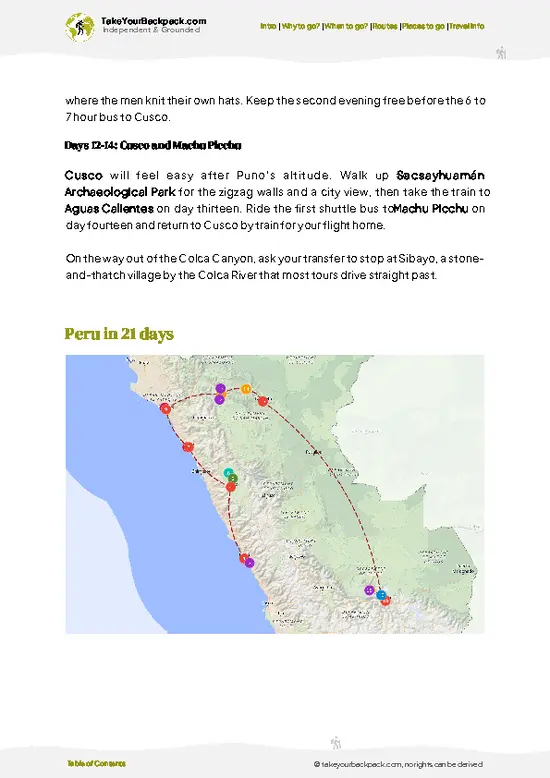
The 7-Day Sacred Valley & Machu Picchu Focus

The Vibe: One-region deep dive for first-timers who want big Andean history without airport-hopping, with slow mornings, acclimatization time, and just enough movement to feel like a journey. You’ll lean on trains, short transfers, and your own two feet rather than long bus hauls.
The Highlights:
  • Cobblestone streets, plazas, and museums in Cusco’s historic center.
  • Inca engineering on display at Qorikancha and Sacsayhuamán.
  • Terraces and villages of the Cuzco Sacred Valley.
  • A full, unhurried day at Machu Picchu Sanctuary.

The 14-Day Andes, Coast & Desert Circuit

The Vibe: A classic first big Peru trip that links Lima’s food and museums with Cusco’s highland culture and a desert finale, paced so you can breathe at altitude and still cover serious ground. Expect one domestic flight, a few scenic bus rides, and a mix of trains and taxis.
The Highlights:
  • Pre-Inca and colonial layers in Lima, from Larco Museum to Huaca Pucllana.
  • Several days soaking up Cusco’s
read more 👉

The 7-Day Sacred Valley & Machu Picchu Focus

The Vibe: One-region deep dive for first-timers who want big Andean history without airport-hopping, with slow mornings, acclimatization time, and just enough movement to feel like a journey. You’ll lean on trains, short transfers, and your own two feet rather than long bus hauls.
The Highlights:
  • Cobblestone streets, plazas, and museums in Cusco’s historic center.
  • Inca engineering on display at Qorikancha and Sacsayhuamán.
  • Terraces and villages of the Cuzco Sacred Valley.
  • A full, unhurried day at Machu Picchu Sanctuary.

The 14-Day Andes, Coast & Desert Circuit

The Vibe: A classic first big Peru trip that links Lima’s food and museums with Cusco’s highland culture and a desert finale, paced so you can breathe at altitude and still cover serious ground. Expect one domestic flight, a few scenic bus rides, and a mix of trains and taxis.
The Highlights:
  • Pre-Inca and colonial layers in Lima, from Larco Museum to Huaca Pucllana.
  • Several days soaking up Cusco’s streets, Qorikancha, and Sacsayhuamán.
  • The Cuzco Sacred Valley and a dedicated Machu Picchu visit.
  • Sand dunes and sunset views around the Huacachina Desert Oasis.

The 21-Day Ruins, Peaks & Rainforest Expedition

The Vibe: A three-week deep dive for travelers who want Peru’s full spectrum—coast, desert, high Andes, and Amazon—without turning every day into a race. You’ll string together flights, long-distance buses, and a few trains to connect far-flung regions at a steady, immersive pace.
The Highlights:
  • Lima’s museum circuit plus coastal sites like Pachacamac and Huaca Pucllana.
  • Northern archaeological powerhouses around Trujillo, Chan Chan, and Chiclayo.
  • Trekking days in Huaraz and the Cordillera Blanca, including Huascarán National Park.
  • Amazon rainforest time around Iquitos and Pacaya-Samiria, capped with a Machu Picchu finale.
🌍 Want a ready-to-use travel plan for Peru?
The overview above compares different route options based on your travel time and style. The complete Travel Guide breaks each itinerary down in detail, including maps, stops, highlights, and transport information.

Explore all route details 👉

Get the Travel Guide -

🌤️ When to go?When to go for the best experience

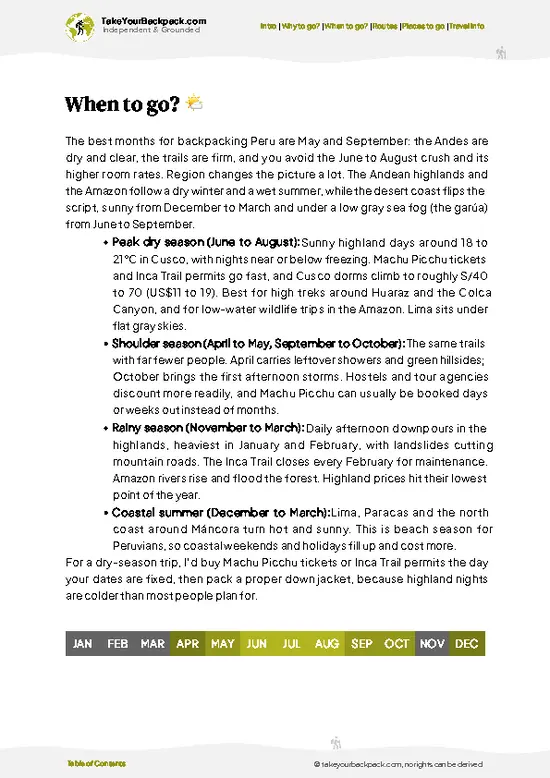
The sweet spot for Peru backpacking lands in late April-May and again in late September-October. Andes trails firm up after the rains, but the June-August stampede hasn’t hit (or has just faded). Hostels roll back rates, Machu Picchu tickets and trekking permits are easier to snag, and buses stop slipping in mud. You still get crisp mornings and long hiking windows without the brittle cold of mid-winter nights. The Amazon eases off its daily downpours, river levels become workable, and bugs relent a notch. On the coast, north beaches still carry enough warmth to swim, while Lima’s gloom hasn’t fully clamped down in May and hasn’t yet lifted you into high-summer pricing in October. It’s the calendar seam where weather behaves, crowds thin, and your soles bite into real value.
  • Peak Dry (June-August): You grind through booking queues, surge-priced Machu Picchu trains, and festival crush in Cusco. But you earn clean blue mornings, rock-solid passes on Salkantay, and night skies that switch on like a planetarium. Inti Raymi and Fiestas Patrias ignite the streets; every terrace hums. You’ll pay more and move slower, but the payoff is traction underfoot and zero-afternoon-thunderstorm anxiety.
  • Shoulder Switch (May, September-October): Trails harden, cloud ceilings lift, and shop shutters rattle open. Guides cut deals, colectivos run fuller and cheaper, and ticket lines shrink from a snake to a lizard. You cover more ground per day because weather stops arguing with you. It’s Peru in motion, not in gridlock—momentum without the melee.
  • Wet and Wild (November-March): The Andes breathe mist, valleys go emerald, and the crowds fall away. Storms drum tin roofs at night, and you’ll have whole switchbacks to yourself. Survival hack: start pre-dawn, carry a real poncho plus a trash-compactor bag as a pack liner, and favor valley walks over exposed passes. Expect landslide detours; build slack days. When the highlands soak, ride the coast—north beaches fire in December-March, and buses actually make time.

Tactical tip: in shoulder months, lock Machu Picchu entry and any train first, then buy everything else on arrival; that single sequence saves the most money and prevents itinerary collapse.

source: climatestotravel.comJANJanuary: fair for travelingFEBFebruary: fair for travelingMARMarch: fair for travelingAPRApril: good for travelingMAYMay: highly recommended for travelingJUNJune: excellent for travelingJULJuly: excellent for travelingAUGAugust: excellent for travelingSEPSeptember: highly recommended for travelingOCTOctober: highly recommended for travelingNOVNovember: fair for travelingDECDecember: good for traveling
📅 Traveling in a specific month?
Get a full month-by-month breakdown of weather, crowds, costs, festivals, and seasonal highlights in the complete travel guide.

Get full details when to go 👉

Get the Travel Guide -
!pixabay - peru-machu-picchu-43387

💰 Costs (as of 2025)Prices, expenses, and money tips

Expect $30-45 per day in Peru if you sleep in dorms, eat where workers eat, ride buses, and save big-ticket sights for chosen days.
  • dorm accommodation: S/30-55 ($8-15) most towns; S/60-80 ($16-22) in Cusco/Miraflores/high season. Prices jump for heat at altitude or “premium” bunks. System tip: book night one online, then walk in before noon and ask for the efectivo (cash) rate for 3+ nights; target hostels with desayuno incluido and free luggage storage so your trek days don’t cost double. Compared with Chile or Argentina, you’re paying about half; versus Bolivia, add 20-30%.
  • meals: Supermarket Survival: bread, avocado, canned tuna, bananas, and a market juice runs S/15-25/day if you self-cater breakfast and one meal. Street food reality: menú del día at markets or básicos joints is S/10-15 for soup + segundo + drink; pollo a la brasa S/12-18; chifa set menus S/14-20. Tourist squares triple that. Eat two blocks off the plaza and refill a bottle with hervida at the hostel; don’t bleed S/4-6 per water. Relative value: cheaper than Ecuador’s coastal towns, way cheaper than Chile, a hair pricier than Bolivia. I once cut a day’s spend in half by ditching the plaza for a market stall with
read more 👉
Expect $30-45 per day in Peru if you sleep in dorms, eat where workers eat, ride buses, and save big-ticket sights for chosen days.
  • dorm accommodation: S/30-55 ($8-15) most towns; S/60-80 ($16-22) in Cusco/Miraflores/high season. Prices jump for heat at altitude or “premium” bunks. System tip: book night one online, then walk in before noon and ask for the efectivo (cash) rate for 3+ nights; target hostels with desayuno incluido and free luggage storage so your trek days don’t cost double. Compared with Chile or Argentina, you’re paying about half; versus Bolivia, add 20-30%.
  • meals: Supermarket Survival: bread, avocado, canned tuna, bananas, and a market juice runs S/15-25/day if you self-cater breakfast and one meal. Street food reality: menú del día at markets or básicos joints is S/10-15 for soup + segundo + drink; pollo a la brasa S/12-18; chifa set menus S/14-20. Tourist squares triple that. Eat two blocks off the plaza and refill a bottle with hervida at the hostel; don’t bleed S/4-6 per water. Relative value: cheaper than Ecuador’s coastal towns, way cheaper than Chile, a hair pricier than Bolivia. I once cut a day’s spend in half by ditching the plaza for a market stall with the same lomo saltado and a better ají.
  • local transport: The country unlocks with buses and colectivos. Intercity buses cost roughly S/10-15 per hour for standard; semi-cama/cama seats cost more but save on a night’s bed. Buy at the terminal to dodge agency markups; keep S/1-3 for the terminal tax. Short hops use colectivos or shared taxis (S/4-10). In cities, combis are S/1-2; Lima’s Metropolitano is a cheap spine. App taxis beat street hails; taxis don’t use meters, agree the fare before doors close. Versus Colombia or Ecuador, distances are longer but rides still undercut flights by a mile.
  • activities: The wallet-burners are Machu Picchu (entry S/150-200+), the train (often $60-120 round-trip), and the shuttle bus up. Hike up instead of the bus, or go the Hidroeléctrica route by van + walk to slash costs. Cusco’s Boleto Turístico (S/130) unlocks multiple sites and makes per-ruin prices fair. Colca Canyon adds a tourist tax (about S/70). Amazon trips run $50-100/day. Skip one train ride and you fund a week of museums, ruins, and hikes.
  • miscellaneous: Budget Leaks: ATM fees (often S/18-25 per withdrawal), laundry S/5-8/kg, paid bathrooms S/0.5-1, sunscreen and repellent in tourist towns at 2-3x, “service” on sit-down restaurant bills, and last-minute gear rental. Withdraw in bigger chunks, do laundry in markets not hostels, stock toiletries in Lima/Arequipa, and stash small coins for baños. Relative value: Peru is friendlier than Chile or Brazil on these drips, but looser than Bolivia. I once paid triple for sunscreen in Aguas Calientes—buy it in Cusco and you’ll feel smug on the switchbacks.
⚠️ Prices can change and everyone travels differently, so take this as a rough guide. Hope it helps you plan your adventure!

✈️ The backpacker research shortcutPeru Travel Guide

An offline-friendly backpacking guide with optimized travel routes, ranked highlights, transport advice, and the best areas to stay.
example page 0 from our offline Travel Guide for Peruexample page 1 from our offline Travel Guide for Peruexample page 2 from our offline Travel Guide for Peruexample page 3 from our offline Travel Guide for Peruexample page 4 from our offline Travel Guide for Peruexample page 5 from our offline Travel Guide for Peruexample page 6 from our offline Travel Guide for Peruexample page 7 from our offline Travel Guide for Peru
The digital guide (444 pages) contains:
118 highlights, ranked by travel appeal
Optimized 7, 14 & 21-day travel routes
Cities, national parks, beaches, historical sites, ...
How to get around
Offline-friendly for travel without Wi-Fi
👉 Click to see all 30+ guide features

📅 Plan smarter in minutes, not weeks
Month by month travel advice
Festivals & national holidays
Budget expectations

🗺️ Go to the right places, skip the overrated ones
Honest pros & cons of destinations
Top hikes, parks & viewpoints
Lesser-known places most travelers miss
Clear “worth it vs skip it” guidance

🛏️ Travel smoothly without rookie mistakes
Best areas to stay
Transport systems explained simply
Common scams & safety advice
SIM cards, money & practical tips

🌍 Understand the country, not just visit it
Culture & traditions
52 Essential phrases & customs
Festivals worth planning around
Traveler-friendly historical context
Insights that make places more meaningful

📱 Built for real travel conditions
Fully downloadable PDF
Works completely offline
Optimized for phone use
Useful in remote areas & buses
Everything in one place
Save weeks of stressful planning
Get instant access to the full guide directly. 30-day money-back guarantee.


Sent to your inbox immediately after payment • 100% Secure Checkout
Best Backpacking Travel Advisor 2025 tourism awardBest Backpacking
Travel Advisor
2025
What others say about Take Your Backpack Guides:
⭐⭐⭐⭐⭐
Fantastic, amazing amount of information!
⭐⭐⭐⭐⭐
My goodness this is amazing, it's what I've been looking for hats off too you!
⭐⭐⭐⭐⭐
I think this is absolutely BRILLIANT
⭐⭐⭐⭐
Very complete and informative. It's still missing places, but I gotta to commend you
⭐⭐⭐⭐⭐
This is truly amazing, thank you, can't wait to explore it with my kids!
⭐⭐⭐⭐⭐
Awesome resource, thank you!
⭐⭐⭐⭐⭐
This is amazing! Can't wait to explore the ones I haven't seen
⭐⭐⭐⭐
I love this! Well done, great idea.
⭐⭐⭐⭐⭐
Thanks for taking the time to make this gem!
⭐⭐⭐⭐⭐
This might be the best website I've ever seen.
⭐⭐⭐⭐⭐
Congratulations, and thank you so much for your work; it's incredibly valuable.
⭐⭐⭐⭐
In all seriousness I think you did a great job pointing out the important spots
⭐⭐⭐⭐⭐
10/10 very good
⭐⭐⭐⭐⭐
As someone who's only just starting to visit regularly this is awesome, thank you.
⭐⭐⭐⭐
Thank you very much! I'm going to visit my dad, it's going to be very useful!
⭐⭐⭐⭐⭐
This is really cool! We'll be travelling for the first time and this definitely come in handy.
⭐⭐⭐⭐⭐
You are now our minister of culture, congratulations 👨‍💼
⭐⭐⭐⭐⭐
Just wanted to tell you that this is a pearl! Going to follow your recommendations.
⭐⭐⭐⭐⭐
This is so cool. I'll definitely be using the resource for my travels soon.
⭐⭐⭐⭐⭐
This is very impressive! Good work.
⭐⭐⭐⭐⭐
This is an amazing and informative site. Very well done!

🛏️ Where to stay?Choosing the right base for your trip

Yes — Peru has abundant hostels and budget accommodation across cities and tourist routes, with the strongest concentrations in Miraflores and Barranco (Lima), Cusco and San Blas, Sacred Valley towns like Ollantaytambo and Pisac, Arequipa historic center, and northern beach towns such as Máncora.
Miraflores/Barranco are safer with great food, beach access and transport links but pricier; Cusco/San Blas put you next to train departures to Machu Picchu and lively nightlife but are crowded and demand altitude acclimatisation; the Sacred Valley is quieter and cheaper with direct ruin access but … read more 👉
Yes — Peru has abundant hostels and budget accommodation across cities and tourist routes, with the strongest concentrations in Miraflores and Barranco (Lima), Cusco and San Blas, Sacred Valley towns like Ollantaytambo and Pisac, Arequipa historic center, and northern beach towns such as Máncora.
Miraflores/Barranco are safer with great food, beach access and transport links but pricier; Cusco/San Blas put you next to train departures to Machu Picchu and lively nightlife but are crowded and demand altitude acclimatisation; the Sacred Valley is quieter and cheaper with direct ruin access but has fewer late-night services and limited transport options.
Arequipa’s Cercado gives a compact, safe colonial base with good long-distance buses but less backpacker nightlife, while northern beach towns offer cheap surf and party hostels yet can be seasonal, have variable infrastructure and less reliable transport connections.

If you enjoy meeting fellow travelers, consider choosing hostels with high ratings for atmosphere. On the other hand, if you prefer having your own space, a hotel might be a better option.

🚌 Getting aroundWhat moving around is really like

Peru moves on momentum and compromise. Timetables exist, then the Andes flex and the clock shrugs. You sprint for a combi, then wait an hour at a police checkpoint while a herd crosses a switchback. Learn the rhythm—buy in person, leave early, keep cash small—and the country flows. Fight it and you bleed days and soles into avoidable friction.
  • Intercity Night Buses The blunt tool that wins most distance-per-coin. Coastal runs are fast and straight; mountain routes meander and steal hours with hairpins
read more 👉
Peru moves on momentum and compromise. Timetables exist, then the Andes flex and the clock shrugs. You sprint for a combi, then wait an hour at a police checkpoint while a herd crosses a switchback. Learn the rhythm—buy in person, leave early, keep cash small—and the country flows. Fight it and you bleed days and soles into avoidable friction.
  • Intercity Night Buses The blunt tool that wins most distance-per-coin. Coastal runs are fast and straight; mountain routes meander and steal hours with hairpins and fog. Pay up for semi-cama or cama and you replace a hostel night for the price of dinner, but know the trade: slower than a promo flight, far cheaper once you add airport transfers and baggage fees. At terminals, you pay a tiny “uso de terminal” fee in cash before boarding. Tag your big bag, photo the stub, and keep valuables on your body. AC swings cold, so layer. Motion sick in the sierra, take a pill before the climb and avoid the back row. Depart at dusk, arrive at dawn with legs to spare.
  • Combis and Colectivos This is the country’s social wiring, loud and pragmatic. Flag with a palm-down wave, meet the cobrador shouting neighborhoods, and climb fast. Fares are pocket change, paid in coins as you hop off. Say “baja en la esquina” and move early through the aisle. Backpack on your chest, phone away from windows, and one foot ready because doors open while rolling. Routes flex with traffic, drivers thread impossible gaps, and nobody apologizes for speed. You learn stops by osmosis and by watching where everyone else bails. It is messy, cheap, and everywhere.
  • Amazon River Boats Water redraws the map east of the Andes. Slow lanchas string hammocks from Iquitos to Yurimaguas or Pucallpa; you tie in, guard your kit with a cable lock, and eat when the bell rings from your own bowl. They leave when full and stop for cargo, chickens, rain, whatever the river decides. Rapidos slice the same route in hours, not days, at a higher fare and tighter luggage rules. The river reaches villages no road touches, which means you do too—if you bring repellent, patience, and a headlamp.
  • Hidroelectrica Bus + Foot to Machu Picchu Skip the gold-plated train. Vans run Cusco-Santa María-Santa Teresa-Hidroeléctrica for a fraction of the rail price. From the hydro station, you shoulder your pack and walk the tracks two to three hours to Aguas Calientes. Start early to dodge afternoon slides and darkness, pick a reputable van outfit, and insist on a seatbelt. Cash for road snacks, rain shell on top, and do not leave after noon in the wet season. It is the cheapest line to the ruins, full stop.
Master tip: Cross the Andes in daylight for safety and scenery, but burn long coastal distances on night buses—buy seats in person the day before, front lower deck if offered, and keep a one-day buffer for strikes so delays do not domino your route.
Distance The airport (Jorge Chávez, LIM) sits in Callao about 11 km (7 mi) from Lima’s Historic Center (Centro de Lima) and roughly 18-20 km (11-12 mi) from Miraflores, where many visitors stay.

There’s no metro/train to the airport as of 2025. Expect heavy traffic at rush hour; travel times can easily double.

Main public transport options
  • Shared shuttle (QuickLlama) to Miraflores/Barranco

    Time: 45-75 minutes, depending on traffic and your stop.

    Cost: S/ 20-28 per person (about US$5-7).

    Notes: Book online; runs day and night with reduced late-night frequency. Drops in central Miraflores/Barranco, not the Historic Center.
  • City buses (SIT/Corredor) from Av. Elmer Faucett

    Time: 60-100 minutes (you may need 1 transfer to reach Centro or Miraflores).

    Cost: S/ 3-5 total per person (about US$1-1.50).

    Notes: Cheapest but least convenient with luggage. You’ll have to walk out to the main road and know your route; services generally run early morning to late evening, not overnight.
  • Metropolitano (BRT) via a local bus transfer

    Time: 55-90 minutes to Centro or Miraflores once you factor in the transfer.

    Cost: Around S/ 4-7 total (bus + Metropolitano fare; a rechargeable card is required for the Metropolitano).

    Notes: Still involves walking and a transfer; better if you’re packing light and comfortable with Lima’s bus system.

Taxis and ride-hailing Official airport taxis (book at desks inside the terminal) to the Historic Center typically cost S/ 40-60 (US$11-16) and to Miraflores S/ 55-80 (US$15-22). Ride-hailing apps like Uber, Cabify, and inDrive usually run a bit cheaper—about S/ 25-45 to Centro and S/ 35-60 to Miraflores—but pickup points can vary; follow the app’s instructions. Travel time for cars is 35-90 minutes depending on traffic and time of day.

Quick tips
  • Rush hour (roughly 07:00-10:00 and 17:00-20:30) can add 20-40 minutes.
  • Avoid hailing street taxis outside; use official desks or apps.
  • Carry some soles; small operators and buses are cash-only.
⚠️ Prices and routes can change, so take this as a rough guide and ask for local advice when you arrive.

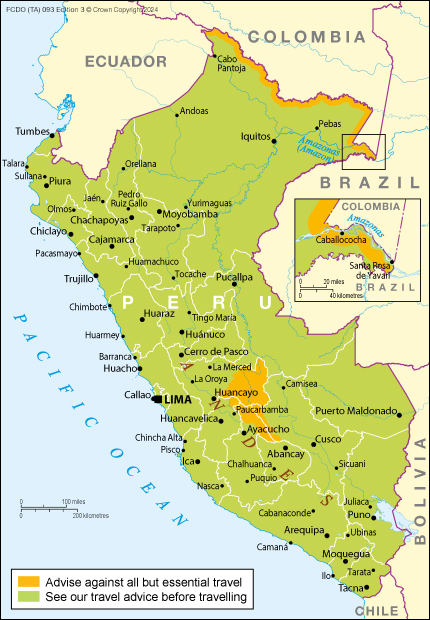
🔒 Safety (risk Level: medium)Staying safe while traveling

Safety for solo travelers, including women and LGBTQ+ individuals
Peru is generally safe for solo travelers, including women and LGBTQ+ individuals, but exercise caution, especially in crowded areas and at night. Stick to well-trodden tourist paths, and be mindful of local customs. Women should consider dressing conservatively and LGBTQ+ travelers might want to be discreet in rural areas where attitudes can be more conservative. Always use registered taxis and avoid displaying valuables.


Full official government travel advisory (live updates)
View details 👉
safety image

source: www.gov.uk

✈️ VisaDo you need a visa to visit?

Most travelers can enter Peru without a visa for up to 90 days, including citizens from the USA, Canada, Australia, and the EU. Ensure your passport is valid for at least six months beyond your entry date. Always check the latest entry requirements with the Peruvian consulate or embassy before traveling.

source: gob.pe
⚠️ Visa requirements can change over time, so always check the latest visa requirements with the official embassy or government website before you travel.

🎒 What to pack?A practical packing list

Packing for Peru is all about layers, my friend. The weather here can be a rollercoaster, from the chilly peaks of the Andes to the sticky humidity of the Amazon. If you’re hitting the highlands, think about packing **warm layers** for those brisk Andean mornings, but don’t forget something lighter for when the sun’s out. Down in the jungle, you’ll want breathable clothes and plenty of bug repellent. When exploring cultural sites, especially in Cusco or Lima, it’s a good idea to have some **modest attire** handy; covering shoulders and knees is respectful and sometimes required. Keep in mind the unpredictable rains, particularly if you’re visiting during the wet season (November to April), so a compact rain jacket is your best buddy.

Apart from this country specific advice, I have also crafted a general packing list that should help on any trip. authorOver the years, I've learned the importance of packing minimally. It's so much easier to jump on the back of a truck or squeeze yourself into the last spot of a minibus without that supersized backpack. If you're headed to a warm destination, leave your winter jacket at home; for colder regions, opt for thin thermal underlayers. Instead of packing your entire wardrobe, bring just three sets of clothes, as laundry facilities are available everywhere.
View the full list 👉
🎒 Planning the practical side of your trip?
Get detailed information on transport, daily budgets, internet access, local customs, food, language, and other essentials in the complete Travel Guide.

Get detailed practical information 👉

Get the Travel Guide -

🙋 FAQCommon questions before visiting

Trip Planning


Personal tip: I normally search on good rating for atmosphere (for meeting people) and location (for easy exploring). Cleanliness as a bonus.


Travel Essentials

Hepatitis A and Typhoid are recommended for most travelers visiting Peru. Hepatitis B and Rabies are advised if you plan on doing certain activities like hiking or animal interactions. Consider Yellow Fever vaccination if visiting the Amazon Basin. Make sure your routine vaccines (MMR, DPT, etc.) are up to date. Always check with a healthcare provider for the latest recommendations.


vaccination requirements
When I first started traveling, I often spent part of my first day in a new country hunting for a local SIM card. While this can still be slightly cheaper, it also takes time and planning.

These days, it's much simpler to install an eSIM before leaving home. Once you arrive in Peru, you can activate it immediately and have mobile data from the moment you land — which is especially useful for ordering transport or navigating away from busy airports.

There are many providers nowadays, and price differences are usually small. I personally go with Airalo, as it offers excellent network coverage throughout the country and strong global coverage, so you can manage multiple countries from a single app.


Get your e-sim for Peru

Culture & Customs

In Peru, greet with a handshake or a cheek kiss among friends, using ”Señor” or ”Señora” for elders. Dress modestly, especially in churches or rural areas. Don’t flush toilet paper; bins are provided. Bargaining is common in markets, but keep it respectful. Avoid discussing politics, particularly regarding the president or coca leaves, unless you’re familiar with local views.

LGBTQ+ travelers may face some conservative views, especially in rural areas, so discretion is advised. Women should be prepared for occasional catcalling but it’s generally harmless—ignore and move on. Always show respect to indigenous traditions and ask permission before taking photos of people, especially in traditional attire.
Trying traditional food is always a great way to experience the culture. Here are some must-try dishes for Peru.
  • Ceviche: A refreshing dish made with fresh raw fish marinated in citrus juices, usually lime, and spiced with chili peppers. It’s a cornerstone of Peruvian cuisine and reflects the country’s rich coastal resources.
  • Lomo Saltado: Stir-fried beef with onions, tomatoes, and French fries, served with rice. This dish showcases the fusion of Peruvian and Chinese flavors, known as ’chifa’ cuisine.
  • Aji de Gallina: A creamy chicken stew made with aji amarillo (yellow chili peppers), walnuts, and cheese, served with rice and boiled potatoes. It’s a comfort food that highlights the use of native Peruvian flavors.
  • Pachamanca: A traditional Andean dish cooked underground using hot stones. It typically includes marinated meats, potatoes, corn, and fava beans. This dish is a celebration of ancient cooking techniques and communal feasting.
  • Causa Rellena: Layered potato dish, often filled with tuna, chicken, or avocado, and seasoned with lime and aji amarillo. It represents the versatility of the potato, a staple in Peruvian agriculture.
Tap water in Peru isn’t safe to drink for travelers, and most locals avoid it too. Stick to bottled or filtered water to be on the safe side. Bring a portable water filter if you’re heading off the beaten path.
The main language in Peru is Spanish. Backpacking is way more rewarding if you know a bit of the local language, so I'd suggest brushing up on the basics just in case your Spanish skills have become a bit rusty.

Want to understand locals better?
The complete Travel Guide for Peru includes 52 essential words and phrases — greetings, thank-yous, ordering food, transport, numbers, and common local expressions you'll actually hear.

Get your local basic phrases 👉

Get the Travel Guide -


In Peru, English proficiency varies significantly depending on the region and the setting. In major cities like Lima, Cusco, and Arequipa, especially in tourist areas, many people in the hospitality industry—such as hotel staff, tour guides, and restaurant workers—speak English to varying degrees. However, outside these areas, particularly in rural regions, English is less commonly spoken.

In tourist hotspots, you can generally find English speakers who can assist with basic communication. Nonetheless, learning a few basic Spanish phrases can enhance your experience and interactions with locals. Many Peruvians appreciate the effort and may be more willing to help if you attempt to speak their language.

Overall, while you can navigate many parts of Peru with English, having some knowledge of Spanish will enrich your travel experience and help you connect more deeply with the culture.

Money & Payments

The local currency of Peru is PEN (S/. ).

ATMs: You’ll find ATMs in most major cities and tourist areas like Lima, Cusco, and Arequipa. They usually dispense both soles and dollars, but watch out for fees. Stick to ATMs inside banks for security.

Cash: Cash is still king in rural areas. Always have some soles on hand, especially for markets or small towns. Avoid carrying huge amounts though; pickpockets are a thing.

Dollars or Euros? Dollars are widely accepted and easy to exchange. Euros, not so much. If you have euros, swap them for dollars before arriving or use them at major banks or exchange offices in bigger cities.

Card Acceptance: Credit and debit cards are accepted in most hotels, restaurants, and shops in larger cities. Always ask first, especially in smaller establishments. Visa is more commonly accepted than Mastercard.

Exchanging Money: Exchange offices (casas de cambio) offer decent rates, especially in tourist zones. Avoid airport exchanges if you can; they tend to have lousy rates. Always check for counterfeit bills; look for watermarks and feel the texture.

Tipping in Peru isn’t obligatory but appreciated. In restaurants, leaving around 10% is common if the service fee isn’t included. For taxi drivers, rounding up to the nearest sol is a nice gesture, but not expected.

🧩 Nearby countriesSimilar backpacking destinations

📸 PhotosA visual impression of the trip

Take your backpack - Peru - 0
Take your backpack - Peru - 1
Take your backpack - Peru - 2
Take your backpack - Peru - 3
Take your backpack - Peru - 4
Take your backpack - Peru - 5
Take your backpack - Peru - 6
Take your backpack - Peru - 7
Take your backpack - Peru - 8
Take your backpack - Peru - 9
Take your backpack - Peru - 10
Take your backpack - Peru - 11
Take your backpack - Peru - 12
Take your backpack - Peru - 13
Take your backpack - Peru - 14
Take your backpack - Peru - 15
Take your backpack - Peru - 16
Take your backpack - Peru - 17
Take your backpack - Peru - 18
Take your backpack - Peru - 19
Take your backpack - Peru - 20
Take your backpack - Peru - 21
Take your backpack - Peru - 22
Take your backpack - Peru - 23
Take your backpack - Peru - 24
Take your backpack - Peru - 25
Take your backpack - Peru - 26
Take your backpack - Peru - 27
Take your backpack - Peru - 28
Take your backpack - Peru - 29
Take your backpack - Peru - 30
Take your backpack - Peru - 31
Take your backpack - Peru - 32
Take your backpack - Peru - 33
Take your backpack - Peru - 34
Take your backpack - Peru - 35
Take your backpack - Peru - 36
Take your backpack - Peru - 37
Take your backpack - Peru - 38
Take your backpack - Peru - 39
Take your backpack - Peru - 40
Take your backpack - Peru - 41
Take your backpack - Peru - 42
Take your backpack - Peru - 43
Take your backpack - Peru - 44
Take your backpack - Peru - 45
Take your backpack - Peru - 46
Take your backpack - Peru - 47
Take your backpack - Peru - 48
Take your backpack - Peru - 49
Take your backpack - Peru - 50
Take your backpack - Peru - 51
Take your backpack - Peru - 52
Take your backpack - Peru - 53
Take your backpack - Peru - 54
Take your backpack - Peru - 55
Take your backpack - Peru - 56
Take your backpack - Peru - 57
Take your backpack - Peru - 58
Take your backpack - Peru - 59
Photographed by: Johan Kruseman

Things learned while traveling

Six month backpacking trip through Bolivia, Peru and central America: update 6/14

Peru | Napaykullayki kgochu! This might sound more like Nepali, but I’m still in South America. To add a cultural touch to my emails, let me disrupt your simple worldview that they speak Spanish or Portuguese throughout this continent. The above greeting is Quechua, and a few days ago, I ended up with a family on an island where it was the only language t...
Read more

Six month backpacking trip through Bolivia, Peru and central America: update 7/14

Peru | I’ve had some more adventures: Rafting on the Apurimac River In Cuzco I did an insane four-day rafting trip. Now, the issue was that our guide was really into surfing (with a raft). That means you raft in the same spot in the river while the river flows super fast underneath you, WITHOUT PADDLING. So, we thought that was fun too, only he di...
Read more

Six month backpacking trip through Bolivia, Peru and central America: update 8/14

Peru | The last 3 days in Peru have given the concept of ‘car’ a whole new dimension. Things a car definitely doesn’t need are (a) the starter motor and (b) the gas pedal. First, I was in a bus without a starter motor. Not a big deal as long as you park the bus on a hill and can start the engine using gravity. The problem arises when the only way down is...
Read more
More stories

We 💚 feedbackIs Peru worth visiting?

Go to Peru for the Andes you can actually walk. Climb from maize fields to 5,000-meter passes, then crush a hot market soup while sweat still cools. The payoff stacks fast: Inca stone under your boots, glacier light, jungle edges—cheap once you step outside the Machu Picchu corridor. The drawback: Machu Picchu is controlled and costly—timed entry, mandatory shuttles, limited trains, and tickets that vanish in high season. Win the trip by building an altitude ladder: coast to Arequipa to Cusco to big trek, with two buffer days around Machu Picchu. You’ll dodge headaches, missed buses, and surge prices, and you’ll hit the high trails with lungs ready and legs eager.

✈️ When did I visit Peru?
Peru I visited during my half year trip through South and Central America back in 2003 Since then, this guide is regularly updated based on feedback from locals and recent backpackers (last update: 22 May 2025)

✍️ Help improve this page!
The information on this page is based on my own backpacking experience in Peru, supplemented with up-to-date research and feedback from other travelers. Travel details can change, so if you notice anything outdated or incomplete, feel free to let me know.


🙋‍♂️ Give feedback

👋 Meet the founderWho’s Behind Take Your Backpack?

Johan, backpacker and founder of TakeYourBackpackHi, I’m Johan (Netherlands 🇳🇱), the creator of TakeYourBackpack. Over the past decade, I’ve backpacked through 80+ countries across six continents, gaining extensive experience with independent travel, long-term trips, and overland routes.

This site is built on a combination of firsthand travel experience and carefully curated insights from other backpackers. Many guides are based on places I’ve personally visited, while others bring together tips, observations, and practical advice shared by trusted travelers I’ve met along the way.

The goal is to provide realistic, experience-driven guidance — not generic itineraries — so you can explore destinations with better context, clearer expectations, and more confidence.

Get full Peru guide •
Instant download • 118 highlights • Full Offline guide