×
Poland 🇵🇱

backpacking Europe Poland 🇵🇱Move across plains linking resilient historic cities.

Explore NorwayExplore Portugal

Backpacking Poland in 2026

A complete guide including when and where to go, costs, transport, itineraries, and practical travel advice.
A first look at the country

Backpacking Poland
By Johan Kruseman 🇳🇱 | Updated June 6, 2026

I ditched a Kraków bar crawl for the 5 a.m. bus to the Tatras—and won. Poland rewards trade-offs like that: sleep, comfort, or crowds traded for big payoffs. Prices are kind, distances wider than they look, and meaning shows up when you make an effort.

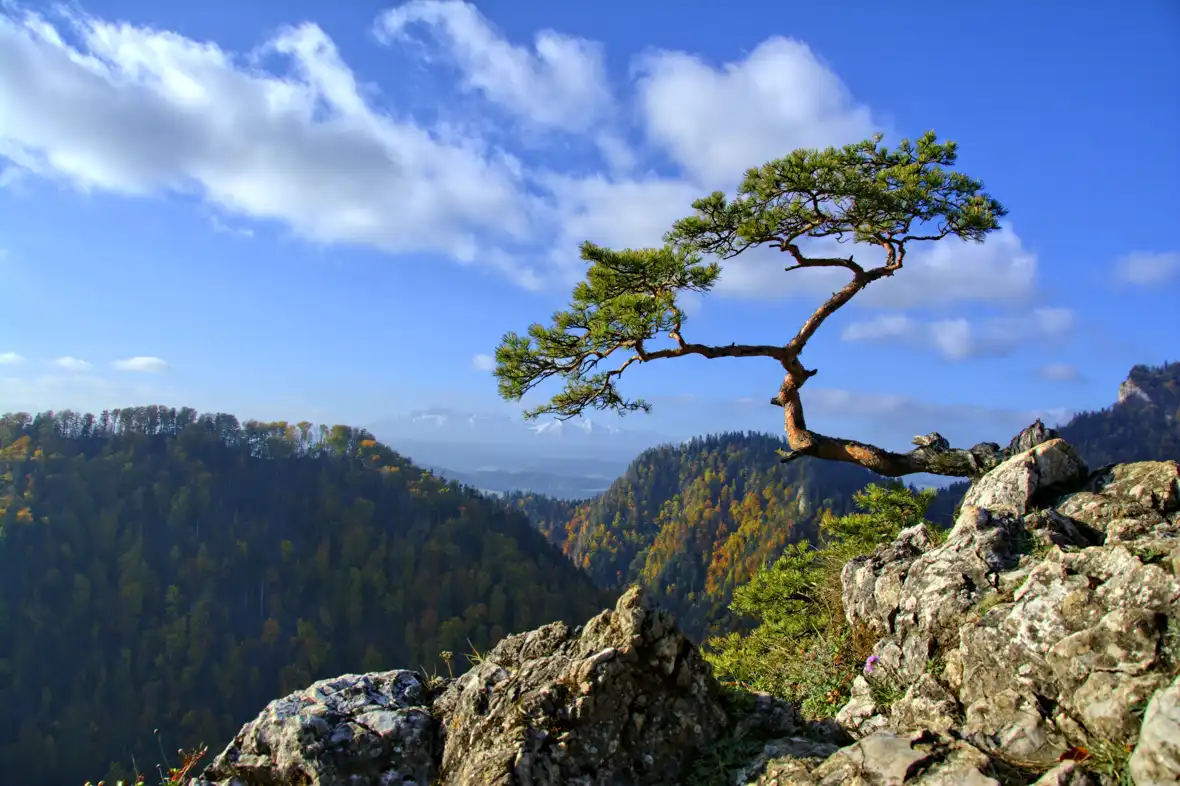
From the Baltic dunes and shipyards of Gdańsk to the Tatras over Zakopane, the country runs on resilience and small pleasures: barszcz in a milk bar and a memorial that stops you mid-step. Kraków’s Old Town and Kazimierz, Warsaw’s rebuilt skyline, Białowieża’s bison, and the Masurian Lakes—each feels earned, not staged. Yes, queues at Auschwitz, gray skies, long rides east, and cash-only corners. But a ridge above Morskie Oko or a first‑hand Solidarity story shrinks the hassles and leaves the place under your skin.

Rougher‑edged than Germany, less tidy than the Czech Republic, better value than both. Its peaks can’t match Slovakia’s height, but the coast‑to‑forest range wins on scope. Go if you want history with bite, cities with backbone, and trails that make you earn lunch—paying with effort, not cash.

👉 Get the 📖 Travel Guide of Poland

Kraków & the Tatras (Małopolska/Podhale)

Kraków’s Old Town is clogged by noon and pricier than anywhere in Poland outside high season Zakopane; go at dawn, then eat in Kazimierz where locals still outnumber Segways. Book Schindler’s Factory; Auschwitz is sobering and logistically simple but takes a full day. The real payoff sits south: leave Zakopane’s souvenir strip and hike Kościeliska or Chochołowska valleys, then push higher to Giewont or Kasprowy if weather allows. PTTK mountain huts are plain, cheap, and reliable; parking at trailheads fills by 8:00. Trains funnel you to Kraków easily, then buses to Zakopane. Rewards early risers and hikers who can read a forecast and ignore crowds.

Warsaw & Mazovia

Warsaw isn’t cute; it’s functional and forward. Wide boulevards, heavy history, serious museums (Uprising, POLIN), bars that actually serve locals. Prices are lower than central Kraków, higher than Łódź. The Vistula has legal bonfire zones and sandy banks; Praga is rough around the edges but lived-in. Logistics are smooth: airport train, two metro lines, frequent intercity rail. Day trips to Kampinos Forest or Żelazowa Wola break up the concrete. Best for urbanists, museum grazers, runners, and anyone who likes a city that works more than it poses.

Gdańsk–Sopot–Gdynia (Tri-City & Baltic Coast)

One SKM rail spine links shipyards, beach town, and port. Gdańsk gives you Solidarity gates and ship cranes; Sopot gives you crowds and a cold swim even in July; Gdynia gives you sea walks and cheap fish canteens. Summer is busy and room rates jump; shoulder season is windy and honest. Ferries and bikes make the Hel Peninsula easy if you keep plans flexible. Suits maritime history buffs, families who can do off-season, and walkers who like long, flat days.

Lower Silesia: Wrocław, Castles, Sudetes

Wrocław runs on students and bridges; nights are chatty and affordable compared to Kraków. Use the city for food and beds, then fan out: Książ Castle, Świdnica’s timber church, Jelenia Góra basin, and Śnieżka for a leg day. Trains reach the main towns, but a car saves hours between castles. Trails are quieter than the Tatras and kinder on the knees. Good for castle-chasers, casual hikers, and photographers who prefer fog to crowds.

Podlasie: Białowieża, Biebrza, Wooden Villages

This is Poland’s slow lane. Bison at dawn if you’re patient, boardwalks through bogs, wooden cottages, Orthodox domes, and Tatar kitchens in Kruszyniany. English thins out; cash and offline maps help. Reach Białystok by rail, then bus or car to Białowieża; some prime forest zones need a guide. Mosquitoes are relentless May–July. Rewards birders, cyclists, and anyone who likes silence and mud more than cafés.
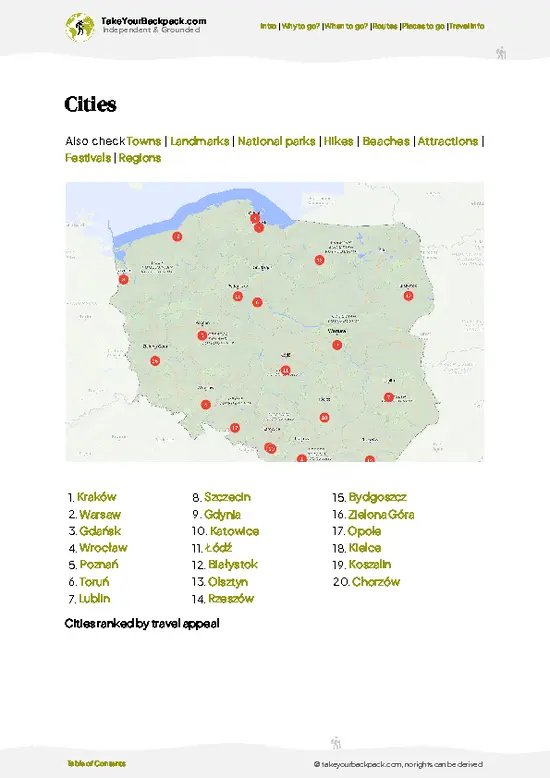
Geography and where places are located
Loading the map 🌍
CLICK TO FILTER
city
town
unique site
national park
hike
beach
attraction
festival
region
SHOW COUNTRY’S BESTSHOW ALL
film
0
0
0a
Auschwitz-Birkenau State Museum
Pixabay
film
1
1
1a
Wawel Royal Castle
film
2
2
2a
Wieliczka Salt Mine
film
3
3
3a
Warsaw Old Town and Royal Castle
film
4
4
4a
Wrocław Market Square and Town Hall
film
5
5
5a
POLIN Museum of the History of Polish Jews
film
6
6
6a
Museum of the Warsaw Uprising
film
7
7
7a
Sopot Beach
film
8
8
8a
Hel Peninsula Beaches
film
9
9
9a
Łeba Beach
Marcin Ościłowski
film
10
10
10a
Władysławowo Beach
film
11
11
11a
Ustka Beach
Emil Pan
film
12
12
12a
Jastarnia Beach
film
13
13
13a
Krakow
Pixabay
film
14
14
14a
Warsaw
Miki Mysz
film
15
15
15a
Gdansk
Mario Parente
film
16
16
16a
Poznań
film
17
17
17a
Gdynia
film
18
18
18a
Toruń
Andrzej Mroczkowski
film
19
19
19a
Szczecin
film
20
20
20a
Łódź
film
21
21
21a
Tarnów
film
22
22
22a
Bydgoszcz
film
23
23
23a
Morskie Oko
Tomasz Czechowicz
film
24
24
24a
Orla Perć
film
25
25
25a
Główny Szlak Beskidzki
film
26
26
26a
Babia Góra
film
27
27
27a
Śnieżka via Kopa
film
28
28
28a
Pieniny Way
film
29
29
29a
Stołowe Mountains Trail
film
30
30
30a
Śnieżnik Trail
film
31
31
31a
Wysoka
film
32
32
32a
Tatra
Július Jančo
film
33
33
33a
Pieniny
film
34
34
34a
Bieszczady Mountains
Tadeusz Pokorny
film
35
35
35a
Kampinos
film
36
36
36a
Ojcowski
Justynababecka
film
37
37
37a
Biebrza
Małgorzata Chyłkiewicz Chyłkiewicz
film
38
38
38a
Wigry
film
39
39
39a
Góry Stołowe
Marek Strojek
film
40
40
40a
Gorce
film
41
41
41a
Wielkopolska
Damian Marko
film
42
42
42a
Kłodzko Valley
Tom Klíčník
film
43
43
43a
Zakopane
film
44
44
44a
Kazimierz Dolny
film
45
45
45a
Zamość
Andrzej Koziol
film
46
46
46a
Malbork
film
47
47
47a
Sandomierz
film
48
48
48a
Przemyśl
film
49
49
49a
Tarnowskie Góry
Pawel Binkowski
film
50
50
50a
Castle of the Teutonic Order in Malbork
Maciej Kulla
film
51
51
51a
Wrocław’s Centennial Hall
Hala Stulecia
film
52
52
52a
Książ Castle
Wojciech Kołodziejczyk
film
53
53
53a
Pszczyna Castle
Muzeum Zamkowe W Pszczynie
film
54
54
54a
Czorsztyn Castle
Łukasz Ciupa

Why go?Reasons people choose to visit

Mountains

Poland’s mountains earn their miles. The Tatras draw crowds—queues on Orla Perć, a jostle at Morskie … read more 👉
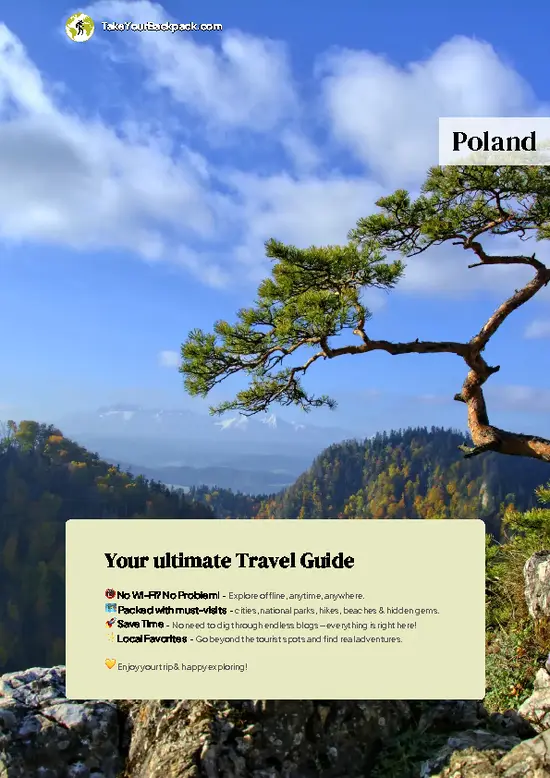
Poland’s mountains earn their miles. The Tatras draw crowds—queues on Orla Perć, a jostle at Morskie Oko, parking gone by sunrise in Zakopane—and weekend prices bite compared with the rest of the country. Go anyway. Trails are blazed to the meter, buses reach most trailheads, and huts serve hot barszcz and cheap bunks that undercut the Alps by half. The payoff is quiet at first light: sheep bells in the Pieniny, fog rolling over Bieszczady beeches, granite ridges firing pink above lakes. That’s the real hook, and it’s honest.

Backpackers

Poland is easy on a backpacker’s wallet: hostels and intercity buses cost markedly less than in Berlin … read more 👉
Poland is easy on a backpacker’s wallet: hostels and intercity buses cost markedly less than in Berlin or Prague, and a dense rail web gets you far. The Instagram reel is Kraków’s squares and Zakopane ridgelines. The truth: Old Towns fill with tour groups, weekend stag parties are a thing, and Auschwitz needs a timed slot. Go anyway. The payoff lives in bar mleczny trays, night trains to Tatras huts, lake dips in Mazury between buses, shipyard history in Gdańsk, and student basements in Wrocław where the night stretches because you can afford one more round.

People

Poles read as reserved at first; the smile comes later. They prize directness, so you get a plain answer, … read more 👉
Poles read as reserved at first; the smile comes later. They prize directness, so you get a plain answer, not sugar. If you look lost, someone may stop, even walk you to the right stop. At a table, expect overfeeding—second helpings, homemade pickles, an “eat, eat.” Shoes off in homes; toast “Na zdrowie” and meet eyes. Humor runs dry and self‑deprecating, warmth tucked under deadpan. On trams, always offer seats to elders. A few words of Polish—dzień dobry, proszę, dziękuję—open doors.

Low cost

Poland is friendly to a backpacker’s wallet. Kraków and Gdańsk fill up on weekends and summer festival … read more 👉
Poland is friendly to a backpacker’s wallet. Kraków and Gdańsk fill up on weekends and summer festival weeks, and dorm beds jump, but the baseline stays gentle compared with the west. You can live off milk bars, bakery counters, and Biedronka runs; regional TLK/Regio trains and Polonus/Flixbus keep moves cheap if you skip the flashy Pendolino. City trams punch above their price, museums often have a weekly free day, and hiking is free once you’re past the gate. Expect a mid–double‑digit daily spend to cover a dorm, hot meals, local transport, and the occasional beer.
Want the complete picture of Poland?
The offline Travel Guide brings everything together — routes, highlights & planning.

See what's included in the guide 👉

Get the Travel Guide -

⭐ HighlightsKey places and experiences

  • Kraków’s Kazimierz: Instagram sells café glow; reality is midday tour groups and prices near the Main Square that beat a bar mleczny by a mile. Go early. The cobbles are wet, the synagogues wear their age honestly, and the first tram clangs through like a metronome. Warm obwarzanek steam on a cold palm is your proof of presence.
  • High Tatras, Hala Gąsienicowa to Zawrat: Morskie Oko is a moving sidewalk; horse carts and elbows. The real payoff sits higher, where granite bites your soles and spruce resin hangs in the air. Start from Kuźnice before dawn, reach Murowaniec as the sun finds the tarns, then feel the chain’s metal sting at Zawrat when the wind cuts.
  • Gdańsk Shipyards & European Solidarity Centre: Długi Targ gets cruise-wave crowds and amber hawkers; the weight of the city sits at Gate 2. The cranes lean over like old giants and the memorial crosses keep you quiet. Inside the museum you pay more than a church donation but less than a big-city blockbuster, and you leave with diesel
read more 👉
  • Kraków’s Kazimierz: Instagram sells café glow; reality is midday tour groups and prices near the Main Square that beat a bar mleczny by a mile. Go early. The cobbles are wet, the synagogues wear their age honestly, and the first tram clangs through like a metronome. Warm obwarzanek steam on a cold palm is your proof of presence.
  • High Tatras, Hala Gąsienicowa to Zawrat: Morskie Oko is a moving sidewalk; horse carts and elbows. The real payoff sits higher, where granite bites your soles and spruce resin hangs in the air. Start from Kuźnice before dawn, reach Murowaniec as the sun finds the tarns, then feel the chain’s metal sting at Zawrat when the wind cuts.
  • Gdańsk Shipyards & European Solidarity Centre: Długi Targ gets cruise-wave crowds and amber hawkers; the weight of the city sits at Gate 2. The cranes lean over like old giants and the memorial crosses keep you quiet. Inside the museum you pay more than a church donation but less than a big-city blockbuster, and you leave with diesel and iron on your clothes.
  • Białowieża Forest: You don’t “spot” bison at noon from a bus. You earn them at dawn, when frost snaps under boots and your breath lifts white over meadow edges. The strict reserve needs a guide; mosquitoes take their cut in summer. Touch the papery birch bark, smell damp peat, and listen for a woodpecker drilling like a distant engine.
  • Malbork Castle: The drone shots skip the slog: school groups, audio-guide queues, and a ticket roughly double a standard Polish museum. Go anyway. The brick cools the air even in July, footsteps echo under ribbed vaulting, and the Nogat throws a river smell through the gates; for the side quest, aim for Słowiński’s moving dunes near Łeba, the Jura’s Orlich Gniazd castle chain, or sea-green wooden Orthodox churches in Podlasie’s villages.
Spotted a mistake or missing a highlight? Contact us.

But Poland offers more...

Discover and compare all of its highlights per category

🧭 RoutesSuggested travel routes through Poland

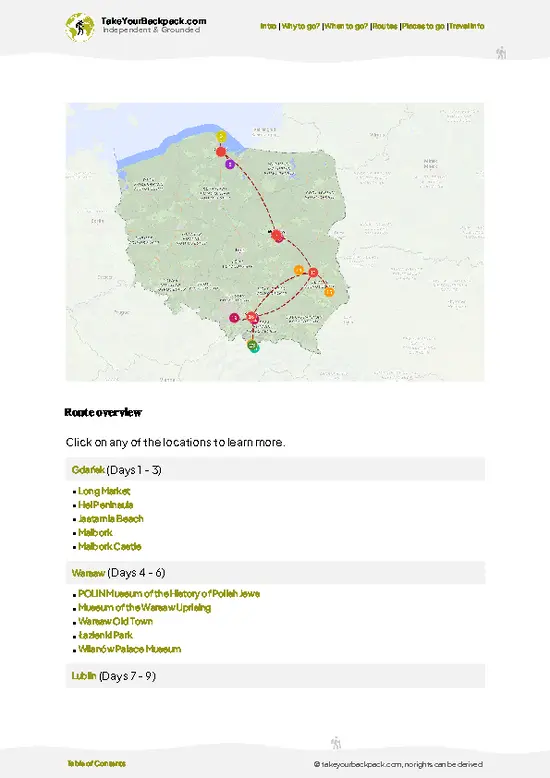
The 5-Day Southern Snapshot

The vibe: A focused, emotionally rich loop through Krakow and the Tatras, mixing heavy history with mountain air at a relaxed, beginner-friendly pace using trains and short bus hops. You’ll go deep in one region instead of racing across the country, trading checklists for real time in each place.
The Highlights:
  • Medieval streets and royal history around Krakow and Wawel Royal Castle.
  • The underground chapels and tunnels of the Wieliczka Salt Mine.
  • A full, unhurried day at the Auschwitz-Birkenau State Museum.
  • Alpine-style scenery around Zakopane and Tatra National Park.

The 10-Day Cities & Coast Classic

The vibe: A balanced first-timer route that stitches together Warsaw, Krakow, and the Baltic coast, giving you big-city culture, World War II history, and beach time without burning you out. Trains do most of the work while you focus on museums, markets, and sea breezes.
The Highlights:
  • Rebuilt streets and museums in Warsaw Old Town and Royal Castle.
  • Brick-fronted waterfronts
read more 👉

The 5-Day Southern Snapshot

The vibe: A focused, emotionally rich loop through Krakow and the Tatras, mixing heavy history with mountain air at a relaxed, beginner-friendly pace using trains and short bus hops. You’ll go deep in one region instead of racing across the country, trading checklists for real time in each place.
The Highlights:
  • Medieval streets and royal history around Krakow and Wawel Royal Castle.
  • The underground chapels and tunnels of the Wieliczka Salt Mine.
  • A full, unhurried day at the Auschwitz-Birkenau State Museum.
  • Alpine-style scenery around Zakopane and Tatra National Park.

The 10-Day Cities & Coast Classic

The vibe: A balanced first-timer route that stitches together Warsaw, Krakow, and the Baltic coast, giving you big-city culture, World War II history, and beach time without burning you out. Trains do most of the work while you focus on museums, markets, and sea breezes.
The Highlights:
  • Rebuilt streets and museums in Warsaw Old Town and Royal Castle.
  • Brick-fronted waterfronts in Gdańsk Main Town and Long Market.
  • Sand and pier walks at Sopot Beach.
  • Royal and underground wonders at Wawel Royal Castle and the Wieliczka Salt Mine in the Krakow region.

The 15-Day Grand Poland Loop

The vibe: A full-country adventure for travelers who want to connect the dots between capitals, medieval towns, mountains, and the Baltic, with enough time to breathe in each stop. You’ll ride trains and regional buses in a big loop that feels ambitious but still human-paced.
The Highlights:
  • Capital contrasts in Warsaw, Lublin, and Krakow.
  • Mountain days around Zakopane, Tatra National Park, and the Kłodzko Valley.
  • Bridge-filled evenings in Wroclaw and coastal walks in Gdansk.
  • Sea air and long horizons along Sopot Beach and the Hel Peninsula Beaches.
🌍 Want a ready-to-use travel plan for Poland?
The overview above compares different route options based on your travel time and style. The complete Travel Guide breaks each itinerary down in detail, including maps, stops, highlights, and transport information.

Explore all route details 👉

Get the Travel Guide -

🌤️ When to go?Choosing the right months to travel

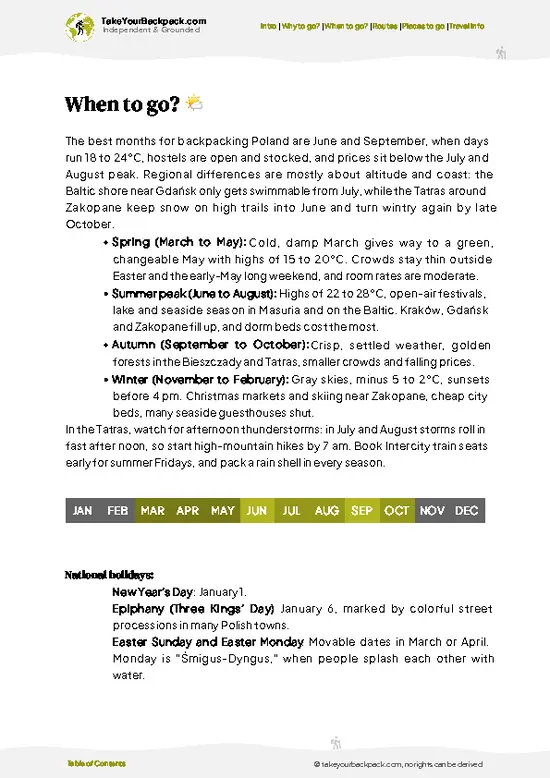
Late May to June and early September to early October are the sweet spot for Poland. Daylight stretches without the broil, you can walk cities and still have legs for an evening tram ride, and beds don’t vanish behind “event pricing.” Trails in the Tatras have shaken off most snow by June; Baltic beaches trade boom-box Saturdays for wind, space, and a decent sunset. Beer gardens and museums run full hours, ferries and mountain huts are open, and trains have seats without a bidding war. Prices sit below the summer spike and crowds thin once Polish schools resume. Watch out for the early-May holiday week—domestic travel surges.
  • Summer Peak: July-August is a grind—full dorms, busy trains, and heat bouncing off Kraków’s cobbles. The payoff is real: long golden evenings on Baltic dunes, mountain ridges buzzing with life, festivals every weekend. Start pre-dawn in the Tatras; storms roll in fast.
  • Shoulder Season: May-June and September press forward—benches slide onto squares, ferries restart, trail mud firms up, then crowds drop as school bells ring. Apples and mushrooms hit markets. Ignore this and you miss value. Hidden risk: ticks in forests—treat socks and do a nightly check.
  • Winter Off-Peak: December-February turns inward: quiet streets, steam on tram windows, forests hushed. Go for solitude and hearty food. Survival hack: microspikes for icy pavements, merino layers, and trains over buses when snow stacks up. Watch winter smog in the south.

Tactical tip: For July-August, reserve intercity trains and Tatra huts about two weeks ahead to keep your plan intact.

source: climatestotravel.comJANJanuary: fair for travelingFEBFebruary: fair for travelingMARMarch: good for travelingAPRApril: good for travelingMAYMay: good for travelingJUNJune: excellent for travelingJULJuly: highly recommended for travelingAUGAugust: highly recommended for travelingSEPSeptember: excellent for travelingOCTOctober: highly recommended for travelingNOVNovember: fair for travelingDECDecember: fair for traveling
📅 Traveling in a specific month?
Get a full month-by-month breakdown of weather, crowds, costs, festivals, and seasonal highlights in the complete travel guide.

Get full details when to go 👉

Get the Travel Guide -
poland - pixabay - pieniny-1005434

💰 Costs (as of 2026)Travel costs in Poland

Expect 170-230 PLN (€38-52) per day if you sleep in dorms, eat simply, and move by bus/train; add 20-40 PLN on weekend nights in Kraków, Warsaw, or Zakopane.
  • dorm accommodation: 55-90 PLN in smaller cities, 90-140 PLN in Kraków/Warsaw/Gdańsk, and 120-170 PLN at summer peaks on the coast or in Zakopane; city taxes run 2-5 PLN/night. System tip: avoid Fridays and Saturdays (prices jump), target Sunday-Thursday, and check university dorms renting to travelers in summer; re-check the day before—beds often drop last minute. Compared with Germany you’re paying half; versus Prague, similar or slightly cheaper outside high season.
  • meals: Supermarket Survival: Biedronka/Lidl + bakeries keep a day under 25-35 PLN—bread, cheese, tomatoes, kefir, and a hot deli item from Żabka if you need it. Street food reality: milk bars (bar mleczny) do hot plates for 18-32 PLN, pierogi 18-35 PLN, kebab 20-28 PLN, a sit-down lunch special (zestaw dnia) 25-40 PLN, coffee 8-12 PLN (third-wave 14-18), beer in a pub 12-18 PLN. Cheaper than Czechia’s tourist cores and far cheaper than Germany/Austria, pricier than Ukraine.
  • local transport: The cheapest unlock is advance rail plus regional trains: PKP Intercity “Super
read more 👉
Expect 170-230 PLN (€38-52) per day if you sleep in dorms, eat simply, and move by bus/train; add 20-40 PLN on weekend nights in Kraków, Warsaw, or Zakopane.
  • dorm accommodation: 55-90 PLN in smaller cities, 90-140 PLN in Kraków/Warsaw/Gdańsk, and 120-170 PLN at summer peaks on the coast or in Zakopane; city taxes run 2-5 PLN/night. System tip: avoid Fridays and Saturdays (prices jump), target Sunday-Thursday, and check university dorms renting to travelers in summer; re-check the day before—beds often drop last minute. Compared with Germany you’re paying half; versus Prague, similar or slightly cheaper outside high season.
  • meals: Supermarket Survival: Biedronka/Lidl + bakeries keep a day under 25-35 PLN—bread, cheese, tomatoes, kefir, and a hot deli item from Żabka if you need it. Street food reality: milk bars (bar mleczny) do hot plates for 18-32 PLN, pierogi 18-35 PLN, kebab 20-28 PLN, a sit-down lunch special (zestaw dnia) 25-40 PLN, coffee 8-12 PLN (third-wave 14-18), beer in a pub 12-18 PLN. Cheaper than Czechia’s tourist cores and far cheaper than Germany/Austria, pricier than Ukraine.
  • local transport: The cheapest unlock is advance rail plus regional trains: PKP Intercity “Super Promo” can be 19-49 PLN between big cities if you buy early; miss that and FlixBus/Polonus often beats late rail. For short hops, Polregio is slow but 9-25 PLN. In cities, validate tickets and use 24-hour passes (roughly 15-26 PLN; Warsaw/Kraków on the low end), or tap-in single rides 3-6 PLN. Weekend regional rail passes and city day tickets beat point-to-point. Fares are lower than Czechia/Germany, similar to Slovakia/Hungary.
  • activities: Major cost drivers are “must-do” headliners and mountain lifts. Wieliczka Salt Mine ~130-150 PLN; guided Auschwitz visit 90-150 PLN (DIY entry is free but slots and logistics eat time/money); Tatra cable cars/lifts 120-150 PLN; rafting the Dunajec 70-120 PLN. Museums are usually 10-40 PLN and many have one free day per week. National parks charge 8-15 PLN for entry; huts are reasonable but food markup bites. Overall cheaper than Austria/Germany and a notch below Prague’s blockbusters.
  • miscellaneous: Budget leaks: ATM “dynamic currency conversion” (always decline), Euronet fees, cash-only bathrooms (2-5 PLN), craft beer bars that charge Western prices, airport SIMs (buy a 20-30 PLN/10-20 GB package in town), and Sunday trading limits that push you to pricey corner shops. Tap water is fine—carry a bottle. City taxes add up on long stays. Rideshare is good value off-peak but surges late; trams/buses are reliable. Exchange cash only at central kantors with posted rates. Domestic IC rail includes seat reservations—don’t pay extra.
⚠️ Prices can change and everyone travels differently, so take this as a rough guide. Hope it helps you plan your adventure!

✈️ The backpacker research shortcutPoland Travel Guide

An offline-friendly backpacking guide with optimized travel routes, ranked highlights, transport advice, and the best areas to stay.
example page 0 from our offline Travel Guide for Polandexample page 1 from our offline Travel Guide for Polandexample page 2 from our offline Travel Guide for Polandexample page 3 from our offline Travel Guide for Polandexample page 4 from our offline Travel Guide for Polandexample page 5 from our offline Travel Guide for Polandexample page 6 from our offline Travel Guide for Polandexample page 7 from our offline Travel Guide for Poland
The digital guide (432 pages) contains:
116 highlights, ranked by travel appeal
Optimized 5, 10 & 15-day travel routes
Cities, national parks, beaches, historical sites, ...
How to get around
Offline-friendly for travel without Wi-Fi
👉 Click to see all 30+ guide features

📅 Plan smarter in minutes, not weeks
Month by month travel advice
Festivals & national holidays
Budget expectations

🗺️ Go to the right places, skip the overrated ones
Honest pros & cons of destinations
Top hikes, parks & viewpoints
Lesser-known places most travelers miss
Clear “worth it vs skip it” guidance

🛏️ Travel smoothly without rookie mistakes
Best areas to stay
Transport systems explained simply
Common scams & safety advice
SIM cards, money & practical tips

🌍 Understand the country, not just visit it
Culture & traditions
52 Essential phrases & customs
Festivals worth planning around
Traveler-friendly historical context
Insights that make places more meaningful

📱 Built for real travel conditions
Fully downloadable PDF
Works completely offline
Optimized for phone use
Useful in remote areas & buses
Everything in one place
Save weeks of stressful planning
Get instant access to the full guide directly. 30-day money-back guarantee.


Sent to your inbox immediately after payment • 100% Secure Checkout
Best Backpacking Travel Advisor 2025 tourism awardBest Backpacking
Travel Advisor
2025
What others say about Take Your Backpack Guides:
⭐⭐⭐⭐⭐
Fantastic, amazing amount of information!
⭐⭐⭐⭐⭐
My goodness this is amazing, it's what I've been looking for hats off too you!
⭐⭐⭐⭐⭐
I think this is absolutely BRILLIANT
⭐⭐⭐⭐
Very complete and informative. It's still missing places, but I gotta to commend you
⭐⭐⭐⭐⭐
This is truly amazing, thank you, can't wait to explore it with my kids!
⭐⭐⭐⭐⭐
Awesome resource, thank you!
⭐⭐⭐⭐⭐
This is amazing! Can't wait to explore the ones I haven't seen
⭐⭐⭐⭐
I love this! Well done, great idea.
⭐⭐⭐⭐⭐
Thanks for taking the time to make this gem!
⭐⭐⭐⭐⭐
This might be the best website I've ever seen.
⭐⭐⭐⭐⭐
Congratulations, and thank you so much for your work; it's incredibly valuable.
⭐⭐⭐⭐
In all seriousness I think you did a great job pointing out the important spots
⭐⭐⭐⭐⭐
10/10 very good
⭐⭐⭐⭐⭐
As someone who's only just starting to visit regularly this is awesome, thank you.
⭐⭐⭐⭐
Thank you very much! I'm going to visit my dad, it's going to be very useful!
⭐⭐⭐⭐⭐
This is really cool! We'll be travelling for the first time and this definitely come in handy.
⭐⭐⭐⭐⭐
You are now our minister of culture, congratulations 👨‍💼
⭐⭐⭐⭐⭐
Just wanted to tell you that this is a pearl! Going to follow your recommendations.
⭐⭐⭐⭐⭐
This is so cool. I'll definitely be using the resource for my travels soon.
⭐⭐⭐⭐⭐
This is very impressive! Good work.
⭐⭐⭐⭐⭐
This is an amazing and informative site. Very well done!

🛏️ Where to stay?Accommodation types and options

Yes — hostels and budget accommodation are widespread across Poland, concentrated in city centres, near main train stations and in popular tourist towns; expect lower prices off‑season and sharp hikes in summer and around events.
In Warsaw look in Śródmieście for the easiest access to Old Town, museums and transport (convenient but busier and pricier), or Praga for cheaper, trendier spots with more nightlife but uneven street‑level safety after dark.
In Kraków choose Stare Miasto for walking distance to major sights and loud nights, or Kazimierz for bars and a lively scene; in Gdańsk/Sopot … read more 👉
Yes — hostels and budget accommodation are widespread across Poland, concentrated in city centres, near main train stations and in popular tourist towns; expect lower prices off‑season and sharp hikes in summer and around events.
In Warsaw look in Śródmieście for the easiest access to Old Town, museums and transport (convenient but busier and pricier), or Praga for cheaper, trendier spots with more nightlife but uneven street‑level safety after dark.
In Kraków choose Stare Miasto for walking distance to major sights and loud nights, or Kazimierz for bars and a lively scene; in Gdańsk/Sopot the Old Town/seaside areas give beach access at higher cost, while Wrzeszcz, Wrocław Rynek and Poznań Stary Rynek offer central, transport‑friendly bases that are convenient for trains but can be noisy.

If you enjoy meeting fellow travelers, consider choosing hostels with high ratings for atmosphere. On the other hand, if you prefer having your own space, a hotel might be a better option.

🚌 Getting aroundTransportation options and logistics

Poland runs on timetables, not vibes. Trains are the spine and generally hit close to the minute; buses fill the gaps with workmanlike reliability. Stations are practical—tunnels, numbered platforms, kiosks, nothing ornamental. Weekdays feel orderly. Fridays swell with students and luggage pyramids, and the cheap seats vanish first. Delays happen but usually in minutes, not sagas; last-second platform swaps keep you honest. You win here by reading the departure board like a hawk, trusting the clock, … read more 👉
Poland runs on timetables, not vibes. Trains are the spine and generally hit close to the minute; buses fill the gaps with workmanlike reliability. Stations are practical—tunnels, numbered platforms, kiosks, nothing ornamental. Weekdays feel orderly. Fridays swell with students and luggage pyramids, and the cheap seats vanish first. Delays happen but usually in minutes, not sagas; last-second platform swaps keep you honest. You win here by reading the departure board like a hawk, trusting the clock, and accepting that the fastest ride costs more because it buys you time.
  • Intercity trains (PKP Intercity) The fast Pendolino trains rip across the country but make your wallet flinch; buy weeks ahead and the price curve softens, leave it late and you’ll pay for speed. IC and TLK trains are slower but far cheaper and still comfortable in second class. Seat reservations are compulsory, coaches are clearly numbered, and a quiet carriage exists if you want it. Bring snacks; the bistro is convenient but priced for convenience. Outlets are intermittent, luggage racks fill early, and sitting in the wrong seat gets you politely moved.
  • City trams and metro This is how Polish cities breathe. Validate as soon as you board; inspectors are calm, fines are not. People keep voices low, bags off seats, and strollers or the elderly get priority without debate. Doors don’t always auto-open—press the button. Stand right on escalators in Warsaw, and don’t block the aisle with a backpack on your shoulders. Timed tickets cover transfers; 20-40-75 minute options beat singles if you’re hopping around.
  • Regional buses (PKS, local minivans) They reach what rail misses: Bieszczady trailheads like Ustrzyki Górne, Karkonosze towns like Karpacz, Masurian lake villages, and farm-road stops the timetable calls “na żądanie.” Early runs out, mid-afternoon back; Sundays get thin. Buy from the driver if there’s no kiosk; cards are common but a small cash stash still saves you. Watch the windshield placard, not just the stop sign, and signal to get off—bell buttons aren’t decorative.
  • Intercity coaches (FlixBus, Polonus, Neobus) The hack when trains price up. Fares undercut rail on key corridors and late departures double as a cheap “night.” Expect mall-adjacent or secondary stations, traffic-risk delays, and Wi-Fi that works until it doesn’t. Reserve a seat if the carrier allows, keep earplugs handy, and note occasional luggage fees. When you’ve got time more than money, this stretches your zloty farther than a Pendolino ever will.

Master tip: Anchor your long jump with one early train on the main spine (Gdańsk-Warszawa-Kraków/Wrocław), then stitch the last 30-90 km with a regional bus; buy the train weeks out, travel Tue-Thu or early Sat, and always check the platform board again five minutes before departure in case the peron flips.
Short answer: Warsaw has two airports. Most visitors land at Chopin (WAW)8 km (5 miles) from the center. Budget airlines also use Modlin (WMI), about 40 km (25 miles) away. Here’s how to reach downtown from each, with realistic times and costs for 2025.

From Chopin Airport (WAW) → City center
- City trains (SKM S2/S3 and KM): Trains run from the station under Terminal A to central stops like Warszawa Śródmieście (a short walk to Warszawa Centralna/Centrum). Journey time 20-25 minutes, every 10-20 minutes most of the day. Typical fare about 4-6 PLN (Zone 1 city ticket). This is the fastest and most hassle-free option.
- City buses: Line 175 goes to the Central Station/Centrum area; N32 runs at night. Expect 25-40 minutes depending on traffic. Same city ticket as above (about 4-6 PLN). Buy from ticket machines at the stop/inside the bus (contactless accepted).
- Taxi / ride-hailing: Official taxis queue outside arrivals; Uber/Bolt/FreeNow also work well. Typical time 20-30 minutes. Expect 35-70 PLN to the center depending on traffic and time of day.

From Modlin Airport (WMI) → City center
- Shuttle bus + train (Koleje Mazowieckie): Airport shuttle to Modlin rail station (5-10 minutes), then a train to Warszawa Gdańska/Śródmieście/Centralna area. Total time usually 60-75 minutes. Combined “airport” ticket is typically about 25-35 PLN, sold at the airport and station.
- Direct coaches: Several operators (including FlixBus/OKBus routes) run to central Warsaw (Palace of Culture/Centrum). Usually 60-75 minutes depending on traffic. Typical fare about 30-45 PLN.
- Taxi / ride-hailing: Longer and pricier due to distance. Expect 45-70 minutes and roughly 180-250 PLN to central Warsaw.

Tips
- For Chopin (WAW), a 75-minute Zone 1 ticket comfortably covers most train/bus trips to the center; ticket machines take cards and have English. Validate on buses; trains use gates/validators on the platform.
- Central landmarks/stops to aim for: Warszawa Śródmieście, Warszawa Centralna, or Centrum (metro).
⚠️ Prices and routes can change, so take this as a rough guide and ask for local advice when you arrive.

🔒 Safety (risk Level: low)Staying safe while traveling

Safety for solo travelers, including women and LGBTQ+ individuals
Poland is generally safe for solo travelers, including women and LGBTQ+ individuals, but it’s wise to remain aware of your surroundings as you would anywhere. In larger cities like Warsaw and Krakow, you’ll find a more open-minded atmosphere, but rural areas might be more conservative. Avoid public displays of affection if you’re part of the LGBTQ+ community, especially outside major urban centers. Stick to well-lit areas at night and trust your instincts.


Full official government travel advisory (live updates)
View details 👉

✈️ VisaVisa requirements for Poland

Citizens of the EU, USA, Canada, Australia, and several other countries don’t need a visa for short stays in Poland (up to 90 days within a 180-day period). If a visa is required, apply through the Polish consulate or embassy in your region. Check the official Polish government website for the most accurate, up-to-date visa information.

source: gov.pl
⚠️ Visa requirements can change over time, so always check the latest visa requirements with the official embassy or government website before you travel.

🎒 What to pack?A practical packing list

Poland’s climate can throw you some curveballs, so be ready for anything. Summers are mild but can surprise you with a few hot days, while winters can get seriously chilly, especially in the mountains. If you’re hitting up cities, know that Poles dress smartly, so it’s a good idea to pack a couple of nicer outfits. The countryside can be muddy and uneven, especially in the rainy months, so something weather-resistant and sturdy for your feet is a must. When visiting religious sites, modest clothing is a good call—think covered shoulders and knees.

Apart from this country specific advice, I have also crafted a general packing list that should help on any trip. authorOver the years, I've learned the importance of packing minimally. It's so much easier to jump on the back of a truck or squeeze yourself into the last spot of a minibus without that supersized backpack. If you're headed to a warm destination, leave your winter jacket at home; for colder regions, opt for thin thermal underlayers. Instead of packing your entire wardrobe, bring just three sets of clothes, as laundry facilities are available everywhere.
View the full list 👉
🎒 Planning the practical side of your trip?
Get detailed information on transport, daily budgets, internet access, local customs, food, language, and other essentials in the complete Travel Guide.

Get detailed practical information 👉

Get the Travel Guide -

🙋 FAQTravel questions about Poland

Trip Planning


Personal tip: I normally search on good rating for atmosphere (for meeting people) and location (for easy exploring). Cleanliness as a bonus.


Travel Essentials

Poland doesn’t require special vaccinations beyond standard routine ones. Ensure you’re up-to-date on MMR (Measles, Mumps, Rubella), TDAP (Tetanus, Diphtheria, Pertussis), Varicella (Chickenpox), Polio, and the annual flu shot. Consider Hepatitis A and Hepatitis B vaccinations as a precaution. Always consult a healthcare provider for personalized advice.


vaccination requirements
When I first started traveling, I often spent part of my first day in a new country hunting for a local SIM card. While this can still be slightly cheaper, it also takes time and planning.

These days, it's much simpler to install an eSIM before leaving home. Once you arrive in Poland, you can activate it immediately and have mobile data from the moment you land — which is especially useful for ordering transport or navigating away from busy airports.

There are many providers nowadays, and price differences are usually small. I personally go with Airalo, as it offers excellent network coverage throughout the country and strong global coverage, so you can manage multiple countries from a single app.


Get your e-sim for Poland

Culture & Customs

Poland values politeness, so always address people with a courteous ”Pani” or ”Pan” (Ms. or Mr.) until given permission to use first names. Punctuality is appreciated, so try not to be late for appointments or social gatherings. When visiting someone’s home, bring a small gift like flowers or sweets.

Avoid discussing politics or the role of religion in public settings, as these are sensitive topics. When dining, wait for the host to start eating, and say ”Smacznego” (Bon appétit) before you dig in.

For the LGBTQ+ community, discretion is advised, especially in rural areas, as Poland can be conservative. Women traveling alone should feel generally safe but remain vigilant, particularly at night in less crowded areas.
Trying traditional food is always a great way to experience the culture. Here are some must-try dishes for Poland.
  • Pierogi: Dumplings filled with anything from potatoes and cheese to meat or mushrooms. They’re a staple at Polish tables and a comfort food that speaks to the heart of Polish culture.
  • Bigos: Known as hunter’s stew, it’s a hearty mix of cabbage, sauerkraut, and various meats. It’s a nod to Poland’s hunting traditions and perfect for cold weather.
  • Żurek: A sour rye soup often served with sausage and boiled eggs. The tangy taste is unique and it’s a beloved dish especially during Easter.
  • Kielbasa: Poland’s famous sausage, available in many varieties. It’s a quintessential part of Polish cuisine and you’ll find it grilled, boiled, or fried.
  • Placki Ziemniaczane: Potato pancakes that are crispy on the outside and soft inside. They’re popular street food and a great on-the-go snack.
Yes, tap water in Poland is generally safe to drink and many locals do consume it. However, some travelers prefer bottled or filtered water due to taste preferences or sensitive stomachs. Carrying a small filter can be a good compromise if you’re concerned.
The main language in Poland is Polish. Backpacking is way more rewarding if you know a bit of the local language, so I'd suggest brushing up on the basics just in case your Polish skills have become a bit rusty.

Want to understand locals better?
The complete Travel Guide for Poland includes 52 essential words and phrases — greetings, thank-yous, ordering food, transport, numbers, and common local expressions you'll actually hear.

Get your local basic phrases 👉

Get the Travel Guide -


English proficiency in Poland varies by region and demographic. In major cities like Warsaw, Kraków, and Wrocław, you’ll find a good number of younger people and professionals who speak English quite well. Many in the tourism and hospitality sectors, such as hotel staff and tour guides, are also fluent in English, making it easier for travelers to communicate.

In rural areas, however, English may not be as widely spoken, and you might encounter older generations who have limited proficiency. In these regions, basic phrases in Polish can be helpful and appreciated by locals.

Overall, Poland is becoming increasingly English-friendly, especially among the younger population, due to the influence of education and media. While you can navigate most tourist areas with English, learning a few basic Polish phrases can enhance your experience and interactions with locals.

Money & Payments

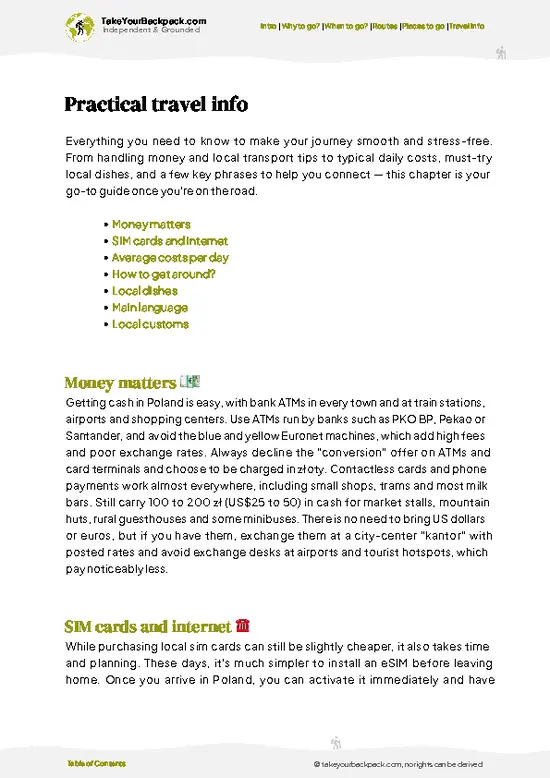
The local currency of Poland is PLN (zł).

ATMs: Poland is pretty well-equipped with ATMs, even in smaller towns. Most machines will offer instructions in English, so you won’t have to guess which button to press. Just make sure your bank knows you’re traveling to avoid any awkward card freezes.

Cash or Card: While cards are widely accepted in cities, having some cash on hand is smart for smaller towns and local markets. Stick to zloty for cash transactions; dollars and euros might be tempting but aren’t commonly accepted.

Exchange: If you have foreign currency, avoid airport exchange booths—rates can be brutal. Look for a ”kantor” (exchange office) in town; they’re usually fairer, but always double-check the rate before swapping your cash.

Card Acceptance: Most places take Visa and Mastercard, but if you rely on Amex, you might hit a few snags. Always good to carry a backup card just in case.

Tipping in Poland is appreciated but not obligatory. In restaurants, it’s common to leave around 10% of the bill if the service is good. For taxis, rounding up to the nearest 5 or 10 PLN is a nice gesture.

🧩 Nearby countriesOther countries to combine with Poland

We 💚 feedbackWhat to know before planning your trip

Poland rewards walkers and early risers. The big hits—Kraków, Gdańsk, Zakopane—are crowded and not as cheap as the rumors, but book trains a week ahead and eat at milk bars two streets off the main square and your budget holds. The real draw is in forest trails, morning markets, and small-city cafés that don’t care about you. It’s safe; the war feels far away on the ground. Small downside: most shops close on many Sundays. Learn a couple phrases—“dzień dobry” opens doors.

✍️ Help improve this page!
The information on this page is based on in-depth research, insights shared by experienced travelers, and feedback from the local travel community in Poland. While every effort is made to keep the information accurate and current, conditions can change — so if you spot anything incorrect or outdated, please get in touch.


🙋‍♂️ Give feedback

👋 Meet the founderWho’s Behind Take Your Backpack?

Johan, backpacker and founder of TakeYourBackpackHi, I’m Johan (Netherlands 🇳🇱), the creator of TakeYourBackpack. Over the past decade, I’ve backpacked through 80+ countries across six continents, gaining extensive experience with independent travel, long-term trips, and overland routes.

This site is built on a combination of firsthand travel experience and carefully curated insights from other backpackers. Many guides are based on places I’ve personally visited, while others bring together tips, observations, and practical advice shared by trusted travelers I’ve met along the way.

The goal is to provide realistic, experience-driven guidance — not generic itineraries — so you can explore destinations with better context, clearer expectations, and more confidence.

Get full Poland guide •
Instant download • 116 highlights • Full Offline guide