×
Martinique 🇲🇶

backpacking North America Martinique 🇲🇶Blend Caribbean pace with unmistakably French rhythms.

Explore JamaicaExplore Mexico

Backpacking Martinique in 2026

A complete guide including when and where to go, costs, transport, itineraries, and practical travel advice.
What a trip here is really like

Backpacking Martinique
By Johan Kruseman 🇳🇱 | Updated June 2, 2026

No, you don’t need perfect French or a five‑star budget to crack Martinique. It runs on island time with French bones: boulangeries, orderly roads, and distilleries you can tour for the price of a sandwich. Play the timing game and you trade a little sweat for a lot of soul.

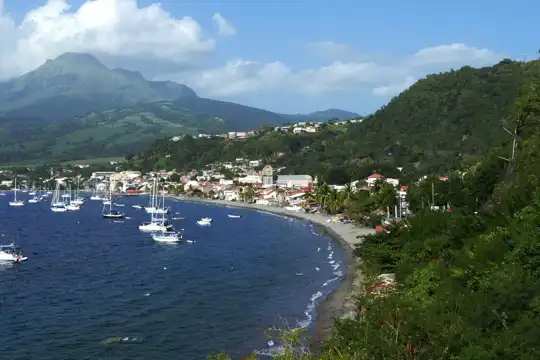
Start before the sun and Mount Pelée lets you reach the rim before the clouds; wait and you’re hiking warm fog. Follow the Route de la Trace through rainforest to Balata’s canopy, then swing east to the Caravelle’s wind-bent headlands and the ruins of Château Dubuc. Slide south to Anse Dufour and slip in before 9 a.m.—turtles first, boats later—then graze Fort‑de‑France markets where spice, zouk, accras, and colombo set lunch to a beat. Yes, there are Sunday shutdowns, hairpin roads, sudden squalls, and menus mostly en français. Lean in: rent a small car, carry euros, nap at noon, and you’ll bank quiet coves, generous rhum agricole pours at Clément or Depaz, and sunsets that feel earned.

Guadeloupe sprawls and begs island‑hopping; Dominica goes full rainforest with few sandy swims; St. Lucia leans resort. Martinique is the sweet spot—wild north, easy south, serious food, and European logistics—for travelers who like steering their own day, hikers and snorkelers with an appetite, and anyone willing to trade a bit of comfort for high‑value, high‑character days.

👉 Get the 📖 Travel Guide of Martinique

Fort-de-France & Bay Ferries

Urban core, markets, real life. Base here if you want cheap eats and fast ferries. You skip the southbound traffic by riding the shuttle boats to Anse Mitan/Trois-Îlets; it’s the one move that saves both time and sanity. Nights can be noisy, but you’re paying half what beach towns charge and you move like a local.

Trois-Îlets & Les Anses-d’Arlet (Caribbean coast)

Easy swimming, reef right off the sand, and turtles if you hit Anse Dufour before 8 a.m. Ferry drops you near Anse Mitan; for Dufour/Noire you need a car and sharp elbows for parking. Crowded on weekends and restaurant tabs run higher than the north, but you trade money for low-effort beach time.

Sainte-Anne & Le Marin (far south)

Long walks at Les Salines, wind for kites at Cap Chevalier, charters out of Le Marin. Buses are thin; a car makes this work. Go early, nap at noon, cook your own—nightlife is light and the drive from FDF eats an hour. Great for families and sailors who plan their day around the sun and wind.

Nord Caraïbe & Mount Pelée (Saint-Pierre–Le Prêcheur)

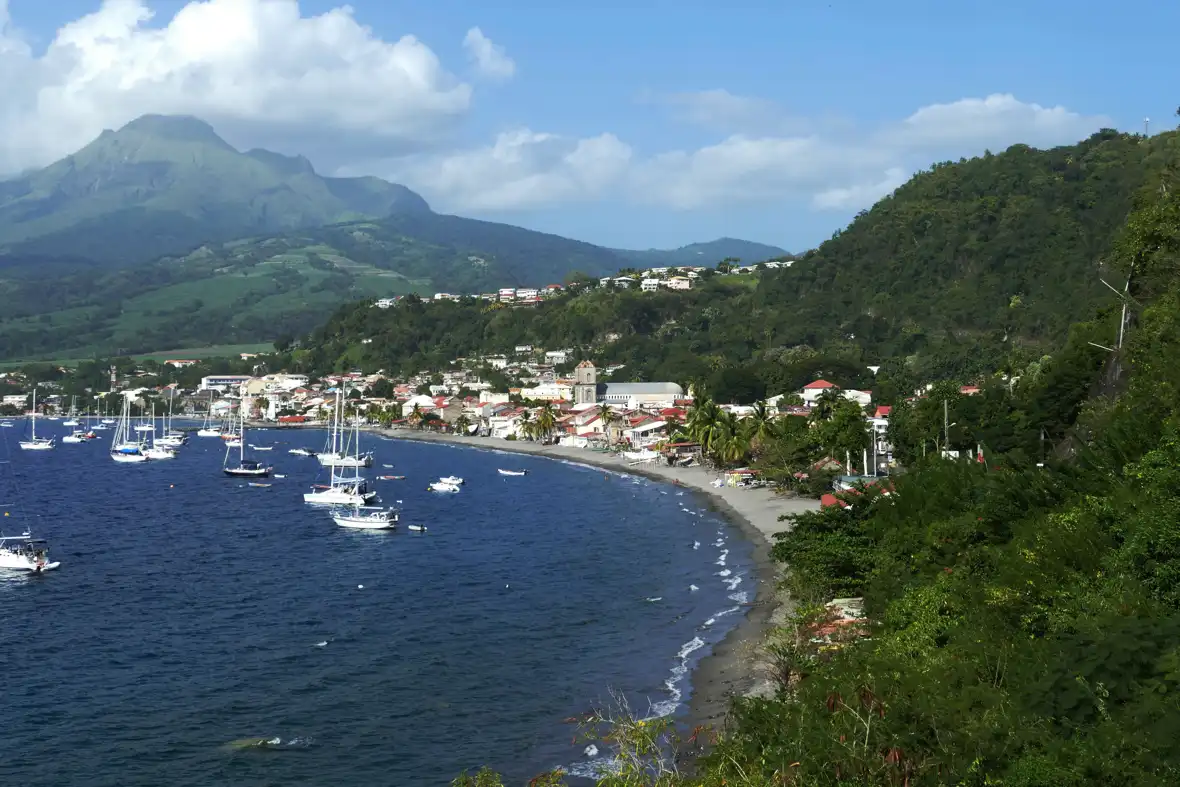
Hike hard, rinse in rain, eat late. Start Pelée by sunrise (Aileron or Grand Savane) or you’ll be in cloud and mud. The N2 is slow and can snag; use the Route de la Trace northbound when it’s clear. History in Saint-Pierre, calmer water in Le Carbet. Fewer services, more weather—reward goes to hikers and history nerds.

Caravelle Peninsula & Nord Atlantique (Trinité–Tartane)

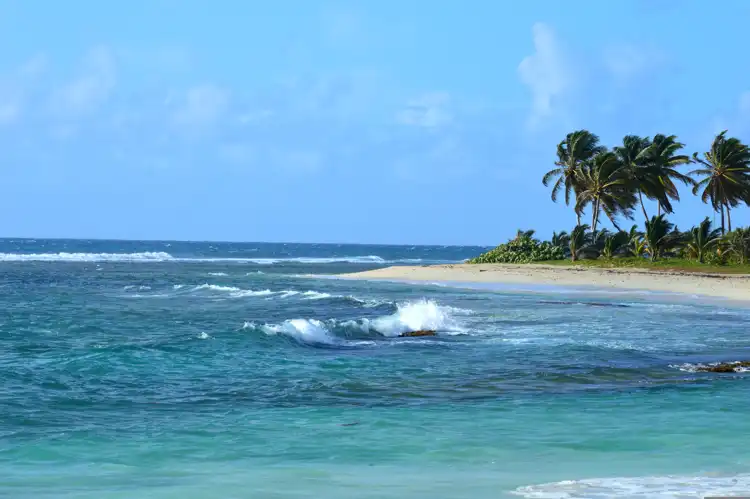
Wind, surf, and scrubland trails. Do the long Caravelle loop counterclockwise to keep the trades at your back; carry water and accept there’s no shade bailout. Swimming can be rough and sargassum shows up, but crowds thin and prices ease. Best for surfers and trail runners with a car and low patience for beach clubs.
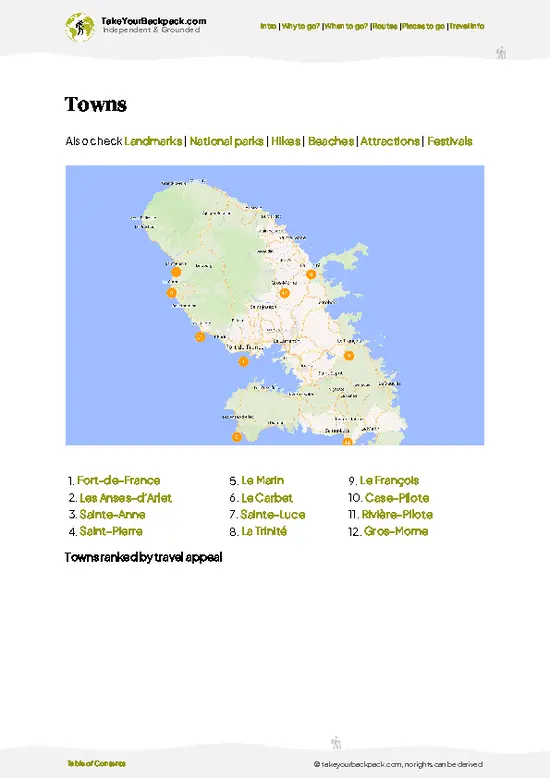
A visual overview of the country
Loading the map 🌍
CLICK TO FILTER
town
unique site
national park
hike
beach
attraction
festival
region
SHOW COUNTRY’S BESTSHOW ALL
film
0
0
0a
Fort Saint-Louis
film
1
1
1a
Distillerie Depaz
film
2
2
2a
JM distillery
film
3
3
3a
Saint James distillery
film
4
4
4a
Musée de la Pagerie
film
5
5
5a
Musée d’Histoire et d’Ethnographie de Fort-de-France
film
6
6
6a
the plantation train
film
7
7
7a
Grande Anse des Salines
Dan Stoicescu
film
8
8
8a
Anse Dufour
Clarisse Liboz
film
9
9
9a
Anse Noire
Carinette
film
10
10
10a
Plage du Diamant
film
11
11
11a
Plage de la Pointe Marin
Olivier Lourdais
film
12
12
12a
Anse Couleuvre
film
13
13
13a
Anse Trabaud
film
14
14
14a
Plage de l’Anse à l’Âne
film
15
15
15a
Îlet Chevalier
Mirel Barbulescu
film
16
16
16a
Pointe du Bout
film
17
17
17a
Les Gorges de la Falaise
Gorges De La Falaise
film
18
18
18a
La Savane des Pétrifications
Lfy
film
19
19
19a
Parc Naturel Régional de la Martinique
Christian Rabbat
film
20
20
20a
Domaine d’Émeraude
film
21
21
21a
Savane des Pétrifications
film
22
22
22a
Mount Pelée
Fredexplo31 Explore Le Monde
film
23
23
23a
Les Trois-Îlets
Vodandy Vodandy
film
24
24
24a
Sainte-Anne
film
25
25
25a
Les Anses d’Arlet
Happyman Photography
film
26
26
26a
Fort-de-France
Joyce Mathurin
film
27
27
27a
Saint-Pierre
film
28
28
28a
La Trinité
film
29
29
29a
Jardin de Balata
film
30
30
30a
Habitation Clément
Habitation Clément

Why go?What draws travelers here

Beach life

Martinique is where beach days pay off if you play them right. Hit Les Salines at sunrise for powdery shallows before the crowds, then slide to Anse Dufour by 9 to fin with turtles along the right-hand rocks. Afternoons, shift to Anse Noire’s shade when the trades kick up. Cash for accras, ti’ punch at Anse Mitan, shoes off until moonrise.
Want the complete picture of Martinique?
The offline Travel Guide brings everything together — routes, highlights & planning.

See what's included in the guide 👉

Get the Travel Guide -

⭐ HighlightsThe places that define a trip here

  • Mont Pelée: Beat the clouds by starting at first light; you’re paying in calves, not euros. The trail is steep, wet, and honest, but the payoff is wind that stings your ears and red grit that works into your boot cuffs.
  • Les Salines, Sainte-Anne: Park before 8 or you’ll circle in beach-heat purgatory. Walk past the picnic crowds and the sea turns quiet, the sand squeaks underfoot, and smoke from a grill drifts through sea-grape shade with a sweet-salty bite.
  • Presqu’île de la Caravelle: Do the full lighthouse-and-mangrove loop with 2 liters of water; shade is a rumor out here. The trade is sweat for solitude—salt crusts on your forearms while fiddler crabs click across mud like falling rain.
  • Saint-Pierre ruins and rum: Go early before bus tours; the cobbles are uneven and museum hours are fickle, but the story hits hard. You’ll smell warm molasses at Depaz and feel pitted lava stones under your palm where a city once stood.
  • Anses d’Arlet + Anse Dufour/Anse Noire: Be in the water by 8 and you’ll
read more 👉
  • Mont Pelée: Beat the clouds by starting at first light; you’re paying in calves, not euros. The trail is steep, wet, and honest, but the payoff is wind that stings your ears and red grit that works into your boot cuffs.
  • Les Salines, Sainte-Anne: Park before 8 or you’ll circle in beach-heat purgatory. Walk past the picnic crowds and the sea turns quiet, the sand squeaks underfoot, and smoke from a grill drifts through sea-grape shade with a sweet-salty bite.
  • Presqu’île de la Caravelle: Do the full lighthouse-and-mangrove loop with 2 liters of water; shade is a rumor out here. The trade is sweat for solitude—salt crusts on your forearms while fiddler crabs click across mud like falling rain.
  • Saint-Pierre ruins and rum: Go early before bus tours; the cobbles are uneven and museum hours are fickle, but the story hits hard. You’ll smell warm molasses at Depaz and feel pitted lava stones under your palm where a city once stood.
  • Anses d’Arlet + Anse Dufour/Anse Noire: Be in the water by 8 and you’ll meet grazing turtles; parking is tight, so grab a hill spot and walk the headland path. Pier boards creak by the church, and black sand at Anse Noire scorches bare feet by noon; for the off-map itch, try Anse Trabaud when the swell is low, Morne Larcher at dawn for the Diamond Rock line, or Canal de Beauregard only in dry weather if your nerves are steady.
Spotted a mistake or missing a highlight? Contact us.

But Martinique offers more...

Discover and compare all of its highlights per category

🧭 RoutesSuggested travel routes through Martinique

The 2-Day South Coast Escape

The vibe: A quick-hit beach and coastal-hike getaway centered around Sainte-Anne, perfect if you want warm water, soft sand, and one great trail instead of a frantic island-wide dash. Expect a relaxed pace with simple drives, long swims, and sunset drinks rather than museum-hopping.
The highlights:
  • Lingering on the postcard curve of Grande Anse des Salines
  • Walking wild coastal sections of La Trace des Caps
  • Exploring the dry, otherworldly landscape of La Savane des Pétrifications
  • Slow evenings in the laid-back town of Sainte-Anne

The 3-Day City, Hills & Bay Sampler

The vibe: A balanced first-timer route that links Fort-de-France’s urban energy with cool highland forests and the easygoing bayside feel of Les Trois-Îlets. You’ll move at a moderate pace, tasting a bit of everything without ever feeling rushed.
The highlights:
  • Historic ramparts and harbor views at Fort Saint-Louis
  • Tropical canopy walkways and hummingbirds at Jardin de Balata
  • Gentle rainforest trails in Domaine
read more 👉

The 2-Day South Coast Escape

The vibe: A quick-hit beach and coastal-hike getaway centered around Sainte-Anne, perfect if you want warm water, soft sand, and one great trail instead of a frantic island-wide dash. Expect a relaxed pace with simple drives, long swims, and sunset drinks rather than museum-hopping.
The highlights:
  • Lingering on the postcard curve of Grande Anse des Salines
  • Walking wild coastal sections of La Trace des Caps
  • Exploring the dry, otherworldly landscape of La Savane des Pétrifications
  • Slow evenings in the laid-back town of Sainte-Anne

The 3-Day City, Hills & Bay Sampler

The vibe: A balanced first-timer route that links Fort-de-France’s urban energy with cool highland forests and the easygoing bayside feel of Les Trois-Îlets. You’ll move at a moderate pace, tasting a bit of everything without ever feeling rushed.
The highlights:
  • Historic ramparts and harbor views at Fort Saint-Louis
  • Tropical canopy walkways and hummingbirds at Jardin de Balata
  • Gentle rainforest trails in Domaine d’Émeraude
  • Beach time and bay views around Les Trois-Îlets and Anse Mitan

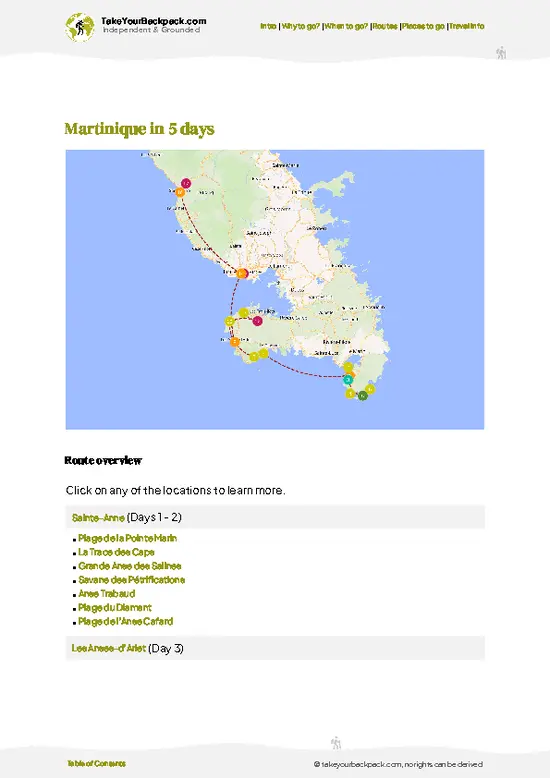
The 5-Day Island Loop: Rum, Volcano & Coasts

The vibe: A deeper circuit for curious travelers who want history, rum, rainforest, and both Caribbean and Atlantic shores in one well-paced loop. You’ll drive more, but each leg pays off with a distinct slice of Martinique’s character.
The highlights:
  • Urban flavor and harbor history in Fort-de-France and Fort Saint-Louis
  • Ruins and volcano views around Saint-Pierre and Mount Pelée National Park
  • Estate visits and tastings at Distillerie Depaz and JM distillery
  • Coastal hiking on the Caravelle peninsula plus a soft landing in Sainte-Anne and Grande Anse des Salines
🌍 Want a ready-to-use travel plan for Martinique?
The overview above compares different route options based on your travel time and style. The complete Travel Guide breaks each itinerary down in detail, including maps, stops, highlights, and transport information.

Explore all route details 👉

Get the Travel Guide -

🌤️ When to go?A month-by-month overview

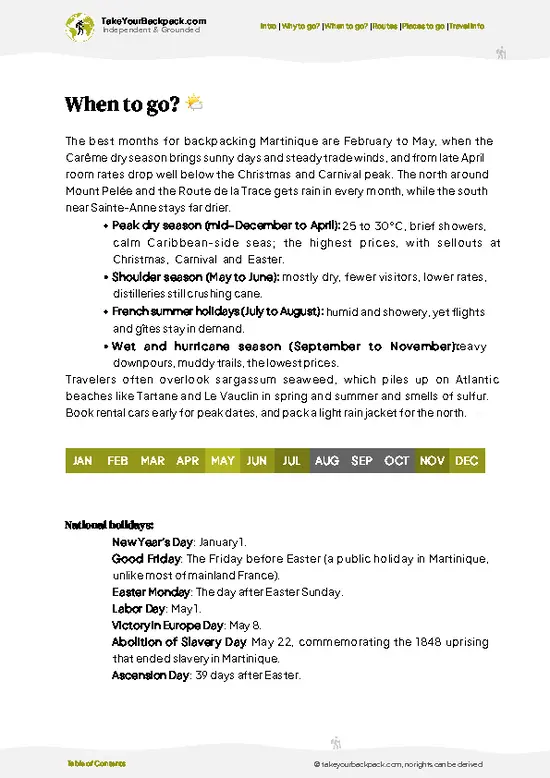
I aim for late April to early June: winter prices ease, cruise ships thin, and buses actually have seats. Trade winds still take the edge off heat, showers are brief and often at night, and the sea stays calm for cheap ferries and shore dives. Trails on Pelée and the Trace des Caps hold firm before deep mud season, leatherbacks start nesting, and you can move without the holiday markup tax.
  • Peak Dry (Dec-Mar): Pricey and crowded, yes; payoff is clean trades, Carnival, clear water, and rare cloudless Pelée mornings.
  • Shoulder Drift (late Apr-Jun): Island exhales; rates drop. Go early, bus before noon, nap through squalls; June dust can mute views.
  • Hurricane Core (Aug-Oct): Quiet towns, loud rainforest. Start at dawn; carry poncho and dry bag; swells cancel ferries and cliff paths.

Book that shoulder window 6-10 weeks out and reserve a compact car early; buses run skeleton service on Sundays.

source: climatestotravel.comJANJanuary: highly recommended for travelingFEBFebruary: highly recommended for travelingMARMarch: highly recommended for travelingAPRApril: highly recommended for travelingMAYMay: excellent for travelingJUNJune: highly recommended for travelingJULJuly: good for travelingAUGAugust: fair for travelingSEPSeptember: fair for travelingOCTOctober: fair for travelingNOVNovember: good for travelingDECDecember: highly recommended for traveling
📅 Traveling in a specific month?
Get a full month-by-month breakdown of weather, crowds, costs, festivals, and seasonal highlights in the complete travel guide.

Get full details when to go 👉

Get the Travel Guide -
martinique-pixabay-4884459

💰 Costs (as of 2026)How expensive it really is

Expect €60-75 per day if you self-cater, ride buses/ferries, and stick to free beaches and hikes; needing a car bumps you to €90-110.
  • dorm accommodation: €22-40 in Fort-de-France/Schœlcher, €28-45 in beach towns; sheets sometimes extra €2-3. System tip: call or message for “tarif semaine” and pay cash—weekly discounts beat nightly rates. Base in FdF for cheap beds + ferry access to beaches; weekends spike, so slide arrivals Sun-Thu. Late same-day walk-ins after 5 pm sometimes snag idle bunks.
  • meals: Supermarket Survival = €6-10/day: baguette, cheese, yogurt, fruit; rotisserie chicken (~€7) feeds two; tap water is fine. Street food reality: accras €3-5, agoulou €6-8, poulet boucané plate €9-12; lunch “menu du jour” €12-18 is the steal. Bar ti-punch €6-8; a supermarket bottle of rhum agricole (€8-12) + limes makes five. Cheaper dairy/bread than St. Lucia or Dominica, but hot plates cost more than both and about on par with Guadeloupe.
  • local transport: Cheapest unlock = TCSP + yellow buses (€1-2 city, €3-6 intercity) and FdF-Trois-Îlets ferries (€3-6 one-way). Buses thin after 6 pm and near dead Sundays—time rich, comfort light. Ferries beat traffic and drop you on beach piers. Car rental
read more 👉
Expect €60-75 per day if you self-cater, ride buses/ferries, and stick to free beaches and hikes; needing a car bumps you to €90-110.
  • dorm accommodation: €22-40 in Fort-de-France/Schœlcher, €28-45 in beach towns; sheets sometimes extra €2-3. System tip: call or message for “tarif semaine” and pay cash—weekly discounts beat nightly rates. Base in FdF for cheap beds + ferry access to beaches; weekends spike, so slide arrivals Sun-Thu. Late same-day walk-ins after 5 pm sometimes snag idle bunks.
  • meals: Supermarket Survival = €6-10/day: baguette, cheese, yogurt, fruit; rotisserie chicken (~€7) feeds two; tap water is fine. Street food reality: accras €3-5, agoulou €6-8, poulet boucané plate €9-12; lunch “menu du jour” €12-18 is the steal. Bar ti-punch €6-8; a supermarket bottle of rhum agricole (€8-12) + limes makes five. Cheaper dairy/bread than St. Lucia or Dominica, but hot plates cost more than both and about on par with Guadeloupe.
  • local transport: Cheapest unlock = TCSP + yellow buses (€1-2 city, €3-6 intercity) and FdF-Trois-Îlets ferries (€3-6 one-way). Buses thin after 6 pm and near dead Sundays—time rich, comfort light. Ferries beat traffic and drop you on beach piers. Car rental €35-50/day + €10-15 fuel: split four ways and it wins on time/coverage. Taxis are budget killers for short hops.
  • activities: Big drivers: dives €45-60 per tank + gear, full-day catamarans €70-100, canyoning €50-70, Jardin de Balata €14-16. Distillery visits are often free with tastings; coastal hikes and snorkeling are free—bring a mask to avoid €8-10/day rental. Similar pricing to Guadeloupe; guided stuff costs more than Dominica.
  • miscellaneous: Budget leaks: Sunday closures push you into pricey restaurants—stock up Saturday. Sunscreen/repellent cost 1.5-2× Europe—pack it. Beach chairs €10-15, paid parking and speed cams bite fast. Some snack shacks are cash-only; carry small bills. Non-EU plans can roam brutally—grab a local SIM or go Wi-Fi-first.
⚠️ Prices can change and everyone travels differently, so take this as a rough guide. Hope it helps you plan your adventure!

✈️ The backpacker research shortcutMartinique Travel Guide

An offline-friendly backpacking guide with optimized travel routes, ranked highlights, transport advice, and the best areas to stay.
example page 0 from our offline Travel Guide for Martiniqueexample page 1 from our offline Travel Guide for Martiniqueexample page 2 from our offline Travel Guide for Martiniqueexample page 3 from our offline Travel Guide for Martiniqueexample page 4 from our offline Travel Guide for Martiniqueexample page 5 from our offline Travel Guide for Martiniqueexample page 6 from our offline Travel Guide for Martiniqueexample page 7 from our offline Travel Guide for Martinique
The digital guide (206 pages) contains:
50 highlights, ranked by travel appeal
Optimized 2, 3 & 5-day travel routes
Cities, national parks, beaches, historical sites, ...
How to get around
Offline-friendly for travel without Wi-Fi
👉 Click to see all 30+ guide features

📅 Plan smarter in minutes, not weeks
Month by month travel advice
Festivals & national holidays
Budget expectations

🗺️ Go to the right places, skip the overrated ones
Honest pros & cons of destinations
Top hikes, parks & viewpoints
Lesser-known places most travelers miss
Clear “worth it vs skip it” guidance

🛏️ Travel smoothly without rookie mistakes
Best areas to stay
Transport systems explained simply
Common scams & safety advice
SIM cards, money & practical tips

🌍 Understand the country, not just visit it
Culture & traditions
52 Essential phrases & customs
Festivals worth planning around
Traveler-friendly historical context
Insights that make places more meaningful

📱 Built for real travel conditions
Fully downloadable PDF
Works completely offline
Optimized for phone use
Useful in remote areas & buses
Everything in one place
Save weeks of stressful planning
Get instant access to the full guide directly. 30-day money-back guarantee.


Sent to your inbox immediately after payment • 100% Secure Checkout
Best Backpacking Travel Advisor 2025 tourism awardBest Backpacking
Travel Advisor
2025
What others say about Take Your Backpack Guides:
⭐⭐⭐⭐⭐
Fantastic, amazing amount of information!
⭐⭐⭐⭐⭐
My goodness this is amazing, it's what I've been looking for hats off too you!
⭐⭐⭐⭐⭐
I think this is absolutely BRILLIANT
⭐⭐⭐⭐
Very complete and informative. It's still missing places, but I gotta to commend you
⭐⭐⭐⭐⭐
This is truly amazing, thank you, can't wait to explore it with my kids!
⭐⭐⭐⭐⭐
Awesome resource, thank you!
⭐⭐⭐⭐⭐
This is amazing! Can't wait to explore the ones I haven't seen
⭐⭐⭐⭐
I love this! Well done, great idea.
⭐⭐⭐⭐⭐
Thanks for taking the time to make this gem!
⭐⭐⭐⭐⭐
This might be the best website I've ever seen.
⭐⭐⭐⭐⭐
Congratulations, and thank you so much for your work; it's incredibly valuable.
⭐⭐⭐⭐
In all seriousness I think you did a great job pointing out the important spots
⭐⭐⭐⭐⭐
10/10 very good
⭐⭐⭐⭐⭐
As someone who's only just starting to visit regularly this is awesome, thank you.
⭐⭐⭐⭐
Thank you very much! I'm going to visit my dad, it's going to be very useful!
⭐⭐⭐⭐⭐
This is really cool! We'll be travelling for the first time and this definitely come in handy.
⭐⭐⭐⭐⭐
You are now our minister of culture, congratulations 👨‍💼
⭐⭐⭐⭐⭐
Just wanted to tell you that this is a pearl! Going to follow your recommendations.
⭐⭐⭐⭐⭐
This is so cool. I'll definitely be using the resource for my travels soon.
⭐⭐⭐⭐⭐
This is very impressive! Good work.
⭐⭐⭐⭐⭐
This is an amazing and informative site. Very well done!

🛏️ Where to stay?Accommodation types and options

Yes — hostels, budget guesthouses and small gîtes exist across Martinique, with most options clustered in Fort-de-France, Le Marin, Sainte-Anne and Trois-Îlets.
Fort-de-France has the cheapest beds and best transport links but is busy and can feel sketchy at night; Sainte-Anne puts you closest to top beaches and lively tourist nightlife in high season but is more touristy; Le Marin suits sailors and quieter southern bases with solid low-cost stays; Trois-Îlets offers easy ferry access and tourist services but leans resortier and often pricier; for quiet, cheaper local stays near hikes and historical … read more 👉
Yes — hostels, budget guesthouses and small gîtes exist across Martinique, with most options clustered in Fort-de-France, Le Marin, Sainte-Anne and Trois-Îlets.
Fort-de-France has the cheapest beds and best transport links but is busy and can feel sketchy at night; Sainte-Anne puts you closest to top beaches and lively tourist nightlife in high season but is more touristy; Le Marin suits sailors and quieter southern bases with solid low-cost stays; Trois-Îlets offers easy ferry access and tourist services but leans resortier and often pricier; for quiet, cheaper local stays near hikes and historical sites choose Saint-Pierre in the north.

If you enjoy meeting fellow travelers, consider choosing hostels with high ratings for atmosphere. On the other hand, if you prefer having your own space, a hotel might be a better option.

🚌 Getting aroundWhat moving around is really like

Martinique runs on two clocks: the posted timetable, and the one controlled by rain squalls and lunch. Mornings move; midday idles; after dusk, public transport thins to bone. Win by starting early, pivoting through Fort-de-France, and never assuming a Sunday bus exists unless you saw it with your own eyes yesterday.
  • CTM buses + TCSP (bus rapid line) Cheap wins the math but not the race. Figure €1.50-€3 per ride versus €35-€80 for taxis or €45-€60/day for a car. Fort-de-France to Saint-Pierre: about
read more 👉
Martinique runs on two clocks: the posted timetable, and the one controlled by rain squalls and lunch. Mornings move; midday idles; after dusk, public transport thins to bone. Win by starting early, pivoting through Fort-de-France, and never assuming a Sunday bus exists unless you saw it with your own eyes yesterday.
  • CTM buses + TCSP (bus rapid line) Cheap wins the math but not the race. Figure €1.50-€3 per ride versus €35-€80 for taxis or €45-€60/day for a car. Fort-de-France to Saint-Pierre: about 1h15 by bus, 45 minutes by car. TCSP is the exception—dedicated lanes bite through traffic—so chain TCSP + bus to shave minutes and keep coins.
  • Taxi-co (shared vans) This is the island’s social bloodstream. Greet the driver, state your destination, sit where told. Vans leave when full, not when the sign says; a windshield card shows the route. Tap a coin on the rail to signal your stop. Exact change earns goodwill. Last departures often roll before sunset; Sundays are skeletal.
  • Bay ferries Fort-de-France ↔ Trois-Îlets arc Water cuts geometry the road can’t. Fifteen to twenty-five minutes lands you at Pointe du Bout/Anse Mitan/Anse-à-l’Âne while cars crawl the peninsula. About €5-€7 one way. Buy round-trip at the dock, watch the swell, and plan to be back before the final early-evening crossing.
  • Rideshare and strategic hitching Locals co-voiturage; tourists can blend in. Stand at roundabouts with a clear sign, daylight only, backpack visible, offer €2-€5 toward fuel. It undercuts taxis and patches gaps after the last bus. Bail at big junctions to re-route quickly.

Master tactical tip: Dawn ferry into Fort-de-France, TCSP to the Lamentin hub, onward bus or taxi-co, then reverse by mid-afternoon—this spine lets you cross the island cheaply without getting stranded.
Distance: About 10 km (6 mi) by road from Martinique Aimé Césaire International Airport (FDF, Le Lamentin) to central Fort-de-France (Savane/Pointe-Simon area).

Main public transport options
  • TCSP (BRT) + short airport link: A local shuttle/bus connects the terminal to the nearest TCSP corridor station in Le Lamentin, where frequent articulated buses run to central Fort-de-France.
    • Time: 30-45 minutes total, depending on wait times and traffic (can stretch to 50-60 minutes at rush hour).
    • Cost: About €1.80-€2.00 one way (typical single fare on the Martinique network; expect roughly this total for the shuttle + TCSP connection).
    • Hours: Daytime to early evening most weekdays and Saturdays; service is reduced in the late evening and on Sundays/public holidays.
  • Regular buses via Le Lamentin: Standard city buses also run toward Fort-de-France from stops near the airport area.
    • Time: 40-60 minutes, including any transfer.
    • Cost: Similar to above (roughly €2 total).
    • Notes: Less frequent outside peak hours; limited service on Sundays/holidays.


Taxi
  • Time: 15-25 minutes in light traffic; 30-45 minutes at peak times.
  • Cost: Typically €25-€35 in daytime to central Fort-de-France; €30-€45 at night, on Sundays, or holidays (luggage/night surcharges may apply). Taxis queue at the official rank outside arrivals.

Good to know
  • Buy public transport tickets from TCSP stations or authorized outlets; validate before boarding/when you board. Carry small change.
  • Evening/Sunday service is limited—if you land late, plan on a taxi.
  • Major ride-hailing apps aren’t widely available in Martinique as of 2025; use licensed taxis or prebook a transfer if you prefer door-to-door.
⚠️ Prices and routes can change, so take this as a rough guide and ask for local advice when you arrive.

🔒 Safety (risk Level: low)Is Martinique safe to visit?

Safety for solo travelers, including women and LGBTQ+ individuals
Martinique is generally safe for solo travelers, including women and LGBTQ+ individuals, but like anywhere, it’s wise to stay alert. Stick to well-lit areas at night and keep an eye on your belongings, especially in crowded places. The island is quite open-minded, though public displays of affection might draw attention in more traditional areas. Always trust your instincts and research local customs to ensure a smooth experience.

✈️ VisaDo you need a visa to visit?

Citizens of the EU, USA, Canada, and several other countries do not need a visa to visit Martinique for stays up to 90 days. If you’re from a country that requires a visa, check with the French consulate in your area for application details. Always verify current entry requirements as they can change.
⚠️ Visa requirements can change over time, so always check the latest visa requirements with the official embassy or government website before you travel.

🎒 What to pack?What you'll need while traveling

Martinique’s a tropical paradise with a mix of beaches, rainforests, and mountains, so pack for all kinds of adventures. The weather is usually hot and humid, and sudden rain showers are common, so think quick-dry clothes. If you’re planning to visit churches or local villages, modest attire is appreciated—avoid anything too revealing. The trails in the mountains can be challenging, so hiking boots are a good idea. Finally, pack light but smart; you’ll want room for local rum and spices to bring back!

Apart from this country specific advice, I have also crafted a general packing list that should help on any trip. authorOver the years, I've learned the importance of packing minimally. It's so much easier to jump on the back of a truck or squeeze yourself into the last spot of a minibus without that supersized backpack. If you're headed to a warm destination, leave your winter jacket at home; for colder regions, opt for thin thermal underlayers. Instead of packing your entire wardrobe, bring just three sets of clothes, as laundry facilities are available everywhere.
View the full list 👉
🎒 Planning the practical side of your trip?
Get detailed information on transport, daily budgets, internet access, local customs, food, language, and other essentials in the complete Travel Guide.

Get detailed practical information 👉

Get the Travel Guide -

🙋 FAQThings travelers often ask

Trip Planning


Personal tip: I normally search on good rating for atmosphere (for meeting people) and location (for easy exploring). Cleanliness as a bonus.


Travel Essentials

Hepatitis A and B vaccinations are recommended for travelers to Martinique. It’s also wise to be up-to-date on routine vaccines like measles-mumps-rubella (MMR), tetanus-diphtheria-pertussis (Tdap), and varicella (chickenpox). Consider typhoid if you’re planning to eat street food or stay in rural areas. There’s no risk of yellow fever in Martinique, but proof of vaccination may be required if you’re arriving from a country with a risk of yellow fever. Always check with a healthcare provider for personalized advice.


vaccination requirements
When I first started traveling, I often spent part of my first day in a new country hunting for a local SIM card. While this can still be slightly cheaper, it also takes time and planning.

These days, it's much simpler to install an eSIM before leaving home. Once you arrive in Martinique, you can activate it immediately and have mobile data from the moment you land — which is especially useful for ordering transport or navigating away from busy airports.

There are many providers nowadays, and price differences are usually small. I personally go with Airalo, as it offers excellent network coverage throughout the country and strong global coverage, so you can manage multiple countries from a single app.


Get your e-sim for Martinique

Culture & Customs

Respect personal space; locals appreciate a bit of distance in conversation. Use ”Bonjour” when entering shops or restaurants—it’s polite and expected. Dress modestly, especially in churches; beachwear is for the beach only. Tipping is appreciated but not mandatory; around 10% is fine if service isn’t included. Public displays of affection are generally reserved; be discreet, especially LGBTQ+ couples. Women should feel comfortable traveling solo, but like anywhere, staying aware of your surroundings is wise. Don’t refuse offered food or drink as it’s considered rude. Avoid discussing politics or comparing the island to mainland France negatively.
Trying traditional food is always a great way to experience the culture. Here are some must-try dishes for Martinique.
  • Colombo de Poulet: A curry-style chicken dish seasoned with a unique blend of spices like turmeric, coriander, and cumin. It’s a staple at family gatherings and offers a taste of the island’s Indian influence.
  • Accras de Morue: These are savory codfish fritters, crispy on the outside and fluffy inside. They’re a popular snack and appetizer, perfect for tasting Martinique’s love for seafood.
  • Boudin Créole: A spicy blood sausage mixed with bread, pig’s blood, and spices. It’s a must-try for adventurous eaters and is often enjoyed during festivals and celebrations.
  • Tiwoman: A sweet treat made with local bananas, often caramelized with a hint of rum. It’s a go-to dessert that showcases the island’s abundant tropical fruits and its famous rum production.
  • Trempage: A hearty dish featuring salt fish, bread, and a spicy, zesty sauce. It reflects the island’s Creole roots and is a casual yet satisfying meal found at many local spots.
Tap water in Martinique is generally safe to drink, and locals consume it without issues. However, tourists with sensitive stomachs or those unaccustomed to the local water might prefer sticking to bottled or filtered water just to be cautious. Always check with your accommodation or recent travelers, as water quality can vary.
The main language in Martinique is French. Backpacking is way more rewarding if you know a bit of the local language, so I'd suggest brushing up on the basics just in case your French skills have become a bit rusty.

Want to understand locals better?
The complete Travel Guide for Martinique includes 52 essential words and phrases — greetings, thank-yous, ordering food, transport, numbers, and common local expressions you'll actually hear.

Get your local basic phrases 👉

Get the Travel Guide -


In Martinique, the primary language is French, as it is an overseas region of France. While English is not widely spoken, especially in rural areas, you may find that some people in tourist-centric locations, such as hotels, restaurants, and attractions, have a basic understanding of English. However, proficiency can vary significantly.

In urban areas like Fort-de-France, you might encounter more English speakers, particularly among those working in the tourism industry. It’s advisable to learn a few basic French phrases to enhance communication and show respect for the local culture.

Overall, while you can get by with English in tourist areas, having some knowledge of French will greatly enhance your experience and interactions with locals.

Money & Payments

The local currency of Martinique is EUR (€).

In Martinique, euros are the way to go since it’s part of France. ATMs are pretty accessible in the main towns, especially Fort-de-France and Le Marin. Stick with bank ATMs to avoid extra fees. While cards are widely accepted, you’ll still want cash for local markets, buses, and some small eateries. Forget about dollars; you’ll get a lousy exchange rate, if any. If you need to swap dollars for euros, do it at a bank in Fort-de-France or at the airport. But seriously, getting euros before you arrive is a smart move. A little cash and a reliable card should have you covered for most situations.

In Martinique, tipping is not compulsory but appreciated. At restaurants, a 10% tip is common if service isn’t included in the bill. For taxis, rounding up to the nearest euro is usually sufficient.

🧩 Nearby countriesNearby backpacking alternatives

We 💚 feedbackKey takeaways from the trip

Come for the island where you can tag Mont Pelée at dawn and be floating over turtles at Anse Dufour before lunch, then sip agricole straight from a distillery’s free tasting bar. The tax: mobility. Without wheels, you pay in time—buses thin after workdays, Sundays basically stop—so either hitch confidently or budget €35–50/day for a tiny manual and the stress of hairpins. It isn’t only for resort budgets: picnic from Leader Price, chase lunch formulas, stock up Saturday, and let beaches be your museum.

✍️ Help improve this page!
The information on this page is based on in-depth research, insights shared by experienced travelers, and feedback from the local travel community in Martinique. While every effort is made to keep the information accurate and current, conditions can change — so if you spot anything incorrect or outdated, please get in touch.


🙋‍♂️ Give feedback

👋 Meet the founderWho’s Behind Take Your Backpack?

Johan, backpacker and founder of TakeYourBackpackHi, I’m Johan (Netherlands 🇳🇱), the creator of TakeYourBackpack. Over the past decade, I’ve backpacked through 80+ countries across six continents, gaining extensive experience with independent travel, long-term trips, and overland routes.

This site is built on a combination of firsthand travel experience and carefully curated insights from other backpackers. Many guides are based on places I’ve personally visited, while others bring together tips, observations, and practical advice shared by trusted travelers I’ve met along the way.

The goal is to provide realistic, experience-driven guidance — not generic itineraries — so you can explore destinations with better context, clearer expectations, and more confidence.

Get full Martinique guide •
Instant download • 50 highlights • Full Offline guide