×
Finland 🇫🇮

backpacking Europe Finland 🇫🇮Follow lake shores, fell trails and old fortresses north.

Explore Faroe IslandsExplore France

Backpacking Finland in 2027

A complete guide including when and where to go, costs, transport, itineraries, and practical travel advice.
A practical introduction for travelers

Backpacking Finland
By Johan Kruseman 🇳🇱 | Updated October 19, 2026

Finland goes on holiday in July, and the country empties toward the water. Many small restaurants and family businesses in Helsinki close for two to four weeks while locals head to roughly half a million summer cottages. The smarter move is to follow them to the lakes and treat the city as a short stop.
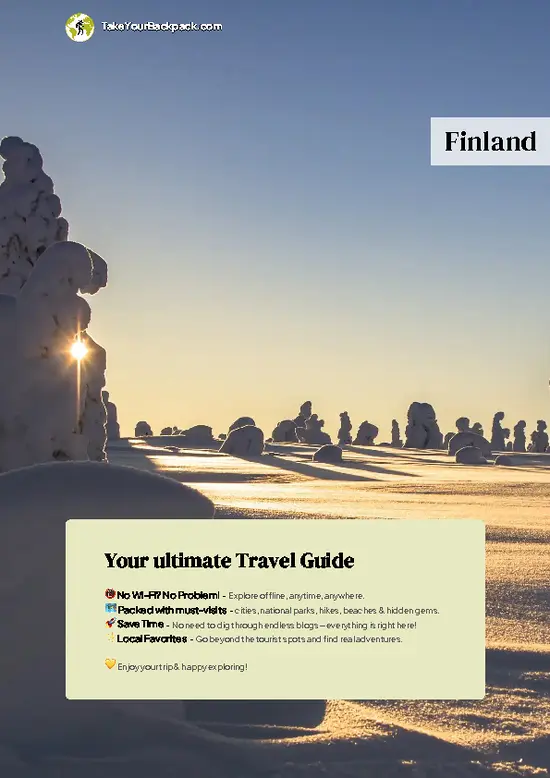
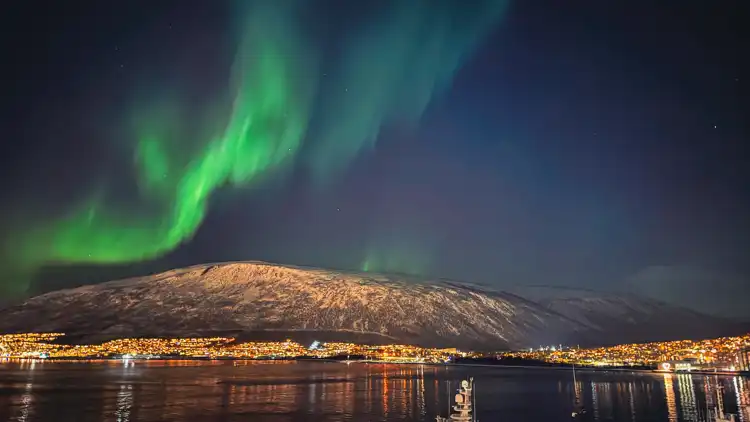
That lake country is the main draw: Saimaa’s maze of islands, the open fells of Lapland under the aurora from late August to April, and a sauna culture so ordinary that office blocks have one in the basement. I still remember climbing out of a smoke sauna near Kuopio into black lake water that hit like a slap, with birch smoke clinging to my hair for two days. The hard parts are plain. Prices sit with Scandinavia’s, distances are long, and December daylight in the north is a blue glow lasting a few hours.
Norway is steeper and pricier, while Sweden feels similar but busier. Finland suits hikers, sauna converts and anyone who finds silence restful. If you want cheap nightlife or warm beaches, look elsewhere.

👉 Get the 📖 Travel Guide of Finland

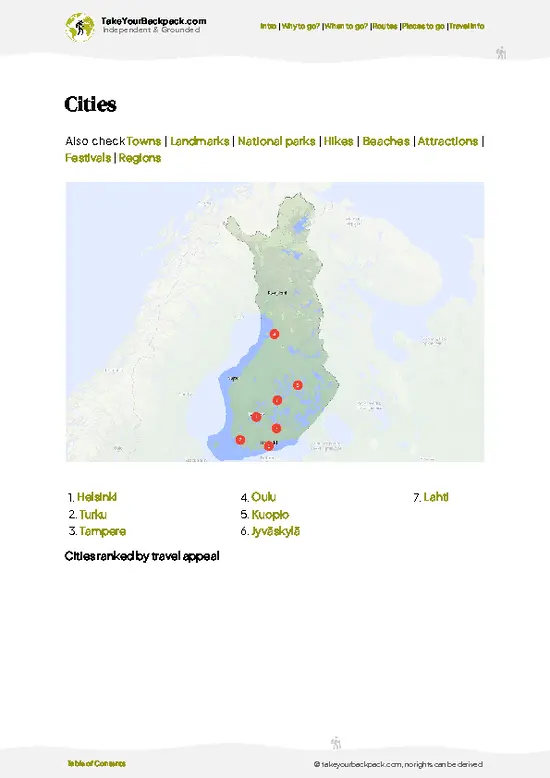
Helsinki and the South Coast (Helsinki, Suomenlinna, Porvoo)

Backpacking Finland usually starts in Helsinki, where the Market Square smells of sea salt and filter coffee and gulls work the fish stalls. The ferry to the Suomenlinna sea fortress takes about 15 minutes. Porvoo, with its red riverside warehouses and cobbled lanes, is about an hour away by bus, so keep one bed and day-trip instead of packing up. Trams and the metro handle the city. It suits first-timers and design fans.

Turku and the Archipelago (Turku, Naantali, Åland)

Turku, about two hours west of Helsinki by train, is the oldest city in the country. You feel it in the stone cathedral and the harbor castle, while students fill the bars along the Aura River. Beyond it, the Archipelago Trail loops roughly 250 kilometers across islands joined by bridges and small ferries. Few people live out there, so buses are thin; cyclists rent bikes in Turku and ride it over three or four days. Ferries also continue to Mariehamn on Åland.

Tampere (Tampere, Pyynikki, Rauhaniemi)

Tampere sits between two lakes, with rapids roaring through its red-brick mill district. It calls itself the sauna capital, and public saunas like Rauhaniemi let you go from steam into the lake all year, even through a hole in the ice. Trains from Helsinki take 1.5 to 2 hours, and the center is walkable, with a tram for the edges. Walk up Pyynikki ridge for the tower and its sugared doughnuts. The student crowd and factory past give it a cheap-beer, unpretentious mood.

Lakeland (Savonlinna, Olavinlinna, Kuopio)

The Lakeland is water and pine in every direction. You hear loons, lapping water and the crackle of wood-fired sauna stoves. Savonlinna’s Olavinlinna castle hosts an opera festival each July, and Kuopio’s Jätkänkämppä smoke sauna is worth the trip alone. Trains reach both in about 4 to 5 hours. Villages are far apart and buses sparse, so experienced travelers rent a cottage or car, or ride the summer lake boats. It suits paddlers and anyone who likes quiet.

Lapland (Rovaniemi, Levi, Inari)

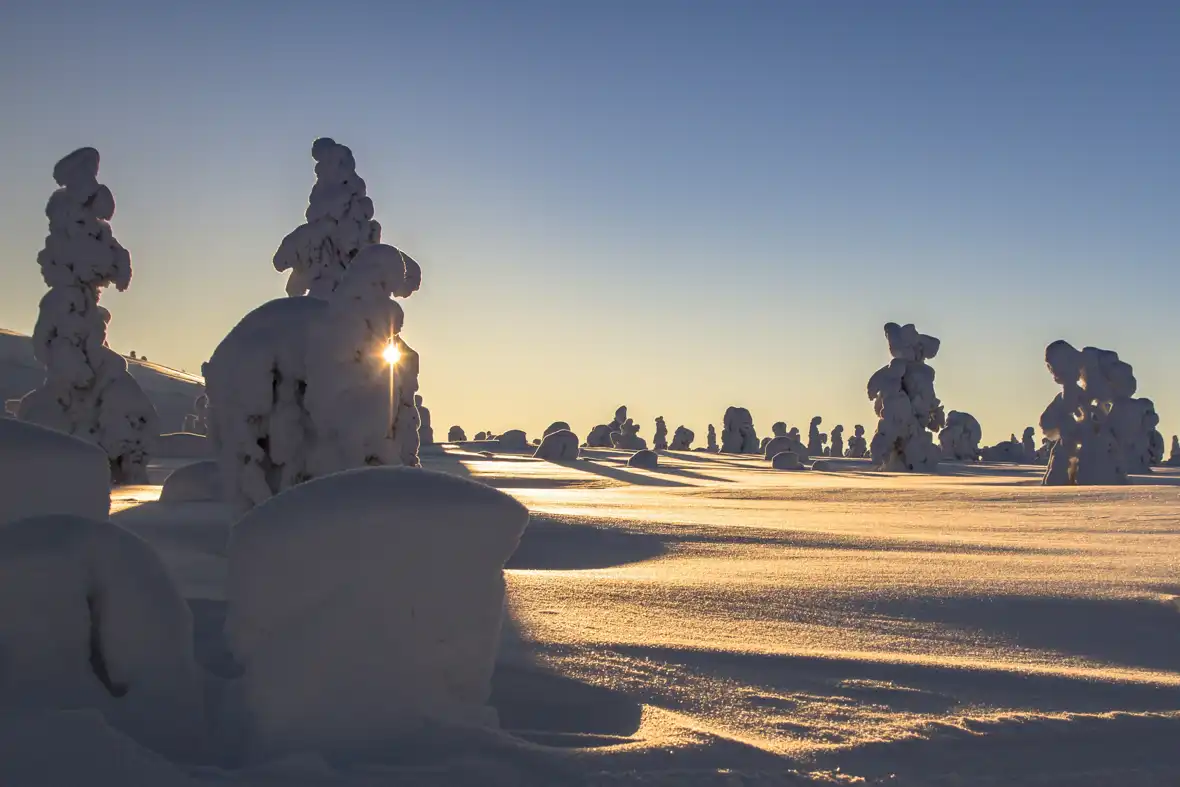
Lapland asks the most of you. In winter, dry cold of minus 25 makes your nostrils crackle; in summer the sun barely sets and mosquitoes find every gap in your clothes. The overnight train from Helsinki to Rovaniemi takes 10 to 12 hours and saves a hotel night, so it sells out in winter. Buses continue to Levi and Inari, home of the Siida Sámi museum, but timetables are sparse, so plan connections ahead. Best for hikers and aurora chasers.
Geography and where places are located
Loading the map 🌍
CLICK TO FILTER
cities
towns
landmarks
national parks
hikes
beaches
attractions
festivals
regions
SHOW COUNTRY’S BESTSHOW ALL

Why go?What draws travelers here

Scenery

Finland’s scenery works on a low, wide scale: roughly 188,000 lakes, forest that covers about three quarters of the land, and granite shorelines smoothed by ice. The appeal is in the light. In June the sun barely sets and lakes … read more 👉
Finland’s scenery works on a low, wide scale: roughly 188,000 lakes, forest that covers about three quarters of the land, and granite shorelines smoothed by ice. The appeal is in the light. In June the sun barely sets and lakes turn pewter at midnight; in winter, snow muffles every sound and the sky goes violet by mid-afternoon. Mosquitoes in July are part of the deal. I would skip the city and rent a lakeside cabin in Saimaa for three nights, bringing a head net and a good book.

Wildlife

Finland is one of the best places in Europe to see brown bears in the wild, along with wolverines and the occasional wolf near the eastern border. Overnight sessions in wooden hides around Kuhmo and Kuusamo run from roughly April … read more 👉
Finland is one of the best places in Europe to see brown bears in the wild, along with wolverines and the occasional wolf near the eastern border. Overnight sessions in wooden hides around Kuhmo and Kuusamo run from roughly April to September, and you will wait in pine-scented silence until a bear lumbers out of the forest in the pale night light. Lake Saimaa holds the rare Saimaa ringed seal, around 500 of them, seen basking on rocks. Up north, reindeer stroll across roads, so drive slowly at dusk.

⭐ HighlightsHighlights of Finland

  • Suomenlinna: A sea fortress spread over six islands off Helsinki, begun by the Swedish crown in 1748 and listed by UNESCO. Grassy ramparts, rusting cannons and wind off the Baltic make it a fine picnic spot, and the short ferry ride out gives you the harbor skyline as gulls trail the stern.
  • Olavinlinna Castle: Founded in 1475 on a rock between two lakes in Savonlinna, it still looks built for siege. Stone stairwells stay cold even in July, when the castle courtyard hosts the Savonlinna Opera Festival and voices bounce off walls several meters thick.
  • Koli National Park: The view from Ukko-Koli over Lake Pielinen and its wooded islands is the one painters and Sibelius turned into national imagery in the late 1800s. Climb up at sunset, when the granite is warm under your palms and the lake below goes from silver to dark blue.
  • Karhunkierros Trail: Roughly 80 kilometers through Oulanka National Park, crossing swaying suspension bridges over rapids near the Arctic Circle. Myllykoski’s old mill
… read more 👉
  • Suomenlinna: A sea fortress spread over six islands off Helsinki, begun by the Swedish crown in 1748 and listed by UNESCO. Grassy ramparts, rusting cannons and wind off the Baltic make it a fine picnic spot, and the short ferry ride out gives you the harbor skyline as gulls trail the stern.
  • Olavinlinna Castle: Founded in 1475 on a rock between two lakes in Savonlinna, it still looks built for siege. Stone stairwells stay cold even in July, when the castle courtyard hosts the Savonlinna Opera Festival and voices bounce off walls several meters thick.
  • Koli National Park: The view from Ukko-Koli over Lake Pielinen and its wooded islands is the one painters and Sibelius turned into national imagery in the late 1800s. Climb up at sunset, when the granite is warm under your palms and the lake below goes from silver to dark blue.
  • Karhunkierros Trail: Roughly 80 kilometers through Oulanka National Park, crossing swaying suspension bridges over rapids near the Arctic Circle. Myllykoski’s old mill roars beside the path, and wooden huts along the route smell of woodsmoke and drying socks.
  • Hetta to Pallas Trail: About 55 kilometers across the treeless fells of Pallas-Yllästunturi National Park, one of the classic routes in Finland. Wind hums over bare summits, reindeer wander across the path, and in September the ground cover burns red and orange.
For quieter corners, try the Kvarken Archipelago’s rising seabed, Bengtskär lighthouse at the edge of the Baltic, or the sacred island of Ukonsaari on Lake Inari, and I would pick Kvarken first.
Spotted a mistake or missing a highlight? Contact us.

But Finland offers more...

Discover and compare all of its highlights per category

🧭 RoutesPlanning a route that makes sense

The 5-Day Southern Coast Route

Sea fortresses, wooden old towns and harbor cafés along Finland’s south coast, all within 2 hours of each other. It suits a first visit or a long stopover, with time to wander rather than rush.
  • Suomenlinna Sea Fortress by ferry
  • Riverside storehouses of Porvoo
  • Turku Castle and the Aura River
  • Harbor town of Naantali

👉 explore this 5-day route

The 10-Day Lakes and Lapland Route

A sweep from the capital through castle-studded lake country to Sámi villages beyond the Arctic Circle. One night train bridges the south and the far north, so you trade cities for forests and big skies.
  • Olavinlinna Castle on its lake islet
  • The Punkaharju Ridge rail ride
  • Crossing the Arctic Circle at Rovaniemi
  • Sámi culture in Inari

👉 explore this 10-day route

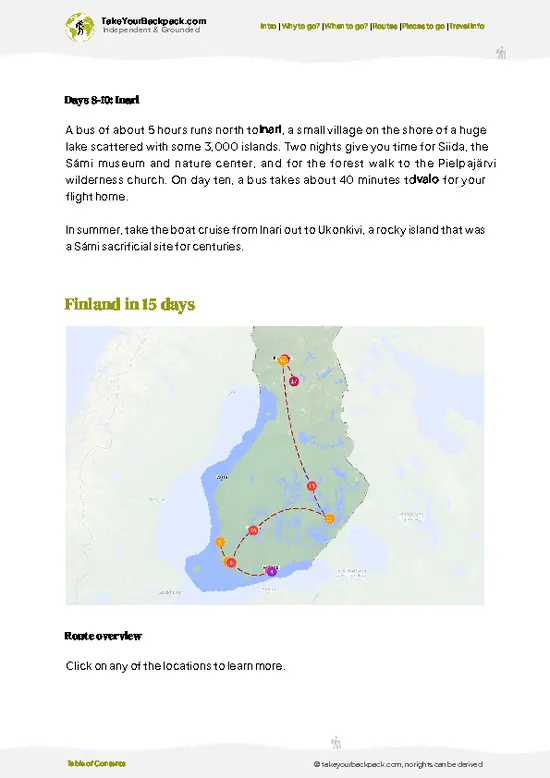
The 15-Day Grand Finland Route

The full journey, linking the southwestern coast, the industrial lake city of Tampere, the Lakeland and Lapland. Slower days, smoke saunas and wooden towns give it depth that shorter trips miss.
  • UNESCO-listed Old
… read more 👉

The 5-Day Southern Coast Route

Sea fortresses, wooden old towns and harbor cafés along Finland’s south coast, all within 2 hours of each other. It suits a first visit or a long stopover, with time to wander rather than rush.
  • Suomenlinna Sea Fortress by ferry
  • Riverside storehouses of Porvoo
  • Turku Castle and the Aura River
  • Harbor town of Naantali

👉 explore this 5-day route

The 10-Day Lakes and Lapland Route

A sweep from the capital through castle-studded lake country to Sámi villages beyond the Arctic Circle. One night train bridges the south and the far north, so you trade cities for forests and big skies.
  • Olavinlinna Castle on its lake islet
  • The Punkaharju Ridge rail ride
  • Crossing the Arctic Circle at Rovaniemi
  • Sámi culture in Inari

👉 explore this 10-day route

The 15-Day Grand Finland Route

The full journey, linking the southwestern coast, the industrial lake city of Tampere, the Lakeland and Lapland. Slower days, smoke saunas and wooden towns give it depth that shorter trips miss.
  • UNESCO-listed Old Rauma
  • Tampere’s red-brick mills and public saunas
  • Lake views from Kuopio’s Puijo tower
  • Bears and lynx at Ranua Wildlife Park

👉 explore this 15-day route

🌤️ When to go?When to go for the best experience

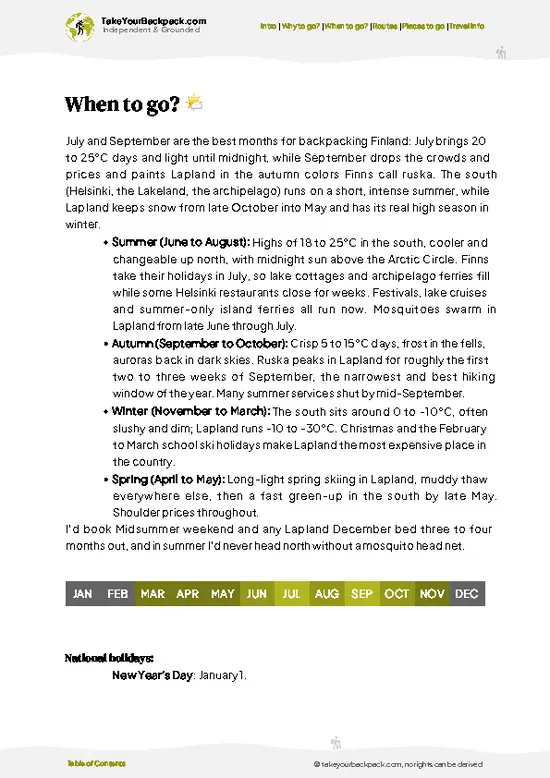
July and September are the best months for backpacking Finland: July brings 20 to 25°C days and light until midnight, while September drops the crowds and prices and paints Lapland in the autumn colors Finns call ruska. The south (Helsinki, the Lakeland, the archipelago) runs on a short, intense summer, while Lapland keeps snow from late October into May and has its real high season in winter.
  • Summer (June to August): Highs of 18 to 25°C in the south, cooler and changeable up north, with midnight sun above the Arctic Circle. Finns take their holidays in July, so lake cottages and archipelago ferries fill while some Helsinki restaurants close for weeks. Festivals, lake cruises and summer-only island ferries all run now. Mosquitoes swarm in Lapland from late June through July.
  • Autumn (September to October): Crisp 5 to 15°C days, frost in the fells, auroras back in dark skies. Ruska peaks in Lapland for roughly the first two to three weeks of September, the narrowest and best hiking window of the year. Many summer services shut by mid-September.
  • Winter (November to March): The south sits around 0 to -10°C, often slushy and dim; Lapland runs -10 to -30°C. Christmas and the February to March school ski holidays make Lapland the most expensive place in the country.
  • Spring (April to May): Long-light spring skiing in Lapland, muddy thaw everywhere else, then a fast green-up in the south by late May. Shoulder prices throughout.
I’d book Midsummer weekend and any Lapland December bed three to four months out, and in summer I’d never head north without a mosquito head net.

source: climatestotravel.comJANJanuary: fair for travelingFEBFebruary: fair for travelingMARMarch: good for travelingAPRApril: good for travelingMAYMay: good for travelingJUNJune: highly recommended for travelingJULJuly: excellent for travelingAUGAugust: highly recommended for travelingSEPSeptember: excellent for travelingOCTOctober: highly recommended for travelingNOVNovember: good for travelingDECDecember: fair for traveling
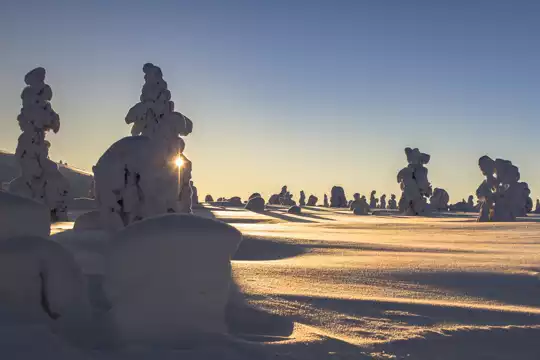
finland - pixabay - lapland-2984828

💰 Costs (as of 2026)Typical budget expectations

Backpacking Finland on a tight budget costs about €60 to €90 a day if you sleep in dorms, cook most meals and travel by long-distance bus. That puts it close to Sweden, roughly 30 to 40 percent above Estonia, and clearly below Norway.
CategoryBudget RangeLocal Reality
Dorm accommodation€28 to €50 per nightA dorm bed in Helsinki usually costs €28 to €45. In Rovaniemi it runs €35 to €55 in the December to March aurora season. Tallinn dorms are often €15 to €25, so a Baltic leg brings the average down. Hostels in Tampere and Turku tend to be cheaper than in the capital. Booking two months ahead or staying midweek can save €5 to €10 a night, and wild camping is free under Finland’s everyman’s right.
Meals€15 to €30 per dayLidl, S-Market and K-Market prices are a little lower than in Sweden. A day of groceries costs €12 to €18, and a karelian pie (rice pastry) is €1 to €2. Street food is pricier: a kebab or pizza costs €10 to €14 and a Hesburger meal €10 to €12. A weekday lunch buffet (“lounas”) of €12 to €15 is the best-value hot meal in the country.
Local transport€5 to €25 per day (averaged)Onnibus is the cheapest way to travel between cities: Helsinki to Tampere or Turku often costs €5
… read more 👉
Backpacking Finland on a tight budget costs about €60 to €90 a day if you sleep in dorms, cook most meals and travel by long-distance bus. That puts it close to Sweden, roughly 30 to 40 percent above Estonia, and clearly below Norway.
CategoryBudget RangeLocal Reality
Dorm accommodation€28 to €50 per nightA dorm bed in Helsinki usually costs €28 to €45. In Rovaniemi it runs €35 to €55 in the December to March aurora season. Tallinn dorms are often €15 to €25, so a Baltic leg brings the average down. Hostels in Tampere and Turku tend to be cheaper than in the capital. Booking two months ahead or staying midweek can save €5 to €10 a night, and wild camping is free under Finland’s everyman’s right.
Meals€15 to €30 per dayLidl, S-Market and K-Market prices are a little lower than in Sweden. A day of groceries costs €12 to €18, and a karelian pie (rice pastry) is €1 to €2. Street food is pricier: a kebab or pizza costs €10 to €14 and a Hesburger meal €10 to €12. A weekday lunch buffet (“lounas”) of €12 to €15 is the best-value hot meal in the country.
Local transport€5 to €25 per day (averaged)Onnibus is the cheapest way to travel between cities: Helsinki to Tampere or Turku often costs €5 to €15 if you book early. An HSL single ticket in Helsinki (zones AB) is about €3.20, and it also covers the ferry to Suomenlinna. A VR train from Helsinki to Rovaniemi costs about €40 to €90 for a seat, more for a sleeper cabin.
Activities€0 to €40 per day (averaged)National parks such as Nuuksio and Koli are free. Public sauna is the classic Finnish splurge: Löyly in Helsinki costs about €25 for two hours, while volunteer-run Sompasauna is free. Lapland is where costs jump. Husky safaris cost €150 to €250 and aurora tours €80 to €150. I would spend money on one husky trip and skip paid aurora tours, since a clear night outside Rovaniemi costs nothing.
Miscellaneous€5 to €15 per dayCoffee costs €3 to €5, and refills are often free with a lunch buffet. A pint in a bar is €7 to €10, so many locals buy beer at supermarkets for €2 to €3 a can. A prepaid SIM with data from DNA, Elisa or Telia costs €10 to €20, and EU roaming works here. Paid toilets and coin lockers cost €1 to €5. Tap water is excellent, so don’t buy bottled water.
Total Daily Budget€60 to €90Expect around €60 a day in the south with buses, groceries and free saunas. Expect €90 or more when you add Lapland trains and one paid activity. In Estonia the same style of travel costs €40 to €60, and in Norway €90 to €130.
⚠️ Prices can change and everyone travels differently, so take this as a rough guide. Hope it helps you plan your adventure!

✈️ The backpacker research shortcutFinland Travel Guide

An offline-friendly backpacking guide with optimized travel routes, ranked highlights, transport advice, and the best areas to stay.
example page 0 from our offline Travel Guide for Finland
example page 1 from our offline Travel Guide for Finland
example page 2 from our offline Travel Guide for Finland
example page 3 from our offline Travel Guide for Finland
example page 4 from our offline Travel Guide for Finland
example page 5 from our offline Travel Guide for Finland
example page 6 from our offline Travel Guide for Finland
example page 7 from our offline Travel Guide for Finland
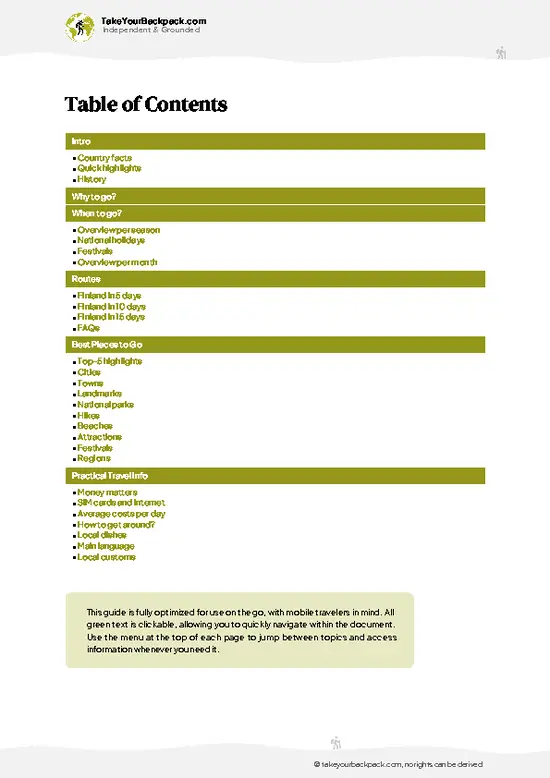
The digital guide (341 pages) contains:
✅ 87 highlights, ranked by travel appeal
✅ Optimized 5, 10 & 15-day travel routes
✅ Cities, national parks, landmarks, beaches
✅ How to get around
✅ Offline-friendly for travel without Wi-Fi
👉 Click to see all 30+ guide features

📅 Plan smarter in minutes, not weeks
✅ Month by month travel advice
✅ Festivals & national holidays
✅ Budget expectations

🗺️ Go to the right places, skip the overrated ones
✅ Honest pros & cons of destinations
✅ Top hikes, parks & viewpoints
✅ Lesser-known places most travelers miss
✅ Clear “worth it vs skip it” guidance

🛏️ Travel smoothly without rookie mistakes
✅ Best areas to stay
✅ Transport systems explained simply
✅ Common scams & safety advice
✅ SIM cards, money & practical tips

🌍 Understand the country, not just visit it
✅ Culture & traditions
✅ 52 Essential phrases & customs
✅ Festivals worth planning around
✅ Traveler-friendly historical context
✅ Insights that make places more meaningful

📱 Built for real travel conditions
✅ Fully downloadable PDF
✅ Works completely offline
✅ Optimized for phone use
✅ Useful in remote areas & buses
✅ Everything in one place
Stop searching, start planning
Get instant access to your full guide. 30‑day money-back guarantee.
+ Add another guide for just

By proceeding you agree to our terms.
Sent to your inbox immediately after payment • 100% Secure Checkout
Best Backpacking Travel Advisor 2025 tourism awardBest Backpacking
Travel Advisor
2025
What others say about Take Your Backpack Guides:
⭐⭐⭐⭐⭐
Fantastic, amazing amount of information!
⭐⭐⭐⭐⭐
My goodness this is amazing, it's what I've been looking for hats off too you!
⭐⭐⭐⭐⭐
I think this is absolutely BRILLIANT
⭐⭐⭐⭐
Very complete and informative. It's still missing places, but I gotta to commend you
⭐⭐⭐⭐⭐
This is truly amazing, thank you, can't wait to explore it with my kids!
⭐⭐⭐⭐⭐
Awesome resource, thank you!
⭐⭐⭐⭐⭐
This is amazing! Can't wait to explore the ones I haven't seen
⭐⭐⭐⭐
I love this! Well done, great idea.
⭐⭐⭐⭐⭐
Thanks for taking the time to make this gem!
⭐⭐⭐⭐⭐
This might be the best website I've ever seen.
⭐⭐⭐⭐⭐
Congratulations, and thank you so much for your work; it's incredibly valuable.
⭐⭐⭐⭐
In all seriousness I think you did a great job pointing out the important spots
⭐⭐⭐⭐⭐
10/10 very good
⭐⭐⭐⭐⭐
As someone who's only just starting to visit regularly this is awesome, thank you.
⭐⭐⭐⭐
Thank you very much! I'm going to visit my dad, it's going to be very useful!
⭐⭐⭐⭐⭐
This is really cool! We'll be travelling for the first time and this definitely come in handy.
⭐⭐⭐⭐⭐
You are now our minister of culture, congratulations 👨‍💼
⭐⭐⭐⭐⭐
Just wanted to tell you that this is a pearl! Going to follow your recommendations.
⭐⭐⭐⭐⭐
This is so cool. I'll definitely be using the resource for my travels soon.
⭐⭐⭐⭐⭐
This is very impressive! Good work.
⭐⭐⭐⭐⭐
This is an amazing and informative site. Very well done!

🛏️ Where to stay?Where to stay in Finland

Finland has a solid hostel network, with dorm beds typically €30 to €45 a night in Helsinki and less in smaller cities, plus summer-only hostels set up in student housing from June to August. In Helsinki, Kamppi and the streets around the Central Station put you within walking distance of the main sights and the airport train but cost the most, Kallio is cheaper and has the city’s liveliest bar scene with louder weekend nights, and Punavuori is quieter, with design shops and cafés about 15 minutes’ walk from the center. Outside the capital, the central districts of Turku, Tampere and Rovaniemi … read more 👉
Finland has a solid hostel network, with dorm beds typically €30 to €45 a night in Helsinki and less in smaller cities, plus summer-only hostels set up in student housing from June to August. In Helsinki, Kamppi and the streets around the Central Station put you within walking distance of the main sights and the airport train but cost the most, Kallio is cheaper and has the city’s liveliest bar scene with louder weekend nights, and Punavuori is quieter, with design shops and cafés about 15 minutes’ walk from the center. Outside the capital, the central districts of Turku, Tampere and Rovaniemi hold most budget beds, all of them safe, though Rovaniemi books out and gets pricey around Christmas.

If you enjoy meeting fellow travelers, consider choosing hostels with high ratings for atmosphere. On the other hand, if you prefer having your own space, a hotel might be a better option.

🚌 Getting aroundWhat moving around is really like

Finnish trains and buses leave on the minute, and a ten-minute delay earns an apology over the speaker in three languages. VR train fares rise as seats sell, so book 2 to 4 weeks ahead for main routes and 1 to 2 months ahead for Lapland night trains around Christmas, ski season or midsummer. Buses barely change price, so you can buy those the day before.
  • VR trains: Helsinki to Tampere takes 1.5 to 2 hours for roughly €10 to 35, and Helsinki to Turku about 2 hours for a similar fare. Seats are wide,
… read more 👉
Finnish trains and buses leave on the minute, and a ten-minute delay earns an apology over the speaker in three languages. VR train fares rise as seats sell, so book 2 to 4 weeks ahead for main routes and 1 to 2 months ahead for Lapland night trains around Christmas, ski season or midsummer. Buses barely change price, so you can buy those the day before.
  • VR trains: Helsinki to Tampere takes 1.5 to 2 hours for roughly €10 to 35, and Helsinki to Turku about 2 hours for a similar fare. Seats are wide, carriages are quiet, the Wi-Fi is free, and bare birch forest slides past the window. Book in the VR app, where the cheapest fares sell out first. Quiet cars mean silence, phone calls included.
  • Night trains to Lapland: Helsinki to Rovaniemi takes 10 to 13 hours overnight. A seat costs around €40 to 90, and a private sleeper cabin with a washbasin runs about €100 to 250. You fall asleep to the clack of rails in the south and wake to snow-blue light in the north, saving a night’s accommodation. Book early, because cabins go first.
  • Long-distance buses (Onnibus and Matkahuolto): Onnibus double-deckers between the southern cities start around €5 to 15 if you book early, for example Helsinki to Tampere in about 2 hours 15 minutes. Matkahuolto fills the gaps in the north and east, where trains do not run. You get USB plugs and tight legroom, and you buy tickets online or in each company’s app. Drivers rarely sell tickets.
  • Domestic flights: Helsinki to Rovaniemi or Ivalo takes 1 hour 15 minutes to 1 hour 45 minutes and costs about €50 to 180 one way. Flying makes sense when you only have a few days for the far north. Checked bags often cost extra on the cheapest fares.
  • City transport: Helsinki’s HSL trams, metro, buses and the Suomenlinna ferry share one ticket of about €3.20 for zone AB, valid 80 minutes. Buy it in the HSL app or tap a bank card on the reader. Day tickets pay off after three rides.
I’d ride the night train north and fly back south, which saves a full day and avoids sitting through the same pine forest twice.
Helsinki Airport (HEL), Finland’s main international gateway in Vantaa, sits about 18 km (11 miles) north of Helsinki’s center, and the cheapest reliable way in is the commuter train with a regular HSL ABC-zone ticket.
  • Commuter train (I and P lines) (about 30 minutes, roughly €4.10 to €4.20 on an ABC single) leaves from the underground station reached directly from the Terminal 2 arrivals hall, runs every 10 minutes or so from around 5 a.m. to after midnight, and both lines end at Helsinki Central Station. Buy your ticket in the HSL app or at the machines on the platform before boarding.
  • Bus 600 (40 to 50 minutes, same ABC ticket, about €4.10 to €4.20) departs from the stops outside Terminal 2 and ends at Rautatientori next to Central Station, with service continuing through the night at lower frequency.
  • Taxi (25 to 35 minutes, typically €35 to €50) waits at the rank outside the arrivals hall, and several companies offer fixed airport fares if you ask before setting off; cards are accepted everywhere.
  • Uber and Bolt (25 to 35 minutes, usually €30 to €45, more with surge pricing) pick up at the marked ride-hailing zone near the terminal and are paid through the app.
If you land after the last train, take Bus 600 for the price of a public transport ticket, or share a ride-hailing car with other travelers to split a fare that otherwise eats a big piece of a €60 to €90 daily budget.
⚠️ Prices and routes can change, so take this as a rough guide and ask for local advice when you arrive.
🚀 Don’t waste time on the road.
We’ll generate a route that minimizes unnecessary travel and fits your available days.

Generate my itinerary

🔒 Safety (risk Level: low)Is Finland safe to visit?

Safety for solo travelers, including women and LGBTQ+ individuals
Finland is one of the safest countries in the world for solo travelers, with very low rates of violent crime and police who are professional and approachable. Women regularly travel, hike and use public transport alone here, including late at night in Helsinki, though the usual care around drunk crowds on weekend nights is wise. LGBTQ+ travelers will find a welcoming country with marriage equality, strong anti-discrimination laws and a large Helsinki Pride each June. The bigger risks come from nature: winter cold, slippery ice and getting lost on remote trails, so check weather conditions and tell someone your route.


Full official government travel advisory (live updates)
View details 👉

✈️ VisaWhat travelers should know about visas

Finland is part of the Schengen Area, so citizens of the EU, the US, Canada, the UK, Australia, New Zealand and many other countries can visit visa-free for up to 90 days in any 180-day period, with a passport valid at least three months beyond departure. Travelers who need a Schengen visa apply through Finland’s embassy or its visa application center in their country of residence, booking an appointment, submitting the form, travel insurance and proof of funds, and paying a fee of around €90. Visa-exempt visitors should also check the EU’s new Entry/Exit System and upcoming ETIAS travel authorization before departure.
⚠️ Visa requirements can change over time, so always check the latest visa requirements with the official embassy or government website before you travel.

🎒 What to pack?What to wear and bring

Packing for Finland depends almost entirely on the season. Summer brings long days of 15 to 25°C, cool nights and mosquitoes in Lapland, while winter in the north drops to minus 20°C or colder, so thermal base layers and proper insulated boots matter far more than a fashionable coat. Trails are often wet, rooty or boggy, so waterproof footwear makes forest walks and national parks much more enjoyable. Finns dress casually and practically, and most saunas are enjoyed naked, so a small towel to sit on is more useful than a swimsuit. If you use the country’s free right to roam and camp wild, bring a warm sleeping bag even in July.

Apart from this country specific advice, I have also crafted a general packing list that should help on any trip. authorOver the years, I've learned the importance of packing minimally. It's so much easier to jump on the back of a truck or squeeze yourself into the last spot of a minibus without that supersized backpack. If you're headed to a warm destination, leave your winter jacket at home; for colder regions, opt for thin thermal underlayers. Instead of packing your entire wardrobe, bring just three sets of clothes, as laundry facilities are available everywhere.

View the full list 👉

🙋 FAQFrequently asked questions

Trip Planning

Planning a backpacking route through Finland can be tricky — you need to balance must-see places, travel times, budget, and how long to stay in each destination. Our free personalized Finland itinerary planner creates a route based on your travel style, trip duration, and interests, so you can spend less time researching and more time exploring.


Personal tip: I normally search on good rating for atmosphere (for meeting people) and location (for easy exploring). Cleanliness as a bonus.


Travel Essentials

No vaccinations are required to enter Finland, and there are no country-specific health certificates for most travelers. Make sure routine vaccines such as measles, mumps, rubella, tetanus and diphtheria are up to date. If you plan to spend summer hiking or camping in the Åland Islands, the southwest archipelago or coastal areas, consider the tick-borne encephalitis (TBE) vaccine, since ticks there can carry the virus.


vaccination requirements
When I first started traveling, I often spent part of my first day in a new country hunting for a local SIM card. While this can still be slightly cheaper, it also takes time and planning.

These days, it's much simpler to install an eSIM before leaving home. Once you arrive in Finland, you can activate it immediately and have mobile data from the moment you land — which is especially useful for ordering transport or navigating away from busy airports.

There are many providers nowadays, and price differences are usually small. I personally go with Holafly, as it offers excellent network coverage throughout the country and strong global coverage, so you can manage multiple countries from a single app.


HolaFly eSim

Culture & Customs

Finnish culture values personal space, punctuality and quiet, so silence in conversation is normal and comfortable, not rude. Do arrive on time, queue patiently, take your shoes off when entering a home, and shower before entering a sauna, where nudity is normal and same-sex in public saunas, with mixed saunas usually requiring swimwear or a towel. Don’t talk loudly on public transport, stand too close to strangers, or ask for more than a polite nod of small talk. Finland’s everyman’s rights let you walk, camp and pick berries on most land, but don’t camp right next to homes, light fires without permission, or leave any litter. Alcohol stronger than 8 percent is sold only at state-run Alko stores, and public drunkenness draws disapproval. Gender equality is strong, women are treated as equals in every setting, and LGBTQ+ couples face no particular issues, especially in cities.
Trying traditional food is always a great way to experience the culture. Here are some must-try dishes for Finland.
  1. Karjalanpiirakka (Karelian pie): A thin rye crust folded around rice porridge, eaten warm with munavoi (egg butter). It comes from Karelia and is sold in every Finnish bakery and supermarket, making it the country’s everyday snack.
  2. Lohikeitto (salmon soup): A creamy soup of salmon, potato, leek and plenty of dill. It is cheap lunch-buffet comfort food and a fixture at Helsinki’s market halls.
  3. Poronkäristys (sautéed reindeer): Thinly shaved reindeer fried in butter, served with mashed potatoes, lingonberries and pickled cucumber. It is the signature dish of Lapland and tied to Sámi reindeer herding.
  4. Ruisleipä (rye bread): Dense, sour, dark rye bread, often shaped as a flat round with a hole in the middle. Finns voted it the national food, and it comes with almost every meal.
  5. Leipäjuusto (bread cheese): A squeaky baked cheese with browned spots, eaten warm with cloudberry jam. It is a traditional dish from Ostrobothnia and Lapland.
  6. Kalakukko: A rye loaf baked for hours around small fish and pork. It comes from Kuopio in Savonia, where it was carried as a sealed travel meal.
  7. Korvapuusti: A cardamom and cinnamon bun flattened into a “slapped ear” shape. It is the classic partner to the coffee that Finns drink more of per person than almost anyone else.
Tap water in Finland is safe to drink and among the cleanest in the world, and locals drink it straight from the tap without a second thought. It is fully recommended for travelers, so buying bottled water is unnecessary, and you can refill a reusable bottle at hostels, cafés and public fountains. Water from lakes and streams in remote wilderness is often clean, but filtering or boiling it is still wise.
The main language in Finland is Finnish. Backpacking is way more rewarding if you know a bit of the local language, so I'd suggest brushing up on the basics just in case your Finnish skills have become a bit rusty.

Want to understand locals better?
The complete Travel Guide for Finland includes 52 essential words and phrases — greetings, thank-yous, ordering food, transport, numbers, and common local expressions you'll actually hear.

Get your local basic phrases 👉

Get the Travel Guide -


English is spoken very widely in Finland. In Helsinki, Turku, Tampere and Rovaniemi almost anyone under 50 handles a full conversation easily, and hostel staff are often fluent. In rural areas, older people may speak less English but will usually find a younger relative or point at a map. Swedish is the second official language and helps along the west coast and in Åland, and a cheerful “kiitos” (thanks) or “moi” (hi) goes a long way, with Google Translate covering the menus.

Money & Payments

The local currency of Finland is EUR (€).
Finland is among the most cashless countries in Europe, and contactless cards and mobile payments work almost everywhere, from supermarkets and buses to saunas and market stalls. Visa and Mastercard are accepted nearly universally, American Express less often, and some cafés and shops refuse cash entirely. ATMs, mostly branded Otto, are easy to find in towns and shopping centers and usually charge no local fee, though your home bank may add €2 to 5 per withdrawal, and independent ATMs in tourist areas can charge more. There is no need to bring US dollars because the currency is the euro, and a fee-free travel card is the cheapest way to pay. If you do need cash, withdraw euros from a bank ATM rather than exchanging dollars at airport bureaus, where rates are poor.
Tipping is not expected in Finland because service charges are included in prices and staff are paid regular wages. Locals may round up a restaurant bill or a taxi fare for good service, and leaving 5 to 10 percent at a sit-down restaurant is appreciated but never required. In bars, cafés and hotels, nobody will expect anything extra.

🧩 Nearby countriesSimilar backpacking destinations

We 💚 feedbackFinal notes for travelers

What makes Finland worth its prices is access to wild places: free right-of-access rules let you hike, forage berries and camp across most forests and lakeshores. The drawback is cost, since even a basic hot meal and a dorm bed add up faster than in most of Europe. Change is coming in useful directions. Helsinki keeps opening public saunas on its waterfront, and Lapland is pushing its summer and autumn seasons, so you can see the fells without peak winter crowds or prices.

✈️ When did I visit Finland?
Due to playing floorball, a sport which is large in Finland (called innebandy), I have visited Finland a couple of times between 1999 and 2007. Since then, this guide is regularly updated based on feedback from locals and recent backpackers (last update: 19 October 2026)

✍️ Help improve this page!
The information on this page is based on my own backpacking experience in Finland, supplemented with up-to-date research and feedback from other travelers. Travel details can change, so if you notice anything outdated or incomplete, feel free to let me know.


🙋‍♂️ Give feedback

👋 Meet the founderWho’s Behind Take Your Backpack?

Johan, backpacker and founder of TakeYourBackpackHi, I’m Johan (Netherlands 🇳🇱), the creator of TakeYourBackpack. Over the past 3 decades, I’ve backpacked through 90+ countries across six continents, gaining extensive experience with independent travel, long-term trips, and overland routes.

This site is built on a combination of firsthand travel experience and carefully curated insights from other backpackers. Many guides are based on places I’ve personally visited, while others bring together tips, observations, and practical advice shared by trusted travelers I’ve met along the way.

The goal is to provide realistic, experience-driven guidance — not generic itineraries — so you can explore destinations with better context, clearer expectations, and more confidence.