Trip Planning
The TakeYourBackpack guidebooks are your all-in-one travel companion, featuring the best cities, national parks, hikes, beaches, and unique sites, along with essential tips on when to go, how to get around, exchanging money, and even local phrases to get you started — everything you need for a smooth, unforgettable backpacking adventure.
Stop researching. Start exploring.Discover all 76 highlights,ranked
and organized into practical routes.
Get instant access
Planning a backpacking route through Bolivia can be tricky — you need to balance must-see places, travel times, budget, and how long to stay in each destination. Our free personalized Bolivia itinerary planner creates a route based on your travel style, trip duration, and interests, so you can spend less time researching and more time exploring.
Personal tip: I normally search on good rating for atmosphere (for meeting people) and location (for easy exploring). Cleanliness as a bonus.
Travel Essentials
No vaccinations are mandatory for most travelers entering Bolivia, but yellow fever is strongly recommended if you visit the Amazon lowlands (Beni, Pando, parts of Santa Cruz and the Yungas), and a certificate is required if you arrive from a yellow fever risk country. Make sure routine shots (MMR, tetanus) are current and consider Hepatitis A and typhoid for food and water risks, plus Hepatitis B and rabies for longer or rural trips. Malaria prevention is advised for some lowland areas, so see a travel clinic 4 to 8 weeks before departure.
vaccination requirementsWhen I first started traveling, I often spent part of my first day in a new country hunting for a local SIM card. While this can still be slightly cheaper, it also takes time and planning.
These days, it's much simpler to install an eSIM before leaving home. Once you arrive in Bolivia, you can activate it immediately and have mobile data from the moment you land — which is especially useful for ordering transport or navigating away from busy airports.
There are many providers nowadays, and price differences are usually small. I personally go with
Holafly, as it offers excellent network coverage throughout the country and strong global coverage, so you can manage multiple countries from a single app.
HolaFly eSimCulture & Customs
In Bolivia, always ask before photographing people, especially cholitas and rural Aymara and Quechua communities, and expect that some will request a small payment or say no. Do respect Pachamama traditions: locals may sprinkle alcohol on the ground (ch’alla) before drinking, and joining in politely is welcome. Do dress modestly in churches and rural villages, bargain gently and with a smile in markets, and accept coca tea or leaves as a normal part of highland life. Don’t take coca leaves out of the country, don’t joke about Bolivia’s lost coastline with Chile, and don’t lose your temper over delays or road blockades. Women may encounter machismo and unwanted comments, so firm, calm boundaries work best, while same-sex couples will find public affection draws stares outside city nightlife areas.
Trying traditional food is always a great way to experience the culture. Here are some must-try dishes for Bolivia.
- Salteña: a baked, slightly sweet pastry filled with a juicy stew of beef or chicken, potato, peas, olive and egg. Bolivians eat them as a mid-morning snack, and biting in without spilling the broth is a local skill.
- Silpancho: a thin breaded beef cutlet over rice and potatoes, topped with a fried egg and a tomato-onion salsa. It comes from Cochabamba, the country’s food capital, and is a cheap, filling lunch staple.
- Pique a lo macho: a heaping platter of chopped beef, sausage, fries, onions, locoto chili, tomato and boiled egg built for sharing. It’s a late-night favorite and a Cochabamba classic.
- Sopa de maní: a creamy peanut soup with pasta or potatoes and a crispy fries topping. It often opens the set lunch (almuerzo) and shows how central peanuts are in Bolivian cooking.
- Anticuchos: grilled skewers of marinated beef heart served with potato and spicy peanut sauce. Street vendors fire them up at night, and they are a cheap way to eat like a local.
- Sajta de pollo: chicken in a yellow aji chili sauce with chuño (freeze-dried potato) and a tomato-onion salad. It’s a traditional La Paz dish linked to festivals and Andean food heritage.
- Api con pastel: a hot, thick purple corn drink spiced with cinnamon and clove, paired with a fried cheese pastry dusted in sugar. It’s the classic cold-morning breakfast in highland markets.
Tap water in Bolivia is not considered safe for travelers to drink, and many locals boil or filter it rather than drinking it straight from the tap. Stick to bottled water, which is cheap and sold everywhere, or use a filter bottle or purification tablets to cut plastic waste. Brushing your teeth with tap water is usually fine in cities, but skip ice and raw salads washed in tap water at cheap stalls.
The main language in Bolivia is
Spanish. Backpacking is way more rewarding if you know a bit of the local language, so I'd suggest brushing up on the basics just in case your Spanish skills have become a bit rusty.
Want to understand locals better?The complete Travel Guide for Bolivia includes 52 essential words and phrases — greetings, thank-yous, ordering food, transport, numbers, and common local expressions you'll actually hear.
Get your local basic phrases 👉
Get the Travel Guide - is limited in Bolivia: you’ll find some in La Paz, Sucre and tourist hubs like Uyuni and Copacabana, mainly at hostels, tour agencies and travel cafes. Younger, university-educated Bolivians often speak a little, but bus terminals, markets and taxis run almost entirely in Spanish. In rural areas, especially on the Altiplano, many people speak Aymara or Quechua first and Spanish second, so English is rare. Spanish is the language that helps most, and learning numbers, directions and food words plus downloading Google Translate’s offline Spanish pack will carry you a long way.
Money & Payments
The local currency of Bolivia is BOB (Bs).
ATMs are easy to find in Bolivia’s cities and larger towns, such as La Paz, Sucre, Cochabamba, Santa Cruz and Uyuni, but scarce in places like Rurrenabaque and on the Altiplano, so withdraw before heading out. Banks such as BNB, Banco Unión and BCP are the most reliable, and while local fees are usually low, your home bank may charge, and daily limits can be as low as Bs 1,000 to 2,000 per withdrawal. Cards work in upscale hotels, supermarkets and some restaurants and agencies in major cities, but buses, markets, hostels and most small businesses are cash only. Since mid-2026 the boliviano floats freely, so casas de cambio, banks and cards now use similar rates. Crisp, undamaged US dollar bills remain the easiest foreign cash to change, while euros are harder to change outside La Paz and Santa Cruz. Exchange at official casas de cambio or banks, such as those around Avenida Camacho in La Paz, and avoid street changers.
Tipping in Bolivia is appreciated but modest: in sit-down restaurants leave about 10% if service is not already included, while cheap market stalls and set-lunch spots don’t expect anything beyond rounding up. Taxi drivers aren’t usually tipped, but guides, drivers and cooks on multi-day tours like the Uyuni salt flats commonly receive about Bs 50 to 100 per traveler for the whole team. Hotel porters and helpful hostel staff are happy with Bs 5 to 10.
v2.webp)
 Best Backpacking
.jpg) Over the years, I've learned the importance of packing minimally. It's so much easier to jump on the back of a truck or squeeze yourself into the last spot of a minibus without that supersized backpack. If you're headed to a warm destination, leave your winter jacket at home; for colder regions, opt for thin thermal underlayers. Instead of packing your entire wardrobe, bring just three sets of clothes, as laundry facilities are available everywhere.
Over the years, I've learned the importance of packing minimally. It's so much easier to jump on the back of a truck or squeeze yourself into the last spot of a minibus without that supersized backpack. If you're headed to a warm destination, leave your winter jacket at home; for colder regions, opt for thin thermal underlayers. Instead of packing your entire wardrobe, bring just three sets of clothes, as laundry facilities are available everywhere.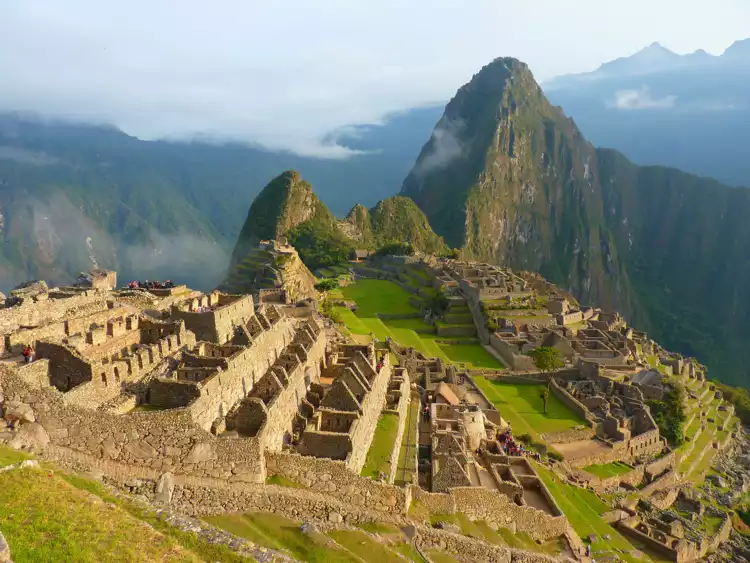





.jpg) Hi, I’m Johan (Netherlands 🇳🇱), the creator of TakeYourBackpack. Over the past 3 decades, I’ve backpacked through 90+ countries across six continents, gaining extensive experience with independent travel, long-term trips, and overland routes.
Hi, I’m Johan (Netherlands 🇳🇱), the creator of TakeYourBackpack. Over the past 3 decades, I’ve backpacked through 90+ countries across six continents, gaining extensive experience with independent travel, long-term trips, and overland routes.