Trip Planning
The TakeYourBackpack guidebooks are your all-in-one travel companion, featuring the best cities, national parks, hikes, beaches, and unique sites, along with essential tips on when to go, how to get around, exchanging money, and even local phrases to get you started — everything you need for a smooth, unforgettable backpacking adventure.
Stop researching. Start exploring.Discover all 25 highlights,ranked
and organized into practical routes.
Get instant access
Planning a backpacking route through Falkland Islands can be tricky — you need to balance must-see places, travel times, budget, and how long to stay in each destination. Our free personalized Falkland Islands itinerary planner creates a route based on your travel style, trip duration, and interests, so you can spend less time researching and more time exploring.
Personal tip: I normally search on good rating for atmosphere (for meeting people) and location (for easy exploring). Cleanliness as a bonus.
Travel Essentials
No vaccinations are required to enter the Falkland Islands, and there is no malaria or yellow fever risk. Make sure your routine vaccines are up to date, including MMR, tetanus-diphtheria and influenza. Check yellow fever certificate rules for any South American country you transit, especially Brazil.
vaccination requirementsWhen I first started traveling, I often spent part of my first day in a new country hunting for a local SIM card. While this can still be slightly cheaper, it also takes time and planning.
These days, it's much simpler to install an eSIM before leaving home. Once you arrive in Falkland Islands, you can activate it immediately and have mobile data from the moment you land — which is especially useful for ordering transport or navigating away from busy airports.
There are many providers nowadays, and price differences are usually small. I personally go with
Holafly, as it offers excellent network coverage throughout the country and strong global coverage, so you can manage multiple countries from a single app.
HolaFly eSimCulture & Customs
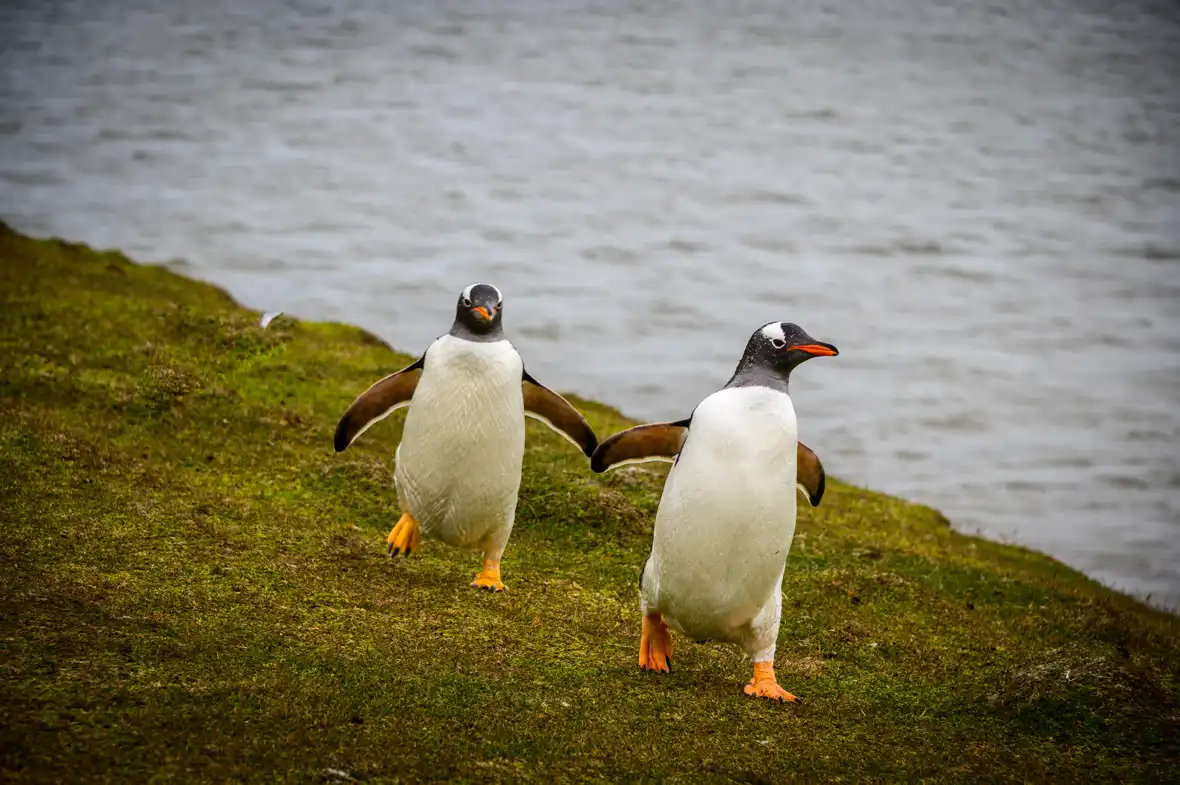
Nearly all land in the Falkland Islands is privately owned farmland, so ask the landowner’s permission before walking or driving across it, and always leave gates as you find them. Keep at least 6 meters from penguins and other wildlife, stay out of nesting areas, and never step between a seal and the sea. Show respect at the 1982 war memorials and battlefield sites. Don’t use the name “Malvinas” or raise the sovereignty question casually, since many Islanders lived through the conflict or lost people in it. Offers of smoko on farms are a warm local custom, and accepting is polite. Women and LGBTQ+ travelers face no particular etiquette concerns here.
Trying traditional food is always a great way to experience the culture. Here are some must-try dishes for Falkland Islands.
- Roast mutton: Mutton is so central on the farms of the Falkland Islands that it has long been nicknamed “365”, because it was eaten every day of the year. Roasted or barbecued over coals, it is still the defining taste of camp life.
- Smoko spread: The mid-morning or afternoon tea break brings scones, sponge cakes, biscuits and sandwiches. It is the backbone of island hospitality, and visitors to farms are often invited in.
- Diddle-dee jam: This tart red jam is made from the small berries of the diddle-dee shrub that covers the hillsides. Locals pick the berries in autumn and spread the jam on scones and toast.
- Falklands squid (Loligo): Squid fishing drives the islands’ economy, and the local calamari is fresh, tender and served in most Stanley eateries.
- Patagonian toothfish: This rich, white-fleshed fish comes from the surrounding South Atlantic fishery. It is a prized dish on restaurant menus in Stanley.
- Upland goose pâté: A traditional farmhouse dish made from the native upland goose, once considered a pest on grazing land.
Tap water in Stanley in the Falkland Islands is treated and safe to drink, and locals drink it without a second thought. In camp settlements and on outer islands the water often comes from local streams or tanks and may look slightly brown from peat, but it is generally drinkable. Ask your host if you are unsure. Bottled water is unnecessary, so bring a refillable bottle.
English is the native language of the Falkland Islands. Everyone speaks it, in Stanley and on the most remote sheep farm, with an accent that sits somewhere between the West Country and New Zealand. A small Chilean community speaks Spanish, but you will never need anything except English. It helps to learn a few local words like “camp” (everywhere outside Stanley) and “smoko” (the tea break).
Money & Payments
The local currency of Falkland Islands is FKP (£).
The Falkland Islands pound is pegged one-to-one to the British pound, and sterling notes and coins are accepted everywhere, but Falklands notes are worthless outside the islands, so spend them before you leave. ATMs are scarce, with only a handful in Stanley and none in camp, and foreign card withdrawals can carry fees of around £2 to 5 (US$2.50 to 6.50) plus your own bank’s charges. Most Stanley shops, restaurants, hotels and tour operators take Visa and Mastercard, but some farm lodges, smaller guesthouses and camp stores prefer cash or a bank transfer arranged in advance. Bring British pounds from home, as US dollars and euros are accepted only by a few businesses and usually at a poor rate. Exchange money at the bank in Stanley rather than relying on informal exchanges.
Tipping is not expected in the Falkland Islands, and prices already include what you pay. In Stanley restaurants, leaving around 10% or rounding up for good service is appreciated. A tip of £10 to 20 (US$13 to 25) for a guide after a long 4x4 tour is a kind gesture rather than an obligation.

 Best Backpacking
 Over the years, I've learned the importance of packing minimally. It's so much easier to jump on the back of a truck or squeeze yourself into the last spot of a minibus without that supersized backpack. If you're headed to a warm destination, leave your winter jacket at home; for colder regions, opt for thin thermal underlayers. Instead of packing your entire wardrobe, bring just three sets of clothes, as laundry facilities are available everywhere.

 Hi, I’m Johan (Netherlands 🇳🇱), the creator of TakeYourBackpack. Over the past 3 decades, I’ve backpacked through 90+ countries across six continents, gaining extensive experience with independent travel, long-term trips, and overland routes.