×
Guatemala 🇬🇹

backpacking North America Guatemala 🇬🇹Volcano hikes, Maya temples and lake villages in the highlands.

Explore GuadeloupeExplore Haiti

Backpacking Guatemala in 2027

A complete guide including when and where to go, costs, transport, itineraries, and practical travel advice.
The big picture before you go

Backpacking Guatemala
By Johan Kruseman 🇳🇱 | Updated October 23, 2026

Much of Guatemala is cool highland country, not tropical heat. Antigua sits around 1,500 meters and Quetzaltenango near 2,330, and highland nights in December and January can drop close to freezing, so a fleece earns its pack space by the first evening.

The best of the country is steep and physical: a sunrise hike up Acatenango beside an erupting Fuego, Lake Atitlán glowing silver at dawn, Tikal’s temples rising out of the Petén canopy, and Maya markets where a huipil’s pattern tells you which village its weaver comes from. On Acatenango I lay in a damp sleeping bag at about 3,600 meters, teeth clacking, while Fuego thumped like a slammed door every few minutes and flung orange rock into the dark. The hard parts are slow, winding roads, chicken buses packed three to a seat, and petty theft in crowded places.

Mexico’s Chiapas runs smoother; Belize costs far more for thinner culture. This suits hikers, Spanish learners and early risers. If long white beaches are the goal, look elsewhere.

👉 Get the 📖 Travel Guide of Guatemala

Antigua and the Volcanoes (Antigua Guatemala, Acatenango, Volcán de Agua)

Most trips through Guatemala start on Antigua’s cobblestones, lumpy enough to roll an ankle in sandals, between pastel walls and churches left roofless by the 1773 earthquakes. Mornings smell of roasting coffee and diesel. Shuttles from the Guatemala City airport take 1 to 1.5 hours. The overnight Acatenango hike is cold, steep and ankle-deep in ash, and ends with Fuego spitting orange lava across the valley. A soft landing for first-timers.

Lake Atitlán (Panajachel, San Pedro La Laguna, San Marcos La Laguna)

Three volcanoes ring the water, and every shore village runs on its own frequency: Panajachel for errands and textile stalls, San Pedro for cheap beds and late bars, San Marcos for yoga decks and cacao ceremonies. Shuttles from Antigua take 2.5 to 3 hours of switchbacks, then small lanchas slap between towns. Mornings are glassy; the afternoon Xocomil wind soaks you. Slow travelers and Spanish students settle in for weeks.

Western Highlands (Quetzaltenango, Chichicastenango, Todos Santos Cuchumatán)

At 2,300 meters, Quetzaltenango (everyone says Xela) is a chilly, unpolished city of language schools, cheap set lunches and pre-dawn starts for the Santa María summit. Chichicastenango’s Thursday and Sunday market wraps the steps of Santo Tomás in copal smoke. Chicken buses or shuttles reach Xela in about 4 hours from Antigua. Nights flirt with freezing. Built for budget travelers who want highland Maya life without the crowds.

Alta Verapaz (Cobán, Lanquín, Semuc Champey)

Wet, green cardamom country. Lanquín is a muddy riverside village of jungle hostels; from there, 4x4 pickups grind about 10 km to Semuc Champey, a limestone bridge stacked with turquoise pools. K’an Ba cave means swimming by candlelight. Shuttles from Antigua take 8 to 9 hours, the last stretch badly rutted. Worth the haul for tubers, swimmers and anyone who sleeps well to rain on a tin roof.

Petén (Flores, Tikal, Yaxhá)

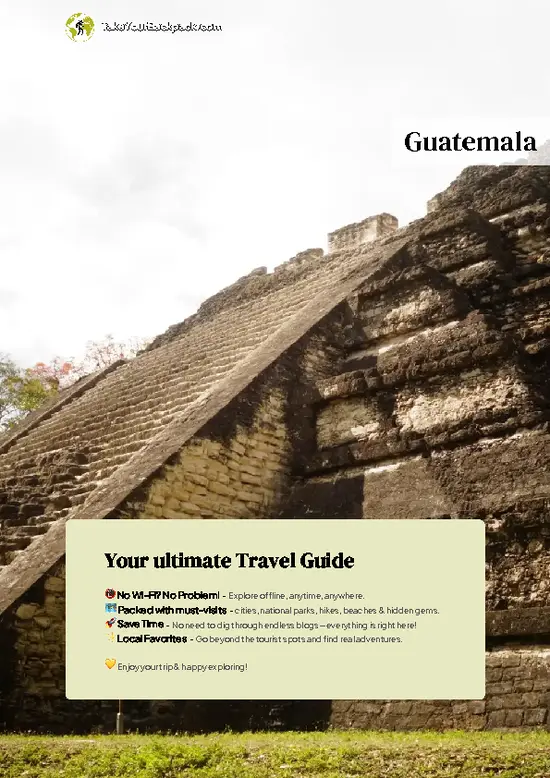
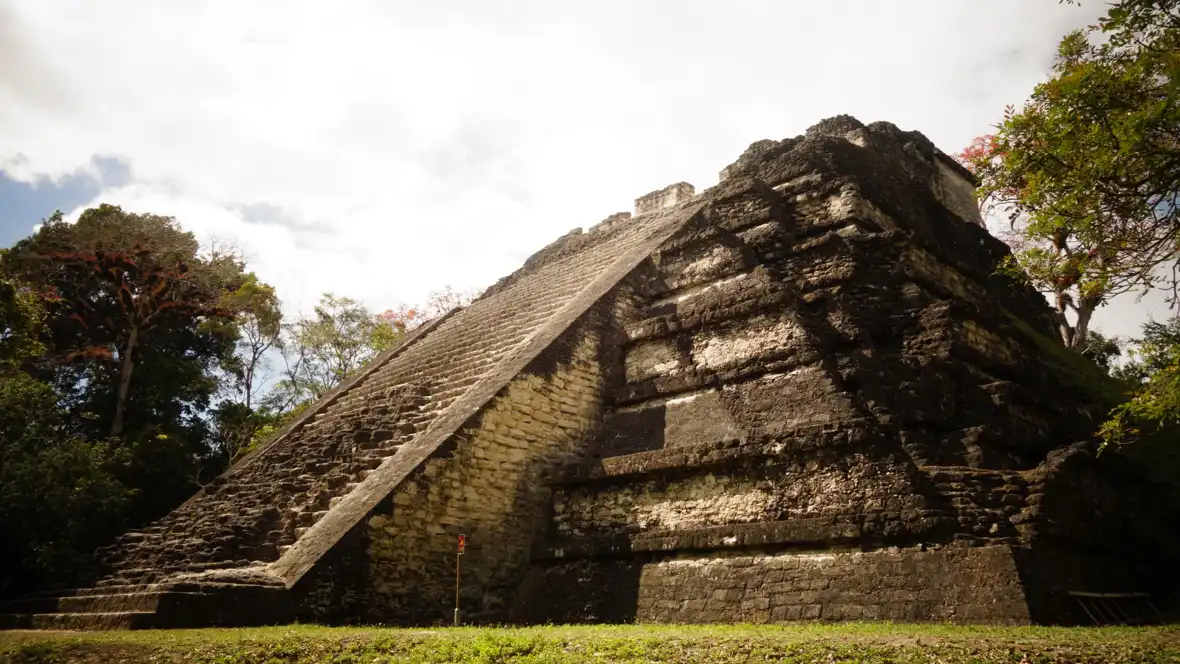
Flores is a pocket-sized island of painted houses on Lake Petén Itzá, walkable end to end in 20 minutes. Tikal lies 1 to 1.5 hours away by shuttle, its temples poking above the canopy while howler monkeys roar at dawn. Yaxhá is quieter, with sunset over lagoons. Fly an hour from Guatemala City or ride 8 to 10 hours overnight. Sticky heat; ideal for early risers and ruin fans.
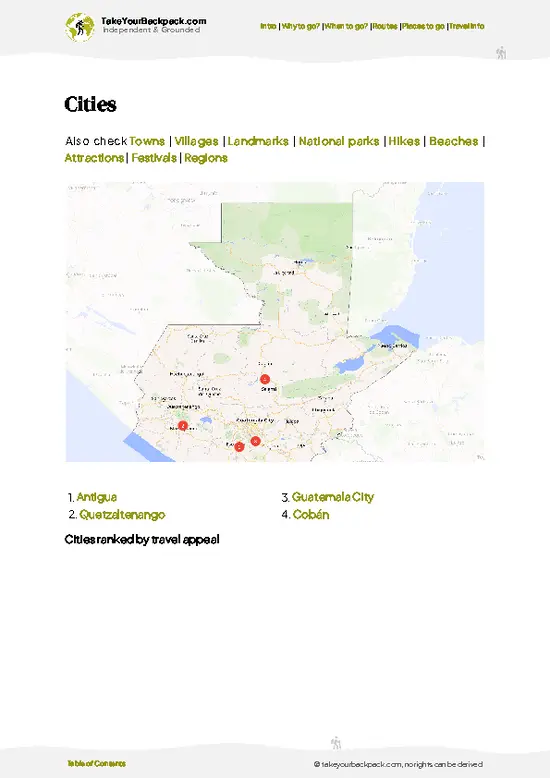
Geography and where places are located
Loading the map 🌍
CLICK TO FILTER
cities
towns
villages
landmarks
national parks
hikes
beaches
attractions
festivals
regions
SHOW COUNTRY’S BESTSHOW ALL

Why go?Reasons people choose to visit

Backpackers

Guatemala runs on a well-worn loop of Antigua, Lake Atitlán, Semuc Champey and Flores, and everyone … read more 👉
Guatemala runs on a well-worn loop of Antigua, Lake Atitlán, Semuc Champey and Flores, and everyone on it moves at the same unhurried pace, so the faces from a rooftop under Volcán de Agua reappear in a riverside hammock in Lanquín a week later. Hostel kitchens smell of wood smoke and banana pancakes, Spanish schools fill the days between hikes, and a freezing group summit turns strangers into a crew. I would book a week of classes with a homestay in Xela before heading to the lake, so you arrive able to joke, bargain and order more than “una cerveza.”

Architecture

Antigua Guatemala served as the colonial capital until earthquakes in 1773 drove the government out, … read more 👉
Antigua Guatemala served as the colonial capital until earthquakes in 1773 drove the government out, and what remains is a UNESCO-listed grid of Baroque churches left half-standing. La Merced’s yellow facade is smothered in white stucco lacework, while at Las Capuchinas you walk a ring of tiny nuns’ cells around a circular cloister that stays cool and damp even at noon. Cracked domes sit open to the sky, with bougainvillea climbing the rubble. The cobbles punish ankles, so wear proper shoes. Go around 7 a.m., when low light turns the stone gold and tour groups are still at breakfast.

Scenery

Guatemala packs 37 volcanoes into an area about the size of Tennessee, so a cone fills nearly every … read more 👉
Guatemala packs 37 volcanoes into an area about the size of Tennessee, so a cone fills nearly every highland horizon. Above Huehuetenango, the Cuchumatanes plateau turns to cold limestone grassland over 3,000 meters, dotted with sheep and twisted junipers, while down in Petén the air thickens into sticky, insect-loud jungle. Mist and chill come with the views. In the highlands, clouds usually swallow the peaks by late morning, so start any viewpoint hike before dawn and carry a warm layer and a headlamp for the dark first stretch.

Low cost

Backpacking Guatemala costs most travelers around US$30 to 45 a day (roughly Q230 to 350), covering … read more 👉
Backpacking Guatemala costs most travelers around US$30 to 45 a day (roughly Q230 to 350), covering a dorm bed, local meals, public buses and the occasional tour. The savings come from everyday life: comedores serve a set lunch of soup, meat, rice, beans and a basket of hot tortillas, and markets sell avocados and mangoes by the bagful. Spending climbs with guided volcano hikes, private shuttles and Antigua’s café scene. Look for the “menú del día” chalkboard at midday, when lunch is the main meal, the cheapest of the day and the food is freshest.

People

In Guatemala, warmth tends to arrive formally: a “buenos días” to the whole bus, a soft handshake rather … read more 👉
In Guatemala, warmth tends to arrive formally: a “buenos días” to the whole bus, a soft handshake rather than a firm one, and “con mucho gusto” after even the smallest favor. Maya women at market stalls can seem reserved until you try a few words, and then the laughter starts, often at your accent. Children stare, then wave. Ladino humor is dry and teasing, full of chapín slang like “chilero” for cool, and strangers will walk you several blocks to the right bus stop. Learn the local thank-you, “maltiox” around Lake Atitlán, and use it at every stall.

⭐ HighlightsKey places and experiences

  • Tikal: Climb the wooden stairs of Temple IV, around 65 meters tall, before sunrise and you sit above an unbroken sea of canopy while mist peels off the roofcombs of Temples I and II. Howler monkeys roar like distant trucks, and the air smells of wet leaves and fallen fruit. Guatemala’s greatest Maya city spreads across kilometers of jungle trails, so carry plenty of water.
  • Chichicastenango Market: On Thursdays and Sundays the town disappears under tarps, stacked textiles and turkeys tied by the feet. On the steps of Santo Tomás church, K’iche’ prayer keepers swing tin cans of smoking copal, and the sweet resin drifts over the flower sellers below. Bargain with a smile, because the opening price assumes you won’t.
  • Indian Nose, Lake Atitlán: A pre-dawn climb of roughly 45 minutes from above San Juan La Laguna ends on a rocky ridge where local guides pour coffee into plastic cups. Your breath fogs, your fingers ache around the cup, and the lake slowly shifts from black to pewter as the first
… read more 👉
  • Tikal: Climb the wooden stairs of Temple IV, around 65 meters tall, before sunrise and you sit above an unbroken sea of canopy while mist peels off the roofcombs of Temples I and II. Howler monkeys roar like distant trucks, and the air smells of wet leaves and fallen fruit. Guatemala’s greatest Maya city spreads across kilometers of jungle trails, so carry plenty of water.
  • Chichicastenango Market: On Thursdays and Sundays the town disappears under tarps, stacked textiles and turkeys tied by the feet. On the steps of Santo Tomás church, K’iche’ prayer keepers swing tin cans of smoking copal, and the sweet resin drifts over the flower sellers below. Bargain with a smile, because the opening price assumes you won’t.
  • Indian Nose, Lake Atitlán: A pre-dawn climb of roughly 45 minutes from above San Juan La Laguna ends on a rocky ridge where local guides pour coffee into plastic cups. Your breath fogs, your fingers ache around the cup, and the lake slowly shifts from black to pewter as the first pink light hits San Pedro volcano.
  • Semuc Champey: The path to El Mirador is a steep, muddy half hour of roots and wooden steps, then the view drops onto turquoise pools stepped across a natural limestone bridge. Down at water level the rock is slick, tiny fish nibble your ankles, and the Cahabón River thunders unseen underneath you.
  • Río Dulce to Lívingston: The boat passes the stone Castillo de San Felipe, then threads a gorge of vine-draped limestone cliffs where pelicans perch on old posts. It ends in Lívingston, a Garífuna town reachable only by water, where tapado, a seafood soup in coconut milk with plantain, steams on every table and punta drums keep going after dark.
For off-the-map detours, Yaxhá’s ruins above a crocodile lagoon, the sacred crater lake of Laguna Chicabal near Xela and the Ixil town of Nebaj all repay the extra bus hours, and I would start with Nebaj.
Spotted a mistake or missing a highlight? Contact us.

But Guatemala offers more...

Discover and compare all of its highlights per category

🧭 RoutesHow to structure a trip

The 5-Day Volcano and Lake Route

Cobbled colonial streets and an active volcano at sunset, then a slow drop into lake life where boats replace roads. It’s a compact highlands trip with one short transfer and plenty of dock time.
  • Antigua’s monastery ruins and museums
  • Toasting marshmallows on Volcán Pacaya
  • Car-free footpaths of San Marcos La Laguna
  • Tz’utujil traditions in Santiago Atitlán

👉 explore this 5-day route

The 10-Day Highlands to Jungle Route

A night beside an erupting volcano, a hillside lake village and a highland market thick with incense, then a flight north into the rainforest. Active and varied, it pairs the country’s best hike with its greatest Maya city.
  • Overnight on Acatenango facing Fuego
  • Chichicastenango market day
  • Sunrise in the jungle at Tikal
  • Lagoon-side ruins at Yaxhá

👉 explore this 10-day route

The 15-Day Caribbean to Highlands Loop

A boat through a jungle gorge to a Garífuna town, two Maya cities in the Petén and turquoise river pools deep in the Verapaz hills. The loop ends … read more 👉

The 5-Day Volcano and Lake Route

Cobbled colonial streets and an active volcano at sunset, then a slow drop into lake life where boats replace roads. It’s a compact highlands trip with one short transfer and plenty of dock time.
  • Antigua’s monastery ruins and museums
  • Toasting marshmallows on Volcán Pacaya
  • Car-free footpaths of San Marcos La Laguna
  • Tz’utujil traditions in Santiago Atitlán

👉 explore this 5-day route

The 10-Day Highlands to Jungle Route

A night beside an erupting volcano, a hillside lake village and a highland market thick with incense, then a flight north into the rainforest. Active and varied, it pairs the country’s best hike with its greatest Maya city.
  • Overnight on Acatenango facing Fuego
  • Chichicastenango market day
  • Sunrise in the jungle at Tikal
  • Lagoon-side ruins at Yaxhá

👉 explore this 10-day route

The 15-Day Caribbean to Highlands Loop

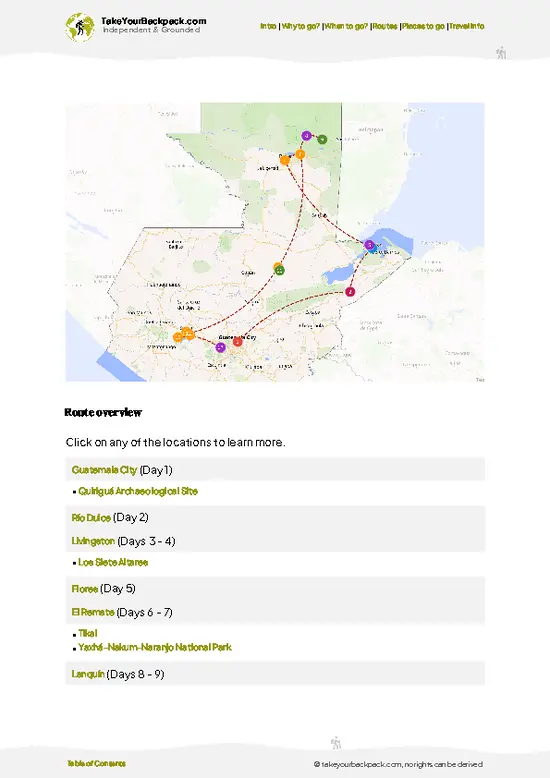
A boat through a jungle gorge to a Garífuna town, two Maya cities in the Petén and turquoise river pools deep in the Verapaz hills. The loop ends among weaving villages on the lake and in Antigua, an hour from the airport.
  • Giant carved stelae at Quiriguá
  • Rio Dulce gorge and Livingston
  • Swimming the pools of Semuc Champey
  • Weaving cooperatives of San Juan La Laguna

👉 explore this 15-day route

🌤️ When to go?Choosing the right months to travel

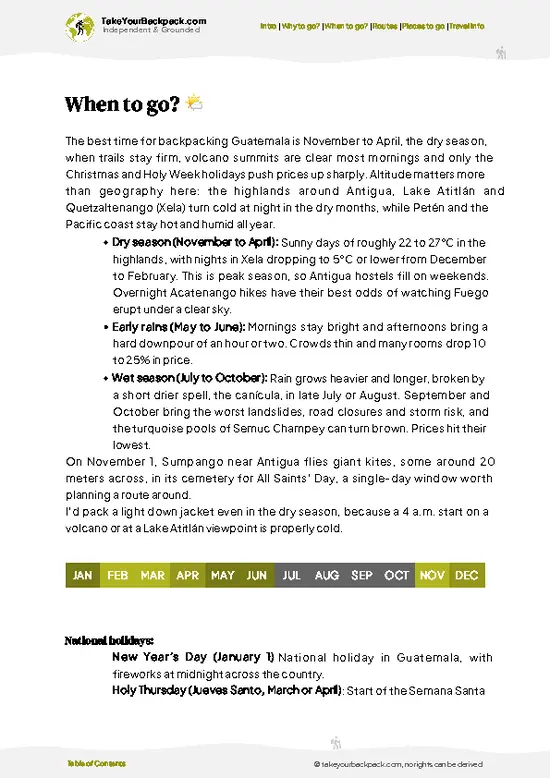
The best time for backpacking Guatemala is November to April, the dry season, when trails stay firm, volcano summits are clear most mornings and only the Christmas and Holy Week holidays push prices up sharply. Altitude matters more than geography here: the highlands around Antigua, Lake Atitlán and Quetzaltenango (Xela) turn cold at night in the dry months, while Petén and the Pacific coast stay hot and humid all year.
  • Dry season (November to April): Sunny days of roughly 22 to 27°C in the highlands, with nights in Xela dropping to 5°C or lower from December to February. This is peak season, so Antigua hostels fill on weekends. Overnight Acatenango hikes have their best odds of watching Fuego erupt under a clear sky.
  • Early rains (May to June): Mornings stay bright and afternoons bring a hard downpour of an hour or two. Crowds thin and many rooms drop 10 to 25% in price.
  • Wet season (July to October): Rain grows heavier and longer, broken by a short drier spell, the canícula, in late July or August. September and October bring the worst landslides, road closures and storm risk, and the turquoise pools of Semuc Champey can turn brown. Prices hit their lowest.
On November 1, Sumpango near Antigua flies giant kites, some around 20 meters across, in its cemetery for All Saints’ Day, a single-day window worth planning a route around.
I’d pack a light down jacket even in the dry season, because a 4 a.m. start on a volcano or at a Lake Atitlán viewpoint is properly cold.

source: climatestotravel.comJANJanuary: good for travelingFEBFebruary: excellent for travelingMARMarch: excellent for travelingAPRApril: highly recommended for travelingMAYMay: good for travelingJUNJune: good for travelingJULJuly: fair for travelingAUGAugust: fair for travelingSEPSeptember: below average for travelingOCTOctober: below average for travelingNOVNovember: excellent for travelingDECDecember: highly recommended for traveling
!pixabay-historic-site-816434

💰 Costs (as of 2026)Prices, expenses, and money tips

Backpacking Guatemala costs most budget travelers US$30 to 45 a day, which makes it one of the cheapest countries in Central America and far cheaper than Belize or Costa Rica.
CategoryBudget RangeLocal Reality
Dorm accommodationUS$8 to 18 per nightAntigua dorms run about US$10 to 18, with breakfast often included. On Lake Atitlán, beds in San Pedro La Laguna start around US$8 to 12, and Flores dorms cost roughly US$10 to 15. Staying a week or booking in person outside Easter week (Semana Santa) usually gets you a lower rate. Expect to pay about the same as in Nicaragua and roughly half what Belize charges.
MealsUS$8 to 15 per dayA comedor lunch (menú del día) costs about US$3 to 5, street tostadas or tamales cost US$0.70 to 1.50 each, and a plate of fried chicken and fries runs US$3.50 to 4.50. Self-catering from La Torre or Paiz supermarkets works out to US$4 to 7 a day. Antigua’s café menus cost two to three times as much, closer to prices in Mexico.
Local transportUS$2 to 8 per day on averageChicken buses are the cheapest way to get around: Antigua to Guatemala City costs about US$1.30 to 2, and Antigua to Panajachel with changes is around US$5. Tourist shuttles on the same route cost
… read more 👉
Backpacking Guatemala costs most budget travelers US$30 to 45 a day, which makes it one of the cheapest countries in Central America and far cheaper than Belize or Costa Rica.
CategoryBudget RangeLocal Reality
Dorm accommodationUS$8 to 18 per nightAntigua dorms run about US$10 to 18, with breakfast often included. On Lake Atitlán, beds in San Pedro La Laguna start around US$8 to 12, and Flores dorms cost roughly US$10 to 15. Staying a week or booking in person outside Easter week (Semana Santa) usually gets you a lower rate. Expect to pay about the same as in Nicaragua and roughly half what Belize charges.
MealsUS$8 to 15 per dayA comedor lunch (menú del día) costs about US$3 to 5, street tostadas or tamales cost US$0.70 to 1.50 each, and a plate of fried chicken and fries runs US$3.50 to 4.50. Self-catering from La Torre or Paiz supermarkets works out to US$4 to 7 a day. Antigua’s café menus cost two to three times as much, closer to prices in Mexico.
Local transportUS$2 to 8 per day on averageChicken buses are the cheapest way to get around: Antigua to Guatemala City costs about US$1.30 to 2, and Antigua to Panajachel with changes is around US$5. Tourist shuttles on the same route cost US$15 to 25. Lake lanchas between villages run about US$3 per hop. All of this costs well under half of Costa Rican bus fares.
ActivitiesUS$0 to 100 per activityThe overnight Acatenango volcano hike is the biggest single cost at roughly US$60 to 100 with a guide, and Tikal entry is about US$20 for foreigners. Semuc Champey’s entry fee is around US$6.50. I would skip paid tours in Antigua’s streets and put that money into Acatenango, since the guided overnight trip is worth paying a bit more for a reputable operator with proper gear.
MiscellaneousUS$2 to 6 per dayMany ATMs charge around US$4 to 5 per withdrawal, so take out larger amounts less often. A 20-liter refill of purified water costs about US$2 to 3, a Tigo or Claro SIM with data runs US$3 to 7, and laundry costs about US$5 to 8 per load. You pay in quetzales almost everywhere outside tourist shuttles and tours.
Total Daily BudgetUS$30 to 45 per dayA slow day on Lake Atitlán with a dorm bed, comedor meals and a lancha ride comes to about US$25 to 30. A day with a shuttle transfer or a Tikal visit pushes you to US$45 to 60. That puts Guatemala level with Honduras and Chiapas in Mexico, and roughly US$20 to 30 a day below Belize.
⚠️ Prices can change and everyone travels differently, so take this as a rough guide. Hope it helps you plan your adventure!

✈️ The backpacker research shortcutGuatemala Travel Guide

An offline-friendly backpacking guide with optimized travel routes, ranked highlights, transport advice, and the best areas to stay.
example page 0 from our offline Travel Guide for Guatemala
example page 1 from our offline Travel Guide for Guatemala
example page 2 from our offline Travel Guide for Guatemala
example page 3 from our offline Travel Guide for Guatemala
example page 4 from our offline Travel Guide for Guatemala
example page 5 from our offline Travel Guide for Guatemala
example page 6 from our offline Travel Guide for Guatemala
example page 7 from our offline Travel Guide for Guatemala
The digital guide (272 pages) contains:
✅ 85 highlights, ranked by travel appeal
✅ Optimized 5, 10 & 15-day travel routes
✅ Cities, national parks, landmarks, beaches
✅ How to get around
✅ Offline-friendly for travel without Wi-Fi
👉 Click to see all 30+ guide features

📅 Plan smarter in minutes, not weeks
✅ Month by month travel advice
✅ Festivals & national holidays
✅ Budget expectations

🗺️ Go to the right places, skip the overrated ones
✅ Honest pros & cons of destinations
✅ Top hikes, parks & viewpoints
✅ Lesser-known places most travelers miss
✅ Clear “worth it vs skip it” guidance

🛏️ Travel smoothly without rookie mistakes
✅ Best areas to stay
✅ Transport systems explained simply
✅ Common scams & safety advice
✅ SIM cards, money & practical tips

🌍 Understand the country, not just visit it
✅ Culture & traditions
✅ 52 Essential phrases & customs
✅ Festivals worth planning around
✅ Traveler-friendly historical context
✅ Insights that make places more meaningful

📱 Built for real travel conditions
✅ Fully downloadable PDF
✅ Works completely offline
✅ Optimized for phone use
✅ Useful in remote areas & buses
✅ Everything in one place
Stop searching, start planning
Get instant access to your full guide. 30‑day money-back guarantee.
+ Add another guide for just

By proceeding you agree to our terms.
Sent to your inbox immediately after payment • 100% Secure Checkout
Best Backpacking Travel Advisor 2025 tourism awardBest Backpacking
Travel Advisor
2025
What others say about Take Your Backpack Guides:
⭐⭐⭐⭐⭐
Fantastic, amazing amount of information!
⭐⭐⭐⭐⭐
My goodness this is amazing, it's what I've been looking for hats off too you!
⭐⭐⭐⭐⭐
I think this is absolutely BRILLIANT
⭐⭐⭐⭐
Very complete and informative. It's still missing places, but I gotta to commend you
⭐⭐⭐⭐⭐
This is truly amazing, thank you, can't wait to explore it with my kids!
⭐⭐⭐⭐⭐
Awesome resource, thank you!
⭐⭐⭐⭐⭐
This is amazing! Can't wait to explore the ones I haven't seen
⭐⭐⭐⭐
I love this! Well done, great idea.
⭐⭐⭐⭐⭐
Thanks for taking the time to make this gem!
⭐⭐⭐⭐⭐
This might be the best website I've ever seen.
⭐⭐⭐⭐⭐
Congratulations, and thank you so much for your work; it's incredibly valuable.
⭐⭐⭐⭐
In all seriousness I think you did a great job pointing out the important spots
⭐⭐⭐⭐⭐
10/10 very good
⭐⭐⭐⭐⭐
As someone who's only just starting to visit regularly this is awesome, thank you.
⭐⭐⭐⭐
Thank you very much! I'm going to visit my dad, it's going to be very useful!
⭐⭐⭐⭐⭐
This is really cool! We'll be travelling for the first time and this definitely come in handy.
⭐⭐⭐⭐⭐
You are now our minister of culture, congratulations 👨‍💼
⭐⭐⭐⭐⭐
Just wanted to tell you that this is a pearl! Going to follow your recommendations.
⭐⭐⭐⭐⭐
This is so cool. I'll definitely be using the resource for my travels soon.
⭐⭐⭐⭐⭐
This is very impressive! Good work.
⭐⭐⭐⭐⭐
This is an amazing and informative site. Very well done!

🛏️ Where to stay?Accommodation types and options

Hostels and budget beds are easy to find in Guatemala, with dorms typically running Q80 to 150 (US$10 to 20) and simple private rooms from about Q200 (US$26), clustered in a handful of traveler hubs. Antigua has the widest choice within walking distance of its cobbled center, bars and volcano-tour operators, though prices run highest here and some hostels near the central streets stay loud late into the night. At Lake Atitlán, San Pedro La Laguna is the cheap, social base with plenty of nightlife, San Marcos La Laguna is quieter and leans toward yoga retreats, while Flores works as the compact … read more 👉
Hostels and budget beds are easy to find in Guatemala, with dorms typically running Q80 to 150 (US$10 to 20) and simple private rooms from about Q200 (US$26), clustered in a handful of traveler hubs. Antigua has the widest choice within walking distance of its cobbled center, bars and volcano-tour operators, though prices run highest here and some hostels near the central streets stay loud late into the night. At Lake Atitlán, San Pedro La Laguna is the cheap, social base with plenty of nightlife, San Marcos La Laguna is quieter and leans toward yoga retreats, while Flores works as the compact island gateway to Tikal and Guatemala City’s Zona 10 and Zona 13 are the safer picks for an airport night compared with the grittier Zona 1.

If you enjoy meeting fellow travelers, consider choosing hostels with high ratings for atmosphere. On the other hand, if you prefer having your own space, a hotel might be a better option.

🚌 Getting aroundHow to travel within the country

Guatemala runs on loose timetables: chicken buses leave when the driver decides they are full, tourist shuttles often turn up 30 to 60 minutes late, and only first-class buses and domestic flights keep anything close to a schedule. Book shuttles a day ahead (same-day usually works), but reserve overnight buses and anything during Holy Week or Christmas two to five days out.
  • Chicken buses are retired US school buses repainted in chrome and candy colors, blasting cumbia while the ayudante hangs out
… read more 👉
Guatemala runs on loose timetables: chicken buses leave when the driver decides they are full, tourist shuttles often turn up 30 to 60 minutes late, and only first-class buses and domestic flights keep anything close to a schedule. Book shuttles a day ahead (same-day usually works), but reserve overnight buses and anything during Holy Week or Christmas two to five days out.
  • Chicken buses are retired US school buses repainted in chrome and candy colors, blasting cumbia while the ayudante hangs out the door shouting destinations. Fares run Q5 to 40 (US$0.65 to 5): Antigua to Guatemala City is Q10 to 15 and 1 to 1.5 hours, and Antigua to Panajachel takes 3 to 4 hours for Q30 to 40 with changes at Chimaltenango and Los Encuentros. You pay the ayudante on board, in cash. Keep your daypack on your lap, since roof luggage is out of sight, and avoid routes into the capital after dark. What you get is three to a seat with market vendors, the smell of diesel and warm tortillas, and volcano views through cracked windows.
  • Tourist shuttles are minivans packed knee to knee with backpackers. Antigua to Panajachel costs Q100 to 150 (US$13 to 20) and takes 2.5 to 3.5 hours, and Antigua to Lanquín for Semuc Champey runs Q150 to 250 over 8 to 10 bumpy hours. Book through your hostel or any agency on the street and pay cash. They are slower than advertised, but they drop you near your door with your bag still in sight.
  • First-class buses run Guatemala City to Flores in 8 to 10 hours overnight for roughly Q200 to 300 (US$26 to 39), with reclining seats and air conditioning set to arctic, so keep a fleece out. Buy tickets at the company terminal in the capital and take a taxi there rather than walking. You wake up to flat green Petén lowlands and humid air thick with birdsong.
  • Lanchas link the villages of Lake Atitlán: Panajachel to San Pedro La Laguna takes 25 to 40 minutes and costs around Q25. Confirm the price before you board, and travel before noon, when the afternoon Xocomil wind kicks up spray that soaks the front rows. On a calm morning crossing, you get three volcanoes mirrored in glassy water.
  • Tuk-tuks buzz along cobbles and dirt lanes in the lake towns and around Antigua for Q5 to 15 a hop. Agree on the fare first. They are the quickest way up the steep hill to your guesthouse after dark.
I’d skip the 10-hour shuttle runs to the north and fly Guatemala City to Flores (about 1 hour, roughly US$100 to 200 one way), then keep shuttles and chicken buses for the short highland hops.
La Aurora International Airport (GUA) sits in Zona 13 of Guatemala City, about 7 km (4 miles) from the Zona 1 historic center and 3 km (2 miles) from Zona 10, and Uber is the cheapest reliable way to cover that distance in Guatemala.
  • City bus (30 to 60 minutes, Q1 to 5 / about US$0.15 to 0.65): Buses run along the avenues outside the airport grounds toward Zona 1, but they are crowded, rarely take cards from visitors without a local prepaid card, stop running in the evening and are a poor choice with a full backpack.
  • Shuttle to Antigua (1 to 1.5 hours, Q100 to 200 / about US$13 to 26): Most backpackers skip the capital entirely, and shared shuttles booked in advance or through hostels meet arrivals outside the terminal throughout the day.
  • Official airport taxi (15 to 30 minutes, Q80 to 150 / about US$10 to 20): Book at the authorized taxi stands in the arrivals hall, agree on the price before you get in, and pay cash in quetzales; they operate around the clock.
  • Uber (15 to 30 minutes, Q40 to 80 / about US$5 to 10): Request a ride once you have Wi-Fi or a local SIM, pay by card in the app, and meet the driver at the pickup point the app indicates, usually on the departures level.
If you land after dark, book a hotel near the airport in Zona 13 or Zona 10 with a pickup arranged in advance, or take an official taxi or Uber straight from the terminal rather than walking out to the street.
⚠️ Prices and routes can change, so take this as a rough guide and ask for local advice when you arrive.
🚀 Don’t waste time on the road.
We’ll generate a route that minimizes unnecessary travel and fits your available days.

Generate my itinerary

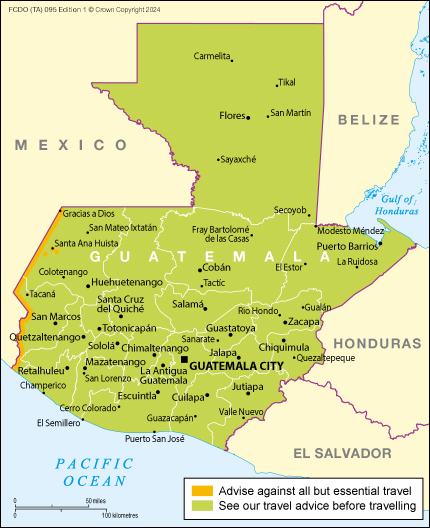
🔒 Safety (risk Level: medium)Is Guatemala safe to visit?

Safety for solo travelers, including women and LGBTQ+ individuals
Guatemala is reasonably safe for solo travelers who stick to the well-worn route of Antigua, Lake Atitlán, Semuc Champey and Flores, though petty theft, phone snatching and occasional armed robberies on isolated trails are real risks. Use registered shuttles or Uber rather than walking at night, hike volcanoes and lake trails with a guide, and in Guatemala City stay in Zonas 1, 4 and 10 by day and use cars after dark. Women traveling alone commonly face catcalling and should avoid hitchhiking and walking alone on remote roads, but plenty of solo female travelers move around without serious problems. Same-sex relationships are legal but not recognized, and society is largely conservative and religious, so LGBTQ+ travelers usually find Antigua and parts of Guatemala City relaxed but keep public affection discreet elsewhere.


Full official government travel advisory (live updates)
View details 👉
safety image

source: www.gov.uk

✈️ VisaWhat travelers should know about visas

Citizens of the United States, Canada, the United Kingdom, the EU, Australia and many other countries do not need a visa to visit Guatemala and receive up to 90 days on arrival with a passport valid for at least six months. That 90 days is shared under the CA-4 agreement with El Salvador, Honduras and Nicaragua, and you can request one extension at the Instituto Guatemalteco de Migración in Guatemala City. Nationalities that do require a visa must apply in advance at a Guatemalan embassy or consulate, so check the official migration authority before booking.

source: igm.gob.gt
⚠️ Visa requirements can change over time, so always check the latest visa requirements with the official embassy or government website before you travel.

🎒 What to pack?What you'll need while traveling

Backpacking Guatemala means packing for several climates in one trip: the highlands around Antigua, Lake Atitlán and Xela are warm by day but drop to 5 to 10°C at night, and an overnight hike up Acatenango goes below freezing at the summit. The Petén lowlands around Flores and Tikal are hot and sticky, so quick-dry clothing and good insect protection matter there. From May to October expect heavy afternoon downpours, so a proper rain jacket and a waterproof cover for your pack will save your gear. Bring sturdy shoes for cobblestone streets and volcano trails, and lean toward modest clothing, since shorts and revealing tops stand out in highland villages and churches.

Apart from this country specific advice, I have also crafted a general packing list that should help on any trip. authorOver the years, I've learned the importance of packing minimally. It's so much easier to jump on the back of a truck or squeeze yourself into the last spot of a minibus without that supersized backpack. If you're headed to a warm destination, leave your winter jacket at home; for colder regions, opt for thin thermal underlayers. Instead of packing your entire wardrobe, bring just three sets of clothes, as laundry facilities are available everywhere.

View the full list 👉

🙋 FAQFrequently asked questions

Trip Planning

Planning a backpacking route through Guatemala can be tricky — you need to balance must-see places, travel times, budget, and how long to stay in each destination. Our free personalized Guatemala itinerary planner creates a route based on your travel style, trip duration, and interests, so you can spend less time researching and more time exploring.


Personal tip: I normally search on good rating for atmosphere (for meeting people) and location (for easy exploring). Cleanliness as a bonus.


Travel Essentials

No vaccinations are mandatory for most travelers to Guatemala, except proof of yellow fever vaccination if you arrive from a country with yellow fever risk. Make sure routine vaccines (MMR, tetanus-diphtheria, polio, flu and COVID-19) are up to date, and get hepatitis A and typhoid, since street food and water hygiene vary. Hepatitis B and rabies are worth considering for long stays, rural travel or contact with animals. Malaria risk is low and limited to some rural lowland areas, with none in Antigua, Guatemala City or Lake Atitlán, but dengue is present nationwide, so pack strong insect repellent.


vaccination requirements
When I first started traveling, I often spent part of my first day in a new country hunting for a local SIM card. While this can still be slightly cheaper, it also takes time and planning.

These days, it's much simpler to install an eSIM before leaving home. Once you arrive in Guatemala, you can activate it immediately and have mobile data from the moment you land — which is especially useful for ordering transport or navigating away from busy airports.

There are many providers nowadays, and price differences are usually small. I personally go with Holafly, as it offers excellent network coverage throughout the country and strong global coverage, so you can manage multiple countries from a single app.


HolaFly eSim

Culture & Customs

In Guatemala, always ask before photographing people, especially Indigenous women and children, and accept a no gracefully; some will ask for a small payment. Inside churches such as Santo Tomás in Chichicastenango, where Mayan ceremonies with candles and incense take place, photography is often forbidden, so watch quietly and do not touch offerings. Dress modestly in highland villages and religious sites, with shoulders covered and shorts kept for the beach or hiking. Bargaining is normal in markets, but keep it friendly and remember that a few quetzales matter more to the weaver than to you. Do not refer to traditional dress as a costume, and avoid making political comments about the civil war unless a local raises it. Women may get more comfortable interactions in conservative areas by covering up, and LGBTQ+ travelers are best keeping public displays of affection low-key outside tourist hubs.
Trying traditional food is always a great way to experience the culture. Here are some must-try dishes for Guatemala.
  1. Pepián: A thick, rust-colored stew of chicken or beef in a sauce of roasted tomatoes, chiles, squash seeds and sesame, served with rice and tortillas. Often called the national dish, it blends Mayan and Spanish cooking and is recognized as part of Guatemala’s intangible cultural heritage.
  2. Kak’ik: A spicy, brick-red turkey soup from the Alta Verapaz region around Cobán, flavored with achiote, coriander and dried chiles. It is a Q’eqchi’ Mayan dish with deep roots, often served at celebrations.
  3. Jocón: Chicken simmered in a bright green sauce of tomatillos, cilantro and green onion, thickened with ground tortilla or seeds. It is a highland staple you will find in comedores across the country.
  4. Desayuno chapín: The classic Guatemalan breakfast of eggs, refried black beans, fried plantains, fresh cheese, cream and tortillas, usually with coffee. It is cheap, filling and served almost everywhere.
  5. Tamales and chuchitos: Guatemalan tamales are wrapped in banana leaves and filled with seasoned corn dough, tomato recado and meat, while chuchitos are smaller, firmer versions wrapped in corn husks. Tamales are the traditional Saturday night and Christmas Eve meal.
  6. Hilachas: Shredded beef cooked in a tomato and tomatillo sauce with potatoes and carrots. It is everyday home cooking and a good test of a family-run comedor.
  7. Fiambre: A huge cold salad of cured meats, sausages, cheeses, pickled vegetables and beets, made only around November 1 for All Saints’ Day. Families prepare it to share with relatives and at cemeteries.
  8. Rellenitos: Mashed plantain dumplings stuffed with sweetened black beans and chocolate, fried and dusted with sugar. A favorite street and market dessert.
Tap water in Guatemala is not safe to drink, and most locals avoid it too, relying on large refillable jugs of purified water called garrafones. Travelers should drink bottled or purified water, and many hostels offer refill stations, which saves money and plastic. A filter bottle or purification tablets are useful for rural trips, and it is wise to brush your teeth with purified water as well.
The main language in Guatemala is Spanish. Backpacking is way more rewarding if you know a bit of the local language, so I'd suggest brushing up on the basics just in case your Spanish skills have become a bit rusty.

Want to understand locals better?
The complete Travel Guide for Guatemala includes 52 essential words and phrases — greetings, thank-yous, ordering food, transport, numbers, and common local expressions you'll actually hear.

Get your local basic phrases 👉

Get the Travel Guide -


English is limited in Guatemala outside the tourist bubble: you will get by in Antigua, Panajachel, San Pedro La Laguna and Flores, and in upscale parts of Guatemala City such as Zona 10. Hostel staff, tour guides and younger urban Guatemalans often speak some English, but bus drivers, market vendors and comedor owners rarely do. In rural highland villages many people speak a Mayan language such as K’iche’ or Kaqchikel first, with Spanish second, so Spanish is the language that helps you most. Download Google Translate’s offline Spanish pack and learn numbers and basic food words, or take a cheap week of one-on-one classes at one of the many language schools in Antigua or Xela.

Money & Payments

The local currency of Guatemala is GTQ (Q).
ATMs are easy to find in Guatemala City, Antigua, Panajachel, Flores and most towns, and the 5B network (linked to Banco Industrial) and Banrural machines tend to work best with foreign cards. Expect local fees of about Q25 to 40 (US$3 to 5) per withdrawal plus your own bank’s charges, with limits usually around Q2,000 to 3,000, and use machines inside banks, malls or supermarkets to reduce the risk of card skimming. Smaller lake villages may have only one or two ATMs that can run dry on weekends, so carry enough quetzales before heading there. Cards are accepted at hotels, mid-range restaurants, supermarkets and tour agencies, sometimes with a 5 to 10 percent surcharge, but markets, comedores, chicken buses, lanchas and tuk-tuks are cash only. Bring US dollars as backup rather than euros, which are hard to exchange; banks change clean, untorn dollar notes at fair rates if you show your passport. Avoid airport exchange counters and street changers, whose rates are poor.
Tipping in Guatemala is customary but modest: many restaurants add a 10 percent “propina” to the bill, and where they do not, leaving around 10 percent is standard. Tour and volcano guides typically get Q50 to 100 (US$6 to 13) per day, and hotel porters Q5 to 10 per bag. Taxi, tuk-tuk and chicken bus drivers are not usually tipped, though rounding up is appreciated.

🧩 Nearby countriesSimilar backpacking destinations

📸 PhotosTravel photos from Guatemala

Take your backpack - Guatemala - 0
Take your backpack - Guatemala - 1
Take your backpack - Guatemala - 2
Take your backpack - Guatemala - 3
Take your backpack - Guatemala - 4
Take your backpack - Guatemala - 5
Take your backpack - Guatemala - 6
Take your backpack - Guatemala - 7
Take your backpack - Guatemala - 8
Take your backpack - Guatemala - 9
Take your backpack - Guatemala - 10
Take your backpack - Guatemala - 11
Take your backpack - Guatemala - 12
Take your backpack - Guatemala - 13
Photographed by: Johan Kruseman

Travel stories from Guatemala

Six month backpacking trip through Bolivia, Peru and central America: update 14/14

Guatemala | Finally I entered ‘Guate,’ the final country of my South and Central America trip. I played tourist with an organized boat trip on the Rio Dulce. On that boat, there was a French guy I started traveling with from then on. His English was as good as my Vietnamese, so Spanish became the language of choice. We went to Tikal together. Tikal is like the...
Read more
More stories

We 💚 feedbackKey takeaways from the trip

Come to Guatemala for the Maya highlands, where market days, weaving patterns and even languages change from one valley to the next within a few hours’ ride. The downside is time. Two hundred kilometers of mountain road can eat a full day, and rainy-season landslides stretch that further. The direction of travel is encouraging, though: more villages now run their own guiding, homestays and weaving cooperatives, so more of your money stays with the families who host you. Leave slack in your schedule.

✈️ When did I visit Guatemala?
Guatemala I visited during my half year trip through South and Central America back in 2003 Since then, this guide is regularly updated based on feedback from locals and recent backpackers (last update: 23 October 2026)

✍️ Help improve this page!
The information on this page is based on my own backpacking experience in Guatemala, supplemented with up-to-date research and feedback from other travelers. Travel details can change, so if you notice anything outdated or incomplete, feel free to let me know.


🙋‍♂️ Give feedback

👋 Meet the founderWho’s Behind Take Your Backpack?

Johan, backpacker and founder of TakeYourBackpackHi, I’m Johan (Netherlands 🇳🇱), the creator of TakeYourBackpack. Over the past 3 decades, I’ve backpacked through 90+ countries across six continents, gaining extensive experience with independent travel, long-term trips, and overland routes.

This site is built on a combination of firsthand travel experience and carefully curated insights from other backpackers. Many guides are based on places I’ve personally visited, while others bring together tips, observations, and practical advice shared by trusted travelers I’ve met along the way.

The goal is to provide realistic, experience-driven guidance — not generic itineraries — so you can explore destinations with better context, clearer expectations, and more confidence.