×
Marshall Islands 🇲🇭

backpacking Oceania Marshall Islands 🇲🇭Navigate life by tides, stars, and skies.

Explore KiribatiExplore Nauru

Backpacking Marshall Islands in 2026

A complete guide including when and where to go, costs, transport, itineraries, and practical travel advice.
What a trip here is really like

Backpacking Marshall Islands
By Johan Kruseman 🇳🇱 | Updated May 27, 2026

Three non-negotiables: heat that clings, logistics on atoll time, and prices that bite harder than you expect. Coral rings scattered across a continent-sized ocean make moving anything hard, but trade winds, clear lagoons, and Marshallese warmth repay patience.

I came for water and stayed for light: sunrise turning Majuro’s lagoon to liquid metal, outrigger canoes sliding past reef passes, Sunday harmonies drifting through palms and salt-slick air. On Arno you’ll float above giant clams and relaxed reef sharks; farther out, under skies crowded with stars, even a mask and snorkel show clarity that makes the mainland feel far away. Heat, sparse transport, patchy menus, plain beds—yes. But the first cold beer in lagoon shade after a long, sunbaked walk tastes earned, and that’s the point.

Compared with Palau’s slick dive industry or Chuuk’s accessible wrecks, the Marshalls are quieter and more self-propelled; Kiribati runs leaner. It’s for patient ocean-chasers, culture seekers, and anyone who’d rather trade nightlife for stars, canoes, and honest, salt-heavy days.

Majuro Atoll (DUD to Laura)

Majuro is a thin ribbon of asphalt, sea on both sides, salt in the air, diesel in your nose. Shared taxis stop on a hand wave; one or two bucks gets you across town. The payoff is at Laura’s end: soft sand, kids diving off the pier, a cold can pulled from a tiny store fridge while the sun drops into the lagoon. It’s the easiest base, with beds, markets, and boat contacts.

Arno Atoll (day-trip outer)

Arno is the quick escape—an hour or two by chartered boat when the chop behaves. You’ll feel the slap of spray, then quiet: palms, reef edge, fish on a grill. Homestays are simple, power sparse, and cash-only. Good for travelers who can carry their own water filter and are happy trading Wi‑Fi for a night tide.

Jaluit Atoll (Jabor)

Jaluit rewards patience. Air Marshall flights run when they run; accept delays. On the ground, coral roads crunch under sandals, Japanese-era ruins sit in breadfruit shade, and the generator hums after dark. Bring a headlamp, reef shoes, and respect for hosts. The sky here feels wide enough to reset you.

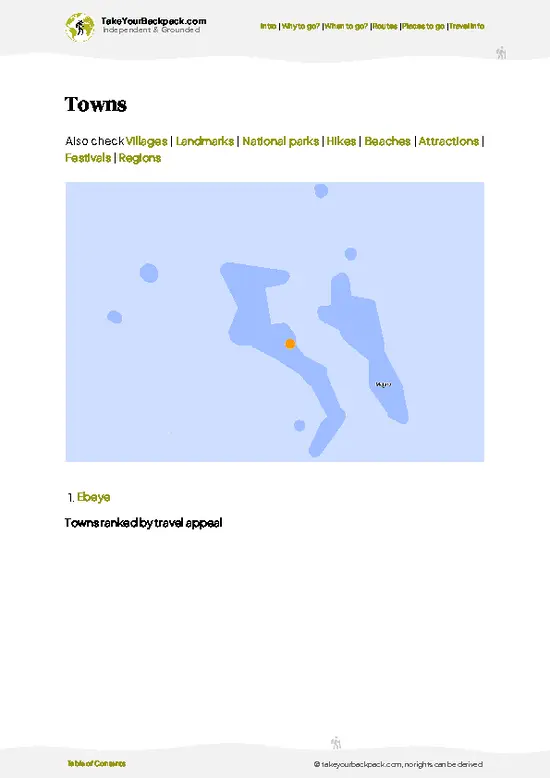
Kwajalein/Ebeye

Reality check: Kwajalein is a U.S. military base; without a sponsor you won’t leave the transit lounge. If you do have permits, Ebeye hits hard—dense housing, basketball courts lit at night, church choirs on Sunday. Go for conversations on the pier, not beaches. Dress modestly, ask before photos, and keep expectations practical.

Bikini Atoll (technical dive only)

This is a commitment, not a detour. Access is tightly managed and costly; trips skew to experienced tech divers with rebreathers. The work is long—permits, charters, heavy gas planning—but the reward is descending onto a silent fleet, metal giants in blue-green stillness. If that’s not you, honor the story in Majuro’s museums and spend your days elsewhere.
Seeing the layout at a glance
Loading the map 🌍
CLICK TO FILTER
town
village
unique site
national park
hike
beach
attraction
festival
region
SHOW COUNTRY’S BESTSHOW ALL
film
0
0
0a
Likiep Village Historical Area and Museum
film
1
1
1a
Peace Park Memorial
film
2
2
2a
Eneko Beach
Nick Delly
film
3
3
3a
Laura Beach
王佩揚
film
4
4
4a
Enemanit Island
Jedi
film
5
5
5a
Majuro Island Walk
Yang Xiao
film
6
6
6a
Ailuk Atoll Hike
Rob Birch
film
7
7
7a
Bikini Atoll National Historical Park
Szymon Winciorek
film
8
8
8a
Ebeye
Virginia Bleth
film
9
9
9a
Enewetak Atoll
Dehn Whitz
film
10
10
10a
Kwajalein Atoll
Paul Pearson
film
11
11
11a
Rongelap Atoll
Lewis Engel
film
12
12
12a
Namu Atoll
M.ennur GÜven

Why go?What sets this destination apart

Beach life

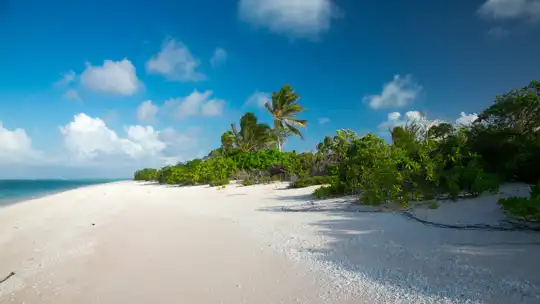
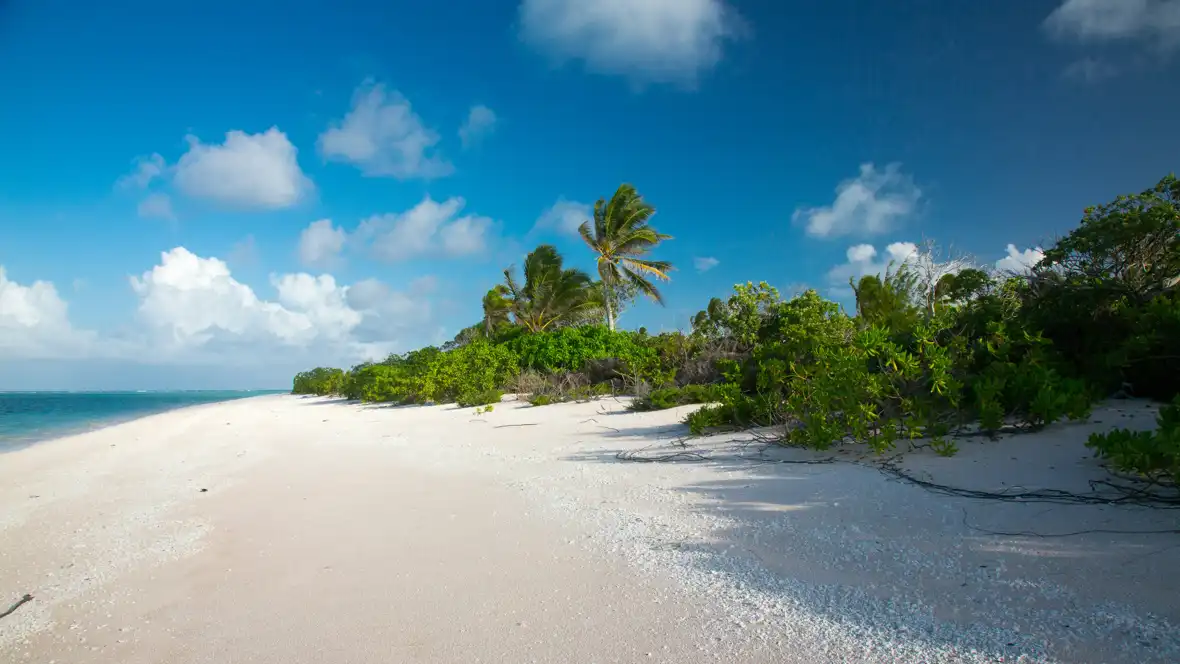
The Marshall Islands reward those who like their beach days with salt in their hair and coral dust on their ankles. You kick off from Majuro to pale, squeaky sand, slide into warm, glass-clear lagoons over WWII wrecks and gardens … read more 👉
The Marshall Islands reward those who like their beach days with salt in their hair and coral dust on their ankles. You kick off from Majuro to pale, squeaky sand, slide into warm, glass-clear lagoons over WWII wrecks and gardens of giant clams, drift with reef sharks and rays. Sunsets hit neon. Nights are quiet—rum by a fire, surf hissing in the dark.

People

On the causeways of Majuro, strangers call out Iakwe and pat the pickup bed—ride’s yours. Kids practice English with playful roasting; aunties press banana bread and fried fish into your hands, then laugh when you reach for the … read more 👉
On the causeways of Majuro, strangers call out Iakwe and pat the pickup bed—ride’s yours. Kids practice English with playful roasting; aunties press banana bread and fried fish into your hands, then laugh when you reach for the chili too fast. You sit cross-legged on mats in salty dusk, diesel and pandanus in the air, cold beer sweating, feeling claimed by kindness.
Want the complete picture of Marshall Islands?
The offline Travel Guide brings everything together — routes, highlights & planning.

See what's included in the guide 👉

Get the Travel Guide -

⭐ HighlightsStandout locations across the country

  • Majuro Lagoon Seawall: Dawn peels open over concrete and calm water; diesel from the taxi boats mixes with breadfruit smoke while kids flick handlines off the edge. Walk till the sun bites, then slip down the steps for a quick dunk and a cold green bottle from the bodega cooler.
  • Arno Atoll Reef Pass: The open skiff slaps you awake; salt needles your eyes, and pandanus rides the wind. You fin backward into glass-clear current and drift past plate coral and gray reef sharks like shadows. You’ll climb back aboard bleeding a little and grinning hard.
  • Laura Beach, Majuro: Ride the jammed westbound truck past dog-legged potholes and breadfruit trees until the road gives you sand and still lagoon. Shallow water, knee-warm, hermit crabs everywhere. Grill fish, rinse in rainwater, crack a can while the sky goes gold for free.
  • Bikini Atoll Wrecks: Long nights under a slow fan and the thump of compressors pay off when you drop onto Saratoga’s flight deck and see gun mounts draped in coral. Regulator
read more 👉
  • Majuro Lagoon Seawall: Dawn peels open over concrete and calm water; diesel from the taxi boats mixes with breadfruit smoke while kids flick handlines off the edge. Walk till the sun bites, then slip down the steps for a quick dunk and a cold green bottle from the bodega cooler.
  • Arno Atoll Reef Pass: The open skiff slaps you awake; salt needles your eyes, and pandanus rides the wind. You fin backward into glass-clear current and drift past plate coral and gray reef sharks like shadows. You’ll climb back aboard bleeding a little and grinning hard.
  • Laura Beach, Majuro: Ride the jammed westbound truck past dog-legged potholes and breadfruit trees until the road gives you sand and still lagoon. Shallow water, knee-warm, hermit crabs everywhere. Grill fish, rinse in rainwater, crack a can while the sky goes gold for free.
  • Bikini Atoll Wrecks: Long nights under a slow fan and the thump of compressors pay off when you drop onto Saratoga’s flight deck and see gun mounts draped in coral. Regulator metal on your tongue, cold thermoclines on your wrists, and that quiet that makes you swallow.
  • Jaluit War Ruins: Banyan roots squeeze Japanese pillboxes, bats chatter in rafters, your shirt sticks like glue. Follow the cracked seawall into dusk; buy a beer from a window store and watch the lagoon turn copper. Off the map: Namdrik’s taro pits and birds, Likiep’s old German store, Mili’s ghost runway and passes.
Spotted a mistake or missing a highlight? Contact us.

But Marshall Islands offers more...

Discover and compare all of its highlights per category

🧭 RoutesHow travelers typically move through the country

The 2-Day Majuro Lagoon Taster

The Vibe: A relaxed, low-logistics intro built around Majuro’s culture, easy walks, and classic lagoon beaches, perfect if you’re island-hopping through the Pacific. You’ll stay close to the capital, trading long transfers for slow swims, shoreline wandering, and a compact hit of Marshallese history.
The Highlights:
  • A cultural deep-dive at Alele Museum in Majuro
  • Sampling daily life along the Majuro Island Walk
  • Boat escape to Eneko Beach on the lagoon
  • Sunset and sand time at Laura Beach on Majuro’s western tip

The 3-Day Twin-Atoll Explorer

The Vibe: A balanced hop that pairs Majuro’s museums and beaches with the quieter rhythms of outer atolls, ideal if you want more than a capital stop without committing to a full expedition. Expect one or two short flights or boat hops, village walks, and plenty of time to just sit by the lagoon.
The Highlights:
  • Cultural grounding at Alele Museum and the Majuro Island Walk
  • Snorkeling and lagoon time at Eneko Beach and Majuro Atoll
read more 👉

The 2-Day Majuro Lagoon Taster

The Vibe: A relaxed, low-logistics intro built around Majuro’s culture, easy walks, and classic lagoon beaches, perfect if you’re island-hopping through the Pacific. You’ll stay close to the capital, trading long transfers for slow swims, shoreline wandering, and a compact hit of Marshallese history.
The Highlights:
  • A cultural deep-dive at Alele Museum in Majuro
  • Sampling daily life along the Majuro Island Walk
  • Boat escape to Eneko Beach on the lagoon
  • Sunset and sand time at Laura Beach on Majuro’s western tip

The 3-Day Twin-Atoll Explorer

The Vibe: A balanced hop that pairs Majuro’s museums and beaches with the quieter rhythms of outer atolls, ideal if you want more than a capital stop without committing to a full expedition. Expect one or two short flights or boat hops, village walks, and plenty of time to just sit by the lagoon.
The Highlights:
  • Cultural grounding at Alele Museum and the Majuro Island Walk
  • Snorkeling and lagoon time at Eneko Beach and Majuro Atoll Beach
  • Slow hours on Laura Beach at the far end of Majuro
  • Village history and atoll life in Arno Atoll and Likiep Atoll, including the Likiep Village Historical Area and Museum

The 5-Day History, Atolls & Nuclear Legacy Route

The Vibe: A deeper, more reflective journey that layers everyday atoll life with World War II and nuclear-test history, for travelers who want to understand the Marshall Islands beyond the palm trees. You’ll string together several key atolls at a steady pace, with time to process the heavy stories between swims and walks.
The Highlights:
  • Two days of culture, walking, and beaches around Majuro, including Alele Museum, Majuro Island Walk, Eneko Beach, Majuro Atoll Beach, and Laura Beach
  • A powerful visit to Bikini Atoll National Historical Park
  • Remote exploration of Enewetak Atoll’s nuclear-test legacy
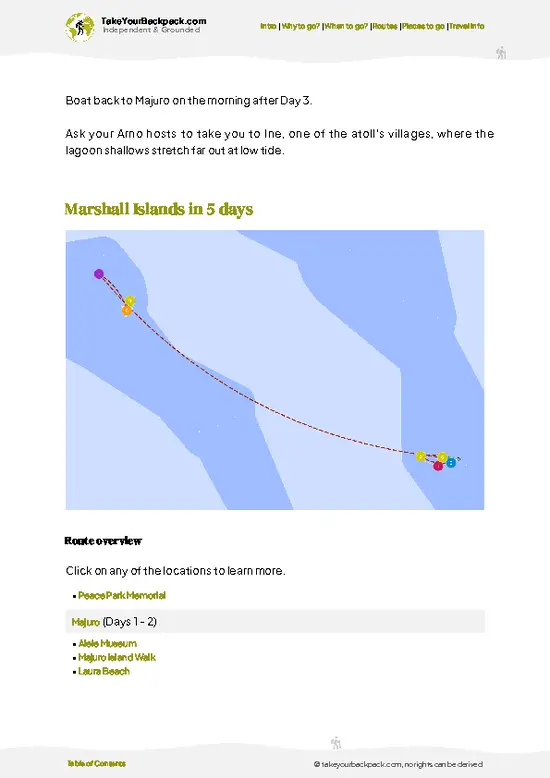
  • Contrasting life and history around Kwajalein Atoll and Ebeye, with an optional stop at Peace Park Memorial
🌍 Want a ready-to-use travel plan for Marshall Islands?
The overview above compares different route options based on your travel time and style. The complete Travel Guide breaks each itinerary down in detail, including maps, stops, highlights, and transport information.

Explore all route details 👉

Get the Travel Guide -

🌤️ When to go?When to go for the best experience

Late February through April is the sweet spot: trades still blow but ease, taking the bite out of the heat; squalls thin; lagoon water goes glassy; and holiday markups fade. Planes aren’t packed with officials, and boat captains actually keep rough schedules. You’ll still sweat through a shirt walking the causeway, then earn a rinse in blue water that stays clear long enough to spot parrotfish grazing like cattle.
  • The Crowd/Heat Peak: Late December-early January (plus a June bump) means full flights and pricier beds in Majuro. The payoff: steady breezes, gold-lit reef flats, and that first cold Sakau or beer tasting like permission to stop moving.
  • The Transition/Shoulder: March slides into May as winds relax and locals reopen outer-island runs. Crowds thin, but May spikes unexpectedly around Constitution Day—parades, family travel, rooms suddenly scarce.
  • The Off-Peak/Extreme: August-November turns heavy and intimate: hot, metallic air, squalls drumming tin roofs, empty beaches. Survival hack: move early—dawn boats beat the noon thunderheads and the sloppy chop.

Tactical tip: book the Island Hopper at least two months out.

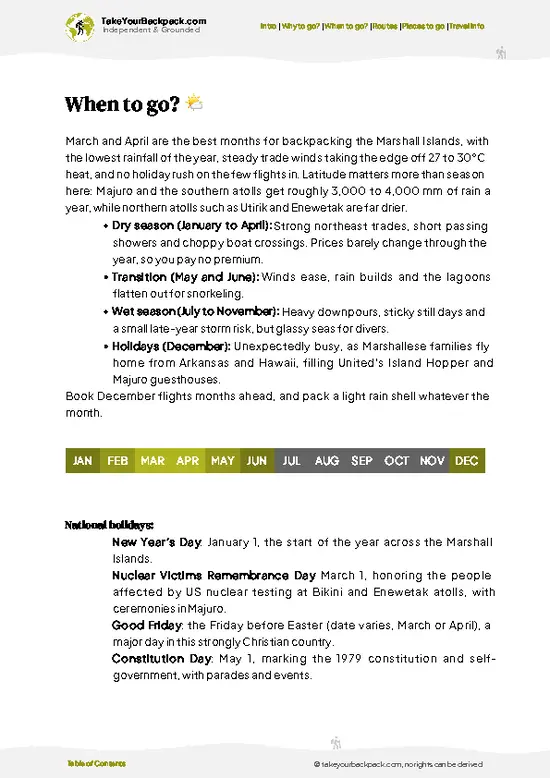
source: climatestotravel.comJANJanuary: good for travelingFEBFebruary: highly recommended for travelingMARMarch: excellent for travelingAPRApril: excellent for travelingMAYMay: highly recommended for travelingJUNJune: good for travelingJULJuly: fair for travelingAUGAugust: fair for travelingSEPSeptember: fair for travelingOCTOctober: fair for travelingNOVNovember: fair for travelingDECDecember: good for traveling
📅 Traveling in a specific month?
Get a full month-by-month breakdown of weather, crowds, costs, festivals, and seasonal highlights in the complete travel guide.

Get full details when to go 👉

Get the Travel Guide -
Marshall Islands - |Marshall Islands|kurt-cotoaga-FicJW813UHM-unsplash

💰 Costs (as of 2026)Travel costs in Marshall Islands

Plan on USD 65-90 per day if you stick to Majuro and keep your ambitions humble; chasing outer atolls blows that past USD 150 fast.
  • dorm accommodation: Majuro has few true dorms; expect basic bunks or shared rooms at USD 25-45, fans humming and salt air sneaking through louvers. Outside the capital you’ll mostly find homestay-style rooms arranged locally, roughly USD 20-35 if you’re lucky. System tip: email or call ahead and ask for “shared room” or weekly rates; some church/NGO guesthouses quietly rent bunks to travelers who show up early and pay cash.
  • meals: Supermarket Survival: rice, ramen, canned tuna, peanut butter—USD 8-15/day if you cook or cold-camp meals; fresh produce is imported and priced like a treat. Street food reality: there isn’t much “street,” but canteens and lunch plates run USD 5-10, diner meals USD 12-18. Cheaper than Palau, pricier than Fiji or Kiribati, on par with FSM.
  • local transport: Shared taxis rattle the single road on Majuro; squeeze in, pass your dollar forward, and hop off when you smell the lagoon—USD 0.75-2.50 per ride, USD 6-8 covers a day of errands. Outer atolls mean Air Marshall Islands (USD 120-250+ each way, strict baggage fees) or irregular boats.
read more 👉
Plan on USD 65-90 per day if you stick to Majuro and keep your ambitions humble; chasing outer atolls blows that past USD 150 fast.
  • dorm accommodation: Majuro has few true dorms; expect basic bunks or shared rooms at USD 25-45, fans humming and salt air sneaking through louvers. Outside the capital you’ll mostly find homestay-style rooms arranged locally, roughly USD 20-35 if you’re lucky. System tip: email or call ahead and ask for “shared room” or weekly rates; some church/NGO guesthouses quietly rent bunks to travelers who show up early and pay cash.
  • meals: Supermarket Survival: rice, ramen, canned tuna, peanut butter—USD 8-15/day if you cook or cold-camp meals; fresh produce is imported and priced like a treat. Street food reality: there isn’t much “street,” but canteens and lunch plates run USD 5-10, diner meals USD 12-18. Cheaper than Palau, pricier than Fiji or Kiribati, on par with FSM.
  • local transport: Shared taxis rattle the single road on Majuro; squeeze in, pass your dollar forward, and hop off when you smell the lagoon—USD 0.75-2.50 per ride, USD 6-8 covers a day of errands. Outer atolls mean Air Marshall Islands (USD 120-250+ each way, strict baggage fees) or irregular boats. Cheapest “unlock” is staying put on Majuro and splitting a small boat to nearby islets.
  • activities: Boat to Eneko/Enemanit for beaches and reef—USD 15-40 round-trip plus small island fees. Snorkel is free once you’re there. Two-tank dives run USD 150-200; Bikini-level expeditions are in another financial galaxy. Fishing charters start near USD 100 and climb with fuel.
  • miscellaneous: Budget Leaks: data is costly (SIM ~USD 10, then USD 10-20/GB), sunscreen and DEET are supermarket-painful, drinking water jugs USD 3-5, beers USD 3-5 store/5-7 bar, ATM fees bite. Cash rules outside Majuro; Sundays go quiet. Compared to neighbors, leaks add up faster than Fiji or Kiribati, slower than Palau.
⚠️ Prices can change and everyone travels differently, so take this as a rough guide. Hope it helps you plan your adventure!

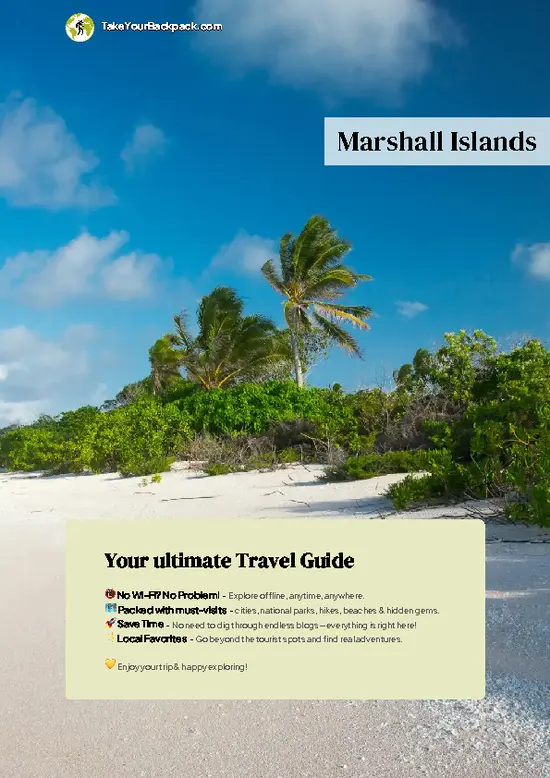
✈️ The backpacker research shortcutMarshall Islands Travel Guide

An offline-friendly backpacking guide with optimized travel routes, ranked highlights, transport advice, and the best areas to stay.
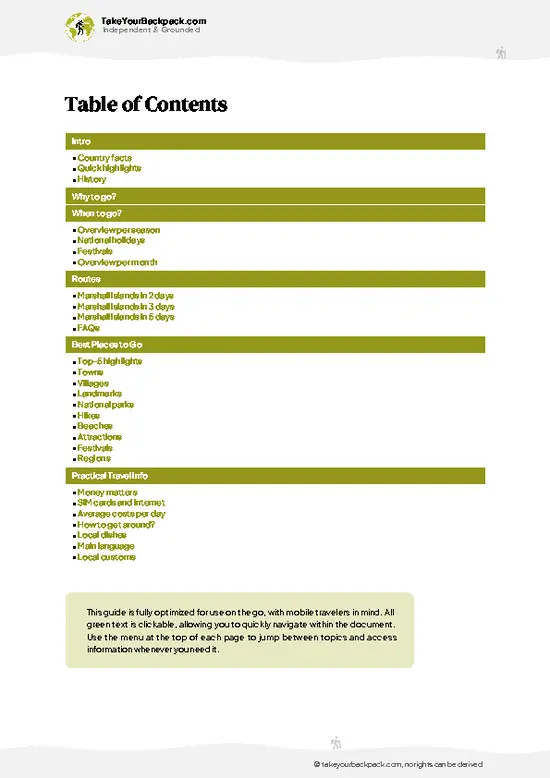
example page 0 from our offline Travel Guide for Marshall Islandsexample page 1 from our offline Travel Guide for Marshall Islandsexample page 2 from our offline Travel Guide for Marshall Islandsexample page 3 from our offline Travel Guide for Marshall Islandsexample page 4 from our offline Travel Guide for Marshall Islandsexample page 5 from our offline Travel Guide for Marshall Islandsexample page 6 from our offline Travel Guide for Marshall Islandsexample page 7 from our offline Travel Guide for Marshall Islands
The digital guide (139 pages) contains:
32 highlights, ranked by travel appeal
Optimized 2, 3 & 5-day travel routes
Cities, national parks, beaches, historical sites, ...
How to get around
Offline-friendly for travel without Wi-Fi
👉 Click to see all 30+ guide features

📅 Plan smarter in minutes, not weeks
Month by month travel advice
Festivals & national holidays
Budget expectations

🗺️ Go to the right places, skip the overrated ones
Honest pros & cons of destinations
Top hikes, parks & viewpoints
Lesser-known places most travelers miss
Clear “worth it vs skip it” guidance

🛏️ Travel smoothly without rookie mistakes
Best areas to stay
Transport systems explained simply
Common scams & safety advice
SIM cards, money & practical tips

🌍 Understand the country, not just visit it
Culture & traditions
52 Essential phrases & customs
Festivals worth planning around
Traveler-friendly historical context
Insights that make places more meaningful

📱 Built for real travel conditions
Fully downloadable PDF
Works completely offline
Optimized for phone use
Useful in remote areas & buses
Everything in one place
Save weeks of stressful planning
Get instant access to the full guide directly. 30-day money-back guarantee.


Sent to your inbox immediately after payment • 100% Secure Checkout
Best Backpacking Travel Advisor 2025 tourism awardBest Backpacking
Travel Advisor
2025
What others say about Take Your Backpack Guides:
⭐⭐⭐⭐⭐
Fantastic, amazing amount of information!
⭐⭐⭐⭐⭐
My goodness this is amazing, it's what I've been looking for hats off too you!
⭐⭐⭐⭐⭐
I think this is absolutely BRILLIANT
⭐⭐⭐⭐
Very complete and informative. It's still missing places, but I gotta to commend you
⭐⭐⭐⭐⭐
This is truly amazing, thank you, can't wait to explore it with my kids!
⭐⭐⭐⭐⭐
Awesome resource, thank you!
⭐⭐⭐⭐⭐
This is amazing! Can't wait to explore the ones I haven't seen
⭐⭐⭐⭐
I love this! Well done, great idea.
⭐⭐⭐⭐⭐
Thanks for taking the time to make this gem!
⭐⭐⭐⭐⭐
This might be the best website I've ever seen.
⭐⭐⭐⭐⭐
Congratulations, and thank you so much for your work; it's incredibly valuable.
⭐⭐⭐⭐
In all seriousness I think you did a great job pointing out the important spots
⭐⭐⭐⭐⭐
10/10 very good
⭐⭐⭐⭐⭐
As someone who's only just starting to visit regularly this is awesome, thank you.
⭐⭐⭐⭐
Thank you very much! I'm going to visit my dad, it's going to be very useful!
⭐⭐⭐⭐⭐
This is really cool! We'll be travelling for the first time and this definitely come in handy.
⭐⭐⭐⭐⭐
You are now our minister of culture, congratulations 👨‍💼
⭐⭐⭐⭐⭐
Just wanted to tell you that this is a pearl! Going to follow your recommendations.
⭐⭐⭐⭐⭐
This is so cool. I'll definitely be using the resource for my travels soon.
⭐⭐⭐⭐⭐
This is very impressive! Good work.
⭐⭐⭐⭐⭐
This is an amazing and informative site. Very well done!

🛏️ Where to stay?Areas travelers tend to prefer

Yes — the Marshall Islands have a few hostels and budget guesthouses, mostly on Majuro and Ebeye, plus occasional homestays on outer atolls; options are limited, so expect basic facilities, limited beds, and sporadic availability.
Most budget choices cluster in Delap-Uliga-Djarrit on Majuro (best access to the airport, markets and ferry, generally safe but with simple amenities and little nightlife) while Ebeye is cheapest and closest to dive/WWII sites but is crowded, noisier, and has weaker infrastructure.
Outer atolls offer quiet, authentic homestays near excellent reefs but require advance … read more 👉
Yes — the Marshall Islands have a few hostels and budget guesthouses, mostly on Majuro and Ebeye, plus occasional homestays on outer atolls; options are limited, so expect basic facilities, limited beds, and sporadic availability.
Most budget choices cluster in Delap-Uliga-Djarrit on Majuro (best access to the airport, markets and ferry, generally safe but with simple amenities and little nightlife) while Ebeye is cheapest and closest to dive/WWII sites but is crowded, noisier, and has weaker infrastructure.
Outer atolls offer quiet, authentic homestays near excellent reefs but require advance planning, higher inter-island transport costs, and almost no tourist services.

If you enjoy meeting fellow travelers, consider choosing hostels with high ratings for atmosphere. On the other hand, if you prefer having your own space, a hotel might be a better option.

🚌 Getting aroundTransportation options and logistics

The Marshalls move on tide and consensus. Schedules bend like palm fronds in a squall. The diesel tang at Uliga pier, the sun-baked single lane on Majuro, a plane that may roar at 10 or decide it’s a noon kind of day—this is a country you pace, not chase. I learned to stop asking “what time?” and start asking “which tide?” When things do click, the reward is immediate: spray on your face, kids laughing in the truck bed, and that first cold soda from a shop with a humming chest freezer.
  • Shared taxis
read more 👉
The Marshalls move on tide and consensus. Schedules bend like palm fronds in a squall. The diesel tang at Uliga pier, the sun-baked single lane on Majuro, a plane that may roar at 10 or decide it’s a noon kind of day—this is a country you pace, not chase. I learned to stop asking “what time?” and start asking “which tide?” When things do click, the reward is immediate: spray on your face, kids laughing in the truck bed, and that first cold soda from a shop with a humming chest freezer.
  • Shared taxis (Majuro & Ebeye) The Social Fabric: flag with a low wave, slide in wherever there’s a sliver of seat, greet with “Iakwe.” Fares are pocket change—often a dollar or two end-to-end—and you pay when you hop out. Tap the roof or say “stop here,” don’t slam the door, and expect detours to collect more riders. It’s not a private ride; it’s a rolling conversation with pop ballads and warm air.
  • Air Marshall Islands (domestic hops) The Efficiency Trade-off: a day-and-a-half by ship becomes under an hour by turboprop, but you’ll pay several times more and trade certainty for speed. Manifests shuffle, weight limits are strict, and maintenance or weather can erase a flight. Show early, travel light, and carry patience like water.
  • Field-trip ships (cargo-passenger runs) The Budget Disruptor: cheap tickets if you can flex your calendar to the pier’s whiteboard, not a website. You sleep on deck, eat what you brought, and live by cargo rhythm—depart at 3 a.m. when drums finally load. It’s slow, salty, and the only economical way to reach far atolls.
  • Lagoon outboards (aluminum skiffs) The Geometric Unlock: hire the boat, pay for fuel by the jerrycan, and slip through reef cuts that planes and ships ignore. Bring a dry bag, sun cover, and accept you’ll get soaked. Time it with tide, and you land on a sandbar with only crab tracks ahead of yours.

Master tip: Build your route around the field-trip ship schedule, then use AMI only for the long skips—and keep a 48-hour buffer before any international flight.
Majuro’s Amata Kabua International Airport (MAJ) sits along the same single main road as the downtown strip (Delap-Uliga-Djarrit). It’s about 12 km (7.5 miles) to the city center.

Main ways to get into town
  • Local minibuses (“buses”) - These small vans run up and down the main road all day. Flag one anywhere; tell the driver “Uliga” or “Delap.”

    Time: 20-30 minutes, depending on stops and traffic

    Cost: about $1-$2 per person (cash, USD)
  • Shared taxis - Regular cars operating like a shuttle; you’ll likely share with other passengers going the same direction.

    Time: 15-25 minutes

    Cost: typically $2-$3 per person; pay in cash and hop out when you’re close to your spot
  • Hotel pickup/shuttle - Many guesthouses can arrange an airport transfer if you book ahead.

    Time: 15-25 minutes

    Cost: usually $10-$15 (sometimes per ride, sometimes per person—confirm when booking)

Taxis
If you want a private, door-to-door ride (not shared), agree the fare before you get in. Expect roughly $10-$20 to Delap/Uliga, a bit more late at night.

Notes
- Services run most of the day; evenings get thinner, so late arrivals should pre-arrange a taxi or hotel pickup.
- Space is tight on minibuses—if you’ve got big bags, a taxi is easier.
- The Marshall Islands uses USD. Prices and times are accurate as of 2025 and can shift slightly with fuel costs.
⚠️ Prices and routes can change, so take this as a rough guide and ask for local advice when you arrive.

🔒 Safety (risk Level: low)What first-time visitors should know

Safety for solo travelers, including women and LGBTQ+ individuals
The Marshall Islands is relatively safe for solo travelers, including women and LGBTQ+ individuals, though it’s essential to stay cautious like anywhere else. Violent crime is rare, but petty theft can occur, so keep your belongings secure. The local culture is generally conservative, so LGBTQ+ travelers might want to be discreet in public to avoid unwanted attention. Always stay informed about local customs and respect community norms to enhance your experience.


Full official government travel advisory (live updates)
View details 👉

✈️ VisaDo you need a visa to visit?

U.S. citizens do not need a visa to visit the Marshall Islands for stays up to 90 days, but you must have a valid passport and a return or onward ticket. For other nationalities, check with the nearest Marshall Islands embassy or consulate for specific visa requirements. If required, you can typically apply through the embassy or consulate by submitting your passport, application form, and possibly proof of accommodation and financial means.

source: rmiembassyus.org
⚠️ Visa requirements can change over time, so always check the latest visa requirements with the official embassy or government website before you travel.

🎒 What to pack?Packing essentials for the trip

Think tropical vibes with a side of humidity when packing for the Marshall Islands. It’s warm all year round, so lightweight, breathable clothes are your best friend. Since the islands are quite conservative, packing modest attire like longer skirts or pants and t-shirts is a smart move, especially if you’re visiting villages. While beaches are stunning, reef shoes can be a lifesaver for navigating the coral. Don’t forget, sudden rain showers happen, so a quick-dry layer will keep you comfortable.

Apart from this country specific advice, I have also crafted a general packing list that should help on any trip. authorOver the years, I've learned the importance of packing minimally. It's so much easier to jump on the back of a truck or squeeze yourself into the last spot of a minibus without that supersized backpack. If you're headed to a warm destination, leave your winter jacket at home; for colder regions, opt for thin thermal underlayers. Instead of packing your entire wardrobe, bring just three sets of clothes, as laundry facilities are available everywhere.

View the full list 👉
🎒 Planning the practical side of your trip?
Get detailed information on transport, daily budgets, internet access, local customs, food, language, and other essentials in the complete Travel Guide.

Get detailed practical information 👉

Get the Travel Guide -

🙋 FAQQuick answers to practical concerns

Trip Planning


Personal tip: I normally search on good rating for atmosphere (for meeting people) and location (for easy exploring). Cleanliness as a bonus.


Travel Essentials

You’ll need to be up-to-date on routine vaccinations like measles-mumps-rubella (MMR) and tetanus-diphtheria-pertussis (Tdap). Consider vaccines for hepatitis A and B, as well as typhoid. If you’re staying longer or engaging in riskier activities, a rabies shot might be wise. Always check the latest travel advisories for any updates.


vaccination requirements
When I first started traveling, I often spent part of my first day in a new country hunting for a local SIM card. While this can still be slightly cheaper, it also takes time and planning.

These days, it's much simpler to install an eSIM before leaving home. Once you arrive in Marshall Islands, you can activate it immediately and have mobile data from the moment you land — which is especially useful for ordering transport or navigating away from busy airports.

There are many providers nowadays, and price differences are usually small. I personally go with Airalo, as it offers excellent network coverage throughout the country and strong global coverage, so you can manage multiple countries from a single app.


Get your e-sim for Marshall Islands

Culture & Customs

Dress modestly, particularly in rural areas. Cover shoulders and knees; this applies to both men and women. Women travelers should be aware that swimwear is usually acceptable only at resorts or designated beach areas. Respect local customs by asking permission before taking photos of people or private property.

For LGBTQ+ travelers, discretion is advised. Homosexuality is not illegal but is culturally sensitive. Public displays of affection, regardless of orientation, are uncommon and best avoided.

When visiting someone’s home, remove your shoes before entering. Always offer a small gift to your host, like food or drink. Avoid discussing politics or local issues unless you know the person well.

Show respect when visiting cultural sites; refrain from touching or climbing on sacred structures. Always ask if you’re uncertain about any cultural practices.
Trying traditional food is always a great way to experience the culture. Here are some must-try dishes for Marshall Islands.
  • Jerked Meat: This is a traditional dish made from sun-dried beef, often marinated with spices. It’s a staple due to its long shelf life, making it ideal for the island’s seafaring and fishing communities.
  • Poi: A fermented taro root dish, similar in texture to pudding. It’s a cultural staple often served at celebrations and gatherings. Its tangy flavor is an acquired taste but offers insight into local traditions.
  • Roasted Breadfruit: A versatile staple in the Marshallese diet, breadfruit is often roasted and served with coconut milk. It’s popular due to its abundance and nutritional value, essential for island life.
  • Wahoo: This local fish is often grilled or served raw as sashimi. It’s popular for its light, mild flavor and is a testament to the island’s rich fishing culture.
  • Pandanas Fruit: Often eaten fresh or turned into a sweet paste, this fruit is significant due to its nutritional benefits and is deeply ingrained in the local diet.
Tap water in the Marshall Islands is not considered safe for drinking by tourists, even if locals sometimes consume it. It’s best to stick to bottled or properly filtered water to avoid any health issues. Always check the seal on bottled water to ensure it’s not been tampered with.
The main language in Marshall Islands is Marshallese. Backpacking is way more rewarding if you know a bit of the local language, so I'd suggest brushing up on the basics just in case your Marshallese skills have become a bit rusty.

Want to understand locals better?
The complete Travel Guide for Marshall Islands includes 52 essential words and phrases — greetings, thank-yous, ordering food, transport, numbers, and common local expressions you'll actually hear.

Get your local basic phrases 👉

Get the Travel Guide -


In the Marshall Islands, English is widely spoken and serves as one of the official languages, alongside Marshallese. The islands have a strong historical connection to the United States, which has influenced the prevalence of English. Most residents, especially in urban areas and among the younger population, are proficient in English, making communication relatively easy for travelers.

In schools, English is the primary language of instruction, and many government and business operations are conducted in English. However, in more remote areas or among older generations, proficiency may vary, and some residents might primarily speak Marshallese.

Travelers may encounter signs, menus, and public information in English, enhancing the ease of navigation and interaction. While English is commonly understood, learning a few basic phrases in Marshallese can enrich the travel experience and demonstrate respect for the local culture. Overall, travelers can expect a generally high level of English proficiency throughout the Marshall Islands, facilitating communication and enhancing their visit.

Money & Payments

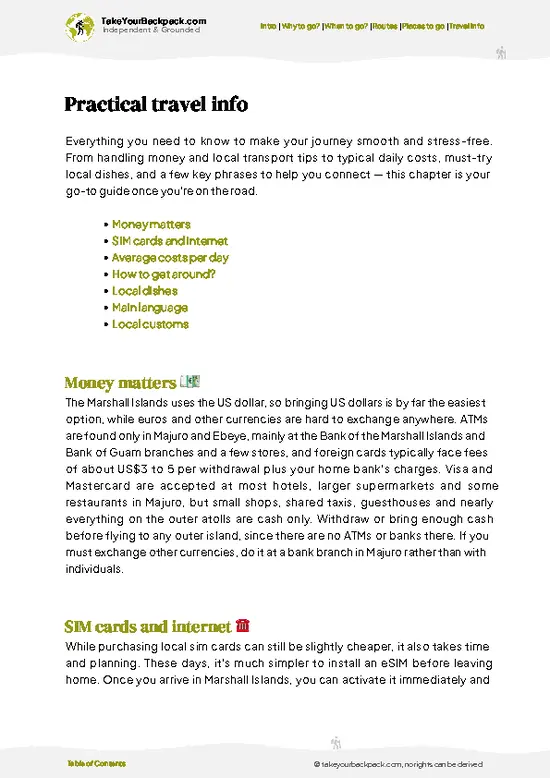
The local currency of Marshall Islands is USD ($).

ATMs: ATMs are a bit rare in the Marshall Islands. You’ll find some in Majuro, but beyond that, you might be out of luck. So, plan ahead and withdraw enough cash when you’re in town.

Cash or Card: Cash is king here. While some places in Majuro might take cards, don’t count on it elsewhere. Keep USD handy since it’s the official currency; euros won’t do you much good.

Currency Exchange: Forget about exchanging currency here. If you don’t have USD before arriving, get it sorted out in a major hub like Hawaii or Guam.

General Tip: Always carry some small bills. You’ll thank yourself when you’re hopping between islands or grabbing a quick bite.

Tipping in the Marshall Islands is generally not expected, as it is not a part of the local culture. However, leaving a small tip for exceptional service in restaurants or hotels is appreciated but purely optional. If you decide to tip, a few dollars or rounding up the bill is sufficient.

🧩 Nearby countriesSimilar backpacking destinations

We 💚 feedbackIs Marshall Islands worth visiting?

Go for the lagoon—the impossible blues, WWII wrecks, and evenings when trade winds comb palms and church singing rides across the water. You earn it with heat that sits on you like a wet towel and fragile logistics—boats and flights slip a day easily—and Hawaii-level prices without Hawaii-level selection. Salt crusts your pack; diesel and breadfruit smoke hang in alleys of Majuro. Best for patient, water-first travelers who can live on rice, tuna, and time. Not great for hostel-hoppers, nightlife hunters, or anyone needing smooth logistics and variety.

✍️ Help improve this page!
The information on this page is based on in-depth research, insights shared by experienced travelers, and feedback from the local travel community in Marshall Islands. While every effort is made to keep the information accurate and current, conditions can change — so if you spot anything incorrect or outdated, please get in touch.


🙋‍♂️ Give feedback

👋 Meet the founderWho’s Behind Take Your Backpack?

Johan, backpacker and founder of TakeYourBackpackHi, I’m Johan (Netherlands 🇳🇱), the creator of TakeYourBackpack. Over the past decade, I’ve backpacked through 80+ countries across six continents, gaining extensive experience with independent travel, long-term trips, and overland routes.

This site is built on a combination of firsthand travel experience and carefully curated insights from other backpackers. Many guides are based on places I’ve personally visited, while others bring together tips, observations, and practical advice shared by trusted travelers I’ve met along the way.

The goal is to provide realistic, experience-driven guidance — not generic itineraries — so you can explore destinations with better context, clearer expectations, and more confidence.

Get full country guide •
Instant download • 32 highlights • Full Offline guide