×
Vatican City State 🇻🇦

backpacking Europe Vatican City State 🇻🇦Step briefly into the world’s smallest sacred state.

Explore the UKExplore Antigua & Barbuda

Backpacking Vatican City in 2026

A complete guide including when and where to go, costs, transport, itineraries, and practical travel advice.
A first look at the country

Backpacking Vatican City
By Johan Kruseman 🇳🇱 | Updated May 25, 2026

Here, it’s time versus access. Either wake with pigeons and glide past queues, or pay to skip them. That choice turns a crush of elbows into a pilgrimage—fitting for Vatican City State (Vatican City).

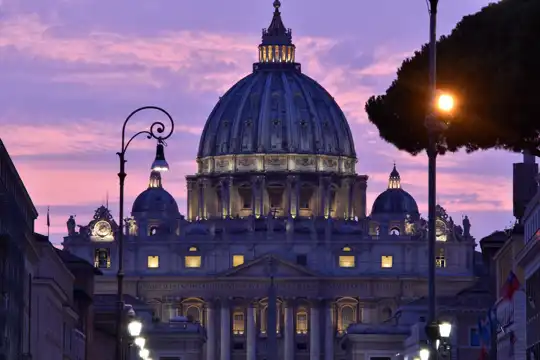
I come for the concentration: faith and power distilled into a few blocks. You grind up the basilica’s corkscrew, pop onto the dome, and Rome becomes a relief map; you crane under the Sistine’s hush; Bernini’s colonnade corrals the square like open arms. Bells roll, incense hangs, the Swiss Guard flash color; an espresso on Borgo Pio resets you. The frictions—security, modest dress, heat, labyrinthine galleries—are the toll. Work the system early, route smart, time Papal moments, and the payoff lands harder.

Compared with Rome beyond the wall, this is density over sprawl; compared with Florence, intensity over grace; compared with San Marino or Abruzzo’s peaks, zero nature, total heritage. Vatican City is for art-first travelers, pilgrims, and anyone who enjoys turning lines into a solved puzzle.

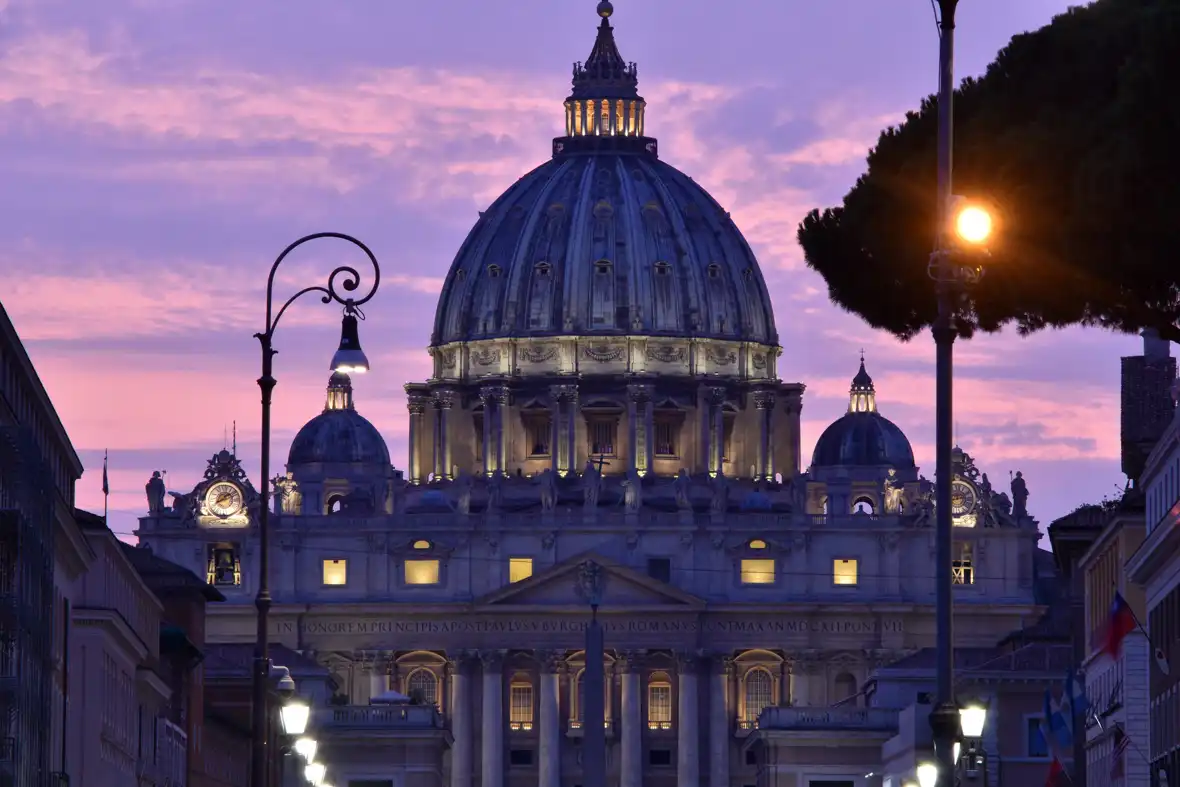
St. Peter’s Square & Colonnade

This is the staging ground; everything in Vatican City flows through here. Free to enter most days, but barricades appear fast on event mornings. Work the shade under the columns, clock security patterns, and time your move. Post Office kiosks on the edge are efficient for stamps and a quick reset. Best for crowd-readers and photographers who like order and geometry.

St. Peter’s Basilica (Interior)

Free, but the meter you pay is time in the security funnel. Dress knees/shoulders; aim for dawn or late afternoon when tour buses cycle out. Inside is part prayer, part camera shuffle. Slow down at the floor-level details and you’ll reclaim headspace. Rewards detail-hunters and patient travelers who can filter noise.

The Dome (Cupola) Climb

Separate entrance on the basilica’s right flank. Elevator saves the first bit; the real work is 300+ tight, canting steps in warm air. Claustrophobes should skip. The payoff is a commanding grid of Rome and a rare top-down look into the basilica. Built for people who like effort with a clean dividend.

Vatican Museums & Sistine Chapel

Different entrance, different security; no shortcut from the square. Prebooked slots beat the snake of walk-ups. The flow is mostly one-way, with bottlenecks at the Raphael Rooms and Maps Gallery. Last entry of the day softens the crush. Don’t rely on the “secret door” from the Sistine to the basilica; it’s often guarded for groups only. Suits art-driven planners who play the long game.

Scavi (Vatican Necropolis)

Pre-arranged only, small groups, strict dress and ID. Check in with the Swiss Guard at the Holy Office Gate (left of the colonnade) and descend into humid, low-ceiling lanes of Roman burials. No photos, no nonsense. It rewards history-focused travelers who like primary sources and quiet jolts of context.
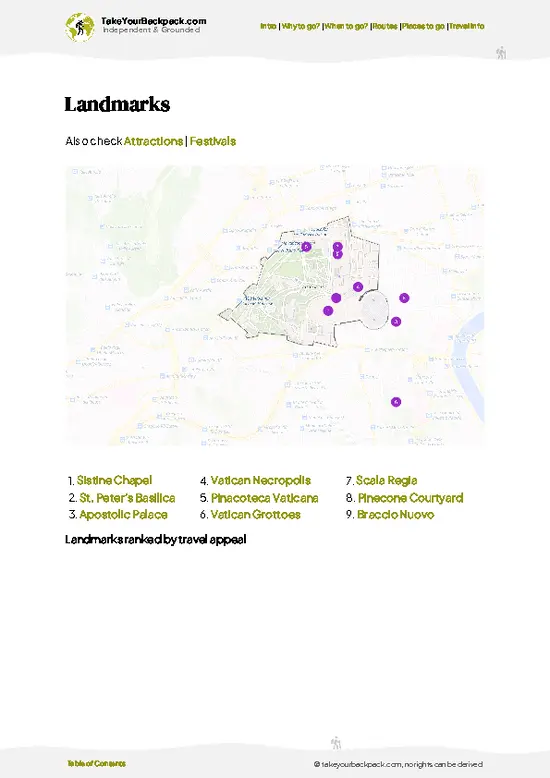
Map of Vatican City
Loading the map 🌍
CLICK TO FILTER
unique site
attraction
festival
SHOW COUNTRY’S BESTSHOW ALL
film
0
0
0a
Vatican Museums
Pixabay
film
1
1
1a
Sistine Chapel
Francesco Fortunato
film
2
2
2a
St. Peter’s Basilica
Pixabay
film
3
3
3a
Vatican Necropolis
Web Patterns
film
4
4
4a
Apostolic Palace
Y. T. Nixon Tan
film
5
5
5a
Pinacoteca Vaticana
Mohamed Diab
film
6
6
6a
Papal Crypts
Jeff A
film
7
7
7a
Pinecone Courtyard
film
8
8
8a
St. John Lateran
Alena Na

Why go?What makes this country worth the trip

Architecture

Vatican City compresses five centuries of architectural strategy into a walkable chessboard. Bramante sketches the logic, Michelangelo locks it with the … read more 👉
Vatican City compresses five centuries of architectural strategy into a walkable chessboard. Bramante sketches the logic, Michelangelo locks it with the dome, Bernini stages the finale—the colonnades that herd chaos into ceremony. Stand on the marked marble disc in St. Peter’s Square: four columns snap into one—optics as power. Pro tip: climb the dome at opening; the helical stairs and brick ribs teach more than any label, and the city opens like a plan you suddenly understand.

Food

Vatican City concentrates Roman eating into a tight game board: dodge the photo-menu traps on Via della Conciliazione, then slip into Prati and score … read more 👉
Vatican City concentrates Roman eating into a tight game board: dodge the photo-menu traps on Via della Conciliazione, then slip into Prati and score flavors. After the museums, I cut north to Mercato Trionfale for porchetta and fruit, then Pizzarium Bonci for blistered slices with a cold beer on the curb. Pro tip: early-entry breakfast in the Pinecone Courtyard—coffee’s fine, the calm is gold.

Uniqueness

Vatican City feels like hacking a micro-state: queues, dress codes, checkpoints, then payoff. The climb up St. Peter’s dome is the burn—tilted stairwells, … read more 👉
Vatican City feels like hacking a micro-state: queues, dress codes, checkpoints, then payoff. The climb up St. Peter’s dome is the burn—tilted stairwells, hand on a greasy rope—then the mosaic glow and Rome at your feet. Pro tip: book the first-entry museum slot; you’ll walk empty galleries. I exit to Borgo Pio for a cold beer and aching-legs satisfaction.
Want the complete picture of Vatican City?
The offline Travel Guide brings everything together — routes, highlights & planning.

See what's included in the guide 👉

Get the Travel Guide -

⭐ HighlightsWhat not to miss along the way

  • St. Peter’s Basilica: Step off the square, clear security, and the air drops ten degrees; cool marble presses through your soles, beeswax and old incense ride the hush. Arrive early and you move like a bishop—no shuffling tour dam behind you—straight to the Pietà and the nave’s echoing void.
  • St. Peter’s Dome (Cupola) Climb: Take the elevator to the roof if you must, but the 551-step grind is the point. The staircase tightens, walls tilt, brick scrapes your shoulder, and the bell’s thud vibrates your ribs; then wind hits your face and Rome unfurls in clean lines beneath you.
  • Vatican Museums & Sistine Chapel: In Vatican City, the winning play is a timed entry and a beeline: Raphael Rooms first, then the Chapel. Guards hiss “Silenzio,” necks crane, and parquet sighs under thousands of feet; Michelangelo’s colors land harder when you earned them through the corridor gauntlet.
  • St. Peter’s Square: Bernini’s arms funnel bodies into a rhythm—shade under the colonnade, burst into sun, security, release.
read more 👉
  • St. Peter’s Basilica: Step off the square, clear security, and the air drops ten degrees; cool marble presses through your soles, beeswax and old incense ride the hush. Arrive early and you move like a bishop—no shuffling tour dam behind you—straight to the Pietà and the nave’s echoing void.
  • St. Peter’s Dome (Cupola) Climb: Take the elevator to the roof if you must, but the 551-step grind is the point. The staircase tightens, walls tilt, brick scrapes your shoulder, and the bell’s thud vibrates your ribs; then wind hits your face and Rome unfurls in clean lines beneath you.
  • Vatican Museums & Sistine Chapel: In Vatican City, the winning play is a timed entry and a beeline: Raphael Rooms first, then the Chapel. Guards hiss “Silenzio,” necks crane, and parquet sighs under thousands of feet; Michelangelo’s colors land harder when you earned them through the corridor gauntlet.
  • St. Peter’s Square: Bernini’s arms funnel bodies into a rhythm—shade under the colonnade, burst into sun, security, release. The obelisk’s shadow crawls like a clock hand, fountains throw cool spray, and on audience days whistles slice the heat as lines snake with military logic.
  • Scavi (Vatican Necropolis): Book weeks ahead, bring ID, and descend with a small group into lamp-lit humidity where plaster smells wet and Latin names fade on brick. The path ends at the area venerated as Peter’s tomb—quiet, close, and earned. Off the map: Campo Santo Teutonico’s hidden calm, the cupola rooftop snack bar, and the yellow Vatican Post Office boxes; personal favorite is a quick espresso in the wind on that roof after the climb.
Spotted a mistake or missing a highlight? Contact us.

But Vatican City offers more...

Discover and compare all of its highlights per category

🧭 RoutesSuggested travel routes through Vatican City

The 2-Day Vatican Essentials Route

The Vibe: A focused, art-and-architecture hit list for travelers who want the Vatican’s greatest hits without sacrificing time to just stand and stare. You’ll move mostly on foot, keeping things compact and immersive inside the core of Vatican City.
The Highlights:
  • Masterpieces and grand corridors inside the Vatican Museums
  • Ceiling and fresco drama in the Sistine Chapel
  • The scale and detail of St. Peter’s Basilica
  • Iconic symmetry and people-watching in St. Peter’s Square

The 3-Day Vatican Layers Route

The Vibe: A richer, more contextual Vatican experience that balances headline sights with time underground and behind the scenes. Ideal if you want to understand how art, faith, and power all stack on top of each other here.
The Highlights:
  • Curated galleries and masterpieces in the Vatican Museums and Pinacoteca Vaticana
  • Michelangelo’s ceiling and Last Judgment in the Sistine Chapel
  • Vertical history from St. Peter’s Basilica down into the Papal Crypts
  • Ancient tombs and
read more 👉

The 2-Day Vatican Essentials Route

The Vibe: A focused, art-and-architecture hit list for travelers who want the Vatican’s greatest hits without sacrificing time to just stand and stare. You’ll move mostly on foot, keeping things compact and immersive inside the core of Vatican City.
The Highlights:
  • Masterpieces and grand corridors inside the Vatican Museums
  • Ceiling and fresco drama in the Sistine Chapel
  • The scale and detail of St. Peter’s Basilica
  • Iconic symmetry and people-watching in St. Peter’s Square

The 3-Day Vatican Layers Route

The Vibe: A richer, more contextual Vatican experience that balances headline sights with time underground and behind the scenes. Ideal if you want to understand how art, faith, and power all stack on top of each other here.
The Highlights:
  • Curated galleries and masterpieces in the Vatican Museums and Pinacoteca Vaticana
  • Michelangelo’s ceiling and Last Judgment in the Sistine Chapel
  • Vertical history from St. Peter’s Basilica down into the Papal Crypts
  • Ancient tombs and early Christian roots in the Vatican Necropolis

The 5-Day Vatican In-Depth Route

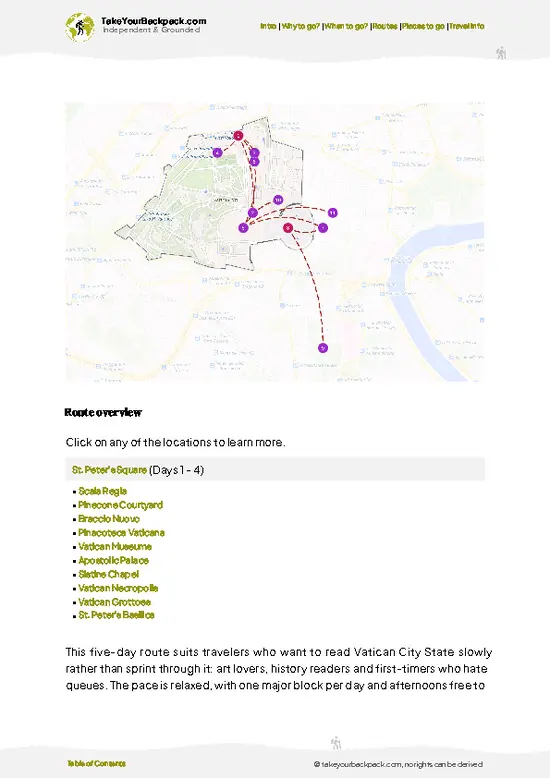
The Vibe: A slow-burn, museum-meets-micro-state immersion for travelers who love side corridors, courtyards, and niche collections as much as the big-ticket icons. You’ll have time to revisit favorites, explore optional wings, and feel how the Vatican actually functions day to day.
The Highlights:
  • Multiple, unhurried sessions in the Vatican Museums and Sistine Chapel
  • Focused art time in the Pinacoteca Vaticana and sculpture-rich Braccio Nuovo
  • Layered sacred spaces from St. Peter’s Basilica to the Papal Crypts and St. Peter’s Square
  • Deeper cuts like the Vatican Necropolis, Apostolic Palace, Pinecone Courtyard, and Scala Regia
🌍 Want a ready-to-use travel plan for Vatican City?
The overview above compares different route options based on your travel time and style. The complete Travel Guide breaks each itinerary down in detail, including maps, stops, highlights, and transport information.

Explore all route details 👉

Get the Travel Guide -

🌤️ When to go?Best time to visit Vatican City

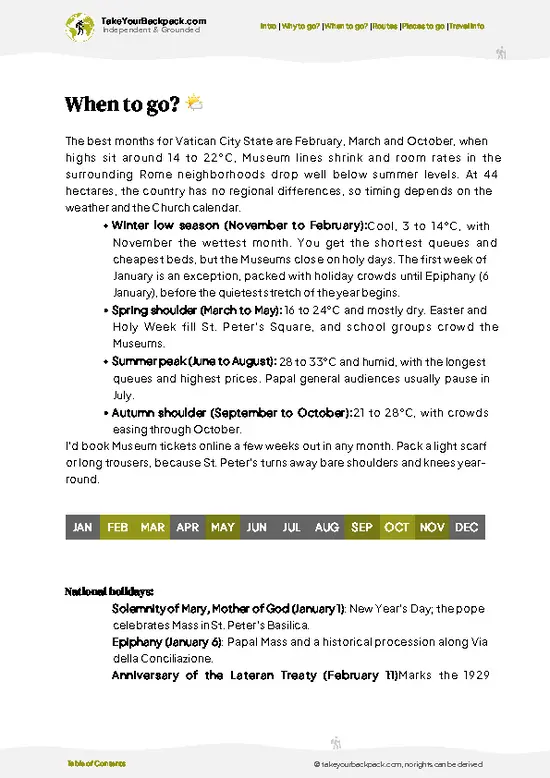
The sweet spot for Vatican City is mid-November to early December and mid-February to mid-March, steering clear of Holy Week. Cool air trims queues and tempers, rain comes in quick passes, and Rome’s beds stop bleeding your budget. Tour groups thin, yet daylight still covers a dome climb and a slow lap of the colonnade. You get momentum without the melee; the system breathes, and you move through it.
  • Peak Heat & Pilgrims: June-August plus Easter week stack prices, metal detectors, and sun. You grind through snaking lines, then earn it at the top of St. Peter’s—wind in your face, terracotta to the horizon, first cold beer on Borgo Pio tasting earned.
  • Shoulder in Motion: Late September-October and late March see tour buses easing, shop shutters rising earlier, guards waving people through with rhythm. You glide: dome at opening, museums late, streets reclaiming their pace.
  • Off-Peak Quiet: December-February (skip Christmas/New Year) turns marble to echo chamber. Damp chill in the nave, empty courtyards. Hack it with a packable umbrella, light gloves, and waterproof shoes; queue under the colonnade’s wind break.
  • The Anomaly Pulse: Early November jumps—All Saints pull pilgrims and school trips—so it feels like October without the heat. Plan accordingly.

Personal tip: reserve a weekday last-entry slot for the Vatican Museums and pair it with a dawn dome climb; you dodge both surges and get two clean windows.

source: climatestotravel.comJANJanuary: fair for travelingFEBFebruary: highly recommended for travelingMARMarch: highly recommended for travelingAPRApril: fair for travelingMAYMay: good for travelingJUNJune: below average for travelingJULJuly: below average for travelingAUGAugust: below average for travelingSEPSeptember: good for travelingOCTOctober: highly recommended for travelingNOVNovember: good for travelingDECDecember: fair for traveling
📅 Traveling in a specific month?
Get a full month-by-month breakdown of weather, crowds, costs, festivals, and seasonal highlights in the complete travel guide.

Get full details when to go 👉

Get the Travel Guide -
pixabay - vatican city

💰 Costs (as of 2025)Prices, expenses, and money tips

Plan on €60-90 for a Vatican City day from a Rome dorm base; the Museums ticket is the big bite, everything else is hackable if you time it right.
  • dorm accommodation: There are no beds inside Vatican City; you’re sleeping in Rome. Expect €25-45 for a clean dorm near Metro A (Ottaviano/ Lepanto). System tip: pick a hostel with free breakfast and luggage hold—saves €5-8 and lets you hit the Museums unencumbered; Sun-Wed is usually cheaper than weekends.
  • meals: Supermarket Survival: €5-8 buys bread, cheese, and fruit from Conad/Coop on Via Cola di Rienzo; refill water at fountains for €0. Street food reality: panini and gelato orbiting the walls run €8-15; walk 3-4 blocks and it drops to €3-6 for pizza al taglio and a supplì. Always ask gelato price per gram; I once watched a “light” cone become €9.
  • local transport: The country “unlocks” on foot. To reach it cheaply, use Rome’s Metro A to Ottaviano (or bus 40/64) with a €1.50, 100-minute ticket; inside Vatican City you’ll walk. System tip: board bus 64 at its terminus to dodge pickpockets and crowds, or just metro and stroll.
  • activities: Cost drivers are fixed: Vatican Museums (€17-25) + optional audio (€7), St. Peter’s dome (€8 stairs/€10
read more 👉
Plan on €60-90 for a Vatican City day from a Rome dorm base; the Museums ticket is the big bite, everything else is hackable if you time it right.
  • dorm accommodation: There are no beds inside Vatican City; you’re sleeping in Rome. Expect €25-45 for a clean dorm near Metro A (Ottaviano/ Lepanto). System tip: pick a hostel with free breakfast and luggage hold—saves €5-8 and lets you hit the Museums unencumbered; Sun-Wed is usually cheaper than weekends.
  • meals: Supermarket Survival: €5-8 buys bread, cheese, and fruit from Conad/Coop on Via Cola di Rienzo; refill water at fountains for €0. Street food reality: panini and gelato orbiting the walls run €8-15; walk 3-4 blocks and it drops to €3-6 for pizza al taglio and a supplì. Always ask gelato price per gram; I once watched a “light” cone become €9.
  • local transport: The country “unlocks” on foot. To reach it cheaply, use Rome’s Metro A to Ottaviano (or bus 40/64) with a €1.50, 100-minute ticket; inside Vatican City you’ll walk. System tip: board bus 64 at its terminus to dodge pickpockets and crowds, or just metro and stroll.
  • activities: Cost drivers are fixed: Vatican Museums (€17-25) + optional audio (€7), St. Peter’s dome (€8 stairs/€10 elevator). Basilica itself is free. The Museums’ last-Sunday free entry exists, but the queue burns hours—false economy unless money beats time. Compared to Rome’s big hitters (Colosseum/Uffizi-level pricing), you’re in the same bracket.
  • miscellaneous: Budget Leaks: dress code “fixes” (scarves/cover-ups sold at €5-15), sit-down coffee/tables vs bar pricing, postcards with Vatican stamps (nice, not cheap), “skip-the-line” hawkers. Relative value is worse right by the colonnades; I buy magnets and stamps two streets back and pay 20-30% less. Bring a light scarf, a bottle, and stubborn patience—those save more than coupons.
⚠️ Prices can change and everyone travels differently, so take this as a rough guide. Hope it helps you plan your adventure!

✈️ The backpacker research shortcutVatican City Travel Guide

An offline-friendly backpacking guide with optimized travel routes, ranked highlights, transport advice, and the best areas to stay.
example page 0 from our offline Travel Guide for Vatican City Stateexample page 1 from our offline Travel Guide for Vatican City Stateexample page 2 from our offline Travel Guide for Vatican City Stateexample page 3 from our offline Travel Guide for Vatican City Stateexample page 4 from our offline Travel Guide for Vatican City Stateexample page 5 from our offline Travel Guide for Vatican City Stateexample page 6 from our offline Travel Guide for Vatican City Stateexample page 7 from our offline Travel Guide for Vatican City State
The digital guide (71 pages) contains:
16 highlights, ranked by travel appeal
Optimized 2, 3 & 5-day travel routes
Cities, national parks, beaches, historical sites, ...
How to get around
Offline-friendly for travel without Wi-Fi
👉 Click to see all 30+ guide features

📅 Plan smarter in minutes, not weeks
Month by month travel advice
Festivals & national holidays
Budget expectations

🗺️ Go to the right places, skip the overrated ones
Honest pros & cons of destinations
Top hikes, parks & viewpoints
Lesser-known places most travelers miss
Clear “worth it vs skip it” guidance

🛏️ Travel smoothly without rookie mistakes
Best areas to stay
Transport systems explained simply
Common scams & safety advice
SIM cards, money & practical tips

🌍 Understand the country, not just visit it
Culture & traditions
52 Essential phrases & customs
Festivals worth planning around
Traveler-friendly historical context
Insights that make places more meaningful

📱 Built for real travel conditions
Fully downloadable PDF
Works completely offline
Optimized for phone use
Useful in remote areas & buses
Everything in one place
Save weeks of stressful planning
Get instant access to the full guide directly. 30-day money-back guarantee.


Sent to your inbox immediately after payment • 100% Secure Checkout
Best Backpacking Travel Advisor 2025 tourism awardBest Backpacking
Travel Advisor
2025
What others say about Take Your Backpack Guides:
⭐⭐⭐⭐⭐
Fantastic, amazing amount of information!
⭐⭐⭐⭐⭐
My goodness this is amazing, it's what I've been looking for hats off too you!
⭐⭐⭐⭐⭐
I think this is absolutely BRILLIANT
⭐⭐⭐⭐
Very complete and informative. It's still missing places, but I gotta to commend you
⭐⭐⭐⭐⭐
This is truly amazing, thank you, can't wait to explore it with my kids!
⭐⭐⭐⭐⭐
Awesome resource, thank you!
⭐⭐⭐⭐⭐
This is amazing! Can't wait to explore the ones I haven't seen
⭐⭐⭐⭐
I love this! Well done, great idea.
⭐⭐⭐⭐⭐
Thanks for taking the time to make this gem!
⭐⭐⭐⭐⭐
This might be the best website I've ever seen.
⭐⭐⭐⭐⭐
Congratulations, and thank you so much for your work; it's incredibly valuable.
⭐⭐⭐⭐
In all seriousness I think you did a great job pointing out the important spots
⭐⭐⭐⭐⭐
10/10 very good
⭐⭐⭐⭐⭐
As someone who's only just starting to visit regularly this is awesome, thank you.
⭐⭐⭐⭐
Thank you very much! I'm going to visit my dad, it's going to be very useful!
⭐⭐⭐⭐⭐
This is really cool! We'll be travelling for the first time and this definitely come in handy.
⭐⭐⭐⭐⭐
You are now our minister of culture, congratulations 👨‍💼
⭐⭐⭐⭐⭐
Just wanted to tell you that this is a pearl! Going to follow your recommendations.
⭐⭐⭐⭐⭐
This is so cool. I'll definitely be using the resource for my travels soon.
⭐⭐⭐⭐⭐
This is very impressive! Good work.
⭐⭐⭐⭐⭐
This is an amazing and informative site. Very well done!

🛏️ Where to stay?Choosing the right base for your trip

No — there are no hostels or budget hotels inside Vatican City; budget stays are in Rome neighborhoods across the Tiber, typically within a 5–30 minute walk or a short bus/metro ride.
Look for budget options in Prati (closest to Saint Peter’s, quiet and safe but slightly pricier), Centro Storico/Piazza Navona (very central and walkable to major sights, touristy and often noisy), Trastevere (cheaper guesthouses and lively nightlife, noisy at night), and Termini (lowest prices and best transport links, less charming and can be busy or sketchy after dark).

If you enjoy meeting fellow travelers, … read more 👉
No — there are no hostels or budget hotels inside Vatican City; budget stays are in Rome neighborhoods across the Tiber, typically within a 5–30 minute walk or a short bus/metro ride.
Look for budget options in Prati (closest to Saint Peter’s, quiet and safe but slightly pricier), Centro Storico/Piazza Navona (very central and walkable to major sights, touristy and often noisy), Trastevere (cheaper guesthouses and lively nightlife, noisy at night), and Termini (lowest prices and best transport links, less charming and can be busy or sketchy after dark).

If you enjoy meeting fellow travelers, consider choosing hostels with high ratings for atmosphere. On the other hand, if you prefer having your own space, a hotel might be a better option.

🚌 Getting aroundPublic transport and other ways to get around

Vatican City runs on bell time, not bus time. The rhythm is queues and liturgy: museum turnstiles snap open, the square surges on Wednesdays and Sundays, and security funnels everything into orderly ropes. It looks messy from Via della Conciliazione, but the system breathes in predictable waves—arrive before the first crest, slip between masses, and you’re moving. Do it right and you pop into the cool shade under Bernini’s colonnade, dome dead ahead, pulse steadying as the city hum drops to a low … read more 👉
Vatican City runs on bell time, not bus time. The rhythm is queues and liturgy: museum turnstiles snap open, the square surges on Wednesdays and Sundays, and security funnels everything into orderly ropes. It looks messy from Via della Conciliazione, but the system breathes in predictable waves—arrive before the first crest, slip between masses, and you’re moving. Do it right and you pop into the cool shade under Bernini’s colonnade, dome dead ahead, pulse steadying as the city hum drops to a low chant.
  • Metro A (Ottaviano/Cipro) The speed-vs-cost trade is a layup: for the price of a coffee you move faster than any taxi across central Rome. Ottaviano is your square shot; Cipro is your Museums flank. The penalty is crush-loads at rush hour and a 10-15 minute walk, but timing the 07:30-08:30 window beats tour buses and halves your queue.
  • Bus 64 / 40 Express The unwritten code: validate the ticket immediately, wear your pack on your chest, slide inward, call “scendere” early. Pilgrims, commuters, and pickpockets mix; offer your seat to nuns and keep zips shut. 40 is the tidal surge with few stops; 64 is slower but drops you closer to the colonnade.
  • On Foot Feet unlock geometry. From Ottaviano, thread Borgo Pio’s shade, read the queue from inside the colonnade, then pick the shortest security lane. For the Museums, hug the wall clockwise; any inward wander bleeds minutes. When papal events seal routes, you can pivot south via Porta Cavalleggeri faster than any bus.
  • Regional Train to Roma San Pietro A budget hack from Trastevere or the Fiumicino axis: same cheap urban fare, none of Termini’s churn. You step off 900 meters from the square, underpass, then straight up Via della Stazione di S. Pietro—moving when buses melt in heat.

Master move: hit Cipro by 07:45, walk the wall to first-entry Museums, then use the signed Basilica exit from the Sistine Chapel when it’s open—one continuous glide across the country, no re-queuing.
Short answer: Vatican City doesn’t have an airport. You’ll land at one of Rome’s airports and then head into the city center (Termini/Centro Storico) or the Vatican area.

Distances
- From Fiumicino (FCO) to central Rome: about 30 km (19 mi). To the Vatican area: about 28 km (17 mi).
- From Ciampino (CIA) to central Rome: about 15 km (9 mi). To the Vatican area: about 18 km (11 mi).

From Fiumicino (FCO) → city center
  • Leonardo Express train (to Termini) — Nonstop, every 15 min. About 32 min. Typical fare €14-€15.
  • Regional FL1 train + Metro — FL1 to Trastevere/Ostiense/Tiburtina, then Metro to your stop. About 40-65 min total. €8 for the train + €1.50 for a Metro ticket.
  • Airport buses to Termini (Terravision, SIT, TAM, etc.) — About 45-70 min depending on traffic. €6-€8 one-way (online promos can be slightly cheaper).

From Ciampino (CIA) → city center
  • ATAC bus 520 or 720 + Metro — 520 to Cinecittà (Metro A) or 720 to Laurentina (Metro B), then Metro into center. About 45-60 min total. One integrated ticket €1.50 (valid 100 minutes; includes one Metro ride).
  • Direct shuttle buses to Termini (Terravision, SIT, etc.) — About 40-60 min. €6-€7.
  • Ciampino town train option — Short bus to Ciampino FS, then regional train to Termini. About 30-45 min. Typical total €3-€4.

Taxis and ride-hail
- Official white Rome taxis have fixed city fares: FCO → anywhere within the Aurelian Walls: €50; CIA → within the Aurelian Walls: €31. Travel time is usually 35-60+ minutes depending on traffic. The flat fare is all-in (luggage, night, weekends).
- App rides (Uber/Bolt/Free Now with licensed drivers) typically run about €55-€80 from FCO, €35-€50 from CIA, depending on demand and exact drop-off.

Good to know
- Trains run roughly from early morning to late evening; late arrivals may find buses and taxis more reliable.
- Buy and validate tickets (look for the small machines on platforms/buses); fines are steep.
- For the Vatican area specifically, target Metro A stations Ottaviano or Cipro, or take the train/FL1 to a station that connects easily to Metro A.
⚠️ Prices and routes can change, so take this as a rough guide and ask for local advice when you arrive.

🔒 Safety (risk Level: medium)Common concerns and things to watch out for

Safety for solo travelers, including women and LGBTQ+ individuals
Vatican City State is generally safe for solo travelers, including women and LGBTQ+ individuals. It has a high security presence, given its religious significance and the crowds it attracts. However, be cautious of pickpockets, especially in crowded areas like St. Peter’s Square. LGBTQ+ travelers should be aware of the Catholic Church’s conservative stance, but safety concerns are minimal.

✈️ VisaVisa requirements for Vatican City

Vatican City itself doesn’t issue visas, but you’ll need to enter Italy (a Schengen Area country) first. If required for Italy, apply for a Schengen Visa through the Italian consulate or embassy. Check your nationality’s Schengen visa requirements before traveling.

source: esteri.it
⚠️ Visa requirements can change over time, so always check the latest visa requirements with the official embassy or government website before you travel.

🎒 What to pack?What to wear and bring

Vatican City State is all about embracing culture and history, so you’ll want to dress modestly, particularly when visiting St. Peter’s Basilica or the Vatican Museums. Think long pants and tops with sleeves—no tank tops or short shorts. The climate is Mediterranean, so expect it to be quite warm and sunny, especially between May and September, but it can get chilly in the evenings. Bring layers to adapt to the temperature shifts. The terrain is mostly flat, so while you won’t need heavy-duty hiking boots, comfortable walking shoes are a must for exploring all day.

Apart from this country specific advice, I have also crafted a general packing list that should help on any trip. authorOver the years, I've learned the importance of packing minimally. It's so much easier to jump on the back of a truck or squeeze yourself into the last spot of a minibus without that supersized backpack. If you're headed to a warm destination, leave your winter jacket at home; for colder regions, opt for thin thermal underlayers. Instead of packing your entire wardrobe, bring just three sets of clothes, as laundry facilities are available everywhere.
View the full list 👉
🎒 Planning the practical side of your trip?
Get detailed information on transport, daily budgets, internet access, local customs, food, language, and other essentials in the complete Travel Guide.

Get detailed practical information 👉

Get the Travel Guide -

🙋 FAQCommon questions before visiting

Trip Planning


Personal tip: I normally search on good rating for atmosphere (for meeting people) and location (for easy exploring). Cleanliness as a bonus.


Travel Essentials

Routine vaccinations like MMR (Measles, Mumps, Rubella), DTP (Diphtheria, Tetanus, Pertussis), and influenza are recommended for Vatican City. No special vaccines are required specifically for this tiny city-state. Check if you’re up-to-date with the usual travel vaccines for Italy, like Hepatitis A and B. Always consult your healthcare provider before traveling.


vaccination requirements
When I first started traveling, I often spent part of my first day in a new country hunting for a local SIM card. While this can still be slightly cheaper, it also takes time and planning.

These days, it's much simpler to install an eSIM before leaving home. Once you arrive in Vatican City, you can activate it immediately and have mobile data from the moment you land — which is especially useful for ordering transport or navigating away from busy airports.

There are many providers nowadays, and price differences are usually small. I personally go with Airalo, as it offers excellent network coverage throughout the country and strong global coverage, so you can manage multiple countries from a single app.


Get your e-sim for Vatican City

Culture & Customs

Dress modestly; shorts, sleeveless tops, or short skirts can get you turned away at St. Peter’s Basilica. Cover knees and shoulders. Keep noise levels down; it’s a place of worship, not a tourist attraction. Photography is allowed, but no flash inside the Sistine Chapel. Don’t interrupt ongoing masses or ceremonies. Be respectful in your behavior and language. Women and LGBTQ travelers generally won’t face specific issues, but always act respectfully. If in doubt, observe others and follow their lead.
Trying traditional food is always a great way to experience the culture. Here are some must-try dishes for Vatican City.There’s a bit of a catch here: the Vatican City is so tiny and its dining options are limited, so it doesn’t really have its own distinct national dishes. Most of the food you’ll find is actually Italian, as the Vatican is encircled by Rome. However, if you’re visiting the Vatican, here’s what you should try in the area:
  • Carbonara: A classic Roman pasta dish made with eggs, cheese, pancetta, and pepper. It’s rich, creamy, and a staple in local trattorias around the Vatican. Definitely a must-try to get a taste of Rome.
  • Saltimbocca alla Romana: This dish features thin veal slices topped with prosciutto and sage, cooked in white wine and butter. It’s a classic Roman specialty you’ll find in the restaurants nearby.
  • Supplì: Similar to arancini, these are rice balls filled with tomato sauce and mozzarella. Perfect as a quick snack while exploring the Vatican area, they’re a street food favorite in Rome.
  • Maritozzi: A sweet bun filled with whipped cream, often enjoyed for breakfast or as a dessert. It’s a Roman pastry that’s great with a coffee after a long day of sightseeing.
Yes, the tap water in Vatican City State is safe to drink and locals do consume it. The water quality is generally good, so tourists can drink it as well without concerns. Bottled or filtered water isn’t necessary unless you prefer it for taste or convenience.
The main language in Vatican City State is Latin. Backpacking is way more rewarding if you know a bit of the local language, so I'd suggest brushing up on the basics just in case your Latin skills have become a bit rusty.

Want to understand locals better?
The complete Travel Guide for Vatican City includes 52 essential words and phrases — greetings, thank-yous, ordering food, transport, numbers, and common local expressions you'll actually hear.

Get your local basic phrases 👉

Get the Travel Guide -


English is widely spoken in Vatican City State City, especially among those working in tourism-related services. Many staff members at museums, restaurants, and shops are proficient in English, catering to the large number of English-speaking visitors. Additionally, official Vatican City State documents, tours, and guides are often available in English, making it easier for travelers to navigate the area.

However, since Vatican City State City is an independent city-state and the spiritual center of the Roman Catholic Church, Italian is the primary language used in official communications and ceremonies. While most clergy and staff involved in religious services may speak some English, they may not be as fluent as those in the tourism sector.

In summary, English is generally well understood in tourist areas, but visitors may encounter varying levels of proficiency among locals, particularly outside of the main attractions. It is always appreciated when travelers make an effort to use basic Italian phrases, enhancing their experience and interactions.

Money & Payments

The local currency of Vatican City is EUR (€).

When you’re backpacking in the Vatican, having some cash on hand is a smart move. Euros are the only currency accepted, so leave the dollars at home. ATMs are available, but they can be scarce, so it’s good to withdraw enough cash beforehand if you’re planning a day-long exploration. Major credit cards are widely accepted in museums and shops, but some smaller vendors and cafes might still prefer cash. For currency exchange, steer clear of airport counters and opt for exchange services in Rome, as they offer better rates than those in or near the Vatican. Always carry a bit of extra cash stashed away for emergencies, but don’t go overboard—pickpockets are a thing!

Tipping in Vatican City follows the general Italian custom, where it’s not obligatory but appreciated for good service. In restaurants, leaving a few extra euros for exceptional service is common, while service charges might already be included in the bill. For guides or tours, a small tip is appreciated but not expected.

🧩 Nearby countriesNearby backpacking alternatives

We 💚 feedbackWhat to know before planning your trip

Vatican City runs on queues, metal detectors, and ceremony. Beat it by going early: dome first at St. Peter’s while the square is empty, then basilica; hit the Museums late afternoon when tours thin and the one-way river spits you into the Sistine without shoulder wars. Shoulders and knees covered; small bags only. Wednesdays swell with papal crowds and occasional closures. The best surprise: mailing a postcard from the yellow Vatican postbox. Best for art-and-ritual geeks who enjoy systems. Not ideal for crowd-averse wanderers hunting cafés and spontaneity.

✈️ When did I visit Vatican City?
During the last year of highschool, we had a school trip to Rome and Vatican city. While my visit dates back, this guide is continuously refined using feedback from locals and current backpackers (last update: 17 May 2025)

✍️ Help improve this page!
The information on this page is based on my own backpacking experience in Vatican City, supplemented with up-to-date research and feedback from other travelers. Travel details can change, so if you notice anything outdated or incomplete, feel free to let me know.


🙋‍♂️ Give feedback

👋 Meet the founderWho’s Behind Take Your Backpack?

Johan, backpacker and founder of TakeYourBackpackHi, I’m Johan (Netherlands 🇳🇱), the creator of TakeYourBackpack. Over the past decade, I’ve backpacked through 80+ countries across six continents, gaining extensive experience with independent travel, long-term trips, and overland routes.

This site is built on a combination of firsthand travel experience and carefully curated insights from other backpackers. Many guides are based on places I’ve personally visited, while others bring together tips, observations, and practical advice shared by trusted travelers I’ve met along the way.

The goal is to provide realistic, experience-driven guidance — not generic itineraries — so you can explore destinations with better context, clearer expectations, and more confidence.

Get full country guide •
Instant download • 16 highlights • Full Offline guide