×
Croatia 🇭🇷

backpacking Europe Croatia 🇭🇷Island-hop along a coastline shaped deeply by layered history.

Explore BulgariaExplore Cyprus

Backpacking Croatia in 2026

A complete guide including when and where to go, costs, transport, itineraries, and practical travel advice.
A practical introduction for travelers

Backpacking Croatia
By Johan Kruseman 🇳🇱 | Updated June 5, 2026

Skip Hvar: hop the foot-passenger ferry from Split to Šolta for cheap island time and quiet coves within an hour. It’s the locals’ weekend move—olive groves, stone paths, and grill smoke at dusk. That everyday texture, powered by ferries, salt, and slow plates, is Croatia’s real hook.

Come for the glass-clear Adriatic, stay for the limestone spines of Velebit and a Roman palace in Split that still hums with laundry lines and espresso cups. Istria offers truffles and hill-town sunsets; Dalmatia sings with klapa harmonies, grilled fish, and island-to-island swims; Paklenica hands you world-class limestone and scratched knees you’ll brag about. Yes, Dubrovnik crowds and summer prices bite, and ferries queue, and the bura can slap you sideways. But early boats, shoulder-season light, cash for konobas, and a pre-dawn loop of Plitvice turn hassle into bragging rights, and the payoff—an empty cove or a cliff jump at sunset—lands harder.

Compared with Slovenia’s alpine polish, Bosnia and Herzegovina’s raw warmth, or Montenegro’s postcard drama, Croatia sits in the sweet spot: easy logistics, big scenery, honest plates. It’s for swimmers, climbers, ferry-hoppers, and anyone who values simple pleasures done exactly right.

👉 Get the 📖 Travel Guide of Croatia
Dubrovnik & Southern Dalmatia
The walled city is crowded and pricier than the rest of Croatia, especially when cruise ships dump people mid-morning. The win is timing: walk the walls at first entry or last hour, then swim off Sveti Jakov or take the first boat to Lokrum for quiet water. Base in nearby Cavtat or on Pelješac (Ston for oysters, Dingač for red wine) to sleep cheaper and dodge the glare. Fly into DBV, bus or drive the coastal road; ferries link Korčula and Mljet if you plan around their thin schedules. Best for early risers and patient planners.

Split & Central Dalmatia Islands
Split works as a real city, not a theme park. Diocletian’s Palace is your evening maze; mornings are for ferries. Use Split as a hub for Brač (hike Vidova Gora then swim in ten minutes), Hvar (party if you want, sleep in Stari Grad if you don’t), and Vis (quiet, military tunnels, better in shoulder season). Catamarans sell out; book the earliest Krilo/Kapetan Luka runs and avoid midday zoo crowds. Car ferries are different tickets; don’t mix them up. Rewards flexible island-hoppers.

Zadar–Šibenik–Krka–Kornati (A1 spine)
Cheaper than Dubrovnik and easier to breathe. Zadar’s Sea Organ at dawn, Šibenik’s fortresses at golden hour, then Krka by entering at Skradin on the first boat. Kornati works with small-boat charters from Murter; wind days are for sailors, calm days for kayaks. The A1 highway and frequent buses keep it simple. Suits photographers and water people who hate chaos.

Istria (Pula, Rovinj, inland hills)
Food-first travel. Roman arena in Pula, rocky coves instead of sandy beaches, and truffle country around Motovun. The Parenzana trail is a forgiving bike route linking villages and wine cellars; buses exist but a car makes Istria click. Prices sit mid-pack for Croatia, portions are not. Ideal for slow eaters and cyclists.

Zagreb & the Interior (Zagorje, Plitvice)
Cafés, trams, and galleries by day; štrukli and craft beer by night. Validate tram tickets from kiosks and ride out to Medvednica for a forest reset. Plitvice is a long day but doable: be at the gate at opening, start from Entrance 1, pack your food, and leave before the boardwalk jam. Best for city walkers who still want a big nature hit.
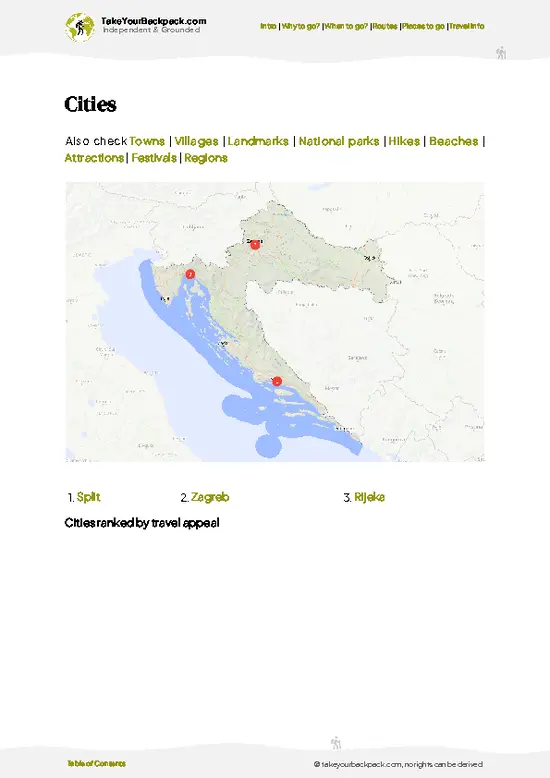
Geography and where places are located
Loading the map 🌍
CLICK TO FILTER
city
town
village
unique site
national park
hike
beach
attraction
festival
region
SHOW COUNTRY’S BESTSHOW ALL
film
0
0
0a
Dubrovnik City Walls and Fortresses
film
1
1
1a
Pula Arena
film
2
2
2a
Museum of Broken Relationships
film
3
3
3a
Rector’s Palace and Cultural History Museum
film
4
4
4a
Croatian National Theatre in Zagreb
film
5
5
5a
Kuterevo Bear Sanctuary
film
6
6
6a
Mestrovic Gallery
film
7
7
7a
Nikola Tesla Technical Museum
film
8
8
8a
Archaeological Museum
film
9
9
9a
Zlatni Rat
Thomas Mertens
film
10
10
10a
Stiniva Beach
Jayes L
film
11
11
11a
Punta Rata
Marcin “stefan” Czerwik
film
12
12
12a
Banje Beach
Grand Villa Argentina
film
13
13
13a
Kamenjak
film
14
14
14a
Plaža Ujča
film
15
15
15a
Plaža Lukovo
film
16
16
16a
Drvenik
film
17
17
17a
Split
Martin Kalensky
film
18
18
18a
Paklenica to Velika Paklenica Trail
film
19
19
19a
Velebit Mountain
Mariusz Turoboś
film
20
20
20a
Biokovo Mountain
József Ipsics
film
21
21
21a
Učka Mountain Trail
film
22
22
22a
Medvednica Mountain Trail
film
23
23
23a
Sljeme Trail
film
24
24
24a
Kamenjak Peninsula Trail
film
25
25
25a
Lungomare coastal promenade
film
26
26
26a
Canyon Kamacnik
film
27
27
27a
Plitvice Lakes
Pixabay
film
28
28
28a
Krka
Bouillet Antoine
film
29
29
29a
Mljet
Max Donovan
film
30
30
30a
Paklenica
Martin Rimsky
film
31
31
31a
Brijuni
Inga “inga050910” Losch
film
32
32
32a
Kopački Rit
film
33
33
33a
Sjeverni Velebit
film
34
34
34a
Risnjak
film
35
35
35a
Jankovac Forest Park
film
36
36
36a
Krk
film
37
37
37a
Cres
Dénes Fosztó
film
38
38
38a
Dugi Otok
Stefano Simonetti
film
39
39
39a
Velebit
Mariusz Turoboś
film
40
40
40a
Dubrovnik
film
41
41
41a
Hvar
Subhash Chandra
film
42
42
42a
Rovinj
Romana Milašinović
film
43
43
43a
Pula
film
44
44
44a
Trogir
Around The World
film
45
45
45a
Poreč
Randolfo Santos
film
46
46
46a
Pag
film
47
47
47a
Omis
Pavel Kreuz
film
48
48
48a
Osijek
film
49
49
49a
Ston
Marija Marija
film
50
50
50a
Sibenik
Tibor Szatzger
film
51
51
51a
Plitvice Waterfalls
Pixabay
film
52
52
52a
Cathedral of St James in Šibenik
林素玲
film
53
53
53a
Euphrasian Basilica, Poreč
Dominik Despot
film
54
54
54a
Trakošćan castle
film
55
55
55a
Krapina’s Neanderthal site
film
56
56
56a
Zeleni Vir
film
57
57
57a
Dvigrad ruins
film
58
58
58a
Orahovica Lake
film
59
59
59a
Lake Borovik
film
60
60
60a
Cavtat
film
61
61
61a
Motovun
André B.
film
62
62
62a
Grožnjan
film
63
63
63a
Skradin
Miloš Kotulek
film
64
64
64a
Lubenice
Marijan Juresic
film
65
65
65a
Mali Ston
Gian Luca Garattoni
film
66
66
66a
Jablanac

Why go?What sets this destination apart

Backpackers

Croatia’s backpacker circuit works because logistics are simple and the payoffs pile up. Yes, Dubrovnik … read more 👉
Croatia’s backpacker circuit works because logistics are simple and the payoffs pile up. Yes, Dubrovnik and Hvar in July are rammed and beers on the promenade cost city prices. The trick is timing and angles. Base in Split, ride dawn ferries, and peel off to Šolta or Vis for swims off quiet concrete piers and grilled sardines priced for locals. I save cash with night buses and bakeries, then spend on island boats and seafood. Pro tip: September—warm water, half the crowds. Another: reef shoes for sea urchins; your feet will thank you.

Beach life

Croatia delivers for beach people, but not in the palm-frond, powder-sand way. It’s limestone ledges, … read more 👉
Croatia delivers for beach people, but not in the palm-frond, powder-sand way. It’s limestone ledges, pine shade, glass-clear water, and coves you slide into like a seal. Yes, July–August are busy and Hvar cocktails hit Paris prices, yet the payoff is earned. Pro tip: swim early—by 7:30 am Buža’s cliffs in Dubrovnik are empty, and the cruise crowds are still yawning. September is the sweet spot: warm sea, cheaper rooms, less boat traffic. Bring water shoes; sea urchins are not theoretical. My best day: late-day Zlatni Rat, when the wind flips the spit and the kiters sail home.

Scenery

Instagram shows Dubrovnik’s walls and Plitvice’s boardwalks. The reality: July queues, park fees rise … read more 👉
Instagram shows Dubrovnik’s walls and Plitvice’s boardwalks. The reality: July queues, park fees rise in summer. Worth it anyway—if you time it. Go Plitvice at winter dawn: frozen falls; I did it in sleet—worth it. Or enter Gate 2 at opening; boat to Lower Lakes first. Skip the Blue Cave circus; take a boat from Komiža to Brusnik and swim over pebbles. For “savanna,” hike Lun olive groves on Pag at sunset. For a forest fix, hit Gorski Kotar’s Risnjak ridge at sunrise—bear tracks, Kvarner in view. Pro tip: August is for islands; May and late September are for everything.

Architecture

Croatia’s architecture sells itself on postcards—Dubrovnik ramparts, Split’s Roman bones—then hits you … read more 👉
Croatia’s architecture sells itself on postcards—Dubrovnik ramparts, Split’s Roman bones—then hits you with cruise lines and entry fees. Fine. Pay smart, time smarter. Walk Dubrovnik’s walls at opening or the last hour; you’ll hear your footsteps and the sea, not selfie sticks. Pro tip: rain clears crowds and turns Stradun into a mirror. Split’s Diocletian’s Palace at dawn smells of bread and ancient limestone; that’s the hit. Skip queues in Zadar; sit by the Sea Organ at lunch, not sunset. For grit, ride Zagreb trams south and wander Novi Zagreb’s concrete.

Low cost

Instagram sells yachts and Hvar bottle service; your wallet breathes on buses, bakeries, and beaches. … read more 👉
Instagram sells yachts and Hvar bottle service; your wallet breathes on buses, bakeries, and beaches. If you work the shoulder months (May, June, September), a backpacker daily average sits comfortably in the low-to-mid double digits by sleeping in hostels or granny-run sobe, eating marenda specials, and swimming for free. Pro tip: in Dalmatia, hunt chalkboard “marenda” before 1 pm—solid stew or grilled fish at worker prices. I base near, not in, walled towns: Gruz for Dubrovnik, Solin for Split; 15 minutes saves a chunk. Night buses trim accommodation; ferries as foot passenger stay cheap; carafe wine beats cocktails.
Want the complete picture of Croatia?
The offline Travel Guide brings everything together — routes, highlights & planning.

See what's included in the guide 👉

Get the Travel Guide -

⭐ HighlightsUnmissable destinations

  • Dubrovnik City Walls: Yes, it’s a parade of cruise tags by 10 a.m., and the ticket costs about a seafood lunch in the Old Town, but slip in at opening and the stones still breathe night-cool air. Keep a steady pace, hug the shade, and soak the salt tang and gull calls as the Adriatic slaps the bastions below your feet.
  • Plitvice Lakes National Park: The boardwalks jam up by mid-morning; stay inside the park the night before and walk at first light to hear only water—no chatter, just the low thunder of the big falls. Move counter to the tour flow, carry a rain shell for spray, and expect wet shins and the tannin-sweet smell of soaked wood.
  • Diocletian’s Palace, Split: Free to wander, pricey if you sit in the Peristyle for coffee, so graze on burek and aim for the bell tower right when it opens—cheaper than two cocktails on the Riva and worth the climb. Marble underfoot feels glassy, klapa harmonies bounce in the Vestibule, and espresso steam curls through alleyways of laundry and cats.
  • Hvar
read more 👉
  • Dubrovnik City Walls: Yes, it’s a parade of cruise tags by 10 a.m., and the ticket costs about a seafood lunch in the Old Town, but slip in at opening and the stones still breathe night-cool air. Keep a steady pace, hug the shade, and soak the salt tang and gull calls as the Adriatic slaps the bastions below your feet.
  • Plitvice Lakes National Park: The boardwalks jam up by mid-morning; stay inside the park the night before and walk at first light to hear only water—no chatter, just the low thunder of the big falls. Move counter to the tour flow, carry a rain shell for spray, and expect wet shins and the tannin-sweet smell of soaked wood.
  • Diocletian’s Palace, Split: Free to wander, pricey if you sit in the Peristyle for coffee, so graze on burek and aim for the bell tower right when it opens—cheaper than two cocktails on the Riva and worth the climb. Marble underfoot feels glassy, klapa harmonies bounce in the Vestibule, and espresso steam curls through alleyways of laundry and cats.
  • Hvar Town & the Pakleni Islands: Beds spike hard in July-August and day clubs bleed your wallet; dodge both by catching the first water taxi to Jerolim or Marinkovac, or rent a kayak at 9 a.m. before the maestral kicks up. Pine resin sticks to your fingers, cicadas buzz like power lines, and the pebbles bite until the water turns to silk.
  • Pelješac Peninsula (Ston, Mali Ston, Dingač): Cheaper plates than Dubrovnik and twice the breathing room; bus it over the bridge, hike Ston’s walls late afternoon, then slurp oysters right off the farms with lemon and a plastic cup of white. The Dingač road is steep and honest—tar smell in the heat, sea glitter below, and stony coves like Divna for a no-music swim. Off the map: Lastovo’s Skrivena Luka, the Premužić Trail on Velebit, and Cres’s Lubenice; my pick is Premužić at golden hour when the karst hums.
Spotted a mistake or missing a highlight? Contact us.

But Croatia offers more...

Discover and compare all of its highlights per category

🧭 RoutesLogical itineraries covering the highlights

The 5-Day Dalmatian Coast Taster

The vibe: A relaxed first trip to Croatia that strings together Split, one island, a waterfall day, and Dubrovnik without ever feeling rushed. You get the classic mix of old towns, sea swims, and one big national park hit, all within an easy bus-and-ferry corridor.
The highlights:
  • Exploring Split’s Roman core and Diocletian’s Palace Substructures
  • Island time in Hvar’s harbor and hilltop fortress
  • Waterfall boardwalks in Krka National Park via Skradin
  • Walking Dubrovnik’s city walls with a swim at Banje Beach

The 10-Day Coast & Istria Explorer

The vibe: A fuller sweep of the northern and central Adriatic, blending Istrian charm, Roman ruins, islands, and waterfalls at a comfortable, two-to-three-night-per-base pace. You’ll feel like you’ve actually lived in a few places rather than just passed through them.
The highlights:
  • Slow mornings and sunset strolls in Rovinj’s old town
  • Roman history at the Pula Arena
  • Cliffy coves and clear water around Kamenjak and Krk
  • Split’s
read more 👉

The 5-Day Dalmatian Coast Taster

The vibe: A relaxed first trip to Croatia that strings together Split, one island, a waterfall day, and Dubrovnik without ever feeling rushed. You get the classic mix of old towns, sea swims, and one big national park hit, all within an easy bus-and-ferry corridor.
The highlights:
  • Exploring Split’s Roman core and Diocletian’s Palace Substructures
  • Island time in Hvar’s harbor and hilltop fortress
  • Waterfall boardwalks in Krka National Park via Skradin
  • Walking Dubrovnik’s city walls with a swim at Banje Beach

The 10-Day Coast & Istria Explorer

The vibe: A fuller sweep of the northern and central Adriatic, blending Istrian charm, Roman ruins, islands, and waterfalls at a comfortable, two-to-three-night-per-base pace. You’ll feel like you’ve actually lived in a few places rather than just passed through them.
The highlights:
  • Slow mornings and sunset strolls in Rovinj’s old town
  • Roman history at the Pula Arena
  • Cliffy coves and clear water around Kamenjak and Krk
  • Split’s palace core plus a day out to Vis or Zlatni Rat

The 15-Day Croatia Grand Circuit

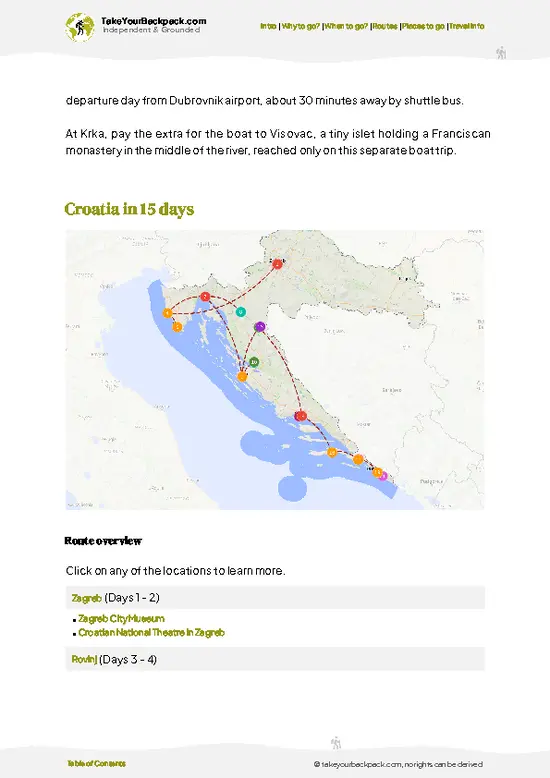
The vibe: A deep-dive loop from Zagreb through mountains, lakes, islands, and Dubrovnik, designed for travelers who want both the big-name sights and a few quieter corners. The pace is steady, with time to hike, swim, and linger in cafes between travel days.
The highlights:
  • Zagreb’s museums plus a castle-and-prehistory day around Trakošćan and Krapina
  • Plitvice Lakes and Velebit’s Premužić’s trail for waterfalls and high-mountain views
  • Zadar and Dugi Otok’s Sakarun Beach for a softer, sandier Adriatic
  • Split, Vis or Zlatni Rat, Dubrovnik’s walls, and a tranquil day on Mljet National Park
🌍 Want a ready-to-use travel plan for Croatia?
The overview above compares different route options based on your travel time and style. The complete Travel Guide breaks each itinerary down in detail, including maps, stops, highlights, and transport information.

Explore all route details 👉

Get the Travel Guide -

🌤️ When to go?When to go for the best experience

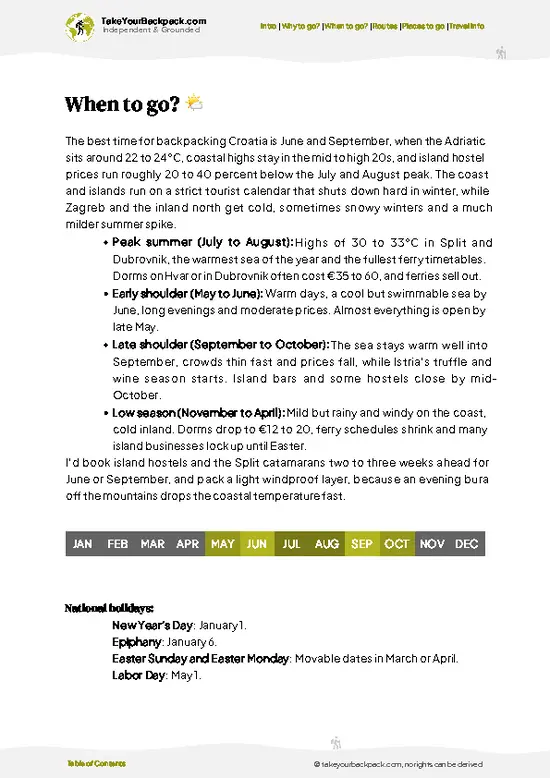
The sweet spot for backpacking Croatia is early June and mid-September into the first week of October. Here’s why: the sea is warm enough to swim without bracing yourself, ferries still run on summer timetables, and hostels have beds without the August ransom. The heat backs off so you can hike Biokovo or loop Plitvice without frying, and cruise numbers dip after the first September surge, especially in Dubrovnik. In June, islands shake off their winter yawn; in late September, they exhale—bars stay open, but locals reclaim the coves. You get long days, ripe markets, soft sunsets, and room to move.
  • High Summer Peak: Late June-August is a squeeze—prices climb, buses fill, and Dubrovnik’s walls feel like a turnstile. The trade: pre-dawn swims in Hvar’s harbors like warm glass, midnight ferries buzzing, and Vis caves glowing when you’re first in.
  • Shoulder Shift: May-early June and mid-September-early October hum. Shutters go up, ferry boards expand, grape harvests roll in. Crowds thin, hostel dorms bargain again, and you can actually linger at a konoba without a timer running.
  • Deep Off-Season: November-March turns inward. Split’s stone alleys echo, Istria smells of woodsmoke, and the bura slaps you sideways on the quays. Survival hack: a real windproof shell and bus-first planning; ferries shrink and sway.

Personal tip: In June and September, lock Dubrovnik and Split two weeks out, then keep the islands walk-in so you can chase the clearest water and best weather.

source: climatestotravel.comJANJanuary: below average for travelingFEBFebruary: below average for travelingMARMarch: fair for travelingAPRApril: fair for travelingMAYMay: highly recommended for travelingJUNJune: excellent for travelingJULJuly: good for travelingAUGAugust: good for travelingSEPSeptember: excellent for travelingOCTOctober: highly recommended for travelingNOVNovember: below average for travelingDECDecember: below average for traveling
📅 Traveling in a specific month?
Get a full month-by-month breakdown of weather, crowds, costs, festivals, and seasonal highlights in the complete travel guide.

Get full details when to go 👉

Get the Travel Guide -
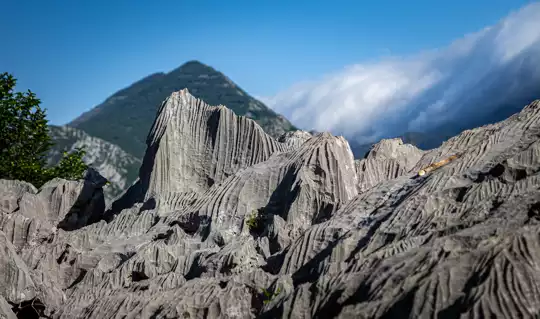
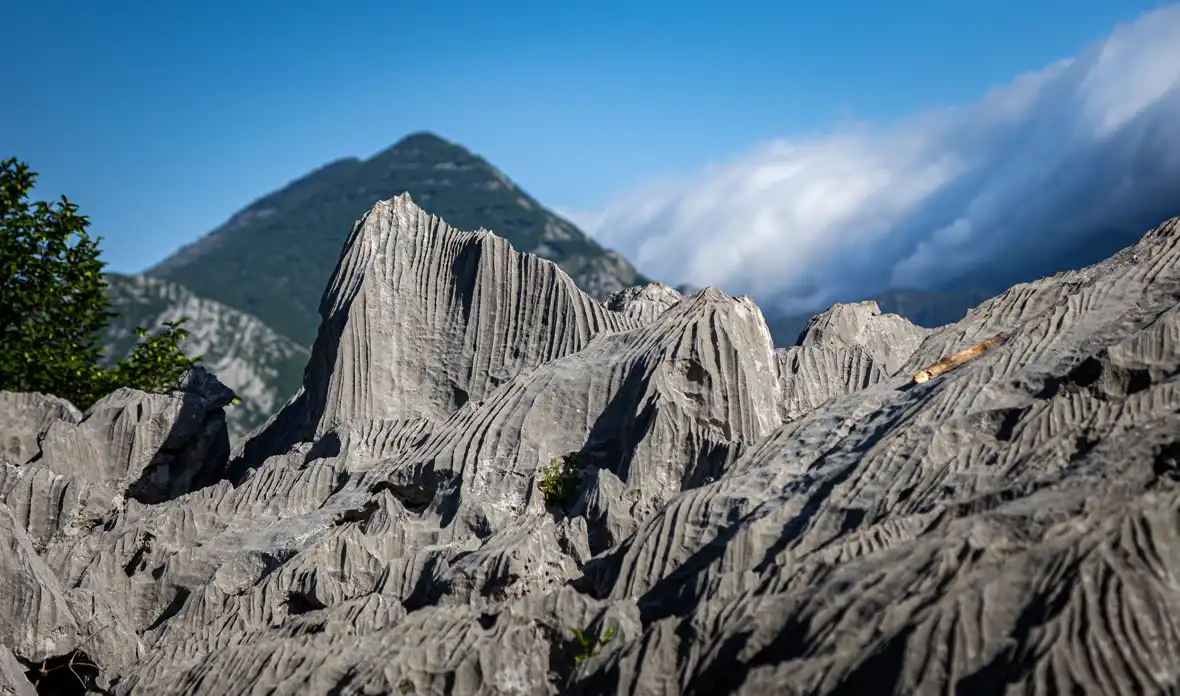
croatia - pixabay - rock-formations-7960445

💰 Costs (as of 2025)Travel costs in Croatia

Plan on 45-65 EUR per day if you’re disciplined; on the coast in July-August, expect 60-85 unless you dodge the traps.
  • dorm accommodation: 18-28 EUR inland (Zagreb, Osijek) most months; 25-45 EUR on the coast, peaking in July-August (Dubrovnik tops the range). Book two bus stops from the Old Town and you’ll pay 20-30% less and sleep better. System tip: the “sobe/apartmani” network (private rooms) often beats dorms for two people—look for signs, pay cash, and ask if the tourist tax (about 1-2 EUR pp/night) is included.
  • meals: Supermarket Survival: hit Konzum/Tommy, grab yogurt, fruit, and a pekara burek for breakfast (1.5-3 EUR), deli cheese and tomatoes for lunch, and you can eat decently on 10-15 EUR/day. Street food reality: old-town burgers run 9-12 EUR, pizza slices 4-5 EUR on the coast (2.5-3.5 inland), cevapi 6-9 EUR, seafood mains 16-25 EUR. Seek “marenda” (worker’s lunch) at local konobas: hearty plate + bread for 8-12 EUR, house wine by the deci for coins. Compared to Bosnia/Serbia, food is ~30-60% pricier; still notably cheaper than Italy’s coast.
  • local transport: Buses are the unlock: frequent, reliable, and usually cheaper and faster than trains. Think 12-20 EUR Zagreb-Zadar,
read more 👉
Plan on 45-65 EUR per day if you’re disciplined; on the coast in July-August, expect 60-85 unless you dodge the traps.
  • dorm accommodation: 18-28 EUR inland (Zagreb, Osijek) most months; 25-45 EUR on the coast, peaking in July-August (Dubrovnik tops the range). Book two bus stops from the Old Town and you’ll pay 20-30% less and sleep better. System tip: the “sobe/apartmani” network (private rooms) often beats dorms for two people—look for signs, pay cash, and ask if the tourist tax (about 1-2 EUR pp/night) is included.
  • meals: Supermarket Survival: hit Konzum/Tommy, grab yogurt, fruit, and a pekara burek for breakfast (1.5-3 EUR), deli cheese and tomatoes for lunch, and you can eat decently on 10-15 EUR/day. Street food reality: old-town burgers run 9-12 EUR, pizza slices 4-5 EUR on the coast (2.5-3.5 inland), cevapi 6-9 EUR, seafood mains 16-25 EUR. Seek “marenda” (worker’s lunch) at local konobas: hearty plate + bread for 8-12 EUR, house wine by the deci for coins. Compared to Bosnia/Serbia, food is ~30-60% pricier; still notably cheaper than Italy’s coast.
  • local transport: Buses are the unlock: frequent, reliable, and usually cheaper and faster than trains. Think 12-20 EUR Zagreb-Zadar, 15-25 EUR Split-Dubrovnik. Foot-passenger ferries (Jadrolinija/Krilo) tie islands together for 4-25 EUR depending on distance; travel early or late to dodge queues and heat. Trains are scenic but slow; only ride Zagreb-Split if you value views over hours. Renting a car in peak season is a wallet leak (parking/tolls); on islands, split a scooter (20-35 EUR/day) and reach beaches buses don’t touch.
  • activities: Big ticket items: Dubrovnik City Walls ~35 EUR, Plitvice 25-40 EUR (seasonal), Krka 20-40 EUR, Blue Cave/Elaphiti boat days 70-110 EUR, sea kayak 30-45 EUR. Museums are usually 3-8 EUR and often skippable unless you’re deep on a theme. Free wins: hike Marjan Hill (Split), Mount Srđ (walk up, cable car is the pricey part), and every beach without a sunbed host. Versus neighbors, Croatia’s “nature tax” (parks + boats) is the premium; still cheaper overall than Slovenia’s Julian Alps once you add huts and lifts.
  • miscellaneous: Budget leaks: waterfront coffees at 3.5-5.5 EUR, gelato creep at 3-4 EUR a scoop, sunbeds 10-25 EUR, paid luggage storage 5-10 EUR, highway tolls and 3-5 EUR/hr coastal parking, and ATMs with “conversion” scams—use bank ATMs (PBZ, ZABA, Erste) and always decline conversion. Tap water is safe; refill and skip the 2 EUR plastic. Local SIMs run ~10-15 EUR for heavy data and beat roaming. I once burned 18 EUR renting a sunbed before noticing locals on a cheap foam mat—bring one and park on the rocks.
⚠️ Prices can change and everyone travels differently, so take this as a rough guide. Hope it helps you plan your adventure!

✈️ The backpacker research shortcutCroatia Travel Guide

An offline-friendly backpacking guide with optimized travel routes, ranked highlights, transport advice, and the best areas to stay.
example page 0 from our offline Travel Guide for Croatiaexample page 1 from our offline Travel Guide for Croatiaexample page 2 from our offline Travel Guide for Croatiaexample page 3 from our offline Travel Guide for Croatiaexample page 4 from our offline Travel Guide for Croatiaexample page 5 from our offline Travel Guide for Croatiaexample page 6 from our offline Travel Guide for Croatiaexample page 7 from our offline Travel Guide for Croatia
The digital guide (426 pages) contains:
114 highlights, ranked by travel appeal
Optimized 5, 10 & 15-day travel routes
Cities, national parks, beaches, historical sites, ...
How to get around
Offline-friendly for travel without Wi-Fi
👉 Click to see all 30+ guide features

📅 Plan smarter in minutes, not weeks
Month by month travel advice
Festivals & national holidays
Budget expectations

🗺️ Go to the right places, skip the overrated ones
Honest pros & cons of destinations
Top hikes, parks & viewpoints
Lesser-known places most travelers miss
Clear “worth it vs skip it” guidance

🛏️ Travel smoothly without rookie mistakes
Best areas to stay
Transport systems explained simply
Common scams & safety advice
SIM cards, money & practical tips

🌍 Understand the country, not just visit it
Culture & traditions
52 Essential phrases & customs
Festivals worth planning around
Traveler-friendly historical context
Insights that make places more meaningful

📱 Built for real travel conditions
Fully downloadable PDF
Works completely offline
Optimized for phone use
Useful in remote areas & buses
Everything in one place
Save weeks of stressful planning
Get instant access to the full guide directly. 30-day money-back guarantee.


Sent to your inbox immediately after payment • 100% Secure Checkout
Best Backpacking Travel Advisor 2025 tourism awardBest Backpacking
Travel Advisor
2025
What others say about Take Your Backpack Guides:
⭐⭐⭐⭐⭐
Fantastic, amazing amount of information!
⭐⭐⭐⭐⭐
My goodness this is amazing, it's what I've been looking for hats off too you!
⭐⭐⭐⭐⭐
I think this is absolutely BRILLIANT
⭐⭐⭐⭐
Very complete and informative. It's still missing places, but I gotta to commend you
⭐⭐⭐⭐⭐
This is truly amazing, thank you, can't wait to explore it with my kids!
⭐⭐⭐⭐⭐
Awesome resource, thank you!
⭐⭐⭐⭐⭐
This is amazing! Can't wait to explore the ones I haven't seen
⭐⭐⭐⭐
I love this! Well done, great idea.
⭐⭐⭐⭐⭐
Thanks for taking the time to make this gem!
⭐⭐⭐⭐⭐
This might be the best website I've ever seen.
⭐⭐⭐⭐⭐
Congratulations, and thank you so much for your work; it's incredibly valuable.
⭐⭐⭐⭐
In all seriousness I think you did a great job pointing out the important spots
⭐⭐⭐⭐⭐
10/10 very good
⭐⭐⭐⭐⭐
As someone who's only just starting to visit regularly this is awesome, thank you.
⭐⭐⭐⭐
Thank you very much! I'm going to visit my dad, it's going to be very useful!
⭐⭐⭐⭐⭐
This is really cool! We'll be travelling for the first time and this definitely come in handy.
⭐⭐⭐⭐⭐
You are now our minister of culture, congratulations 👨‍💼
⭐⭐⭐⭐⭐
Just wanted to tell you that this is a pearl! Going to follow your recommendations.
⭐⭐⭐⭐⭐
This is so cool. I'll definitely be using the resource for my travels soon.
⭐⭐⭐⭐⭐
This is very impressive! Good work.
⭐⭐⭐⭐⭐
This is an amazing and informative site. Very well done!

🛏️ Where to stay?Areas travelers tend to prefer

Yes—Croatia has plenty of hostels and budget accommodation, concentrated in Zagreb (city center/Donji Grad), Split (Old Town and Bačvice), Dubrovnik (Old Town, Ploče, Lapad), Zadar (Old Town), Hvar Town, and Istria’s Rovinj and Pula.
City-center and Old Town options put sights and nightlife within easy walking distance but are noisier and pricier, beachside neighborhoods like Bačvice or Lapad are quieter and better for swimming yet require transit to historic cores, and island towns and summer hotspots offer the best social scene while filling fast and costing more in high season, so book early … read more 👉
Yes—Croatia has plenty of hostels and budget accommodation, concentrated in Zagreb (city center/Donji Grad), Split (Old Town and Bačvice), Dubrovnik (Old Town, Ploče, Lapad), Zadar (Old Town), Hvar Town, and Istria’s Rovinj and Pula.
City-center and Old Town options put sights and nightlife within easy walking distance but are noisier and pricier, beachside neighborhoods like Bačvice or Lapad are quieter and better for swimming yet require transit to historic cores, and island towns and summer hotspots offer the best social scene while filling fast and costing more in high season, so book early or expect cheaper stays farther from the center.

If you enjoy meeting fellow travelers, consider choosing hostels with high ratings for atmosphere. On the other hand, if you prefer having your own space, a hotel might be a better option.

🚌 Getting aroundTransportation options and logistics

Croatia runs on two clocks. Inland, timetables mean something and the tram bell in Zagreb keeps a steady beat. Down the coast, “pomalo” rules—things move, just not for your stress levels. Buses are punctual until the A1 jams on a July Saturday. Ferries are reliable until the wind kicks up in the afternoon and the captain decides comfort over speed. It isn’t chaos; it’s a country that bends to hills, sea, and sunlight. Plan with margins, then relax into the drift.
  • Intercity Buses The workhorse and
read more 👉
Croatia runs on two clocks. Inland, timetables mean something and the tram bell in Zagreb keeps a steady beat. Down the coast, “pomalo” rules—things move, just not for your stress levels. Buses are punctual until the A1 jams on a July Saturday. Ferries are reliable until the wind kicks up in the afternoon and the captain decides comfort over speed. It isn’t chaos; it’s a country that bends to hills, sea, and sunlight. Plan with margins, then relax into the drift.
  • Intercity Buses The workhorse and usually the fastest. Pay a couple euros cash to the driver for your pack in the hold and keep the stub; inspectors do hop on. Express routes stick to the A1 motorway and crush Zagreb-Zadar-Split in decent time, but coastal “scenic” buses crawl behind delivery vans. In summer, aim for morning departures to dodge heat and traffic, and avoid Saturdays when apartments turn over. Drivers take surprise 10-15 minute smoke/coffee stops—don’t wander; the bus leaves on the dot.
  • Zagreb Trams Buy your ticket at a kiosk or via app before you board, validate immediately, and move inside—blocking doors gets you the silent stare. Offer seats to seniors without ceremony. Backpacks to the front, phone volume low, no dripping beach gear. People flow in and out fast; stand clear, then slide into spaces like you’ve done this all week. Inspectors are calm but firm; no validation equals a pricey lesson, payable on the spot.
  • Island Ferries & Catamarans The geometry of Croatia is water; these boats draw the straightest lines. Catamarans zip you into old-town piers (Hvar, Korčula, Vis) where buses can’t reach, but they sell out on summer afternoons and can be bumpy when the breeze wakes up. Car ferries are slower, cheaper, and almost never full for foot passengers; you get shade, a bench, and time to breathe. Board early, stash big packs away from doors, and bring cash for coffee since card machines “sleep” more than you’d like.
  • Rideshare/Carpool Locals post seats between major cities and to the coast; it undercuts bus fares and beats awkward connections. Pickups are often at INA stations or mall parking lots, not terminals—show up five minutes early and travel light. Confirm if payment is cash. Belts on, small talk optional, and keep a bus backup if a driver ghosts. Works best off-peak; Saturday seaside runs vanish or spike in price.

Master tip: Book the first departure of the day and anchor your hop to Split or Zadar as your ferry hub—early buses dodge traffic, early boats dodge wind, and everything else becomes a clean, fast line.
Distance: Zagreb Franjo Tuđman Airport (ZAG) is about 15 km (9 miles) southeast of the city center (around Ban Jelačić Square).

Main public transport options
  • Airport shuttle bus (Pleso Prijevoz) to Zagreb Bus Station (Autobusni kolodvor)
    — Time: 30-40 minutes, depending on traffic.
    — Cost: about €8 one-way.
    — Runs throughout the day, coordinated with flights; stop is right outside Arrivals. From the Bus Station, it’s a 5-10 minute tram ride to the main square.
  • City bus ZET 290 (Kvaternikov trg - Airport - Velika Gorica)
    — Time: 35-45 minutes to Kvaternikov trg, then 5-10 minutes by tram to the main square if needed.
    — Cost: standard ZET tickets (most travelers use 60-min €0.93 or 90-min €1.33). Buy at Tisak kiosks, ZET points, or with contactless on board; validate when you board.
    — Operates roughly early morning to around midnight; frequency varies from about 20-35 minutes.

Taxi and ride-hailing
Metered taxis wait at the official rank outside Arrivals. Expect 20-30 minutes to the center in normal traffic. Typical fares are €25-40; ride-hailing apps (Uber/Bolt) are widely available and often land in the €20-35 range, with higher prices late at night or in heavy traffic.

Quick tip
If you land at the Bus Station via the shuttle, tram lines 2 or 6 will take you to the main square; use the same ZET tickets mentioned above.
⚠️ Prices and routes can change, so take this as a rough guide and ask for local advice when you arrive.

🔒 Safety (risk Level: low)Common concerns and things to watch out for

Safety for solo travelers, including women and LGBTQ+ individuals
Croatia is generally safe for solo travelers, including women and LGBTQ+ individuals. While major cities like Zagreb and Dubrovnik are welcoming, it’s wise to exercise caution in conservative rural areas. Public transport is reliable, but keep an eye on your belongings to avoid petty theft. LGBTQ+ travelers should be aware that public displays of affection might attract attention outside urban areas.


Full official government travel advisory (live updates)
View details 👉

✈️ VisaDo you need a visa to visit?

U.S., EU, UK, and Australian passport holders don’t need a visa for stays up to 90 days in Croatia. If a visa is required, apply through the Croatian Embassy or Consulate. Check current requirements as policies can change frequently.

source: mvep.gov.hr
⚠️ Visa requirements can change over time, so always check the latest visa requirements with the official embassy or government website before you travel.

🎒 What to pack?What to wear and bring

Croatia’s coastline is stunning but can get scorching in summer, so pack light, breathable clothes for those beach days. Inland, especially in the mountains, evenings can be cooler, so a light jacket is smart. If you plan to explore churches or historical sites, remember that modest attire is appreciated, so having a scarf or shawl on hand can be useful. Also, Croatia’s terrain is pretty diverse—expect rocky beaches and cobblestone streets, so sturdy footwear is a must if you want to avoid hobbling around. Finally, a rain jacket or poncho can be a lifesaver in spring and fall when showers are more frequent.

Apart from this country specific advice, I have also crafted a general packing list that should help on any trip. authorOver the years, I've learned the importance of packing minimally. It's so much easier to jump on the back of a truck or squeeze yourself into the last spot of a minibus without that supersized backpack. If you're headed to a warm destination, leave your winter jacket at home; for colder regions, opt for thin thermal underlayers. Instead of packing your entire wardrobe, bring just three sets of clothes, as laundry facilities are available everywhere.
View the full list 👉
🎒 Planning the practical side of your trip?
Get detailed information on transport, daily budgets, internet access, local customs, food, language, and other essentials in the complete Travel Guide.

Get detailed practical information 👉

Get the Travel Guide -

🙋 FAQQuick answers to practical concerns

Trip Planning


Personal tip: I normally search on good rating for atmosphere (for meeting people) and location (for easy exploring). Cleanliness as a bonus.


Travel Essentials

Routine vaccinations like MMR (measles, mumps, rubella), diphtheria-tetanus-pertussis, varicella (chickenpox), polio, and your yearly flu shot are recommended. Consider hepatitis A and B vaccines. For specific advice, check with a healthcare provider.


vaccination requirements
When I first started traveling, I often spent part of my first day in a new country hunting for a local SIM card. While this can still be slightly cheaper, it also takes time and planning.

These days, it's much simpler to install an eSIM before leaving home. Once you arrive in Croatia, you can activate it immediately and have mobile data from the moment you land — which is especially useful for ordering transport or navigating away from busy airports.

There are many providers nowadays, and price differences are usually small. I personally go with Airalo, as it offers excellent network coverage throughout the country and strong global coverage, so you can manage multiple countries from a single app.


Get your e-sim for Croatia

Culture & Customs

Respect local customs: dress modestly when visiting churches, and cover shoulders and knees. When greeting, a handshake is common, and eye contact is important. Tipping isn’t mandatory but appreciated; round up or leave 10%.

Public displays of affection are generally accepted, but same-sex couples might face occasional stares, especially in rural areas. It’s best to be discreet. Women travelers should feel safe, but take usual precautions like avoiding poorly lit areas at night.

Don’t discuss sensitive topics like the Balkan wars unless locals bring it up. Avoid being loud and overly assertive, as Croatians value politeness.
Trying traditional food is always a great way to experience the culture. Here are some must-try dishes for Croatia.
  • Peka: A method more than a dish, Peka involves cooking meat (often lamb or octopus) and vegetables under a bell-like dome covered in embers. This slow-cooking technique locks in flavors, making it a culinary staple in Croatian households and a must-try for its unique taste and preparation style.
  • Ćevapi: These are small, grilled minced meat sausages, often served with onions, sour cream, and flatbread. They’re a popular street food option and are rooted in the country’s shared culinary heritage with the Balkans.
  • Pašticada: A rich, slow-cooked beef stew, typically marinated in vinegar and spices before being simmered with vegetables and prunes. It’s traditionally served at festive occasions, highlighting its importance in Croatian cultural gatherings.
  • Black Risotto (Crni Rižot): Made with cuttlefish or squid ink, this dish is both visually striking and deliciously seafood-rich. It’s a staple along the Dalmatian coast, showcasing the region’s abundant seafood offerings.
  • Sarma: Cabbage leaves stuffed with minced meat and rice, slow-cooked in a flavorful tomato sauce. It’s a hearty dish, popular during the winter months and family gatherings, embodying the warmth of Croatian hospitality.
Yes, tap water in Croatia is generally safe to drink, and locals do drink it. It’s recommended for tourists as well, but if you prefer, bottled water is widely available. A portable filter can be handy if you’re heading to more rural areas.
The main language in Croatia is Croatian. Backpacking is way more rewarding if you know a bit of the local language, so I'd suggest brushing up on the basics just in case your Croatian skills have become a bit rusty.

Want to understand locals better?
The complete Travel Guide for Croatia includes 52 essential words and phrases — greetings, thank-yous, ordering food, transport, numbers, and common local expressions you'll actually hear.

Get your local basic phrases 👉

Get the Travel Guide -


English is widely spoken in Croatia, especially in urban areas and popular tourist destinations like Dubrovnik, Split, and Zagreb. Many Croatians, particularly those in the hospitality industry, such as hotel staff, restaurant workers, and tour guides, have a good command of English. Younger generations, who often learn English in school, are generally more fluent.

In rural areas, English proficiency may decrease, and you might encounter some language barriers. However, basic English phrases can often get you by, and many locals are friendly and willing to help, even if they don’t speak the language fluently.

Overall, travelers will find that communicating in English is relatively easy, making it convenient for navigating the country, asking for directions, and enjoying local attractions. Additionally, many signs and menus are available in English, further enhancing the travel experience.

Money & Payments

The local currency of Croatia is EUR (€).

ATMs: Croatia’s got you covered with plenty of ATMs, especially in cities and tourist hotspots. Just watch out for those pesky fees that your home bank might hit you with.

Cash: While cards are widely accepted, it’s smart to carry some kuna for markets, small eateries, and rural areas. Euros aren’t official tender, but some places might take them at a bad rate.

Currency Exchange: Skip the airport and head to a bank or a trustworthy exchange office (’mjenjačnica’) for better rates. Be wary of any place offering ”zero commission”—they usually have a lousy exchange rate.

Cards: Visa and Mastercard are your best buddies here, but don’t rely on American Express. Always have a backup plan in case a place is cash-only.

And remember, always choose to be charged in kuna if you get the option at a terminal. The dynamic currency conversion is often a rip-off. Safe travels!

In Croatia, tipping isn’t obligatory but appreciated. Leave around 10% in restaurants for good service, and round up taxi fares or bar bills. Always carry some cash, as smaller places might not accept card tips.

🧩 Nearby countriesNearby backpacking alternatives

We 💚 feedbackThe bottom line on traveling here

Croatia pays off in the rhythm of the coast: I go for dawn swims off stone piers, old men playing cards, figs warm from a wall, and water so clear you can count pebbles at three meters. The hitch: July–August crushes budgets and patience—sunbeds colonize beaches, ferries sell out, and old towns fill with cruise traffic at prices creeping toward Italy. Go late May or mid‑September, base in Šibenik or Zadar, ride the first catamaran out and the last back; empty lanes and sane bills.

✈️ When did I visit Croatia?
I checked out Croatia twice as part of a working trip in Zagreb in 2021 and 2022. Since then, this guide is regularly updated based on feedback from locals and recent backpackers (last update: 20 September 2025)

✍️ Help improve this page!
The information on this page is based on my own backpacking experience in Croatia, supplemented with up-to-date research and feedback from other travelers. Travel details can change, so if you notice anything outdated or incomplete, feel free to let me know.


🙋‍♂️ Give feedback

👋 Meet the founderWho’s Behind Take Your Backpack?

Johan, backpacker and founder of TakeYourBackpackHi, I’m Johan (Netherlands 🇳🇱), the creator of TakeYourBackpack. Over the past decade, I’ve backpacked through 80+ countries across six continents, gaining extensive experience with independent travel, long-term trips, and overland routes.

This site is built on a combination of firsthand travel experience and carefully curated insights from other backpackers. Many guides are based on places I’ve personally visited, while others bring together tips, observations, and practical advice shared by trusted travelers I’ve met along the way.

The goal is to provide realistic, experience-driven guidance — not generic itineraries — so you can explore destinations with better context, clearer expectations, and more confidence.

Get full Croatia guide •
Instant download • 114 highlights • Full Offline guide