×
Kenya 🇰🇪

backpacking Africa Kenya 🇰🇪Move between cities and wildlife-filled open plains.

Explore Guinea-BissauExplore Lesotho

Backpacking Kenya in 2026

A complete guide including when and where to go, costs, transport, itineraries, and practical travel advice.
An overview of visiting Kenya

Backpacking Kenya
By Johan Kruseman 🇳🇱 | Updated June 7, 2026

In Kenya, you either trade hours on the road for big variety or pay for bush flights to compress it. Distances bite, roads can rattle, and the best wildlife and the coast sit far apart. That choice decides whether you linger deep in one ecosystem or stitch savannah, highlands, and the Indian Ocean into a single arc.

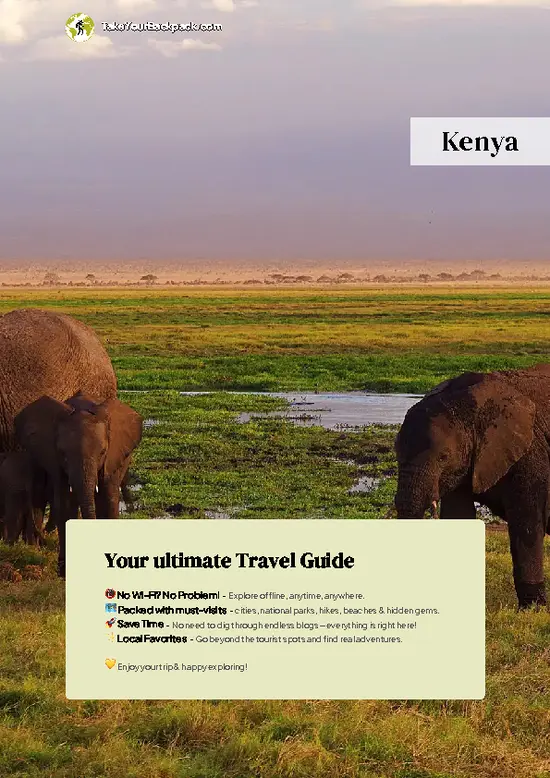
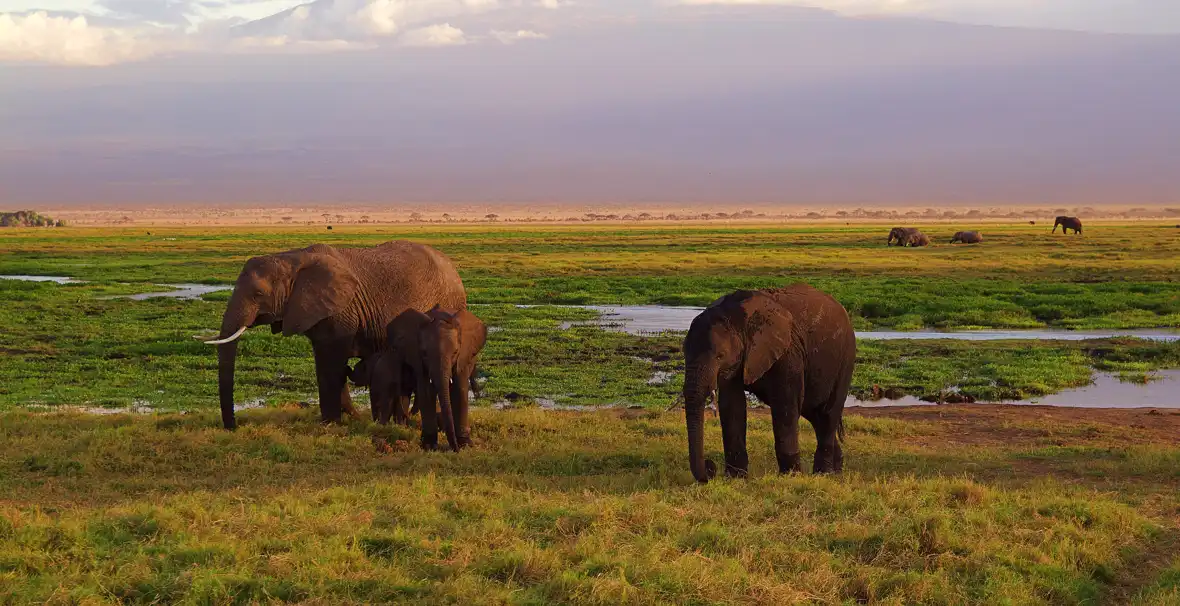
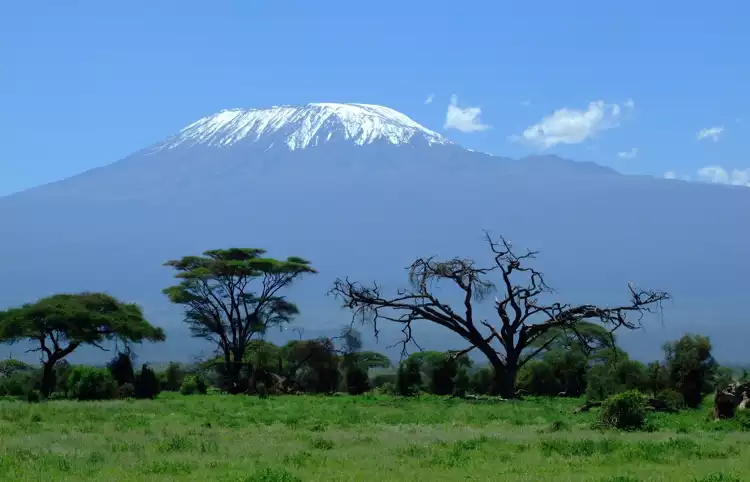
This country moves—wildebeest boiling over the Mara River, elephants ghosting past the snowcap silhouette of Kilimanjaro in Amboseli, lions padding through Tsavo’s red dust. Dawn slides across Mount Kenya’s moorlands and the Rift Valley flares with flamingos at Nakuru and Bogoria, while Laikipia’s conservancies lean into community-led tracking and night drives. Nairobi thrums with matatus and nyama choma smoke, yet a giraffe can cut across the skyline inside the city’s own national park. Then the Swahili coast softens the edges: Lamu’s coral-stone alleys, dhow sails at dusk, Diani’s long reef-protected run of sand. Yes, park fees add up, transfers can be bumpy, coastal heat wilts, and altitude on Mount Kenya demands respect—but those frictions sharpen the senses. You earn the sightings, the chai in a manyatta, the wind off the escarpment, and the country gives more back the harder you go.

Tanzania spreads wider and slower; Uganda trades savannah for rainforest and gorillas; Rwanda is polished and compact; Ethiopia fires the imagination with highlands and history but not big-game density. Kenya is the all-rounder—serious wildlife, lived-in culture, and a quick pivot from bush to beach—ideal for first-timers chasing the classic arc and for veterans hungry for conservancy ethics, walking safaris, and a crack at Point Lenana.

👉 Get the 📖 Travel Guide of Kenya

Nairobi and the Southern Rift (Naivasha–Nakuru)

Start here to learn Kenya’s pace. Nail M-Pesa, ride matatus without blinking, then sprint for quick wins: Karura runs at dawn, nyama choma by night. Escape fast to Naivasha for bikes through Hell’s Gate and crater rim hikes; push farther to Nakuru for rhinos if your wallet can take it. Matatus: 1.5–2.5 hours to Naivasha (300–500 KSh), 3–4 hours to Nakuru (600–900 KSh). Cheap, crowded, dusty. Rewards DIY travelers who like moving parts and don’t mind elbow-to-elbow transit.

Maasai Mara

Commit time or cash; there’s no middle. Drive 5–6 brutal hours via Narok with corrugations and mud after rain, or fly 45 minutes (often $150–250 one-way) and buy back a day. In peak months, sightings attract traffic; conservancies thin the crowd but add steep fees and mostly all-inclusive lodges. The public reserve plus Talek/Sekenani camping keeps costs down. Wake at 5, freeze at dawn, stay out late. Wildlife-first travelers win; comfort takes hits. Fees trend high; plan your 24-hour windows.

Mount Kenya–Laikipia–Samburu (A2 spine)

Ride to Nanyuki in 4–5 hours and go uphill, literally. A 3–5 day Sirimon–Chogoria traverse punishes legs and lungs; nights bite hard. Hire guide/porter in Nanyuki; permits sit around $50–60 pp/day. Drop to Laikipia for walking, night drives, and ranch conservancies that deliver but charge (often $100+ pp/day in fees). Push north to Samburu via Archer’s Post for dry-country elephants and cultural encounters; 4x4 recommended after rains. Heat, dust, distance. Rewards trekkers and photographers who can handle altitude and exposure.

Amboseli–Tsavo–Chyulu (A109/SGR corridor)

One corridor rules: highway or SGR from Nairobi to the coast with parks hanging off it. Peel south at Emali to Amboseli for elephant herds and, when the air clears, big-mountain backdrops—also big crowds near the swamps. Tsavo East/West spread wide: red dust, long loops, few vehicles. Chyulu adds lava tubes and rolling grasslands for riders and hikers. Self-drive thrives if you can grind 6–8 hour days. KWS fees typically $60–80 pp/day; stack parks and the bill climbs. Trade heat and distance for space.

The Coast: Mombasa–Diani–Kilifi–Watamu–Lamu (SGR/coastal flights)

SGR economy (about 1,000–1,500 KSh) drops you in Mombasa in ~5 hours; tack on tuk-tuks, the Likoni ferry, and a matatu for Diani, or run north to Kilifi/Watamu. For Lamu, fly an hour ($80–150), then boat to town. Humidity wraps you; days run on tides and dhow schedules. Sleep one street back from the sand for value; pay more for quiet. Street food stretches shillings; dive tanks and kites do not. Rewards slow walkers, ocean people, and anyone who lets midday heat dictate tempo.
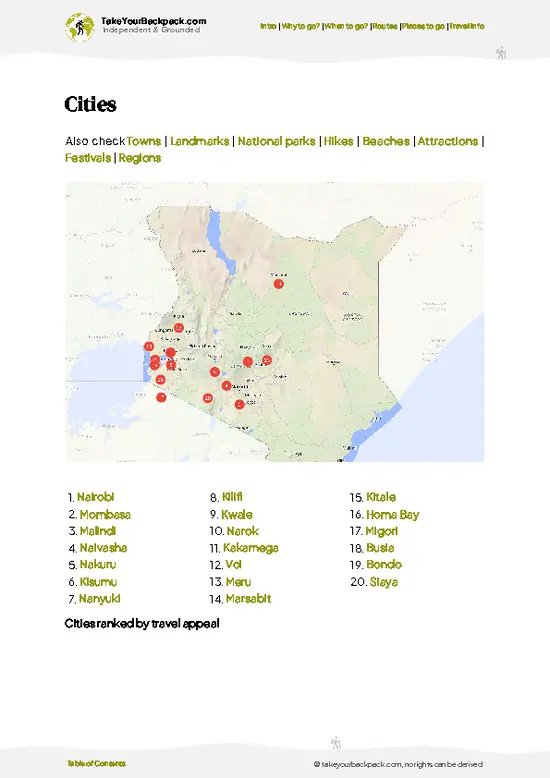
A visual overview of the country
Loading the map 🌍
CLICK TO FILTER
city
town
unique site
national park
hike
beach
attraction
festival
region
SHOW COUNTRY’S BESTSHOW ALL
film
0
0
0a
David Sheldrick Wildlife Trust Elephant Nursery
film
1
1
1a
Giraffe Centre
film
2
2
2a
Fort Jesus Museum
film
3
3
3a
Lamu Museum
film
4
4
4a
Karen Blixen Museum
film
5
5
5a
Nairobi National Museum
film
6
6
6a
Gede Ruins Museum
film
7
7
7a
Lamu Fort
film
8
8
8a
Bomas of Kenya
film
9
9
9a
Diani Beach
film
10
10
10a
Lamu Island
film
11
11
11a
Watamu Beach
film
12
12
12a
Malindi Beach
film
13
13
13a
Tiwi Beach
film
14
14
14a
Kikambala Beach
film
15
15
15a
Naivasha
film
16
16
16a
Kwale
film
17
17
17a
Narok
film
18
18
18a
Hell’s Gate Gorge
film
19
19
19a
Ngong Hills
film
20
20
20a
Menengai Crater
film
21
21
21a
Karura Forest
film
22
22
22a
mount Suswa
film
23
23
23a
Masai Mara National Reserve
Pixabay
film
24
24
24a
Amboseli
film
25
25
25a
Lake Nakuru
film
26
26
26a
Mara Triangle
film
27
27
27a
Hell’s Gate
film
28
28
28a
Shimba Hills
film
29
29
29a
Lake Turkana
film
30
30
30a
Kenya Lake System in the Great Rift Valley
film
31
31
31a
Lamu Old Town
film
32
32
32a
Lodwar
film
33
33
33a
Taveta
film
34
34
34a
Gedi Ruins
film
35
35
35a
Serengeti Migration
iStockphoto
film
36
36
36a
Mount Elgon

Why go?Reasons people choose to visit

Wildlife

Kenya rewards effort. Wake before first light and you’ll watch the Mara fill with wildebeest by the … read more 👉
Kenya rewards effort. Wake before first light and you’ll watch the Mara fill with wildebeest by the hundred thousand, hear lions arguing over a kill, and feel the ground thrum under hooves. I’ve waited an hour at a river bend and watched it explode in thirty seconds. Trade sleep and clean clothes for immediacy. In one loop you can stack experiences most countries spread over a continent: elephants under Kilimanjaro in Amboseli, the Samburu Special Five in dry-country thorn, rhinos on Laikipia’s conservancies, flamingo-pink lakes on the Rift. Public parks keep costs sane if you self-drive and camp; private conservancies cost more but buy you walking, night drives, and space from the crowds. Roads rattle you; fly-ins burn money but save days. Either way, the animals show.

Scenery

Kenya rewards effort. You trade pre-dawn alarms, dust, and corrugated roads for big, clean horizons. … read more 👉
Kenya rewards effort. You trade pre-dawn alarms, dust, and corrugated roads for big, clean horizons. Time buys views here: leave at 4:30 a.m. and the Rift Valley lights up beneath you; roll in late and haze wins. Money shifts the radius—pay conservation fees and a 4x4 to reach Bogoria’s hot springs and the heaving pink of flamingos, or save with buses and lose hours to road repairs. Comfort is blunt: wind on the Longonot rim, sun in Hell’s Gate as you bike between cliffs, cold breath on Mt. Kenya’s lobelia-studded slopes, darkness swallowing your headlamp in the Chyulu lava tubes. Go farther—Laikipia plateaus, Turkana’s “jade” waterline—and costs and days climb. But when Kilimanjaro floats above Amboseli’s elephants, the trade feels fair.

Low cost

Kenya lets you travel lean without gutting the trip. A shoestring day lands roughly in the mid‑$30s … read more 👉
Kenya lets you travel lean without gutting the trip. A shoestring day lands roughly in the mid‑$30s to low‑$50s if you ride matatus, eat where locals queue, and sleep in basic rooms. You trade time and comfort for reach: cramped vans, long pauses, dust. I’ve taken the night bus—rough, but it buys distance and a saved bed night. Pitch a tent in public campsites and keep cash in your pocket; skip safari lodges unless that comfort is the goal. Fill up on chapati, sukuma, and coastal pilau from busy stalls; avoid sit‑down menus aimed at tours. Pay by M‑Pesa, bargain kindly, refill water. Then spend the savings where it counts: a single guided game drive, a ranger‑led walk, or a push up Mt. Kenya. Sweat a little, see a lot, keep the budget alive.

Mountains

Kenya rewards hikers who earn it. You climb through bamboo to open moorland dotted with giant lobelias, … read more 👉
Kenya rewards hikers who earn it. You climb through bamboo to open moorland dotted with giant lobelias, skirt tarns below Mount Kenya’s spires, and watch hard light crack the horizon from Point Lenana. The payoff is immediate; the costs are negotiable. Trade money for time with a guide, porter, and a Chogoria–Sirimon traverse that runs smooth, or save cash with matatus and self-carry and bleed hours at gates, in town hops, and on logistics you could have outsourced. Trade comfort for altitude: cold huts, thin air, muddy Aberdare trails, and the odd buffalo detour; gain solitude and big-country scale. Short on days? Hit Chyulu’s ash cones or Ngong’s wind-whipped ridges. Have five? Go high on Kenya or loop Elgon’s vast caldera. Choose your pain, earn your view.

People

Kenya meets you with eye contact and a joke. People clock your effort—drop a “hujambo” or “habari” and … read more 👉
Kenya meets you with eye contact and a joke. People clock your effort—drop a “hujambo” or “habari” and watch faces soften. A kiosk mama will size you up, pour chai, and quote the real price if you greet right; a conductor will rib your pack, then carve out a seat. Directions don’t stop at pointing. Someone walks you to the stage, calls the right driver, waits until you’re moving. Your Kiswahili gets roasted, then repaired. Bargain hard, but keep it light; the grin saves more than the shillings. Time flexes: pole pole in lines, then a matatu explodes forward and you hang on. Snap a sandal or strip a bolt and strangers appear with tools, tape, and jokes. You give respect, you get looked after. Simple.

Backpackers

Kenya rewards backpackers who accept the hustle. Matatus with stickers and bass move you to crater hikes … read more 👉
Kenya rewards backpackers who accept the hustle. Matatus with stickers and bass move you to crater hikes and coast ferries; the Nairobi–Mombasa SGR slices the country cheaply if you book early. Hostels and campgrounds string the Rift—Naivasha, Nakuru, Nanyuki—and spill to Diani and Lamu. I learned to eat chapati and ugali to stretch shillings and to say yes to last‑minute seats. You can bleed cash on fly‑in safaris, or trade time: split a Land Cruiser from a Nairobi hostel, cycle Hell’s Gate, hike Mt. Longonot, ride shared taxis to cheaper parks. Park fees don’t blink; savings come from self‑catering, tenting, and moving slow. Expect dust, dawn starts, cramped seats. The payoff: lions at first light, flamingos on alkaline lakes, and a coast that resets your legs.

Beach life

Kenya’s coast rewards effort. Powder-fine coral sand, warm reef lagoons, dhow sails skimming the horizon, … read more 👉
Kenya’s coast rewards effort. Powder-fine coral sand, warm reef lagoons, dhow sails skimming the horizon, and Swahili kitchens turning octopus and coconut into fuel. You can drift over turtles in Watamu in the morning, kitesurf Diani by lunch, then dance under casuarinas until the tide sneaks back in. The trade-off is honest: pay for a quick hop to Ukunda or Lamu and save a day; ride the SGR and matatus and keep your shillings but earn your swim with sweat. Monsoon winds shape your plan—June–Sept for wind and waves, Oct–March for glassy snorkel days and whale shark runs. Low tide exposes miles of reef flats; bring booties or tiptoe. Say no with a smile to beach hawkers, or haggle hard and sail cheaper.

Food

Kenya rewards appetite and effort. You chase smoke, follow spice, and earn your bites. I’ve gnawed goat … read more 👉
Kenya rewards appetite and effort. You chase smoke, follow spice, and earn your bites. I’ve gnawed goat ribs at a highway choma shack off the A104, fingers slick with fat and kachumbari, ugali anchoring the plate. I’ve mopped coconut gravy off the coast—pweza wa nazi, pilau and biryani laced with cardamom—then burned the chill with roadside chai poured sweet and strong. Pay more in polished Nairobi kitchens and you get clean lines, craft plating, and easier stomachs. Pay less in kibandas and truck stops and you trade comfort for character, longer waits, and the occasional roll of the dice. The math often favors the bold: a heap of nyama choma for the price of a latte back home, a fried Lake Victoria tilapia for loose change. Goat doesn’t hurry. Neither should you.
Want the complete picture of Kenya?
The offline Travel Guide brings everything together — routes, highlights & planning.

See what's included in the guide 👉

Get the Travel Guide -

⭐ HighlightsHighlights of Kenya

  • Maasai Mara: At dawn the plain smells of cold grass and diesel, hyenas yip, and the sky lifts fast; you roll before first light for a game drive aimed at the Mara or Talek River to catch a crossing if the season aligns, or you track cheetah on the short grass when it doesn’t. The trade: save money by enduring a 6-8 hour corrugated road from Nairobi, or pay for a 45-minute flight; either way, you sacrifice sleep and inhale dust. Insider tip: book a conservancy (Olare, Naboisho) for fewer vehicles and legal night drives, though fees run higher than the main reserve.
  • Mount Kenya: The air thins, lobelias stand like chandeliers, and scree crunches under cold boots; push for Point Lenana at sunrise and watch Batian and Nelion burn pink in silence. You trade time and comfort—four to five days of wet socks, basic huts, and pit latrines—for a summit cheaper than Kilimanjaro but not “cheap” once park and hut fees add up. Insider tip: go up Sirimon, down Chogoria for variety, and hire a porter-cook
read more 👉
  • Maasai Mara: At dawn the plain smells of cold grass and diesel, hyenas yip, and the sky lifts fast; you roll before first light for a game drive aimed at the Mara or Talek River to catch a crossing if the season aligns, or you track cheetah on the short grass when it doesn’t. The trade: save money by enduring a 6-8 hour corrugated road from Nairobi, or pay for a 45-minute flight; either way, you sacrifice sleep and inhale dust. Insider tip: book a conservancy (Olare, Naboisho) for fewer vehicles and legal night drives, though fees run higher than the main reserve.
  • Mount Kenya: The air thins, lobelias stand like chandeliers, and scree crunches under cold boots; push for Point Lenana at sunrise and watch Batian and Nelion burn pink in silence. You trade time and comfort—four to five days of wet socks, basic huts, and pit latrines—for a summit cheaper than Kilimanjaro but not “cheap” once park and hut fees add up. Insider tip: go up Sirimon, down Chogoria for variety, and hire a porter-cook at the gate so you can move fast and eat hot.
  • Lamu Old Town: Calls to prayer float over alleys where donkeys clatter and sea salt rides the air; take a sunset dhow to Manda Toto, swim off sandbars, and eat grilled fish under a slow orange sky. Time slows here—flights cancel, boats wait on tides—so you buy calm with patience while saving cash on street snacks and simple guesthouses instead of bougie villas. Insider tip: travel light, dress modestly, and snag a breezy rooftop room with a net; power naps when the grid dips.
  • Hell’s Gate National Park: Cliffs glow, steam hisses, and vultures ride thermals while zebra flick tails beside your handlebars; rent a bike at the gate, pedal to Fischer’s Tower, then rope up for a quick climb with a local guide. It’s a cheap, high-output day that trades comfort for grit: sun exposure, headwinds, and dust in your teeth, but minimal fees and no closed vehicle. Insider tip: start at 7 a.m., carry two liters, and guard snacks from brazen baboons at picnic sites.
  • Amboseli: Powder-fine dust hangs like smoke, elephant herds thread the swamps, and Kilimanjaro teases clear only at first light; climb Observation Hill at dawn, then stake out a marsh crossing for tuskers mirrored in the water. You spend on park fees and a driver with a radio, and you pay in comfort with bumpy saline flats and wind, but you save time by aiming for a focused 2-day blitz from Nairobi. Insider tip: dry season brings firm tracks; carry a dust mask and keep a lens cloth handy. If you want off the map: trek the Mathews Range in Namunyak, sleep on the Chyulu Hills’ black lava, or push north to Lake Turkana at Eliye Springs.
Spotted a mistake or missing a highlight? Contact us.

But Kenya offers more...

Discover and compare all of its highlights per category

🧭 RoutesLogical itineraries covering the highlights

The 7-Day Rift Valley & Nairobi Sprint

The Vibe: A focused week built around Nairobi’s urban wildlife and the Rift Valley’s hikes and lakes, ideal if you want a strong taste of Kenya without crossing the whole country. Expect active days, short overland hops, and a mix of conservation visits and classic safari moments.
  • Nairobi’s city-edge wildlife and conservation stops around Nairobi National Park.
  • Hiking and cycling through cliffs and canyons in Hell’s Gate National Park.
  • Crater views from Mount Longonot over the Great Rift Valley.
  • Compact big-game viewing around Lake Nakuru and the Rift Valley lakes.

The 14-Day Safari-to-Sea Classic

The Vibe: Two weeks that stitch together Nairobi’s culture, Rift Valley adventures, the big-cat plains of the Mara, and a soft landing on the Indian Ocean coast. The pace is steady, with multi-night stays in each region so you can actually settle in before moving on.
  • Conservation-focused days in Nairobi with elephants, giraffes, and museums.
  • Active hiking and biking
read more 👉

The 7-Day Rift Valley & Nairobi Sprint

The Vibe: A focused week built around Nairobi’s urban wildlife and the Rift Valley’s hikes and lakes, ideal if you want a strong taste of Kenya without crossing the whole country. Expect active days, short overland hops, and a mix of conservation visits and classic safari moments.
  • Nairobi’s city-edge wildlife and conservation stops around Nairobi National Park.
  • Hiking and cycling through cliffs and canyons in Hell’s Gate National Park.
  • Crater views from Mount Longonot over the Great Rift Valley.
  • Compact big-game viewing around Lake Nakuru and the Rift Valley lakes.

The 14-Day Safari-to-Sea Classic

The Vibe: Two weeks that stitch together Nairobi’s culture, Rift Valley adventures, the big-cat plains of the Mara, and a soft landing on the Indian Ocean coast. The pace is steady, with multi-night stays in each region so you can actually settle in before moving on.
  • Conservation-focused days in Nairobi with elephants, giraffes, and museums.
  • Active hiking and biking around Naivasha, Hell’s Gate, and Mount Longonot.
  • Extended game drives in Masai Mara and the Mara Triangle.
  • Swahili history in Mombasa capped with white-sand downtime on Diani Beach.

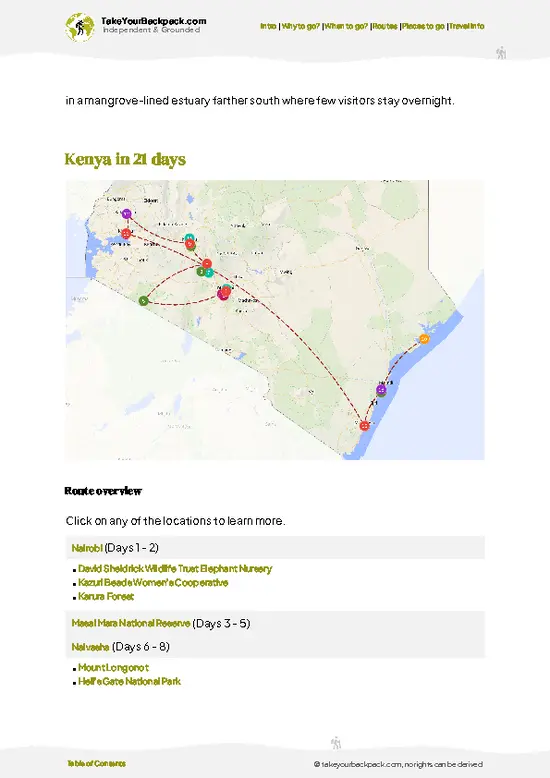
The 21-Day Grand Kenya Circuit

The Vibe: A full-country loop for travelers who want depth over speed, combining highland hikes, multiple safari ecosystems, Rift Valley lakes, and both wild and relaxed stretches of the coast. You’ll move at a measured pace, trading a few long transfers for serious time on the ground in each region.
  • Nairobi’s culture and forests paired with hikes in the Ngong Hills and Mount Kenya region.
  • Contrasting wildlife experiences in Samburu, Aberdare, Lake Nakuru, Masai Mara, and Tsavo.
  • Active interludes around Naivasha, Hell’s Gate, and Mount Longonot in the Rift Valley.
  • Swahili coast history in Mombasa followed by laid-back days on Diani Beach.
🌍 Want a ready-to-use travel plan for Kenya?
The overview above compares different route options based on your travel time and style. The complete Travel Guide breaks each itinerary down in detail, including maps, stops, highlights, and transport information.

Explore all route details 👉

Get the Travel Guide -

🌤️ When to go?A month-by-month overview

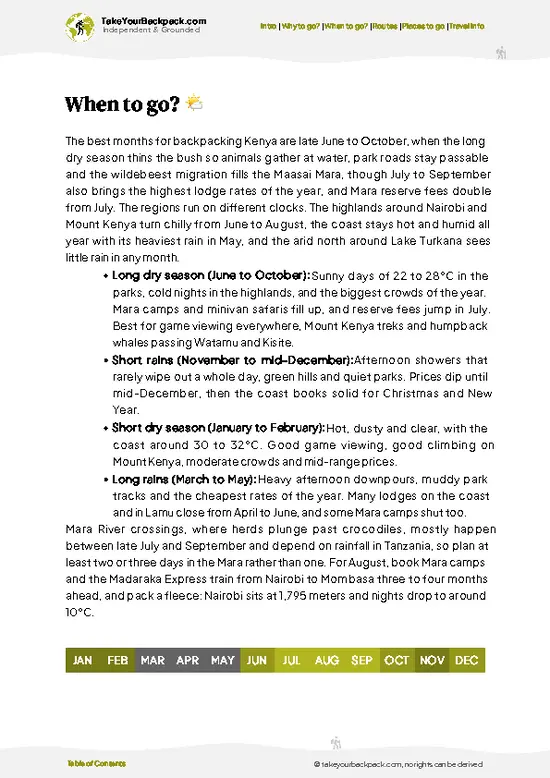
Late June and October are the backpacker’s sweet spot in Kenya. The long dry has either settled or is easing, so tracks firm up, grass thins, and cats start showing in daylight. You dodge the August migration stampede and the school-holiday surge, so vehicle jams shrink and camps slide to shoulder rates instead of peak. Highlands stay cool enough for dawn buses, afternoons don’t melt you, and coastal humidity hasn’t hit full throttle. You still catch clear air for Rift Valley hikes and solid visibility in the parks, but you’re not paying the “river-crossing tax” of peak-season markups. It’s the same wildlife engine, fewer elbows at the sighting, and your shillings stretch into extra days on the road.
  • Peak Dry (Migration/School Holidays): July-September and late December crackle with energy and price spikes. Expect leopard jams, radio chatter, and rates that jump—beds, flights, even transfers. You grind through gate queues and midday heat, but the high is feral and clean: wildebeest throwing themselves at the Mara River in August-September, crocs sliding in, guides whispering “now.” If you want that moment, this is the narrow window.
  • Shoulder Dry: June and October move. Roads harden, dust lifts, camps reopen wings, and rangers start grading tracks. Crowds thin, guides linger longer at sightings, and prices soften back from peak. Grass stubble sharpens visibility; elephants file out of cover; coast breezes feel forgiving. You keep momentum—night bus, dawn chai, afternoon game drive—without burning half your budget on scarcity.
  • Long Rains Off-Peak: April-May turns the country inward. Thunderheads stack, acacias drip, birds explode in color, and you can have a whole valley to yourself. Buses still run, but black-cotton soils swallow vehicles. Survival hack: line your pack with a contractor bag, switch to sandals for mud, aim game drives for the morning lull between squalls, and favor all-weather parks like Nairobi NP or Nakuru over Mara’s boggy loops.

Tactical tip: If you’re chasing the Mara river crossings, lock beds and park transport about six months out; for late June or October, pounce 4-8 weeks before arrival when camps cut to shoulder rates.

source: climatestotravel.comJANJanuary: good for travelingFEBFebruary: good for travelingMARMarch: fair for travelingAPRApril: fair for travelingMAYMay: fair for travelingJUNJune: highly recommended for travelingJULJuly: excellent for travelingAUGAugust: excellent for travelingSEPSeptember: excellent for travelingOCTOctober: highly recommended for travelingNOVNovember: good for travelingDECDecember: highly recommended for traveling
📅 Traveling in a specific month?
Get a full month-by-month breakdown of weather, crowds, costs, festivals, and seasonal highlights in the complete travel guide.

Get full details when to go 👉

Get the Travel Guide -
kenya-pixabay-elephants-4275741 2

💰 Costs (as of 2025)Prices, expenses, and money tips

Expect to spend $30-45/day in Kenya if you sleep in dorms, eat local, and ride matatus—then watch that number spike hard on any park or safari day.
  • dorm accommodation: $8-18 in big towns, $10-22 on the coast, Nairobi usually $12-20. Beds are basic, mosquito nets common, hot water inconsistent. Kenya sits pricier than Uganda but undercuts Rwanda and Zanzibar. System tip: search for “guesthouse” or “YMCA” not “hostel,” walk in before dusk, and ask for a non-AC dorm or “single in a shared room”—pay by M-Pesa to land the local rate.
  • meals: Supermarket Survival: $4-7/day if you live on bread, bananas, peanuts, instant noodles, and 3L of water. Street food reality: chai + mandazi for breakfast ($0.50), chapati + beans or pilau at lunch ($1-2), ugali + greens or a small plate of nyama choma at night ($2-4). Kenya costs a shade above Uganda, below Rwanda; coastal fish plates cost more but still beat Zanzibar’s seafront markup. Rule: eat where workers queue at noon; skip beach menus with “view tax.”
  • local transport: Matatus (minibuses) unlock the country for coins: $0.30-1 in cities, $3-10 for intercity hops, $12-18 for long hauls. Boda-bodas fill the last mile for $0.50-2—helmet or walk. Coaches
read more 👉
Expect to spend $30-45/day in Kenya if you sleep in dorms, eat local, and ride matatus—then watch that number spike hard on any park or safari day.
  • dorm accommodation: $8-18 in big towns, $10-22 on the coast, Nairobi usually $12-20. Beds are basic, mosquito nets common, hot water inconsistent. Kenya sits pricier than Uganda but undercuts Rwanda and Zanzibar. System tip: search for “guesthouse” or “YMCA” not “hostel,” walk in before dusk, and ask for a non-AC dorm or “single in a shared room”—pay by M-Pesa to land the local rate.
  • meals: Supermarket Survival: $4-7/day if you live on bread, bananas, peanuts, instant noodles, and 3L of water. Street food reality: chai + mandazi for breakfast ($0.50), chapati + beans or pilau at lunch ($1-2), ugali + greens or a small plate of nyama choma at night ($2-4). Kenya costs a shade above Uganda, below Rwanda; coastal fish plates cost more but still beat Zanzibar’s seafront markup. Rule: eat where workers queue at noon; skip beach menus with “view tax.”
  • local transport: Matatus (minibuses) unlock the country for coins: $0.30-1 in cities, $3-10 for intercity hops, $12-18 for long hauls. Boda-bodas fill the last mile for $0.50-2—helmet or walk. Coaches cost $8-15 for smoother, safer long runs. The SGR train Nairobi-Mombasa is the comfort-value sweet spot (budget seat, book ahead) and often beats buses on both time and price. Kenya rides cost similar to Tanzania’s daladalas, cheaper than Rwanda’s coaches; night runs save money but burn comfort and margin for error—daylight wins.
  • activities: This is where budgets snap. National park fees run roughly $40-100 per person per day; vehicle + driver/guide sits around $150-220 per day—split it five ways or bleed. Conservancies can match park wildlife with tighter rules and sometimes better value. Coastal days are cheaper: reef snorkel $15-30, dive $45-70, marine park fees extra. City days are light: museums, viewpoints, and hikes $2-10. Mt Kenya punishes the wallet: mandatory fees + guide/porter + transport easily $80-150/day even DIY.
  • miscellaneous: Budget Leaks: ATM withdrawals stack $3-6 per hit plus bad FX; pull larger, less often. M-Pesa cash-outs carry small fees—pay merchants directly when you can. SIM + data is a bargain versus roaming; buy at the airport or official shop and register properly. Water, sunscreen, laundry, padlocks, and small tips add $2-5/day. Beach touts and “craft villages” price at 2-3x; buy in Nairobi CBD or roadside markets. Kenya offers better value than Rwanda and coastal Tanzania for small stuff, but parks cost on par with Tanzania and more than Uganda—plan your splurges, cluster them, and keep the rest dirt-cheap.
⚠️ Prices can change and everyone travels differently, so take this as a rough guide. Hope it helps you plan your adventure!

✈️ The backpacker research shortcutKenya Travel Guide

An offline-friendly backpacking guide with optimized travel routes, ranked highlights, transport advice, and the best areas to stay.
example page 0 from our offline Travel Guide for Kenyaexample page 1 from our offline Travel Guide for Kenyaexample page 2 from our offline Travel Guide for Kenyaexample page 3 from our offline Travel Guide for Kenyaexample page 4 from our offline Travel Guide for Kenyaexample page 5 from our offline Travel Guide for Kenyaexample page 6 from our offline Travel Guide for Kenyaexample page 7 from our offline Travel Guide for Kenya
The digital guide (429 pages) contains:
114 highlights, ranked by travel appeal
Optimized 7, 14 & 21-day travel routes
Cities, national parks, beaches, historical sites, ...
How to get around
Offline-friendly for travel without Wi-Fi
👉 Click to see all 30+ guide features

📅 Plan smarter in minutes, not weeks
Month by month travel advice
Festivals & national holidays
Budget expectations

🗺️ Go to the right places, skip the overrated ones
Honest pros & cons of destinations
Top hikes, parks & viewpoints
Lesser-known places most travelers miss
Clear “worth it vs skip it” guidance

🛏️ Travel smoothly without rookie mistakes
Best areas to stay
Transport systems explained simply
Common scams & safety advice
SIM cards, money & practical tips

🌍 Understand the country, not just visit it
Culture & traditions
52 Essential phrases & customs
Festivals worth planning around
Traveler-friendly historical context
Insights that make places more meaningful

📱 Built for real travel conditions
Fully downloadable PDF
Works completely offline
Optimized for phone use
Useful in remote areas & buses
Everything in one place
Save weeks of stressful planning
Get instant access to the full guide directly. 30-day money-back guarantee.


Sent to your inbox immediately after payment • 100% Secure Checkout
Best Backpacking Travel Advisor 2025 tourism awardBest Backpacking
Travel Advisor
2025
What others say about Take Your Backpack Guides:
⭐⭐⭐⭐⭐
Fantastic, amazing amount of information!
⭐⭐⭐⭐⭐
My goodness this is amazing, it's what I've been looking for hats off too you!
⭐⭐⭐⭐⭐
I think this is absolutely BRILLIANT
⭐⭐⭐⭐
Very complete and informative. It's still missing places, but I gotta to commend you
⭐⭐⭐⭐⭐
This is truly amazing, thank you, can't wait to explore it with my kids!
⭐⭐⭐⭐⭐
Awesome resource, thank you!
⭐⭐⭐⭐⭐
This is amazing! Can't wait to explore the ones I haven't seen
⭐⭐⭐⭐
I love this! Well done, great idea.
⭐⭐⭐⭐⭐
Thanks for taking the time to make this gem!
⭐⭐⭐⭐⭐
This might be the best website I've ever seen.
⭐⭐⭐⭐⭐
Congratulations, and thank you so much for your work; it's incredibly valuable.
⭐⭐⭐⭐
In all seriousness I think you did a great job pointing out the important spots
⭐⭐⭐⭐⭐
10/10 very good
⭐⭐⭐⭐⭐
As someone who's only just starting to visit regularly this is awesome, thank you.
⭐⭐⭐⭐
Thank you very much! I'm going to visit my dad, it's going to be very useful!
⭐⭐⭐⭐⭐
This is really cool! We'll be travelling for the first time and this definitely come in handy.
⭐⭐⭐⭐⭐
You are now our minister of culture, congratulations 👨‍💼
⭐⭐⭐⭐⭐
Just wanted to tell you that this is a pearl! Going to follow your recommendations.
⭐⭐⭐⭐⭐
This is so cool. I'll definitely be using the resource for my travels soon.
⭐⭐⭐⭐⭐
This is very impressive! Good work.
⭐⭐⭐⭐⭐
This is an amazing and informative site. Very well done!

🛏️ Where to stay?Accommodation types and options

Yes — Kenya has plenty of hostels and budget accommodation concentrated in major hubs: Nairobi (Westlands for nightlife and many hostels, CBD for the cheapest central options, Kilimani for quieter budget stays), Mombasa (Old Town for beach access and cheap guesthouses, Nyali for quieter beachside options), coastal towns (Diani, Watamu, Malindi) for beach hostels and dive bases, and lake/park gateways (Naivasha, Narok/Maasai Mara gate) for camping and low-cost lodges.
Westlands gives nightlife and transport links but watch petty theft after dark; the CBD is ultra-central and cheap but less safe … read more 👉
Yes — Kenya has plenty of hostels and budget accommodation concentrated in major hubs: Nairobi (Westlands for nightlife and many hostels, CBD for the cheapest central options, Kilimani for quieter budget stays), Mombasa (Old Town for beach access and cheap guesthouses, Nyali for quieter beachside options), coastal towns (Diani, Watamu, Malindi) for beach hostels and dive bases, and lake/park gateways (Naivasha, Narok/Maasai Mara gate) for camping and low-cost lodges.
Westlands gives nightlife and transport links but watch petty theft after dark; the CBD is ultra-central and cheap but less safe at night; Kilimani is quieter with good local food; Old Town and Diani put beaches and activities on the doorstep but get touristy and can be isolated without transport; Nyali and Watamu are more relaxed and family-friendly; Naivasha and Narok are practical bases for parks but need planned transfers and offer more basic facilities.

If you enjoy meeting fellow travelers, consider choosing hostels with high ratings for atmosphere. On the other hand, if you prefer having your own space, a hotel might be a better option.

🚌 Getting aroundHow to travel within the country

Kenya moves on two clocks: the street and the steel. In towns, the matatu horn sets the beat; fares swell with rain, drivers thread gaps that don’t exist, and you ride by intuition and elbows. Between cities, the SGR and big buses impose order: tickets, assigned seats, security scans. You learn to switch gears fast—read a conductor’s nod, then show up 30 minutes early for a train that actually leaves. Surf that rhythm and you’ll cover serious ground without bleeding shillings or patience.
  • SGR Nairobi-Mombasa
read more 👉
Kenya moves on two clocks: the street and the steel. In towns, the matatu horn sets the beat; fares swell with rain, drivers thread gaps that don’t exist, and you ride by intuition and elbows. Between cities, the SGR and big buses impose order: tickets, assigned seats, security scans. You learn to switch gears fast—read a conductor’s nod, then show up 30 minutes early for a train that actually leaves. Surf that rhythm and you’ll cover serious ground without bleeding shillings or patience.
  • SGR Nairobi-Mombasa Train This is the speed-versus-cost equation done right: about the price of a mid-tier bus seat for roughly five hours of punctual, smooth travel. You do pay in transfers—both termini sit outside the city core, so budget time for the Nairobi commuter link to Syokimau and a matatu or taxi from Miritini into Mombasa. Security is airport-style, food is basic, and departures are few, which makes planning non-negotiable. Book early, sit by the window, and watch Tsavo slide by; you’ll still arrive fresher than any road option.
  • Matatus (minibus vans) This is the social fabric you have to wear, not observe. Greet when you board, buckle up, keep your bag on your lap, and pass fares forward with quiet efficiency. Prices float with demand; confirm the fare with the conductor before you sit, then pay mid-ride—not on the street where pickpockets hover. Music thumps, seats squeeze, and police checks are routine. Want to get off? Say “shukisha hapa” firmly a block before your stop. Don’t argue routes; the makanga knows the shortcuts your map doesn’t.
  • Boda-bodas (motorbike taxis) The geometric unlock when roads turn to mud, estates maze, or the last kilometer drifts off the map. This is how you reach tea slopes, lakeside villages, or that budget lodge down a rutted track. Negotiate before the engine coughs to life, insist on a helmet, and keep your pack centered and clipped. In the rain, they still move while everything else stalls—but slow the pace and skip night rides. A careful rider with a reflector vest is worth waiting five extra minutes.
  • Night Buses (intercity coach) The budget disruptor that deletes a hotel bill and a lost day. Reputable companies run Nairobi-Kisumu/Eldoret/Mombasa overnight with reserved seats and baggage tags at a price that undercuts flights by a mile. Pick an earlier departure to dodge curfew bottlenecks, wear the seatbelt, and keep valuables on you; the AC bites, so a light layer pays off. You’ll roll in at dawn when the city is waking and matatu stages are cheap and empty.

Master tactical tip: Chain modes by daylight—dawn matatu to the hub, midday SGR or early coach, finish with a short boda—momentum and daylight shave hours and keep both costs and stress low.
Distance: Jomo Kenyatta International Airport (NBO) is about 17 km (10.5 miles) from Nairobi’s city center (CBD).

Main public transport options
1) Bus/matatu (Route 34 along Mombasa Road) — Cheapest option. Look for buses/matatus marked “34” heading to the CBD (Kencom/Ambassadeur). You’ll board from the stops near the airport gate/roundabout outside the terminal area (ask security or staff to point you to the JKIA bus stop).
Approximate time: 45-90+ minutes depending on traffic.
Typical cost (2025): KSh 80-150 per person.
Tip: Keep valuables discreet and avoid boarding if a vehicle looks overcrowded or sketchy.

2) Commuter rail + airport shuttle — Limited but comfy when it lines up. Kenya Railways runs commuter trains between Nairobi Central and Syokimau, with a connecting shuttle bus between Syokimau and JKIA.
Approximate time: 45-70 minutes end-to-end when connections match.
Typical cost (2025): Train ~KSh 100-150 + shuttle ~KSh 50-100.
Note: Only a handful of runs daily; check the latest timetable with Kenya Railways before you rely on it.

Taxis and ride-hailing (quick overview)
App rides (Uber, Bolt, Little) and official airport taxis are available 24/7 from Arrivals. App pickup points are signposted in the arrivals car park; follow the app’s instructions.
Approximate time: 25-60 minutes. Using the Nairobi Expressway often cuts this to 20-35 minutes off-peak.
Typical cost (2025):
- Ride-hailing: KSh 1,200-2,500 to the CBD, plus Expressway toll if used (drivers may ask you to cover it; expect roughly KSh 250-360).
- Official airport taxis: KSh 2,500-4,000 to the CBD (fixed or negotiated at the desk).

Good to know
- Traffic can be heavy at rush hour (roughly 6:30-9:00 and 16:30-19:30). If time matters, ask your driver to use the Expressway.
- Buses/matatus run early till late but thin out at night; at night, most travelers prefer a taxi or ride-hailing.
- Pay buses/matatus in cash (small bills) or M-Pesa; ride-hailing can be cash or in-app payment, but drivers often prefer cash/M-Pesa.
⚠️ Prices and routes can change, so take this as a rough guide and ask for local advice when you arrive.

🔒 Safety (risk Level: medium)Is Kenya safe to visit?

Safety for solo travelers, including women and LGBTQ+ individuals
Kenya is generally safe for solo travelers, but caution is advised. Female travelers should be mindful of dress codes and avoid isolated areas at night. LGBTQ+ individuals may face challenges due to conservative attitudes, so discretion is recommended. Always stay updated on local news and consider joining group tours for more remote adventures.


Full official government travel advisory (live updates)
View details 👉
safety image

source: www.gov.uk

✈️ VisaVisa requirements for Kenya

Many travelers need a visa to visit Kenya. You can apply for an eVisa online through the official eCitizen portal. Double-check your specific requirements, as some nationalities have different rules.
⚠️ Visa requirements can change over time, so always check the latest visa requirements with the official embassy or government website before you travel.

🎒 What to pack?What to pack for Kenya

Kenya’s climate is as diverse as its landscapes, so pack for variety. You’ll face hot, dry conditions in areas like the Maasai Mara, but it’s cooler and wetter in the highlands like Nairobi and the Aberdares. **Layering** is your friend. If you’re hitting the coast, remember it’s warm and humid, but also pretty conservative, so dress modestly when you’re away from the beach. When visiting rural areas or cultural hubs, avoid flashy clothing and opt for more muted tones to respect local customs.

Apart from this country specific advice, I have also crafted a general packing list that should help on any trip. authorOver the years, I've learned the importance of packing minimally. It's so much easier to jump on the back of a truck or squeeze yourself into the last spot of a minibus without that supersized backpack. If you're headed to a warm destination, leave your winter jacket at home; for colder regions, opt for thin thermal underlayers. Instead of packing your entire wardrobe, bring just three sets of clothes, as laundry facilities are available everywhere.
View the full list 👉
🎒 Planning the practical side of your trip?
Get detailed information on transport, daily budgets, internet access, local customs, food, language, and other essentials in the complete Travel Guide.

Get detailed practical information 👉

Get the Travel Guide -

🙋 FAQThings travelers often ask

Trip Planning


Personal tip: I normally search on good rating for atmosphere (for meeting people) and location (for easy exploring). Cleanliness as a bonus.


Travel Essentials

Yellow fever vaccination is recommended for travelers to Kenya. Consider hepatitis A and B, typhoid, cholera, and rabies vaccinations depending on your activities and travel plans. Ensure routine vaccines like MMR, DPT, and influenza are up to date. Consult a healthcare provider for personalized advice.

World Health Organization and CDC websites provide updated info.


vaccination requirements
When I first started traveling, I often spent part of my first day in a new country hunting for a local SIM card. While this can still be slightly cheaper, it also takes time and planning.

These days, it's much simpler to install an eSIM before leaving home. Once you arrive in Kenya, you can activate it immediately and have mobile data from the moment you land — which is especially useful for ordering transport or navigating away from busy airports.

There are many providers nowadays, and price differences are usually small. I personally go with Airalo, as it offers excellent network coverage throughout the country and strong global coverage, so you can manage multiple countries from a single app.


Get your e-sim for Kenya

Culture & Customs

Respect local customs by dressing modestly, particularly in rural areas. Men typically wear long pants and women should avoid short skirts or revealing tops. When greeting, a handshake is common, and it’s polite to ask about someone’s well-being before jumping into a conversation.

Always use your right hand for eating and when handing over money or gifts. Bargaining is expected in markets, but do it respectfully. Homosexuality is illegal in Kenya, so LGBTQ+ travelers should exercise caution and discretion. Women might encounter unwanted attention; traveling in groups and dressing conservatively can minimize this. Avoid discussing politics and tribal topics to steer clear of sensitive conversations.
Trying traditional food is always a great way to experience the culture. Here are some must-try dishes for Kenya.
  • Ugali: This is a staple in Kenyan cuisine, made from maize flour and water. It’s a bit like polenta and is typically served as a side dish with meat or vegetable stews. Ugali is essential for understanding Kenyan dining as it’s a daily meal and a symbol of sustenance.
  • Nyama Choma: Translating to ”grilled meat,” this dish is a favorite, especially with goat or beef. It’s often enjoyed in social settings, making it a great way to mingle with locals and soak in the communal vibe. Pair it with some kachumbari (a fresh tomato and onion salad) for the full experience.
  • Sukuma Wiki: This translates to ”push the week” and is a simple yet nutritious dish made from collard greens. It’s a go-to side dish that complements many main courses and is loved for its affordability and nutritional value.
  • Chapati: A flatbread that came from the Indian influence in Kenya, it’s now a beloved part of the local cuisine. You’ll find it served with almost anything, from stews to breakfast beans. Its versatility makes it a household favorite.
  • Githeri: A traditional dish from the Kikuyu community, made from boiled corn and beans. It’s often spiced up with vegetables and is not only filling but also a representation of traditional Kenyan farming practices.
It’s not recommended for tourists to drink tap water in Kenya, as it may cause stomach issues. Locals might drink it, but their systems are more accustomed to it. Stick to bottled or filtered water to be safe.
The main language in Kenya is Swahili. Backpacking is way more rewarding if you know a bit of the local language, so I'd suggest brushing up on the basics just in case your Swahili skills have become a bit rusty.

Want to understand locals better?
The complete Travel Guide for Kenya includes 52 essential words and phrases — greetings, thank-yous, ordering food, transport, numbers, and common local expressions you'll actually hear.

Get your local basic phrases 👉

Get the Travel Guide -


In Kenya, English is widely spoken and serves as one of the official languages alongside Swahili. It is the primary language of instruction in schools and is commonly used in government, business, and media. Most urban areas, particularly cities like Nairobi and Mombasa, have a high proficiency in English, with many Kenyans being bilingual or multilingual.

In rural areas, while English is still understood, proficiency may vary. Many locals may communicate primarily in Swahili or indigenous languages, but basic English is often sufficient for travelers. Kenyans generally have a positive attitude toward English speakers, and you will find that most people in the hospitality industry, such as hotels and tour operators, are fluent in English.

Overall, travelers should feel comfortable navigating Kenya with English, as it is commonly spoken in most contexts, making communication relatively easy. However, learning a few basic Swahili phrases can enhance your experience and interactions with locals.

Money & Payments

The local currency of Kenya is KES (KSh).

ATMs: They’re widely available in cities like Nairobi and Mombasa, but not so much in rural areas. Stick with ATMs attached to banks for added security. Always have a backup plan in case machines are out of service or out of cash.

Cash: Carry some Kenyan Shillings for small purchases, especially in rural zones. Break bigger bills when you have the chance; small change is often needed for local transport and market stalls.

Currency: Bring some USD or Euros as a backup. Dollars are particularly useful as they’re widely accepted and easy to exchange. Just make sure they’re in good condition; torn or marked bills might be rejected.

Card Acceptance: Larger hotels and some restaurants in the cities will take cards, but don’t rely on this everywhere. Visa and MasterCard are your best bets, but always check if there’s a surcharge before swiping.

Exchanging Money: Use authorized forex bureaus found in cities for competitive rates. Avoid exchanging at the airport unless it’s an emergency, as rates are usually less favorable. Remember, having some local currency before you hit the road is always smart.

Tipping in Kenya isn’t mandatory but is appreciated, especially in touristy areas. In restaurants, leaving a tip of 5-10% of the bill is common, while hotel staff and guides usually expect small tips for good service. Carry some cash in Kenyan shillings for tipping, as it’s the most convenient currency.

🧩 Nearby countriesOther countries to combine with Kenya

📸 PhotosA visual impression of the trip

Take your backpack - Kenya - 0
Photographed by: Johan Kruseman

We 💚 feedbackWhat to know before planning your trip

Kenya rewards effort: in a week you can sweat up Mt. Kenya, rattle across the savannah, and rinse off in the Indian Ocean, all under your own steam. That range is the hook. You pay for it in hours and shillings: park fees are high by East African standards, and matatu transfers chew days; comfort drops when the rains smash the roads. Change is trending the right way: the Mombasa–Nairobi rail already cuts the coast run; highways north are improving; parks and museums run cashless via eCitizen, and community conservancies are expanding—more walk-in camps, more local guides, more value. Carry patience and small bills.

✍️ Help improve this page!
The information on this page is based on in-depth research, insights shared by experienced travelers, and feedback from the local travel community in Kenya. While every effort is made to keep the information accurate and current, conditions can change — so if you spot anything incorrect or outdated, please get in touch.


🙋‍♂️ Give feedback

👋 Meet the founderWho’s Behind Take Your Backpack?

Johan, backpacker and founder of TakeYourBackpackHi, I’m Johan (Netherlands 🇳🇱), the creator of TakeYourBackpack. Over the past decade, I’ve backpacked through 80+ countries across six continents, gaining extensive experience with independent travel, long-term trips, and overland routes.

This site is built on a combination of firsthand travel experience and carefully curated insights from other backpackers. Many guides are based on places I’ve personally visited, while others bring together tips, observations, and practical advice shared by trusted travelers I’ve met along the way.

The goal is to provide realistic, experience-driven guidance — not generic itineraries — so you can explore destinations with better context, clearer expectations, and more confidence.

Get full Kenya guide •
Instant download • 114 highlights • Full Offline guide