×
Iran 🇮🇷

backpacking Asia Iran 🇮🇷Cross deserts linking poetic cities and warm hospitality.

Explore IndonesiaExplore Iraq

Backpacking Iran in 2026

A complete guide including when and where to go, costs, transport, itineraries, and practical travel advice.
An overview of visiting Iran

Backpacking Iran
By Johan Kruseman 🇳🇱 | Updated June 8, 2026

I gave up an hour to sip tea and ask “rial or toman?” and left with a cheaper SIM and a free ride. In Iran, patience pays because money, manners, and logistics run on parallel tracks. Learn the code and the country lets you in.

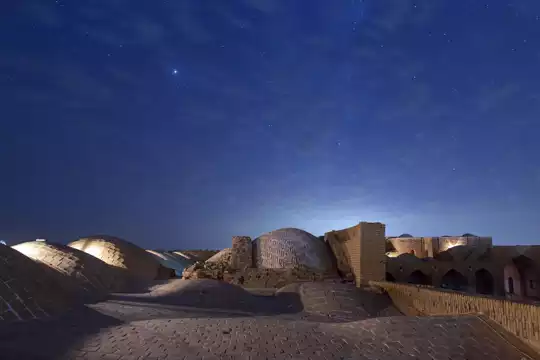
What you get for learning it is huge: blue domes in Isfahan that seem to breathe, poets whispering through Shiraz gardens, windcatchers cooling clay alleys in Yazd, and Persepolis glowing at day’s edges. You move from Alborz trailheads and Damavand’s ash-gray slopes to the otherworld of the Lut, where night throws a skyful of stars at you, then down to Qeshm’s canyons and mangroves and caravanserai courtyards where the silence carries. Food is comfort and ceremony—herbs on everything, saffron like a drumbeat, bread carried like treasure—and strangers fold you into their day before you can protest. Yes, there are rules: headscarves and modest dress, a cash economy where your cards go dead, filtered internet that needs a VPN, ta’arof that sounds like “it’s free” but actually means “please insist,” and distances that are bus-long not scooter-short. But each is solvable, and solving them is the price of admission to the good stuff—real conversations, porch tea at sunset, a sense you’re not just seeing Iran, you’re being hosted by it.

Turkey is easier and louder; the Caucasus pours wine and shrugs at rules; the Gulf is polished and pricey; Oman does desert in a whisper. Iran is for travelers who value depth over speed, architecture over nightlife, mountains and deserts over beaches, and human warmth over convenience.

👉 Get the 📖 Travel Guide of Iran

Tehran + Alborz Mountains

Use Tehran to set yourself up: SIM card, cash exchange, gear. The metro is fast and cheap; street taxis burn time and money. I treat it as urban training with mountain bonuses—Darband to Shirpala hut is a half‑day grind with real elevation, and the Tochal gondola can save your knees. Smog days sap energy; start early and aim high. Fridays pack out trails and museums. Rewards planners who can thread metro lines and squeeze hikes between cross‑town traffic.

Central Spine: Kashan – Isfahan – Yazd – Shiraz

One clean transport line with frequent buses and some trains, each hop 3–6 hours. This is where first‑timers actually learn Iran’s rhythm: dawn walks in old quarters, long lunches when heat makes stone glow, evenings in squares that flood with families. Admissions stack up; carry cash and pace your sightseeing. Stay in the old quarters to dodge taxis. Yazd is conservative and calm, Shiraz stays social late; both reward patience and sunrise starts.

Kerman + Lut Desert

Base in Kerman for the Kaluts. Do not freelance the deep desert—hire a licensed driver or join a small 4x4; heat and orientation will humble you. Best season is roughly Nov–Mar; outside that, you’re buying danger. Pack electrolytes and a headlamp; batteries die fast in sand and wind. Haggle hard, then share seats to cut vehicle costs. This run is for early risers and people who like silence, star fields, and earning their photos.

Northwest: Tabriz – Kandovan – Aras Corridor

Cooler summers, long distances, and sturdy food. Overnight train from Tehran is the least painful approach; buses work, but mountain roads eat time. Stone villages like Kandovan are photogenic but busy on weekends; go early. The Aras valley has monasteries and checkpoints—carry your passport and skip flying drones or riverbank picnics near posts. Winters bite, rooms are older stock, and prices run lower than the central cities. Rewards overlanders who like markets and hard edges.

Persian Gulf + Islands: Bandar Abbas – Qeshm – Hormuz

Go in winter; humidity and sun dominate the rest of the year. Ferries are cheap but not constant—build slack into days. Qeshm is the practical base for canyons and mangroves; Hormuz is a day‑trip with wild geology and no shade. Cash rules, card workarounds are patchy, and rooms cost more than their finish suggests. Seafood markets keep budgets sane. This is for slow travelers who can handle heat, salt, and irregular transport without blowing fuses.
Safety warning

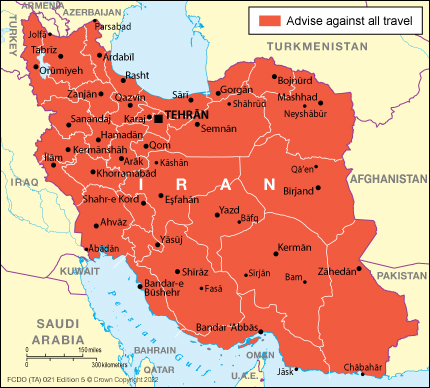
The current risk level for Iran is high. Check the advice before going.
Get your Iran guide
121 ranked highlights, routes & tips, works offline (419 pages)
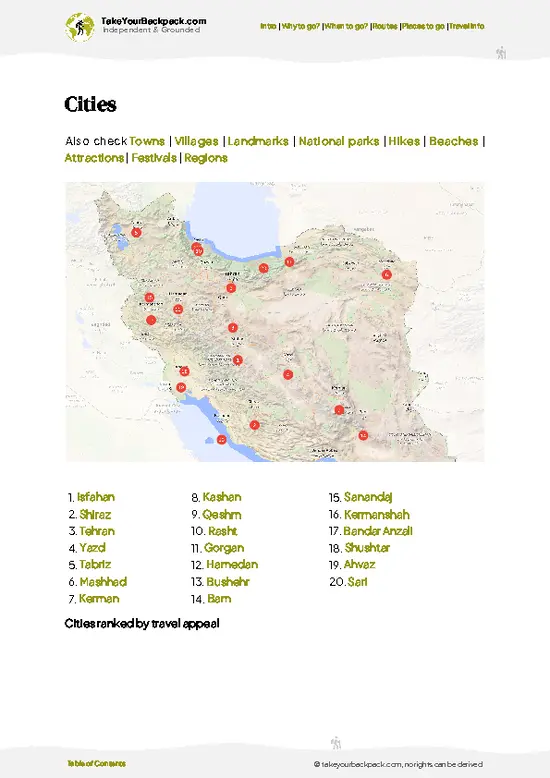
Map of Iran
Loading the map 🌍
CLICK TO FILTER
city
town
village
unique site
national park
hike
beach
attraction
festival
region
SHOW COUNTRY’S BESTSHOW ALL
film
0
0
0a
Hormuz Island Beach
film
1
1
1a
Chabahar Beach
film
2
2
2a
Isfahan
film
3
3
3a
Kerman
film
4
4
4a
Dena Mountain Range
film
5
5
5a
Kaluts of Shahdad
film
6
6
6a
Darband
film
7
7
7a
Talesh Mountains
film
8
8
8a
Lut Desert
film
9
9
9a
Tandooreh
film
10
10
10a
Bamou
film
11
11
11a
Kavir
film
12
12
12a
Sorkheh Hesar
film
13
13
13a
Persepolis
film
14
14
14a
Qeshm Island Geopark
film
15
15
15a
Chahkooh Canyon
film
16
16
16a
Sheikh Safi al-din Khānegāh, Ardabil
film
17
17
17a
Trans-Iranian Railway

Why go?What makes this country worth the trip

People

Iran runs on face-to-face kindness. Strangers stop you to ask where you’re from, then try to feed you, … read more 👉
Iran runs on face-to-face kindness. Strangers stop you to ask where you’re from, then try to feed you, guide you, or put you in their cousin’s car. It’s generous, and it can eat your day. Protect your energy with polite boundaries.

Learn about taarof, ritual politeness. When someone says “it’s on me” or “no need to pay,” insist three times and place the cash on the tray. Say “taarof nakon, lotfan” to cut the dance. Don’t rave about an item you don’t intend to buy—you might be gifted it.

Expect quick humor and genuine curiosity. Tea is default; meals and invites happen. If you accept a home invite, bring sweets or fruit and shoes off at the door. Ask before photos. With the opposite sex, wait for a handshake cue. Settle taxi prices upfront and carry small bills.

Architecture

Iran is architecture you can walk through: cuneiform at Persepolis, blue-domed math in Isfahan, windcatchers … read more 👉
Iran is architecture you can walk through: cuneiform at Persepolis, blue-domed math in Isfahan, windcatchers in Yazd, the rebuilt bones of Bam, Qajar mansions with stained glass in Kashan, and a modern punch like the Tabiat Bridge. The payoff is real if you travel smart. Cards don’t work; bring cash and skip the ‘special’ taxi detours. Many sites close on Fridays or at prayer; plan mornings when tilework actually glows and crowds haven’t filled Naqsh-e Jahan. Expect dual pricing and tripod bans at some museums; save the fee for a rooftop at sunset. Dress conservatively, keep drones at home, and accept scaffolding as part of the story. Do Isfahan–Yazd–Shiraz in a tight loop and you’ll spend less time in buses and more time under domes that were laid by hand and still beat most concrete today.

Uniqueness

Iran is the rare place where your biggest expense is mistakes, not prices. Sanctions kill your bank … read more 👉
Iran is the rare place where your biggest expense is mistakes, not prices. Sanctions kill your bank card, so bring crisp USD/EUR and change at the market rate; do that and long bus rides, saffron rice, and a bed in a courtyard house cost less than a taxi in Europe. Distances are huge, but night buses and cheap domestic flights keep the pace. Friday closures are real; plan cities for weekends and ruins midweek. Dress rules exist; pack loose layers and move on. Learn ta’arof fast—people decline payment out of politeness, not profit—so insist kindly. Get a local SIM and a VPN. Dual pricing at sights stings, but Naqsh‑e Jahan, Yazd’s badgirs, and Persepolis earn it. The deserts—Kavir, Lut—remind you why you left the obvious trail.

Low cost

Iran is where a backpacking budget stretches. Intercity VIP buses are cheap, comfy, and run everywhere; … read more 👉
Iran is where a backpacking budget stretches. Intercity VIP buses are cheap, comfy, and run everywhere; take a night bus and you’ve paid for transport and “accommodation” in one move. Simple eateries feed you well for small change, and public taps keep a refillable bottle full. Most backpackers can live around $20–30/day without fuss.

Gotchas: it’s a cash economy. Foreign cards don’t work. Bring crisp USD/EUR and swap at licensed sarrafi, not airports or hotel desks. Prices are quoted in tomans (drop a zero), but receipts show rials; always confirm the unit before you hand over money. Some sights charge foreigners much more—bundle museums into one day and prioritize the heavy hitters. Use Snapp/Tap30 instead of curbside taxis to dodge “special price.” Do this, and your money buys time and miles.

Mountains

Iran is where serious mountains meet hospitality, without the lift lines or Alpine price tags. Damavand … read more 👉
Iran is where serious mountains meet hospitality, without the lift lines or Alpine price tags. Damavand breathes sulfur on your face; the Alborz throws you cold dawns over a capital city; the Zagros rolls for days on oak-backed ridges. I keep coming back for the mix of big terrain and human warmth you can afford. You can go from the Tehran metro to a 3,900‑meter ridge in one long day, then drink tea while your socks steam. The catches are what keep it good: altitude hits fast, wind bites harder than the forecast, border ranges have checkpoints, and huts are basic. Gas canisters are scarce beyond Tehran, so bring an adapter; filter your water and start early because transport is cheap but slow. Plan smart and you swap hassle for big peaks and small crowds on a weekend-in-Europe budget.
Want the complete picture of Iran?
The offline Travel Guide brings everything together — routes, highlights & planning.

See what's included in the guide 👉

Get the Travel Guide -

⭐ HighlightsThe places that define a trip here

  • Naqsh-e Jahan Square, Isfahan: Dusk turns the square into a slow-moving theater: hooves of carriages clop, the call to prayer rolls off tiled domes, and saffron ice cream drips faster than you can eat it. Don’t burn hours midday—mosques close for prayer windows and the light is flat; come late afternoon and buy separate tickets only for the halls you’ll actually enter. Haggle the carriage to a third of the first quote, skip carpet “tea” unless you’re truly shopping, and walk the shadowed arcades to save energy for Sheikh Lotfollah’s honeyed glow.
  • Persepolis, near Shiraz: Wind lifts the dust across the terrace and the limestone reliefs—knees polished by centuries—feel warm under your palm. There’s no shade worth counting; get in at opening, carry water like it’s currency, and read the map before you climb so you’re not bouncing between staircases. Tickets for Persepolis, Naqsh-e Rostam, and Pasargadae are separate; hire one taxi for the loop and set the fare up front. Ignore the trinket
read more 👉
  • Naqsh-e Jahan Square, Isfahan: Dusk turns the square into a slow-moving theater: hooves of carriages clop, the call to prayer rolls off tiled domes, and saffron ice cream drips faster than you can eat it. Don’t burn hours midday—mosques close for prayer windows and the light is flat; come late afternoon and buy separate tickets only for the halls you’ll actually enter. Haggle the carriage to a third of the first quote, skip carpet “tea” unless you’re truly shopping, and walk the shadowed arcades to save energy for Sheikh Lotfollah’s honeyed glow.
  • Persepolis, near Shiraz: Wind lifts the dust across the terrace and the limestone reliefs—knees polished by centuries—feel warm under your palm. There’s no shade worth counting; get in at opening, carry water like it’s currency, and read the map before you climb so you’re not bouncing between staircases. Tickets for Persepolis, Naqsh-e Rostam, and Pasargadae are separate; hire one taxi for the loop and set the fare up front. Ignore the trinket stalls, save your attention for the Gate of All Nations when the tour buses are still on breakfast.
  • Yazd Old City: The alleys are clay-cool even at noon, windcatchers mutter overhead, and fresh barbari bread leaves sesame on your fingers. Rooftop views are worth it, but pay with a drink, not a “view fee” trap, and ask before stepping onto any private terrace—locals actually live here. The Fire Temple is brief and respectful; the Towers of Silence earn sunset, not midday glare. Don’t chase taxis around the maze—walk it, then grab a ride only from the main arteries where fares are normal and drivers don’t play the “no meter” game.
  • Tehran’s Grand Bazaar and Golestan Palace: The bazaar hums with hammer-on-copper, tea steam, and porters pushing trolleys like missiles—keep right and let them pass. Most lanes nap on Fridays and mid-lunch; come mid-morning when deals are real and tempers calm. Bring small bills, keep your phone deep, and don’t “just browse” the carpet caravansary unless you mean it. Golestan sells tickets by hall; pick two or three stunners and skip the rest to save cash and feet. Metro beats traffic; a light daypack avoids the cloakroom shuffle.
  • Kaluts of the Lut Desert, near Kerman: The wind tastes like salt and oven heat, and the yardangs rise like ship hulls from a dead sea—otherworldly only starts to cover it. This is not a solo wander; go with a driver who knows the checkpoints and the sand, carry more water than your pride wants, and never camp in dry washes. Summer cooks; spring and autumn give you breath and stars. Dust will invade your camera—ziplocks and discipline help. Off the map: Chahkooh Canyon on Qeshm’s quiet flank, Palangan’s terrace village in Kurdistan, and the hike up to Babak Castle above Kaleybar.
Spotted a mistake or missing a highlight? Contact us.

But Iran offers more...

Discover and compare all of its highlights per category

🧭 RoutesSuggested travel routes through Iran

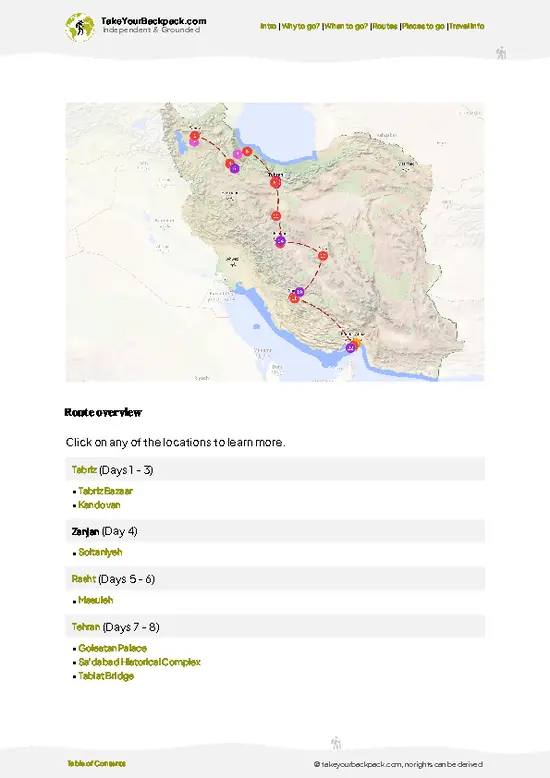
The 7-Day Classic Persia Loop

The vibe: A relaxed first-timer route that trades country-wide coverage for depth in Tehran, Isfahan, and Shiraz, with one big ancient-world hit and plenty of tea breaks. You move mostly by bus and metro, keeping logistics simple while soaking up architecture, history, and city life.
The highlights:
  • Royal and museum time in Tehran, including Golestan Palace and the Treasury of National Jewels.
  • Evenings on Meidan Emam in Isfahan with visits to Ali Qapu Palace and Masjed-e Jāmé of Isfahan.
  • Garden-hopping and poetry-soaked streets in Shiraz, capped with a day trip to Persepolis.

The 14-Day Cities, Valleys & Islands Route

The vibe: A balanced two-week sweep that links capital culture, mountain valleys, classic cities, desert architecture, and a finale on the Persian Gulf islands. You’ll ride intercity buses and a couple of ferries, with enough two- and three-night stops to keep it from feeling rushed.
The highlights:
  • Tehran’s palaces, museums, and modern skyline viewpoints
read more 👉

The 7-Day Classic Persia Loop

The vibe: A relaxed first-timer route that trades country-wide coverage for depth in Tehran, Isfahan, and Shiraz, with one big ancient-world hit and plenty of tea breaks. You move mostly by bus and metro, keeping logistics simple while soaking up architecture, history, and city life.
The highlights:
  • Royal and museum time in Tehran, including Golestan Palace and the Treasury of National Jewels.
  • Evenings on Meidan Emam in Isfahan with visits to Ali Qapu Palace and Masjed-e Jāmé of Isfahan.
  • Garden-hopping and poetry-soaked streets in Shiraz, capped with a day trip to Persepolis.

The 14-Day Cities, Valleys & Islands Route

The vibe: A balanced two-week sweep that links capital culture, mountain valleys, classic cities, desert architecture, and a finale on the Persian Gulf islands. You’ll ride intercity buses and a couple of ferries, with enough two- and three-night stops to keep it from feeling rushed.
The highlights:
  • Tehran’s palaces, museums, and modern skyline viewpoints like Milad Tower and Tabiat Bridge.
  • Hiking and castle ruins in the Alamut Valley before diving into Isfahan’s mosques and bridges.
  • Adobe alleys and desert light in Yazd, followed by Qeshm’s Valley of Stars and Hormuz Island Beach.

The 21-Day Grand Iran Traverse

The vibe: A slow-burn, three-week journey for travelers who want both the big names and the quieter corners, from Alborz foothills and Caspian forests to northwest bazaars, imperial squares, deserts, and islands. Expect a mix of long-distance buses, a strategic flight or two, and plenty of local taxis, with most places getting at least two nights.
The highlights:
  • Deep time in Tehran plus a mountain escape to Darband and a road adventure through the Alamut Valley to Ramsar.
  • Northwest flavors in Tabriz and Kandovan, then architectural heavyweights in Isfahan and Kashan.
  • Desert drama in the Lut Desert and Bam Citadel, followed by Shiraz, Persepolis, and a multi-day wind-down on Qeshm and Hormuz.
🌍 Want a ready-to-use travel plan for Iran?
The overview above compares different route options based on your travel time and style. The complete Travel Guide breaks each itinerary down in detail, including maps, stops, highlights, and transport information.

Explore all route details 👉

Get the Travel Guide -

🌤️ When to go?Best time to visit Iran

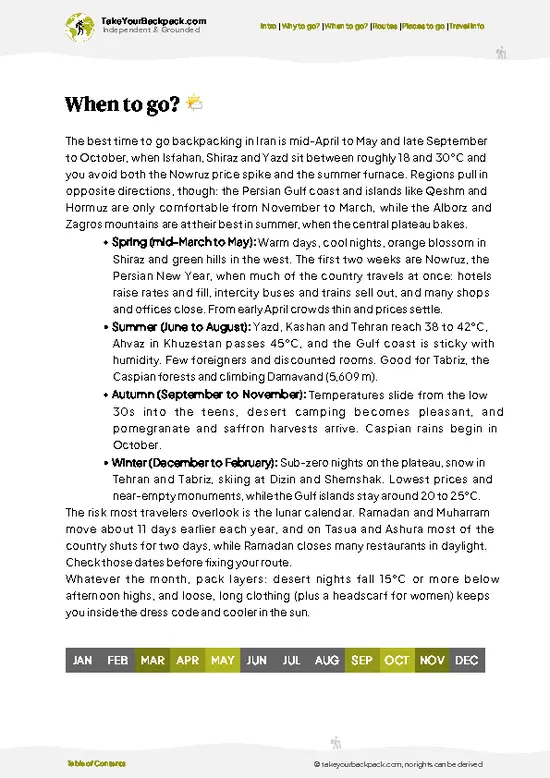
Late April to mid-May and late September to late October are the cleanest weeks to backpack Iran without bleeding time or money. The Nowruz crush has drained away, but summer furnace heat hasn’t settled on the plateau. You can walk Esfahan’s bridges all afternoon without melting, climb Yazd’s rooftops at sunset without a heat headache, and sleep in the desert with a light layer instead of a full winter kit. Mountain roads are mostly open, but not clogged with domestic holiday traffic. Bus and train seats exist at walk-up prices, and guesthouse quotes stop yo-yoing. Autumn carries the same perks in reverse: heat bleeds out of the cities, Persepolis lines shrink, and orchard towns wake up with harvest energy. Watch the moving religious calendar; if Ramadan lands in your window, daytime food access tightens—stash snacks and eat big at dawn and after dark.
  • Peak Heat & Holiday Crush: Late June-August and the Nowruz weeks turn Iran into a grind: tickets vanish, taxi quotes creep up, and desert streets go white-hot by noon. The payoff is visceral—Damavand’s high trails finally open, night markets run deep into the cool hours, and rooftop breezes in Yazd feel earned. Expect closures or reroutes around major religious days; they shift each year and can shut museums or pack buses without warning.
  • Shoulder Spring: Late April-mid-May moves fast—bazaars reopen fully after the holiday lull, bus stations unclog, and hosts stop playing the peak-price game. Temperatures slide into that walk-all-day groove, deserts exhale their winter chill, and you start stringing cities together without recovery days.
  • Shoulder Autumn: Late September-late October steadies the pace. Heat drains from the central plateau, caspian humidity eases before the heavy rains, and crowds thin to the point you can linger at Persepolis without a human tide pressing you forward. Roads across the Alborz still run, but storms can close a pass overnight—keep a lowland detour in your pocket.
  • Winter Off-Peak: December-February strips it back to the interior. Silent caravanserais, frost on mud-brick lanes, empty museums. The hack: move at midday, live in tea houses, and carry a warm liner—desert nights bite harder than you think. Tehran’s smog spikes with cold inversions; if your lungs protest, pivot to Yazd or the south.

Tactical tip: In the shoulder months, reserve intercity trains 5-7 days ahead; everything else you can improvise on arrival.

source: climatestotravel.comJANJanuary: fair for travelingFEBFebruary: fair for travelingMARMarch: good for travelingAPRApril: highly recommended for travelingMAYMay: excellent for travelingJUNJune: fair for travelingJULJuly: below average for travelingAUGAugust: below average for travelingSEPSeptember: highly recommended for travelingOCTOctober: excellent for travelingNOVNovember: good for travelingDECDecember: fair for traveling
📅 Traveling in a specific month?
Get a full month-by-month breakdown of weather, crowds, costs, festivals, and seasonal highlights in the complete travel guide.

Get full details when to go 👉

Get the Travel Guide -
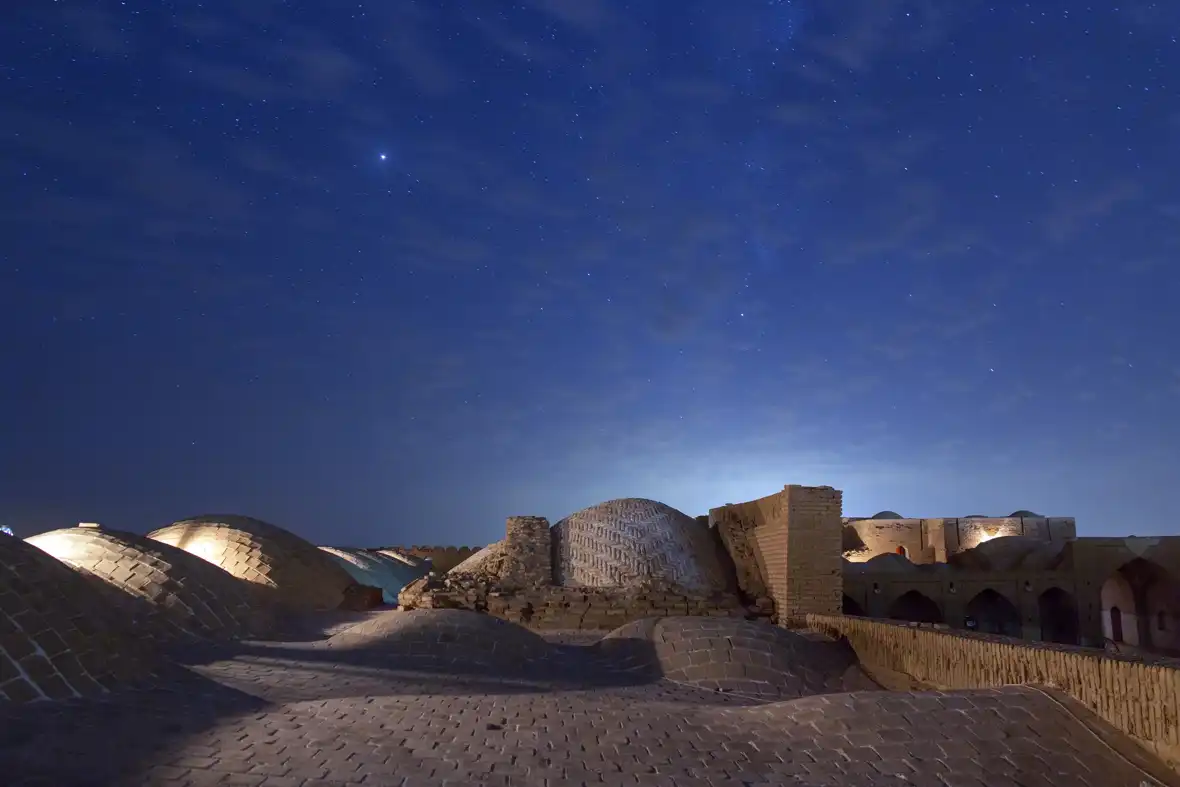
iran - pixabay - caravansary-4519442

💰 Costs (as of 2026)Typical budget expectations

Expect $25-35 per day if you sleep in dorms, ride buses, and eat where locals queue; add $10-20 on museum-heavy days or long intercity hauls.
  • dorm accommodation: $6-12 in Tehran/Isfahan/Shiraz, $4-8 in smaller cities; privates from $15-25 when you need a door that locks. Relative value: roughly half the price of Turkey and 30-50% below Georgia/Armenia for similar basics. System tip: message hostels directly and ask for the “Iranian cash rate” (not the dollarized platform rate), pay in tomans, and confirm the unit—locals speak in tomans (drop one zero from rials); this alone can save 10-30% and prevents the classic extra-zero overpay.
  • meals: Supermarket Survival: $3-5/day gets you flatbread (sangak), tomatoes, cheese, yogurt, eggs, and fruit; nuts and dates are good-value calories. Street food reality: falafel/samboseh $0.50-1.50, kebab plates $2-5, ash reshteh $1-2; midrange “heritage house” restaurants jump to $6-10 and often add ~9% VAT plus service. Relative value: cheaper than anywhere west of Pakistan and well below Turkey; pricier than Pakistan but cleaner and more consistent. Skip tourist menus and follow the places with workers in overalls at lunch.
  • local transport: City metros/buses
read more 👉
Expect $25-35 per day if you sleep in dorms, ride buses, and eat where locals queue; add $10-20 on museum-heavy days or long intercity hauls.
  • dorm accommodation: $6-12 in Tehran/Isfahan/Shiraz, $4-8 in smaller cities; privates from $15-25 when you need a door that locks. Relative value: roughly half the price of Turkey and 30-50% below Georgia/Armenia for similar basics. System tip: message hostels directly and ask for the “Iranian cash rate” (not the dollarized platform rate), pay in tomans, and confirm the unit—locals speak in tomans (drop one zero from rials); this alone can save 10-30% and prevents the classic extra-zero overpay.
  • meals: Supermarket Survival: $3-5/day gets you flatbread (sangak), tomatoes, cheese, yogurt, eggs, and fruit; nuts and dates are good-value calories. Street food reality: falafel/samboseh $0.50-1.50, kebab plates $2-5, ash reshteh $1-2; midrange “heritage house” restaurants jump to $6-10 and often add ~9% VAT plus service. Relative value: cheaper than anywhere west of Pakistan and well below Turkey; pricier than Pakistan but cleaner and more consistent. Skip tourist menus and follow the places with workers in overalls at lunch.
  • local transport: City metros/buses are cents; buy a transit card and reload for the week. Snapp (rideshare) is the stress-free bargain for late nights or luggage, usually $1-3 cross-town. Intercity: VIP buses are the unlock—6-10 hour rides for $5-10 with wide seats; trains similar when available. Domestic flights can be $25-60 if booked locally, but online “foreigner fares” often double—avoid unless time is tight. Relative value: far cheaper than the Caucasus and Turkey; expect twice the distance for the same money.
  • activities: Foreigner-priced sites are the main sink: Persepolis, major palaces, and gardens add up fast—think $3-10 per site; stack three in a day and you’ve matched a night’s lodging. Desert trips (Kaluts/Lut) $20-40 shared; proper mountaineering (Damavand) needs permits, transport, and usually a guide—budget $80-150 all-in if you don’t have gear. Many mosques and bazaars are free; spend on the few you’ll remember instead of ticking every doorway.
  • miscellaneous: Budget Leaks: airport exchanges are punishing—use city sarrafi shops; always confirm “toman or rial” before paying. SIM + data is cheap ($3-6 setup, a few bucks for gigs), but many apps need a VPN; grab a month plan rather than daily free trials. Restaurant bills may sneak on 9% VAT and a service line—check before you order. Shared taxis (savari) are cheap if you know the route; if you don’t, you’ll pay “charter” rates. Relative value: everyday costs beat Turkey and the Gulf by a mile, but fees and bad exchange choices can erase that advantage in one day.
⚠️ Prices can change and everyone travels differently, so take this as a rough guide. Hope it helps you plan your adventure!

✈️ The backpacker research shortcutIran Travel Guide

An offline-friendly backpacking guide with optimized travel routes, ranked highlights, transport advice, and the best areas to stay.
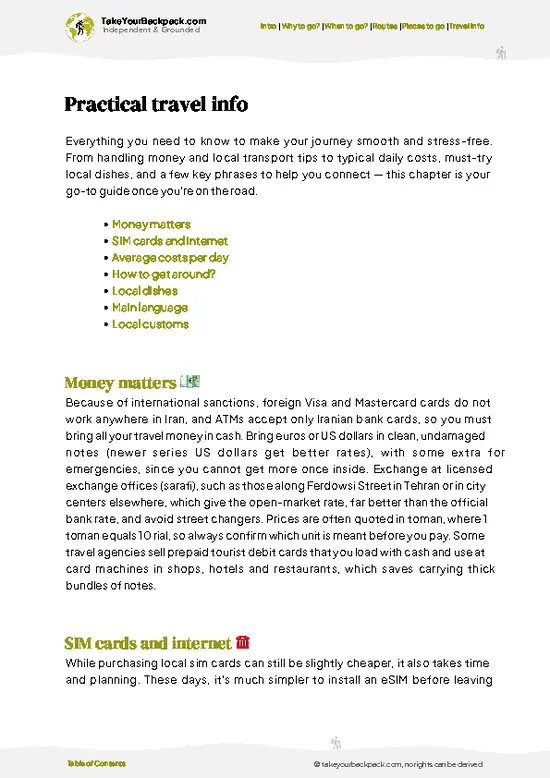
example page 0 from our offline Travel Guide for Iranexample page 1 from our offline Travel Guide for Iranexample page 2 from our offline Travel Guide for Iranexample page 3 from our offline Travel Guide for Iranexample page 4 from our offline Travel Guide for Iranexample page 5 from our offline Travel Guide for Iranexample page 6 from our offline Travel Guide for Iranexample page 7 from our offline Travel Guide for Iran
The digital guide (419 pages) contains:
121 highlights, ranked by travel appeal
Optimized 7, 14 & 21-day travel routes
Cities, national parks, beaches, historical sites, ...
How to get around
Offline-friendly for travel without Wi-Fi
👉 Click to see all 30+ guide features

📅 Plan smarter in minutes, not weeks
Month by month travel advice
Festivals & national holidays
Budget expectations

🗺️ Go to the right places, skip the overrated ones
Honest pros & cons of destinations
Top hikes, parks & viewpoints
Lesser-known places most travelers miss
Clear “worth it vs skip it” guidance

🛏️ Travel smoothly without rookie mistakes
Best areas to stay
Transport systems explained simply
Common scams & safety advice
SIM cards, money & practical tips

🌍 Understand the country, not just visit it
Culture & traditions
52 Essential phrases & customs
Festivals worth planning around
Traveler-friendly historical context
Insights that make places more meaningful

📱 Built for real travel conditions
Fully downloadable PDF
Works completely offline
Optimized for phone use
Useful in remote areas & buses
Everything in one place
Save weeks of stressful planning
Get instant access to the full guide directly. 30-day money-back guarantee.


Sent to your inbox immediately after payment • 100% Secure Checkout
Best Backpacking Travel Advisor 2025 tourism awardBest Backpacking
Travel Advisor
2025
What others say about Take Your Backpack Guides:
⭐⭐⭐⭐⭐
Fantastic, amazing amount of information!
⭐⭐⭐⭐⭐
My goodness this is amazing, it's what I've been looking for hats off too you!
⭐⭐⭐⭐⭐
I think this is absolutely BRILLIANT
⭐⭐⭐⭐
Very complete and informative. It's still missing places, but I gotta to commend you
⭐⭐⭐⭐⭐
This is truly amazing, thank you, can't wait to explore it with my kids!
⭐⭐⭐⭐⭐
Awesome resource, thank you!
⭐⭐⭐⭐⭐
This is amazing! Can't wait to explore the ones I haven't seen
⭐⭐⭐⭐
I love this! Well done, great idea.
⭐⭐⭐⭐⭐
Thanks for taking the time to make this gem!
⭐⭐⭐⭐⭐
This might be the best website I've ever seen.
⭐⭐⭐⭐⭐
Congratulations, and thank you so much for your work; it's incredibly valuable.
⭐⭐⭐⭐
In all seriousness I think you did a great job pointing out the important spots
⭐⭐⭐⭐⭐
10/10 very good
⭐⭐⭐⭐⭐
As someone who's only just starting to visit regularly this is awesome, thank you.
⭐⭐⭐⭐
Thank you very much! I'm going to visit my dad, it's going to be very useful!
⭐⭐⭐⭐⭐
This is really cool! We'll be travelling for the first time and this definitely come in handy.
⭐⭐⭐⭐⭐
You are now our minister of culture, congratulations 👨‍💼
⭐⭐⭐⭐⭐
Just wanted to tell you that this is a pearl! Going to follow your recommendations.
⭐⭐⭐⭐⭐
This is so cool. I'll definitely be using the resource for my travels soon.
⭐⭐⭐⭐⭐
This is very impressive! Good work.
⭐⭐⭐⭐⭐
This is an amazing and informative site. Very well done!

🛏️ Where to stay?Where to stay in Iran

Yes — hostels, budget guesthouses and traditional homestay-style accommodations are widely available in Iran’s main tourist cities, especially Tehran, Isfahan, Shiraz, Yazd, Tabriz, Kashan and Mashhad.
In Tehran look around Valiasr/Vanak and Tajrish for best transport links and more nightlife but expect traffic and higher rates; in Isfahan stay by the historic center for walking access to major sights though it’s busier and quieter at night; Shiraz’s bazaar/Vakil area puts you by gardens and markets but can be sleepy after dark; Yazd’s old town (Fahadan) offers atmospheric traditional houses … read more 👉
Yes — hostels, budget guesthouses and traditional homestay-style accommodations are widely available in Iran’s main tourist cities, especially Tehran, Isfahan, Shiraz, Yazd, Tabriz, Kashan and Mashhad.
In Tehran look around Valiasr/Vanak and Tajrish for best transport links and more nightlife but expect traffic and higher rates; in Isfahan stay by the historic center for walking access to major sights though it’s busier and quieter at night; Shiraz’s bazaar/Vakil area puts you by gardens and markets but can be sleepy after dark; Yazd’s old town (Fahadan) offers atmospheric traditional houses with narrow alleys that feel quieter; Tabriz clusters around the historic bazaar with good budget supply but colder winters; Kashan’s historic quarter is ideal for traditional houses and desert trips but has limited nightlife.
Expect some hostels to offer gender‑segregated dorms or women‑only rooms, observe strict public dress codes in common areas, and book ahead at peak times (Nowruz and summer) or take a private room for more flexibility.

If you enjoy meeting fellow travelers, consider choosing hostels with high ratings for atmosphere. On the other hand, if you prefer having your own space, a hotel might be a better option.

🚌 Getting aroundPublic transport and other ways to get around

Iran runs on disciplined chaos. Trains leave when they say they will, but the rest of the system runs on momentum and consensus—drivers, dispatchers, and passengers nudging the day forward. Cash settles arguments. Human signals beat apps. If you respect the flow, the country carries you; if you fight it, you burn hours and money on avoidable friction.
  • VIP Intercity Buses The Efficiency Trade-off: This is the backbone. On major corridors, a bus shows up every hour until late night, and VIP class (3
read more 👉
Iran runs on disciplined chaos. Trains leave when they say they will, but the rest of the system runs on momentum and consensus—drivers, dispatchers, and passengers nudging the day forward. Cash settles arguments. Human signals beat apps. If you respect the flow, the country carries you; if you fight it, you burn hours and money on avoidable friction.
  • VIP Intercity Buses The Efficiency Trade-off: This is the backbone. On major corridors, a bus shows up every hour until late night, and VIP class (3 seats across, reclining) costs roughly half again as much as regular but pays back in real sleep and fewer seatmates. It is usually faster than trains on routes like Tehran-Isfahan or Shiraz-Yazd, and almost always cheaper than planes once you count baggage and taxis. Buy at the company desk inside the terminal, not from the guy shouting outside. Drivers push the pace; bring layers for Arctic AC, earplugs for cabin TV, and your passport for checkpoints. Solo women can request a women-only seat block. Night runs save you a room, but arrive early to choose a sane seat and tag your big bag properly.
  • Shared Taxis (Savari) + Snapp The Social Fabric: In cities and between nearby towns, the line taxi is the bloodstream. Say the destination or intersection, squeeze in, pay the fixed local fare, and get out fast—no ta’arof theater. “Khatti” means shared on a set route; “dar-bast” means private hire and costs more but still undercuts a street cab if you use Snapp. Snapp works best with a local SIM and cash; the fare is the fare, no haggling. Sit where the driver points, keep small bills ready, and avoid sliding next to the opposite sex if there’s space. Do not slam doors. If the driver says “bepors agha,” he’s telling you to ask other drivers—he isn’t going your way.
  • Ferries to Qeshm & Hormuz The Geometric Unlock: Water breaks the grid. From Bandar Abbas, fast boats put you on island geology that buses will never reach. Boats run morning to mid-afternoon; miss the last one and you sleep on the mainland. Swell cancels departures without negotiation. Tickets are cash at the window, passport often checked, and docks have little shade, so show up early with water and a scarf for spray. On Qeshm, local minivans stitch the gaps cheaply; Hormuz is walkable, rent a bike if heat allows. This is the cleanest line to Iran’s otherworldly coasts without paying for flights.
  • Tehran Metro & City Buses The Budget Disruptor: The metro erases taxi math. Buy a stored-value card with cash, reload at kiosks, and cross the capital for coins while traffic chokes at street level. Women-only cars exist; mixed cars are fine for couples; on buses, men front, women back. The BRT lanes cut diagonals the metro misses. Avoid rush hour with a big pack, tuck your bag in front, and treat escalators like moving trenches. This is how you keep your daily spend from bleeding out on cabs.

Master tip: Build your route around night VIP buses or sleeper trains between big hubs, then use Snapp or a savari for the last mile so you trade money for momentum only where it actually multiplies your day.
Distance
Imam Khomeini International Airport (IKA) is about 45-50 km (28-31 miles) south of central Tehran (around Imam Khomeini or Ferdowsi squares).

Main ways into the city (times and typical 2025 costs)
  • Metro (Line 1 - IKIA branch)

    Station: IKIA Metro Station is signposted from arrivals (Terminal 1).

    Frequency/hours: roughly every 15-30 minutes, about 06:00-22:00 (reduced late evening).

    Time to downtown: 60-75 minutes to Imam Khomeini or other central Line 1 stops (you may need to change trains at Shahed-Bagher Shahr depending on the service).

    Cost: about 20,000-50,000 tomans (well under 1 USD).
  • Airport bus

    Routes: coaches to major hubs such as Azadi Square or to metro interchanges (look for “Tehran Bus Organization” signs outside arrivals).

    Time to downtown: 60-90 minutes, traffic-dependent.

    Cost: roughly 30,000-80,000 tomans (about 0.5-1.5 USD).
  • Shared airport taxis (per seat)

    From official ranks; they depart when full and drop at central squares/metro stations.

    Time to downtown: 45-75 minutes.

    Cost: typically 300,000-700,000 tomans per seat, depending on destination and time of day.

Taxis and ride-hailing
Official airport taxis have fixed fares at the counters in arrivals. Expect about 1.2-2.0 million tomans for a standard sedan to central Tehran; larger cars cost more. Ride-hailing apps like Snapp and Tap30 are usually cheaper, around 700,000-1.5 million tomans off-peak (more in rush hour or late night). Travel time is 45-90 minutes depending on traffic.

Good to know
- Metro doesn’t run overnight; for late arrivals, use taxi or ride-hailing.
- Fares can change with inflation; confirm at the counter/app before you ride.
- Have cash in tomans or a local (tourist) debit card; foreign bank cards don’t work.
- Ask if the taxi fare includes tolls before you get in.
⚠️ Prices and routes can change, so take this as a rough guide and ask for local advice when you arrive.

🔒 Safety (risk Level: high)Safety considerations for travelers

Safety for solo travelers, including women and LGBTQ+ individuals
Traveling solo in Iran is generally safe, but women might face stricter dress codes and societal expectations. LGBTQ+ individuals should be cautious, as Iran’s laws are conservative regarding sexual orientation and gender identity. It’s wise to stay informed about local customs and avoid discussing sensitive topics publicly. Always stay updated on travel advisories and connect with other travelers for the latest info.


Full official government travel advisory (live updates)
View details 👉
safety image

source: www.gov.uk

✈️ VisaDo you need a visa to visit?

Most travelers need a visa to visit Iran, which you can apply for at Iranian embassies or consulates. Some nationalities can get a visa on arrival, but it’s safer to get an e-visa through the official Iranian Ministry of Foreign Affairs website before you travel. Note: U.S., U.K., and Canadian citizens must pre-arrange a guided tour and visa through a travel agency.

source: en.mfa.ir
⚠️ Visa requirements can change over time, so always check the latest visa requirements with the official embassy or government website before you travel.

🎒 What to pack?What to wear and bring

Iran’s a diverse mix of climates and landscapes, so pack smart. The north can get pretty chilly and wet, especially around the Caspian Sea, while the south is all about that desert heat. If you’re hitting the mountains, layers are your best friend. Remember, modesty is key—think long sleeves and loose pants, and ladies, a headscarf is a must. You’ll want to be respectful, especially when visiting mosques or religious sites. Happy travels!

Apart from this country specific advice, I have also crafted a general packing list that should help on any trip. authorOver the years, I've learned the importance of packing minimally. It's so much easier to jump on the back of a truck or squeeze yourself into the last spot of a minibus without that supersized backpack. If you're headed to a warm destination, leave your winter jacket at home; for colder regions, opt for thin thermal underlayers. Instead of packing your entire wardrobe, bring just three sets of clothes, as laundry facilities are available everywhere.

View the full list 👉
🎒 Planning the practical side of your trip?
Get detailed information on transport, daily budgets, internet access, local customs, food, language, and other essentials in the complete Travel Guide.

Get detailed practical information 👉

Get the Travel Guide -

🙋 FAQFrequently asked questions

Trip Planning


Personal tip: I normally search on good rating for atmosphere (for meeting people) and location (for easy exploring). Cleanliness as a bonus.


Travel Essentials

For visiting Iran, recommended vaccinations include:

Routine Vaccinations: Ensure you’re up to date with measles, mumps, rubella (MMR), diphtheria-tetanus-pertussis, varicella (chickenpox), polio, and your yearly flu shot.

Hepatitis A: Recommended for most travelers.

Hepatitis B: Advised if you might have intimate contact, get a tattoo, or need medical treatment.

Typhoid: Consider this if you’re traveling to smaller cities or rural areas.

Rabies: Recommended for travelers engaging in outdoor activities or working with animals.

Check with a healthcare provider for the most current advice based on your travel plans.


vaccination requirements
When I first started traveling, I often spent part of my first day in a new country hunting for a local SIM card. While this can still be slightly cheaper, it also takes time and planning.

These days, it's much simpler to install an eSIM before leaving home. Once you arrive in Iran, you can activate it immediately and have mobile data from the moment you land — which is especially useful for ordering transport or navigating away from busy airports.

There are many providers nowadays, and price differences are usually small. I personally go with Airalo, as it offers excellent network coverage throughout the country and strong global coverage, so you can manage multiple countries from a single app.


Get your e-sim for Iran

Culture & Customs

Dress modestly; women should wear a headscarf and loose clothing that covers arms and legs. Men should avoid shorts. Show respect by removing shoes when entering homes. Public displays of affection are frowned upon.

Same-sex relationships are not legally recognized and can be dangerous to express openly. Women might want to travel with a companion for safety and comfort. Use your right hand for eating and greeting, as the left is considered unclean. Always express gratitude for hospitality, but avoid over-praising, as it might embarrass the host.
Trying traditional food is always a great way to experience the culture. Here are some must-try dishes for Iran.
  • Chelo Kebab: This is Iran’s unofficial national dish, featuring perfectly grilled kebabs served with saffron-infused rice. It’s the go-to dish for celebrations and gatherings, highlighting Iran’s love for flavorful meats and aromatic rice.
  • Fesenjan: A rich, tangy stew made with pomegranate molasses, walnuts, and chicken or duck. It’s a staple at Persian weddings and special occasions, celebrated for its unique sweet-sour balance that represents the depth of Persian cuisine.
  • Ghormeh Sabzi: A hearty herb stew with kidney beans and lamb, seasoned with dried lime. It’s beloved for its complex flavors and is a quintessential comfort food, often served at family gatherings.
  • Dizi: Also known as Abgoosht, this is a rustic dish of lamb, chickpeas, and potatoes, slow-cooked to perfection. Traditionally served in clay pots, it’s a cultural experience as much as a meal, often enjoyed in cozy teahouses.
  • Zereshk Polo: Saffron rice mixed with tangy barberries, often served with chicken. It’s a festive dish, appreciated for its vibrant colors and flavors, typically reserved for special occasions.
Tap water in Iran is generally safe for locals, but tourists might want to stick to bottled or filtered water to avoid any stomach issues. Locals often drink tap water without problems, but it’s a good idea to play it safe if you’re not accustomed to it. Bottled water is cheap and widely available, so it’s an easy option for travelers.
The main language in Iran is Persian. Backpacking is way more rewarding if you know a bit of the local language, so I'd suggest brushing up on the basics just in case your Persian skills have become a bit rusty.

Want to understand locals better?
The complete Travel Guide for Iran includes 52 essential words and phrases — greetings, thank-yous, ordering food, transport, numbers, and common local expressions you'll actually hear.

Get your local basic phrases 👉

Get the Travel Guide -


In Iran, English proficiency varies significantly by region and demographic. In major cities like Tehran, Isfahan, and Shiraz, many younger people, especially students and professionals, speak English reasonably well. English is taught in schools, and those in the tourism and hospitality sectors often have a good command of the language.

However, in rural areas and among older generations, English may be less commonly spoken. Travelers might encounter challenges in communication, particularly in small towns or villages where fewer people have had exposure to the language.

Signage in tourist areas is often bilingual, featuring Persian and English, which can aid navigation. While English speakers may not be ubiquitous, many Iranians are eager to help and communicate, often using gestures or translation apps.

Overall, while you may not find English speakers everywhere, with some patience and creativity, travelers can navigate and enjoy their experience in Iran.

Money & Payments

The local currency of Iran is IRR (﷼).

ATMs: Don’t count on them. Most ATMs in Iran won’t work with foreign cards due to sanctions. So, have a backup plan.

Cash is King: You’re gonna need to bring all the cash you’ll spend. ATMs won’t help much, so stash those bills safely.

Currency Choice: Dollars and Euros are your best bet. They’re widely accepted for exchange, but dollars might give you a slightly better rate.

Card Acceptance: Credit cards are pretty much a no-go. Only a few places might accept them, and that’s not the norm. So, don’t rely on plastic.

Exchanging Money: Skip the airport exchange rates—they’re usually poor. Instead, hit up exchange offices in the city. In Tehran, Ferdowsi Street is a hot spot for decent rates. Always double-check the rates and count your cash before leaving.

Tipping in Iran isn’t customary, but small tips are appreciated in restaurants and for services like taxis. Leave around 5-10% in cash if you’re satisfied with the service. Be discreet when tipping, as it can sometimes be misunderstood.

🧩 Nearby countriesSimilar backpacking destinations

We 💚 feedbackWhat to know before planning your trip

Go for the human warmth. Iran is one of the few places where a bus seatmate will feed you, a shopkeeper will fix your plan, and strangers argue over who gets to host you. That generosity is the point.

The drag is sanctions friction. Your cards won’t work, exchange rates are a maze, and the internet is filtered. Bring crisp euros/dollars, use the street/market rate, install a VPN before you land, and buy a local SIM on day one. That prep saves money and patience you’ll need for long distances and late buses.

Worried about safety? Day-to-day travel is calmer than the headlines. Avoid politics, respect local laws (including dress code), and people will look out for you.

✍️ Help improve this page!
The information on this page is based on in-depth research, insights shared by experienced travelers, and feedback from the local travel community in Iran. While every effort is made to keep the information accurate and current, conditions can change — so if you spot anything incorrect or outdated, please get in touch.


🙋‍♂️ Give feedback

👋 Meet the founderWho’s Behind Take Your Backpack?

Johan, backpacker and founder of TakeYourBackpackHi, I’m Johan (Netherlands 🇳🇱), the creator of TakeYourBackpack. Over the past decade, I’ve backpacked through 80+ countries across six continents, gaining extensive experience with independent travel, long-term trips, and overland routes.

This site is built on a combination of firsthand travel experience and carefully curated insights from other backpackers. Many guides are based on places I’ve personally visited, while others bring together tips, observations, and practical advice shared by trusted travelers I’ve met along the way.

The goal is to provide realistic, experience-driven guidance — not generic itineraries — so you can explore destinations with better context, clearer expectations, and more confidence.

Get full Iran guide •
Instant download • 121 highlights • Full Offline guide