Trip Planning
The TakeYourBackpack guidebooks are your all-in-one travel companion, featuring the best cities, national parks, hikes, beaches, and unique sites, along with essential tips on when to go, how to get around, exchanging money, and even local phrases to get you started — everything you need for a smooth, unforgettable backpacking adventure.
Stop researching. Start exploring.Discover all 24 highlights,ranked
and organized into practical routes.
Get instant access
Planning a backpacking route through Cook Islands can be tricky — you need to balance must-see places, travel times, budget, and how long to stay in each destination. Our free personalized Cook Islands itinerary planner creates a route based on your travel style, trip duration, and interests, so you can spend less time researching and more time exploring.
Personal tip: I normally search on good rating for atmosphere (for meeting people) and location (for easy exploring). Cleanliness as a bonus.
Travel Essentials
No vaccinations are required to enter the Cook Islands for most travelers. Make sure routine vaccines (measles-mumps-rubella, tetanus-diphtheria, influenza) are up to date, and consider hepatitis A and typhoid, especially if you plan to eat at local markets or visit outer islands. Dengue fever occurs periodically and there is no standard travel vaccine, so use mosquito repellent day and night.
vaccination requirementsWhen I first started traveling, I often spent part of my first day in a new country hunting for a local SIM card. While this can still be slightly cheaper, it also takes time and planning.
These days, it's much simpler to install an eSIM before leaving home. Once you arrive in Cook Islands, you can activate it immediately and have mobile data from the moment you land — which is especially useful for ordering transport or navigating away from busy airports.
There are many providers nowadays, and price differences are usually small. I personally go with
Holafly, as it offers excellent network coverage throughout the country and strong global coverage, so you can manage multiple countries from a single app.
HolaFly eSimCulture & Customs
Sunday is a day of rest and worship in the Cook Islands: many shops close, and you should avoid noisy activities, yard work or loud music near churches and villages. Visitors are welcome at church services, where dressing modestly (men in collared shirts, women with covered shoulders and a skirt or dress) is expected. Do cover up when you leave the beach, and don’t go topless or nude anywhere, as it is offensive and illegal. Never pick fruit, coconuts or flowers without asking, since all land is owned by families. Respect ra’ui (traditional marine reserves) where fishing and shellfish gathering are banned, and treat marae (sacred ancestral sites) with care by not climbing on stones. Take off your shoes before entering a home and ask before photographing people. Women and LGBTQ+ travelers face no particular restrictions beyond the general expectation of modest dress and discreet public affection.
Trying traditional food is always a great way to experience the culture. Here are some must-try dishes for Cook Islands.
- Ika Mata: Raw tuna or wahoo cured in lime juice and tossed with coconut cream, cucumber, onion and tomato. It is the unofficial national dish, found at every market stall and family celebration.
- Rukau: Young taro leaves slow-cooked in coconut cream until soft and silky. A staple side dish at Sunday lunches and feasts.
- Umu: A traditional earth-oven feast of pork, chicken, fish, taro and breadfruit, wrapped in leaves and cooked over hot stones for hours. Served at weddings, birthdays and community events.
- Poke: A sweet pudding of ripe banana or pawpaw mixed with arrowroot, baked and topped with coconut cream. A favorite dessert at island gatherings.
- Mitiore: Fermented grated coconut with onion and seafood, a pungent condiment loved by locals and eaten with taro or fish.
- Eke: Octopus, often cooked in coconut cream, gathered from the reef at low tide and served at feasts.
Tap water in the Cook Islands is not reliably safe to drink untreated, as the Rarotonga supply comes from mountain streams that can become contaminated after heavy rain. Many locals drink filtered water or rainwater from tanks, and tourists are advised to do the same. Most accommodations provide filtered water, and refill stations around Rarotonga let you top up a reusable bottle for a small fee, which beats buying bottled water.
The main language in Cook Islands is
Rarotongan. Backpacking is way more rewarding if you know a bit of the local language, so I'd suggest brushing up on the basics just in case your Rarotongan skills have become a bit rusty.
Want to understand locals better?The complete Travel Guide for Cook Islands includes 52 essential words and phrases — greetings, thank-yous, ordering food, transport, numbers, and common local expressions you'll actually hear.
Get your local basic phrases 👉
Get the Travel Guide - is one of the official languages of the Cook Islands and nearly everyone speaks it fluently, from shop staff in Avarua to lagoon tour guides in Muri. Younger people and hostel staff switch between English and Cook Islands Māori without a second thought. On outer islands such as Mangaia or Atiu, older residents may prefer Māori among themselves, but they will happily talk to you in English. Learning “Kia orana” (hello) and “Meitaki ma’ata” (thank you very much) earns real smiles.
Money & Payments
The local currency of Cook Islands is NZD ($).
The Cook Islands use the New Zealand dollar alongside local Cook Islands notes and coins, including the triangular NZ$2 coin and the NZ$3 note. ATMs from ANZ and the Bank of the Cook Islands are easy to find in Avarua, at the airport, in Muri and at a few other spots on Rarotonga, and Aitutaki has a small number; outer islands such as Atiu or Mangaia have few or none, so carry enough cash before flying there. Expect your home bank’s foreign withdrawal fee plus a local charge of a few dollars per transaction. Visa and Mastercard are accepted at most hotels, supermarkets and restaurants on Rarotonga, often with a 2 to 5 percent surcharge, while buses, market stalls, roadside food vans and small shops want cash. US dollars and euros can be exchanged at banks and the airport bureau in Avarua, but rates are better if you simply withdraw NZ dollars from an ATM. Spend or swap your Cook Islands notes and coins before leaving, because they cannot be exchanged anywhere else.
Tipping is not part of traditional culture in the Cook Islands, and you will never be expected to leave one at restaurants, cafés or in taxis. Some islanders consider tipping at odds with Polynesian hospitality, but a small tip for exceptional service at a tour or resort restaurant is accepted graciously. Prices already include tax, so the price on the menu is what you pay.
v2.webp)
 Best Backpacking
.jpg) Over the years, I've learned the importance of packing minimally. It's so much easier to jump on the back of a truck or squeeze yourself into the last spot of a minibus without that supersized backpack. If you're headed to a warm destination, leave your winter jacket at home; for colder regions, opt for thin thermal underlayers. Instead of packing your entire wardrobe, bring just three sets of clothes, as laundry facilities are available everywhere.
Over the years, I've learned the importance of packing minimally. It's so much easier to jump on the back of a truck or squeeze yourself into the last spot of a minibus without that supersized backpack. If you're headed to a warm destination, leave your winter jacket at home; for colder regions, opt for thin thermal underlayers. Instead of packing your entire wardrobe, bring just three sets of clothes, as laundry facilities are available everywhere.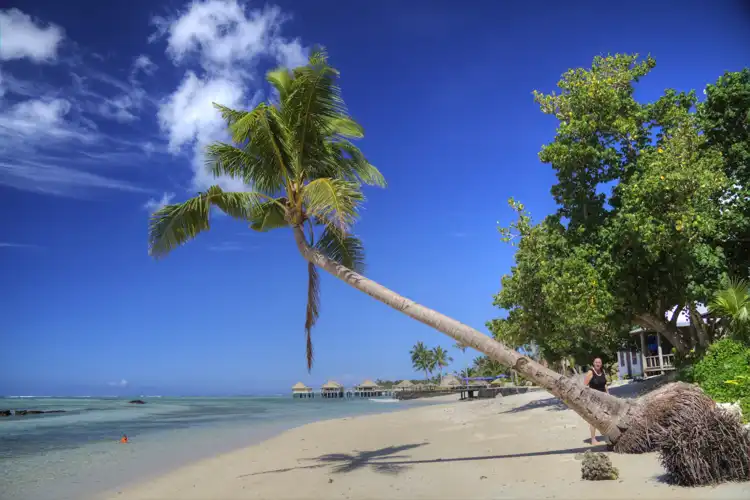





.jpg) Hi, I’m Johan (Netherlands 🇳🇱), the creator of TakeYourBackpack. Over the past 3 decades, I’ve backpacked through 90+ countries across six continents, gaining extensive experience with independent travel, long-term trips, and overland routes.
Hi, I’m Johan (Netherlands 🇳🇱), the creator of TakeYourBackpack. Over the past 3 decades, I’ve backpacked through 90+ countries across six continents, gaining extensive experience with independent travel, long-term trips, and overland routes.