Trip Planning
The TakeYourBackpack guidebooks are your all-in-one travel companion, featuring the best cities, national parks, hikes, beaches, and unique sites, along with essential tips on when to go, how to get around, exchanging money, and even local phrases to get you started — everything you need for a smooth, unforgettable backpacking adventure.
Stop researching. Start exploring.Discover all 77 highlights,ranked
and organized into practical routes.
Get instant access
Planning a backpacking route through Israel can be tricky — you need to balance must-see places, travel times, budget, and how long to stay in each destination. Our free personalized Israel itinerary planner creates a route based on your travel style, trip duration, and interests, so you can spend less time researching and more time exploring.
Personal tip: I normally search on good rating for atmosphere (for meeting people) and location (for easy exploring). Cleanliness as a bonus.
Travel Essentials
No vaccinations are required to enter Israel, and there is no yellow fever requirement. Make sure routine vaccines (MMR, tetanus-diphtheria, polio and seasonal flu) are up to date, and Hepatitis A is commonly recommended; Hepatitis B and rabies are worth discussing with a travel clinic if you plan long stays, volunteering or contact with animals.
vaccination requirementsWhen I first started traveling, I often spent part of my first day in a new country hunting for a local SIM card. While this can still be slightly cheaper, it also takes time and planning.
These days, it's much simpler to install an eSIM before leaving home. Once you arrive in Israel, you can activate it immediately and have mobile data from the moment you land — which is especially useful for ordering transport or navigating away from busy airports.
There are many providers nowadays, and price differences are usually small. I personally go with
Holafly, as it offers excellent network coverage throughout the country and strong global coverage, so you can manage multiple countries from a single app.
HolaFly eSimCulture & Customs
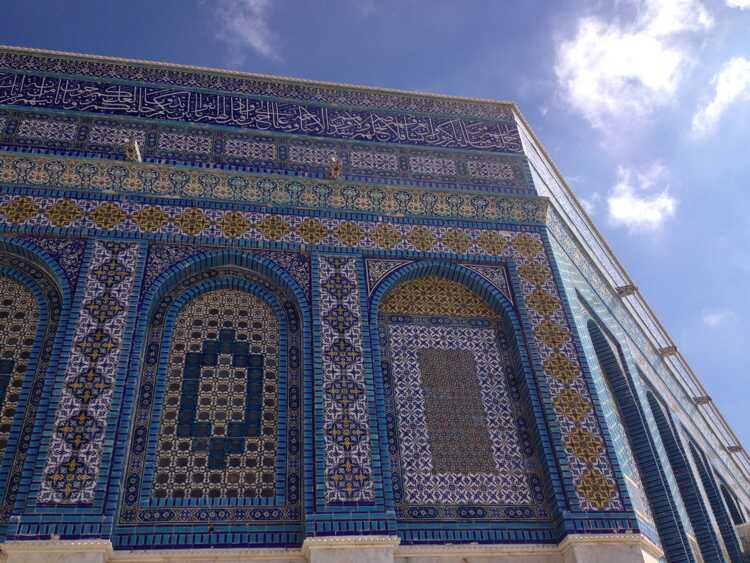
In Israel, cover shoulders and knees at holy sites such as the Western Wall, the Church of the Holy Sepulchre and the Temple Mount, and in Orthodox neighborhoods like Mea Shearim, where women should wear long skirts and sleeves. Respect Shabbat in religious areas: don’t smoke, use your phone conspicuously or photograph Orthodox residents from Friday sunset to Saturday night. Expect directness; Israelis are blunt, interrupt freely and push in queues, and this isn’t meant as rudeness. Accept security checks at malls, stations and bus stations calmly, and don’t joke about bombs or weapons. Avoid political arguments about the conflict unless your host raises it. Same-sex couples will feel at ease in Tel Aviv, but public affection of any kind draws stares in religious Jewish and Muslim areas.
Trying traditional food is always a great way to experience the culture. Here are some must-try dishes for Israel.
- Hummus: Chickpeas blended with tahini, lemon and garlic, served warm in dedicated hummus joints with pita, fava beans or a boiled egg. Locals argue fiercely about which spot does it best, and it is often eaten as a full meal before noon.
- Falafel: Deep-fried balls of ground chickpeas and herbs stuffed into pita with salad, pickles and tahini. It is the classic cheap street meal, usually ₪15 to 25 with a self-serve salad bar.
- Shakshuka: Eggs poached in a spiced tomato and pepper sauce, served in the pan with bread for mopping. Brought by North African Jewish immigrants, it is now a breakfast staple across the country.
- Sabich: A pita filled with fried eggplant, hard-boiled egg, hummus, tahini and amba, a tangy mango pickle. It comes from Iraqi Jewish Sabbath breakfasts and is a favorite in Ramat Gan and Tel Aviv.
- Shawarma: Spiced turkey or lamb shaved from a rotating spit into pita or laffa flatbread. Late-night shawarma stands are an institution in every Israeli city.
- Jachnun: Rolled, buttery Yemenite dough baked overnight and served on Saturday mornings with grated tomato, a hard-boiled egg and spicy zhug. It shows how Shabbat cooking rules shaped Israeli food.
Yes, tap water in Israel is safe to drink and meets strict standards, and most locals drink it straight from the tap, often filtered at home for taste since much of it is desalinated and fairly hard. Tourists can drink it without worry and refill bottles freely, which matters in the summer heat. Bottled water is cheap and widely sold, but it isn’t necessary except at a few remote desert campsites that rely on trucked-in water.
The main language in Israel is
Hebrew. Backpacking is way more rewarding if you know a bit of the local language, so I'd suggest brushing up on the basics just in case your Hebrew skills have become a bit rusty.
Want to understand locals better?The complete Travel Guide for Israel includes 52 essential words and phrases — greetings, thank-yous, ordering food, transport, numbers, and common local expressions you'll actually hear.
Get your local basic phrases 👉
Get the Travel Guide - is widely spoken in Israel, and in Tel Aviv, Jerusalem, Haifa and Eilat you can handle hotels, restaurants and transport without a word of Hebrew. Younger Israelis and hostel staff are often fluent, and many road signs are trilingual in Hebrew, Arabic and English. In small towns, Arab villages and among older residents, English gets patchier, and Hebrew or Arabic helps most depending on the community. Download Google Translate with offline Hebrew, and learn “toda” (thank you) and “slicha” (excuse me), which go a long way.
Money & Payments
The local currency of Israel is ILS (₪).
Israel runs on the shekel (₪), and ATMs are everywhere in cities and towns, with bank-owned machines usually free of local fees while independent machines in convenience stores charge ₪5 to 20 per withdrawal, on top of whatever your home bank adds. Cards, including contactless and mobile wallets, are accepted almost everywhere, from supermarkets to buses and most cafés. Cash is still useful at market stalls, small kiosks, sherut shared taxis and some Arab-run shops in the Old City and Galilee villages. US dollars and euros are easy to exchange, so carry a small reserve of either as backup rather than large amounts. For the best rates, use licensed change offices in city centers or Israel Post branches, which charge no commission, and skip the airport exchange counters with their poor rates.
Tipping in Israel is expected in sit-down restaurants and cafés, where 10 to 15% is standard, with 12% being the usual baseline; check whether service is already on the bill. Bartenders get a few shekels per drink, taxi fares are typically rounded up, and tour guides and drivers on group tours usually receive ₪20 to 40 per person per day. Some restaurants can only add the tip to a card payment if you ask, so keep some cash handy.
v2.webp)

 Best Backpacking
.jpg) Over the years, I've learned the importance of packing minimally. It's so much easier to jump on the back of a truck or squeeze yourself into the last spot of a minibus without that supersized backpack. If you're headed to a warm destination, leave your winter jacket at home; for colder regions, opt for thin thermal underlayers. Instead of packing your entire wardrobe, bring just three sets of clothes, as laundry facilities are available everywhere.
Over the years, I've learned the importance of packing minimally. It's so much easier to jump on the back of a truck or squeeze yourself into the last spot of a minibus without that supersized backpack. If you're headed to a warm destination, leave your winter jacket at home; for colder regions, opt for thin thermal underlayers. Instead of packing your entire wardrobe, bring just three sets of clothes, as laundry facilities are available everywhere.









.jpg) Hi, I’m Johan (Netherlands 🇳🇱), the creator of TakeYourBackpack. Over the past 3 decades, I’ve backpacked through 90+ countries across six continents, gaining extensive experience with independent travel, long-term trips, and overland routes.
Hi, I’m Johan (Netherlands 🇳🇱), the creator of TakeYourBackpack. Over the past 3 decades, I’ve backpacked through 90+ countries across six continents, gaining extensive experience with independent travel, long-term trips, and overland routes.