×
Cabo Verde 🇨🇻

backpacking Africa Cabo Verde 🇨🇻Hike volcanic paths between ocean winds and musical nights.

Explore BurundiExplore Cameroon

Backpacking Cabo Verde in 2026

A complete guide including when and where to go, costs, transport, itineraries, and practical travel advice.
What a trip here is really like

Backpacking Cabo Verde
By Johan Kruseman 🇳🇱 | Updated June 2, 2026

Most travelers burn time and cash by underestimating inter‑island logistics—last‑minute flights and weather‑tossed ferries add up. Cabo Verde (Cape Verde) is ten islands where wind and swell set the tempo and each island keeps its own clock. Play the trade‑offs right and the country flows like a playlist, not a scavenger hunt.

Come for contrast: Mindelo’s morna after midnight, Santo Antão’s cliff paths and green terraces, and Pico do Fogo’s black‑lava vineyards pouring smoky reds. Then slow‑roll the Atlantic: Santa Maria’s easy beaches and wind for kites, Boa Vista’s dunes with summer turtles, Santiago’s markets and Cidade Velha anchoring the story; morabeza—open‑armed warmth over cachupa and grogue—ties it together. Yes, schedules slip, seas get choppy, rooms can be simple; the small friction buys you empty trails, street‑spilled music, and sunsets with more horizon than people.

Think breezier than Senegal or The Gambia, rougher‑edged than the Canaries; it suits travelers who want music, mountains, and long beaches—and will trade some convenience for character.

👉 Get the 📖 Travel Guide of Cabo Verde

Sal (Easy Entry, Quick Wins)

Flights from Europe often hit Sal cheapest; you’re in Santa Maria fast. You pay for speed: fixed‑rate taxis and package‑tour prices. Good for short trips. I skip taxis—walk five minutes to the main road and flag a shared minibus.

Santiago (Praia and the Everyday)

Praia isn’t pretty; it’s real. Markets, music, bureaucrats, and the best launchpad for Fogo or Maio. You trade comfort for depth: traffic, heat, and petty theft if you’re sloppy. Base on the Plateau to walk at night. Aluguers to Tarrafal/Serra Malagueta are cheap; leave at dawn.

São Vicente & Santo Antão (One Ferry, Two Worlds)

Fly into Mindelo for bars and live morna, then ferry an hour to Santo Antão for knife‑edge trails. Time is the currency: seas cancel, so keep a two‑night buffer. Motion sick? Sit aft. Hire a driver once, then walk village to village, send your bag by aluguer.

Fogo & Brava (Volcano + Outpost)

Fogo pays out only if you hustle. Fly Praia–São Filipe, go straight to Chã das Caldeiras, sleep in the crater, 4 a.m. start up Pico. It’s cold and ashy; bring cash. Adding Brava adds risk: the short ferry is “maybe,” so carry a spare day.
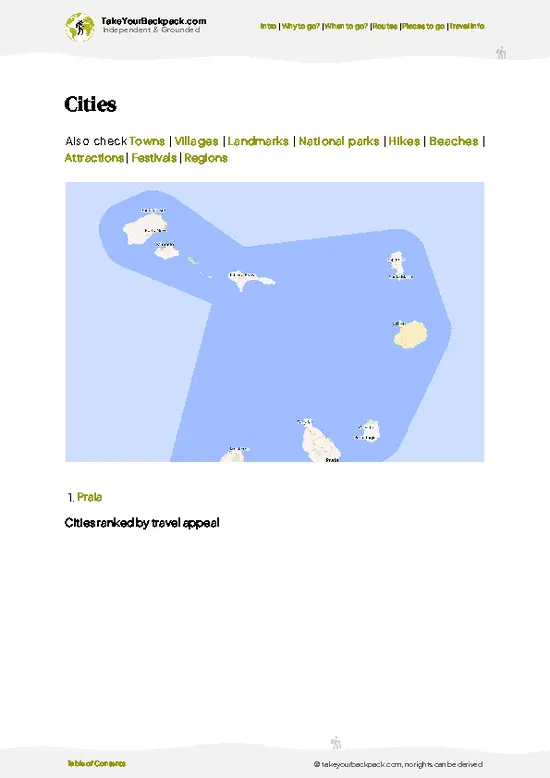
A visual overview of the country
Loading the map 🌍
CLICK TO FILTER
city
town
village
unique site
national park
hike
beach
attraction
festival
region
SHOW COUNTRY’S BESTSHOW ALL
film
0
0
0a
Cidade Velha
film
1
1
1a
Torre de Belém replica & waterfront cultural zone (Mindelo
film
2
2
2a
Centro Cultural do Mindelo
film
3
3
3a
Museu Etnográfico da Praia
film
4
4
4a
Palácio da Cultura Ildo Lobo (Praia
film
5
5
5a
Museu da Tabanka (Assomada
film
6
6
6a
Santa Maria Beach
film
7
7
7a
Praia de Santa Mónica
film
8
8
8a
Ponta Preta Beach
film
9
9
9a
Praia de Chaves
film
10
10
10a
Baía das Gatas
film
11
11
11a
Praia de São Pedro
film
12
12
12a
Praia de Tarrafal
film
13
13
13a
Praia da Laginha
film
14
14
14a
Praia de Atalanta
film
15
15
15a
Salinas Beach
film
16
16
16a
Ribeira da Janela
film
17
17
17a
Serra Malagueta
film
18
18
18a
Ponta de Sol to Cha de Igreja
film
19
19
19a
Pico da Antonia
film
20
20
20a
Monte Verde
film
21
21
21a
Fogo
film
22
22
22a
Serra Malagueta Natural Park
film
23
23
23a
Cova-Paul-Ribeira da Torre Natural Park
film
24
24
24a
Cabo Verde
film
25
25
25a
Ilha do Sal
film
26
26
26a
Santa Maria
film
27
27
27a
Mindelo
film
28
28
28a
Sal Rei
film
29
29
29a
Cidade Velha (Ribeira Grande)
film
30
30
30a
São Filipe
film
31
31
31a
Tarrafal
film
32
32
32a
Vila do Maio
film
33
33
33a
Fontainhas

Why go?What draws travelers here

Scenery

Cabo Verde earns its scenery the hard way: lava, wind, salt, and a lot of walking. You get volcano sunrises … read more 👉
Cabo Verde earns its scenery the hard way: lava, wind, salt, and a lot of walking. You get volcano sunrises on Fogo, knife-edge ridges and the Paúl Valley, a salt-crater lagoon at Pedra de Lume, and the Blue Eye cave lighting up near midday. Hit hikes before the trade winds jump, and chase views right after the first rains.

Mountains

I go to Cabo Verde for the ridgelines, not the resorts. Santo Antão’s old mule paths knife between terraced … read more 👉
I go to Cabo Verde for the ridgelines, not the resorts. Santo Antão’s old mule paths knife between terraced valleys, and Pico do Fogo lets you crunch lava before breakfast if you start pre‑dawn. Fly to São Vicente, take the first ferry—trade one extra transfer for real trails. Fewer crowds than the Canaries, warmer than the Azores, tougher than postcards.

People

Cabo Verdeans meet you with morabeza: quick eye contact, quicker jokes. Learn bon dia/botarde and an … read more 👉
Cabo Verdeans meet you with morabeza: quick eye contact, quicker jokes. Learn bon dia/botarde and an “obrigadu” in Kriolu and doors open. Give five minutes and your name; you’ll get a chair, a shot of grogue, maybe a spoon of cachupa. Expect teasing nicknames and honest questions. After sunset, plazas hum; clap along and you stop being scenery.

Beach life

Pick Cabo Verde when you want real beach days, not resort theater. Sal and Boa Vista deliver miles of … read more 👉
Pick Cabo Verde when you want real beach days, not resort theater. Sal and Boa Vista deliver miles of clean sand; mornings are glassy, afternoons get the trade‑wind kick for kites. September–October brings the calmest water; May–June has the clearest dives. Night turtle walks? Loggerheads nest July–September—go with a guide. Extra brag: wade with harmless sharks at Sal’s Shark Bay.

Low cost

Cabo Verde stretches your money if you play the time–comfort game right. Eat cachupa and grilled fish … read more 👉
Cabo Verde stretches your money if you play the time–comfort game right. Eat cachupa and grilled fish where locals queue; sleep in residenciais; ride aluguers and slow ferries instead of taxis and flights. Free hikes, free beaches, music most nights for the price of a drink. Expect a backpacker day roughly in the mid‑30s to mid‑40s USD, outside resort islands.
Want the complete picture of Cabo Verde?
The offline Travel Guide brings everything together — routes, highlights & planning.

See what's included in the guide 👉

Get the Travel Guide -

⭐ HighlightsKey places and experiences

  • Santo Antão — Cova to Paúl: Dawn finds a quiet, green amphitheater above clouds and a zigzag path stitched into terraced slopes. Do the crater-to-sea hike; it’s the island in one walk. Catch the 7:00 Mindelo-Porto Novo ferry, grab an aluguer straight to Cova, and descend before the noon cloud cap; bring small escudos for grogue and a knee brace for the switchbacks.
  • Fogo — Chã das Caldeiras: Black lava, stone houses, grapevines fighting dust and wind. Climb Pico do Fogo at sunrise with a local guide, then toast with smoky vinho in the crater village. Sleep inside the caldera for the head start; nights are cold, shoes fill with ash, and 4x4s beat sedans on the broken road.
  • Mindelo — Nights that linger: Guitars leak from doorways on Rua Lisboa, and Laginha glows at sunset. Sit for live morna after 10 p.m., then chase caldo de peixe at a late kiosk. Taxis are cheap; keep your phone pocketed and ferry tickets for Santo Antão bought a day ahead.
  • Sal — Santa Maria pier and Pedra de Lume: Fishermen
read more 👉
  • Santo Antão — Cova to Paúl: Dawn finds a quiet, green amphitheater above clouds and a zigzag path stitched into terraced slopes. Do the crater-to-sea hike; it’s the island in one walk. Catch the 7:00 Mindelo-Porto Novo ferry, grab an aluguer straight to Cova, and descend before the noon cloud cap; bring small escudos for grogue and a knee brace for the switchbacks.
  • Fogo — Chã das Caldeiras: Black lava, stone houses, grapevines fighting dust and wind. Climb Pico do Fogo at sunrise with a local guide, then toast with smoky vinho in the crater village. Sleep inside the caldera for the head start; nights are cold, shoes fill with ash, and 4x4s beat sedans on the broken road.
  • Mindelo — Nights that linger: Guitars leak from doorways on Rua Lisboa, and Laginha glows at sunset. Sit for live morna after 10 p.m., then chase caldo de peixe at a late kiosk. Taxis are cheap; keep your phone pocketed and ferry tickets for Santo Antão bought a day ahead.
  • Sal — Santa Maria pier and Pedra de Lume: Fishermen slam tunas on bleached planks while grills flare two steps away. Float in the salt crater; you can’t sink. Go one hour before closing for warm light and fewer vans, bring water to rinse, and expect a cash-only gate.
  • Boa Vista — Dunes and turtles: The Viana desert moves with the wind, and the Atlantic pounds empty beaches. Ride at first light, then join a licensed night patrol to watch loggerheads nest. Book in town, use a red headlamp, no flashes; if you want quieter islands, file away São Nicolau’s Monte Gordo trails, Maio’s Morro beach, and Brava’s Fajã de Água.
Spotted a mistake or missing a highlight? Contact us.

But Cabo Verde offers more...

Discover and compare all of its highlights per category

🧭 RoutesPlanning a route that makes sense

The 2-Day Mindelo Culture Sprint

The Vibe: A compact city-break on São Vicente built around music, waterfront walks, and easy museum-hopping, perfect if you want Cabo Verde flavor without domestic flights. You’ll stay put in Mindelo, trading big distances for long evenings and slow mornings by the bay.
The Highlights:
  • Harborfront strolls around the Torre de Belém replica and Mindelo’s waterfront zone.
  • Immersive arts and performance at Centro Cultural do Mindelo.
  • Maritime history and shipwreck lore at Museu do Mar.
  • Swims and sunset downtime at Praia da Laginha.

The 3-Day Santiago History & Beach Loop

The Vibe: A grounded introduction to Cabo Verde’s capital island, mixing colonial history, everyday city life, and a relaxed beach finale without ever leaving Santiago. Expect a steady pace with short road trips, plenty of walking, and evenings free for food and music.
The Highlights:
  • Praia’s plateau district with its markets, streets, and cultural venues.
  • UNESCO-level history in Cidade Velha, the archipelago’s
read more 👉

The 2-Day Mindelo Culture Sprint

The Vibe: A compact city-break on São Vicente built around music, waterfront walks, and easy museum-hopping, perfect if you want Cabo Verde flavor without domestic flights. You’ll stay put in Mindelo, trading big distances for long evenings and slow mornings by the bay.
The Highlights:
  • Harborfront strolls around the Torre de Belém replica and Mindelo’s waterfront zone.
  • Immersive arts and performance at Centro Cultural do Mindelo.
  • Maritime history and shipwreck lore at Museu do Mar.
  • Swims and sunset downtime at Praia da Laginha.

The 3-Day Santiago History & Beach Loop

The Vibe: A grounded introduction to Cabo Verde’s capital island, mixing colonial history, everyday city life, and a relaxed beach finale without ever leaving Santiago. Expect a steady pace with short road trips, plenty of walking, and evenings free for food and music.
The Highlights:
  • Praia’s plateau district with its markets, streets, and cultural venues.
  • UNESCO-level history in Cidade Velha, the archipelago’s original capital.
  • Ethnographic insights at Museu Etnográfico da Praia.
  • Soft sand and fishing-boat views at Praia de Tarrafal.

The 5-Day Volcano, Valleys & Mindelo Circuit

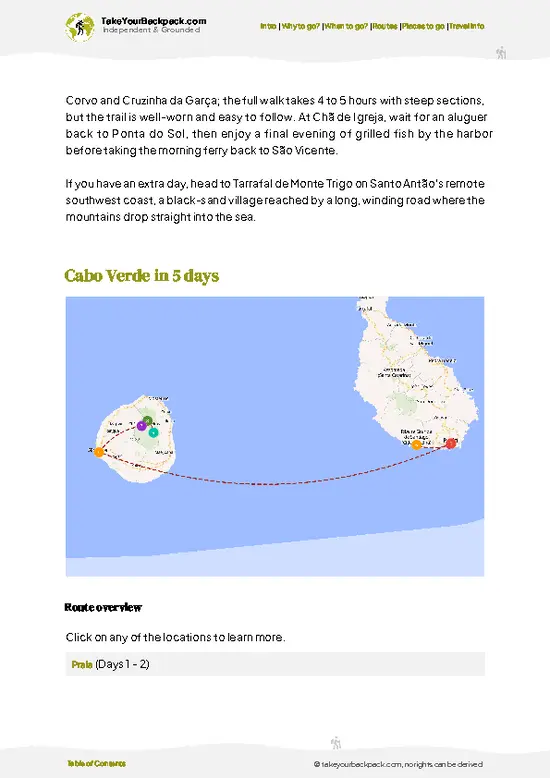
The Vibe: A multi-island adventure linking Fogo’s lava landscapes, Santo Antão’s green ravines, and São Vicente’s cultural capital, ideal if you want big scenery and strong local character in under a week. You’ll balance a couple of travel days with long, immersive stretches in each place.
The Highlights:
  • Crater living and optional summit hiking around Pico do Fogo and Chã das Caldeiras.
  • Terraced valleys and dramatic viewpoints in and around Cova on Santo Antão.
  • Cliffside villages like Fontainhas and coastal paths near Ponta do Sol.
  • Mindelo’s music scene, museums, and city beach at Praia da Laginha.
🌍 Want a ready-to-use travel plan for Cabo Verde?
The overview above compares different route options based on your travel time and style. The complete Travel Guide breaks each itinerary down in detail, including maps, stops, highlights, and transport information.

Explore all route details 👉

Get the Travel Guide -

🌤️ When to go?Best time to visit Cabo Verde

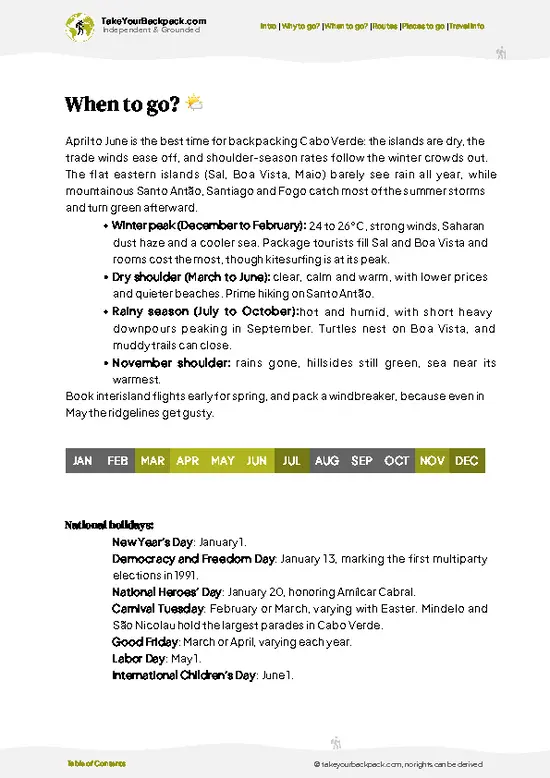
Late November to mid-December and late March through June are the sweet spot. The weather sits in that dry, forgiving lane; the trade winds back off just enough for calmer inter-island crossings; Santo Antão’s ridges are still green from earlier showers; and the holiday/Carnival surge has bled out of room rates. You move without elbows in your ribs, but you still get energy on the streets and reliable hiking conditions. Hit this window and you buy time: fewer sold-out ferries, more choice in hospedarias, and clear mornings before the ocean breath really kicks.
  • Peak (Holidays & Trade-winds): Mid-December to Easter spikes prices and patience. Ferries fill, kites crowd the line-up. The payoff: Mindelo Carnival, bulletproof wind sessions, and long, cool ridge walks without heat-bonk.
  • Shoulder (Reset & Flow): Late Nov-mid Dec, late Mar-Jun. Winds ease, seas calm, shopkeepers have time, and trails feel yours. You cover islands fast and cheap by moving early and light.
  • Off-Peak (Rain & Heat): Aug-Oct turns valleys lush and empty. Squalls pop, humidity sits. Wear mesh trail runners, line your pack, start at dawn, and pad a day for weather-tossed boats.

Tactical tip: Book inter-island flights first, then fit lodgings and hikes around those fixed wings.

source: climatestotravel.comJANJanuary: fair for travelingFEBFebruary: fair for travelingMARMarch: highly recommended for travelingAPRApril: excellent for travelingMAYMay: excellent for travelingJUNJune: excellent for travelingJULJuly: good for travelingAUGAugust: fair for travelingSEPSeptember: fair for travelingOCTOctober: fair for travelingNOVNovember: highly recommended for travelingDECDecember: good for traveling
📅 Traveling in a specific month?
Get a full month-by-month breakdown of weather, crowds, costs, festivals, and seasonal highlights in the complete travel guide.

Get full details when to go 👉

Get the Travel Guide -
cape-verde-pixabay-sea-1171664

💰 Costs (as of 2025)Typical budget expectations

Plan on €40-60 per day if you stick to one island and ride shared transport; inter-island hops spike a day to €80-120 fast.
  • dorm accommodation: 1,200-2,500 CVE (€11-23) on Santiago, São Vicente, and Sal, rarer elsewhere and pricier in Boa Vista. Cash almost always shaves a few euros. System tip: skip the waterfront; two blocks inland the same “residencial” bed drops 20-30 percent, and messaging the owner on WhatsApp for a 3-night cash deal works better than any app.
  • meals: Supermarket Survival sounds cheap but imports bleed you; a DIY pasta night can cost more than a plate of cachupa rica. Street food reality: pastel de atum 80-150 CVE, grilled fish with rice 400-700 CVE, juice 100-200 CVE. Cheaper than the Canaries, pricier than Senegal. Eat where construction crews eat and the bill halves.
  • local transport: Aluguers (shared vans) are the unlock. Town hops 80-150 CVE, cross-island 200-500 CVE. Go early to the taxi park, sit front, and pay one extra seat to leave sooner and avoid the sardine crush. Ferries beat flights on price (think €10-35 vs €40-120 per leg) but cost time and stomach. Pick one island cluster to avoid paying to re-learn the same wind and sand.
  • activities: Hiking is the
read more 👉
Plan on €40-60 per day if you stick to one island and ride shared transport; inter-island hops spike a day to €80-120 fast.
  • dorm accommodation: 1,200-2,500 CVE (€11-23) on Santiago, São Vicente, and Sal, rarer elsewhere and pricier in Boa Vista. Cash almost always shaves a few euros. System tip: skip the waterfront; two blocks inland the same “residencial” bed drops 20-30 percent, and messaging the owner on WhatsApp for a 3-night cash deal works better than any app.
  • meals: Supermarket Survival sounds cheap but imports bleed you; a DIY pasta night can cost more than a plate of cachupa rica. Street food reality: pastel de atum 80-150 CVE, grilled fish with rice 400-700 CVE, juice 100-200 CVE. Cheaper than the Canaries, pricier than Senegal. Eat where construction crews eat and the bill halves.
  • local transport: Aluguers (shared vans) are the unlock. Town hops 80-150 CVE, cross-island 200-500 CVE. Go early to the taxi park, sit front, and pay one extra seat to leave sooner and avoid the sardine crush. Ferries beat flights on price (think €10-35 vs €40-120 per leg) but cost time and stomach. Pick one island cluster to avoid paying to re-learn the same wind and sand.
  • activities: Hiking is the value king and mostly free on Santo Antão if you use aluguers to trailheads. Guided canyon treks €20-40 per person, boat trips and whale season runs €30-70, quad tours and dune buggies on Sal/Boa Vista burn cash fast, diving €50-80 per dive. Your budget swings on how often you hire engines.
  • miscellaneous: Budget Leaks: tourist bed tax ~220 CVE per adult per night, ATM fees bite (plan big withdrawals), water is bought not tapped, beach towns add a “view” tax to menus, and the airport security fee exists whether you see it or not. Relative value: pricier than mainland West Africa, still cheaper than European islands if you keep to aluguers and local plates.
⚠️ Prices can change and everyone travels differently, so take this as a rough guide. Hope it helps you plan your adventure!

✈️ The backpacker research shortcutCabo Verde Travel Guide

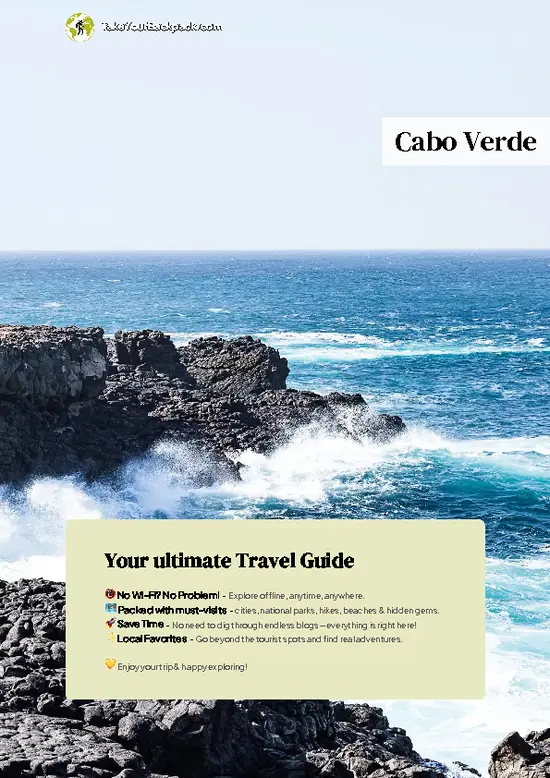
An offline-friendly backpacking guide with optimized travel routes, ranked highlights, transport advice, and the best areas to stay.
example page 0 from our offline Travel Guide for Cabo Verdeexample page 1 from our offline Travel Guide for Cabo Verdeexample page 2 from our offline Travel Guide for Cabo Verdeexample page 3 from our offline Travel Guide for Cabo Verdeexample page 4 from our offline Travel Guide for Cabo Verdeexample page 5 from our offline Travel Guide for Cabo Verdeexample page 6 from our offline Travel Guide for Cabo Verdeexample page 7 from our offline Travel Guide for Cabo Verde
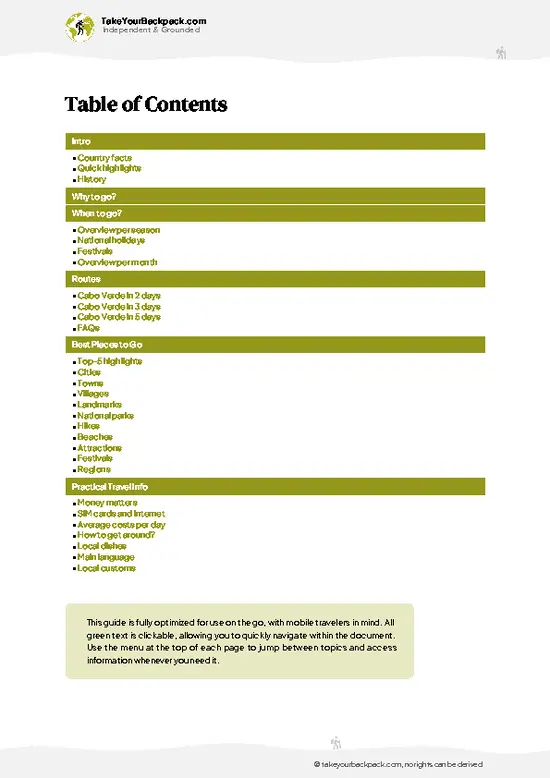
The digital guide (257 pages) contains:
61 highlights, ranked by travel appeal
Optimized 2, 3 & 5-day travel routes
Cities, national parks, beaches, historical sites, ...
How to get around
Offline-friendly for travel without Wi-Fi
👉 Click to see all 30+ guide features

📅 Plan smarter in minutes, not weeks
Month by month travel advice
Festivals & national holidays
Budget expectations

🗺️ Go to the right places, skip the overrated ones
Honest pros & cons of destinations
Top hikes, parks & viewpoints
Lesser-known places most travelers miss
Clear “worth it vs skip it” guidance

🛏️ Travel smoothly without rookie mistakes
Best areas to stay
Transport systems explained simply
Common scams & safety advice
SIM cards, money & practical tips

🌍 Understand the country, not just visit it
Culture & traditions
52 Essential phrases & customs
Festivals worth planning around
Traveler-friendly historical context
Insights that make places more meaningful

📱 Built for real travel conditions
Fully downloadable PDF
Works completely offline
Optimized for phone use
Useful in remote areas & buses
Everything in one place
Save weeks of stressful planning
Get instant access to the full guide directly. 30-day money-back guarantee.


Sent to your inbox immediately after payment • 100% Secure Checkout
Best Backpacking Travel Advisor 2025 tourism awardBest Backpacking
Travel Advisor
2025
What others say about Take Your Backpack Guides:
⭐⭐⭐⭐⭐
Fantastic, amazing amount of information!
⭐⭐⭐⭐⭐
My goodness this is amazing, it's what I've been looking for hats off too you!
⭐⭐⭐⭐⭐
I think this is absolutely BRILLIANT
⭐⭐⭐⭐
Very complete and informative. It's still missing places, but I gotta to commend you
⭐⭐⭐⭐⭐
This is truly amazing, thank you, can't wait to explore it with my kids!
⭐⭐⭐⭐⭐
Awesome resource, thank you!
⭐⭐⭐⭐⭐
This is amazing! Can't wait to explore the ones I haven't seen
⭐⭐⭐⭐
I love this! Well done, great idea.
⭐⭐⭐⭐⭐
Thanks for taking the time to make this gem!
⭐⭐⭐⭐⭐
This might be the best website I've ever seen.
⭐⭐⭐⭐⭐
Congratulations, and thank you so much for your work; it's incredibly valuable.
⭐⭐⭐⭐
In all seriousness I think you did a great job pointing out the important spots
⭐⭐⭐⭐⭐
10/10 very good
⭐⭐⭐⭐⭐
As someone who's only just starting to visit regularly this is awesome, thank you.
⭐⭐⭐⭐
Thank you very much! I'm going to visit my dad, it's going to be very useful!
⭐⭐⭐⭐⭐
This is really cool! We'll be travelling for the first time and this definitely come in handy.
⭐⭐⭐⭐⭐
You are now our minister of culture, congratulations 👨‍💼
⭐⭐⭐⭐⭐
Just wanted to tell you that this is a pearl! Going to follow your recommendations.
⭐⭐⭐⭐⭐
This is so cool. I'll definitely be using the resource for my travels soon.
⭐⭐⭐⭐⭐
This is very impressive! Good work.
⭐⭐⭐⭐⭐
This is an amazing and informative site. Very well done!

🛏️ Where to stay?Areas travelers tend to prefer

Yes—there are hostels and budget accommodation in Cabo Verde, concentrated mainly in Santa Maria (Sal), Mindelo Centro/Laginha (São Vicente), Praia (Plateau/Achada Santo António) and Sal Rei (Boa Vista).
Santa Maria has the widest range of low-cost stays close to beaches, water-sports and nightlife but gets touristy and pricier in high season; Mindelo puts you next to music, cultural life and transport links with lively evenings but fewer dorm-style hostels and quieter streets after midnight.
Praia offers very cheap local guesthouses near markets and buses with mixed neighborhood safety—favor … read more 👉
Yes—there are hostels and budget accommodation in Cabo Verde, concentrated mainly in Santa Maria (Sal), Mindelo Centro/Laginha (São Vicente), Praia (Plateau/Achada Santo António) and Sal Rei (Boa Vista).
Santa Maria has the widest range of low-cost stays close to beaches, water-sports and nightlife but gets touristy and pricier in high season; Mindelo puts you next to music, cultural life and transport links with lively evenings but fewer dorm-style hostels and quieter streets after midnight.
Praia offers very cheap local guesthouses near markets and buses with mixed neighborhood safety—favor Plateau by day and avoid poorly lit areas at night—while Sal Rei is quieter and scenic for beach solitude but has limited services, nightlife and public transport.

If you enjoy meeting fellow travelers, consider choosing hostels with high ratings for atmosphere. On the other hand, if you prefer having your own space, a hotel might be a better option.

🚌 Getting aroundWhat moving around is really like

Cabo Verde runs on wind, swell, and patience. Timetables exist, but the ocean edits them. On land, vans leave when full; in the air, short hops usually hit their marks. Locals plan buffers, not minutes. Pay for speed, or wait for stories. Early mornings win; the elements set the beat.
  • Domestic flights — Fast and pricey by local standards. Hops are 25-60 minutes, but bags are tight and routes often backtrack via Praia or Mindelo. Morning flights dodge wind and delays. You’ll spend several ferry fares
read more 👉
Cabo Verde runs on wind, swell, and patience. Timetables exist, but the ocean edits them. On land, vans leave when full; in the air, short hops usually hit their marks. Locals plan buffers, not minutes. Pay for speed, or wait for stories. Early mornings win; the elements set the beat.
  • Domestic flights — Fast and pricey by local standards. Hops are 25-60 minutes, but bags are tight and routes often backtrack via Praia or Mindelo. Morning flights dodge wind and delays. You’ll spend several ferry fares at once, but buy back a full day.
  • Inter-island ferries — The only way to Santo Antão, and the key to São Nicolau and Brava. Cheap, slower, and hostage to swell. Buy the day before, board early, sit high and upwind, jacket handy. You trade predictability for reach you can’t fly to.
  • Aluguer shared minibuses — They leave when full, not “at 10.” Greet the van, pass coins forward; change returns. Mornings are best; afternoons thin out. Don’t slam the door; help with sacks. Pay a bit extra for the front seat on long climbs.
  • Hitchhiking + split charters — Daytime thumbs work on Santo Antão, São Nicolau, and rural Fogo; offer small cash. Better hack: gather three people and pitch a driver a flat price to go now. Split four ways it undercuts taxis and beats waiting.

Master tip: Do the longest sea or air leg first, stack early-morning departures, and keep a 24-hour buffer in Praia or Mindelo before your flight home—weather runs the islands, not you.
Distance
Nelson Mandela International Airport (RAI) sits about 5 km (3 miles) from Praia’s city center (the Plateau).

Public transport options
  • Shared minibus (hiace/aluguer) — Cheapest, but not door-to-door. There’s no bus that pulls into the terminal. Exit the airport and walk about 7-10 minutes to the main road/roundabout; flag a minibus heading to “Plateau” (often via Sucupira market).
    • Time: 25-45 minutes total, depending on wait time and stops.
    • Cost (2025): about 100-150 CVE per person, cash only.

    Tip: Services thin out at night and on Sundays; expect longer waits outside peak hours.
  • Pre-booked transfer (hotel or private) — Easiest if you want a set price and meet-and-greet.
    • Time: 10-15 minutes.
    • Cost (2025): typically 1,200-2,500 CVE per vehicle, depending on provider and hour.


Taxis
Readily available outside arrivals, metered use is inconsistent, so agree the fare before you get in.
  • Time: 10-15 minutes to the Plateau.
  • Cost (2025): about 1,000-1,200 CVE daytime; 1,200-1,500 CVE evenings/late night/holidays. Small extra for large luggage is common.

Good to know
  • No Uber/Bolt in Praia; it’s taxis, minibuses, or a booked transfer.
  • Carry small cash (CVE). Cards are rarely accepted for local transport.
  • If you’re aiming for the Plateau, “Sucupira” is a handy stop a short walk below the center.
⚠️ Prices and routes can change, so take this as a rough guide and ask for local advice when you arrive.

🔒 Safety (risk Level: medium)Safety considerations for travelers

Safety for solo travelers, including women and LGBTQ+ individuals
Cabo Verde is generally safe for solo travelers, including women and LGBTQ+ individuals, but it’s wise to stay cautious. Petty crime like pickpocketing can occur, so keep your belongings secure, especially in crowded areas. Women should feel comfortable traveling alone, though it’s advisable to avoid isolated places after dark. LGBTQ+ travelers are generally welcomed, but discretion is recommended in rural areas where traditional views may persist.

✈️ VisaEntry requirements and paperwork

Most travelers to Cabo Verde need a visa, but you can apply for an e-visa online through the official EASE website or get one on arrival. Citizens of certain countries are exempt for short stays, so check if your passport qualifies for this. Always double-check the latest requirements as they can change frequently.
⚠️ Visa requirements can change over time, so always check the latest visa requirements with the official embassy or government website before you travel.

🎒 What to pack?What you'll need while traveling

Cabo Verde’s climate is pretty chill, with warm and dry conditions year-round, but the islands can offer a mix of experiences. Think about packing for a bit of everything: beach time, hiking trails, and maybe some city strolling. It can get pretty windy, especially on islands like Sal and Boa Vista, so a lightweight windbreaker might come in handy. The terrain varies, with sandy beaches and rugged mountains, so sturdy footwear is a good idea. While the vibe is mostly laid-back, locals appreciate modest clothing, especially in rural areas, so throw in a couple of outfits that cover your shoulders and knees.

Apart from this country specific advice, I have also crafted a general packing list that should help on any trip. authorOver the years, I've learned the importance of packing minimally. It's so much easier to jump on the back of a truck or squeeze yourself into the last spot of a minibus without that supersized backpack. If you're headed to a warm destination, leave your winter jacket at home; for colder regions, opt for thin thermal underlayers. Instead of packing your entire wardrobe, bring just three sets of clothes, as laundry facilities are available everywhere.
View the full list 👉
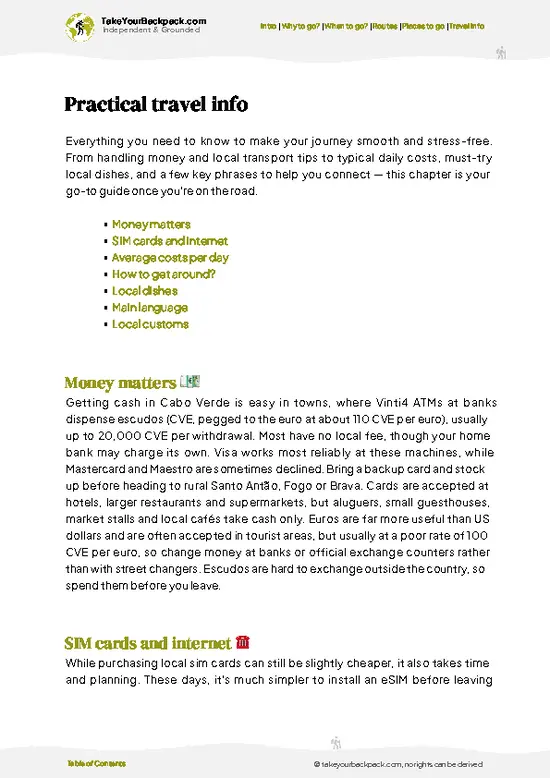
🎒 Planning the practical side of your trip?
Get detailed information on transport, daily budgets, internet access, local customs, food, language, and other essentials in the complete Travel Guide.

Get detailed practical information 👉

Get the Travel Guide -

🙋 FAQQuick answers to practical concerns

Trip Planning


Personal tip: I normally search on good rating for atmosphere (for meeting people) and location (for easy exploring). Cleanliness as a bonus.


Travel Essentials

Vaccinations for Cabo Verde:
- Hepatitis A
- Hepatitis B (if engaging in certain activities)
- Typhoid
- Routine vaccinations (MMR, DTP)

Consider rabies if spending time outdoors or with animals. No yellow fever vaccine needed unless traveling from a country with risk of yellow fever. Always consult a healthcare provider before travel.


vaccination requirements
When I first started traveling, I often spent part of my first day in a new country hunting for a local SIM card. While this can still be slightly cheaper, it also takes time and planning.

These days, it's much simpler to install an eSIM before leaving home. Once you arrive in Cabo Verde, you can activate it immediately and have mobile data from the moment you land — which is especially useful for ordering transport or navigating away from busy airports.

There are many providers nowadays, and price differences are usually small. I personally go with Airalo, as it offers excellent network coverage throughout the country and strong global coverage, so you can manage multiple countries from a single app.


Get your e-sim for Cabo Verde

Culture & Customs

Respect local customs: greet with a handshake and a smile; it’s polite and appreciated. Dress modestly, especially in rural areas. Time is relaxed here, so expect delays.

Do: Try traditional music and dance; it’s a big part of their culture.

Don’t: Refuse food or drink when offered; it’s considered rude.

For LGBTQ+ travelers, the scene is low-key but generally tolerant; discretion is wise. Women should be cautious of unwanted attention, especially when traveling alone.
Trying traditional food is always a great way to experience the culture. Here are some must-try dishes for Cabo Verde.
  • Cachupa: This is Cape Verde’s national dish, a hearty stew made from corn, beans, and whatever meat or fish is available. It’s a staple comfort food that reflects the island’s agricultural roots and communal spirit.
  • Pastel: These are deep-fried pastries filled with fish or meat, kind of like Cape Verde’s version of an empanada. They’re widely popular as a street food snack and are perfect for a quick, tasty bite.
  • Buzio: A dish made from sea snails, usually cooked in a spicy sauce. It’s a bit of an acquired taste but a must-try for anyone wanting to dive deeper into the local flavors. Represents the islands’ connection to the sea.
  • Grogue: While not a dish, this potent local rum is an essential part of Cape Verdean culture. Made from sugarcane, it’s often enjoyed during social gatherings and celebrations.
  • Caldo de Peixe: A traditional fish soup that’s both simple and flavorful, often enjoyed by locals as a comforting meal. It’s a great way to experience the fresh seafood that Cape Verde is known for.
Tap water in Cabo Verde is generally not recommended for tourists to drink, even though some locals might consume it. To stay on the safe side, stick to bottled or filtered water. It’s easy to find bottled water in most places, and it’s a safer bet to avoid any stomach troubles.
The main language in Cabo Verde is Portuguese. Backpacking is way more rewarding if you know a bit of the local language, so I'd suggest brushing up on the basics just in case your Portuguese skills have become a bit rusty.

Want to understand locals better?
The complete Travel Guide for Cabo Verde includes 52 essential words and phrases — greetings, thank-yous, ordering food, transport, numbers, and common local expressions you'll actually hear.

Get your local basic phrases 👉

Get the Travel Guide -


In Cabo Verde, English is not the primary language, but it is increasingly spoken, especially in tourist areas. The official language is Portuguese, and the local Creole dialect, Kriolu, is widely used among residents. In major cities like Praia and Mindelo, as well as popular tourist destinations, many people in the hospitality industry, such as hotel staff, tour guides, and restaurant employees, have a good command of English.

However, outside of these areas, English proficiency may be limited. It’s beneficial for travelers to learn a few basic Portuguese phrases or Kriolu greetings to enhance their experience and communicate more effectively with locals. Overall, while English is not universally spoken, visitors will find enough English speakers in tourist-centric regions to navigate their travels comfortably.

Money & Payments

The local currency of Cabo Verde is CVE (Escudo).

In Cape Verde, having some cash on hand is essential. ATMs are available in larger towns and cities, but they can be unreliable or might run out of cash, especially during peak tourist seasons. It’s a good idea to withdraw when you can, but don’t rely solely on ATMs.

Carry a mix of local currency (CVE) and euros. Euros are widely accepted and often preferred for larger transactions. As for dollars, they aren’t as commonly accepted, so stick to euros if you’re bringing foreign currency.

Credit and debit cards aren’t universally accepted, especially in smaller shops and eateries, so don’t count on them for everyday expenses. Larger hotels and major restaurants might accept them, but always double-check.

For exchanging money, banks and currency exchange offices at the airport are reliable options. While some hotels offer currency exchange, rates might not be as favorable. Avoid exchanging money on the street to steer clear of scams.

Tipping in Cabo Verde isn’t mandatory, but it’s appreciated. In restaurants, leaving around 5-10% for good service is common. For taxi drivers and hotel staff, rounding up the bill or giving a small tip is a nice gesture.

🧩 Nearby countriesSimilar backpacking destinations

We 💚 feedbackWhat to know before planning your trip

Cabo Verde runs on morabeza and wind. You’ll wait for ferries, then end up dancing in Mindelo at 2 a.m. The best surprise was Santo Antão’s knife-edge trails dropping into banana valleys—way greener than the maps imply. Small warning: schedules are loose and seas get mean; build buffers and carry cash, as ATMs blink out. Strategic tip: pick two islands max and go carry-on only; take first flights of the day, then ride aluguer shared taxis and let the tempo do the work.

✍️ Help improve this page!
The information on this page is based on in-depth research, insights shared by experienced travelers, and feedback from the local travel community in Cabo Verde. While every effort is made to keep the information accurate and current, conditions can change — so if you spot anything incorrect or outdated, please get in touch.


🙋‍♂️ Give feedback

👋 Meet the founderWho’s Behind Take Your Backpack?

Johan, backpacker and founder of TakeYourBackpackHi, I’m Johan (Netherlands 🇳🇱), the creator of TakeYourBackpack. Over the past decade, I’ve backpacked through 80+ countries across six continents, gaining extensive experience with independent travel, long-term trips, and overland routes.

This site is built on a combination of firsthand travel experience and carefully curated insights from other backpackers. Many guides are based on places I’ve personally visited, while others bring together tips, observations, and practical advice shared by trusted travelers I’ve met along the way.

The goal is to provide realistic, experience-driven guidance — not generic itineraries — so you can explore destinations with better context, clearer expectations, and more confidence.

Get full Cabo Verde guide •
Instant download • 61 highlights • Full Offline guide