×
Austria 🇦🇹

backpacking Europe Austria 🇦🇹
Glide between alpine villages on trains shaping relaxed mountain journeys.

Explore AndorraExplore Belarus

Backpacking Austria in 2026

A complete guide including when and where to go, costs, transport, itineraries, and practical travel advice.
Traveling in Austria: what to expect

Backpacking Austria
By Johan Kruseman 🇳🇱 | Updated May 29, 2026

You step off an ÖBB regional train exactly when the board said, dump your pack in a spotless hostel, and bite into a hot käsekrainer under a church spire. Punctual and indulgent, Austria runs on order with a wink. The rules make room for pleasure, which is the code you’ll keep cracking all trip.

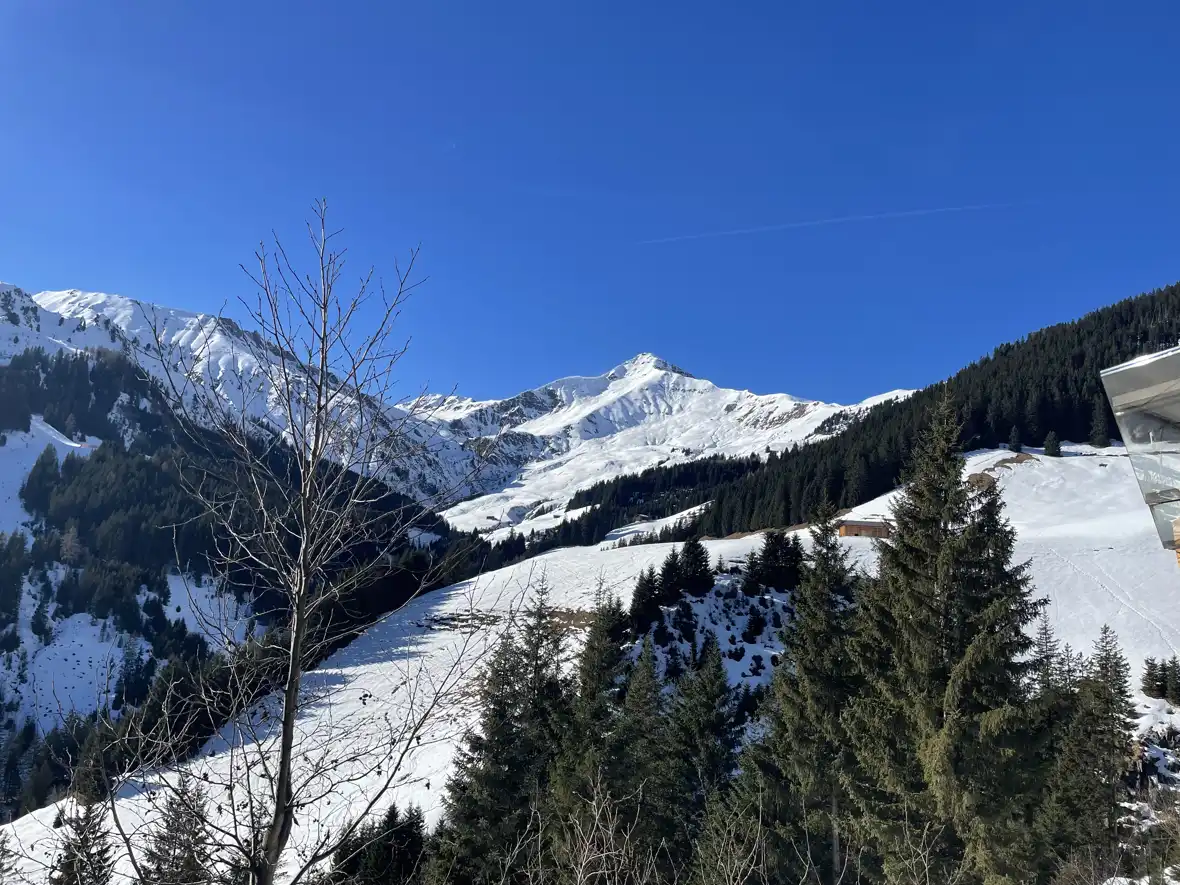
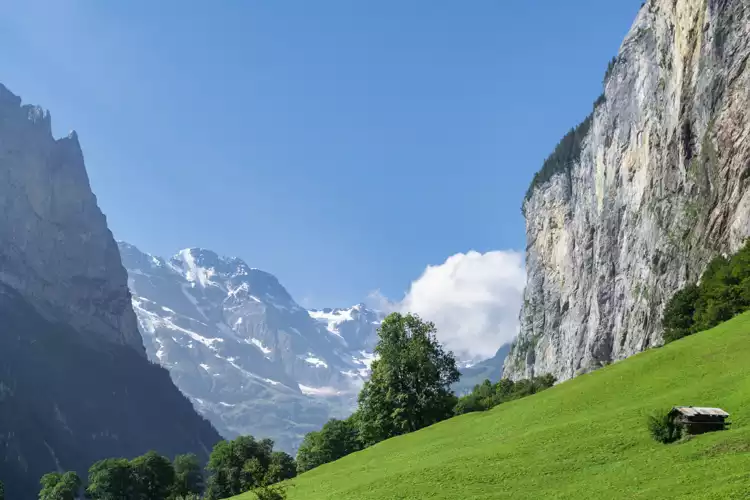
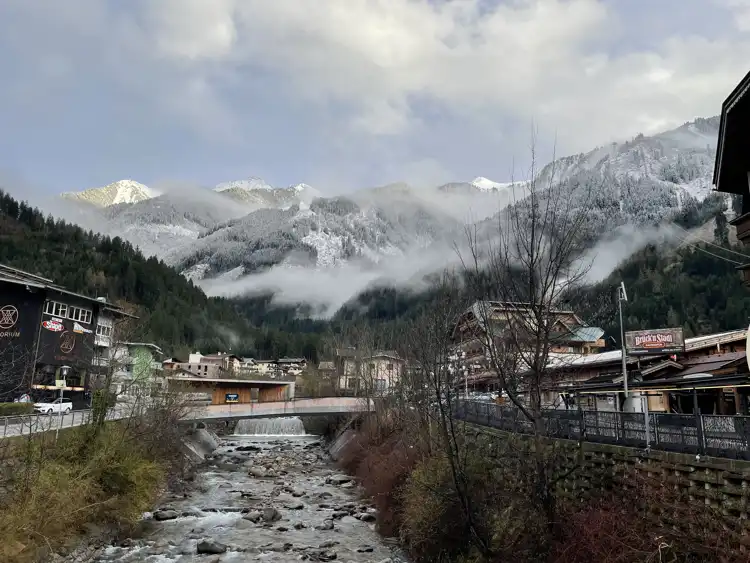
This is a country where hut-to-hut trails stitch alpine meadows, cobalt lakes lie under sharp peaks, and cities run on coffee, cake, and music. Vienna’s grandeur meets modern edge; the Salzkammergut pulls you into cold, clean water; Tyrol deals out via ferratas and huts with dumplings at 2,000 meters. Costs creep, Sundays hush, iconic spots crowd, and mountain weather turns. Lean on lunch menus, first lifts, hut bookings, and regional rail passes to turn it into value and flow.

Compared with Germany, Austria is tighter and more alpine; versus Switzerland, easier on the wallet; next to Slovenia, more polished; against Czechia or Hungary, less bohemian and more poised. For hikers, culture chasers, train nerds, and pastry loyalists, this is your rhythm.

👉 Get the 📖 Travel Guide of Austria
Vienna + Wachau (Danube Spine) Vienna runs on timetables and coffee. Trams and U‑Bahn stitch the city, so you can stack museums by day and heuriger courtyards at night. Use the same Danube rail to hit the Wachau: train to Krems or Melk, pedal the levees, hop the small ferries. Rewards planners, cyclists, and food-first travelers.

Salzkammergut (Lakes around Bad Ischl/Hallstatt) The Salzkammergut is a lake maze you work by timetable. Rail to Bad Ischl, bus or ferry to Hallstatt, cables up to Krippenstein, trails to Gosausee. Crowds flood midday; go early, then swim cold water to clear the legs. Best for hikers and families who respect bus schedules and daylight.

Innsbruck & Tirol Valleys (Nordkette–Stubai–Ötz) Innsbruck is a mountain switchboard. Railjet in, funicular to Nordkette, buses fanning to Stubai and Ötztal on clockface runs. Cable cars erase 1,500 meters fast; your knees pay it back on descent. Carry cash for huts. Weather turns quick. Ideal for fit travelers learning hut-to-hut systems and maximizing short windows.

Vorarlberg & Arlberg Vorarlberg rewards people who notice craft and silence. Arlberg railway drops you at Langen or Bludenz; Postbuses punch up valleys on sparse timetables. Villages shut hard in shoulder season, and prices run higher than Tirol. In return: ridgelines, serious cheese, and timber architecture. Suits hikers and design nerds.

Styria & Graz Hills Graz runs cooler and cheaper than Vienna. Trams are simple; cafes hum with students. South, the wine roads and thermal baths spread out—bus-light, so rent wheels or accept long waits. Buschenschank hours are irregular but worth the chase. Built for slow travelers who eat first and sightsee after.
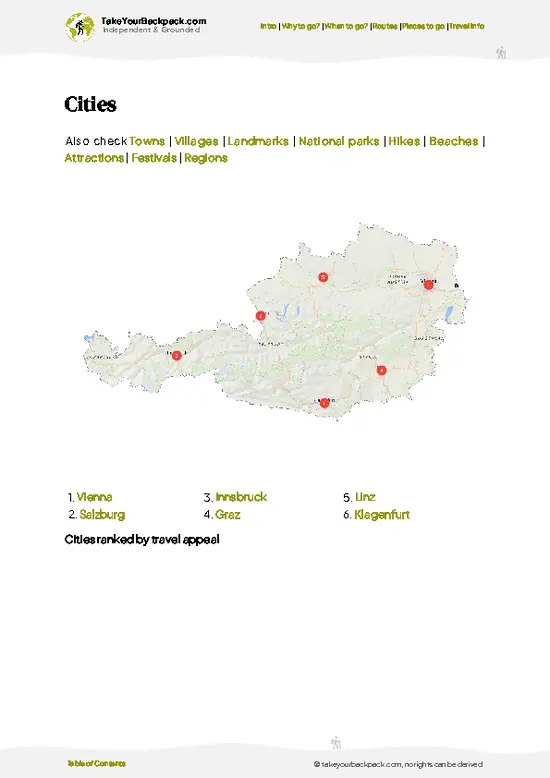
Geography and where places are located
Loading the map 🌍
CLICK TO FILTER
city
town
village
unique site
national park
hike
beach
attraction
festival
region
SHOW COUNTRY‘S BESTSHOW ALL
film
0
0
0a
Schönbrunn Palace
film
1
1
1a
Kunsthistorisches Museum
Pixabay
film
2
2
2a
Belvedere Palace
film
3
3
3a
Salzburg Fortress
film
4
4
4a
Albertina Museum
film
5
5
5a
Vienna State Opera
Pixabay
film
6
6
6a
Spanish Riding School
film
7
7
7a
Tiergarten Schönbrunn
Pixabay
film
8
8
8a
Mozart’s Birthplace
film
9
9
9a
Burgtheater
Pixabay
film
10
10
10a
Neusiedler See
film
11
11
11a
Traunsee
film
12
12
12a
Vienna
Pixabay
film
13
13
13a
Innsbruck
Stoyan Tzvetansky
film
14
14
14a
Graz
Radek Skibinski
film
15
15
15a
Klagenfurt
film
16
16
16a
Alpe-Adria-Trail
Mariusz Jaś
film
17
17
17a
Eagle Walk
film
18
18
18a
Dachstein Salzkammergut
Claire Hallam
film
19
19
19a
Grossglockner
Erzsébet Vaszil
film
20
20
20a
Lechweg
Friedrich Böhringer
film
21
21
21a
Wachau World Heritage Trail
Rudolf Sedlaczek
film
22
22
22a
Zillertal Alps
Vineeth Avvaru
film
23
23
23a
Schladminger Tauern High Trail
film
24
24
24a
Pinzgauer Spaziergang
film
25
25
25a
Rax Plateau
film
26
26
26a
Hohe Tauern
Pixabay
film
27
27
27a
Gesäuse
Petr Štěpánek
film
28
28
28a
Kalkalpen
film
29
29
29a
Donau-Auen
Nationalpark Donau-auen
film
30
30
30a
Thayatal
Nationalpark Thayatal
film
31
31
31a
Nockberge Biosphere Reserve
Marek Kopec
film
32
32
32a
Karwendel
film
33
33
33a
Dobratsch
film
34
34
34a
Bregenzerwald
film
35
35
35a
Austrian Alps
film
36
36
36a
Dachstein, Salzkammergut
賀禎禎
film
37
37
37a
Wachau Valley
Ház Precíz
film
38
38
38a
Kühtai
Nick Martin
film
39
39
39a
Zell am See
Hb Hb
film
40
40
40a
St. Wolfgang
Sebastiaan Terlouw
film
41
41
41a
Bad Ischl
film
42
42
42a
Gmunden
Maryam Marefat
film
43
43
43a
Bregenz
film
44
44
44a
Villach
film
45
45
45a
Mariazell
Stanislav Bradáč
film
46
46
46a
Wels
Ilse Wiespointner
film
47
47
47a
Amstetten
Ági Móhr
film
48
48
48a
Palace and Gardens of Schönbrunn
Tanja Paunovic
film
49
49
49a
Mauthausen
Bogo Stoyanov
film
50
50
50a
Semmering Railway
Gabor Sagi
film
51
51
51a
Hallstatt
Gal1leo
film
52
52
52a
Dürnstein
Christian M
film
53
53
53a
Gosau
Марина Цвиркун
film
54
54
54a
St. Gilgen
Ursula Kraemer
film
55
55
55a
Traunkirchen
Andreas Schobesberger
film
56
56
56a
Lunz am See
Felix Popernitsch
film
57
57
57a
Rattenberg

Why go?What makes this country worth the trip

Mountains

Austria makes hiking feel engineered for joy. Trails are blazed red‑white‑red, signposts list hours not hype, and huts are spaced like chess pieces—three … read more 👉
Austria makes hiking feel engineered for joy. Trails are blazed red‑white‑red, signposts list hours not hype, and huts are spaced like chess pieces—three to six hours apart—so you can plan clean, efficient days. The system clicks: train to valley (ÖBB), Postbus to trailhead, boots on within minutes. If you want to cheat the climb, summer lifts slot neatly into routes; use them to bank a ridge traverse and drop to a hut before the afternoon thunder.

Pro tip: get an Alpenverein membership. Hut discounts, rescue coverage, and you’ll be treated like you belong—because you do.

The work pays immediately. Limestone ridges in the Karwendel cut like shark fins. The Schladminger Tauern throws lakes at your feet all day. On the Stubai High Trail, I hit 1,400 meters of gain, rolled into a hut with salt stiff in my shirt, and the first cold beer tasted earned, not bought.

Start early; storms like to build after lunch. Carry cash; huts often don’t do cards. Shoulder season means old snow on north faces—microspikes save pride. If you’re based in Vienna, Rax and Schneeberg deliver real alpine legs in a day. If you’re chasing big horizons, Hohe Tauern ridges at dawn will silence you. Then you descend to dumpling soup and a bunk you don’t have to carry. That’s the game.

Scenery

Austria pays off when you treat the landscape like a timetable. Valleys run on rails, cable cars lift you clean onto the ridges, and a marked trail drops … read more 👉
Austria pays off when you treat the landscape like a timetable. Valleys run on rails, cable cars lift you clean onto the ridges, and a marked trail drops you at a hut with soup and a cold Märzen before your knees start complaining. Lakes have ferries that sync with trains, caves open in set slots, and the weather usually flips after lunch. Learn that rhythm and you stack big views with low waste—more horizon per hour.

I’ve screwed it up and learned. I hit Dachstein at noon once and watched the cloud ceiling swallow the glacier like a curtain. Came back at 8 a.m., stepped onto hard snow while jackdaws rode the thermals, and earned that first beer at Seethalerhütte with a grin and cold fingers.

Pro tip: take the first boat across Hallstättersee, walk the lakeshore while the buses are still unloading in town, then climb toward the Salzberg vantage before 10:30. You get glassy water, church bells, and your photo without elbows.

Architecture

Austria is a clean read of European architecture because the layers never got scraped off. Romans laid the grid at Carnuntum. Monks answered with fortress-abbeys … read more 👉
Austria is a clean read of European architecture because the layers never got scraped off. Romans laid the grid at Carnuntum. Monks answered with fortress-abbeys like Melk, all gold and discipline. The Habsburgs built the Ringstrasse as a stone resume—Parliament, opera, museums—then Wagner and Loos broke it with clean lines and honest materials. Today, Vorarlberg’s timber culture refines the craft, not with nostalgia, but with precise joinery and daylight that works. The system is simple: ride, walk, climb, repeat. Pro tip: take Vienna’s tram 1 or D around the Ring at dusk and hop off like a thief—two stops, two facades, keep moving. For the burn-and-reward, climb Graz’s Schlossberg stairs; the clocktower is your metronome, the first Puntigamer at the bottom tastes earned. In Innsbruck, Hadid’s Hungerburgbahn stations are the prelude; the Nordkette view is the full note. If you want concrete with a conscience, stand at Wotruba Church in Vienna on a cold morning—wind on your face, raw blocks stacked like thought—then warm up in a corner café and let it settle. And when the wood calls, bus into the Bregenzerwald; the Werkraumhaus in Andelsbuch shows how a region builds like it means it.
Want the complete picture of Austria?
The offline Travel Guide brings everything together — routes, highlights & planning.

See what's included in the guide 👉

Get the Travel Guide -

⭐ HighlightsThe places that define a trip here

  • Vienna Ring by Local Tram The bell clangs, wheels squeal through Schottentor, and steam from a Würstelstand hits your face when the doors pop at Karlsplatz. Backpacker hack: skip the tourist Ring Tram—ride lines 1 and 2 for the full circuit, validate once, and if your stay touches Monday, the Mon-Sun weekly pass often beats a 72-hour ticket.
  • Wachau Danube Ride (Melk → Krems) Gravel crunches under your tires, apricot blossom hangs sweet over the path, and Dürnstein’s bells slice the wind as you roll past vines. Backpacker hack: train upriver to Melk, tour the abbey at opening, then ride back east with the usual tailwind; use the tiny Spitz and Dürnstein ferries for mid-river photo angles—cash only, seasonal hours.
  • Gosausee and the Dachstein Wall Cold spray beads on the lakeside boards, the Dachstein’s north face mirrors so clean you hear your boots scuff. Backpacker hack: catch the first 542 bus via Gosau, walk past Vorderer Gosausee to the quieter Hinterer basin, and in shoulder season carry
read more 👉
  • Vienna Ring by Local Tram The bell clangs, wheels squeal through Schottentor, and steam from a Würstelstand hits your face when the doors pop at Karlsplatz. Backpacker hack: skip the tourist Ring Tram—ride lines 1 and 2 for the full circuit, validate once, and if your stay touches Monday, the Mon-Sun weekly pass often beats a 72-hour ticket.
  • Wachau Danube Ride (Melk → Krems) Gravel crunches under your tires, apricot blossom hangs sweet over the path, and Dürnstein’s bells slice the wind as you roll past vines. Backpacker hack: train upriver to Melk, tour the abbey at opening, then ride back east with the usual tailwind; use the tiny Spitz and Dürnstein ferries for mid-river photo angles—cash only, seasonal hours.
  • Gosausee and the Dachstein Wall Cold spray beads on the lakeside boards, the Dachstein’s north face mirrors so clean you hear your boots scuff. Backpacker hack: catch the first 542 bus via Gosau, walk past Vorderer Gosausee to the quieter Hinterer basin, and in shoulder season carry microspikes—the shaded steps glaze even when the valley feels like spring.
  • Grossglockner High Alpine Road Wind bites, marmots whistle like teakettles, and glacier grit sandpapers your palms at the rail of Kaiser-Franz-Josefs-Höhe. Backpacker hack: use the Postbus combo that includes the road toll, go with the first departure, and plan to be off exposed trails by 14:00—afternoon cells build fast; if clouded in, drop to the Margaritzen reservoir for salvageable views.
  • Salzburg Old Town to Augustiner Bräu Quads burn on the Mönchsberg stairs, church copper glows level with your eyes, then a cold ceramic stein lands heavy in your hand and the hall smells of roast and yeast. Backpacker hack: skip the paid lift—walk up from Toscaninihof in 10 minutes for the skyline, then at Augustiner pick a mug, rinse, pay the cashier, and hand the ticket to the tapman; for off-the-map, hit Gesäuse’s Johnsbach valley, the Rax plateau via Höllental, or the Semmering railway trails—my personal favorite is first light on Gosausee when the Dachstein turns pink.
Spotted a mistake or missing a highlight? Contact us.

But Austria offers more...

Discover and compare all of its highlights per category

🧭 RoutesHow to structure a trip

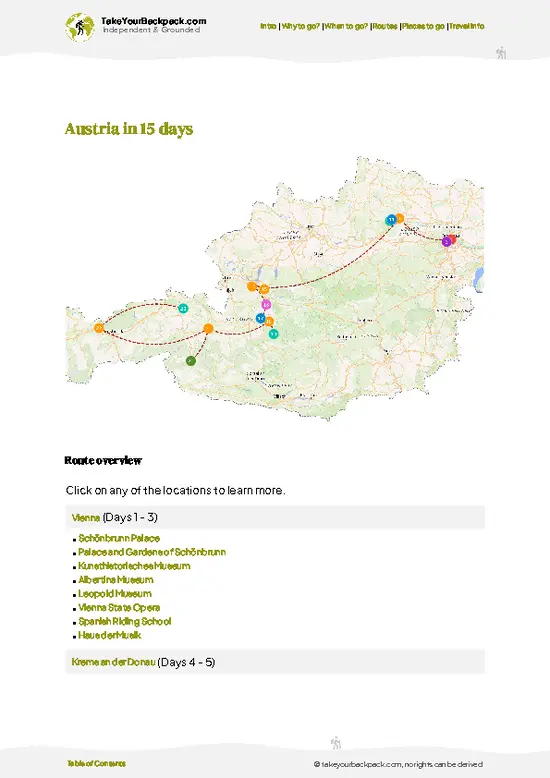
The 5-Day Lakes & Villages Route

The vibe: A relaxed, low-stress escape into Austria’s lake district, built for travelers who want big scenery, small towns, and minimal packing and unpacking. You’ll move slowly between a couple of bases, soaking up the Salzkammergut’s water, mountains, and village life.
The highlights:
  • Lakeside days and quiet evenings in St. Wolfgang
  • Exploring Hallstatt beyond the midday crowds
  • Riding up into the Dachstein Salzkammergut mountains for easy high-altitude walks

The 10-Day Classic Austria Route

The vibe: A balanced first-timer’s circuit that blends imperial city life, baroque streets, and alpine lakes without feeling rushed. You’ll hop between Vienna, Salzburg, and the mountains by train, with enough time in each stop to actually settle in.
The highlights:
  • Palaces and world-class museums in Vienna
  • Salzburg’s fortress-topped old town and riverside walks
  • Lakeside stays in St. Wolfgang and Hallstatt
  • Alpine views around Zell am See and Hohe Tauern National Park

The 15-Day

read more 👉

The 5-Day Lakes & Villages Route

The vibe: A relaxed, low-stress escape into Austria’s lake district, built for travelers who want big scenery, small towns, and minimal packing and unpacking. You’ll move slowly between a couple of bases, soaking up the Salzkammergut’s water, mountains, and village life.
The highlights:
  • Lakeside days and quiet evenings in St. Wolfgang
  • Exploring Hallstatt beyond the midday crowds
  • Riding up into the Dachstein Salzkammergut mountains for easy high-altitude walks

The 10-Day Classic Austria Route

The vibe: A balanced first-timer’s circuit that blends imperial city life, baroque streets, and alpine lakes without feeling rushed. You’ll hop between Vienna, Salzburg, and the mountains by train, with enough time in each stop to actually settle in.
The highlights:
  • Palaces and world-class museums in Vienna
  • Salzburg’s fortress-topped old town and riverside walks
  • Lakeside stays in St. Wolfgang and Hallstatt
  • Alpine views around Zell am See and Hohe Tauern National Park

The 15-Day Deep-Dive Austria Route

The vibe: A slow-burn journey for travelers who want to go beyond the greatest hits, mixing cities, wine country, lakes, and serious hiking. You’ll trace a broad arc from Vienna and the Wachau to the Salzkammergut and the high Alps of Styria, Salzburg, and Tyrol.
The highlights:
  • Three full days of palaces, museums, and music in Vienna
  • Danube-side towns and vineyard landscapes in the Wachau Valley
  • Extended time in the Salzkammergut around St. Wolfgang, Bad Ischl, and Hallstatt
  • Mountain bases in Schladming, Zell am See, and Seefeld with access to Dachstein trails, Hohe Tauern, and the Eagle Walk
🌍 Want a ready-to-use travel plan for Austria?
The overview above compares different route options based on your travel time and style. The complete Travel Guide breaks each itinerary down in detail, including maps, stops, highlights, and transport information.

Explore all route details 👉

Get the Travel Guide -

🌤️ When to go?A month-by-month overview

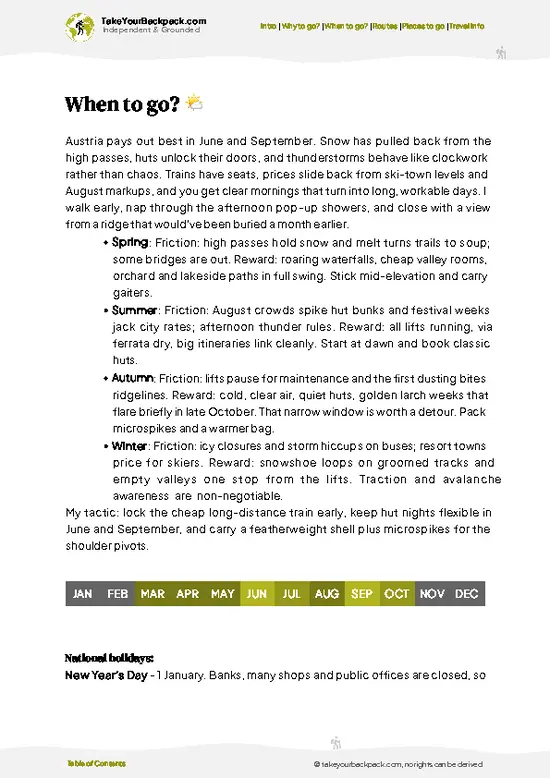
Austria pays out best in June and September. Snow has pulled back from the high passes, huts unlock their doors, and thunderstorms behave like clockwork rather than chaos. Trains have seats, prices slide back from ski-town levels and August markups, and you get clear mornings that turn into long, workable days. I walk early, nap through the afternoon pop-up showers, and close with a view from a ridge that would’ve been buried a month earlier.
  • Spring: Friction: high passes hold snow and melt turns trails to soup; some bridges are out. Reward: roaring waterfalls, cheap valley rooms, orchard and lakeside paths in full swing. Stick mid-elevation and carry gaiters.
  • Summer: Friction: August crowds spike hut bunks and festival weeks jack city rates; afternoon thunder rules. Reward: all lifts running, via ferrata dry, big itineraries link cleanly. Start at dawn and book classic huts.
  • Autumn: Friction: lifts pause for maintenance and the first dusting bites ridgelines. Reward: cold, clear air, quiet huts, golden larch weeks that flare briefly in late October. That narrow window is worth a detour. Pack microspikes and a warmer bag.
  • Winter: Friction: icy closures and storm hiccups on buses; resort towns price for skiers. Reward: snowshoe loops on groomed tracks and empty valleys one stop from the lifts. Traction and avalanche awareness are non-negotiable.

My tactic: lock the cheap long-distance train early, keep hut nights flexible in June and September, and carry a featherweight shell plus microspikes for the shoulder pivots.

source: climatestotravel.comJANJanuary: fair for travelingFEBFebruary: fair for travelingMARMarch: good for travelingAPRApril: good for travelingMAYMay: good for travelingJUNJune: excellent for travelingJULJuly: highly recommended for travelingAUGAugust: good for travelingSEPSeptember: excellent for travelingOCTOctober: highly recommended for travelingNOVNovember: fair for travelingDECDecember: fair for traveling
📅 Traveling in a specific month?
Get a full month-by-month breakdown of weather, crowds, costs, festivals, and seasonal highlights in the complete travel guide.

Get full details when to go 👉

Get the Travel Guide -
2024-02-03 13.44.49

💰 Costs (as of 2026)Travel costs in Austria

Plan on €70-90 per day if you sleep in dorms, eat from supermarkets with the odd kebab, and ride regional trains; expect the high end in Salzburg, Innsbruck, and ski valleys.
  • dorm accommodation — €22-35 in Vienna/Graz, €30-45 in Salzburg/Innsbruck, €45-60 in alpine towns at peak; Austria sits pricier than Czechia/Hungary, cheaper than Switzerland, roughly on par with Germany’s big cities. System tip: book direct when a hostel includes breakfast or free locker rental; otherwise pounce on last-minute app deals midweek. Night trains (ÖBB Nightjet) can replace a bed if you snag Sparschiene seats/couchettes early; I’ve slept from Vienna to Feldkirch for less than a city dorm in July.
  • meals — Supermarket Survival: breakfast+lunch from Hofer/Lidl/Spar for €6-9 total (bread, cheese, fruit, yogurt), plus a hot deli box or canned goulash for €3-5; Austria’s supermarkets beat Switzerland by a mile, but cost more than Poland/Czechia. Street food reality: kebab €5-7, Würstelstand sausage €4-6, bakery Leberkäse-Semmel €3-4; sit-down mains run €12-18. Half-liter beer €1 in a shop, €4-5 in a bar, €5-6 in ski towns. Always ask for Leitungswasser; tap water is excellent and free if you use the word.
  • local
read more 👉
Plan on €70-90 per day if you sleep in dorms, eat from supermarkets with the odd kebab, and ride regional trains; expect the high end in Salzburg, Innsbruck, and ski valleys.
  • dorm accommodation — €22-35 in Vienna/Graz, €30-45 in Salzburg/Innsbruck, €45-60 in alpine towns at peak; Austria sits pricier than Czechia/Hungary, cheaper than Switzerland, roughly on par with Germany’s big cities. System tip: book direct when a hostel includes breakfast or free locker rental; otherwise pounce on last-minute app deals midweek. Night trains (ÖBB Nightjet) can replace a bed if you snag Sparschiene seats/couchettes early; I’ve slept from Vienna to Feldkirch for less than a city dorm in July.
  • meals — Supermarket Survival: breakfast+lunch from Hofer/Lidl/Spar for €6-9 total (bread, cheese, fruit, yogurt), plus a hot deli box or canned goulash for €3-5; Austria’s supermarkets beat Switzerland by a mile, but cost more than Poland/Czechia. Street food reality: kebab €5-7, Würstelstand sausage €4-6, bakery Leberkäse-Semmel €3-4; sit-down mains run €12-18. Half-liter beer €1 in a shop, €4-5 in a bar, €5-6 in ski towns. Always ask for Leitungswasser; tap water is excellent and free if you use the word.
  • local transport — The unlocks: ÖBB Sparschiene for long hops (€9.90-24.90 if booked early), Westbahn often cheaper last-minute on Vienna-Salzburg-Innsbruck. For groups of 2-5, the Einfach-Raus Ticket crushes costs on regional trains. Inside cities, day tickets are decent, but Vienna’s Wochenkarte (Mon-Sun) is the hack at roughly two day-tickets for a full week; time your stay to it. Austria is pricier than Hungary but far cheaper than Switzerland’s walk-up fares.
  • activities — Cost drivers are mechanical: cable cars €25-60 return, alpine panoramas add up fast; big palaces and blockbuster museums €12-30 per entry. Salzburg Card pays if you stack the fortress+funicular+two museums in 24-48 hours; Vienna City Card mainly gives transport and small discounts, not free entries. Lakes and town walks are free; hiking from the valley saves a lift fee at the cost of sweat. I once skipped a €38 gondola by hiking 1,000 m up to a hut; the first €4.50 Radler at the top tasted earned.
  • miscellaneous — Budget leaks: city tourist taxes €1.50-3 per night (often added at check-in), laundry €4-6 wash + €2-4 dry, station bathrooms €0.50, lockers €3-6, hostel towel rentals €2-4. Prepaid SIMs from Drei/Magenta/A1 run €10-15 for 10-20 GB and beat roaming. Many mountain huts are cash only. Austria is tidier on fees than Italy but less forgiving than the Balkans; validate any paper ticket—Vienna inspectors cost me €10 once for a missed stamp.
⚠️ Prices can change and everyone travels differently, so take this as a rough guide. Hope it helps you plan your adventure!

✈️ The backpacker research shortcutAustria Travel Guide

An offline-friendly backpacking guide with optimized travel routes, ranked highlights, transport advice, and the best areas to stay.
example page 0 from our offline Travel Guide for Austriaexample page 1 from our offline Travel Guide for Austriaexample page 2 from our offline Travel Guide for Austriaexample page 3 from our offline Travel Guide for Austriaexample page 4 from our offline Travel Guide for Austriaexample page 5 from our offline Travel Guide for Austriaexample page 6 from our offline Travel Guide for Austriaexample page 7 from our offline Travel Guide for Austria
The digital guide (376 pages) contains:
94 highlights, ranked by travel appeal
Optimized 5, 10 & 15-day travel routes
Best neighborhoods to stay
How to get around
Offline-friendly for travel without Wi-Fi
👉 See all 30+ guide features

📅 Plan smarter in minutes, not weeks
Month by month travel advice
Festivals & national holidays
Budget expectations

🗺️ Go to the right places, skip the overrated ones
Honest pros & cons of destinations
Top hikes, parks & viewpoints
Lesser-known places most travelers miss
Clear “worth it vs skip it” guidance

🛏️ Travel smoothly without rookie mistakes
Best areas to stay
Transport systems explained simply
Common scams & safety advice
SIM cards, money & practical tips

🌍 Understand the country, not just visit it
Culture & traditions
52 Essential phrases & customs
Festivals worth planning around
Traveler-friendly historical context
Insights that make places more meaningful

📱 Built for real travel conditions
Fully downloadable PDF
Works completely offline
Optimized for phone use
Useful in remote areas & buses
Everything in one place
Save weeks of stressful planning
Get instant access to the full guide directly. 30-day money-back guarantee.


Sent to your inbox immediately after payment • 100% Secure Checkout
Best Backpacking Travel Advisor 2025 tourism awardBest Backpacking
Travel Advisor
2025
What others say about Take Your Backpack Guides:
⭐⭐⭐⭐⭐
Fantastic, amazing amount of information!
⭐⭐⭐⭐⭐
My goodness this is amazing, it's what I've been looking for hats off too you!
⭐⭐⭐⭐⭐
I think this is absolutely BRILLIANT
⭐⭐⭐⭐
Very complete and informative. It's still missing places, but I gotta to commend you
⭐⭐⭐⭐⭐
This is truly amazing, thank you, can't wait to explore it with my kids!
⭐⭐⭐⭐⭐
Awesome resource, thank you!
⭐⭐⭐⭐⭐
This is amazing! Can't wait to explore the ones I haven't seen
⭐⭐⭐⭐
I love this! Well done, great idea.
⭐⭐⭐⭐⭐
Thanks for taking the time to make this gem!
⭐⭐⭐⭐⭐
This might be the best website I've ever seen.
⭐⭐⭐⭐⭐
Congratulations, and thank you so much for your work; it's incredibly valuable.
⭐⭐⭐⭐
In all seriousness I think you did a great job pointing out the important spots
⭐⭐⭐⭐⭐
10/10 very good
⭐⭐⭐⭐⭐
As someone who's only just starting to visit regularly this is awesome, thank you.
⭐⭐⭐⭐
Thank you very much! I'm going to visit my dad, it's going to be very useful!
⭐⭐⭐⭐⭐
This is really cool! We'll be travelling for the first time and this definitely come in handy.
⭐⭐⭐⭐⭐
You are now our minister of culture, congratulations 👨‍💼
⭐⭐⭐⭐⭐
Just wanted to tell you that this is a pearl! Going to follow your recommendations.
⭐⭐⭐⭐⭐
This is so cool. I'll definitely be using the resource for my travels soon.
⭐⭐⭐⭐⭐
This is very impressive! Good work.
⭐⭐⭐⭐⭐
This is an amazing and informative site. Very well done!

🛏️ Where to stay?Areas travelers tend to prefer

Yes — Austria has plentiful hostels and budget accommodation in major cities, concentrated in Vienna (Leopoldstadt, Neubau, Mariahilf), Salzburg (Altstadt, Maxglan), Innsbruck (Old Town, Wilten) and Graz (Lend, Gries), while small tourist towns offer fewer low-cost options and more guesthouses.

Central areas put you within walking distance of highlights and nightlife but tend to be pricier and noisier; outer districts are cheaper and quieter but need public transit and can leave you far from evening attractions, so book ahead in peak season to avoid sold-out hostels.

If you enjoy meeting fellow … read more 👉
Yes — Austria has plentiful hostels and budget accommodation in major cities, concentrated in Vienna (Leopoldstadt, Neubau, Mariahilf), Salzburg (Altstadt, Maxglan), Innsbruck (Old Town, Wilten) and Graz (Lend, Gries), while small tourist towns offer fewer low-cost options and more guesthouses.

Central areas put you within walking distance of highlights and nightlife but tend to be pricier and noisier; outer districts are cheaper and quieter but need public transit and can leave you far from evening attractions, so book ahead in peak season to avoid sold-out hostels.

If you enjoy meeting fellow travelers, consider choosing hostels with high ratings for atmosphere. On the other hand, if you prefer having your own space, a hotel might be a better option.

🚌 Getting aroundGetting around Austria

You win Austria by learning its pulse. Trains depart the same minute each hour. Hubs (Wien Hbf, Linz, Salzburg, Innsbruck) swap passengers cross-platform like clockwork. If you move with that rhythm, the country shrinks and your pack gets lighter after every clean transfer.
  • ÖBB Railjet / InterCity / Nightjet (national trains) — Truth & Trade-off: Fast, on the hour, and usually the best cross-country time-to-stress ratio. Cheap only with Sparschiene advance fares; walk-up tickets can be 2-3× the promo
read more 👉
You win Austria by learning its pulse. Trains depart the same minute each hour. Hubs (Wien Hbf, Linz, Salzburg, Innsbruck) swap passengers cross-platform like clockwork. If you move with that rhythm, the country shrinks and your pack gets lighter after every clean transfer.
  • ÖBB Railjet / InterCity / Nightjet (national trains) — Truth & Trade-off: Fast, on the hour, and usually the best cross-country time-to-stress ratio. Cheap only with Sparschiene advance fares; walk-up tickets can be 2-3× the promo price. Nightjet saves a hostel night but real rest costs extra (couchette/sleeper).
    Unwritten Rules: No gates; the inspector scans your QR. Seat reservations aren’t mandatory domestically, but the tiny screens above seats show reserved segments—don’t squat under a “Wien-Salzburg” tag if you’re riding that stretch. Quiet zones are real. Bikes need a bike ticket and reservation on long-distance trains. Eurail/Interrail is valid on ÖBB (Nightjet still needs a paid reservation).
  • Westbahn (private Vienna-Salzburg-Innsbruck corridor) — Truth & Trade-off: Often cheaper than ÖBB if you’re late to the party and just riding the main corridor. Limited network beyond the spine; not useful for secondary routes. Eurail/Interrail not valid.
    Unwritten Rules: Buy in the app to avoid onboard surcharges. Open seating; upgrade to PLUS on the fly if you want space. Conductors actually check, and they’re brisk. If you’re carrying a bike, check the specific train—capacity is tighter than ÖBB.
  • Regional Trains (REX, Regionalzug, S-Bahn) — Truth & Trade-off: Slower but surgical for valleys and lakes. The Einfach-Raus-Ticket is the backpacker cheat code for pairs and small groups: unlimited regional trains after 09:00 on weekdays, all day weekends, no Railjet/IC allowed.
    Unwritten Rules: Paper regional tickets may require stamping before boarding (little validators on platforms); mobile tickets don’t. Expect hourly or worse frequency; miss one and you wait. On Sundays and school holidays service thins—plan the last connection like it’s a flight.
  • Intercity & Rural Buses (FlixBus, RegioJet, Postbus) — Truth & Trade-off: Cheapest late-booking between major cities and useful where rails don’t go. Risk is traffic and edge-of-town stations (Vienna VIB Erdberg, Salzburg South).
    Unwritten Rules: Show up 15 minutes early; luggage fees can be real on international coaches. For rural Postbus, drivers appreciate a wave at hail stops and exact change in tiny villages. “Rufbus” on-demand routes must be pre-booked by phone or app—no call, no bus. Hit the stop button early; they won’t slam brakes for a backpacker daydreaming past their trailhead.
  • City Transit (U-Bahn, trams, buses) — Truth & Trade-off: Frequent, reliable, and cheap with day passes (3+ rides in Vienna and the pass wins). Inspectors do unannounced checks.
    Unwritten Rules: Validate paper singles in blue/yellow machines (in stations or onboard trams). No turnstiles in Vienna—don’t mistake that for free. Fine for riding without a valid ticket in Vienna is about €105. Stand right, walk left on escalators. Bikes off-peak only on the U-Bahn; never on trams.
  • Bike + Train Combo — Truth & Trade-off: Lets you stitch lakes and alpine valleys without backtracking. Spaces are limited; on summer weekends demand explodes.
    Unwritten Rules: Long-distance trains need a bike reservation and bike ticket; regional rules vary by state. Remove panniers for boarding. Conductors will bump you if you didn’t reserve and the carriage is full—no debate.
  • Carshare/Rideshare (BlaBlaCar, local carshares) — Truth & Trade-off: Fills gaps on Sunday evenings and remote valleys where the timetable dies early. Cheap if you’re flexible; zero control if a driver cancels.
    Unwritten Rules: Meet points are usually station forecourts or park-and-rides; message your exact arrival minute and be five minutes early. Cash still talks.

Master Tactical Tip: Build your route on the hourly Railjet spine (Vienna-Linz-Salzburg-Innsbruck) and pivot off it with regional stubs; buy Sparschiene 2-3 weeks out for the trunk, then keep an Einfach-Raus day in your pocket for a slow day of valleys when prices spike or plans slip. You’re surfing the pulse: trunk fast, branches cheap, zero dead time.
Distance: Vienna International Airport (VIE) is about 18 km (11 miles) southeast of the city centre.

Main public transport options:
  • S-Bahn S7 (regional train): ~25 minutes to Wien Mitte; typical single fare about €4.20; buy tickets at airport machines, ÖBB/VOR apps or ticket counters and purchase before boarding to avoid heavy fines.
  • ÖBB Railjet / Regional trains: ~15 minutes to Wien Hauptbahnhof; typical fares €4-€6 for standard one-way tickets depending on advance purchase and class; buy at ÖBB machines, app or counters—these trains are faster and roomier than the S7.
  • City Airport Train (CAT): non-stop to Wien Mitte in 16 minutes; typical single fare about €12 (return and online offers often reduce per-trip cost); buy CAT tickets at dedicated counters or machines—CAT is quicker but not covered by regular Vienna public-transport tickets.
  • City buses / Vienna public transport connections: local buses connect to U-Bahn and regional lines with similar fares (~€4.20) but longer total travel time depending on final destination; always confirm route and buy a valid ticket before boarding.

Ticket tips: Always buy and validate the correct ticket before boarding; inspectors run frequent checks and fines for no valid ticket are substantial.

Taxi costs: Airport taxi to the city centre typically costs €35-€45 and takes 20-30 minutes depending on traffic; use official taxi stands in arrivals or pre-book a fixed-rate transfer to avoid overcharging.
⚠️ Prices and routes can change, so take this as a rough guide and ask for local advice when you arrive.

🔒 Safety (risk Level: low)What first-time visitors should know

Safety for solo travelers, including women and LGBTQ+ individuals
Austria is safe for solo travelers, including women and LGBTQ+ individuals, thanks to low violent crime rates and reliable public services.
Cities like Vienna, Salzburg and Innsbruck are progressive and LGBTQ+-friendly, but exercise normal city caution against pickpockets in tourist hotspots and on public transport.
Women traveling alone should prefer well-lit routes, official taxis or rideshares at night and keep valuables secured; rural alpine areas are safe but demand planning for weather, trail difficulty and limited mobile coverage.
Carry ID and travel insurance, register your plans with an emergency contact or embassy, and follow local norms to avoid common mistakes.


Full official government travel advisory (live updates)
View details 👉

✈️ VisaDo you need a visa to visit?

Do I need a visa to visit Austria: it depends on your nationality — EU/EEA/Swiss citizens and travelers from visa‑exempt countries (for example US, Canada, Australia, UK, Japan, South Korea) may stay up to 90 days in any 180‑day period without a visa, while all other nationals must obtain a Schengen short‑stay (Type C) visa.
Apply at the Austrian embassy/consulate or an authorized visa centre in your country by submitting the completed Schengen application form, valid passport, photos, travel insurance, proof of accommodation and funds, return ticket, paying the fee and giving biometric data; apply at least 15 days before travel and preferably 3–4 weeks to avoid delays.

source: bmeia.gv.at
⚠️ Visa requirements can change over time, so always check the latest visa requirements with the official embassy or government website before you travel.

🎒 What to pack?A practical packing list

In Austria weather can flip between sunny valley days and cold alpine nights, so prioritize layered clothing and a reliable waterproof outer layer over a single heavy coat. Mountain terrain ranges from steep, rocky trails to snowfields and cobblestone streets in towns, so choose sturdy, broken‑in footwear and a pack with good hip support to avoid blisters and back strain. Cultural expectations are conservative: dress modestly in churches, keep noise low in residential areas and on trains, and respect quiet hours in mountain huts and villages. Carry some euros in small denominations because many alpine huts, markets and rural shops prefer cash and remote services can be limited.

Apart from this country specific advice, I have also crafted a general packing list that should help on any trip. authorOver the years, I've learned the importance of packing minimally. It's so much easier to jump on the back of a truck or squeeze yourself into the last spot of a minibus without that supersized backpack. If you're headed to a warm destination, leave your winter jacket at home; for colder regions, opt for thin thermal underlayers. Instead of packing your entire wardrobe, bring just three sets of clothes, as laundry facilities are available everywhere.

View the full list 👉
🎒 Planning the practical side of your trip?
Get detailed information on transport, daily budgets, internet access, local customs, food, language, and other essentials in the complete Travel Guide.

Get detailed practical information 👉

Get the Travel Guide -

🙋 FAQQuick answers to practical concerns

Trip Planning


Personal tip: I normally search on good rating for atmosphere (for meeting people) and location (for easy exploring). Cleanliness as a bonus.


Travel Essentials

For vaccinations for Austria, ensure routine immunizations are current: MMR (measles/mumps/rubella), Tdap (tetanus/diphtheria/pertussis), polio, varicella (chickenpox) and annual influenza.

Stay current with COVID-19 vaccination/booster per your national guidance before travel.

Get the tick‑borne encephalitis (TBE) vaccine if planning hiking/forests or extended rural stays in endemic areas; standard schedule requires doses over months but accelerated schedules exist—start well before travel.

Consider hepatitis A if unvaccinated and at risk from local food/water exposure; one dose gives short-term protection, second dose after 6 months for long-term immunity.

Consider hepatitis B for long stays, medical work, or sexual exposure risk; standard course is 3 doses over months (accelerated options available).

Get rabies pre‑exposure vaccination for long-term travel, remote areas, frequent animal contact, or limited access to post‑exposure care; standard series is 3 doses.

Yellow fever is not required for entry to Austria unless arriving from a country that mandates a certificate—carry proof only if applicable.

Schedule needed vaccines at least 2–4 weeks before departure (TBE and rabies often need more time) and confirm recommendations with a travel clinic or your healthcare provider and current CDC/ECDC/WHO guidance.


vaccination requirements
When I first started traveling, I often spent part of my first day in a new country hunting for a local SIM card. While this can still be slightly cheaper, it also takes time and planning.

These days, it's much simpler to install an eSIM before leaving home. Once you arrive in Austria, you can activate it immediately and have mobile data from the moment you land — which is especially useful for ordering transport or navigating away from busy airports.

There are many providers nowadays, and price differences are usually small. I personally go with Airalo, as it offers excellent network coverage throughout the country and strong global coverage, so you can manage multiple countries from a single app.


Get your e-sim for Austria

Culture & Customs

Austria travel customs favor punctuality, formal greetings and firm handshakes, conservative dress in churches, quiet public behavior, respect for historical sites and observance of local quiet-hour and recycling rules.
Do’s: Be punctual, queue properly, validate transit tickets, carry some cash for small shops, tip 5–10% at restaurants; Don’ts: Don’t speak loudly on trams, don’t cut lines, don’t take photos where signs forbid, don’t ignore quiet-hour or recycling rules.
Major cities and tourist areas are generally gay-friendly with legal protections and Pride events, but avoid overt public displays of affection in conservative rural areas and keep emergency/contact info handy.
Women travelers are generally safe but should use normal nighttime precautions, watch for pickpockets in crowds, dress respectfully at religious sites, and report harassment to police or tourist offices immediately.
Trying traditional food is always a great way to experience the culture. Here are some must-try dishes for Austria.
  • Wiener Schnitzel: Thin, tender veal cutlet breaded and fried to a light crisp and usually served with a lemon wedge and potato salad or parsley potatoes. It is Austria’s signature savory dish and common on every restaurant menu, so order “Wiener Schnitzel vom Kalb” for authentic veal and expect price variation between pork and veal versions.
  • Tafelspitz: Beef boiled slowly in a clear broth with root vegetables, served sliced with horseradish, apple-horseradish sauce or chive sauce and boiled potatoes. It is a classic Viennese comfort dish tied to imperial cuisine and worth choosing when you want a hearty, traditional meal rather than fried fare.
  • Sachertorte: Dense chocolate sponge layered with apricot jam and covered in a glossy chocolate glaze, traditionally served with unsweetened whipped cream. It is an icon of Viennese coffeehouse culture; seek the “Original Sacher-Torte” (Hotel Sacher or Demel) if you want the historic version.
  • Apfelstrudel: Thin, flaky pastry rolled around spiced apples and raisins and typically served warm with vanilla sauce or ice cream. It is ubiquitous in cafés and markets across Austria and makes a reliable, portable dessert after sightseeing or hiking.
  • Kaiserschmarrn: Lightly caramelized, shredded pancake pieces dusted with powdered sugar and served with plum compote or fruit jam. Born from imperial cuisine, it is a popular alpine snack and a practical sharing dish after a long day outdoors.
  • Knödel (dumplings): Bread or potato dumplings that are served savory with gravies or in soups, and as sweet variants like Germknödel filled with plum jam and topped with poppy seeds. Knödel are a staple carbohydrate in Austrian meals and a good choice when you want a filling portion on a budget or in cold weather.
Austrian tap water is safe and routinely drunk by locals; municipal supplies meet strict EU and national standards.
Tourists can drink it directly in cities, towns and most villages, so bottled or filtered water is unnecessary unless you have a weakened immune system or are collecting from untreated alpine springs, in which case use bottled water or a reliable filter.
The main language in Austria is German. Backpacking is way more rewarding if you know a bit of the local language, so I'd suggest brushing up on the basics just in case your German skills have become a bit rusty.

Want to understand locals better?
The complete Travel Guide for Austria includes 52 essential words and phrases — greetings, thank-yous, ordering food, transport, numbers, and common local expressions you'll actually hear.

Get your local basic phrases 👉

Get the Travel Guide -


Austria’s official language is German; English is widely taught and commonly spoken in cities and tourist areas.
In Vienna, Salzburg, Innsbruck and other major cities expect very good English from younger people, hospitality staff, museums and most service counters.
Airports, major train stations, tourist information centers, guided tours and international hotels usually have staff who speak fluent English.
Long‑distance ÖBB trains and international buses commonly have English announcements and staff who can help in English.
In smaller towns, rural areas, mountain villages and high‑alpine huts expect limited English, especially from older locals and in purely local businesses.
Local dialects (Austrian German and Alemannic in Vorarlberg) can make understanding harder even when locals know standard German.
Menus, signs and attraction info are often bilingual in tourist zones but not guaranteed outside main sights.
Timetables and local notices are commonly in German; numbers and icons help but keep a translation app for exact details.
Carry a few German phrases such as Danke, Bitte, Entschuldigung and the phrase Wo ist die Toilette (where the toilet is) written down to hand over.
Download an offline translator and offline maps to handle schedules, menus and mountain‑hut interactions where English may be poor.
Speak slowly, use plain vocabulary, avoid idioms, show maps or photos and write addresses to reduce confusion.
Have printed booking confirmations and phone numbers for hosts and transport to show to taxi drivers or locals.
Emergency services accept English in major hospitals and at 112; police and local responders may prefer German, so keep key medical info written in German.
Plan to rely on English in cities and tourist infrastructure, but prepare to use basic German, translation tools or gestures in rural and alpine areas.

Money & Payments

The local currency of Austria is EUR (€).
Tipping culture in Austria is modest and expected for good service; tips in Austria are usually a rounded amount or about 5–10% in restaurants, while cafés and casual spots typically accept small change.
For taxis round up or add about 5–10%, give hotel porters €1–2 per bag and housekeeping €1–2 per night, and never feel obliged to tip large amounts since service charges are often included.

🧩 Nearby countriesSimilar backpacking destinations

📸 PhotosMoments captured along the way

Take your backpack - Austria - 0
Take your backpack - Austria - 1
Take your backpack - Austria - 2
Take your backpack - Austria - 3
Take your backpack - Austria - 4
Take your backpack - Austria - 5
Take your backpack - Austria - 6
Take your backpack - Austria - 7
Take your backpack - Austria - 8
Photographed by: Johan Kruseman

We 💚 feedbackWhat to know before planning your trip

Austria rewards anyone who plays by the timetable. Trains meet buses that meet lifts; trail numbers match the signs; in huts, orders appear in minutes. The vibe is buttoned-up until the second round at a heuriger, then the warmth shows. Best surprise: municipal lake baths—cheap entry, clean lawns, hot showers, and a cold Radler after a swim. Small warning: many huts still cash-only, and the last cable car leaves early. Forward: ÖBB’s Nightjet network is growing and the Klimaticket is stitching regions tighter year by year.

✈️ When did I visit Austria?
Being so close to my home country, and me loving mountains, I have visited Austria almost every year. During my childhood during summer holidays for hiking in the Alps. Now I go yearly in February or March for skiing. One of the most beautiful countries in the world. While my visit dates back, this guide is continuously refined using feedback from locals and current backpackers (last update: 7 May 2026)

✍️ Help improve this page!
The information on this page is based on my own backpacking experience in Austria, supplemented with up-to-date research and feedback from other travelers. Travel details can change, so if you notice anything outdated or incomplete, feel free to let me know.


🙋‍♂️ Give feedback

👋 Meet the founderWho’s Behind Take Your Backpack?

Johan, backpacker and founder of TakeYourBackpackHi, I’m Johan (Netherlands 🇳🇱), the creator of TakeYourBackpack. Over the past decade, I’ve backpacked through 80+ countries across six continents, gaining extensive experience with independent travel, long-term trips, and overland routes.

This site is built on a combination of firsthand travel experience and carefully curated insights from other backpackers. Many guides are based on places I’ve personally visited, while others bring together tips, observations, and practical advice shared by trusted travelers I’ve met along the way.

The goal is to provide realistic, experience-driven guidance — not generic itineraries — so you can explore destinations with better context, clearer expectations, and more confidence.

Get Full Country Guide |
Instant download • 94 highlights • Full Offline guide