×
Slovenia 🇸🇮

backpacking Europe Slovenia 🇸🇮Move effortlessly from alpine lakes to peaks.

Explore SlovakiaExplore Spain

Backpacking Slovenia in 2026

A complete guide including when and where to go, costs, transport, itineraries, and practical travel advice.
An overview of visiting Slovenia

Backpacking Slovenia
By Johan Kruseman 🇳🇱 | Updated June 4, 2026

Ride a Ljubljana bus to Kamnik, hop the Velika Planina cable car, and sleep in a shepherd’s hut above the pastures. It’s close and shows you the country’s trick: wild feels a bus ride away. Compact distances and a trail-and-hut network turn daypacks into door-to-door adventures.

Slovenia is a switchboard where Alps, karst, and a sliver of Adriatic all plug into one socket; in a week you can move from the emerald Soča to the cathedral-scale Škocjan caves to Piran’s salt wind. Swim Bohinj, walk Triglav’s ridgelines, taste Rebula and Refošk in Brda and Vipava, then let Plečnik’s bridges teach you Ljubljana’s calm logic. Buses thin on Sundays, huts book out in July, storms snap and go, and cash-only signs persist—solve for those with early starts, reservations, and a backup plan, and you earn emptier trails, colder springs, and longer tables.

Against Italy and Austria, the mountains feel less staged and more human; against Croatia, the coast is smaller but easier to breathe. Come if you want efficient beauty: first-time backpackers chasing quick wins, hikers and bikers who prize clean systems, and curious eaters with muddy boots.

👉 Get the 📖 Travel Guide of Slovenia

Ljubljana

Use the capital as your control center. Trains and buses radiate from the main station; lockers let you day-trip light. I base here to front‑load errands: SIM, cash, last‑minute gear. The core is walkable, bike lanes are real, and student energy keeps it late but safe. Metelkova for oddball nights, Central Market for breakfast, then strike out. Rewards the planner who wants easy pivots and short hops without a car.

Julian Alps: Bled – Bohinj – Kranjska Gora

This is where effort pays in meters climbed and early alarms. Buses link Ljubljana–Bled–Bohinj; Kranjska Gora sits a valley over for cyclists and road passes. Park quotas around Bled push you onto shuttles—fine, just start at dawn. Huts in Triglav book out in high summer; carry cash and a liner. Base in Bohinj for quieter nights, use Bled only as a transit node. Rewards hikers and anyone who likes their lakes earned, not ogled.

Soča Valley: Kranjska Gora – Vršič – Bovec – Kobarid – Tolmin

One river, one axis. Cross the Vršič Pass from Kranjska Gora when it’s open; otherwise slide in via Most na Soči rail and bus. Bus frequencies thin out; build slack. Book rafting or canyoning for morning before storms build. Tolmin makes a practical base for gorges and buses; Kobarid adds war history and good food. Rewards the endurance crowd and shoulder‑season schemers.

Karst & Coast Spine: Postojna – Škocjan – Koper – Piran

It’s a single corridor from Ljubljana to the sea. Hop off at Postojna for the show cave, Divača for Škocjan (45‑minute signed footpath), then continue to Koper and the coast buses. Piran is car‑light—park at Fornače and shuttle in. Caves are timed; early slots dodge tour waves. Wind can slam the coast; pack a shell. Rewards families and anyone needing a bad‑weather plan that still feels like a win.

Štajerska: Maribor – Ptuj – Pohorje

East means calmer streets and longer tables. Direct trains drop you in Maribor; the Drava cycling route is flat and obvious. Gondola up Pohorje for spruce‑forest trails; in winter it’s ski boots. Ptuj layers Roman bits with hot‑spring downtime. Farm stays serve set menus; rooms often run lower than Bled for similar comfort. Rewards cyclists, slow travelers, and people who’d trade buzz for substance.
Map of Slovenia
Loading the map 🌍
CLICK TO FILTER
city
town
village
unique site
national park
hike
beach
attraction
festival
region
SHOW COUNTRY’S BESTSHOW ALL
film
0
0
0a
Postojna Cave
film
1
1
1a
Predjama Castle
film
2
2
2a
National Museum of Slovenia
film
3
3
3a
Kobarid Museum
film
4
4
4a
Museum of Contemporary Art Metelkova
film
5
5
5a
Portorož Beach
film
6
6
6a
Piran Beach
Севдалина Дункова
film
7
7
7a
Strunjan Beach
Rok Miklavčič
film
8
8
8a
Izola Beach
Istvan Zsolt Göcsei
film
9
9
9a
Triglav Lakes Valley
film
10
10
10a
Soča Valley Trail
Juliana Trail - Official Page
film
11
11
11a
Logar Valley
Jackmiu Trần
film
12
12
12a
Škocjan Caves Regional Park
film
13
13
13a
Sečovlje Salina Nature Park
film
14
14
14a
Strunjan Landscape Park
film
15
15
15a
Maribor Pohorje
film
16
16
16a
Goriska Brda
Nives Krajnik
film
17
17
17a
Soca Valley
film
18
18
18a
Trenta Valley
Peter Krajnc
film
19
19
19a
Kamniška Bistrica Valley
Jure Rome
film
20
20
20a
Savinjska Valley
film
21
21
21a
Bled
Around The World
film
22
22
22a
Piran
Dragan Arunović
film
23
23
23a
Škofja Loka
Marko Pajic
film
24
24
24a
Ptuj
Randolfo Santos
film
25
25
25a
Koper
Randolfo Santos
film
26
26
26a
Tolmin
film
27
27
27a
Radovljica
film
28
28
28a
Celje
film
29
29
29a
Velenje
Boris Serbec
film
30
30
30a
Postojna Caves
Frank Bollmann
film
31
31
31a
Škocjan Caves
Herbert Ledolter
film
32
32
32a
Vintgar Gorge
Damir Habuš
film
33
33
33a
Kozjak Waterfall
Miro Četrtič
film
34
34
34a
Kranjska Gora
film
35
35
35a
Štanjel
H M
film
36
36
36a
Kobarid
film
37
37
37a
Kostanjevica na Krki
film
38
38
38a
Dutovlje
Anna Vodopivec
film
39
39
39a
Goče
Anže Hobič

Why go?Why Slovenia is worth visiting

Mountains

Slovenia rewards hikers who like systems that work. Three ranges—Julian Alps, Karavanke, Kamnik–Savinja—fit … read more 👉
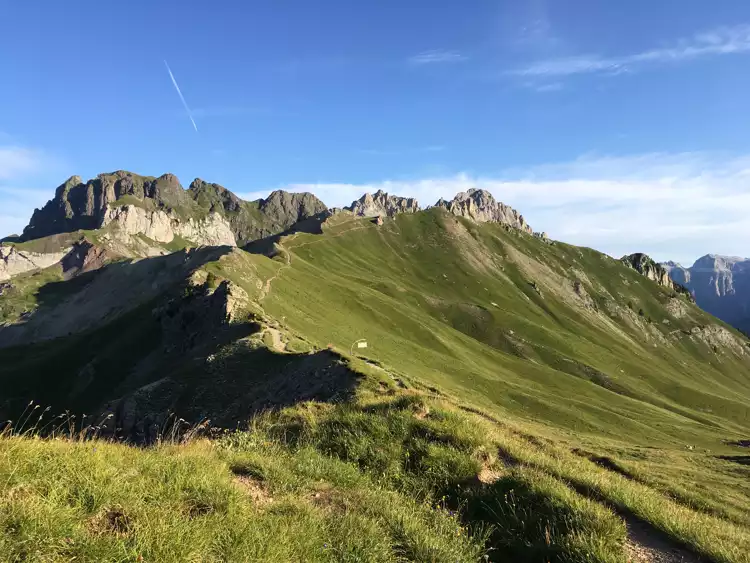
Slovenia rewards hikers who like systems that work. Three ranges—Julian Alps, Karavanke, Kamnik–Savinja—fit inside a day’s travel, so you can chase weather, not forecasts. Trails are uniformly waymarked with red‑white Knafelc blazes, and hut-to-hut routes in Triglav National Park make big alpine days safe and light. Summer storms build by mid‑afternoon; start at dawn and aim to be sipping čaj at a koča by two. Pro tip: carry cash for huts and a thin liner. I still think sunrise from the Pokljuka–Triglav ridge pays back every step.

Scenery

Slovenia rewards pattern-readers: compact distances, sharp elevation jumps, and karst geology pack lakes, … read more 👉
Slovenia rewards pattern-readers: compact distances, sharp elevation jumps, and karst geology pack lakes, caves, alpine ridgelines, and open, savanna-like plateaus into a single day’s arc. The trick is timing light and crowds. Sleep in Bohinj, take the first boat, then hike to Peč for lake-and-peaks symmetry; swing over Vršič for big views when the wind clears the haze; finish in Škocjan where the subterranean river thunders after rain. Pro tip: caves sit around 10°C year‑round—warm layer, no flip‑flops. I plan sunrise/late light, weekdays, and weather fronts to win this game.

People

Slovenians start reserved, then switch to warm and witty once you signal respect. The unlock is small … read more 👉
Slovenians start reserved, then switch to warm and witty once you signal respect. The unlock is small courtesies: say “dober dan,” keep your voice low, queue without nudging. Ask about mountains, wine, or mushrooms and you’ll get stories, maps drawn on napkins, maybe a lift. English is widely spoken, but a “hvala” lands. Toast “na zdravje,” take shoes off indoors, show up on time. Pro tip: seek an osmica in the Karst—homemade wine at long tables makes fast friends. I’ve had hut wardens reroute my trek over soup just for asking right.

Backpackers

Slovenia rewards backpackers because the system is compact and legible: mountains, lakes, and wine country … read more 👉
Slovenia rewards backpackers because the system is compact and legible: mountains, lakes, and wine country sit two hours apart, and buses, not trains, are the spine that gets you between them and straight to trailheads. Hostel culture runs from Ljubljana’s ex-prison digs to Bohinj’s lakeside dorms, with alpine koče filling the gaps in the high country. Pro tip: carry cash and a thin liner for huts, and book weekends. I base in Ljubljana, stash my big bag in station lockers, and day-trip to Bohinj, Škofja Loka, or the Soča valley when the forecast breaks.

Uniqueness

Slovenia feels like a cheat code: Alps, primeval beech forests, karst caverns, and a pocket of Adriatic, … read more 👉
Slovenia feels like a cheat code: Alps, primeval beech forests, karst caverns, and a pocket of Adriatic, all inside a day’s drive. The trick is scale—distances are short, rural transit isn’t—so you win by moving early, chaining two micro‑biomes per day. Hike to a Triglav hut for jota and a stamp, then drop to the Soča for river boulders by 3pm; I carry cash and leave huts by 5:45 to beat afternoon thunder. Choose Škocjan over Postojna if you crave raw cave. Pro tip: in Vipava and the Karst, follow the ivy sprig—osmica farm doors, home wine, zero pretense.
Want the complete picture of Slovenia?
The offline Travel Guide brings everything together — routes, highlights & planning.

See what's included in the guide 👉

Get the Travel Guide -

⭐ HighlightsStandout locations across the country

  • Ljubljana Old Town & Castle: Cobbles shine after rain, river sliding under Plečnik’s bridges, and the smell of coffee drifting from the Central Market. Ride the Kavalir electric carts when your legs quit, or tap an Urbana card for the funicular and city buses; Bicikelj bikes fill the gaps fast. Climb at dusk—belltower chimes carry clean and close from the castle ramparts.
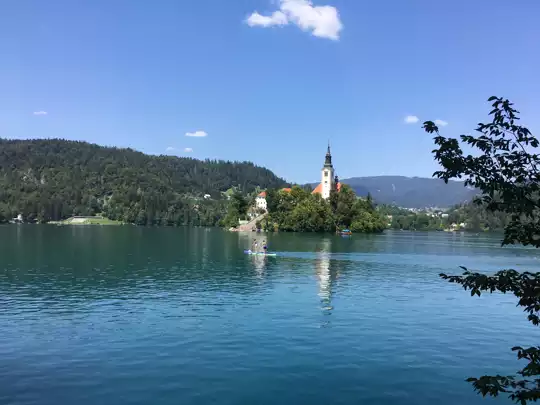
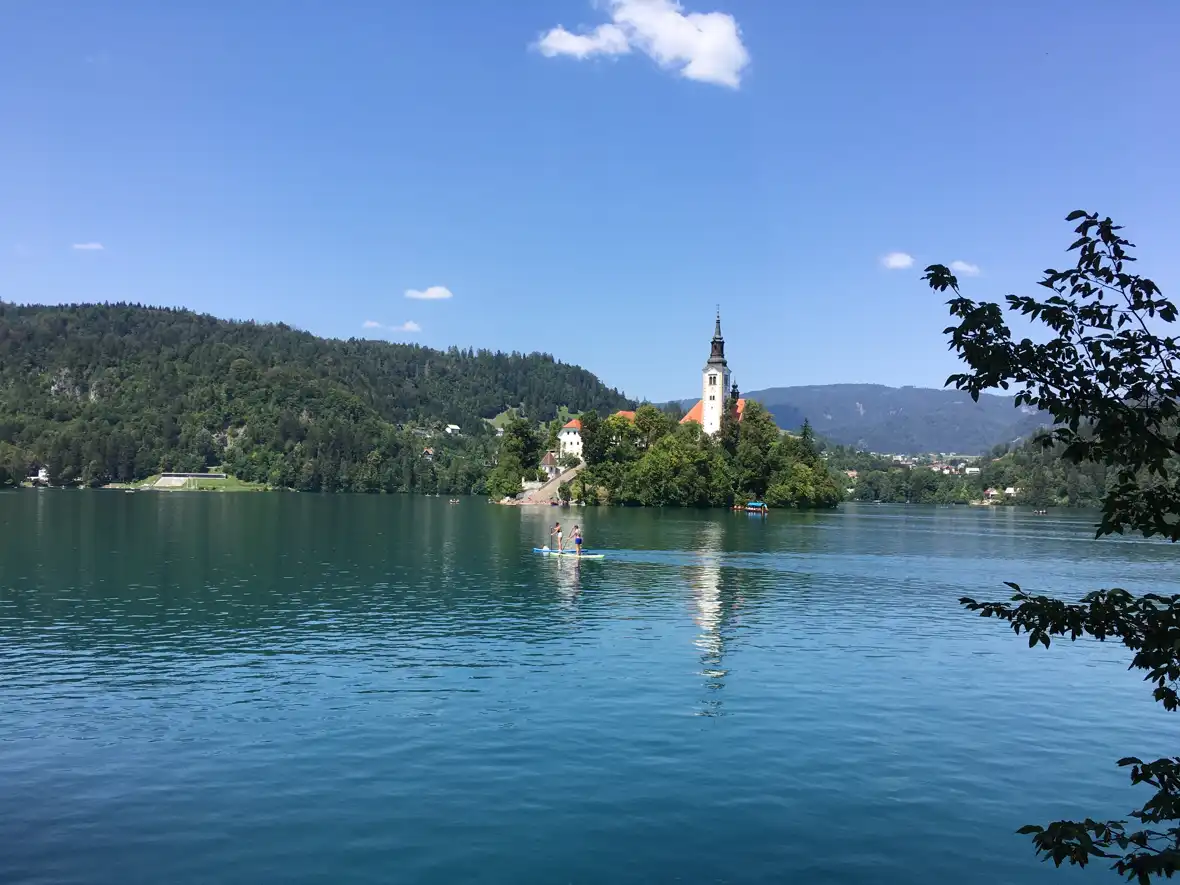
  • Lake Bled & Ojstrica: The path slips through birch shade and then the lake opens—glacial green with a wooden pletna nudging ripples toward the island. Walk counterclockwise for the best, unbroken angles; sunrise beats the bus convoys and flattens the wind. Slot Vintgar Gorge with its timed entry first, then row your own boat and taste warm cream cake when your hands stop shaking.
  • Triglav National Park: Seven Lakes Valley: Limestone underfoot, dwarf pine brushing your calves, and that resin-sweet air that tells you you’re high and far. The rule set is strict: no wild camping, book huts (cash ready), start early to outrun
read more 👉
  • Ljubljana Old Town & Castle: Cobbles shine after rain, river sliding under Plečnik’s bridges, and the smell of coffee drifting from the Central Market. Ride the Kavalir electric carts when your legs quit, or tap an Urbana card for the funicular and city buses; Bicikelj bikes fill the gaps fast. Climb at dusk—belltower chimes carry clean and close from the castle ramparts.
  • Lake Bled & Ojstrica: The path slips through birch shade and then the lake opens—glacial green with a wooden pletna nudging ripples toward the island. Walk counterclockwise for the best, unbroken angles; sunrise beats the bus convoys and flattens the wind. Slot Vintgar Gorge with its timed entry first, then row your own boat and taste warm cream cake when your hands stop shaking.
  • Triglav National Park: Seven Lakes Valley: Limestone underfoot, dwarf pine brushing your calves, and that resin-sweet air that tells you you’re high and far. The rule set is strict: no wild camping, book huts (cash ready), start early to outrun the noon thunder. In summer, use the Bohinj shuttles to Planina Blato—trailheads are gated to private cars when lots fill.
  • Škocjan Caves: A cold breath rises from the sinkhole before you even see the mouth; inside, the Reka River thunders so hard your jacket hums. Trains to Divača make this easy; follow the signed footpath to dodge thin bus schedules. Join the early guided tour, then loop the rim trail—10°C underground means bring a layer and dry soles.
  • Soča Valley: Kobarid to Tolmin: The river is glacier-milk blue until it isn’t—whitewater scours it to clear glass, and your ankles go numb in ten seconds. Move valley-wide on the summer Soča Bus, pack real river shoes for algae-slick boulders, and book Tolmin Gorge slots ahead. If you want off-the-map: Križna jama by boat, Velika Planina’s shepherd huts, and the Kolpa River; my personal favorite is dawn on Velika Planina with cowbells echoing off the turf.
Spotted a mistake or missing a highlight? Contact us.

But Slovenia offers more...

Discover and compare all of its highlights per category

🧭 RoutesLogical itineraries covering the highlights

The 5-Day Alpine Escape

The Vibe: A relaxed, mountain-focused getaway built around lakes, gorges, and easy hikes, perfect if you want big scenery without constant packing and unpacking. You’ll lean on simple bus connections and spend most of your time on foot, soaking up the Julian Alps from just two bases.
The Highlights:
  • Lake time and hilltop viewpoints around Bled
  • Boardwalk walks through the narrow Vintgar Gorge
  • Quiet village evenings in Bohinjska Bistrica
  • Accessible trails and lakeside walks inside Triglav National Park
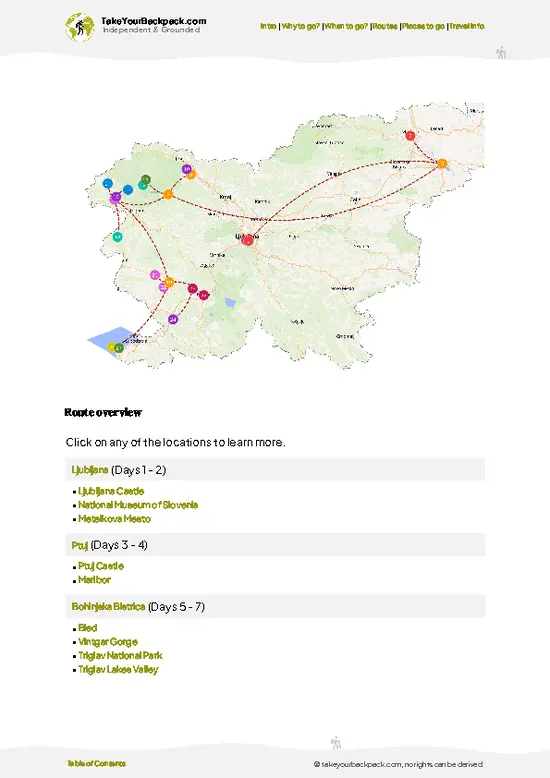
  • The 10-Day City, Alps & Coast Circuit

    The Vibe: A balanced loop that stitches together café life in Ljubljana, alpine valleys, and the Adriatic coast at a steady, comfortable pace. You’ll use trains and buses to hop between regions, with enough time in each stop to feel like you’ve actually lived there for a couple of days.
    The Highlights:
  • Riverside wandering and castle views in Ljubljana
  • Classic lake-and-mountain scenery around Bled and Kranjska Gora
  • Short gorge walks and easy
read more 👉

The 5-Day Alpine Escape

The Vibe: A relaxed, mountain-focused getaway built around lakes, gorges, and easy hikes, perfect if you want big scenery without constant packing and unpacking. You’ll lean on simple bus connections and spend most of your time on foot, soaking up the Julian Alps from just two bases.
The Highlights:
  • Lake time and hilltop viewpoints around Bled
  • Boardwalk walks through the narrow Vintgar Gorge
  • Quiet village evenings in Bohinjska Bistrica
  • Accessible trails and lakeside walks inside Triglav National Park
  • The 10-Day City, Alps & Coast Circuit

    The Vibe: A balanced loop that stitches together café life in Ljubljana, alpine valleys, and the Adriatic coast at a steady, comfortable pace. You’ll use trains and buses to hop between regions, with enough time in each stop to feel like you’ve actually lived there for a couple of days.
    The Highlights:
  • Riverside wandering and castle views in Ljubljana
  • Classic lake-and-mountain scenery around Bled and Kranjska Gora
  • Short gorge walks and easy access to Triglav National Park
  • Sea views and swims around Piran, Portorož Beach, and Sečovlje Salina Nature Park
  • The 15-Day Grand Slovenia Traverse

    The Vibe: A deep, slow-burn journey through Slovenia’s caves, castles, wine valleys, high mountains, and coast, ideal if you want to really understand how varied this small country can be. You’ll mix trains, regional buses, and a couple of short transfers to link very different landscapes without rushing.
    The Highlights:
  • Capital-time in Ljubljana with castles, galleries, and alternative culture
  • Karst adventures at Postojna Cave and Predjama Castle plus stone-built Štanjel
  • River walks and WWI history in the Soca Valley and Kobarid
  • High-alpine hiking in Triglav National Park and the Triglav Lakes Valley
  • Slow coastal days in Piran with side trips to Portorož Beach and coastal nature parks
🌍 Want a ready-to-use travel plan for Slovenia?
The overview above compares different route options based on your travel time and style. The complete Travel Guide breaks each itinerary down in detail, including maps, stops, highlights, and transport information.

Explore all route details 👉

Get the Travel Guide -

🌤️ When to go?Best time to visit Slovenia

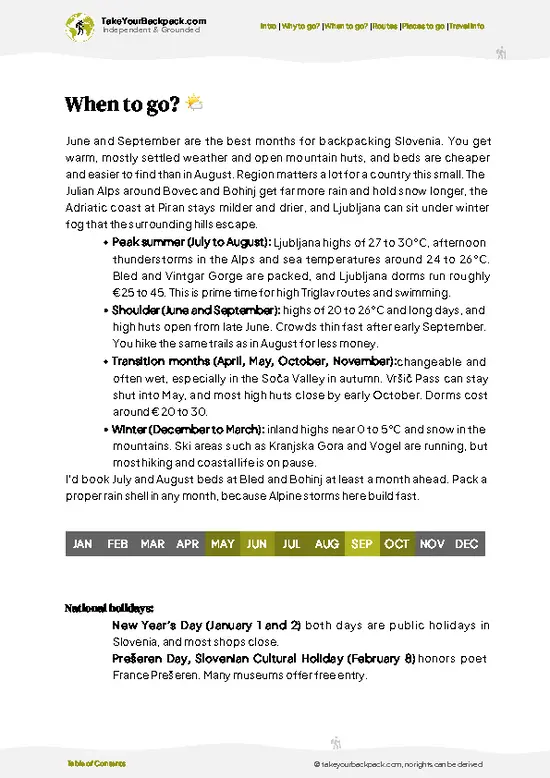
Late June and September are the smart windows for Slovenia. By late June the snowpack has pulled back from most high passes, mountain huts unlock, seasonal buses reach Bohinj and the Soča, and lakes are finally swimmable without a wince—yet the July-August price jump hasn’t hit full force. September keeps the alpine routes open and the sea warm, but school holidays end, tour buses thin, and room rates ease in Bled, Bohinj, and Piran; thunderstorms calm down and the heat breaks, so you can stack big hiking days without wasting afternoons hiding from sun or hail. Daylight is still generous, vineyards and larch forests start to color, and you get the full menu—coast, karst, and Alps—without trading your patience or your budget for the privilege.
  • Peak Summer (July-August): The grind is real: full huts, higher rates around Bled and the coast, queues at Vršič hairpins. The payoff matches the effort—long bluebird windows for Triglav, Soča swims after ridge traverses, late light for camp chores. Summer shuttles run deep into valleys, so you can chain point-to-point routes cleanly if you’ve reserved beds early.
  • Shoulder Momentum (Late June & September): Trails thaw, huts flip signs to “open,” and buses extend schedules; then, after August, crowds exhale and prices soften. Meadows pop, thunderstorms back off, grape harvest hums, and you move faster—routes link easier, decisions simplify, and you keep altitude without heat penalties.
  • Off-Peak/Cold & Wet (Nov-Mar): Quiet valleys, misted beech forests, locked huts. Snow buries high routes; rain soaks the west. Go inward: karst trails, coastal ridgelines, caves on foul days. Survival hack: carry microspikes and a hot drink; pick valley loops and use trains to hop between clearer microclimates.

I book Triglav-area huts the moment my summit day is fixed and hold a cancellable bed in Bohinj as a bad-weather pivot.

source: climatestotravel.comJANJanuary: below average for travelingFEBFebruary: below average for travelingMARMarch: fair for travelingAPRApril: fair for travelingMAYMay: good for travelingJUNJune: highly recommended for travelingJULJuly: good for travelingAUGAugust: good for travelingSEPSeptember: excellent for travelingOCTOctober: good for travelingNOVNovember: fair for travelingDECDecember: below average for traveling
📅 Traveling in a specific month?
Get a full month-by-month breakdown of weather, crowds, costs, festivals, and seasonal highlights in the complete travel guide.

Get full details when to go 👉

Get the Travel Guide -
2020-08-08 12.55.04

💰 Costs (as of 2025)Prices, expenses, and money tips

€50-65 per day if you sleep in dorms, ride buses, self-cater breakfasts, and pick one paid sight every couple of days.
  • dorm accommodation: €22-35 in Ljubljana and Bled, €18-28 in smaller towns; mountain huts run €25-35 for a bunk, but food kills the budget. Tourist tax (€2-3 pppn) often isn’t in the headline price—assume it. System: sleep one stop away from hotspots (Radovljica for Bled, Kranj for Ljubljana airport corridor) and save 20-30% with faster check-in and calmer kitchens. Compared to Austria/Italy, you’ll pay a bit less for a cleaner bed; compared to Hungary/Croatia inland, it’s 10-30% more.
  • meals: Supermarket Survival: €8-12/day if you raid Hofer/Lidl for bread, cheese, fruit, yogurt; add a bakery burek (€2.5-3.5) and you’re set. Street food reality: this isn’t the Balkans of €2 grill plates—expect €6-10 for a burger or wrap, €10-15 for a sit-down main, espresso €1.5-2 away from squares, €3 on the postcard street. Tap water is excellent; refill from town fountains to dodge €2 bottles. I skip the lakeside kremšnita markup and buy the same cake two streets back for 30% less.
  • local transport: Regional buses are the cheapest way to unlock the country: Ljubljana-Bled €7-9, Ljubljana-Postojna
read more 👉
€50-65 per day if you sleep in dorms, ride buses, self-cater breakfasts, and pick one paid sight every couple of days.
  • dorm accommodation: €22-35 in Ljubljana and Bled, €18-28 in smaller towns; mountain huts run €25-35 for a bunk, but food kills the budget. Tourist tax (€2-3 pppn) often isn’t in the headline price—assume it. System: sleep one stop away from hotspots (Radovljica for Bled, Kranj for Ljubljana airport corridor) and save 20-30% with faster check-in and calmer kitchens. Compared to Austria/Italy, you’ll pay a bit less for a cleaner bed; compared to Hungary/Croatia inland, it’s 10-30% more.
  • meals: Supermarket Survival: €8-12/day if you raid Hofer/Lidl for bread, cheese, fruit, yogurt; add a bakery burek (€2.5-3.5) and you’re set. Street food reality: this isn’t the Balkans of €2 grill plates—expect €6-10 for a burger or wrap, €10-15 for a sit-down main, espresso €1.5-2 away from squares, €3 on the postcard street. Tap water is excellent; refill from town fountains to dodge €2 bottles. I skip the lakeside kremšnita markup and buy the same cake two streets back for 30% less.
  • local transport: Regional buses are the cheapest way to unlock the country: Ljubljana-Bled €7-9, Ljubljana-Postojna €6-8, returns often shave a euro. Trains are comfortable but limited; they’re good for Maribor/Celje, weaker for lakes and caves. System: base in Ljubljana for hub-and-spoke day trips, ride early buses (full fare, empty seats, fewer delays), and use the city’s Urbana card for local buses + bike share. Compared to Italy/Austria, fares feel humane; compared to Hungary, a notch higher but with better punctuality.
  • activities: Cost drivers are “marquee” sights and gear-heavy fun: Postojna or Škocjan caves €25-35, Vintgar Gorge €10-15 plus shuttle, canyoning/rafting €50-70, bike rental €15-25/day, chairlift/ski extras vary. Hiking in Triglav NP is free; the bill arrives in huts (half-board adds €25-35). System: pick one cave (I chose Škocjan’s canyon—enough geology for a year), do free hikes and town walks, and cluster paid sights on one day to share shuttles and cut dead time.
  • miscellaneous: Budget leaks: tourist tax, station lockers €3-6, laundry €5-8, lakeside parking fines, and the e-vignette if you rent a car (weekly pass stings if you only drive a day). ATMs push “conversion” rates—always decline and pay in euros. Card works almost everywhere, but a few huts and kiosks are cash-only. Relative value: coffee and groceries beat Italy/Austria, but desserts and lakeside snacks creep toward them. I once “saved time” by driving to Bohinj and paid €12 to park; the €4 bus would’ve been faster and cheaper.
⚠️ Prices can change and everyone travels differently, so take this as a rough guide. Hope it helps you plan your adventure!

✈️ The backpacker research shortcutSlovenia Travel Guide

An offline-friendly backpacking guide with optimized travel routes, ranked highlights, transport advice, and the best areas to stay.
example page 0 from our offline Travel Guide for Sloveniaexample page 1 from our offline Travel Guide for Sloveniaexample page 2 from our offline Travel Guide for Sloveniaexample page 3 from our offline Travel Guide for Sloveniaexample page 4 from our offline Travel Guide for Sloveniaexample page 5 from our offline Travel Guide for Sloveniaexample page 6 from our offline Travel Guide for Sloveniaexample page 7 from our offline Travel Guide for Slovenia
The digital guide (334 pages) contains:
84 highlights, ranked by travel appeal
Optimized 5, 10 & 15-day travel routes
Cities, national parks, beaches, historical sites, ...
How to get around
Offline-friendly for travel without Wi-Fi
👉 Click to see all 30+ guide features

📅 Plan smarter in minutes, not weeks
Month by month travel advice
Festivals & national holidays
Budget expectations

🗺️ Go to the right places, skip the overrated ones
Honest pros & cons of destinations
Top hikes, parks & viewpoints
Lesser-known places most travelers miss
Clear “worth it vs skip it” guidance

🛏️ Travel smoothly without rookie mistakes
Best areas to stay
Transport systems explained simply
Common scams & safety advice
SIM cards, money & practical tips

🌍 Understand the country, not just visit it
Culture & traditions
52 Essential phrases & customs
Festivals worth planning around
Traveler-friendly historical context
Insights that make places more meaningful

📱 Built for real travel conditions
Fully downloadable PDF
Works completely offline
Optimized for phone use
Useful in remote areas & buses
Everything in one place
Save weeks of stressful planning
Get instant access to the full guide directly. 30-day money-back guarantee.


Sent to your inbox immediately after payment • 100% Secure Checkout
Best Backpacking Travel Advisor 2025 tourism awardBest Backpacking
Travel Advisor
2025
What others say about Take Your Backpack Guides:
⭐⭐⭐⭐⭐
Fantastic, amazing amount of information!
⭐⭐⭐⭐⭐
My goodness this is amazing, it's what I've been looking for hats off too you!
⭐⭐⭐⭐⭐
I think this is absolutely BRILLIANT
⭐⭐⭐⭐
Very complete and informative. It's still missing places, but I gotta to commend you
⭐⭐⭐⭐⭐
This is truly amazing, thank you, can't wait to explore it with my kids!
⭐⭐⭐⭐⭐
Awesome resource, thank you!
⭐⭐⭐⭐⭐
This is amazing! Can't wait to explore the ones I haven't seen
⭐⭐⭐⭐
I love this! Well done, great idea.
⭐⭐⭐⭐⭐
Thanks for taking the time to make this gem!
⭐⭐⭐⭐⭐
This might be the best website I've ever seen.
⭐⭐⭐⭐⭐
Congratulations, and thank you so much for your work; it's incredibly valuable.
⭐⭐⭐⭐
In all seriousness I think you did a great job pointing out the important spots
⭐⭐⭐⭐⭐
10/10 very good
⭐⭐⭐⭐⭐
As someone who's only just starting to visit regularly this is awesome, thank you.
⭐⭐⭐⭐
Thank you very much! I'm going to visit my dad, it's going to be very useful!
⭐⭐⭐⭐⭐
This is really cool! We'll be travelling for the first time and this definitely come in handy.
⭐⭐⭐⭐⭐
You are now our minister of culture, congratulations 👨‍💼
⭐⭐⭐⭐⭐
Just wanted to tell you that this is a pearl! Going to follow your recommendations.
⭐⭐⭐⭐⭐
This is so cool. I'll definitely be using the resource for my travels soon.
⭐⭐⭐⭐⭐
This is very impressive! Good work.
⭐⭐⭐⭐⭐
This is an amazing and informative site. Very well done!

🛏️ Where to stay?Accommodation types and options

Slovenia has hostels and budget accommodation concentrated in Ljubljana (Old Town and near the main bus/train stations), Bled (town centre/lakeside), the coast (Piran, Portorož), Kranjska Gora and Bohinj in the mountains, and in smaller numbers in Maribor.
Ljubljana gives the best transport links and nightlife but can be pricier in peak season; Bled and Piran put you steps from the main sights and activities but get crowded and noisy in summer; Kranjska Gora and Bohinj are quieter and cheaper outside high season, ideal for hiking; Maribor is calm with limited hostel choices—book early for weekends … read more 👉
Slovenia has hostels and budget accommodation concentrated in Ljubljana (Old Town and near the main bus/train stations), Bled (town centre/lakeside), the coast (Piran, Portorož), Kranjska Gora and Bohinj in the mountains, and in smaller numbers in Maribor.
Ljubljana gives the best transport links and nightlife but can be pricier in peak season; Bled and Piran put you steps from the main sights and activities but get crowded and noisy in summer; Kranjska Gora and Bohinj are quieter and cheaper outside high season, ideal for hiking; Maribor is calm with limited hostel choices—book early for weekends and holidays.

If you enjoy meeting fellow travelers, consider choosing hostels with high ratings for atmosphere. On the other hand, if you prefer having your own space, a hotel might be a better option.

🚌 Getting aroundTransportation options and logistics

Slovenia runs on tidy intent: small country, few lines, schedules that mostly click until a single-track curve or a long lunch gap snaps your plan. Think hub-and-spoke with Ljubljana as the switchboard, and mountain valleys that demand you pivot. Early moves win; late starts get punished by thin midday and Sunday service. The system rewards people who chain segments and respect the clock.
  • Trains (Slovenske železnice) The Efficiency Trade-off: Trains are the cheap spine—Ljubljana to Maribor, Jesenice,
read more 👉
Slovenia runs on tidy intent: small country, few lines, schedules that mostly click until a single-track curve or a long lunch gap snaps your plan. Think hub-and-spoke with Ljubljana as the switchboard, and mountain valleys that demand you pivot. Early moves win; late starts get punished by thin midday and Sunday service. The system rewards people who chain segments and respect the clock.
  • Trains (Slovenske železnice) The Efficiency Trade-off: Trains are the cheap spine—Ljubljana to Maribor, Jesenice, Koper—but the lines are old and curvy, so you’re paying in minutes what you save in euros. Expect steady, not fast. IC/EC sets shave a little time; nothing miraculous. Seats are unreserved; a conductor checks tickets onboard. If the station was unmanned, buying from the conductor is tolerated; otherwise, have a ticket. Bikes fit only where the bicycle icon shows, and space is limited; peak summer fills fast. When your day hinges on a tight window to Bled or Bohinj, the bus often beats rail on the final leg.
  • Intercity Buses The Geometric Unlock: Buses reach what trains can’t—Bohinj’s trailheads, Soča’s bends, Postojna’s karst, and seasonal shuttles over Vršič into the high country. They stop on request: stand visible, hand out; inside, hit the bell early or you’ll blast past your village sign. Drivers may tag a small fee for big bags. Sunday timetables are skeletal, and afternoon gaps are real, so treat morning departures like gold. In the Alps, buses are the only way to stitch valley to valley without a car.
  • Ljubljana City Buses (Urbana) The Social Fabric: Everyone taps the green Urbana card on boarding, nobody pays cash, and people actually queue. It’s quiet, doors open fast, and the driver expects you to be ready—card in hand, no dithering. Your tap grants a transfer window, so you can swap lines without stress. Offer priority seats, stash your pack low, and step left so others can exit. Night service thins early; don’t assume a late ride home.
  • Prevoz (local rideshares) The Budget Disruptor: Students and commuters post seats online and undercut bus and train fares, especially Ljubljana-Maribor/Koper/Bled. Pickups are usually at petrol stations or mall lots; drivers like short, clear texts and exact change. It’s not a taxi: be on time, belt up, no open food. The smart play is train to a hub, then Prevoz the last 60-120 km when schedules go sparse.

Master tip: I cross the country by riding the first morning train along the spine to the right relay (Kranj for the Alps, Postojna for the karst, Nova Gorica for the west), then pivot to a bus into the valley—and I keep a Prevoz backup ready so a missed connection becomes a cheap car seat, not a wasted day.
Ljubljana Jože Pučnik Airport (LJU) sits about 26 km (16 miles) north of the city center.

Main public transport options
  • Regional public bus to Ljubljana Bus Station (AP): Runs roughly every 30-60 minutes during the day. Journey time is about 45-55 minutes, depending on traffic. Typical fare is €4-€6 one way as of 2025. You can usually buy a ticket from the driver (cash or card on most buses) or via local transport apps. Service is thinner late evening; check the day’s timetable if you land late.
  • Shared shuttle vans (door-to-door or to the bus/train station): Bookable online or at desks in the arrivals hall. Expect 30-45 minutes into the center, depending on drops. Typical shared fares are €10-€15 per person; private shuttles cost more. Good option early/late when buses are sparse.

Taxi
Official airport taxis wait outside arrivals. The ride into the center takes about 25-35 minutes. Most trips land in the €35-€50 range; ask for a fixed price before you get in or ensure the meter is on.
⚠️ Prices and routes can change, so take this as a rough guide and ask for local advice when you arrive.

🔒 Safety (risk Level: low)Safety considerations for travelers

Safety for solo travelers, including women and LGBTQ+ individuals
Yes, Slovenia is generally safe for solo travelers, including women and LGBTQ+ individuals. The country has a low crime rate, and locals are known for being friendly and helpful. While major cities like Ljubljana are quite progressive, always exercise common sense and stay aware of your surroundings, especially in rural areas. It’s wise to stay updated on local laws and customs to ensure a safe experience.


Full official government travel advisory (live updates)
View details 👉

✈️ VisaDo you need a visa to visit?

Citizens of the EU, USA, Canada, and Australia can enter Slovenia visa-free for up to 90 days within a 180-day period. If you’re from a country requiring a visa, apply for a Schengen Visa at the Slovenian embassy or consulate in your area. Check the specific documentation needed on their official website before applying.

source: gov.si
⚠️ Visa requirements can change over time, so always check the latest visa requirements with the official embassy or government website before you travel.

🎒 What to pack?What to wear and bring

Slovenia’s climate has a lot going on, so pack smart! Summers can get toasty, especially in the lowlands, while the Alps demand layers even in July. Don’t skip on waterproofs; rain can surprise you any time of year. Ljubljana and other towns are pretty casual, but if you’re hitting up any churches, it’s good to have something that covers your shoulders. From hiking trails to city strolls, versatile clothing will be your best friend.

Apart from this country specific advice, I have also crafted a general packing list that should help on any trip. authorOver the years, I've learned the importance of packing minimally. It's so much easier to jump on the back of a truck or squeeze yourself into the last spot of a minibus without that supersized backpack. If you're headed to a warm destination, leave your winter jacket at home; for colder regions, opt for thin thermal underlayers. Instead of packing your entire wardrobe, bring just three sets of clothes, as laundry facilities are available everywhere.
View the full list 👉
🎒 Planning the practical side of your trip?
Get detailed information on transport, daily budgets, internet access, local customs, food, language, and other essentials in the complete Travel Guide.

Get detailed practical information 👉

Get the Travel Guide -

🙋 FAQTravel questions about Slovenia

Trip Planning


Personal tip: I normally search on good rating for atmosphere (for meeting people) and location (for easy exploring). Cleanliness as a bonus.


Travel Essentials

Routine vaccinations are generally sufficient for Slovenia. These include measles-mumps-rubella (MMR), diphtheria-tetanus-pertussis, varicella (chickenpox), polio, and your yearly flu shot.

If you’re planning outdoor activities, consider a tick-borne encephalitis vaccine, especially in spring and summer. Hepatitis A vaccination is recommended if you plan on exploring rural areas or have a sensitive stomach.

Note: Always consult with a healthcare provider before traveling.


vaccination requirements
When I first started traveling, I often spent part of my first day in a new country hunting for a local SIM card. While this can still be slightly cheaper, it also takes time and planning.

These days, it's much simpler to install an eSIM before leaving home. Once you arrive in Slovenia, you can activate it immediately and have mobile data from the moment you land — which is especially useful for ordering transport or navigating away from busy airports.

There are many providers nowadays, and price differences are usually small. I personally go with Airalo, as it offers excellent network coverage throughout the country and strong global coverage, so you can manage multiple countries from a single app.


Get your e-sim for Slovenia

Culture & Customs

Slovenians value politeness and punctuality. Always greet with a handshake and maintain eye contact. When invited to someone’s home, it’s customary to bring a small gift like flowers or wine. Dress modestly, especially in churches or rural areas. Avoid discussing politics unless you know the person well.

For LGBTQ+ travelers, Slovenia is relatively progressive, but discretion is advisable in rural regions. Women traveling alone should feel generally safe, but usual precautions apply, especially at night.

Public displays of affection aren’t the norm, and it’s polite to wait until you’re invited to sit. Tipping in restaurants is appreciated but not obligatory; rounding up the bill or leaving a 10% tip is common.
Trying traditional food is always a great way to experience the culture. Here are some must-try dishes for Slovenia.
  • Potica: This is a rolled pastry filled with nuts, poppy seeds, or even tarragon. It’s usually served during holidays and celebrations, making it a staple of Slovenian tradition.
  • Kranjska Klobasa: A type of sausage made from pork, bacon, and a blend of spices. Known as the ”Carniolan sausage,” it’s a hearty snack often paired with sauerkraut or mustard.
  • Jota: A comforting stew made with sauerkraut, beans, potatoes, and pork. It’s a winter favorite, reflecting the hearty, rustic style of Slovenian mountain cuisine.
  • Štruklji: Rolled dumplings that can be either savory or sweet, filled with cottage cheese, walnuts, or apples. It’s a versatile dish, often enjoyed as a main or a dessert.
  • Prekmurska Gibanica: A multi-layered pastry combining poppy seeds, walnuts, apples, and cottage cheese. This is a classic dessert from the Prekmurje region, showcasing the country’s diverse culinary influences.
Yes, the tap water in Slovenia is safe for drinking and locals consume it regularly. Tourists can confidently drink the tap water without issues. Bottled water isn’t necessary unless you prefer it for taste or convenience during travel.
The main language in Slovenia is Slovenian. Backpacking is way more rewarding if you know a bit of the local language, so I'd suggest brushing up on the basics just in case your Slovenian skills have become a bit rusty.

Want to understand locals better?
The complete Travel Guide for Slovenia includes 52 essential words and phrases — greetings, thank-yous, ordering food, transport, numbers, and common local expressions you'll actually hear.

Get your local basic phrases 👉

Get the Travel Guide -


English is widely spoken in Slovenia, particularly in urban areas and among younger generations. The country has a high proficiency in English, with many Slovenians learning it as a second language from an early age. In cities like Ljubljana, Maribor, and Portorož, you’ll find that most people, especially in the service industry—such as hotels, restaurants, and tourist attractions—can communicate effectively in English.

In rural areas, while English is still understood to some extent, the level of proficiency may vary. Older generations may have limited English skills, as they might have learned different languages during their education. However, gestures and basic phrases can often bridge any communication gaps.

Overall, travelers will find it relatively easy to navigate Slovenia using English, making it a welcoming destination for international visitors.

Money & Payments

The local currency of Slovenia is EUR (€).

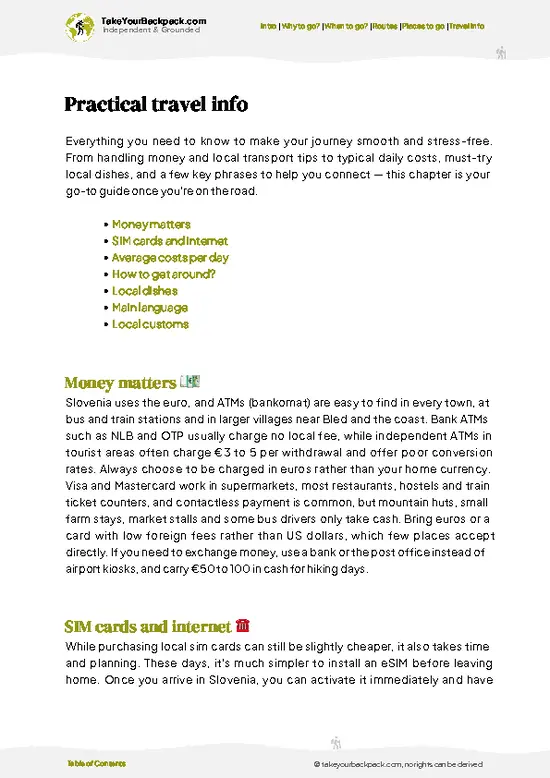
ATMs: You’ll find ATMs in most towns and cities in Slovenia, so getting cash isn’t a hassle. Just watch out for those pesky international withdrawal fees.

Cash: It’s smart to keep a small stash of euros on you, especially in rural areas or small towns where card acceptance can be hit or miss. Euros are the official currency, so no need to worry about carrying dollars.

Card Acceptance: Cards are widely accepted in cities, but smaller shops or cafes might prefer cash. Always good to check before you order that extra slice of cake.

Currency Exchange: If you have dollars or other currencies to exchange, stick to banks or official exchange offices for better rates. Avoid airport exchanges unless you’re in a pinch—they’re like the fast food of currency exchange, quick but not cheap.

Tipping in Slovenia isn’t mandatory, but it’s appreciated for good service. At restaurants, rounding up the bill or leaving about 10% is common. In taxis and for hotel services, rounding up is a nice gesture if you’re happy with the service.

🧩 Nearby countriesSimilar backpacking destinations

📸 PhotosTravel photos from Slovenia

Take your backpack - Slovenia - 0
Take your backpack - Slovenia - 1
Take your backpack - Slovenia - 2
Take your backpack - Slovenia - 3
Take your backpack - Slovenia - 4
Take your backpack - Slovenia - 5
Take your backpack - Slovenia - 6
Take your backpack - Slovenia - 7
Photographed by: Johan Kruseman

Observations and takeaways

Don’t try this at home

Don’t try this at home

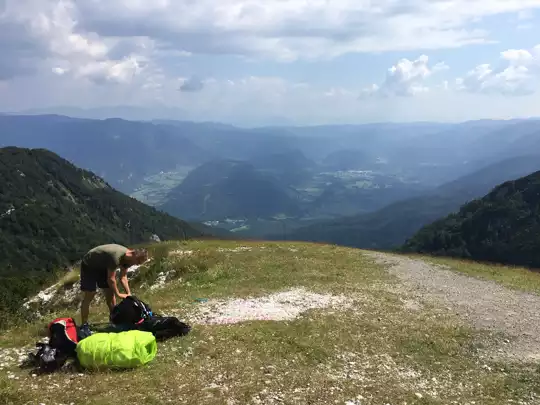
Slovenia | Slovenia turned out to be a don’t-try-this-at-home episode of my life. A few tips how to avoid this from happening to you. Never drink in a place where it’s also possible to sign up for paragliding Rule 1 is especially important if you are afraid of heights In case you did ignore rule 1 and 2 don’t pick an instructor sma...
Read more
To the top of the most dangeours mountain of Slovenia

To the top of the most dangeours mountain of Slovenia

Slovenia | Still don’t know how I did it but climbed this monster today. When I saw the mountain I was pretty sure I was not able to reach the top. But thanks to my personal superguide Blaž Lovenjak (who I met in Iceland last year) we made it. He even showed me the largest waterfall of slovenia. #fakenews: it wasn’t today but yesterday but already started wr...
Read more
More stories

We 💚 feedbackIs Slovenia worth visiting?

Slovenia runs on quiet competence: tidy towns, serious trails, and days that flip from city to alpine to sea in two hours. Best surprise: rivers so clear you’ll pack your swimsuit for a roadside stop. Small warning: popular sights go from serene to bus-convoy by 10 a.m., and caves are tour-only on fixed slots. Strategic tip: run a two-base, car-and-e-vignette hub—Ljubljana + Bohinj/Soča—so you beat buses at dawn, pivot around weather, and skip needless pack-and-moves.

✈️ When did I visit Slovenia?
In August 2020 I backpacked through Slovenia, with a quick visit to Venice in Italy. While my visit dates back, this guide is continuously refined using feedback from locals and current backpackers (last update: 14 October 2025)

✍️ Help improve this page!
The information on this page is based on my own backpacking experience in Slovenia, supplemented with up-to-date research and feedback from other travelers. Travel details can change, so if you notice anything outdated or incomplete, feel free to let me know.


🙋‍♂️ Give feedback

👋 Meet the founderWho’s Behind Take Your Backpack?

Johan, backpacker and founder of TakeYourBackpackHi, I’m Johan (Netherlands 🇳🇱), the creator of TakeYourBackpack. Over the past decade, I’ve backpacked through 80+ countries across six continents, gaining extensive experience with independent travel, long-term trips, and overland routes.

This site is built on a combination of firsthand travel experience and carefully curated insights from other backpackers. Many guides are based on places I’ve personally visited, while others bring together tips, observations, and practical advice shared by trusted travelers I’ve met along the way.

The goal is to provide realistic, experience-driven guidance — not generic itineraries — so you can explore destinations with better context, clearer expectations, and more confidence.

Get full Slovenia guide •
Instant download • 84 highlights • Full Offline guide