×
Gabon 🇬🇦

backpacking Africa Gabon 🇬🇦
Travel through rainforests where wildlife sets natural boundaries.

Explore EthiopiaExplore The Gambia

Backpacking Gabon in 2026

A complete guide including when and where to go, costs, transport, itineraries, and practical travel advice.
A practical introduction for travelers

Backpacking Gabon
By Johan Kruseman 🇳🇱 | Updated May 23, 2026

You wedge into a bush taxi in Libreville, knees on cassava and a crate of Regab. Things run late, then all at once. Gabon moves to the forest’s tempo; patience pays because the wild still sets the rules.

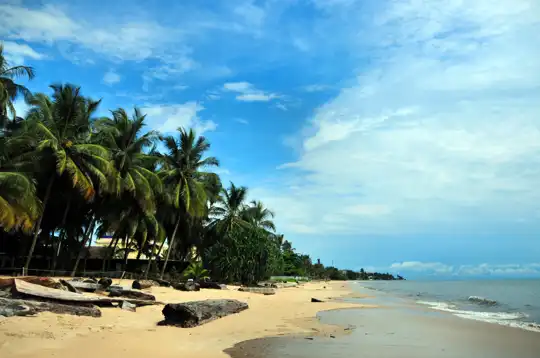
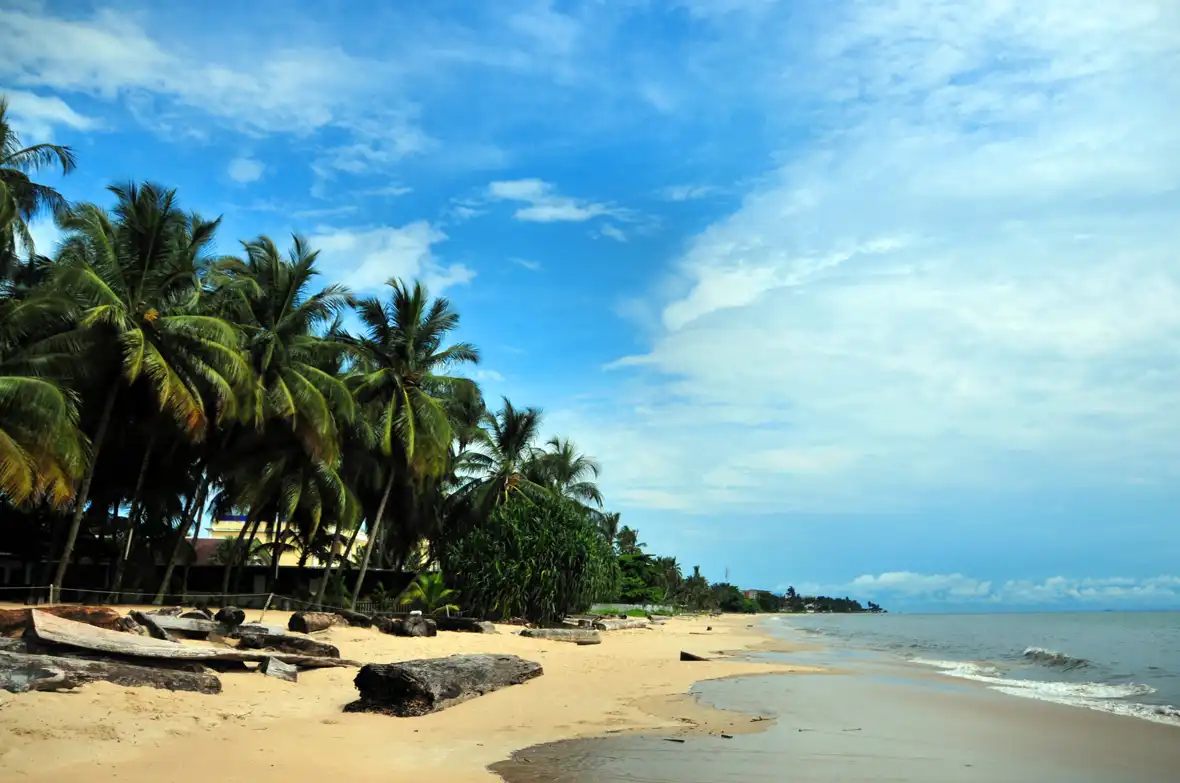
Equatorial forest meets surf beaches where forest elephants and the occasional hippo print Loango’s dawn; inland, Lopé’s savanna brushes deep green and mandrill hordes, while Ivindo’s Kongou Falls hammers a gorge in metallic mist. Libreville gives you zouk, brochette smoke, and pirogues nosing through Akanda’s mangroves; it’s hot, humid, and pricier than you expect, with permits, laterite mud, and transport that vanishes in rain—but when an elephant steps to the tideline or you raise a cold Regab with rangers after a long march, it all makes fierce sense.

Cameroon is busier and easier, the Republic of the Congo rougher, Equatorial Guinea guarded; Gabon sits between, quiet and serious about its parks. Go if you want wildlife and Atlantic light more than quick itineraries, and if a little sweat feels like part of the story.

👉 Get the 📖 Travel Guide of Gabon

Libreville, Pointe Denis & Cap Estérias (coastal gateway)

The capital is sticky heat, grilled fish smoke, and taxis with no meters. You base here to get your feet under you, swap money, and fix SIM cards. Boat taxis hop the estuary to Pointe Denis; haggle before the outboard sputters to life. North, Cap Estérias is a sand-and-mangrove run best with a high-clearance ride. The payoff: an Atlantic breeze, cold Regab in hand, and your first taste of Gabon’s lazy surf after city noise fades.

Loango National Park (coast-meets-forest)

Getting in usually means Libreville to Port-Gentil, then 4x4 and boat to the Iguéla lagoon. Tracks are soft sand, tides rule schedules, and costs jump compared with the capital because every liter of fuel and boat hour counts. You slog through salt spray and mosquitoes, then it clicks: elephant tracks in wet sand, lagoon glassy at dawn, buffalo ghosting the tree line, whales offshore in season. The first beer back at camp tastes earned.

Lopé National Park via the Trans-Gabon Railway

Take the night train and step off groggy at La Lopé with red laterite dust on your boots. This is a forest–savanna mosaic you actually walk: sun on your neck, knee-high grass scoring your shins, forest edges humming. Trains run, but never to your rhythm—plan slack. Dry-season mandrill tracking pays big if you tolerate heat and long hours. Sunrise on a savanna ridge with hornbills winging past is the reward.

Ivindo National Park & Makokou (river wilderness)

The road to Makokou is hard on shocks and patience. Permits sorted, you ride a dugout upstream—diesel tang, wet gear, palms whipping past—to Kongou’s roar. Trails are muddy, portages are real, and leeches find the soft spots. Sleep on a platform at Langoué Bai and wake to forest elephants stepping into the clearing as mist lifts. Coffee tastes like river silt and victory.

Mayumba National Park (south coast, turtles and surf)

It’s a long haul via Tchibanga and sand tracks, with gendarme checkpoints that like photocopies. Town is quiet; the ocean is not. Night patrols run during nesting season; bring a red-light headlamp and patience for wind and blown sand. Then the moment: a leatherback heaving up the beach under a sky full of salt and stars.
Geography and where places are located
Loading the map 🌍
CLICK TO FILTER
city
town
village
unique site
national park
hike
beach
attraction
festival
region
SHOW COUNTRY‘S BESTSHOW ALL
film
0
0
0a
Village des Artisans / Marché Artisanal de Libreville
film
1
1
1a
Centre Culturel Français / Institut Français du Gabon
film
2
2
2a
Loango
film
3
3
3a
Ivindo
film
4
4
4a
Lopé
film
5
5
5a
Akanda
film
6
6
6a
Waka
film
7
7
7a
Gamba

Why go?What draws travelers here

Wildlife

Heat like a wet towel, red laterite dust in your teeth, outboard coughing on a brown river—Gabon makes you earn it. Then the forest opens: Langoué Bai glows at dawn, forest elephants ghost in, a gorilla huffs from the fringe. On Loango’s shore, hippo tracks slice the surf and an elephant steps into the foam. In Lopé, the savanna steams and a hundred mandrills pass like weather. At night on Pongara, a leatherback hauls up like a truck. You rinse off and crack a cold Regab. Worth every slog.
Want the complete picture of Gabon?
The offline Travel Guide brings everything together — routes, highlights & planning.

See what's included in the guide 👉

Get the Travel Guide -

⭐ HighlightsWhat not to miss along the way

  • Loango National Park: Atlantic surf thumps a white beach that ends in forest, the air salted and sweet with fallen fruit and elephant dung. At first light, walk the sand with a guide to read fresh tracks and scan the shorebreak for hippos, then drift the Iguela lagoon as mangroves paint the water brown-green. Tides decide everything here, so plan beach runs for low tide and keep cameras in a drybag.
  • Ivindo National Park: The Ivindo runs black and fast, cicadas screaming over the engine’s hum and humidity pressing your shirt to your back. Push upriver to Kongou Falls for a chest-deep roar and a granite perch washed in spray; if you can, sleep at Langoue Bai to watch elephants ghost in at dawn. Bring silica gel to fight lens fog, cash for porters and fuel in Makokou, and sandals that grip slick rock.
  • Lopé National Park: Midday heat shivers above golden savanna and dark gallery forest, with tsetse tapping the truck like hail. Go early to shadow a radio-tracked mandrill troop with guides linked
read more 👉
  • Loango National Park: Atlantic surf thumps a white beach that ends in forest, the air salted and sweet with fallen fruit and elephant dung. At first light, walk the sand with a guide to read fresh tracks and scan the shorebreak for hippos, then drift the Iguela lagoon as mangroves paint the water brown-green. Tides decide everything here, so plan beach runs for low tide and keep cameras in a drybag.
  • Ivindo National Park: The Ivindo runs black and fast, cicadas screaming over the engine’s hum and humidity pressing your shirt to your back. Push upriver to Kongou Falls for a chest-deep roar and a granite perch washed in spray; if you can, sleep at Langoue Bai to watch elephants ghost in at dawn. Bring silica gel to fight lens fog, cash for porters and fuel in Makokou, and sandals that grip slick rock.
  • Lopé National Park: Midday heat shivers above golden savanna and dark gallery forest, with tsetse tapping the truck like hail. Go early to shadow a radio-tracked mandrill troop with guides linked to researchers, or climb a ridge for a sunset over the Ogooué’s broad curve. Skip dark blue or black to deter tsetse, time outings to dawn and dusk, and arrange a pickup if arriving on the late Trans-Gabon train.
  • Libreville Streetlife: Salt air, diesel, and plantain smoke mix along Bord de Mer as sea haze lifts off the Gulf of Guinea. Thread Mont-Bouët’s crush of stalls, breathe wood resin inside St-Michel’s carved-pillared church, then take a plastic chair for a cold Regab and grilled capitaine while tropical rain hammers the tin roof. Carry small CFA notes and agree taxi fares before a door clicks shut.
  • Mayumba National Park: Down near the Congo line, the beach runs arrow-straight under a constant wind that sands your ankles and dries your lips. Walk a night patrol to watch a leatherback heave ashore and lay under red light, then fall asleep to surf and geckos. The laterite road bogs after rain, so come with a real 4x4, spare water, and cash; for wilder detours, try Cap Esterias’ coves, Akanda’s high-tide mangroves, or misty lakes around Lambaréné.
Spotted a mistake or missing a highlight? Contact us.

But Gabon offers more...

Discover and compare all of its highlights per category

🧭 RouteHow travelers typically move through the country

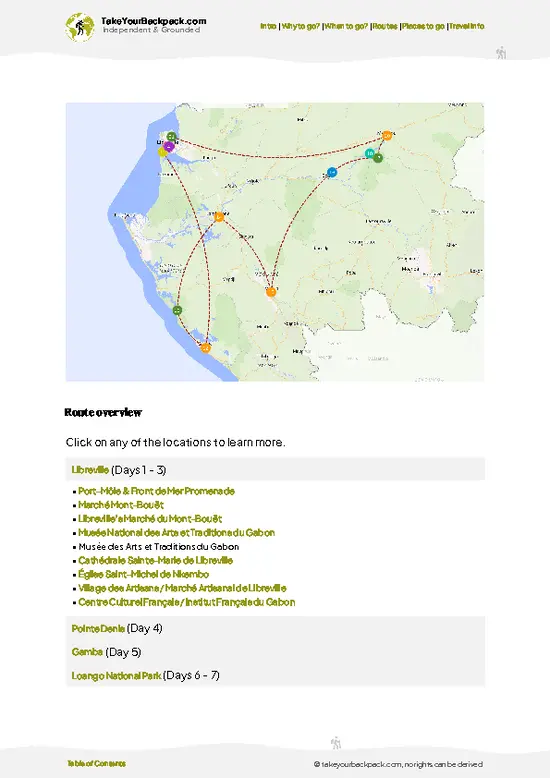
The 5-Day Libreville & Pointe Denis Escape

The vibe: A relaxed, low-logistics intro to Gabon that mixes city markets, coastal culture, and a quick beach reset without leaving the Libreville region. You get a taste of art, faith, and daily life, plus one night of sand and surf, all reachable by taxis and short boat rides.
The highlights:
  • Street-level immersion in Libreville around Marché Mont-Bouët and the seafront.
  • Traditional art and history at the Musée National des Arts et Traditions du Gabon.
  • Architectural contrasts at Cathédrale Sainte-Marie and Église Saint-Michel de Nkembo.
  • Laid-back beach time on the Atlantic at Pointe Denis.

The 10-Day Rivers & Rainforest Circuit

The vibe: A balanced loop for travelers who want more than the capital but don’t want to sprint across the whole country, combining river towns, deep forest, and just enough city time. Expect a mix of overland travel and boats, with multi-night stays that let you actually settle into each place.
The highlights:
  • Capital culture
read more 👉

The 5-Day Libreville & Pointe Denis Escape

The vibe: A relaxed, low-logistics intro to Gabon that mixes city markets, coastal culture, and a quick beach reset without leaving the Libreville region. You get a taste of art, faith, and daily life, plus one night of sand and surf, all reachable by taxis and short boat rides.
The highlights:
  • Street-level immersion in Libreville around Marché Mont-Bouët and the seafront.
  • Traditional art and history at the Musée National des Arts et Traditions du Gabon.
  • Architectural contrasts at Cathédrale Sainte-Marie and Église Saint-Michel de Nkembo.
  • Laid-back beach time on the Atlantic at Pointe Denis.

The 10-Day Rivers & Rainforest Circuit

The vibe: A balanced loop for travelers who want more than the capital but don’t want to sprint across the whole country, combining river towns, deep forest, and just enough city time. Expect a mix of overland travel and boats, with multi-night stays that let you actually settle into each place.
The highlights:
  • Capital culture and markets in Libreville, including the Port-Môle waterfront.
  • Slow river life and history in Lambaréné on the Ogooué.
  • Immersive rainforest time in Ogooué-Ivindo and Ivindo National Park.
  • Hikes to Kongou Falls and along the Ivindo River Trail for big-water and wildlife encounters.

The 15-Day Coast, River & National Parks Odyssey

The vibe: A full-on Gabon immersion for travelers ready to commit the time: Atlantic beaches, river towns, and multiple national parks stitched together at an adventurous but humane pace. You’ll use a mix of domestic links, overland journeys, and boats to see how wildly varied this small country can be.
The highlights:
  • Urban culture, art, and markets in Libreville plus a reset on the sands of Pointe Denis.
  • Wildlife-rich coastal adventures in and around Loango National Park via Gamba.
  • River and small-town life in Lambaréné and Mouila between the coast and the forest.
  • Deep-forest exploration in Ogooué-Ivindo and Ivindo National Park, capped with a softer landing near Akanda National Park.
🌍 Want a ready-to-use travel plan for Gabon?
The overview above gives a quick comparison of route options based on your travel time and style. The full Travel Guide shows each route in detail, with maps, stops, highlights, and transport types.

Explore all route details 👉

Get the Travel Guide -

🌤️ When to go?When to go for the best experience

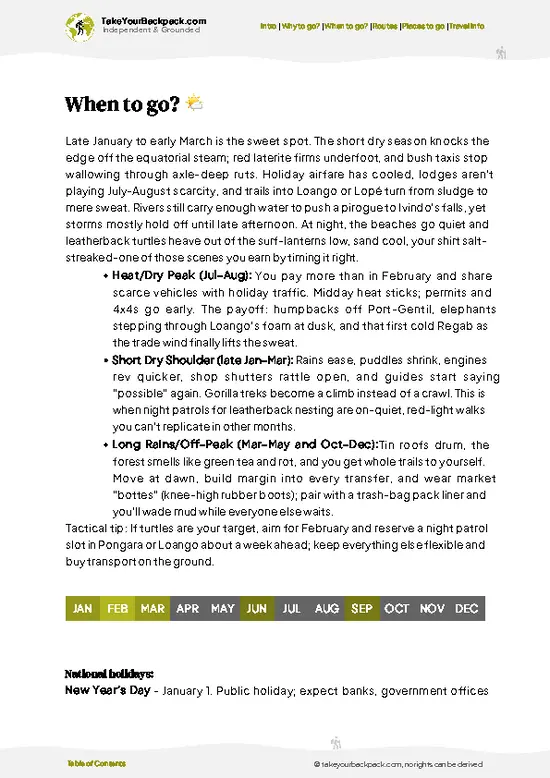
Late January to early March is the sweet spot. The short dry season knocks the edge off the equatorial steam; red laterite firms underfoot, and bush taxis stop wallowing through axle-deep ruts. Holiday airfare has cooled, lodges aren’t playing July-August scarcity, and trails into Loango or Lopé turn from sludge to mere sweat. Rivers still carry enough water to push a pirogue to Ivindo’s falls, yet storms mostly hold off until late afternoon. At night, the beaches go quiet and leatherback turtles heave out of the surf—lanterns low, sand cool, your shirt salt-streaked—one of those scenes you earn by timing it right.
  • Heat/Dry Peak (Jul-Aug): You pay more than in February and share scarce vehicles with holiday traffic. Midday heat sticks; permits and 4x4s go early. The payoff: humpbacks off Port-Gentil, elephants stepping through Loango’s foam at dusk, and that first cold Regab as the trade wind finally lifts the sweat.
  • Short Dry Shoulder (late Jan-Mar): Rains ease, puddles shrink, engines rev quicker, shop shutters rattle open, and guides start saying “possible” again. Gorilla treks become a climb instead of a crawl. This is when night patrols for leatherback nesting are on—quiet, red-light walks you can’t replicate in other months.
  • Long Rains/Off-Peak (Mar-May and Oct-Dec): Tin roofs drum, the forest smells like green tea and rot, and you get whole trails to yourself. Move at dawn, build margin into every transfer, and wear market “bottes” (knee-high rubber boots); pair with a trash-bag pack liner and you’ll wade mud while everyone else waits.

Tactical tip: If turtles are your target, aim for February and reserve a night patrol slot in Pongara or Loango about a week ahead; keep everything else flexible and buy transport on the ground.

source: climatestotravel.comJANJanuary: highly recommended for travelingFEBFebruary: excellent for travelingMARMarch: highly recommended for travelingAPRApril: fair for travelingMAYMay: fair for travelingJUNJune: good for travelingJULJuly: fair for travelingAUGAugust: fair for travelingSEPSeptember: good for travelingOCTOctober: fair for travelingNOVNovember: fair for travelingDECDecember: fair for traveling
Traveling in a specific month?
This page covers the best seasons to visit. For a complete month-by-month breakdown — including weather, crowds, costs, national holidays, and festivals — download the full Travel Guide.

Get the Travel Guide -
Gabon iStock-184443531

💰 Costs (as of 2025)Prices, expenses, and money tips

Expect $60-90 per day (35,000-55,000 XAF) if you sleep simple, ride shared taxis, and eat where smoke and charcoal say the food is real; Libreville pushes the top end, the interior lets you breathe.
  • dorm accommodation: 10,000-20,000 XAF ($16-33) where they exist; more often you’ll land a basic “chambre simple” in an auberge or mission guesthouse for 15,000-30,000 XAF. Expect a fan, thin mattress, bucket or cold-water shower, and generator noise after dark. System tip: message Catholic missions/YMCA and small “centres d’accueil” ahead, ask for the “prix mission” or weekly rate, arrive before dusk, and carry a sleep sheet plus padlock; this beats hotel rack rates that jump to 40,000-70,000 XAF in Libreville.
  • meals: Supermarket Survival: bread, sardines, fruit, and instant noodles run 5,000-8,000 XAF per day, but imports mean you’re paying more than in Cameroon for worse calories. Street food reality: a plate of poisson braisé or chicken with plantain/manioc is 2,000-3,500 XAF; brochettes 500-1,000 XAF; morning beignets and coffee 500-800 XAF. A cold Regab in a maquis is 1,000-1,500 XAF; the same beer in a glossy bar is 3,000+. Street stalls turn out better value and actual flavor; shop
read more 👉
Expect $60-90 per day (35,000-55,000 XAF) if you sleep simple, ride shared taxis, and eat where smoke and charcoal say the food is real; Libreville pushes the top end, the interior lets you breathe.
  • dorm accommodation: 10,000-20,000 XAF ($16-33) where they exist; more often you’ll land a basic “chambre simple” in an auberge or mission guesthouse for 15,000-30,000 XAF. Expect a fan, thin mattress, bucket or cold-water shower, and generator noise after dark. System tip: message Catholic missions/YMCA and small “centres d’accueil” ahead, ask for the “prix mission” or weekly rate, arrive before dusk, and carry a sleep sheet plus padlock; this beats hotel rack rates that jump to 40,000-70,000 XAF in Libreville.
  • meals: Supermarket Survival: bread, sardines, fruit, and instant noodles run 5,000-8,000 XAF per day, but imports mean you’re paying more than in Cameroon for worse calories. Street food reality: a plate of poisson braisé or chicken with plantain/manioc is 2,000-3,500 XAF; brochettes 500-1,000 XAF; morning beignets and coffee 500-800 XAF. A cold Regab in a maquis is 1,000-1,500 XAF; the same beer in a glossy bar is 3,000+. Street stalls turn out better value and actual flavor; shop only for snacks and water.
  • local transport: In cities, shared taxis charge 300-500 XAF per hop by day, 700-1,000 at night; don’t take private hires unless you like stories about your money. To unlock distances, ride the Trans-Gabon Railway in 2nd/3rd class (Owendo-Lopé-Franceville): 6,000-18,000 XAF depending on segment, reliable enough to plan around. Bush taxis fill the gaps at 5,000-20,000 XAF for half-day hauls, but count checkpoints and dust as part of the ticket. Boats and 4x4s to coastal parks are where budgets die; save them for targeted hits, not transit.
  • activities: National parks are the wallet test. Entry fees are modest, but mandatory guides, 4x4 transfers, and boats multiply fast: Lopé wildlife drives 80,000-150,000 XAF per vehicle; Loango safaris often $150-300 per person; whale/turtle trips $50-100. City museums are pocket change; beach days are free except for taxis and sunburn. Compared to Cameroon, nature here costs double for the privilege of fewer people and real chances at forest elephants at dusk—worth it if you commit to one or two big days, not every day.
  • miscellaneous: Budget leaks: ATM fees and bad bank rates (plan 3-8% bleed), bottled water at 500-700 XAF for 1.5L unless you carry a filter, SIM/data (1,000-2,000 XAF SIM; ~2,000 XAF/GB), laundry 2,000-4,000 XAF, and “night tariffs” on taxis. Libreville cafés sneak 10% service; generators add “fuel surcharges” upcountry. Compared to Congo it’s similar; far pricier than Cameroon; cheaper than Equatorial Guinea. Keep cash small, receipts in view, and celebrate each dusty day with a maquis beer, not a hotel bar tab.
⚠️ Prices can change and everyone travels differently, so take this as a rough guide. Hope it helps you plan your adventure!

✈️ The backpacker research shortcutGabon Travel Guide

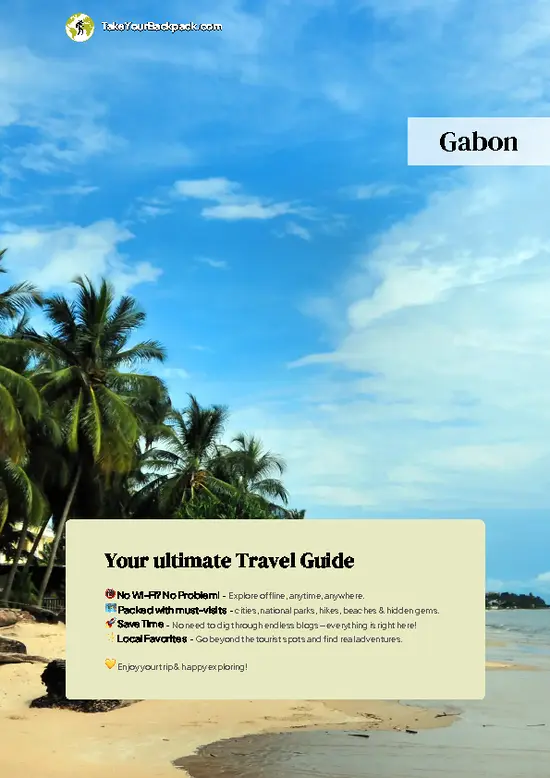
An offline-friendly backpacking guide with optimized travel routes, ranked highlights, transport advice, and the best areas to stay.
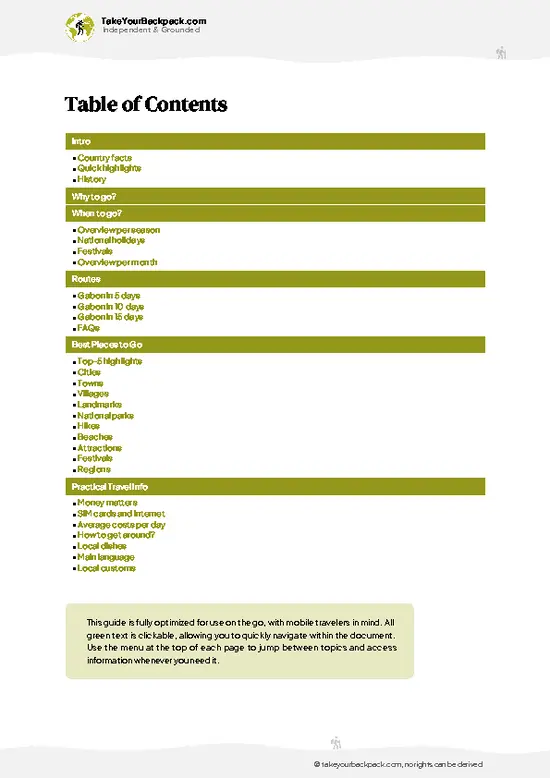
example page 0 from our offline Travel Guide for Gabonexample page 1 from our offline Travel Guide for Gabonexample page 2 from our offline Travel Guide for Gabonexample page 3 from our offline Travel Guide for Gabonexample page 4 from our offline Travel Guide for Gabonexample page 5 from our offline Travel Guide for Gabon
The digital guide (201 pages) contains:
53 highlights, ranked by travel appeal
Optimized 5, 10 & 15-day travel routes
Best neighborhoods to stay
How to get around
Offline-friendly for travel without Wi-Fi
👉 See all 30+ guide features

📅 Plan smarter in minutes, not weeks
Month by month travel advice
Festivals & national holidays
Budget expectations

🗺️ Go to the right places, skip the overrated ones
Honest pros & cons of destinations
Top hikes, parks & viewpoints
Lesser-known places most travelers miss
Clear “worth it vs skip it” guidance

🛏️ Travel smoothly without rookie mistakes
Best areas to stay
Transport systems explained simply
Common scams & safety advice
SIM cards, money & practical tips

🌍 Understand the country, not just visit it
Culture & traditions
52 Essential phrases & customs
Festivals worth planning around
Traveler-friendly historical context
Insights that make places more meaningful

📱 Built for real travel conditions
Fully downloadable PDF
Works completely offline
Optimized for phone use
Useful in remote areas & buses
Everything in one place
Save weeks of stressful planning
Get instant access to the full guide directly. 30-day money-back guarantee.


Sent to your inbox immediately after payment • 100% Secure Checkout
Best Backpacking Travel Advisor 2025 tourism awardBest Backpacking
Travel Advisor
2025
What others say about Take Your Backpack Guides:
⭐⭐⭐⭐⭐
Fantastic, amazing amount of information!
⭐⭐⭐⭐⭐
My goodness this is amazing, it's what I've been looking for hats off too you!
⭐⭐⭐⭐⭐
I think this is absolutely BRILLIANT
⭐⭐⭐⭐
Very complete and informative. It's still missing places, but I gotta to commend you
⭐⭐⭐⭐⭐
This is truly amazing, thank you, can't wait to explore it with my kids!
⭐⭐⭐⭐⭐
Awesome resource, thank you!
⭐⭐⭐⭐⭐
This is amazing! Can't wait to explore the ones I haven't seen
⭐⭐⭐⭐
I love this! Well done, great idea.
⭐⭐⭐⭐⭐
Thanks for taking the time to make this gem!
⭐⭐⭐⭐⭐
This might be the best website I've ever seen.
⭐⭐⭐⭐⭐
Congratulations, and thank you so much for your work; it's incredibly valuable.
⭐⭐⭐⭐
In all seriousness I think you did a great job pointing out the important spots
⭐⭐⭐⭐⭐
10/10 very good
⭐⭐⭐⭐⭐
As someone who's only just starting to visit regularly this is awesome, thank you.
⭐⭐⭐⭐
Thank you very much! I'm going to visit my dad, it's going to be very useful!
⭐⭐⭐⭐⭐
This is really cool! We'll be travelling for the first time and this definitely come in handy.
⭐⭐⭐⭐⭐
You are now our minister of culture, congratulations 👨‍💼
⭐⭐⭐⭐⭐
Just wanted to tell you that this is a pearl! Going to follow your recommendations.
⭐⭐⭐⭐⭐
This is so cool. I'll definitely be using the resource for my travels soon.
⭐⭐⭐⭐⭐
This is very impressive! Good work.
⭐⭐⭐⭐⭐
This is an amazing and informative site. Very well done!

🛏️ Where to stay?Where to stay in Gabon

Hostels and budget guesthouses exist in Gabon but they are limited and mostly concentrated in Libreville and Port‑Gentil with a few simple lodges in towns near national parks; expect very basic facilities, few dorm-style hostels, sporadic availability and the need to book ahead.

In Libreville the city centre and waterfront areas offer the most budget options — pro: close to markets, transport and nightlife; con: noise, higher petty‑crime risk and variable standards — in Port‑Gentil downtown gives access to services and a handful of cheap stays but feels industrial and quieter at night, while … read more 👉
Hostels and budget guesthouses exist in Gabon but they are limited and mostly concentrated in Libreville and Port‑Gentil with a few simple lodges in towns near national parks; expect very basic facilities, few dorm-style hostels, sporadic availability and the need to book ahead.

In Libreville the city centre and waterfront areas offer the most budget options — pro: close to markets, transport and nightlife; con: noise, higher petty‑crime risk and variable standards — in Port‑Gentil downtown gives access to services and a handful of cheap stays but feels industrial and quieter at night, while provincial river/park towns trade comfort for proximity to wildlife and quiet but have very basic facilities and limited evening safety infrastructure.

If you enjoy meeting fellow travelers, consider choosing hostels with high ratings for atmosphere. On the other hand, if you prefer having your own space, a hotel might be a better option.

🚌 Getting aroundWhat moving around is really like

Gabon moves to the tempo of rain on tin roofs and engines idling in red dust. Schedules bend around downpours, checkpoints, and whether a driver has “almost enough passengers” to make it worth leaving. You feel it in the damp shirt you can’t quite dry, the diesel tang by the road, and the sudden release when the vehicle finally rolls and the city thins into forest. Earn the ride, and you get what you came for: a river the color of tea at sunset, the first cold Regab sweating in your hand, and the … read more 👉
Gabon moves to the tempo of rain on tin roofs and engines idling in red dust. Schedules bend around downpours, checkpoints, and whether a driver has “almost enough passengers” to make it worth leaving. You feel it in the damp shirt you can’t quite dry, the diesel tang by the road, and the sudden release when the vehicle finally rolls and the city thins into forest. Earn the ride, and you get what you came for: a river the color of tea at sunset, the first cold Regab sweating in your hand, and the wind rinsing the heat off your face.
  • Taxi-brousse (intercity bush taxi) Speed is a coin you pay with comfort. Seats are sold by spot, not by legroom, and departures happen when every slot is full. It’s cheaper than flying and usually faster than waiting out a train that’s already gone—if you leave at dawn before checkpoints clog. Rain turns laterite to soup and adds an hour. Sit up front if you can; the rear rides the bumps harder. Keep small bills, a photocopy of your passport for roadside stops, and a calm face when the driver bargains for that last seat.
  • Shared city taxis Libreville and the provincial towns run on eye contact and quick taps on the window. You flag, state your junction, and the driver nods—or twitches his chin to say no. Fares are fixed by distance but negotiated in practice; have exact change ready and avoid big notes. Three in the back is normal. Don’t slam the door. Greet fellow riders, keep your bag on your lap, and expect the driver to stack routes, dropping one person, scooping another, surfing the traffic by instinct more than lane markings.
  • Trans-Gabon Railway The hack is using steel to skip bad tarmac. The night train links Owendo (Libreville) to the interior towns—Lopé for savannah and chimp country, Booué, Franceville—at a price that undercuts flights and the wear of the road. Second class is fine if you bring a warm layer, earplugs, and your own food; fluorescent lights and AC can be brutal. Tickets sell out before payday weekends; buy ahead at the station and board early for a decent seat. Dawn through Lopé’s mist is the payoff: green waves of forest and ochre hills sliding past as the carriage hums.
  • Pirogues and coastal boats Water ignores the ruts. Rivers and lagoons unlock Lambaréné’s lake maze, Akanda’s mangroves, and approaches toward Loango’s wild coast where roads give up. You pay per seat, plus a little for fuel; lifejackets are rare, so bring your own or a sturdy common sense. Wrap your pack in plastic, keep your phone in a dry bag, and time crossings to tides—afternoons can whip up chop. Landings are planks slick with fish scales; sandals you can rinse beat boots that won’t dry for days.
Master tip: Build your route around the night train as a spine, then jump on first-light bush taxis from the station towns—moving while the roads are cool and the checkpoints sleepy turns Gabon’s elastic timing into your advantage.
Distance
Léon-Mba International Airport (LBV) is about 9 km (5.5 miles) from Libreville’s city center.

Main ways to get into town (as of 2025)
  • Taxi (private hire) — 15-30 minutes depending on traffic. Typical daytime fares are 5,000-10,000 XAF; late evening/night can rise to 6,000-12,000 XAF. Fares are negotiated upfront (no meters). Cash only.
  • Shared taxi (“collectif”) — 25-45 minutes including waiting time. Cheaper per seat (about 300-700 XAF), but with luggage drivers often prefer to switch to a private fare. You may need to walk out to the main road to flag one.
  • City bus/minibus — 30-60 minutes. No dedicated airport shuttle, but public buses and private minibuses run along the main coastal road outside the terminal area toward Centre-Ville. Expect 100-300 XAF per ride. Service is infrequent at night; plan for daytime/early evening only.
  • Hotel shuttle — 20-30 minutes. Some mid-range and upscale hotels offer pre-booked transfers; pricing ranges from free to around 5,000-8,000 XAF depending on the property.

Quick taxi note
Taxis are the most straightforward option from the terminal. Agree the fare before getting in, expect a small surcharge late at night or for bulky luggage, and carry small bills in XAF. Ride-hailing is limited in Libreville, so most travelers use street taxis or hotel-arranged cars.

Good to know
Traffic on the coastal road can get sticky at rush hour; add buffer time if you’re traveling between roughly 07:00-09:00 or 16:30-19:30. Public transport runs mainly in the daytime; after dark, plan on a taxi.
⚠️ Prices and routes can change, so take this as a rough guide and ask for local advice when you arrive.

🔒 Safety (risk Level: medium)Staying safe while traveling

Safety for solo travelers, including women and LGBTQ+ individuals
Gabon is generally safe for solo travelers, but exercise caution like you would anywhere else. Urban areas, especially Libreville, have a higher risk of petty crime, so stay alert and avoid displaying valuables. Women travelers should be mindful of cultural norms and dress modestly. While same-sex relationships are legal, LGBTQ+ travelers might face social stigmas, so discretion is advised.


Full official government travel advisory (live updates)
View details 👉

✈️ VisaDo you need a visa to visit?

Most travelers need a visa to visit Gabon. You can apply for an e-visa online through the official Gabonese government portal. Make sure your passport is valid for at least six months and have a digital photo ready for the application.

source: diplomatie.gouv.ga
⚠️ Visa requirements can change over time, so always check the latest visa requirements with the official embassy or government website before you travel.

🎒 What to pack?What to wear and bring

Gabon is a mix of jungles, beaches, and savannas, so pack for sticky humidity and possible rainstorms. Lightweight, breathable clothing is your friend. If you’re exploring national parks, you’ll want long sleeves and pants to fend off mosquitoes and other bugs. When visiting villages, it’s respectful to dress modestly—nothing too revealing. And a quick note: roads can be rough, so choose durable footwear for those unexpected hikes or muddy adventures.

Apart from this country specific advice, I have also crafted a general packing list that should help on any trip. authorOver the years, I've learned the importance of packing minimally. It's so much easier to jump on the back of a truck or squeeze yourself into the last spot of a minibus without that supersized backpack. If you're headed to a warm destination, leave your winter jacket at home; for colder regions, opt for thin thermal underlayers. Instead of packing your entire wardrobe, bring just three sets of clothes, as laundry facilities are available everywhere.

View the full list 👉

🙋 FAQCommon questions before visiting

Trip Planning


Personal tip: I normally search on good rating for atmosphere (for meeting people) and location (for easy exploring). Cleanliness as a bonus.


Travel Essentials

Yellow fever vaccination is mandatory for Gabon. It’s strongly recommended to be up-to-date with routine vaccines like MMR, DPT, and varicella. Consider getting vaccinations for hepatitis A, hepatitis B, typhoid, and rabies if you’re planning on extended stays or visiting rural areas. Malaria prophylaxis is also advised. Always consult with a healthcare provider well in advance.


vaccination requirements
When I first started traveling, I often spent part of my first day in a new country hunting for a local SIM card. While this can still be slightly cheaper, it also takes time and planning.

These days, it's much simpler to install an eSIM before leaving home. Once you arrive in Gabon, you can activate it immediately and have mobile data from the moment you land — which is especially useful for ordering transport or navigating away from busy airports.

There are many providers nowadays, and price differences are usually small. I personally go with Airalo, as it offers excellent network coverage throughout the country and strong global coverage, so you can manage multiple countries from a single app.


Get your e-sim for Gabon

Culture & Customs

Respect elders by greeting them first. Dress modestly, especially in rural areas; shoulders and knees covered is safest. Public displays of affection are frowned upon. Ask for permission before taking photos of people.

For LGBTQ+ travelers, be cautious. Same-sex relationships are legal but not widely accepted socially.

Women should be aware that catcalling can happen, but it’s usually not aggressive. Trust your instincts and avoid walking alone at night.

Using your right hand for handshakes and giving gifts is customary. Avoid discussing politics or criticizing the government openly.
Trying traditional food is always a great way to experience the culture. Here are some must-try dishes for Gabon.
  • Poulet Nyembwe: This is Gabon’s national dish made with chicken cooked in a savory sauce made from palm nuts. It’s a must-try because it gives you a taste of traditional Gabonese cooking techniques and flavors.
  • Brochettes: These are skewers, usually of beef or chicken, marinated and grilled. They’re popular street food and are perfect for getting a quick, authentic taste of Gabonese spices.
  • Saka-Saka: Made from cassava leaves, this dish is typically stewed with palm oil and fish or meat. It’s a staple in Gabonese households and gives insight into local agricultural practices.
  • Atanga: Also known as African ”bush butter,” this is a fruit you boil and eat with salt. It’s a unique taste experience and a local favorite snack.
Tap water in Gabon is generally not considered safe for tourists to drink, although locals may consume it. It’s best to stick to bottled or filtered water to avoid any health risks. Make sure the bottled water’s seal is intact before purchasing.
The main language in Gabon is French. Backpacking is way more rewarding if you know a bit of the local language, so I'd suggest brushing up on the basics just in case your French skills have become a bit rusty.

Want to understand locals better?
The complete Travel Guide for Gabon includes 52 essential words and phrases — greetings, thank-yous, ordering food, transport, numbers, and common local expressions you'll actually hear.

Get your local basic phrases 👉

Get the Travel Guide -


In Gabon, English is not widely spoken. The official language is French, a remnant of the country’s colonial past, and it is the primary language used in government, education, and media. While some Gabonese, particularly in urban areas and among the younger population, may have a basic understanding of English, fluency is limited. English is often taught in schools, but proficiency varies significantly.

In tourist areas, you might find individuals in the hospitality sector who can communicate in English, but outside these contexts, interactions may be challenging for English speakers. It’s advisable for travelers to learn a few basic French phrases to facilitate communication and enhance their experience. Additionally, using translation apps can be helpful in navigating conversations.

Overall, while you might encounter some English speakers, especially in major cities like Libreville, French remains the dominant language in Gabon.

Money & Payments

The local currency of Gabon is XAF (FCFA).

When backpacking in Gabon, it’s smart to carry some cash. ATMs are mainly in major cities like Libreville and Port-Gentil, and they can be unreliable. Plan to withdraw enough to last you when heading into the countryside. Most ATMs accept Visa, but Mastercard can be a hit or miss.

For currency, it’s better to carry euros rather than dollars for exchange purposes. Euros are easier to exchange at banks and currency exchange offices. Avoid exchanging money on the street to dodge scams and poor rates.

Credit cards are accepted in upscale hotels and some restaurants, but don’t count on them for everyday purchases. Cash is king, especially in smaller towns and markets. Keep some small denominations handy for local transport and street food.

Tipping in Gabon isn’t a strict practice, but leaving a small tip for good service in restaurants, around 10% of the bill, is appreciated. In taxis, rounding up the fare is common, and hotel staff might expect a small gratuity. Always carry some cash, as credit card tipping isn’t widespread.

🧩 Nearby countriesNearby backpacking alternatives

We 💚 feedbackIs Gabon worth visiting?

Gabon pays you back when the forest hits the surf: elephants ghosting along Loango’s tideline, the taste of salt and woodsmoke, the first beer cold enough to sting after a day of sweating through liana and sand. The grind is real—costs run high for the region, transport is scarce off the N1, and a storm turns roads to porridge. But it’s getting easier: e-visas, park-trained local guides, clearer permit systems, and upgrades on the Trans-Gabon Railway are nudging the wild within reach.

✍️ Help improve this page!
The information on this page is based on in-depth research, insights shared by experienced travelers, and feedback from the local travel community in Gabon. While every effort is made to keep the information accurate and current, conditions can change — so if you spot anything incorrect or outdated, please get in touch.


🙋‍♂️ Give feedback

👋 Meet the founderWho’s Behind Take Your Backpack?

Johan, backpacker and founder of TakeYourBackpackHi, I’m Johan (Netherlands 🇳🇱), the creator of TakeYourBackpack. Over the past decade, I’ve backpacked through 80+ countries across six continents, gaining extensive experience with independent travel, long-term trips, and overland routes.

This site is built on a combination of firsthand travel experience and carefully curated insights from other backpackers. Many guides are based on places I’ve personally visited, while others bring together tips, observations, and practical advice shared by trusted travelers I’ve met along the way.

The goal is to provide realistic, experience-driven guidance — not generic itineraries — so you can explore destinations with better context, clearer expectations, and more confidence.

Get Full Country Guide |
Instant download • 53 highlights • Full Offline guide