×
Colombia 🇨🇴

backpacking South America Colombia 🇨🇴Ride winding roads connecting colorful coffee towns and coastlines.

Explore ChileExplore Ecuador

Backpacking Colombia in 2026

A complete guide including when and where to go, costs, transport, itineraries, and practical travel advice.
A practical introduction for travelers

Backpacking Colombia
By Johan Kruseman 🇳🇱 | Updated June 4, 2026

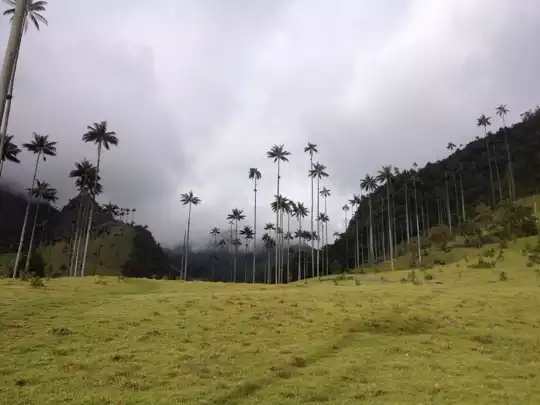
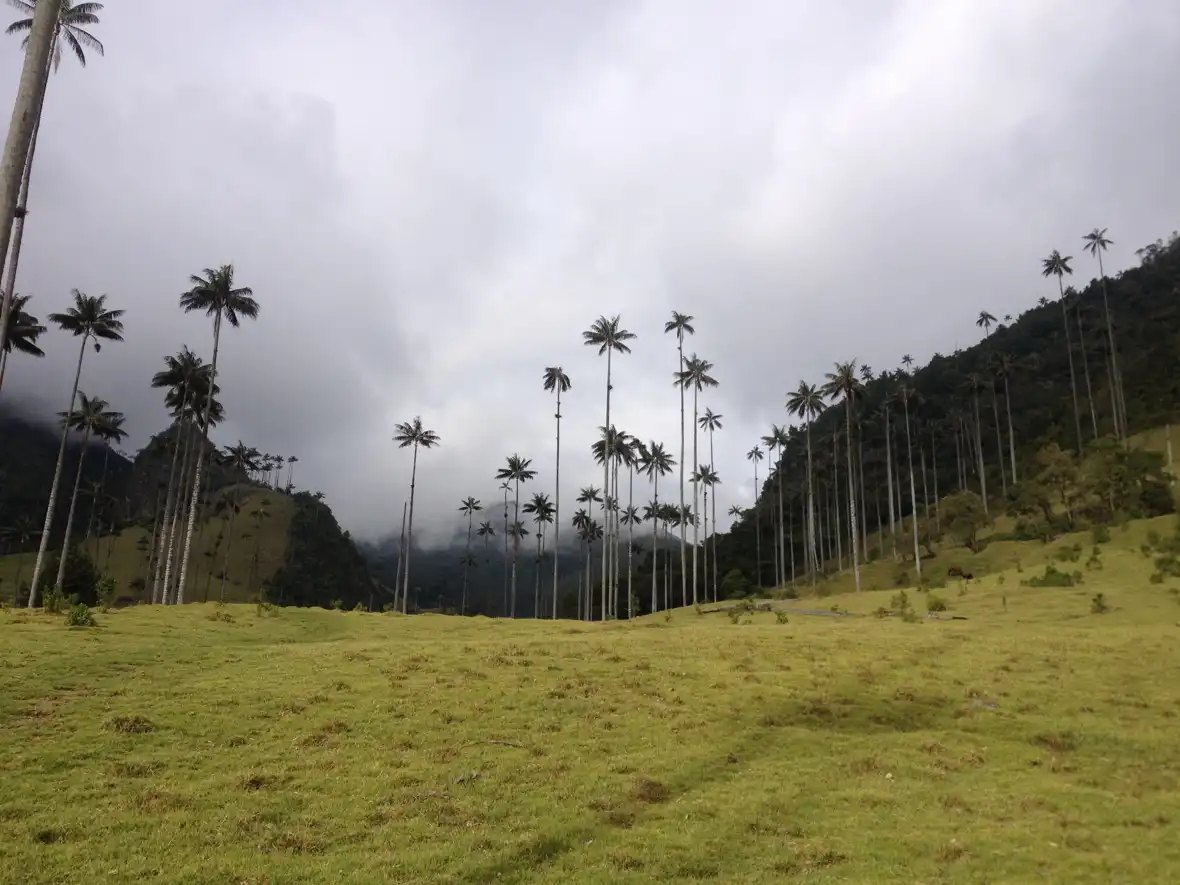
Skip crowded Cocora: bus to Salamina, then a cheap moto up to San Félix to walk among wax palms with nobody in your photos. Same Quindío palms, same Andean glow, none of the queues. Colombia rewards the detour; the good stuff sits just off the main road, priced for people who live here.

This is a country of contrast that actually works for travelers: Caribbean reefs and desert dunes, cloud forests and high páramo, whale-thick Pacific swells and cowboy-straight horizons in the Llanos. Music is a daily utility—cumbia in the corner shop, salsa that turns Cali sidewalks into dance floors, champeta rattling old stone in Cartagena—while coffee country rolls out green on green and old towns like Barichara and Salamina keep the pace human. Birdlife is off the charts; even casual hikers spot toucans, tanagers, and a hummingbird blur. Food is humble and regional: arepas change every hundred kilometers, ajiaco warms Bogotá nights, and a $1 tinto still does the job. The catches are predictable: long mountain buses, rain that swings in hard, card skimmers if you get sloppy, ATMs that vanish on remote coasts. Solve it with daylight travel, small bills, offline maps, and calm; the trade is richer trails, real conversations, and the pride of earning your sunset. My best whale show was from a concrete pier in Nuquí after a rainy morning.

Compared with Ecuador, Colombia is bigger, rowdier, and more musically wired; compared with Peru, it leans less on headline ruins and more on living culture; compared with Panama, it stretches deeper beyond beaches and a capital. It’s for travelers who want range, rhythm, and value—first-timers ready to build confidence, and veterans who know character beats polish every time.

👉 Get the 📖 Travel Guide of Colombia

Andean Core: Medellín + Coffee Axis

Urban energy with real mountains at the door. Medellín rewards travelers who like a connected base (metro + cable cars) and day trips that actually work. Laureles is cheaper and calmer than Poblado; that’s where you save sleep and pesos. Use Terminal Sur/Norte buses; to Salento go via Pereira/Armenia, then a Willys jeep at local rates. Cocora gets swamped after 9 a.m.—start at dawn and push the full loop if your knees allow. Weekends spike prices in Salento and Guatapé; go midweek and dodge the lineups and inflated jeeps.

Caribbean Coast Spine: Cartagena → Santa Marta → Tayrona → La Guajira

Hot, social, fast-moving. This corridor is a conveyor belt of buses and shuttle vans; you can bounce city–jungle–desert without dead time. Cartagena is beautiful but costs 30–50% more than Medellín for beds and beers; sleep cheap in Manga/Getsemaní, then spend on a Rosario Islands boat only if seas are calm and you’ve budgeted the port tax. Santa Marta is your cheap gear base; Minca is the heat escape (moto-taxis handle the last steep kilometers). Tayrona has quotas, real entry fees, and closures some months; bring your passport and cash, sleep in hammocks, and hike early to beat both sun and crowds. La Guajira needs a 4x4 and two spare days—sand, wind, and fuel markups are the tax for that horizon.

Santander Canyonlands: San Gil + Barichara

Adventure sports without resort pricing, if you play it right. From Bogotá, buses run 6–8 hours; flying to Bucaramanga then busing 2–3 saves your back. Base in San Gil for rafting (Suarez is serious water) and paragliding over Chicamocha; weigh-ins are strict and photos aren’t included, so negotiate total cost before you sign. Hike the Camino Real to Barichara for cobbles and quiet, then the Guane extension if you’ve got legs left. Cash is king outside town; ATMs fail during storms.

Pacific Chocó: Nuquí/Bahía Solano

Roadless, rain-heavy, zero pretense. Fly on small planes from Medellín; weather cancels happen, so carry a buffer day and patience. Everything is flown or boated in, so food and rooms cost more than the Andes, but you buy empty beaches, jungle waterfalls, and (July–October) whales close enough to salt your clothes. Pack dry bags, headlamp, and repellent that actually works; sandflies don’t care about your optimism. Power cuts are routine; charge when you can and bring cash—ATMs are unreliable or nonexistent.

Amazon Trifrontier: Leticia + Puerto Nariño

Slow river time that rewards listeners. Fly from Bogotá; boats set the pace after that. Base in Puerto Nariño to cut noise and reach lakes for pink dolphins at dawn; hire community guides and skip any “animal photo” setups. River levels change schedules and landings; stay flexible and keep a day in hand. Heat drains you, so plan pre-sunrise and post-4 p.m. missions. Bring your yellow-fever card, rubber boots, silica gel for electronics, and more cash than you think—you won’t find ATMs upriver.
A visual overview of the country
Loading the map 🌍
CLICK TO FILTER
city
town
village
unique site
national park
hike
beach
attraction
festival
region
SHOW COUNTRY’S BESTSHOW ALL
film
0
0
0a
Gold Museum
Pixabay
film
1
1
1a
Museo Botero
film
2
2
2a
Museo Nacional de Colombia
film
3
3
3a
Jardín Botánico de Medellín Joaquín Antonio Uribe
film
4
4
4a
Parque Explora
film
5
5
5a
Museo de Antioquia
film
6
6
6a
Teatro Colón
film
7
7
7a
Parque Jaime Duque
film
8
8
8a
Zoológico de Cali
film
9
9
9a
Museo de Arte Moderno de Bogotá
film
10
10
10a
Cabo San Juan
Lucas
film
11
11
11a
San Andres
Andres Otalvaro
film
12
12
12a
Playa Blanca
J Marvin Viajero
film
13
13
13a
Cabo de la Vela
Diego Rocha
film
14
14
14a
Nuquí
film
15
15
15a
Palomino
film
16
16
16a
El Rodadero
Juan Pablo Munera
film
17
17
17a
Cartagena
Pixabay
film
18
18
18a
Medellin
Victor
film
19
19
19a
Bogota
Elio Guzman
film
20
20
20a
Cali
Wilson Vélez Colonia
film
21
21
21a
Armenia
film
22
22
22a
Lost City Trek (Ciudad Perdida)
film
23
23
23a
Iguaque  Trail
film
24
24
24a
Puracé Volcano Trail
film
25
25
25a
Páramo de Sumapaz Trail
film
26
26
26a
Quebrada La Vieja Trail
film
27
27
27a
Cerro Machín Volcano
Gabo Cruz
film
28
28
28a
Tayrona
Unsplash
film
29
29
29a
Los Nevados
Paula Andrea Rodriguez Alvarado
film
30
30
30a
El Cocuy
Daniel A Diaz Caviedes
film
31
31
31a
Valle de Cocora
film
32
32
32a
Chiribiquete
Eva Zuckerman
film
33
33
33a
Puracé National Natural Park
film
34
34
34a
Chicamocha Canyon
Luis Arturo Suavita Peña
film
35
35
35a
Chocó
La Maja Mina
film
36
36
36a
Barichara
Julio Fernandez Casanova
film
37
37
37a
Jardín
film
38
38
38a
Santa Cruz de Mompox
Jessica P.g
film
39
39
39a
Filandia
film
40
40
40a
Ráquira
film
41
41
41a
San Gil
La Casona Barichara
film
42
42
42a
Caño Cristales
Mimi Wettstein
film
43
43
43a
Guatapé
Daily Cerdas
film
44
44
44a
Tatacoa Desert
Daniel R.

Why go?Why Colombia is worth visiting

Backpackers

Colombia is built for backpackers. Dense route, cheap dorms, mountains and coast in one loop. You can … read more 👉
Colombia is built for backpackers. Dense route, cheap dorms, mountains and coast in one loop. You can roll Medellín–Salento–Bogotá–San Gil–Santa Marta–Minca–Cartagena without bleeding cash, and the hostel courtyards actually fill with people, not influencers staging shots. Buses are low-cost, but the Andes make five centimeters on the map turn into eight hours; plan fewer moves and you’ll save money and sanity. Pro tip: buy a Claro SIM at an official shop (passport needed) and keep small bills—ATMs hit you with fees and many towns run cash-first. In Cartagena, sleep in Getsemaní, not inside the walls. In Medellín, use the Metro and stay in Laureles if you want nights that end. I’ve twice booked the Lost City trek in Santa Marta same-day for less than online. Night buses blast AC; pack a layer.

Scenery

Colombia pays you back in scenery if you earn it. Lakes flanked by páramo, caves humming with guácharos, … read more 👉
Colombia pays you back in scenery if you earn it. Lakes flanked by páramo, caves humming with guácharos, volcano skylines, savannah that stretches to a mirage, rainforest that soaks you to the bones. The trick is timing and endurance. Start before dawn for Cocora’s wax palms and you’ll have the valley to yourself; sleep in and you’ll march in a conga line. Caño Cristales only glows in season, and Llanos wildlife works best in the dry months. Volcanoes close without apology; have a Plan B trail. Pro tip: road hours are double what your map promises—protect daylight. Guides are mandatory in caves like Río Claro, and worth it. Cash for park gates, layers for altitude, ruthless sunblock for Tatacoa. I’ve eaten mud in Los Nevados; waterproof boots saved the trip.

People

Colombians greet you with quick smiles and a joke. “A la orden” isn’t a slogan; it’s an instinct. People … read more 👉
Colombians greet you with quick smiles and a joke. “A la orden” isn’t a slogan; it’s an instinct. People walk you to the corner instead of pointing. A grandmother in a Medellín tienda once corrected my Spanish, fed me buñuelos, then drew my bus route on a receipt. Don’t confuse warmth with endless bandwidth. Use usted until invited to tutear. Bring small bills. If someone suggests a bottle “for the table,” set your own drink and your own tab—budget saved. The 10% propina voluntaria on restaurant bills is optional; accept or decline with a “muchas gracias.” Skip narco jokes; talk fútbol, food, or family and you’ll be fine. Expect loose time—7 often means 7:30—so don’t stack tight plans. Pro tip: watch a match in a corner tienda, buy an empanada for the vecino, and let the room adopt you.

Low cost

Colombia keeps the meter low if you play it right. On a disciplined backpacker pace, I average roughly … read more 👉
Colombia keeps the meter low if you play it right. On a disciplined backpacker pace, I average roughly $30–45 a day without feeling deprived. The math works because almuerzo del día fills you, city transport is cheap (Medellín’s Metro and Metrocable are a bargain way to the hills), and long-distance buses beat planes once you factor bag fees. Pro tip: eat in the central mercado; skip the walled-city menus in Cartagena and walk to Getsemaní. Budget airlines love fine print—check in on your phone and keep a small bag to dodge add-ons. ATMs tack on flat fees and “dynamic conversion”; decline it and withdraw bigger chunks. Many museums have free days in big cities. Overnight buses can save a bed night, but the A/C is arctic—bring layers.

Mountains

Colombia rewards hikers who show up prepared. Three Andean cordilleras plus the Sierra Nevada de Santa … read more 👉
Colombia rewards hikers who show up prepared. Three Andean cordilleras plus the Sierra Nevada de Santa Marta give you páramo plateaus, glaciated volcanoes, and jungle-to-snow transitions in one country. You’ll earn it mile by mile, but the views hit like a truth you can’t unsee.

Start early. Afternoon storms and lightning ruin proud plans. Altitude bites fast—sleep a night or two in Bogotá or Sogamoso before pushing higher. Pro tip: El Cocuy now runs on permits, registered guides, and checkpoints; carry cash and passport copies or you’ll hike nowhere. I’ve been turned around by weather on a high pass there; a 3 a.m. start saved my second attempt.

Los Nevados is classic—Tolima demands a guide for glacier sections. Santa Marta’s peaks close for indigenous ceremonies. Respect closures, get quieter trails. Pack real rain gear, poles, gaiters. Buses crawl; build buffers.

Beach life

Colombia does beach two ways: warm Caribbean coves for snorkeling and sun, and a moody Pacific with … read more 👉
Colombia does beach two ways: warm Caribbean coves for snorkeling and sun, and a moody Pacific with surf and whales. The payoff is huge if you dodge the traps. Skip Cartagena’s city sand; take the first lancha to the Rosario or Barú, sit far from the speakers, confirm prices and any consumo mínimo, and bring cash—boats often leave when full and return fees creep. Tayrona’s hike-in bays earn their beauty, but the park closes several weeks a year and charges daily insurance; sandflies bite at dusk, so long sleeves beat regret. I walked away from a cheap Taganga dive when the gear looked tired and flew to Providencia instead—clear water, better operators, worth the hassle. On the Pacific, Nuquí and Bahía Solano are raw and real; respect rip currents and go July–October for whales.

Food

You go to Colombia to eat like a local and win on value. The country runs on lunch: the menú del día … read more 👉
You go to Colombia to eat like a local and win on value. The country runs on lunch: the menú del día (soup, main, juice) fills you up for less than a beer in most U.S. cities, and it’s where grandma-level cooking still rules. Pro-tip: grab it before 2 pm; kitchens pivot hard after. Breakfast is a panadería raid—pandebono, buñuelo, hot chocolate—and coffee is “tinto” unless you hunt specialty cafés in Bogotá or Medellín. Order jugos “en agua” or “en leche,” and say “sin azúcar” unless you want syrup. Cartagena: arepa de huevo at dawn from a busy stand; skip any cart with tired oil. Street ceviche? Only from high-turnover spots, earlier is safer. Dinner is lighter and earlier than you expect; eat by 8:30. Optional 10% propina—your call.
Want the complete picture of Colombia?
The offline Travel Guide brings everything together — routes, highlights & planning.

See what's included in the guide 👉

Get the Travel Guide -

⭐ HighlightsHighlights of Colombia

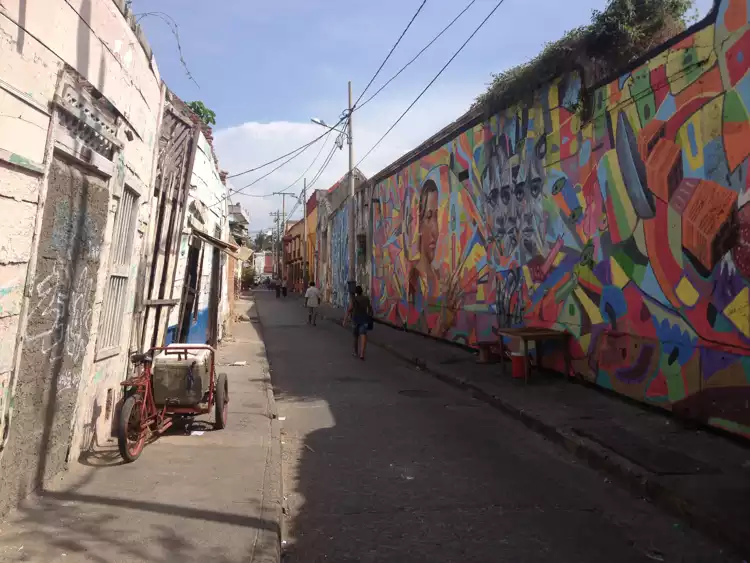
  • Cartagena’s Walled City and Getsemaní: Walk the ramparts at sunrise when the stones are cool and the sea air tastes like salt and diesel. By noon the humidity hits like a wet blanket; save your energy for twilight when plazas come alive with drums and cold beer. Vendors will press hard—carry small bills and say no firmly. Taxis don’t use meters; agree on the fare before the door shuts. The proof you were here: the crack of horse hooves on slick cobbles and the smell of frying arepa de huevo clinging to your shirt.
  • Tayrona National Park (Cabo San Juan and La Piscina): This is sweat-for-reward coastline—two hours of sandy trail and howler monkeys before that first swim. Foreigners pay more at the gate; bring a passport and cash, and get there early because daily entries cap out and lines waste a morning. Food and hammocks cost more than in Santa Marta, but the surf at Arrecifes will kill you—swim only where locals do. You’ll know you did it right when the sea dries to a fine salt crust on
read more 👉
  • Cartagena’s Walled City and Getsemaní: Walk the ramparts at sunrise when the stones are cool and the sea air tastes like salt and diesel. By noon the humidity hits like a wet blanket; save your energy for twilight when plazas come alive with drums and cold beer. Vendors will press hard—carry small bills and say no firmly. Taxis don’t use meters; agree on the fare before the door shuts. The proof you were here: the crack of horse hooves on slick cobbles and the smell of frying arepa de huevo clinging to your shirt.
  • Tayrona National Park (Cabo San Juan and La Piscina): This is sweat-for-reward coastline—two hours of sandy trail and howler monkeys before that first swim. Foreigners pay more at the gate; bring a passport and cash, and get there early because daily entries cap out and lines waste a morning. Food and hammocks cost more than in Santa Marta, but the surf at Arrecifes will kill you—swim only where locals do. You’ll know you did it right when the sea dries to a fine salt crust on your forearms and your pack smells like wet rope and coconut.
  • Cocora Valley (Salento): The wax palms look unreal, but the mud is very real—rent boots in town and take the loop counterclockwise to climb before the views. Willys jeeps leave from the plaza; the first ones save you the crowd. Expect two separate private gate fees and carry cash; storms roll in fast. The sound you’ll remember is boot-sucking mud and the electric buzz of hummingbirds at Acaime while you sip thick hot chocolate with a cube of salty cheese melting in it.
  • Ciudad Perdida (Lost City) Trek: Four or five days of river crossings, slick stairs, and jungle heat, guided only. It’s pricier than most Colombia hikes, but cheaper than the Inca Trail—and worth it if you pack smart. Camps sell cold sodas and beers for a premium; bring cash and electrolytes. Jejenes (sandflies) bite through pride—cover up. Proof of presence is the algae-slick stone under your soles at the river ford and the campfire smoke in your hair when you finally climb the last terraces at dawn.
  • Medellín Metrocable to Parque Arví: Float over the brick maze, then trade city grit for eucalyptus shade and cicadas. Buy a Cívica card to skip ticket lines and go early; Sundays bottleneck. Trails are signed—stay on them and be out before dusk when fog drops. Afternoon cloudbursts are not rumors, so pack a shell. Proof is the metallic hum of the cable overhead, sticky fingers from guarapo sugarcane juice, and the buttery sweet edge of an arepa de choclo eaten hot at the market. For off-the-map: La Guajira’s wind-blown points, San Agustín’s stone guardians, and slow, river-bound Mompox; my personal favorite is the golden Camino Real walk from Barichara to Guane at sunset.
Spotted a mistake or missing a highlight? Contact us.

But Colombia offers more...

Discover and compare all of its highlights per category

🧭 RoutesPlanning a route that makes sense

The 7-Day Coffee Region Escape

The Vibe: A slow, scenic week built around colorful towns, coffee farms, and cloud-forest hikes, perfect if you want depth in one region instead of sprinting across the whole country. Expect buses, short taxi rides, and plenty of time on foot rather than flights or overnight hauls.
The Highlights:
  • Urban soft landing in Medellin with time for Museo de Antioquia or Parque Explora.
  • Staying in Salento and wandering between coffee fincas in the green hills.
  • Hiking among the towering wax palms of Valle de Cocora.
  • A quieter final day in Filandia and Armenia to soak up small-town life.

The 14-Day Andes-to-Caribbean Circuit

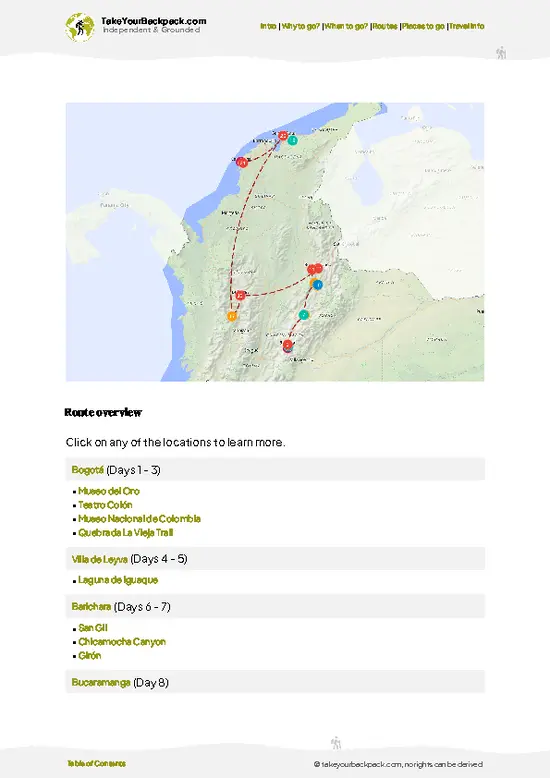
The Vibe: Two weeks that stitch together Bogota’s museums, Andean colonial towns, canyon country, and a taste of the Caribbean, with a balanced pace and a mix of buses and one internal flight. It’s ideal if you want variety and culture without sacrificing rest days and plaza time.
The Highlights:
  • Big-city culture in Bogota with the Gold Museum and Museo
read more 👉

The 7-Day Coffee Region Escape

The Vibe: A slow, scenic week built around colorful towns, coffee farms, and cloud-forest hikes, perfect if you want depth in one region instead of sprinting across the whole country. Expect buses, short taxi rides, and plenty of time on foot rather than flights or overnight hauls.
The Highlights:
  • Urban soft landing in Medellin with time for Museo de Antioquia or Parque Explora.
  • Staying in Salento and wandering between coffee fincas in the green hills.
  • Hiking among the towering wax palms of Valle de Cocora.
  • A quieter final day in Filandia and Armenia to soak up small-town life.

The 14-Day Andes-to-Caribbean Circuit

The Vibe: Two weeks that stitch together Bogota’s museums, Andean colonial towns, canyon country, and a taste of the Caribbean, with a balanced pace and a mix of buses and one internal flight. It’s ideal if you want variety and culture without sacrificing rest days and plaza time.
The Highlights:
  • Big-city culture in Bogota with the Gold Museum and Museo Botero.
  • Cobblestone charm in Villa de Leyva and Monguí, plus the Páramo de Ocetá Trail.
  • Canyon views and stone streets around Chicamocha Canyon and Barichara.
  • A coastal finale in Santa Marta with a cool-air escape to Minca.

The 21-Day Grand Colombia Traverse

The Vibe: A three-week odyssey linking highland capitals, Caribbean beaches, jungle ruins, and coffee-country mountains, paced for travelers who want to go deep without burning out. You’ll combine domestic flights, long-distance buses, and a few boat rides to see how many different Colombias fit inside one country.
The Highlights:
  • Cultural immersion in Bogota’s top museums and theaters.
  • Caribbean days around Santa Marta, Minca, Tayrona National Park, and Cabo San Juan.
  • The multi-day Lost City Trek through Sierra Nevada de Santa Marta National Park.
  • A city-and-country combo of Medellin, Guatapé, Jardín, Salento, Valle de Cocora, and the fringes of Los Nevados National Park.
🌍 Want a ready-to-use travel plan for Colombia?
The overview above compares different route options based on your travel time and style. The complete Travel Guide breaks each itinerary down in detail, including maps, stops, highlights, and transport information.

Explore all route details 👉

Get the Travel Guide -

🌤️ When to go?Best time to visit Colombia

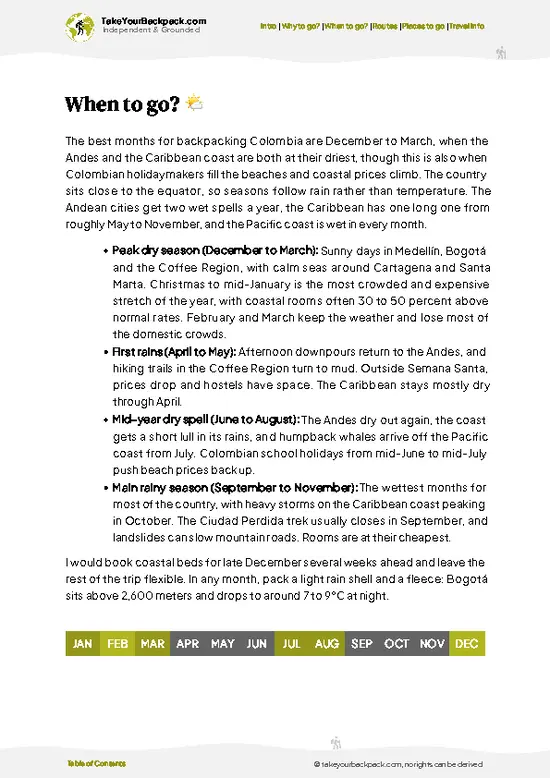
February through early March is the cleanest window for backpacking Colombia. Holiday inflation has bled out, Semana Santa hasn’t detonated prices or bus lines yet, and the weather balance tilts your way: Caribbean coast still dry enough for beach days and Tayrona trails (watch for the annual February closure window), Andean paths firm for Cocora and Los Nevados, and rivers clear for rafting. Trade-off: heat on the coast is real at midday, but you can dodge it by moving early and late. If you want cooler mountain air and cheaper beds, late July to late August is the runner-up: the Andes sit in a dry spell, the Amazon eases a bit, and Colombians are mostly back at work; the Caribbean takes more passing showers, but they’re short and prices slip.
  • Peak Dry (Holiday/Carnival): Mid-December to early January and Semana Santa. You’ll wrestle for dorm bunks and pay festival rates, but you get rock-steady sun on the Caribbean, firm jungle paths, city parties in fifth gear, and guides fully staffed. Worth it if your goal is beach, fiestas, and big-ticket treks on dry ground.
  • Shoulder Momentum (Post-Holiday Dry): Late January to March (skip Carnival week). Crowds thin, vendors reopen at sane hours, and rates settle. Buses run with seats to spare, Tayrona quotas aren’t maxed, and Medellín’s afternoon sprinkles stay brief. Mid-year echo: July-August delivers similar flow in the mountains with even cheaper beds.
  • Rain Pulse Off-Peak: April-June and September-November. The country goes inward: cloud forests whisper, colonial plazas empty, and beaches go moody. Move at dawn to beat downpours and landslide delays, line your pack with a compactor bag, and pick towns with covered sidewalks. On the Pacific, this is whale season; you’ll be wet, and you’ll forget you’re wet.

Personal tactical tip: Book domestic flights about a month out for the shoulder, and always line your backpack with a trash-compactor bag—one cheap fix that saves gear when the sky flips.

source: climatestotravel.comJANJanuary: highly recommended for travelingFEBFebruary: excellent for travelingMARMarch: highly recommended for travelingAPRApril: fair for travelingMAYMay: fair for travelingJUNJune: fair for travelingJULJuly: highly recommended for travelingAUGAugust: highly recommended for travelingSEPSeptember: fair for travelingOCTOctober: fair for travelingNOVNovember: fair for travelingDECDecember: excellent for traveling
📅 Traveling in a specific month?
Get a full month-by-month breakdown of weather, crowds, costs, festivals, and seasonal highlights in the complete travel guide.

Get full details when to go 👉

Get the Travel Guide -
!Foto 25-08-14 23 21 13

💰 Costs (as of 2025)What things cost day to day

Expect COP 120,000-200,000 (USD 30-50) per day if you sleep in dorms, eat local, and ride buses; it climbs fast with tours and cocktails.
  • dorm accommodation: COP 35,000-60,000 in small towns; 60,000-95,000 in Medellín/Bogotá; 80,000-130,000 on the Caribbean coast, where air-con costs extra. Relative value: cheaper than Peru’s tourist hubs, a touch pricier than Ecuador outside Quito. System tip: book one night online to land the bed, then extend in cash for a 10-20% discount; prioritize hostels with breakfast and a real kitchen—two eggs and arepas beat an 18,000 COP café “brunch” every time.
  • meals: Supermarket Survival: shop D1/Ara/Éxito and cook two meals for 25,000-35,000 COP/day (rice, eggs, veg, tuna, fruit). Street food reality: menú del día runs 12,000-18,000 COP (soup, protein, sides, juice); arepas/empanadas 3,000-5,000; fresh jugos 4,000-7,000. Cartagena’s old town charges double—walk outside the walls. Relative value: slightly more than Ecuador’s $3 almuerzos, far less than Panama or Brazil. I once paid 12,000 COP for an arepa in Getsemaní; the same was 4,000 two blocks inland.
  • local transport: Intercity buses/colectivos are the cheapest way to unlock the country: budget 12,000-18,
read more 👉
Expect COP 120,000-200,000 (USD 30-50) per day if you sleep in dorms, eat local, and ride buses; it climbs fast with tours and cocktails.
  • dorm accommodation: COP 35,000-60,000 in small towns; 60,000-95,000 in Medellín/Bogotá; 80,000-130,000 on the Caribbean coast, where air-con costs extra. Relative value: cheaper than Peru’s tourist hubs, a touch pricier than Ecuador outside Quito. System tip: book one night online to land the bed, then extend in cash for a 10-20% discount; prioritize hostels with breakfast and a real kitchen—two eggs and arepas beat an 18,000 COP café “brunch” every time.
  • meals: Supermarket Survival: shop D1/Ara/Éxito and cook two meals for 25,000-35,000 COP/day (rice, eggs, veg, tuna, fruit). Street food reality: menú del día runs 12,000-18,000 COP (soup, protein, sides, juice); arepas/empanadas 3,000-5,000; fresh jugos 4,000-7,000. Cartagena’s old town charges double—walk outside the walls. Relative value: slightly more than Ecuador’s $3 almuerzos, far less than Panama or Brazil. I once paid 12,000 COP for an arepa in Getsemaní; the same was 4,000 two blocks inland.
  • local transport: Intercity buses/colectivos are the cheapest way to unlock the country: budget 12,000-18,000 COP per hour of road time; night routes save a hostel night. City systems are cheap but require cards (Bogotá TuLlave, Medellín Cívica): ~3,200-4,200 COP per ride. Ride-hail beats street taxis for price clarity; airport buses (12,000-18,000) undercut 35,000-60,000 COP taxis. Domestic flights can be bargains (120,000-250,000 COP promos), but baggage fees nuke the savings. Relative value: bus prices undercut Peru and are way cheaper than Brazil. My TuLlave paid for itself in a day.
  • activities: The big drivers: Ciudad Perdida trek (1.5-2.4M COP, all-inclusive), Tayrona entry 62,000-80,000 + transport/boat, scuba in Taganga 250,000-320,000 for two tanks, paragliding near Medellín 180,000-250,000, coffee tours 40,000-100,000, salsa classes 30,000-60,000, museums 5,000-20,000. Relative value: cheaper than Brazil’s coastal thrills, pricier than Bolivia; still a deal compared to Peru’s Machu Picchu ecosystem. Book with operators in person to dodge “web convenience” markups.
  • miscellaneous: Budget Leaks: ATM fees 12,000-20,000 COP + your bank; merchants add 3-10% for cards; decline dynamic currency conversion. Beer in tourist bars is 12,000-18,000 COP; at a tienda with plastic chairs it’s 4,000-6,000—I saved 40,000 COP in one evening just by switching scenes. Laundry 6,000-10,000 COP/kg. Sunscreen 40,000-60,000 COP (bring it). Water: Andean cities’ tap is fine; on the coast, buy 1.5L for ~3,000 COP or refill at hostels. Prices spike 30-50% on holiday weekends (Cartagena, Salento). SIM: 10-15GB for 20,000-35,000 COP—cheap data saves on tours and taxis.
⚠️ Prices can change and everyone travels differently, so take this as a rough guide. Hope it helps you plan your adventure!

✈️ The backpacker research shortcutColombia Travel Guide

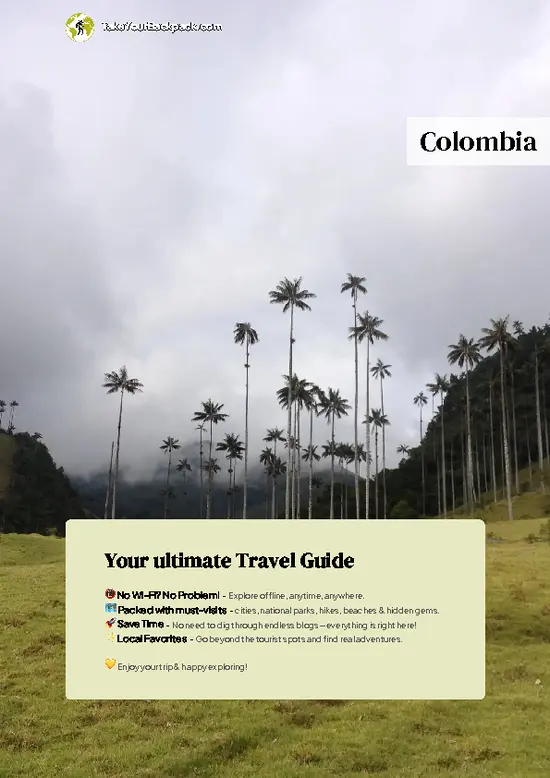
An offline-friendly backpacking guide with optimized travel routes, ranked highlights, transport advice, and the best areas to stay.
example page 0 from our offline Travel Guide for Colombiaexample page 1 from our offline Travel Guide for Colombiaexample page 2 from our offline Travel Guide for Colombiaexample page 3 from our offline Travel Guide for Colombiaexample page 4 from our offline Travel Guide for Colombiaexample page 5 from our offline Travel Guide for Colombiaexample page 6 from our offline Travel Guide for Colombiaexample page 7 from our offline Travel Guide for Colombia
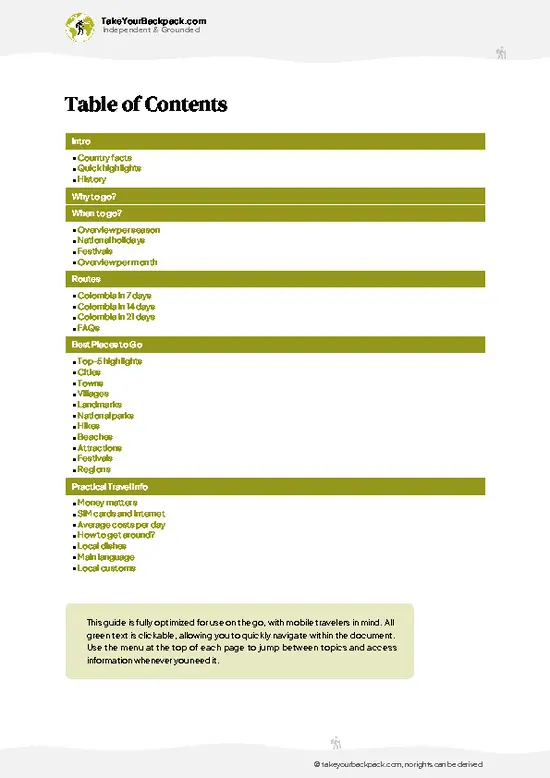
The digital guide (479 pages) contains:
125 highlights, ranked by travel appeal
Optimized 7, 14 & 21-day travel routes
Cities, national parks, beaches, historical sites, ...
How to get around
Offline-friendly for travel without Wi-Fi
👉 Click to see all 30+ guide features

📅 Plan smarter in minutes, not weeks
Month by month travel advice
Festivals & national holidays
Budget expectations

🗺️ Go to the right places, skip the overrated ones
Honest pros & cons of destinations
Top hikes, parks & viewpoints
Lesser-known places most travelers miss
Clear “worth it vs skip it” guidance

🛏️ Travel smoothly without rookie mistakes
Best areas to stay
Transport systems explained simply
Common scams & safety advice
SIM cards, money & practical tips

🌍 Understand the country, not just visit it
Culture & traditions
52 Essential phrases & customs
Festivals worth planning around
Traveler-friendly historical context
Insights that make places more meaningful

📱 Built for real travel conditions
Fully downloadable PDF
Works completely offline
Optimized for phone use
Useful in remote areas & buses
Everything in one place
Save weeks of stressful planning
Get instant access to the full guide directly. 30-day money-back guarantee.


Sent to your inbox immediately after payment • 100% Secure Checkout
Best Backpacking Travel Advisor 2025 tourism awardBest Backpacking
Travel Advisor
2025
What others say about Take Your Backpack Guides:
⭐⭐⭐⭐⭐
Fantastic, amazing amount of information!
⭐⭐⭐⭐⭐
My goodness this is amazing, it's what I've been looking for hats off too you!
⭐⭐⭐⭐⭐
I think this is absolutely BRILLIANT
⭐⭐⭐⭐
Very complete and informative. It's still missing places, but I gotta to commend you
⭐⭐⭐⭐⭐
This is truly amazing, thank you, can't wait to explore it with my kids!
⭐⭐⭐⭐⭐
Awesome resource, thank you!
⭐⭐⭐⭐⭐
This is amazing! Can't wait to explore the ones I haven't seen
⭐⭐⭐⭐
I love this! Well done, great idea.
⭐⭐⭐⭐⭐
Thanks for taking the time to make this gem!
⭐⭐⭐⭐⭐
This might be the best website I've ever seen.
⭐⭐⭐⭐⭐
Congratulations, and thank you so much for your work; it's incredibly valuable.
⭐⭐⭐⭐
In all seriousness I think you did a great job pointing out the important spots
⭐⭐⭐⭐⭐
10/10 very good
⭐⭐⭐⭐⭐
As someone who's only just starting to visit regularly this is awesome, thank you.
⭐⭐⭐⭐
Thank you very much! I'm going to visit my dad, it's going to be very useful!
⭐⭐⭐⭐⭐
This is really cool! We'll be travelling for the first time and this definitely come in handy.
⭐⭐⭐⭐⭐
You are now our minister of culture, congratulations 👨‍💼
⭐⭐⭐⭐⭐
Just wanted to tell you that this is a pearl! Going to follow your recommendations.
⭐⭐⭐⭐⭐
This is so cool. I'll definitely be using the resource for my travels soon.
⭐⭐⭐⭐⭐
This is very impressive! Good work.
⭐⭐⭐⭐⭐
This is an amazing and informative site. Very well done!

🛏️ Where to stay?Best areas to base yourself

Yes — Colombia has abundant hostels and budget accommodation in major cities and tourist towns, concentrated in Bogotá (La Candelaria, Chapinero), Medellín (El Poblado, Laureles), Cartagena (Getsemaní, Centro Histórico), Santa Marta/Taganga, and Salento.

La Candelaria: very cheap and central for museums but uneven safety at night; Chapinero: more modern options, good nightlife and daytime cafés but slightly pricier; El Poblado: biggest hostel variety and nightlife with easy transport but busier and costlier; Laureles: quieter, more local and cheaper with safer nights; Getsemaní: backpacker hub, … read more 👉
Yes — Colombia has abundant hostels and budget accommodation in major cities and tourist towns, concentrated in Bogotá (La Candelaria, Chapinero), Medellín (El Poblado, Laureles), Cartagena (Getsemaní, Centro Histórico), Santa Marta/Taganga, and Salento.

La Candelaria: very cheap and central for museums but uneven safety at night; Chapinero: more modern options, good nightlife and daytime cafés but slightly pricier; El Poblado: biggest hostel variety and nightlife with easy transport but busier and costlier; Laureles: quieter, more local and cheaper with safer nights; Getsemaní: backpacker hub, nightlife and steps to the walled city but noisy and tourist-priced; Centro Histórico: best for sights and day trips but crowded and higher rates; Taganga: cheapest beach/party base with direct Tayrona access but basic services and safety concerns after dark; Salento: small-town hostels ideal for Valle de Cocora treks, peaceful but limited amenities.

If you enjoy meeting fellow travelers, consider choosing hostels with high ratings for atmosphere. On the other hand, if you prefer having your own space, a hotel might be a better option.

🚌 Getting aroundPublic transport and other ways to get around

Colombia moves on mountain time: patient, stubborn, and ruthless to anyone who plans by the minute. In Medellín the Metro hums like a metronome; one valley over a bus will wait an extra ten minutes because abuela’s mango crate isn’t tied yet. Landslides, protests, tropical downpours—none ask your permission. If you respect the topography and leave early, the country opens. If you chase tight connections, it eats your day.
  • Intercity Buses The speed-to-cost math is honest and unsentimental. Bogotá-Medellín
read more 👉
Colombia moves on mountain time: patient, stubborn, and ruthless to anyone who plans by the minute. In Medellín the Metro hums like a metronome; one valley over a bus will wait an extra ten minutes because abuela’s mango crate isn’t tied yet. Landslides, protests, tropical downpours—none ask your permission. If you respect the topography and leave early, the country opens. If you chase tight connections, it eats your day.
  • Intercity Buses The speed-to-cost math is honest and unsentimental. Bogotá-Medellín takes 9-12 hours by road for roughly 90,000-150,000 COP, while a flight does it in 45 minutes but punts hidden fees at your pack. Night buses save a hostel night, but drivers love polar vortex A/C and reggaetón at 2 a.m.—bring layers and earplugs or pay with sleep debt. Schedules flex with rain and roadworks; companies pad times, then add “when full” departures on secondary routes. Terminals charge small platform fees; luggage gets tagged and sometimes weighed. If you get car-sick, avoid the front row above the axle; mountain switchbacks are relentless.
  • City Buses and Metros This is the social contract you step into. In Bogotá’s TransMilenio you tap in, hug your bag to the front, let people off first, and move away from doors; phones stay low-key at stops and near open doors. Medellín’s Metro is orderly: stand right on escalators, give seats to elders, no food, no blasting music. In smaller cities, busetas may take cash—small bills only—and you yell “bajo” a beat before your stop because the driver is already rolling. If you wedge into a packed unit, you’re part of the squeeze; eye contact and a nod get you space faster than elbows.
  • River and Coastal Lanchas Water cracks open terrain the roads can’t. From Turbo or Necoclí to Capurganá, from Buenaventura up the Pacific, or from Leticia to Puerto Nariño, the boat is the only line through mangrove, jungle, and broken road maps. Departures skew early morning; swells and storms cancel without apology. Expect 60,000-200,000 COP depending on distance, a port tax, mandatory lifejacket, and cargo stacked like Tetris. Your pack needs a trash bag or dry bag; sit mid-boat to dodge spray and spine-jarring slaps. Miss the morning run and you’re sleeping in port.
  • Colectivos and Shared Taxis/Vans The cheap hack that slices hours off regional hops. They run town-to-town, leave when full, and cost a notch above buses but below private taxis—think 10,000-35,000 COP for 30-120 minutes. They stop closer to actual centers, skip bus-terminal faff, and drive like they mean it. Pay per seat; if your pack is beefy, buy an extra or keep it on your lap to avoid hassles. It’s how locals chain small jumps fast: Salento-Pereira, Minca-Santa Marta, Popayán-Silvia.

Master tip: For any journey that’s 8+ bus hours across a mountain range, take the first flight of the day with only a personal-item-sized pack, then patch the last leg with a colectivo—this wins you a full daylight window, dodges bag fees, and keeps you ahead of weather and road closures.
Distance
El Dorado (BOG) sits about 14-15 km (≈9 mi) west of Bogotá’s historic center (La Candelaria).

Main public transport options
  • SITP city bus (Route M86/K86) — The turquoise SITP buses stop right outside Terminal 1 and run along Av. El Dorado (Calle 26) toward Chapinero and the historic center (stops near Av. Jiménez/Museo del Oro and Las Aguas).

    Time: 60-90 minutes, depending on traffic.

    Cost: around COP 3,000-3,200 per ride.

    How to pay: with a TuLlave transit card (no cash onboard). You can buy/load one at airport shops/kiosks or any TransMilenio/SITP station.
  • TransMilenio (red BRT) — From the airport area, reach the TransMilenio corridor on Av. El Dorado:
    • Walk or take the airport feeder/shuttle to Portal El Dorado or the Aeropuerto station on Calle 26.
    • Board an eastbound service along Calle 26 toward Universidades/Las Aguas (for La Candelaria) or Museo Nacional/Centro Internacional.

    Time: 45-75 minutes total to the center (including the short transfer to the station).

    Cost: around COP 3,100-3,400 for the trunk ride; transfers within the system are discounted when using the same TuLlave card within the allowed window.

Taxi and ride-hailing
Official airport taxis queue outside arrivals; you’ll get a printed fare slip at the booth. Ride-hailing apps (Uber, DiDi, Cabify) also operate.

Time: 30-60 minutes to La Candelaria or Centro Internacional (longer at rush hour).

Cost: roughly COP 40,000-70,000 to the center, depending on traffic, time of day, and exact destination. Expect an airport surcharge and possible night/Sunday surcharges on street taxis.

Good to know
- Rush hours (approx. 06:30-09:00 and 16:30-19:30) can add a lot of time; if you land then, TransMilenio usually beats a taxi.
- Buses and TransMilenio require a TuLlave card; consider loading enough for a couple of rides to avoid queues.
- Service hours: TransMilenio/SITP run from early morning to late evening; late-night frequencies drop, so a taxi/app can be easier if you arrive very late.
⚠️ Prices and routes can change, so take this as a rough guide and ask for local advice when you arrive.

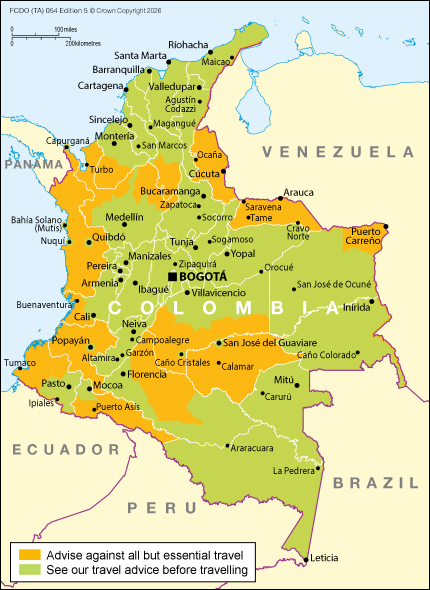
🔒 Safety (risk Level: medium)Safety considerations for travelers

Safety for solo travelers, including women and LGBTQ+ individuals
Colombia is generally safe for solo travelers, including women and LGBTQ+ individuals, but it’s important to stay vigilant. Stick to well-traveled areas like Cartagena, Medellín, and Bogotá, and use reputable transportation services. Women and LGBTQ+ travelers might face some challenges, so connecting with local groups or online communities for advice can be helpful. Always keep an eye on your belongings and avoid flaunting valuables to minimize risk.


Full official government travel advisory (live updates)
View details 👉
safety image

source: www.gov.uk

✈️ VisaWhat travelers should know about visas

Most travelers, including those from the U.S., Canada, and the EU, can visit Colombia visa-free for up to 90 days. If you do need a visa, apply through the Colombian consulate or embassy in your country. Always double-check current requirements before your trip, as regulations can change.
⚠️ Visa requirements can change over time, so always check the latest visa requirements with the official embassy or government website before you travel.

🎒 What to pack?Packing essentials for the trip

Colombia’s diversity in climate and landscape means packing smart is key. You’re looking at everything from the humid Amazon jungle to the chilly Andes, plus some laid-back beaches. Bogota can get cold, so layers are your friend. In the Amazon, think breathable and quick-dry clothes to combat the humidity. On the coast, it’s hot and sunny, but remember that modesty is appreciated, especially in smaller towns. In cities, the style is casual but neat—think jeans and a t-shirt, not beachwear.

Apart from this country specific advice, I have also crafted a general packing list that should help on any trip. authorOver the years, I've learned the importance of packing minimally. It's so much easier to jump on the back of a truck or squeeze yourself into the last spot of a minibus without that supersized backpack. If you're headed to a warm destination, leave your winter jacket at home; for colder regions, opt for thin thermal underlayers. Instead of packing your entire wardrobe, bring just three sets of clothes, as laundry facilities are available everywhere.
View the full list 👉
🎒 Planning the practical side of your trip?
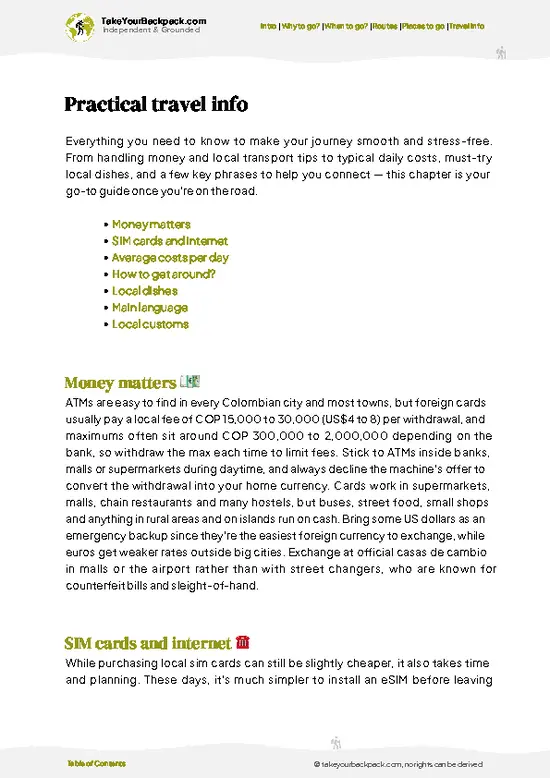
Get detailed information on transport, daily budgets, internet access, local customs, food, language, and other essentials in the complete Travel Guide.

Get detailed practical information 👉

Get the Travel Guide -

🙋 FAQCommon questions before visiting

Trip Planning


Personal tip: I normally search on good rating for atmosphere (for meeting people) and location (for easy exploring). Cleanliness as a bonus.


Travel Essentials

You’ll want to be up-to-date on routine vaccines like MMR, DTP, varicella, and polio. Consider vaccines for hepatitis A and B, especially if you’re traveling to rural areas. Typhoid is recommended if you plan to eat street food. Yellow fever vaccination is suggested for certain regions, particularly if you’re heading to the Amazon. Rabies is optional unless you’ll be in contact with animals or in remote areas. Always check the latest recommendations from health authorities before your trip.


vaccination requirements
When I first started traveling, I often spent part of my first day in a new country hunting for a local SIM card. While this can still be slightly cheaper, it also takes time and planning.

These days, it's much simpler to install an eSIM before leaving home. Once you arrive in Colombia, you can activate it immediately and have mobile data from the moment you land — which is especially useful for ordering transport or navigating away from busy airports.

There are many providers nowadays, and price differences are usually small. I personally go with Airalo, as it offers excellent network coverage throughout the country and strong global coverage, so you can manage multiple countries from a single app.


Get your e-sim for Colombia

Culture & Customs

In Colombia, always greet people with a firm handshake and eye contact. Hugging and cheek kisses are common among friends. Avoid discussing politics or the country’s past conflicts. Dress modestly; shorts are uncommon outside beaches. For women, catcalling can be common, so be assertive but cautious. LGBTQ+ travelers should be discreet in rural areas, as acceptance varies. Tipping 10% is standard in restaurants. Do not flush toilet paper; use the bin provided. Be punctual for business, but social gatherings are flexible with time.
Trying traditional food is always a great way to experience the culture. Here are some must-try dishes for Colombia.
  • Arepas: These cornmeal cakes are a staple in Colombian cuisine. Found at every corner, they can be grilled, baked, or fried and often filled with cheese, meats, or eggs. They represent the agricultural heart of the country.
  • Bandeja Paisa: Originating from the Paisa region, this hefty platter includes beans, rice, ground meat, chorizo, plantain, avocado, and a fried egg on top. It’s a celebration of abundance and reflects the hard-working culture of the region.
  • Ajiaco: A comforting chicken and potato soup from Bogotá, Ajiaco is flavored with guascas (a local herb) and often served with corn and capers. It’s especially cherished in the capital for its warmth and heartiness.
  • Sancocho: A hearty stew made with meat (often chicken, beef, or fish), plantains, yucca, and corn. It’s a dish that brings families together, often enjoyed during gatherings and celebrations.
  • Lechona: A whole roasted pig stuffed with rice, peas, and spices, typically served during festivals and special occasions. This dish is a festive showstopper and symbolizes Colombian hospitality and celebration.
In major cities like Bogotá and Medellín, the tap water is generally safe to drink and locals do consume it, but it’s best for tourists to stick to bottled or filtered water to avoid any digestive issues. In rural areas, definitely opt for bottled or filtered water as the safety of tap water can vary. Always check with locals or your accommodation for the most current advice.
The main language in Colombia is Spanish. Backpacking is way more rewarding if you know a bit of the local language, so I'd suggest brushing up on the basics just in case your Spanish skills have become a bit rusty.

Want to understand locals better?
The complete Travel Guide for Colombia includes 52 essential words and phrases — greetings, thank-yous, ordering food, transport, numbers, and common local expressions you'll actually hear.

Get your local basic phrases 👉

Get the Travel Guide -


In Colombia, English proficiency varies significantly by region and demographic. In major cities like Bogotá, Medellín, and Cartagena, you’ll find a higher prevalence of English speakers, particularly among younger generations, professionals, and those in the tourism sector. Many hotel staff, tour guides, and restaurant employees in tourist areas can communicate effectively in English.

However, in rural areas and smaller towns, English is less commonly spoken, and knowledge of Spanish becomes essential for effective communication. While some Colombians may understand basic phrases, fluency is rare outside urban centers.

Overall, while you can navigate tourist hotspots with relative ease using English, learning a few key Spanish phrases can enhance your experience and interactions with locals. Embracing the local language not only helps in communication but also fosters a deeper cultural connection during your travels in Colombia.

Money & Payments

The local currency of Colombia is COP ($).

Cash is king in many parts of Colombia, especially in rural areas. While cities like Bogotá, Medellín, and Cartagena have good card acceptance, having some cash on you is a smart move.

ATMs are widely available in urban areas, but they might be scarce in remote spots, so plan your cash withdrawals accordingly. Stick to ATMs inside banks for security reasons. Remember, some ATMs charge withdrawal fees, so check with your bank before you travel.

Colombian pesos (COP) are the way to go. While dollars and euros are sometimes accepted in tourist areas, you’ll often get a lousy exchange rate. For exchanging money, head to ”casas de cambio” in cities or airports for better rates. Avoid street exchangers unless you’re feeling adventurous and enjoy a good haggle.

Keep some emergency cash hidden in your backpack just in case. It’s always a good idea to have a mix of both cash and cards for flexibility.

Tipping in Colombia isn’t mandatory, but it’s appreciated, especially in restaurants where a 10% service charge is often added to the bill. If you’re happy with the service, consider leaving a little extra. For taxis, rounding up the fare is common, and in hotels, a small tip for porters and housekeeping is a nice gesture.

🧩 Nearby countriesSimilar backpacking destinations

📸 PhotosScenes from around the country

Take your backpack - Colombia - 0
Take your backpack - Colombia - 1
Take your backpack - Colombia - 2
Take your backpack - Colombia - 3
Take your backpack - Colombia - 4
Take your backpack - Colombia - 5
Take your backpack - Colombia - 6
Take your backpack - Colombia - 7
Take your backpack - Colombia - 8
Take your backpack - Colombia - 9
Take your backpack - Colombia - 10
Take your backpack - Colombia - 11
Take your backpack - Colombia - 12
Take your backpack - Colombia - 13
Take your backpack - Colombia - 14
Take your backpack - Colombia - 15
Take your backpack - Colombia - 16
Take your backpack - Colombia - 17
Take your backpack - Colombia - 18
Take your backpack - Colombia - 19
Take your backpack - Colombia - 20
Take your backpack - Colombia - 21
Photographed by: Johan Kruseman

Travel stories from Colombia

A little rafting adventure: trapped on a rock in the middle of the river

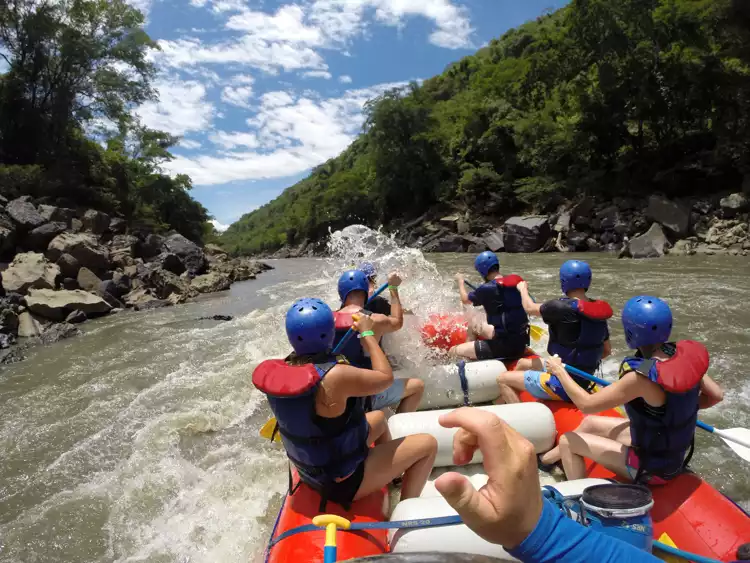
Colombia | Ok. Sitting in a nightbus for 12 hours with wifi: time for a little story. Yesterday i had a crazy rafting experience thanks to quiet an unexperienced rafting guide. It went all smooth until a rock appeared in the middle of the river (this does happen while rafting). We hit the rock and the water pushed the boat vertical. We climbed out quickly ont...
Read more
Scuba diving gear on a mountain in the rainforest, really?

Scuba diving gear on a mountain in the rainforest, really?

Colombia | Tought i had seen all kind of hostels but this one was from another planet. Located in the middle of the jungle, on top of a hillside providing views to the ocean and the closest bit of civilisation (one hour moto bike ride away), having a pool, and the largest hammock in the world (36m2). Done a canyon tour through the jungle climbing up a waterfa...
Read more
More stories

We 💚 feedbackWhat to know before planning your trip

Go for the range: jungle to páramo to coast in one trip, with music and late-night plazas that keep pulling you in, and prices that stretch further than Chile or Brazil. The tax is transit fatigue. Mountains turn 200 km into an eight‑hour bus, weather and strikes can freeze roads, and careless phone use gets punished in seconds. Save your energy with smart routing: book an open‑jaw itinerary (Caribbean in, Andes out), commit to two regions max, and fly the long hops with carry‑on only to dodge fees and delays. Do the moving in daylight, sleep where you land, and spend the rest of your time eating arepas, chasing waterfalls, and saying yes when a salsa song hijacks the street.

✈️ When did I visit Colombia?
Did a good 3-week trip around Colombia in August 2014. Since then, this guide is regularly updated based on feedback from locals and recent backpackers (last update: 11 June 2025)

✍️ Help improve this page!
The information on this page is based on my own backpacking experience in Colombia, supplemented with up-to-date research and feedback from other travelers. Travel details can change, so if you notice anything outdated or incomplete, feel free to let me know.


🙋‍♂️ Give feedback

👋 Meet the founderWho’s Behind Take Your Backpack?

Johan, backpacker and founder of TakeYourBackpackHi, I’m Johan (Netherlands 🇳🇱), the creator of TakeYourBackpack. Over the past decade, I’ve backpacked through 80+ countries across six continents, gaining extensive experience with independent travel, long-term trips, and overland routes.

This site is built on a combination of firsthand travel experience and carefully curated insights from other backpackers. Many guides are based on places I’ve personally visited, while others bring together tips, observations, and practical advice shared by trusted travelers I’ve met along the way.

The goal is to provide realistic, experience-driven guidance — not generic itineraries — so you can explore destinations with better context, clearer expectations, and more confidence.

Get full Colombia guide •
Instant download • 125 highlights • Full Offline guide