Trip Planning
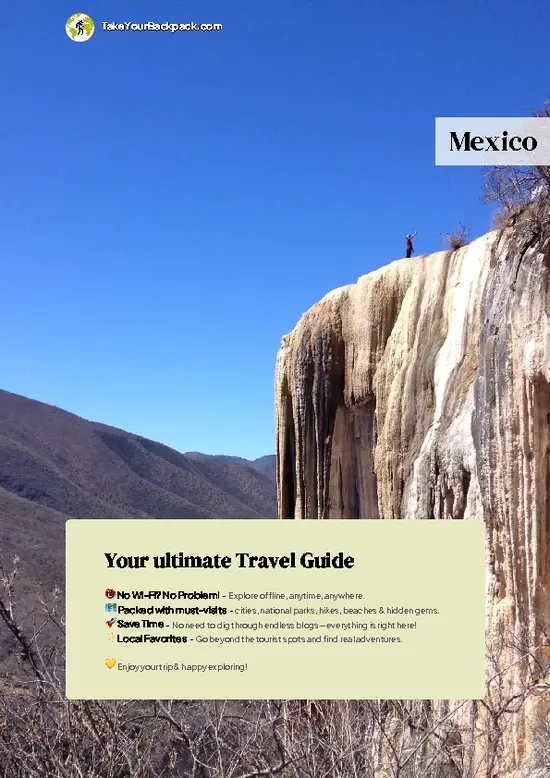
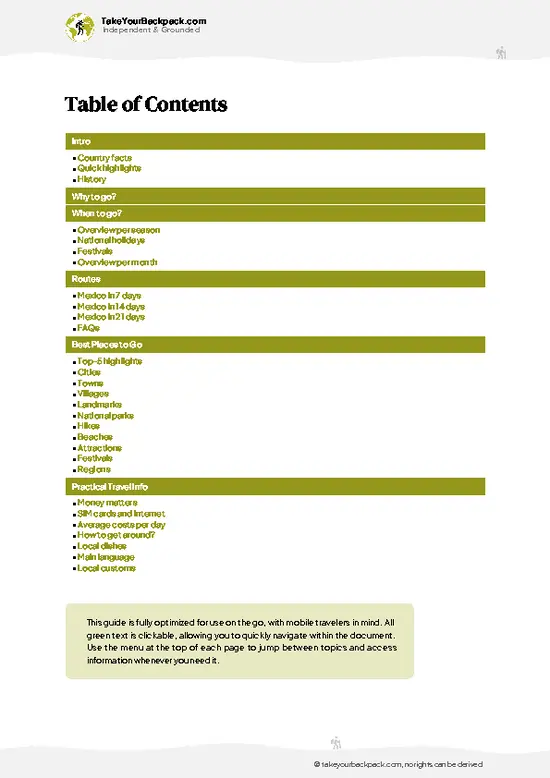
The TakeYourBackpack guidebooks are your all-in-one travel companion, featuring the best cities, national parks, hikes, beaches, and unique sites, along with essential tips on when to go, how to get around, exchanging money, and even local phrases to get you started — everything you need for a smooth, unforgettable backpacking adventure.
Stop researching. Start exploring.Discover all 136 highlights,ranked
and organized into practical routes.
Get instant access
Planning a backpacking route through Mexico can be tricky — you need to balance must-see places, travel times, budget, and how long to stay in each destination. Our free personalized Mexico itinerary planner creates a route based on your travel style, trip duration, and interests, so you can spend less time researching and more time exploring.
Personal tip: I normally search on good rating for atmosphere (for meeting people) and location (for easy exploring). Cleanliness as a bonus.
Travel Essentials
No vaccinations are required to enter Mexico, except a yellow fever certificate if you arrive from a country with yellow fever risk. Health authorities recommend being up to date on routine vaccines (MMR, tetanus-diphtheria, polio, flu, COVID-19) plus hepatitis A and typhoid, since both spread through food and water. Hepatitis B and rabies are worth considering for long trips, rural travel or contact with animals. There is no vaccine to rely on for dengue, which is common in coastal and southern Mexico, so use insect repellent, and malaria risk is low and limited to a few rural areas of Chiapas and neighboring states.
vaccination requirementsWhen I first started traveling, I often spent part of my first day in a new country hunting for a local SIM card. While this can still be slightly cheaper, it also takes time and planning.
These days, it's much simpler to install an eSIM before leaving home. Once you arrive in Mexico, you can activate it immediately and have mobile data from the moment you land — which is especially useful for ordering transport or navigating away from busy airports.
There are many providers nowadays, and price differences are usually small. I personally go with
Holafly, as it offers excellent network coverage throughout the country and strong global coverage, so you can manage multiple countries from a single app.
HolaFly eSimCulture & Customs
Politeness carries a lot of weight in Mexico: greet shop owners when you walk in, say “provecho” to people eating near you, and say “permiso” when squeezing past someone. Do dress modestly when visiting churches (covered shoulders, no beachwear), ask before photographing people, especially in Indigenous communities in Chiapas and Oaxaca where photos inside some churches are forbidden, and accept that schedules run on relaxed time socially though buses leave on the dot. Don’t haggle aggressively over small amounts at markets, don’t joke about drug cartels or make light of national symbols like the flag and the Virgin of Guadalupe, and don’t ask for the bill expecting it to arrive unprompted; you have to request “la cuenta.” Women may get persistent compliments or stares, and firmly ignoring them is the norm rather than rude. Same-sex couples are widely accepted in big cities and resort towns, but in rural and religious areas a lower profile with public affection avoids awkward reactions.
Trying traditional food is always a great way to experience the culture. Here are some must-try dishes for Mexico.
- Tacos al pastor: Thin slices of marinated pork carved from a vertical spit, served on small corn tortillas with pineapple, onion, cilantro and salsa. Brought over by Lebanese immigrants as shawarma and adapted with chilies and achiote, it is Mexico City’s defining late-night street food, usually MX$15 to 30 per taco.
- Mole poblano: A dark, glossy sauce from Puebla blending dried chilies, chocolate, nuts, seeds and spices (often more than 20 ingredients), ladled over turkey or chicken. It is served at weddings, baptisms and major celebrations, which makes it close to a national dish.
- Chiles en nogada: Poblano peppers stuffed with spiced meat and fruit, covered in creamy walnut sauce and topped with pomegranate seeds. The green, white and red match the Mexican flag, and it is eaten mainly from July to September around Independence Day.
- Pozole: A hearty hominy soup with pork or chicken, in red, green or white versions, topped at the table with radish, lettuce, oregano, chili and lime. Families cook huge pots of it for September 16 and other festivities.
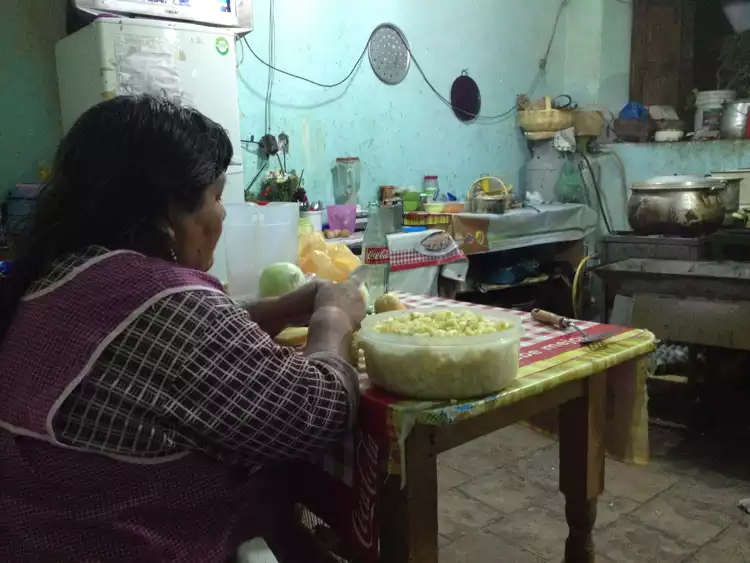
- Tamales: Corn dough filled with meat, cheese, chilies or sweet fillings, steamed in corn husks or banana leaves. Eaten for breakfast from street carts and at the Candelaria feast on February 2, they date back to pre-Hispanic times.
- Cochinita pibil: Pork marinated in achiote and sour orange, wrapped in banana leaves and slow-roasted, traditionally in an underground pit. It is the signature dish of the Yucatán Peninsula, best eaten in tacos or tortas with pickled red onion and habanero.
- Chilaquiles: Fried tortilla pieces simmered in red or green salsa, topped with cream, cheese, onion and often a fried egg or chicken. It is the classic Mexican breakfast and the go-to hangover cure.
Tap water in Mexico is not safe to drink, and most Mexicans don’t drink it either, relying instead on 20-liter garrafón jugs delivered to homes and businesses. Travelers should stick to bottled or purified water, which many hostels and hotels offer for free refills, and use it for brushing teeth too if you have a sensitive stomach. Ice in restaurants and cafés is usually made from purified water, and a filter bottle helps cut plastic waste on longer trips.
The main language in Mexico is
Spanish. Backpacking is way more rewarding if you know a bit of the local language, so I'd suggest brushing up on the basics just in case your Spanish skills have become a bit rusty.
Want to understand locals better?The complete Travel Guide for Mexico includes 52 essential words and phrases — greetings, thank-yous, ordering food, transport, numbers, and common local expressions you'll actually hear.
Get your local basic phrases 👉
Get the Travel Guide - in Mexico is widely spoken in tourist hubs like Cancún, Playa del Carmen, Tulum and Los Cabos, and you can usually manage in Mexico City’s central neighborhoods, hostels and upscale restaurants. Younger, university-educated Mexicans and hostel staff often speak decent English, but market vendors, bus drivers and anyone in rural areas or small towns in states like Chiapas, Oaxaca or Puebla will mostly speak Spanish only (and in some villages an Indigenous language such as Nahuatl, Maya or Zapotec first). Spanish is the language that helps most by a mile, and even basics like ordering, numbers and asking “¿cuánto cuesta?” earn you warmer service. Download Spanish for offline use in Google Translate and use its camera mode for menus and bus station signs.
Money & Payments
The local currency of Mexico is MXN ($).
ATMs are easy to find across Mexico in cities, towns and tourist areas, but they can be scarce in villages and some beach spots, so stock up before heading somewhere remote. Mexican bank ATMs charge roughly MX$30 to 150 (US$2 to 8) per withdrawal on top of your home bank’s fees, so choose machines from banks like Banorte, BBVA or Santander, ideally inside a branch or mall, always decline the ATM’s own currency conversion, and avoid standalone machines in convenience stores. Cards are accepted in most hotels, chain stores, supermarkets, mid-range restaurants and bus terminals, but markets, street food, colectivos, small eateries and many hostels in smaller towns are cash only. If you bring backup cash, US dollars are far easier to exchange than euros, though paying in dollars directly usually gets you a poor rate. Exchange money at banks or at casas de cambio in shopping centers and city centers, which beat airport exchange counters by a wide margin, and never change money with people on the street.
Tipping in Mexico is expected in sit-down restaurants, where 10 to 15 percent is standard (check whether a “servicio” charge is already on the bill), and in bars, where MX$10 to 20 per drink or 10 percent of the tab is normal. Small tips of MX$5 to 20 are customary for grocery baggers, gas station attendants, hotel porters and parking helpers, while tour guides typically get 10 to 15 percent of the tour price. Taxi drivers aren’t usually tipped unless they help with bags, and street food stalls don’t expect tips, though rounding up is appreciated.
v2.webp)
 Best Backpacking
.jpg) Over the years, I've learned the importance of packing minimally. It's so much easier to jump on the back of a truck or squeeze yourself into the last spot of a minibus without that supersized backpack. If you're headed to a warm destination, leave your winter jacket at home; for colder regions, opt for thin thermal underlayers. Instead of packing your entire wardrobe, bring just three sets of clothes, as laundry facilities are available everywhere.
Over the years, I've learned the importance of packing minimally. It's so much easier to jump on the back of a truck or squeeze yourself into the last spot of a minibus without that supersized backpack. If you're headed to a warm destination, leave your winter jacket at home; for colder regions, opt for thin thermal underlayers. Instead of packing your entire wardrobe, bring just three sets of clothes, as laundry facilities are available everywhere.







.jpg) Hi, I’m Johan (Netherlands 🇳🇱), the creator of TakeYourBackpack. Over the past 3 decades, I’ve backpacked through 90+ countries across six continents, gaining extensive experience with independent travel, long-term trips, and overland routes.
Hi, I’m Johan (Netherlands 🇳🇱), the creator of TakeYourBackpack. Over the past 3 decades, I’ve backpacked through 90+ countries across six continents, gaining extensive experience with independent travel, long-term trips, and overland routes.