×
Luxembourg 🇱🇺

backpacking Europe Luxembourg 🇱🇺Ride free public transport between fortress tunnels, castles and gorges.

Explore LithuaniaExplore Malta

Backpacking Luxembourg in 2027

A complete guide including when and where to go, costs, transport, itineraries, and practical travel advice.
A practical introduction for travelers

Backpacking Luxembourg
By Johan Kruseman 🇳🇱 | Updated October 18, 2026

Backpacking Luxembourg means trading cheap movement for expensive sleep. Every train, tram and bus in the country has been free since 2020, yet a hostel dorm bed rarely costs less than €32, and the national hostel network runs only around ten properties.

What Luxembourg offers in return is density. Within about 90 minutes of the capital you reach the sandstone gorges of the Mullerthal, the slate-roofed castle villages of the Ardennes plateau and the Riesling terraces lining the Moselle. I remember the cold, needle-fine fizz of a crémant at a riverside table in Remich, with diesel from a passing barge drifting over the vines. The challenges are plain: prices run high across food and lodging, and rural buses thin out sharply on Sundays.

Compared with Belgium, meals cost more but the countryside sits closer together and the trails are better signed. Germany’s Eifel offers similar forest for less money. The country suits hikers and castle hunters on a three-to-five-day loop. It frustrates anyone stretching a small budget over weeks.

👉 Get the 📖 Travel Guide of Luxembourg

Luxembourg Ardennes (Vianden, Clervaux, Esch-sur-Sûre)

Steep, forested and thinly populated, the Éislek is where Luxembourg empties out. Vianden’s rebuilt castle towers over the Our, and Clervaux’s castle holds Edward Steichen’s Family of Man photo exhibition. Trains reach Clervaux in about an hour from the capital. Vianden means changing to a bus at Ettelbruck, roughly 75 minutes in total. Evening buses thin out, so it suits hikers on the Escapardenne trails who like early nights.

Mullerthal (Echternach, Beaufort, Schiessentümpel)

Called “Little Switzerland,” this is sandstone country: narrow gorges, mossy ledges and the 112-kilometer Mullerthal Trail. Echternach, the oldest town, has its abbey and basilica plus a UNESCO-listed dancing procession each Whit Tuesday. Direct buses reach Echternach in 50 to 60 minutes. Trailheads cluster near town, so it suits walkers wanting serious scrambling without hauling a tent, and families on weekends, when car parks fill.

Moselle Valley (Remich, Grevenmacher, Schengen)

Flat riverside paths, terraced vineyards and crémant cellars give this strip a slow, sociable rhythm built around tasting rooms and village wine festivals. Schengen has a small museum on the border-free agreement signed there. Buses reach Remich in 35 to 45 minutes, and the riverside cycle path links every village. It suits cyclists and anyone who prefers a glass of Riesling to a summit.

Minett (Esch-sur-Alzette, Belval, Rumelange)

The red-earth south is industrial, working-class and multilingual, shaped by Italian and Portuguese mining families. Belval’s preserved blast furnaces sit beside the University of Luxembourg campus, and Rumelange runs an underground mining museum. Trains reach Esch in about 20 minutes. It suits travelers curious about how the country actually earned its wealth, plus anyone wanting student bars over postcard villages.
A visual overview of the country
Loading the map 🌍
CLICK TO FILTER
cities
towns
villages
landmarks
national parks
hikes
attractions
festivals
regions
SHOW COUNTRY’S BESTSHOW ALL

Why go?What sets this destination apart

Scenery

Luxembourg’s scenery changes fast because three distinct landscapes share a country of only 2,586 km²: soft sandstone eroded into slot-like gorges in the east, a forested slate plateau cut by deep valleys in the north, and the … read more 👉
Luxembourg’s scenery changes fast because three distinct landscapes share a country of only 2,586 km²: soft sandstone eroded into slot-like gorges in the east, a forested slate plateau cut by deep valleys in the north, and the sunny, south-facing vineyard slopes of the Moselle. Short distances let you sample all three in a few days. I’d walk the Mullerthal section between Echternach and Berdorf on a weekday morning, before the weekend crowds arrive.

Architecture

Luxembourg’s architecture tells two stories within a few kilometers. The old quarters and fortifications of the capital have been on the UNESCO list since 1994, layered by successive garrisons. Across the Red Bridge, the Kirchberg … read more 👉
Luxembourg’s architecture tells two stories within a few kilometers. The old quarters and fortifications of the capital have been on the UNESCO list since 1994, layered by successive garrisons. Across the Red Bridge, the Kirchberg plateau shows what EU money built: I. M. Pei’s Mudam museum and Christian de Portzamparc’s white-columned Philharmonie. Walk the Wenzel Circular Walk first, because it explains how the fortress actually worked.

⭐ HighlightsKey places and experiences

  • Bock Casemates: Kilometers of tunnels were carved into the cliff under Luxembourg City, and inside the air stays cool and damp even in July. Through the gun slits you look straight down onto the slate roofs of the Grund and the Alzette curling below.
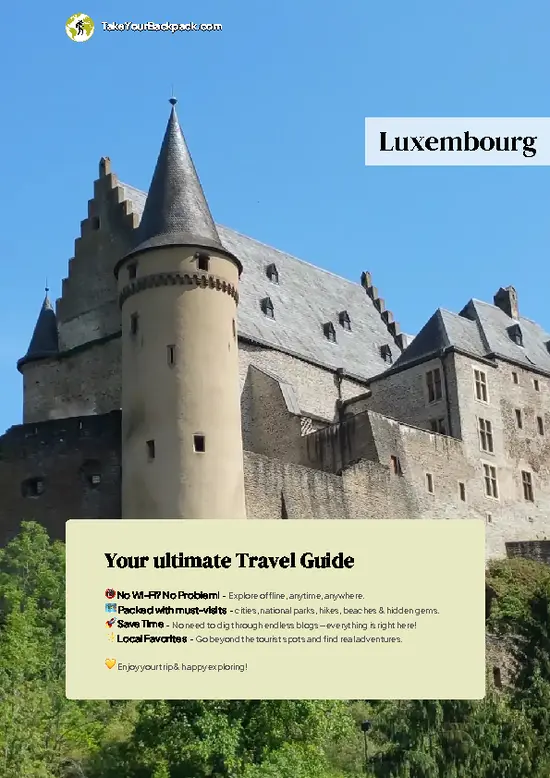
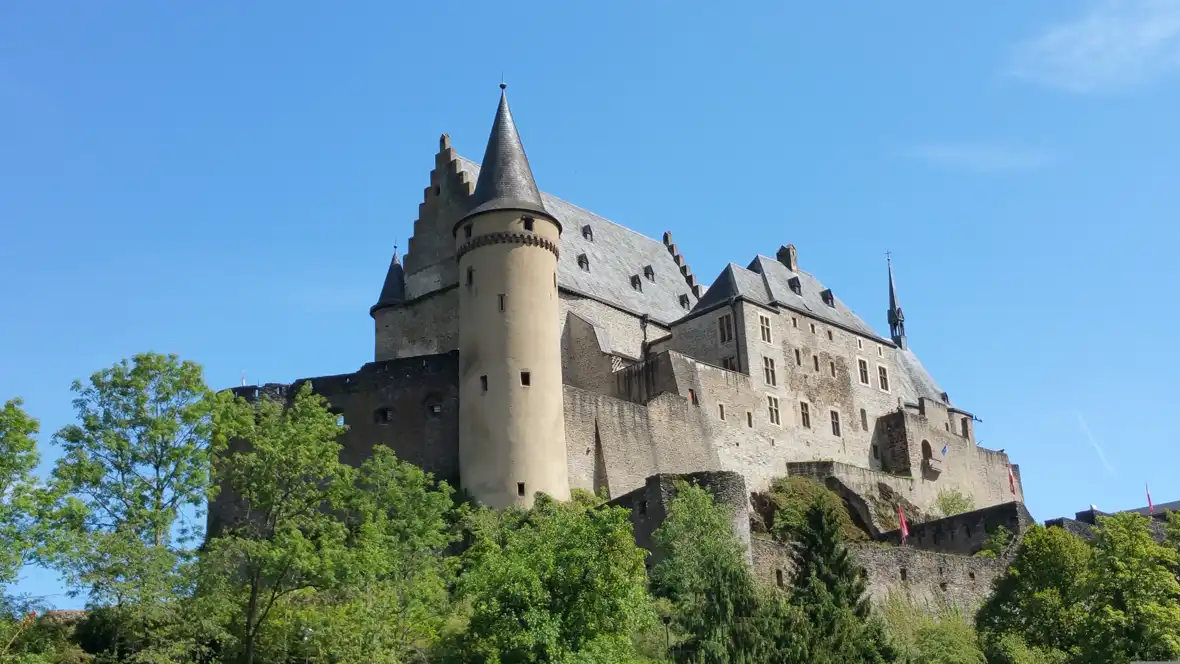
  • Vianden Castle: Rebuilt from near-ruin in the late 20th century, it sits on a ridge above the Our river. Walk up through the village and you hear the river long before the towers come into view.
  • Schiessentümpel: A small three-arched stone bridge over a cascade in the Mullerthal, framed by mossy sandstone. Spray hangs in the air and the rock is slick and green underfoot after rain.
  • The Family of Man, Clervaux: Edward Steichen’s 1955 photography exhibition lives in Clervaux Castle and is listed in UNESCO’s Memory of the World register. The rooms are hushed, and faces from dozens of countries stare back from hundreds of prints.
  • Chemin de la Corniche: Often called “the most beautiful balcony in Europe,” this rampart walkway runs above the Grund. Church
… read more 👉
  • Bock Casemates: Kilometers of tunnels were carved into the cliff under Luxembourg City, and inside the air stays cool and damp even in July. Through the gun slits you look straight down onto the slate roofs of the Grund and the Alzette curling below.
  • Vianden Castle: Rebuilt from near-ruin in the late 20th century, it sits on a ridge above the Our river. Walk up through the village and you hear the river long before the towers come into view.
  • Schiessentümpel: A small three-arched stone bridge over a cascade in the Mullerthal, framed by mossy sandstone. Spray hangs in the air and the rock is slick and green underfoot after rain.
  • The Family of Man, Clervaux: Edward Steichen’s 1955 photography exhibition lives in Clervaux Castle and is listed in UNESCO’s Memory of the World register. The rooms are hushed, and faces from dozens of countries stare back from hundreds of prints.
  • Chemin de la Corniche: Often called “the most beautiful balcony in Europe,” this rampart walkway runs above the Grund. Church bells echo off the valley walls on Sunday mornings.
Off the map, try the frescoed church in tiny Rindschleiden, the ruined castle at Bourscheid or the ruins above Larochette; I’d go to Rindschleiden first.
Spotted a mistake or missing a highlight? Contact us.

But Luxembourg offers more...

Discover and compare all of its highlights per category

🧭 RoutesSuggested travel routes through Luxembourg

The 2-Day Sandstone Weekend

A hiking escape to Luxembourg’s eastern border, based in one riverside town with trails starting from the doorstep. Expect mossy gorges, rock corridors and an old abbey, with nothing more stressful than choosing which path to take.
  • Echternach and its abbey
  • A day on the Mullerthal Trail
  • The cliff village of Berdorf

👉 explore this 2-day route

The 3-Day Castles and Capital Route

Fortress tunnels in the capital, then a rail run north through the Ardennes valleys. This trip is for those who like their history with towers, ramparts and long views.
  • The Bock Casemates
  • Vianden Castle above the Our
  • The ruins of Bourscheid castle
  • Clervaux and its famous photo exhibition

👉 explore this 3-day route

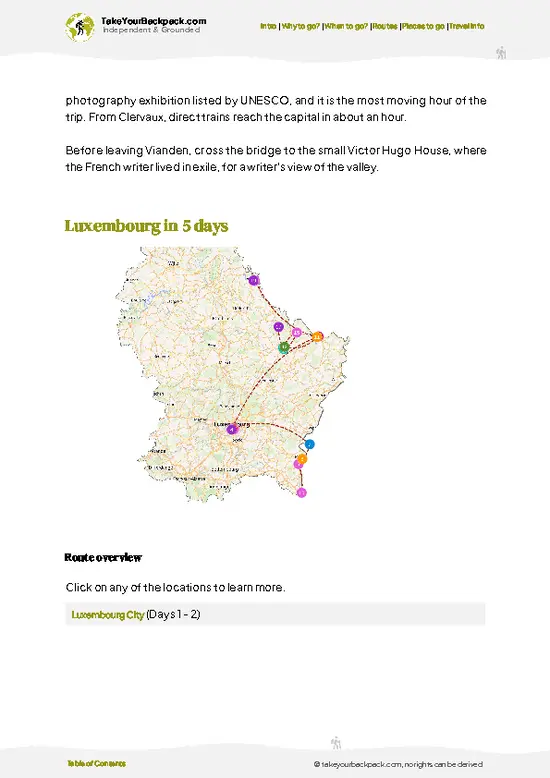
The 5-Day Grand Tour

The complete loop: capital, wine villages, sandstone hiking country and a fairytale castle town. It moves at an easy pace with three bases, so there is time for long lunches and longer walks.
  • Grund and the old upper town of Luxembourg City
  • Wine tasting along the Moselle
… read more 👉

The 2-Day Sandstone Weekend

A hiking escape to Luxembourg’s eastern border, based in one riverside town with trails starting from the doorstep. Expect mossy gorges, rock corridors and an old abbey, with nothing more stressful than choosing which path to take.
  • Echternach and its abbey
  • A day on the Mullerthal Trail
  • The cliff village of Berdorf

👉 explore this 2-day route

The 3-Day Castles and Capital Route

Fortress tunnels in the capital, then a rail run north through the Ardennes valleys. This trip is for those who like their history with towers, ramparts and long views.
  • The Bock Casemates
  • Vianden Castle above the Our
  • The ruins of Bourscheid castle
  • Clervaux and its famous photo exhibition

👉 explore this 3-day route

The 5-Day Grand Tour

The complete loop: capital, wine villages, sandstone hiking country and a fairytale castle town. It moves at an easy pace with three bases, so there is time for long lunches and longer walks.
  • Grund and the old upper town of Luxembourg City
  • Wine tasting along the Moselle to Schengen
  • Two days in the Mëllerdall
  • A night under Vianden Castle

👉 explore this 5-day route

🌤️ When to go?Best time to visit Luxembourg

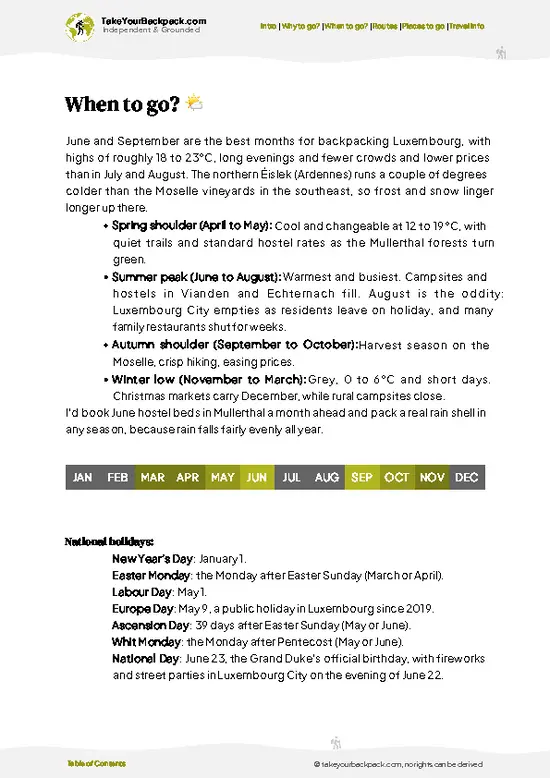
June and September are the best months for backpacking Luxembourg, with highs of roughly 18 to 23°C, long evenings and fewer crowds and lower prices than in July and August. The northern Éislek (Ardennes) runs a couple of degrees colder than the Moselle vineyards in the southeast, so frost and snow linger longer up there.
  • Spring shoulder (April to May): Cool and changeable at 12 to 19°C, with quiet trails and standard hostel rates as the Mullerthal forests turn green.
  • Summer peak (June to August): Warmest and busiest. Campsites and hostels in Vianden and Echternach fill. August is the oddity: Luxembourg City empties as residents leave on holiday, and many family restaurants shut for weeks.
  • Autumn shoulder (September to October): Harvest season on the Moselle, crisp hiking, easing prices.
  • Winter low (November to March): Grey, 0 to 6°C and short days. Christmas markets carry December, while rural campsites close.
I’d book June hostel beds in Mullerthal a month ahead and pack a real rain shell in any season, because rain falls fairly evenly all year.

source: climatestotravel.comJANJanuary: fair for travelingFEBFebruary: fair for travelingMARMarch: good for travelingAPRApril: good for travelingMAYMay: highly recommended for travelingJUNJune: excellent for travelingJULJuly: fair for travelingAUGAugust: fair for travelingSEPSeptember: excellent for travelingOCTOctober: highly recommended for travelingNOVNovember: good for travelingDECDecember: fair for traveling
!pixabay-vianden-1137019

💰 Costs (as of 2026)How expensive it really is

Backpacking Luxembourg costs most budget travelers €60 to €95 a day, and almost all of that goes on a bed and food, because buses, trams and trains are free nationwide.
CategoryBudget RangeLocal Reality
Dorm accommodation€32 to €48 per nightThe Youth Hostel Luxembourg City below the old town usually runs €38 to €48 for a dorm bed with breakfast. Rural hostels in Vianden or Echternach cost €32 to €40. Non-members pay €3 to €4 extra per night, so an HI card pays for itself in about a week. A Brussels dorm costs €25 to €35 for comparison. Weeknights are cheaper than weekends.
Meals€18 to €35 per daySupermarket prices at Lidl, Aldi and Cactus run 10 to 20% higher than in Germany, so a self-catered day still lands around €15 to €20. Gromperekichelcher (potato fritters) at markets and fairs cost €5 to €7. A bakery sandwich costs €5 to €8, and a weekday plat du jour lunch costs €15 to €20.
Local transport€0 to €6 per daySecond-class buses, trams and trains are free across the whole country, which none of the neighbors match. Tickets only come into it for a first-class upgrade or for crossing the border, and fares to Trier or Arlon cost €5 to €15 one way.
Activities€0 to €20 per dayAdmission fees
… read more 👉
Backpacking Luxembourg costs most budget travelers €60 to €95 a day, and almost all of that goes on a bed and food, because buses, trams and trains are free nationwide.
CategoryBudget RangeLocal Reality
Dorm accommodation€32 to €48 per nightThe Youth Hostel Luxembourg City below the old town usually runs €38 to €48 for a dorm bed with breakfast. Rural hostels in Vianden or Echternach cost €32 to €40. Non-members pay €3 to €4 extra per night, so an HI card pays for itself in about a week. A Brussels dorm costs €25 to €35 for comparison. Weeknights are cheaper than weekends.
Meals€18 to €35 per daySupermarket prices at Lidl, Aldi and Cactus run 10 to 20% higher than in Germany, so a self-catered day still lands around €15 to €20. Gromperekichelcher (potato fritters) at markets and fairs cost €5 to €7. A bakery sandwich costs €5 to €8, and a weekday plat du jour lunch costs €15 to €20.
Local transport€0 to €6 per daySecond-class buses, trams and trains are free across the whole country, which none of the neighbors match. Tickets only come into it for a first-class upgrade or for crossing the border, and fares to Trier or Arlon cost €5 to €15 one way.
Activities€0 to €20 per dayAdmission fees are where the money goes. The Bock Casemates cost about €8 and Vianden Castle about €12 to €13. The National Museum of Archaeology, History and Art is free. The Luxembourg Card costs about €13 for one day or €28 for three and covers over 60 sights. Hiking the Mullerthal Trail costs nothing.
Miscellaneous€5 to €15 per dayCoffee costs €3.50 to €4.50 and a beer costs €5 to €7, both noticeably more than in Belgium or Germany. Laundry is €5 to €8 a load. EU roaming means a SIM from a neighboring country works here at no extra charge. I’d skip bottled water, since the tap water is safe, and spend the savings on the three-day Luxembourg Card if Vianden and the Mullerthal are on your list.
Total Daily Budget€60 to €95 per dayA hostel bed at €40, groceries plus a fritter snack for €20 and one paid sight for €8 comes to about €70. Add a sit-down lunch and two beers and the day reaches €90 to €95. Neighboring Belgium runs €50 to €75 at the same level, while free transport keeps the country competitive with southern Germany.
⚠️ Prices can change and everyone travels differently, so take this as a rough guide. Hope it helps you plan your adventure!

✈️ The backpacker research shortcutLuxembourg Travel Guide

An offline-friendly backpacking guide with optimized travel routes, ranked highlights, transport advice, and the best areas to stay.
example page 0 from our offline Travel Guide for Luxembourg
example page 1 from our offline Travel Guide for Luxembourg
example page 2 from our offline Travel Guide for Luxembourg
example page 3 from our offline Travel Guide for Luxembourg
example page 4 from our offline Travel Guide for Luxembourg
example page 5 from our offline Travel Guide for Luxembourg
example page 6 from our offline Travel Guide for Luxembourg
example page 7 from our offline Travel Guide for Luxembourg
The digital guide (153 pages) contains:
✅ 36 highlights, ranked by travel appeal
✅ Optimized 2, 3 & 5-day travel routes
✅ Cities, national parks, landmarks, beaches
✅ How to get around
✅ Offline-friendly for travel without Wi-Fi
👉 Click to see all 30+ guide features

📅 Plan smarter in minutes, not weeks
✅ Month by month travel advice
✅ Festivals & national holidays
✅ Budget expectations

🗺️ Go to the right places, skip the overrated ones
✅ Honest pros & cons of destinations
✅ Top hikes, parks & viewpoints
✅ Lesser-known places most travelers miss
✅ Clear “worth it vs skip it” guidance

🛏️ Travel smoothly without rookie mistakes
✅ Best areas to stay
✅ Transport systems explained simply
✅ Common scams & safety advice
✅ SIM cards, money & practical tips

🌍 Understand the country, not just visit it
✅ Culture & traditions
✅ 52 Essential phrases & customs
✅ Festivals worth planning around
✅ Traveler-friendly historical context
✅ Insights that make places more meaningful

📱 Built for real travel conditions
✅ Fully downloadable PDF
✅ Works completely offline
✅ Optimized for phone use
✅ Useful in remote areas & buses
✅ Everything in one place
Stop searching, start planning
Get instant access to your full guide. 30‑day money-back guarantee.
+ Add another guide for just

By proceeding you agree to our terms.
Sent to your inbox immediately after payment • 100% Secure Checkout
Best Backpacking Travel Advisor 2025 tourism awardBest Backpacking
Travel Advisor
2025
What others say about Take Your Backpack Guides:
⭐⭐⭐⭐⭐
Fantastic, amazing amount of information!
⭐⭐⭐⭐⭐
My goodness this is amazing, it's what I've been looking for hats off too you!
⭐⭐⭐⭐⭐
I think this is absolutely BRILLIANT
⭐⭐⭐⭐
Very complete and informative. It's still missing places, but I gotta to commend you
⭐⭐⭐⭐⭐
This is truly amazing, thank you, can't wait to explore it with my kids!
⭐⭐⭐⭐⭐
Awesome resource, thank you!
⭐⭐⭐⭐⭐
This is amazing! Can't wait to explore the ones I haven't seen
⭐⭐⭐⭐
I love this! Well done, great idea.
⭐⭐⭐⭐⭐
Thanks for taking the time to make this gem!
⭐⭐⭐⭐⭐
This might be the best website I've ever seen.
⭐⭐⭐⭐⭐
Congratulations, and thank you so much for your work; it's incredibly valuable.
⭐⭐⭐⭐
In all seriousness I think you did a great job pointing out the important spots
⭐⭐⭐⭐⭐
10/10 very good
⭐⭐⭐⭐⭐
As someone who's only just starting to visit regularly this is awesome, thank you.
⭐⭐⭐⭐
Thank you very much! I'm going to visit my dad, it's going to be very useful!
⭐⭐⭐⭐⭐
This is really cool! We'll be travelling for the first time and this definitely come in handy.
⭐⭐⭐⭐⭐
You are now our minister of culture, congratulations 👨‍💼
⭐⭐⭐⭐⭐
Just wanted to tell you that this is a pearl! Going to follow your recommendations.
⭐⭐⭐⭐⭐
This is so cool. I'll definitely be using the resource for my travels soon.
⭐⭐⭐⭐⭐
This is very impressive! Good work.
⭐⭐⭐⭐⭐
This is an amazing and informative site. Very well done!

🛏️ Where to stay?Choosing the right base for your trip

But Luxembourg has few true hostels, mostly in a nationwide youth hostel network, so dorm beds run about €35 to €50 a night and book up early in summer, while budget hotels in the capital rarely go below €90 to €120 for a double. In Luxembourg City, Gare has the most affordable rooms and the best train and tram links, though its main streets feel scruffy after dark, while Grund and Pfaffenthal sit in the valley below the old town with riverside pubs and quiet nights (plus steep climbs or the free elevators to get back up). Ville Haute puts you steps from the main sights at higher prices, and Kirchberg … read more 👉
But Luxembourg has few true hostels, mostly in a nationwide youth hostel network, so dorm beds run about €35 to €50 a night and book up early in summer, while budget hotels in the capital rarely go below €90 to €120 for a double. In Luxembourg City, Gare has the most affordable rooms and the best train and tram links, though its main streets feel scruffy after dark, while Grund and Pfaffenthal sit in the valley below the old town with riverside pubs and quiet nights (plus steep climbs or the free elevators to get back up). Ville Haute puts you steps from the main sights at higher prices, and Kirchberg on the tram line is calm and often discounted on weekends but short on evening life.

If you enjoy meeting fellow travelers, consider choosing hostels with high ratings for atmosphere. On the other hand, if you prefer having your own space, a hotel might be a better option.

🚌 Getting aroundHow to travel within the country

Getting around Luxembourg costs nothing for most trips: buses, trams and second-class trains have been free nationwide since 2020, so there is nothing to book and no ticket to carry. Timetables run tightly because distances are short and the network is planned as one system, though rush-hour road traffic slows buses into the capital.
  • Trains (CFL): free in second class, with first class costing about €3 for two hours. Luxembourg City to Esch-sur-Alzette takes about 20 minutes, Ettelbruck about 25
… read more 👉
Getting around Luxembourg costs nothing for most trips: buses, trams and second-class trains have been free nationwide since 2020, so there is nothing to book and no ticket to carry. Timetables run tightly because distances are short and the network is planned as one system, though rush-hour road traffic slows buses into the capital.
  • Trains (CFL): free in second class, with first class costing about €3 for two hours. Luxembourg City to Esch-sur-Alzette takes about 20 minutes, Ettelbruck about 25 minutes and Clervaux about 55 to 60 minutes. Trains are clean double-deckers. Cross-border trips to Trier, Metz or Arlon are not free, so buy a ticket from the border point onward.
  • Regional buses (RGTR): free. They fill the gaps trains miss, such as Echternach (about 45 to 60 minutes from the capital) and Vianden via a change in Ettelbruck or Diekirch. Rural routes thin out sharply on evenings and Sundays.
  • Luxembourg City tram and city buses: free. The tram links Kirchberg, the Hamilius stop in the center and the main station in under 20 minutes, running every few minutes at peak times.
  • Vel’oh bike share: e-bikes across the capital for a small annual subscription, with the first 30 minutes of each ride free. Bikes also travel free on trains.
Plan every leg in the mobiliteit.lu app, which merges trains and buses, and I would base myself near a rail line, because a train plus one bus connection reaches nearly every corner of the country within 90 minutes.
Luxembourg Airport (LUX), at Findel about 6 km (4 miles) from the center of Luxembourg City, is linked by free public transport, and the free T1 tram is the cheapest reliable option.
  • Tram T1 (about 25 to 30 minutes to Gare Centrale, free): catch it at the stop right outside the terminal, no ticket is needed since all public transport in Luxembourg is free in second class, and it runs through Kirchberg and the city center from early morning until around midnight.
  • Bus line 16 (about 20 to 30 minutes, free): it leaves from the bus stops in front of the terminal and runs via Kirchberg and the city center to the train station every 10 to 15 minutes for most of the day.
  • Bus line 29 (about 25 to 30 minutes, free): another free route from the same terminal stops to the station area, useful when the tram is busy with luggage-heavy crowds.
  • Taxi (about 15 to 20 minutes, roughly €30 to €40): the official rank is outside arrivals and most drivers take cards, but fares climb at night and on Sundays.
  • Webtaxi app (about 15 to 20 minutes, roughly €30 to €40): Uber does not operate here, so this local booking app is the closest equivalent, letting you order and pay for a licensed taxi from your phone.
If you land after midnight, a taxi from the rank is the only dependable ride, so keep around €40 on your card and have your accommodation address written down in full.
⚠️ Prices and routes can change, so take this as a rough guide and ask for local advice when you arrive.
🚀 Don’t waste time on the road.
We’ll generate a route that minimizes unnecessary travel and fits your available days.

Generate my itinerary

🔒 Safety (risk Level: low)Common concerns and things to watch out for

Safety for solo travelers, including women and LGBTQ+ individuals
Luxembourg is one of the safest countries in Europe for solo travelers, with very low violent crime and well-lit, well-used public transport. Women traveling alone rarely report problems, though it makes sense to stay alert around the Gare district late at night, where petty crime and drug dealing are more visible. LGBTQ+ travelers will find a welcoming country: same-sex marriage has been legal since 2015, a former prime minister is openly gay, and the annual Pride event in Esch-sur-Alzette draws a big crowd. Pickpocketing in crowds and on busy buses is the main thing to guard against.

✈️ VisaUnderstanding entry rules

Luxembourg is part of the Schengen Area, so citizens of the EU, the US, Canada, the UK, Australia and many other countries can visit without a visa for up to 90 days within any 180-day period. Visa-exempt travelers should expect the EU Entry/Exit System at the external Schengen border and the upcoming ETIAS online travel authorization once it launches. If your nationality requires a visa, apply for a Schengen short-stay visa at the Luxembourg embassy or consulate (or the representing Schengen state) in your country of residence, with your passport, travel insurance, accommodation details and proof of funds.

source: maee.gouvernement.lu
⚠️ Visa requirements can change over time, so always check the latest visa requirements with the official embassy or government website before you travel.

🎒 What to pack?What to wear and bring

Luxembourg’s weather changes fast, with rain possible in any month and cool evenings even in summer, so pack in layers and bring a proper waterproof jacket rather than relying on an umbrella. Luxembourg City is built across steep cliffs and river valleys, and the hiking trails of the Mullerthal are rocky and often muddy, so sturdy shoes with good grip will save your ankles. Winters hover around freezing, which means a warm hat and gloves from November to March. Locals dress neatly and fairly conservatively, so one smart-casual outfit fits in well for nicer restaurants, wine tastings or an evening out.

Apart from this country specific advice, I have also crafted a general packing list that should help on any trip. authorOver the years, I've learned the importance of packing minimally. It's so much easier to jump on the back of a truck or squeeze yourself into the last spot of a minibus without that supersized backpack. If you're headed to a warm destination, leave your winter jacket at home; for colder regions, opt for thin thermal underlayers. Instead of packing your entire wardrobe, bring just three sets of clothes, as laundry facilities are available everywhere.

View the full list 👉

🙋 FAQQuick answers to practical concerns

Trip Planning

Planning a backpacking route through Luxembourg can be tricky — you need to balance must-see places, travel times, budget, and how long to stay in each destination. Our free personalized Luxembourg itinerary planner creates a route based on your travel style, trip duration, and interests, so you can spend less time researching and more time exploring.


Personal tip: I normally search on good rating for atmosphere (for meeting people) and location (for easy exploring). Cleanliness as a bonus.


Travel Essentials

No vaccinations are required to enter Luxembourg. Make sure your routine vaccinations are current, including measles-mumps-rubella, tetanus-diphtheria and your seasonal flu and COVID-19 shots if recommended for you. If you plan to hike in the Mullerthal or the Ardennes woods, check yourself for ticks afterward, since Lyme disease occurs in the region.


vaccination requirements
When I first started traveling, I often spent part of my first day in a new country hunting for a local SIM card. While this can still be slightly cheaper, it also takes time and planning.

These days, it's much simpler to install an eSIM before leaving home. Once you arrive in Luxembourg, you can activate it immediately and have mobile data from the moment you land — which is especially useful for ordering transport or navigating away from busy airports.

There are many providers nowadays, and price differences are usually small. I personally go with Holafly, as it offers excellent network coverage throughout the country and strong global coverage, so you can manage multiple countries from a single app.


HolaFly eSim

Culture & Customs

Luxembourgers value punctuality, privacy and calm, so arrive on time, keep your voice down on public transport and avoid asking people about their salary, which is a sensitive topic in a wealthy banking country. Do sort your trash into the recycling bins provided and respect Sunday as a quiet day, when most shops close and loud noise is frowned upon. Don’t refer to locals as French, German or Belgian; national identity matters here, and showing interest in Luxembourgish culture goes down well. In restaurants, wait to be seated in nicer places and don’t expect the bill until you ask for it. Women and LGBTQ+ travelers face no particular dress or behavior restrictions, and public displays of affection draw little attention.
Trying traditional food is always a great way to experience the culture. Here are some must-try dishes for Luxembourg.
  1. Judd mat Gaardebounen: smoked pork collar served with broad beans in a creamy sauce and boiled potatoes, widely considered the national dish and a summer staple around the time of local fairs.
  2. Bouneschlupp: a hearty green bean soup with potatoes, onions and bacon or sausage, a home-cooking classic found on lunch menus across the country.
  3. Kniddelen: soft flour dumplings topped with bacon bits and cream, cheap, filling and a favorite in traditional brasseries.
  4. Gromperekichelcher: crispy fried potato fritters with onion and parsley, sold at markets, Christmas fairs and festivals, often with apple sauce.
  5. Rieslingspaschtéit: a pastry pie filled with meat set in Riesling jelly, closely tied to the Moselle wine region and sold in bakeries.
  6. Kachkéis: a runny cooked cheese spread eaten on bread with mustard, a very local taste that divides opinion.
  7. Quetschentaart: a plum tart made in late summer and early autumn when the local damson plums ripen.
  8. Friture de la Moselle: small fried river fish served with a glass of local white wine in restaurants along the Moselle.
Tap water in Luxembourg is safe to drink and strictly monitored, supplied largely from the Esch-sur-Sûre reservoir and groundwater sources. Locals drink it routinely, and it is recommended for tourists too, so there is no need to buy bottled or filtered water. It can taste slightly hard in some areas because of its mineral content, but that is harmless, and refilling a reusable bottle saves money.
The main language in Luxembourg is Luxembourgish. Backpacking is way more rewarding if you know a bit of the local language, so I'd suggest brushing up on the basics just in case your Luxembourgish skills have become a bit rusty.

Want to understand locals better?
The complete Travel Guide for Luxembourg includes 52 essential words and phrases — greetings, thank-yous, ordering food, transport, numbers, and common local expressions you'll actually hear.

Get your local basic phrases 👉

Get the Travel Guide -


English is widely spoken in Luxembourg City and tourist hubs such as Vianden and Echternach, partly because nearly half the residents are foreign nationals and the banking sector runs in English. Younger people and hostel staff almost always switch to English easily. In rural villages and among older residents you will hear more French, German and Luxembourgish, and French is the language that helps most, especially in shops, restaurants and on signage. Learning a few words like “Merci” and keeping a translation app with French downloaded offline covers almost every situation.

Money & Payments

The local currency of Luxembourg is EUR (€).
Luxembourg uses the euro, and ATMs are easy to find across Luxembourg City, at train stations and in every sizable town, though small villages may have none. Local bank machines generally don’t charge a fee, but your home bank may add foreign transaction costs, and you should always choose to be charged in euros when the screen offers a conversion. Visa and Mastercard work almost everywhere, including supermarkets, cafés and museums, and contactless payment is standard, while American Express is less widely taken and some small bakeries, market stalls and village bars still prefer cash. Bring euros or simply withdraw them on arrival rather than carrying US dollars, which you will not be able to spend. If you need to exchange cash, use a bank in the city center, since airport exchange counters give poor rates.
Tipping in Luxembourg is appreciated but not expected, because service is included in restaurant and bar prices by law. Most locals round up the bill or leave around 5 to 10 percent for good table service, and rounding up a taxi fare is common. In hostels, cafés where you order at the counter and bakeries, no tip is needed.

🧩 Nearby countriesOther countries to combine with Luxembourg

📸 PhotosTravel photos from Luxembourg

Take your backpack - Luxembourg - 0
Take your backpack - Luxembourg - 1
Take your backpack - Luxembourg - 2
Take your backpack - Luxembourg - 3
Take your backpack - Luxembourg - 4
Photographed by: Johan Kruseman

We 💚 feedbackThe bottom line on traveling here

Luxembourg is worth it for how much ground you can cover: gorge hiking, a fortress capital and wine villages without ever spending more than two hours in transit. The drawback is cost. Beds and restaurant meals here run well above what you’d pay in neighboring regions, so long stays drain a budget quickly. The country is best for hikers and short-break travelers who value clean trails and easy logistics. It suits nightlife seekers, and anyone hunting for rough edges, much less well.

✈️ When did I visit Luxembourg?
I passed Luxembourg in June 2024, a wonderful country with its hills and a capital with a unique location in a valley. Since then, this guide is regularly updated based on feedback from locals and recent backpackers (last update: 18 October 2026)

✍️ Help improve this page!
The information on this page is based on my own backpacking experience in Luxembourg, supplemented with up-to-date research and feedback from other travelers. Travel details can change, so if you notice anything outdated or incomplete, feel free to let me know.


🙋‍♂️ Give feedback

👋 Meet the founderWho’s Behind Take Your Backpack?

Johan, backpacker and founder of TakeYourBackpackHi, I’m Johan (Netherlands 🇳🇱), the creator of TakeYourBackpack. Over the past 3 decades, I’ve backpacked through 90+ countries across six continents, gaining extensive experience with independent travel, long-term trips, and overland routes.

This site is built on a combination of firsthand travel experience and carefully curated insights from other backpackers. Many guides are based on places I’ve personally visited, while others bring together tips, observations, and practical advice shared by trusted travelers I’ve met along the way.

The goal is to provide realistic, experience-driven guidance — not generic itineraries — so you can explore destinations with better context, clearer expectations, and more confidence.