×
Palau 🇵🇼

backpacking Oceania Palau 🇵🇼Move ocean-first between pristine island environments.

Explore New ZealandExplore Papua New Guinea

Backpacking Palau in 2026

A complete guide including when and where to go, costs, transport, itineraries, and practical travel advice.
A first look at the country

Backpacking Palau
By Johan Kruseman 🇳🇱 | Updated June 7, 2026

Palau isn’t just a pricey liveaboard playground anymore. Shared-boat day trips and family-run stays let you hit the headliners without torching your budget, and a smart base in Koror puts you on the water before sunrise. You’re choosing access over fluff, not emptiness over your wallet.

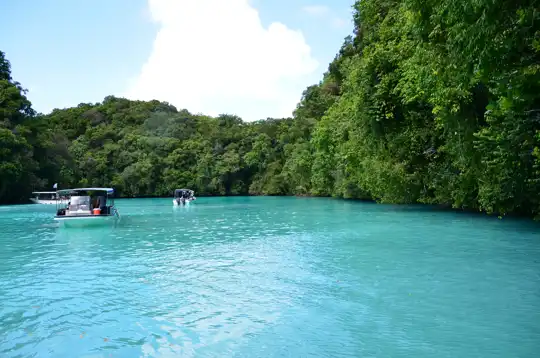
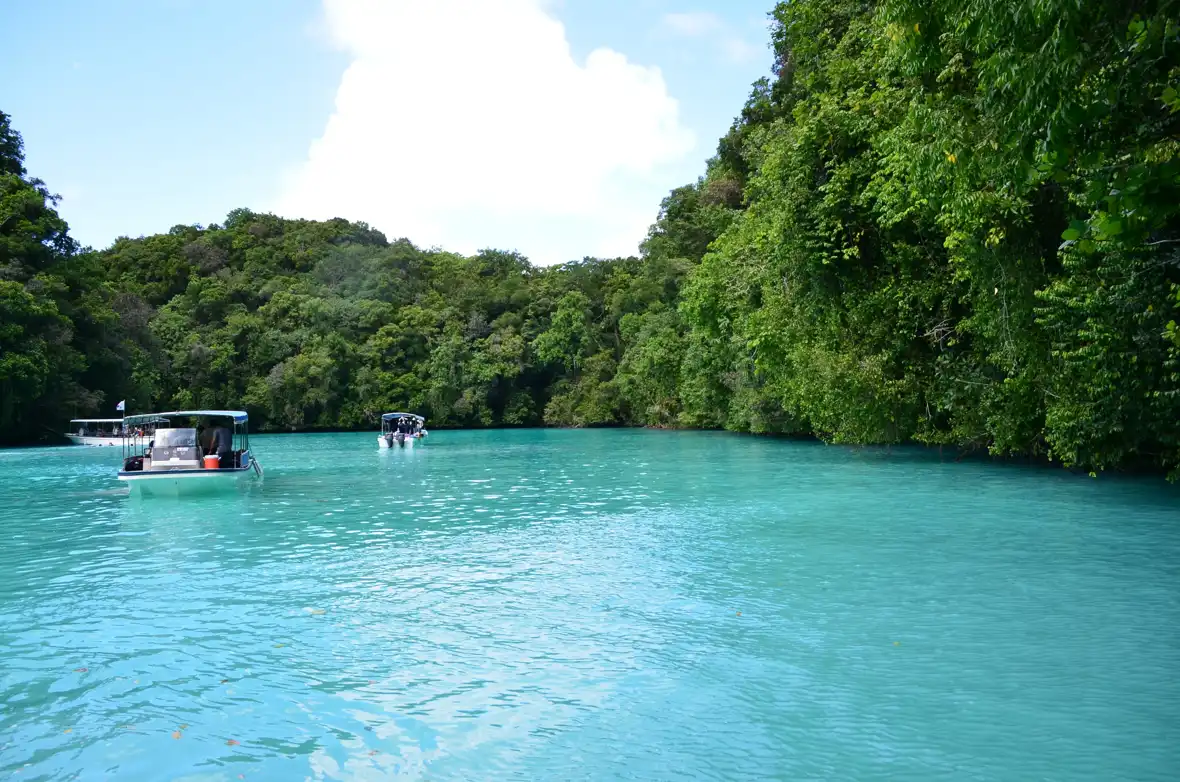
This is limestone labyrinth country: mushroom islets, milk-blue lagoons, manta flybys at German Channel, shark traffic at Blue Corner, drifts through Ulong that feel like flying. Slip a kayak between rock arches, float in Jellyfish Lake when conditions allow, then find carved bai meeting houses and storyboards that still tell the rules of the sea. Yes, permits stack up, public transport is thin, and currents can be honest; boats leave early and the sun hits hard. But leaning into the rhythm—cash ready, fins packed the night before, first boat out—turns hassle into hush: glassy runs across the lagoon and reefs as alive as anywhere on Earth.

Compared with the Philippines you lose nightlife and save the reef; compared with Raja Ampat you gain simplicity and shave days off transit; compared with Yap you get more sites without losing the quiet. Come if water is your north star, you’ll trade a little comfort or cash for time on the reef, and you want conservation to feel like a handshake, not a slogan.

👉 Get the 📖 Travel Guide of Palau

Koror

Base yourself here if you value time over beaches. Stay near Malakal marinas to shave 20–30 minutes off every boat departure. Dive shops handle permits; you avoid state office runs. Cheap eats, ATMs, gear fixes—easy. Nights are quiet, but logistics are smooth and you spend less on taxis and transfers.

Rock Islands Southern Lagoon (incl. Jellyfish Lake & German Channel)

This is the high-ticket, high-reward run. Permits are pricey but valid for 10 days—stack trips to amortize. Pick operators that launch early; be on the water before 8 to beat the flotilla and the wind. Ask for an incoming-tide German Channel hit; mantas like that. Expect sun, salt, and some chop; comfort takes a back seat to world-class snorkeling and drift dives.

Peleliu

Rugged, heat-soaked, and honest. The fast boat ride can be rough; currents around Peleliu cut are no joke. Stay a night to catch early slack tides and skip the long backtrack to Koror. WWII tours feel raw with a local guide; lodging is basic, cash rules, and there’s no ATM. Rewards experienced divers and history people, not first-time snorkelers.

Babeldaob

Rent a car and lap the Compact Road. Waterfalls, stone monoliths, empty coast—spread out and low-cost once you’ve paid for wheels. Village access fees are small; bring cash. Trails get slick with red clay, so real shoes, not beach sandals. Food options thin; pack snacks and water. Quiet miles, big sky, zero crowds.

Kayangel Atoll

Only go if the forecast is friendly and you can spare a full day (or two). The crossing can pound you; seasickness meds aren’t optional. Homestays mean bucket showers, limited power, and mosquitoes—bring sleeves and cash. In exchange: glassy flats, fishing with locals, and reefs that feel far from everything. Time and comfort are the tax; solitude is the payoff.
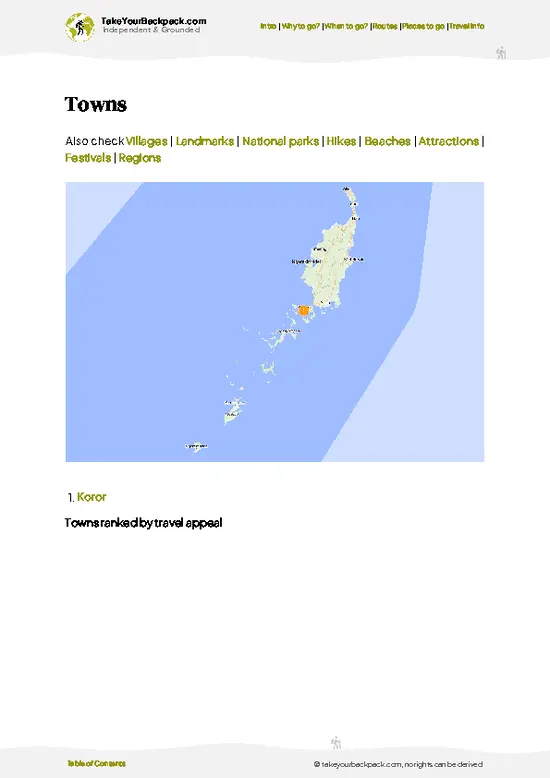
Seeing the layout at a glance
Loading the map 🌍
CLICK TO FILTER
town
village
unique site
national park
hike
beach
attraction
festival
region
SHOW COUNTRY’S BESTSHOW ALL
film
0
0
0a
Palau International Coral Reef Center
film
1
1
1a
Etpison Museum
film
2
2
2a
Long Beach
Joseph Chang
film
3
3
3a
Ngardmau Waterfall Trail
莊智暘
film
4
4
4a
Elauesachel Trail
film
5
5
5a
Ngerukewid Islands Wildlife Preserve
Kd Philippines
film
6
6
6a
Babeldaob
film
7
7
7a
Kayangel Atoll
film
8
8
8a
Jellyfish Lake
The Travel Hacking Life
film
9
9
9a
Ulong Channel
Summer Wu
film
10
10
10a
Blue Holes Dive Site
film
11
11
11a
Turtle Cove Dive Site

Why go?What draws travelers here

Beach life

Palau is beach life for people who earn it. The best sand is boat-only, the water is aquarium-clear, and your “crowd” is a cruising shark at Blue Corner or a manta at German Channel. Time it right: first boat out, Long Beach at spring low tide, paddle Nikko Bay before the trades. Nights end with a cold beer at Drop-Off, salt-dried and smiling.
Want the complete picture of Palau?
The offline Travel Guide brings everything together — routes, highlights & planning.

See what's included in the guide 👉

Get the Travel Guide -

⭐ HighlightsHighlights of Palau

  • Jellyfish Lake: Tea-tinted water, a slow galaxy of golden jellies, and soft bells tapping your forearms when you stop kicking. Permit plus long Rock Islands run cost time and money—book the first boat and wear a rash guard (reef-toxic sunscreens are banned). Off-map: Nikko Bay WWII plane wrecks, Ngaremeduu Bay mangroves, Badrulchau monoliths.
  • Blue Corner: Hook into the lip and feel the current hum through the line as grey reef sharks ghost past; your bubbles flatten sideways. It’s a full-day, two-tank spend with real water moving—aim for incoming tide and dose for chop. Off-map: Ulong Channel, Siaes Tunnel, Lighthouse Channel.
  • Milky Way: Chalky limestone mud squeaks between your fingers while the lagoon glows baby-blue and smells like clean shell. It’s a quick, crowded add-on—hit midday for color and accept grit in your suit to save time. Off-map: Soft Coral Arch, Long Lake (Mecherchar), Ngermeaus sandbar.
  • Ngardmau Waterfall: Leafy heat, cicadas, then cold water needles your back at the base;
read more 👉
  • Jellyfish Lake: Tea-tinted water, a slow galaxy of golden jellies, and soft bells tapping your forearms when you stop kicking. Permit plus long Rock Islands run cost time and money—book the first boat and wear a rash guard (reef-toxic sunscreens are banned). Off-map: Nikko Bay WWII plane wrecks, Ngaremeduu Bay mangroves, Badrulchau monoliths.
  • Blue Corner: Hook into the lip and feel the current hum through the line as grey reef sharks ghost past; your bubbles flatten sideways. It’s a full-day, two-tank spend with real water moving—aim for incoming tide and dose for chop. Off-map: Ulong Channel, Siaes Tunnel, Lighthouse Channel.
  • Milky Way: Chalky limestone mud squeaks between your fingers while the lagoon glows baby-blue and smells like clean shell. It’s a quick, crowded add-on—hit midday for color and accept grit in your suit to save time. Off-map: Soft Coral Arch, Long Lake (Mecherchar), Ngermeaus sandbar.
  • Ngardmau Waterfall: Leafy heat, cicadas, then cold water needles your back at the base; the trail tastes of clay when you breathe hard. Expect a muddy, rope-assisted descent and a small fee—go early and wear shoes with bite. Off-map: Ngardok Lake boardwalk, Mesekelat Falls, Aimeliik bai.
  • Peleliu Island: Orange Beach blazes under noon sun, bunkers sweat rust, and frangipani scent hangs over quiet airstrips. The boat transfer and guide eat a day—worth it if you can handle oven heat and coral-dusted roads. Off-map: Carp Island overnight, White Beach caves, Kayangel Atoll.
Spotted a mistake or missing a highlight? Contact us.

But Palau offers more...

Discover and compare all of its highlights per category

🧭 RoutesPlanning a route that makes sense

The 2-Day Lagoon Hit-List

The vibe: A quick, high-impact escape built around Koror and the Rock Islands, perfect if you want Palau’s signature lagoon and jellyfish experience without over-planning. You’ll move at a relaxed pace by boat, trading big distances for deep time in a compact, world-class corner of the country.
The highlights:
  • Base yourself in Koror for easy access to boats, food, and culture.
  • Learn Palau’s reef story at the Palau International Coral Reef Center.
  • Glide through the Rock Islands Southern Lagoon to reach Jellyfish Lake.
  • Cap it off with a mellow lagoon beach stop before returning to town.

The 3-Day Reef & Rainforest Circuit

The vibe: A balanced long weekend that splits your time between legendary dive sites and a lush inland waterfall hike, ideal if you want more than just boat days. Expect steady but not rushed days using Koror as a hub, with one full land day on Babeldaob.
The highlights:
  • Kick off in Koror with reef science and cultural context at CRC and Etpison Museum.
  • Drift
read more 👉

The 2-Day Lagoon Hit-List

The vibe: A quick, high-impact escape built around Koror and the Rock Islands, perfect if you want Palau’s signature lagoon and jellyfish experience without over-planning. You’ll move at a relaxed pace by boat, trading big distances for deep time in a compact, world-class corner of the country.
The highlights:
  • Base yourself in Koror for easy access to boats, food, and culture.
  • Learn Palau’s reef story at the Palau International Coral Reef Center.
  • Glide through the Rock Islands Southern Lagoon to reach Jellyfish Lake.
  • Cap it off with a mellow lagoon beach stop before returning to town.

The 3-Day Reef & Rainforest Circuit

The vibe: A balanced long weekend that splits your time between legendary dive sites and a lush inland waterfall hike, ideal if you want more than just boat days. Expect steady but not rushed days using Koror as a hub, with one full land day on Babeldaob.
The highlights:
  • Kick off in Koror with reef science and cultural context at CRC and Etpison Museum.
  • Drift through the Rock Islands Southern Lagoon on your first boat day.
  • Dive or snorkel Ulong Channel and Blue Holes, Palau’s classic underwater double-act.
  • Hike the Ngardmau Waterfall Trail on Babeldaob for a jungle-and-waterfall finale.

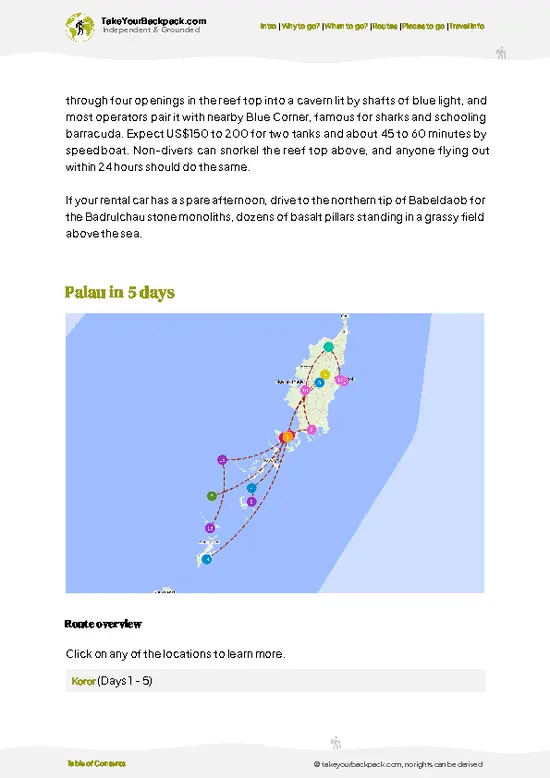
The 5-Day Deep-Dive Palau Journey

The vibe: A fuller loop that layers iconic lagoon sites, serious diving, rural villages, and WWII history into one slow-burning itinerary, great for travelers who want to really understand Palau rather than just skim it. You’ll mix boat days, scenic drives, and village stops with plenty of downtime baked in.
The highlights:
  • Use Koror as your launchpad for museums, reef science, and lagoon logistics.
  • Spend dedicated days in the Rock Islands Southern Lagoon, including Jellyfish Lake and Long Beach.
  • Hit Ulong Channel and Blue Holes, then wind down at Malakal Beach.
  • Explore Babeldaob’s Airai village and Ngardmau Waterfall Trail, plus a powerful WWII-focused day on Peleliu Island.
🌍 Want a ready-to-use travel plan for Palau?
The overview above compares different route options based on your travel time and style. The complete Travel Guide breaks each itinerary down in detail, including maps, stops, highlights, and transport information.

Explore all route details 👉

Get the Travel Guide -

🌤️ When to go?Choosing the right months to travel

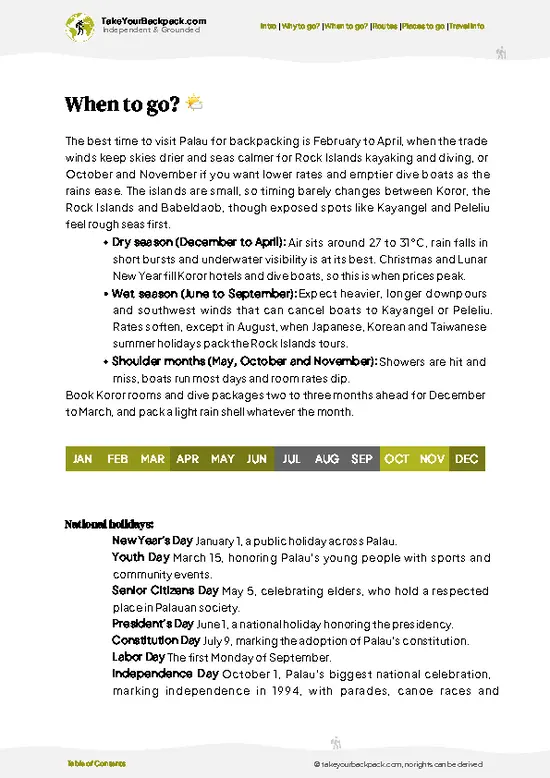
Palau’s sweet spot lands in late October through November: rains back off, winds tidy up, and operators haven’t flipped to holiday rates. You get dry-season clarity without December’s boat traffic, channels are reachable most days, and day trips don’t sell out until the last minute. It’s not cheap by Southeast Asia standards, but it’s noticeably gentler than Christmas week, and the Rock Islands feel roomy instead of choreographed.
  • Peak Dry: Dec-Mar is pay-to-play. Rates jump, boats pack out, and permits mean lines. But you earn glassy runs to Blue Corner, ripping currents with walls of grey reefs, and sunset rides past lime-green islets when the water turns ink-black and flat.
  • The Shoulder Shift: Oct-Nov (also late May-June) the wind rotates, shops restock, skippers repaint skiffs, and rates soften. Boats glide out half-full; you string big sites together without racing daylight.
  • Monsoon Lull: Jul-Sep brings squalls and chop, and the islands go quiet and reflective. Survival hack: launch early, dive leeward reefs and caves, carry a roll-top dry bag, and let the captain chase gaps between cells. Odd twist—August spikes with regional holidays despite the rain.

Tactical tip: For Oct-Nov, lock flights roughly two months out.

source: climatestotravel.comJANJanuary: highly recommended for travelingFEBFebruary: highly recommended for travelingMARMarch: highly recommended for travelingAPRApril: good for travelingMAYMay: good for travelingJUNJune: good for travelingJULJuly: fair for travelingAUGAugust: fair for travelingSEPSeptember: fair for travelingOCTOctober: excellent for travelingNOVNovember: excellent for travelingDECDecember: good for traveling
📅 Traveling in a specific month?
Get a full month-by-month breakdown of weather, crowds, costs, festivals, and seasonal highlights in the complete travel guide.

Get full details when to go 👉

Get the Travel Guide -
palau-pixabay-boating-175136

💰 Costs (as of 2026)What things cost day to day

Expect $90-120 per day if you keep it lean, and $200-260 on dive days.
  • dorm accommodation: $25-45 for a real dorm bed in Koror; $50-80 for the cheapest private. System tip: book a week and pay cash for 10-15% off, and pick a place with a kitchen—imported food is the silent killer. Airport arrivals are late; confirm a free pickup or you’ll burn $20-30 on a taxi before you’ve slept.
  • meals: Supermarket Survival: WCTC/Surangel’s deli chicken + rice + veggies runs $7-12 for two meals; ramen and canned tuna are 1.5-2x Philippines prices. Street food reality: there isn’t much street; it’s plate-lunch counters and mom-and-pop diners at $6-10 (vs $2-3 in Indonesia). Coffee $2-3 takeaway, $4-6 sit-down.
  • local transport: Koror is walkable. Cheap unlock is to split a car: $40-60/day becomes $10-20 each with three people, and you reach waterfalls, WWII sites, and beaches without bleeding on taxis. Hitchhiking is normal outside town; smile, point, and wait. State ferries to Peleliu/Angaur are $20-30 each way but infrequent—plan around them or don’t bother.
  • activities: The land is cheap; the water is not. Rock Islands permit $50/10 days; with Jellyfish Lake $100. Two-tank boat dive $140-200 (+$20-40
read more 👉
Expect $90-120 per day if you keep it lean, and $200-260 on dive days.
  • dorm accommodation: $25-45 for a real dorm bed in Koror; $50-80 for the cheapest private. System tip: book a week and pay cash for 10-15% off, and pick a place with a kitchen—imported food is the silent killer. Airport arrivals are late; confirm a free pickup or you’ll burn $20-30 on a taxi before you’ve slept.
  • meals: Supermarket Survival: WCTC/Surangel’s deli chicken + rice + veggies runs $7-12 for two meals; ramen and canned tuna are 1.5-2x Philippines prices. Street food reality: there isn’t much street; it’s plate-lunch counters and mom-and-pop diners at $6-10 (vs $2-3 in Indonesia). Coffee $2-3 takeaway, $4-6 sit-down.
  • local transport: Koror is walkable. Cheap unlock is to split a car: $40-60/day becomes $10-20 each with three people, and you reach waterfalls, WWII sites, and beaches without bleeding on taxis. Hitchhiking is normal outside town; smile, point, and wait. State ferries to Peleliu/Angaur are $20-30 each way but infrequent—plan around them or don’t bother.
  • activities: The land is cheap; the water is not. Rock Islands permit $50/10 days; with Jellyfish Lake $100. Two-tank boat dive $140-200 (+$20-40 gear). Kayak/snorkel day tours $75-130. Stack days under one permit and cluster dives to cut transfers. Compared to Thailand, activities are 2-3x; compared to French Polynesia, roughly similar but with better package value.
  • miscellaneous: Budget leaks: 3-5% card surcharges, $5-8 ATM fees, reef-safe sunscreen at double mainland prices, beer $2-3 store/$5-7 bar, water if your stay lacks a filter, and Sunday closures that trap you in resort restaurants. SIM/data is pricey; use hotel Wi-Fi or split a hotspot. Overall: pricier than Philippines/Indonesia, similar to Guam/Saipan lodging, still cheaper than Hawaii for booze.
⚠️ Prices can change and everyone travels differently, so take this as a rough guide. Hope it helps you plan your adventure!

✈️ The backpacker research shortcutPalau Travel Guide

An offline-friendly backpacking guide with optimized travel routes, ranked highlights, transport advice, and the best areas to stay.
example page 0 from our offline Travel Guide for Palauexample page 1 from our offline Travel Guide for Palauexample page 2 from our offline Travel Guide for Palauexample page 3 from our offline Travel Guide for Palauexample page 4 from our offline Travel Guide for Palauexample page 5 from our offline Travel Guide for Palauexample page 6 from our offline Travel Guide for Palauexample page 7 from our offline Travel Guide for Palau
The digital guide (124 pages) contains:
28 highlights, ranked by travel appeal
Optimized 2, 3 & 5-day travel routes
Cities, national parks, beaches, historical sites, ...
How to get around
Offline-friendly for travel without Wi-Fi
👉 Click to see all 30+ guide features

📅 Plan smarter in minutes, not weeks
Month by month travel advice
Festivals & national holidays
Budget expectations

🗺️ Go to the right places, skip the overrated ones
Honest pros & cons of destinations
Top hikes, parks & viewpoints
Lesser-known places most travelers miss
Clear “worth it vs skip it” guidance

🛏️ Travel smoothly without rookie mistakes
Best areas to stay
Transport systems explained simply
Common scams & safety advice
SIM cards, money & practical tips

🌍 Understand the country, not just visit it
Culture & traditions
52 Essential phrases & customs
Festivals worth planning around
Traveler-friendly historical context
Insights that make places more meaningful

📱 Built for real travel conditions
Fully downloadable PDF
Works completely offline
Optimized for phone use
Useful in remote areas & buses
Everything in one place
Save weeks of stressful planning
Get instant access to the full guide directly. 30-day money-back guarantee.


Sent to your inbox immediately after payment • 100% Secure Checkout
Best Backpacking Travel Advisor 2025 tourism awardBest Backpacking
Travel Advisor
2025
What others say about Take Your Backpack Guides:
⭐⭐⭐⭐⭐
Fantastic, amazing amount of information!
⭐⭐⭐⭐⭐
My goodness this is amazing, it's what I've been looking for hats off too you!
⭐⭐⭐⭐⭐
I think this is absolutely BRILLIANT
⭐⭐⭐⭐
Very complete and informative. It's still missing places, but I gotta to commend you
⭐⭐⭐⭐⭐
This is truly amazing, thank you, can't wait to explore it with my kids!
⭐⭐⭐⭐⭐
Awesome resource, thank you!
⭐⭐⭐⭐⭐
This is amazing! Can't wait to explore the ones I haven't seen
⭐⭐⭐⭐
I love this! Well done, great idea.
⭐⭐⭐⭐⭐
Thanks for taking the time to make this gem!
⭐⭐⭐⭐⭐
This might be the best website I've ever seen.
⭐⭐⭐⭐⭐
Congratulations, and thank you so much for your work; it's incredibly valuable.
⭐⭐⭐⭐
In all seriousness I think you did a great job pointing out the important spots
⭐⭐⭐⭐⭐
10/10 very good
⭐⭐⭐⭐⭐
As someone who's only just starting to visit regularly this is awesome, thank you.
⭐⭐⭐⭐
Thank you very much! I'm going to visit my dad, it's going to be very useful!
⭐⭐⭐⭐⭐
This is really cool! We'll be travelling for the first time and this definitely come in handy.
⭐⭐⭐⭐⭐
You are now our minister of culture, congratulations 👨‍💼
⭐⭐⭐⭐⭐
Just wanted to tell you that this is a pearl! Going to follow your recommendations.
⭐⭐⭐⭐⭐
This is so cool. I'll definitely be using the resource for my travels soon.
⭐⭐⭐⭐⭐
This is very impressive! Good work.
⭐⭐⭐⭐⭐
This is an amazing and informative site. Very well done!

🛏️ Where to stay?Best areas to base yourself

There are very few true hostels in Palau; budget accommodation Palau travelers find is mostly guesthouses, homestays and low-cost hotels concentrated around Koror, Malakal and Airai.
Koror has the most and best options with easy access to dive shops, restaurants and boat piers but is busier and slightly pricier; Malakal sits by the main pier so it’s convenient for diving and transfers but has limited nightlife and dining; Airai/Babeldaob is cheapest and closest to the airport with good road access to inland sights but requires transport to reach Koror and island departures; outer islands and … read more 👉
There are very few true hostels in Palau; budget accommodation Palau travelers find is mostly guesthouses, homestays and low-cost hotels concentrated around Koror, Malakal and Airai.
Koror has the most and best options with easy access to dive shops, restaurants and boat piers but is busier and slightly pricier; Malakal sits by the main pier so it’s convenient for diving and transfers but has limited nightlife and dining; Airai/Babeldaob is cheapest and closest to the airport with good road access to inland sights but requires transport to reach Koror and island departures; outer islands and Peleliu offer remote stays near WWII sites and quiet beaches but have very limited lodging and higher transport costs.
Book early in peak season, confirm airport/pier transfers, carry cash and expect basic amenities and island‑style service in budget places.

If you enjoy meeting fellow travelers, consider choosing hostels with high ratings for atmosphere. On the other hand, if you prefer having your own space, a hotel might be a better option.

🚌 Getting aroundHow to travel within the country

Palau runs on weather, tides, and favors. Schedules exist until a squall line bullies them. Boats leave early to beat wind, church empties and rides appear, and anything “official” shrinks on island time. Plan hard, execute soft. Chase speed and you’ll pay for it; flex and doors open.
  • Shared rental car The straightest trade: money buys hours. A car turns a Babeldaob loop from a day of thumb-waving into a clean circuit—waterfalls, stone monoliths, viewpoints—on your clock. Daily rates sting solo,
read more 👉
Palau runs on weather, tides, and favors. Schedules exist until a squall line bullies them. Boats leave early to beat wind, church empties and rides appear, and anything “official” shrinks on island time. Plan hard, execute soft. Chase speed and you’ll pay for it; flex and doors open.
  • Shared rental car The straightest trade: money buys hours. A car turns a Babeldaob loop from a day of thumb-waving into a clean circuit—waterfalls, stone monoliths, viewpoints—on your clock. Daily rates sting solo, but split three ways it often beats two taxi hops each, and you choose when to leave, where to linger, and when to bail before dark dogs and surprise potholes.
  • Hitchhiking People stop if you read the room. Stand on the shady side, hold your hand low, palm down, and give a small wave. Open with “Alii,” offer a couple dollars for fuel, don’t bring wet shorts onto seats, and keep your shirt on off the beach. Get dropped at “Y” junctions or the KB Bridge for onward picks. Conversations are the fare.
  • State boats (Koror-Peleliu/Angaur) The hack that slashes costs. Sign up at the state office, pay cash in small bills, and be tide-flexible; departures slide an hour either way. You’ll ride with rice sacks and paint cans, maybe board wet, but you’ll spend tour-lunch money to cross what charters bill like flights. Drybag, patience, and sandals you don’t love.
  • Kayak + water taxi Water is the geometry cheat. Rock Islands don’t care about roads; kayaks slip into limestone mazes and beaches no speedboat tour lingers on. Buy permits at Koror State first, launch at dawn when wind sleeps, hug leeward sides, and arrange a water-taxi pickup so you’re not fighting afternoon chop home.

Master tip: Build your week around tide-bound state boat days and a single shared-car Blitz Day; everything else—paddles at dawn, short hitches, ranger permits—clicks into place around those anchors.
Quick note: There’s no airport in Ngerulmud. All international flights land at Roman Tmetuchl International Airport (ROR) in Airai. Most travelers go to Koror (Palau’s main hub). Distances below are from ROR:
- ROR to central Koror: about 8 km (5 miles).
- ROR to Ngerulmud (Melekeok State): about 45 km (28 miles).

Public transport: As of 2025, there’s no regular public bus serving the airport. You’ll need a taxi, a pre-booked hotel/shared shuttle, or a rental car.

Options from the airport to Koror
- Hotel or shared shuttle: Many hotels and local operators run pre-arranged shuttles that meet flights (often late at night). 15-25 minutes to most Koror hotels. Typical cost is USD 10-25 per person (some higher-end hotels include it; some charge more for off-hours).
- Taxi: Readily available around scheduled arrivals, but it’s smart to pre-book for late-night flights. 15-25 minutes to central Koror. Expect USD 25-40 one-way, cash preferred.
- Rental car (self-drive): Several desks/meet-and-greet rentals operate at/near the airport. 15-25 minutes to Koror. Rates roughly USD 40-70 per day, plus fuel. Good if you plan to explore Babeldaob.

Going to Ngerulmud (Melekeok)
- Taxi: 50-70 minutes depending on traffic and weather. Expect roughly USD 80-120 one-way; confirm the fare before you go.
- Rental car: 50-70 minutes via the Babeldaob loop road. Same daily rates as above; roads are paved but can be slick after rain.

Tips
- Late-night arrivals are common; if you’re landing after midnight, arrange a shuttle or taxi in advance.
- Taxis are unmetered; agree on the price before departing.
- Carry some USD cash; not all drivers accept cards.
⚠️ Prices and routes can change, so take this as a rough guide and ask for local advice when you arrive.

🔒 Safety (risk Level: low)Common concerns and things to watch out for

Safety for solo travelers, including women and LGBTQ+ individuals
Palau is generally safe for solo travelers, including women and LGBTQ+ individuals. Petty crime is rare, but it’s wise to stay cautious and aware of your surroundings. While the local culture is traditionally conservative, LGBTQ+ travelers usually face no issues, especially in tourist areas. Always respect local customs and be mindful of sensitive topics.


Full official government travel advisory (live updates)
View details 👉

✈️ VisaVisa requirements for Palau

Most nationalities, including U.S. citizens, can enter Palau visa-free for up to 30 days, with the possibility to extend. Ensure your passport is valid for at least six months, and you may need proof of onward travel. Always double-check the latest entry requirements before your trip as they can change.

source: palaugov.pw
⚠️ Visa requirements can change over time, so always check the latest visa requirements with the official embassy or government website before you travel.

🎒 What to pack?What to wear and bring

Palau’s tropical vibes mean you’re in for hot and humid weather, with a good chance of rain, so quick-dry clothing is your best bet. The terrain varies from beaches and jungles to rocky islands, so pack for diverse adventures. When visiting villages or cultural sites, modest clothing is a must—cover those shoulders and knees to respect local customs. And while it’s swimsuit central on the beaches, a rash guard can be a lifesaver against the strong sun and jellyfish.

Apart from this country specific advice, I have also crafted a general packing list that should help on any trip. authorOver the years, I've learned the importance of packing minimally. It's so much easier to jump on the back of a truck or squeeze yourself into the last spot of a minibus without that supersized backpack. If you're headed to a warm destination, leave your winter jacket at home; for colder regions, opt for thin thermal underlayers. Instead of packing your entire wardrobe, bring just three sets of clothes, as laundry facilities are available everywhere.
View the full list 👉
🎒 Planning the practical side of your trip?
Get detailed information on transport, daily budgets, internet access, local customs, food, language, and other essentials in the complete Travel Guide.

Get detailed practical information 👉

Get the Travel Guide -

🙋 FAQTravel questions about Palau

Trip Planning


Personal tip: I normally search on good rating for atmosphere (for meeting people) and location (for easy exploring). Cleanliness as a bonus.


Travel Essentials

Vaccinations for Palau:
Hepatitis A, Hepatitis B, Typhoid, and routine vaccines (MMR, DPT, chickenpox, polio). Consider Japanese encephalitis if you’re staying long-term or rural. Rabies is optional unless you’re handling animals. Check CDC guidelines for updates.


vaccination requirements
When I first started traveling, I often spent part of my first day in a new country hunting for a local SIM card. While this can still be slightly cheaper, it also takes time and planning.

These days, it's much simpler to install an eSIM before leaving home. Once you arrive in Palau, you can activate it immediately and have mobile data from the moment you land — which is especially useful for ordering transport or navigating away from busy airports.

There are many providers nowadays, and price differences are usually small. I personally go with Airalo, as it offers excellent network coverage throughout the country and strong global coverage, so you can manage multiple countries from a single app.


Get your e-sim for Palau

Culture & Customs

Dress modestly, especially when visiting villages or religious sites. Swimwear is fine at the beach but cover up when leaving the sand. Remove shoes before entering someone’s home. Respect local taboos by asking locals or guides if you’re unsure about specific customs.

Do not touch someone’s head, as it’s considered disrespectful. Public displays of affection should be minimal. Homosexuality is illegal, and while enforcement is rare, discretion is advised. Women traveling solo are generally safe, but it’s wise to avoid secluded areas at night. Always ask permission before taking photos of people or private property.
Trying traditional food is always a great way to experience the culture. Here are some must-try dishes for Palau.
  • Uluk: A traditional Palauan dish made from taro, which is a staple in many Pacific Islander diets. Uluk is usually steamed or boiled and served with coconut milk, offering a taste that’s both earthy and rich. It’s a cornerstone of local meals and a great way to get a sense of Palau’s agricultural roots.
  • Taro Rösti: Inspired by Swiss rösti but with a Palauan twist, this dish features grated taro root that is pan-fried into a crispy patty. It’s a tasty fusion that highlights Palau’s adaptability and culinary creativity.
  • Fruit Bat Soup: Not for the squeamish, this soup is a unique experience featuring whole fruit bats stewed with ginger and coconut milk. It’s a traditional delicacy that’s more about the adventure and cultural experience than the taste itself.
  • Kelaguen: A Chamorro dish popular in Palau, often made with chicken, fish, or beef marinated in lemon juice, coconut, and hot peppers. It’s a refreshing and zingy dish that reflects the island’s love for fresh, vibrant flavors.
  • Broiled Parrotfish: Known locally as ’Palauan fish,’ this is often caught fresh and broiled with simple seasoning, letting the natural flavor of the fish shine. It’s a must-try for seafood lovers and gives a taste of Palau’s rich marine life.
Tap water in Palau is generally not recommended for tourists; locals might drink it but are accustomed to it. It’s safer for travelers to stick to bottled or filtered water to avoid any potential stomach issues. Always have a reusable water bottle with a filter if you’re looking to cut down on plastic waste.
The main language in Palau is Palauan. Backpacking is way more rewarding if you know a bit of the local language, so I'd suggest brushing up on the basics just in case your Palauan skills have become a bit rusty.

Want to understand locals better?
The complete Travel Guide for Palau includes 52 essential words and phrases — greetings, thank-yous, ordering food, transport, numbers, and common local expressions you'll actually hear.

Get your local basic phrases 👉

Get the Travel Guide -


In Palau, English is widely spoken and understood, making it relatively easy for English-speaking travelers to navigate the islands. English is one of the official languages, alongside Palauan, and is commonly used in government, education, and business. Most locals, especially those working in the tourism industry, such as hotel staff, tour guides, and restaurant employees, have a good command of English.

While many Palauans are bilingual, with Palauan as their first language, you’ll find that English is prevalent in urban areas and tourist hotspots. In rural areas, English proficiency may vary, but basic communication is generally achievable.

Signs, menus, and information materials are often available in English, further facilitating travel. Overall, English is sufficiently spoken throughout Palau, allowing visitors to enjoy their experience without significant language barriers.

Money & Payments

The local currency of Palau is USD ($).

When you’re backpacking through Palau, it’s pretty crucial to think cash-first. While some places take cards, smaller shops and local spots might not. Thankfully, Palau uses the US dollar, so no need to fuss with currency exchange if you’re coming from the States. If you’re bringing euros, you’ll need to swap them for USD either before you arrive or at the airport.

ATMs are available but can be a bit scarce outside of Koror, the main hub. Always good to withdraw a chunk of cash when you spot one, just in case. Keep in mind that ATMs might charge a fee, so plan your withdrawals accordingly.

For exchanging money, your best bet is doing it at the airport or a bank in Koror. Carry some small bills; it’s handy for tipping and small purchases. Happy travels!

Tipping in Palau isn’t customary, but it’s appreciated if you receive exceptional service. Most locals don’t expect tips, given the communal culture, but a small gratuity at restaurants or for tour guides can be a nice gesture. If you choose to tip, rounding up the bill or leaving about 10% is considered generous.

🧩 Nearby countriesNearby backpacking alternatives

We 💚 feedbackFinal notes for travelers

Palau pays back what you put in. Time buys savings: stock up in Koror, line up a kayak and a 10‑day Rock Islands permit, then camp two nights to amortize those fees. Money buys comfort: dive boats, boxed lunches, zero paddling. Comfort burns time: buses don’t exist; rent a beater and chase tide windows. It’s gold for divers, strong snorkelers, and patient paddlers; rough for hostel-hoppers and shoestring drinkers. Small downside: Wi‑Fi crawls—bring your own mask and reef‑safe sunscreen.

✍️ Help improve this page!
The information on this page is based on in-depth research, insights shared by experienced travelers, and feedback from the local travel community in Palau. While every effort is made to keep the information accurate and current, conditions can change — so if you spot anything incorrect or outdated, please get in touch.


🙋‍♂️ Give feedback

👋 Meet the founderWho’s Behind Take Your Backpack?

Johan, backpacker and founder of TakeYourBackpackHi, I’m Johan (Netherlands 🇳🇱), the creator of TakeYourBackpack. Over the past decade, I’ve backpacked through 80+ countries across six continents, gaining extensive experience with independent travel, long-term trips, and overland routes.

This site is built on a combination of firsthand travel experience and carefully curated insights from other backpackers. Many guides are based on places I’ve personally visited, while others bring together tips, observations, and practical advice shared by trusted travelers I’ve met along the way.

The goal is to provide realistic, experience-driven guidance — not generic itineraries — so you can explore destinations with better context, clearer expectations, and more confidence.

Get full Palau guide •
Instant download • 28 highlights • Full Offline guide