Trip Planning
The TakeYourBackpack guidebooks are your all-in-one travel companion, featuring the best cities, national parks, hikes, beaches, and unique sites, along with essential tips on when to go, how to get around, exchanging money, and even local phrases to get you started — everything you need for a smooth, unforgettable backpacking adventure.
Stop researching. Start exploring.Discover all 112 highlights,ranked
and organized into practical routes.
Get instant access
Planning a backpacking route through Dominican Republic can be tricky — you need to balance must-see places, travel times, budget, and how long to stay in each destination. Our free personalized Dominican Republic itinerary planner creates a route based on your travel style, trip duration, and interests, so you can spend less time researching and more time exploring.
Personal tip: I normally search on good rating for atmosphere (for meeting people) and location (for easy exploring). Cleanliness as a bonus.
Travel Essentials
No vaccinations are mandatory for most travelers entering the Dominican Republic. Make sure routine vaccines (MMR, tetanus-diphtheria, polio, flu) are up to date, and get hepatitis A and typhoid, which are recommended for most visitors because of food and water risks. Hepatitis B and rabies are worth considering for long stays, rural travel or contact with animals. There is no vaccine for dengue, which is present year-round, so use mosquito repellent. Malaria risk is low but exists in some areas, mainly the provinces bordering Haiti, so ask a travel clinic whether you need prophylaxis for your route.
vaccination requirementsWhen I first started traveling, I often spent part of my first day in a new country hunting for a local SIM card. While this can still be slightly cheaper, it also takes time and planning.
These days, it's much simpler to install an eSIM before leaving home. Once you arrive in Dominican Republic, you can activate it immediately and have mobile data from the moment you land — which is especially useful for ordering transport or navigating away from busy airports.
There are many providers nowadays, and price differences are usually small. I personally go with
Holafly, as it offers excellent network coverage throughout the country and strong global coverage, so you can manage multiple countries from a single app.
HolaFly eSimCulture & Customs
Dominicans take pride in looking neat, so do wear a shirt in towns and keep swimwear for the beach. In churches, cover your shoulders and knees. Do say hello and make eye contact when you enter a shop, a guagua or a waiting room, because ignoring people reads as rude. Don’t expect strict punctuality in social settings, but do show up on time for buses and tours, which often leave as scheduled. Ask before photographing people, particularly in rural areas and markets. Avoid careless comments about Haiti or Haitian migration, a sensitive political topic here. If you’re invited to join a domino game or share food, accept it. Turning down hospitality outright can feel cold. Women may get persistent compliments from men; a firm, uninterested response works better than engaging. LGBTQ+ travelers will find acceptance in parts of Santo Domingo and the resort zones, but public displays of affection can attract stares or hostility in smaller towns.
Trying traditional food is always a great way to experience the culture. Here are some must-try dishes for Dominican Republic.
- La Bandera Dominicana: The everyday lunch plate of white rice, stewed red beans and stewed chicken or beef, usually with salad and fried plantain. It’s named after the national flag, and almost every comedor serves it at midday for RD$200 to 350 (US$3.50 to 6).
- Sancocho: A thick stew made with up to seven meats, plus yuca, yautía, plantain and corn. It’s cooked for birthdays, rainy days and hangovers, and often shows up at family celebrations.
- Mangú con Los Tres Golpes: Boiled green plantains mashed with butter and topped with pickled red onions. It comes with “the three hits”: fried salami, fried white cheese and eggs. This is the classic Dominican breakfast.
- Moro de Guandules: Rice cooked with pigeon peas and coconut or sofrito. It’s a Christmas staple and a common Sunday side.
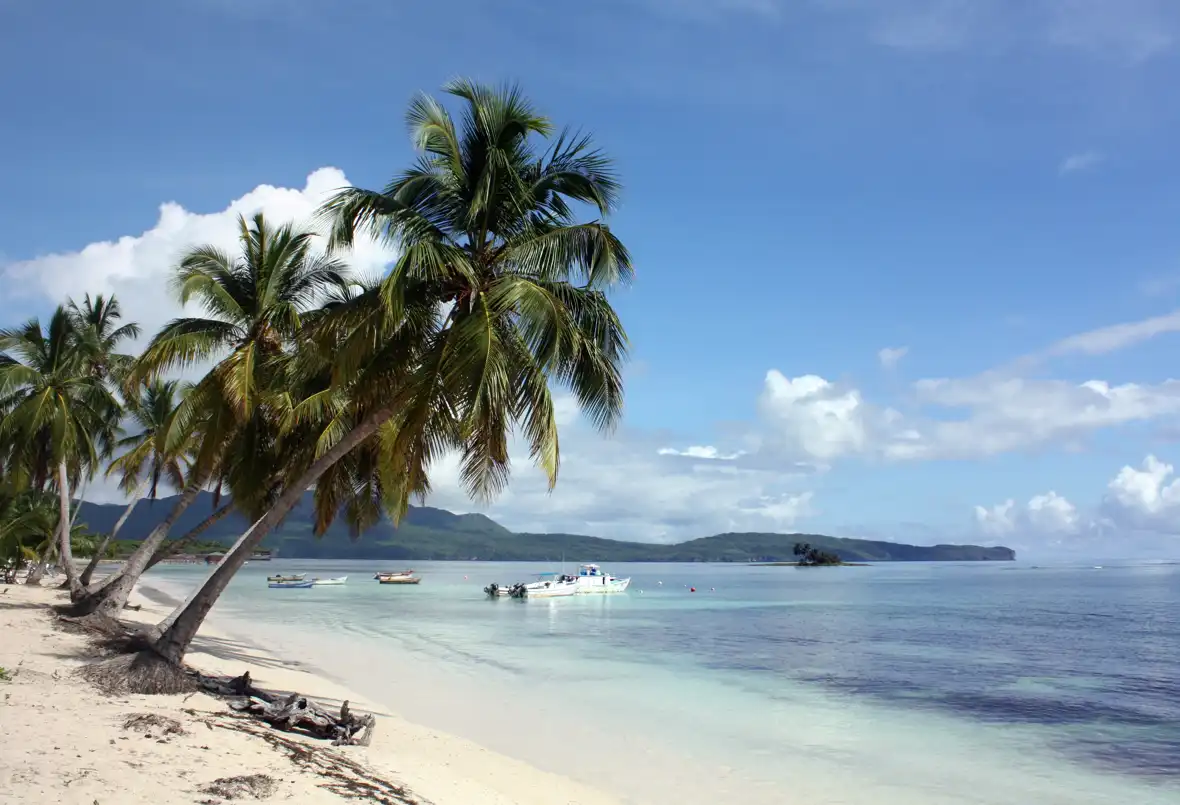
- Pescado con Coco: Fish simmered in coconut sauce. It’s the signature dish of the Samaná Peninsula, where coconut palms cover the hills.
- Chivo Guisado: Goat stewed with oregano, herbs and tomato. It’s the pride of Montecristi in the northwest, where the goats graze on wild oregano.
- Habichuelas con Dulce: A sweet cream of red beans with coconut milk, sweet potato, cinnamon and cookies on top. Families make it during Lent and trade pots with neighbors before Easter.
Tap water in the Dominican Republic is not safe to drink, and locals don’t drink it either. Most households buy 5-gallon jugs (“botellones”) of purified water. Tourists should stick to bottled or purified water, including for brushing teeth if you have a sensitive stomach. Ice in restaurants and bars is generally made from purified water, and refilling a reusable bottle from a botellón at your hostel or a colmado is the cheapest option.
The main language in Dominican Republic is
Spanish. Backpacking is way more rewarding if you know a bit of the local language, so I'd suggest brushing up on the basics just in case your Spanish skills have become a bit rusty.
Want to understand locals better?The complete Travel Guide for Dominican Republic includes 52 essential words and phrases — greetings, thank-yous, ordering food, transport, numbers, and common local expressions you'll actually hear.
Get your local basic phrases 👉
Get the Travel Guide - In the Dominican Republic,
English is widely spoken in resort zones like Punta Cana, Bávaro, Puerto Plata, Sosúa, Cabarete and Las Terrenas, and in hostels and tour agencies in Santo Domingo’s Zona Colonial. Younger city Dominicans and anyone working in tourism often speak some English, but taxi drivers, colmado owners and guagua cobradores mostly don’t. In rural areas and mountain towns like Constanza, expect Spanish only. Download Google Translate’s offline Spanish pack and learn a few basics like “¿cuánto cuesta?” (how much?) and “un chin” (a little bit). Dominican Spanish is fast and drops the final “s”, so asking people to speak “más despacio” (slower) is completely normal.
Money & Payments
The local currency of Dominican Republic is DOP (RD$).
ATMs are easy to find in cities and tourist towns in the Dominican Republic, especially from Banreservas, Banco Popular and BHD, though they’re scarce in rural villages, so withdraw before heading into the mountains or small beach towns. Expect a local fee of roughly RD$150 to 300 (US$2.50 to 5) per withdrawal on top of your home bank’s charges, with limits around RD$10,000 to 20,000 per transaction. Use ATMs inside bank branches or malls, since skimming at standalone machines is a known problem. Visa and Mastercard work at hotels, supermarkets, chain restaurants and larger tour operators. Guaguas, motoconchos, colmados, street food and most small guesthouses take cash only. US dollars are accepted in Punta Cana and other resort areas but at poor rates, so bring some clean US$ bills as a backup and exchange them at banks or licensed casas de cambio rather than with street changers.
Restaurants in the Dominican Republic automatically add a 10 percent service charge (“ley”) plus 18 percent ITBIS tax to the bill, but much of that charge doesn’t reach your server, so leaving an extra 5 to 10 percent in cash for good service is customary. Hotel porters and housekeeping usually get RD$50 to 100 (about US$1 to 2), and tour guides typically get 10 percent of the tour price. Taxi and Uber drivers don’t expect tips, though rounding up is appreciated.
v2.webp)
 Best Backpacking
.jpg) Over the years, I've learned the importance of packing minimally. It's so much easier to jump on the back of a truck or squeeze yourself into the last spot of a minibus without that supersized backpack. If you're headed to a warm destination, leave your winter jacket at home; for colder regions, opt for thin thermal underlayers. Instead of packing your entire wardrobe, bring just three sets of clothes, as laundry facilities are available everywhere.
Over the years, I've learned the importance of packing minimally. It's so much easier to jump on the back of a truck or squeeze yourself into the last spot of a minibus without that supersized backpack. If you're headed to a warm destination, leave your winter jacket at home; for colder regions, opt for thin thermal underlayers. Instead of packing your entire wardrobe, bring just three sets of clothes, as laundry facilities are available everywhere.


.jpg) Hi, I’m Johan (Netherlands 🇳🇱), the creator of TakeYourBackpack. Over the past 3 decades, I’ve backpacked through 90+ countries across six continents, gaining extensive experience with independent travel, long-term trips, and overland routes.
Hi, I’m Johan (Netherlands 🇳🇱), the creator of TakeYourBackpack. Over the past 3 decades, I’ve backpacked through 90+ countries across six continents, gaining extensive experience with independent travel, long-term trips, and overland routes.