×
Somalia 🇸🇴

backpacking Africa Somalia 🇸🇴Move cautiously through coastal traditions and landscapes.

Explore Sierra LeoneExplore South Africa

Backpacking Somalia in 2026

A complete guide including when and where to go, costs, transport, itineraries, and practical travel advice.
Traveling in Somalia: what to expect

Backpacking Somalia
By Johan Kruseman 🇳🇱 | Updated June 5, 2026

The bill most guides skip is the security premium—vetted hotels, escorts, and private transfers can quietly double your daily spend. In Somaliland the costs ease and logistics simplify; in south-central Somalia, access demands pro-level planning. Pay it, and you buy the one thing that matters here: safe time to actually engage.

What pulls you in is elemental: camel culture and poetry as public sport; an ocean-blue coastline that runs for days; rock art at Laas Geel so alive it feels like the paint has just dried; the frankincense cliffs of Sanaag; Berbera’s salt-crusted port and Mogadishu’s Lido Beach buzz; Zeila’s old coral-stone ruins and the cool escarpments that drop to the Gulf of Aden. Yes, there are permits, separate visas for Somaliland, a cash-first reality with crisp USD only, checkpoints, heat, and flights that shift like sand. But that friction sharpens the senses, and when you’re sipping shaah after a long day, the country’s warmth lands even deeper.

Compared to Ethiopia’s museum-piece grandeur, Djibouti’s streamlined logistics, and Kenya’s polished safari circuit, Somalia and Somaliland offer raw coastline, ancient art, and a living oral heritage with almost no middleman. It’s for experienced travelers who value context over comforts, patient photographers, and culture hounds; if you’re newer, start in Somaliland and let the confidence build.

👉 Get the 📖 Travel Guide of Somalia

Somaliland: Hargeisa–Berbera–Sheikh spine

If you want one corridor that trades adrenaline for headspace, this is it. Hargeisa runs on cash and courtesy; buy a local SIM with your passport and settle in. Day trips to Laas Geel need a permit and usually an escort; factor extra time and tip money at checkpoints. The run to Berbera is straightforward, but modest—no alcohol, conservative beach etiquette, evenings quiet. Climb to cool air on the Sheikh road if you crave movement. It rewards travelers who can handle paperwork, dress codes, and patient pacing to access rock art, frankincense chatter, and long road views without drama.

Puntland: Bosaso and the Cal Madow

Rugged and remote. Fly into Bosaso or Garowe; overland is slow and daylight-only. You’ll pay for a 4x4, a fixer, and fuel caches, but you buy freedom to reach mountain escarpments and coastal trading towns where the workday rules the rhythm. Expect clan-run checkpoints and zero tolerance for night driving. Travelers who like tough logistics, quiet tea stops, and salt-stung air will get what they came for; those on tight schedules will not.

Mogadishu & Benadir

High-friction, high-cost. You fly in, you move with a security detail, and your budget bleeds on armored transfers and hotel compounds. The payoff is controlled exposure: a beachfront city shaking off yesterday while watching every doorway today. Short, purposeful itineraries work—market walks, a coastal meal, a glimpse of old facades—then back to base. It’s for hardened urban explorers who understand that safety planning is the ticket price.

Jubaland: Kismayo & the Lower Juba coast

Port grit, fishing culture, and heavy heat. Access is mostly by air with tightly managed movement inside the city. Self-drive outside town is a bad idea. If you’re coming for maritime work, family visits, or research with a local sponsor, it can be efficient; otherwise the security overhead erases spontaneity and savings.

Sool & Sanaag: Erigavo and the Daallo escarpment

Big land, thin infrastructure. Overland access from Hargeisa or Bosaso means permits, escorts, and buffer days for fog, rockfall, or a closed checkpoint. The reward is the high plateau, frankincense country, and cliffside roads that force you to earn every kilometer. Built for field researchers and long-haul overlanders who respect clan dynamics and can carry their own contingencies.
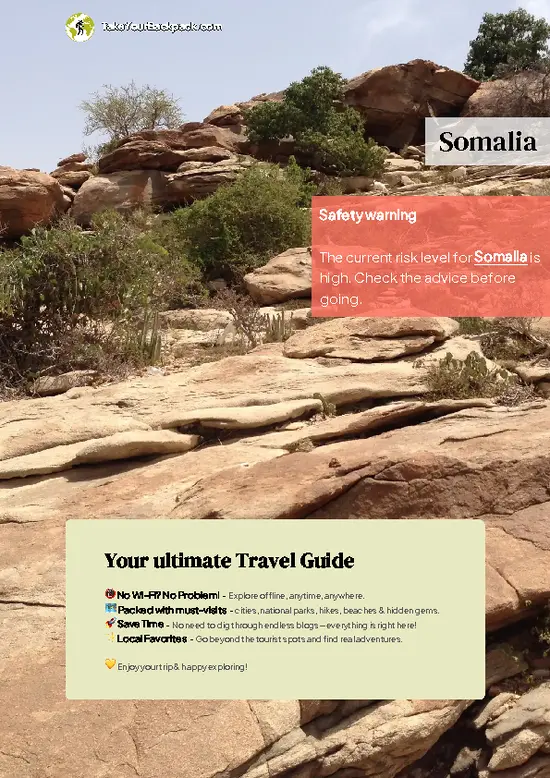
Safety warning

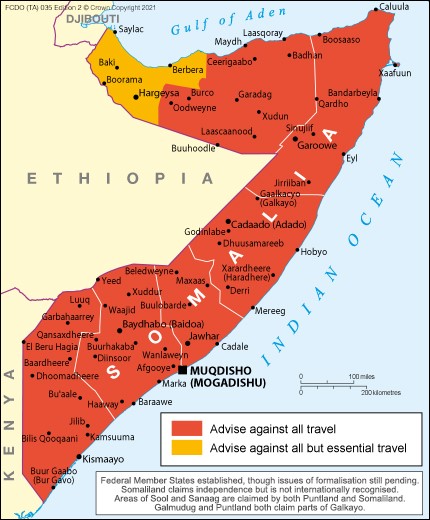
The current risk level for Somalia is high. Check the advice before going.
Get your Somalia guide
83 ranked highlights, routes & tips, works offline (354 pages)
Seeing the layout at a glance
Loading the map 🌍
CLICK TO FILTER
city
town
unique site
national park
hike
beach
attraction
festival
region
SHOW COUNTRY’S BESTSHOW ALL

Why go?Reasons people choose to visit

Low cost

Somalia rewards the frugal. Tea, chapati, goat, and rice from market stalls cost little; shared taxis and basic guesthouses in Somaliland keep days cheap. Think roughly $30–45 a day if you keep it local. The gotchas: visas, permits, and any private security or chartered 4x4 will nuke your savings. Stick to major towns, daylight travel, and public vans. Cash wins; mobile money rules locally, but your foreign card won’t. Haggle without drama. You’ll … read more 👉
Somalia rewards the frugal. Tea, chapati, goat, and rice from market stalls cost little; shared taxis and basic guesthouses in Somaliland keep days cheap. Think roughly $30–45 a day if you keep it local. The gotchas: visas, permits, and any private security or chartered 4x4 will nuke your savings. Stick to major towns, daylight travel, and public vans. Cash wins; mobile money rules locally, but your foreign card won’t. Haggle without drama. You’ll spend on what matters—food, rides, and a roof—while skipping the tourist markups that drain wallets elsewhere.
Want the complete picture of Somalia?
The offline Travel Guide brings everything together — routes, highlights & planning.

See what's included in the guide 👉

Get the Travel Guide -

⭐ HighlightsUnmissable destinations

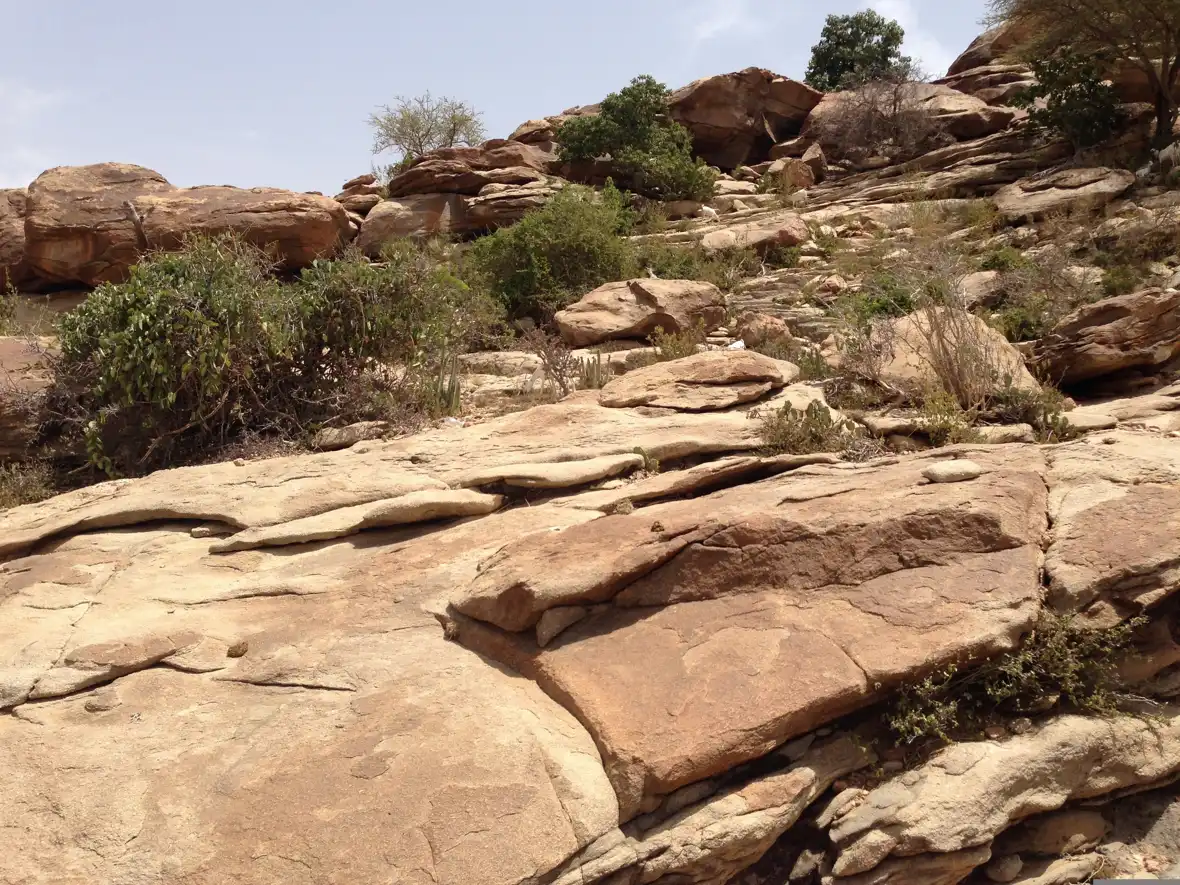
  • Laas Geel Rock Art (near Hargeisa): Granite shelters painted with cattle and ritual scenes sit above a dry valley that hums with wind and bees. Get the permit in Hargeisa, bring a 4x4 and water, and go early to dodge furnace heat and blown-out photos. Guards expect a small tip; never touch the pigment. Proof you stood here: sun-warmed rock under your palm and the sharp smell of bat guano in the shade.
  • Hargeisa Camel & Currency Markets: Camels bawl, traders snap metal clips over bricks of Somaliland shillings, and dust coats your teeth in minutes. Visit at first light when deals are real and tempers cooler. Ask before photos and buy tea instead of waving cash; it opens doors without starting a bidding war. Proof: the ammonia bite near the pens and the weight of a fist-sized wad of paper money.
  • Berbera Seafront and Beaches: Rusted cranes, pastel houses, and the Gulf of Aden meeting shore that shelves gently into warm, clear water. The Hargeisa-Berbera road is swift but checkpoint-heavy; carry
read more 👉
  • Laas Geel Rock Art (near Hargeisa): Granite shelters painted with cattle and ritual scenes sit above a dry valley that hums with wind and bees. Get the permit in Hargeisa, bring a 4x4 and water, and go early to dodge furnace heat and blown-out photos. Guards expect a small tip; never touch the pigment. Proof you stood here: sun-warmed rock under your palm and the sharp smell of bat guano in the shade.
  • Hargeisa Camel & Currency Markets: Camels bawl, traders snap metal clips over bricks of Somaliland shillings, and dust coats your teeth in minutes. Visit at first light when deals are real and tempers cooler. Ask before photos and buy tea instead of waving cash; it opens doors without starting a bidding war. Proof: the ammonia bite near the pens and the weight of a fist-sized wad of paper money.
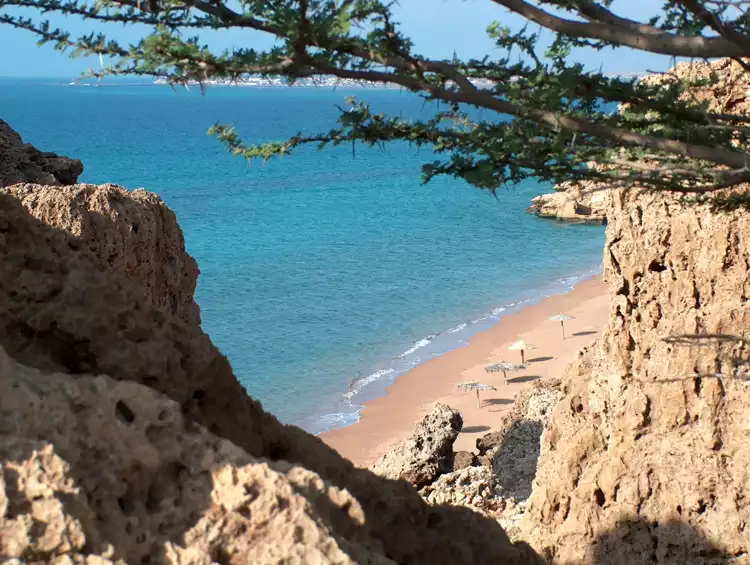
  • Berbera Seafront and Beaches: Rusted cranes, pastel houses, and the Gulf of Aden meeting shore that shelves gently into warm, clear water. The Hargeisa-Berbera road is swift but checkpoint-heavy; carry passport copies and patience. Reef shoes save you from urchins, and fish lunches cost less than a coffee in Dubai. Proof: smoke from grilling kingfish in your clothes and coral grit in your sandals.
  • Zeila (Saylac) Ruins and Mangroves: Crumbling coral-stone mosques face tidal flats where flamingos feed and the horizon feels endless. You need a 4x4, tide awareness, and your own shade; services thin to nothing past Lughaya. Nights mean mosquitoes and power gaps, so bring repellent and a headlamp. Proof: salt crust on your lips and the slap of muddy sandals at dusk.
  • Liido Beach, Mogadishu: A magnetic shoreline with surf, football, and espresso machines hissing under palm fronds—and a security picture that changes fast. Only go with a trusted fixer and security; keep phones pocketed, move light, and skip Fridays if crowds make you a target. Proof: warm foam around your ankles and cardamom coffee on your breath. Off-the-map worth the trouble: Daallo Forest’s misted cliffs near Erigavo, Iskushuban’s seasonal falls in Puntland, and Hafun’s salt pans at Africa’s horn.
Spotted a mistake or missing a highlight? Contact us.

But Somalia offers more...

Discover and compare all of its highlights per category

🧭 RoutesHow travelers typically move through the country

The 5-Day Somaliland Snapshot

The Vibe: A compact, highland-focused loop built around Hargeisa, rock art, and one classic mountain pass, with relaxed days and minimal long drives. You get depth in one region instead of racing across the map.The Highlights:
  • Tea-fueled city days in Hargeisa with time for museums and memorials.
  • A dedicated half-day at the Laas Geel rock art complex and interpretation area.
  • Cooler air and big views along the Sheikh Pass highland road.
  • Easy, low-stress logistics using short car hops and local taxis.

The 10-Day Highlands & Coast Circuit

The Vibe: A balanced journey linking Hargeisa’s culture with mountain forests and the Gulf of Aden coast, using a mix of overland travel and regional hops at a steady, unhurried pace. You’ll feel the shift from city streets to highland trails to warm-water beaches.The Highlights:
  • Three nights in Hargeisa to explore cultural centers, museums, and markets.
  • Rock art at Laas Geel paired with time in the surrounding desert landscapes.
  • Hikes
read more 👉

The 5-Day Somaliland Snapshot

The Vibe: A compact, highland-focused loop built around Hargeisa, rock art, and one classic mountain pass, with relaxed days and minimal long drives. You get depth in one region instead of racing across the map.The Highlights:
  • Tea-fueled city days in Hargeisa with time for museums and memorials.
  • A dedicated half-day at the Laas Geel rock art complex and interpretation area.
  • Cooler air and big views along the Sheikh Pass highland road.
  • Easy, low-stress logistics using short car hops and local taxis.

The 10-Day Highlands & Coast Circuit

The Vibe: A balanced journey linking Hargeisa’s culture with mountain forests and the Gulf of Aden coast, using a mix of overland travel and regional hops at a steady, unhurried pace. You’ll feel the shift from city streets to highland trails to warm-water beaches.The Highlights:
  • Three nights in Hargeisa to explore cultural centers, museums, and markets.
  • Rock art at Laas Geel paired with time in the surrounding desert landscapes.
  • Hikes in Daallo Forest and drives through the Sanaag highlands around Ceerigaabo.
  • Sea-breeze downtime and old-port wandering in Berbera on the Gulf of Aden.

The 15-Day Somalia Deep Dive

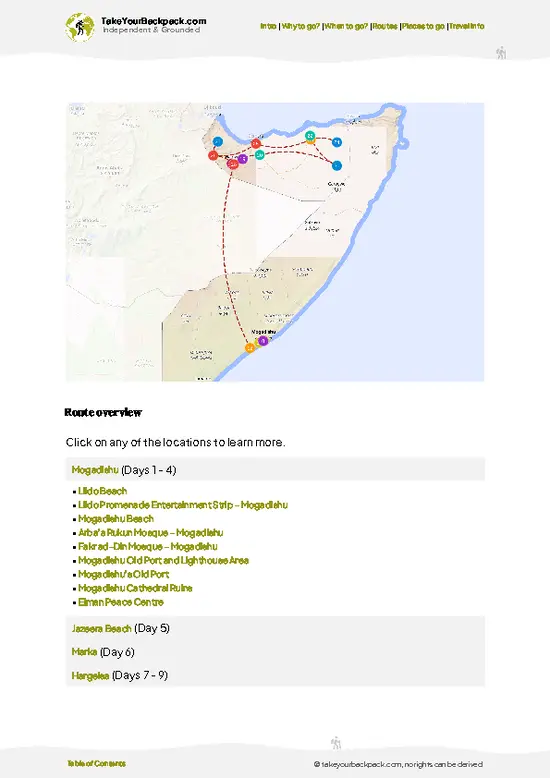
The Vibe: An ambitious but sane north-south route that stitches together Mogadishu’s coastline and history with Somaliland’s calmer highlands, forests, and ports, using flights and 4x4s to keep travel days manageable. It’s for travelers who want both big-name sights and quieter, everyday corners of the country.The Highlights:
  • Multiple days in Mogadishu for mosques, old port ruins, and lively city beaches like Liido and Jazeera.
  • Coastal town time in Marka to feel a slower slice of southern shore life.
  • Hargeisa as a cultural anchor, with side trips to Laas Geel and live music at Hiddo Dhawr.
  • Extended highland time around Daallo Forest, the Sanaag and Karkaar Mountains, and a coastal finale in Berbera.
🌍 Want a ready-to-use travel plan for Somalia?
The overview above compares different route options based on your travel time and style. The complete Travel Guide breaks each itinerary down in detail, including maps, stops, highlights, and transport information.

Explore all route details 👉

Get the Travel Guide -

🌤️ When to go?Choosing the right months to travel

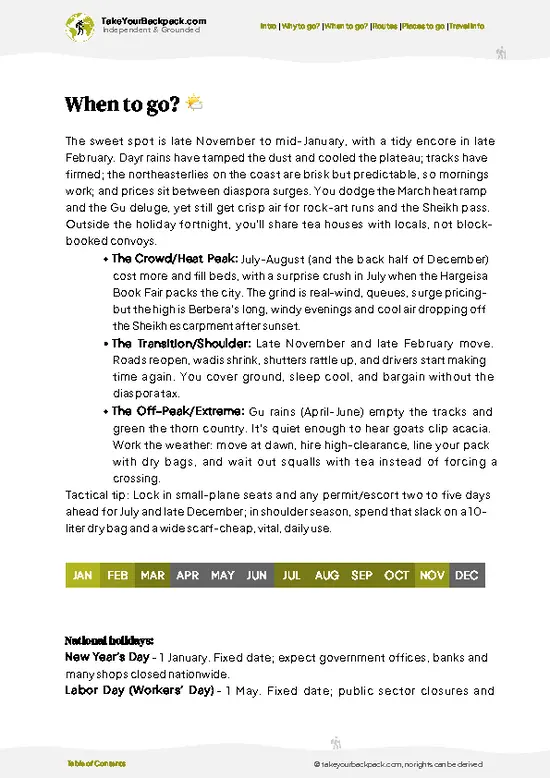
The sweet spot is late November to mid-January, with a tidy encore in late February. Dayr rains have tamped the dust and cooled the plateau; tracks have firmed; the northeasterlies on the coast are brisk but predictable, so mornings work; and prices sit between diaspora surges. You dodge the March heat ramp and the Gu deluge, yet still get crisp air for rock-art runs and the Sheikh pass. Outside the holiday fortnight, you’ll share tea houses with locals, not block-booked convoys.
  • The Crowd/Heat Peak: July-August (and the back half of December) cost more and fill beds, with a surprise crush in July when the Hargeisa Book Fair packs the city. The grind is real—wind, queues, surge pricing—but the high is Berbera’s long, windy evenings and cool air dropping off the Sheikh escarpment after sunset.
  • The Transition/Shoulder: Late November and late February move. Roads reopen, wadis shrink, shutters rattle up, and drivers start making time again. You cover ground, sleep cool, and bargain without the diaspora tax.
  • The Off-Peak/Extreme: Gu rains (April-June) empty the tracks and green the thorn country. It’s quiet enough to hear goats clip acacia. Work the weather: move at dawn, hire high-clearance, line your pack with dry bags, and wait out squalls with tea instead of forcing a crossing.

Tactical tip: Lock in small-plane seats and any permit/escort two to five days ahead for July and late December; in shoulder season, spend that slack on a 10-liter dry bag and a wide scarf—cheap, vital, daily use.

source: climatestotravel.comJANJanuary: excellent for travelingFEBFebruary: highly recommended for travelingMARMarch: good for travelingAPRApril: fair for travelingMAYMay: fair for travelingJUNJune: fair for travelingJULJuly: good for travelingAUGAugust: good for travelingSEPSeptember: good for travelingOCTOctober: good for travelingNOVNovember: highly recommended for travelingDECDecember: fair for traveling
📅 Traveling in a specific month?
Get a full month-by-month breakdown of weather, crowds, costs, festivals, and seasonal highlights in the complete travel guide.

Get full details when to go 👉

Get the Travel Guide -
pixabay-somalia-somaliland-968688

💰 Costs (as of 2026)How expensive it really is

Plan on $40-65/day in Somaliland if you keep it lean; anywhere that needs escorts or flights can jump you to $80-150.
  • dorm accommodation: True dorms are rare; think basic guesthouse singles. In Hargeisa/Berbera, $12-25 gets a clean room with fan and shared bath; $25-40 for AC and private bath. Mogadishu’s “budget” often means $30-60 for a room inside a secure compound, with proper hotels far higher. Cheaper than Djibouti by a mile, pricier than Ethiopia. System: message 3-4 guesthouses on WhatsApp, ask “single, shared bath, cash rate,” arrive before noon, lock a multi-night discount.
  • meals: Supermarket Survival: bread, bananas, dates, canned tuna, and 5L water runs $4-7/day if you’re disciplined. Street food reality: anjero with stew, rice with camel/goat, sambusa, and sweet tea will keep you full for $1-3 per plate; grilled fish on the coast $3-6. Inside secure hotels/restaurants for foreigners, expect $6-12. Cheaper than Kenya’s tourist zones and way cheaper than Djibouti; Ethiopia still wins on price and variety.
  • local transport: In Somaliland, shared minibuses and shared taxis are the unlock: $0.20-0.50 in-town, $3-8 between cities like Hargeisa-Berbera/Burao. Short taxi hops in Hargeisa
read more 👉
Plan on $40-65/day in Somaliland if you keep it lean; anywhere that needs escorts or flights can jump you to $80-150.
  • dorm accommodation: True dorms are rare; think basic guesthouse singles. In Hargeisa/Berbera, $12-25 gets a clean room with fan and shared bath; $25-40 for AC and private bath. Mogadishu’s “budget” often means $30-60 for a room inside a secure compound, with proper hotels far higher. Cheaper than Djibouti by a mile, pricier than Ethiopia. System: message 3-4 guesthouses on WhatsApp, ask “single, shared bath, cash rate,” arrive before noon, lock a multi-night discount.
  • meals: Supermarket Survival: bread, bananas, dates, canned tuna, and 5L water runs $4-7/day if you’re disciplined. Street food reality: anjero with stew, rice with camel/goat, sambusa, and sweet tea will keep you full for $1-3 per plate; grilled fish on the coast $3-6. Inside secure hotels/restaurants for foreigners, expect $6-12. Cheaper than Kenya’s tourist zones and way cheaper than Djibouti; Ethiopia still wins on price and variety.
  • local transport: In Somaliland, shared minibuses and shared taxis are the unlock: $0.20-0.50 in-town, $3-8 between cities like Hargeisa-Berbera/Burao. Short taxi hops in Hargeisa $2-4 if you haggle. Domestic flights (Hargeisa-Mogadishu/Bosaso) are fast but $80-200 one-way. Car + mandatory escort for some routes/day trips can run $60-120/day split across seats. Similar or slightly pricier than Ethiopia’s minibuses; cheaper than Djibouti; comparable to Kenyan matatus outside Nairobi.
  • activities: The big cost driver is security and wheels. Laas Geel rock art is the classic: permit/escort fees ~$20-30 per group plus vehicle hire $60-100 round-trip unless you fill seats. Beaches, camel markets, and mosques cost little; museums are $1-3. Anything needing a guard, boat, or domestic flight inflates fast. Relative value: Somaliland day trips are a bargain against Djibouti tours; Ethiopia’s sites are cheaper to access but have more ticketing layers.
  • miscellaneous: Budget leaks: visas ($60-100), airport exit/entry fees ($20-30), hotel laundry ($3-6 a load), bottled water that triples in secure compounds ($0.30 street vs $1-2 inside). SIM $2-5; data is cheap ($1-2/GB), but expect to top up often. ATMs are unreliable; cash exchange beats card rates, and fees can hit 3-8%. Curfews or checkpoints push you to eat in-hotel at higher prices. Don’t photograph checkpoints or officials—fines and “discussions” burn time and money.
⚠️ Prices can change and everyone travels differently, so take this as a rough guide. Hope it helps you plan your adventure!

✈️ The backpacker research shortcutSomalia Travel Guide

An offline-friendly backpacking guide with optimized travel routes, ranked highlights, transport advice, and the best areas to stay.
example page 0 from our offline Travel Guide for Somaliaexample page 1 from our offline Travel Guide for Somaliaexample page 2 from our offline Travel Guide for Somaliaexample page 3 from our offline Travel Guide for Somaliaexample page 4 from our offline Travel Guide for Somaliaexample page 5 from our offline Travel Guide for Somaliaexample page 6 from our offline Travel Guide for Somaliaexample page 7 from our offline Travel Guide for Somalia
The digital guide (354 pages) contains:
83 highlights, ranked by travel appeal
Optimized 5, 10 & 15-day travel routes
Cities, national parks, beaches, historical sites, ...
How to get around
Offline-friendly for travel without Wi-Fi
👉 Click to see all 30+ guide features

📅 Plan smarter in minutes, not weeks
Month by month travel advice
Festivals & national holidays
Budget expectations

🗺️ Go to the right places, skip the overrated ones
Honest pros & cons of destinations
Top hikes, parks & viewpoints
Lesser-known places most travelers miss
Clear “worth it vs skip it” guidance

🛏️ Travel smoothly without rookie mistakes
Best areas to stay
Transport systems explained simply
Common scams & safety advice
SIM cards, money & practical tips

🌍 Understand the country, not just visit it
Culture & traditions
52 Essential phrases & customs
Festivals worth planning around
Traveler-friendly historical context
Insights that make places more meaningful

📱 Built for real travel conditions
Fully downloadable PDF
Works completely offline
Optimized for phone use
Useful in remote areas & buses
Everything in one place
Save weeks of stressful planning
Get instant access to the full guide directly. 30-day money-back guarantee.


Sent to your inbox immediately after payment • 100% Secure Checkout
Best Backpacking Travel Advisor 2025 tourism awardBest Backpacking
Travel Advisor
2025
What others say about Take Your Backpack Guides:
⭐⭐⭐⭐⭐
Fantastic, amazing amount of information!
⭐⭐⭐⭐⭐
My goodness this is amazing, it's what I've been looking for hats off too you!
⭐⭐⭐⭐⭐
I think this is absolutely BRILLIANT
⭐⭐⭐⭐
Very complete and informative. It's still missing places, but I gotta to commend you
⭐⭐⭐⭐⭐
This is truly amazing, thank you, can't wait to explore it with my kids!
⭐⭐⭐⭐⭐
Awesome resource, thank you!
⭐⭐⭐⭐⭐
This is amazing! Can't wait to explore the ones I haven't seen
⭐⭐⭐⭐
I love this! Well done, great idea.
⭐⭐⭐⭐⭐
Thanks for taking the time to make this gem!
⭐⭐⭐⭐⭐
This might be the best website I've ever seen.
⭐⭐⭐⭐⭐
Congratulations, and thank you so much for your work; it's incredibly valuable.
⭐⭐⭐⭐
In all seriousness I think you did a great job pointing out the important spots
⭐⭐⭐⭐⭐
10/10 very good
⭐⭐⭐⭐⭐
As someone who's only just starting to visit regularly this is awesome, thank you.
⭐⭐⭐⭐
Thank you very much! I'm going to visit my dad, it's going to be very useful!
⭐⭐⭐⭐⭐
This is really cool! We'll be travelling for the first time and this definitely come in handy.
⭐⭐⭐⭐⭐
You are now our minister of culture, congratulations 👨‍💼
⭐⭐⭐⭐⭐
Just wanted to tell you that this is a pearl! Going to follow your recommendations.
⭐⭐⭐⭐⭐
This is so cool. I'll definitely be using the resource for my travels soon.
⭐⭐⭐⭐⭐
This is very impressive! Good work.
⭐⭐⭐⭐⭐
This is an amazing and informative site. Very well done!

🛏️ Where to stay?Accommodation types and options

Short answer: Formal hostels are rare in Somalia; budget options exist mainly as guesthouses and low‑cost hotels in major cities rather than backpacker dorms.
In Mogadishu the densest options cluster around Lido (beachside restaurants and nightlife but busy and with fluctuating security) and the Hamarweyne/Hamar Jajab districts (central for markets and transport but narrow streets and variable safety), while Waberi and Hodan are quieter, more residential and often have more controlled access but fewer amenities.
Outside Mogadishu, central/downtown areas of Hargeisa, Bosaso and Kismayo offer … read more 👉
Short answer: Formal hostels are rare in Somalia; budget options exist mainly as guesthouses and low‑cost hotels in major cities rather than backpacker dorms.
In Mogadishu the densest options cluster around Lido (beachside restaurants and nightlife but busy and with fluctuating security) and the Hamarweyne/Hamar Jajab districts (central for markets and transport but narrow streets and variable safety), while Waberi and Hodan are quieter, more residential and often have more controlled access but fewer amenities.
Outside Mogadishu, central/downtown areas of Hargeisa, Bosaso and Kismayo offer the best budget choices; those neighborhoods are generally more walkable and stable by day but have limited nightlife and require vetted transport and local security awareness.

If you enjoy meeting fellow travelers, consider choosing hostels with high ratings for atmosphere. On the other hand, if you prefer having your own space, a hotel might be a better option.

🚌 Getting aroundHow to travel within the country

Somalia moves on negotiated time. Dawn is your friend; noon punishes the unprepared. Vehicles leave when full, not when the signboard says, and the sea and sand set the metronome. Expect momentum built from small wins: a seat claimed early, a driver you trust, a checkpoint handled with calm. Rigidity snaps here. Intuition, patience, and cash in small notes will carry you farther than any printed timetable.
  • Shared 4x4s and Coaster buses The speed-to-cost math is blunt: cheapest per kilometer, slowest
read more 👉
Somalia moves on negotiated time. Dawn is your friend; noon punishes the unprepared. Vehicles leave when full, not when the signboard says, and the sea and sand set the metronome. Expect momentum built from small wins: a seat claimed early, a driver you trust, a checkpoint handled with calm. Rigidity snaps here. Intuition, patience, and cash in small notes will carry you farther than any printed timetable.
  • Shared 4x4s and Coaster buses The speed-to-cost math is blunt: cheapest per kilometer, slowest per hour of your life. Seats sell one by one; departures happen when bodies fill the rows and sacks fill the roof. Checkpoints, tea stops, and punctures stretch a “six-hour” run into ten. It’s still the backbone between major towns. Pay for your bag space, sit up front if you can, carry photocopies of your passport, and never plan a same-day connection.
  • City minibuses and shared taxis This is where you learn the etiquette. Greet with a hand to heart, keep your voice low, and pass fares forward without drama. Women often ride together; follow the driver’s seating cues. Small notes are respect. Don’t photograph fellow passengers. Music or Quran recitation is the driver’s choice—not a debate. When the bus idles for prayers or qat runs, you wait with everyone else. You’re a guest; blend in, move quickly, complain never.
  • Coastal skiffs and dhows Water beats broken roads to scattered fishing villages and headlands, especially north of Berbera and around Bosaso. These are short, practical hops—fuel in jerrycans, cargo under a tarp, spray in your face. Go early before wind stacks the chop, insist on lifejackets, and keep electronics double-bagged. Prices are usually “fuel plus seat,” agreed before launch. Stick to local runs; long offshore routes are a different risk category and not a budget shortcut.
  • Domestic hop flights When the map looks long and checkpoint-heavy, a local flight can undercut the true overland cost—driver, security add-ons, two hotel nights, and your lost day. Airports run tight on screening and early check-in; expect multiple bag checks and cash desks that don’t love cards. Seats are narrow, legs short, time saved huge. It’s the clean leap between major cities when the road would chew you up.

Master tactical tip: ride the first departure of the day and buy tomorrow’s seat the afternoon you arrive—those two moves shave hours, soften checkpoints, and keep you ahead of the heat.
Distance: Aden Adde International Airport (MGQ) sits roughly 5-8 km (3-5 miles) from key central areas such as KM4/Zobe Junction and Hamar Weyne. Actual distance depends on where you’re headed.

Main ways to get into the city (as of 2025):
  • Hotel pickup/shuttle - Most mid-range and up hotels can collect you inside the airport compound. Time: 15-30 minutes, longer if checkpoints are busy. Cost: often included, or about US$10-30.
  • Pre-arranged private car/taxi - Booked via your hotel or a vetted local company authorized to enter the airport area. Time: 15-35 minutes. Cost: roughly US$10-25 to KM4, US$15-35 to Hamar Weyne/port side.
  • Public transport (minibuses and baajaji/tuk-tuks) - There’s no city bus from the terminal itself. Minibuses and tuk-tuks run along Airport Road outside the public checkpoint, but they generally can’t enter the airport compound. Time: 20-40 minutes to central areas, depending on traffic and where you connect. Cost: about US$0.30-1 per seat (or US$1-3 if you charter a tuk-tuk). Note: access from the terminal to public transport is restricted, and new visitors are usually advised to arrange pickup instead.
  • UN/NGO/company transport - If you’re eligible, your organization will handle it. Time: 15-30 minutes. Cost: arranged internally.

Taxis at the airport: On-the-spot taxis are limited because the terminal is inside a secured compound. Most travelers arrange a ride in advance through their hotel or a known driver. Expect about US$10-30 for central districts; agree the fare before departure and pay in cash (USD is widely accepted).

Good to know: Ride-hailing apps aren’t reliably available in Mogadishu. Traffic and security checkpoints can add delays at peak times, so give yourself extra time both ways.
⚠️ Prices and routes can change, so take this as a rough guide and ask for local advice when you arrive.

🔒 Safety (risk Level: high)Safety considerations for travelers

Safety for solo travelers, including women and LGBTQ+ individuals
Somalia poses significant safety risks for solo travelers, particularly women and LGBTQ+ individuals. The country faces ongoing security challenges, including terrorism, piracy, and civil unrest, making travel hazardous. LGBTQ+ travelers should be especially cautious, as homosexuality is illegal and socially stigmatized. Always check the latest travel advisories and consider alternative destinations if safety is a concern.


Full official government travel advisory (live updates)
View details 👉
safety image

source: www.gov.uk

✈️ VisaDo you need a visa to visit?

Yes, you need a visa to visit Somalia. You can apply for a visa through the Somali embassy or consulate in your country. Ensure your passport is valid for at least six months beyond your planned stay.

source: mfa.gov.so
⚠️ Visa requirements can change over time, so always check the latest visa requirements with the official embassy or government website before you travel.

🎒 What to pack?What to wear and bring

Somalia’s climate is mainly hot and arid, so think light, breathable clothing, but remember to respect the local culture—modest attire is a must. Women should consider packing a few long skirts or dresses and scarves to cover their heads when needed. The terrain is a mix of stunning beaches and rugged landscapes, so sturdy footwear can make a difference. Keep an eye on the weather forecast, as it can get unexpectedly rainy. Always stay informed about the current situation and travel advisories for safety.

Apart from this country specific advice, I have also crafted a general packing list that should help on any trip. authorOver the years, I've learned the importance of packing minimally. It's so much easier to jump on the back of a truck or squeeze yourself into the last spot of a minibus without that supersized backpack. If you're headed to a warm destination, leave your winter jacket at home; for colder regions, opt for thin thermal underlayers. Instead of packing your entire wardrobe, bring just three sets of clothes, as laundry facilities are available everywhere.

View the full list 👉
🎒 Planning the practical side of your trip?
Get detailed information on transport, daily budgets, internet access, local customs, food, language, and other essentials in the complete Travel Guide.

Get detailed practical information 👉

Get the Travel Guide -

🙋 FAQFrequently asked questions

Trip Planning


Personal tip: I normally search on good rating for atmosphere (for meeting people) and location (for easy exploring). Cleanliness as a bonus.


Travel Essentials

You should consider the following vaccinations for Somalia:

- Hepatitis A and Hepatitis B
- Typhoid
- Polio
- Tetanus and Diphtheria
- Yellow Fever (required if traveling from a country with risk)
- Rabies (if planning extended outdoor activities)
- Cholera (if visiting areas with active transmission)
- Measles, Mumps, Rubella (MMR)
- Influenza (seasonal flu shot)

Check with a travel health professional for personalized advice.


vaccination requirements
When I first started traveling, I often spent part of my first day in a new country hunting for a local SIM card. While this can still be slightly cheaper, it also takes time and planning.

These days, it's much simpler to install an eSIM before leaving home. Once you arrive in Somalia, you can activate it immediately and have mobile data from the moment you land — which is especially useful for ordering transport or navigating away from busy airports.

There are many providers nowadays, and price differences are usually small. I personally go with Airalo, as it offers excellent network coverage throughout the country and strong global coverage, so you can manage multiple countries from a single app.


Get your e-sim for Somalia

Culture & Customs

Respect local customs by dressing modestly; women should cover their hair and wear long skirts. Avoid public displays of affection, as these are frowned upon. It’s polite to greet with a handshake but use your right hand for eating and giving gifts, as the left hand is considered unclean.

For gay travelers, discretion is crucial due to conservative views on LGBTQ+ matters. Women should avoid solo travel at night and stay in groups when possible. Always ask for permission before taking photos of people. During Ramadan, refrain from eating, drinking, or smoking in public during daylight hours.
Trying traditional food is always a great way to experience the culture. Here are some must-try dishes for Somalia.
  • Canjeero: Similar to a pancake but with a slightly sour taste, Canjeero is a staple breakfast item in Somalia. It’s often served with honey, ghee, or stews. It’s culturally significant as it reflects the Somali tradition of sharing meals.
  • Suqaar: This is a flavorful stir-fry of diced beef or chicken cooked with onions, peppers, and spices. It’s a go-to dish for its simplicity and versatility, often enjoyed with rice, pasta, or flatbread.
  • Bariis Iskukaris: A spiced rice dish, often cooked with lamb or chicken, and infused with a mix of Somali spices like cardamom and cloves. Bariis Iskukaris is typically served during special occasions and is a showcase of Somali hospitality.
  • Muqmad (Odkac): Dried beef preserved in oil, Muqmad is a traditional snack that’s great for on-the-go munching. It’s popular for its long shelf life and is a nod to the nomadic lifestyle of Somalis.
  • Malawah: Sweet and flaky, this Somali flatbread is usually eaten for breakfast or as a snack, often with a spread of jam or honey. It’s cherished for its sweet taste and versatility.
The tap water in Somalia is generally not safe for tourists to drink, even if some locals might consume it. It’s recommended to stick to bottled or filtered water to avoid any health issues. Always ensure the seal on bottled water is intact before purchasing.
The main language in Somalia is Somali. Backpacking is way more rewarding if you know a bit of the local language, so I'd suggest brushing up on the basics just in case your Somali skills have become a bit rusty.

Want to understand locals better?
The complete Travel Guide for Somalia includes 52 essential words and phrases — greetings, thank-yous, ordering food, transport, numbers, and common local expressions you'll actually hear.

Get your local basic phrases 👉

Get the Travel Guide -


In Somalia, English is not the primary language, but it is spoken to varying degrees, especially in urban areas and among the younger population. The official languages are Somali and Arabic, with Somali being the most widely spoken. English is taught in schools, particularly in higher education, and is often used in business and government contexts.

In major cities like Mogadishu and Hargeisa, you may find English speakers among professionals, educators, and those involved in the tourism sector. However, in rural areas, English proficiency is much lower, and communication may primarily occur in Somali.

Travelers should be prepared for potential language barriers and consider learning a few basic Somali phrases to enhance interactions. Overall, while English is present, especially in urban settings, it is not universally spoken, so understanding local languages can significantly improve the travel experience in Somalia.

Money & Payments

The local currency of Somalia is SOS (S).

When backpacking in Somalia, keep in mind that ATM access is extremely limited, mostly found in larger cities like Mogadishu. It’s wise to carry cash, preferably USD, as it’s widely accepted and can be easily exchanged. Euros aren’t as useful here.

Credit cards are not commonly accepted, so don’t rely on them for daily expenses. For exchanging money, look for official exchange outlets or banks in urban areas. Avoid street exchanges as they can be risky and scams aren’t uncommon.

Carry smaller bills for day-to-day transactions, as larger bills can be hard to break. Always have a backup stash of cash in case you can’t find an ATM or exchange point. Stay alert and be discreet about your cash to avoid unwanted attention.

Tipping in Somalia isn’t a common practice, but small tips for exceptional service, like rounding up a taxi fare, are appreciated. In restaurants, if a service charge isn’t included, leaving a modest tip of around 5-10% for good service is courteous. Always carry small denominations to make tipping easier.

🧩 Nearby countriesNearby backpacking alternatives

We 💚 feedbackWhat to know before planning your trip

Somalia runs on grit and conversation: tea, prayer, sea wind, and an afternoon khat buzz. The best surprise is how quickly doors open once you’re vouched for—poetry at dinner, rock art at Laas Geel, grilled fish still snapping by the fire. But protect your energy and cash: escorts and compounds in Mogadishu aren’t optional, internal flights are costly, ATMs fail, and photos can escalate fast. Bring clean USD, dress modest, buffer days around curfews. This is for risk-calibrated travelers with local fixers; not for hostels, spontaneity, or content-chasing.

✍️ Help improve this page!
The information on this page is based on in-depth research, insights shared by experienced travelers, and feedback from the local travel community in Somalia. While every effort is made to keep the information accurate and current, conditions can change — so if you spot anything incorrect or outdated, please get in touch.


🙋‍♂️ Give feedback

👋 Meet the founderWho’s Behind Take Your Backpack?

Johan, backpacker and founder of TakeYourBackpackHi, I’m Johan (Netherlands 🇳🇱), the creator of TakeYourBackpack. Over the past decade, I’ve backpacked through 80+ countries across six continents, gaining extensive experience with independent travel, long-term trips, and overland routes.

This site is built on a combination of firsthand travel experience and carefully curated insights from other backpackers. Many guides are based on places I’ve personally visited, while others bring together tips, observations, and practical advice shared by trusted travelers I’ve met along the way.

The goal is to provide realistic, experience-driven guidance — not generic itineraries — so you can explore destinations with better context, clearer expectations, and more confidence.

Get full Somalia guide •
Instant download • 83 highlights • Full Offline guide