×
Aruba 🇦🇼

backpacking North America Aruba 🇦🇼Circle the island slowly, trading constant wind for turquoise seas.

Explore Antigua & BarbudaExplore The Bahamas

Backpacking Aruba in 2026

A complete guide including when and where to go, costs, transport, itineraries, and practical travel advice.
A first look at the country

Backpacking Aruba
By Johan Kruseman 🇳🇱 | Updated June 7, 2026

Myth: Aruba is just a pricey honeymoon resort strip.
Truth: it’s a dry, cactus-studded island where the best stuff is free if you move smart. Public beaches, wind-carved coves, and snack-shack lunches beat buffets.

Trade winds tilt divi-divi trees over sugar-white sand while clear water hides the Antilla wreck and a kite playground at Fisherman’s Huts. Arikok brings desert drama—cacti, caves with Arawak art, and a hard-earned plunge at Conchi—balanced by Oranjestad’s Dutch facades and pastechi windows. The wind stings, the sun bites, buses fade after dark, and costs creep, but with early starts, a one-day shared rental, sleeves and water, the island opens up.

Compared with Bonaire’s dive-first focus and Curaçao’s bigger-city energy, Aruba is drier, breezier, and easiest for first-timers and water-sport lovers who value hassle-free days.

👉 Get the 📖 Travel Guide of Aruba

Palm Beach (High-Rise Strip)

Base here when you want zero-friction days: walkable bars, piers, and outfitters renting SUPs/jet skis 9–4. Arubus 10/10A runs the spine every 10–20 minutes. Parking garages fill by 10:00. Social, loud, easy—great for short trips or night owls.

Eagle Beach (Low-Rise + Manchebo)

Same coast, slower pulse. Fewer beach vendors means you bring your own shade and snacks; reward is space and quiet mornings. Super Food is your self-cater HQ a short drive away. Bus stops are close, but after dark you’ll Uber/taxi. Couples, readers, runners.

Oranjestad Core

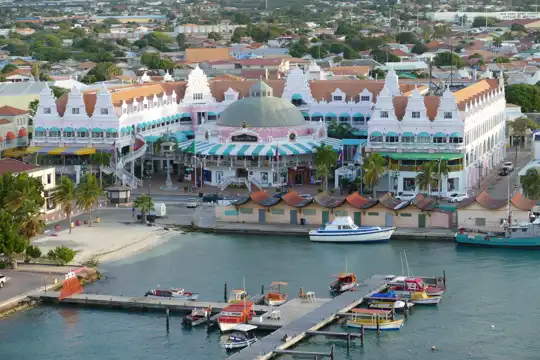
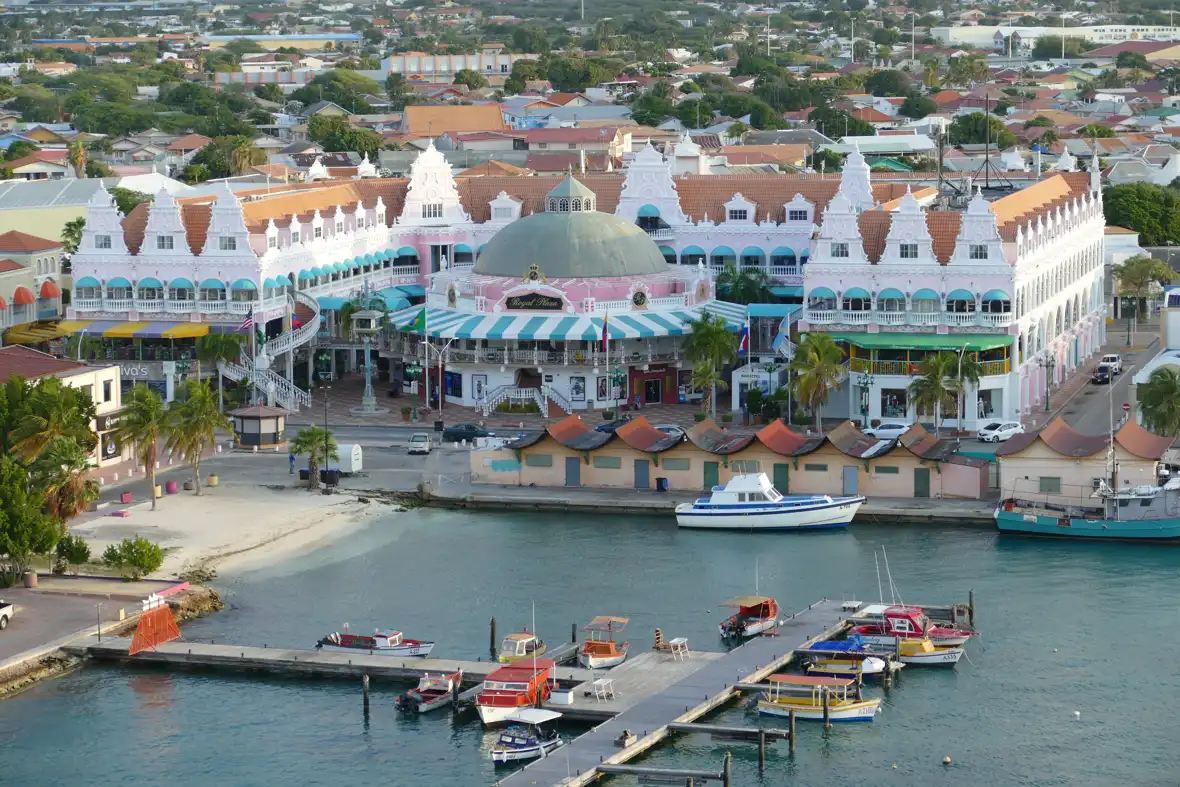
Use it like a transit tool, not a destination. The Arubus terminal is your switchboard; a day pass costs less than a beachfront cocktail and reaches every coast. Metered parking is strict—park at Surfside/Linear Park and walk 10–15 minutes. Best base for budgets and early risers.

San Nicolas Corridor (Route 1: Mangel Halto → Savaneta → Baby Beach)

One linear day. Mangel Halto first for clear water; currents bite near the drop-off—enter via the ladders. Early lunch in Savaneta; lines spike after 12:30. Finish at Baby Beach for easy snorkeling. Bus works, but a car halves the time.

Arikok National Park + Northeast Coast

Rugged, windy, zero shade—start 7–8 a.m. and carry 2 liters per person. Pay the entry, then pick your battles: Conchi (Natural Pool) needs 4x4 or a guided UTV; Dos Playa and Boca Prins are hike-and-gawk, not swim. Closed-toe shoes, sun armor, and tide awareness mandatory.
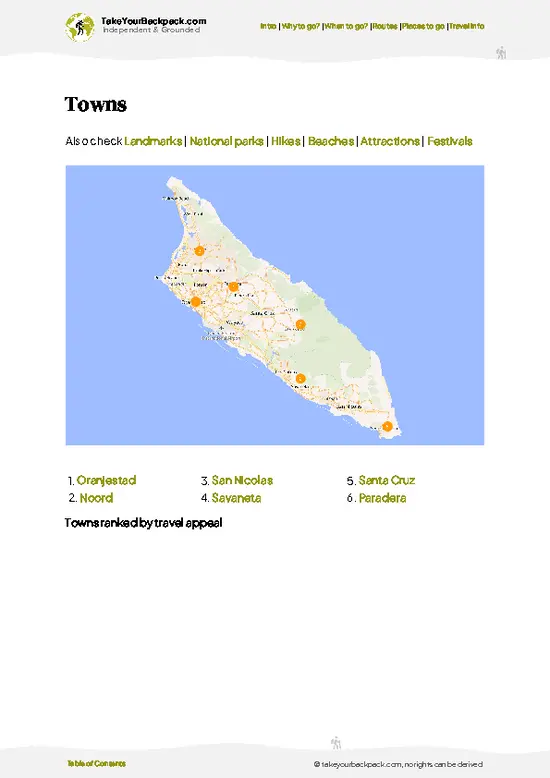
Geography and where places are located
Loading the map 🌍
CLICK TO FILTER
town
unique site
national park
hike
beach
attraction
festival
SHOW COUNTRY’S BESTSHOW ALL
film
0
0
0a
National Archaeological Museum Aruba
film
1
1
1a
Aruba Aloe Factory
film
2
2
2a
Eagle Beach
Armannese
film
3
3
3a
Palm Beach
Bear Nl
film
4
4
4a
Baby Beach
Mauricio Peralta
film
5
5
5a
Arashi Beach
Gustavo Esquivel
film
6
6
6a
Mangel Halto
Lena Ching Anderson
film
7
7
7a
Manchebo Beach
Gaetano Ferrara
film
8
8
8a
Dos Playa
Brian Watson
film
9
9
9a
Boca Grandi
Spencer Marks
film
10
10
10a
Conchi Natural Pool
Daryl Watkins
film
11
11
11a
Hooiberg
Luigi Arends
film
12
12
12a
Fontein Cave
Richard Arrundale
film
13
13
13a
Arikok
Shannon G (worldwidetraveler)
film
14
14
14a
Boca Prins
Luis Diego Pacheco
film
15
15
15a
Oranjestad
film
16
16
16a
Savaneta
film
17
17
17a
Noord
Cecili Nascumento Ascençao
film
18
18
18a
Paradera
film
19
19
19a
Santa Cruz
film
20
20
20a
Natural Pool
Mustafa D
film
21
21
21a
Aruba Natural Bridge
film
22
22
22a
California Lighthouse
Humphrey Vives
film
23
23
23a
Ayo Rock Formations
Wim Brouwer De
film
24
24
24a
Bushiribana Gold Mill Ruins
Carlos Lozano
film
25
25
25a
Alto Vista Chapel
Sasha Voinov
film
26
26
26a
Cave Pool
Cave Pool Aruba
film
27
27
27a
Cunucu Abao

Why go?What makes this country worth the trip

Beach life

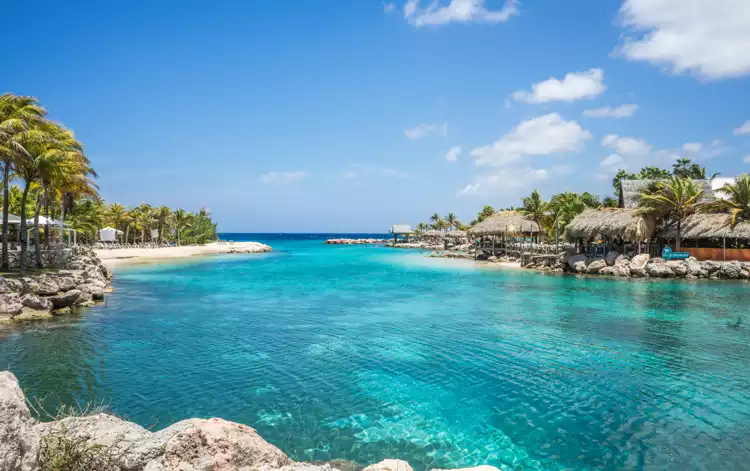
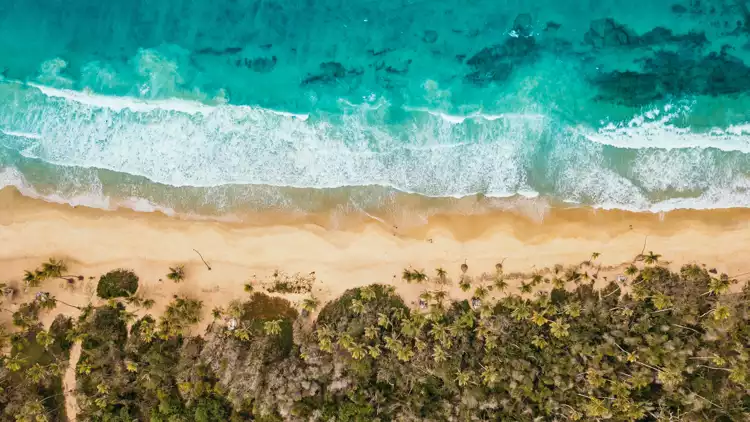
Aruba nails beach life: steady trade winds, bathtub‑clear water, and it sits outside the hurricane belt. The leeward coast is calm—Eagle for space, Arashi for gentle surf, Boca Catalina and Malmok for easy turtle snorkels. Divers hit the Antilla wreck. By noon the trades pick up for kites at Fisherman’s Huts. At sunset, hit the piers and Palm Beach bars.
Want the complete picture of Aruba?
The offline Travel Guide brings everything together — routes, highlights & planning.

See what's included in the guide 👉

Get the Travel Guide -

⭐ HighlightsKey places and experiences

  • Arikok National Park: Enter at opening and beeline for Conchi, the Natural Pool; you’ll have it before the UTV convoys hit after 9:30. Lava rock warms your palms, salt spray snaps on your cheeks, blue crabs skitter. Guadirikiri Cave is cooler at 9, bat wings whispering overhead—wear reef shoes; the boulders are slick.
  • Eagle Beach: Roll in at sunrise, park free along the sand, and grab the fofoti-tree shot before chairs fill. The sand squeaks underfoot and the water stays glassy until the trade winds wake. Respect turtle nest markers; sections get roped off near dusk.
  • Mangel Halto: Park by the wooden deck at Pos Chiquito and enter via the ladder; hug the right reef to the drop-off. You’ll hear snapping shrimp like soda fizz, and the mangroves smell green and tannic. Current kicks hard outside—use fins and a rash guard.
  • California Lighthouse & Hudishibana Dunes: Skip the lighthouse line and walk ten minutes north into the dunes for a clean horizon at sunset. Wind hums in your ears, sand stings
read more 👉
  • Arikok National Park: Enter at opening and beeline for Conchi, the Natural Pool; you’ll have it before the UTV convoys hit after 9:30. Lava rock warms your palms, salt spray snaps on your cheeks, blue crabs skitter. Guadirikiri Cave is cooler at 9, bat wings whispering overhead—wear reef shoes; the boulders are slick.
  • Eagle Beach: Roll in at sunrise, park free along the sand, and grab the fofoti-tree shot before chairs fill. The sand squeaks underfoot and the water stays glassy until the trade winds wake. Respect turtle nest markers; sections get roped off near dusk.
  • Mangel Halto: Park by the wooden deck at Pos Chiquito and enter via the ladder; hug the right reef to the drop-off. You’ll hear snapping shrimp like soda fizz, and the mangroves smell green and tannic. Current kicks hard outside—use fins and a rash guard.
  • California Lighthouse & Hudishibana Dunes: Skip the lighthouse line and walk ten minutes north into the dunes for a clean horizon at sunset. Wind hums in your ears, sand stings your calves, goats bleat in the scrub. After, slide to Arashi for a twilight swim.
  • Baby Beach: Be there before 9; the lagoon is bath-warm and empty, the refinery stacks just a silent backdrop. Powder-fine sand packs between toes; inside the horseshoe is calm, but the gap rips—don’t drift out without fins and experience. Off-the-map detours: Tres Trapi’s turtle steps at dawn, Spanish Lagoon’s quiet mangroves, and Seroe Colorado’s wave-battered cliffs.
Spotted a mistake or missing a highlight? Contact us.

But Aruba offers more...

Discover and compare all of its highlights per category

🧭 RoutesSuggested travel routes through Aruba

The 2-Day West Coast Beach Sprint

The vibe: Two days of easy-access sand and sea for first-timers who want Aruba’s greatest hits without leaving the northwest bubble. You’ll stay put in one area, using short taxi or rental-car hops to trade between mellow and lively beaches.
  • Eagle Beach’s wide, powdery shoreline
  • Palm Beach’s sunset strip and warm, calm water
  • Arashi Beach and the northern coastal viewpoints

The 3-Day Coast & Capital Sampler

The vibe: A long weekend that mixes classic beaches with a day in Oranjestad, giving you both lazy swims and a dose of history and color. You’ll move at a moderate pace, using a rental car or taxis to link the northwest coast with the capital.
  • Eagle Beach and Palm Beach for the essential west-coast combo
  • Arashi Beach and the California Lighthouse for big-sky views
  • Malmok’s rocky shoreline and clear water
  • Oranjestad and the National Archaeological Museum Aruba for cultural context

The 5-Day Island Loop & Wild Coast Route

The vibe: A deeper dive that loops from Oranjestad … read more 👉

The 2-Day West Coast Beach Sprint

The vibe: Two days of easy-access sand and sea for first-timers who want Aruba’s greatest hits without leaving the northwest bubble. You’ll stay put in one area, using short taxi or rental-car hops to trade between mellow and lively beaches.
  • Eagle Beach’s wide, powdery shoreline
  • Palm Beach’s sunset strip and warm, calm water
  • Arashi Beach and the northern coastal viewpoints

The 3-Day Coast & Capital Sampler

The vibe: A long weekend that mixes classic beaches with a day in Oranjestad, giving you both lazy swims and a dose of history and color. You’ll move at a moderate pace, using a rental car or taxis to link the northwest coast with the capital.
  • Eagle Beach and Palm Beach for the essential west-coast combo
  • Arashi Beach and the California Lighthouse for big-sky views
  • Malmok’s rocky shoreline and clear water
  • Oranjestad and the National Archaeological Museum Aruba for cultural context

The 5-Day Island Loop & Wild Coast Route

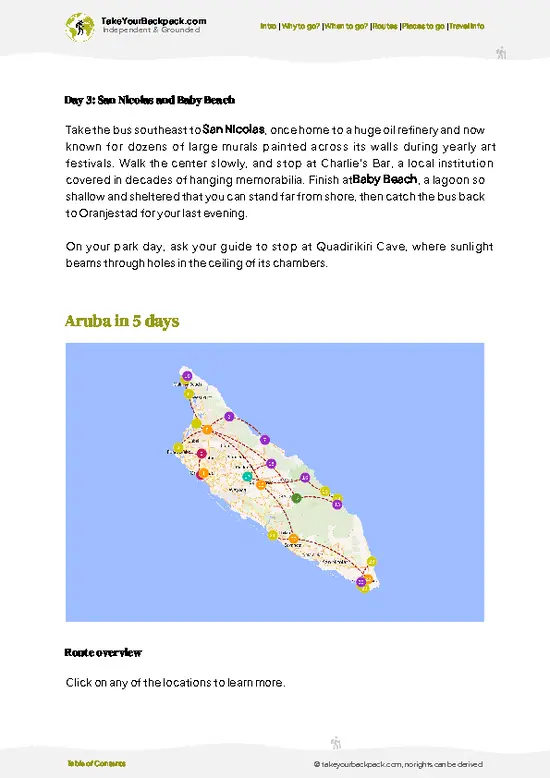
The vibe: A deeper dive that loops from Oranjestad through resort beaches, rugged north-shore ruins, and Arikok’s wild interior before easing into the quieter south. You’ll use a rental car plus one park-focused day to reach the Natural Pool and less-visited corners.
  • Oranjestad’s harborfront streets and National Archaeological Museum Aruba
  • Eagle Beach and Palm Beach for classic sand-and-sea time
  • Arashi Beach, California Lighthouse, and Bushiribana Gold Mill Ruins on the north coast
  • Arikok National Park with the Conchi Natural Pool / Natural Pool, plus Savaneta, Baby Beach, and Boca Prins in the south
🌍 Want a ready-to-use travel plan for Aruba?
The overview above compares different route options based on your travel time and style. The complete Travel Guide breaks each itinerary down in detail, including maps, stops, highlights, and transport information.

Explore all route details 👉

Get the Travel Guide -

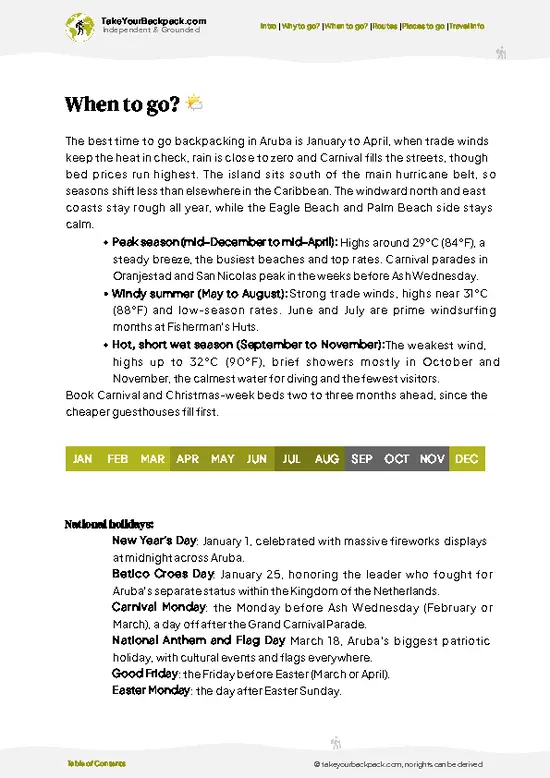
🌤️ When to go?A month-by-month overview

Late April to mid-June is the sweet spot: post-Easter rates slide, cruise calls taper, and the trades cool hikes without July’s sand-blast. Rains stay scarce before the fall pulses, visibility is prime for the Antilla wreck, and weekday nights still hum—enough scene to feel alive, minus line-and-surge pricing.
  • Peak (Dec-Apr): Prices bite and beaches pack, but payback is bone-dry skies and silky water. Drift the Antilla wreck with aquarium clarity; catch Carnival if you land Jan-Feb.
  • Shoulder (May-Jun): Crowds thin, timetables loosen, winds build. Kites pop at Fisherman’s Huts; bartenders actually chat. Aruba Hi-Winds (late Jun/early Jul) is the narrow bullseye for wind addicts.
  • Off-Peak (Sep-Nov): Heat presses, trades slacken, warm squalls sweep through. Arikok turns hushed. Survival: dawn starts, midday shade, a pocket umbrella, and an upstairs west-coast room to dodge mosquitoes.

For May-June, buy flights 6-8 weeks out and book lodging 7-10 days prior—post-Easter cancellations soften rates.

source: climatestotravel.comJANJanuary: excellent for travelingFEBFebruary: excellent for travelingMARMarch: excellent for travelingAPRApril: highly recommended for travelingMAYMay: highly recommended for travelingJUNJune: highly recommended for travelingJULJuly: good for travelingAUGAugust: good for travelingSEPSeptember: fair for travelingOCTOctober: fair for travelingNOVNovember: fair for travelingDECDecember: excellent for traveling
📅 Traveling in a specific month?
Get a full month-by-month breakdown of weather, crowds, costs, festivals, and seasonal highlights in the complete travel guide.

Get full details when to go 👉

Get the Travel Guide -
aruba-pixabay-4881218

💰 Costs (as of 2026)How expensive it really is

$75-105 per day if you cook, ride buses, and pick one paid activity max; Aruba runs 20-40% pricier than Curaçao or the DR, but cheaper than Cayman or Turks.
  • dorm accommodation: $25-45 in low season, $40-60 in high season; hostels are scarce, so prices float higher than Curaçao. System tip: book early for Oranjestad to sit on the main bus lines, ask for weekly rates or cash discounts, and if dorms are sold out, split a small private—two people often beat per-bed rates.
  • meals: Supermarket Survival: tap water is excellent; groceries run ~10-25% above US prices, still far cheaper than restaurants. Rotisserie chicken + bread + fruit feeds two for ~$12-16. Street food reality: not dense; evening trucks hit $7-12 for plates, pastechi are $2-3, sit-downs want $18-30 for mains, beers $6-8 (store: Balashi $1-2). Work happy hours for 2-for-1s instead of $10-14 cocktails.
  • local transport: Arubus is the spine—$2.50-3.50 per ride or ~$10 day pass along hotel zone-Oranjestad-San Nicolas. To unlock remote beaches and Arikok cheaply, rent a compact for 24-48 hours: $35-55/day + fuel; split two ways and it undercuts two taxi rides or a 4x4 tour. Skip airport pickup fees—rent in the hotel zone. No Uber;
read more 👉
$75-105 per day if you cook, ride buses, and pick one paid activity max; Aruba runs 20-40% pricier than Curaçao or the DR, but cheaper than Cayman or Turks.
  • dorm accommodation: $25-45 in low season, $40-60 in high season; hostels are scarce, so prices float higher than Curaçao. System tip: book early for Oranjestad to sit on the main bus lines, ask for weekly rates or cash discounts, and if dorms are sold out, split a small private—two people often beat per-bed rates.
  • meals: Supermarket Survival: tap water is excellent; groceries run ~10-25% above US prices, still far cheaper than restaurants. Rotisserie chicken + bread + fruit feeds two for ~$12-16. Street food reality: not dense; evening trucks hit $7-12 for plates, pastechi are $2-3, sit-downs want $18-30 for mains, beers $6-8 (store: Balashi $1-2). Work happy hours for 2-for-1s instead of $10-14 cocktails.
  • local transport: Arubus is the spine—$2.50-3.50 per ride or ~$10 day pass along hotel zone-Oranjestad-San Nicolas. To unlock remote beaches and Arikok cheaply, rent a compact for 24-48 hours: $35-55/day + fuel; split two ways and it undercuts two taxi rides or a 4x4 tour. Skip airport pickup fees—rent in the hotel zone. No Uber; taxis are flat-rate and add up fast.
  • activities: Major costs are boats and engines. Snorkel cruises $45-70, two-tank dives $100-140 (+$20-30 gear), UTV/ATV $150-200 per vehicle, horseback $60-90, Arikok entry ~$15. Beach is free if you bring shade; chair/palapa rentals run $10-25. Compared to Curaçao, tours skew ~10-20% higher; Bonaire is cheaper if you shore-dive.
  • miscellaneous: Budget leaks: ATM fees ($5-7) + 3% FX, restaurant “service charge” (10-15%)—don’t tip twice, bottled water you don’t need, sunscreen at resort shops ($15-25), beach chair creep, credit-card surcharges. USD accepted but the informal rate can be rough; pay in AWG when the math favors you. Local data beats roaming—prepaid SIM/eSIM 3-5 GB for ~$15-25.
⚠️ Prices can change and everyone travels differently, so take this as a rough guide. Hope it helps you plan your adventure!

✈️ The backpacker research shortcutAruba Travel Guide

An offline-friendly backpacking guide with optimized travel routes, ranked highlights, transport advice, and the best areas to stay.
example page 0 from our offline Travel Guide for Arubaexample page 1 from our offline Travel Guide for Arubaexample page 2 from our offline Travel Guide for Arubaexample page 3 from our offline Travel Guide for Arubaexample page 4 from our offline Travel Guide for Arubaexample page 5 from our offline Travel Guide for Arubaexample page 6 from our offline Travel Guide for Arubaexample page 7 from our offline Travel Guide for Aruba
The digital guide (145 pages) contains:
37 highlights, ranked by travel appeal
Optimized 2, 3 & 5-day travel routes
Cities, national parks, beaches, historical sites, ...
How to get around
Offline-friendly for travel without Wi-Fi
👉 Click to see all 30+ guide features

📅 Plan smarter in minutes, not weeks
Month by month travel advice
Festivals & national holidays
Budget expectations

🗺️ Go to the right places, skip the overrated ones
Honest pros & cons of destinations
Top hikes, parks & viewpoints
Lesser-known places most travelers miss
Clear “worth it vs skip it” guidance

🛏️ Travel smoothly without rookie mistakes
Best areas to stay
Transport systems explained simply
Common scams & safety advice
SIM cards, money & practical tips

🌍 Understand the country, not just visit it
Culture & traditions
52 Essential phrases & customs
Festivals worth planning around
Traveler-friendly historical context
Insights that make places more meaningful

📱 Built for real travel conditions
Fully downloadable PDF
Works completely offline
Optimized for phone use
Useful in remote areas & buses
Everything in one place
Save weeks of stressful planning
Get instant access to the full guide directly. 30-day money-back guarantee.


Sent to your inbox immediately after payment • 100% Secure Checkout
Best Backpacking Travel Advisor 2025 tourism awardBest Backpacking
Travel Advisor
2025
What others say about Take Your Backpack Guides:
⭐⭐⭐⭐⭐
Fantastic, amazing amount of information!
⭐⭐⭐⭐⭐
My goodness this is amazing, it's what I've been looking for hats off too you!
⭐⭐⭐⭐⭐
I think this is absolutely BRILLIANT
⭐⭐⭐⭐
Very complete and informative. It's still missing places, but I gotta to commend you
⭐⭐⭐⭐⭐
This is truly amazing, thank you, can't wait to explore it with my kids!
⭐⭐⭐⭐⭐
Awesome resource, thank you!
⭐⭐⭐⭐⭐
This is amazing! Can't wait to explore the ones I haven't seen
⭐⭐⭐⭐
I love this! Well done, great idea.
⭐⭐⭐⭐⭐
Thanks for taking the time to make this gem!
⭐⭐⭐⭐⭐
This might be the best website I've ever seen.
⭐⭐⭐⭐⭐
Congratulations, and thank you so much for your work; it's incredibly valuable.
⭐⭐⭐⭐
In all seriousness I think you did a great job pointing out the important spots
⭐⭐⭐⭐⭐
10/10 very good
⭐⭐⭐⭐⭐
As someone who's only just starting to visit regularly this is awesome, thank you.
⭐⭐⭐⭐
Thank you very much! I'm going to visit my dad, it's going to be very useful!
⭐⭐⭐⭐⭐
This is really cool! We'll be travelling for the first time and this definitely come in handy.
⭐⭐⭐⭐⭐
You are now our minister of culture, congratulations 👨‍💼
⭐⭐⭐⭐⭐
Just wanted to tell you that this is a pearl! Going to follow your recommendations.
⭐⭐⭐⭐⭐
This is so cool. I'll definitely be using the resource for my travels soon.
⭐⭐⭐⭐⭐
This is very impressive! Good work.
⭐⭐⭐⭐⭐
This is an amazing and informative site. Very well done!

🛏️ Where to stay?Accommodation types and options

Yes — Aruba has a handful of hostels and a larger number of budget guesthouses/rooms and vacation-rental options, but true backpacker dorms are limited so expect fewer beds and higher prices than in bigger Caribbean hubs; book early in high season.
Most budget options cluster around Oranjestad (city center — cheapest, easy transport and nightlife but busier), Palm Beach/Noord (most choices, lively nightlife and beachfront access but pricier and touristy), Eagle Beach (quiet, top beaches and family-friendly but fewer cheap beds), and the south coast near San Nicolas (cheapest and very local but … read more 👉
Yes — Aruba has a handful of hostels and a larger number of budget guesthouses/rooms and vacation-rental options, but true backpacker dorms are limited so expect fewer beds and higher prices than in bigger Caribbean hubs; book early in high season.
Most budget options cluster around Oranjestad (city center — cheapest, easy transport and nightlife but busier), Palm Beach/Noord (most choices, lively nightlife and beachfront access but pricier and touristy), Eagle Beach (quiet, top beaches and family-friendly but fewer cheap beds), and the south coast near San Nicolas (cheapest and very local but farther from main beaches and amenities); Malmok/Noord suits watersports but has limited public transport.
Pick Oranjestad or Palm Beach for convenience and nightlife, Eagle Beach or Noord for calm and beach access, and plan transport or a rental if staying cheaper off the main strip because buses are limited and taxi fares add up.

If you enjoy meeting fellow travelers, consider choosing hostels with high ratings for atmosphere. On the other hand, if you prefer having your own space, a hotel might be a better option.

🚌 Getting aroundTransportation options and logistics

Aruba runs on loose clockwork. Schedules exist and mostly hold along the island’s single spine, but drivers flex a minute here, a minute there. Cash still rules. The trade wind cools your wait, pushes a bike home, and makes you reconsider scooters. Your wins come from timing and pivots, not heroics.
  • Arubus (public bus) The Efficiency Trade-off: cheapest way end-to-end, especially Oranjestad ↔ hotel strip ↔ San Nicolas. It’s slower than a taxi by half, but predictable on the main axis. Expect 15-30
read more 👉
Aruba runs on loose clockwork. Schedules exist and mostly hold along the island’s single spine, but drivers flex a minute here, a minute there. Cash still rules. The trade wind cools your wait, pushes a bike home, and makes you reconsider scooters. Your wins come from timing and pivots, not heroics.
  • Arubus (public bus) The Efficiency Trade-off: cheapest way end-to-end, especially Oranjestad ↔ hotel strip ↔ San Nicolas. It’s slower than a taxi by half, but predictable on the main axis. Expect 15-30 minute gaps by day, wider at night and on Sundays. Buy a day pass at the terminal kiosk; it pays for itself after two rides.
  • Private minibuses The Social Fabric: flag with a small downward wave; drivers stop anywhere safe. Greet, pay in small bills, say your stop early; they’ll nudge the curb exactly where you asked. Music’s on, AC works hard, sand on seats is frowned on. Faster than big buses off-peak because they skip formal stops.
  • Bike The Geometric Unlock: flat island, continuous paths along the hotel strip, and quiet back roads to Arashi, Tres Trapi, and Boca Catalina where buses don’t thread. Ride mornings or late day; wind helps northbound/westbound. Lights at night, lock everywhere, and avoid the rocky north coast unless you mean mountain bike.
  • Off-airport day car rental The Budget Disruptor: pick up in the hotel zone to dodge airport fees. Split three ways, it undercuts two taxi hops and lets you string Baby Beach, Seroe Colorado, and supermarket runs in one loop. Aruba’s roundabouts make driving easy; fuel once, return before dusk to avoid downtown snarl.
Master tip: Anchor your day at Oranjestad’s bus terminal; ride the bus for the long spine, then switch to a minibus or bike for the last mile.
Distance
Queen Beatrix International Airport (AUA) sits very close to town — about 3.5 km (2.2 miles) from central Oranjestad. By car it’s usually 5-10 minutes.

Public transport (Arubus)
- Where: There’s an Arubus stop on the main road just outside the terminal area (a short walk from arrivals). Buses marked toward “Oranjestad” go to the main bus terminal downtown.
- Frequency: About every 15-30 minutes during the day; less frequent evenings and on Sundays/holidays.
- Hours: Roughly 6:00 to 23:00 (timetables vary; check arubus.com or at the stop).
- Time: 10-15 minutes to the city center, traffic permitting.
- Cost: Around AWG 4.5-5.0 (about US$2.50-$3.00) per ride, paid to the driver; USD cash generally accepted, exact change helps.

Taxis
- You’ll find an official taxi rank right outside arrivals. Aruba taxis use fixed zone rates (no meters).
- Time: 5-10 minutes to downtown.
- Typical cost: About US$15-20 to central Oranjestad. Expect small surcharges for trips late at night, on Sundays/holidays, and an airport pickup fee. Most drivers take USD cash; cards are hit-or-miss.
- Note: There’s no Uber/Lyft on Aruba.

Private transfers/shuttles
- Pre-booked cars or shared shuttles are available.
- Time: 5-10 minutes.
- Cost: Roughly US$25-45 per private car; shared shuttles often US$15-25 per person. Good if you want a guaranteed ride after a late flight.

Can I walk?
It’s technically walkable (about 35-45 minutes), but the heat, sun, and road layout make it a poor idea with luggage. Stick to bus or taxi.
⚠️ Prices and routes can change, so take this as a rough guide and ask for local advice when you arrive.

🔒 Safety (risk Level: low)Safety considerations for travelers

Safety for solo travelers, including women and LGBTQ+ individuals
Aruba is generally considered safe for solo travelers, including women and LGBTQ+ individuals. The island has a low crime rate, but like any destination, it’s wise to stay aware of your surroundings, especially at night. LGBTQ+ travelers will find Aruba welcoming, with several LGBTQ+ friendly bars and events. Always keep an eye on your belongings and trust your instincts to ensure a smooth trip.

✈️ VisaVisa requirements for Aruba

Most travelers, including U.S. and EU citizens, do not need a visa to visit Aruba for stays up to 90 days. Ensure your passport is valid for at least six months beyond your trip. Check Aruba’s official government website for the latest entry requirement updates to avoid any surprises.

source: aruba.com
⚠️ Visa requirements can change over time, so always check the latest visa requirements with the official embassy or government website before you travel.

🎒 What to pack?Packing essentials for the trip

Aruba’s got that sunny, breezy vibe, with temperatures hanging around 80°F (27°C) year-round, so think light and breathable when packing. The island’s all about those stunning beaches, but if you’re planning to explore the rugged desert interior or Arikok National Park, sturdy shoes are a must for those rocky trails. The culture is pretty laid-back, but if you’re hitting up any local events or dining spots, a smart-casual outfit won’t hurt. And hey, the sun’s fierce, so don’t skimp on the sun protection!

Apart from this country specific advice, I have also crafted a general packing list that should help on any trip. authorOver the years, I've learned the importance of packing minimally. It's so much easier to jump on the back of a truck or squeeze yourself into the last spot of a minibus without that supersized backpack. If you're headed to a warm destination, leave your winter jacket at home; for colder regions, opt for thin thermal underlayers. Instead of packing your entire wardrobe, bring just three sets of clothes, as laundry facilities are available everywhere.
View the full list 👉
🎒 Planning the practical side of your trip?
Get detailed information on transport, daily budgets, internet access, local customs, food, language, and other essentials in the complete Travel Guide.

Get detailed practical information 👉

Get the Travel Guide -

🙋 FAQCommon questions before visiting

Trip Planning


Personal tip: I normally search on good rating for atmosphere (for meeting people) and location (for easy exploring). Cleanliness as a bonus.


Travel Essentials

Hepatitis A and B vaccines are recommended for Aruba. Make sure you’re up to date with routine vaccines like MMR (measles, mumps, rubella) and tetanus. If you’re planning to stay longer or explore more remote areas, consider a typhoid vaccine. Always check the latest health advisories before traveling.


vaccination requirements
When I first started traveling, I often spent part of my first day in a new country hunting for a local SIM card. While this can still be slightly cheaper, it also takes time and planning.

These days, it's much simpler to install an eSIM before leaving home. Once you arrive in Aruba, you can activate it immediately and have mobile data from the moment you land — which is especially useful for ordering transport or navigating away from busy airports.

There are many providers nowadays, and price differences are usually small. I personally go with Airalo, as it offers excellent network coverage throughout the country and strong global coverage, so you can manage multiple countries from a single app.


Get your e-sim for Aruba

Culture & Customs

Respect local customs in Aruba by greeting with a handshake. Dress modestly when visiting religious sites; beachwear is fine on the beach, but cover up elsewhere. Tipping around 10-15% is appreciated for good service.

For LGBTQ+ travelers, Aruba is generally welcoming, but public displays of affection may attract unwanted attention. Women should feel safe, but like anywhere, be aware of your surroundings and avoid isolated areas at night. Respect local traditions during festivals and don’t interrupt ceremonies. Avoid discussing politics, as it can be a sensitive topic.
Trying traditional food is always a great way to experience the culture. Here are some must-try dishes for Aruba.
  • Keshi Yena: This is a cheese-lover’s dream and a staple in Aruban cuisine. It’s basically a large ball of cheese stuffed with spiced meat, often chicken or beef, and baked until everything melts together. It’s popular because it combines Dutch and Caribbean flavors, reflecting Aruba’s history.
  • Pan Bati: Think of this as the Aruban take on cornbread. It’s a slightly sweet, flat cornbread often served as a side. Locals love it for its versatility—pair it with stews or just enjoy it with butter.
  • Sopi di Pampuna: This is a comforting pumpkin soup that’s both sweet and savory. It’s particularly enjoyed during the cooler months, and it highlights local ingredients, showing off the island’s agricultural influence.
  • Pastechi: These are Aruban pastries often filled with cheese, meat, or fish. They’re the perfect snack on the go or a quick breakfast, beloved for their flaky crust and rich fillings.
  • Funchi: A simple cornmeal side dish similar to polenta, funchi is often served alongside fish or stews. It’s a testament to Aruba’s resourcefulness, turning basic ingredients into something satisfying.
Yes, the tap water in Aruba is safe to drink as it comes from a desalination plant and is of high quality. Locals drink it regularly, and it’s perfectly fine for tourists to do the same. You can save your cash for other adventures instead of buying bottled water.
The main language in Aruba is Papiamento. Backpacking is way more rewarding if you know a bit of the local language, so I'd suggest brushing up on the basics just in case your Papiamento skills have become a bit rusty.

Want to understand locals better?
The complete Travel Guide for Aruba includes 52 essential words and phrases — greetings, thank-yous, ordering food, transport, numbers, and common local expressions you'll actually hear.

Get your local basic phrases 👉

Get the Travel Guide -


English is widely spoken in Aruba, making it an accessible destination for English-speaking travelers. The island has a diverse population, and many residents are multilingual, often fluent in Dutch, Spanish, and Papiamento—the local language. English is commonly used in the tourism sector, including hotels, restaurants, and shops, where staff typically communicate effectively with visitors.

In addition to the hospitality industry, English is taught in schools, and most locals have a good command of the language. This linguistic proficiency enhances the overall travel experience, allowing tourists to navigate the island easily and engage with the local culture without significant language barriers.

While you may encounter some variations in fluency levels among older generations, younger Arubans are generally very comfortable speaking English. Overall, travelers can expect to communicate effectively and enjoy their time on this beautiful Caribbean island without worrying about language constraints.

Money & Payments

The local currency of Aruba is AWG (ƒ).

When backpacking in Aruba, you’ll find ATMs are pretty accessible in tourist areas and major towns, but they might charge withdrawal fees, so check with your bank before you go. It’s a good move to bring some cash, especially USD, as it’s widely accepted alongside the local currency, the Aruban Florin (AWG). Euros are not as commonly accepted, so stick to dollars if you want to keep it simple. Credit and debit cards are generally accepted in most places, but smaller vendors might prefer cash, so keep some handy. If you need to exchange money, banks and authorized exchange offices are your best bet, with banks usually offering better rates. Avoid exchanging at the airport unless you’re in a pinch, as the rates there are typically higher.

In Aruba, tipping is appreciated but not mandatory. Restaurants often include a service charge of 10-15% on the bill, so check before adding extra; if it’s not included, leaving 15-20% is common. For taxi drivers, rounding up to the nearest dollar or adding a few bucks is generally sufficient.

🧩 Nearby countriesSimilar backpacking destinations

We 💚 feedbackThe bottom line on traveling here

Aruba’s vibe is easygoing and practical—Caribbean ease with a Dutch backbone. The best surprise: you can drink the tap water and snorkel straight off Mangel Halto’s mangroves at dawn. The wind is real; it cools you, but it will sandblast your phone and flip a cheap beach umbrella. Rent a car one day for Arikok; go at 7:30 am. Cash for Zeerovers at 3 pm beats lines. The island’s pushing reef-safe rules and expanding the airport to tame U.S. preclearance pain.

✍️ Help improve this page!
The information on this page is based on in-depth research, insights shared by experienced travelers, and feedback from the local travel community in Aruba. While every effort is made to keep the information accurate and current, conditions can change — so if you spot anything incorrect or outdated, please get in touch.


🙋‍♂️ Give feedback

👋 Meet the founderWho’s Behind Take Your Backpack?

Johan, backpacker and founder of TakeYourBackpackHi, I’m Johan (Netherlands 🇳🇱), the creator of TakeYourBackpack. Over the past decade, I’ve backpacked through 80+ countries across six continents, gaining extensive experience with independent travel, long-term trips, and overland routes.

This site is built on a combination of firsthand travel experience and carefully curated insights from other backpackers. Many guides are based on places I’ve personally visited, while others bring together tips, observations, and practical advice shared by trusted travelers I’ve met along the way.

The goal is to provide realistic, experience-driven guidance — not generic itineraries — so you can explore destinations with better context, clearer expectations, and more confidence.

Get full Aruba guide •
Instant download • 37 highlights • Full Offline guide